Categories
Category: The Green Machine
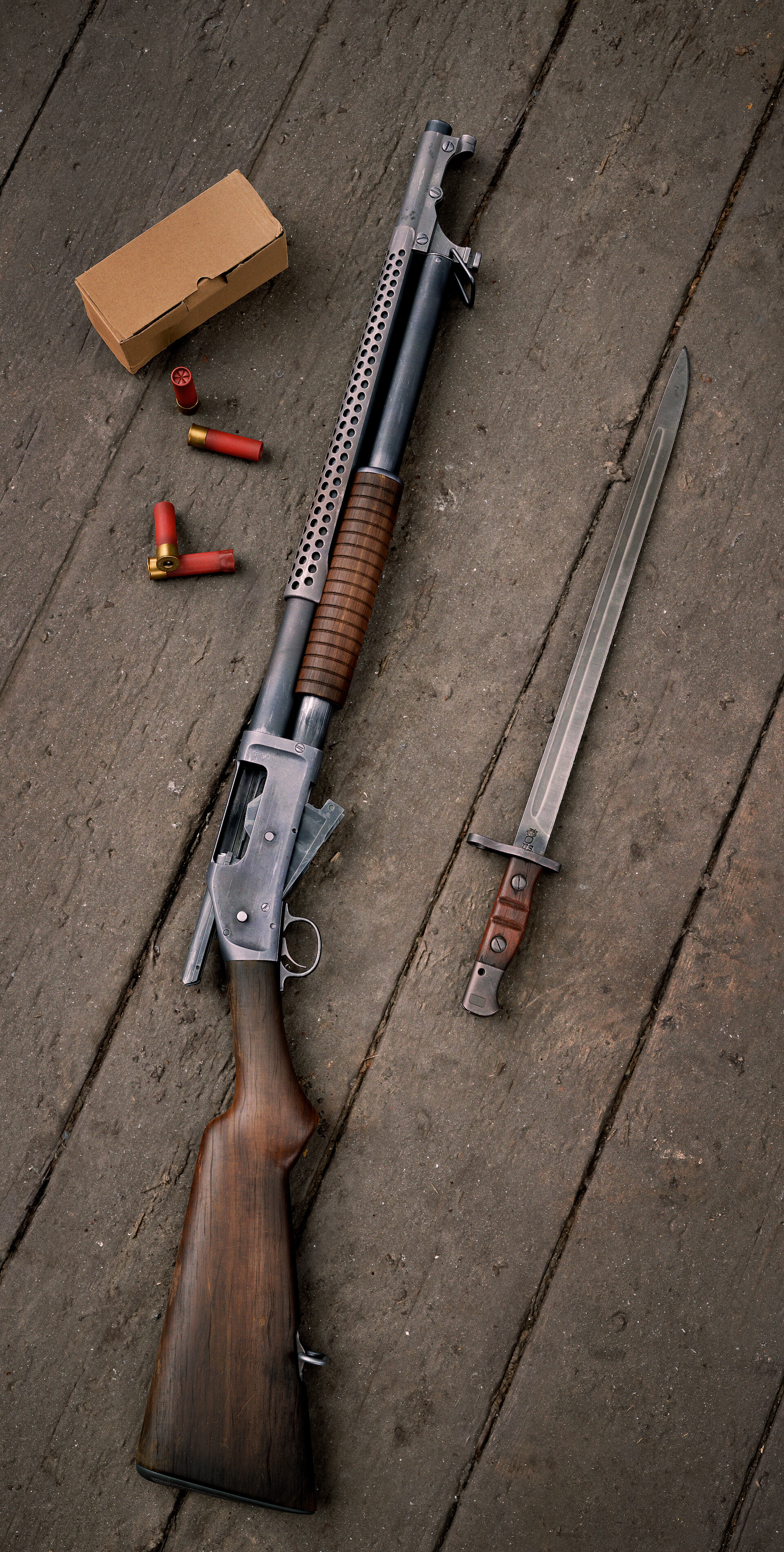
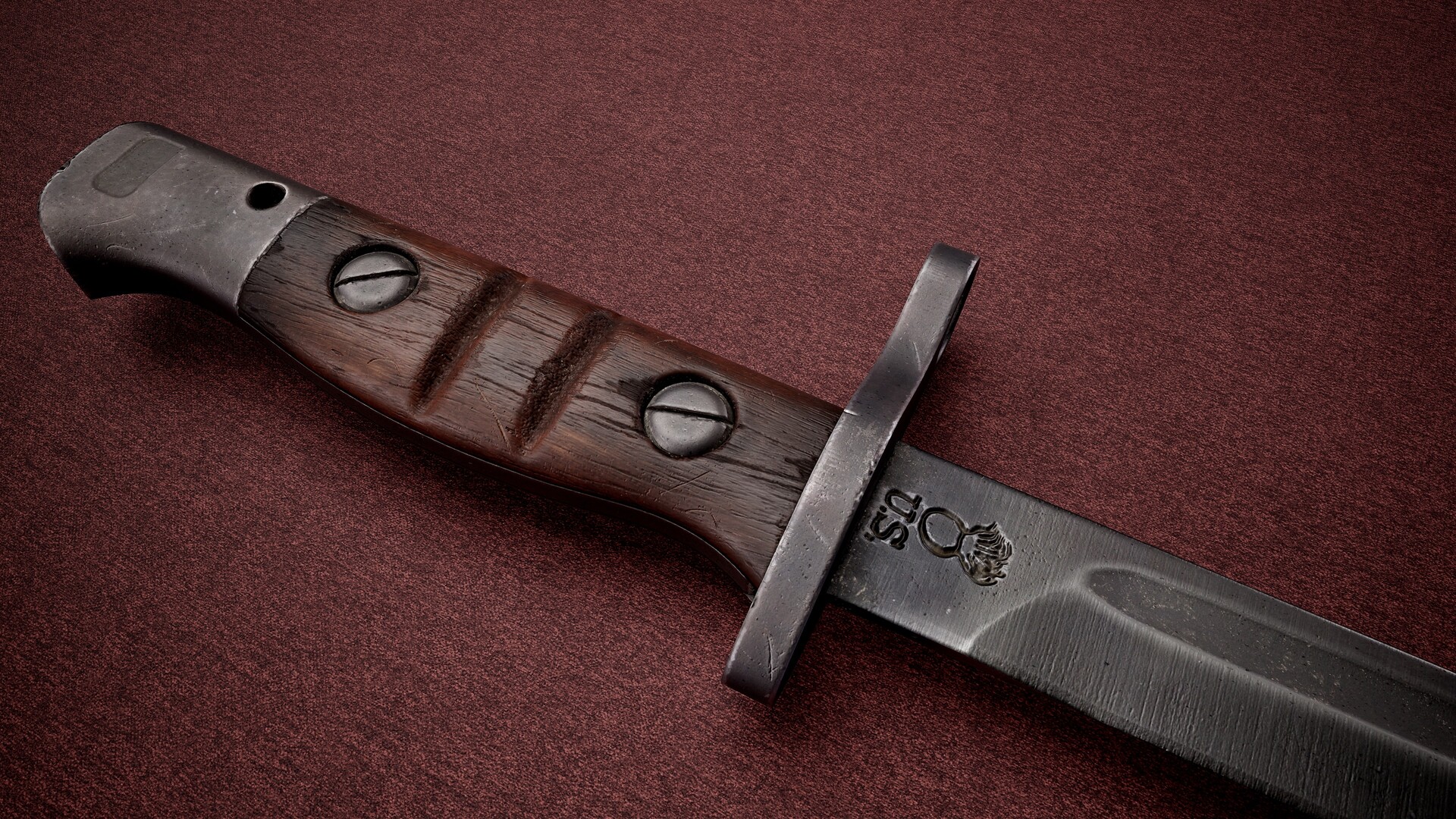
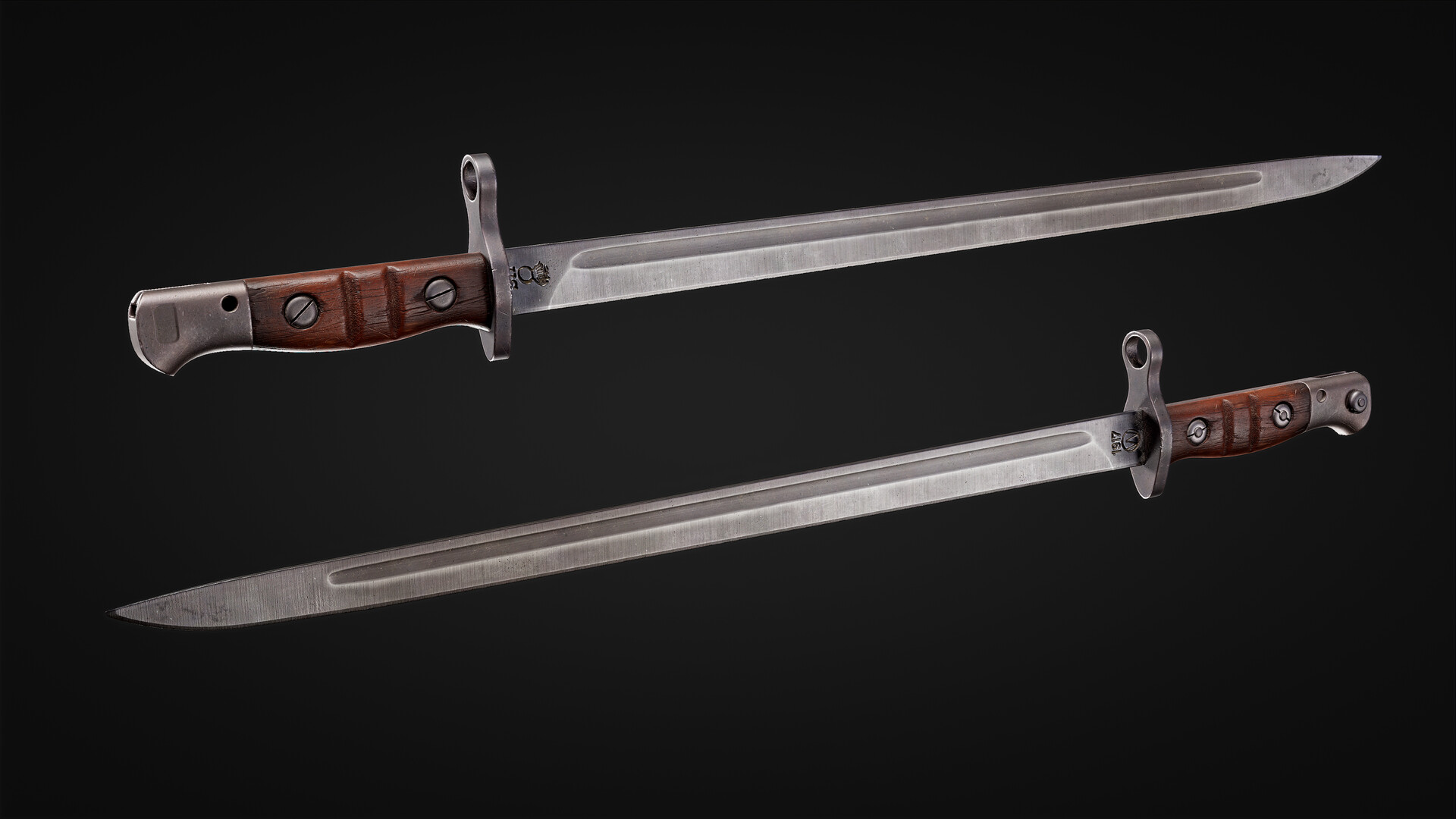
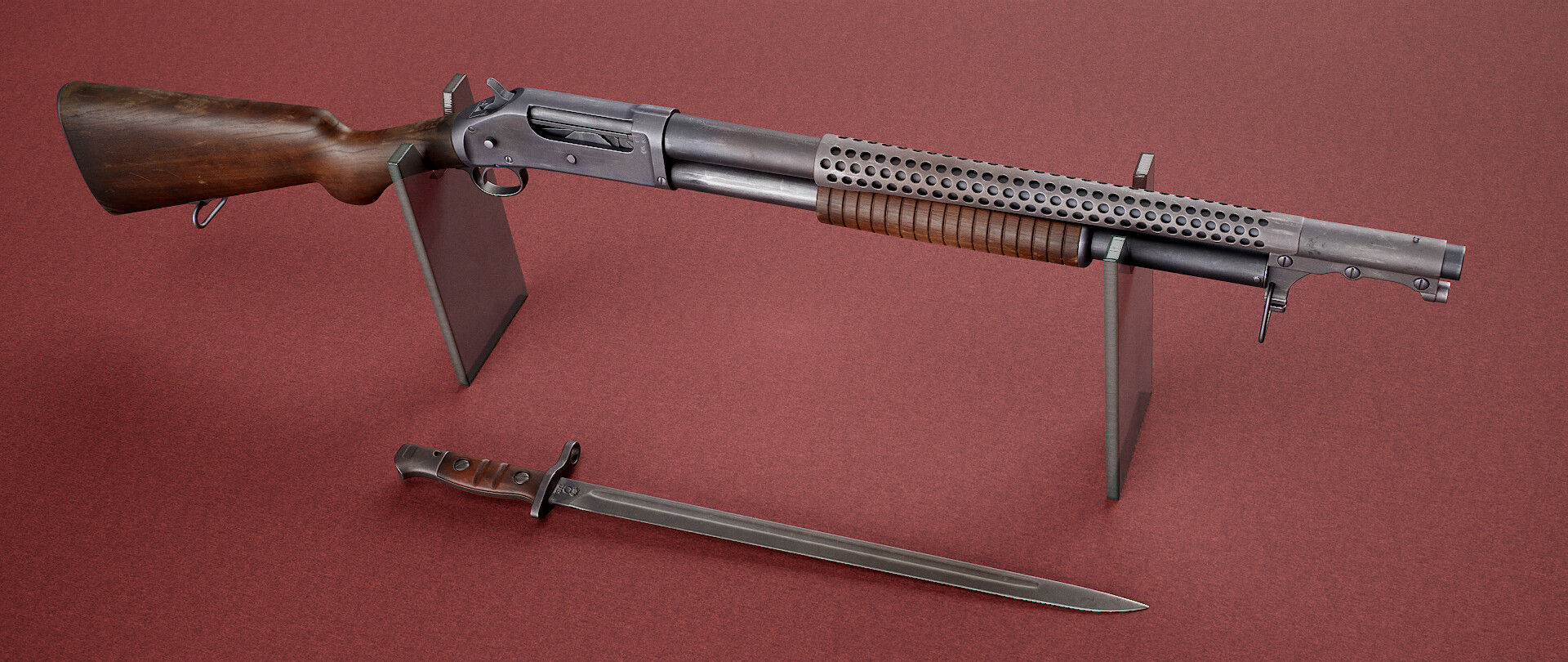
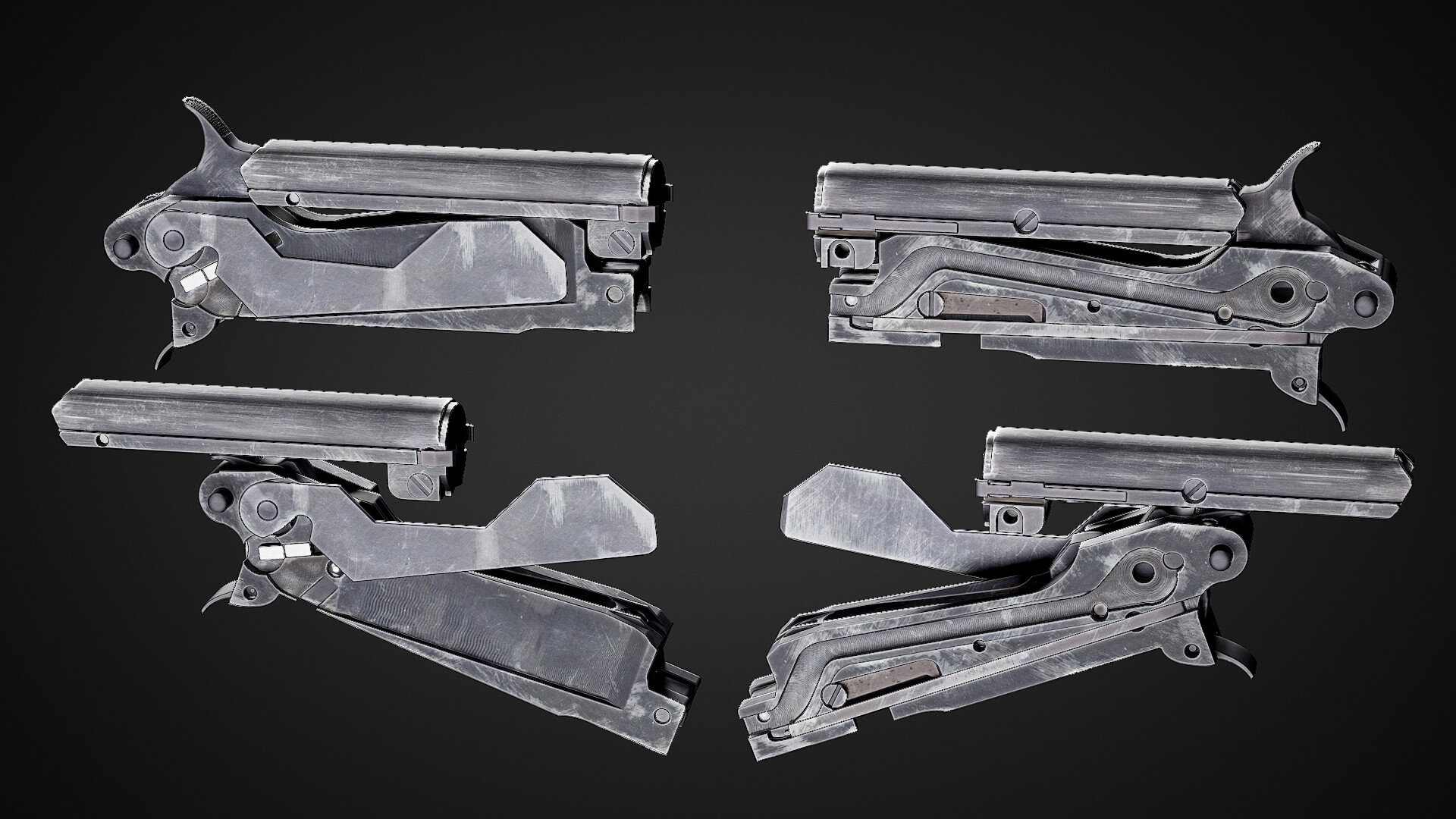
Proud to present you my new protest-inducing, near-warcrime trench cleaner. Also comes with half a meter worth of longsword at the end but that was still considered a bayonet back then…
.
Focused on pushing my wear, damage and overall texture quality as well as implementing the dynamesh workflow here ‘n there for the first time. As per usual I had some fun fooling around and making some animations (even though 60% of the time put in those was for making muzzle smoke but hey…)
.
Massive thanks to the Wardog community for their continuous love, support and memes
Even bigger thanks to https://www.artstation.com/simon_mercuzot for his priceless feedback
.
.
.
Arms rig used: CoD MW2
Sounds are from dasbutcher84, DICE, Infinity Ward, Rift
Background and cardboard box are Megascans
.
.
You read to the end? Absolute madlad, have a wonderful day!








Max Hastings’s excellent history, Vietnam: An Epic Tragedy, discusses one revealing engagement that took place between American and North Vietnamese forces in late March of 1971. This action—a ferocious assault on a remote firebase named Mary Ann—merits further reflection, I think, and we will give it its due here.
After the 1968 Tet Offensive, it became clear to any objective observer that the American military campaign in Vietnam was not showing the kind of forward progress that might lead to a face-saving settlement. By 1971, the situation had worsened. Many units became infected with crippling morale problems, chiefly revolving around drug abuse, systemic indiscipline, and seething racial tensions.
A more honest era would have called such conditions mutinous; but this was a word that American officials would have done nearly anything to avoid using. No one wanted to be among the last to be crippled or killed in a cause that appeared locked into a trajectory of failure.
Some soldiers and Marines openly refused to beyond the wire to conduct patrols or set ambushes; officers and non-commissioned officers were forced to walk a fine line between following orders from their own higher-ups, and avoiding the appearance of being too enthusiastic in enforcing military discipline.
No one wanted to ask too much from the men, for fear of retribution. It was a terrible situation for a small unit leader to be in. Incidents of “fragging” (the murder of a leader by disgruntled troops) multiplied, and it was a rare officer indeed to failed to consider the consequences of becoming too alienated from those he was supposed to be leading.
Firebase Mary Ann (pathetically named after the commanding officer’s sister) was an outpost located at the top of a ridge in Quang Tin province, close to the border of Laos. It was manned by soldiers of the 1/46th Infantry, C Company, which was part of the Americal Division. The firebase was the standard assortment of bunkers and small structures ringed by barbed wire and observation posts. In March of 1971, very few who were there wanted to be there. The prevailing sentiment among both officers and men was to look after one’s own hide, while counting down the days until one could catch a “freedom bird” back to the States.

It was not uncommon for men sent out on ambush to avoid engaging with enemy patrols, and to report they had seen nothing when the opposite was true. Some patrols would openly refuse to enter certain areas where contact with the NVA seemed likely.
Within the wire, indiscipline was the rule. Hastings reports that one of the battalion’s men died after eating a piece of plastic explosive taken from a Claymore mine; he believed that consuming it would give him a narcotic high. One company commander, a Capt. Paul Spilberg, wrote in a letter home:
This company really is a mess…the troops sit around reading newspapers, playing cards…most of the time they don’t even carry their weapons.
In such situations, the posture of the commanding officer is determinative, for it is he who sets the tone for his unit. At Fire Base Mary Ann, the man in charge was Lt. Col. Bill Doyle, a thirty-nine-year-old veteran with a reputation for fighting and partying hard. But even he knew there was a limit to what he could do. One of his companies—D Company—even refused to leave the wire unless supplied with scout dogs, air support, and a medevac helicopter.
Men posted to guard duty at night would drift off into sleep and escape punishment. Yet beyond the wire, the NVA was probing the firebase and sighting every inch of its perimeter—which was five hundred yards in length by two hundred in width—with small arms.
Its twenty-two bunkers, made from metal shipping containers called “conexes,” were identified and marked on maps. Steadily and surely, it drew up its plan of attack, and waited for the right moment to hit the indolent Americans with a coordinated assault. It was later revealed that the firebase had been under enemy observation for two months. Mary Ann housed, in all, 231 soldiers and 21 South Vietnamese Army (ARVN) personnel, and it had never been attacked before.
On the night of March 27, base security was in the hands of Capt. Richard Knight, a twenty-four-year-old college dropout. 
The record indicates that Knight was either unwilling, or unable, to convince his men to post security at their bunkers or to set Claymores and trip flares; there are reports of drunkenness (and possible drug abuse) that night, although how much is difficult to determine.
Nearly everyone was either asleep or occupied in routine. Searchlights activated at two o’clock in the morning on March 28 revealed no movement outside the wire. This would very shortly change, however.
At 02:40, around fifty men from the NVA’s 409th Sapper Battalion slipped through Mary Ann’s outer perimeter, their bodies coated with grease and charcoal dust for concealment. Wearing only shorts, and crawling on their bellies, they cut four passages through the razor wire and brought in satchel charges, grenades, and small arms.
Lacking food supplies, they had been forced to dine on wild roots in preparation for the operation. The signal to launch the all-out attack on the sleeping Americans was a mortar barrage. And then the attack was launched in force.
Instantly panic engulfed the base; visibility was difficult in the pitch darkness, adding to the terror and confusion. Men caught sleeping in their bunkers were killed by grenades and explosives before they could process what was happening.
Those who were able to rouse themselves crept outside their hooches, waiting for someone to tell them what to do. Yet no orders came. Capt. Knight never left his bunker; he was killed when a sapper flung a bomb into it. Lt. Col. Doyle’s command center absorbed a huge blast from a satchel charge, but he himself survived.

It soon became clear that the attack had been carefully planned; the sappers roamed through the firebase, knowing exactly where to go and what to hit. Most of the Americans remained in their bunkers, either from a belief that the base was under mortar attack, or because they had been provided with no other guidance.
Some who tried to get outside were gunned down by bursts from AK-47 rifles; some were immobilized by the clouds of CS gas that were everywhere; and still others were concussed or ripped apart by improvised Coke-can grenades. One soldier thought his best chance of survival was to feign death in the open; as he held his breath, he could feel an NVA sapper rifling through his pockets, and felt him strip off his wristwatch. Some men did fight back.
There are reports of hand-to-hand fighting in the darkness between attackers and defenders. One West Point lieutenant named Barry McGee killed an NVA soldier with his bare hands before being cut down by rifle fire. 
No coordinated effort to defense the base was ever made, because no such plans existed. Doyle’s command post discovered that communications had gone down, and that, with smoke shrouding the base, illumination flares adding nothing to the battlefield picture.
The ARVN troops either did nothing or ran for shelter. A Night Hawk Huey helicopter appeared over the base at around 0325, and fired on some sappers exfiltrating through the wire, but by that time the attack had largely subsided.
Doyle was evacuated soon after with a leg wound; he was replaced by a new commanding officer and never returned to Mary Ann. The official casualty count among the defenders was 33 dead and 83 wounded; the NVA’s casualties are unknown, but probably were comparable.
A later investigation into the matter did not paint a flattering picture–to say the least–of the American army’s behavior before or during the attack. The official report devastatingly concluded that the NVA had simply outperformed their opponents; that leadership at Mary Anne had been slipshod and unprofessional; and that most American casualties could have been avoided, had soldiers behaved like soldiers.
The deceased Capt. Knight was found guilty of dereliction of duty. Doyle was shipped off to a desk position, his reputation permanently tarnished.
That the base’s leadership could have allowed such laxity and indiscipline to prevail is shocking in itself; but if so, Doyle and Knight were far from alone. The event has come to be seen as a kind of microcosm for everything that was wrong in Vietnam.
Even if the war’s ultimate futility was common knowledge, nothing can excuse the abandonment of fundamental security preparations. At some point, military leaders must set aside fears of retribution, and show some degree of courage and professionalism in enforcing standards of discipline.
This did not happen at Firebase Mary Ann, and the consequences were death and destruction. We may extend this lesson, I think, outside the realm of military affairs to civilian matters as well. When “leaders” care more about their privileges than their responsibilities, the result is peril that leads inevitably to ruin.
American self-propelled artillery in World War II transformed how the United States Army delivered firepower on the battlefield. These tracked vehicles combined mobility with devastating howitzers and guns, keeping pace with advancing armor divisions in ways towed artillery never could. From the M7 Priest’s 105mm howitzer to the massive M43’s 8-inch gun, these weapons shaped combat operations across North Africa, Europe, and the Pacific.

The story starts with improvisation. When Germany blitzed through France in 1940, American planners saw they needed artillery that could move fast and hit hard. Self-propelled guns became essential for supporting mobile warfare. The U.S. entered the war in late 1941 with almost nothing in this category, forcing engineers to mount existing artillery pieces on whatever chassis they had available.
T19 Howitzer Motor Carriage
The T19 Howitzer Motor Carriage represents the first American attempt at fielding self-propelled artillery during the Second World War. Engineers adapted the 75mm M2A1 gun and mounted it on the M3 halftrack chassis. This quick solution entered service in 1941, but the vehicle soon showed its limitations.

The weapon system featured an open-topped fighting compartment with limited armor protection, and the crew operated the howitzer from the vehicle’s rear platform. Development began in 1941, and the vehicle entered production in 1942, representing one of the early American attempts to create mobile artillery support for its increasingly mechanized forces.
In combat, the T19 saw limited use by U.S. forces during World War II. While approximately 300 units were produced, the design had significant limitations that reduced its battlefield effectiveness. The half-track chassis provided insufficient stability for the powerful 105mm howitzer, leading to accuracy issues during firing, and the open-top design left the crew vulnerable to enemy fire and artillery fragments. The vehicle’s armor protection was minimal, suitable only for deflecting small arms fire and shrapnel. These drawbacks led to the T19 being gradually superseded by more capable self-propelled artillery designs.
The M7 Priest: Backbone of American Mobile Artillery
The 105mm Howitzer Motor Carriage M7 changed everything. Known as the Priest due to its pulpit-like machine gun ring, this vehicle became the most numerous and important self-propelled artillery platform in U.S. Army service during the war.

Development began in June 1941, six months before Pearl Harbor. Army observers in Europe recognized that self-propelled artillery needed proper armor and full tracks, not the halftrack compromises. They selected the M3 Lee tank chassis as the foundation. The M3’s proven drivetrain, when combined with the reliable 105mm M2A1 howitzer, created a vehicle that could survive combat while delivering accurate fire.
The M7 entered combat with the British in mid-1942. The British and Canadians eventually developed their own Sexton self-propelled gun, using the 25-pounder on an M4 chassis to address ammunition compatibility issues.

Americans used them in combat first during Operation Torch, and then through the rest of the war on every front. A B1 variant used the M4 Sherman chassis instead of the M3 Lee, as the Sherman became the standard American tank. Crews loved the M7 in all varieties. The vehicle had good mobility and an effective gun that put rounds on targets up to seven miles away. It could also defend itself against tanks, earning the nickname “tank killer” in some popular press.
The Army deployed four self-propelled Priests per battery, with three firing batteries per battalion when assigned to infantry. When assigned to armored units, each battery was assigned six Priests.

The M7’s open crew compartment was both an advantage and a vulnerability. It enabled better observation and faster loading because crews weren’t confined to a cramped turret. But it left them exposed to snipers and artillery airbursts. The vehicle carried a .50 caliber Browning M2HB machine gun on that distinctive pulpit mount for anti-aircraft defense.
The weapons system continued to see action in the Korean War, where it proved just as valuable supporting mobile operations against North Korean and Chinese forces. Several Allied countries received M7s postwar, with the West German Bundeswehr using them into the early 1960s.
M8 Howitzer Motor Carriage
The 75mm Howitzer Motor Carriage M8 filled a different tactical niche. With a crew of four, it mounted a 75mm M2/M3 howitzer on an M5 light tank chassis. Adopted in 1942, it provided fire support specifically for armored cavalry reconnaissance squadrons that needed lighter, faster artillery support.

The M8 featured an open-top turret that gave the crew better situational awareness during fast-moving reconnaissance missions. A .50 caliber machine gun mounted at the rear provided secondary armament for close defense.
What made the M8 different was its role. It accompanied reconnaissance units, providing on-call fire support when cavalry scouts ran into trouble. Often, it was used for direct fire support against strongpoints and pillboxes. The M5 light tank chassis kept weight down and speed up, essential for keeping pace with fast-moving reconnaissance operations.

Production totaled 1,778 vehicles by war’s end. It wasn’t glamorous and didn’t pack the punch of heavier self-propelled artillery, but it did exactly what cavalry commanders needed — reliable, mobile fire support that could go where the action was.
M12 Gun Motor Carriage
The M12 Gun Motor Carriage has one of the stranger stories in American self-propelled artillery. It adapted the French 155mm GPF gun to motorized use, mounting it on an M3 medium tank chassis. Engineers moved the engine forward and fitted the powerful gun to the rear. A spade like a bulldozer blade at the rear sank into the ground for stability while firing.

An even 100 were completed by early 1943. Then they sat in storage, seemingly waiting for the European Campaign that would not kick off until June, 1944. Seventy-four M12s were dug out of storage and shipped to units preparing for D-Day. They proved valuable as medium artillery support for fast-moving armor during the breakout from Normandy and the drive across France.
The M12 had a maximum range of 21,982 yards with a crew of six. It fired the same 155mm ammunition as towed guns, making supply easier. The vehicle was accompanied by an M30 cargo carrier converted from an M12 chassis that hauled ammunition and supplies. This two-vehicle team could operate semi-independently, carrying enough ammunition for extended fire missions.

The 155mm gun gave the M12 serious reach. It could engage targets that towed guns couldn’t touch quickly enough, especially during fluid mobile operations. When American armor punched through German lines, the M12s could keep up and provide fire support without the delays of limbering and moving towed artillery.
Late-War Heavy Artillery: M40, M41, and M43
As the war progressed, the Army developed even heavier self-propelled artillery pieces. These vehicles came too late to see significant World War II service but established designs that proved valuable in Korea.
The 155mm Gun Motor Carriage M40 was adopted in February 1945. It mounted either a 155mm Gun M1A1 or M2 on the rear deck of a modified M4 medium tank chassis. With a crew of eight, it achieved an impressive range of 25,722 yards, firing 95-pound projectiles. The M40 used a different mounting than the M12, incorporating lessons learned from combat experience.
It is believed that a single M40 was used in the European Theater prior to the war’s end. More would see use during the Korean War.
The M41 Howitzer Motor Carriage came in June 1945. It mounted the 155mm Howitzer M1 on the rear of an open M24 Chaffee light tank chassis. This was a howitzer rather than a gun, meaning a shorter barrel, lower muzzle velocity, and a higher trajectory. Maximum range reached 16,360 yards. Only 85 were accepted by the Army before production ended. The gun is not believed to have entered any theater of combat in World War II, though it did see action in the Korean War.

The 8-inch Howitzer Motor Carriage M43 represented the heaviest American self-propelled artillery. Adopted in June 1945 with limited production of just 48 vehicles, it incorporated an 8-inch Howitzer M1 or M2 barrel with a maximum range of 18,515 yards, firing 200-pound shells. This was serious firepower.
The M43 was mounted on an M4 medium tank chassis with a crew of eight. The 8-inch howitzer had been a standard heavy artillery piece in towed form, and putting it on tracks gave the Army mobile heavy fire support capability. A single M43 entered combat in World War II. More would serve in the Korean War.
These late-war vehicles — the M40, M41, and M43 — saw limited World War II service simply because they arrived so late. But they proved their worth in Korea, where mobile artillery supporting rapid advances and withdrawals was essential.
Legacy of American SPA
Many American self-propelled artillery pieces continued service well beyond World War II. The Korean War saw extensive use of M7 Priests, M40s, and M43s. These vehicles proved just as valuable supporting mobile operations on the Korean peninsula as they had in Europe. The ability to keep pace with advancing or retreating forces remained essential.
The lessons learned from World War II self-propelled artillery shaped Cold War doctrine. The emphasis on mobility, the use of proven chassis for rapid development, and the understanding that numerical superiority could compensate for individual technical shortcomings.
American self-propelled artillery in World War II represented a pragmatic response to the tactical challenges of mechanized warfare. These vehicles weren’t perfect. They used open turrets, leaving crews exposed. Early designs like the M3 were basically compromises. But they got the job done. They kept pace with advancing armor, delivered devastating firepower, and helped American forces win the war.
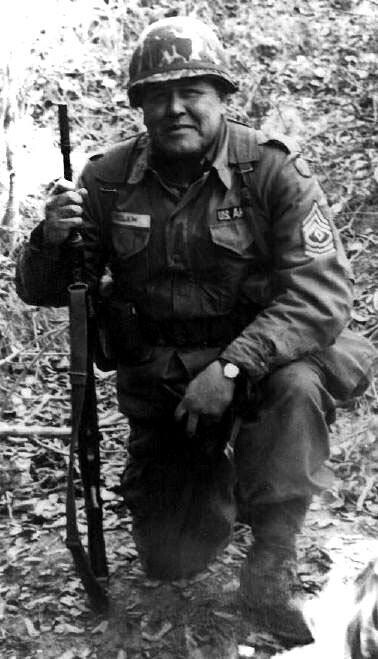
Remembering Pascal Cleatus Poolaw, Sr., the most decorated Native American soldier in U.S. history – 4 Silver Stars, 5 Bronze Stars 3 Purple Hearts. He earned a total of 42 medals and citations.
Born on January 29, 1922, in Apache, Oklahoma, Poolaw, a full-blooded Kiowa, served with the United States Army in World War II, the Korean War, and the Vietnam War.
Poolaw, his father and two brothers joined the Armed forces in 1942 during World War II.
He earned his first Purple Heart when he was wounded in September 1944. While serving with the 8th Infantry Regiment’s M Company near Recogne, Belgium, Poolaw’s unit was engaging fire with the Germans.
He pushed his unit forward under heavy fire and hurled hand grenades at enemy machine guns, causing numerous enemy casualties and as a result of his heroic actions, many of his comrades lives were saved and the company was able to continue the attack and capture strongly defended enemy positions.
Poolaw’s military career did not end in Belgium with fighting Germans. During the Korean War, Poolaw saw combat and was wounded again and awarded the Distinguished Service Cross, a second Purple Heart, and two more Silver Stars.
He returned to the U.S. in 1952 and retired from the Army ten years later. This is not where his military career ends.
During the Vietnam War, all four of the Poolaw’s sons were in the military. In February 1967, his son, Pascal Jr., was injured by a landmine in Vietnam.
This injury resulted in amputation of his right leg below the knee. Poolaw’s youngest son, Lindy, was also drafted. Afraid of what could happen to his sons as the war progressed, Poolaw rejoined the Army at the age of 45. Giving up his rank as a 2nd Lieutenant (a promotion he earned in Korea), with the intentions of serving in direct combat, Poolaw hoped to keep his youngest son away from the front lines by taking his place.
Regulations prohibited two members of the same family from serving in combat at the same time without their consent. Unfortunately, by the time he arrived on the West Coast, Lindy had left for Vietnam the day before.
(Lindy did not make it)
Poolaw was deployed on May 31, 1967 as a first sergeant of the 26th Infantry Regiment’s C Company.
His last Silver Star was for an event that occurred a few months later. On November 7, 1967, Poolaw’s unit were part of a search and destroy mission near the village of Loc Ninh. Poolaw and his unit were ambushed by the Viet Cong force with intensive claymore mine, rocket, small arms, and automatic weapons fire – saving countless lives.
While wounded, he continued moving among his squad making sure everyone was positioned properly while pulling casualties back.
As Poolaw was carrying a wounded soldier to safety, he was struck by a rocket propelled grenade and killed. For his heroic actions Poolaw was awarded a Silver Star and a third Purple Heart posthumously. ” He has followed the trail of the great chiefs,” his wife Irene said at Poolaw’s funeral. His people hold him in honor and highest esteem. He has given his life for the people and the country he loved so much.”
We honor and thank First Sgt. Pascal Poolaw Sr. for his exemplary service and the ultimate sacrifice he made for our country. Rest in peace good warrior. You will never be forgotten!!
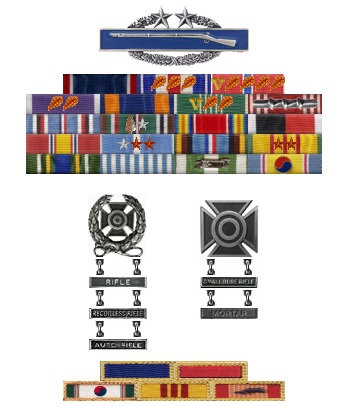
The following is a transcript of outgoing company commander Capt. Vince Miller’s change of command speech:
Good morning everyone. I’d normally begin with our unit motto, but after two and a half years of starting every meeting and discussion with it, I just don’t think I can stomach it anymore. So I’ll say good morning like a normal human being.
I should probably thank my battalion commander for the opportunity to command this company over the last few years, in both combat and garrison, but I think I’d rather go out into the parking lot and key his car for saddling me with the greatest collection of idiots, malingerers, and criminals that have ever walked the face of this earth.
You’ll notice my wife and daughters aren’t here sitting in the audience today. That’s because Sheila left me six months ago when I had to skip our 10th anniversary trip to Jamaica so I could come in on a Sunday for unit PT, since one of you dipshits decided to go out and get his third DUI.
I wasn’t allowed to go to marriage counseling last year when our relationship was on the rocks because the commander had said that soldiers were the priority. So instead I gave my slot to Private Steadman and his former prostitute wife who he met on R&R in Brazil the month prior. Once they got back, she took all his money and Steadman killed himself. So thanks for that.
Do any of you morons have any clue how much paperwork it causes when you blow your sad little heads off? At least have the courtesy to go AWOL first. But for fuck’s sake don’t come back for at least 30 days so I can drop you off my books and let someone else deal with the meatsack of failure that is your existence.
This would now be the part of the speech where I talk about our glorious combat achievements. Too bad, there’s nothing glorious about walking around Afghanistan for 12 months finding IEDs with your feet. Now I’m deaf in one ear, have almost a pound of shrapnel in my ass, and occasionally I wake up screaming for no fucking reason. But you know what? That doesn’t make me a goddamned hero. That was the worst part about coming back. Not my empty home, empty bed, or shattered dreams. No, it was listening to you fuckwads thump your chests and talk about how badass you all were. Did any one of you actually get a confirmed kill over there? One?
I didn’t think so.
So in closing, let me say this. Thank you for the countless weekends I lost with my daughters because I had to deal with your trivial bullshit. Thank you for the two suicide investigations that forced me to cancel training events I’d planned for almost a year. And most importantly, thank you for the dishonesty, poor accountability, and outright theft of almost two million dollars in equipment, which is why I won’t be receiving another paycheck until February.
May God smite you all with the power of a thousand suns, and your souls be condemned to Hell for eternity.
And to the incoming commander. Good luck and God bless you for making such terrible life choices.
There’s a bottle of scotch in the third drawer of my desk. You’re going to need it.
I hate you all.

Good morning everyone. I’d normally begin with our unit motto, but after two and a half years of starting every meeting and discussion with it, I just don’t think I can stomach it anymore. So I’ll say good morning like a normal human being.
I should probably thank my battalion commander for the opportunity to command this company over the last few years, in both combat and garrison, but I think I’d rather go out into the parking lot and key his car for saddling me with the greatest collection of idiots, malingerers, and criminals that have ever walked the face of this earth.
You’ll notice my wife and daughters aren’t here sitting in the audience today. That’s because Sheila left me six months ago when I had to skip our 10th anniversary trip to Jamaica so I could come in on a Sunday for unit PT, since one of you dipshits decided to go out and get his third DUI.
I wasn’t allowed to go to marriage counseling last year when our relationship was on the rocks because the commander had said that soldiers were the priority. So instead I gave my slot to Private Steadman and his former prostitute wife who he met on R&R in Brazil the month prior. Once they got back, she took all his money and Steadman killed himself. So thanks for that.
Do any of you morons have any clue how much paperwork it causes when you blow your sad little heads off? At least have the courtesy to go AWOL first. But for fuck’s sake don’t come back for at least 30 days so I can drop you off my books and let someone else deal with the meat sack of failure that is your existence.
This would now be the part of the speech where I talk about our glorious combat achievements. Too bad, there’s nothing glorious about walking around Afghanistan for 12 months finding IEDs with your feet. Now I’m deaf in one ear, have almost a pound of shrapnel in my ass, and occasionally I wake up screaming for no fucking reason.
But you know what? That doesn’t make me a goddamned hero. That was the worst part about coming back. Not my empty home, empty bed, or shattered dreams. No, it was listening to you fuckwads thump your chests and talk about how badass you all were. Did any one of you actually get a confirmed kill over there? One?
I didn’t think so.
So in closing, let me say this. Thank you for the countless weekends I lost with my daughters because I had to deal with your trivial bullshit. Thank you for the two suicide investigations that forced me to cancel training events I’d planned for almost a year. And most importantly, thank you for the dishonesty, poor accountability, and outright theft of almost two million dollars in equipment, which is why I won’t be receiving another paycheck until February.
May God smite you all with the power of a thousand suns, and your souls be condemned to Hell for eternity.
And to the incoming commander. Good luck and God bless you for making such terrible life choices.
There’s a bottle of scotch in the third drawer of my desk. You’re going to need it.
I hate you all.