Category: COOL!!!!!!!!!!!!!!!!!

Who comes to mind when you think of truly great American pioneers? Charles Lindbergh did some mighty fine aviating back in 1927 with that first trans-Atlantic solo flight. Amelia Earhart attempted something kind of similar in the Pacific and likely got eaten for her trouble.
James Watson and Francis Crick first described the DNA double helix back in 1953. That seems like a pretty big deal. And then there was Timmie Jean Lindsey. Timmie Jean was the first woman in human history to undergo breast augmentation surgery using silicone implants.
Origin Story
Back in 1962, Timmie Jean was a 29-year-old divorced mother of six who wanted to get her ears bobbed back. Texas plastic surgeons Frank Gerow and Thomas Cronin convinced her to try something a bit bustier. They were, of course, both guys. They fixed her ears for free.
Dow Corning helped underwrite the research. That was likely not out of some exceptional sense of corporate altruism. Some 5 million women have undergone the procedure. Nowadays that averages about $9,000 a pop. I’m sure a fair number of those used Dow Corning raw material. Well into her 80s, Timmie Jean claimed that her fake boobs were still holding up nicely. However, she wasn’t technically the first.
Back in 1895, a 41-year-old singer developed a painful lump in her breast that necessitated surgical excision. Dr. Vincent Czerny performed the procedure.
Considering the rudimentary state of anesthesia back then, that thing must have been pretty darn miserable. Regardless, the procedure left the unfortunate woman somewhat lopsided. Fortuitously, she had a lipoma on her lower back that was in need of a new home.
A lipoma is a benign fatty tumor that arises out of adipose tissue. They never turn into cancer, but they can be unsightly, painful, or both. When you remove them surgically they feel like the rind you sometimes encounter in Jell-O—kind of hard and rubbery. Where most folks might see heartache, however, Dr. Czerny sensed opportunity.
Czerny replaced the excised breast mass with the annoying lower back tumor and made medical history. A year later, the woman wasn’t quite symmetrical, but the relocated lipoma was nonetheless thriving. The singer lady was purportedly over the moon.
Sydney Sweeney Has Great Genes
When American Eagle launched that legendary ad campaign they kicked over a big, woke anthill. In case you have been living under a rock someplace, Sydney Sweeney is one of the most popular actresses in the world. At five feet, three inches she is a bit on the compact side. However, Syd is in possession of some exceptionally commendable attributes. When combined with her natural acting talent, these particular commendable attributes have helped propel her to super stardom. The internet claims that the campaign either made American Eagle jeans $300 million in a day or will ultimately be their undoing. It’s the internet. Who really knows?
Am I saying that Ms. Sweeney is successful solely because of her two exceptionally commendable attributes? Certainly not. However, she would most likely have had a tougher time without them.
That’s not an unreasonable deduction. I’m six feet tall. I weigh 170 pounds. My arms are just a wee bit long for my trunk, giving me a vaguely simian appearance when viewed shirtless—like some hairless, albino orangutan. I can only presume that is the reason I’ve never been invited to star in a big budget Hollywood movie about half-naked guys. Life’s not fair. Never has been.
Compulsions
We Americans take our bosoms pretty seriously. Having professionally consulted with a few female patients on the subject, enhancing confidence seems to be a recurring theme. I can honestly say I don’t much understand that. In medicine as in marriage, that’s kind of a smile-pleasantly-and-nod-sort of situation. Some folks, however, struggle with moderation when it comes to the human mammary gland.
Howard Robard Hughes, Jr., was an early pioneer in the field of insanely-rich crazy people. Howard Hughes was floridly nuts back when being floridly nuts wasn’t cool. In addition to a well-documented germ phobia, some simply legendary culinary eccentricities, and a penchant for stockpiling his own urine, Hughes developed a decidedly unhealthy fixation on Jane Russell’s knockers.
Jane Russell was a particularly well-endowed actress later known as the spokeswoman for the Playtex Cross-Your-Heart brassiere. Hughes served as producer and director for Russell’s 1943 breakout film, “The Outlaw.” His tendency to accentuate Russell’s own commendable attributes on the silver screen led to some unfortunate censorship issues.
A gifted engineer, Hughes personally designed a custom bra specifically to help get Ms. Russell’s attributes out in front of the American viewing audience. Movie stills were transformed into titillating billboards. A Maryland judge famously opined that Russell’s breasts “hung like a thunderstorm over a summer landscape.”
The movie was a big nothingburger. However, it still made about a zillion dollars. Howard Hughes was crazy as a road lizard, but he wasn’t stupid.
Ruminations
I’ve actually scrubbed in on a few augmentations myself. You go in from the bottom so the scar doesn’t show and orient the implant underneath the breast tissue but above the pectoralis muscle. Implants can be made from silicone, saline, or natural fat. Materials that have been tried but discarded include ox cartilage, ground rubber, and Terylene wool. Science marches on.
Ours is an unabashedly vapid society. Some surgically-enhanced TikTok influencer with a room-temperature IQ commands tens of millions of sheep-like followers, while proper literature like Field Ethos somehow putters along on a fraction of that. I like to think I am doing my part to help bridge that gap.


The President’s Hundred (also called the President’s 100) is a prestigious marksmanship award and competition in the United States, recognizing the top 100 shooters in the President’s Rifle and President’s Pistol matches organized by the Civilian Marksmanship Program (CMP)
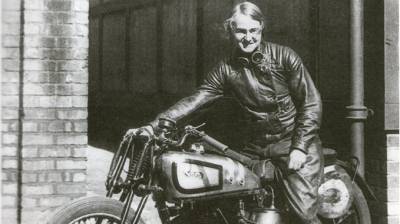 Beatrice “Tilly” Shilling.
The Supermarine Spitfire is nearly synonymous with Britain in World War II. It was a superb fighter plane, beloved of its pilots for its speed and agility, and by the British public as a bona fide national icon and war winner. That status was in no small part thanks to its elegant elliptical wings and the evocative roar of its Merlin engine.
But it was also fundamentally broken. Its engine would often cut out just when the dogfights of the Battle of Britain got interesting: in diving, a staple defensive and attacking maneuver. Unfortunately for the British, the Luftwaffe’s Messerschmitt 109s suffered no such shortcoming, giving the 109s a decisive edge in combat against British fighters.
Britain won the Battle of Britain by the narrowest of margins, and so it was imperative that a solution was found if British fighters were to contribute to the liberation of Europe. Found one was, and from the most unlikely of sources: a female engineer named Beatrice Shilling. That a solution came from a woman circa 1940 was improbable enough, but perhaps as improbable was the simplicity of her solution.
Miss Shilling’s orifice, as it came to be known, arrived just in time for the bitterly fought European offensive that paved the way for the D-Day invasion of Normandy. It without question saved the lives of British pilots. Arguably, it helped turn the tide of the war.

The problem with the Spitfire’s Rolls-Royce Merlin engine was first spotted in 1938 when the first production models of Spitfire rolled off the factory lines at Woolston, Southampton. At the time, it wasn’t seen as much of a problem: diving simply wasn’t something pilots did much before World War II. But by the height of the Battle of Britain in 1940, it was a matter of basic survival.
Also typically glossed over in post-war recollection is the Spitfire’s troubled beginnings. It arrived years later than planned, and at great expense, due to administrative bungling that originated at the top levels of the British government, cascaded down through incompetent captains of industry, before crashing onto factory floors and their chaotic organization of labor. If and when there was any organization of labor, that is.
Despite a prototype Spitfire having first flown in March 1936—the same year that work began on Castle Bromwich for the sole purpose of Spitfire production—things only improved in May 1940 when, upon becoming Prime Minister, Winston Churchill appointed Lord Beaverbrook as Minister for Air Production. Beaverbrook immediately transferred ultimate responsibility of Spitfire production to the engineering firm Vickers. Under Vickers, production would eventually ramp up to 300 planes a month.
In July 1940, Alex Dunbar, the newly appointed manager at the Castle Bromwich Spitfire factory, wrote, “Incidentally, we are sacking 60 jig and tool draughtsmen next week. We have tried to find out what they are doing but the answer’s not a lemon. In the meantime, we build the odd Spitfire or two.”
But the problems with the Spitfire were only beginning. The Battle of Britain was a success despite a serious flaw in the Rolls-Royce Merlin engine used in both the Spitfire and the Hurricane. The Hurricane was still the workhorse fighter of the Royal Air Force (RAF), thanks in part to production issues with the Spitfire. It was a more than capable machine except for the engine issues it shared with its glamorous sibling.
That flaw was a tendency for the engine to falter under so-called negative gravity, when powering into a dive. Negative gravity is a confusing term because the problem wasn’t one of gravity, or even force, but rather of acceleration and inertia. When an aircraft accelerates downward faster than it would in free fall, anything not bolted down, like the blood surging through the pilot’s vessels, will accelerate more slowly due to its own inertia. In relative terms, so far as life aboard the aircraft is concerned, those things are moving upward rather than downward.
Inertia’s a tricky thing, particularly when it comes to liquid fuel. Imagine the skin of a pilot’s face going into a dive, engines at full power. Now imagine the same thing happening to the liquid fuel in the engine, and specifically the chamber of the carburetor designed to regulate the flow of fuel: fuel effectively flows upward. Unfortunately, the fuel outlet holes in Merlin engines were at the bottom of the chamber while, when accelerating into a dive, the fuel was forced to the top, unable to reach the engine. The engines were being starved of fuel, causing what was known as a “weak cut” and resulting in a tendency to stutter, or even to cut out completely, under negative gravity. Either way, the result was loss in power. It was just a question of how long that loss would last.
The trouble could also strike when hitting turbulence. “I opened fire at about three hundred yards, and seemed to hit the one I was aiming at because he pulled up sharply,” Wing Commander Bob Doe later recalled. “At that moment (I must have been down to about a hundred yards), I hit his slipstream and my engine cut—stone dead.” Dogfights are presumably made all the more memorable with the added frisson of engine trouble.
This was problematic for RAF pilots for a number of reasons. First among them was that, by 1940, it was becoming increasingly evident that diving at full tilt was actually rather a good idea, tactically speaking, not to mention an intuitive reaction to being chased down by the fearsome Messerschmitt Bf 109E and Bf 110C fighters of the German Luftwaffe. Diving had the distinct advantage of making it harder to be shot down. Second was that Luftwaffe pilots being tailed by a British fighter did much the same thing to evade their pursuers, and there was really only one way to stay in hot pursuit of a diving fighter plane: dive straight after it. The third was that the Daimler-Benz engines of the Messerschmitts did not share the Merlin’s fuel-system flaw.
Luckily, the British pilots had home-court advantage. The proximity of their fuel supply meant that they could remain in combat for longer than the Luftwaffe, who had to travel some distance to theaters of war across the English Channel, fight, then fly home again.
Overall, then, the sixteen-week-long Battle of Britain was characterized by its numerous narrow margins. Though the battle was over by November 1940, the war in Europe was not. There was still the task of liberating large swathes of mainland Europe, and both the Spitfire and the Hurricane would play vital roles. Quite simply, an answer to the stalling problem needed to be found, and quickly.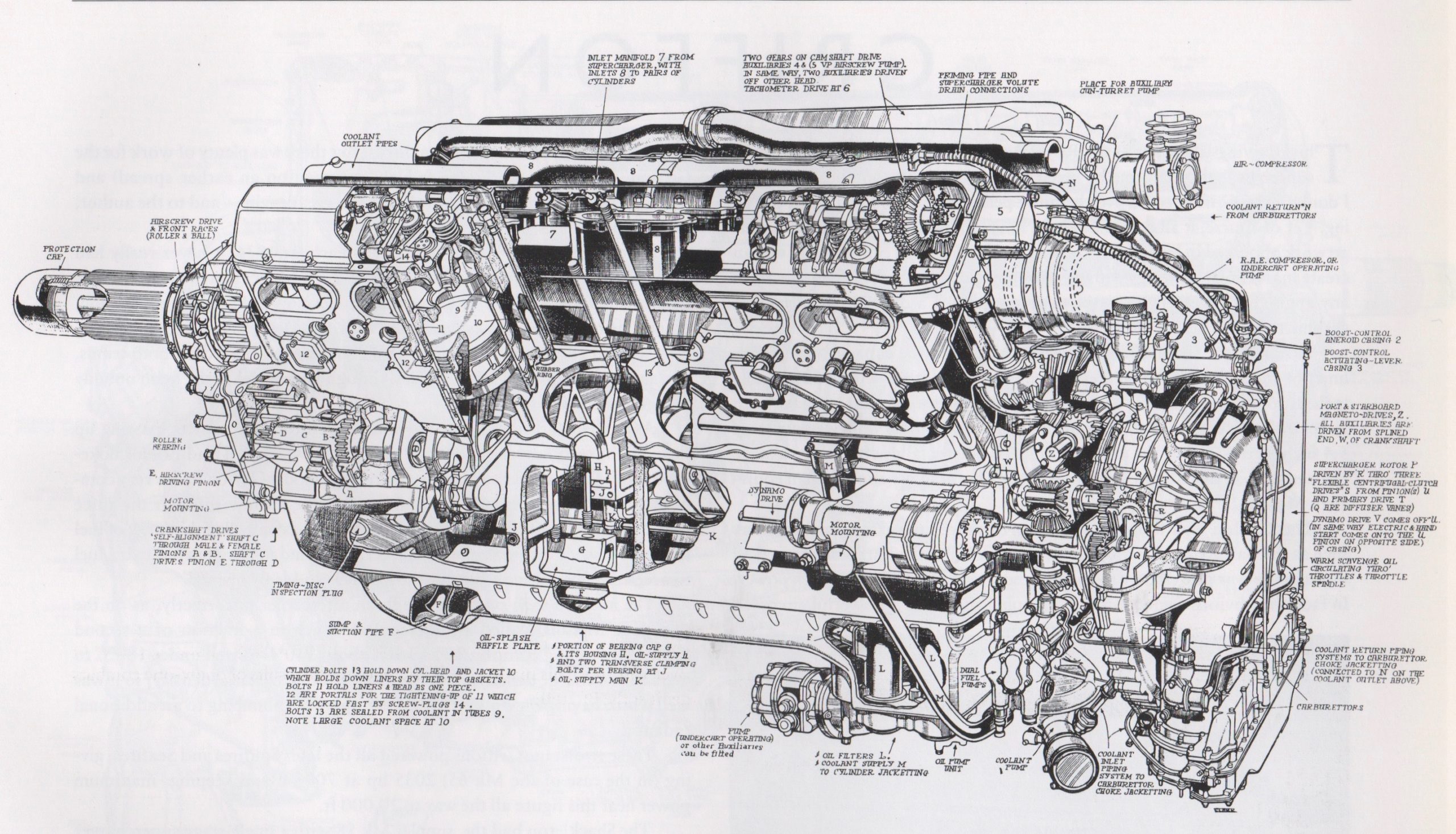
Naturally, the war effort put its finest minds to the task, including Cyril Lovesey of Rolls-Royce and A.D. Fisher of the Royal Aircraft Establishment. Both devised ingenious technical solutions, both of which failed utterly in solving the problem. Their valves and diaphragms may have solved the weak cut, but this was only the start of the trouble. It was swiftly followed by a longer and more dangerous “rich cut”—when the chamber floods with excess fuel, giving a ratio of fuel to air that is too high, or too rich, to actually burn.
It would take an intimate knowledge of engines to identify the more serious problem. So it was remarkable for any number of reasons that, in 1940s Britain, the ultimate solution would come from a woman.
It was around the time of the first production Spitfire test flights of 1938 that Beatrice “Tilly” Shilling rebuilt and tested her own beloved machine: a 490cc Norton motorcycle. The same machine saw her become the fastest woman ever to ride a motorcycle at Brooklands: the first purpose-built race track in the world, which had opened near Weybridge in Surrey in 1907. Shilling was an exceptional racer, but an even better engineer.
To say that women tended not to be engineers in the early part of the 20th century would be stretching the definition of understatement to its very limits. The same stretch could be made for politicians, doctors, land owners, or indeed any role of influence.
But, even in childhood, there were signs that Beatrice Shilling would not conform to societal norms. When Shilling was still small enough to be known as Baby among the family, she was reported to have had this short exchange with her mother:
Mother: “Baby, you mustn’t bite your sister.”
Beatrice: “Have.”
Mother: “Well, say that you’re sorry.”
Beatrice: “Shan’t.”
Around 1919, the 10-year-old Beatrice grew tired of being left behind by her sisters on cycling trips and began to save for a motorcycle. Aged 12, she built a working Meccano model spinning wheel and promptly won a national competition set by Meccano Magazine.
By the age of 14, she’d achieved her goal, her chosen bike a two-stroke Royal Enfield. When she wasn’t giving her sister Anne pillion rides, she was taking it to bits and putting it back together again, engine and all. Physically speaking, Beatrice was small, which would later prove advantageous.
At 15, she decided engineering was the career for her. The problem was that it was 1924. “The average woman does not possess the same engineering instinct as the average man,” was one opinion recorded in the Daily News at around that time. It belonged to the manager of the Education Research Department at British Westinghouse. “For a woman in the 1920s a career in lion-taming would have been more realistic,” observes Shilling’s biographer, Matthew Freudenberg.
But there was a glimmer of hope in the form of the Women’s Engineering Society. It was borne, in 1919, out of the need to protect the right to work of women who had been allowed to work in arms manufacture and other engineering trades during World War I.
In May 1926, the Society distributed a letter to girls schools throughout the country. Shilling’s mother convinced her to reply. By age 17, she became an apprentice electrical engineer learning the ropes, or more accurately cables, in the new electrical power plant at Bungay, Suffolk.
With support from the Women’s Engineering Society, Shilling joined the Department of Electrical Engineering at the Victoria University of Manchester in October 1929. She was one of only two women accepted that year; up from the none that had been accepted before. So her student record card didn’t allow for the possibility of female titles or honorifics.
Fortunately, her education afforded her the freedom to attend classes in thermodynamics and mechanical engineering, closer to her true interest: engines. Shilling received her Master of Science in 1933, and promptly joined a lecturer, Dr G.F. Mucklow, in researching fuel consumption, heat loss, and supercharger performance in Rolls-Royce and Napier single cylinder engines.
When Beatrice Shilling turned up at Brooklands Race Track on 24 August 1934, no one thought much of her new 490cc Norton motorcycle. Like the regular riders, Shilling had come for the Hutchinson 100 event and its attractive prize pot.
It takes two things to race at Brooklands: a motor vehicle, and the intestinal fortitude to use it at tremendous velocity. Even in 1906, it was a track built for sheer speed. More or less egg-shaped in plan, it consists of little more than long straights and even longer, steeply banked bends. And by 1934, the track had lost its smooth concrete complexion, having had potholes gouged out of it by decades of hulking racing cars.
Brooklands’ resulting holes were patched, but they still made for a bumpy surface, which was disconcerting at those 100-mph speeds. Worse, a section of the track crosses the river Wey, creating undulations capable of throwing fast racers clear of the track. To complicate matters further, this was on one of the banked turns. Those chasing the fastest lap times would race near the steepest, highest edge of the bank—circumstances under which staying in contact with the ground is, according to conventional wisdom, a good idea.
Having given the Norton the once over, course handicapper “Ebby” Ebblewhite sent Shilling off as one of the first riders in the three-lap race. Because the event saw great power discrepancies between the competing machines, it was Ebby’s job to let the slowest bikes out first, with the most powerful 1,000cc “scratch bikes” starting last. An extract from the contemporary publication Motor Cycling records what happened next:
“A feature of the first handicap was the brilliant riding of Miss B. Shilling on a very standard-looking 490cc Norton. After a slowish first lap, she made up for lost time with a second circuit of 101.02 mph, thus joining the select ranks of Gold Star holders, being the second woman motorcycle racer to do so.”
Evidently impressed, Ebby put her on scratch for the next race, making her the first woman to do so when racing against men. She promptly lapped at 101.85 mph. Shilling was not the first woman to claim a Brooklands Gold Star—that honor was accorded to Fanny Blenkiron in April 1934—but Shilling would go on to set the record for the fastest woman to lap the circuit at 106 mph. Her record stands today.
Shilling was fast for several reasons. Her size was one advantage. At five feet tall, she was short enough to lie more or less flat, reducing drag. And though history doesn’t record all the specifics of the tweaks and modifications Shilling made to her machine, they were numerous. Freudenberg indicates that, in later letters to friends, she experimented with the length of inlet tract. This is the part of the engine that supplies the potent mixture of air and fuel to the cylinders, its length affecting power, torque, and fuel efficiency. Though she wouldn’t have known it at the time, Shilling was gaining the unique understanding that would prove so pivotal in saving the Spitfire and Hurricane in the depths of World War II: the physics of providing fuel to engines.
The following years saw more tweaks, greater speeds, and more impressive wins, including against professional racers, and track record holders like Ben Bickell and Noel Pope. It was 1935 when she set her enduring speed record.
In 1938 and 1939, the Norton motorbike was rebuilt from scratch with a homemade supercharger, and a new fuel tank where the saddle once was. Unfortunately, Shilling was too short to ride it. By then she was married, and her husband George Naylor, who stood a whole foot taller, took to racing instead. He became an able rider with the help of Shilling’s coaching, which was certainly unique: when they married in 1938, it had been on the condition that Naylor first earn himself a Brooklands Gold Star. It came in the nick of time. Racing at Brooklands ended forever in 1939. World War II had begun.
By the outbreak of war, Shilling had been working at the Royal Aircraft Establishment for more than three years. She initially wrote technical documentation, work that the hands-on Shilling found tedious. But, Freudenberg writes:
“By then Beatrice’s professional gifts had been recognized. She could identify the physical laws involved in a new problem or requirement, quantify them and design a mechanical solution. She could also design the tests that ensured that the instrument or engine performed as intended, and if not, why not.”
By November 1939, after a series of promotions, she had reached the position of Technical Officer in charge of carburettor research and development work. In other words, she was perfectly positioned to tackle the skittish Merlin engines of the Hurricane and the Spitfire.
In lieu of a fix, pilots had devised their own workarounds: dramatic maneuvers deployed if and when the engine cut out. Peter Brothers, a flight lieutenant with No. 32 Squadron, later recalled his own novel solution:
“When an enemy fighter dived from behind, fired and carried on diving past, one could not immediately dive in pursuit without the engine temporarily cutting and causing one to be left far behind. This could be avoided by rolling upside down, pulling back on the stick into a dive (positive g) then rolling level in the dive. […] Similarly, on sighting a target below, one suffered momentarily if one pushed the nose down to attack, a grave disadvantage.”
Tests ordered and overseen by Shilling identified the true problem: the rich cut that followed the weak cut addressed by Lovesey and Fisher.
Shilling worked out the precise volume and pressure of fuel being pumped into the chamber by the Merlin engine and designed a brass restrictor with a hole precisely the diameter needed to allow maximum flow of fuel, and therefore maximum power, without flooding the engine. Crucially, Shilling’s solution could be fitted without the removal of the carburettor, so the fix could be made in situ at operational airfields. Though it didn’t eliminate engine cut-outs altogether, it did minimize it to an acceptable degree.
This left only the logistical problem of how to get the restrictors to Fighter Command airfields in good time. Shilling organized a small band of engineers to assist, though inevitably she travelled up and down the country solo, and by her preferred mode of travel: her trusty Norton motorcycle. By then she’d made the small concession, perhaps under duress, to detune the Norton somewhat to make it more suitable for public roads.
“Her appearance at airfields with a bag of tools and a brisk manner became something of a legend,” Freudenberg writes. “Thanks to Sir Stanley Hooker, the engineer who led supercharger development at Rolls-Royce at the time, the restrictor became known as Miss Shilling’s orifice to pilots and fitters of the RAF.”
Early versions of the restrictor have been described as cone-shaped, though in her 2018 book Women of Invention: Life-Changing Ideas by Remarkable Women, Charlotte Montague describes the original restrictors as brass thimbles. They were later refined to a flat washer design, though inevitably Shilling and team would go on to eliminate them, and the entire negative gravity problem, by redesigning the carburettor outright.
Her efforts were of inestimable value to Fighter Command. Though the Battle of Britain, which prevented a Nazi invasion of Britain, was doubtless its crowning achievement, the ever-improving Spitfire would go on to perform operations for the rest of the war.
But fighting over mainland Europe, it was the British fighters that suffered from their limited range, and in some operations, losses were catastrophically high. It was due to these ongoing narrow margins in battle that we can be sure Shilling’s innovation saved lives.
Years later, Keith Maddock, chief engineer at Hangar 42, an RAF base during the war, went so far as to describe the restrictor as a war-winning modification. “Beatrice Shilling helped us to win World War II—of that there is no doubt,” he told the BBC in 2017. Her war efforts weren’t limited to improvements to the Merlin engine. She also contributed to a range of engines to improve starting in freezing conditions, and operation at higher altitudes.
Though she undoubtedly deserved to rise to the top of the Royal Aircraft Establishment, this was prevented by the organization’s leadership, which was entirely male. She disliked formality and bureaucracy, joking after the war that Britain had been on the winning side due to a shortage of paper. Yet Freudenberg records that she was as capable of dealing with senior members of government and industry as successfully as anyone. Her technical knowledge was very possibly unsurpassed. If nothing else, she was eventually awarded the Order of the British Empire for her wartime efforts.
Biographer Montague likewise argues that a case can be made that Shilling helped to win the war. Unfortunately, it’s impossible to quantify her contribution. But at least as significant is the trail Shilling blazed as a pioneering woman in British engineering. She later served on the committee of the Women’s Engineering Society, and actively encouraged young women into engineering careers. She is often described as “a flaming pathfinder of Women’s Lib,” including by her alma mater, now Manchester University. (Though in Spitfire: The Biography, writer Jonathan Glancey attributes the descriptor to a colleague of Shilling’s.)
After the war, Shilling was compelled to work in the burgeoning fields of rocketry, ramjets, and guided weaponry. The war may have been won, but with NATO powers vying with Russia, military and aeronautical supremacy remained high on Britain’s agenda. In 1955, she was promoted to be the Royal Aircraft Establishment’s Senior Principal Scientific Officer. By 1957, she was in charge of heat tests on scale models of the liquid oxygen tanks of what would become the Blue Streak missile: initially developed as part of Britain’s nuclear deterrent and later repurposed as the European Space Agency’s Europa satellite launch system.
Shilling died on 04 November 1990 from cancer of the spine. Her husband George Naylor, who himself had gone on to fly Lancaster bombers during World War II, died six years later. He had always been proud of Shilling, and especially her solution to the problem of negative gravity.
The question remains as to what Shilling herself thought of the dubious term “Miss Shilling’s orifice.” Freudenberg reckons that it “probably amused her, recognising the language of familiarity rather than disrespect.” By the time the words were being bandied about Britain’s airfields she was certainly held in high esteem, and Freudenberg records her dry sense of humor and “unrepentant brevity.”
He has a point. After the war, Shilling had taken to racing cars rather than bikes, but that came to a sudden end in a bad crash on 23 June 1962. Naylor noted at the time that Shilling “was virtually pushed off course by a clot who could not drive and who was determined not to be beaten by a woman.”
Shilling’s take? “He was an ex-RAF pilot, so he was too busy checking the instruments to look where he was going.”
There’s a couple of issues where I might run into opposition among the readership and that’s all right, we can disagree and one might even enlighten the other. No harm, no foul.
First of all: data centers. I’ve already registered my complaints against them, not theoretical, political complaints, but issues that directly affect myself and my property.
So I question the need for the vast amount of the data centers being built and the incredible amount of debt being racked up to get them into place before the public has a say in their construction.
As a capitalist, it’s hard to deny that corporations that buy land have a right to build on that land whatever they want. However, a corporation should not be able to buy a parcel of land straddling a river and block the river with a damn to generate electricity, if it floods land they don’t own.
In a typical situation the corporation could do whatever it wanted and the people could explore their options once they found their property or rights being damaged. This is the same argument for the second topic: Flock cameras and government operated cameras of all sorts.
In a privately owned store, a person has a right to install security cameras to provide evidence of a crime committed against it. The hard drive of which would probably be purged to make room for more recent recordings, so that there is no ability of the government to subpoena months and months of footage, but could use that recent footage to provide evidence of a crime committed within the establishment.
The problem arises when these cameras rely on the cloud to store the footage. This is where Flock cameras and their ilk run afoul of the 4th Amendment rights of those who are not suspected of crimes, but simply moving throughout the area.
Cameras connected to WiFi or use cloud storage (data centers) are eminently hackable. In fact, one source claimed that while the police departments were accessing the Flock cameras (sometimes illegally), others of a non-law enforcement nature were too. This provides other security services, like private investigators, the ability to gather information to be used in a divorce proceeding.
Maybe, it would allow for groups to monitor and target individuals. How advantageous would that be to someone planning a terrorist attack or assassination?
The cumbersome nature of having to follow someone around to gather information in a divorce proceeding, or to plan a terrorist attack exposes those doing the surveillance and prohibits these activities to a rarified few. The expansiveness of it, the ease with which it can be obtained is the danger.
Once a camera is available to the cloud, it is no longer a security camera, but a surveillance camera and that’s where I find fault with both the Flock camera and the data centers available to house that data. The question to me still comes back the amount of the data centers.
People say, “we’ve had data centers for decades. What’s the problem? You’re being manipulated by the CCP.” I was never a fan of those data centers either, because what need is there, but to store information gathered through internet connections, cell transmissions and other modes of expected private communication?
The connection between data centers and AI seems rather tenuous and a bit of a distraction designed to allow for the surveillance state while seeming to inspire economic activity and beneficial use.
The data centers represent, to me, the ability to store data surreptitiously accumulated through passive spying on all human communication. When there were only a few, the limited number defeated the ability to store enough to impinge on individual rights of privacy to a great degree.
Not completely, but it was at a much better ratio than when there are 5,000 data centers and more being built all the time. The admonition that it’s necessary to keep up with China falls a little flat when China has 385 data centers and the US has 3,600-5,000.
Localities and states are sold on the idea of high-paying jobs in construction and operation, increased tax revenue and an invigorated economy. From a government perspective, there’s no downside. The people have to pay more in electricity. So, what? The people have to pay higher property taxes due to the imagined “invigorated economy.” So, what?
These government entities claim that the tax revenue from the data centers will reduce or eliminate property taxes. I’ll believe that when I see it. What I do suspect is initially some of the increased tax revenue might be used to offset some property taxes, if just to reduce opposition, but surely that will be obliterated when the counties get used to that increased income and come looking for more.
When it comes to terrorist activity, I can’t imagine a more beneficial weapon against the West than it’s own technology. A terrorist cell able to track a specific individual or target by hacking the Flock cameras and others, while never leaving the mosque, exposing themselves to observation and suspicion, seems to be a gift.
I know I’ll lose this argument. Americans are too addicted to convenience to deny themselves the advantages of perpetual spying.
They already take their personal surveillance devices with them wherever they go. They see, especially in the entertainment industry, the advantages of AI as a cost-reduction practice, despite the fact that anything coming out of AI already stinks, looks and feels too easy to give it value by the consumer, who rightfully thinks to himself: “Why should I pay to watch something I could create myself for $25 and share with my friends?”
The concept of using AI in warfare is too compelling to deny it simply because there’s a downside. “There’s good and bad in everything.” Yes, but the surveillance state we’re building will not be constrained to the military or law enforcement. It can and will be used by political and terrorist organizations. It’s being used right now by individuals in law enforcement to track romantic interests, romantic rivals and social enemies and we shrug.
A local police officer was just fired for using the Flock system over 100 times to track a romantic interest. How often is it happening where there is no consequence, where no one is monitoring?
On the other hand, a person who had been destroying Flock cameras, several of them, was arrested and put before a grand jury and subsequently set free, because they would not indict him. If the majority are willing to allow this, those having a stake in the privacy of the individual have a right and a duty to prevent it. The state can make whatever law they want, but people can reject it and refuse to indict.
All of the usual methods of operating a republic are gone. The constitution is ignored; radical judges are frustrating the will of the people to have legitimate elections and to deport illegal aliens; a surveillance state is being erected using our own taxes; our resources are being devoured against our interests and no one in congress is listening to our pleas for sanity. This is a classic example of when the people have to fend for themselves and do what is right, not just what is legal.

“Why didn’t the cops shoot her in the leg? Or shoot the knives out of her hand? Why did they have to kill her?”
Whenever a widely publicized police shooting takes place, the internet is instantly alive with armchair experts who want you to know how poorly the involved officers handled it and how easily the situation could have been resolved if only the officers had followed the recommendations the armchair expert has arrived at after watching the video at least twenty times. My old friend, the charming and talented writer Amy Alkon, refers to these people as those who got their Ph.D.s in policing at “Starsky and Hutch University.”
The latest eruption of faux expertise comes in the wake of Monday’s NYPD shooting of Pamela Cisneros, 49, who had just stabbed two people in Times Square, one of them fatally. “[The shooting was] legally justified and the cop probably won’t even get docked vacation days,” wrote one keyboard tactics expert, “but there were multiple officers, they could have disarmed her with a few scratches at worst from those tiny little blades. Why didn’t one circle behind her? They could have kept her contained, talked her down. Legally justified, morally cowardly and reprehensible.”
Where to start with this?
First of all, those “tiny little blades” had already been stained with the blood of two victims, one of whom, a young mother, died as a result.
One might envision a scenario in which the officers disarmed Cisneros while suffering only “a few scratches,” but no police officer is legally or morally obligated to risk death or dismemberment so as to satisfy the utopian visions of people offering their critiques from the safety of their homes.
As set forth by the U.S. Supreme Court in the landmark case of Graham v. Connor (1989), and reaffirmed many times since then, the test of any use of force by the police is whether the officer’s actions were “objectively reasonable” under the circumstances.
The Court further ruled that “[t]he ‘reasonableness’ of a particular use of force must be judged from the perspective of a reasonable officer on the scene, rather than with the 20/20 vision of hindsight,” and that “[t]he calculus of reasonableness must embody allowance for the fact that police officers are often forced to make split-second judgments—in circumstances that are tense, uncertain, and rapidly evolving—about the amount of force that is necessary in a particular situationAlso
Read: Willful Blindness at the Los Angeles Times
So consider those officers on duty Monday in Times Square. Most of them appeared to be assigned to foot posts intended to deter crime and protect the tourist trade on which the area depends. Their days are for the most part spent giving directions to and posing for pictures with tourists and occasionally dealing with petty crimes. Suddenly they are confronted by a woman wielding two knives that only moments earlier she had used to stab two random passersby. Keep in mind that the body armor an officer wears offers little protection against a knife attack, even assuming the assailant stabs the officer in the chest or back and not in the head or neck. A few scratches? Think again.
And unlike a situation involving a barricaded suspect, which allows police ample time to formulate a plan and assemble the necessary personnel and weapons, those officers faced a situation that was the very definition of “tense, uncertain, and rapidly evolving.” Yes, a beanbag shotgun or 40mm launcher would have been valuable in confronting Cisneros, but officers on foot posts have no access to such weapons. (Two officers in a squad car can be seen arriving just before Cisneros is shot, but we don’t know if they had any type of less-lethal munitions.)
As Cisneros began advancing toward the officers, two of them discharged Tasers at her, but with no apparent effect (as is often the case). In short, the officers were out of options. Two of them fired a total of three rounds at Cisneros, killing her.
Yes, an unfortunate outcome, but less for the death of Cisneros than that of the woman she killed. Cisneros was one of the thousands of dangerous mentally ill people allowed to roam the streets of America despite having exhibited behavior that in an earlier time would have resulted in their being confined to some type of facility. If you live or work in a big city you see them every day, and every week there are news stories telling of how one of them has assaulted or killed someone.
So to the Keyboard Kops out there, you’re entitled to your opinions, but the rest of us can be thankful you don’t make the rules.

Categories
Cute

And this is very true too!