Categories
All About Guns Anti Civil Rights ideas & "Friends" Cops

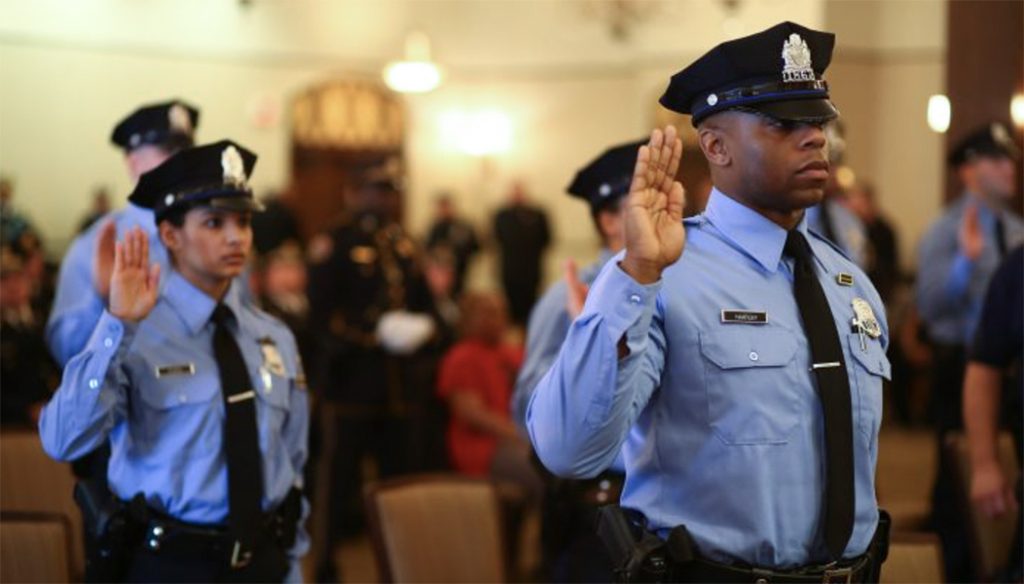
Back Door May-Issue: DOJ Investigating Philly PD Over Vague ‘Good Cause’ Concealed Carry Permit Revocations By Shooting News Weekly

Philadelphis police officers cops (image: city of Philadelphia)
Image: City of Philadelphia

Today, the Justice Department opened an investigation to determine whether Philadelphia Police use a vague “good cause” standard to cancel permits to carry legal firearms.

The U.S. Constitution’s Second Amendment protects the civil right keep and bear legal firearms — including the right to legally carry firearms where allowed. The investigation focuses on the Philadelphia Police’s permitting system; the investigation does not support any armed obstruction of federal or local law enforcement.

“I have directed the Civil Rights Division, through our Second Amendment Section, to defend law-abiding citizens from local authorities who infringe the right to safely carry legal firearms,” said Assistant Attorney General Harmeet K. Dhillon of the Justice Department’s Civil Rights Division. “Law-abiding Americans, regardless of where they live, should not have to worry that their city will revoke their means of self-defense.”

It is a violation of the Second Amendment for government officials to use vague, personal discretion when determining whether to issue or revoke permits to carry firearms.

In 2008, the U.S. Supreme Court, in its landmark decision District of Columbia v. Heller, held that the Second Amendment protects the right of law-abiding citizens to possess weapons that are in common use for lawful purposes.

In 2022, the Supreme Court held, in another case, that permitting officials may not base licensing decisions merely on their personal discretion. Here, it is alleged that Philadelphia Police use just such a discretionary standard to improperly limit Second Amendment rights.

The Civil Rights Division’s Second Amendment Section enforces the Second Amendment. If you believe your right to keep and bear arms is being infringed, please submit a complaint through www.justice.gov/crt/second-amendment-section.

Categories
All About Guns Anti Civil Rights ideas & "Friends" Gun Fearing Wussies

Gun sales SURGE in blue state ahead of sweeping ban on certain weapons

Categories
All About Guns Anti Civil Rights ideas & "Friends" You have to be kidding, right!?!

Connecticut: Governor Lamont Chooses Political Theatrics Over Constitutional Rights with Pistol Ban

Today, May 26th, Governor Lamont signed away more 2nd Amendment rights of law-abiding Connecticut residents by signing H5043 – A bill he himself requested that bans future manufacture, sale, and importation of many commonly owned handguns in Connecticut.

It also puts new restrictions on unfinished frames and receivers. This legislation erodes the freedoms of law-abiding manufacturers, dealers, and residents rather than stop individuals performing already illegal modifications to notably mainstream firearm platforms.

From The NRA

Categories
All About Guns Allies Anti Civil Rights ideas & "Friends" Gun Fearing Wussies

NRA, SAF, and FPC File Same-Day Lawsuit Against Maryland’s New Glock Ban Mark Chesnut

Three major gun-rights organizations filed a federal lawsuit against Maryland’s new ban on Glock-pattern pistols within hours of Gov. Wes Moore signing the legislation into law.

The lawsuit — NRA v. Moore — was filed May 26 in the U.S. District Court for the District of Maryland by the National Rifle Association, the Second Amendment Foundation, and the Firearms Policy Coalition. Defendants include Gov. Moore, Maryland Attorney General Anthony Brown, and acting Maryland State Police Superintendent Michael Jackson.

The same-day filing reflects how prepared gun-rights organizations have become to challenge state-level firearms legislation as soon as it becomes law — and how clearly the Maryland bill telegraphed its constitutional vulnerabilities during the legislative process.

What Maryland’s law actually does

The legislation, SB 334, makes it unlawful in Maryland to manufacture, sell, offer for sale, purchase, receive, or transfer a “machine gun convertible pistol” beginning January 1, 2027. The law defines that category as:

“Any semiautomatic pistol with a cruciform trigger bar that can be readily converted by hand or by using common household tools into a machine gun by the installation or attachment of a pistol converter as a replacement for the slide’s backplate.”

The technical definition matters because of what it actually covers. The “cruciform trigger bar” is a standard internal component in many of the most popular handguns sold in America, including the entire Glock lineup, the Sig Sauer P320 (the U.S. military’s current standard sidearm), and several Smith & Wesson M&P variants. The cruciform shape is a design feature of these pistols, not an aftermarket modification.

Under Maryland’s new law, the legal status of these handguns turns not on what has been done to them, but on whether they could theoretically be modified using “common household tools.”

The pattern across states

The Maryland law closely tracks the convertible pistol provisions New York included in its state budget bill earlier in May. Both states use the cruciform trigger bar framework. Both target the same class of widely-owned handguns. Both make possession of standard, legally-purchased pistols a crime based on theoretical convertibility rather than actual modification.

The synchronization isn’t coincidental. State-level gun control legislation increasingly moves across multiple jurisdictions on similar timelines and with similar legal architecture, suggesting coordinated drafting and advocacy. New York and Maryland have now created what amounts to a template that other restrictive states are likely to consider.

The federal context for “Glock switches”

So-called “Glock switches” or “auto sears” — small aftermarket devices that convert semi-automatic Glock-pattern pistols to fully automatic fire — are already illegal under federal law as unregistered machine guns under the National Firearms Act. Possession is a federal felony punishable by up to 10 years in prison. Manufacturing, selling, or installing one carries the same penalties.

The federal framework already heavily criminalizes the actual conversion devices. Maryland and New York have chosen to also criminalize the host pistols on the theory that they could be converted, regardless of whether they have been or ever will be.

Gun-rights advocates have warned for years that the “Glock switch” issue would eventually be used to justify banning the underlying pistols. Maryland’s law makes that warning concrete.

The constitutional argument

The lawsuit argues that Maryland’s law violates the Second Amendment by banning common firearms protected under the Supreme Court’s Heller framework.

NRA’s Institute for Legislative Action framed the central legal argument plainly in a legal update on the lawsuit:

“In District of Columbia v. Heller, the U.S. Supreme Court held that ‘common’ firearms cannot be banned and specifically struck down a handgun ban as unconstitutional. Maryland’s prohibition on many of the most popular handguns in America blatantly defies the Court’s precedent.”

SAF Executive Director Adam Kraut characterized the law’s logic as fundamentally backwards.

“Maryland has now attempted to ban these firearms because a subset of criminals illegally modifies them, using conversion parts that are themselves illegal to possess, and then commit crimes with the modified handguns,” Kraut said in an SAF news release. “Not only is this law as foolish as banning hops and barley to prevent drunk driving, but these commonly owned arms are clearly protected by the Second Amendment, the ratification of which takes certain policy choices — including this one — off the table.”

FPC President Brandon Combs used sharper language.

“Maryland’s politicians just declared war on an entire class of constitutionally protected handguns and the peaceable people who want to own them,” Combs said in an FPC news release. “This ban is immoral, unconstitutional, and tyrannical. FPC and our Grassroots Army are going to force Maryland to respect the Second Amendment, full stop.”

The 4th Circuit problem (again)

The Maryland Glock ban lawsuit faces the same procedural reality as the SAF coalition’s Virginia assault weapons lawsuit: it will be litigated in the U.S. Fourth Circuit Court of Appeals, which has been the most hostile federal circuit to gun-rights challenges in the post-Bruen era.

The Fourth Circuit upheld Maryland’s existing assault weapons ban in Bianchi v. Brown (August 2024). The Supreme Court denied certiorari in the renamed Snope v. Brown case in June 2025, leaving the Fourth Circuit’s reasoning intact as binding precedent. The same court that upheld Maryland banning one category of firearms will now be asked to strike down Maryland banning another.

Gun-rights advocates have a stronger handgun-specific argument here than in the assault weapons context. Heller explicitly addressed handgun bans and explicitly struck one down. The Maryland Glock ban is much more directly analogous to the D.C. handgun ban Heller invalidated than the Maryland assault weapons ban was to anything the Supreme Court has previously addressed.

That distinction may or may not matter in the Fourth Circuit. It almost certainly will matter if the case reaches the Supreme Court.

What’s next

The law takes effect January 1, 2027, giving the plaintiffs roughly seven months to obtain preliminary injunctive relief before enforcement begins. Preliminary injunction motions typically follow within weeks of complaint filing — meaning the first significant court rulings on the Maryland Glock ban are likely before fall 2026.

For Maryland gun owners, the law’s January 1, 2027 effective date means current Glock and similar pistol owners are not yet criminalized. The question is whether they will be on January 1 — which depends on whether the lawsuit produces injunctive relief in time.

The Maryland lawsuit joins a growing list of post-Bruen legal challenges that the federal court system is working through. Combined with the NSSF’s parallel lawsuit against Virginia’s gun control package, the 2nd Circuit’s vampire rule ruling, and the pending SAF cert petition on Maryland’s sensitive places framework, the courts will be deciding multiple consequential Second Amendment questions over the next 12-18 months.

============================================
Categories
Anti Civil Rights ideas & "Friends" Gun Fearing Wussies

What the other side really believes about Guns in America

The Gun Industry Knows That Gun Laws Save Lives. It Just Doesn’t Care.

A series of articles by The Trace and Rolling Stone dive deep into the gun industry’s sacrifice of public safety in its pursuit of profit.

Last year, investigative journalist Mike Spies published an extraordinary series of articles about how the firearm industry operates—and the lies it tells to juice gun sales.

Called “The Secret Files of the Gun Industry” and published in partnership with The Trace and Rolling Stone, this reporting should’ve shaken the industry to its core. But gun industry CEOs have a tendency to get away with dangerous and questionable behavior, so they ran their usual playbook and rode out the crisis until the news cycle moved on.

But we didn’t forget, and we’re not letting anyone else move on either. The documents Spies uncovered illuminate a persistent dynamic in American gun politics: What the gun industry privately knows is very different from what it says publicly.

Gun Industry Polling Reveals Americans Support Gun Laws

Now, this probably isn’t very surprising. But consider the market for large-capacity magazines, which are magazines with the capacity to hold 10 or more rounds. They’re often used in mass shootings because they allow a shooter to fire a lot of rounds before stopping or pausing to reload, in turn increasing casualties and reducing the likelihood of escape or intervention.

Internal industry analyses show how carefully gun companies tracked the proliferation of large-capacity magazines in the US, and how commercially important these deadly devices are to them. After all, they’re high-volume and relatively inexpensive—the gun industry is making millions from them.

The article also illustrates just how dangerous large-capacity magazines are in practice, despite protests from the gun lobby:

“The NSSF’s claim [that any capacity-based ban on the manufacture and sale of magazines would be arbitrary and infringe upon Second Amendment rights], according to research by economist Lucy Allen, lacks empirical support. For litigation, she and a team analyzed 736 incidents, between January 2011 and May 2017, in which the National Rifle Association documented a person using a firearm for self-defense… Her analysis found that the people in the database fired 2.2 shots on average, and out of the 736 total incidents, only two involved a person reportedly firing more than 10 bullets.

Allen also documented and examined 161 mass shootings that took place between 1982 and 2019. For 105 of them, the shooter’s magazine capacity was known. Of those, 63 — or 60 percent — involved LCMs. ‘In particular,’ Allen noted, ‘we found an average number of fatalities or injuries of 27 per mass shooting with a large-capacity magazine versus 9 for those without.”

While the industry has long resisted regulations targeting large-capacity magazines, after the 2018 Parkland school shooting, the National Shooting Sports Foundation commissioned research examining Americans’ attitudes toward gun policy. The results complicate one of the most familiar talking points in gun politics.

According to the industry’s own polling, many Americans who hold favorable views of gun ownership, including gun owners themselves, are open to supporting gun regulations. That is very different from industry portrayals of gun owners as a bloc uniformly opposed to any gun law, no matter how commonsense the laws may be:

“Why have Republican lawmakers largely stood against more significant reforms, let alone any reform at all? As the study indicates, many people with a favorable view of gun ownership appear open to going further than the lawmakers and special interests who represent them.

[…]

For people who the study says have a ‘positive feeling’ about gun ownership, the study ranks the top five arguments for and against it… When told to rank the ‘most effective arguments against firearm ownership,’ these same respondents chose policies that the gun industry and Republican lawmakers actively oppose. The argument the group found to be most effective is: ‘Universal background checks for gun sales and transactions are supported by approximately 85 percent of Americans.’

Other statements deemed highly effective by these respondents included ‘Guns should be licensed just like cars,’ ‘State red flag laws to remove guns from those who show warning signs of violence keep guns out of the hands of those who would harm themselves or others,’ ‘Gun violence is an epidemic in the U.S.,’ and ‘Common sense gun laws to close loopholes in current gun laws will save lives and prevent gun violence.’

And yet, since this survey was conducted, Republicans have blocked efforts to pass universal background checks, which would expand the procedure to all firearms transfers instead of just commercial sales.”

Minimal Support for Concealed Carry

Internal studies reviewed by Spies also shed light on the debate over concealed carry. If the gun lobby had its way, anyone would be able to carry a concealed gun on them anywhere, regardless of local laws.

Gun rights advocates frequently argue that widespread concealed carrying of firearms increases public safety and deters crime. But in the industry-funded research that Spies uncovered, many respondents reported feeling less safe when they believed people around them might be carrying concealed firearms. This lines up with the data: The more guns are in public, the higher likelihood of lethal violence.

A Focus on Extremist Marketing

A chilling part of the series sheds light on gun marketing and its role in fueling violent extremismInternal research identifies a core consumer demographic for the gun industry: frequent firearm purchasers whose motivations often center on personal protection, preparedness, and perceived threats to social order. As one article explains:

“The NSSF’s research also showed that first-time buyers do not account for the bulk of industry profits, comprising less than 23 percent of sales in 2022, a figure consistent with the years before the pandemic surge. That means once the gun industry brings a customer in, it must keep him, a task that requires not only the selling of guns, but also the culture and politics of gun ownership. What makes white men in particular susceptible to this messaging is a matter of academic study. The sociologist Jennifer Carlson, a professor at Arizona State University, introduced the concept of the ‘citizen protector,’ a man who experiences a sense of dislocation in today’s America. He may be struggling economically, or feel he’s not succeeding as a provider or a contributing member of the broader society. Deprived of a traditional masculine role, these men reimagine themselves as soldiers on the front lines, an honorable identity that bestows power.” 

That’s why marketing campaigns for guns and gun-related products frequently draw on those themes, emphasizing danger, instability, and confrontation. These narratives fuel paranoia and extremism, and glorify combat. And for the businesses, they’re successful—these campaigns are very effective at selling guns, even if they do so while driving up crime and violence.

Safety Must Come First, Not Profits

The documents Spies unearthed provide an unusually detailed portrait of an industry that has long operated with limited public scrutiny. They show a sophisticated ecosystem of market research, political strategy, and consumer targeting.

For policymakers, journalists, and advocates trying to understand the dynamics of gun violence in America, that insight matters. The story of gun violence is as much about how guns are sold as it is about how they are fired, and to end gun violence we must understand the industry that works relentlessly to sell as many as possible.

===============================================    Gee whiz the Gun Industry wants to make money! What a shocking observation! Kinda like this author wants a pay check. Huh, now who would of guessed that one? Grumpy


Categories
All About Guns Anti Civil Rights ideas & "Friends" You have to be kidding, right!?!

The Two States That Just Banned America’s Most Popular Handgun

Categories
All About Guns Anti Civil Rights ideas & "Friends"

Virginia NEVER Expected THIS from their AR-15 Ban

Categories
All About Guns Anti Civil Rights ideas & "Friends" You have to be kidding, right!?!

BREAKING! Virginia Senate To *PERMANENTLY IGNORE* Court Rulings On Gun Law!

Categories
All About Guns Anti Civil Rights ideas & "Friends"

Prosecutors Won’t Enforce Gun Ban! Governor and AG Respond

Categories
Anti Civil Rights ideas & "Friends" Blessed with some of the worst luck Dear Grumpy Advice on Teaching in Today's Classroom

What it looks like when your Civil Rights are killed

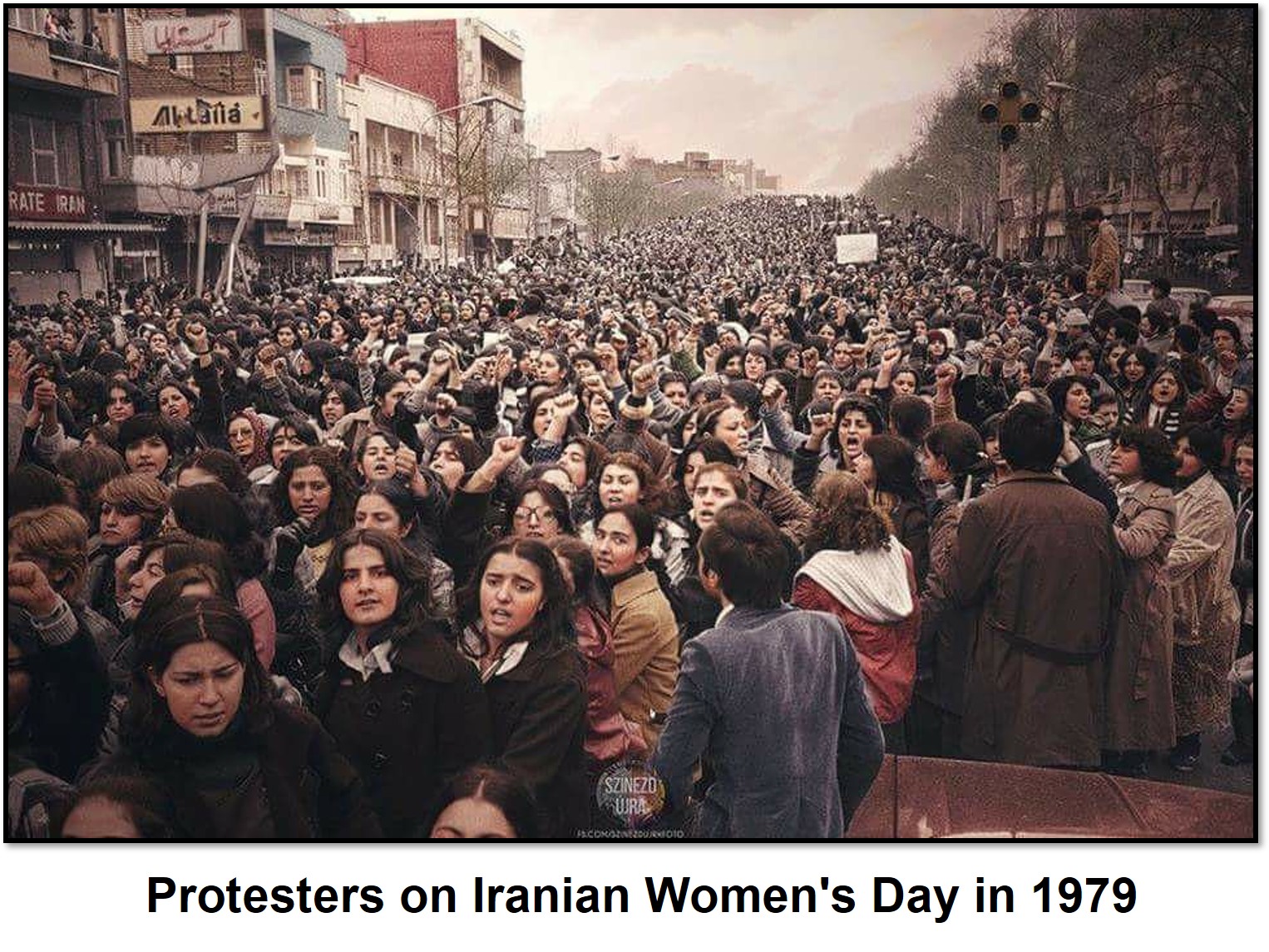
On March 8, 1979, over 100,000 Iranian women gathered in Tehran on International Women’s Day to protest Ayatollah Khomeini’s newly announced compulsory hijab decree. The crowds marched from Tehran University to protest the loss of personal choice and their civil liberties.
The demonstrations were triggered by a newspaper announcement on March 7 stating that women would be required to wear headscarves in the workplace. Women from all walks of life, including nurses, students, mothers, and professionals, marched with their hair uncovered to demand bodily autonomy.
The crowd famously chanted, “We didn’t have a revolution to go backwards” and “Freedom is not Eastern or Western, but universal”. Iconic images of the protests were captured by photojournalist Hengameh Golestan, documenting the unified opposition to the new Islamic Republic’s laws.