Even in an alternate universe, the Hound is still angry at a dwarf.
Category: Dear Grumpy Advice on Teaching in Today’s Classroom



Yeah his Dad was that Theodore Roosevelt! Sadly only Terry Allen survived the war as both Patton & Roosevelt died. TR from a heart attack after he was awarded the M.O.H.. Patton died from a car crash. They just don’t build them like they used to! Grumpy
==============================================
Theodore Roosevelt Jr. was never meant to be a distant figure on D-Day. A brigadier general and assistant commander of the 4th Infantry Division, he refused to stay behind. At 56 — older than most men in the invasion — and burdened by severe arthritis and a weakened heart, his superiors urged him not to go. He ignored them.
Roosevelt insisted on landing with the first wave at Utah Beach on June 6, 1944. He believed a leader’s place was not in safety, but beside his men—especially at the moment it mattered most. It was a principle his father had lived by, and one he felt bound to uphold. Cane in hand, he stepped onto the landing craft.
When they hit the shore, nothing went as planned. The troops had landed nearly a mile south of their intended position. Units were scattered. Confusion spread under enemy fire. It could have unraveled quickly. Roosevelt didn’t panic. He took one look at the situation and made a decision that would define the day. “We’ll start the war from right here.”
With that, he moved forward — personally directing troops, reorganizing units, and pushing the assault inland. Amid the chaos, his calm presence became an anchor. Soldiers who recognized him saw not just a general, but a man sharing their risk, standing exactly where they stood. What could have been a disaster became a coordinated advance.
Roosevelt survived the landing. But the cost followed him. Just over a month later, on July 12, 1944, he died of a heart attack in Normandy. The strain of the campaign had been too much. He was awarded the Medal of Honor for his actions on D-Day. Today, he lies buried at the Normandy American Cemetery — beside his younger brother Quentin, who was killed in World War I.


In the 2nd century CE, Rome discovered a new way to wage war — not just with steel and discipline, but with **fear itself**. The *draco*, or dragon standard, was both a weapon of terror and a masterpiece of engineering.
It was made of a bronze dragon’s head with wide, open jaws, attached to a long sleeve of crimson or purple fabric. As cavalry charged forward, the wind rushed through the mouth, inflating the body so it appeared to come alive — a serpent twisting and shrieking in the air. The sound it produced, a haunting metallic whistle, swept across the battlefield like the roar of an angry god.
At the front rode the **draconarius**, the standard-bearer who carried the living banner into battle. His task was not just to lead but to intimidate — to let the enemy hear the scream of Rome before the clash even began.
The *draco* was originally borrowed from the Dacians and Sarmatians, fierce horsemen who used it to unnerve their foes. But the Romans, with their unmatched talent for adaptation, perfected it. They made the dragon not just a symbol of the cavalry but a reflection of imperial might itself.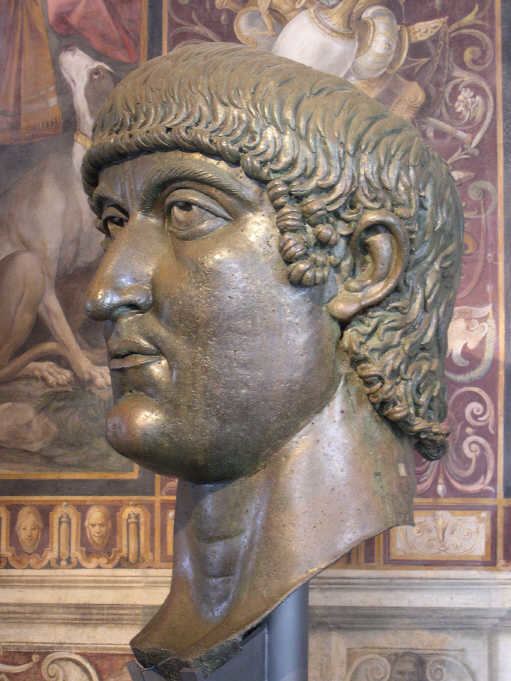
By the reign of emperors like Constantius II, the *draco* had become more than a battlefield banner — it was an emblem of divine power. It appeared on monuments, mosaics, and sarcophagi, its serpent form frozen in bronze and stone, forever roaring into eternity.
Some historians suggest that the eerie sound of the *draco* may have carried coded meanings — subtle variations used to signal commands or formations through the chaos of battle. Whether that’s true or not, its psychological power was undeniable. The *draco* wasn’t just seen or heard — it was **felt**, deep in the chest, a chilling reminder that Rome’s legions could command even the wind.
The dragon of Rome wasn’t a mythic beast, but it might as well have been — a serpent of air and terror, carrying the empire’s voice into war: a wind-borne cry of conquest that turned silence into submission.
Categories
A Victory! All About Guns COOL!!!!!!!!!!!!!!!!! Dear Grumpy Advice on Teaching in Today's Classroom Hard Nosed Folks Both Good & Bad I am so grateful!! Leadership of the highest kind Manly Stuff One Hell of a Good Fight Our Great Kids Real men Soldiering Stand & Deliver The Green Machine This great Nation & Its People War Well I thought it was neat!