Categories
Category: War
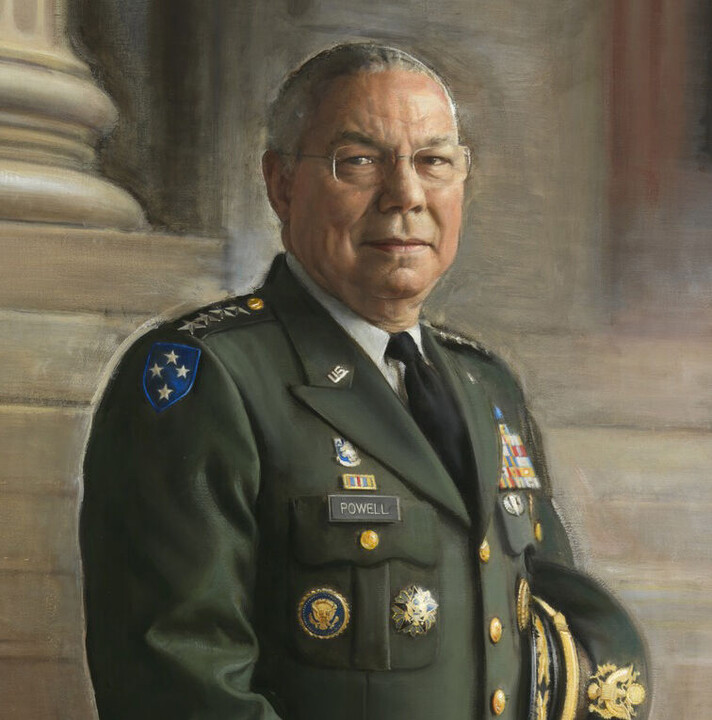
“Leadership is the art of accomplishing more than the science of management says is possible.”
This is one of many quotes attributed to legendary public statesman and former Secretary of State Colin Powell.
Since his retirement from public office in 2004, Powell has spent much of his time sharing his leadership knowledge with the business community. In his 2012 book, It Worked For Me, Powell attributes his success to hard work, straight talk, respect for others, and thoughtful analysis.
At the heart of the book are Powell’s “13 Rules” — ideas that he gathered over the years that formed the basis of his leadership principals.
Powell’s 13 Rules are listed below. They are full of emotional intelligence and wisdom for any leader.
1. It Ain’t as Bad as You Think! It Will Look Better in the Morning. Leaving the office at night with a winning attitude affects more than you alone; it conveys that attitude to your followers.
2. Get Mad Then Get Over It. Instead of letting anger destroy you, use it to make constructive change.
3. Avoid Having Your Ego so Close to your Position that When Your Position Falls, Your Ego Goes With It. Keep your ego in check, and know that you can lead from wherever you are.
4. It Can be Done. Leaders make things happen. If one approach doesn’t work, find another.
5. Be Careful What You Choose. You May Get It. Your team will have to live with your choices, so don’t rush.
6. Don’t Let Adverse Facts Stand in the Way of a Good Decision. Superb leadership is often a matter of superb instinct. When faced with a tough decision, use the time available to gather information that will inform your instinct.
7. You Can’t Make Someone Else’s Choices. You Shouldn’t Let Someone Else Make Yours. While good leaders listen and consider all perspectives, they ultimately make their own decisions. Accept your good decisions. Learn from your mistakes.
8. Check Small Things. Followers live in the world of small things. Find ways to get visibility into that world.
9. Share Credit. People need recognition and a sense of worth as much as they need food and water.
10. Remain calm. Be kind. Few people make sound or sustainable decisions in an atmosphere of chaos. Establish a calm zone while maintaining a sense of urgency.
11. Have a Vision. Be Demanding. Followers need to know where their leaders are taking them and for what purpose. To achieve the purpose, set demanding standards and make sure they are met.
12. Don’t take counsel of your fears or naysayers. Successful organizations are not built by cowards or cynics.
13. Perpetual optimism is a force multiplier. If you believe and have prepared your followers, your followers will believe.

Colin Powell’s rules are short but powerful. Use them as a reminder to manage your emotions, model the behavior you want from others, and lead your team through adversity.
Rest in Eternal Peace, General!
Thank you for your service to the United States, the world, and Mankind.

The world is a better place for you having been in it for 84 years.
Godspeed!
My message to the non-Hebrew speakers. Feel free to share.
Until Saturday I was Stav Bartel. From then and until further notice I am Chief Sergeant Stav Bartel, fighter in the IDF 7109 reserve infantry battalion.
I would like to share that since Saturday morning I am in near the front in Gaza, fighting against the barbarian invasion of Hamas. I want to bless all who genuinely strive to know the truth. Do not back down and don’t let the cynics shove irrelevant pseudo-rationales that would downplay the scale of this crime. There are numerous reports all over the media from reliable sources. These events are unfolding and Western media begin to realize them much later than needed. Do not let anyone decive you.
Lots of my friends and acquaintances had their loved ones were butchered. The enemy is cynically denying anything they themselves filmed doing. Don’t legitimize this. Hamas is evil, don’t fall into that stupid relativistic attitude, that attempts to show the “other side” of Hamas. See the true pictures from Gaza, the voice of the Gazans, but not the voice of Hamas. A group that launches an attack that massacres, butchers innocent men, women and babies, a group that burns houses with civilians trapped inside, forcing them to flee and then massacring them. My friends told me the TERRORISTS were piling bodies from the festival with a tractor and tried to burn them.
A family member of a friend of mine was raped three times. Others were abducted. An acquaintance of mine told me she hid in a bunker after the attack on the rave party, luckily left to treat the wounded, and she saw the terrorists throwing grenades into the bunkers. Her friends were injured, others killed. She carried them wounded under fire. I’ve received these testimonies already on Saturday morning. At the kibbutzim, babies were abducted, others killed, choked, and beheaded. Grandmothers were abducted, entire families were wiped out. This is not an IDF assault from air on a building used by Hamas, housing civilians as human shields. And this is no mistake. There is no way to compare. None of these people were a threat to anyone, they were not next to IDF troops. And this attack had no military objective. This is not a legitimate response to anything, not a proper way to deal with occupation or blockade. There is absolutely no way to justify any of this.
This was done by hands. This is not arresting Palestinian rioters. I’ve done it countless times during my service. Never, NEVER through my entire service have we ever treated an arrested Palestinian that way. We never beat them, never torture them. Never hurt them for fun. Quite the contrary. And if any of my soldiers mistreated them I would stop them immediately. We were always told, the IDF’s morals are the Purity of Arms, the Value of Human Life. We have been attacked so many times, we were equipped with guns and could massacre the masses, but we never did. We suffered rocks and molotov cocktails, got injured but never lost our humanity. Never tortured. I have always had a soft spot for Palestinian children, when entering their homes, I hated the idea of their fear. I often comforted them. And also during the checkpoints. Countless times we laughed with them, gave them high fives. We treated them as human.
I know the situation in for the Palestinians is not good. I know it is far from right. We are not blind to it. And more often then not I’ve regretted our governments. It is complicated. I believe they deserve to live good lives just like we do.
But Hamas are not true representatives of the Palestinians. They are a proxy of Iran, they are a lunatic, ultra-religious murderous organization. They portray themselves as the weak, freedom fighters, but in truth, they are just thugs. All of them. We are no saints, but they are the devil. While we sometimes fall in judgment, they have no morals in the first place. They celebrate death, cheer for the sight of fire and destruction and enjoy the smell of blood. They are animals and they have always been, ever since they started with the suicide bombings. And Hezbollah and the PIJ and all other TERRORIST Organizations are no different.
I woke up on Saturday with a rocket barrage on my city, Tel Aviv, in the metropolitan area of 3 million people was attacked. A rocket fell in my neighborhood, where there is no military presence, no strategic sites. Just civilians. Soon we received the reports of terrorists armed for an all out war, rampaging through cities and villages, butchering people, desecrating their bodies and burning houses. We saw the videos of thousands of people fleeing from the festival. And there are stories I’ve heard that I can’t yet process. I am unable to even think about them. So much blood and gore on the most innocent of lives.
No more than 6 hours later, I was already on my way south to arm up with hundreds of other reservists in my unit. Some of them I’ve never seen, people who did not show up to previous reserve activity for years have showed up. 300 thousand Israelis showed up.
This is the largest deployment in the country’s history. This is how eager we are to defend our homeland. And civilians are doing circle in the air just to provide us with food and equipment. Everyone joined, not a single soul in Israel remained indifferent. Jews, Drzue, Christians, Arabs, Bedouin, people who just a few seconds ago only saw their differences, have all united against evil.
There is no question here, Hamas must be eradicated, just like ISIS. And what they have done is as big a crime against Israel as it is to the Palestinians. They have done nothing but bring on death and destruction on themselves, and we haven’t started yet.
I am now near the front, thwarting continuous infiltration attempts. They try and fail. Dozens of terrorist were killed. They are getting weaker and weaker and we are getting stronger and braver. They keep shooting on civilians. Rockets are falling near us, exploding over our heads. But our spirit is strong, we are strongly united, brothers and sisters, from all over the country, religious, secular, rich, poor… And the ground is shaking below our feet front our air force pounding of the devil’s den.
While their leaders are hiding in bunkers, some of our leaders, members of the Knesset, have showed up, volunteered to join the fighting units. My battalion commander, who lives in a kibbutz just next to the strip, who was abroad at the time, has lost his 18-year-old son, and before burying or even seeing him, he decided to take a flight, show up and help in whatever he can, even though he was given the option to stay home and weep. This is the spirit of our country. And we have no other land to go to. This is our secret weapon. We have one homeland.
My Israeli friends from across the world all began organizing donations, others have bought tickets, cutting their trips by months and came back to recruit. My little cousins set up stations to collect food and supplies from civilians for the soldiers. My family is doing anything they can and so everyone else.
I have gave much thought about my grandparents who fought the Nazi attempt to eradicate them, and others who suffered persecution anywhere they’ve been. Here we are united together, we have the right and duty to help ourselves. And we will do that for eternity. We cannot be beaten, and whoever will challenge us will be destroyed.
I am no religious person, but now more than ever the words Am Yisrael Chai are inscribed on my heart.
I hope to come back as well as possible, to tell our story.
Yes. Actually fairly extensively,particularly in the various colonial wars of the 1945–1960 era. Post WWII France used captured/requisitioned German & to an extent Japanese equipment during it’s colonial war in Indochina (1946–1954), including small arms, aircraft, even clothing. The iconic German MP 40 sub machinegun, the “Schmeiser” & the MG 34 machine gun were employed by the French, then the Viet Cong, & ARVN during both Indochina Wars. The French also made use of the Walther P 38 pistol post war, some of these were made in German factories taken over by the French in 1945 & in todays collectors market command high prices. The French also utilized both the German Ju 52 transport plane as well as the Fieseler “Storch” as a light observation, flare, & general utility aircraft in Indochina.
A plethora of Japanese aircraft were used by the French in the early days of the war in Indochina including fighters, bombers, & in particular maritime patrol aircraft. The Ki 43 “Oscar” fighter, the Ki43 “Sally” bomber, the Aichi E13A1 “Jake”, the A6M2 “Rufe”, just to name a few. During the Indochina War the Viet Minh employed many Japanese small arms (& even some Japanese artillery) against the French. The Japanese Arisaka 7.7 rifle, Nambu MG, & the Japanese “Knee Mortar” grenade launcher were all utilized. The French also used captured bolts of German camouflage cloth from WWII, both Waffen SS as well as Heer patterns to make uniforms for use in Indochina. During the Algerian War between the FLN & France in the 1950s, the French encountered FLN guerillas equipped with Italian Beretta sub machine guns as well as various Italian made rifles, even Italian steel helmets from WWII, as well as Germ weaponry from WW II.
French Foreign Leigonaire with German MP 40
North Vietnamese militia with German made MG 34 c. 1966.
German made P38 produced in Germany for a short time in 1945 for the French military.
Ju 52 transport plane. This would be France’s main transport workhorse in Indochina until 1951.
Fieseler Storch light reconnisance & light utility plane.
Japanese Ki 43 “Oscar” fighter plane in Indochina 1945–46.
Japanese made French Aichi E13A1 “Jake” maritime recon plane in Indochina 1946.
Japanese Knee mortar, many captured/confiscated examples were utilized by the Viet Minh in Indochina. (IMA)
FLN/ALN Algerian guerillas armed with German made MP40, MG 34 machine guns, & equipped with Italian steel helmets. Algeria c. 1962.
Algerian guerillas with Italian Beretta Modello 38 sub machine guns, a German MP40 SMG, & the fifth guy from the left armed with a German made MG 42. Algeria c. 1960
Categories
1886 Lebel POV firing
Categories
The 320mm Type 98 Mortar of WW2
Once, I Was a Peace Advocate. Now, I Have No Idealism Left.
After terrorists killed my cousin Daniel Pearl, my family called for peace. But after the worldwide celebration of our people’s slaughter, my hope for peace is dead.
The story I’m about to tell is one that many progressive Jews can relate to. In some ways, it’s a prototypical arc of a diaspora Jew who has always advocated for nuance. This week, something broke in us. We watched history repeat itself. Not just on the global scale, with the wanton massacre of our people, the savage mass murders and dismemberments of entire families and communities. But for many, my family included, history is repeating itself on a personal level as well.
In March 2003, I turned 13 and celebrated my bar mitzvah in Walnut Creek, California. By Jewish tradition, I became a man. But the ceremony felt redundant; I had already grown up. Only one year earlier, my older cousin, Daniel Pearl, an investigative journalist for The Wall Street Journal, was kidnapped and beheaded by Islamist jihadis while on assignment in Pakistan.
His killers, like the Hamas killers of last weekend, proudly released a video documenting Danny’s murder. Among Danny’s last words were, “My father is Jewish. My mother is Jewish. I am Jewish.” At first, I was in shock—how had my own cousin become a player in such a large international nightmare? Why did people get murdered simply for being who they are? In this case, for being Jewish?
Danny’s parents did not call for revenge. Instead they set up The Daniel Pearl Foundation that offers fellowships, sponsors cross-cultural music events (Danny was a gifted musician), and brings people together to improve the world. Even after what my family had been through, their work encouraged me to be idealistic and believe that the Jewish people could make peace with our neighbors. I became a fierce advocate for peace.
When I immigrated to Israel at the age of 18 and enlisted in the Israel Defense Forces, I was still driven by ideals. I thought I could promote more goodwill with our Palestinian neighbors. Serving in a combat unit based on the Gaza border, I witnessed the release of the kidnapped Israeli soldier Gilad Shalit, held for five years by Hamas, when his freedom was exchanged for more than 1,000 Palestinian prisoners. One for 1,000. Despite my many criticisms of the Israeli government, I recognized then how much Israel valued the life of every soldier.

On my rare free weekend, I spent my time at Kibbutz Be’eri. Because I was a “lone soldier”—that is, an immigrant without much close family in Israel—I was given a host family. They treated me like a son, including teasing me relentlessly for choosing to come to Israel and serve, whereas most Israelis have no choice. They were politically left, just like me. Despite rockets often raining down on them, they believed in peace, just like me. This week, when the terrorists came, ideals didn’t make a difference.
I watched the news in horror as terrorists massacred over 100 people at Kibbutz Be’eri. Women. Children. I frantically messaged my host family and heard nothing back. Like my cousin Danny years ago, my family was being held hostage. The good news: unlike Danny, my host family at Kibbutz Be’eri was saved. They are physically okay. But how can they really be okay, after watching their friends and neighbors being slaughtered?
There was a time when these types of events couldn’t shake my ideals. I used to argue relentlessly for a two-state solution. I fought bitterly with Israeli friends about the decency of the Palestinian people. Even though radical Islamists had murdered my cousin, even though civilians had been blown up in buses daily during the Second Intifada, I refused to give in to nihilism.
In 2012, I returned to the States to study film at University of Southern California, and published a book about my military service that criticized the Israeli government. This didn’t win me many friends, but I continued to advocate for nuance regardless. I proudly supported Black Lives Matter, LGBTQIA+, and feminist causes. I called myself a progressive Jew.
But over the years, I noticed a disturbing trend: With all the atrocities in the world, why did my social justice warrior friends hate Israel so disproportionately? Why did it feel like intersectionality excluded Jews? Why did the left—who supposedly stood up for human rights—put child-murdering Hamas terrorists on a pedestal?
At first, I thought it must be miseducation.
“Ah, they think Palestinians are the indigenous people. I’ll show that Jewish history, and the archaeology to prove it, dates back millennia.”
“Ah, they think we’re white colonizers. I’ll show how many Jews are people of color, including those who are Mizrahi, Sephardi, and Ethiopian.”
“Ah, they’ll get it once I show them that there are fifty Muslim countries, and only one Jewish state.”
But my friends weren’t interested in correcting their misunderstandings.

I agreed that the settlements were unlawful, that Gaza was a humanitarian crisis, that Israeli Prime Minister Benjamin Netanyuahu was a dictator. I assumed—if I cared enough, if I mourned for the Palestinian dead, if I put nuance above all else—our neighbors and their allies would give us the same decency.
How wrong I was. This past week, as over 1,300 Jews were slaughtered, the most murderous attack on Jews since the Holocaust, I saw the true face of Palestinians and their allies. All around the world, they celebrate. They gloat. They mock our tears. They do not protest against Hamas. They embrace pure evil.
And so, to the terrorists I now say:
When you killed my family, I forgave you. When you killed my people, I forgave you. But when you killed my idealism, I had no forgiveness left.
To non-Jewish friends who have reached out, thank you. It is simply the human thing to do. To friends who dare justify what has happened, you are not friends. You are nothing but Nazi supporters dressed up in leftist intellectual language. To the Palestinians: you have lost all moral authority to claim victimhood. I will never advocate for you again. To my family, friends in Israel, and Jews around the world hurting right now, I love you. Stay safe.
In Berlin, where I live today with my German-Ukrainian Jewish wife, Germans love to say “Never Again.” Right now, Never Again is happening again in real time, livestreamed for the whole world to see. I find myself looking up my military number in case the IDF reserves call for me. Unlike our enemy, I feel no joy at the prospect of going to war. But if our people’s existence is at stake, I will do what I must. I will be the world’s favorite villain: the Jew who has the audacity to defend his people.

Ilan Benjamin is the founder of FourFront, a social media entertainment business; an award-winning filmmaker; and the author of Masa: Stories of a Lone Soldier. Follow him on Twitter (now X): @ilanibenjamin.