
Categories

By John Taffin
In 1814 we took a little trip along with Col. Jackson down the mighty Mississipp”; so sang Johnny Horton in his hit recording of “The Battle of New Orleans.” The same year as this battle another momentous occasion took place hundreds of miles north in Hartford Connecticut as Sarah presented her husband Christopher with a son they named Samuel. Three years later another Samuel was born and both Sams were destined to cross paths. Those two Sams were Samuel Colt and Samuel Walker respectively. Sam Colt developed an early interest in firearms and explosives and the legend says by the time he was six years old he had dismantled an old single-shot pistol and rebuilt it with acquired parts from other broken pistols. Years later while attending Amherst Academy, Sam Colt got in trouble with his professors for actually shooting this old gun.
In 1830 Sam shipped out on the brig Corvo to begin training as a navigator and ship’s officer. Something else was definitely waiting to influence Sam and change his direction. While watching the ship’s wheel being rotated and then locked into place, Sam got an idea. Using his pocket knife he made a wooden model of a revolver.
One year before Sam was born Elisha Collier patented a revolving flintlock pistol in England and some were actually used by British troops in India. This was a very cumbersome first attempt at a repeating revolving pistol. The cylinder had to be rotated by hand and also needed percussion instead of a flint to make it more practical. It has now been proven Sam Colt saw Collier’s invention but he took his idea even further using the locking mechanism idea of the ship’s wheel eventually equipping his revolvers with a pawl and ratchet. In 1836 Sam’s idea became reality with his first revolver, the Colt Paterson.

The 5-shot .36 Paterson of 1836 compared to the 6-shot .44 Walker of 1847.

Targets fired at 20 yards with the Transitional Walker. Notice how high the
revolver shoots as “X” marks the aiming point. Most were sighted to strike
point of aim at 100 yards.
The Paterson, so named for the factory at Paterson New Jersey, was a 5-shot affair with a revolving cylinder usually in .28, .31, .34, or .40 caliber. As with all subsequent percussion revolvers it was loaded from the front with powder and ball and then primed at the back of the cylinder with a percussion cap. However, unlike Colt revolvers following, the Paterson did not have a triggerguard, and a folding trigger came down as the hammer was cocked.
Shooting a replica Paterson without the trigger guard is an interesting experience as it always seems like there’s a possibility of actually dropping the sixgun. In spite of this and also being very fragile it was still a tremendous improvement over single-shot pistols. Now a Texas Ranger carrying two pistols had 10 shots instead of two.
The most famous story surrounding the Paterson concerns a small band of Texas Rangers, probably 15 in number, led by Major John Coffee “Jack” Hays. While patrolling, Hays’ Rangers encountered a large band of Comanches west of San Antonio in the Nueces Canyon. The Indians were prepared to make short work of the invading Rangers.
One of those Rangers was Sam Walker who would write of the revolvers to Sam Colt: “The Texans who have learned their value by practical experience, their confidence in them is unbounded, so much so that they are willing to engage four times their number. In the summer of 1844 Col. J C Hays with 15 men fought about 80 Comanche Indians, only attacking them upon their own ground, killing and wounding about half their number. Up to this time these daring Indians had always supposed themselves superior to us, man-to-man, on horse … result of this engagement was such as to intimidate them … With improvements I think they can be rendered the most perfect weapon in the world for light mounted troops which is the only efficient troops that can be placed upon our extensive Frontier to keep the various warlike tribes of Indians and maurauding Mexicans in subjection. The people throughout Texas are anxious to procure your pistols & I doubt not you would find sale for large number at this time.”

Replicas of the Walker have the same problem as the originals —
a loading lever which unlatches. That could be inconvenient!
By 1845, Congress had annexed the Republic of Texas making war with Mexico a foregone conclusion and the Texans who had been fighting Mexico alone finally received federal help as General Zachary Taylor arrived in Corpus Christi with about 3,500 mounted troops. Both Taylor and many of his officers had used the Colt Paterson in the war against the Seminoles in Florida. Taylor gathered all the Colt repeaters he could find, however by this time Colt was bankrupt and the Paterson factory was closed. The Texas Rangers were drafted into United States service, with two of those Rangers being Jack Hays and Samuel Walker. In 1846 Taylor sent then Captain Walker back to recruit volunteers from Maryland as well as acquire more Colt revolvers. The problem was there were no more Colt revolvers.
As a result of the bankruptcy Colt had nothing, no factory, no machinery, no working models, and no money, however he did possess his genius and ingenuity. He certainly saw the opportunity and quickly made an improved working model from memory. In late 1846 Sam Walker ordered 1,000 “heavy” revolvers complete with several improvements. By heavy Sam Walker meant larger in caliber than the Paterson and definitely stronger.
These were to be true sixguns, 6-shot, 9″ barrels, and in .44 caliber. Colt contacted Eli Whitney Jr. — who did have a factory — and the agreement was made for Whitney to produce the Colt revolver. This gun became known as the Model of 1847 Army Pistol, or more commonly — the Walker. The Walker literally dwarfed the sleek little Paterson. It weighed 41/2 pounds, with a much larger grip, square-backed brass trigger guard, and a loading lever mounted under the barrel. Colt was able to deliver such a large number of sixguns simply because Eli Whitney Jr. understood interchangeable parts. Any part from any Walker could be easily placed in any other Walker. This was long before Henry Ford and his assembly line production.
The first Walker sixguns would be delivered in July of 1847, however they would not reach Texas until much later in the year. Colt had presented Walker with a matched pair of Walkers and he was using these when commanding his force of 250 men against 1,600 Mexicans in the town of Huamantla. Walker was killed in this battle on October 9, 1847. The fighting had basically ceased by November and a peace treaty was signed in February 1848 with very few of the Colt Walkers actually seeing service in the war with Mexico. Sam Walker was dead, however Sam Colt and his company were now solidly based.

The Transitional Model of 1848 had a shorter barrel and cylinder and loading lever lock.

Leather is not easy to find for Walkers or Transitional Walkers so Taffin makes his own.
Walker held his Colts in high esteem saying they were good on man or beast out to 200 yards. However, the Walker Colt would be short-lived and more improvements would soon arrive, for as effective as it was it had two major drawbacks. Walkers were huge sixguns, and issued to the Rangers in pairs they were heavy and cumbersome sixguns. Walkers are not only so heavy they are very difficult to use, especially one-handed, but a second problem is the loading lever often drops upon recoil.
Genuine Walkers are rare and very expensive, however I have had considerable shooting experience with four replicas and they are authentic down to the point of having loading levers drop when the Walker is fired with a full house load of 50 or more grains of black powder.
It did not take long for the Walker to be improved. In 1848 the Transitional Whitneyville Walker Hartford Dragoon appeared. The grip frame, the mainframe and working parts remained the same however the cylinder was shortened slightly and the barrel was cut back to 71/2″. The locking arrangement of the loading lever was also changed moving it from the center of the lever to the end, with the spring-loaded male end matching up with the female stud on the barrel.
I have been shooting percussion revolvers, both original and mostly replicas, since the mid-1950’s. Today’s replicas, especially those from Uberti are very well made as to fit and finish, authentically styled, and the cylinders lock up tightly. Just this past month I purchased a Transitional Walker Dragoon from Cabela’s and it averages just over 1″ for five shots at 20 yards using 30, 35, 40 and 45 grains of Hodgdon’s Pyrodex P, which is comparable to FFFg black powder. With 45 grains, muzzle velocity is well over 1,050 fps.
The Uberti Dragoons are very well made, tightly fitted and very nicely finished, however there are two things to be done to make them much easier to use. One problem with this Transitional sixgun as well as the new 1st and 2nd Model Dragoons is the fact the stud on the barrel has a receptacle for the locking latch of the lever which was cut at the wrong angle. Upon firing the latch would release allowing the lever to drop down. A few files strokes by my friend Denis to the angle on the stud to make it parallel with the barrel solved this problem.
We also found the rammer on the loading lever had a tendency to grasp seated bullets and pull them back out of the cylinder. The problem was when the bullet seating stem was finished a very small ring of metal around the edge was turned over into the bullet seater causing the problem. Denis came to the rescue again and cleaned out the excess metal using a cutter, finishing it off with emery paper.

Powder, a capper with percussion caps and round balls keep these
Transitional Models (and Walkers) shooting.
Colt shortened the cylinder and barrel on the Transitional Model to make it lighter and somewhat smaller bringing it to about four pounds. But how powerful were the 9″ Walker Colts with their longer cylinders? Using a replica 1847 Walker with .454″ Speer round balls and CCI #11 Caps over 55 grains of Goex FFFg with a lubed Thompson Wad in between powder and ball results in a muzzle velocity of 1,224 fps and places five shots into 11/4″ at 50 feet. This is the most accurate load I’ve found in my Walkers. Going up to 60 grains, something I would not recommend for continuous everyday use, gives a muzzle velocity well over 1,300 fps. With a 140-gr. ball at that muzzle velocity the Walker was definitely in what would become Magnum Territory. The Texas Rangers were definitely well armed.
Sam Colt furnished 1,000 Walker revolvers to the Army. These were serial numbered to match the Company receiving them. A Company got A1 to A220; these were followed by B1 to B220, C1 to C220, D1-D220, and the remaining sixguns were probably E1 to E120 making a total of 1,000 Walkers. Colt also made non-lettered Walkers, about 100 of them, to give away to the right people. Once the Army contract was fulfilled Colt opened his own factory in Hartford, Conn. The stage was now set to produce the Dragoons.
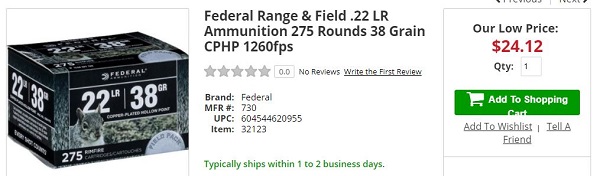
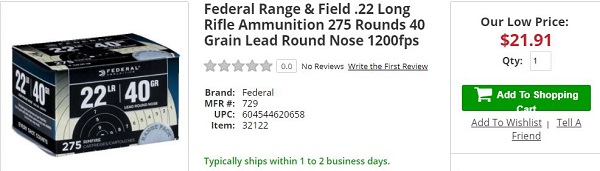
*No local retail outlet has the two in stock, when I checked. Lucky Gunner has the Field but not the Range, and its price on the Field is phenomenal: $19.00 (6.9c/round) vs. CheaperThanDirt’s $24.12 as pictured above. CTD, however, does have both variants in stock and their shipping is quite a bit cheaper (the warehouse is located just a few miles from where I live), so this time I’ll go with CTD.
Update: I needed a couple other items from CTD, so I added them to the basket and qualified for free shipping. Hubba-hubba.


The election in November is anything but a sure thing and it is quite possible that the USA will have Hillary Clinton as its next President. One of the first things that totalitarian tyrants do is disarm the populace so that they cannot resist oppression, and Clinton will be no different. While we of Return of Kings have had plenty of articles on the election, today we will cover something I wanted to write about much later after preliminary articles, but, as there is a clear and legitimate threat to at least buying new firearms in the future by the presumptive Bitch-in-Chief, here are the five firearms a man should own.
The first gun a man should get is a pistol. Fortunately, I can at least refer you to my back catalog on these. Pistols are important for a whole bunch of reasons, none of which are relative firepower. Friends, pistols flat out suck in terms of ballistic performance; they are literally one-third of a rifle in terms of cartridge power, action robustness, and accuracy and energy of flight.
However, the compromises made in performance are returned in practicality. You can wear them, as opposed to carrying a rifle. You can conceal them on your person, in your car, and in your home. If you are doing your job right, you will be armed and no one will know unless you need the gun, in which case you have bigger issues at hand. Lastly, a pistol can do a lot for you; it can defend your home, defend your car, defend your person, and can be thrown into your overnight bag as just another part of your kit.

CZ-75B, Glock 21, HK USP Compact, and Kimber Custom II (1911) from left to right. Any of these will work just fine.
To recap picking your first pistol, if a man is to have one pistol, it needs to be centerfire, and of a popular caliber that is powerful, yet easy to shoot, and it would help to be cost effective as well. If you are going the semi-automatic pistol route, you should go for 9mm Luger (9×19, or 9mm Parabellum), and it should be a modern pistol, hammer fired or striker fired, of either the full sized or compact sized format. Do not get a pocket pistol.
For revolvers, you want a double action revolver with a medium sized barrel (like 4 inches.) Too long a barrel is impractical, and too short is loud, recoils harshly, and tends to limit bullet performance. The best revolver caliber for starting is the .38 Special / .357 Magnum. Buy a pistol that will do .357 and feel free to run the lesser .38 Special in it most of the time, just clean the cylinder bores well so that the carbon ring of the shorter .38 doesn’t build up and block the longer .357s from seating fully.
Any semi-auto gun requires extra magazines. I like at least six mags, guns typically come with two, so the first thing you need after the gun itself and ammo is magazines. Get online to Midway USA, Brownells, CDNN, Natchez, or even Gun Broker and get some for cheaper than your gun store. For spare parts, you need to get all springs first, a spare barrel, then maybe a hammer and internals.
You need two types of pistol ammunition; full metal jacket for range practice, and hollow points for defense. Make sure the defense ammo runs reliably in the pistol.
Shotguns make no compromise on power, although you can download them to low brass shotshells for easier shooting. They are not particularly concealable, although collapsible stocks, folding stocks, and pistol-grip only stocks help, as well as shorter barrels.
My guide to combat shotguns has yet to be written as of this article, but I can point you to a background article on shotgunsin general of mine. A shotgun is a short to medium range weapon that excels at being a home defender. There is absolutely nothing better with which to hold a house and its surrounding lot than a good shotgun, with the only caveats being it will be louder than hell, and you need to worry about over-penetration of interior walls.
The best defense shotguns are either slide action (pump) or semi-auto. The pumps are cheaper, simpler, and will digest more types of ammo, but the semi-autos are semi-auto. You want one that can chamber at least 3 inch shells, and can handle variable chokes (use a full choke for self defense unless you want to run slugs.)

Saiga 12 (top) and Benelli M4
Run high brass, 3 inch, 00 Buckshot (that’s pronounced “double ought buck”) for defense. It’s a good balance between nasty power in each pellet, and enough of them to do damage. Practice with whatever you want for fun, low brass birdshot is fun for clay pigeons and shooting up stuff in general.
Get a sling for the thing, and some way to carry more ammo. There are side-saddle clips that mount to the receiver, butt stock cuffs that slip around the stock, and belts and bandoliers for you. Unless you run a Saiga, you will need to practice feeding the tube, as magazine capacity is tight on these beasts (a full length mag tube will help there some.) Get a full set of chokes for versatility, and all springs that the gun needs for spares.
If you’re going to have two guns, get a pistol, then a shotgun. A shorter barrel (18 inches to 24 or so) is combat shotgun length, and, although folding and collapsible stocks are ok, pistol grip only stocks will eventually truck your trigger hand’s wrist because the recoil that is supposed to go into your shoulder via the butt-stock is now going into your wrist. Full length fixed butt-stocks are also useful as clubs for when someone is being rude, but not a deadly threat.
The shotgun was rated above the carbine because of the versatility and close range defense, but, for intermediate range laying down of the law, the carbine rules supreme. “Carbine” is the correct term for a shorter barreled rifle shooting an intermediate cartridge in a semi-automatic manner, “assault weapon” is a bullshit, made-up term by the media, and an “assault rifle” has a longer barrel and is fully automatic.
There are way too many carbines out there to analyze fully here, as well as their cousins with longer, full rifle, length barrels, and, while I will get into sizes and brands in future articles, the upshot is that you either want an AR pattern rifle, or an AK pattern one.

SKS (standing in for the AK), above, and AR-15
The AR platform is based around the AR-15 design, and can be made to more-or-less military standards by many manufactures, or you can roll your own. The AK platform is based around the AK-47/74 series of Kalashnikov rifles, and are made internationally as well as from surplus parts. Natively, these rifles run the .223/5.56×45 round (get one set up for 5.56×45) and the 7.62×39 (later 5.45×39) respectively. Although an AR can run .223 and it is sometimes cheaper, the 5.56×45 round performs better and should be used. One of the AK arguments is the fatter 7.62×39 round, and the 5.45×39 round sort of negates that, plus, as I understand it, the latter is harder to get, but any of these rounds are just fine.
Defense ammo is less of a concern for a rifle that it is for a pistol as there is so much more kinetic energy already there, but, the same idea for full metal jacket for target, and hollow or expanding tip ammo for defense applies here, too. Get a bunch of good quality magazines and a lot of the ammo of your choice, as well as springs and other internal spare parts. Get a rifleman’s sling and learn how to shoot (I’ll cover three position field shooting in a future article.)
Upgrades to your carbine worth considering are: collapsible stocks, an optic, a sling, a fore-end grip, a light, and perhaps a laser sight. A good trigger upgrade should be your first stop if your trigger sucks; don’t make it too light for a combat gun (as opposed to range toy), but there’s no need to put up with grit, slop, or creep.
.22s are something I’ve yet to delve into here, but the family of cartridges (which used to be .22 Short, Long, Long Rifle, and Magnum, but Long is dead and Short is rare) is economical for training, doesn’t recoil much, and is a great little varmint cartridge in the Long Rifle variant, and the Magnum is good for turkeys, ducks, and the occasional bothersome cat.
I’m loyal to American manufacturers for 22s, and Ruger particularly. For rifles, there’s the 10-22 in semi-auto and there’s a bolt action American. For pistols, you can go for the Mark III for semi-auto, and any variant of the Single Six for a revolver.

Ruger 10-22 Rifle and a double action .22 Revolver.
They’re great guns to just have a fun afternoon plinking stuff, or blasting small woodland creatures. Although I think a very little kid should start on a BB gun, I can and have taught 6 year olds to shoot with a 10-22, and they definitely work well for girls on dates who are trying to be cool but are scared of things that go bang underneath.
.22s run kind of dirty, and are prone to all sorts of quality control issues. Since the ammo is not reloadable, you should endeavor to find a particular brand your guns like and stack it deep. 22 has not come back to pre-Obama and Sandy Hook prices, although it is getting closer.
The pistol is the most adaptable to our lives, the shotgun is the most versatile, the high capacity carbine has the most volume of fire, the .22 has it for practice and little furry pests, but it is the full power rifle that is the birthright of all Americans and renders the rest of them unneeded if you can keep the enemy at range.

Russian Mosin-Nagant 91/30, US Rifle M1 Caliber .30 (the Garand), Fabrique National Herstal (FNH)’s FNAR, from top to bottom.
While bolt action surplus rifles are nostalgic and sometimes quite affordable, the best bet for a modern ranged battle rifle(meaning shooting a full power cartridge like .308 Winchester or greater) is either a model geared towards hunting sport, or a civilian copy of a military rifle. Semi-automatics are more expensive, but allow easier, faster follow-up shots, while the bolt action is simpler and cheaper.
Refer to my rifle introduction articles for more specifics, but the accessories you want are good sights, whether that be scopes, irons, or optics, a good marksman’s sling, and a good trigger, in that order, and only them. The rest of the money you have allocated should be spent on ammo and practice.
If you can only have one gun, have a pistol. If you can have two or three, add a shotgun and an AR or AK. More than that, get a .22 then get a M1 Garand through the CMP. Spare mags, spare parts, cleaning supplies, holsters, slings, and cases, and lots of training and defense ammo.

I recommend 1000 rounds practice, and 500 rounds defensive ammo for each caliber weapon you have, and as much .22 as you can find at a good deal. This is an eventual goal, not an immediate mandate. Get in the habit of buying ammo when it’s a good deal.
There are a lot of types of guns that didn’t make the list. Lever action rifles, double barreled shotguns, muzzleloaders and other black powder weapons, pocket pistols, massive revolvers, semi-auto machine pistols, bullpups, and semi-auto belt feds are not what I would recommend for your core armament, even though this guy is badass, just for reasons of mission role.
Like a local gun store to me says “I would buy it now.” Hillary Clinton, if elected, is going to go after the Second Amendment hard. I doubt she will be able to confiscate guns, but she may be able to stop civilian sales of firearms and ammunition, especially if she loads the Supreme Court with other treasonous liberals. Be safe and practice, then pass on what you have learned.
Read More: How To Properly Aim A Firearm
What do you call a double stack 1911 in 9mm, with an Excalibur level trigger, an RMR, and a threaded barrel? Dan Wesson calls that the Fury. One of the most appropriately named pistols I have seen. I would have to concur. This pistol has roots in paper and steel matches, but God help whoever is on the other end of this as a tactical gun.
Since 1968, Dan Wesson has been producing top-notch custom firearms. Similar to a fine wine, they’ve gotten better over time. The great-grandson of D.B. Wesson, co-founder of Smith & Wesson, began producing custom revolvers. As the company grew and their success increased, the company was acquired in 1998 and shifted from revolvers to also producing 1911s. The purpose of these custom, hand-fitted 1911s was simple: the most accurate 1911 on the market. After I spent time on the range with it — I’d agree. Dan Wesson has continued to innovate their 1911s and incorporates high-end parts from companies like Ed Brown, EGW, Greider Precision, just to name a few. In 2005, Dan Wesson partnered with CZ USA and has continued to produce high-quality 1911s. This Dan Wesson Elite Fury is no exception.
The Fury fit my hand like it was made for it. It features front strap and mainspring housing checkering, with an oversized magazine well machined in. The grip safety is functional, but so extended it is almost impossible not to engage it. The grips are a very thin micarta, befitting a double stack, with a checker pattern on the front half, linear serrations at a diagonal on the back half. The trigger guard is both larger and more square than other 1911’s I have shot, opened up no doubt to be more accessible with gloves on. The frame is thick and boxy down to the dust cover, with a Picatinny rail section cut in. It wouldn’t be much of a tactical gun without that option. It incorporates a low-mass hammer that was designed with performance as all excess weight is removed and the surfaces have been polished.


The trigger is a flat K-style trigger, skeletonized of course. Out of the box, mine broke at 2 pounds, with the tiniest bit of take up to let you know you were there. I have never seen a factory trigger as high-quality as this one in a pistol, outside of full up custom race guns. The low mass hammer has had every ounce of excess weight removed, and it falls like a lightning bolt. The trigger and hammer are so smooth your fingers can’t believe what they are feeling.
Article Continues Below
Up top, the slide moves like ball bearings falling through a vacuum. Aside from overcoming the resistance of the recoil spring, there is not a burr or imperfection to be felt. There are front and rear cocking serrations, as well as a serrated flat top to the slide. The rear has been milled and a Trijicon RMR red dot sight expertly fitted on a custom Dan Wesson plate. As a backup, Trijicon tritium suppressor height sights are also included.

The threaded bull barrel is a bushing-less fit, along with a one-piece guide rod to increase reliability. The gunsmith fitting these things together clearly knew what he was doing on mine. I expected some incredible accuracy, and I got it. I am not a Bullseye Master, but I was able to walk all the way to 180 meters getting first round hits on a B/C zone sized piece of steel. Finally falling apart at 200m, I was left with the feeling it was the shooter, not the 1911. At that range, the red dot is larger than the target anyway.
How did the gun run? Like a cheetah with blood doping and something to lose. The weight of the gun controls the 9mm recoil extremely well, and the 2-pound trigger is effortless. Combine that with the incredibly short reset distance of a 1911 trigger, and things really come together. I had to reshoot some of my normal pistol drills because at the end I realized I was holding back. This gun allows you to go faster, and that is a good dollar spent. For a race gun or a tactical gun, you could certainly do worse. Those 18 rounds in the magazine go quick, but out of this platform, they also count. I ran SIG Sauer Elite Performance ammunition through it and it ran flawlessly.
Like many of you out there, a price tag of $4,899 for a pistol is extremely hard to justify. Hell, that is hard to justify on a rifle. But after shooting this one, I assure you this. I want one. It’s high-quality finish and overall superb ergonomics and trigger make it tough enough to withstand everyday abuse and not sway those who purchase it to leave it in the safe. After running this pistol for the day, I started thinking about what I could sell to get one.
For more information about Dan Wesson 1911s, click here.
For more information about SIG Sauer Elite Performance ammunition, click here.
To purchase a Dan Wesson on GunsAmerica, click here.
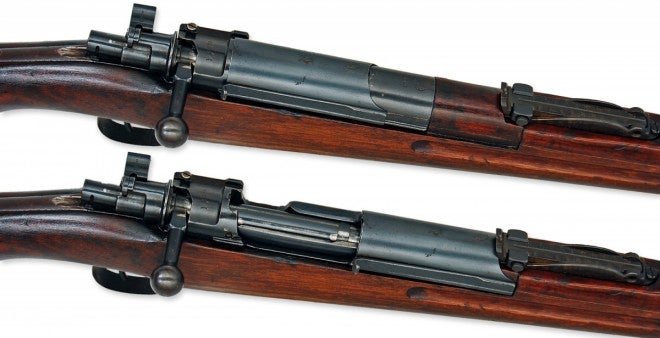
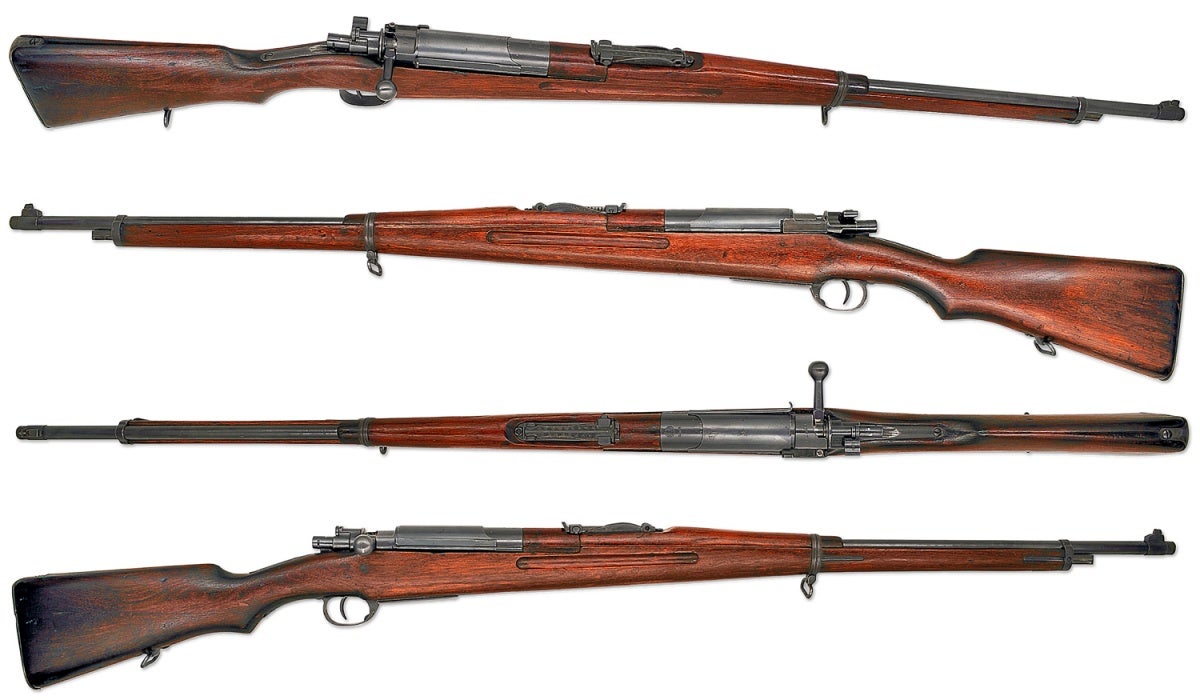

“What do you consider a minimum number of guns for home- and self defense for me and my wife, and which guns would you recommend?”
I remember vaguely doing one or two posts on this very topic many years ago, but as the title of this one suggests, times are different so maybe, just maybe, ’tis time to revisit the question. (Wally included a couple of personal details about his family which are not relevant to the topic except that his wife hates heavy-recoiling firearms — won’t even touch them, in fact — so whatever I suggest should take that into account.) So here goes. This post will deal with the must-have rimfire (.22 Long Rifle) guns; the other options will follow in later posts.
1.) .22 Rifle:
As Longtime Readers know, I have always considered a .22 rifle to be not a gun, but a household item like a frying pan or microwave oven — i.e. every home should have one — and .22 ammo is a household commodity like flour, sugar or salt. If you are starting from scratch in your home defense equipment, do not think the little .22 rifle is inadequate. Certainly, if your house is outside a town and therefore prone to critter invasions, a .22 rifle is a must — and if it can be fired rapidly (e.g. a semi-automatic or pump-action), that’s even better. Ditto home defense: even the most hardened goblin is going to change his plans if you or your wife has just popped two or three .22 bullets into his midsection. Here’s the thing: he may not die immediately after being thus shot (as opposed to getting a 12-gauge blast to the chest), but make no mistake about it, without immediate medical attention or else astounding luck, he will die from three rounds of .22 in his body. The .22 rifle is not the optimal home defense weapon, but if there’s nothing else, it’s far better than a baseball bat or tennis racket.
My recommendation for a .22 rifle is either a magazine-fed semi-auto like the Ruger 10/22, tube-fed rifle like the Marlin Model 60, or else a pump-action rifle like the Henry:
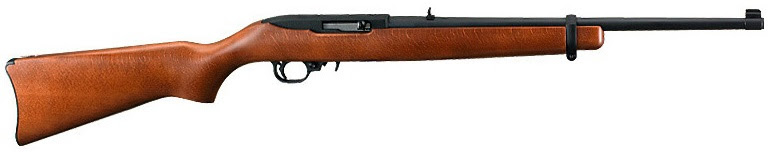

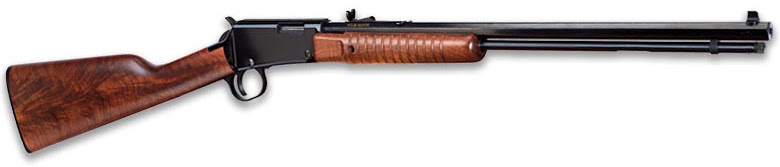
The first two collectively have sold more than any other two guns on the planet, and the third should be equally as popular, but isn’t (it’s kinda spendy, but that’s quality for you).
And seeing as you’ve just bought 5,000 rounds of .22 Long Rifle ammo (you have, haven’t you?), you might as well get the next must-have item.
2.) .22 Semi-Auto Pistol or Double-Action Revolver:
The nice thing about a little .22 handgun is that it’s handy [sic], especially if your wife is proficient in its use, because it’s light, has no recoil to speak of, and like the .22 rifle, can serve as a back-up self-defense option. Again, a goblin coming into your bedroom will change his plans when hit in the face with a couple rounds of .22 Long Rifle fired by your wife while you’re getting your bedside gun (see a later post) out of the drawer.
A compelling reason to have both a .22 rifle and a .22 handgun is that they are fun — and also good practice tools if you can’t afford to spend gobs of money on self-defense ammo. I leave it to personal choice as to whether you get a pistol or revolver, although I lean towards the semi-auto.
My recommendations for a pistol and revolver are either the Ruger Mk IV (see here as to why it’s my top pick), Browning Buckmark URX Standard (better trigger), and for a double-action revolver, the S&W Model 63 (because of its 8-round cylinder capacity):
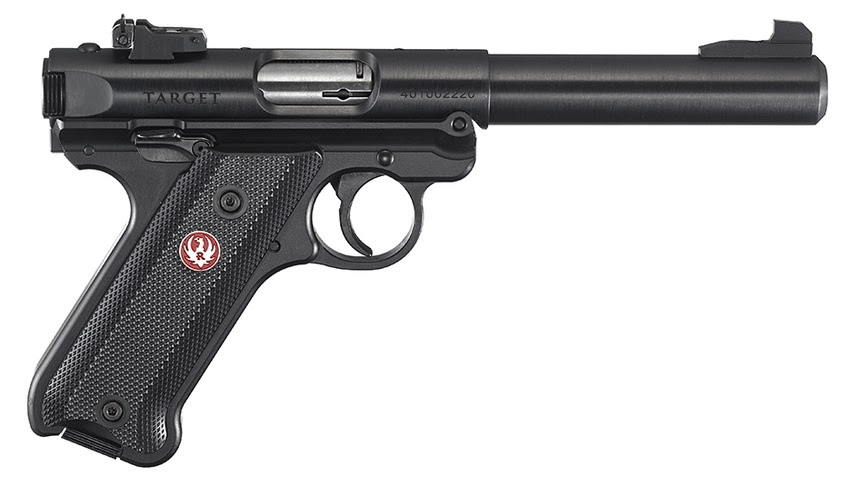
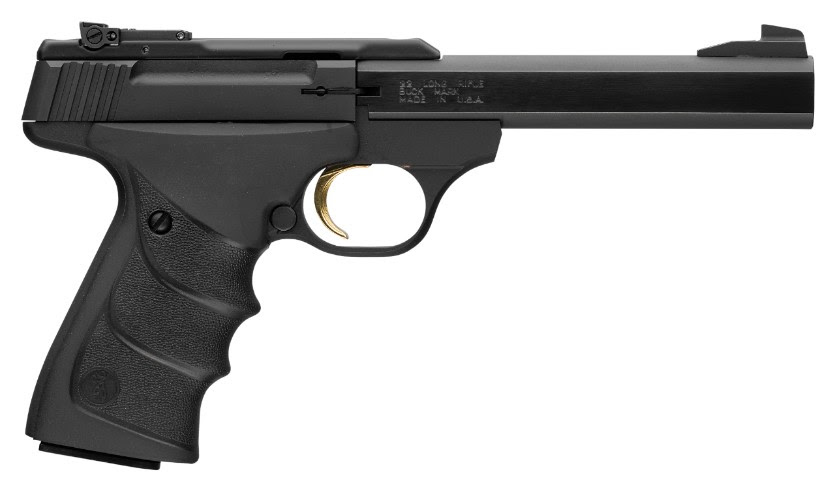
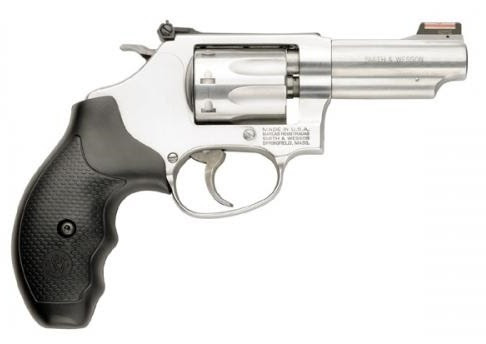
And just so we’re all clear on this: these recommendations are not comprehensive, nor are they definitive. There are hundreds of choices out there that can fill these two slots quite adequately, and as with all things, personal choice, price and preference (how it “feels” in the hand or in the shoulder) should be the principal part of of your final decision. Here, for example, is my Ruger Mk IV, in the 22/45 configuration:
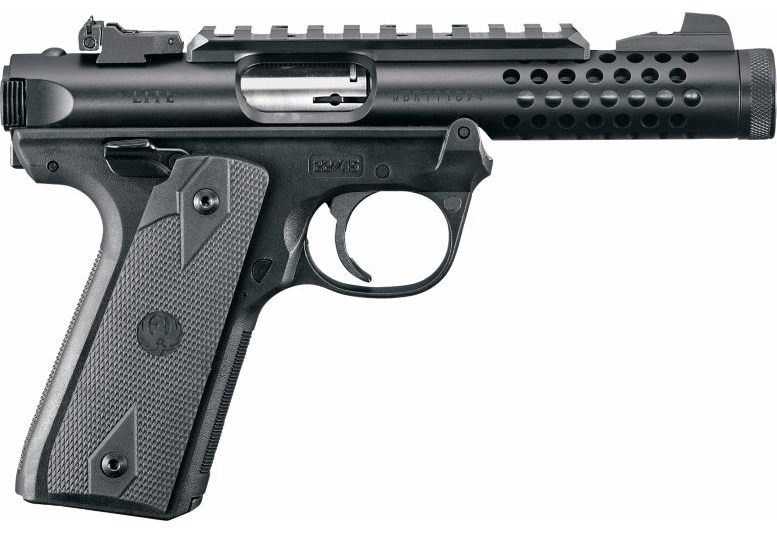
I would humbly suggest, however, that none of the above recommendations will disappoint.


 LUKE STRANAHAN