
Category: Uncategorized
Categories
Yep!


Serge Drigin, sometimes spelled Sergie, Sergey or Serge R. Drigin, was a Russian artist, born on 8 October 1894
Categories
Guns & Art
I found these & I thought you might like them! Thanks for your Time! Grumpy



Attachments area

Categories
War without an End?
I found this and frankly it scares me. Hopefully the author will turn out wrong but I just do not know.
Grumpy
———————————————
Autopilot Wars
Sixteen Years, But Who’s Counting?


Consider, if you will, these two indisputable facts. First, the United States is today more or less permanently engaged in hostilities in not one faraway place, but at least seven. Second, the vast majority of the American people could not care less.
Nor can it be said that we don’t care because we don’t know. True, government authorities withhold certain aspects of ongoing military operations or release only details that they find convenient. Yet information describing what U.S. forces are doing (and where) is readily available, even if buried in recent months by barrages of presidential tweets. Here, for anyone interested, are press releases issued by United States Central Command for just one recent week:
September 19: Military airstrikes continue against ISIS terrorists in Syria and Iraq
September 20: Military airstrikes continue against ISIS terrorists in Syria and Iraq
Iraqi Security Forces begin Hawijah offensive
September 21: Military airstrikes continue against ISIS terrorists in Syria and Iraq
September 22: Military airstrikes continue against ISIS terrorists in Syria and Iraq
September 23: Military airstrikes continue against ISIS terrorists in Syria and Iraq
Operation Inherent Resolve Casualty
September 25: Military airstrikes continue against ISIS terrorists in Syria and Iraq
September 26: Military airstrikes continue against ISIS terrorists in Syria and Iraq
Ever since the United States launched its war on terror, oceans of military press releases have poured forth. And those are just for starters. To provide updates on the U.S. military’s various ongoing campaigns, generals, admirals, and high-ranking defense officials regularly testify before congressional committees or brief members of the press. From the field, journalists offer updates that fill in at least some of the details — on civilian casualties, for example — that government authorities prefer not to disclose. Contributors to newspaper op-ed pages and “experts” booked by network and cable TV news shows, including passels of retired military officers, provide analysis. Trailing behind come books and documentaries that put things in a broader perspective.
But here’s the truth of it. None of it matters.
Like traffic jams or robocalls, war has fallen into the category of things that Americans may not welcome, but have learned to live with. In twenty-first-century America, war is not that big a deal.
While serving as defense secretary in the 1960s, Robert McNamara once mused that the “greatest contribution” of the Vietnam War might have been to make it possible for the United States “to go to war without the necessity of arousing the public ire.” With regard to the conflict once widely referred to as McNamara’s War, his claim proved grotesquely premature. Yet a half-century later, his wish has become reality.
Why do Americans today show so little interest in the wars waged in their name and at least nominally on their behalf? Why, as our wars drag on and on, doesn’t the disparity between effort expended and benefits accrued arouse more than passing curiosity or mild expressions of dismay? Why, in short, don’t we give a [expletive deleted]?
Perhaps just posing such a question propels us instantly into the realm of the unanswerable, like trying to figure out why people idolize Justin Bieber, shoot birds, or watch golf on television.
Without any expectation of actually piercing our collective ennui, let me take a stab at explaining why we don’t give a @#$%&! Here are eight distinctive but mutually reinforcing explanations, offered in a sequence that begins with the blindingly obvious and ends with the more speculative.
Americans don’t attend all that much to ongoing American wars because:
1. U.S. casualty rates are low. By using proxies and contractors, and relying heavily on airpower, America’s war managers have been able to keep a tight lid on the number of U.S. troops being killed and wounded. In all of 2017, for example, a grand total of 11 American soldiers have been lost in Afghanistan — about equal to the number of shooting deaths in Chicago over the course of a typical week. True, in Afghanistan, Iraq, and other countries where the U.S. is engaged in hostilities, whether directly or indirectly, plenty of people who are not Americans are being killed and maimed. (The estimated number of Iraqi civilians killed this year alone exceeds 12,000.) But those casualties have next to no political salience as far as the United States is concerned. As long as they don’t impede U.S. military operations, they literally don’t count (and generally aren’t counted).
2. The true costs of Washington’s wars go untabulated. In a famous speech, dating from early in his presidency, Dwight D. Eisenhower said that “Every gun that is made, every warship launched, every rocket fired signifies, in the final sense, a theft from those who hunger and are not fed, those who are cold and are not clothed.” Dollars spent on weaponry, Ike insisted, translated directly into schools, hospitals, homes, highways, and power plants that would go unbuilt. “This is not a way of life at all, in any true sense,” he continued. “[I]t is humanity hanging from a cross of iron.” More than six decades later, Americans have long since accommodated themselves to that cross of iron. Many actually see it as a boon, a source of corporate profits, jobs, and, of course, campaign contributions. As such, they avert their eyes from the opportunity costs of our never-ending wars. The dollars expended pursuant to our post-9/11 conflicts will ultimately number in the multi-trillions. Imagine the benefits of investing such sums in upgrading the nation’s aging infrastructure. Yet don’t count on Congressional leaders, other politicians, or just about anyone else to pursue that connection.
 3. On matters related to war, American citizens have opted out. Others have made the point so frequently that it’s the equivalent of hearing “Rudolph the Red-Nosed Reindeer” at Christmastime. Even so, it bears repeating: the American people have defined their obligation to “support the troops” in the narrowest imaginable terms, ensuring above all that such support requires absolutely no sacrifice on their part. Members of Congress abet this civic apathy, while also taking steps to insulate themselves from responsibility. In effect, citizens and their elected representatives in Washington agree: supporting the troops means deferring to the commander in chief, without inquiring about whether what he has the troops doing makes the slightest sense. Yes, we set down our beers long enough to applaud those in uniform and boo those who decline to participate in mandatory rituals of patriotism. What we don’t do is demand anything remotely approximating actual accountability.
4. Terrorism gets hyped and hyped and hyped some more. While international terrorism isn’t a trivial problem (and wasn’t for decades before 9/11), it comes nowhere close to posing an existential threat to the United States. Indeed, other threats, notably the impact of climate change, constitute a far greater danger to the wellbeing of Americans. Worried about the safety of your children or grandchildren? The opioid epidemic constitutes an infinitely greater danger than “Islamic radicalism.” Yet having been sold a bill of goods about a “war on terror” that is essential for “keeping America safe,” mere citizens are easily persuaded that scattering U.S. troops throughout the Islamic world while dropping bombs on designated evildoers is helping win the former while guaranteeing the latter. To question that proposition becomes tantamount to suggesting that God might not have given Moses two stone tablets after all.
5. Blather crowds out substance. When it comes to foreign policy, American public discourse is — not to put too fine a point on it — vacuous, insipid, and mindlessly repetitive. William Safire of the New York Times once characterized American political rhetoric as BOMFOG, with those running for high office relentlessly touting the Brotherhood of Man and the Fatherhood of God. Ask a politician, Republican or Democrat, to expound on this country’s role in the world, and then brace yourself for some variant of WOSFAD, as the speaker insists that it is incumbent upon the World’s Only Superpower to spread Freedom and Democracy. Terms like leadership and indispensable are introduced, along with warnings about the dangers of isolationism and appeasement, embellished with ominous references to Munich. Such grandiose posturing makes it unnecessary to probe too deeply into the actual origins and purposes of American wars, past or present, or assess the likelihood of ongoing wars ending in some approximation of actual success. Cheerleading displaces serious thought.
6. Besides, we’re too busy. Think of this as a corollary to point five. Even if the present-day American political scene included figures like Senators Robert La Follette or J. William Fulbright, who long ago warned against the dangers of militarizing U.S. policy, Americans may not retain a capacity to attend to such critiques. Responding to the demands of the Information Age is not, it turns out, conducive to deep reflection. We live in an era (so we are told) when frantic multitasking has become a sort of duty and when being overscheduled is almost obligatory. Our attention span shrinks and with it our time horizon. The matters we attend to are those that happened just hours or minutes ago. Yet like the great solar eclipse of 2017 — hugely significant and instantly forgotten — those matters will, within another few minutes or hours, be superseded by some other development that briefly captures our attention. As a result, a dwindling number of Americans — those not compulsively checking Facebook pages and Twitter accounts — have the time or inclination to ponder questions like: When will the Afghanistan War end? Why has it lasted almost 16 years? Why doesn’t the finest fighting force in history actually win? Can’t package an answer in 140 characters or a 30-second made-for-TV sound bite? Well, then, slowpoke, don’t expect anyone to attend to what you have to say.
7. Anyway, the next president will save us. At regular intervals, Americans indulge in the fantasy that, if we just install the right person in the White House, all will be well. Ambitious politicians are quick to exploit this expectation. Presidential candidates struggle to differentiate themselves from their competitors, but all of them promise in one way or another to wipe the slate clean and Make America Great Again. Ignoring the historical record of promises broken or unfulfilled, and presidents who turn out not to be deities but flawed human beings, Americans — members of the media above all — pretend to take all this seriously. Campaigns become longer, more expensive, more circus-like, and ever less substantial. One might think that the election of Donald Trump would prompt a downward revision in the exalted expectations of presidents putting things right. Instead, especially in the anti-Trump camp, getting rid of Trump himself (Collusion! Corruption! Obstruction! Impeachment!) has become the overriding imperative, with little attention given to restoring the balance intended by the framers of the Constitution. The irony of Trump perpetuating wars that he once roundly criticized and then handing the conduct of those wars to generals devoid of ideas for ending them almost entirely escapes notice.
8. Our culturally progressive military has largely immunized itself from criticism. As recently as the 1990s, the U.S. military establishment aligned itself with the retrograde side of the culture wars. Who can forget the gays-in-the-military controversy that rocked Bill Clinton’s administration during his first weeks in office, as senior military leaders publicly denounced their commander-in-chief? Those days are long gone. Culturally, the armed forces have moved left. Today, the services go out of their way to project an image of tolerance and a commitment to equality on all matters related to race, gender, and sexuality. So when President Trump announced his opposition to transgendered persons serving in the armed forces, tweeting that the military “cannot be burdened with the tremendous medical costs and disruption that transgender in the military would entail,” senior officers politely but firmly disagreed and pushed back. Given the ascendency of cultural issues near the top of the U.S. political agenda, the military’s embrace of diversity helps to insulate it from criticism and from being called to account for a less than sterling performance in waging wars. Put simply, critics who in an earlier day might have blasted military leaders for their inability to bring wars to a successful conclusion hold their fire. Having women graduate from Ranger School or command Marines in combat more than compensates for not winning.
A collective indifference to war has become an emblem of contemporary America. But don’t expect your neighbors down the street or the editors of the New York Times to lose any sleep over that fact. Even to notice it would require them — and us — to care.
Categories
A US Range War

For guys of my generation, who watched the Cowboy & Indian Movies. 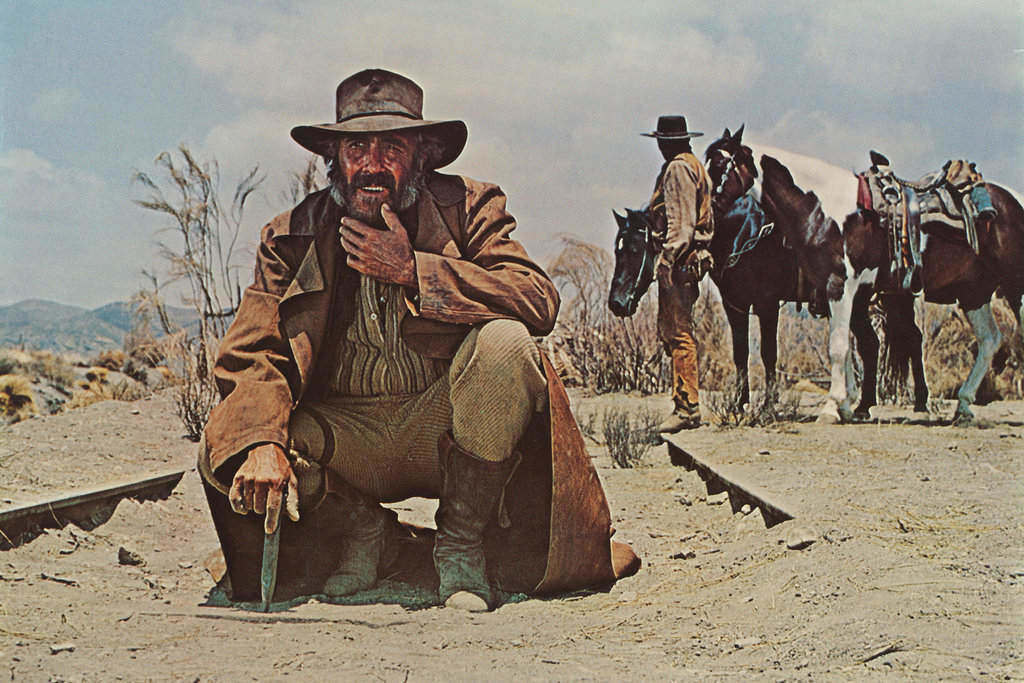 The Range Wars were a dependable background. Here is the story of one of them. I hope that you like it! Grumpy

San Elizario Salt War
(Redirected from El Paso Salt War)
| Date | 1877 – 1878 |
|---|---|
| Location | El Paso County, Texas, United States |
| Also known as | Salinero Revolt El Paso Salt War |
| Outcome | Uprising suppressed |
| Deaths | ~25 |
The San Elizario Salt War, also known as the Salinero Revolt or the El Paso Salt War, was an extended and complex political, social and military range war over ownership and control of immense salt lakes at the base of the Guadalupe Mountains of West Texas. What began in 1866 as a political and legal struggle among Anglo Texan politicians and capitalists gave rise to an armed struggle waged in 1877 by the ethnic Mexican inhabitants living in the communities on both sides of the Rio Grande near El Paso, Texasagainst a leading politician, supported by the Texas Rangers. The struggle climaxed with the siege and surrender of 20 Texas Rangers to a popular army of perhaps 500 men in the town of San Elizario, Texas. The arrival of the African-American 9th Cavalry and a sheriff’s posse of New Mexico mercenaries caused hundreds of Tejanos to flee to Mexico, some in permanent exile. The right of individuals to own the salt lakes previously held as a community asset was established by force of arms.
What began as a local quarrel grew in stages to finally occupy the attention of both the Texas and federal governments. Newspaper editors throughout the nation covered the story, often in frenzied tone and with lurid detail. At the conflict’s height, as many as 650 men bore arms. About 20 to 30 men were killed in the 12-year fight for salt, and perhaps double that number were wounded. The war’s damage also included an estimated $31,050 in property damage. Crop losses were sustained because local farmers did not till or harvest their fields for several months, but the wheat loss was estimated at $48,000. To these immediate financial losses (worth about $1.5 million in 2007) can be added the further political and economic marginalization of the Mexican-American community of El Paso County.[1]
Traditionally, the Mexican-American uprising has been described by historians as a bloody riot by a howling mob. The Texas Rangers who surrendered, especially their commander, have been described as unfit.[2] More recent scholarship has placed the Salt War within the context of the long and often violent social struggle of Mexican-Americans to be treated as equal citizens and not as a subjugated people.[3] Most recently, the “mob” has been described as an organized political-military insurgency with the goal of re-establishing local control of their fundamental political rights and economic future.[4]
Contents
[hide]
Background[edit]
National ambiguity[edit]
The Rio Grande is a natural barrier in West Texas. Spain, and later Mexico, had settled a series of communities along the south banks of the river, which provided protection from Comanche and Apache raids from the north. Prior to major water-control projects on the Rio Grande such as Elephant Butte Dike, which was constructed in the early 20th century, the river flooded often. San Elizario was a relatively large community south of the river from its founding in 1789 until an 1831 flood changed the course of the river, leaving San Elizario on “La Isla”, a new island between the new and old channels of the Rio Grande.
This position relative to the river became more important in 1836 when the newly independent Republic of Texasproclaimed the Rio Grande the southern border of the new country. The nationality of the people of San Elizario was disputed until the signing of the Treaty of Guadalupe Hidalgo, the treaty that ended the Mexican-American War, which identified the “deepest channel”, i.e. the southern channel, as the official international boundary. The status of San Elizario was further made official by the 1853 treaty that sold the territory of the Gadsden Purchase to the United States. At that time, San Elizario was the largest US community between San Antonio, Texas, and Santa Fe, New Mexico. It was a major stop on the Camino Real and was the county seat of the region.
Civil War and Reconstruction[edit]
The American Civil War created great changes in the political landscape of West Texas. The end of the war and Reconstruction brought many entrepreneurs to the area. The families of San Elizario had deep roots and were loath to accept the newcomers. Many Republicans settled in the small trading community of Franklin, Texas, a trading village across the Rio Grande from the Chihuahua city of El Paso del Norte (present-day Ciudad Juárez).
By the beginning of the 1870s the Democratic Party had begun to reclaim political influence in the state. The Democratic operatives, with their ties to Southern United States, were not accepted by the people of San Elizario, either, as they retained generational ties to Mexico. Alliances shifted and rivalries developed between the Hispanic, Republican, and Democratic factions residing in West Texas.
The Salt[edit]
At the base of the Guadalupe Mountains, about 100 mi (160 km) northeast of San Elizario, lie a series of dry salt lakes (located at: 31.74335°N 105.07668°W). Before the pumping of water and oil from West Texas, the area had a periodic shallow water table, and capillary action drew salt of a high purity to the surface. This salt was valuable for a wide variety of purposes, including preserving meats and replenishing what sweating took from humans and animals. It was also a commodity used for barter along El Camino Real de Tierra Adentro and was an essential element in the patio process for extracting the silver from ore in the Chihuahua mines. Historically, caravans to the salt lakes traveled either down the Rio Grande and then straight north or via what became the Butterfield Overland Mail route. In 1863, the people of San Elizario, as a community, built by subscription a road running east to the salt lakes. The residents in the Rio Grande valley at El Paso were granted community access rights to these lakes by the King of Spain. These rights had been grandfathered in by the Republic of Mexico and in accordance with the Treaty of Guadalupe Hidalgo. Beginning in 1866, the Texas Constitution allowed individuals to stake claims for mineral rights, thus overturning the grandfathered community rights.
Political phase 1866–1877[edit]
Salt ring and Anti-Salt ring[edit]
In 1870, a group of influential leaders from Franklin, Texas, claimed the land on which the salt deposits were found. They were unsuccessful in gaining sole title to the land, and a feud over ownership and control of the land began. William Wallace Mills favored individual ownership, Louis Cardis favored the Hispanic community concept of commonwealth, and Albert Jennings Fountain favored county government ownership with community access. This led to Cardis and Fountain to join together as the “Anti-Salt ring”, while Mills became the leader of the “Salt ring”.
Fountain was elected to the Texas State Senate and began pushing for his plan of county government ownership with community access. San Elizario’s Spanish priest, Father Antonio Borrajo, opposed the plan and gained the support of Cardis. On December 7, 1870, Judge Gaylord J. Clarke, a supporter of Mills, was killed. Fountain and Cardis sparred with every political and legal tool at their command. The Republicans’ loss of state government control in 1873 prompted Fountain to leave El Paso for his wife’s home in New Mexico.
Charles Howard[edit]
In 1872, Charles Howard, a Virginian by birth, came to the region determined to restore the Democratic Party to power in West Texas. His natural rival was Mills, so he struck up an alliance with Cardis, who controlled the Hispanic vote in the region.[citation needed] Cardis had a stronger allegiance to the former citizens of Mexico than to either US political party, and was influential in swinging their votes in any direction he thought beneficial to the community or to himself. Howard was elected district judge and about the same time began feuding with Cardis over who would be the county’s political “top dog”.[5]
In summer 1877, Howard filed a claim for the salt lakes in the name of his father-in-law, George B. Zimpelman, an Austin capitalist. Howard offered to pay any salinero who collected salt the going rate for its retrieval, but he insisted the salt was his. The Tejanos of San Elizario, encouraged by Father Borrajo (by now the former pastor), with the support of Cardis, gathered and kept salt in spite of Howard’s claim. The people did not only look to outside leaders. Falling back on a long tradition of local self-government, they formed committees (juntas) in San Elizario and the largely Tejano neighboring towns of Socorro and Ysleta, Texas, to determine a community-based response to Howard’s action. During summer 1877, they held several secretive, decisional, and organizational meetings.[6]
Salt Uprising 1877-1878[edit]
On September 29, 1877, José Mariá Juárez and Macedonia Gandara threatened to collect a wagonload of salt. When Howard learned of their activities, he had the men arrested by Sheriff Charles Kerber and went to court in San Elizario to legally restrain them that evening, armed men arrested the compliant jurist. Others went in search of Howard, locating him at Sheriff Kerber’s home in Yselta. Under the leadership of Francisco “Chico” Barela, they seized Howard and marched him back to San Elizario. For three days, he was held prisoner by several hundred men, led by Sisto Salcido, Lino Granillo, and Barela. On October 3, he was finally released upon payment of a $12,000 bond and his written relinquishment of all rights to the salt deposits. Howard left for Mesilla, New Mexico, where he briefly stayed at the house of Fountain. He soon returned to the area, and on October 10, shot and killed Cardis in an El Paso (formerly Franklin) mercantile store. Howard fled back to New Mexico.
The Tejano people of El Paso County were outraged. They effectively put a stop to all county government, replacing it with community juntas and daring the sheriff to take any action against them. In response to pleas from a frightened Anglo community (numbering fewer than 100 residents out of 5,000 in the county), Governor Richard B. Hubbard answered by sending to El Paso Major John B. Jones, commander of the Texas Rangers’ Frontier Battalion. Arriving on November 5, Jones met with the junta leaders, negotiated their agreement to obey the law (or so he thought) and arranged Howard’s return, arraignment, and release on bail. Jones also recruited 20 new Texas Rangers, the Detachment of Company C, under the command of Lieutenant John B. Tays, a native Canadian. Traditionally, Tays has been described as an uneducated handyman, but later research indicated he was a mining engineer, El Paso land speculator, and smuggler of Mexican cattle. His appointment to command the local Ranger detachment was approved by leading Anglos. The Ranger detachment recruited by Jones and Tays was mixed, composed of Anglos and a few Tejanos, including an old Indian fighter, several Civil War veterans, an experienced lawman, at least one outlaw, and a few community pillars. Individually, they included some capable men, but the unit lacked tradition or cohesion.[7]
The Rangers[edit]
On December 12, 1877, Howard returned to San Elizario with a company of 20 Texas Rangers led by John B. Tays. Once again, a group of armed insurgents descended upon them. Howard and the Rangers took cover in the buildings, eventually taking refuge in the town’s church. After a two-day siege, Tays surrendered the company of Rangers, marking the only time in history a Texas Ranger unit ever surrendered to adversaries. Howard, Ranger Sergeant John McBride, and merchant and ex-police lieutenant John G. Atkinson were immediately executed and their bodies hacked and dumped into a well. The Rangers were disarmed and sent out of town. The civic leaders of San Elizario fled to Mexico, and the people of the town looted the buildings. In all, 12 people were killed and 50 wounded.
Consequences[edit]
As a result of the unrest, San Elizario lost its status as county seat, which was relocated to El Paso. The 9th Cavalry of buffalo soldiers were sent to re-establish Fort Bliss to keep an eye on the border and the local Mexican population. When the railroad came to West Texas in 1883, it bypassed San Elizario. The town’s population decreased, and Mexicans lost their political influence in the region.
Categories
Clint
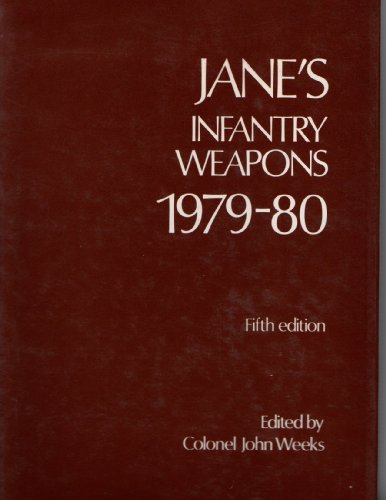
Another book of his that is worth looking at. He was also editor of Jane’s Infantry Weapons from 1972 to 1994. Hogg was also a frequent guest on the History Channel‘s Tales of the Gun and a contributor to the A&E channel’s 1996 series The Story of the Gun.
Busy guy Huh?
Now moving along smartly as my Old Drill Sgt would say at Ft. Dix.
There are also one other sources of books that I have had some luck with.
One of them being the Osprey Publishing Company. This outfit is dedicated to the study of Military History. So far they have written over 500 books or pamphlets if want to call them.
Now this books are very slim but they do punch above their weight for the most part. Of course in all series types of books. Some of them are going to be duds, some so-so and a few are way above average.
So here are a few that I have been able to gather over the past few years. That are worth getting
(Yeah I know! I have too many books and I need more!)

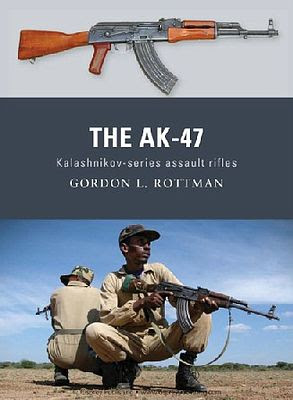
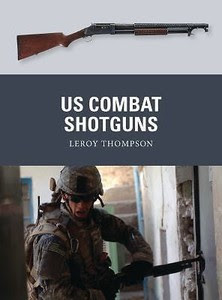



In closing If and when I find some other worthy tomes, That merit your consideration. I will post some more of them.
Thanks for your time!

Categories
Very Clever Advertising & Google!
If You Can’t Advertise Your Firearms Business with Google, Try Puppies
A Texas-based shooting firm has come up with a clever way to promote their business despite Google and YouTube’s advertising restrictions. Shoot Smart, which has three locations in the Dallas-Fort Worth area, turned to safe and family-friendly puppies to get the word out.
Many online and social media outlets are making it hard for people in the gun industry to share their presence on the internet. Shoot Smart is just one of countless companies whose ads are flagged for violence, regardless of their content or message.
“Facebook prohibits our ads,” said Shoot Smart, in a public statement. “We can’t even promote the fact that we’re open on Labor Day. Google won’t let us run a single YouTube ad or advertise on AdWords despite the fact that we have a YouTube channel and we’ve spent thousands of dollars with them in the past six months.
“Most local TV stations won’t let us show an ad even though we’ve been the topic of many TV news pieces,” the statement continued.
Many advertisers will not promote gun sales directly. But Shoot Smart is trying to bring people in for gun safety training classes.
“We support the nationwide Project ChildSafe program and have tried to advertise our safety seminars,” said Shoot Smart. “Why is it that we regularly see incredible gun violence on TV shows, but we can’t run an ad for gun safety or training during the commercial break? If someone is actively searching for a gun range, why is it OK for them to find us through Google search, but not through a paid Google ad?”
Living up to their name the minds at Shoot Smart found a way around these restrictions.
“Frustrated with advertising limitations, we replaced the ad footage of people at the range with footage of puppies playing, and surprise, the TV spot was approved in less than a day.”
See Also: Google Bans Shopping for Guns
The content is cute for sure, but it also highlights an increasingly relevant issue for the gun industry. While companies like Google and Facebook often portray themselves as gateways of information, when it comes to guns, they are the gatekeepers.
Increasingly called the “Frightful Five,” Apple, Amazon, Facebook, Microsoft and Alphabet (which is Google’s and YouTube’s parent company) exert a large amount of control over the content people have access to and can share.
Content that was once permitted is now being de-monetized or even removed from websites like Facebook and YouTube. This means that the primary means to earn money online are getting shut down almost completely.
Time will tell how else these massive corporations will deal with the gun industry and vice-versa. For now, it’s clear that puppies are the next hot seller.