
Its a B-2 Bomber with it’s bomb Bay open by the way! Grumpy
Category: Manly Stuff
 When SCCY Firearms introduced their inexpensive striker-fired handgun, they called it the DVG-1. What not just everybody knew was that DVG stood for “Davis Versus Goliath.” Israel’s King David was one of the most compelling figures in human history.

Most folks know at least the rudiments of the story. David was just a kid, likely barely even a teenager, when he faced down the nine-foot Philistine giant Goliath. Per the Biblical narrative, David used his shepherd’s sling to brain the guy in the forehead with a rock before decapitating him with his own sword.

When David was preparing for this epic battle, he selected five smooth stones from a modest creek near the Valley of Elah, some 15 miles west of Bethlehem. I’ve actually picked up a few similar rocks in that very spot myself. The joke at the time was that the Israeli government likely came out every couple of weeks with a front loader full of gravel just to keep the place stocked up for visitors. Tradition holds that David picked five stones because Goliath had four brothers.
David’s life is a powerful example of redemption. David was a rock star. However, he had an affair with a married woman named Bathsheba, murdered her husband, and subsequently got caught. Their first son perished as a result.
David subsequently repented before the Lord and was forgiven. Despite the grievous nature of his sin, he was nonetheless still described as a man after God’s own heart. I take encouragement from that myself. The David and Bathsheba’s second son was named Solomon. Scripture claims Solomon was the wisest man who ever lived.

Rulers came from all over the world to sit before Solomon and bask in his knowledge. One of those leaders was the Queen of Sheba. The Land of Sheba included modern-day Somalia, Eritrea, Ethiopia, and Yemen.
One of countless unsubstantiated legends to have spawned from the Biblical narrative holds that Solomon and this visiting queen exchanged more than just pleasantries. The book of I Kings reports that Solomon already had 700 wives and 300 concubines. I simply cannot imagine. Keeping just my one wife happy seems like a full-time job to me. Regardless, this extra-Biblical tale proposes that the queen became pregnant by Solomon and eventually gave birth to a son known as Menelik I. The queen then supposedly raised the boy back home as a pious Jew. Now, hold that thought….
The Man
In the mid-1930s, fascist Italy under Benito Mussolini harbored aspirations to resurrect the greatness of Imperial Rome. Mussolini subsequently had designs on most of the Mediterranean Sea. In 1935, his first major conquest was Ethiopia. Ethiopia was led at the time by Emperor Haile Selassie.

Born in 1892, Selassie reigned over Ethiopia from 1930 through 1974. History recognizes Selassie as an enlightened reformer. Like all public figures, however, his actual legacy was mixed. While lauded for such stuff as a new freedom-centric Constitution in 1931 and the abolition of slavery eleven years later, he was nonetheless still criticized for the repression of human rights among certain ethnic groups and a failure to modernize quickly enough. Nobody’s perfect, but he was Time Magazine’s Man of the Year in 1935.
Desperation Nation
Ethiopia had beaten Italy during the First Italo-Abyssinian War, which ran from 1895 through 1896. By the mid-1930s, Mussolini remained quite butthurt over that. In October of 1935, the fascist dictator set out to make things right.
At the time, Italy was a world-class military power, while Ethiopia remained fairly primitive. Overall troop strength was about the same, but the Italians had the Ethiopians lyrically outmatched in combat power. Ethiopia fielded four tanks and seven armored cars against some 700 modern Italian armored vehicles. Italy outnumbered Ethiopia ten-to-one in artillery. Ethiopia possessed thirteen military aircraft against 595 Italian combat planes. This was shaping up to be a proper bloodbath.
The Emperor Responds
It is in moments of desperation that the true measure of a man’s character is exposed. When things looked darkest for Volodymyr Zelensky and the Russians were pouring across his national borders, President Biden offered him the use of an American helicopter to whisk him and his family to safety. Zelensky famously responded with, “The fight is here; I need ammunition, not a ride.”

As the Italians mobilized to seize his nation, Ethiopian Emperor Haile Selassie had a similar defining moment. With his military teetering and the option of capitulation on the table, Selassie issued the following proclamation:
“Everyone will now be mobilized…All men and boys able to carry a spear will be sent to Addis Ababa. Married men will take their wives to carry food and cook. Those without wives will take any woman without a husband. Women with small babies need not go. Those blind, those who cannot walk or for any other reason cannot carry a spear are exempted. Anyone found at home after receipt of this order will be hanged.”
That sums things up nicely.
How Goes the War?
The Ethiopians never really had a chance. They nonetheless still fought like lions in the face of crushing opposition. There had been an arms embargo enacted by the major powers, including France and the UK. This disproportionately affected the Ethiopians, given their lack of indigenous manufacturing capability. Despite the relative parity in raw troop numbers, only about one in four Ethiopians had any formal military training. Many were armed with nothing more than a spear or bow. What rifles they did have were often antiquated, as were their few artillery pieces.

Selassie’s forces fielded some 1,150 machine guns of various sorts. Curiously, in an effort to influence Anglo-Italian relations and cause a rift between the UK and France, the Germans sent the Ethiopians three combat planes, 10,000 Mauser rifles, and 10 million rounds of ammunition. It was only later that Mussolini and Hitler became BFFs. It was obviously a complicated time.
As is so often the case, a well-funded but overmatched power leaned on mercenaries to flesh out its military machine. The Ethiopian Air Force was commanded by a Frenchman. Professional soldiers from the US, Nazi Germany, Sweden, Russia, Belgium, Czechoslovakia, and Trinidad all came together to advise and command Ethiopian troops. Italian commanders later attributed Ethiopia’s battlefield successes to the influence of these soldiers for hire.
The Conflict Matures
The Italians attacked along several axes and made some modest early gains. Two weeks into the campaign, Italian troops seized Aksum and stole its historical obelisk. This they sent to Rome for display in front of the Ministry for Colonies.
Frustrated by his troops’ slow progress, Mussolini sacked his commander, Marshal Emilio De Bono, and replaced him with General Pietro Badoglio. Badoglio later became Prime Minister of Italy after the fall of the fascists in 1943.

Despite the enthusiasm of the Ethiopian forces, the technological superiority of the Italian Army gradually prevailed. In the absence of radios, the Ethiopians relied upon foot messengers for communication. In the face of a modern army, such stuff as this sealed their fate.
The Italians were absolutely barbarous in their prosecution of this war, something that served as a preview for what was to come in World War 2. In response to an assassination attempt against General Rodolfo Graziani, Italian forces massacred as many as 30,000 Ethiopian civilians. The primitive nature of the battlefield made verification of numbers unreliable. The Italians also deployed mustard gas against both military and civilian targets. Hundreds of thousands of Ethiopian civilians perished.
The Christmas Offensive
Around Christmas of 1935, Haile Selassie took personal command of his troops and launched an aggressive counteroffensive against Italian forces ground down by two months of heavy fighting. His objective was to split the Italian army, isolate their Corps commands, and lay a foundation for a follow-on operation to crush the invaders.

It was a solid plan deftly executed. However, ground troops simply cannot maneuver in the face of enemy air superiority. Despite the overwhelming technological disparities, the Ethiopians nonetheless still gave a good accounting of themselves.
At one point, an Italian Major named Criniti commanded a squadron of light tanks tasked to block the Ethiopian advance. One valiant Ethiopian soldier charged through withering machinegun fire to mount one of the compact Italian armored vehicles. He then banged on the turret to get the crew’s attention. The two gunners popped their hatches to deal with this unexpected threat. In response, the Ethiopian soldier decapitated them both with his sword.
Emperor Selassie Runs Out of Options
Despite the success of the Christmas Offensive, the Italians’ use of poison gas, to include both mustard and phosgene, ultimately turned the tide of the conflict. Emperor Selassie left Ethiopia to make an impassioned speech for support before the League of Nations in Geneva. World opinion was solidly against the Italians, but the League of Nations had no substantive power. Ethiopia fell, and the emperor spent the rest of the war in exile with his family in the UK.

You recall we began this discussion with King Solomon. Haile Selassie claimed to be the direct descendant of the Solomonic Dynasty. He posited that Menelik I, the purported son of the Queen of Sheba and Solomon, had sired a line of kings that led unbroken right up to his person in the 20th century. Considering this dynasty really gained a foothold in 1270 AD, that’s most likely not true. However, it is thought-provoking to ponder.
A group of Russian-backed Marxists called the Derg eventually removed Haile Selassie in a coup in 1975. Soon afterwards, Derg operatives strangled the deposed emperor to death in his bed. He was 83 years old. The sordid details were not uncovered for another two decades.

There is much more to this story than we have space to explore. Many followers of the Rastafari movement venerated Haile Selassie as a god. That’s itself a most fascinating tale.
Time Magazine rated Selassie as being among the “Top 25 Political Icons of All Time.” His legacy remains influential in the region to this day. It was a curious end to the line of wise men that just might have descended all the way from the Israelite King Solomon.
Categories
A Victory! COOL!!!!!!!!!!!!!!!!! Hard Nosed Folks Both Good & Bad I am so grateful!! If I was in Charge Interesting stuff Leadership of the highest kind Manly Stuff One Hell of a Good Fight Our Great Kids Paint me surprised by this Real men Soldiering Some Red Hot Gospel there! Stand & Deliver This great Nation & Its People War
Another, this man is one Hell of a stud!! William Frederick Harris
 William Frederick Harris (March 6, 1918 – December 7, 1950) was a United States Marine Corps (USMC) lieutenant colonel during the Korean War. The son of USMC General Field Harris, he was a prisoner of war during World War II and a recipient of the Navy Cross for extraordinary heroism during the breakout in the Battle of Chosin Reservoir. He was last seen by American forces on December 7, 1950, was listed missing in action and is presumed to have been killed in action. Harris was featured in the book and film Unbroken.[1][2]
Biography
William Frederick Harris was born on March 6, 1918, at Good Samaritan Hospital in Lexington, Kentucky, to Field Harris (1895–1967) and Katherine Chinn-Harris (1899–1990).[1]
Harris graduated from the United States Naval Academy, Annapolis, Maryland, in the class of 1939. He was in A Company, 1st Battalion, 4th Marines[3] and was captured by Japanese forces during the Battle of Corregidor in May 1942.
He escaped with Edgar Whitcomb, future governor of Indiana,[4] and on May 22, 1942, swam 8+1⁄2 hours across Manila Bay to Bataan, where he joined Filipino guerrillas fighting Japan just after the Battle of Bataan.[5] In the summer of 1942, Harris and two others left Whitcomb and attempted to sail to China in a motorboat, but the engine failed and the boat drifted for 29 days with little food or water. The monsoon blew them back to an island in the southern part of the Philippines where they split up and he joined another resistance group.[6] Harris headed towards Australia hoping to rejoin American forces he heard were fighting in Guadalcanal, but he was recaptured in June[7] or September 1943[8] by Japan on Morotai island, Indonesia, around 1,000 miles (1,600 km) from Bataan.[9][10]
Harris was taken to Ōfuna POW camp, arriving February 13, 1944[11] and became acquainted with Louis Zamperini. Harris experienced malnutrition and brutal treatment at the hands of his jailers, notably by Sueharu Kitamura (later convicted of war crimes). Due to malnutrition, by mid-1944 the over 6 feet (180 cm) tall Harris weighed only 120 pounds (54 kg) and had beriberi.[12] In September and November 1944, Harris was beaten severely, to the point of unconsciousness, by Kitamura.[13][14] According to fellow captive, Pappy Boyington, Harris was knocked down 20 times with a baseball bat for reading a newspaper stolen from the trash.[15] Harris was near death when he arrived at a POW camp near Ōmori in early 1945. Zamperini provided Harris with additional rations and he recovered.[16] William Harris was chosen to represent prisoners of war during the surrender of Japan, aboard USS Missouri on September 2, 1945.
After World War II, Harris remained in the Marines. He married Jeanne Lejeune Glennon in 1946 and had two daughters.[1]
He was recalled to active duty during the Korean War.[2] He was the commanding officer of Third Battalion, Seventh Marines, First Marine Division (Reinforced) in the Korean War. During the breakout in the Battle of Chosin Reservoir, his unit stayed behind as a rear guard to protect retreating forces. Despite heavy losses, Harris rallied his troops and personally went into harm’s way during the battle. Harris was last seen by American forces on December 7, 1950, walking and carrying two rifles on his shoulders. He was listed as missing in action, but after the war when former POWs had neither seen nor heard of him, Harris was declared to be dead. He was awarded the Navy Cross in 1951 for his actions at Chosin. Because of his penchant for escape and survival exhibited during World War II, his peers and family were reluctant to accept his death. A superior officer held on to his Navy Cross for a number of years, expecting to be able to give it to Harris personally.[17]
Remains thought to be his were eventually recovered. His family doubted the remains were his, and conclusive testing using DNA had not been attempted as of 2014.[1]
Awards

For his leadership and heroism on December 7, 1950, Harris was awarded the Navy Cross.
The President of the United States of America takes pride in presenting the Navy Cross (Posthumously) to Lieutenant Colonel William Frederick Harris (MCSN: 0-5917), United States Marine Corps, for extraordinary heroism in connection with military operations against an armed enemy of the United Nations while serving as Commanding Officer of the Third Battalion, Seventh Marines, FIRST Marine Division (Reinforced), in action against enemy aggressor forces in the Republic of Korea the early morning of 7 December 1950. Directing his Battalion in affording flank protection for the regimental vehicle train and the first echelon of the division trains proceeding from Hagaru-ri to Koto-ri, Lieutenant Colonel Harris, despite numerous casualties suffered in the bitterly fought advance, promptly went into action when a vastly outnumbering, deeply entrenched hostile force suddenly attacked at point-blank range from commanding ground during the hours of darkness. With his column disposed on open, frozen terrain and in danger of being cut off from the convoy as the enemy laid down enfilade fire from a strong roadblock, he organized a group of men and personally led them in a bold attack to neutralize the position with heavy losses to the enemy, thereby enabling the convoy to move through the blockade. Consistently exposing himself to devastating hostile grenade, rifle and automatic weapons fire throughout repeated determined attempts by the enemy to break through, Lieutenant Colonel Harris fought gallantly with his men, offering words of encouragement and directing their heroic efforts in driving off the fanatic attackers. Stout-hearted and indomitable despite tremendous losses in dead and wounded, Lieutenant Colonel Harris, by his inspiring leadership, daring combat tactics and valiant devotion to duty, contributed to the successful accomplishment of a vital mission and upheld the highest traditions of the United States Naval Service.
— Board of Awards, Serial 1089, 17 October 1951[18]
Harris also received the Purple Heart, the Prisoner of War Medal, the Combat Action Ribbon, the Korean Service Medal, the United Nations Service Medal, the National Defense Service Medal, the Republic of Korea Presidential Unit Citation, the Korean War Service Medal and the World War II Victory Medal.[19]
  |
||||
 |
 |

|
 |
|
 |
|
.svg) |
 |
|


Categories
One of my favorite rounds – The 44 Magnum
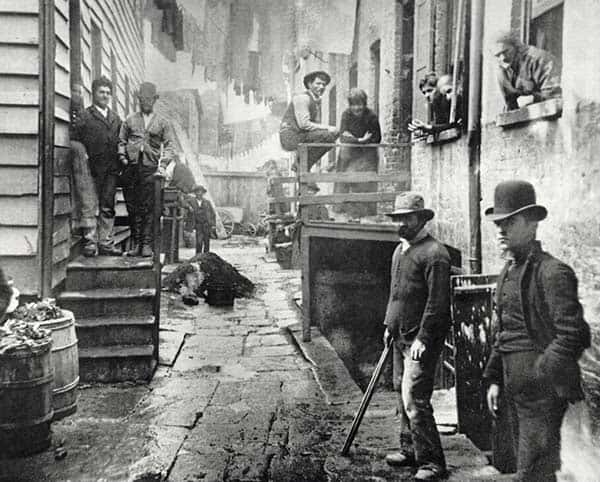
New York City has always been pretty congested.
This picture dates back to the 1930s.
The news this morning sported yet another headline trumpeting the sordid state of my countrymen living in New York City. It seems every day brings some fresh new tragedy from some Leftist enclave overrun with homelessness, drug abuse, crime, violence and despair. In this case, some well-to-do woman was walking back to her building when she was accosted by a pair of muggers.
The criminals threw the poor woman against the building and snatched away her purse and phone. The many bystanders present just looked on with disinterest. What made the event newsworthy was that the doorman at her building actually chose to intervene. He shooed away the two miscreants and escorted the shaken woman inside. The two scumbags strolled away laughing as they cataloged their new swag. Oddly, that sort of thing really doesn’t happen down here in the Deep South where I live.
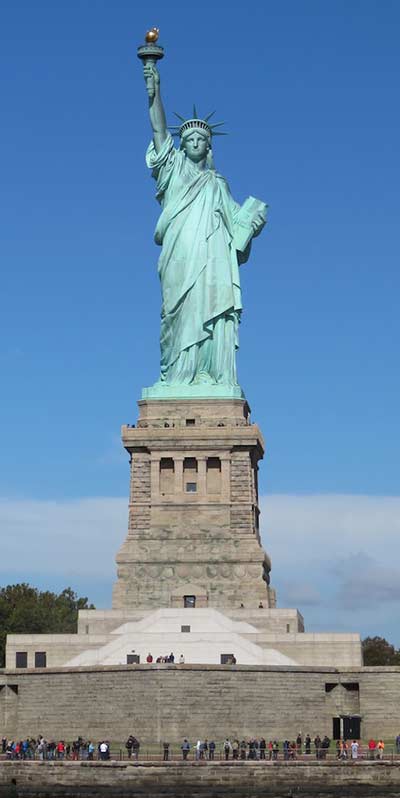
I don’t much want to live in New York City myself. However, the
Statue of Liberty is pretty darn awesome, so there’s that.
Photo by MCJ1800 / Wikipedia
Daylight and Dark
Far be it from me to insinuate that one part of our great republic is superior to any other. I freely admit that, in addition to more than 90,000 homeless people and roughly half a million illegal immigrants, the Big Apple also plays host to the Statue of Liberty. That is indeed pretty darn cool.
My own home state of Mississippi admittedly rates 47th in literacy. Only New Mexico, Texas and California beat us in our race to the bottom. Incidentally, New York is 43rd.
Mine is still a pretty Godly state. We are number one in the country for adults who pray daily and believe in God. We are fourth in church attendance. Additionally, Everytown for Gun Safety, a rabid mob of freedom-averse gun-hating hoplophobes, rates us 49th for gun law strength. I’m pretty proud of that myself.
Every single day at work, I see some redneck guy in my medical clinic and ask him to shed his jacket or vest so I can listen to his chest. That’s when I see it. The next question is invariably, “What you packing?”
I already know the answer to that question, of course, but it is a great way to start a conversation. And that is why we don’t have thugs throwing women up against buildings on the square in Oxford, Mississippi. It is not hyperbole to say that the first time you do that around here, half a dozen armed rednecks are just going to blow you away.
Mine is a constitutional carry state. Down here, your birth certificate is your concealed carry license. We also really love our cops, and they love us. The local fuzz is forever offering free classes on self-defense for women and similar civic-minded stuff. My wife took it. That was great until she got home and wanted to practice what she learned on me.
We had to call the cops a few years ago for a disturbance in the waiting room. Some crazy person was getting out of hand. It happens. One of the responding officers actually arrived on horseback. He had been across the street showing off his police horse at the nearby nursing home when he got the call.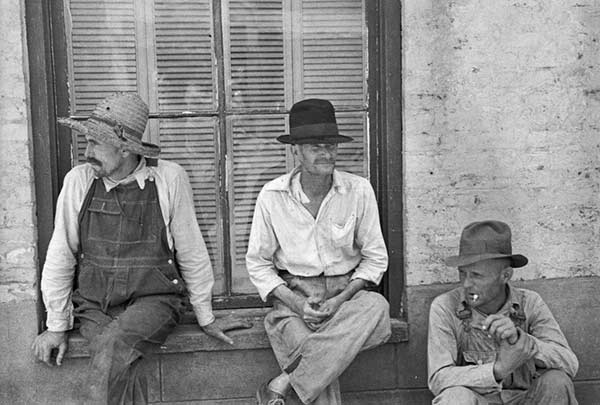
Rednecks are a timeless part of the Deep South. These were photographed back in the early 20th century. However, guys like this are tough, they love America, and they will not stand idly by while women get beat up.
Find a Need and Fill It
If random armed rednecks are a deterrent to crime, that seems like an opportunity to me. We have plenty of armed rednecks down here in Mississippi, while our friends in New York appear to have a relative dearth. As such, I would like to announce my newest business venture. I call it Will’s Redneck Rentals. We gladly export.
Here is one of our hypothetical armed rednecks available for rent — Colt Thompson (I actually know a guy down here named Colt Thompson) has worked for the past 15 years as an electrician. He is 40 pounds overweight, married and has three children. He was a Bud Light man until last year when he inexplicably switched to Coors. His preferred carry piece is a 9mm Springfield Armory Hellcat in a well-used CrossBreed IWB rig. He’s looking for a side gig to help keep things spicy.
Nowadays, Colt is an overweight middle-aged redneck. However, right out of high school, he spent four years in a Ranger battalion. He still shoots regularly and recreationally. That fat, unassuming HVAC repairman can run that Hellcat like a Delta Force commando. He also loves America, goes to church regularly and absolutely hates people who pick on women, like viscerally. Give the guy a cot and keep him in food and beer, and he’s yours for as long as you need him.
So, surf on over to www.mississippiactuallysoundsprettyfreakingawesome.com to sign up for your own rental redneck. We deliver. Additionally, if you are the sort who shakes down women in public spaces, be forewarned. Try that in front of Colt Thompson or one of his peers, and that guy is going to kill you deader than rocks. We guarantee it.

.PNG)
Written over 3,000 years ago, the ancient adage “Iron sharpens iron” is traditionally attributed to King Solomon via the Book of Proverbs. (Proverbs 27:17)
The imagery reflects ancient blacksmithing practices where one iron tool was used to file, hone, or carve an edge on another. In traditional wisdom, it symbolizes mutual improvement, constructive challenge and character development through community.

Today, elite athletes, shooters, martial artists and warfighters use this same concept to make themselves better prepared for engagement with others. When applied to self-defense, there are three such pieces of iron that can be used in developing your skills to survive a violent physical altercation. What are these three and how can you use them to both sharpen your skills and strengthen your resolve?
The First
The first piece of iron is discipline, where you challenge yourself. Some people say follow your passion; others say find your motivation. Even if you can somehow muster both, when passion eventually wanes, and motivation dissipates, all that remains is discipline. In the long run, long after emotions fade, discipline will carry you the distance.
Discipline isn’t something you’re born with; it’s something you earn through consistent, intentional action. Its potential is available to all of us, but it is made manifest by those completing two halves.

In shooting and defensive tactics, discipline begins with a clear purpose: a goal strong enough to push you forward when motivation evaporates. From there, it’s forged through repetition. Showing up to practice, completing each drill with intent, and maintaining the fundamentals even when no one is watching gradually hard-wires discipline into behavior. Over time, these daily choices turn into personal habits. What once required effort becomes unconscious competence.
The other half of discipline comes from environment and accountability.

Training partners, coaches, and teammates create pressure and support that sharpen your performance. They leverage mistakes, raise expectations, and challenge you to raise the bar. Through this process, you learn to become comfortable being uncomfortable and act with purpose instead of emotion. Discipline fully develops when you repeatedly choose the long-term result over short-term gratification, until that choice becomes part of who you are.
The Next Step
Next is being challenged by others. Placing yourself in a competitive environment will expose the gaps you didn’t know you had. Whether it’s sparring rounds, timed drills on the range, rolling on the mat, or pressure-based scenario work, competition forces you to confront reality. You learn very quickly what holds up under stress and what falls apart the moment adrenaline or uncertainty shows up.

Other people, especially those who are more skilled and experienced, become the second piece of iron. Their presence pushes you to elevate your performance, tighten your fundamentals, and lose the excuses. When you face someone who gives you honest resistance, you sharpen not only your technique but your mental game, adapting in real time and discovering a higher gear you didn’t know you had.
This type of challenge is not about ego; it’s about exposure and growth. Controlled pressure reveals weaknesses so you can address them before they become liabilities in real-world conditions.
When you’ve hammered the rounds with people who can push you to your limits, when you’ve performed under watchful eyes or against the clock, you develop a calmness that only earned experience can create.
You learn to stay composed, think clearly, and execute under pressure because you’ve already faced environments that demanded it. Confidence is the sharpening effect of this second iron: the honest challenge of others who make you better by refusing to go easy on you.
Where It Counts
The third piece of iron is adversity itself: the unexpected, the uncomfortable, and the uncontrollable. While discipline builds your foundation and other people refine your skill, real adversity is what hardens you. This includes training sessions where everything feels off, drills you fail repeatedly, physical fatigue that tests your will, or situations where stress and uncertainty overwhelm your plan “A”.

Most people tend to avoid adversity, but in self-defense and performance shooting, adversity is the most legit instructor you’ll ever have. When things do not go your way, when the environment is chaotic or stacked against you, that struggle forces adaptation. It teaches resilience, problem-solving under duress and the ability to regain composure when the situation is anything but comfortable.

Adversity sharpens you by stripping away what doesn’t work. Under stress, you can’t BS your way through or negotiate with reality. You must respond. You discover your real thresholds, your real habits, and your real mental focus.
Over time, facing adversity builds a deep, internal confidence: not the kind based on perfect conditions, but the kind rooted in having survived and adapted to imperfect ones. In self-defense, this matters more than any drill or trophy.
Conclusion
Violence is chaotic, unfair, and unfolds fast. The person who has trained through adversity, who has stumbled, adjusted, and kept moving, is the person far more likely to stay in the fight when it counts. This final piece of iron ensures that when life hits back, you don’t break; you respond with resilience and skill.

The ancient Spartans viewed adversity as a gift from the gods. Hardship was seen as the raw material from which strength and courage were shaped. They believed that only through struggle could a warrior discover their true limits and expand them. Comfort softened a person; adversity revealed them. Every challenge, every setback, every grueling test was considered an opportunity to strip away weakness and build a level of resilience that couldn’t be taught any other way. It runs parallel to the U.S.M.C. mantra, “Pain is weakness leaving the body.”
To our ancestors, iron sharpening iron wasn’t something to endure reluctantly, but a divine gift to willingly embrace. It was the crucible that burned away hesitation and fear, leaving behind the disciplined, skilled and unshakeable. It was what made you worthy of the shield you carried and the trust of those you protected.
 Lauri Allan Törni (28 May 1919 – 18 October 1965), later known as Larry Alan Thorne, was a Finnish-born soldier who fought under three flags: as a Finnish Army officer in the Winter War and the Continuation War ultimately gaining a rank of captain; as a Waffen-SS captain (under the alias Larry Lane) of the Finnish Volunteer Battalion of the Waffen-SS.
When he fought the Red Army on the Eastern Front in World War II; and as a United States Army Major (under the alias “Larry Thorne”) when he served in the U.S. Army Special Forces in the Vietnam War.
Törni died in a helicopter crash during the Vietnam War and he was promoted to the rank of major posthumously. His remains were located three decades later and then buried in Arlington National Cemetery; he is the only former member of the Waffen-SS known to be interred there.