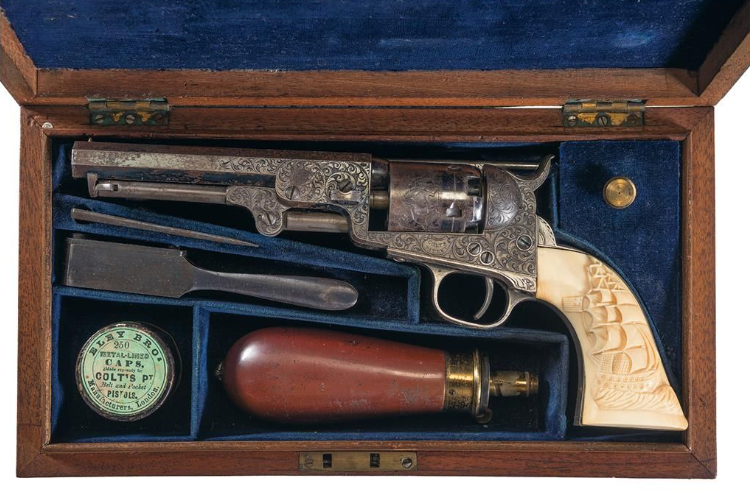

Used guns are a great way to shop for a bargain-priced self-defense pistol. As we accept more modern guns with modern features, like rails, optics, and ambidextrous controls, we can find guns that lack those features for a relatively fair price. That’s why we’ve come to the classic carry gun corner to find you an option for a great handgun at a great price.
Table of contents
The Problem With Classic Carry Guns
Before I gush over some quasi-retro firearms, let’s be real here. There are some downsides to these classic carry guns. Most of them are heavier and bigger than modern guns. There is a reason that the P365 was so revolutionary. These older guns are not as efficient.
The biggest downside will come from trying to find a holster. Old guns aren’t typically addressed by modern holster manufacturers. This can limit you significantly in your holster selection. That can make carrying some of these classics a chore or require a custom holster to be made.
All that being said…
The Best Classic Carry Guns
Beretta 80 Series
Beretta recently revived the 80 series with the 80X, but the classic 80 series are still some classic carry guns. The 80 series is made up of a mix of .22LR, .380 ACP, and .32 ACP handguns. The most popular is the .380 Model, which consists of the 83, 84, 85, and 86 models. These are small, compact firearms but are not pocket pistols. They are incredibly well-made and very easy to shoot.
Their ergonomics are on point and are some of the best examples of what a metal-framed gun can be. They have that Beretta M9 style shape, with much thinner grips that make the gun easier to conceal and more accessible to those with small hands. They are hand-filling guns, and that makes them quite easy to control. Capacity varies between thirteen and seven rounds depending on caliber and design. Beretta made various models in both single and double-stack capacities.
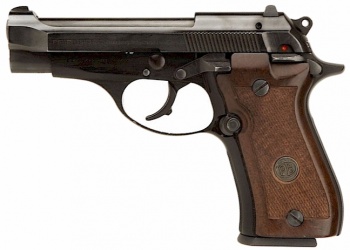
The Beretta 80 Series seem out of date until you start shooting. They are all fairly light recoiling and very easy to control. They don’t beat your hand up like a .380 Pocket pistol and are much easier to control than even a P365 in 9mm. Guns like the Beretta 81 offer a .32 ACP option with very little recoil for those who might be recoil-sensitive. The .22LR options are silly soft to shoot. These are all top-of-the-line classic carry guns.
Beretta makes legendary firearms, and you’d have a hard time finding one that didn’t work well. These guns might be past their prime and seem old school, but they are very easy to handle and fun to shoot. They are more akin to the Shield EZ series, especially the 86 with its tip-up barrel.
The Ruger P Series
The P series might have been the series of firearms that established Ruger as a company that makes tanks for guns. They might be ugly, but they are 100% functional, incredibly reliable, and last forever. The Ruger P series guns are still kicking around and are still quite affordable. I run across these guns for less than 300 dollars all day long, and they still represent self-defense-worthy handguns.
The P series is fairly broad. You can pick from numerous models in various calibers, including 9mm, 40 S&W, and .45 ACP. The P Series lasted from 1985 all the way up to 2013. Over that time, there were tons of variants. The P85 through P944 used investment cast metal frames, and the P95 and beyond used a polymer frame. The modern polymer frame models also feature a rail system.
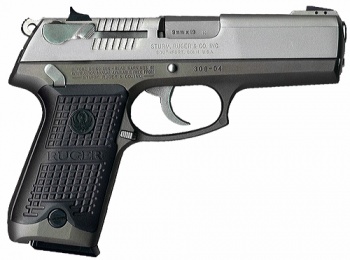
These are pure ’80s guns. They feature the hammer fire design that was popular for the era. The gun has a combined de-cocker and safety that was ambidextrous. They are fairly simple guns but were quite easy to shoot and handle. The guns feature modern capacities and, outside of the .45 ACP, used double-stack magazines.
They aren’t fancy, they aren’t pretty, but they do function well. If you can get past their blocky design and ugly frames, you can have a very capable firearm for very little money. I’d choose a Ruger P series over most modern budget options. If you are looking for a more carry-friendly option, the P94 and P95 offer compact options for a tank-like classic carry gun.
Smith and Wesson 3rd Gen Guns
Smith and Wesson produced a number of semi-auto handguns from 1913 onward, and in the late 1980s, they arrived at what is collectively known as the third-generation pistols. These represent the last line of S&W automatics to use all metal frames, DA/SA hammer-fired actions, and a mix of double and single-stack magazines. They were quite popular with police forces and remain a great option these days.
Some are more expensive than others. The S&W 1006 and 1026 in 10mm, for example, are not cheap options. However, the 5906, the various 900 series guns, and even the 4506 tend to be fairly affordable and easy to find. These third-gen guns come in all the big calibers, including 9mm, 45 ACP, 40 S&W, and, of course, the aforementioned 10mm. What’s a gun from the late 80s and early 90s without a 10mm chambering?
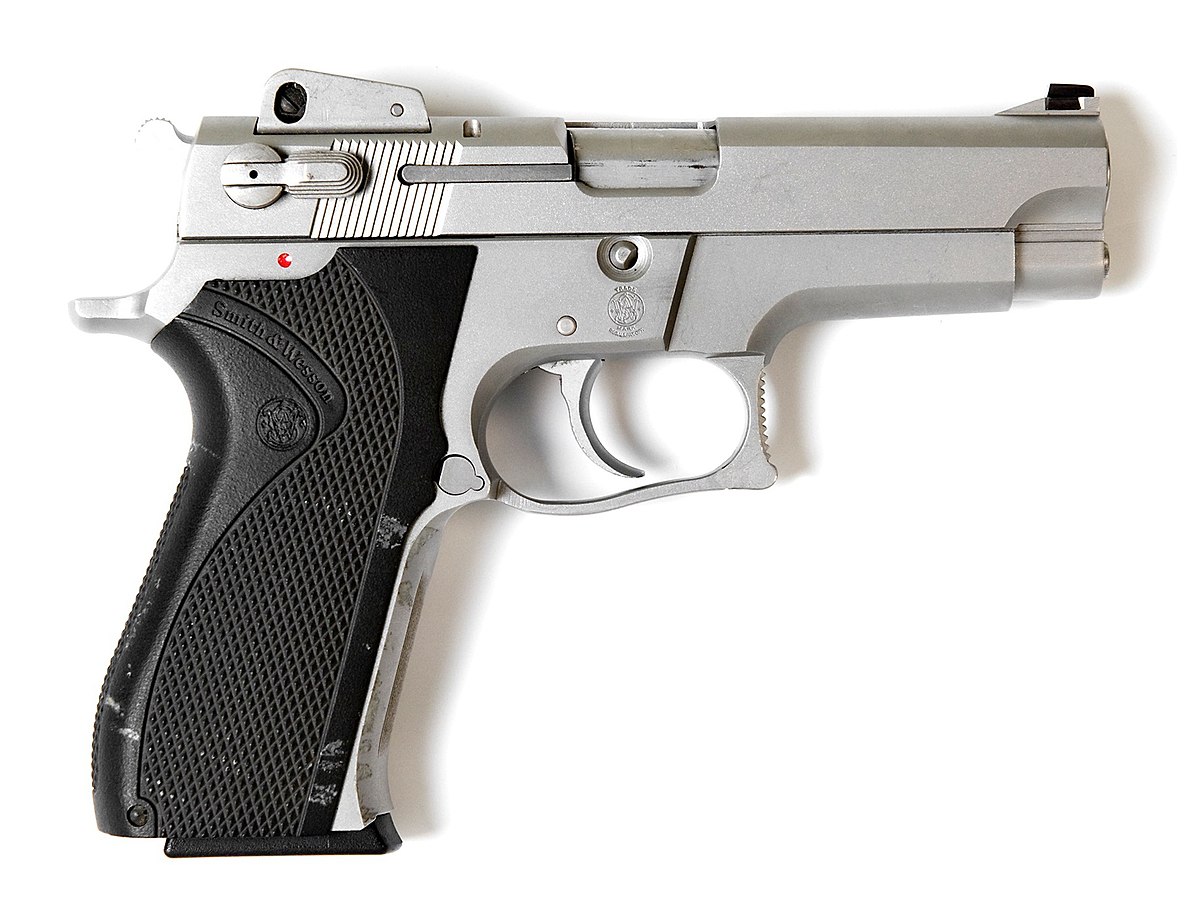
These heavy steel guns might weigh you down a fair bit, but they can still be fantastic classic carry guns and home defense options. S&W produced some small subcompact models, including the various 9mm subcompacts like the 908 and 3914, and basically every model that starts with 39. These are still quite compact, and while unusual in today’s era, they still last for basically ever.
If you find a lack of Picatinny rails disturbing, then the TSW models might be for you. These guns feature a nice metal rail for all the accessories you could ever need, but the TSW models tend to call for a higher price on the used market.
Smith and Wesson SW99 – Classic Carry Option
Let’s stick with S&W because they’ve been around a long time, and they have a wide variety of pistols in their lineup. In the late 1990s, it was apparent that polymer-frame, striker-fired guns were going to be the dominant force in firearms. S&W had already tried to produce one in the budget-friendly Sigma series but got sued by Glock. Plus, the Sigma series weren’t duty-ready guns. S&W teamed up with Walther to produce an S&W pistol.
Kind of an S&W pistol, anyway. It’s a Walther P99 with a standard rail. The SW99 and P99 are nearly identical, and the SW99 came in both 9mm and 40 S&W, like the P99, but the SW99 also got the 45 ACP. These polymer frame pistols were a joint effort. Walther made the frames, and S&W made the slides and barrels. Like the P99, these are one of the very few DA/SA guns that are striker-fired. A decocking button sits on the top to instantly toss it back to double action only.
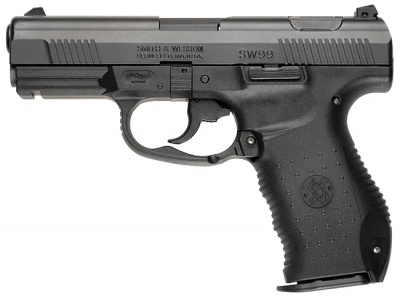
The SW99 trigger is absolutely fantastic. The DAO is super smooth, and while heavy, it glides rearward. The single action is crazy light and absolutely fantastic. It’s a great setup that I wish was a bit more common. I really like the striker-fired DA/SA design. Sadly, the SW99 is one of the very few options out there.
What’s great is that the SW99 remains affordable. Walther fans want P99s, and guns like the P99 compact are fairly tough to find. However, the SW99 compact is easy to find and fairly cheap. These guns use Walther mags, and they tend to be fairly common. This is one of my favorite classic carry guns.
Glock Trade-Ins
Finally, another great option is the great many Glock police trade-ins out there. Glock pistols dominate the law enforcement market, and with a new generation of Glock getting out there and with competition from SIG, used Glocks are hitting the market hard. Glocks are great guns that last forever and are well-reputed for their durability, reliability, and general effectiveness.
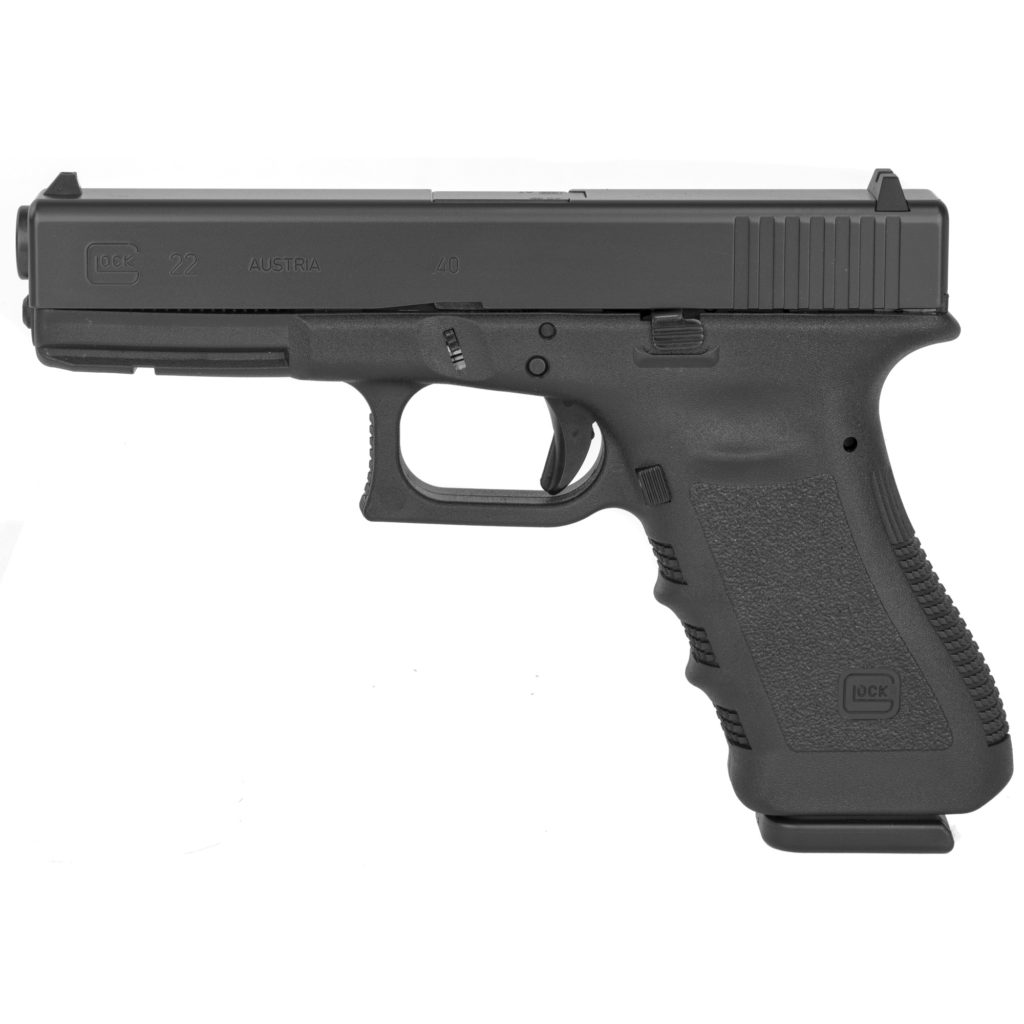
A lot of these Glock pistols are the .40 S&W models that have been traded in for the great 9mm influx. Plenty of Glock 22s are floating around at a great price. Additionally, the Glock 23 and 27 are popular trade-ins. In 40 S&W, these guns can be found for less than 400 dollars. That’s a great price for a very reliable weapon, even if you have to deal with 40 S&W.
With that said, we do see some 9mms coming in and out, and these are great grabs. The desirability of 9mm does create an increased cost, but they are still fairly affordable firearms all around. Glock trade-ins are a great way to get a great handgun for a low price. If you see one, act quickly because they tend to sell fast.
Giving Used Guns a Chance
The used gun market is nothing like other used markets. Used cars can be a gamble. Used furniture is for the insane, but used guns are a great choice. When something is wrong, it’s easy to see. Cracks in frames, bad bores, and the like don’t hide easily. Typically, used guns are rarely shot, but they often have a chunk of their price squirreled away.
A used gun allows you to get a great gun at a budget gun’s price. Sure, they might not always have rails, night sights, or be optics ready, but they go bang and do so reliably.

Categories
Military A Piece of Cake 1960
Categories
Remington-Rider Magazine Pistol
I don’t intentionally set out to cause heartache, discontent and angry reader emails but I know it’ll happen this month. However, I remain somewhat unrepentant, mildly defiant and wholly unconvinced I’m the purveyor of dangerous advice.
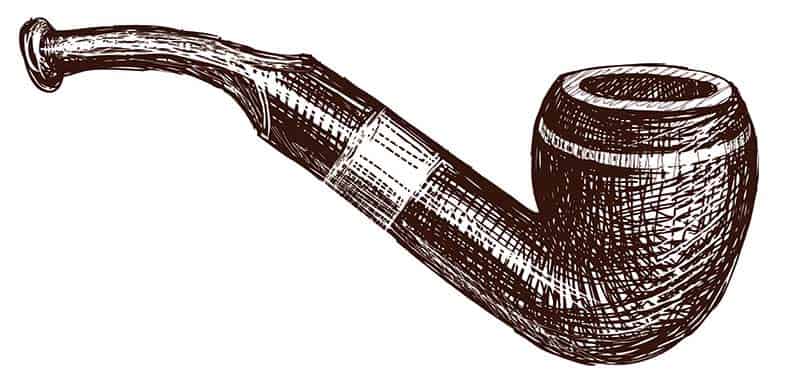
In today’s sermon we’re going to talk about tobacco in general, cigars and pipes in particular.
I believe this a suitable topic for this corner as many, many shooting and hunting adventures involve tobacco in some format and many shooters, especially those of a certain age, consider a nice bowl of burley or a Churchill cigar an integral part of the experience. If you prefer a cigarette, I understand, but I can’t offer any special insights.
The Root Of All Evil
First, let’s address the potential angry emails and letters. Yes, I understand smoking is bad for you in many ways, starting off with the “Big C,” cancer. Like most folks, my circle of family and friends has been affected by smoking-related cancer. I also know use of tobacco is not good for your cardiac health, weight control and is implicated in a variety of other health problems. My cardiologist will probably disown me if he happens to read this issue. Cigarettes are the worst due to their frequency of use and deep-draw into the lungs, while chewing and snuff are a close second. Even critics will grudgingly admit pipe and cigar is less so, but then again, “less so” is meaningless if you end up suffering from major health problems or chronic death.
So, gentle reader, I’m in agreement there is no safe or acceptable level of tobacco usage — but I’m still going to occasionally partake in my own vices, so let’s go there. Besides, at my age, I’m playing for smaller stakes …
One side rant: Someone needs to explain to me how tobacco is so universally considered evil and dangerous, but somehow deeply inhaling unfiltered smoke from a “left-handed cigarette” of unknown provenance is fine, even touted as “healthy” and “natural” by many so-called advocates. I can’t smoke a cigar or pipe in public without receiving nasty looks but this weekend at a college football game, I watched plenty of folks walking around with a glazed look as they sucked on foul-smelling hand-rolled smokes. I’m mostly libertarian in this regard, but I do hate hypocrisy and double standards. I suppose nobody under the age of 40 cares what an old white guy thinks anyway, but it still rankles me.
The Clouds Of Time
Back when I was a kid in the early Mesozoic era — not that long ago — everybody smoked. One of my fondest early memories is my doctor smoking his cherry-scented pipe during office visits. Of course, only a decade or so earlier, television advertising actually touted smoking as a healthful pastime. Doctors, lawyers and housewives all smoked, all the time. Every public gathering place was cloaked in blue clouds of choking smoke and even hospital waiting rooms had a veneer of brown nicotine glaze on the walls. I’m sure there was probably even an old-school surgeon or two who didn’t think a butt in his lips would seriously hinder the procedure so long as he didn’t get ashes on the spleen.
Growing up, I didn’t smoke. Actually I did, but it was usually the result of a fireworks mishap and fast application of a garden hose fixed the problem. However, once I reached the age of majority, one of my closest friends offered me a cigar one day as we were lounging around the range after packing up our shooting gear.
Holding the brown stick, I looked like a freshman being handed one of the aforementioned left-handed smokes. I was curious and a bit anxious but I reasoned all the cool guys I knew smoked cigars and I wanted to be like them. Yes — peer- and social-pressure are still a thing for immature guys of any age.
Don’t Do It
Like Bill Clinton, I smoked but didn’t inhale. For those who haven’t smoked a cigar, you don’t inhale, ever. If you do, the world starts becoming green-tinted, your stomach begins to climb up your throat and you hear jungle drums in your ears. It’s much like my ill-fated sampling of chewing tobacco — I quickly perceived the cool guys didn’t barf on their shoes so I had to learn the proper ways of ’baccy.
Since those early days in my 20s, I’ve smoked a passel of cigars. Some of them were good, some weren’t so good and some were downright vile. Not surprisingly, price isn’t always an indicator of quality.
In fact, one of the most awkward moments in a man’s life is when someone, with great embellishment and decorum, presents you with an expensive cigar intended to be smoked immediately as a bit of gratitude, honor or comradery.
When the stick is great, no worries. However, when it tastes like a burning flophouse mattress doused in old radiator water, it’s hard to maintain a veneer of appreciation. Learning to say convincingly “Wow, I love it! It’s really … interesting” is part of the social skills of any tactical cigar smoker. However, it’s harder than it sounds when you’re in the middle of a violent fit of hurling.
Cigars have been part, good and bad, of my overall shooting experience for a long time. Win a competition? Smoke a cigar! Bag a trophy animal? It’s cigar time! Sitting around a campfire with buddies at sunset, talking about a great day in the field? Light ’em up!
Reloading a few rounds at the end of the day? Um, no. Smoking doesn’t fit every activity, unless you really enjoy emergency visits to the local burn center.
New Clouds On The Horizon
But now, after decades of cigar enjoyment, I’ve moved on to become a Fellow of the Briar after learning the relaxing ways of pipe smokers.
I’m not exactly sure how it happened but one day I had an impulsive thought, “I remember all the old guys of my youth, tamping and smoking their fragrant pipes. What happened to them?” What happened is they’re all dead — but not necessarily due to pipe tobacco.
I grew more and more intrigued by the idea of doing something so retro and, frankly, even a bit counter-culture. It was the antithesis of modern life, a living anachronism — a state of affairs I could certainly relate to. Not inconsequentially, I also felt like those of us who sported thinning locks of white hair could smoke a pipe and not look overtly ridiculous in the process. I believed I had earned the price of admission.
It Begins
Thus, after months of internal debate, I set my jaw and marched down to the local smokers emporium — selling “Cigarettes at State Minimum Prices!” — and bought myself an inexpensive Dr. Grabow. From the first bowl I was hooked, even though those initial attempts at keeping the pipe lit left my scorched tongue feeling like a piece of dried-out shoe leather for a few weeks.
There is significantly more flavor involved with a pipe than smoking cigars, and the “room note” can even be considered pleasant to those nearby rather than the stink-fest of old cigar smoke. However, the main attraction for me about smoking a pipe, something I have grown to love even more, is the fact the whole process of setting up a bowl is more of a ritual than a simple act.
Instead of just firing a rolled-up wad of leaves, a pipe demands care and attention to loading, packing, tamping, the false light, more tamping and then a final light. Along the way, you’ll then need a bit more tamping, perhaps some ash management, tamping and one or two more lights. Overall, smoking a pipe is not something you do casually, it’s a much more deliberate experience you must learn to savor — just like hunting with a muzzleloader, refinishing a walnut stock or repairing an old box-lock. It’s something requiring time, experience and focus, a deliberate and slow process you can’t hurry lest it all falls apart.
If only more people understood the appeal. Pipes might not be physically healthy, but as a balm for the psyche, they are superior to many other modern things you can do.
For instance, social media. If you think inhaling burning leaves are bad for you, have you been online lately?