 The 442nd Regimental Combat Team, a segregated Japanese American unit, is remembered today for its brave actions in World War II. Despite the odds, the 442nd’s actions distinguished them as the most decorated unit for its size and length of service in the history of the US military.
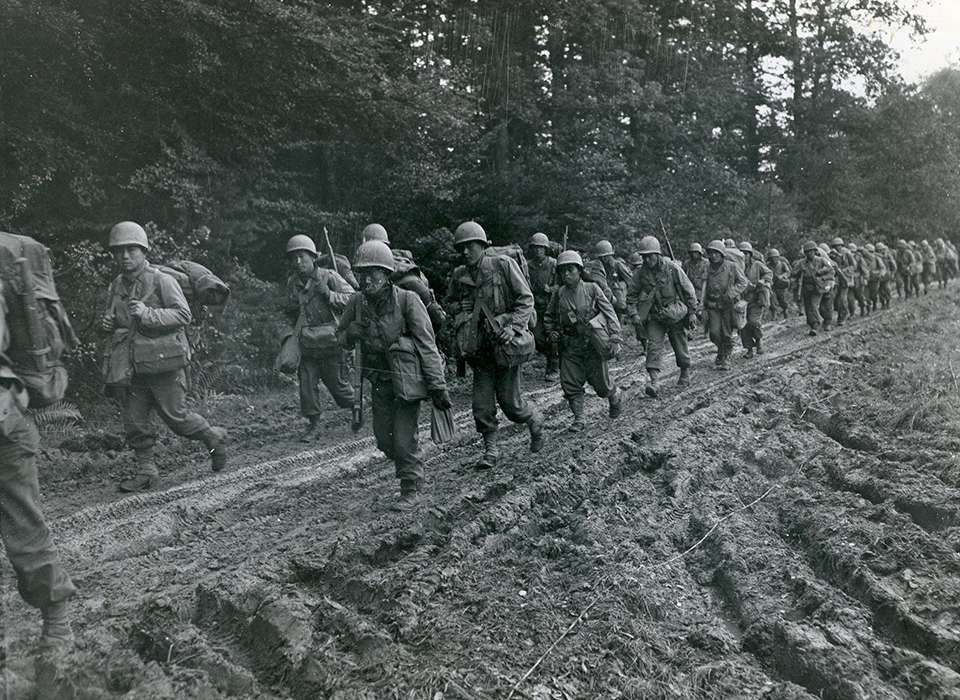
Soon after the December 7, 1941 attack on Pearl Harbor, President Franklin Roosevelt signed Executive Order 9066, effectively placing over 100,000 West Coast residents of Japanese descent, the majority of them American citizens, into incarceration camps. Racism against Japanese Americans was rampant as much of the country grew more fearful and suspicious of collaboration with the Japanese government. But Japanese Americans were equally outraged at the attack on their country. Despite the growing racism against them, many Japanese Americans answered the call to war.
President Roosevelt activated the 442nd Regimental Combat Team on February 1, 1943, nearly one year after the signing of EO9066. Hawaiian-born Nisei (second-generation Japanese Americans) made up roughly two-thirds of the regiment, with the remaining third composed of Nisei from the mainland United States. The motto of the unit was “Go For Broke,” a phrase that meant putting everything on the line in an effort to win big. Just as other minority groups, Japanese Americans faced two wars during World War II—war against the Axis powers and war against racism back home—making “Go For Broke” an appropriate motto.
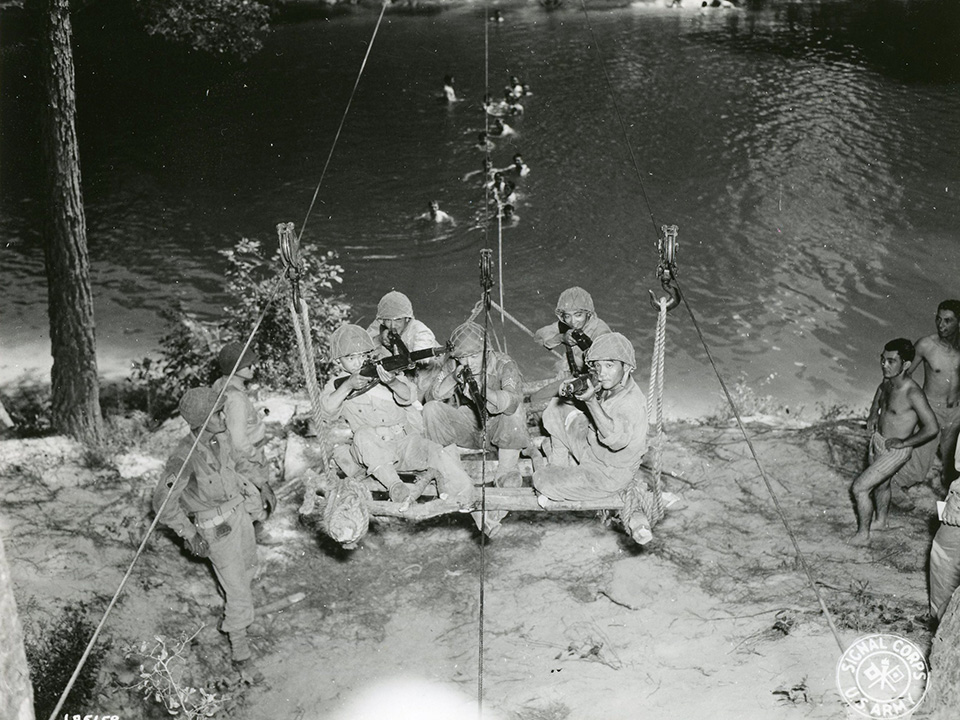
The 442nd RCT consisted of multiple units, including the 522nd Field Artillery Battalion, 232nd Combat Engineer Company, 206th Army Ground Forces Band, an Antitank Company, Cannon Company, Service Company, a medical detachment, and three infantry battalions. From May 1943 to April 1944, the men of the 442nd trained for combat, where they learned to fight as a team and excelled in practice maneuvers. Over the course of training, many men would be sent to Europe as replacements for the 100th Infantry Battalion, another Japanese American unit already fighting overseas and creating its own impressive track record.
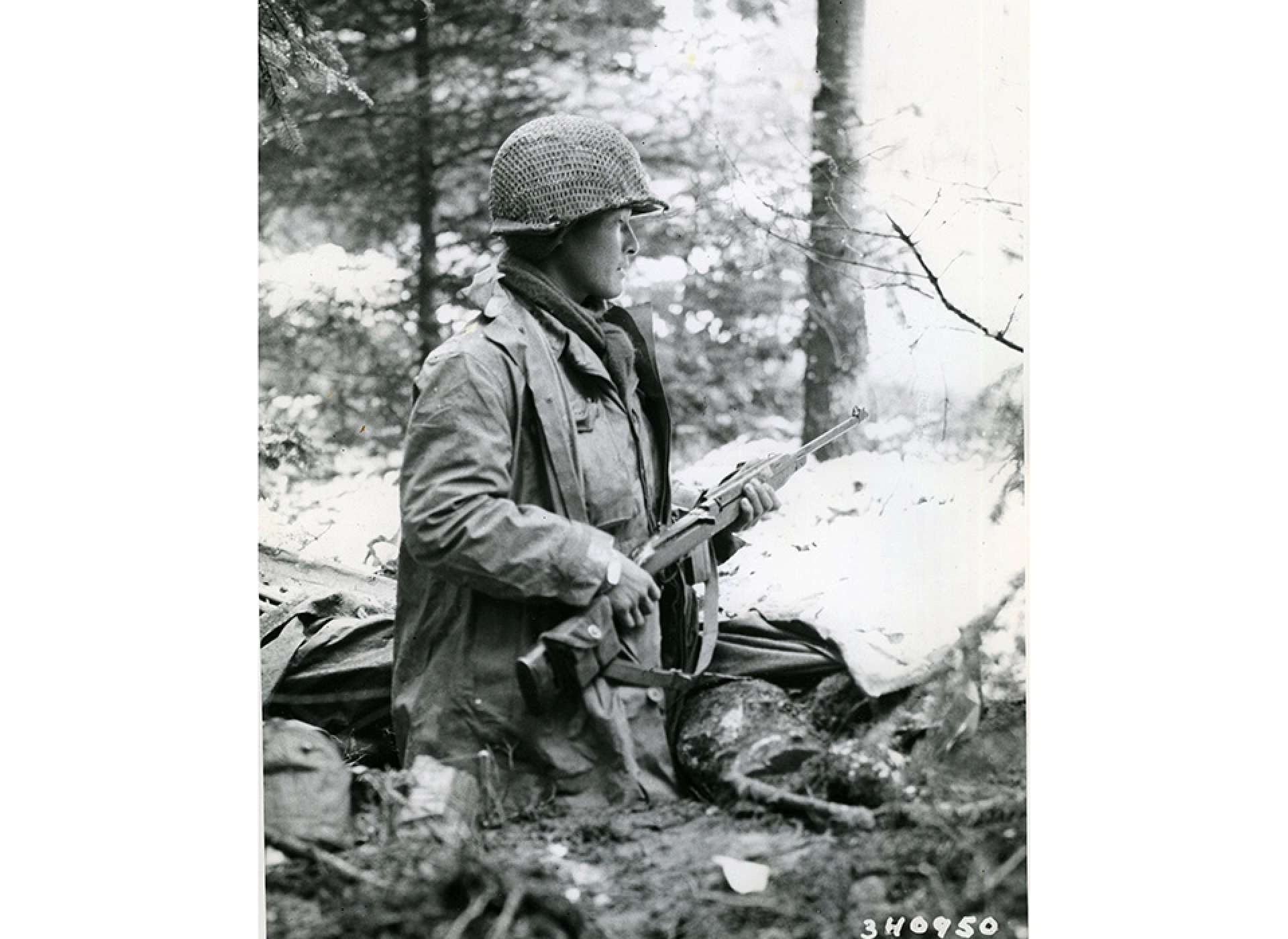
A squad leader of the 442nd watching for German movement on the front lines in France. Courtesy of the US National Archives.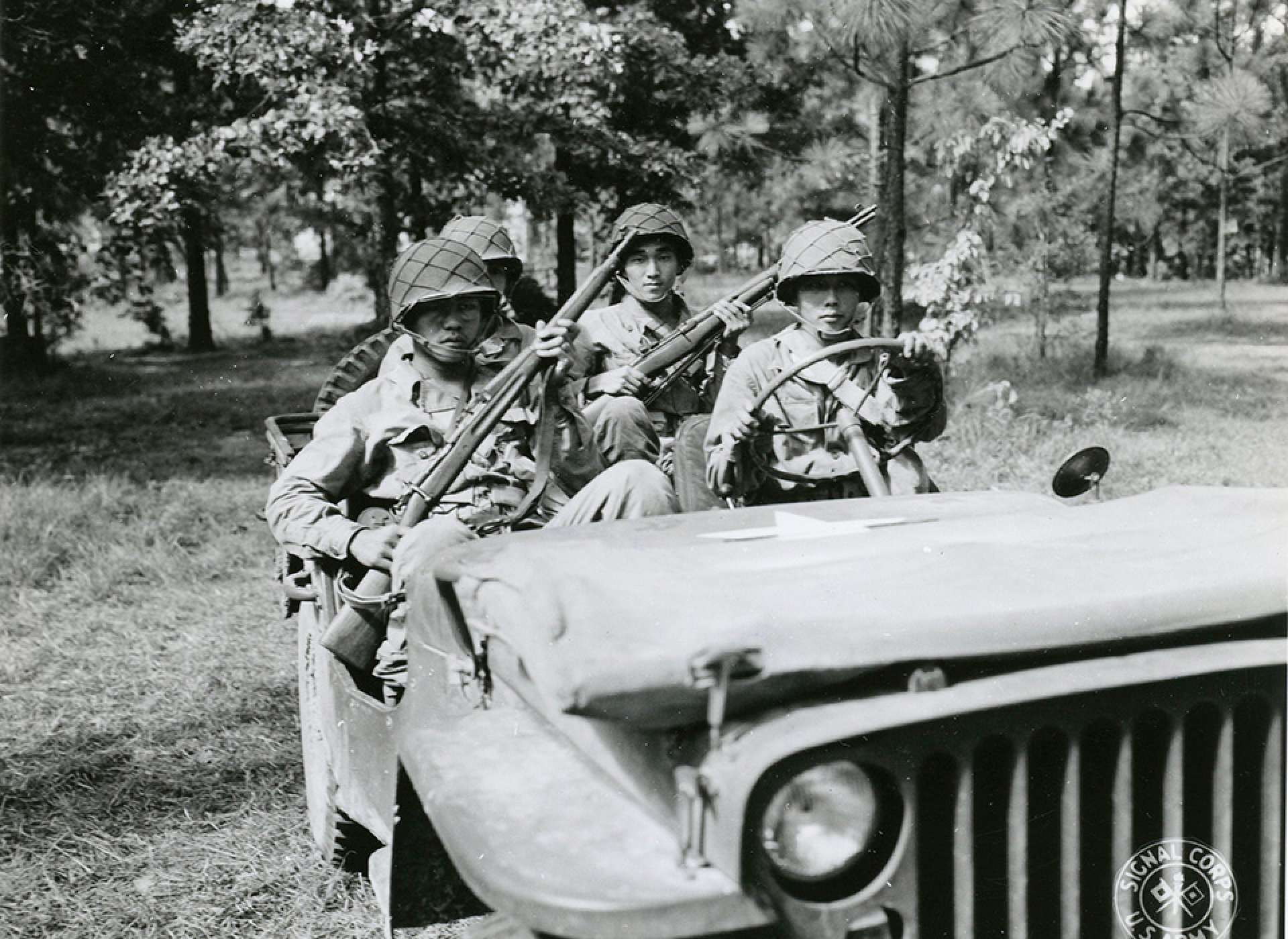
Members of the 442nd pose for a photo while riding a jeep in France. Courtesy US National Archives.
Training for the 442nd was completed in April, and on April 22, 1944, the unit left Camp Shelby in Mississippi on their journey to Europe for their first overseas assignment. They arrived in Italy in June 1944, where they began to fight alongside the 100th against Germans encamped across the country.
By August, the 100th was absorbed into the 442nd, with all units serving under the motto “Go For Broke.” In September 1944, the 442nd participated in the invasion of Southern France, successfully liberating French cities from Nazi occupation. The unit went on to fight with the 92nd Infantry Division, a segregated African American unit, in driving German forces out of northern Italy.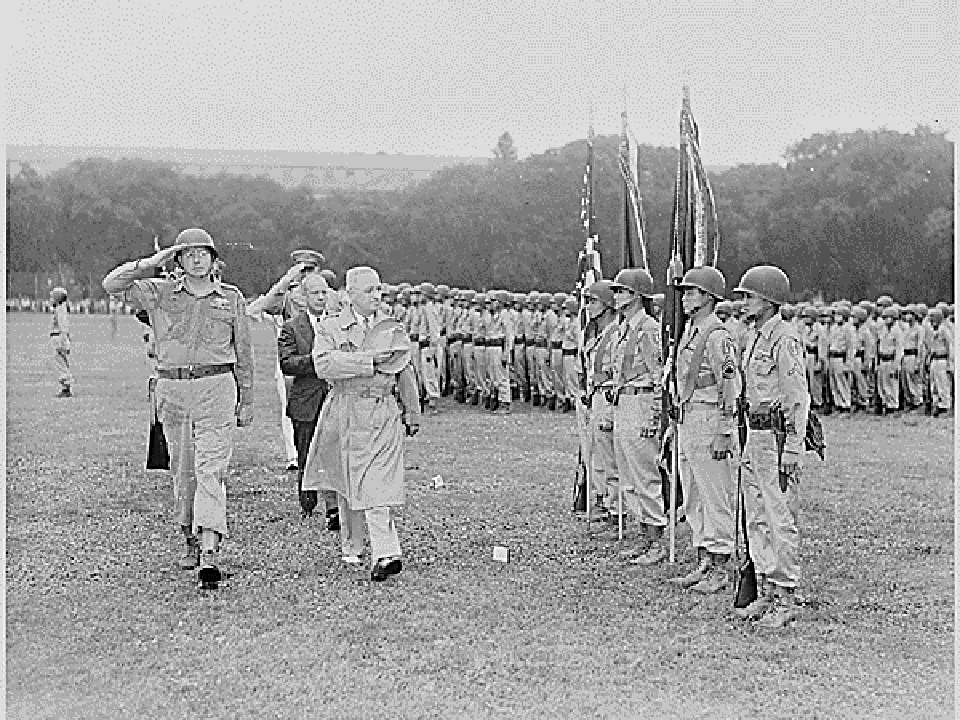
Today, the 442nd is remembered as the most decorated unit for its size and length of service in the history of the US military. The unit, totaling about 18,000 men, over 4,000 Purple Hearts, 4,000 Bronze Stars, 560 Silver Star Medals, 21 Medals of Honor, and seven Presidential Unit Citations. Additionally, the 100th garnished their own impressive record prior to their absorption into the 442nd. In 2010, various groups and advocates, including the National Veterans Network, were successful in obtaining congressional passage of the bill S. 1055, awarding all members of the 100th and 442nd, along with the Military Intelligence Service, the Congressional Gold Medal for their heroic service in World War II.
Against the odds, the men of the 100th Infantry Battalion and the 442nd Regimental Combat Team did “go for broke.” Despite the years of suspicion and racism that prevailed at home, these Nisei men fought for their country and their ideals of freedom and democracy. They fought heroically, leaving behind a record that is still untouched today.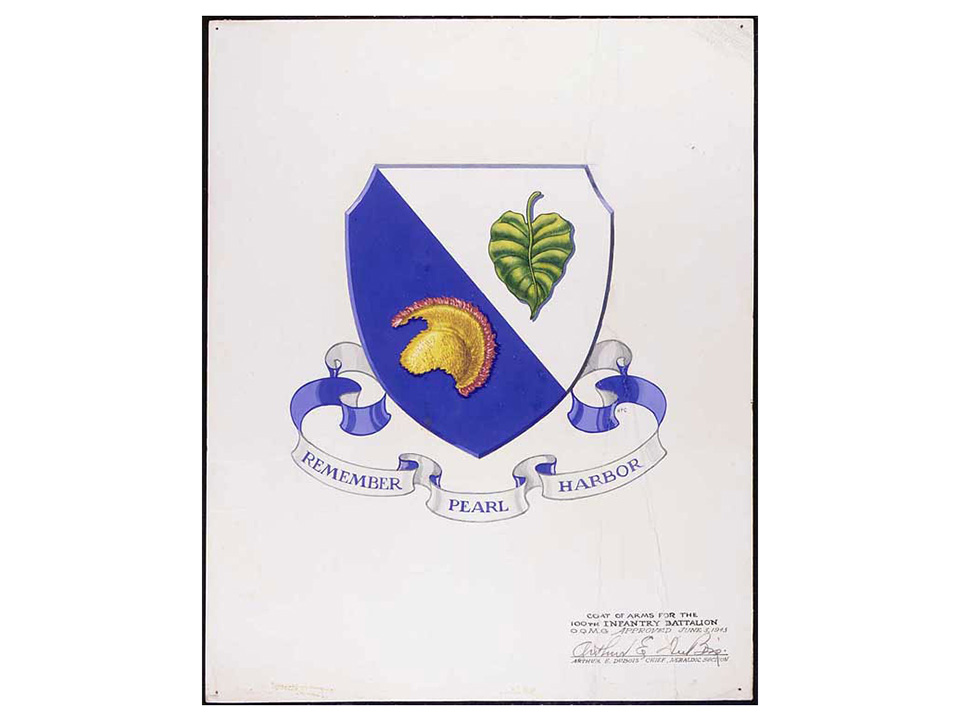
The logo and motto “Remember Pearl Harbor” of the 100th Infantry Battalion. Courtesy of the US National Archives.
5 replies on “Going For Broke: The 442nd Regimental Combat Team by Connie Gentry”
It is incredible how the 442nd Regimental Combat Team managed to become the most decorated unit despite the immense pressure and racism they faced back home. Does anyone know more about how their cooperation with the 92nd Infantry Division in Italy influenced joint operations later in the war?
There is a book from this time written by, and published after the equivalent of a Director to the precursor of the NSA during this time. It is full of declassified documents that were all researched by the publisher to verify. It discusses the reasons for the internment camps in the book but covers what that found with Intel and the Enigma machine.
I am no fan of Roosevelt. And against 99% of any government action. But there were, from a war perspective, some compelling reasons. Not agreeing with it but it is not how the popular press, media, and many Japanese make it out to be.
Sadly but in wartime things have to be done that look ugly in Peace time. Especially when it comes to Traitors and other filth and there are always Traitors in every war.
(Yes,It was true that most of those poor folks were loyal Americans! Who really had the worst of luck.)
But there is also the fact that if Roosevelt the lessor had not locked them up. The Japanese Americans could have faced something like the Zoot Suit riots or something vastly worse. Especially right after Pearl Harbor and then when the casualty Lists started coming in from the PTO plus the stories of The Bataan Death March etc.
(BTW my Dad lived in Los Angeles during the war and he told me a lot about those times. Then before he joined the Army in 1946. My Great Aunt & Him worked at one of the Camps in Arizona as Cooks.)
The book was named Magic: The Untold Story of U.S. Intelligence and the Evacuation of Japanese Residents from the West Coast During WW II
Thanks and I guess I will be looking for it one Ebay ASAP!
Grumpy
(As you can see I have the best readers of Blogs in the world!)