Categories
I am so grateful!! Manly Stuff This great Nation & Its People

God bless them all!

This random photo depicts the last run of Ladder 118 as it crosses the Brooklyn Bridge. None of the firefighters would survive the tower’s collapse.

Categories
N.S.F.W. This great Nation & Its People

Have a Great Labor Day !

image.pngimage.pngimage.png

image.pngimage.pngimage.pngimage.pngimage.pngimage.pngimage.pngimage.pngimage.pngimage.pngimage.png

image.pngimage.pngimage.pngimage.pngimage.pngimage.png

image.png

Stefan Soell Models - 37 porn photos

image.png

image.png

image.png

image.png

image.png

image.png

image.pngimage.png

Labor Day

Categories
A Victory! All About Guns Good News for a change! I am so grateful!! Leadership of the highest kind Manly Stuff Some Red Hot Gospel there! This great Nation & Its People

Its just a pity that Scalia did not live to see this! Grumpy

Categories
The Green Machine This great Nation & Its People War

Battle of Mogadishu 3 Oct 1993 (29 years ago today)

Categories
The Green Machine This great Nation & Its People War

The Screaming Eagles THE HISTORY OF THE 101ST AIRBORNE DIVISION

General Maxwell D. Taylor, commanding officer of the 101st Airborne from early 1944 onward (Photo: The National WWII Museum New Orleans)
General Maxwell D. Taylor, commanding officer of the 101st Airborne from early 1944 onward (Photo: The National WWII Museum New Orleans)
This year’s summer marks the 80th anniversary of the activation of a celebrated American Army division. The 101st Airborne Division came into existence on August 16, 1942, and the “Screaming Eagles” quickly soared to legendary status. With a proud service history in World War II, Vietnam, and more recently Kuwait, Iraq, Afghanistan and other locations, they are a shining example of American military excellence.

The history of the 101st arguably began in World War I, when the 101st Infantry Division was set up. Its headquarters was organized 9 days before the end of the war, so the unit didn’t see action, and was reconstituted in the Organized Reserves in 1921. The division was stationed in Wisconsin at this time, and reached back to the state’s Civil War history for its identity. The Screaming Eagle, which appears on the division unit patch today, was adopted during this period. It refers to a real bald eagle named Old Abe (Read our earlier article: Old Abe, the original Screaming Eagle), who was the mascot of the 8th Wisconsin Volunteer Regiment. The black shield on which the eagle is depicted in the unit patch is also a Civil War reference, to the Iron Brigade, another unit with Wisconsin connections whose soldiers wore black hats.

Old Abe, the original Screaming Eagle (Photo: State Historical Society of Wisconsin Visual Archives)
Old Abe, the original Screaming Eagle (Photo: State Historical Society of Wisconsin Visual Archives)
The 101st Airborne was properly formed in the summer of 1942, with some of the initial cadre provided by the 82nd “All American” Airborne Division, who were already established by the time. The division’s first commander, Major General William Lee, is often called the “Father of the U.S. Airborne,” and included these words in General Order Number 5:

“The 101st Airborne Division, which was activated on 16 August 1942, at Camp Claiborne, Louisiana, has no history, but it has a rendezvous with destiny.
Due to the nature of our armament, and the tactics in which we shall perfect ourselves, we shall be called upon to carry out operations of far-reaching military importance and we shall habitually go into action when the need is immediate and extreme. Let me call your attention to the fact that our badge is the great American eagle. This is a fitting emblem for a division that will crush its enemies by falling upon them like a thunderbolt from the skies.” The order gave the division its motto, “Rendezvous with destiny.”

William Carey Lee (center), first commanding officer of the 101st, receiving an honorary degree of Doctor of Military Sciences in 1945. (Photo: NC State University Libraries)
The 101st first saw action on the night before D-Day, when they were dropped behind enemy lines alongside the 82nd on the Cotentin Peninsula (Read our earlier article: Jumping into chaos). The division had multiple objectives, all revolving around preparing the ground for the amphibious landings in the morning. Jumping in three drop zones, the 101st was to secure causeway exits from Utah Beach, destroy a German coastal battery, capture several buildings believed to be barracks and a command post, capture a river lock, and capture or destroy several bridges. All of these actions, combined with similar missions carried out by the 82nd, were to hamper German efforts to push back against the vulnerable beachheads in the early hours of the operation, and to help Allied troops at different beaches link up and move further inland.
Two members of the Filthy Thirteen, officially the 1st Demolition Section of the Regimental Headquarters Company of the 506th Parachute Infantry Regiment, 101st Airborne Division, applying war paint before departing for Normandy. (Photo: National Archives and Records Administration)
Headquarters Company of the 506th Parachute Infantry Regiment, 101st Airborne Division, applying war paint before departing for Normandy. (Photo: National Archives and Records Administration)
As you can read in our article linked above, most paratroopers misjumped. Once on the ground, the men had to link up with whomever they could find and act on their own initiative. Though inexperienced, the 101st accomplished many of their objectives, and the paratroopers appearing all over the place sowed a great deal of confusion among the Germans.

One trick that helped the paratroopers recognize each other was the use of helmet marks unique to the 101st. Each of the four French card suits (spades, hearts, clubs and diamonds) was assigned to one of the division’s four regiments (one only attached later on in the war) and painted on every helmet to ease identification. Additionally, a tick mark was painted around the suit symbol, the location representing the soldier’s battalion. Other symbols marked support units and artillery, engineer battalions and the like, and the 187th Regiment, added to the division after the war, was assigned the Torii symbol representing traditional gates at Japanese Shinto shrines.

Ed Pieczatowski showing the hole put in his helmet by an SS grenadier. The club symbol marks him as a member of the 327th Glider Infantry Regiment, 101st Airborne Division. (Photo: 101airborneww2.com)
Ed Pieczatowski showing the hole put in his helmet by an SS grenadier. The club symbol marks him as a member of the 327th Glider Infantry Regiment, 101st Airborne Division. (Photo: 101airborneww2.com)
As the first days of the Allied landings unfolded, the 101st was involved in several actions not originally planned but now a part of the division’s history. Among these were 1st Lieutenant Dick Winters’ assault on the Brécourt Manor battery (Read our earlier article: Dick Winters’ first battle) and Lieutenant Colonel Robert Cole’s path down an exposed highway and his bayonet charge against a German-held farm (Read our earlier article: Cole’s bayonet charge).
101st Airborne paratroopers in Saint-Côme-du-Mont (Photo: U.S. Army)
101st Airborne paratroopers in Saint-Côme-du-Mont (Photo: U.S. Army)
These fierce days also brought along the division’s first loss of a general officer. Brigadier General Don F. Pratt was touching down in Normandy in a glider on D-Day, when the vehicle crashed into a hedgerow. Sitting in his jeep, Pratt broke his neck from whiplash, becoming the highest-ranking Allied officer to die on the first day of the Allied landings.
Wreckage of the Fighting Falcon, Don F. Pratt's glider (Photo: The Don F. Pratt Museum)
Wreckage of the Fighting Falcon, Don F. Pratt’s glider (Photo: The Don F. Pratt Museum)
The division’s next great test was Operation Market Garden in the fall of 1944. The doomed operation tried to capture a large number of bridges in the Netherlands with airborne troops, and then use those bridges to cut across the country with tanks. The largest airborne operation in history, Market Garden was a bold but ultimately failed attempt to rapidly reach Germany’s industrial heartland and possibly end the war before winter.

Both the 101st and the 82nd captured several bridges early on in the operation, but the 101st hit a snag when one of their primary objectives was blown up by the Germans. The division then tried but failed to capture another bridge a few miles away. This contributed to the delay of the British XXX Corps, but it should be noted that Market Garden suffered from many problems and localized failures, which all added up to eventually defeat. During the operation, the 101st managed to hold a narrow corridor 16 miles (26 km) long in enemy territory for ten days, a stretch of which was nicknamed Hell’s Highway due to the intensity of fighting.

101st Airborne paratroopers with Dutch civilians during Operation Market Garden (Photo: U.S. Army)
101st Airborne paratroopers with Dutch civilians during Operation Market Garden (Photo: U.S. Army)
The failure of Market Garden meant that the war was definitely not going to end before the Christmas of 1944. However, the 101st had no way of knowing just how quickly they’ll be needed again. On December 16, Hitler launched a carefully and secretively prepared offensive in the Ardennes in Belgium, starting what is now called the Battle of the Bulge. Available Allied units in the area were hurriedly called up and thrown in the way of the German advance with essentially no time to prepare. The 101st was lacking some vital equipment such as winter coats, but needs must when the Devil drives: the division boarded a truck convoy (the weather was unsuitable for parachute drops) and headed for the town of Bastogne, where they met up with a tank destroyer battalion, elements of an armored division, and three artillery battalions. Their orders were simple: hold Bastogne at all cost. Bastogne was a local transportation hub where several roads and railways met. Capturing the town would have allowed the Germans to move their forces around much more quickly in a region dominated by forested mountains. The longer the division could deny Bastogne to the enemy, the easier it would be for other Allied units to stop and beat back the German offensive.
Paratroopers of the 101st moving up to Bastogne (Photo: U.S. Army Center of Military History)
Paratroopers of the 101st moving up to Bastogne (Photo: U.S. Army Center of Military History)
Describing the entire battle is far beyond the scope of this article, but one element that became a part of the 101st’s legend must be mentioned. The division’s acting commander was Brigadier General Anthony McAuliffe, since the division’s commanding officer, Maxwell D. Taylor, was in the United States for a staff conference. The German commander of the siege of Bastogne sent McAuliffe a written message demanding the Americans’ surrender. A frustrated McAuliffe, just woken up to be given the news, responded with “Nuts!,” an exclamation that became the official, written reply after a short deliberation. Of course, the word does not carry the same slang connotation in German, so the officer taking the message back had to be explained that it meant “go to Hell.”
Anthony McAuliffe (center) with two of his officers in Bastogne (Photo: U.S. Army)
The Battered Bastards of the Bastion of Bastogne, as the 101st came to be known, held the town against all comers, including a desperate German attack on Christmas Day, which initially saw several German tanks penetrate American lines. General George S. Patton’s forces arrived the next day to rescue the Battered Bastards, even though the latter maintained they didn’t actually need any rescuing. In January, the 101st went on the counteroffensive and liberated several nearby villages before being relieved. The actions of one particular paratrooper in Bastogne also led to the creation of the famous Airborne Beer (Read our earlier article – A helmet full of beer).
Cobra King, the first tank to reach Bastogne (Photo: U.S. Army)
Cobra King, the first tank to reach Bastogne (Photo: U.S. Army)
The Battle of the Bulge was Germany’s last-ditch attempt to turn the tide of war on the Western Front. Once the offensive was blunted, it was relatively smooth sailing into Germany. On the way, the 101st liberated one of the many subcamps of the Dachau concentration camp. They also reached the Nazi resort town of Berchtesgaden and Hitler’s famous Eagle’s Nest, liberating large quantities of Nazi-held champagne and other libations in the process. It should be mentioned in the interest of historical fairness that while the 101st, and more specifically the famous Easy Company, 2nd Battalion, 506th Parachute Infantry Regiment, are usually credited with reaching both the town and the mountaintop retreat first, there is some historical evidence that they were beaten to it by the 3rd Infantry Division, who got there first (on the same day, even), but were ordered to move on before they could enjoy their conquest.
Members of the famous Easy Company in Berchtesgaden. (Note that the photo is often inaccurately described as having been taken at the Eagle's Nest.) (Photo: U.S. Army)
Members of the famous Easy Company in Berchtesgaden. (Note that the photo is often inaccurately described as having been taken at the Eagle’s Nest.) (Photo: U.S. Army)
In the late summer of 1945, the 101st began training for redeployment in the Pacific, but the dropping of atomic bombs on Japan and the country’s subsequent surrender ended the war before they could be sent east. The division’s WWII actions were depicted in several movies and series, the most famous being HBO’s Band of Brothers miniseries.

World War II was over, but the 101st Division continued to serve. It was deactivated and reactivated several times in the late 40s and the 50s. In 1957, it was reactivated as the first “pentomic” division of the United States Army. Pentomic divisions were a short-lived experiment to adapt to the Cold War. A pentomic division comprised of not three regiments, but five smaller battle groups. The idea was that this would allow the division to be in more places and do more things at the same time. Additionally, with the five battle groups dispersed over a larger area, it would be harder for the Soviets to destroy an entire division with nuclear weapons.

The pentomic experiment didn’t last, but the 101st achieved another milestone in 1957, though one less military in nature. A group of nine African-American students enrolled in Little Rock Central High School, Arkansas, in the wake of Brown vs. Board of Education, and the ensuing political crisis placed the students in danger. Soldiers of the 101st were ordered into Little Rock to protect the students of the formerly segregated school from harassment or harm.

Members of the 101st in Little Rock (Photo: Getty Images)
The 101st Airborne were also deployed to Vietnam. Between 1865 and 1967, the division became known as the “Nomads of Vietnam” for always being sent from one crisis spot to another. Among many other locations, the 101st fought at Hamburger Hill and Firebase Ripcord. According to some sources, the North Vietnamese misunderstood the division’s unit patch and started calling them “Chicken Men.”
Wounded members of the 101st being evacuated in Vietnam, May 1969. (Photo: United States Army Military History Institute)
A few men from the 101st were selected for Tiger Force, a special long-range recon patrol unit. Numbering around 45 men, the mission of Tiger Force was to “outguerilla the guerillas.” The unit achieved a fearsome reputation, but paid a high price for it in the moral murkiness of the Vietnam War. An investigation revealed that the force committed numerous war crimes, but the Army decided not to prosecute anyone.
Members of Tiger Force on a North Vietnamese infiltration trail (Photo: National Archives and Records Administration)
Members of Tiger Force on a North Vietnamese infiltration trail (Photo: National Archives and Records Administration)
It might surprise some readers, but 101st Airborne Division, so famed for their paratrooper operations in World War II, no longer perform jumps, since their jump status was terminated in 1974. Since then, the division has operated first as an airmobile division, then later (and today) as the United States’ only air assault division. (An airmobile division is one that uses air transport to get near a battlefield, then disembarks and proceeds on foot. An air assault division uses helicopters or tiltrotor aircraft to land directly in combat and fight from the very first step onward.)
Jimmy Hendrix during the time when he served in the 101st (Photo: United Service Organizations)
Jimmy Hendrix during the time when he served in the 101st (Photo: United Service Organizations)
Since their reorganization, the 101st Airborne have continued to serve with pride. In 1991, during the Gulf War, they have struck Iraqi targets 155 miles (249 km) behind enemy lines, executing the deepest air assault in history. They have participated in humanitarian relief efforts and peacekeeping operations in Kosovo, Rwanda, Somalia, Haiti and Bosnia. They have also performed air assaults, counterinsurgency operations and have trained local allied forces in Iraq and Afghanistan.
A member of the 187th Infantry Regiment, 101st Airborne on patrol in Afghanistan, 2013. You can see the Torii symbol, not yet used in World War II, on his helmet.
A member of the 187th Infantry Regiment, 101st Airborne on patrol in Afghanistan, 2013. You can see the Torii symbol, not yet used in World War II, on his helmet. (Photo: U.S. Army)
Most recently, the Screaming Eagles have started returning to Europe. It was announced in the summer of 2022 that the 101st will be a part of a mission to reinforce America’s allies in NATO and help ensure Europe’s safety during and after the war unfolding between Russia and Ukraine. If the 101st truly returns to Europe for the foreseeable future, they will find a warm welcome by friends who remember.

Join us on our tours to follow in the footsteps of the division’s paratroopers from Normandy to the Eagle’s Nest and explore the sites where 101st soldiers, like Ronald Speirs (Read our earlier article – Badass paratrooper or war criminal?), went into battle to restore liberty to Nazi-occupied Europe.

Elements of the 101st arriving in Romania, Europe, in June 2022 (Photo: U.S. Army)
Elements of the 101st arriving in Romania, Europe, in June 2022 (Photo: U.S. Army)
Categories
This great Nation & Its People War

American Universities Declare War on Military History by Max Hastings

The world applauds the scientists who have created vaccines to deliver humanity from Covid-19. One certainty about our future: There will be no funding shortfall for medical research into pandemics.

Now, notice a contradiction. War is also a curse, responsible for untold deaths. Humans should do everything possible to mitigate it. And even if scientists cannot promise a vaccine, the obvious place to start working against future conflicts is by researching the causes and courses of past ones.

Yet in centers of learning across North America, the study of the past in general, and of wars in particular, is in spectacular eclipse. History now accounts for a smaller share of undergraduate degrees than at any time since 1950. Whereas in 1970, 6% of American male and 5% of female students were history majors, the respective percentages are now less than 2% and less than 1%, respectively.

Fredrik Logevall, a distinguished Harvard historian and author of seminal works on Vietnam, along with a new biography of John F. Kennedy, remarked to me on the strangeness of this, given that the US is overwhelmingly the most powerful, biggest-spending military nation on earth. “How this came to be and what it has meant for America and the world is surely of surpassing historical importance,” he said. “Yet it’s not at the forefront of research among academic historians in this country.”

The revulsion from war history may derive not so much from students’ unwillingness to explore the violent past, but from academics’ reluctance to teach, or even allow their universities to host, such courses. Some dub the subject “warnography,” and the aversion can extend to the study of international relations. Less than half of all history departments now employ a diplomatic historian, against 85% in 1975. As for war, as elderly scholars retire from posts in which they have studied it, many are not replaced: the roles are redefined.

An eminent historian recently told me of a young man majoring in science at Harvard who wanted to take humanities on history, including the US Civil War. He was offered only one course — which addressed the history of humans and their pets.

Paul Kennedy of Yale, author of one of the best-selling history books of all time, “The Rise and Fall of The Great Powers,” is among many historians who deplore what is, or rather is not, going on. He observed to me that while some public universities, such as Ohio State and Kansas State, have strong program in the history of war, “It’s in the elite universities that the subject has gone.”

“Can you imagine Chicago, or Berkeley, or Princeton having War Studies departments?” he asked. “Military history is the most noxious of the ‘dead white male’ subjects, and there’s also a great falling away in the teaching of diplomatic, colonial and European political history.”

Kennedy notes that war studies are highly popular with students, alumni and donors, “but the sticking point is with the faculty — where perhaps only a small group are openly hostile, but a larger group don’t think the area is important enough.”

Harvard offers few history courses that principally address the great wars of modern times. Many faculties are prioritizing such subjects as culture, race and ethnicity. Margaret Macmillan, of the University of Toronto and Oxford, observes that war is one of the great cataclysmic events, alongside revolution, famine and financial collapse, that can change history.

As the author of the bestseller “Peacemakers,” an epochal study of the 1919 Versailles conference, she has written about the decline in university courses on conflict: “Our horror at the phenomenon itself has affected the willingness to treat it as a serious subject for scholarship. An interest in war is somehow conflated with approval for it.”

Mindless mudslingers have attacked her as a war-lover for making the observation — commonplace among scholars of the subject — that conflicts can bring scientific or social benefits to mankind.

Tami Davis Biddle, a professor at the US Army War College, has written, “Unfortunately, many in the academic community assume that military history is simply about powerful men — mainly white men —fighting each other and/or oppressing vulnerable groups.”

Universities excuse themselves for shunning history by citing the need to address contemporary subjects such as as emotions, food and climate change. Some also urge that students believe they can better serve their own interests — and justify tuition costs — by choosing vocational majors that will enhance their employability. Yet Logevall’s Vietnam is one of the most popular history courses at Harvard.

History sells prodigiously in the world’s bookstores. I have produced a dozen works about conflict, and my harshest critic would struggle to claim that these reflect an enthusiasm for it. I often quote a Norwegian World War II Resistance hero, who wrote in 1948, “Although wars bring adventures that stir the heart, the true nature of war is composed of innumerable personal tragedies and sacrifices, wholly evil and not redeemed by glory.”

Those words do not represent an argument for pacifism. Our societies must be willing, when necessary, to defend themselves in arms. But our respective presidents and prime ministers might less readily adopt kinetic solutions — start shooting — if they possessed a better understanding of the implications.

Before resorting to force, governments, as well as military commanders, should always ask: “What are our objectives? And are they attainable?” Again and again — in recent memory, in Vietnam, Iraq, Afghanistan, Libya — those questions were neither properly asked nor answered, with consequences we know. Governments succumb to what I call gesture strategy.

Part of the trouble lies with the military, sometimes over-eager to demonstrate “the utility of force,” or rather, to justify their stupendous budgets. More often, however, blame lies with politicians ignorant of the difficulties of leveraging F-35s, cruise missiles, drone aircraft and combat infantry to produce a desired political outcome.

It is extraordinary that so many major US universities renounce, for instance, study of the Indochina experience, which might assist a new generation not to do it again. Marine General Walt Boomer, a distinguished Vietnam vet, said to me five years ago, when I was researching that war: “It bothers me that we didn’t learn a lot. If we had, we wouldn’t have invaded Iraq.”

Biddle has written: “The US military does not send itself to war. Choices about war and peace are made by civilians — civilians who, increasingly, have no historical or analytical frameworks to guide them. They know little or nothing about the requirements of the Just War tradition … the logistical, geographical and physical demands of modern military operations.”

North America’s great universities should be ashamed of their pusillanimity. War is no more likely to quit our planet than are pandemics. The academics who spurn its study are playing ostriches. Their heads look no more elegant, buried in the sand.

Categories
All About Guns Hard Nosed Folks Both Good & Bad Soldiering This great Nation & Its People War

Alvin York: Conscientious Objector to War Hero

Alvin York collage with photos and clippings

In the late 1880s, the lives of settlers on the Cumberland Plateau of Tennessee had changed little since before the Revolution. Lofty mountains, bridgeless streams, and unpaved roads had isolated the mountain folk from the affairs of the outside world for over a century. Their education and smarts came not from books and “larning,” but from their intimate knowledge of the rugged outdoors. Fiercely independent and self-reliant, they made do with whatever nature and the good Lord provided.

Alvin Cullum York was brought up in these backwoods, where hard work on the homestead made for robust constitutions and where stealth and expert marksmanship in the wilderness were vital for fetching wild game for food sport.

Born on December 13, 1887, Alvin and his ten siblings were raised in a two-room log cabin in Pall Mall, Tennessee, within spitting distance of the Kentucky state line.1 There, in the sun-drenched valley of Three Forks of the Wolf River, the Yorks tended to their seventy-five-acre farm, “part level and part hilly,” where they grew corn and raised chickens, hogs and a few cows for their subsistence.2 To make ends meet, his father, William, worked as a blacksmith, setting up shop in a mountain cave near their home. His mother, Mary, would do chores at neighbor’s homes, sometimes accepting old clothes as payment, which she would mend and alter for the children.3

Alvin York wooden country homeYork family log cabin.  From Cowan, Sergeant York and his People, 33.Alvin York walking down country roadValley of the Three Forks O’ the Wolf. From Cowan, Sergeant York and his People, 89.

Schools in the remote mountain regions were scarce and poorly funded, not that it mattered much for the older children had to help harvest the crops as a matter of priority. In the winter, keeping school open was impractical as many of the children had to travel long distances and lacked warm clothes and proper shoes. The one-room schoolhouse in Pall Mall was open for only 2 ½ summer months a year; Alvin attended three weeks a year for five years, receiving the equivalent of a second-grade education.4 

Alvin picked up hunting skills from his father and his grit from stories of “fightin’ men” like Daniel Boone, Davy Crockett, and Andrew Jackson. For Alvin, hunting was not just a skill but an art. A man had to become intimately acquainted with his rifle’s parts, meticulous with its care, and familiar with its “temperament,” whether its fire would lean left or right or if the sun or the wind, dry or damp days would affect its performance. As an experienced hunter, Alvin could read and interpret signs left by wild animals, blend into the woodlands, and remain motionless while stalking his prey. At local shooting matches, with his old muzzle-loading “hog rifle,” he “could bust a turkey’s head at most any distance” and “knock off a lizard’s or a squirrel’s head from that far off that you could scarcely see it.”5

When his father died in 1911, York went “hog wild,” cussing and gambling and drinking moonshine, the latter often in challenges where the winner was the last man standing. He found himself in trouble with the law on more than one occasion.6 Although he never shunned his responsibilities at home, his sinful ways caused his ma many a sleepless night in prayer. In her quiet manner, she begged her son to change. As a Christian woman, she knew that his sins were wasting his life and destroying his chances for salvation. As a mother, she feared for his personal safety each time he went past the front gate.

Alvin, now twenty-seven years old, began to assess his life and often went into the mountains to pray and ask God to help him fight his demons. He started attending the Wolf River Church where a saddlebag preacher’s sermons further enlightened Alvin to a life of righteousness. His growing fondness for Gracie, a local beauty thirteen years his junior and devout Christian, boosted his motivation to change. 7 On January 1, 1915, York swore off his vices and joined the Church of Christ in Christian Union. A fundamentalist sect, it opposed all forms of violence and advocated a strong pacifist philosophy which York adopted. 8 Now a devout Christian, his new-found beliefs were about to be tested.

Hints of War

On April 6, 1917, the United States of America formally declared war on the German Empire when German U-boats attacked U.S. ships in the Atlantic. Word got around Pall Mall about the escalating war, but little was understood about its causes, our involvement, or its objectives. “I knowed big nations were fighting, but I didn’t know for sure how many and which ones…I had no time nohow to bother much about a lot of foreigners quarreling and killing each other over there in Europe.”9

On May 18, the U.S. government enacted a law requiring that all able-bodied men between the ages of twenty-one to thirty-one register for the draft. York reluctantly registered on June 5 but attempted to gain status as a conscientious objector. Three separate requests for exemption from selective service, including one from his pastor and mentor, Rosier Pile, were summarily denied by the local and district boards. Their reasoning was that the church had “no especial [sic] creed except the Bible, which its members interpret for themselves…”10

Alvin York and men standing against wood houseFentress County recruits, November 15, 1917. Alvin York is fourth from left.
From Hogue, History of Fentress County, xiii.

Throughout his time at Camp Gordon, York was deeply torn between the pacifist teachings of his church and a moral obligation to serve his country. He received counseling from his superiors, Captain Edward Danforth and Major Gonzalo Edward Buxton.11 They managed to convince York to reconsider his role in the Army by referencing chapters from the Bible regarding war and sacrifice. After spending a few days home while on leave, the young private returned to camp, convinced that serving his country was God’s will.12

York was assigned to Company G, 2nd Battalion, 328th Infantry, 82nd “All American” Division on February 1, 1918, and trained at Camp Gordon in Chamblee, Georgia, just northeast of Atlanta. Not surprisingly, he qualified as a sharpshooter when he was able to hit eight out of ten moving targets at 600 yards.13

Over There

The 328th Infantry shipped out from New York and arrived in Liverpool, England, on May 16, 1918, then moved on to Southampton, England, and Le Havre, France, where they landed on May 21, 1918. At Le Havre, their U.S. model of 1917 .30 cal. rifles were exchanged for British Mark III Lee-Enfield rifles, but they were able to keep their 1911 Colt .45 pistols.14 One month later, an assumption that the 82nd Division would be attached to British troops in the region of Picardy was overturned, and the 82nd was instead ordered to Toul. With that, the Lee-Enfield rifles, along with other armaments, were returned to the British and the U.S. model of 1917 Enfield bolt-action rifles were reissued.15

Alvin York Enfield rifleU.S. rifle cal .30, model of 1917 Enfield most likely used by Alvin York. Manufacturer: Eddystone.
Courtesy Missouri Historical Society.
British SMLE .303 rifleBritish Mark III Lee-Enfield Rifle. Courtesy National Army Museum, London.

By then, the war along the Western Front had become a bloody stalemate with heavy fighting along a series of trenches stretching from the English Channel to the Swiss Alps. Reinforced by the American Expeditionary Forces (AEF), the Allies went on the offensive trying to break through German defenses in northern France.

From Le Havre, the 82nd Division traveled east by train and on foot, past idyllic small towns and serene countrysides, a cruel paradox of what was to come.  On June 26 near Rambucourt, York heard the first sounds of gunfire “jes like the thunder in the hills at home.” At Mont Sec, bullets whizzed past “like a lot of mad hornets or bumblebees when you rob their nests.” Here he was placed in charge of an automatic weapons squad and shot French Chauchat machine guns, which he described as being heavy, clumsy, inaccurate, and noisy. “They weren’t near as good as the sawed-off shotguns,” he’d say.16 In September, York was promoted to corporal just before his regiment seized the town of Norroy.17

In the Valley of Death
map of meuse-argone offensive1st Division Meuse-Argonne Offensive map compiled by American Battle
Monuments Commission, 1937. Click map to enlarge.

On October 7, 1918, the 1st Battalion, 328th Infantry was ordered to take Hill 223, a strategic position just three kilometers southeast of their main objective: the Decauville rail line. This mission came during a critical phase of the Meuse-Argonne Offensive as American and French troops attempted to achieve the breakthrough that could end the war.18

On the night of October 7, York and the men of the 2nd Battalion watched and waited from the main road between Varennes and Fléville for their turn to continue the assault beyond Hill 223. At 0300 hours, bogged down by heavy rains and mud, fatigued from a sleepless night, hampered by a trek devoid of light except for the glow of gunfire hailing down around them, the troops slogged towards the hill amid utter chaos.

“Lots of men were killed by the artillery fire. And lots were wounded. The woods were all mussed up and looked as if a terrible cyclone done swept through them. But God would never be cruel enough to create a cyclone as terrible as that Argonne battle. Only man would ever think of doing an awful thing like that.”

At 0610 hours, York’s battalion along with three other companies of the 328th Infantry, pushed off Hill 223 with fixed bayonets. The advance was to be preceded by a rolling barrage of artillery fire that never came.19

As the troops raced downhill and charged across the 500-yard valley, now exposed with the light of dawn, an explosion of gunfire erupted from the heights above. “We had to lie down flat on our faces and dig in. And there we were out there in the valley all mussed up and unable to get any further with no barrage to help us, and that-there machine-gun fire and all sorts of big shells and gas cutting us to pieces.”

Alvin York Meuse-Argonne hill 223Valley just west of hill 223 across which York and the 2nd Battalion attacked on the morning of October 8, 1918.
From Candler, History of Three Hundred Twenty-Eighth Infantry, 60.

The first wave of men had been decimated by the Germans, and now York’s battalion lay pinned down, able to move but a few feet at a time. Something had to be done, but a frontal attack was out of the question.

When platoon sergeant Harry Parsons realized that the thrust of the machine gun fire came from a ridge to the left, he ordered Sergeant Bernard Early to lead Corporals York, Savage, and Cutting and three squads totaling thirteen men, to silence the machine gun nest on the ridge. Seventeen soldiers stealthily climbed up the left flank, concealed by the thick undergrowth, slipped deep into German lines and encircled the enemy gunners from the rear. While chasing the first two enemy soldiers they encountered, the squads stumbled upon a German headquarters with fifteen to twenty unsuspecting soldiers and officers from the 120th Württemberg Landwehr Regiment in conference.20 Caught completely off guard, the Germans surrendered. While the prisoners were being searched, enemy gunners situated on the ridge above the camp turned their machine guns around and swept the open space, instantly killing six American soldiers, including Corporal Savage, and wounding three. Among the wounded were Sergeant Early and Corporal Cutting. Corporal York was now in charge with just seven men under his command.

The onslaught of machine gun fire from above was relentless and destructive. The German prisoners had hit the ground and the Americans had shielded themselves between them, some of the privates managing to get off a shot or two.21 York was caught out in the open about twenty-five yards below the machine gun line near the ridge, his men and the German POWs huddled behind him.  Each time a German soldier raised his head, York would “tech him off,” just like he did at the turkey shoots back home.

Alvin York brown colt pistol 

Colt .45 government model of 1911. Garry James, American Rifleman.

At some point, York stood up and began to shoot his rifle offhand. His weapon was getting hot and he was running out of ammunition. So when a German officer led a counter-attack with six of his men charging towards York with fixed bayonets, York drew his Colt .45 automatic and, from back to front, shot each one, a practice he picked up at wild turkey shoots in Pall Mall. The idea was to hit the rear soldiers first so that the remainder would not see their comrade fall and fire at him. “It was either them or me and I’m a-telling you I didn’t and don’t want to die nohow if I can live,” he said.

Falling back on his hunting experience in Tennessee, York continued to methodically pick off German soldiers one by one, each time hollering for them to give up.  Alarmed by the number of troops being shot dead and their shattered morale, the German commander, Lieutenant Paul Jürgen Vollmer, shouted out in English offering to surrender his troops.22 As the Germans began to emerge from the upper trenches, one fellow hid a grenade in his raised hand, which he threw at York but missed, hitting another prisoner. York reflexively shot him, and there was no further trouble.

York ordered the eighty to ninety prisoners to form two lines and had them carry Sergeant Early on a stretcher. Using them as cover, York placed Vollmer in front of him with his pistol trained on his back and the other two German officers on either side of him. Seeing that York was considering which way to go, Vollmer suggested to turn down a gully, but York quickly figured it was a trap and decided to go in the opposite direction. Since York and his men had captured the rear German line, they inevitably ran into the first line of enemy trenches. He succinctly told Vollmer to order them to surrender or he would blow the commander’s head off, and they did, joining the lines of POWs headed to the command post.23

York and his men marched the prisoners from one command headquarters to another against his men’s better judgement, until the captives were finally accepted at division headquarters in Varennes, a distance of 10 ½ kilometers. Altogether, York killed 20-25 enemy soldiers, neutralized thirty-five machine guns, and captured 132 German soldiers, though he was quick to reject full credit for the extraordinary success of his mission. “There were others in that fight besides me… I’m a-telling you, they’re entitled to a whole heap of credit. It isn’t for me, of course, to decide how much credit…But jes the same, I’m a-telling you, a heap of those boys were heroes, and America ought to be proud of them.”

His actions enabled the 328th Infantry Regiment to advance across the valley and capture the strategic Decauville Railroad. With their Army on the verge of total collapse and the Central Powers facing defeat on all fronts, Germany agreed to an armistice with the Allies on November 11, 1918, bringing the war to an end.

“I jes want to go home.”

Alvin C. York was promoted to the rank of sergeant on November 1, 1918. He received numerous American and foreign awards, including the highest recognition that could be bestowed upon a U.S. soldier, the Congressional Medal of Honor. French General and Supreme Allied Commander, Ferdinand Foch, commented to York, “What you did was the greatest thing accomplished by any private soldier of all the armies of Europe.”

When York returned to the United States, he found that he had become a national celebrity. It was all so overwhelming for the humble hero, but all he really wanted was to go home. He received offers from Hollywood and Broadway to adapt his life story into a movie and numerous endorsement deals and public appearances worth tens of thousands of dollars. York chose not to capitalize on his newfound fame. He once famously stated “This uniform ain’t for sale.” Instead he dedicated himself to his family and a number of charitable causes. He became a proponent for veterans’ rights, education, and economic development for his impoverished community. Seeking to raise money to help build a bible school, York finally gave his blessing for Hollywood to produce a film based on his life story. In 1941, Sergeant York was released in theaters, starring Gary Cooper in the title role that would earn him an Academy Award. It was the highest grossing film of the year, inspiring young Americans across the country to enlist in the U.S. armed forces during World War II.24

On September 2, 1964, Alvin C. York passed away at a veterans’ hospital in Nashville, Tennessee, at the age of 76. He is currently buried at the Wolf River Cemetery in his hometown of Pall Mall, Tennessee, next to his wife, Gracie, who passed away twenty years later.

Alvin C. York has maintained the status of an American folk hero whose story still resonates with Americans to this day. His heroism in battle, his legendary sharpshooting skills, his underprivileged upbringing, his faith in a higher power, his sense of patriotic duty, and his humble nature all contributed to the legend that is Sergeant York. His story is regarded as one of the most inspirational American success stories, and he has been memorialized as one of the greatest heroes in the long history of the United States Army.

Enfield vs Springfield Rifle Debate

Much discussion has centered around whether York used a 1903 Springfield or a 1917 Enfield rifle during the war. WW I munitions data presented by Assistant Secretary of War, Benedict Crowell, concluded that 12-15% of rifles issued were Springfield guns but the vast majority were 1917 Enfields.25

Alvin York Springfield rifle with ammunitionU.S. rifle cal .30, model of 1903 Springfield. Twelve to fifteen percent of rifles issued to WW I soldiers were Springfields. Wikimedia

In his diary, York did not specify the type of rifle he used. Per Colonel Buxton, the 82nd Division was issued 1917 Enfields.26 In 2005, writer Garry James documented a conversation he had with York’s son, Andrew, who stated that his father had somehow switched his 1917 Enfield for a 1903 Springfield because the Enfield “had a peep sight with which York had difficulty leading a target.” Another individual commented on a forum that Andrew York told him that when his father’s unit reached the front, they were given a choice of one of the surplus ’03 Springfields, and that York switched, in part, because “the notched rear sight and post or blade front sight” were virtually the same as on his old muzzleloader. On both occasions, Andrew incorrectly stated that his father trained stateside on the ’03 Springfield and that these were replaced with Eddystones at Le Havre (Woodsrunner 38 second entry). A third forum commentator who also met Andrew York questioned Andrew’s knowledge base on the subject. (See Scott in Indiana). Regardless of which rifle he used, Alvin York’s extraordinary feat is well documented and undeniable.

Video
Words spoken by York voiceover actor are directly from his diary. Great short film with some actual war footage.


Sources

[1] Sam K. Cowan, Sergeant York and his People (New York: Grosset & Dunlap, 1922), 147. Alvin York, His Own Life Story and War Diary, Tom Skeyhill, ed. (Garden City, NY: Doubleday, Doran & Co., 1930), 18, 122. Albert Ross Hogue, History of Fentress County, Tennessee: The Old Home of Mark Twain’s Ancestors (Nashville: Williams Printing Co., 1916), ix-xiv. Eventually, William York built an addition to the cabin separated from the main living area by a breezeway described as a “dogtrot;” see “York’s Early Life,” Tennessee Virtual Archive, and John Perry, Sergeant York (Nashville: Thomas Nelson, 2010), 9.

[2] Cowan, Sergeant York, 105-106.

[3] David D. Lee, Sergeant York: An American Hero (Lexington: University Press of Kentucky, 1985), 4. York, His Own Life Story, 125.

[4] Cowan, Sergeant York, 169-170. York, His Own Life Story, 123-124. The one-room schoolhouse held pupils ages six to twenty.

[5] York, His Own Life Story, 133-134.

[6] Ibid., 132.

[7] Ibid., 141-145. Lee, Sergeant York: An American Hero, 8-10. It has been reported that the untimely death of York’s friend, Everett Delk, was one of his prime reasons for changing his life in 1917. However, author Tom Skeyhill, who interviewed York in 1927 for his book, His Own Life Story and War Diary, stated, “…and that was when he [York] learned that I had interviewed Everett Delk, his pal of “hog-wild days” to which Alvin responded, “Everett must’ve told you God plenty.” (York, 33) After he changed his ways and joined the church, York mentions that Everett or Marion would tempt him to join them for parties but he would refuse (York, 146.) On Find a Grave, there is a record of an Elijah Everett Delk from Fentress County, 1894-1928.

[8] Mark Sidwell, “The Churches of Christ in Christian Union: A Fundamentalism File Research Report,” Bob Jones University Mack Library, (Feb. 16, 2004): 1-3.

[9] York, His Own Life Story, 149-150.

[10] Ibid., 156-163.

[11] York erroneously referred to Major Buxton’s first name as George, an understandable assumption since Buxton always used the initial G. See Ned Buxton, “Sergeant York’s Major,” No Greater Calling, July 13, 2006.

[12] “Conscience Plus Red Hair Are Bad for Germans.” Literary Digest 61, no. 11 (June 14, 1919): 46. George Pattullo, “The Second Elder Gives Battle,” Saturday Evening Post 191, no. 43 (April 26, 1919): 3. York, His Own Life Story, 172-176.

[13] Cowan, Sergeant York, 242.

[14] York, His Own Life Story, 194, 230. Official History of 82nd Division of American Expeditionary Forces 1917-1919, G. Edward Buxton, Jr., ed. (Indianapolis: Bobbs-Merrill Co., 1919), 3, 11. Center of Military History, United States Army in the World War 1917-1919: Training and Use of American Units With the British and French Volume 3 (Washington D.C.: Gov’t Printing Office, 1989 Reprint), pg. 51, para 1a,b,e. Leo P. Hirrel, Supporting the Doughboys: U.S. Army Logistics and Personnel During WW I (Fort Leavenworth: Combat Studies Institute Press, 2017), 21.  “Weapons of the Western Front: Rifles,” National Army Museum (UK), accessed April 1, 2019. Bruce Canfield, “The U.S. Model of 1917 Rifle, American Rifleman, July 19, 2018. The U.S. was so unprepared for war that drill training at Camp Gordon began with wooden guns (Buxton 3, 226. Hirrel 21).

[15] Buxton, Official History of 82nd Division, 12.

[16] York, His Own Life Story, 201.

[17] Ibid., 209.

[18] Scott Candler, History Three Hundred Twenty-Eighth Infantry, Eighty-Second Division, American Expeditionary Forces, United States Army, (Atlanta: Foote & Davies Co., 1920), 43-65.

[19] Ibid., 217-220. Buxton, Official History of 82nd Division, 51-59.

[20] York, His Own Life Story, 224. Lee, Sergeant York: An American Hero, 31-33.

[21] York, His Own Life Story: 246, 256, 264.

[22] Lee, Sergeant York: An American Hero, 36.

[23] York, His Own Life Story, 229-231.

[24] Michael E. Birdwell, Celluloid Soldiers: The Warner Bros. Campaign Against Nazism 1934-1941 (NY: NYU Press, 1999), 107-110.

[25] Benedict Crowell, America’s Munitions 1917-1918: Report of Benedict Crowell, the Assistant Secretary of War, Director of Munitions (Washington D.C.: Govt. Printing Office, 1919) 183.

[26] Buxton, Official History of 82nd Division, 3.

Categories
This great Nation & Its People

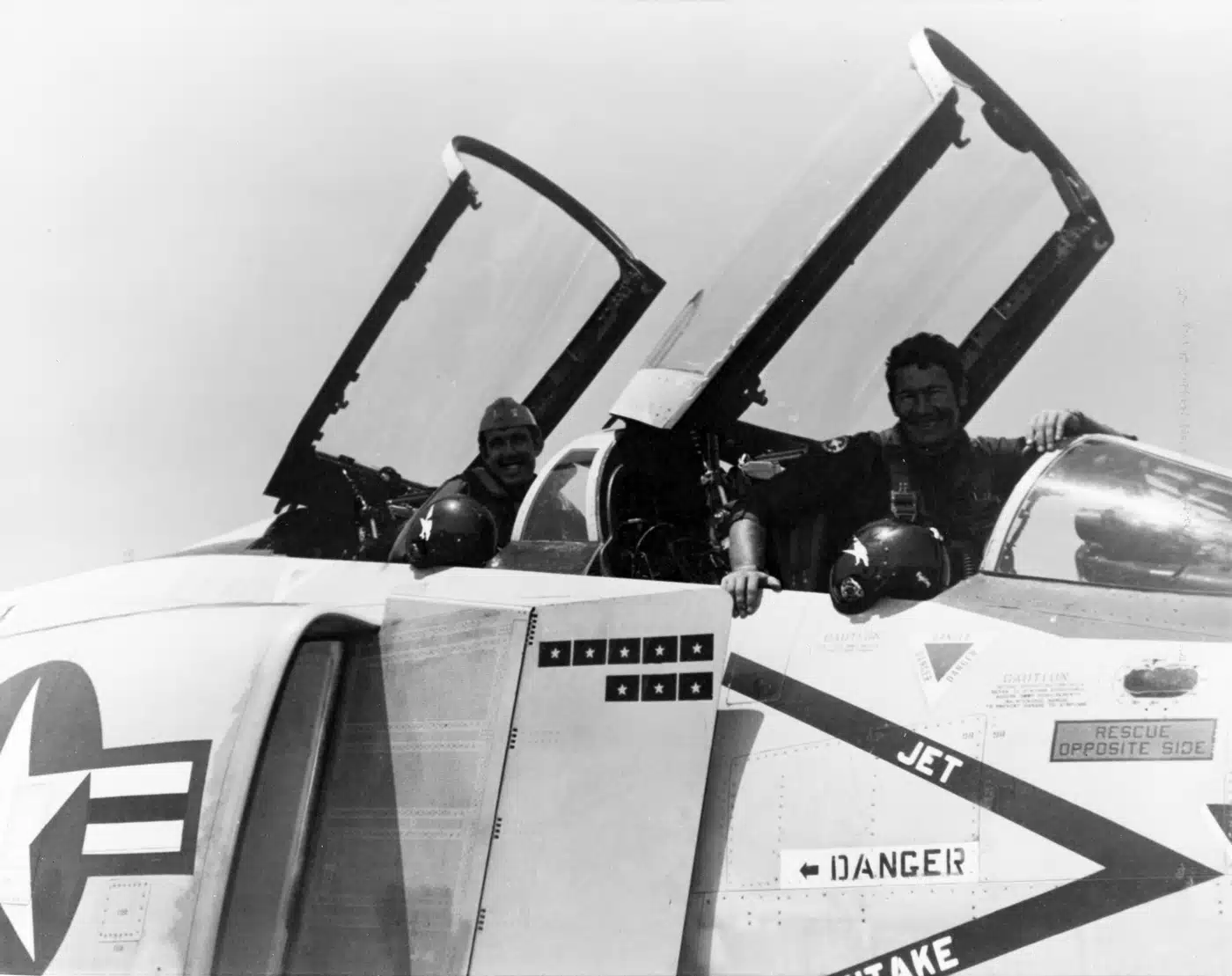
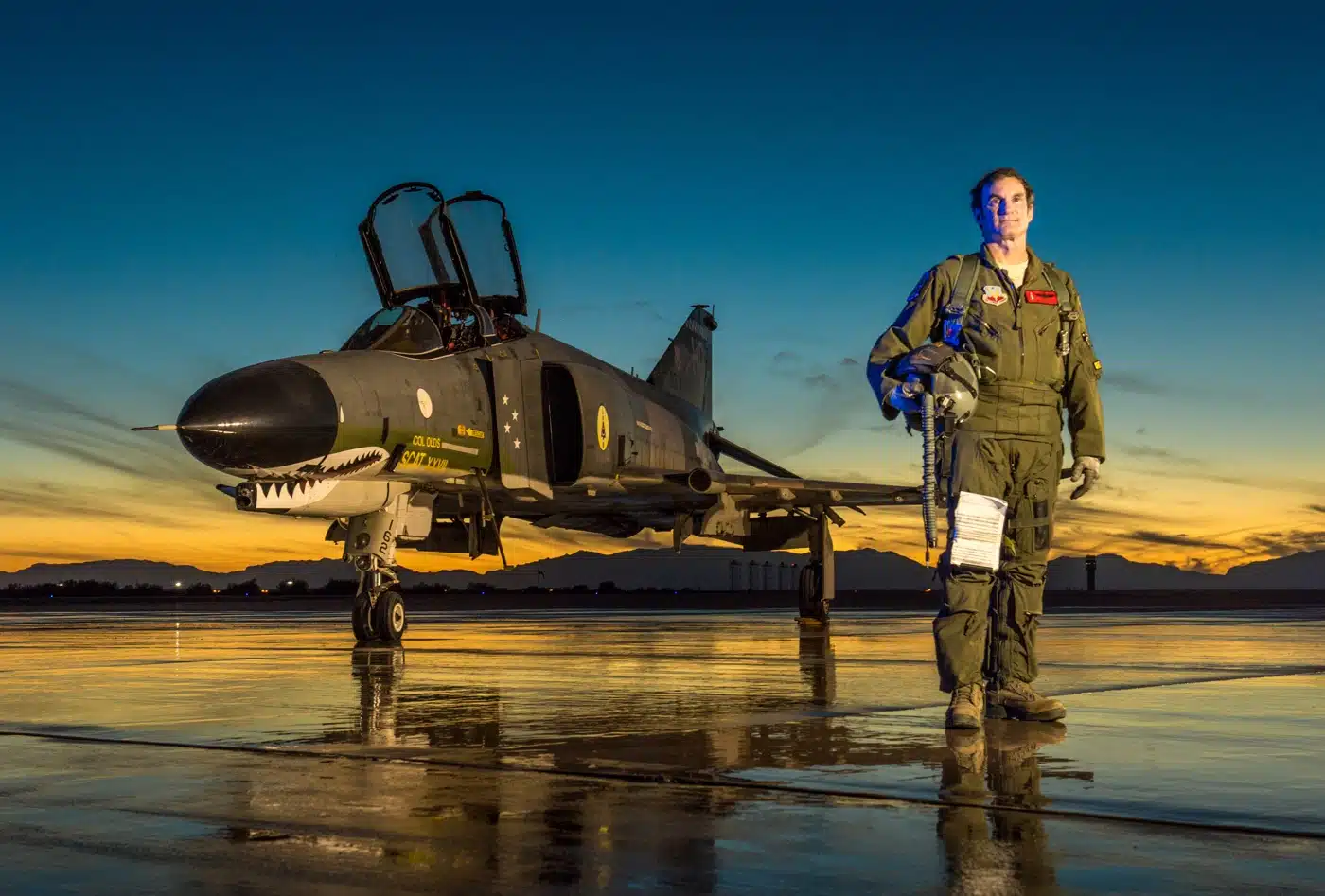
Now that is what I call having the Right Stuff!

Categories
This great Nation & Its People

What I would call “having the Right Stuff!”

Categories
All About Guns This great Nation & Its People

What Would Stoner Do – In His Own Words