

Category: The Green Machine
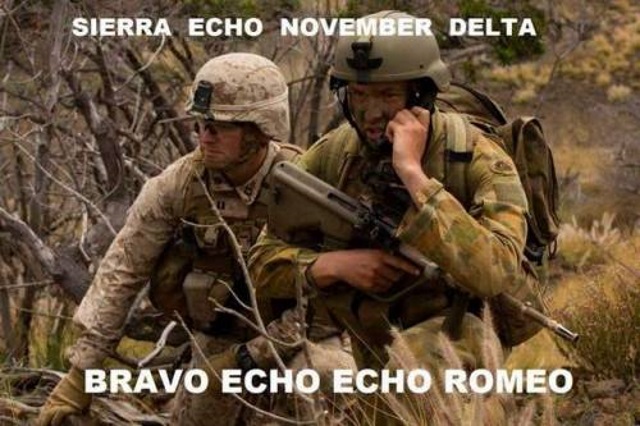
I have seen and worked with a few of the Queen’s Soldiers. Most of whom are some pretty good guys. In Spite of the times that I could not understand a word they were saying!
But the bottom line with these guys. Is that they are they are a lot of fun and some really hard fighting folks that I am glad are on our side!
Grumpy
The U.S. Army has never been a particularly agile beast when it came to bold new technologies. Horse cavalrymen were dragged kicking and screaming into tanks during World War II, and the grunts and tankers of the ’50s viewed the helicopter with a tolerant skepticism at best.
In 1963 the 11th Air Assault Division was testing the practical aspects of air mobility at Fort Benning, Georgia. Two years later the 1st Cavalry Division (Airmobile) went to war.

This WW2-era Smith and Wesson Victory .38 revolver is typical of the sorts of double action .38 revolvers issued to Army aircrews in Vietnam. Simple and stupid-proof, this basic wheelgun is easily operated one-handed.
The war in Vietnam saw the introduction of a wide array of new technologies. From smart bombs to night vision and lightweight assault rifles, Vietnam was a proving ground for countless new weapons and the tactics that drove their employment.
As a result, flight crews operating Army rotary-wing combat aircraft frequently made up the rules as they went along.
There really was no precedent for what those guys were doing. UH1 Hueys and CH47 Chinooks carried troops, ammunition, equipment, and supplies into places that would have otherwise been inaccessible.
The use of massed helicopter assets allowed Army commanders unparalleled mobility around and above a non-linear battlefield. Light and agile aeroscout aircraft like the OH6 provided responsive intelligence gathering.
Armed versions of the UH1 and later dedicated AH1 Cobra gunships offered responsive and overwhelming aerial fire support. Throughout it, all Army flight crews operated in the treetops engaging the enemy face to face in a pitiless close range fight to the death.

The OH6A Loach (a colloquialism for Light Observation Helicopter) flew down in the treetops gathering intelligence and rooting out the enemy.
The Whirlybird Becomes a Warplane

The M3A1 Grease Gun was in common use by the Army of the Republic of South Vietnam. The gun was therefore available for barter among US forces in Vietnam.
For better or for worse the M60 was our standard belt-fed light machine gun at the time. This basic gun saw action in the D-model configuration with spade grips on a pintle mount in the doors of Hueys and Chinooks.
As a flexible weapon crew chiefs frequently simply suspended their standard ground guns on bungee cords for maximum maneuverability. Solenoid-fired versions in pivoting mechanical mounts armed the first Huey gunships.
The M134 minigun saw its baptism by fire in Vietnam as well. While a few of these electric-powered Gatling guns were mounted as door guns, most saw action in the chin turrets of AH1G Cobra gunships.
In this configuration, the M134 alongside the M129 automatic grenade launcher reaped a bloody harvest from the Viet Cong and NVA.

The 1911A1 pistol carried generations of GIs through several major wars. Its single-action trigger meant that the 1911A1 was not typically an issue aircrew weapon, but many were utilized for this purpose nonetheless.
One aspect of the helicopter’s low and slow operational environment was that these early aircraft were mightily vulnerable to ground fire. Heavy machine guns like the DSHk were murder on low-flying helicopters while shoulder-fired small arms were also quite effective at the sorts of ranges these engagements demanded.
As a result, the Vietnam War saw an unprecedented number of survivable aircraft crashes. When faced with the prospect of personal defense while awaiting air support and extraction many of these early Army aviators acquired some unusual small arms.

The UH1 was the archetypal utility helicopter used in Vietnam. Employed as troop transports, Medevac aircraft, and gunships, the Huey transformed the battlefield in Southeast Asia.
GI-Issue Personal Defense Weapons
There is an adage in Army Aviation that you will leave a burning helicopter equipped solely with what is affixed to your body. Throughout most of the Vietnam War the standard issue handgun for Army aircrews was the double action .38 revolver.
In the event of a crash pilots and aircrew men needed to be able to operate their handguns one-handed if they were injured. As Condition 1 carry was not authorized for troops armed with the 1911, the double action .38 offered easy one-handed operation and foolproof reliability. Countless Army aviators nonetheless acquired 1911 pistols through means both official and otherwise.
Helicopter cockpits were cramped so small lightweight rifles that were easy to stash behind seat armor became a great boon. The M16 found its way into Aviation units as it was issued to other branches. Despite the relatively small size of those early M16’s, they still did not ride well in the front end of a helicopter. The solution was something somewhat stubbier.
In 1967 Colt developed a shortened version of the M16 called the XM177. There had been several lesser efforts previously, but the XM177 was the first Carbine version of the M16 to see large-scale production.
Early versions sported a 10-inch barrel tipped with a sound moderator. Later versions extended the barrel to 11.5 inches for greater reliability as well as diminished muzzle flash and noise. These guns were universally referred to in theater as CAR-15’s.

While technically this little chopped-down M16 was designated the XM177E2; the troops who used it called it the CAR15. Sporting either a 10 or 11.5-inch barrel and a sound moderator, the CAR15 was the submachine gun version of the M16 and a popular aircrew weapon.
The CAR-15 weighed 5.35 pounds and was 29.8 inches long with its stock collapsed. These little rifles could subsequently fit inside the cramped cockpits of Cobra Attack and Loach Observation helicopters. While problems with range, poor accuracy, excessive fouling, and erratic performance with tracer rounds plagued the guns, they saw widespread service with Army aviators.

The M134 Minigun had its baptism by fire in Vietnam. While these electrically powered Gatling guns were occasionally used as helicopter door guns, they were most commonly encountered in the chin turrets of AH-1G Cobra gunships.
Necessity is the Mother of Invention
A protracted war such as the one in Vietnam saw the proliferation of small arms from a variety of nations and eras. Friends who served in theater have related stories of obtaining everything from World War II-era submachine guns to civilian shotguns to captured Combloc weapons by barter, purchase, or theft.
As a result, in these heady days before so much standardization, Army aircrews frequently flew with an amazing amalgam of defensive small arms.
The M1A1 Thompson and M3A1 Grease Gun were readily available as they were in widespread issue with South Vietnamese forces. These guns both launched heavy .45 ACP rounds and had the added benefit of sex appeal to young soldiers who grew up on gangster movies.
However, the Thompson, in particular, was brutally heavy. Many sky soldiers who acquired Thompsons soon grew weary of them after packing them for a time.

The M60 belt-fed machinegun was the standard light machine gun for US forces in Vietnam. As aircrew weapons, they were suspended on bungee cords, fitted with spade grips and mounted on a pedestal, or fired from mechanical mounts via solenoid.
Captured Iron

Fixed stock Kalashnikovs are compact and powerful making them suitable defensive tools in close quarters. This is a new stamped receiver PSAK47 from Palmetto State Armory.
The argument has frequently been made that the enemy’s AK47 was a better Infantry weapon than our M16. The Russian AK47 and its Chinese counterpart the Chicom Type 56 were robust, reliable, hard-hitting rifles.
When they could be obtained AK47’s, particularly the compact folding-stocked versions, were popular aircrew guns. AKs fed from reliable 30-round magazines and carried the extra benefit of producing a common muzzle report with the enemy’s weapons. When down and evading in hostile territory it is not good to sound strange, distinctive, or foreign.
The Combloc RPD was also a superlative weapon for its time. Firing the same M43 7.62x39mm round the AK ran from non-disintegrating 100-round belts, the RPD was remarkably lightweight and effective.
Though it suffered from the lack of a quick-change barrel and a tedious reloading protocol, the RPD offered a great deal of firepower for its 16-pound weight. By contrast, our M60 weighed 23 pounds. The RPD carried its onboard ammunition in a pair of connected 50-round belts connected and wound into a pressed steel drum.

The belt-fed RPD was prized for its large volume of onboard firepower. While the RPD would not fit in the most spacious helicopter cockpit, they were used on occasion by crew chiefs as survival weapons.
Practical Tactical

The CH47 Chinook provided heavy lift support to troops on the ground and could carry outsized cargo as a sling load.
The Smith and Wesson Victory Model .38-caliber revolver is indeed stupid-proof. Reliable and soft shooting, the .38 Special caliber has proven itself in countless police shootings over the decades. However, reloading is tedious and carrying spare ammunition loose in a survival vest is a suboptimal solution.
The 1911A1 hits like a freight train downrange, and its single action trigger is the standard by which all others are judged. A friend who carried a 1911 for two years as an Infantryman in World War II told me he carried his pistol with a round in the chamber, the hammer at half cock, and the safety on.
With practice he could get his weapon into action both quickly and one-handed. The GI-issue 1911’s that I used operationally back in the day were all fairly long in the tooth. The loose tolerances that kept these guns in action in the face of dirt and grime typically came at the cost of accuracy.
The many-splendored ills of the M16 have been thoroughly explored in other venues, and most of the same problems apply equally or worse to the CAR15. However, aircrews typically had the luxury of keeping their weapons clean and in good repair.
In my prime, I could consistently hit a man-sized target out to 400 meters with an M16A1. Having run a lot of rounds through the CAR15 over the years I would not trust it much past a football field.

Folding stock AKs were relatively unusual but popular among aircrews when they could be scrounged. This is a stamped receiver Chicom Type 56-1. Almost all AKs encountered in Vietnam had forged receivers.
The 5.56mm round relies upon velocity for effectiveness. As the CAR15 barrel in its earliest iterations was exactly half as long as that of the M16 the CAR15 offers questionable wound ballistics at long ranges anyway. Spare 20-round magazines typically rode in bandoleers draped over the seat armor.

The AH1G Cobra gunship was fast, sleek, and lethal. Cobras operated in concert with OH6 Loaches to form what was called a Pink Team. This combination of gunship and observation helicopter found, fixed, and destroyed enemy troops and equipment.
The M60 is a monster of a gun that is pure torture on a long forced march. When kept clean and run from fixed mounts the M60 was relatively reliable in my experience, but I never had one run really well in the dirt. Personally, I would leave the Pig, the affectionate term all soldiers used for this beast of a gun, in the aircraft. I’d grab something lighter with which to escape and evade.
The AK, particularly in its folding stock guise, is a superb aircrew weapon. The steel struts on the underfolding stock are uncomfortable, but they remain fully serviceable. You can wrap the stock struts in 550 cord to improve your cheek weld. The AK jumps around a bit on full auto, but its heavy 123-grain bullet carries energy well out to 300 meters or so. The sliding tangent sights are yesterday’s news but remain thoroughly effective.
The RPD would never ride in the cockpit of a Cobra or Loach but would easily tuck behind the sling seat in the crew compartment of a Huey or Chinook. The RPD offers massive short-term suppressive firepower during an extraction, though reloading is a pain. Additionally, any full auto belt fed gun runs through ammunition at a frightful rate.
Ruminations
When I flew for Uncle Sam we packed M9 Beretta pistols that offered both high capacity semiautomatic firepower along with one-handed double-action operation. A colleague indeed scrounged an M3A1 Grease Gun and flew with it during the First Gulf War.
However, for the most part, Aviators of my era were expected to make do with a handgun. Much of my career was spent flying CH47D Chinooks so we had plenty of space. Nowadays the widespread issue of the M4 Carbine allows most Aviators to pack the same weapon used by his or her ground-pounding brethren.

Dedicated Huey gunships mounted a variety of machineguns, automatic grenade launchers, and unguided rockets for their aerial fire support role.
On the modern battlefield, a soldier’s personal weapon is but the smallest part of the overall tactical equation. However, for a downed aviator that handgun or rifle become his entire world.
A friend who was shot down in Mogadishu actually had to rely on his handgun for real. While it was not a decisive tool, it did buy him some time. When he got home he made a point to impart to those with whom he served the importance of range time with your assigned defensive weapon.
As of 2013 a CH47F helicopter cost $38.55 million. The investment required in training up the pilots and flight crewmembers to operate these complex aircraft is comparably substantial.
However, when evading in hostile territory everything comes down to a basic rifle or handgun. Starting back in the 1960’s Army Aviators have carried a wide variety of personal defense weapons. In today’s non-linear battlefields these lessons learned still carry exceptional gravitas.
To purchase a Colt military/tactical rifle on GunsAmerica, click here.
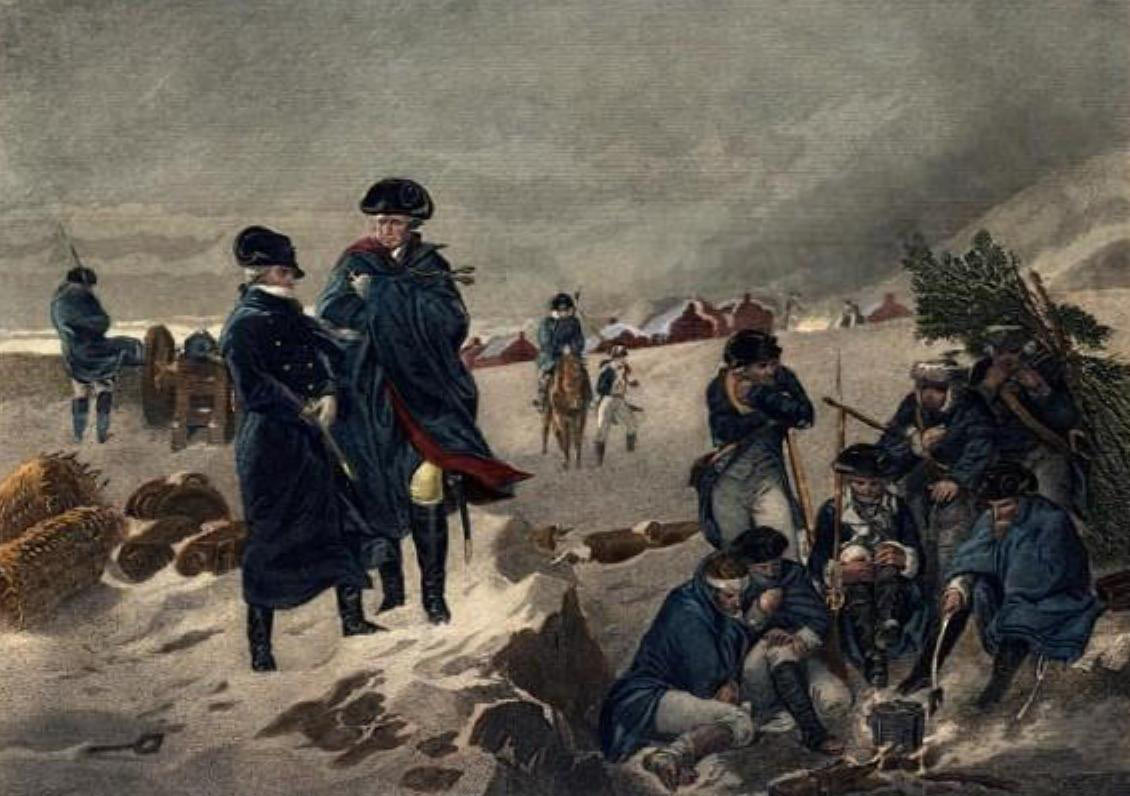
So what is this thing called the VA going to be all about sir?
Medal of Honor, Vietnam War Robert Howard Medal of Honor: Oral Histories Medal of Honor: Oral Histories
SOG’S FIERCEST WARRIOR: COLONEL ROBERT L. HOWARD

Medal of Honor: Oral Histories
Medal of Honor: Oral Histories
By Maj. John L. Plaster, USA (Ret)
RECON COMPANY AT COMMAND AND CONTROL CENTRAL
In 1968, Robert L. Howard was a 30-year-old sergeant first class and the most physically fit man on our compound. Broad-chested, solid as a lumberjack and mentally tough, he cut an imposing presence. I was among the lucky few Army Special Forces soldiers to have served with Bob Howard in our 60-man Recon Company at Command and Control Central, a top secret Green Beret unit that ran covert missions behind enemy lines. As an element of the secretive Studies and Observations Group (SOG), we did our best to recon, raid, attack and disrupt the enemy’s Ho Chi Minh Trail network in Laos and Cambodia.
UP THERE WITH AMERICA’S GREATEST HEROES

Take all of John Wayne’s films—throw in Clint Eastwood’s, too—and these fictions could not measure up to the real Bob Howard. Officially he was awarded eight Purple Hearts, but he actually was wounded 14 times. Six of the wounds, he decided, weren’t severe enough to be worthy of the award. Keep in mind that for each time he was wounded, there probably were ten times that he was nearly wounded, and you get some idea of his combat service. He was right up there with America’s greatest heroes—Davy Crockett, Alvin York, Audie Murphy, the inspiring example we other Green Berets tried to live up to. “What would Bob Howard do?” many of us asked ourselves when surrounded and outnumbered, just a handful of men to fight off hordes of North Vietnamese.
To call him a legend is no exaggeration. Take the time he was in a chow line at an American base and a Vietnamese terrorist on a motorbike tossed a hand grenade at them. While others leaped for cover, Howard snatched an M-16 from a petrified security guard, dropped to one knee and expertly shot the driver, and then chased the passenger a half-mile and killed him, too.
One night his recon team laid beside an enemy highway in Laos as a convoy rolled past. Running alongside an enemy truck in pitch blackness, he spun an armed claymore mine over his head like a lasso, then threw it among enemy soldiers crammed in the back, detonated it, and ran away to fight another day.
Another time, he was riding in a Huey with Larry White and Robert Clough into Laos, when their pilot unknowingly landed beside two heavily camouflaged enemy helicopters. Fire erupted instantly, riddling their Huey and hitting White three times, knocking him to the ground. Firing back, Howard and Clough jumped out and grabbed White, and their Huey somehow limped back to South Vietnam.
CONSIDER THE RESCUE OF JOE WALKER
“Just knowing Bob Howard was ready to come and get you meant a lot to us,” said recon team leader Lloyd O’Daniels. Consider the rescue of Joe Walker. His recon team and an SOG platoon had been overrun near a major Laotian highway and, seriously wounded, Walker was hiding with a Montagnard soldier, unable to move. Howard inserted a good distance away with a dozen men and, because there were so many enemy present, waited for darkness to sneak into the area. Howard felt among bodies for heartbeats, and checked one figure’s lanky legs, then felt for Joe’s signature horn-rimmed glasses. “You sweet Son of a Gun,” Walker whispered, and Howard took him to safety.
What’s all the more remarkable is that not one of these incidents resulted in any award. Howard was just doing what had to be done, he thought.
“HOPELESS” WAS NOT IN HIS VOCABULARY
Unique in American military history, this Opelika, Alabama native was recommended for the Medal of Honor three times in 13 months for separate combat actions, witnessed by fellow Green Berets. The first came in November 1967. While a larger SOG element destroyed an enemy cache, Howard screened forward and confronted a large enemy force. He killed four enemy soldiers and took out an NVA sniper. Then, “pinned down…with a blazing machine gun only six inches above his head,” he shot and killed an entire NVA gun crew at point-blank range, and then destroyed another machine gun position with a grenade. He so demoralized the enemy force that they withdrew. This Medal of Honor recommendation was downgraded to a Silver Star.
The next incident came a year later. Again accompanying a larger SOG force, he performed magnificently, single-handedly knocking out a PT-76 tank. A day later he wiped out an anti-aircraft gun crew, and afterward rescued the crew of a downed Huey. Repeatedly wounded, he was bleeding from his arms, legs, back and face, but he refused to be evacuated. Again submitted for the Medal of Honor, his recommendation was downgraded, this time to the Distinguished Service Cross.
Just six weeks later, Howard volunteered to accompany a platoon going into Laos in search of a missing recon man, Robert Scherdin. Ambushed by a large enemy force, Howard was badly wounded, his M-16 blown to bits—yet he crawled to the aid of a wounded lieutenant, fought off NVA soldiers with a grenade, then a .45 pistol, and managed to drag the officer away. Having been burned and slashed by shrapnel, we thought we’d never see him again. But he went AWOL from the hospital and came back in pajamas to learn he’d been again submitted for the Medal of Honor. This time it went forward to Washington, with assurances that it would be approved.
Howard did not know the word, “hopeless.” Many years later he explained his mindset during the Medal of Honor operation: “I had one choice: to lay and wait, or keep fighting for my men. If I waited, I gambled that things would get better while I did nothing. If I kept fighting, no matter how painful, I could stack the odds that recovery for my men and a safe exodus were achievable.”
Although eventually sent home, he came back yet again, to spend with us the final months before his Medal of Honor ceremony. By then he had served more than 5 years in Vietnam. Why so much time in Vietnam? “I guess it’s because I want to help in any way I can,” Howard explained. “I may as well be here where I can use my training; and besides, I have to do it – it’s the way I feel about my job.”
THE WARRIOR TRADITION
The warrior ethic came naturally to Bob Howard. His father and four uncles had all been paratroopers in World War Two. Of them, two died in combat and the other three succumbed to wounds after the war. To support his mother and maternal grandparents, he and his sister picked cotton. He also learned old-fashioned Southern civility, removing his hat for any lady and answering, “Yes, ma’am.”
He also possessed a deep sense of honor and justice, and lived by his unspoken warrior’s code, with the priorities mission, men, and his own interests coming last. He absolutely fit the bill as a leader you’d follow through hell’s gates – IF you could keep up with him. A hard-charging physical fitness advocate, he even had our Montagnard tribesmen running and doing calisthenics.
After draping the Medal of Honor around Howard’s neck, President Nixon asked him what he wanted to do the rest of that memorable day – lunch with the president, a tour of the White House, almost anything. Howard asked simply to be taken to the Tomb of the Unknown Soldier to share his thoughts with others who had gone before him. Tragically, the U.S. media, reflecting the anti-war sentiments of that period, said not one word about Howard or his valiant deeds, although by the time he received the Medal of Honor he was America’s most highly decorated serviceman.

Despite the lack of recognition, Howard went on serving to the best of his ability. He was the training officer at the Army’s Airborne School, then he was a company commander in the 2nd Ranger Battalion at Ft. Lewis, Washington. He continued to excel at everything he did, making Distinguished Honor Graduate in his Officer Advance Course class.
As the officer-in-charge of Special Forces training at Camp Mackall, near Ft. Bragg, N.C., and later, commanding the Mountain Ranger Training Camp at Dahlonega, Georgia, he did his utmost to inspire young students. Howard’s frame of reference was SOG—hard combat, the toughest kind against terrible odds with impossible missions. He knew good men would die or fail in combat without martial skills, tactical knowledge and physical conditioning. He was famous for leading runs and long-distance rucksack marches— stronger than men half his age, usually he outran entire classes of students. A whole generation of Army Special Forces and Rangers earned their qualifications under his shining example, with some graduates among the senior leaders of today’s Special Forces and Ranger units.
His highest assignment was commander of Special Forces Detachment, Korea. He might have gone higher but he dared to publicly suggest that American POWs had been left in enemy hands, and was willing to testify to that before Congress in 1986. After he retired as a full colonel, he went through multiple surgeries to try to correct the many injuries he’d suffered over the years.
But he could not stop helping GIs. He spent another 20 years with the Department of Veterans Affairs, helping disabled vets. He had a reputation for rankling his superiors as an unapologetic advocate of veterans.
THIS HUMBLE KNIGHT BELONGS TO HISTORY
His spirit never waned. In 2004 I sat with Green Berets of the 1st Special Forces Group at Ft. Lewis, Wash., who laughed and cheered when he joked about still being tough enough to take on any two men in the audience—not one raised his hand. After retiring from the VA, Col. Howard often visited with American servicemen to speak about his combat experiences, making five trips to Iraq and Afghanistan. In the fall of 2009, he visited troops in Germany, Bosnia and Kosovo.
Despite increasing pain and sickness, on Veterans Day 2009 he kept his word to attend a memorial ceremony, but finally he had to seek help. He was diagnosed with terminal pancreatic cancer and given a few weeks to live.
In those final days old Special Forces and Ranger friends slipped past “No Visitors” signs to see him. When SOG vets Ben Lyons and Martin Bennett and a civilian friend, Chuck Hendricks, visited him, Howard climbed from his bed to model the uniform jacket he would be buried in, festooned with the Medal of Honor and rows upon rows of ribbons. A proud Master Parachutist and military skydiver, he showed them the polished jump boots he’d been working on, and asked Bennett to touch up the spit shine. Though his feet might not be visible in his coffin, he wanted that shine just right.
As they left, Col. Howard thanked Bennett, and then saluted him and held his hand crisply to his eyebrow until Bennett returned it. Bob Howard passed away two days before Christmas.
This great hero, a humble knight who was a paragon for all, belongs to history now. He is survived by his daughters Denicia, Melissa and Rosslyn; an Airborne-Ranger son, Robert Jr., and four grandchildren.
@SOLDIER OF FORTUNE MAGAZINE COPYRIGHT Use only with permissions and credits
General H Norman Schwarzkopf passes on…
General Schwarzkopf was the General that was responsible for the success of Desert Storm, We in the storm called him “our General”, From everything that I read, he and the other officers that were the product of Vietnam war, vowed not to repeat the mistakes that hamstrung the American war effort. I remember several of them, He would not do the incremental increase that marked the Vietnam effort. Schwarzkopf wanted to have overpowering force to apply on the Iraqi’s. He wanted an entire armored corp in theater when the Shield became Storm. That is why VII corp was brought in from Europe, and that is how my unit found itself still in BDU’s in a desert war. We in VII corp were very recognizable from the stateside units, they were the desert chocoships and our stuff was Forest green. Another belief was the what we called ” the duration effect” We were told that there would be no rotation of units, we would be there for the duration. There would be no individual soldier rotating out also. You would go to war with your buddy, no FNG’s like Vietnam. There were no ROE restrictions, no Navy/Air force segregated kill box. All the assets were available to the commander for the sole purpose of completing the mission. General Schwarzkopf was responsible for our pride as a military and finally throwing the “Vietnam effect” on our national policy. May the vikings raise their meade glasses as another warrior arrives in Vahalla.

WASHINGTON (AP) — Retired Gen. H. Norman Schwarzkopf, who topped an illustrious military career by commanding the U.S.-led international coalition that drove Saddam Hussein‘s forces out of Kuwait in 1991 but kept a low public profile in controversies over the second Gulf War against Iraq, died Thursday. He was 78.
Schwarzkopf died in Tampa, Fla., where he had lived in retirement, according to a U.S. official, who was not authorized to release the information publicly and spoke on condition of anonymity.
A much-decorated combat soldier in Vietnam, Schwarzkopf was known popularly as “Stormin’ Norman” for a notoriously explosive temper.
He served in his last military assignment in Tampa as commander-in-chief of U.S. Central Command, the headquarters responsible for U.S. military and security concerns in nearly 20 countries from the eastern Mediterranean and Africa to Pakistan.
Schwarzkopf became “CINC-Centcom” in 1988 and when Saddam Hussein invaded Kuwait three years later to punish it for allegedly stealing Iraqi oil reserves, he commanded Operation Desert Storm, the coalition of some 30 countries organized by then-President George H.W. Bush that succeeded in driving the Iraqis out.
At the peak of his postwar national celebrity, Schwarzkopf — a self-proclaimed political independent — rejected suggestions that he run for office, and remained far more private than other generals, although he did serve briefly as a military commentator for NBC.
While focused primarily in his later years on charitable enterprises, he campaigned for President George W. Bush in 2000 but was ambivalent about the 2003 invasion of Iraq, saying he doubted victory would be as easy as the White House and Pentagon predicted. In early 2003 he told the Washington Post the outcome was an unknown:
“What is postwar Iraq going to look like, with the Kurds and the Sunnis and the Shiites? That’s a huge question, to my mind. It really should be part of the overall campaign plan,” he said.
Initially Schwarzkopf had endorsed the invasion, saying he was convinced that former Secretary of State Colin Powell had given the United Nations powerful evidence of Iraqi weapons of mass destruction. After that proved false, he said decisions to go to war should depend on what U.N. weapons inspectors found.
He seldom spoke up during the conflict, but in late 2004, he sharply criticized then-Defense Secretary Donald Rumsfeld and the Pentagon for mistakes that included inadequate training for Army reservists sent to Iraq and for erroneous judgments about Iraq.
“In the final analysis I think we are behind schedule. … I don’t think we counted on it turning into jihad (holy war),” he said in an NBC interview.
Schwarzkopf was born Aug. 24, 1934, in Trenton, N.J., where his father, Col. H. Norman Schwarzkopf Jr., founder and commander of the New Jersey State Police, was then leading the investigation of the Lindbergh kidnap case, which ended with the arrest and 1936 execution of German-born carpenter Richard Hauptmann for stealing and murdering the famed aviator’s infant son.
The elder Schwarzkopf was named Herbert, but when the son was asked what his “H” stood for, he would reply, “H.” Although reputed to be short-tempered with aides and subordinates, he was a friendly, talkative and even jovial figure who didn’t like “Stormin’ Norman” and preferred to be known as “the Bear,” a sobriquet given him by troops.
He also was outspoken at times, including when he described Gen. William Westmoreland, the U.S. commander in Vietnam, as “a horse’s ass” in an Associated Press interview.
As a teenager Norman accompanied his father to Iran, where the elder Schwarzkopf trained the country’s national police force and was an adviser to Reza Pahlavi, the young Shah of Iran.
Young Norman studied there and in Switzerland, Germany and Italy, then followed in his father’s footsteps to West Point, graduating in 1956 with an engineering degree. After stints in the U.S. and abroad, he earned a master’s degree in engineering at the University of Southern California and later taught missile engineering at West Point.
In 1966 he volunteered for Vietnam and served two tours, first as a U.S. adviser to South Vietnamese paratroops and later as a battalion commander in the U.S. Army’s Americal Division. He earned three Silver Stars for valor — including one for saving troops from a minefield — plus a Bronze Star, a Purple Heart and three Distinguished Service Medals.
While many career officers left military service embittered by Vietnam, Schwarzkopf was among those who opted to stay and help rebuild the tattered Army into a potent, modernized all-volunteer force.
After Saddam invaded Kuwait in August 1990, Schwarzkopf played a key diplomatic role by helping to persuade Saudi Arabia’s King Fahd to allow U.S. and other foreign troops to deploy on Saudi territory as a staging area for the war to come.
On Jan. 17, 1991, a five-month buildup called Desert Shield became Operation Desert Storm as allied aircraft attacked Iraqi bases and Baghdad government facilities. The six-week aerial campaign climaxed with a massive ground offensive on Feb. 24-28, routing the Iraqis from Kuwait in 100 hours before U.S. officials called a halt.
Schwarzkopf said afterward he agreed with Bush’s decision to stop the war rather than drive to Baghdad to capture Saddam, as his mission had been only to oust the Iraqis from Kuwait.
But in a desert tent meeting with vanquished Iraqi generals, he allowed a key concession on Iraq’s use of helicopters, which later backfired by enabling Saddam to crack down more easily on rebellious Shiites and Kurds.
While he later avoided the public second-guessing by academics and think tank experts over the ambiguous outcome of Gulf War I and its impact on Gulf War II, he told the Washington Post in 2003, “You can’t help but… with 20/20 hindsight, go back and say, ‘Look, had we done something different, we probably wouldn’t be facing what we are facing today.'”
After retiring from the Army in 1992, Schwarzkopf wrote a best-selling autobiography, “It Doesn’t Take A Hero.” Of his Gulf war role, he said, “I like to say I’m not a hero. I was lucky enough to lead a very successful war.” He was knighted by Queen Elizabeth II and honored with decorations from France, Britain, Belgium, Kuwait, Saudi Arabia, United Arab Emirates, Qatar and Bahrain.
Schwarzkopf was a national spokesman for prostate cancer awareness and for Recovery of the Grizzly Bear, served on the Nature Conservancy board of governors and was active in various charities for chronically ill children.
“I may have made my reputation as a general in the Army and I’m very proud of that,” he once told the AP. “But I’ve always felt that I was more than one-dimensional. I’d like to think I’m a caring human being. … It’s nice to feel that you have a purpose.”
Schwarzkopf and his wife, Brenda, had three children: Cynthia, Jessica and Christian.