Categories
Being a Stranger in a very Strange Land Soldiering Some Sick Puppies! Stand & Deliver The Green Machine

Problems at John Wayne High School

LT. GEN. KURT SONNTAG LOWERS ARMY TRAINING STANDARDS TO RAISE GRADUATION RATES – SOCIETAL DECLINE INSIDIOUSLY LEAKS INTO MILITARY, WHICH COVERTLY WEAKENS AMERICAN MILITARY POWER
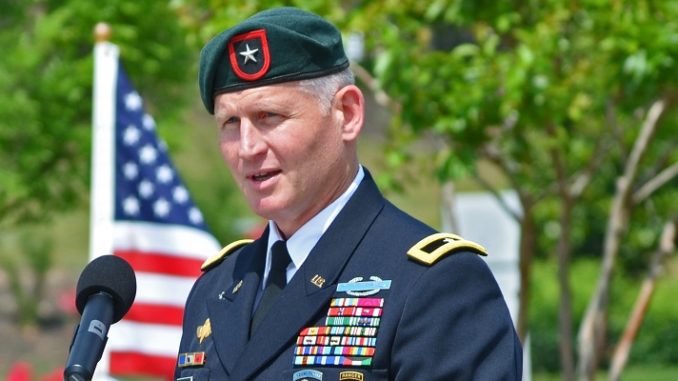
Kurt L. Sonntag (now an Army Lt. General) who doesn’t know the first thing about managing people or building a lethal special forces unit.

PROLOGUE:
Since the beginning of the Republic, the American people have frequently made the mistake of voting for people that tell them what they WANT to hear, and not what they NEED to hear. It’s been a problem for a very long time.

Dr. Benjamin Franklin

There is a story, often told, that upon exiting the Constitutional Convention Benjamin Franklin was approached by a group of citizens asking what sort of government the delegates had finally created. His answer was prophetic: “A Republic, if you can keep it.”
The brevity of that response should not cause us to under-value its essential meaning: democratic republics are not merely founded upon the consent of the people; they also depend upon the active and informed involvement of the people for their continued good health.
And that’s the core of the problem, most Americans are too involved with their own lives to research issues in order to become a fully INFORMED VOTER. Sadly, many people rather believe the news media’s narrative that tells them what to think and who to hate. That’s much easier than doing all the work of searching for facts and listening to opposing sides in order to make up their own minds.
It first starts at home with dubious parenting techniques. The old adage of “spare the rod, spoil the child” is tossed out in favor “negotiating.” Parents do everything possible to make sure their child DOES NOT FAIL, not recognizing that failure has value of its own. As we know from the recent college admissions scandal, some parents pay literally millions to get their child in a prestigious school, most of which are laden heavily with Marxist professors.
America’s schools have become nationwide brainwashing factories to sell socialism. Frequently these young adults graduate but can barely read or write, and have very little knowledge of history and the monetary forces that have made American the greatest economic power on earth. Even though capitalism has its drawbacks, world history has proven time and again, that capitalism is frequently superior to any socialist model past and present.
THE LIBERAL CONCEPT THAT NO ONE IS A FAILURE
HAS INFECTED MILITARY LEADERSHIP

Did the Obama-Era school discipline policy (and mentality) also infect military policies and Pentagon leadership? Remember the horrific mass shooting that killed 17 people at Marjory Stoneman Douglas High School in Parkland, Florida in February 2018? The school district was one of the first to embrace what’s known as “restorative justice” that removes accountability for breaking the law.
Restorative Justice became one of the Obama administration’s darlings for its alleged effectiveness to focus on disciplinary equity. The theory was that if you forgive young people early in their lives, they will realize the error of their ways and become responsible citizens.
So-called “adults in the room” pointed to it’s success because it dramatically reduced arrests. But, they won’t talk about the sky-rocking recidivism rates and how many of those youngsters ended up as career criminals because they thought that crime does pay.
The new superintendent of the Broward County school system, Robert Runcie previously worked hand-in-hand with Obama’s Education Secretary Arne Duncan to screw up the Chicago Public School system. Robert Runcie was the leading force behind instituting new practices within the district for handling illegal misconduct by students without resorting to law enforcement involvement.
In other words, students could violate the law with impunity just like those folks in Washington. Example; little Johnny stole someone purse, and the angry woman wanted to press charges, but a new program intervened and prevented an legal accountability. Then little Johnny went on a stealing spree and ended up with a bedroom full of stolen purses.
Runcie’s new program quickly became a national model for ending zero-tolerance policies in schools. The Broward school district decided to hire Robert Runcie as their new superintendent to implement his new “restorative justice” program down in warm sunny Florida.
Shortly after assuming the job as school superintendent in Broward County, student-related arrests plummeted down by 65 percent and people applauded the new “positive numbers.”
This new “restorative justice” program stopped authorities from arresting or even investigating former high school student Nikolas Cruz who walked into school one day and murdered 17 people. It was all about numbers. In the liberal mind, arrests were down which meant hope was on the rise.
So-called school leaders didn’t want to hold anyone accountable for their illegal behavior, so Nikolas Cruz was given a pass and went on a horrific murder spree. If people want gun dealers arrested for murder for selling the gun, how about arresting the stupid people who created policies that protected the murderer.
LOWERING STANDARDS TO IMPROVE GRADUATION NUMBERS
The military noticed the high dropout / failure rate of those attempting to graduate from the Army’s Special Warfare School and Center (SWCS) where Green Berets are selected, trained and graduated. They put Lt. General Kurt Sonntag in charge and everything went to hell.
Soldiers are fearful of retribution for speaking out, which resulted in a total breakdown of unit morale. Standards at the school’s prestigious Qualification Course (Q-course), where Green Berets are graduated, began to dramatically slide after Sonntag took command in May 2017.
Breitbart.com did a great job exposing the Army’s attempt to lower standards when no one was watching. They listed the specific instances where Lt. Gen. Sonntag was lowering standards and destroying unit morale. Here’s his playbook to increase the number of graduates for the Army’s elite Green Beret fighting force…

  1. A student could no longer fail the course for not passing any physical standard or test. Before, failing to pass two separate times would have resulted in being kicked out of the course. Now, students are increasingly being passed by a relief board or the training group commander.
  2. Land navigation required students to navigate open terrain and find set points using a map and compass is no longer a “pass or fail” event. It was turned into a “practical exercise.”
  3. Students had to pass the language portion before receiving their Green Beret. Now, students can receive their Green Beret before passing it on a “conditional” basis and are allowed to retake the language portion as many times as they need in order to pass it.
  4. Ethical standards have become increasingly lax. At a 2017 party, a student pulled a knife on someone. Despite the incident being reported to higher command, it was dismissed as merely a “personal” incident, and the student was allowed to continue the course. Before Sonntag, the student would have been tossed out on his ear.
  5. The GT score, which determines eligibility for specific jobs in the Army, has also been recently lowered from 110 to 107 for aspiring Green Berets.
  6. The ability to discipline students by instructors was also dramatically reduced. One of the most important things in this type of intensive training is for instructors to have the authority commensurate with their responsibility.
  7. Students leaving the course voluntarily or involuntarily are being personally called and asked if they would like to come back and finish. Past policy required them to be sent on an overseas assignment or to the 82nd Airborne.
  8. Lt. Gen Sonntag initiated an “open door” policy, so students can walk into Sonntag’s office and appeal to him directly to be able to continue the course even if they fail.
  9. After Sonntag arrived, students who had either repeatedly failed phases of the course or failed the course were being recycled back over their recommendations and rules that dictated how soon a student could be put back in.
  10. Lt. Gen Sonntag punished instructors whose students would fail, or were seen as too tough on their students. In October 2017, one instructor asked his students to show up for physical training the Thursday before a four-day weekend. When only three students showed up out of 40, he called another mandatory training session that weekend. Two hours later, he was fired.
Kurt L. Sonntag as a Major General.

Unit morale had plummeted to a point where Sonntag had to do something to make everyone think he really cared about them. Lt. Gen. Sonntag decided to hold a “town hall” meeting. He declared the meeting was “classified” and prohibited anyone from recording it.
But according to several witnesses, Sonntag told the roomful of about 150 instructors, “I have a client. I have a customer — the first Special Forces Command. They have a number set of missions, and I have to provide a specific number” of graduates.”
One instructor decided the general was just pandering and wrote a scathing 6,399-word anonymous email detailing everything happening at SWCS. He blasted it out to more than 2,000 members of the Army special operations community worldwide. It became known as the “night letter” among Green Berets. One called it the “email heard around the world.”
This is when the general popped his cork. Several days after the email was sent, Sonntag called a formation of instructors, both civilian and military. According to several witnesses, he took off his Army combat uniform top and challenged those who disagreed with him to step forward and fight him.
“He took his top off,” one witness said. “He said, ‘If anybody had any problem with me … my rank just came off, I will fight you guys one-on-one.’” According to another witness, Sonntag also said the email author could be punishable by “death.” The general was losing it and people were worried about his sanity.
Sonntag narrowed down his “hit list” to seven suspects who might have sent the email that exposed how he was gutting the special warfare school. He was like a bull in a china closet, suspending security clearances,and using a slew of administrative, non-judicial punishments that included firing, reassignment, negative evaluation reports, and other actions. He was doing everything he could to find the evil bastard(s) that sent out the “night letter.”
By June of 2018, Sonntag’s witch hunt narrowed down the email suspects to three instructors at the Green Beret school. He issued them all a non-judicial punishment under Article 15, alleging that they were likely behind the email as well as other things. He didn’t need proof. The military doesn’t need proof to convict anyone of anything… We keep telling you the system is rigged in favor of the system and generals who are part of the military swamp.
The author of the email — who was one of the three suspects — admitted to writing the email and accepted the punishment. He was stripped of his Special Forces tab and returned to the conventional Army, which is the biggest disgrace to befall any Green Beret.
The two other suspects (instructors Robertson and Squires) said they had nothing to do with the email, but Sonntag accused them of using their work computers to develop and launch an online application and using their positions as instructors to have students sign up for it. The general didn’t give a shit… he just wanted hides to nail to the wall.
Robertson and Squires decided to fight the accusations by requesting a court-martial where they could plead their case in front of a military judge. It was a risky move, because who do you think picks the jury and writes their career propelling (or ending) efficiency reports, the convening authority which would be Lt. Gen. Sonntag.
IF YOU CANT COURT-MARTIAL, 
THEN ATTACK WITH THE POWERS OF A GENERAL OFFICER

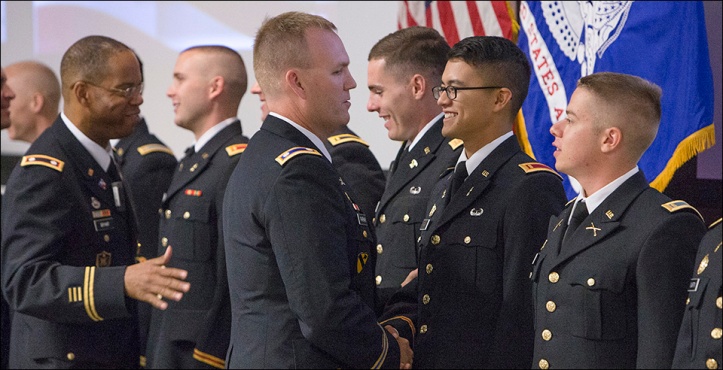
Sometimes our special warfare soldiers are all smiles, but thanks to Lt. Gen Sonntag, many are not smiling.

Sonntag was probably worried that even more truth would leak out and withdrew the Article 15 non-judicial punishments which denied any request for a court-martial.
Instead, he used his power as general in the Army to administratively attack them by issuing them both a permanent General Officer Memorandum of Reprimand (GOMOR). A GOMOR is a letter of reprimand that can be a career-ender, and cannot be fought.
A GOMOR is a non-rebuttable presumption of guilt that cannot be challenged. Sonntag GOMORs triggered discharges for both instructors from the Army. And that my friends, is how the United States Military treats their elite soldiers.
To make it look like they care about justice and fairness, the Pentagon’s inspector general is allegedly investigating Lt. Gen. Sonntag. The military will circle the wagons for about a year pretending to investigate one of their card-carrying members of the original good-old-boy club.
That elite club is the flag-ranking members of the United States military who enjoy many perks, but the most important perk is being allowed to retire to avoid any accountability.
In about a year, after everything has died down, Sonntag will be transferred to another job or allowed to retire. Our brave fighting men and women will be cast aside to protect the general and all will be forgotten. But MCC won’t forget, we guarantee it.
We have seen this before… Years ago, a commanding officer and five of his staff officers in the naval reserves were trying to artificially prop up their reserve retention numbers by paying reservists for work they never did. Chief Petty Officer Michael Tufariello reported their massive payroll fraud scheme, and they had him imprisoned in a military mental hospital on a trumped up charge.
More recently, the superintendent of the Broward school system wanted better numbers, so they quit holding people accountable which ended up causing the deaths of 17 people.
And now, Lt. Gen. Sonntag wanted to increase the number of graduates from SWCS, so he initiated measures to quit holding people accountable which produced some graduates with dubious skills. How many lives that will cost in the future, no one knows. Sadly, the only people he held accountable were the Green Beret instructors who spoke truth to power. They were ultimately ruined.
Folks, if you are on active duty and someone says, “Tell me what’s on your mind, you can trust me. I won’t tell anyone.” Are you really going to fall for it? If you want to keep your military career, you had better go along to get along.
Make no mistake; the military brass in the Pentagon knew exactly what Sonntag was doing because it was the Pentagon that ordered him to do it. Now, they are pretending to investigate Sonntag…. Give me a fricking break.
Until real reforms are made that actually hold the admirals and generals accountable, you had better get out of the service as soon as you possibly can. We say this because we love you.

Categories
Allies Hard Nosed Folks Both Good & Bad The Green Machine War

Some real Woman Warriors & The International Women's Day

Kurdish gals ready for anything
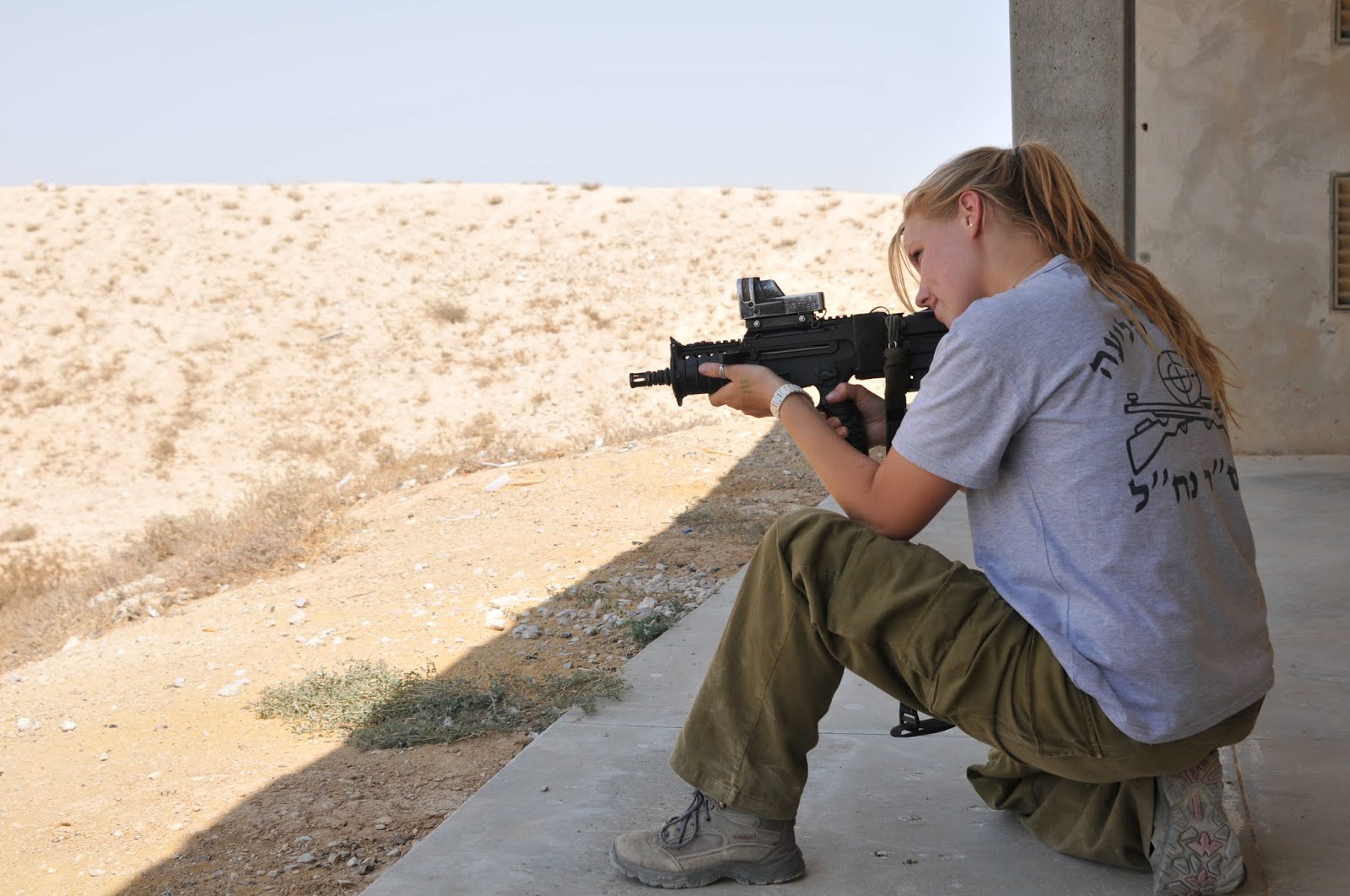
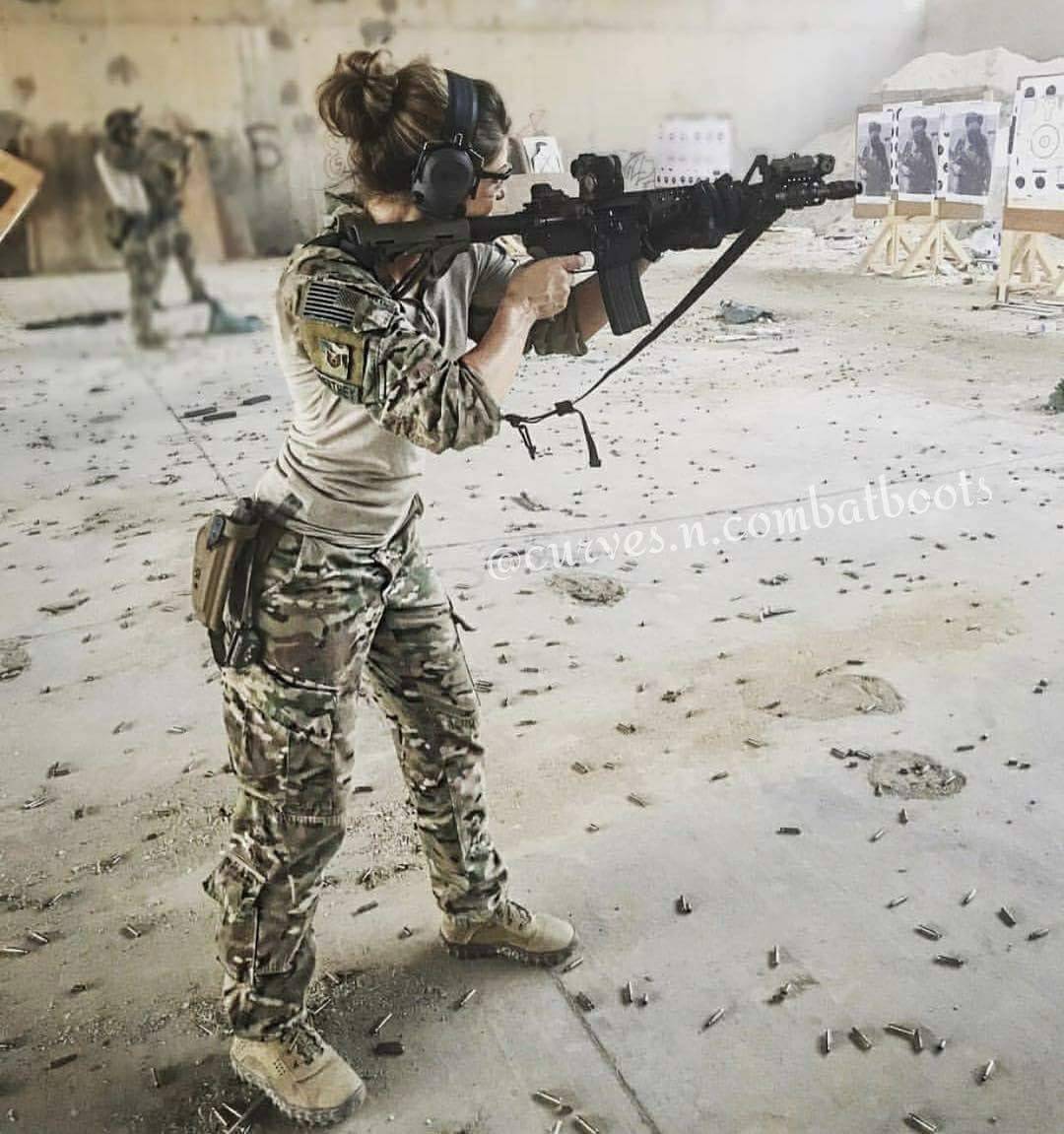
American gal rocking at the range.


IDF chick shoots a shorty
And I think that not one of these ladies need a safe space any time soon!
Categories
The Green Machine

Stuff I did not know about Aircraft Carriers

Image result for the sinking of the ark royal

Carriers…

This one came over the mil-email transom…
Odd little ‘facts’…

-Nimitz class aircraft carriers get refuelled approximately every 20-25 years. Since the lifespan of an aircraft carrier is about 50 years, that means they only get refuelled once. (This is the nuclear fuel for the reactors – the ship gets jet fuel every few days.)

-Almost all of the food has to be manually carried down to the mess and storage decks. This is a constant painstaking feat considering you’re feeding almost 6000 people, and you’re dealing with anywhere from about 4-8 stories worth of stairs, which can take as much as 10 hours in one resupply.

-All USN Aircraft Carriers are powered by steam from the nuclear plants.

-Machinery and non-airwing personnel can go longer than many submariners without seeing the sun. Many go 90-120+ days straight.

-The screws (propellers) installed on the USS Dwight D Eisenhower weight 366,200lbs (166,105kg) each and there are four of them.

-The Screws are each 25 feet tall.

-In even remotely rough seas, the showers alternate between hot and cold with the rocking of the ship. This is hilarious if you’re just using the bathroom, it’s horrible if you’re the one taking the shower.

-The total anchor weight including 1,082 feet of chain for one (of two anchors) is 735,000 lbs. (333,390kg).

-The machinery spaces are so far below the flight and hanger decks, there are emergency crews trained in mountain rescue, called deep rescue crews. They’re trained to rescue personnel out of the escape shafts which are roughly 80ft tall.

-The total number of crew members including the deployed air wing is over 6,000 personnel.

-Nimitz and later class nuclear carriers have 2 dump-truck size nuclear reactors for power. The one Enterprise class carrier has basically 8 submarine-size nuclear reactors powering it. That may seem trivial, but 8 nuclear reactors on a floating ship, each with essentially independent systems for control and safety, is nothing short of insanity.

-The height of the keel to the mast is the equivalent to a 24-story building.

-The Flight Deck is 4.5 acres.

-Steam piping in the machinery spaces is so hot, it will kill nerve cells before someone realises they touched the wrong thing.

-You can water ski behind an aircraft carrier going full speed, not that it’s safe.

-Aircraft carriers don’t have sonar – the carriers are too noisy for it to be effective. (In truth, they do have sonar depth finders, but those point straight down and are only used when you’re fairly close to shore.)

-Additionally, there’s very little shielding from radiation on the underside of a carrier since it’s usually facing the entire ocean, so a person must be certified and wear a radiation monitoring device to be under the ship in dry dock.

-The USS Midway (obviously a retired carrier) has about 5,000 miles (8046 kilometres) of wiring. A modern carrier, despite having much more electronic equipment, has only about half as much wiring because much of the data is now transported by fibreoptics.

-When the engines are engaged, the shafts rotate/twist more than an entire revolution before the propeller/screw actually moves.

-Nuclear operators on carriers, and submarines and formerly cruisers for that matter, receive much less radiation than normal citizens. You get more radiation commuting to work than the people running nuclear reactors. (Chernobyl, 3 mile island, Fukushima, SL1, and some others notwithstanding)

-Many of the dining tables in the enlisted mess can be converted to hospital beds and even surgical tables in the event of mass casualties.

-Thanks to a sophisticated network of supply ships, fresh milk and soft-serve ice cream is almost always available.

-When resupplying the ship, they actually use a gun with a rope attached to it, to initially retrieve the cables from the supply ships. Just picture cruising at 20 knots with a sailor literally shooting a gun at a supply ship from the hanger deck.

-There are small ramps around the edge of the flight deck, each about 18 inches wide or so, that lead out over the water. These are “bomb chutes,” and provide a way to quickly get bombs and other aircraft weapons over the side and away from the ship in case there’s a fire.

-Any time weapons are brought up from or taken down to the magazines, it always requires two elevators to accomplish. They’re taken about half the way, at which point they have to switch elevators since none of them go the whole distance. This is to eliminate one potential path of escape for any fire or explosion that might break out. It’s not at all uncommon to be eating a meal on the mess decks, with a cart full of bombs or missiles sitting a few feet away as they’re waiting to complete their journey up or down.

-Procedures have been developed and are sometimes practiced that allows for the launching and recovery of aircraft without the use of radios – no speaking whatsoever. It’s called “zip lip.” This is done when the ship is in EMCON condition, or “emissions control,” when radio-based equipment like radar and radios aren’t used in an effort to remain “silent” to enemies that might use the signals to detect the ship.

-There has never been a nuclear accident or uncontrolled release of radioactivity in the history of Naval Nuclear power, including submarines.

-The stern area of the ship at the hangar deck level is home to what’s called the “jet shop.” This is where in-depth repairs are made to jet engines that have been removed from airplanes. That area has jet fuel plumbing so that the engines can be tested at high power while attached (strongly) to the ship.

-It takes more than 2000 people to spell out “Ready Now” or a similarly large phrase on the flight deck.

-Every carrier landing is recorded on video, and each pilot is graded on how well they did. The best you can do is an OK-3wire, which means both the plane and pilot can be used again.

-During daytime and in good weather, during an aircraft recover (landing) cycle, the goal is to have an airplane land every 45 seconds. That means each one should land, come to a stop, get free of the cable it caught and taxi out of the way in 45 seconds or less.

-A deployment is referred to as a cruise by recruiters.

-The actual speeds for a carrier are classified.

Categories
Hard Nosed Folks Both Good & Bad Interesting stuff Leadership of the highest kind The Green Machine This great Nation & Its People

Some very good Leadership advice that is really universal – How to Fail as a Major, A Guest Post by Terron Wharton

wharton-photo.jpg

October 30, 2013 – Photo by Staff Sgt.Tim Chacon

 
“…the expectations of a Major are very different than those of a captain, and not everyone knows what these expectations are or the impact they have on personal and professional success.”
-MG(R) Tony Cucolo, “In Case You Didn’t Know It, Things Are Very Different Now: Part 1”
While attending the Command and General Staff College (CGSC), instructors and mentors constantly drove two points home. First, transitioning to the rank of Major and the expectations of a Field Grade Officer is a difficult and steep learning curve. Second, what made an officer successful at the company grade level does not necessarily translate to success as a Major.
I have been a combined arms battalion S3 for ten months now and during this period I’ve planned, resourced, and executed field training exercises, live fire events, gunneries, an NTC rotation, and spent enough hours on my Blackberry that I never want to see one again.
However, I can definitively say two things about my instructors’ advice: They weren’t kidding about either point … and they vastly downplayed both.
The transition to Major is less of a learning curve and more of a sheer cliff. There is less tolerance for officers who need to “grow into it,” and the expectation is you are value added on day one.
Finally, the room for mistakes grows smaller and smaller. What follows are the hard lessons I’ve learned either through personal shortcomings or watching peers fall by the wayside.
Failure #1: Believe Help is Coming
When things became supremely difficult or complex as a captain or lieutenant, we would often look for a field grade to give refined guidance and direction. The Major knows the answer.
They are the responsible adult in the room. The Major may get cranky and hand out a butt chewing, but they would bring resources to bear on the problem. They were help when we needed it.
As a Major, YOU are now that responsible adult who has the answers and can bring resources to bear. You ARE the help that’s coming.
There is no help coming for YOU. Majors are the Army’s problem solvers and workhorses. If a room of Majors looks around and cannot tell who among them is lead on an issue, then the issue is probably not being addressed.
Majors don’t get to look around and wonder who will solve the problem. They must own the problems as they appear and work with peers to solve them.
Failure #2: Burn Bridges and Fail to Cultivate and Maintain Relationships
Early on in my time as a BN S3 something went wrong during our FTX. A situation changed that was outside of my control and I blamed the brigade.
Over the phone, I got into a heated discussion with the BDE S3 and XO and lost my temper and composure.
When I was done venting, the BDE S3 said something I will never forget: “Do you want to keep complaining or do you want to solve the problem?” Those words stuck with me. I apologized, we moved on, and we fixed the issue.
The argumentative Major, the one who picks fights, protects their own rice bowl, and never gives an inch will quickly find themselves isolated without a seat at the table.
In the end, their unit will suffer for it. Conversely, the Major is willing to give more than they take, willing to put the brigade’s success over what’s easier for their battalion and work well with peers to find solutions and compromises will succeed.
Leaders do not have time for personality conflicts, especially Majors.
The biggest power Majors have is that knowing where to look, who to call, and having a network of friends, peers, classmates, warrants, and NCOs that can be leveraged to solve problems.
Most problems in a brigade are solved by the S3s and XOs sitting around the table, developing a course of action, and moving out to attack the challenge at hand.
That requires well-cultivated and maintained relationships. More than anything, those relationships and connections are the most powerful resource at your disposal.
This is also the point in our careers where many of us will begin to regularly interact with DA Civilians. Do not forget about them.
The GS-14 serving as your Division Chief of Training could well be a retired LTC and former Battalion Commander. They have either been where you are now, or they have seen many in your position come and go, and they often serve as the long-term continuity in higher headquarters and support functions that are critical to your success.
Stop by and talk to your peers regularly. Take time to talk to DA Civilian, get away from email, and drop by offices.
Come to meetings early and stay a little after to talk to each other, even if it’s just letting each other vent for five mins. It will pay dividends when you need to move a mountain and get a short notice task done.
You cannot afford to have personality conflicts or fight with your peers. Ever. Period. Learn to swallow your pride and be the first one to apologize or mend a relationship after a heated exchange.
Failure #3: Confusing Leadership and Management 
Leadership and management are not the same thing and are easily confused when assuming organizational level leadership for the first time.
Leadership is about people while management is about systems. While these concepts may appear obvious, it took me about three months to learn this and I am still working to improve my management skills.
As a Major, your primary concerns are building and managing systems. Majors are about touch points. Identify critical touch points for your organization, develop systems to manage that information, and use those systems to recognize where the train wrecks and pitfalls are.
The Major’s aperture is so wide that there is no way you can directly affect it all with personal involvement or presence. If you try, you will fail.
Time is now your most precious resource. Systems help manage the information flow so you can focus your limited time on things that are commander priorities, mission-critical, or something only YOU can do based on knowledge, skills, or relationships.
For everything else, develop your staff to handle routine business, empower them to make the routine decisions, and train them to know when things require your personal involvement. If you don’t develop systems to manage the massive amounts of information coming in, you will quickly become overwhelmed and remain in crisis management.
This is not to say that personal leadership is not important as a Major. It simply means the balance has shifted. Your personal leadership is still critical in two areas: training your staff and mentorship.
Do not expect to walk into a staff that can do MDMP perfectly with just an occasional guiding nudge from you. You will have to train your staff.
MDMP is just the beginning. How to write emails, brief the commander, write orders, develop courses of action, work as a team, interact with the higher headquarters staff, Army culture and expectations of officers, and a thousand other things you now take for granted after over a decade of service.
All of this requires your personal presence, time, and effort. If you do not teach them, no one else will.
The Major is also a mentor to younger officers, especially the staff officers they interact with daily. This mentorship requires personal leadership and is just as important to the Army’s success as the next round of MDMP is to your unit’s training event.
I am wearing an oak leaf because of the mentorship two Majors provided at critical junctures in my career. Officers in your organization will look to you as a model for future service: how to act, how to look, and the path they should chart through the Army, just as I looked to those Majors when I was a Lieutenant and a Captain.
Failure #4: Fail to Predict the Future
Majors must forecast out, identify implied tasks, determine conditions that need setting, and execute without guidance, FRAGOs, or WARNOs from BDE or higher.
If you fail to do this, the train wreck is waiting and, remember, no help is coming. Your higher HQ may give some guidance, but never enough, and never on the timeline you want it. If you wait, it will be too late.
Predicting the future allows planning to occur that can mitigate future problems. This is critical because at the battalion and brigade level dynamic re-tasking is never dynamic.
As a BN S3, I can pick up the phone and redirect the work, efforts, and lives of 700 Soldiers, officers, warrant officers, leaders, and their families.
However, a battalion has a certain organizational momentum and inertia that is hard to overcome and shift on a dime. Every dynamic shift exponentially increases the chance of details being missed, mistakes being made, and can push you into crisis management.
Look deep, develop a concept, and address potential gaps through FRAGOs, IPRs, and update briefs as necessary.
As Majors our words, actions, and decisions carry serious weight as BN and BDE S3s/XOs, planners, and action officers.
An errant email, simple misspeak, or a rash outburst will affect entire organizations exponentially more than when we were company commanders or staff captains.
As such, the tolerance for those who fail to grasp this and make the transition is low.  Unfortunately, many Majors step into these pitfalls, sometimes irrevocably, without ever knowing they have made a fatal error.
Fortunately, the Army is a learning organization and just maybe sharing my own shortcomings can help another Major avoid failure as they climb the cliff and make the transition.
Terron Wharton is currently serving as the BN S3 for 4-6 IN, 3/1ABCT at Fort Bliss, TX.  An Armor Officer, he has served in Armor and Stryker Brigade Combat Teams with operational experience in Iraq and Afghanistan. 
He is also the author of “High Risk Soldier: Trauma and Triumph in the Global War on Terror,” a work dealing with overcoming the effects of PTSD.  His other works include “Becoming Multilingual”, discussing being multifaceted within the Army profession, “The Overlooked Mentors” which speaks to NCOs as mentors for junior officers, and “Viral Conflict: Proposing the Information Warfighting Function” which proposes establishing an Information Warfighting Function.

Categories
The Green Machine

Some good stuff from the Angry Staff Officer

Being a Rebel Leader: Disciplined Disobedience in the Army

First off, no, this is not a discussion on the merits of leaders within the Rebel Alliance in the Star Wars universe, though if it were, I’d have to say that the Rebel leadership had very few merits and we should probably not emulate their chaos-based approach to warfare.
What’s I’d like to talk about is disruptive thinking in the Army, and I’ll lead off with this:
“Disciplined disobedience to achieve the higher purpose.” 
– GEN Mark Milley, Army Chief of Staff, 2015
In all large organizations, there is a severe temptation to follow by-the-book procedure. And this for the simple reason that when you’ve got just around one million people in your organization – as in the case of the U.S. Army – it’s a lot safer and efficient for everyone to be on the same page. In our case, we have doctrine, which is the fundamental building block of how we think and operate in the Army. Doctrine offers us our left and right limits in which to operate; provides a common language; and ensures that the organization operates uniformly. It even provides the Army definition of leadership and leadership principles; all in one handy twenty-six page document. And yet in that discussion of Army leadership, there is not one mention of willful disobedience – save for when not following orders that are unlawful or immoral.
So what does it mean to exercise disciplined disobedience, as Milley calls it? Harvard Professor Francesca Gino has written extensively on what she calls “rebel leadership” in organizations: “When I think of rebels, I think of people who break rules to explore new ideas and create positive change,” she says. So it’s not that these leaders are breaking the rules and being detrimental to their organization; rather, they are always looking for new ways of doing things, refusing to accept “that’s the way we’ve always done it” as an answer, and constantly innovating. By the way, read her eight principles of rebel leadership in the link above; they are excellent.
Now, the Army is a massive institution with a very important mission: to protect the United States. Lives depend on leaders making the right decisions. So should we as leaders diverge from our doctrine and think up new ways of doing things?
Yes and no. First off, there are some things that you just shouldn’t diverge from or change. Procedural things, like the 9-line medical evacuation formula or calling for artillery fire. These processes are put in place to ensure that communication is streamlined for maximum efficiency. Diverging from these processes can cost lives.
Now, lets take something like battle drills. Are these scripts for absolute victory every time? Not at all – they merely combine best practices (flanking, infiltration tactics, suppressive fire, obscuration, etc) gathered over the last century or so of combat in order to provide the leader with a baseline from which to operate. One can and should (using our good ol’ METT-TC) diverge from battle drills should variables change. Strict adherence to the letter of the law in these cases will get people killed. And that has always been the case throughout history. The British Royal Navy adhered so much to strict line of battle principles that they were never able to gain a victory over a near-peer force until 1782 when Admiral George Rodney broke from doctrine and defeated the French fleet at the Battle of the Saintes. Tactical leadership requires innovation and ingenuity and some elements of disciplined disobedience: operating within the commander’s intent but outside the norms of Army doctrine.
Ok, so, how about everything else? We all know that leadership doesn’t begin and end on the battlefield. In fact, often the most effective moments of leadership are the common ones in day-to-day life. And operating within Milley’s guidance and the examples provided by Professor Gino, there are a myriad of things that one can do as a leader to make subversive yet positive changes to an organization. After I took command, I examined the number of meetings the company was having and eliminated or consolidated them down to the bare minimum needed to keep communication flowing, even though they were meetings that people said “had to be held.” They really didn’t. Everyone hates meetings, so this not only made the organization more efficient but also raised morale. Win-win.
You can also be a little more subversive and can enter the gray area that characterizes disciplined disobedience. Take taskings from higher, for example. All units get them, there are always too many, and sometimes you feel like you’re drowning under the pile of them. We all have limited time and limited resources. So by attempting to do everything, we will necessarily be less effective at our priorities. My rule of thumb is to gauge the tasking by what line of effort it falls under, and if it’s not in my top three – and if it by ignoring it or missing it I do not put undue stress or more work on my subordinates – then I drop it to the bottom of my priority list. It’s not literally disobeying an order, it’s prioritizing effectively according to the resources available.
Disciplined disobedience needs to be explored more as a theme within the Army, because it has obvious pitfalls if it goes awry or if people misinterpret it to mean “disobey all orders.” Discipline is a fundamental part of the Army and we still have to be mindful of it. Therefore, this concept needs to be a discussion between leaders. It should be held at the lowest levels of the force and should be championed by mid-level leaders who can use it as an opportunity to encourage this kind of thinking rather than stifle it. In order to maximize resources, retain and promote talented leaders, and gain an edge over our adversaries, we need to build rebel leaders.


Enjoy what you just read? Please share on social media or email utilizing the buttons below.

About the Author: Angry Staff Officer is an Army engineer officer who is adrift in a sea of doctrine and staff operations and uses writing as a means to retain his sanity. He also collaborates on a podcast with Adin Dobkin entitled War Stories, which examines key moments in the history of warfare.

Categories
The Green Machine

When 1st Sgts get bored during deployment

fun3

Categories
Hard Nosed Folks Both Good & Bad I am so grateful!! Leadership of the highest kind Soldiering The Green Machine

It was the US Army that gave me the push & discipline to get my Masters Degree!

#CollegeProblems #college #Disgruntled #vetstudent #vetstudentproblems
Thanks to everyone that I served with in the Green Machine! You made a huge impression on this guy! God Bless you all.

Categories
All About Guns The Green Machine This great Nation & Its People

Some Good Shit here – 7 Characteristics of Highly Successful Non-Commissioned Officers by ANGRY STAFF OFFICER

Related image
As an Army officer, I tend to spend a lot of time talking about, well, talking about officer things. And no, that does not mean discussing polo, the price of cufflinks, sipping brandy, and thinking of ways to make our NCOs lives harder, as some circles might believe.
Although the brandy thing isn’t too far off since it sometimes feels like officers spend an inordinate amount of time discussing craft beers and the like than enlisted do. But I’m getting away from myself here.

army1_1.jpg
“Well now that you’re all officers,chaps, you’re all now experts on IPAs and have a duty to disseminate the gospel of craft beers far and wide. Polo is at 1600; don’t be late.” (East Carolina University photo credit)

Most of my writing on military leadership has been geared towards the officer realm since that’s what I know. I made the move from enlisted to officer seven years ago now, and while I try to keep the perspective of an E-4, it’s safe to say that my brain has finally made the move over to the officer side of the house.
But that’s not to say that I don’t spend a lot of time thinking about the corps of the non-commissioned officer. NCOs will literally either make or break your career and/or unit. For all the training that officers receive, the single most important part of it often is “listen to your NCOs.”
And let me say here, I’ve gotten incredibly lucky: all the NCOs that I’ve been paired with in leadership positions have been some of the best I’ve ever seen. From platoon sergeant to operations sergeant to first sergeant, I’ve had NCOs that exceeded every standard put in front of them.
Any success that I might have as an officer is a direct reflection on the type of mentorship I received from my NCOs. Now, that doesn’t mean I’ve never seen bad NCOs; I’ve seen and dealt with more than my share.
Like officers, when NCOs go bad it’s a terrible thing to see. But by and large, the NCOs in my direct supervision have been outstanding.
So that said, here’s a few characteristics of highly effective NCOs that I’ve observed over the years.

Proactive

Whether you’re on a patrol or back in garrison, an NCO that both understands and anticipates implied tasks is worth their weight in gold. As a platoon leader, executive officer, or commander, time is a precious commodity. We’re usually running this way and that, like chickens with our proverbial heads cut off.
It’s the NCOs that ensure that the basic tasks are completed that can allow a mission to go forward or to keep a unit running. They are the oil in the machine that is the Army.
And when NCOs stop being proactive and become reactive, then the unit basically grinds to a halt. It’s always painfully obvious when that kind of breakdown occurs. A unit can survive a poor officer; it cannot survive poor NCOs.

Know the Duty Position

It goes without saying, I suppose, that officers and NCOs have different responsibilities. But just exactly what some of those are and how they are split between the two can be a bone of contention for many people.
It’s not just that officers plan and NCOs execute; there’s more to it. Take for example the relationship between the platoon leader and the squad leaders.
Yes, the platoon sergeant mentors, guides, and directs the squad leaders, but those E-6’s are not the platoon sergeant’s. Successful squad leaders work closely with the platoon leader to execute her or his plans.
Successful platoon sergeants know this and work closely in the background to ensure that everything is fully resourced, all troops are where they need to be, and in the right uniform. But even more than this, platoon sergeants, first sergeants, and sergeants major are the senior enlisted advisers for their organizations.
If officers are not using them as sounding boards and guideposts, then that officer is bound to fail. When officers and NCOs understand their roles and stay out of each others way, it’s a beautiful thing to see.
That’s when an organization can function with maximum efficiency. Otherwise, it’s just everyone tripping over each others’ feet, and if we wanted to see that we’d just ask the Navy to do some drill and ceremony.

coast-guard-challenge-482
For the love of God, do not ask the Coast Guard to D&C; they will put you in a bayonet pen, apparently. (Photo credit Military.com)

Mentor Soldiers

NCOs are the backbone of the Army. But they are also the trainers, the confidants, the institutional knowledge, the conscience, and the teachers of the Army.
One of the finest squad leaders I ever had was a quiet individual who just had the sheer presence of leadership that he carried with him everywhere.
He didn’t brag, he didn’t shout; he just was. Multiple deployments, sniper qualified, he could most often be found teaching his Soldiers.
Everything from marksmanship to demolition knots, he would work with them one-on-one until he saw the light of understanding come on in their eyes.
I sat back and watched him one day after he had told me that he was going to get out soon; while I understood that he needed a change, I was still upset to lose such a good NCO.
But as I watched him, I realized that I wouldn’t be losing him at all. He was training up a whole squad to be like him. And sure enough, those leaders have gone on to excel – and became mentors in their own right.

Know When to Step Back

This one is hard. So many NCOs are outstanding team and squad leaders, and so when they finally pin E-7, stepping back is a tough adjustment.
Same with first sergeant. But in order to allow younger NCOs to grow, you have to be able to step back. Of course, you can jump in if asked or if things are about to go dramatically sideways, but leaders need to learn by doing.
The best NCOs know that as they advance up the chain they have to become less hands on and pass the torch to the NCOs taking their place. Otherwise you get micromanagement, which isn’t pretty from officers and is downright ugly in NCOs.

Guide their Officers

I’m not saying that NCOs are there to babysit officers because otherwise I wouldn’t have had to initiate disciplinary procedures for an E-6 that acted like an E-1 (he was so bad that this is actually an insult to E-1’s) – but there is a certain amount of truth to that statement. Officers need a built in mentor and guide with more experience than they have.
And even more than that, officers need to have someone there who’s not afraid to tell them when they’re on the wrong track. I use my first sergeant and executive officer as sounding boards – and they usually end up red-teaming my ideas, which works out incredibly well.
But without that individual, there’s no check on officers who are the proverbial good idea fairy. And with new officers, it’s even more important, because they don’t know what they don’t know.
It’s up to that NCO to teach them and put them on the right track for their careers. NCOs that fail to work alongside their officers do a grave damage to not only that officer’s development as a leader but also to all future Soldiers they will work with. Therefore it is a grave responsibility which should not be taken lightly.

Protect their Profession

NCOs carry the standard in the Army for discipline. But they also should embody the Army ethos, values, and creed. Yes, they should steward our profession, but they should also protect it; protect the profession from those who would undermine it with toxic leadership or by breaking faith with our Soldiers and the American people.
Successful NCOs understand that they set the standard that they wish to see. They also take ownership of their roles and guard them fiercely.
For example, my first sergeant has taken ownership of the unit manning report and personnel actions, because he understands that the overall strength of the unit is part of our joint responsibility. While I focus on training, he focuses on personnel.
We both run ideas and plans by each other, and he ensures that as commander I have final say; it is an arrangement that works exceedingly well.
He safeguards the profession by working with the platoon leadership to make sure that the right people are in the right positions.
Understanding personnel actions is one of the key indicators I’ve seen in highly successful first sergeants. And a first sergeant that can effectively manage personnel is worth their weight in Rip Its.

Passion

Lastly, NCOs need to have a passion for the Army and for their job. While this holds true for leaders at all levels, it is especially important for NCOs. Enlisted Soldiers will see their officers but most of the time will not be working directly with them 24/7.
The NCO is the one that they see and model their behavior off of – or take notes on how not to be when they reach that level. In this way, the team leader and squad leader positions are the most powerful in the Army for effecting change.
Passionate leaders imbue their own troops with that drive for excellence. Passionate, knowledgeable, driven, and empathetic NCOs can be one of the most dynamic forces for good in a unit.
Especially empathetic. Yes, good NCOs uphold the standards and traditions of the Army and are fair disciplinarians, but they also realize that the Army is made up of Soldiers and that it is their duty to care for those Soldiers.
Without empathy, the NCO cannot truly connect with their Soldiers and make them feel like part of the larger whole.
This was by no means an exhaustive list, but when you come across an NCO that Soldiers want to work for and officers want to work with, they by and large have these characteristics. And they make you want to hang on to them forever.


Enjoy what you just read? Please share on social media or email utilizing the buttons below.

Categories
All About Guns The Green Machine War Well I thought it was neat!

Automatic Weapons: American vs. German 1943 War Department (US Army); World War II

https://youtu.be/DHP9u2QRaAk

Categories
The Green Machine War

How far we have come, HMS Howe in the Suez canal 1944

ww22bcolor2bphotographs2b4