Categories
All About Guns Soldiering This great Nation & Its People

MG Maurice Rose: The Division Point by WILL DABBS

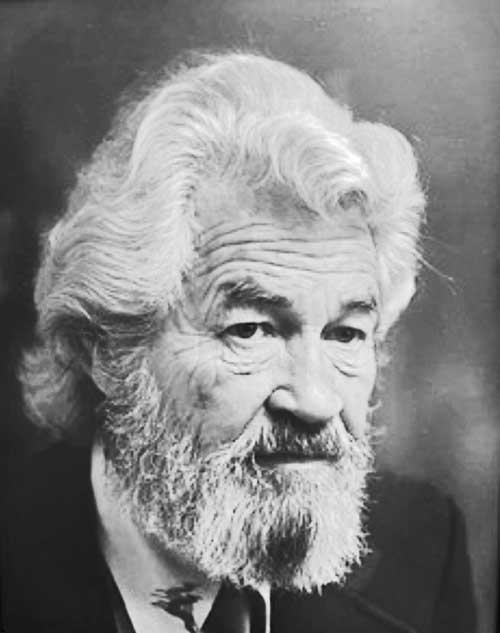
This chiseled-looking stud was a born soldier.

Maurice Rose was born in 1899 in Middletown, Connecticut, the son of Samuel and Katherin Rose. The son and grandson of rabbis from Poland, MG Rose was ultimately the highest-ranking Jewish officer in the United States Army. From the very beginning, Maurice Rose was a warrior.

As soon as he was able, Maurice Rose tried to enlist in the military.

Rose edited his high school paper and enjoyed a stellar academic career. In the yearbook published the year of his graduation a cartoon of the paper staff depicted him carrying a rifle. Soldiering was in his blood.

Maurice Rose’s first military stint lasted all of a month and a half.

Rose lied about his age and enlisted in the Colorado National Guard hoping to participate in the Punitive Expedition against Pancho Villa. Six weeks later when his commander discovered that he was only sixteen he was discharged. Rose then worked in a meatpacking plant until he turned seventeen and could convince his parents to sign an enlistment waiver.

Maurice Rose earned his commission just before he deployed to Europe during the First World War.

Once on active duty Maurice Rose’s natural leadership qualities became apparent. He was selected for officer training but had to illicitly alter his Army records to reflect a birthdate of 1895 so he would be old enough to be considered. In August of 1917 Rose graduated from the Officer Candidate Course at Fort Riley, Kansas. He was commissioned a Second Lieutenant just in time to deploy for World War 1.

LT Rose Goes to War

2LT Rose’s baptism by fire occurred during the legendary Meuse-Argonne Offensive. This hemoclysm spilled a veritable ocean of blood.

Rose made First Lieutenant in short order. His battalion assumed defensive positions in the vicinity of Toul, France in 1918. Soon thereafter Rose and his comrades found themselves in the thick of the Meuse-Argonne Offensive. This ghastly 6-week operation ultimately claimed a quarter-million casualties on both sides. More than 26,000 Americans were killed.

This was the world Maurice Rose fled the comfort and safety of a military hospital to find.

Rose, for his part, was in the thick of it throughout. He caught a load of shrapnel from a German mortar and suffered a concussion from nearby artillery fire. He refused the medics’ orders to evacuate until he eventually collapsed from exhaustion and blood loss. After a few days in the hospital, Rose slipped away to rejoin his unit.

LT Rose served as part of the military occupation in Europe after the war.

This tidy bit of subterfuge resulted in his parents being informed that he was killed in action, an error that took a few days to rectify. Rose eventually recovered and served with the occupation troops until the summer of 1919 when he was discharged.

His True Calling

Now a Captain, Maurice Rose returned to military life in 1920.

Rose worked as a traveling salesman for a time but returned to the military in 1920, as soon as the Army would allow it. By now he was a Captain and served in a variety of operational and administrative positions. At some point, he altered his military records once again and claimed to be Protestant. Though some biographers attribute this to a religious conversion, more than likely he simply felt that no longer being Jewish would help his career.

Major Rose found himself in the right place at the right time with the right skills to thrive in the wartime military.

By the onset of World War 2 Rose was a Major and a graduate of the Infantry and Cavalry Officer Courses as well as the Command and General Staff College. He was soon promoted to Lieutenant Colonel. A preternaturally handsome man by the standards of the day, a newspaper reporter described him in print as “probably the best looking man in the Army.” That couldn’t do much for a guy’s humility.

Colonel Rose fought the German Afrika Corps in North Africa.

In 1940 the US Army was a growth industry. The American military had to expand in an unprecedented fashion, and it needed experienced commissioned officers and NCOs desperately. By the time he saw combat in North Africa Rose was a full Colonel. He negotiated the surrender of German forces in Tunisia under Generalmajor Fritz Krause.

Operation Husky, the invasion of Sicily, provided the Allies with invaluable experience staging, executing, and supporting an amphibious invasion.

Operation Husky saw Rose promoted to Brigadier General during operations in Sicily. When the commander of the 3d Armored Division, MG Leroy Watson, was relieved in the summer of 1944 General Rose took his place and thrived.

The Character of the Man

Once while serving as Division commander, General Rose dove out of his jeep with a Thompson submachine gun to capture a group of Wehrmacht Landsers.

MG Rose was known as an aggressive and effective combat commander. He once drove his jeep across a mined bridge to ensure it was safe for his men to follow. On another occasion, General Rose spotted a group of Germans running across a field and dove out of his jeep brandishing a Thompson submachine gun.

MG Rose sought out the action and was respected by his men.

Along with his driver, his aide, his DivArty Commander, and a handy PFC this motley band promptly captured a full dozen German soldiers. The Division Commander subsequently marched his POWs back and turned them over to the MPs. Such antics endeared Rose to the troops in his command.

Unlike many famous Allied Generals, MG Rose preferred to keep a low profile and just do his job. Smoking is very bad for you, guys.

MG Rose indeed insisted on leading from the front but also eschewed the publicity, fame, and glory so many of his counterparts feasted upon. Unlike Generals like Patton, MacArthur, and Montgomery, Maurice Rose was satisfied to avoid the limelight and just do his job. This exceptional military ethic ultimately killed him.

Combat is a Chaotic Thing

As usual, MG Rose was at the front of his Division as they punched into Germany.

On March 30, 1945, just over a month from the end of the war in Europe, MG Rose and his staff were traveling in jeeps at the head of a column of his 3d Armored Division near the city of Paderborn, Germany. The Germans were fighting on their home turf, and the situation was desperate. Armored units on both sides fought back and forth, creating a fluid, chaotic battlefield. When word reached Rose that certain of his units had been cut off by the Germans, he pressed forward to investigate.

German tank and small arms fire tore apart the lead elements of MG Rose’s division.

Before they could react, Rose and the men of his armored vanguard began taking fire from German tanks, antitank guns, and small arms. The lead Sherman of his column was hit by an enemy tank round and destroyed. In response, Rose and his command team mounted their jeeps and attempted to flee cross-country.

This is a Panzerkampfwagen Mk VI or Tiger I. It was one of the most feared armored vehicles of the war.

The German tanks soon had the Americans outflanked, and they moved to seal off their escape. The lead jeep accelerated and narrowly avoided a Wehrmacht panzer to reach safety. MG Rose was in the second jeep and found himself cut off. The German Tiger pinned Rose’s jeep against a tree, forcing him to dismount.

The back end of a Tiger I sports these distinctive twin exhaust stacks.

While Allied troops had a tendency to describe all German tanks as Tigers, these were the real deal. Surviving American GIs identified the vehicles based upon their distinctive twin exhausts.

A nameless German tank commander gunned MG Rose down on a chaotic battlefield in Germany.

The German tank commander opened his hatch and emerged with an MP40 submachine gun. As the Wehrmacht soldier covered Rose and his small party, the American General reached for his sidearm. Whether or not MG Rose was attempting to surrender or intended to fight the German officer has been lost to history. The panzer commander leveled his 9mm SMG and shot Rose fourteen times in several bursts. The American General was dead where he fell.

The Gun

The original MP38 was built around a relatively expensive milled tubular receiver.

The German MP40 began life as the MP38 designed by Heinrich Vollmer in, you guessed it, 1938. The MP38 was an evolutionary development of the previous MP36. Not more than a couple of MP36’s survived the war. The MP38 featured a machined steel receiver and bakelite furniture. It can be differentiated from the subsequent MP40 by the longitudinal ridges in the receiver and a small hole pressed into each side of the magazine well.

The MP40 was the world’s first mass-produced submachine gun to eschew wooden furniture.

The MP40 was a very similar design and enjoys essentially complete parts interchangeability with the MP38. Both guns feature a novel but unnecessarily complicated telescoping recoil spring system that makes the guns exceptionally smooth in action. The MP40 was the first general-issue Infantry weapon truly optimized for mass production. Around a million copies rolled off the lines before it was supplanted by the MP44 assault rifle. The MP40 soldiered on until the very end of the war.

The MP40 in Action

Though bulky and front-heavy, the MP40 was exceptionally controllable thanks to the relatively anemic 9mm Parabellum round and the gun’s sedate 500 rpm rate of fire.

I have a friend who was walking point with a buddy on a patrol through a German village in the final days of the war. Coming around a corner he and his pal came face to face with a German soldier armed with an MP40. The kraut soldier loosed a burst into the chest of my friend’s comrade. My buddy killed the German with a burst from his Thompson.

Both Americans retreated into a nearby building. The wounded American then leaned heavily against the wall, slid to the floor, and died. Even well into his nineties that remained a difficult story for my buddy to tell. At close range, the MP40 was a proven man-killer.

The Rest of the Story

In the final analysis, MG Maurice Rose died simply because he was a superb General.

The victorious Allies undertook an investigation to determine if MG Rose’s death might constitute a war crime. He was the highest-ranking American soldier to be killed in action in Europe, and his Jewish heritage made the circumstances of his killing immediately suspect. However, the light was dim at the time, and when his body was recovered the following day his codebook and maps remained unmolested.

This is the helmet MG Rose was wearing when he was killed. Note that the exit holes are in the front.
The impacts from the 9mm rounds fired at close range tore off part of one of his stars.
Forensic analysis later determined that Rose’s helmet was hit after it was knocked off of his head.

MG Rose was ultimately shot with four separate bursts from that German tank commander’s MP40. The first burst knocked Rose’s helmet off. Four rounds from the third burst struck him in the head and killed him. His helmet was recovered from a nearby ditch about ten feet away. The holes in the helmet resulted from its having been hit as it spun in the air behind the dying General.

MG Rose’s elderly parents both survived to see the loss of their son.
MG Maurice Rose was buried alongside his men.

The determination was simply that MG Rose tragically fell victim to the fog of war. German troops were frequently inexperienced and terrified at this late stage. That nameless Wehrmacht tank commander likely just saw Rose move for his pistol and fired reflexively. MG Maurice Rose, known to his men as “The Division Point” because of his penchant for leading from the front, was buried at the US military cemetery at Margraten, the Netherlands. 3d Armored Division commanders rendered honors at his grave until the early nineties when the division was disbanded.

The 3d Armored Division commander and staff rendered honors at the grave of MG Rose until the division was disbanded in 1992.
This Dutch school was named in honor of MG Maurice Rose, a true American hero.
Categories
All About Guns Allies Hard Nosed Folks Both Good & Bad Soldiering War

Who Dares Wins: 22 SAS and the Pebble Island Raid by WILL DABBS

Desolate and remote, the Falkland Islands have been held by the British since the early nineteenth century.

8,000 miles South of the UK and 400 miles east of Argentina lie the Falklands Islands. The UK has held possession of the Falklands since 1833, and the islands are liberally populated with British subjects, some three thousand or so by 2006.

The Falkland Islands should be a fairly cold but idyllic place. However, folks have been squabbling over these barren rocks for centuries.

Starting with British Captain John Strong in 1690, various despots, regents, and tin pot administrators alternately claimed, occupied, or stole this desolate piece of dirt. At 4,700 square miles, the Falklands enjoyed a fair amount of space. However, its brutal Southern latitude made it an inhospitable sort of place. One of the first commercial endeavors back in the early 19th century actually involved the exploitation of feral cattle.

Margaret Thatcher wasn’t called the Iron Lady for nothing.

Now fast forward to 1982, and the nearby Argentines had their sights set on the windswept rocks of the Falkland Islands. The British had long since passed the apogee of their remarkable empire. Perhaps they wouldn’t notice if Argentina’s military junta government dispatched a few thousand troops to snatch up the Falklands. Sadly, Argentina’s Leopoldo Galtieri woefully underestimated the Iron Lady’s resolve. British Prime Minister Margaret Thatcher was having none of that.

Buildup for War

The British Harrier jump jet was a capable and effective air superiority fighter when deployed against 1980’s-era Argentinian air assets. However, they still needed all the help they could get.

With 8,000 miles of open ocean across which to stage a proper response, the Brits knew that air superiority during the upcoming amphibious counter-invasion was going to be critical. British Sea Harriers would bear the brunt of the air-to-air responsibilities. However, every Argentine airplane that could be neutralized was one less that the Harrier drivers would have to burn out of the sky.

The Argentine-manufactured IA 58 Pucara was a twin-turboprop Close Air Support aircraft.
The Beechcraft T-34 Turbo Mentor was an armed version of a two-seat military training plane.

On the Northern aspect of the western Falklands chain lies Pebble Island. This forsaken spit of dirt was home to some twenty-five English subjects and another 2,500 very English sheep. Since the Argentine invasion, the Pebble Island Aerodromo Auxiliar Calderon airfield also housed six FMA IA 58 Pucara twin-engine turboprop ground attack aircraft, four T-34 Turbo Mentor counterinsurgency attack planes, and a single Coast Guard Skyvan transport. Servicing, supporting, and defending these eleven aircraft were about 150 Argentine Marines and aviation personnel.

The Plan

22 SAS laid the basis for modern Special Operations back during World War 2. LTC Stirling is shown here alongside some of his boys in North Africa.

22 Special Air Service Regiment was the foundation of the world’s modern Special Operations units. 22 SAS hearkens back to the Second World War and its first flamboyant commander, LTC Archibald David Stirling. Stirling’s mob of misfits tormented the Nazis from North Africa across Italy and occupied France. Subsequent generations of SAS men were shooting and scooting back when special operating wasn’t cool. In 1982 D Squadron 22 SAS Regiment stood ready to visit their own unique brand of chaos upon the Argentines.

The Klepper canoe is a non-metallic collapsible boat that breaks down into two man-portable components.

The plan was audacious. After an eyes-on recce conducted by Boat Troop of D Squadron 22 SAS via Klepper canoe, it was determined that there were severe headwinds near the target area. This would ultimately limit the amount of time the commandos could spend on the objective. The operational objectives were therefore reduced from the destruction of the garrison to simply neutralization of the aviation assets.

The Mission

The Westland Sea King HC4 was used for combat assault operations.

On the night of 14 May 1982, forty-five SAS D Squadron operators inserted via two Westland Sea King HC4 helicopters under cover of darkness. A single HC4 has the capacity to lift up to 28 combat-equipped troops. Members of the aforementioned Boat Troop provided approach navigation.

The SAS always had a fondness for the M203 grenade launcher as shown here in the hands of this modern-day re-enactor.

The SAS strike force landed six clicks from the airfield and unloaded some one hundred L16 81mm mortar bombs, demo charges, and a buttload of L1A1 66mm LAWs (Light Anti-tank Weapons). The SAS operators carried American-made M16 rifles along with a disproportionate number of M203 grenade launchers.

The capacity to march extreme distances while carrying ridiculously heavy loads is the bread and butter of the British SAS.

SAS operators are notorious for their simply breathtaking capacity to tab. Tab is short for Tactical Advance to Battle. This is British slang for a forced march across hostile terrain. The SAS assault force successfully infiltrated the airfield, avoiding the Argentine sentries on duty. They eventually set charges on seven of the Argentine aircraft without being detected.

The 22 SAS operators destroyed or disabled all of the combat aircraft on the airfield.

On cue, the SAS operators blew the charges and opened up on the parked aircraft with small arms and LAW rockets. At the same time, naval gunfire from the British destroyer HMS Glamorgan joined in targeting the nearby fuel stores and ammo dump. The preponderance of their ordnance expended, the SAS raiders exfilled to the PZ (Pickup Zone) where they were extracted by the waiting Sea Kings to the HMS Hermes.

The Weapons

The L1A1 Self-Loading Rifle was the standard Infantry weapon of the UK Armed Forces during the Falklands war.

The standard British Army rifle at the time of the Falklands War was the L1A1 SLR (Self-Loading Rifle). This Anglicized FN FAL was used across Her Majesty’s armed forces. However, the SAS opted for the US M16 for its lightweight and high-capacity magazines. Today’s SAS operators wield Canadian-made versions of the M4 Carbine made by Diemaco.

The British SAS appreciated the modest weight and superb maneuverability of the US M16 rifle.

The M16 has served in sundry guises for more than half a century in the US military and should be established dogma to anybody frequenting GunsAmerica. The M203 was the only component of the US Army’s long-running 1960’s-era Special Purpose Individual Weapon (SPIW) program to see adoption. Pronounced “Spew,” the SPIW had to have the coolest acronym in modern military history.

The under-barrel M203 grenade launcher adds a significant indirect fire capability to the individual trooper.

First adopted in 1969, the M203 fired the same 40x46mm grenade as did the standalone M79 break-open grenade launcher. The M203 mounted underneath a standard M16 and allowed the grenadier ready access to an automatic rifle in addition to the single-shot grenade launcher.

The M433 HEDP (High Explosive Dual-Purpose) round fired by the M203 has an effective casualty radius of five meters and will penetrate two inches of rolled homogenous steel armor.

The 40mm grenades fired by these weapons operate on the High-Low Propulsion System first developed by the Germans during World War 2. The Germans referred to this concept as the “Hoch-und-Niederdruck System,” and it allows a relatively-heavy, low-velocity round to be safely fired via a handheld weapon.

The disposable L1A1 LAW is a relatively lightweight anti-armor weapon that is also useful against fixed fortifications and material.

The L1A1 LAW is a single-shot disposable 66mm unguided antitank weapon. Originally an American contrivance, the US designation was the M72. The solid rocket motor was developed in 1959 at Redstone Arsenal, and the M72 first saw service in 1963. The M72 replaced both the M31 HEAT (High Explosive Antitank) rifle grenade and the cumbersome M20A1 Super Bazooka.

The aluminum inner tube of the L1A1 LAW telescopes into the fiberglass outer shell.

The L1A1 LAW consists of a telescoping aluminum tube within an external fiberglass cylinder with pop-up front and rear sights. When collapsed and sealed the LAW is waterproof. A percussion cap firing mechanism ignites the rocket, and a mechanical setback safety built into the warhead does not arm the piezoelectric detonator until the rocket has accelerated out of the tube.

The spring-loaded cover drops away when the rear cap is pivoted open.
The spring-loaded sights deploy when the LAW is extended for use. The black rubber device in the middle is the trigger bar. The manual firing mechanism on the far right is pulled forward to arm the rocket.

To fire the L1A1 LAW you pull the safety pin and remove the spring-loaded back cover. This allows the front cover to drop away as well, while the rear cover pivots down to serve as a shoulder brace. Grip the front and back of the weapon and extend it briskly. This movement releases the spring-loaded front and rear sights to deploy. Put the weapon on your shoulder, pull the striker handle forward to arm the mechanism, point the thing at something you dislike, and squeeze the trigger bar.

There is a great deal of violence inherent in firing a LAW rocket. This thing veritably explodes off your shoulder.
Care must be exercised to avoid the backblast area upon firing.

Firing the LAW is nothing like the movies. The entirety of the solid rocket motor is consumed prior to the rocket’s leaving the launch tube, and the open back of the tube makes the LAW essentially recoilless. The backblast, however, is subsequently ferocious.

The fins remain folded until the rocket leaves the launch tube.

Once the weapon is fired, six folding fins deploy to stabilize the rocket in flight. Muzzle velocity is 475 feet per second, and the thing makes a simply incredible racket.

The LAW is a proven and effective weapon system.

Max effective range is 200 meters, and later versions of the standard HEAT warhead will burn through about 12 inches of rolled homogenous steel armor. The LAW rockets used in the Pebble Island raid weighed about 8 pounds and cost about $750 apiece. Though augmented in US service in 1987 by the Swedish AT-4, the LAW remains in use around the world today.

The Rest of the Story

Subsequent aerial reconnaissance verified the destruction of all Argentine aircraft on the airfield.

As a result of intense shelling by the HMS Glamorgan the defending Argentines remained under cover for the most part throughout the raid. Presuming the attack to be the opening salvoes in a general invasion, the Argentine commander ordered the runway destroyed. The Argentines detonated prepositioned area denial charges underneath the runway and cratered it. Shrapnel from these charges injured one of the SAS operators. The Argentinian commander was subsequently killed by British small arms fire during the attack.

The tactical aircraft on Pebble Island were all rendered unusable for the duration of the Falklands War.

The original plan had the assault force redirecting their fire on the Argentinian garrison after ensuring the destruction of the attack aircraft. However, after exfilling the wounded man the ground force commander made the decision to return to the Hermes. This on-the-spot decision no doubt ultimately saved a great many lives.

The Pebble Island raid accomplished its primary objective without loss of life among the British attackers.

The Pebble Island raid accounted for all eleven aircraft as well as the ammo and fuel dump and was considered a rousing success. Considering that destroying airfields full of Axis aircraft during WW2 was considered a bit of an SAS specialty, the Pebble Island raid seemed fitting.

CPT Gavin John Hamilton commanded the ground element during the Pebble Island raid. Killed in action less than a month later, he was 29 years old.

Sadly, CPT Gavin John Hamilton, the ground force commander, was killed three weeks later while on a covert reconnaissance mission some forty miles behind Argentine lines. Colonel Juan Ramon Mabragana, the commander of the Argentine Commando unit that killed CPT Hamilton, later described him as “the most courageous man I have ever seen.”

The British SAS is justifiably viewed as one of the world’s premiere Special Operations units.

Who Dares Wins.

Brutally selected and exquisitely well-trained, 22 SAS is the tip of the spear.
Categories
Soldiering War

13 décembre 1952 – Indochine française. Portrait du caporal-chef Auguste Apel, légionnaire. with his Pioneer Beard

Categories
Our Great Kids Soldiering You have to be kidding, right!?!

Its good to see that we can still produce a REAL Sailor! (I would of paid some good money to hear that Mast Meeting proceeding)

May be an image of text

Categories
A Victory! Soldiering War

21 Indian Soldiers Against 10,000 Pashtun Invaders

Categories
Allies Soldiering

What it Takes to Become an SAS Soldier. (Some mighty big balls – Grumpy)

Categories
Darwin would of approved of this! Soldiering

I am so glad to have missed that FTX!!!!

A lot of these Troops came down with Cancer later on in life. Which really sucks in my book! Grumpy

Categories
All About Guns Soldiering War

Lyudmila Pavlichenko – The Extraordinary Sniper

Categories
All About Guns Hard Nosed Folks Both Good & Bad Soldiering This great Nation & Its People War

Alvin York: Conscientious Objector to War Hero

Alvin York collage with photos and clippings

In the late 1880s, the lives of settlers on the Cumberland Plateau of Tennessee had changed little since before the Revolution. Lofty mountains, bridgeless streams, and unpaved roads had isolated the mountain folk from the affairs of the outside world for over a century. Their education and smarts came not from books and “larning,” but from their intimate knowledge of the rugged outdoors. Fiercely independent and self-reliant, they made do with whatever nature and the good Lord provided.

Alvin Cullum York was brought up in these backwoods, where hard work on the homestead made for robust constitutions and where stealth and expert marksmanship in the wilderness were vital for fetching wild game for food sport.

Born on December 13, 1887, Alvin and his ten siblings were raised in a two-room log cabin in Pall Mall, Tennessee, within spitting distance of the Kentucky state line.1 There, in the sun-drenched valley of Three Forks of the Wolf River, the Yorks tended to their seventy-five-acre farm, “part level and part hilly,” where they grew corn and raised chickens, hogs and a few cows for their subsistence.2 To make ends meet, his father, William, worked as a blacksmith, setting up shop in a mountain cave near their home. His mother, Mary, would do chores at neighbor’s homes, sometimes accepting old clothes as payment, which she would mend and alter for the children.3

Alvin York wooden country homeYork family log cabin.  From Cowan, Sergeant York and his People, 33.Alvin York walking down country roadValley of the Three Forks O’ the Wolf. From Cowan, Sergeant York and his People, 89.

Schools in the remote mountain regions were scarce and poorly funded, not that it mattered much for the older children had to help harvest the crops as a matter of priority. In the winter, keeping school open was impractical as many of the children had to travel long distances and lacked warm clothes and proper shoes. The one-room schoolhouse in Pall Mall was open for only 2 ½ summer months a year; Alvin attended three weeks a year for five years, receiving the equivalent of a second-grade education.4 

Alvin picked up hunting skills from his father and his grit from stories of “fightin’ men” like Daniel Boone, Davy Crockett, and Andrew Jackson. For Alvin, hunting was not just a skill but an art. A man had to become intimately acquainted with his rifle’s parts, meticulous with its care, and familiar with its “temperament,” whether its fire would lean left or right or if the sun or the wind, dry or damp days would affect its performance. As an experienced hunter, Alvin could read and interpret signs left by wild animals, blend into the woodlands, and remain motionless while stalking his prey. At local shooting matches, with his old muzzle-loading “hog rifle,” he “could bust a turkey’s head at most any distance” and “knock off a lizard’s or a squirrel’s head from that far off that you could scarcely see it.”5

When his father died in 1911, York went “hog wild,” cussing and gambling and drinking moonshine, the latter often in challenges where the winner was the last man standing. He found himself in trouble with the law on more than one occasion.6 Although he never shunned his responsibilities at home, his sinful ways caused his ma many a sleepless night in prayer. In her quiet manner, she begged her son to change. As a Christian woman, she knew that his sins were wasting his life and destroying his chances for salvation. As a mother, she feared for his personal safety each time he went past the front gate.

Alvin, now twenty-seven years old, began to assess his life and often went into the mountains to pray and ask God to help him fight his demons. He started attending the Wolf River Church where a saddlebag preacher’s sermons further enlightened Alvin to a life of righteousness. His growing fondness for Gracie, a local beauty thirteen years his junior and devout Christian, boosted his motivation to change. 7 On January 1, 1915, York swore off his vices and joined the Church of Christ in Christian Union. A fundamentalist sect, it opposed all forms of violence and advocated a strong pacifist philosophy which York adopted. 8 Now a devout Christian, his new-found beliefs were about to be tested.

Hints of War

On April 6, 1917, the United States of America formally declared war on the German Empire when German U-boats attacked U.S. ships in the Atlantic. Word got around Pall Mall about the escalating war, but little was understood about its causes, our involvement, or its objectives. “I knowed big nations were fighting, but I didn’t know for sure how many and which ones…I had no time nohow to bother much about a lot of foreigners quarreling and killing each other over there in Europe.”9

On May 18, the U.S. government enacted a law requiring that all able-bodied men between the ages of twenty-one to thirty-one register for the draft. York reluctantly registered on June 5 but attempted to gain status as a conscientious objector. Three separate requests for exemption from selective service, including one from his pastor and mentor, Rosier Pile, were summarily denied by the local and district boards. Their reasoning was that the church had “no especial [sic] creed except the Bible, which its members interpret for themselves…”10

Alvin York and men standing against wood houseFentress County recruits, November 15, 1917. Alvin York is fourth from left.
From Hogue, History of Fentress County, xiii.

Throughout his time at Camp Gordon, York was deeply torn between the pacifist teachings of his church and a moral obligation to serve his country. He received counseling from his superiors, Captain Edward Danforth and Major Gonzalo Edward Buxton.11 They managed to convince York to reconsider his role in the Army by referencing chapters from the Bible regarding war and sacrifice. After spending a few days home while on leave, the young private returned to camp, convinced that serving his country was God’s will.12

York was assigned to Company G, 2nd Battalion, 328th Infantry, 82nd “All American” Division on February 1, 1918, and trained at Camp Gordon in Chamblee, Georgia, just northeast of Atlanta. Not surprisingly, he qualified as a sharpshooter when he was able to hit eight out of ten moving targets at 600 yards.13

Over There

The 328th Infantry shipped out from New York and arrived in Liverpool, England, on May 16, 1918, then moved on to Southampton, England, and Le Havre, France, where they landed on May 21, 1918. At Le Havre, their U.S. model of 1917 .30 cal. rifles were exchanged for British Mark III Lee-Enfield rifles, but they were able to keep their 1911 Colt .45 pistols.14 One month later, an assumption that the 82nd Division would be attached to British troops in the region of Picardy was overturned, and the 82nd was instead ordered to Toul. With that, the Lee-Enfield rifles, along with other armaments, were returned to the British and the U.S. model of 1917 Enfield bolt-action rifles were reissued.15

Alvin York Enfield rifleU.S. rifle cal .30, model of 1917 Enfield most likely used by Alvin York. Manufacturer: Eddystone.
Courtesy Missouri Historical Society.
British SMLE .303 rifleBritish Mark III Lee-Enfield Rifle. Courtesy National Army Museum, London.

By then, the war along the Western Front had become a bloody stalemate with heavy fighting along a series of trenches stretching from the English Channel to the Swiss Alps. Reinforced by the American Expeditionary Forces (AEF), the Allies went on the offensive trying to break through German defenses in northern France.

From Le Havre, the 82nd Division traveled east by train and on foot, past idyllic small towns and serene countrysides, a cruel paradox of what was to come.  On June 26 near Rambucourt, York heard the first sounds of gunfire “jes like the thunder in the hills at home.” At Mont Sec, bullets whizzed past “like a lot of mad hornets or bumblebees when you rob their nests.” Here he was placed in charge of an automatic weapons squad and shot French Chauchat machine guns, which he described as being heavy, clumsy, inaccurate, and noisy. “They weren’t near as good as the sawed-off shotguns,” he’d say.16 In September, York was promoted to corporal just before his regiment seized the town of Norroy.17

In the Valley of Death
map of meuse-argone offensive1st Division Meuse-Argonne Offensive map compiled by American Battle
Monuments Commission, 1937. Click map to enlarge.

On October 7, 1918, the 1st Battalion, 328th Infantry was ordered to take Hill 223, a strategic position just three kilometers southeast of their main objective: the Decauville rail line. This mission came during a critical phase of the Meuse-Argonne Offensive as American and French troops attempted to achieve the breakthrough that could end the war.18

On the night of October 7, York and the men of the 2nd Battalion watched and waited from the main road between Varennes and Fléville for their turn to continue the assault beyond Hill 223. At 0300 hours, bogged down by heavy rains and mud, fatigued from a sleepless night, hampered by a trek devoid of light except for the glow of gunfire hailing down around them, the troops slogged towards the hill amid utter chaos.

“Lots of men were killed by the artillery fire. And lots were wounded. The woods were all mussed up and looked as if a terrible cyclone done swept through them. But God would never be cruel enough to create a cyclone as terrible as that Argonne battle. Only man would ever think of doing an awful thing like that.”

At 0610 hours, York’s battalion along with three other companies of the 328th Infantry, pushed off Hill 223 with fixed bayonets. The advance was to be preceded by a rolling barrage of artillery fire that never came.19

As the troops raced downhill and charged across the 500-yard valley, now exposed with the light of dawn, an explosion of gunfire erupted from the heights above. “We had to lie down flat on our faces and dig in. And there we were out there in the valley all mussed up and unable to get any further with no barrage to help us, and that-there machine-gun fire and all sorts of big shells and gas cutting us to pieces.”

Alvin York Meuse-Argonne hill 223Valley just west of hill 223 across which York and the 2nd Battalion attacked on the morning of October 8, 1918.
From Candler, History of Three Hundred Twenty-Eighth Infantry, 60.

The first wave of men had been decimated by the Germans, and now York’s battalion lay pinned down, able to move but a few feet at a time. Something had to be done, but a frontal attack was out of the question.

When platoon sergeant Harry Parsons realized that the thrust of the machine gun fire came from a ridge to the left, he ordered Sergeant Bernard Early to lead Corporals York, Savage, and Cutting and three squads totaling thirteen men, to silence the machine gun nest on the ridge. Seventeen soldiers stealthily climbed up the left flank, concealed by the thick undergrowth, slipped deep into German lines and encircled the enemy gunners from the rear. While chasing the first two enemy soldiers they encountered, the squads stumbled upon a German headquarters with fifteen to twenty unsuspecting soldiers and officers from the 120th Württemberg Landwehr Regiment in conference.20 Caught completely off guard, the Germans surrendered. While the prisoners were being searched, enemy gunners situated on the ridge above the camp turned their machine guns around and swept the open space, instantly killing six American soldiers, including Corporal Savage, and wounding three. Among the wounded were Sergeant Early and Corporal Cutting. Corporal York was now in charge with just seven men under his command.

The onslaught of machine gun fire from above was relentless and destructive. The German prisoners had hit the ground and the Americans had shielded themselves between them, some of the privates managing to get off a shot or two.21 York was caught out in the open about twenty-five yards below the machine gun line near the ridge, his men and the German POWs huddled behind him.  Each time a German soldier raised his head, York would “tech him off,” just like he did at the turkey shoots back home.

Alvin York brown colt pistol 

Colt .45 government model of 1911. Garry James, American Rifleman.

At some point, York stood up and began to shoot his rifle offhand. His weapon was getting hot and he was running out of ammunition. So when a German officer led a counter-attack with six of his men charging towards York with fixed bayonets, York drew his Colt .45 automatic and, from back to front, shot each one, a practice he picked up at wild turkey shoots in Pall Mall. The idea was to hit the rear soldiers first so that the remainder would not see their comrade fall and fire at him. “It was either them or me and I’m a-telling you I didn’t and don’t want to die nohow if I can live,” he said.

Falling back on his hunting experience in Tennessee, York continued to methodically pick off German soldiers one by one, each time hollering for them to give up.  Alarmed by the number of troops being shot dead and their shattered morale, the German commander, Lieutenant Paul Jürgen Vollmer, shouted out in English offering to surrender his troops.22 As the Germans began to emerge from the upper trenches, one fellow hid a grenade in his raised hand, which he threw at York but missed, hitting another prisoner. York reflexively shot him, and there was no further trouble.

York ordered the eighty to ninety prisoners to form two lines and had them carry Sergeant Early on a stretcher. Using them as cover, York placed Vollmer in front of him with his pistol trained on his back and the other two German officers on either side of him. Seeing that York was considering which way to go, Vollmer suggested to turn down a gully, but York quickly figured it was a trap and decided to go in the opposite direction. Since York and his men had captured the rear German line, they inevitably ran into the first line of enemy trenches. He succinctly told Vollmer to order them to surrender or he would blow the commander’s head off, and they did, joining the lines of POWs headed to the command post.23

York and his men marched the prisoners from one command headquarters to another against his men’s better judgement, until the captives were finally accepted at division headquarters in Varennes, a distance of 10 ½ kilometers. Altogether, York killed 20-25 enemy soldiers, neutralized thirty-five machine guns, and captured 132 German soldiers, though he was quick to reject full credit for the extraordinary success of his mission. “There were others in that fight besides me… I’m a-telling you, they’re entitled to a whole heap of credit. It isn’t for me, of course, to decide how much credit…But jes the same, I’m a-telling you, a heap of those boys were heroes, and America ought to be proud of them.”

His actions enabled the 328th Infantry Regiment to advance across the valley and capture the strategic Decauville Railroad. With their Army on the verge of total collapse and the Central Powers facing defeat on all fronts, Germany agreed to an armistice with the Allies on November 11, 1918, bringing the war to an end.

“I jes want to go home.”

Alvin C. York was promoted to the rank of sergeant on November 1, 1918. He received numerous American and foreign awards, including the highest recognition that could be bestowed upon a U.S. soldier, the Congressional Medal of Honor. French General and Supreme Allied Commander, Ferdinand Foch, commented to York, “What you did was the greatest thing accomplished by any private soldier of all the armies of Europe.”

When York returned to the United States, he found that he had become a national celebrity. It was all so overwhelming for the humble hero, but all he really wanted was to go home. He received offers from Hollywood and Broadway to adapt his life story into a movie and numerous endorsement deals and public appearances worth tens of thousands of dollars. York chose not to capitalize on his newfound fame. He once famously stated “This uniform ain’t for sale.” Instead he dedicated himself to his family and a number of charitable causes. He became a proponent for veterans’ rights, education, and economic development for his impoverished community. Seeking to raise money to help build a bible school, York finally gave his blessing for Hollywood to produce a film based on his life story. In 1941, Sergeant York was released in theaters, starring Gary Cooper in the title role that would earn him an Academy Award. It was the highest grossing film of the year, inspiring young Americans across the country to enlist in the U.S. armed forces during World War II.24

On September 2, 1964, Alvin C. York passed away at a veterans’ hospital in Nashville, Tennessee, at the age of 76. He is currently buried at the Wolf River Cemetery in his hometown of Pall Mall, Tennessee, next to his wife, Gracie, who passed away twenty years later.

Alvin C. York has maintained the status of an American folk hero whose story still resonates with Americans to this day. His heroism in battle, his legendary sharpshooting skills, his underprivileged upbringing, his faith in a higher power, his sense of patriotic duty, and his humble nature all contributed to the legend that is Sergeant York. His story is regarded as one of the most inspirational American success stories, and he has been memorialized as one of the greatest heroes in the long history of the United States Army.

Enfield vs Springfield Rifle Debate

Much discussion has centered around whether York used a 1903 Springfield or a 1917 Enfield rifle during the war. WW I munitions data presented by Assistant Secretary of War, Benedict Crowell, concluded that 12-15% of rifles issued were Springfield guns but the vast majority were 1917 Enfields.25

Alvin York Springfield rifle with ammunitionU.S. rifle cal .30, model of 1903 Springfield. Twelve to fifteen percent of rifles issued to WW I soldiers were Springfields. Wikimedia

In his diary, York did not specify the type of rifle he used. Per Colonel Buxton, the 82nd Division was issued 1917 Enfields.26 In 2005, writer Garry James documented a conversation he had with York’s son, Andrew, who stated that his father had somehow switched his 1917 Enfield for a 1903 Springfield because the Enfield “had a peep sight with which York had difficulty leading a target.” Another individual commented on a forum that Andrew York told him that when his father’s unit reached the front, they were given a choice of one of the surplus ’03 Springfields, and that York switched, in part, because “the notched rear sight and post or blade front sight” were virtually the same as on his old muzzleloader. On both occasions, Andrew incorrectly stated that his father trained stateside on the ’03 Springfield and that these were replaced with Eddystones at Le Havre (Woodsrunner 38 second entry). A third forum commentator who also met Andrew York questioned Andrew’s knowledge base on the subject. (See Scott in Indiana). Regardless of which rifle he used, Alvin York’s extraordinary feat is well documented and undeniable.

Video
Words spoken by York voiceover actor are directly from his diary. Great short film with some actual war footage.


Sources

[1] Sam K. Cowan, Sergeant York and his People (New York: Grosset & Dunlap, 1922), 147. Alvin York, His Own Life Story and War Diary, Tom Skeyhill, ed. (Garden City, NY: Doubleday, Doran & Co., 1930), 18, 122. Albert Ross Hogue, History of Fentress County, Tennessee: The Old Home of Mark Twain’s Ancestors (Nashville: Williams Printing Co., 1916), ix-xiv. Eventually, William York built an addition to the cabin separated from the main living area by a breezeway described as a “dogtrot;” see “York’s Early Life,” Tennessee Virtual Archive, and John Perry, Sergeant York (Nashville: Thomas Nelson, 2010), 9.

[2] Cowan, Sergeant York, 105-106.

[3] David D. Lee, Sergeant York: An American Hero (Lexington: University Press of Kentucky, 1985), 4. York, His Own Life Story, 125.

[4] Cowan, Sergeant York, 169-170. York, His Own Life Story, 123-124. The one-room schoolhouse held pupils ages six to twenty.

[5] York, His Own Life Story, 133-134.

[6] Ibid., 132.

[7] Ibid., 141-145. Lee, Sergeant York: An American Hero, 8-10. It has been reported that the untimely death of York’s friend, Everett Delk, was one of his prime reasons for changing his life in 1917. However, author Tom Skeyhill, who interviewed York in 1927 for his book, His Own Life Story and War Diary, stated, “…and that was when he [York] learned that I had interviewed Everett Delk, his pal of “hog-wild days” to which Alvin responded, “Everett must’ve told you God plenty.” (York, 33) After he changed his ways and joined the church, York mentions that Everett or Marion would tempt him to join them for parties but he would refuse (York, 146.) On Find a Grave, there is a record of an Elijah Everett Delk from Fentress County, 1894-1928.

[8] Mark Sidwell, “The Churches of Christ in Christian Union: A Fundamentalism File Research Report,” Bob Jones University Mack Library, (Feb. 16, 2004): 1-3.

[9] York, His Own Life Story, 149-150.

[10] Ibid., 156-163.

[11] York erroneously referred to Major Buxton’s first name as George, an understandable assumption since Buxton always used the initial G. See Ned Buxton, “Sergeant York’s Major,” No Greater Calling, July 13, 2006.

[12] “Conscience Plus Red Hair Are Bad for Germans.” Literary Digest 61, no. 11 (June 14, 1919): 46. George Pattullo, “The Second Elder Gives Battle,” Saturday Evening Post 191, no. 43 (April 26, 1919): 3. York, His Own Life Story, 172-176.

[13] Cowan, Sergeant York, 242.

[14] York, His Own Life Story, 194, 230. Official History of 82nd Division of American Expeditionary Forces 1917-1919, G. Edward Buxton, Jr., ed. (Indianapolis: Bobbs-Merrill Co., 1919), 3, 11. Center of Military History, United States Army in the World War 1917-1919: Training and Use of American Units With the British and French Volume 3 (Washington D.C.: Gov’t Printing Office, 1989 Reprint), pg. 51, para 1a,b,e. Leo P. Hirrel, Supporting the Doughboys: U.S. Army Logistics and Personnel During WW I (Fort Leavenworth: Combat Studies Institute Press, 2017), 21.  “Weapons of the Western Front: Rifles,” National Army Museum (UK), accessed April 1, 2019. Bruce Canfield, “The U.S. Model of 1917 Rifle, American Rifleman, July 19, 2018. The U.S. was so unprepared for war that drill training at Camp Gordon began with wooden guns (Buxton 3, 226. Hirrel 21).

[15] Buxton, Official History of 82nd Division, 12.

[16] York, His Own Life Story, 201.

[17] Ibid., 209.

[18] Scott Candler, History Three Hundred Twenty-Eighth Infantry, Eighty-Second Division, American Expeditionary Forces, United States Army, (Atlanta: Foote & Davies Co., 1920), 43-65.

[19] Ibid., 217-220. Buxton, Official History of 82nd Division, 51-59.

[20] York, His Own Life Story, 224. Lee, Sergeant York: An American Hero, 31-33.

[21] York, His Own Life Story: 246, 256, 264.

[22] Lee, Sergeant York: An American Hero, 36.

[23] York, His Own Life Story, 229-231.

[24] Michael E. Birdwell, Celluloid Soldiers: The Warner Bros. Campaign Against Nazism 1934-1941 (NY: NYU Press, 1999), 107-110.

[25] Benedict Crowell, America’s Munitions 1917-1918: Report of Benedict Crowell, the Assistant Secretary of War, Director of Munitions (Washington D.C.: Govt. Printing Office, 1919) 183.

[26] Buxton, Official History of 82nd Division, 3.

Categories
All About Guns Soldiering War

LTC Robert Dawson and Operation Infatuate by WILL DABBS

It’s really more the truck drivers than the trigger pullers who ultimately decide a proper war.

There are never any war movies about truck drivers. The movies are always about the door kickers, the submariners, or the fighter pilots. However, wars are generally not technically won by such as these. It was the Red Ball Express with its endless lines of 2 and ½-ton trucks that did more to win the Second World War for the Allies than most anything else.

Artificial harbors constructed on the Normandy assault beaches at great expense and effort helped sustain the Allied drive until more permanent solutions could be found.

With the Normandy invasion beaches firmly in Allied hands American and Commonwealth forces fanned out across Western Europe seizing terrain, villages, and populations from the occupying Germans as they went. However, in short order, it became obvious that the logistical demands of these rampaging armies could not be met by the Mulberry ports in Normandy. The answer, among other things, was the Belgian port of Antwerp.

Operation Market Garden was immortalized in the superb movie A Bridge Too Far. This audacious airborne operation was one of the war’s most glaring Allied failures.

The city of Antwerp itself fell to the British 2d Army roughly one month after D-Day. By mid-September, however, the British 21st Army Group was consumed with Operation Market Garden, the ill-fated airborne brainchild of Field Marshal Montgomery. As a result, while British forces held Antwerp, they still did not have control of the seaside approaches, particularly Walcheren Island. This modest island overlooked the Scheldt Estuary and was heavily garrisoned by the German 15th Army. With the Germans entrenched on Walcheren Island and covering the approaches to Antwerp the Allies were unable to use the port to unload supplies for the advancing combat forces. The result was the Battle of the Scheldt.

The Captain of Chaos

The decision to unleash RAF bombers like this Lancaster on the flood control infrastructure of Walcheren Island was a source of bitter controversy.
Flooding the island did little to inconvenience the Germans but visited incalculable misery on the civilian population.

The assault to seize Walcheren Island distilled down to a series of complex interrelated operations. RAF Bomber Command, in a profoundly controversial decision, bombed the dikes at Westkapelle, Flushing, and Veere, flooding the island. This move barely inconvenienced the defending Germans who held the high ground but was utterly catastrophic for the civilians who lived there.

The Oranjemolen windmill provided a readily recognizable landmark for invading troops.

At 0545 hours on November 1, 1944, elements of No 4 Commando churned ashore. They landed in the scant light of dawn just east of the Oranjemolen, a prominent windmill on the sea dike at a spot called Flushing. The main force of this combined French and English unit landed around 0630. At that point things got real.

By 1944 LTC Robert Dawson was a seasoned and respected Commando officer.

The commander of No 4 Commando was one LTC Robert W.P. Dawson. LTC Dawson, like so many other combat commanders, was faced with the unfettered chaos of pitiless close quarters combat. The Commandos had the resources and they had a plan. However, the Germans had other ideas.

The LCP became an iconic part of Allied amphibious invasion operations.

Dawson’s small reconnaissance element landed via a pair of LCP (Landing Craft Personnel) boats. The American version of this versatile craft was the legendary Higgins boat. These shallow-draft workhorses featured bow ramps that could drop to disgorge troops on a hostile beach. The experience of riding a Higgins boat into battle against an entrenched enemy would have been unimaginably horrible, but they were tried and proven.

British 3-inch mortars recovered from sunken assault craft helped salvage the assault.

By the time the main body landed at 0630, the Germans were fully activated, raking the landing areas with fire from small arms as well as a fast-firing 20mm antiaircraft cannon. The No 4 Commando LCA (Landing Craft Assault) boats carrying their heavy weapons foundered on stakes placed in the surf and sank some 20 yards from the beach. The Commandos nonetheless salvaged their three-inch mortars and used them to good effect as they rolled up the German defenses.

The arrival of British reinforcements helped turn the tide of the fight.

The Commandos reduced each German strongpoint sequentially. Early in the morning the battle seemed about evenly matched. However, with the arrival of the lead battalion of the British 155thInfantry Brigade, the tide began to turn. As the Commandos seized German prisoners they were sent to the beaches to help unload supplies. Once the Commandos cleared these emplacements they found them to be well-supplied with food and ammunition. However, the German troops were second-rate, many of them suffering from medical maladies after being so long away from proper support.

The Battle for Walcheren Island was a textbook example of British Commando operations.

Throughout it all, LTC Dawson deftly led his men from the front. Dawson peeled off rearguard elements as needed to secure the German defensive positions against subsequent infiltration. By 1600 that day No 4 Commando’s primary objectives had been seized.

The Man

The failed assault on Dieppe in the summer of 1942 served as a proving ground for subsequent Allied amphibious operations.

LTC Robert William Palliser Dawson spent the entire war with No 4 Commando. He joined the unit in 1940 as one of its first subalterns. In August of 1942, Captain Dawson commanded C Troop during the ill-fated raid on Dieppe.

The British Commandos were some legendarily hard warriors.

By 1943, Dawson was promoted to Major and was serving as XO of No 4 Commando. In April of that year, Lord Lovat relinquished command of the unit to Dawson, and they began training in earnest for D-Day. On June 6, 1944, Dawson found himself at Ouistreham as part of Operation Overlord.

Effective combat leadership is a mystical combination of bravery, tactical skill, endurance, charisma, and insanity.

Dawson was wounded twice during this assault but refused medical evacuation. Despite his injuries, he continued to lead his men in combat. The citation for his subsequent decoration states, “It was due to his leadership and direction that the attack was successfully pressed home.”

The Sten gun was cheap, fairly effective, and, most importantly, available. However, its crude design did not inspire confidence.

When LTC Dawson landed at Flushing as part of Operation Infatuate, he carried a unique prototype weapon. After the miraculous evacuation at Dunkirk, the British found themselves with an Army but few firearms. The inexpensive Sten submachine gun helped carry them through the dark days as they desperately rebuilt their military into a viable fighting force. By 1944, however, British industry had crafted an improved replacement.

The Sterling Patchett

The intended replacement for the Sten was the Patchett Machine Carbine Mk 1.

Using the Sten as a starting point, the British General Staff issued the specifications for its replacement in early 1944. The new gun should weigh no more than six pounds and fire 9mm Para ammunition. The rate of fire should be less than 500 rpm, and the gun should be adequately accurate to place five consecutive semiautomatic shots within a one-foot-square block at 100 yards.

The Patchett gun was markedly more refined than the previous Sten. The magazines, though quite dissimilar, were interchangeable between the two weapons.

George William Patchett was the chief designer at the Sterling Armaments Company, and he had his first operational prototype ready for testing in early 1944. Officially known as the Patchett Machine Carbine Mk 1, the Patchett gun fired from the open bolt and fed from the left in the manner of the Sten. Unlike the Sten, however, the Patchett gun had the feed mechanism located over the pistol grip for improved balance.

These helical cuts in the Patchett bolt tended to channel fouling away from the reciprocating parts of the gun.

The Patchett incorporated some novel design features. The bolt featured helical cuts to move debris and fouling clear of the action as it cycled. The underfolding stock, though complicated, collapsed to about nothing yet offered a steady platform for accurate fire when extended. Most importantly, however, the Patchett did away with the Sten’s ghastly double column, single-feed magazine.

The Patchett magazine incorporates roller bearings in its follower and is, in my opinion, the finest SMG magazine ever designed.

The curved double column, double-feed magazine of the Patchett gun featured a novel follower made of roller bearings and was likely the best submachine gun magazine ever devised. These boxes carried 34 rounds and were easy to orient in the dark. As magazine supply could have been an iffy thing in the latter parts of WW2, the Patchett was designed to accept either Sten or Patchett mags seamlessly.

The Sten was optimized for mass production, but the Patchett was a markedly better gun.

The British were impressed with the Patchett and ordered 120 copies for combat trials. A few of these weapons saw limited service with the Paras at Arnhem during Operation Market Garden. LTC Dawson carried one of these first 120 guns during Operation Infatuate. The weapon he wielded during this critical operation, serial number 78, is currently on display with the Imperial War Museum.

Even folks who don’t know guns recognize the Sterling Patchett as the foundation of the iconic Star Wars blaster.

The exigencies of total war hampered the adoption of the Patchett gun, and it was not until 1951 that the decision was made to replace the Sten. The Patchett was rechristened the L2A1 Sterling and issued throughout the British military. The Sterling soldiered on until 1994 when it was replaced by the L85A1 assault rifle. The Sterling saw some of its most widespread exposure as the basis for the BlasTech E-11 Blasters wielded by the Imperial Stormtroopers during the timeless sci-fi epic Star Wars.

The Rest of the Story

The coordinated British assault ultimately overwhelmed German defenses.

Several other Commando units landed around Westkapelle as part of Operation Infatuate, seizing intermediate objectives and reducing enemy strongpoints. One of these, 47 Commando under the command of LTC C.F. Phillips, eventually fought their way around the periphery of the island to link up with Dawson and his Commandos in their consolidated positions.

Heavy naval fire support was critical to the success of Operation Infatuate.
Tens of thousands of German soldiers ultimately surrendered to LTC Dawson and his Commandos.

With the support of HMS Warspite, Roberts, and Erebus as well as rocket-firing landing craft and a squadron of Typhoon fighter-bombers the Commandos were ultimately successful. Along the way, they captured some 40,000 Germans. After extensive minesweeping operations to clear the estuary the first Allied cargo vessels unloaded in November of 1944. This efficient port along with its associated transportation arteries served as a critical source of supply for the bloody fighting that was to come.

The British Commandos were some of the world’s earliest true Special Operations Forces.
Commando training was grueling if a bit crude.

LTC Dawson was President of the Commando Association after the war and was described as, “Charming, kind, and understanding” by those with whom he served. Dawson was honored as a Commander of the Order of the British Empire (CBE) and was awarded the Distinguished Service Order (DSO). He died in 1988 at the age of 74, a hero from a generation of heroes, and one of the first men to carry the Sterling submachine gun in combat.

The British Commandos helped lay the foundation for modern Special Operations.