Category: Ammo

Images courtesy of author.
Elmer Keith (1899–1984) one of the 20th century’s most well-known firearm experts, didn’t mince words when he opined on the limitations of the .38 Special. He was a practical man and viewed calibers from the perspective of how well-suited they were for various applications. His primary interests were hunting and defense. For him, it was all about power, and he felt the .38 Spl. came up short in that regard.
Keith writes in his 1955 book, Sixguns, when talking about its use for defense, the .38 Spl., “ … is too small for a man-stopper or service cartridge.” “ … [I]t has proven inadequate as a man-stopper in so many cases as to need no further comment here on that score.” That was harsh but to the point. The only .38-cal. cartridge he felt was adequate for a man-stopper “under all conditions” was the .357 Magnum, and he played a key role in developing that cartridge.
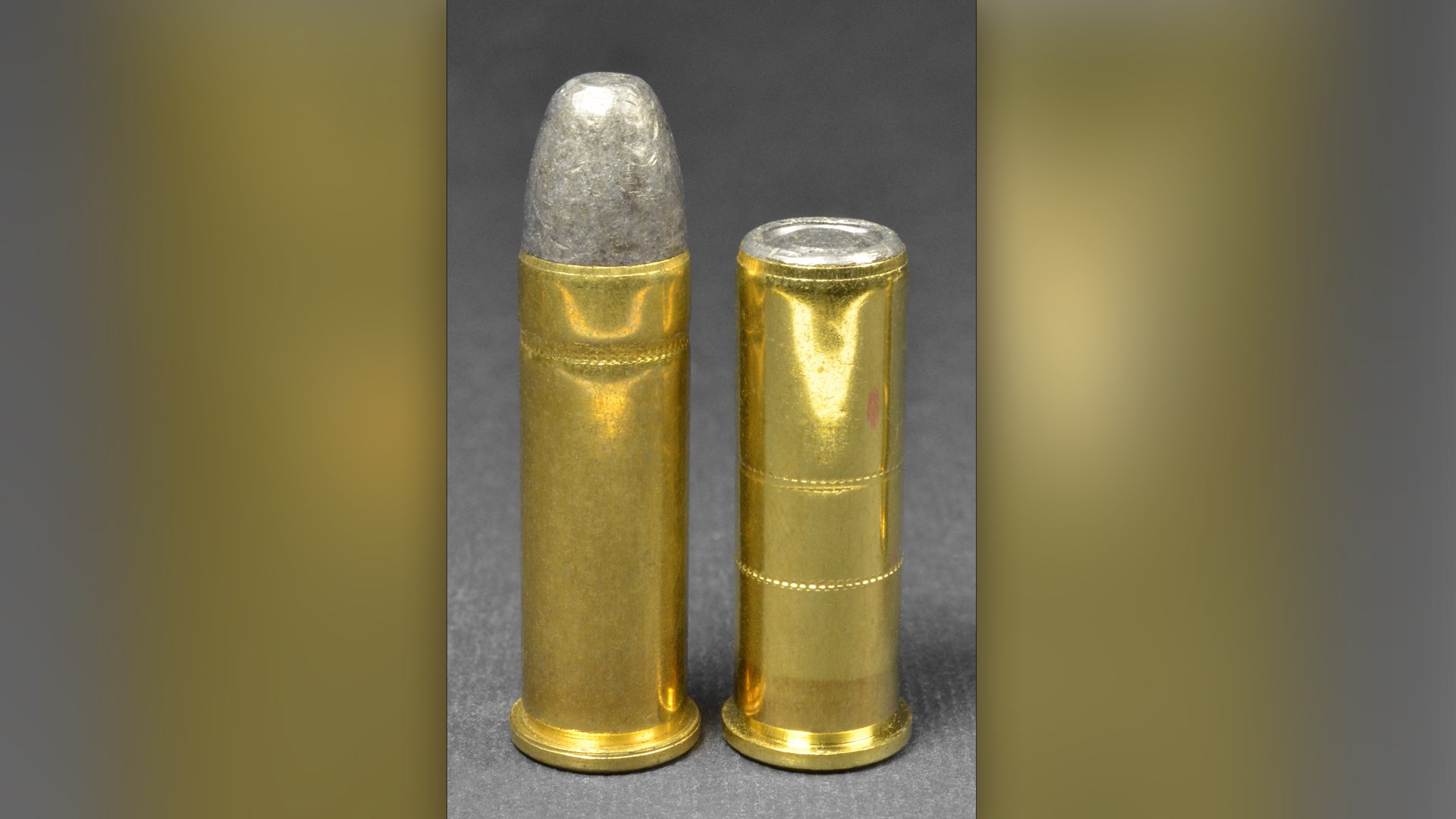
Let’s see what he says about the .38 for hunting. “In standard round nose 158 grain at a velocity of around 870 feet, it is not a good killer, even on jack rabbits, big grouse or chucks and they must be hit just right for a clean kill.”
During the time Elmer wrote that book, round nose and wadcutter bullets were typical fare in the .38 Spl., and this what he based his opinion on. Looking at old catalogs from that time, I could not find hollow-point bullets in the .38 Spl. In other handgun cartridges? Yes, but none in the .38 Spl. If you wanted a hollow point in the .38, you had to make your own. And that’s exactly what he did. In fact, he designed a 160-grain hollow-point mold #358439 that is still sold today.
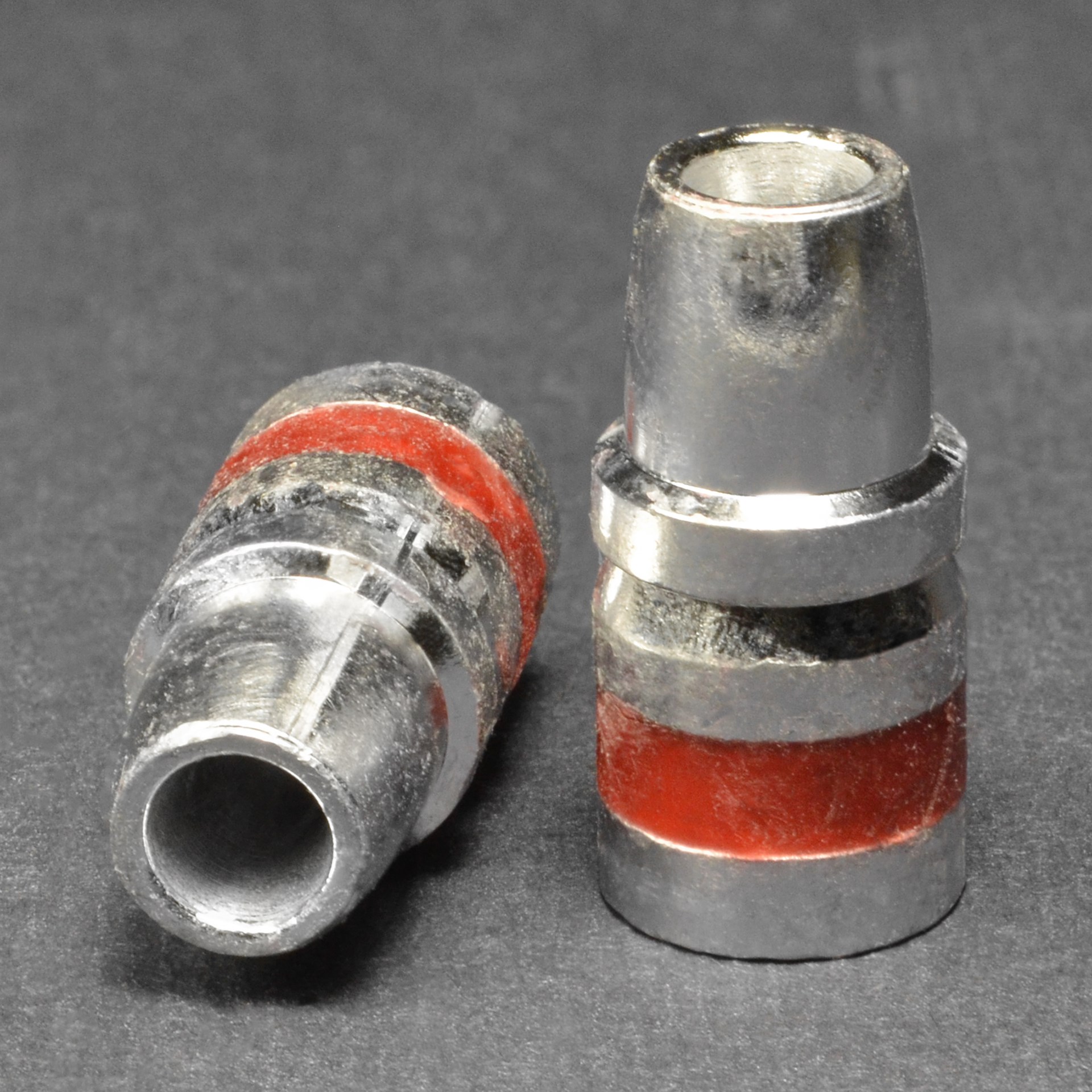
A hollow point improved the .38’s performance. He writes, “It is at its best as a game killer with the Keith 160 grain hollow point backed by 5.3 grains [of] Unique in light framed guns or 13.5 grains [of] 2400 in heavy .45 frame guns for use on all light game.”
The 5.3 grains of Unique would be right at the upper +P limit, or well past it, for a lead bullet in this weight range according to Lyman’s 50th Reloading Handbook, depending on the bullet. Velocity would run around 850 f.p.s. or more from a 4.0″ barrel. (Readers should be cautious about taking handload data from historical sources and instead use pressure-tested data from modern loading manuals.)

This is especially the case with Elmer’s 13.5 grains of 2400. This is NOT a load recommended for guns chambered for .38 Spl. This load is near or at the maximum load for .357 Magnum rounds with this bullet weight! It produces .357-like pressure far in excess of .38 Spl. rounds. Elmer was well-known for pushing things to the limit (and beyond), and this is a good example of that. But, remember, just because Elmer did it doesn’t mean we should.
Not everything Elmer Keith said about the .38 was negative. He thought it was a wonderful target round. “More matches have been won with the .38 Special than any other center fire cartridge … ” But then he points out, “ … but also more .38 Special guns have been used than any other caliber. It is no more accurate than the .44 Special, if as accurate …” He continues, saying the .38 Spl. is, “A very nice cartridge for target and small game shooting, also for light pocket defense guns.”
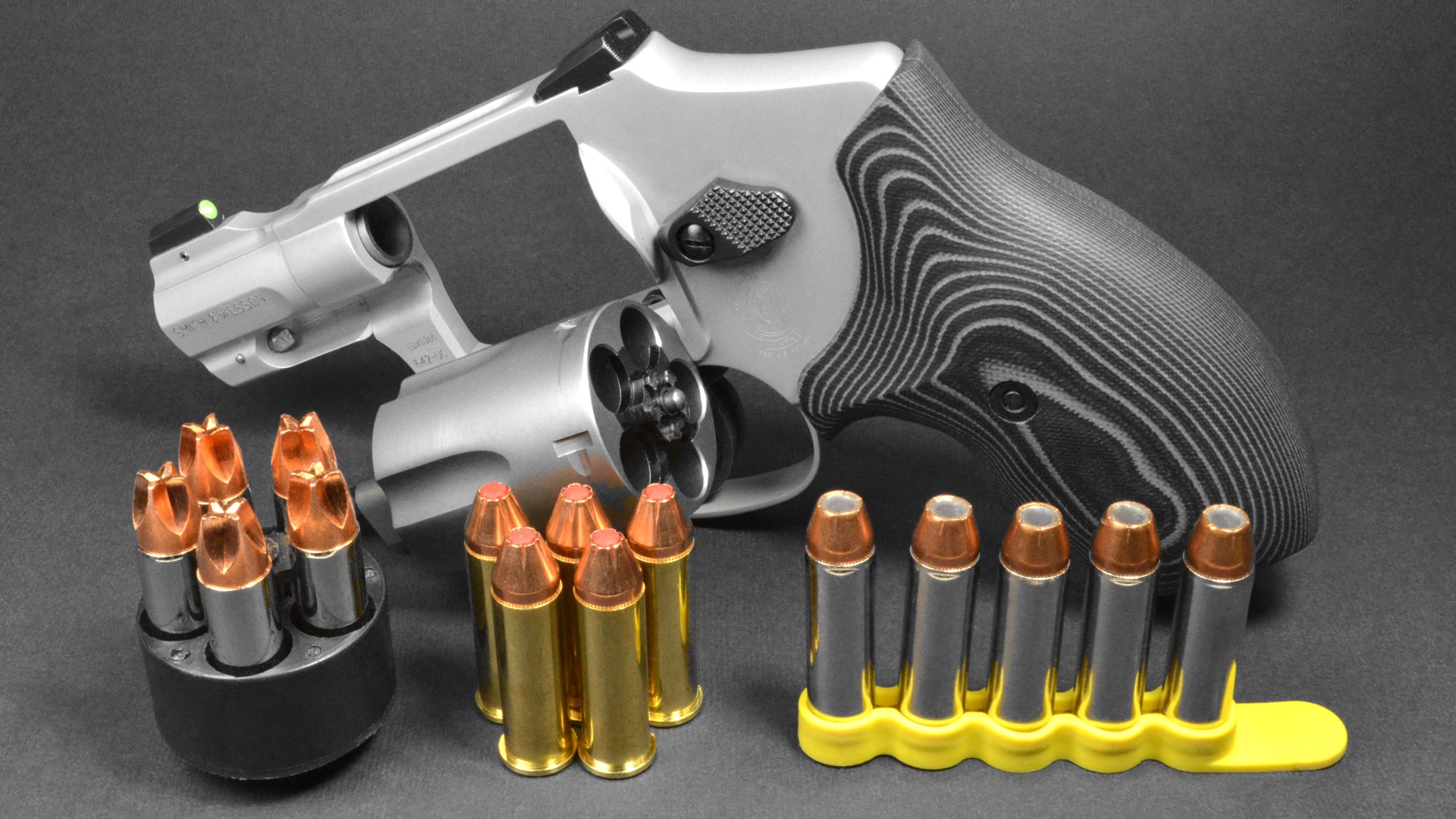
Elmer Keith was a pioneer in his time, and he had strong opinions about the usefulness of handgun cartridges. He didn’t hate the .38 Spl., but didn’t shy away from criticizing it, either. It had its place for some purposes, as long as it “stayed in its lane.” He thought it was fine for small carry guns, just not for a duty weapon. This is a little odd because a pocket gun also has to be a man-stopper to be useful. We’ll forgive him for this contradiction and point out that with today’s modern bullets, the .38 Spl. becomes a respectable defense round.
Much has changed since Elmer wrote that book. The .38 Spl. has evolved considerably since the ‘50s. Bullet technology has advanced quite a bit, and shooters now have many options to choose from to fit their needs for expansion and penetration.
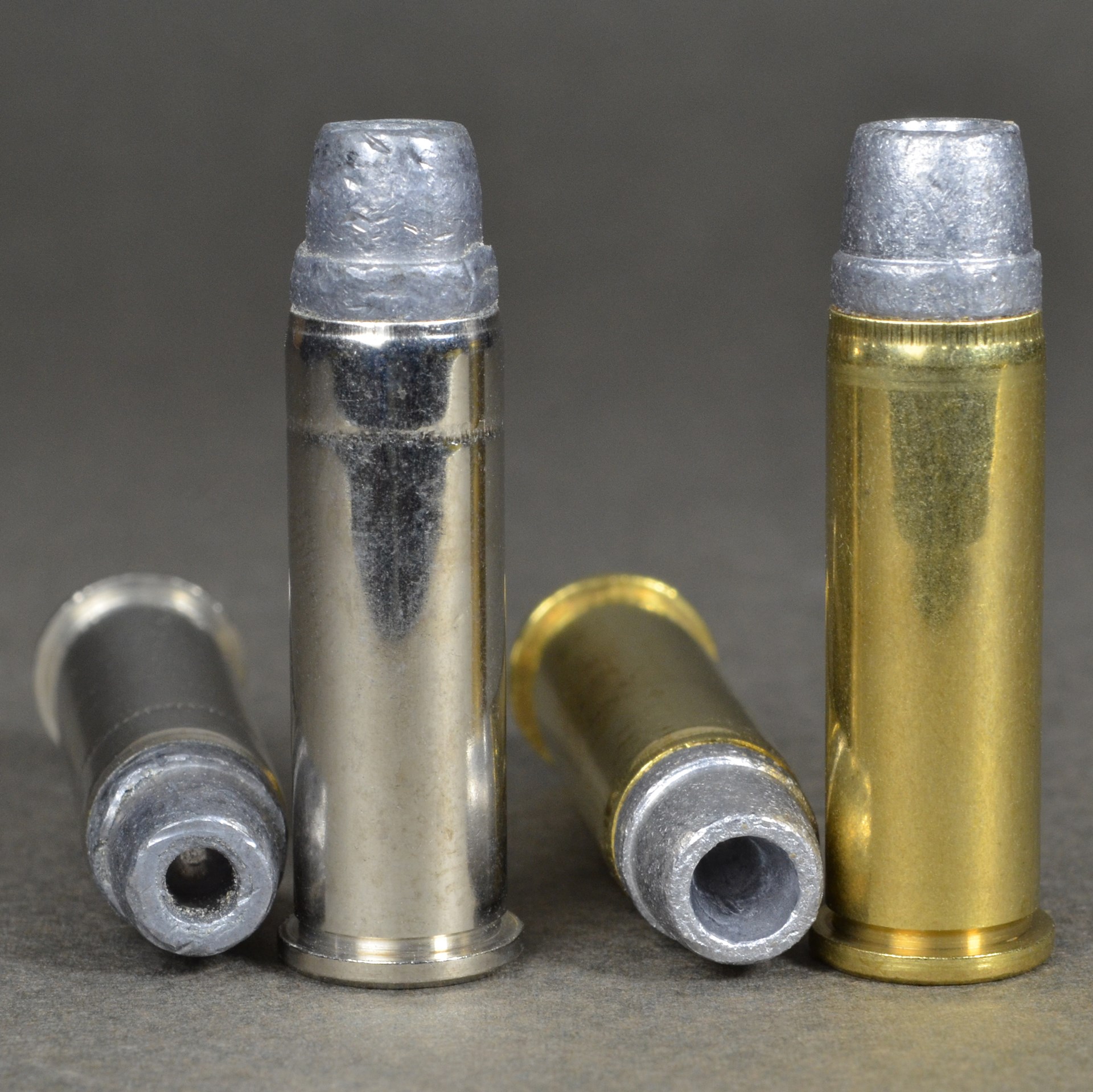
Modern copper bullets bring out the best performance of this old round. Offered in a range of weights from 90 grains and up, they fill many roles for hunting and self defense. Lightweight hollow points are often driven at high speeds to maximize expansion even in short barrels. For example, Super Vel’s Super Snub 90-grain JHP reaches 1,300 f.p.s. from a 1.88″ barrel. Hornady’s FTX bullet has a plastic plug in the hollow point to ensure expansion. Lehigh Defense makes a unique, fluted solid copper bullet that produces a large wound channel like a hollow point without the need to be a hollow point. And of course, there are a plethora of quality hollow point bullets to choose from.
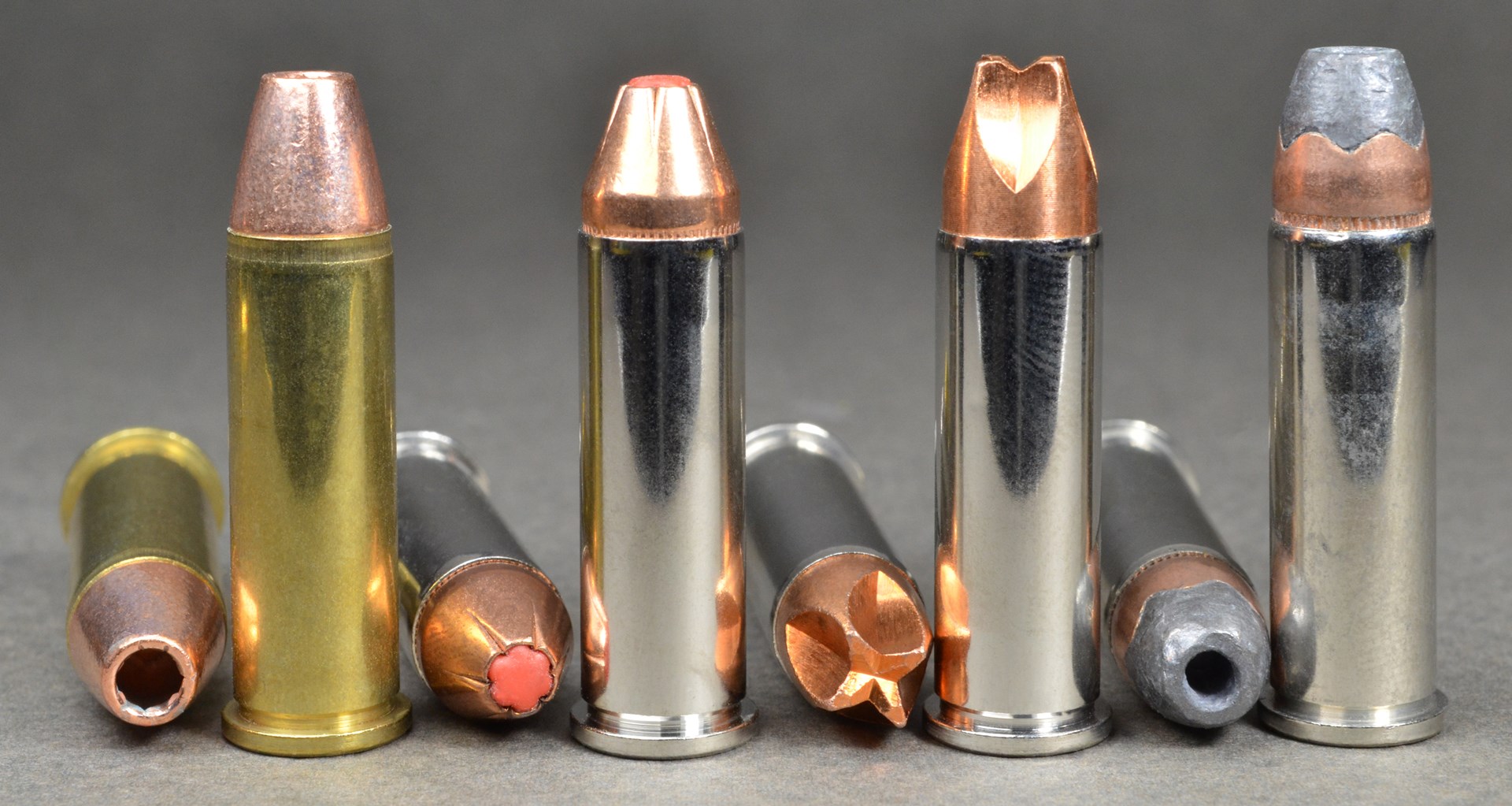
But let’s not forget lead bullets. Keith’s favored 160-grain lead hollow-point bullet has a modern incarnation as the 158-grain SWC hollow-point. It has become a standard load today from Federal, Remington, Winchester and boutique shops like Underwood and Buffalo Bore. Velocities range from 830 to 1,000 f.p.s. When loaded to +P pressures, they deliver performance even he would approve of.
Categories
Stopping Power of Cowboy Calibers

The U.S. Military’s Naval Surface Warfare Center, Crane Division (NSWC Crane), has designed and developed the Drone Killer Cartridge (DKC). The cost-effective family of ammunition is designed to increase a warfighter’s probability of a hit and kill against drone threats.
DKC is designed for use in rifles, automatic rifles and machine guns, but it disperses a cluster of projectiles upon firing with an effective range far greater than a conventional shotgun’s capabilities. The effect increases probability hits and kills against Unmanned Aerial System (UAS) threats in a way that also minimizes risk of collateral damage from projectiles that don’t impact the target.
The DKC family of loads includes both pelletized and segmented designs. The segmented version includes a one-piece projectile that mechanically self-separates into discrete, spin-stabilized sub-projectiles prior to muzzle exit. Pelletized DKC includes a projectile assembly containing a stack of high-density, spherical buckshot-sized pellets mechanically disbursed at muzzle exit.
“We’re enabling extended range, shotgun-style effects through automatic rifles and machine guns with nothing more than an ammunition change,” said Brian Hoffman, man-portable weapons chief engineer at NSWC Crane. During a recent demonstration at Camp Atterbury in Edinburgh, Ind., DKC achieved a 92 percent success rate against drones.
Colonel Andrew Konicki, program manager of Ground Based Air Defense for Program Executive Officer Land Systems, said the Marine Corps plans to broadly implement the cartridges at the operator level.
“The Drone Killer Cartridge represents a pivotal shift in countering the pervasive threat of enemy drones,” Col. Konicki said. “This type of ammunition provides an immediate and significant improvement to our kinetic kill capabilities by using standard-issued weapons that are already in the hands of Marines.
The collaborative work between NSWC Crane and the Marine Corps has positive impacts across the ecosystem of Homeland Defense as well as self-protection for our forward deployed troops in harm’s way. With DKC, we are adding capability well beyond conventional options, while also bending the cost curve for neutralizing drone threats, particularly to the individual Marine.”
Unmanned systems are reshaping military tactics, challenging established operations and creating life-threatening threats for warfighters. To counter the critical threat, the Department is aiming to improve overall defense capabilities.
“By design, DKC provides broader terminal coverage on and around the intended target, which increases effectiveness against stationary and moving drones by helping offset imperfect aim,” said Hoffman. “There’s a good reason why bird hunters use shotguns. We’ve applied a similar philosophy to killing drones while amplifying overall performance. DKC sub-projectiles exit the barrel at velocities typical of centerfire rifle ammunition. Those velocities, and associated energies, far exceed shotgun capabilities and serve to extend effective range while offering more devastating effects on target.”
DKC was developed from internal NSWC Crane Naval Innovative Science and Engineering (NISE) funding and investments from the Department of Homeland Security and Marine Corps. The load involves only an ammunition change, eliminating new-weapon qualification requirements and accelerates initial fielding. It also removes any requirement that warfighters carry an additional weapon dedicated to countering drones.
“When you compare the cost it takes to kill a drone using DKC versus some other solutions that are being employed, it’s a night-and-day difference,” said Hoffman. “The projectiles used in segmented DKC and pelletized DKC are both inert, meaning there is no energetic material in the projectile itself. The separation mechanisms are purely mechanical, and the cartridge case, primer, and propellant are common to other ammunition types already in production. These attributes combine to help keep it elegantly simple yet effective while ensuring low-cost producibility.”
Categories
Honey… where is the 300 Win Mag ammo?
