Categories
Category: Ammo
Categories
Ukraine’s Plastic Machine Gun Belts

It really wasn’t all that long ago when 6.5mms were a rarity, as the .264 Winchester Magnum had faded into near-obscurity, and the .260 Remington had just seen the light of day.
Yes, there was a fan base for the 6.5×55, but most folks who dipped below the .270 Winchester were reaching for one of the 6mms, and as often as not one of the .25-caliber cartridges.
Dating back to the 19th century the .25s have been known for speed, as well as for their light recoil levels. But of late, a minor change to the rifling twist rate has brought the quarter bores to a new level, offering an unprecedented level of performance. Let’s follow the .25s throughout history, revisiting some old friends, meeting some new ones and digging up some ghosts.
.25-20 WCF and .25-35 WCF
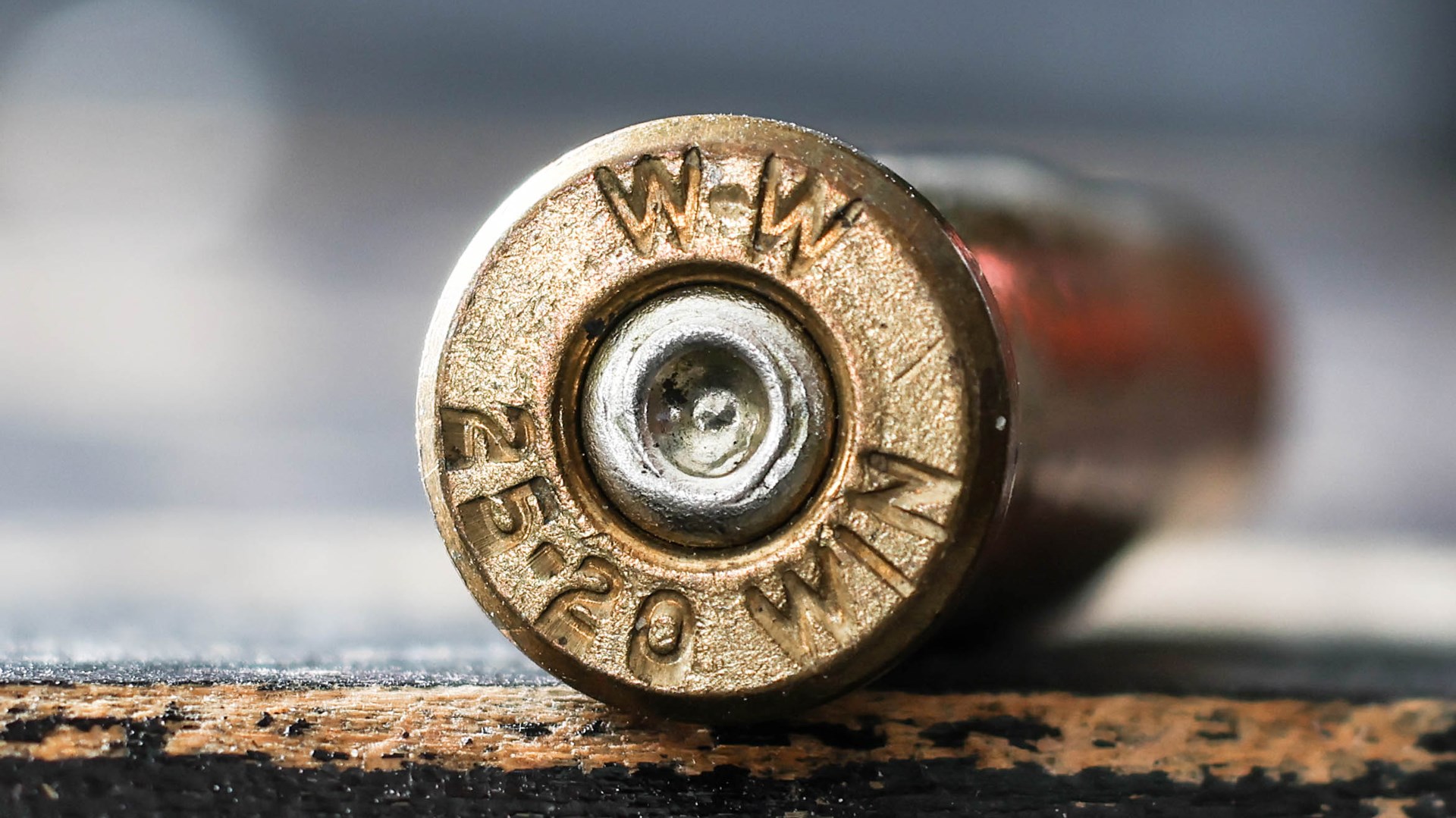
Winchester gave us a pair of rimmed .25s in the 1890s, built for its excellent lever guns. Both began life as blackpowder cartridges, but made the transition to the smokeless era. The diminutive .25-20 WCF was released in the Winchester Model 1892 rifle and used an 86-grain bullet at 1,460 fps. The .25-20 WCF is simply a .32-20 WCF case necked down to .25-caliber, but Winchester didn’t actually do it first—Marlin beat them to it by a couple years, but Winchester just took the name and ran with it.
Nonetheless, the little .25-20 was used for smaller game species, plinking and was a favorite of trappers as well. This little cartridge has the distinction of having taken the Jordan buck, though I’ll be the first to agree that the .25-20 is not my first choice as a deer cartridge.
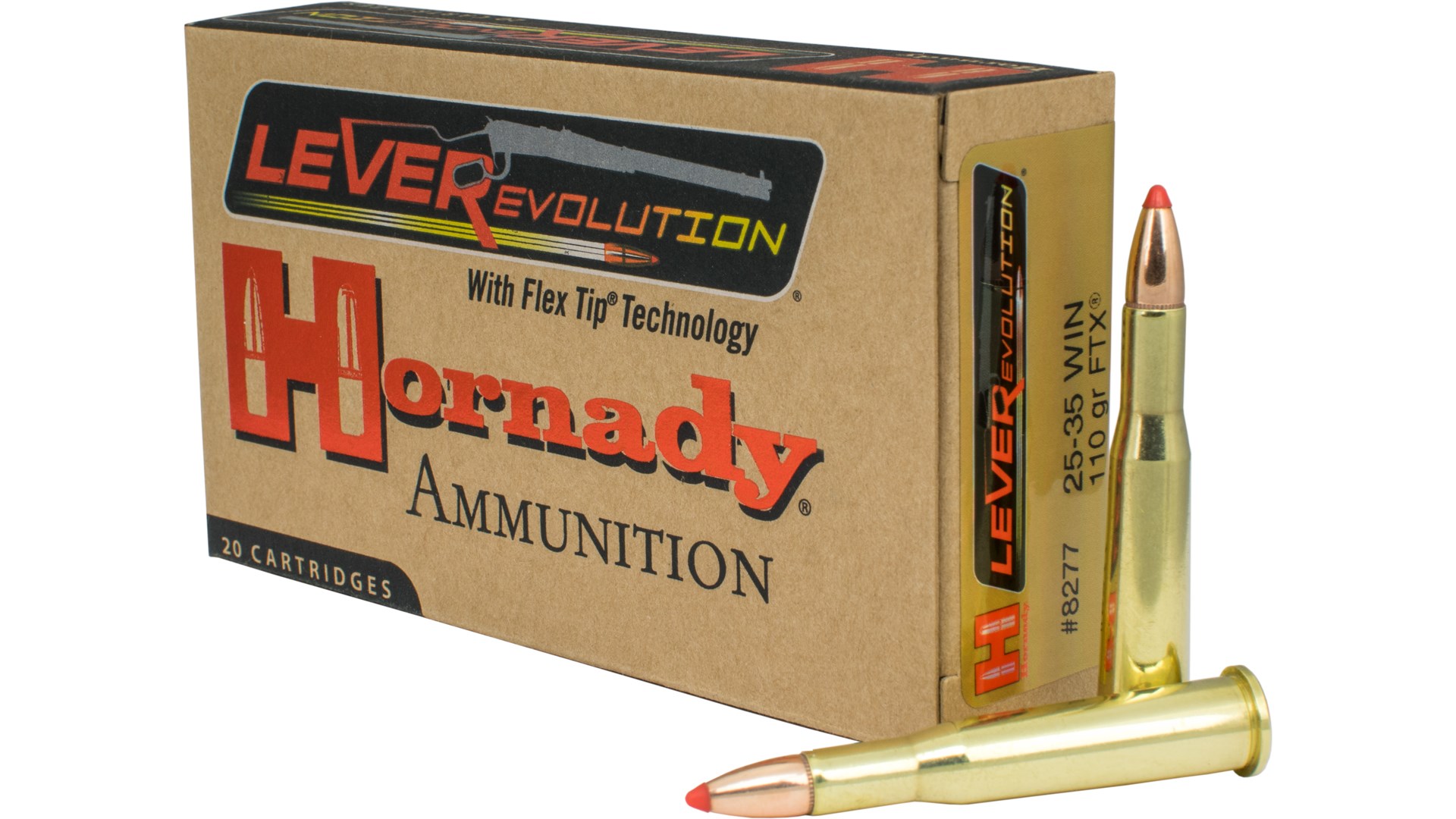
The .25-35 WCF is larger, being based on the (then new) .30-30 Winchester necked down to .25-caliber, and using a 117-grain bullet at a muzzle velocity of just under 2,400 fps. Like the .30-30 Winchester, the .25-35 Winchester was designed from the time of its release to operate with smokeless powder. Delivering considerably more power than its significantly smaller sibling, the .25-35 WCF is a decent deer cartridge to this day. You can find ammunition still produced by Winchester and Hornady, both with 117-grain bullets.
.250-3000 Savage
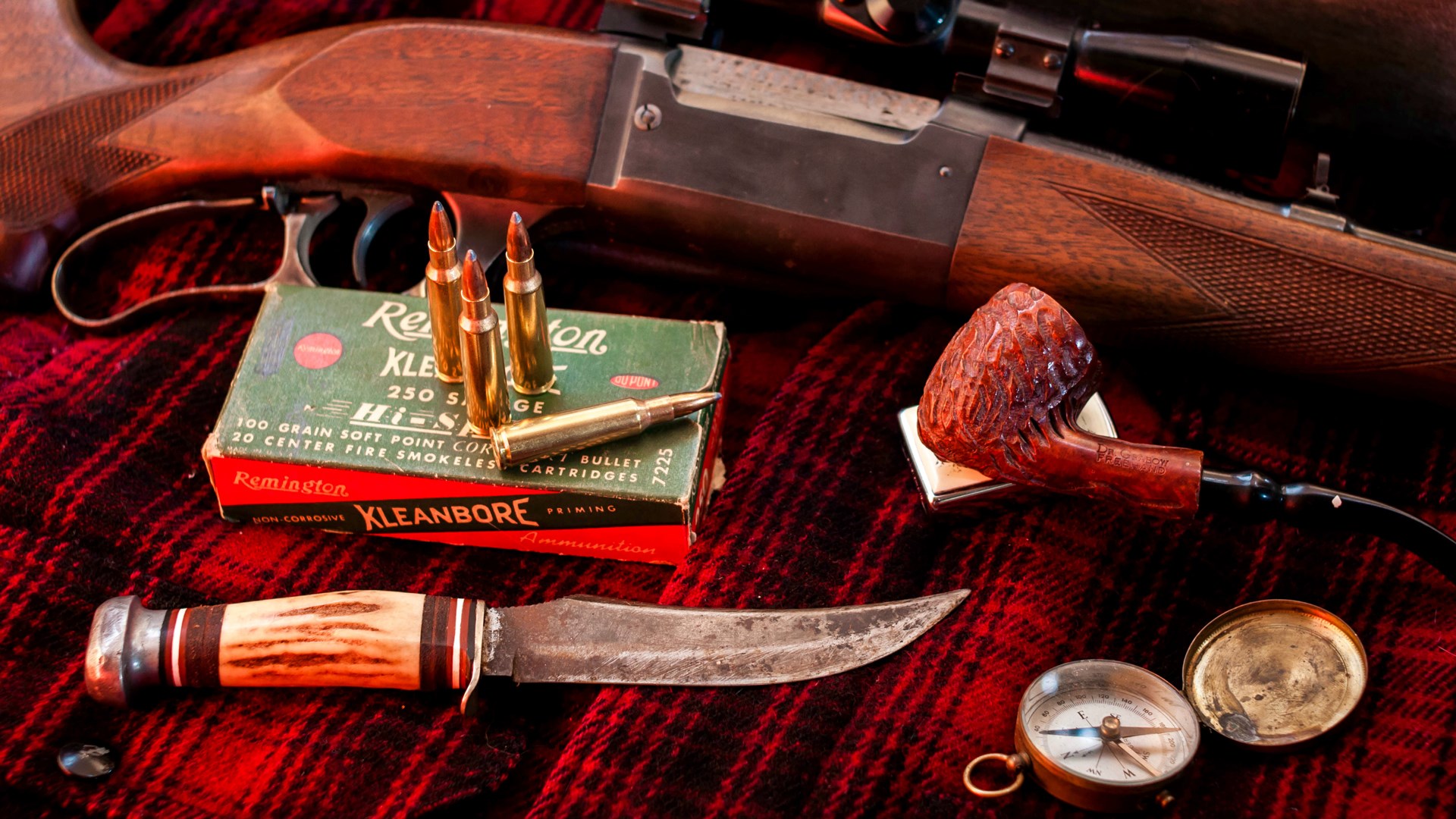
Charles Newton designed this cartridge for Savage Arms in 1915, and it had the unique distinction of being the first commercial cartridge to break the 3,000 fps mark. Housed in the excellent Model 99 lever gun, the .250-3000 (also known as the 250 Savage) used a light-for-caliber 87-grain bullet to hit that velocity mark.
Now, the Sectional Density (SD) of an 87-grain bullet comes in at 0.188 (in comparison, the 117-grain bullets have an SD of just 0.253) and when looking at the construction of hunting projectiles over a century ago, you can easily understand how this combination didn’t exactly develop a reputation for deep penetration on larger game animals.
In fact, Newton himself highly recommended the 100-grain bullets for this cartridge, but Savage was bent on using the velocity as a marketing tool, and it certainly worked. That cartridge is a good choice for the whitetail hunter, as the recoil and report are very light, yet there is enough energy for clean, humane kills and enough velocity for a decent trajectory.
Based on a shortened .30-06 Springfield case, the .250-3000 uses its 26 ½-degree shoulder for headspacing, and is equally at home in a bolt rifle as it is in a lever gun which doesn’t use a tubular magazine. Sadly obscure today, the .250-3000 is still cool, especially if you can find one in that timeless Model 99.
.257 Roberts
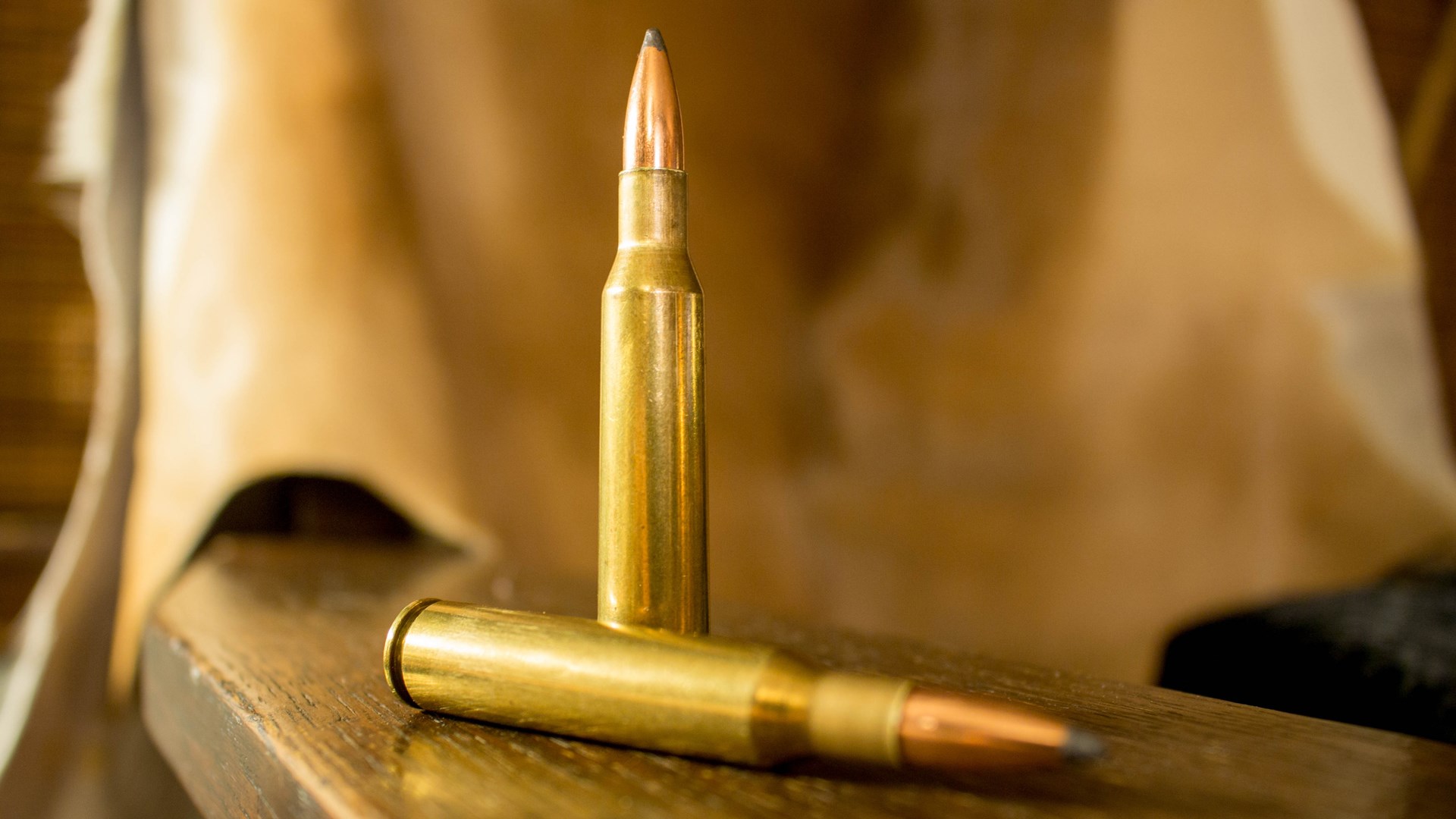
Ned Roberts was among the early 20th century wildcatters who modified military cartridges to differing bore diameters, and he took the 7×57 Mauser case, and necked it down to hold .257-inch bullets. That design floated around for over a decade, until in 1934 Remington made it a commercial offering, adding Ned’s surname to it.
The .257 Roberts—or ‘The Bob’ as it affectionately known—is a great cartridge for deer, pronghorn antelope and similar species, as it offers a bit more velocity than does the .250 Savage, while still offering a manageable recoil level for nearly any shooter.
The Bob offers a significant velocity increase over the .250 Savage—nearly 200 fps in all bullet weights—and is usually offered with the 117- and 120-grain bullets in factory offerings. Though the cartridge is not nearly as popular as it once was, a competent handloader can easily convert the readily available 7×57 Mauser brass into .257 Roberts brass to feed one of those classic rifles.
If you like the .25 bores, the Bob is a great choice. It’ll push the 117-grain bullet to 2,650 in its standard guise, and the +P variant will nearly hit the 2,800 fps mark. It’s a shame that the amount of new rifles has dwindled to nearly nothing.
.257 Weatherby Magnum
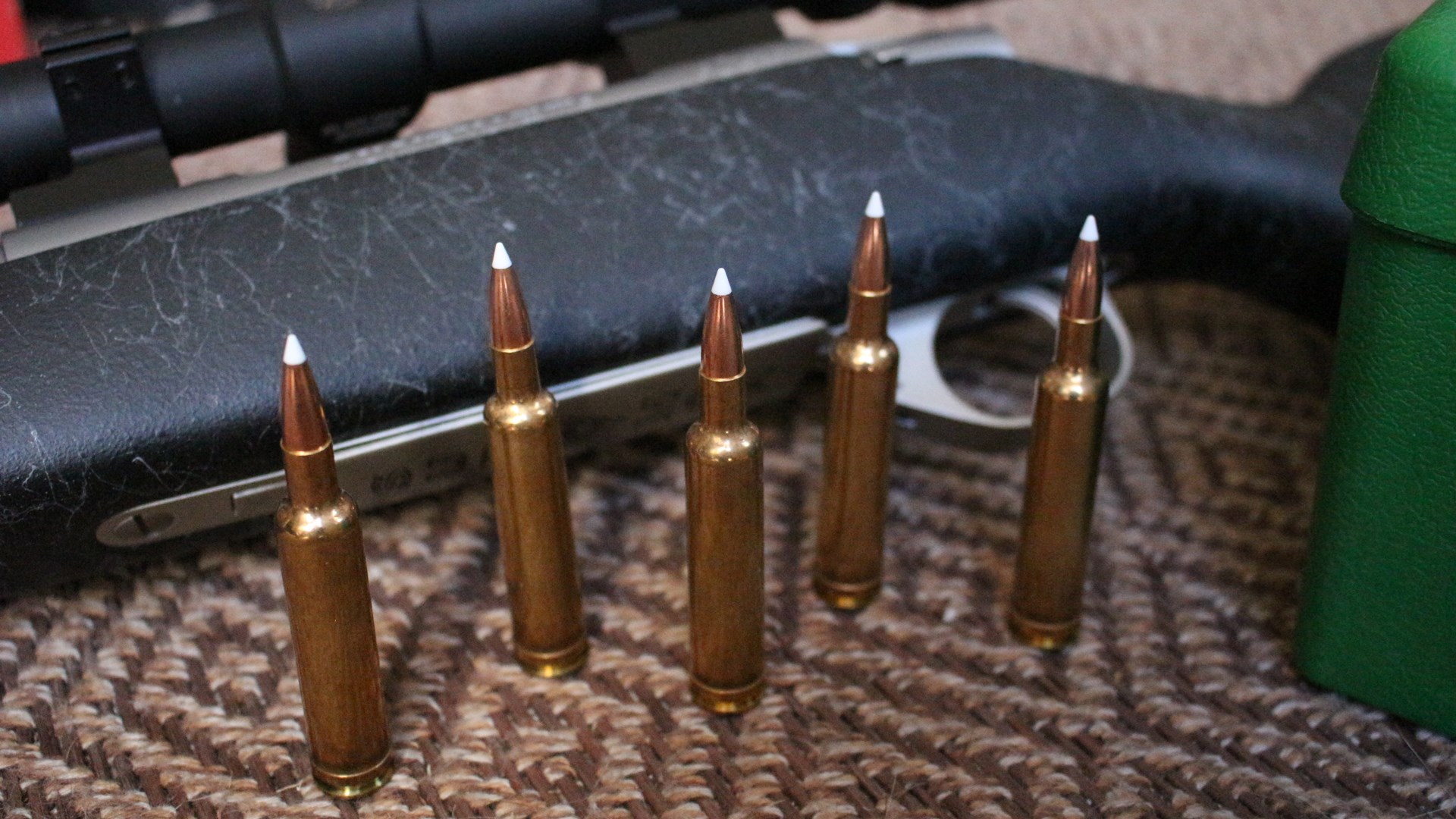
While the .300 Weatherby Magnum might be the most popular of the Weatherby cartridges, the .257 Weatherby Magnum was Roy’s personal favorite. Unlike the .300 Weatherby, which requires a magnum-length action like its .300 & .375 H&H forefathers, the .257 Weatherby was designed to function in a standard long-action rifle.
With a case length of 2.549 inches and a cartridge overall length of 3.209 inches, the .257 Weatherby Magnum comes in just a bit shorter than the .30-06 Springfield and its ilk. Using the H&H belt for headspacing, the .257 Weatherby Magnum has the signature double radius shoulder, which must’ve been pretty radical for 1944.
If anyone tested the limits of the .25-caliber cartridges, it was Mr. Weatherby; he used his quarterbore on a Cape buffalo bull. Roy lived to tell the tale, the buffalo bull did not. The .257 Weatherby is surely a speed demon—it’ll drive a 115-grain bullet to 3,500 fps, making it one of the fastest of the .25s out there. It isn’t easy on throats and barrels, and it isn’t cheap to shoot, but if speed is your game, this is a definite candidate.
.25-06 Remington
If Big Green has one claim to fame—and there are many—it is how well they have legitimized wildcat cartridges. From the .22-250 to the .257 Roberts to the .35 Whelen, they’ve made sure some of the greatest designs were commercially available.
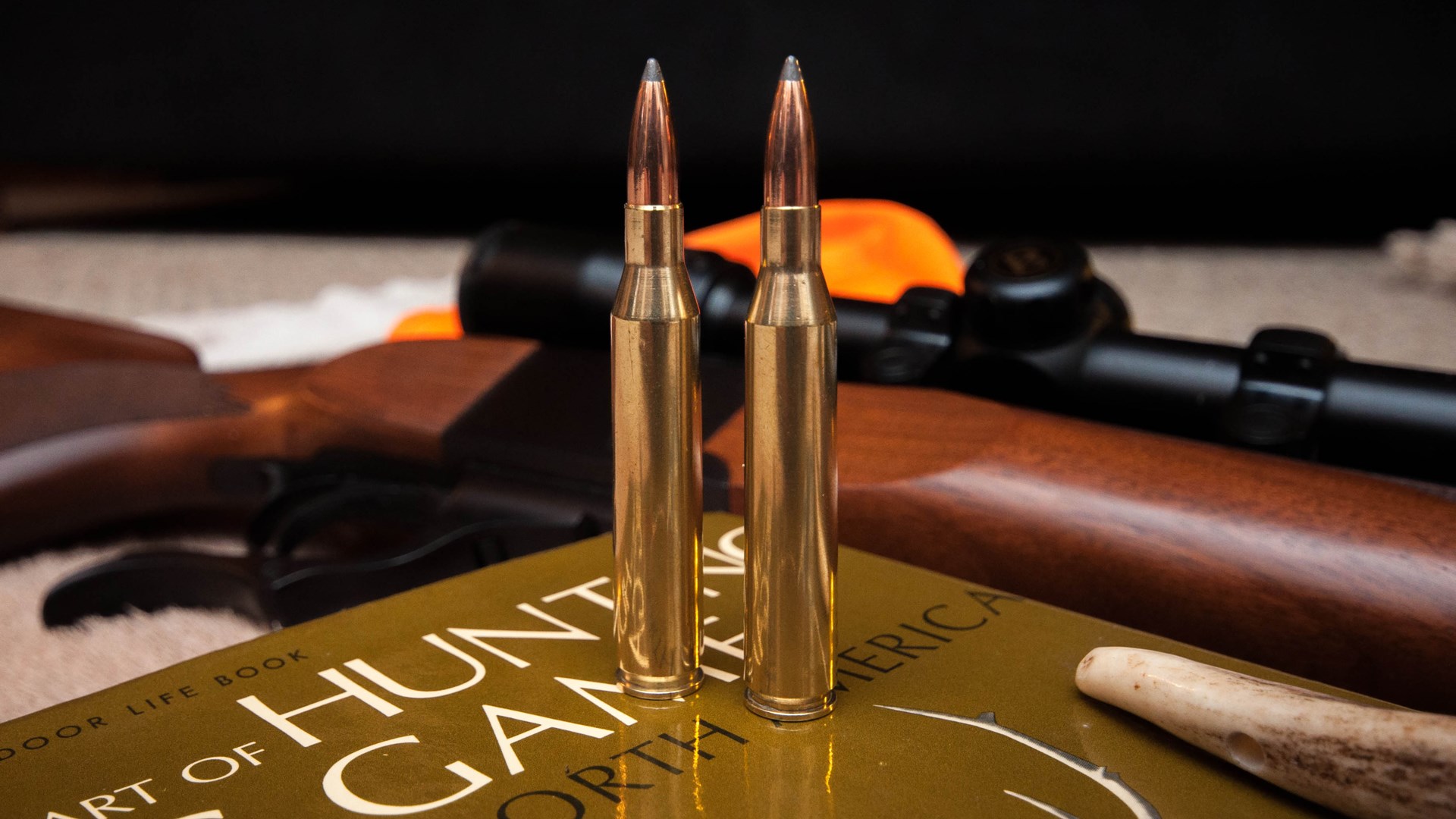
The .25-06 Remington is no exception. The design can trace its roots back to Charles Newton’s A.O. Neider’s efforts in the early 20th century, but it stayed in wildcat form for over half a century. Remington’s 1969 release used the 2.494-inch case of the .30-06 (as opposed to the 2.54-inch case of the .270 Winchester, held over from the .30-03 design), and a 17-degree shoulder for headspace duties.
Cartridge overall length is a bit shorter than the .30-06, coming in at 3.250 inches. The cartridge makes perfect sense, as in a pinch cases can be made from the ever-popular .30-06. Capable of sending a 117- or 120-grain bullet at a velocity in excess of 3,000 fps, the .25-06 might not be a magnum cartridge, but has the power to deliver a very respectable trajectory.
The cartridge was very popular for the lighter big game species, until the 6.5 Creedmoor began to eat the lunch of all those medium-bore cartridges. It was, at one time, the definitive pronghorn antelope cartridge, but it seems to have gone out of favor lately. That’s a shame, as the cartridge is wonderfully accurate, easy in the shoulder, and hell on deer and game of similar size. Of the lot, this might be my favorite .25-caliber.
.25 Winchester Super Short Magnum
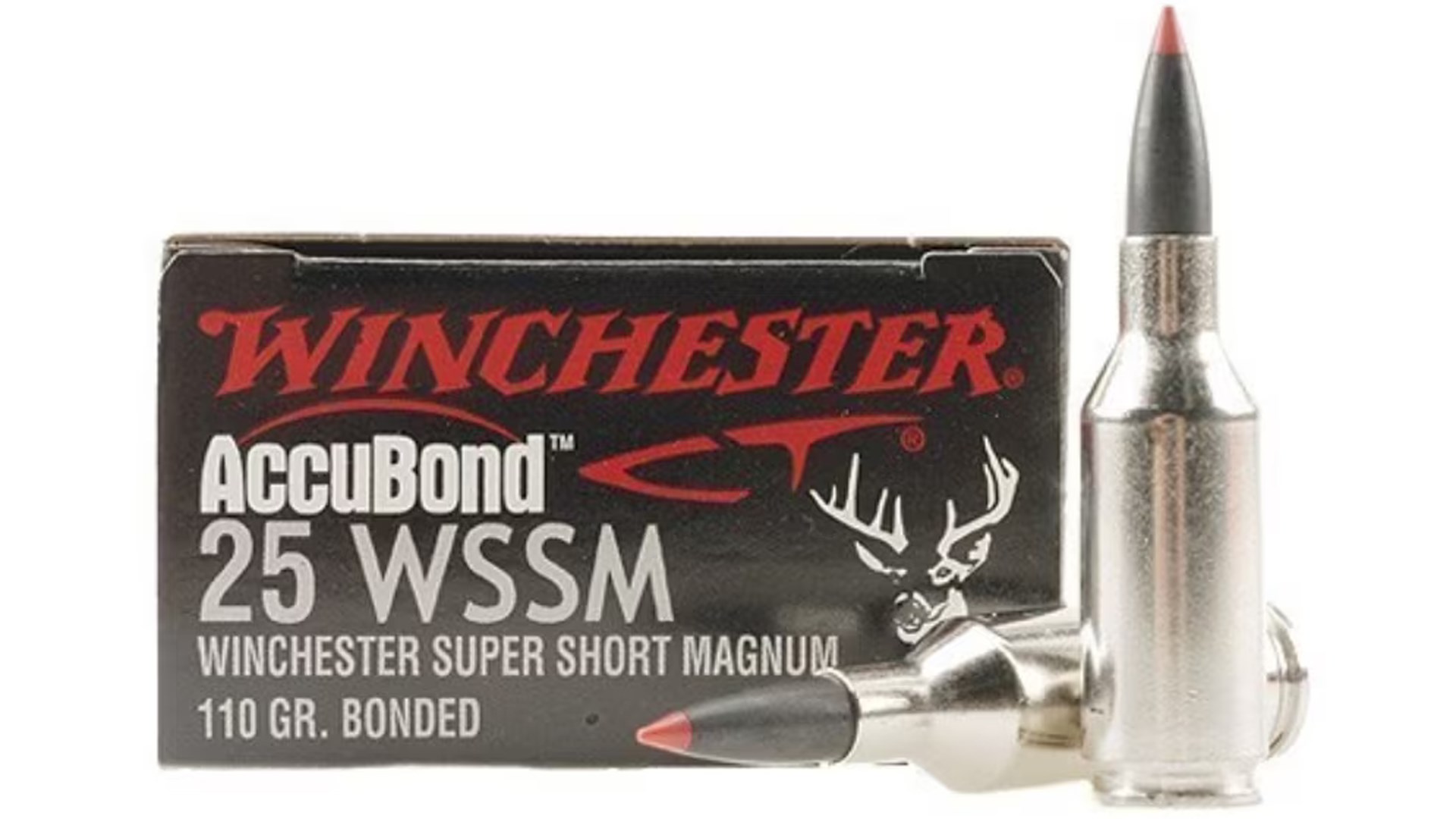
*sigh* If ever a series of cartridges was given up for dead almost immediately, it was Winchester’s WSSM line. Banking on the popularity of the WSM line which became extremely popular at the turn of the century, Winchester went even further with the seriously squat Super Short Magnum line, comprised of the .25 WSSM (released in 2004), .243 WSSM and .223 WSSM.
There were a good number of hunters who bought the .25 WSSM and enjoyed its performance, but when (inexplicably) the ammunition supplies dried up, panicked. Driving a 120-grain bullet to just shy of 3,000 fps, the .25 WSSM comes in a rifle with an extremely short bolt throw. With the 0.535-inch base diameter (probably based in the common H&H bolt face diameter) the .25 WSSM uses its 30-degree shoulder for headspacing, though the rimless design assuredly shows the same relationship to the .404 Jeffery that the entire WSM line shows.
The ballistic performance level is roughly on par with the .25-06 Remington. For reasons I neither understand nor can explain, Winchester seemingly abandoned production of ammunition for the WSSM line. As the owner of a custom handloaded ammunition company, I will attest to the fact that a decade ago, a full 25 percent of inquiries were for this cartridge. The design isn’t bad in any way, it’s just come down to a lack of ammunition availability; that said Winchester once again offers ammo for the .25 WSSM in the Super X line.
.25 Creedmoor
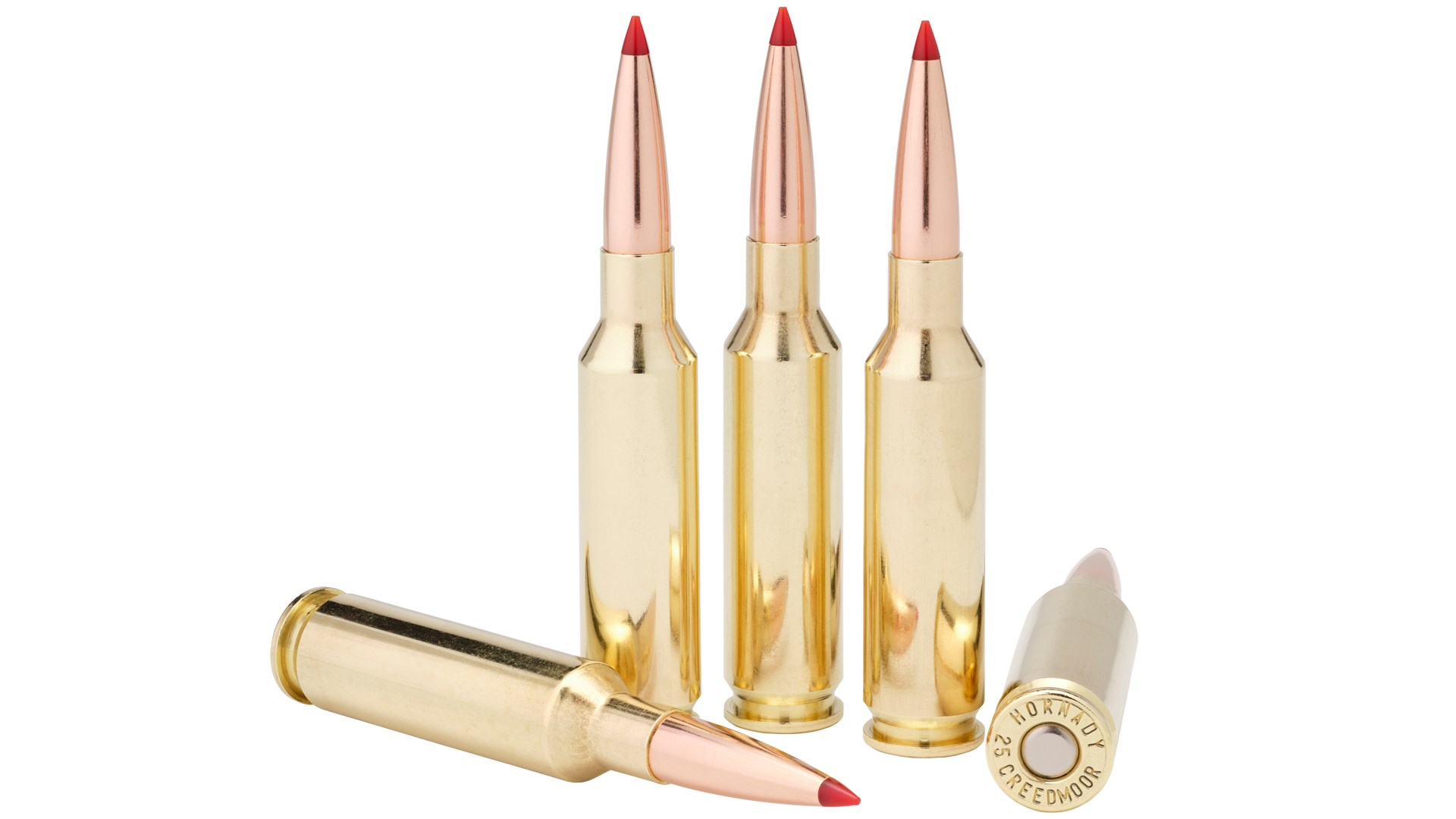
Here we venture into one of the modern ‘revisionist’ quarterbores, using a tighter-than-normal twist rate to utilize heavier bullets than are normally associated with the .25-caliber. The latest in Hornady’s Creedmoor line—which includes the 6.5 Creedmoor, 6mm Creedmoor and 22 Creedmoor—the .25 Creedmoor offers bullets weighing up to 134 grains, Recognized as a dual-purpose hunting/target shooting cartridge, the .25 Creedmoor will offer a 112-grain copper monometal CX bullet at 3,150 fps, giving an advantage over similar weights in the .25-06 Remington, a 128-grain ELD-X at 2,850 fps, and for the target crowd, a 134-grain ELD Match at 2,800 fps—with the latter bullet offering a G1 B.C. value of 0.645 and magnum-level trajectory.
Sitting comfortably between the 6mm Creedmoor and 6.5 Creedmoor—offering a better B.C. than either, and less recoil than the Six-Five—the .25 Creedmoor just might catch on among hunters, but only time will tell if it has the goods to unseat its older brother. The 1:8 twist rate stabilizes those heavier bullets, and that makes all the difference when comparing the modern .25s to those benchmark cartridges of the 20th century.
.25 Weatherby RPM
The latest release among the quarterbores, Weatherby’s newest in the Rebated Precision Magnum also uses a faster twist rate to stabilize higher B.C. bullets. Offering a larger case than that of the .25 Creedmoor, the .25 Weatherby RPM is housed in Weatherby’s lighter six-lug action, making a great cartridge/rifle combination for those wanting a lightweight choice for the backcountry. Using the rebated rim we’ve seen in the .284 Winchester, and a steep 35-degree shoulder for headspacing, the .25 Weatherby RPM will push a 133-grain Berger Elite Hunter to a muzzle velocity of 3,000 fps. Maintaining the long-action maximum cartridge length of 3.34 inches, the .25 RPM has nearly an inch of seating room for those bullets with the longer ogives.
Is it as fast as the .257 Weatherby Magnum? No, but the smaller body diameter makes it easier to get an extra cartridge in the magazine or keep weight to a minimum, and the speed of the .25 Weatherby RPM is more than sufficient to make those long-range shots at ranges this side of sanity. Weatherby offers the Barnes LRX and Hornady SST—both at 117 grains—at 3,150 fps, and the 107-grain Hammer monometal at 3,350 fps, so there are plenty of choices for all sorts of big-game hunting.
So, does the latest crop of quarterbores change your mind about the capabilities of the bore diameter? Or do you still feel there are better tools for hunting elk, moose and other large game? I think the newest cartridges will only enhance the performance of the .25-calibers, making shots on the longer side a bit easier by offering better wind deflection values, and retaining more energy downrange.
I still feel an animal the size of a bull elk or bull moose warrants a bigger bore diameter, and a heavier bullet, though I am painfully aware that many are taken each year by cartridges as small as the .243 Winchester. If you play in both the target and hunting worlds, the new designs should definitely have some appeal to you, as those bullets between 128- and 134-grains have a very impressive B.C. value, and assuredly extend the capabilities of the .25-caliber in general.
If—like me—your shots beyond 250 yards are a rarity, at best, perhaps the .25-06 Remington offers a sufficient level for your hunting needs, or maybe one of the mild .30s offers a more universal appeal. I will offer this: with the two latest cartridges in the quarterbore lineup, the 6.5mm cartridges might have just lost their advantage.
Categories
45 ACP Mini Uzi
|
|
|


Ask any rifleman–no matter their chosen discipline or passion–what the common denominator among us all is, and I have no doubt that the answer will be the .22 Long Rifle. From the competition shooters, to the recreational target folks, to small-game hunters, all the way up to those who prefer to chase the largest, most dangerous game animals on earth, all will tell you they either started with or still train with a gun chambered for .22 Long Rifle.
My first rimfire was a gift from my father, on Christmas 1985. He’d picked out a Ruger 77/22, because it was built like a scaled-down big-game rifle, and it remains my favorite rimfire to date. There are others, including a Mannlicher-stocked Ruger 10/22, but that little bolt gun and I have a whole ton of memories.
The .22 Long Rifle has long been a favorite of hunters and shooters alike, from its release in 1884, as it offers a reasonably flat trajectory with virtually no recoil. Like many of the 19th century designs, the .22 Long Rifle uses a heeled projectile—one where the bullet diameter is the same as the case—with a stem of lesser caliber extending into the case. The .44 Special and .38 S&W are other examples of cartridges which use heeled bullets.

Billions of .22 Long Rifle cartridges are produced each year, and the cartridge is as good as it ever was, but that heeled design does have some shortcomings, including Ballistic Coefficient and the difficulty of manufacturing. Winchester has chosen to give the classic cartridge an update, in the form of the new 21 Sharp cartridge, which is the .22 Long Rifle case, mated with a non-heeled bullet.

Whereas the .22 Long Rifle has a bullet the same diameter as the case, the 21 Sharp uses the conventional method of slipping a bullet into the case, and this has resulted in a projectile measuring .210 inches in diameter. Winchester offers four loads for the 21 Sharp, including the 34-grain jacketed hollowpoint, a 37-grain copper-plated lead bullet, a 42-grain FMJ, and (solving a big problem for those areas which require the use of lead-free ammunition) a 25-grain Copper Matrix monometal copper bullet.
That lead-free bullet should prove a welcome addition, running at a muzzle velocity of 1,750 fps. The lead-based projectiles are loaded to velocities of 1,500 fps for the 34-grain load, 1,335 fps for the 37-grain copper-plated bullet, and 1,330 fps for the 42-grain FMJ.

So, looking at the case design, you’ll find it is identical in every way to the venerable .22 Long Rifle. The same .278-inch rim diameter is carried over, as is the case length of .613 inches. The .22 Long Rifle has a maximum cartridge overall length of an even 1.000 inches, and the 21 Sharp adheres to that number as well; even the Copper Matrix load measures 0.985 inches long.
To visually differentiate the 21 Sharp ammunition from the regular .22 Long Rifle stuff, Winchester has imprinted a bold “21” in the center of the case head. I can even read it without my reading glasses.
Will a 21 Sharp chamber in a .22 Long Rifle firearm? The answer is yes. In fact, the 21 Sharp will fire in a gun chambered for .22 Long Rifle, though assuredly that bullet is barely touching the lands (if at all) and accuracy will be non-existent.
However, if the design of your rifle allows you to easily change the barrel, any .22 Long Rifle gun can be changed out to a 21 Sharp barrel, and there are plenty of rifles announced for production this year, including a number of variants of the Winchester Xpert bolt-action rifle, and four different offerings from Savage.

Looking at the exterior ballistics of the 21 Sharp, you’ll see a trajectory similar to that of the .22 Long Rifle, though the Sharp’s projectiles will offer a better Ballistic Coefficient, and the lighter Copper Matrix load at a higher velocity will surely stand out.
Comparing the 25-grain Copper Matrix to the nearest variant of the .22 Long Rifle—the 32-grain CCI Stinger—you see both cartridges strike within ½-inch at 100 yards. The 25-grain 21 Sharp will drop 3.4 inches and the Stinger 3.8 inches at that distance, so there is no huge difference with the Sharp, other than the lead-free alternative.

I truly believe that the .22 Long Rifle will remain the most popular rimfire cartridge ever produced, and that any attempt to usurp the throne will be futile. But there is room for others in the rimfire market, as the .22 WMR and .17 HMR have proven.
I think the 21 Sharp is a sound design, filling a niche, but I also feel that is the role it will be playing: that of a niche cartridge. It delivers the accuracy rimfire shooters like and has a slight velocity advantage over the .22 Long Rifle, but it’s going to be very difficult to compete with the track record of the .22 Long Rifle, as well as the millions of firearms produced for it.