Categories
Ammo

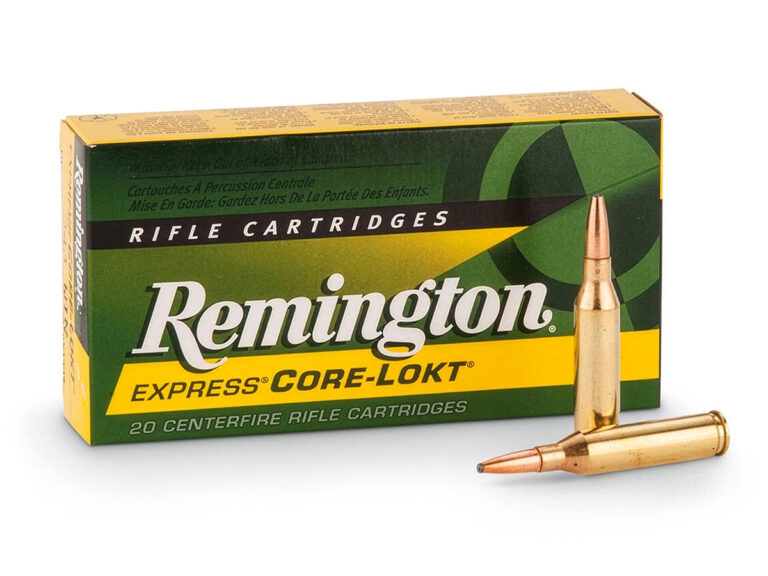
Ammo Brief: 6mm Remington by Gun Digest Editors

Ammo Brief: 6mm Remington

We take a quick look at 6mm Remington, aka .244 Remington, a true middle-weight heavy hitter of a cartridge.

The 6mm Remington has exactly the same case dimensions as the .244 Remington. They differ only in the fact that the 6mm Remington is loaded with bullets of up to 100 grains, whereas the .244 Remington was never loaded with bullets of more than 90 grains.

Ammunition marked .244 Remington can be fired in 6mm Remington chambers and vice versa. However, rifles marked .244 Remington will not always stabilize the 100-grain bullet. The difference between the two is that .244 rifles (if manufactured by Remington) have a 1:12 rifling twist, and rifles marked 6mm have a 1:9 twist.

book
This is an excerpt from Cartridge’s Of The World, available now at GunDigestStore.com.

When Remington introduced the .244, in 1955, it selected the 1:12 twist as best suited to long-range accuracy with bullets of 75 to 90 grains. That was correct, except that most shooters wanted to use bullets of 100 to 105 grains to cover the range of game from varmints through deer with the same rifle. To correct this misjudgment, Remington renamed the cartridge 6mm Remington and changed to a 1:9 twist.

To have retained the .244 designation and simply changed the twist would have brought on complaints from purchasers of the original .244s with the slower twist, when they tried to use the new 100-grain load. The change in cartridge nomenclature to 6mm and the faster twist occurred in 1963. The Remington 700 series and 788 bolt-action rifles, as well as the firm’s autoloaders and the slide-actions, have been available in 6mm.

General Comments

The original 6mm Remington was loaded only with the 100-grain bullet. However, it’s now available with 80-, 90- and 100-grain bullets, which greatly extends its flexibility. Although the older .244 lost out to the .243 Winchester, the 6mm Remington with faster twist barrels is gradually picking up a following. It is an excellent choice for the varmint hunter who also wants to use his rifle for deer and antelope.

Although the 6mm has a slightly larger powder capacity than the .243, the difference in performance is negligible as far as killing power is concerned. Nevertheless, this small advance in ballistics appeals to some people and so does the longer neck of the 6mm case, which many handloaders consider desirable. This caliber is commercially loaded by Federal and Winchester, as well as Remington.

6mm Remington Loading Data and Factory Ballistics

Bullet
(grains/type)
Powder Grains Velocity Energy Source
55 Nos BT H4895 45.5 4,115 2,065 Hodgdon
60 HP H-335 42 3,700 1,824 Sierra
70 SP IMR 4350 47 3,400 1,797 Sierra, Hornady
75 HP IMR 4064 41 3,500 2,041 Speer, Nosler
75 HP IMR 4350 47 3,450 1,983 Nosler, Speer, Sierra
80 SP IMR 4350 45 3,200 1,820 Hornady
80 SP IMR 4831 47 3,200 1,820 Hornady, Speer
90 HP IMR 4350 45 3,200 2,047 Speer, Sierra
90 HP IMR 4831 45 3,100 1,921 Speer, Sierra
100 SP IMR 4350 42 2,900 1,868 Hornady, Speer, Sierra, Nosler
100 SP IMR 4831 44 2,900 1,868 Speer, Sierra, Hornady
100 H1000 51 3,111 2,145 Hodgdon
105 SP IMR 4350 42 2,950 2,030 Speer
105 SP IMR 4064 37 2,900 1,961 Speer
80 SP FL 3,470 2,139 Factory load
90 SP FL 3,190 2,133 Factory load
100 SP FL 3,100 2,133 Factory load
Categories
Ammo You have to be kidding, right!?!

Now I myself really do like the 45 A.C.P. but com’on!

Categories
Ammo

The .257 Roberts: The Quarter-Bore That Deserved Better

  • Hornady 12th Edition Handbook of Cartridge Reloading

    Hornady 12th Edition Handbook of Cartridge Reloading

    Purchase on Amazon

  • Nosler Reloading Guide 9th Edition

    Nosler Reloading Guide 9th Edition

Modern Status and Availability

The .257 Roberts hasn’t completely disappeared, but it’s not thriving either. As of this writing, factory ammunition is available from a handful of manufacturers — Hornady, Nosler, Remington, and Winchester have produced runs in recent years, though it’s not always sitting on the shelf at your local sporting goods store. You may need to order online or, better yet, load your own. Brass is available from Nosler, Hornady, and occasionally from Remington and Winchester.

Rifle availability is more limited. Ruger has chambered the No. 1 and the M77 Hawkeye in .257 Roberts on occasion. The cartridge shows up in semi-custom offerings from companies like Cooper and Kimber from time to time. But you won’t find rows of .257 Roberts rifles at a big box store. Most shooters who fall in love with the Bob end up having a rifle built on a custom or semi-custom action, which honestly suits the cartridge’s personality just fine.

Ruger Hawkeye Standard bolt-action rifle with walnut stock
Image courtesy of Sturm, Ruger & Co., Inc.
Ruger No. 1 single-shot falling block rifle with walnut stock
Image courtesy of Sturm, Ruger & Co., Inc.

Who Is the .257 Roberts For?

In my opinion, the .257 Roberts is ideal for a few specific types of shooters. First, anyone who is recoil-sensitive but wants genuine medium-game capability — the Roberts delivers deer-killing performance at recoil levels closer to a .243 than a .270. Second, handloaders who appreciate case efficiency and barrel life. Third, anyone who hunts in open country where 250-300 yard shots are common but 500-yard bombing runs are not the goal. And honestly? Anyone who just appreciates an elegant cartridge that does its job without fanfare. You may also be interested in our coverage of The .32 Rimfire Cartridge: History and Variations.

The .257 Roberts may never reclaim a top-ten spot on the best-seller charts. The market has moved on, and there’s no going back. But cartridges don’t become obsolete just because newer ones exist. The Bob still does exactly what Ned Roberts intended it to do — put .25-caliber bullets on target with precision, efficiency, and minimal fuss. If that sounds appealing, grab a reloading manual and start down the quarter-bore rabbit hole. You won’t regret it.

Categories
All About Guns Ammo

Winchester model 70 Classic super express in 416 Rem Mag

Categories
Ammo

Remember these?

Categories
Ammo

The big Dreyse *D printed sabot test

Categories
All About Guns Ammo

Behind the Bullet: The .333 Jeffery by Philip Massaro

333 Jeffery

The first dozen years of the 20th century saw British gunmakers hard at work, developing those cartridges for the bolt-action repeating rifles which would go on to become the benchmarks of international hunting.

Having made the transition from black powder and pure lead projectiles to smokeless powder and copper-jacketed bullets, the accepted caliber and bullet-weight minimums were definitely being challenged.

Those traveling sportsmen headed for the various British and European colonies were both pushing the boundaries and—through field trials—developing many of “rules” by which we still abide to this day.

Among these cartridges were big-game legends like the .375 Holland & Holland Magnum, .416 Rigby, .404 Jeffery and the .425 Westley Richards. It was common for these prestigious names to pair these larger ‘medium’ bores with a smaller cartridge, one suitable for all game in a pinch, but without the stopping power of their larger siblings.

These pairings included the .350 Rigby Magnum and .416 Rigby, .425 Westley Richards and .318 Westley Richards, .375 Holland & Holland and (initially) the .275 Holland & Holland Magnum or (in 1925) the .300 Holland & Holland Magnum, and finally the .404 Jeffery and .333 Jeffery. I have fallen head-over-heels for the .404 Jeffery, but the .333 Jeffery has sadly faded into near obscurity; yet it played an important role in a few ways, and still makes a great choice for larger thin-skinned game animals.

333 Jeffery Repeating rifle

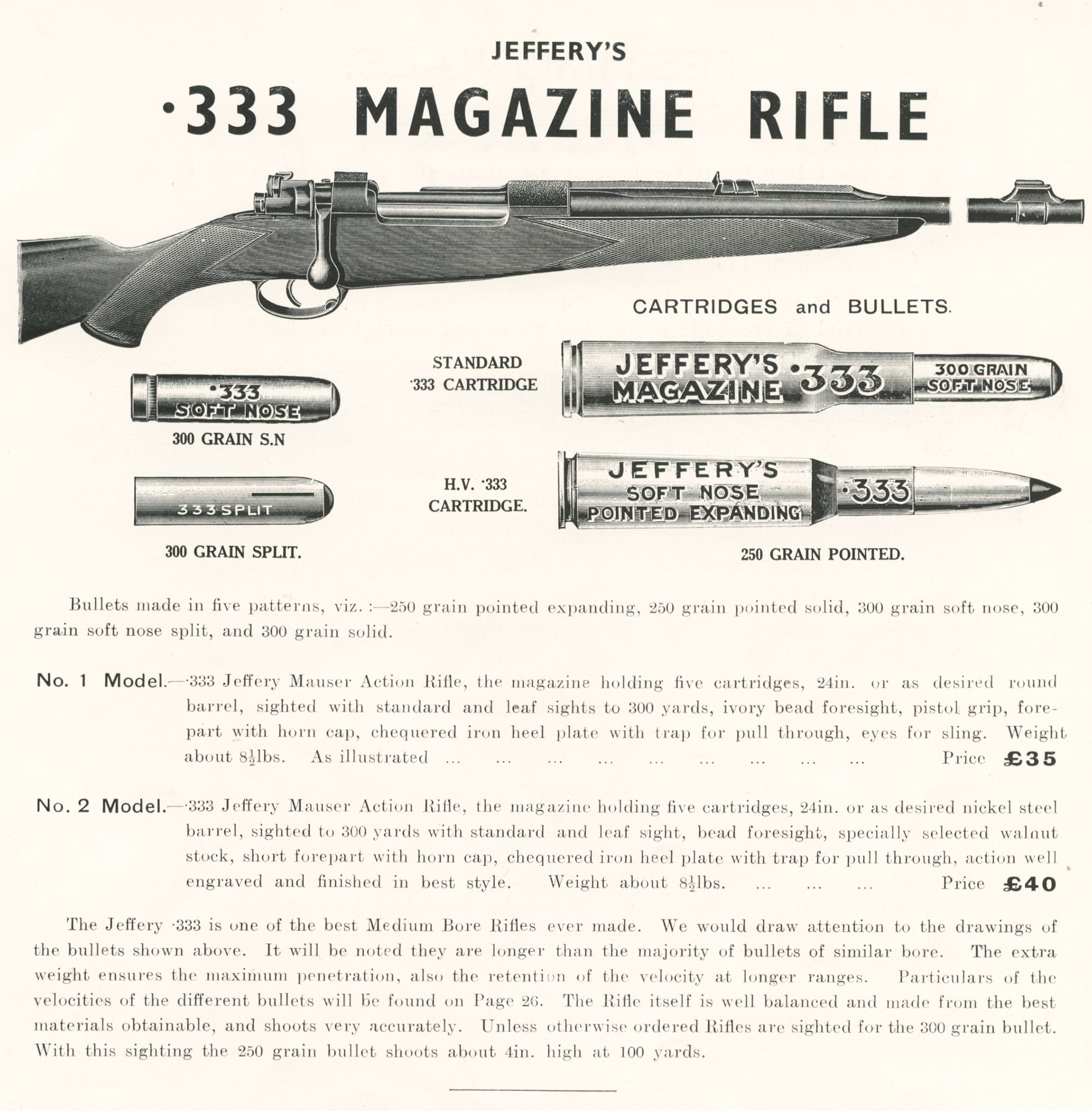
W.J. Jeffery & Co. of London had released the .404 Jeffery in 1905, designed for use in a Mauser bolt-action repeating rifle, and they necked that excellent cartridge down to hold bullets of .333 inches in diameter. Exactly where that bullet/bore diameter came from is lost to history, and it seems to be entirely proprietary.

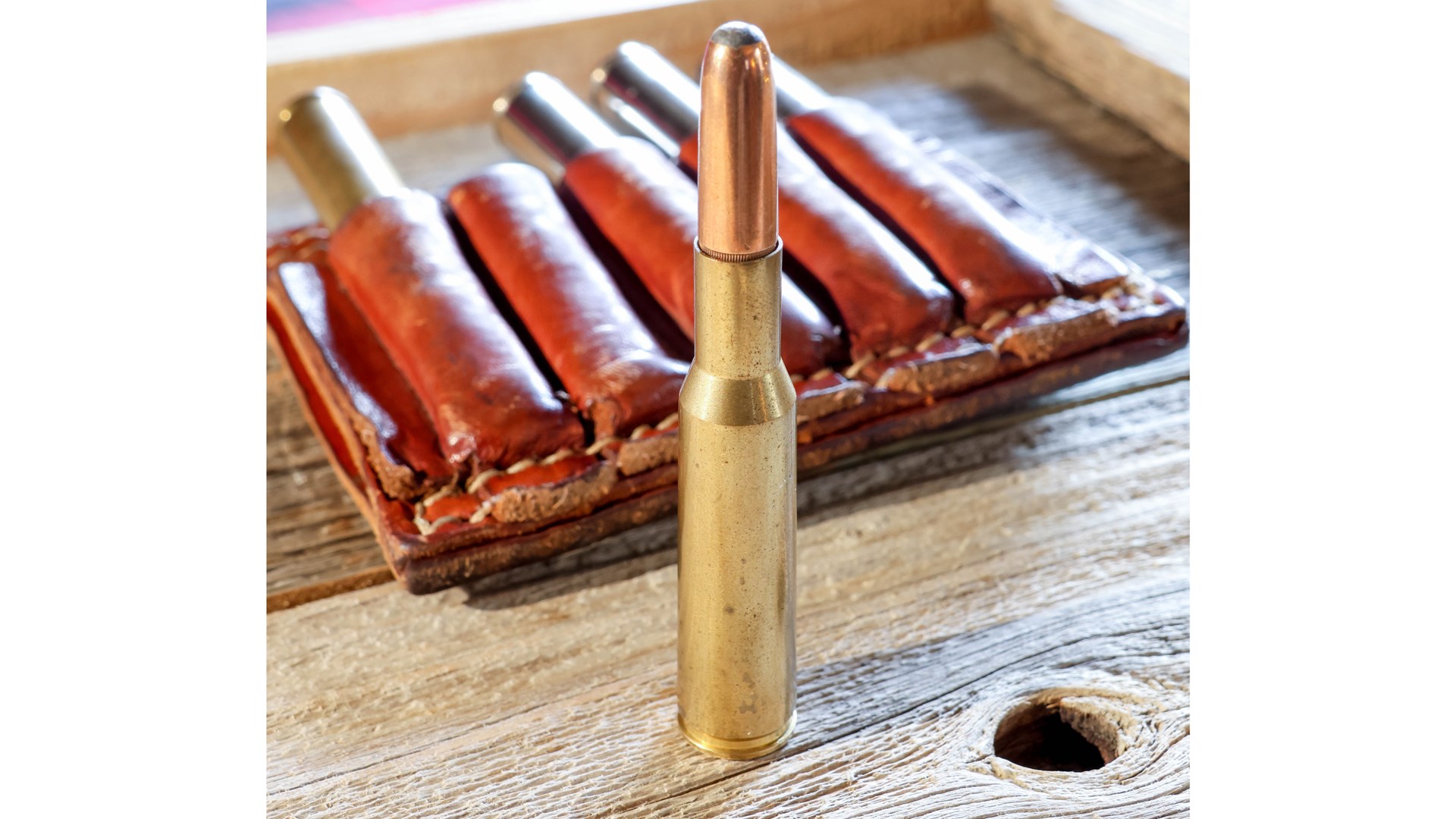
Using a case measuring 2.475 inches, with a cartridge overall length of 3.500 inches, the .333 Jeffery fits neatly in a long-action receiver. In near-opposition to the .404 Jeffery’s slight, eight-degree shoulder, the .333 uses a 19-degree 51-minute shoulder to handle the headspacing duties and the 0.538-inch neck will certainly hold even the longest bullets firmly in place.

And long the bullets for the .333 Jeffery are! The original ammunition loadings saw a 250-grain copper-capped hollowpoint bullet at a muzzle velocity of 2,500 fps, generating 3,480 ft.-lbs. of energy at muzzle, and the much more famous 300-grain bullet at 2,200 fps, for 3,230 ft.-lbs. of energy at the muzzle.

Please keep in mind that, common for the era, these velocity and energy figures were derived using a ballistic pendulum and a 28-inch barrel, so in reality the velocity and energy figures you might see in reality would be a bit lower. This is common to a good number of cartridges of this early 20th century-era.

That 300-grain slug has a Sectional Density of .386—a fantastic figure when it comes to penetration—and it was that bullet that helped garner the reputation that the .333 Jeffery had among the early hunters of Africa and India. With a mild recoil and a projectile which offered impressive penetration even on larger game species, the .333 Jeffery has been used on all game species, including the massive African elephant, though the larger bore diameters are invariably better suited for that work.

333 Jeffery wand cartridge wallet

It was the reputation of the .333 Jeffery’s bullets that led Charlie O’Neil, Elmer Keith and Don Hopkins to mate the .333-inch diameter projectiles with the common and plentiful .30-06 Springfield case, resulting in the wildcat .333 OKH, a precursor to the .338-06, in 1945.

That trio also developed a .334 OKH, using the same projectiles, but with a shortened .300 H&H Magnum case; this was assuredly the inspiration for the .338 Winchester Magnum, which mated a shortened H&H case and the .338-inch-diameter projectiles of the earlier .33 Winchester.

In addition to the rimless cartridge, W.J. Jeffery offered the .333 Jeffery Flanged, a rimmed variant of the design, for use in the single shot and double rifles. Essentially just a rimmed version of .333 Jeffery, the pressures were lowered slightly, and velocities ran about 50 fps or so below those of the rimless cartridge. The .333 Jeffery Flanged remains a rarity, even in comparison to the rimless version.

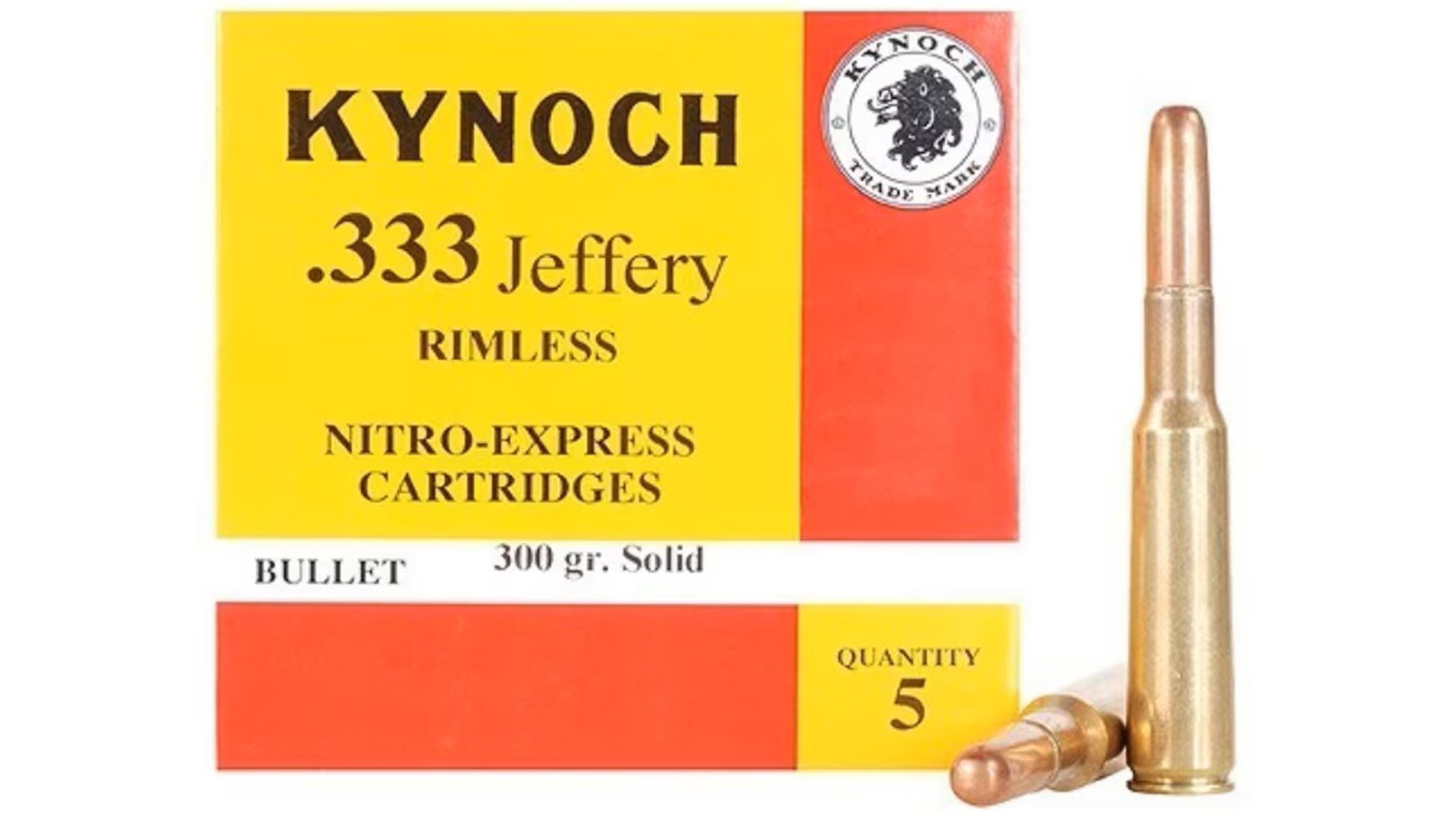
Kynoch 333 Jeffery Rimless

The major issue with the .333 Jeffery is the lack of available factory-loaded ammunition. When Kynoch ceased the production of ammunition for so many of those cartridges referenced in the classic African and Indian hunting literature, many of those British guns went silent.

Federal Premium did the world a big favor when they brought back ammunition for the .416 Rigby and .470 Nitro Express in 1988, and Hornady’s efforts to provide quality ammunition for many of those British cartridges—the .404 Jeffery, .450/400 3” NE, .450 NE and .500 NE—are most certainly appreciated.

To keep a .333 Jeffery rifle fed, you’re going to have to look to handloading, with cases available from Quality Cartridge (in limited runs), dies from RCBS and CH4D or on a custom basis, and projectiles produced by Woodleigh (in 250-grain softpoint, and 300-grain softpoint and solid), or a custom shop like Hawk bullets from New Jersey. Look to powders in the H4350 or Reloder 19 burn rate, and a good large rifle magnum primer.

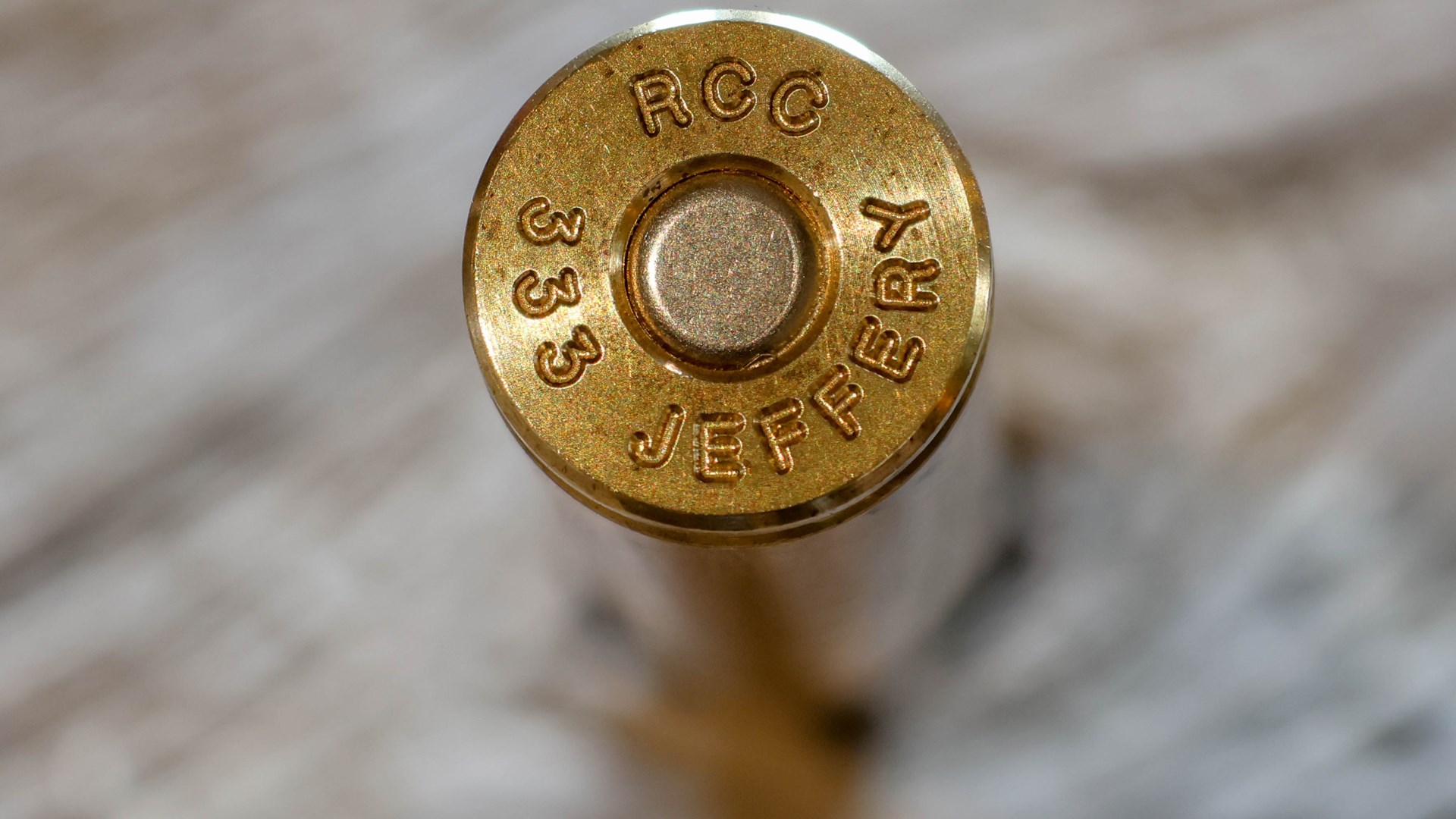
333 Jeffery Headstamp

“Practical” is not a word I’d associate with the .333 Jeffery, but if I saw a hunter show up in safari camp with a rifle so chambered, I’d beg a look at it.

The cartridge surely represents the Golden Era of African safaris, and that experimental period when the limits of smokeless powder cartridges were being defined. Yes, the .404 Jeffery and .500 Jeffery remain much more popular than the 333 Jeffery, but the fact that the cartridge is wonderfully effective in the field cannot be ignored.

Categories
Ammo You have to be kidding, right!?!

Also my Credit Card melted for some reason!

Categories
All About Guns Ammo

AR-15 Goat Gun Review | Goat Gun Toys

Categories
All About Guns Ammo

10 Most Versatile Long-Range Hunting Cartridges by Philip Massaro

10 Most Versatile Long Range Hunting Cartridges Lead

This originally ran on March 2nd, 2023. As a perennial favorite, however, we figured it might be time to expose it to a new audience. With the entrance on the scene of some new long-rangers like 7mm Backcountry, 6.5 RPM and 6.5 Creed +Peak, perhaps it’s time for a full update. Let us know!

Laying prone against a termite mound in the wide-open semi-Karoo of South Africa’s Free State, I adjusted the hold of my .375 H&H to compensate for the 400 yards between my rifle and the eland bull. We had leopard-crawled until we were absolutely out of cover, and there was no means of getting any closer. When the sound of the 300-grain Swift A-Frame striking flesh and bone came back on the breeze, I was equally elated and relieved. I also knew there were better tools to perform the job I’d just asked the .375 to do, and it started me down the path of flatter-shooting cartridges.

Long-range hunting is a controversial topic, and the very definition of long-range hunting can be ambiguous. I’ve made solid hits on steel targets at 1,400 yards while attending a shooting school, yet I assuredly wouldn’t attempt a shot on unwounded game (except perhaps varmints) at half that distance. What I have learned by practicing at the longer distances—where the only thing to be wounded by a miss is my pride—is that so long as I can handle the recoil, velocity does help. I also come from a background where my chosen cartridge has to offer a whole bunch of flexibility, as I’d ask it to work just as well in the deer woods of the Northeast as it would across a bog in Newfoundland or on the prairie of the Midwest. Here are 10 of my favorite flexible long-range cartridges, in no particular order.
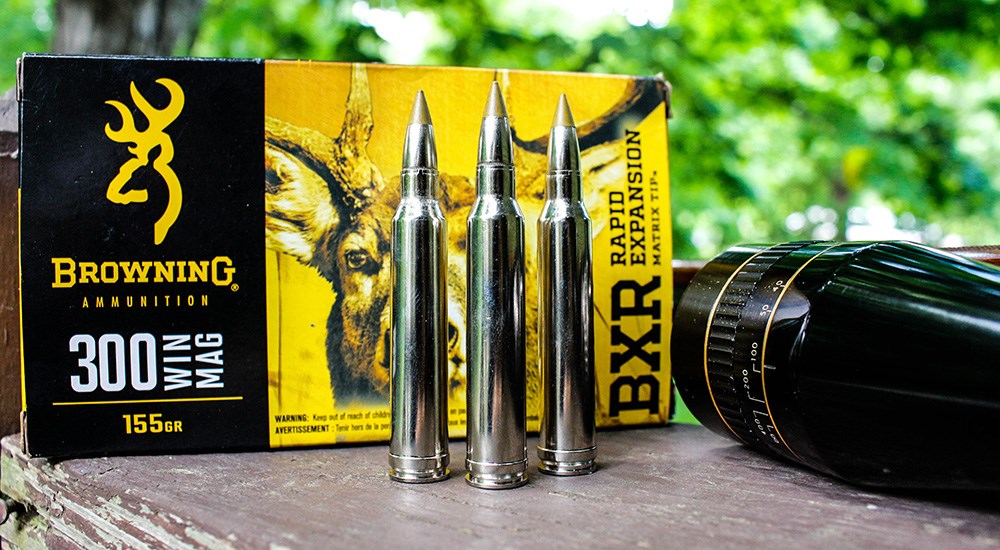
Browning BXR .300 Winchester Magnum ammunition.

1. .300 Winchester Magnum
Released in 1963, the .300 Winchester Magnum is the fourth in a series of shortened belted magnums released by Winchester. It can be comfortably housed in a long-action receiver, and while it has been criticized for its short neck, I have found it to be a wonderfully accurate and hard-hitting choice. It will drive a 180-grain bullet to 2960 fps, and I’ve used it with sleek spitzer boat tails and round nose bullets alike. It isn’t as fast as the .300 Weatherby, but is faster than the .30-06 Springfield and .300 H&H, and I find it to be the perfect blend of flat trajectory and acceptable recoil. It can accurately deliver the 140- and 150-grain bullets, yet equally handle the 200- and 220-grain slugs. It’s been making hunters happy for almost 60 years, and will continue to do so.
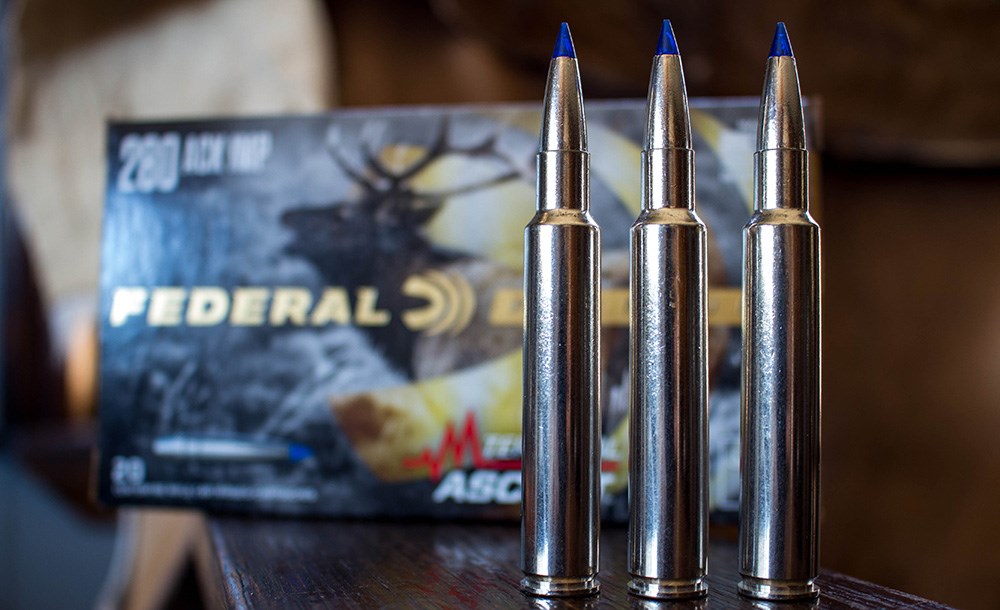
Federal Premium Terminal Ascent .280 Ackley Improved Ammunition.

2. .280 Ackley Improved
Famous gunsmith P.O. Ackley gave his “Improved” treatment to a good number of cartridges, but his most popular (and commercially successful) is the .280 Ackley Improved. Using a 40-degree shoulder and minimal body taper, the .280 AI can generate velocities which can approach that of the 7mm Remington Magnum, with a noticeable reduction in recoil. The .280 AI is, for a long-range cartridge, rather “sweet shooting.” Factory ammo is available from FederalHornady and Nosler, and the cartridge can really show its versatility when handloaded. From the 120-grain lighter bullets all the way up to the 175-grain slugs, the .280 AI can handle them all. Federal’s 155-grain Terminal Ascent load will retain 1,637 ft.-lbs. of energy at 500 yards, and will only drop 37.7 inches at that range when zeroed at 200 yards.
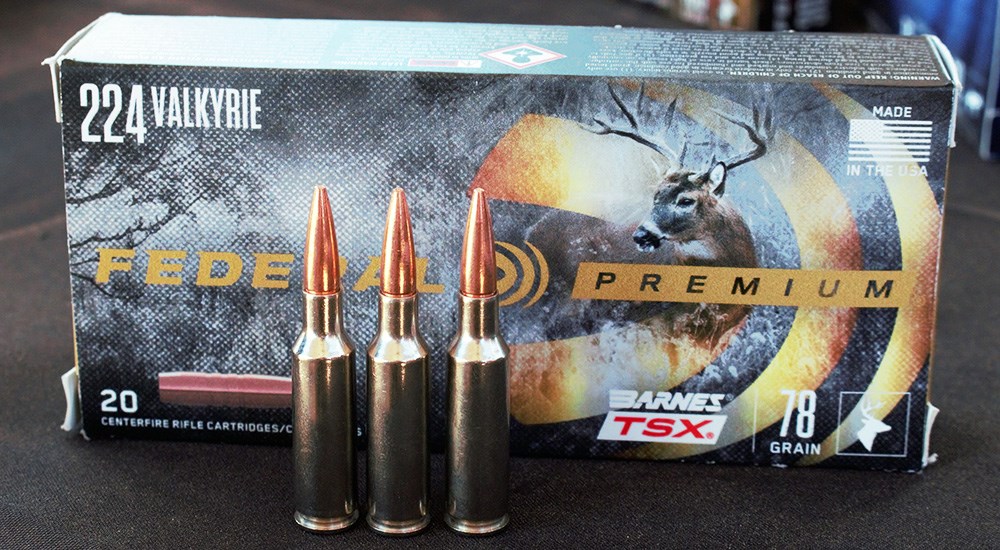
Federal Premium Barnes TSX .224 Valkyrie ammunition.

3. .224 Valkyrie
Federal’s .224 Valkyrie is based on the 6.8 SPC case necked down to hold .224-inch-diameter bullets, and works well in the AR-15 platform. Driving a 90-grain bullet to 2700 fps, you have a .22-caliber centerfire capable of reliably taking deer and antelope, yet with the 60-grain V-Max load at 3300 fps, you can create all sorts of red mist on a prairie dog town. At the range, it was nice to have a cartridge capable of handling 1,000-yard shots, with a recoil level low enough to see your own vapor trail.
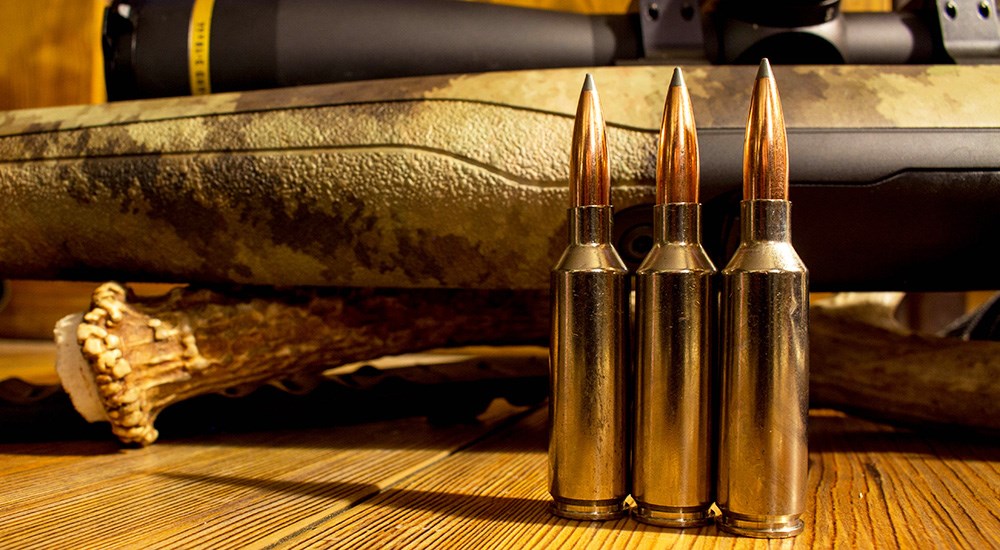
Browning 6.8 Western ammunition with rifle.

4. 6.8 Western
The collaboration between Winchester and Browning has become one of my favorites since its release in early 2021. In essence, it is a shorter version of the .270 WSM, with a tighter twist rate of 1:8 or 1:7.5, depending on the rifle, and will use .277-inch-diameter bullets weighing up to 175 grains. I find the cartridge to deliver field performance similar to the .300 Winchester (with 165- and 180-grain bullets), yet in a short-action rifle, with significantly less recoil. Factory loads will use 160- to 175-grain bullets, but if you handload it (like I do) you can use the full gamut of .277-inch bullets. My rifle really likes the 140-grain Badlands Precision Bulldozer 2 140-grain bullet, as well as the 165-grain Nosler AccuBond Long Range bullets.
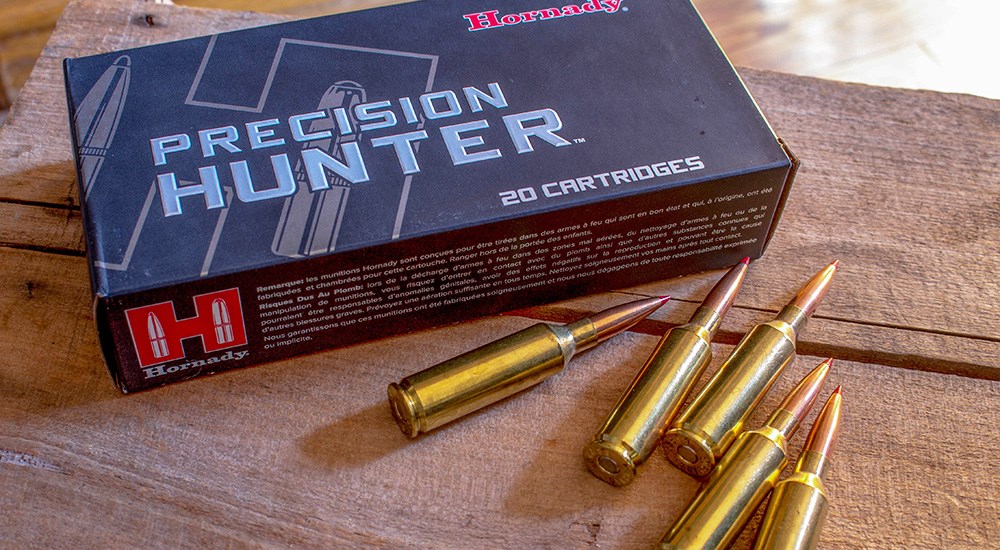
Hornady Precision Hunter 6.5 PRC hunting ammunition.

5. 6.5 PRC
Hornady’s “big” 6.5—the 6.5 Precision Rifle Cartridge—has been referred to as the big brother to the 6.5 Creedmoor. Designed for a short-action receiver, the 6.5 PRC will send the popular 140- to 147-grain bullets from the muzzle at velocities between 2910 and 2925 fps, and there are a number of lighter monometal and bonded core choices at 120 to 130 grains, as well as some of the heavier bullets, like the Berger Extreme Outer Limits 156-grain bullet, which gives the cartridge the flexibility hunters enjoy. With ammunition available from many major manufacturers, the 6.5 PRC is most definitely here to stay, and takes full advantage of the 6.5mm bore diameter.
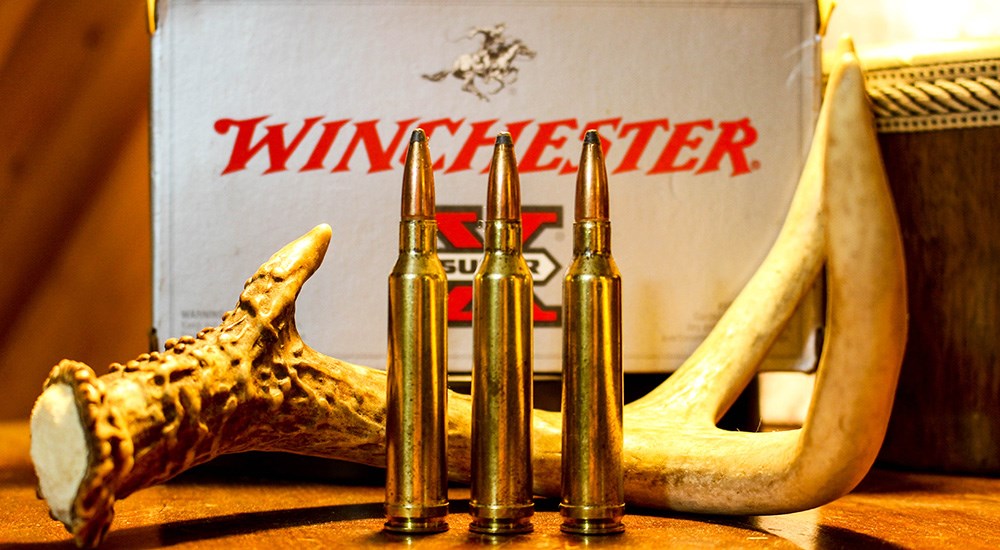
Winchester 7mm Remington Magnum ammunition.

6. 7mm Remington Magnum
Like the .300 Win. Mag., the 7mm Remington Magnum has become an undeniable classic. Despite the fact that the belted cartridges seem to have fallen out of vogue of late, the 7mm Remington Magnum remains a big seller due to its universal appeal. It can handle the heavy 7mm bullets—I’ve found the 175-grain Nosler AccuBond to perform wonderfully in this case—and there are a good number of lighter bullets available for the deer hunter. This do-all cartridge has the case capacity to deliver both respectable energy figures as well as a flat trajectory.
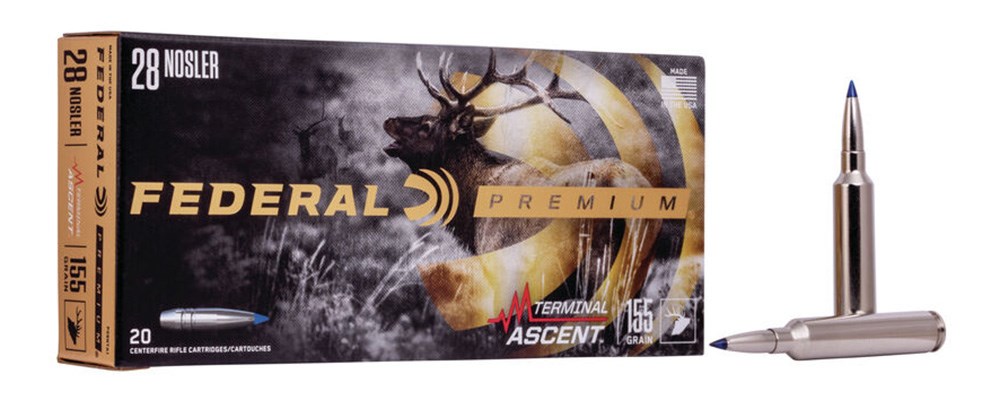
Federal Premium Terminal Ascent 28 Nosler ammunition.

7. 28 Nosler
Nosler’s family of cartridges is well designed, but I really like the 28 Nosler. Mimicking the formula of the 7mm Remington Magnum, minus the belt, this cartridge is based on the .404 Jeffery, shortened and with the body taper removed. A 35-degree shoulder handles the headspace duties, and several ammunition companies have picked this cartridge up. Quite obviously Nosler produces ammunition for it, but so does Federal, Hornady and Browning. This cartridge is capable of delivering the hair-splitting accuracy needed to hit distant targets, and has the velocity to get your bullet there quickly to minimize wind deflection. Being 7mm certainly adds the wide selection of bullet weight and choices to the mix.
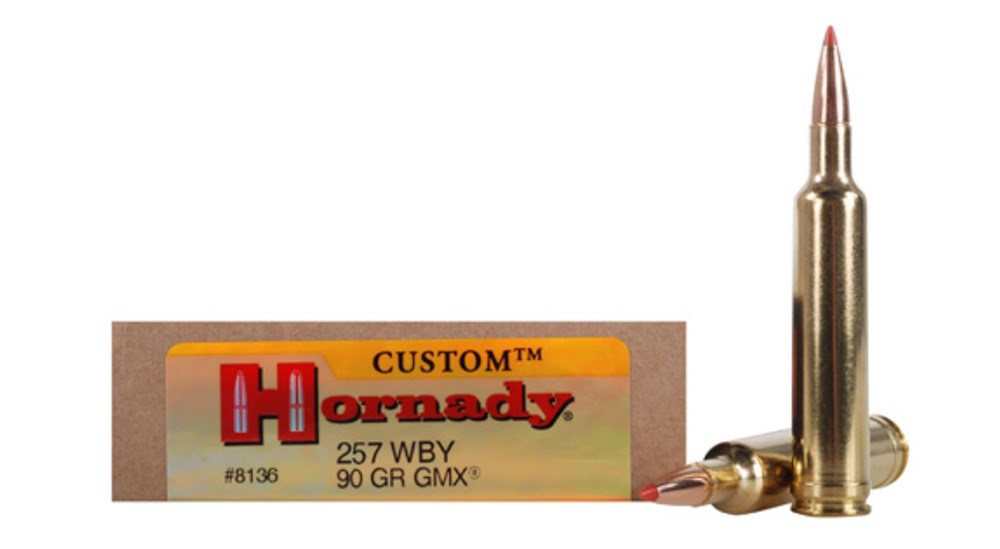
Hornady Custom .257 Weatherby Magnum rifle ammunition.

8. .257 Weatherby Magnum
Mention .25-caliber cartridges in hunting camp and you’ll find fans of the .250-3000 Savage and .25-06 Remington, but the fans of the .257 Weatherby Magnum will bare their teeth like rabid dogs. Of all the Weatherby cartridges, the fans of the .257 seem to be the most fervent; even Roy W. himself championed the little speed demon. Bullet choices are common for the caliber, topping out at 120 grains, but the velocity of the .257 Weatherby has been the attractant for decades. From Hornady’s 90-grain CX monometal load to Weatherby’s own 120-grain Nosler Partition load at over 3300 fps, the .257 Weatherby certainly punches above its weight class.
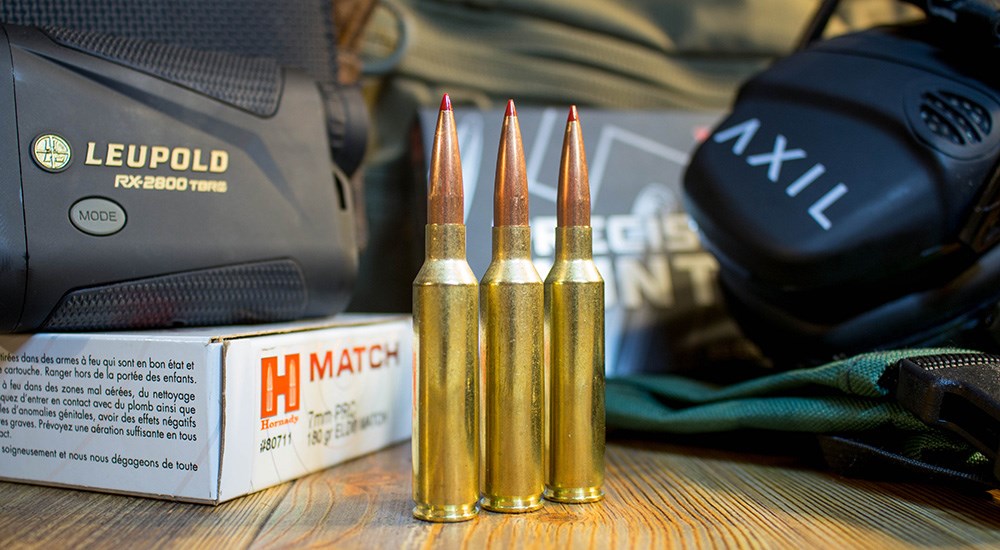
Hornady Match 7mm PRC ammunition.

9. 7mm PRC
Youngest of this lot, the new 7mm PRC has proven to be a wonderful choice for any long range application, yet works very well at normal ranges. I had the opportunity to use this long-action cartridge at the FTW Ranch, to punch steel targets out to 1,800 yards, and took it out West this season for pronghorn in Wyoming and black bear in British Columbia. The former was taken at 330 yards, and the latter at 75 yards, without issue. A good, steep shoulder for best concentricity and positive headspacing combines with a fast twist rate (1:8) to deliver heavy-for-caliber bullets at magnum velocities, making this little gem perfectly suitable for both big game hunting and competition shooting. Hornady’s current factory loads use the 160-grain CX bullet at 3000 fps, the 175-grain ELD-X bullet at 3000 fps and the 180-grain ELD Match at 2975 fps.
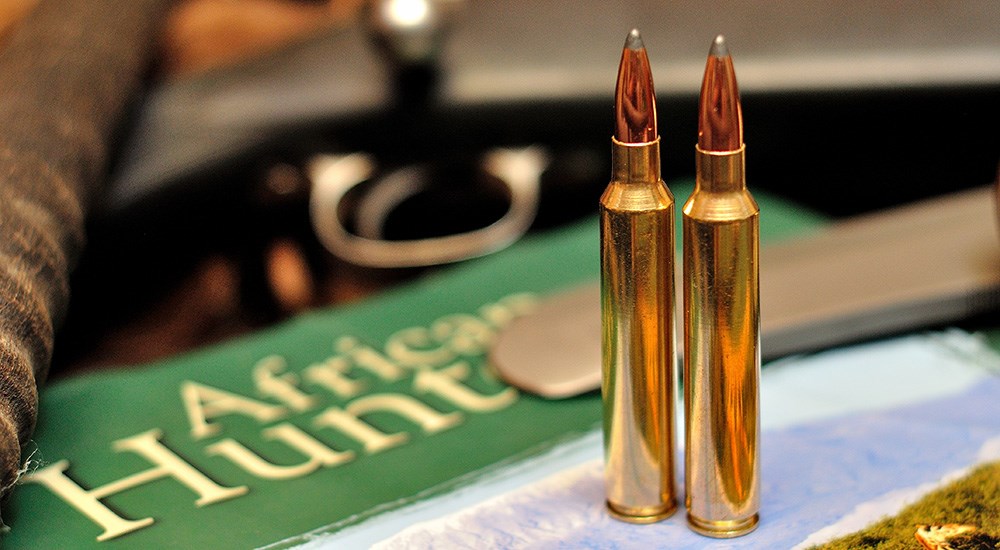
Sierra 180-grain .300 Remington Ultra Magnum ammunition.

10. .300 Remington Ultra Magnum
Big Green released this behemoth cartridge in 1999, based on the .404 Jeffery case blown out and necked to hold .308-inch-diameter bullets. Driving a 180-grain bullet to a muzzle velocity of 3200 fps in factory loads (this can be exceeded with handloads), the .300 RUM offers plenty of striking energy and very flat trajectory. There are plenty of factory loads to choose from, ranging from the 150-grain Swift Scirocco II at 3450 fps to the 220-grain Hornady ELD-X at 2910 fps, with the 180-grains splitting the difference. If you anticipate shots on the closer side of things, where the impact velocities are still way up there, I recommend bonded core or monometal projectiles, to avoid premature bullet breakup. The .300 RUM is capable of delivering right around 4,000 ft.-lbs. of energy at the muzzle, and the high-B.C. bullets will help retain that energy at longer ranges. That performance comes at the cost of stout recoil, but in a properly stocked rifle it can be managed, or a muzzle brake can be employed to remove the sting. If you can still find some floating around, Remington once offered ammunition for the .300 RUM at three different power levels, making the big cartridge even more versatile.