Category: Ammo
We live in the most amazing times. Someday soon when we are all living in caves wearing animal skins picking parasites off of each other, our children will ask why we no longer have cool stuff like the internet, running water, electricity, and food. When that time inevitably comes, you can at least tell your kids that you saw it coming.
The Terminator was Actually a Documentary
The people who work on artificial intelligence cannot cogently articulate exactly how AI works. The days of some computer geek settling in behind a keyboard to bang out code are gone never to return. Nowadays, computer programmers get their computers to write their computer code. It seems inevitable that those computers will eventually wise up and decide to cut out the middle man.
Unless you want to end up paying taxes to your microwave, it behooves us all to do a little sensible preparation. Chief among those post-apocalyptic chores is figuring out how to kill a robot dog. It’s not intuitive.
Know Your Enemy
Just in case you’ve been living underneath a bridge someplace, Google “scary robot dog” and get ready to have your world rocked. If you have an operational credit card, $9,420 will get you a flame-throwing robot dog over the Internet from ThrowFlame.com. The Unitree Go2 robot dog is only two grand. Uncle Sam has militarized versions sporting advanced sensors, thermal imagers, and machine guns. It just seems inevitable that we will someday go to war with these things.
For starters, the militarized versions are quite often armored. However, like tanks, extra armor means extra weight which means decreased agility. Such stuff is the perennial tactical tradeoff. With the right ammo, your typical defensive rifle should be up to the task, presuming you know where to shoot.

Feeding the Beast
GI green-tip M855 5.56mm ammunition incorporates a small tungsten penetrator into the bullet to offer better performance through light cover. It’s not armor-piercing per se, but it will still penetrate 3mm of mild steel at 600 meters. It’s even better up close. Think car doors and the like. That is likely adequate to deal with your typical robot dog.
I keep two PMags loaded with M855 next to my primary defensive rifle at the house. It doesn’t sport a label that says, “For use against armored robot dogs” or anything. However, yeah, it’s for use against armored robot dogs.
Mechanical Anatomy
It is tempting to concentrate on the head of the robot dog. However, robot dogs are anthropomorphically different from real dogs or carbon-based animals of any sort, for that matter. The head is just sensors. That’s not where the beast thinks.
It’s not unreasonable to shoot for its legs. In tank parlance, this would be called a mobility kill. The thing might remain prickly, and it may yet still be relaying vital tactical information back to your doorbell camera or your dishwasher or whatever else is coordinating everything. However, shoot one of its legs off, and at least it won’t be chasing after you with quite so much enthusiasm.
The Vitals
Heat is the mortal enemy of computers everywhere. As a result, the CPU for a robot dog is most commonly carried inside the main upper electronics bay underneath the top shell. They often include mechanical heat sinks or cooling fans. The CPU will be protected by the main chassis cover and may be armored. It makes for a small target, but putting a round through the mother board is going to reliably take that robot dog out of the fight.
The other sweet spot is the battery. Most robot dogs use lithium-ion, lithium polymer, or lithium iron phosphate rechargeable batteries. Older toy-grade mechanical hounds might incorporate nickel-metal hydride batteries, but these are not the machines that are going to be trying to get all up into your business.
The Achilles Heel
The common thread to robot dog batteries is lithium. Lithium is a soft, slivery-white alkali metal. It is, in fact, the lightest of all metallic elements. However, like all alkali metals, lithium is both highly reactive and flammable. As a result, pure lithium, like its legendarily malevolent cousin sodium, must be stored in a vacuum, an inert atmosphere, or within a liquid like purified kerosene. Expose that stuff to water or even wet air, and it is going to get all conflagrated.
Pass a bullet through the battery, and your robot dog will most likely incinerate itself right sharpish. You will find the battery on most robot dogs in a secure slot in the bottom or rear part of the torso. The battery assembly is fairly heavy, so it is usually stored low in the chassis to improve stability.
Ruminations
So, there you have it. When you inevitably have to defend your home and family from a weaponized AI-driven robot dog, don’t waste your time shooting it in the head. That will likely just make it angry. Concentrate your fire on the center of mass either toward the top focusing on the CPU or at the bottom to rupture the battery. Or just blow its legs off. Connect with any of that stuff, and humanity gets to live another day.
All this seems silly right up until it’s not. Knowing how to efficiently kill a robot dog may someday be something we teach little kids in school, presuming our evil mechanical overlords still allow us to have schools. It’s a brave new world, and luck always favors the prepared.

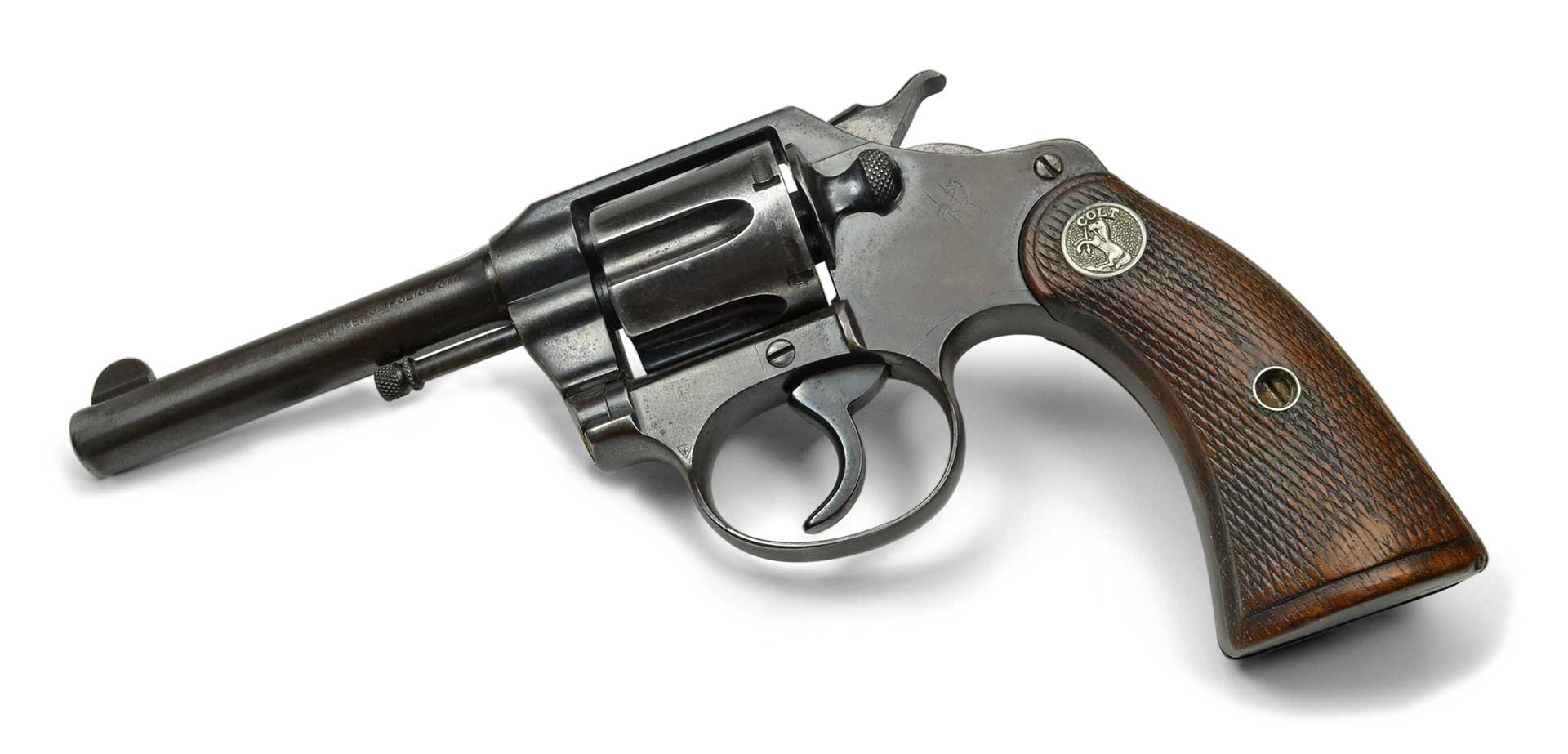
A Second Issue Colt Police Positive chambered for .38 Colt New Police made in 1941 and vintage Remington .38 Colt New Police ammunition.
Photos by author.
Colt’s Police Positive revolver was one of the most popular firearms made in the early 20th century and remained in the company’s line for nearly half a century. Or so they say. But during my research on the Colt Police Positive revolver, I discovered something unexpected. Colt actually made two versions of the Police Positive. At the same time. In fact, from a certain perspective, you could say they made three versions at the same time. And it lasted a whole lot longer than most sources say. Let’s take a look.
Colt Police Positives are small-frame, six-shot, double-action revolvers produced starting around 1905. They are an improved version of the Colt New Police revolver first introduced in 1896 and incorporated a internal hammer-block safety, named the “Positive Safety,” to prevent it from firing if the hammer was struck or if dropped, allowing the gun to be carried safely with six shots, hence the incorporation of the term “Positive” in the name.
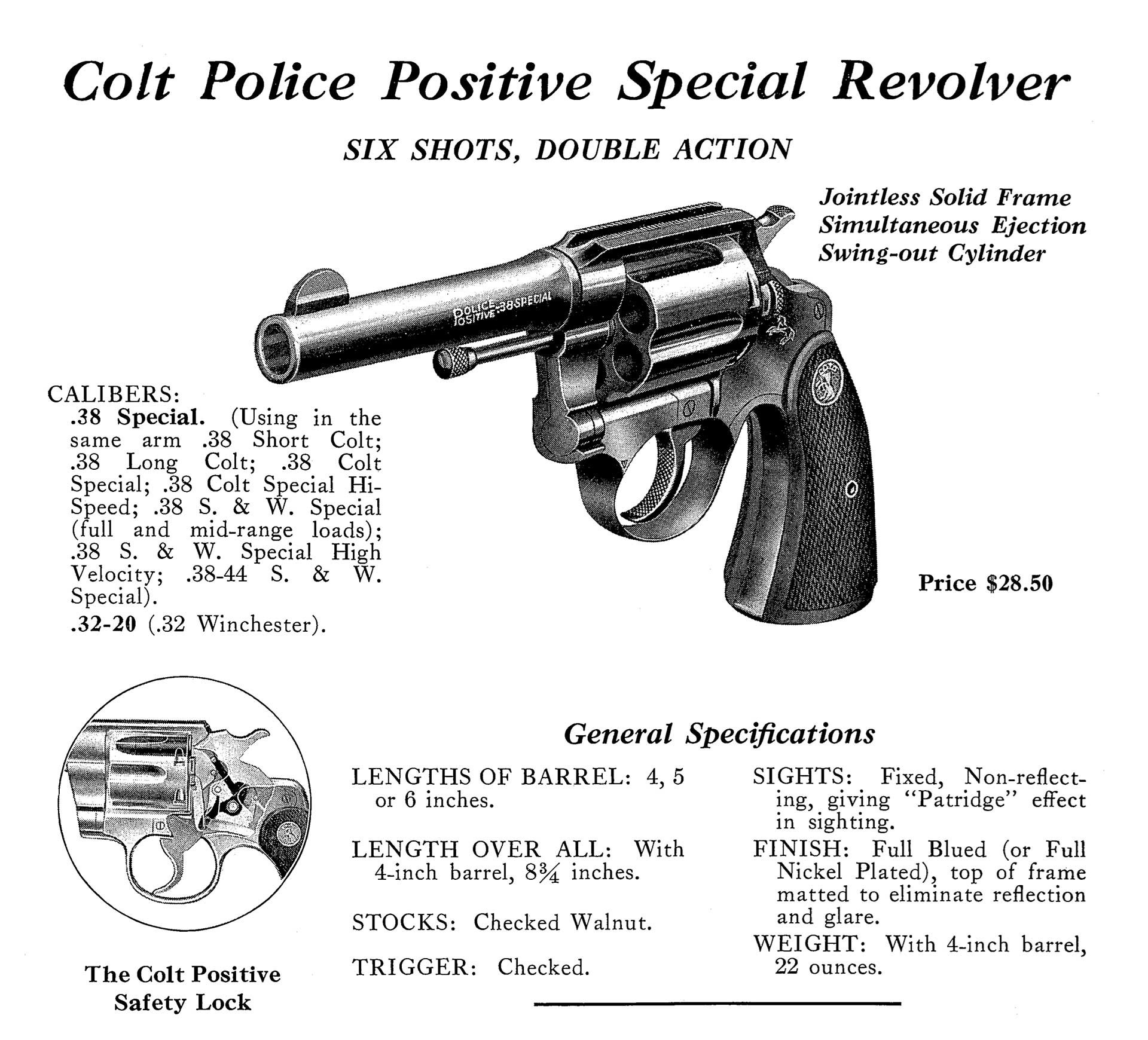
There were two Police Positive models in Colt’s lineup: the Police Positive and the Police Positive Special. The distinction between them was the length of the frame and cylinder, which determined what calibers they would handle. The Police Positive had a short cylinder measuring 1.25 inches long. The Police Positive Special had a longer cylinder of 1.57 inches that was required to fit the longer .32-20 Winchester and .38 Special cartridges.
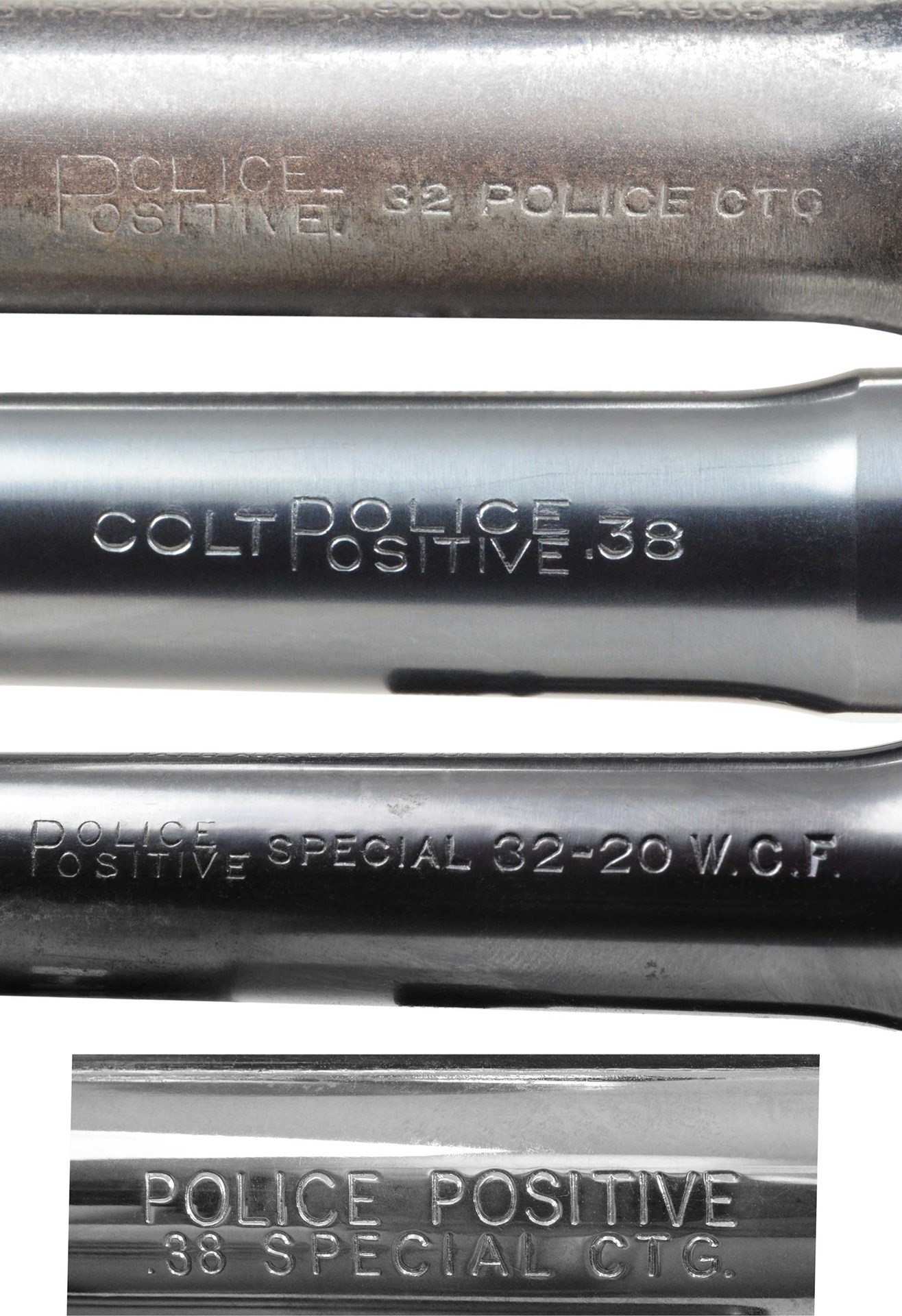
On each example, the revolver model was stamped on the barrel along with the cartridge name. With Police Positives, Police Positive was stamped on the barrel. So far, it’s all simple enough. With Police Positive Specials, though, things were less certain. Sometimes, “Police Positive Special” was stamped on the barrel, and sometimes, it was stamped just “Police Positive.” The only way to know it was a Police Positive Special was if it was chambered for .32-20 Winchester or .38 Special, or by the cylinder’s length in the case where it was chambered for shorter calibers.
Chamberings, Chamberings Everywhere
The Colt Police Positive was produced from 1905 to 1947. It was chambered in .32 Colt (.32 Long Colt and Short Colt), or .32 Colt New Police (aka .32 Colt Police Positive, aka .32 S&W Long) or .38 Colt New Police (aka .38 S&W; not to be confused with .38 Short Colt, which is a different cartridge). The .32 Colt New Police and .38 Colt New Police cartridges were just modifications of already existing .32 S&W Long and .38 S&W cartridges, respectively.
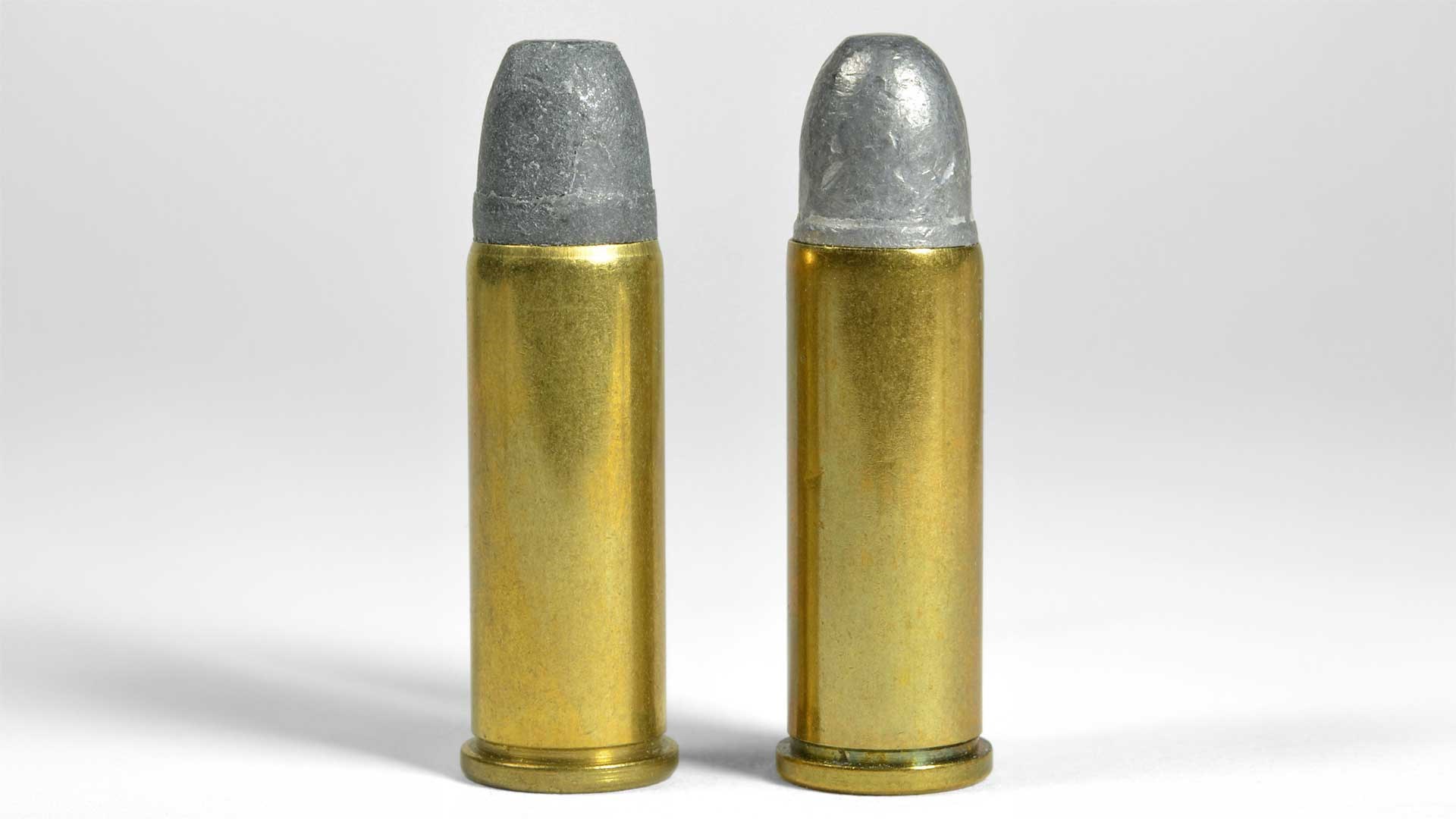
Colt’s versions had flat-nose bullets compared to the round-nose bullets of the S&W named versions. Colt did this so the Colt caliber name could appear on their guns and ammo, since the company did not want to give S&W any free advertising. Available barrel lengths were 2, 2.5, 4, 5, and 6 inches. About 200,000 Police Positives were made.
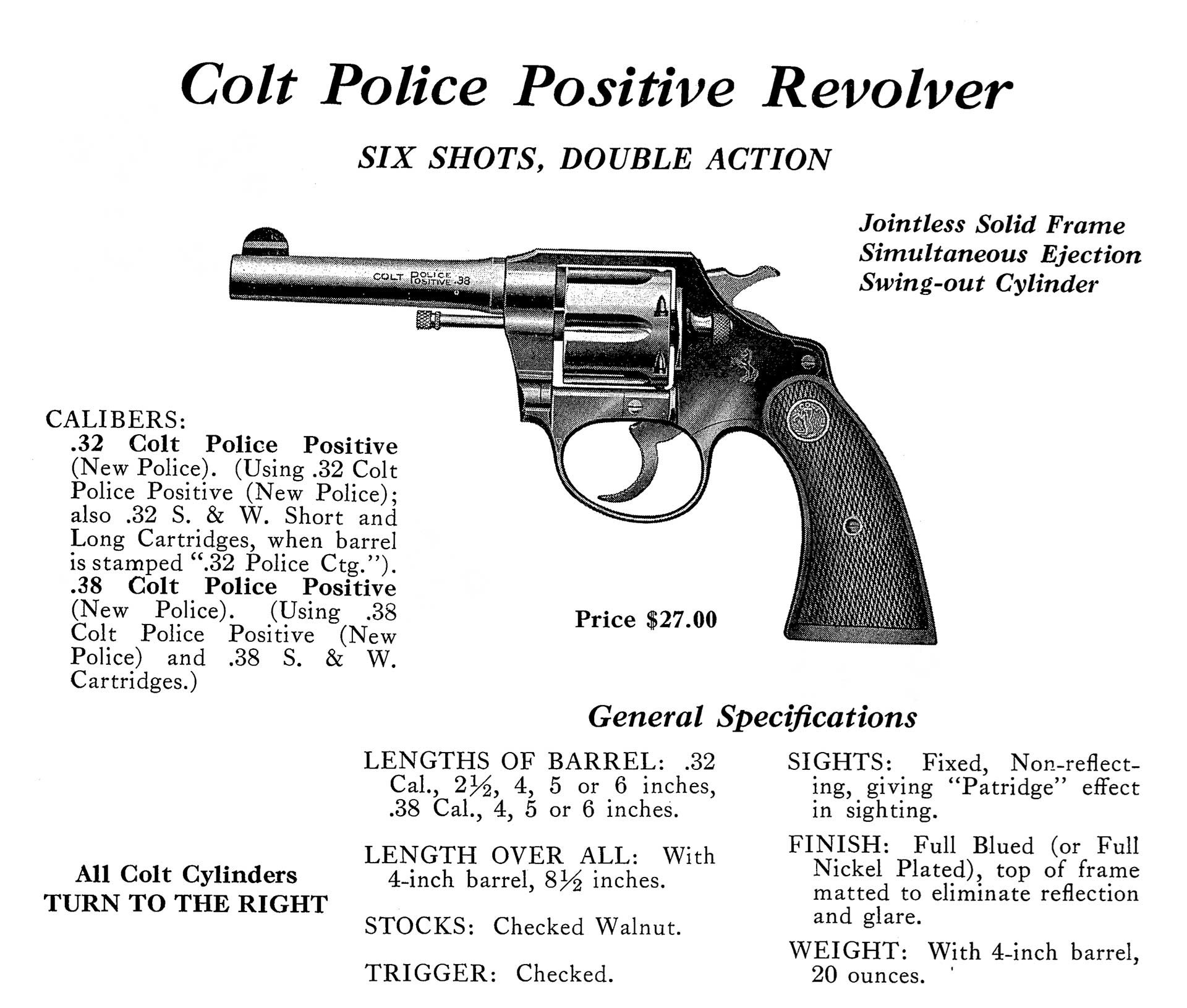
Despite the potential confusion of caliber that was stamped on the barrel, Colt’s catalogs listed both the Colt and S&W cartridges for these guns. For example, in Colt’s 1935 catalog under the company’s description of the Police Positive, it listed the following description under the .32-caliber cartridge:
“.32 Colt Police Positive. (Using .32 Colt Police Positive (New Police); also .32 S. & W. Short and Long Cartridges, when the barrel is stamped “.32 Police Ctg.”)”
Under the .38-caliber cartridge they have:
“.38 Colt Police Positive (New Police). (Using .38 Colt Police Positive (New Police) and .38 S. & W. Cartridges.)”
Perfectly clear, right?
Confused by all this caliber-speak? Don’t worry, they were confused at the time, too. Many ammunition catalogs of the day had a page listing “interchangeable” cartridges. For example, the 1933 Remington UMC catalog showed these cartridge names as interchangeable: .32 S&W Long, .32 S&W Long Gallery, .32 Colt’s New Police and .32 Colt’s Police Positive. (The gallery load was a low powered load made specifically for shooting galleries and were common to some handgun calibers at the time such as the .38 Special.)
The same was the case with the .38 ammo, but fortunately, there were just two common names, .38 Smith & Wesson and .38 Colt New Police (although you could add .38/200 and .38 Super Police when loaded with a 200-grain bullet). In ammo catalogs from that era that I looked at, the .32 Colt New Police ammo was almost universally referred to as .32 Colt New Police, with “Police Positive” sometimes indicated in parentheses. And the same for the .38 Colt New Police and “Police Positive” sometimes in parentheses.
The .32 and .38 Colt New Police ammo are long out of production, though vintage ammo can sometimes be found on gun-auction sites on the internet. Since the .32 Colt New Police and .32 S&W Long are the same ammunition with different names, when we see .32 Colt New Police, we should just think .32 S&W Long (colloquially referred to as just .32 Long). And for .38 Colt New Police, think .38 S&W. The .38 S&W is still available because so many old guns are still in circulation.
The 2022 Sporting Arms and Ammunition Manufacturers Institute (SAAMI) specifications manual lists both names under their cartridge description. Their pressure and dimensional standards for the .32 S&W Long has the name .32 Colt New Police just under it. The same holds true for the .38 S&W and .38 Colt New Police.
Differences Between Colt and Smith & Wesson Cartridges
As previously mentioned, the bullet shape of the Colt versions of .32 and .38 bullets were different than their S&W ammo counterparts, the Colt bullet being flat-nose compared to the round-nose S&W named ammo. Bullet weight was sometimes the same for the two .32-caliber rounds, but more often than not, the Colt version was usually 100 grains and the S&W version was 98 grains.
Ballistics with the .32-caliber rounds were usually loaded very closely to one another. Sometimes the .32 Colt New Police load was faster, and sometimes the .32 S&W Long load was faster. Often, the differences were 5-10 fps, and not always from the same barrel length, but small enough as to be insignificant. Speeds from a 4-inch barrel were in the range of 720 to 800 fps range, depending on the manufacturer and year of production. Remington’s 2025 catalog lists a speed of 705 fps with a 98-grain lead round nose bullet from a 4-inch barrel for the .32 S&W Long.
The .38 Colt New Police and .38 S&W comparison in the past was a little different. Some of the speeds listed for these two cartridges were the same, but the .38 S&W was often loaded faster by around 50 fps from the same barrel length. For example, the 1941 Peters catalog listed a speed of 695 fps for the New Police round and 745 fps for the S&W round, both from 4-inch barrels. And this isn’t the only example.
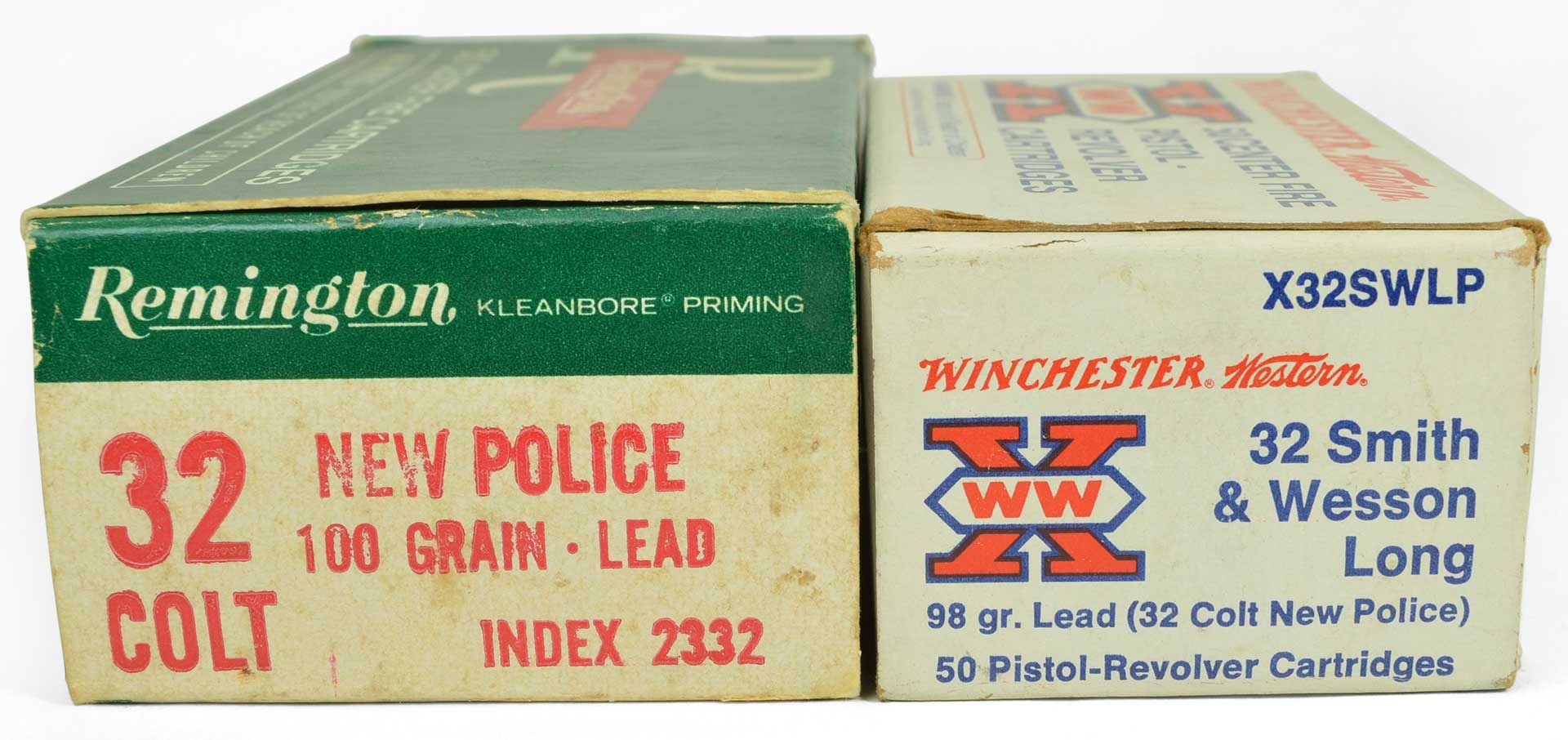
The .38 Colt New Police round usually had a 150-grain bullet, and the .38 S&W usually had a 146-grain bullet. Interestingly, Remington and Peters loaded a 146-grain bullet in the .38 S&W, while Winchester loaded a 145-grain bullet. Today, Remington lists a speed of 685 fps with a 146-grain lead round nose bullet from a 4-inch barrel for the .38 S&W.
Police Positive revolvers marked D.A. .32 were chambered for .32 Long Colt, and guns marked .32 Police were chambered for .32 Colt New Police. I have seen one stamped with .32 Colt, as well, and I presume this means .32 Long Colt. With .38 stamped on the barrel, it meant .38 Colt New Police.
Of the Colt guns I’ve seen on various websites chambered for .32 Colt New Police, the barrels are usually stamped “.32 Police” on Police Positives. But I did see a 1907 production Police Positive stamped “Colt New Police 32” on the left side of the barrel and “Police Positive” on the right side. I found “.32 Colt N. P.” stamped on a Police Positive Special. So it appears Colt had different names on the guns, just like they had different names for the ammo. That will keep collectors on their toes!
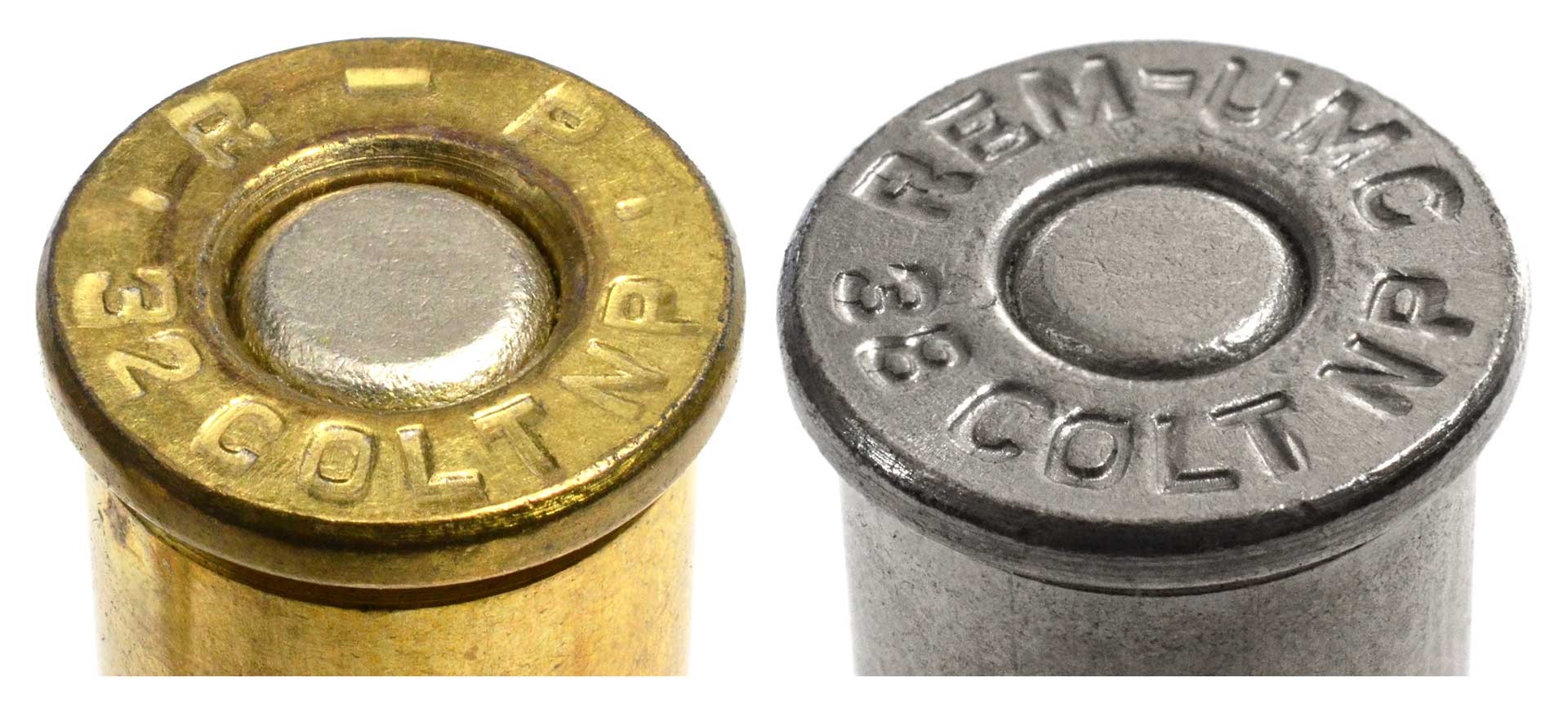
To make this clear, .32 Long Colt and .32 S&W Long (.32 Colt New Police) are different cartridges. The .32 Long Colt has a smaller case diameter (.318-inch), and guns chambered in .32 Long Colt will not accept the larger diameter .32 S&W Long case (.337-inch). Guns marked .32 Police (or .32 S&W Long) will accept .32 Long Colt ammo, though one should not fire them due to safety concerns because the undersized cases might split.
The .32 Long Colt ammo is long obsolete and hard to find, while the .32 S&W Long is alive and well because some match-quality, semi-automatic .32 S&W Long pistols are still being manufactured. It is offered by several ammo manufacturers, including Remington, Fiocchi, Magtech, Aguila, Lapua and others. Guns chambered in .32 Colt New Police/.32 S&W Long can also shoot .32 S&W (aka .32 S&W Short). But all is not lost for .32 Long Colt guns, because Winchester still catalogs the .32 Short Colt (X32SCP).
Variations on the Colt Police Positive
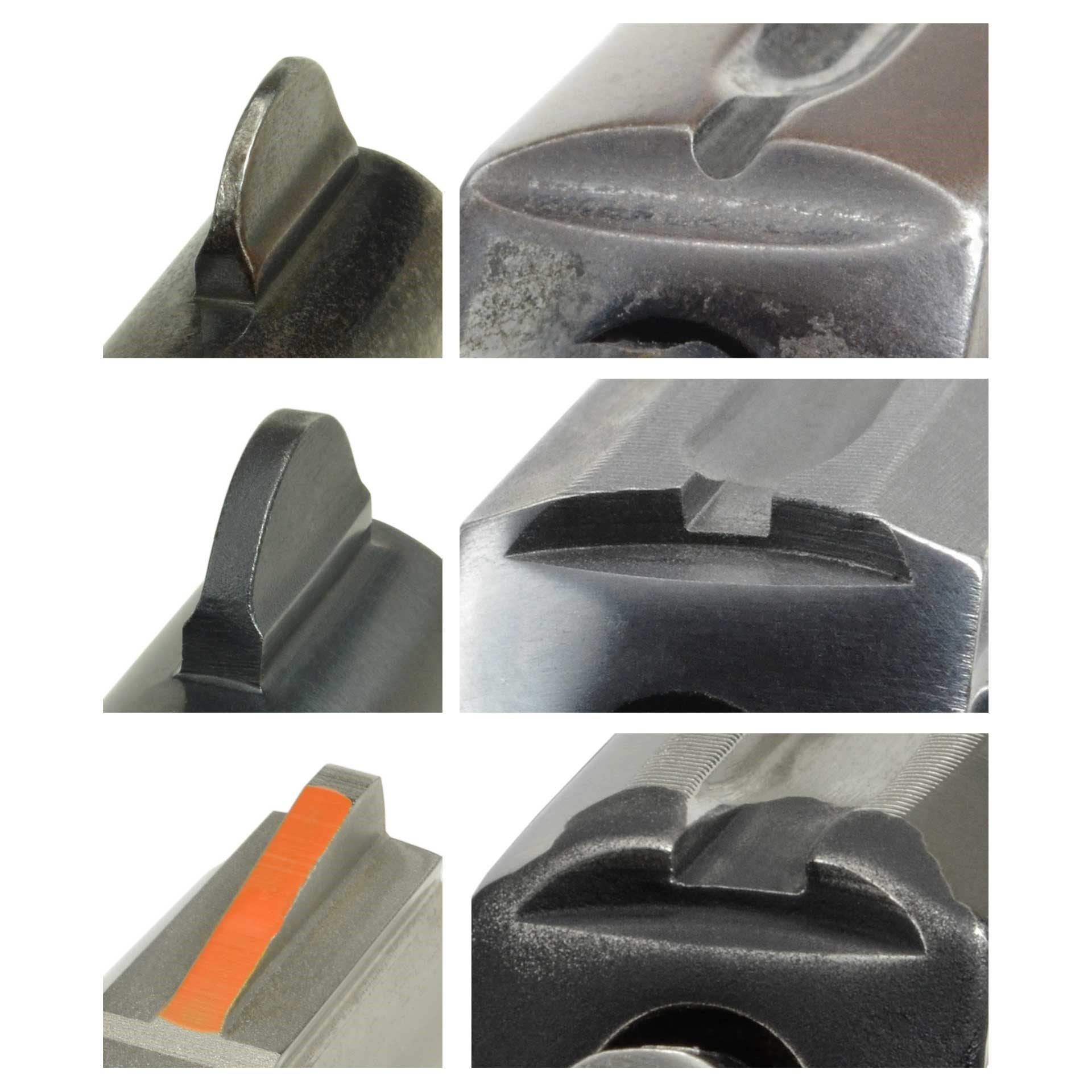
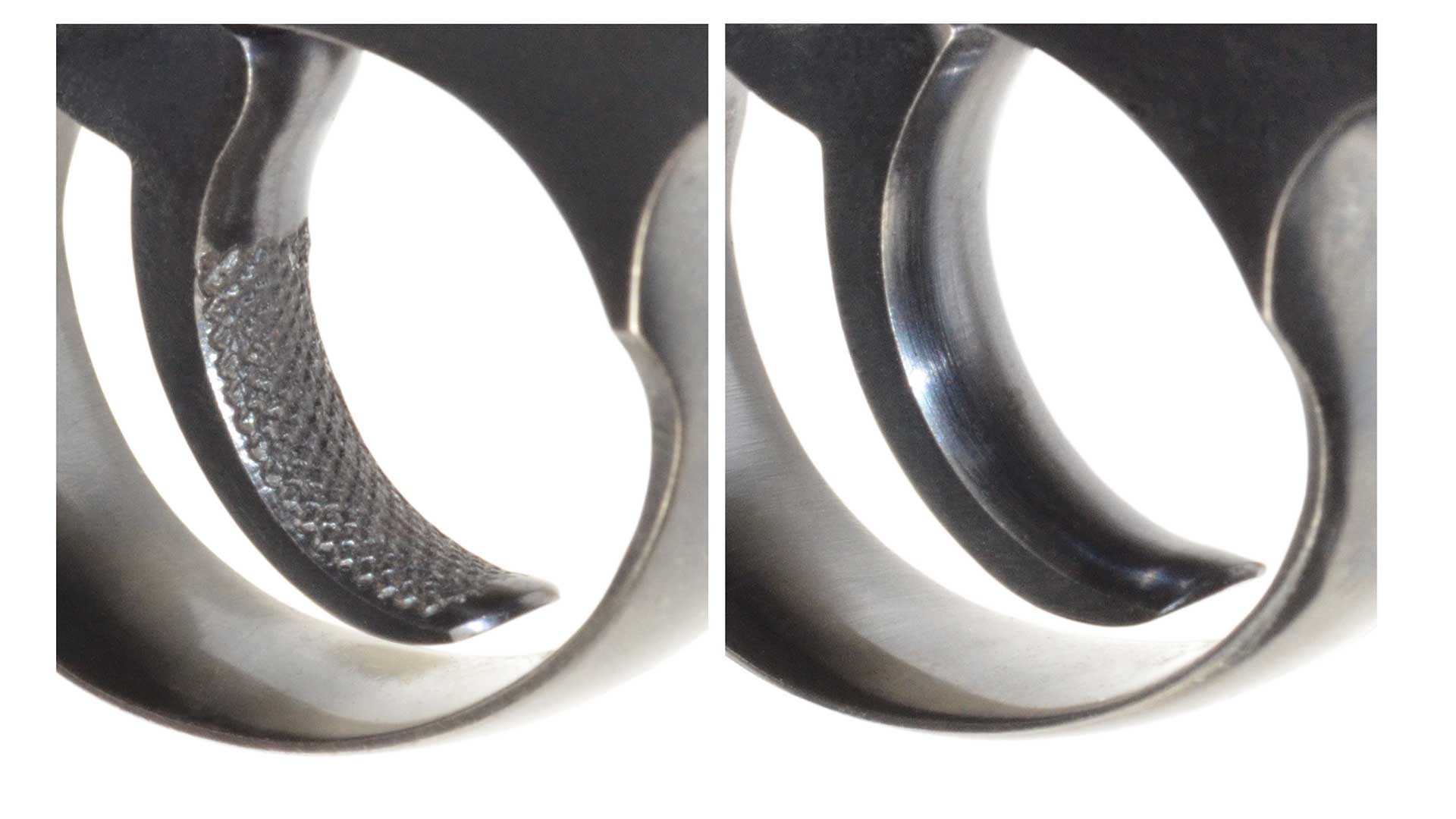
The First Issue Colt Police Positive ran from 1905 to 1927. A Second Issue was made from 1928 to 1947. This issue added a serrated topstrap to reduce glare and changed to a checkered trigger (based on the Second Issue guns I’ve seen). The sights were improved as well. First Issue guns had a thin front sight and a V-cut in the topstrap for the rear. Second Issue guns had a wider front sight and a square notch cut for the rear, giving them a larger sight picture.
Colt also produced target versions of the Police Positive, with 6-inch barrels and adjustable front and rear sights. They were available in .22 LR, .22 WRF, .32 Long Colt and .32 Colt New Police. These guns also have a first issue (1907 to 1925) and second issue (1926-1941/1943?), that change being the slightly heavier frame.
One variation on the Police Positive was the Banker’s Special. It had a 2-inch barrel and was chambered in .22 LR or .38 Colt New Police (.38 S&W). It was made from 1926 until 1940. Additionally, some of the early Police Positives were transitional guns from the previous Colt New Police revolver, which continued to be produced as late as 1908, and will have “New Police” stamped on the frame.
Colt also had a series of .32-caliber Police Positives labeled “Pequano” (Spanish for small) on the barrel that it sent to other countries and within the U.S. that were considered, by some, as less high-quality than the company’s usual quality standards. These guns were marked Pequano or had the letter “B” stamped on the barrel between Police Positive and the caliber. The “B” model Police Positives on the Old Colt website (oldcolt.com) were made in 1941 and appear to be made on the smaller first-issue frames (based on measurements of cylinder size) in spite of being produced during the second-issue era.
But that was it. According to most sources, the Police Positive’s production run ended in 1947. I was surprised by this, because I have a .38 Special Colt revolver made in 1977 marked “Police Positive.” It’s stamped right there on the barrel. You can see why people get confused. But that’s because we haven’t gotten to the full story of the Police Positive Special.
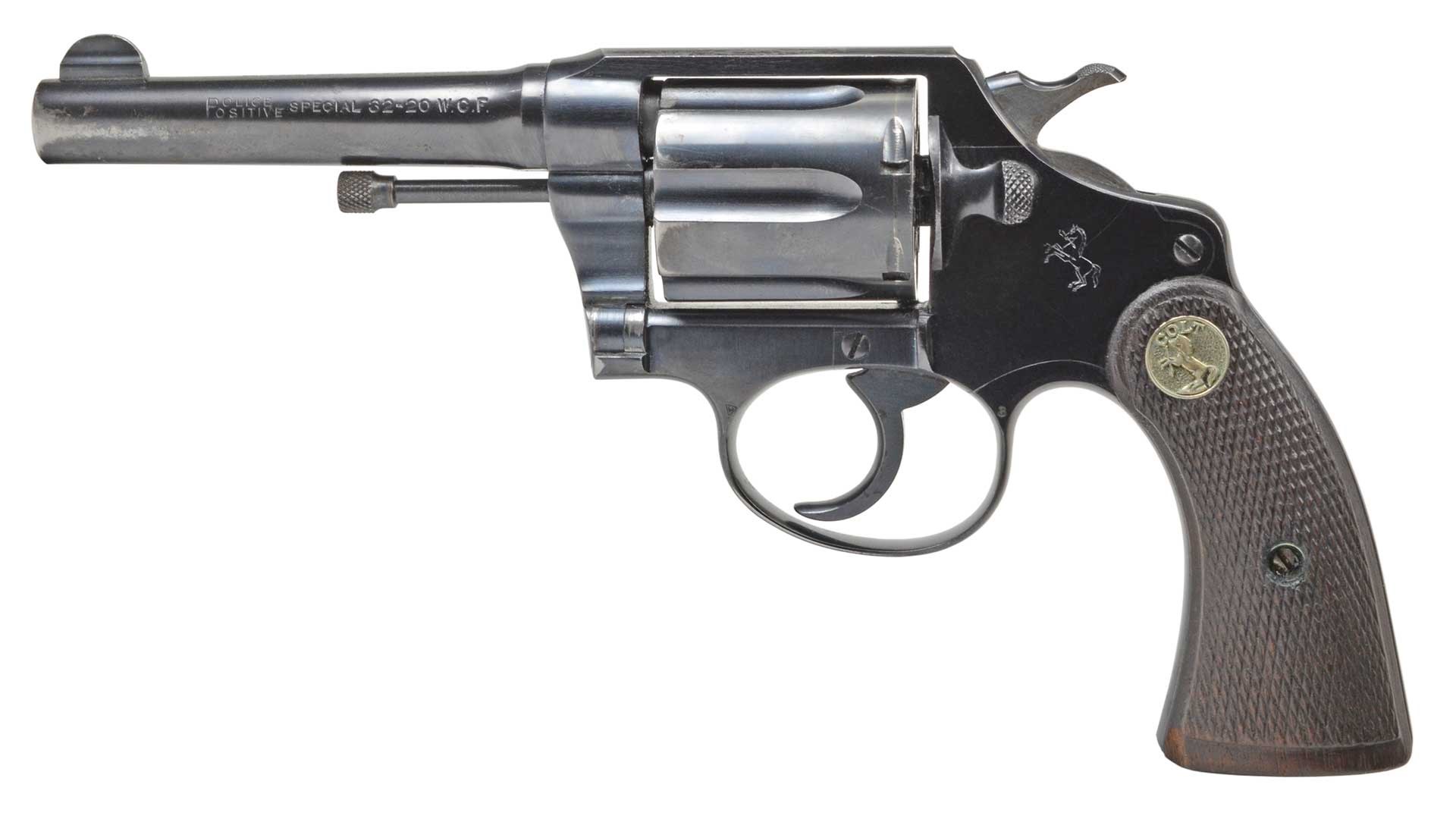
Colt’s Police Positive Special
The long-cylinder Police Positive Special was produced from 1907 to 1995 (but not continuously). It was chambered in .32-20 Winchester and .38 Special. Some were chambered in .32 Colt New Police and .38 Colt New Police. It came with 2, 4, 5 and 6-inch barrels, and there was possibly a 1.5-inch-barreled version in there, too. This frame size (D frame) grip was shortened over time to become the same size they would use for all small-frame revolvers (e.g. the Detective Special) until they were discontinued in 1995. More than 750,000 were built.
Colt’s 1935 catalog lists the following calibers under the .32-20 chambered guns, “.32-20 (.32 Winchester).”
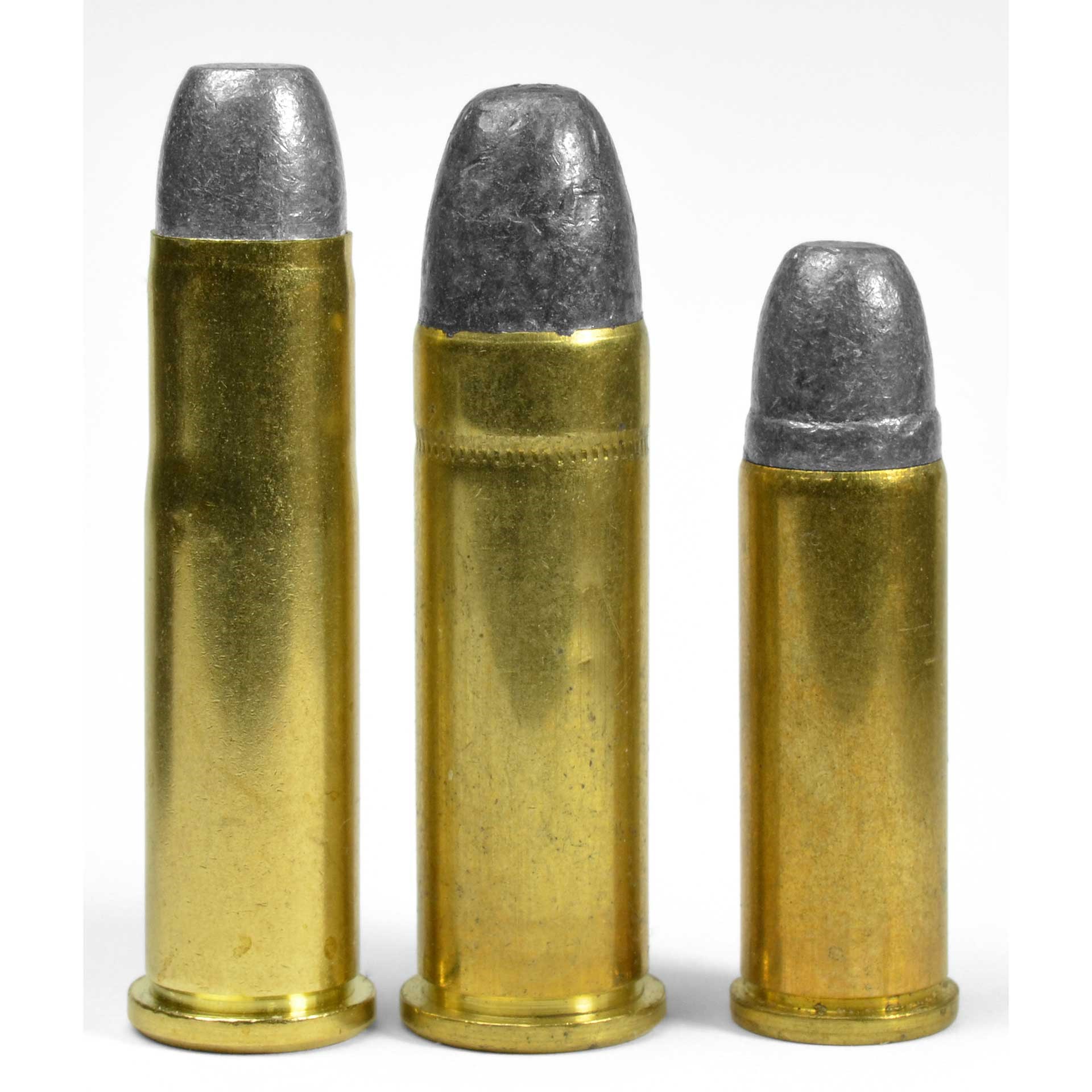
That looks simple enough, but the .32-20 had many, many names, with just about every manufacturer trying to put their name on it. A return to the 1933 Remington catalog shows these names as interchangeable: .32 Win.-Mar.-Rem., .32 Win. & Marlin, .32 W. C. F. [Winchester Center Fire], .32 Winchester, .32/20 Marlin, .32/20 Colt L. M. R., .32/20 W. C. F., .32/20 Win. & Mar.
The .32-20 Winchester had some popularity in the past, because it offered good ballistics and was available in rifles as well. Thus you could have a rifle and revolver in the same chambering. There were two versions of the .32-20, one for handguns and a more powerful load for rifles. The handgun load was a 100- to 115-grain bullet running around 950 to 1,030 fps from a 5.5- or 6-inch barrel. This load ran at around 1,300 fps from a rifle. The high-speed rifle load, with the same bullet weight, added 300 fps in the rifle. Current ballistics from Winchester show a 100-grain bullet at 1,210 fps from a rifle.
You might expect the .38 Special (aka .38 S&W Special) chambering was simpler, but Colt had its own cartridge for this as well, named the .38 Colt Special. Competition was really fierce back then! It, too, had a flat-nose bullet compared to the usual round-nose bullet in the .38 S&W Special. In the 1933 Remington catalog, both the Colt & S&W Special rounds shot a 158-grain bullet at 860 fps from a 6-inch barrel.
There was a very interesting thing in Colt’s description of what ammo you could shoot in the company’s Police Positive Special in the old days. Here’s what it listed in the 1935 catalog as appropriate ammo in .38 Special caliber:
“(Using in the same arm .38 Short Colt; .38 Long Colt; .38 Colt Special; .38 Colt Special Hi-Speed; .38 S. & W. Special (full and mid-range loads); .38 S. & W. Special High Velocity; .38-44 S. & W. Special).”
The .38 Short Colt and Long Colt are just shorter length and lower powered rounds with the same case diameter as the .38 Special, so they are able to be shot in any .38 Special-chambered revolver. The surprise is that Colt approved the use of the Colt and S&W ‘Hi-Speed/High Velocity’ .38 Special and .38-44 rounds. These were really powerful loads that would fall into a .38 Special +P+ category today.
Turning again to the Remington 1933 catalog, the .38 Colt Hi-Speed and the .38-44 S&W Special Hi-Speed both shoot a 158-grain bullet at 1,125 fps from a 6-inch barrel. Today’s .38 Special +P loads shoot a 158-grain bullet at 890 fps from a 4-inch barrel. A 2-inch difference in barrel length means about 100 fps difference, which would put today’s .38 +P load at 990 fps from a 6-inch barrel. Those old Hi-Speed and .38-44 loads were a considerable boost over that. They must have recoiled painfully in the lightweight, 22-ounce Police Positive Specials, not to mention being rough on the gun, too.
The Police Positive Special had five issues. The First Issue was from 1907 to 1927. The Second Issue was from 1928 to 1946. This change included the serrated topstrap and a checkered trigger.
The Third Issue was from 1947 to at least 1973/1976(?). A ramped front sight replaced the half-moon design. The trigger was grooved, and there was an improved, simpler cylinder-retention system (see the Colt Fever website). Some sources say the Third Issue ran until 1976, but they are not in Colt’s 1974 and 1975 catalogs. The Colt Fever website said the Third Issue were only chambered for the .38 Special, but I found some in .32 Colt New Police made in the 1960s.
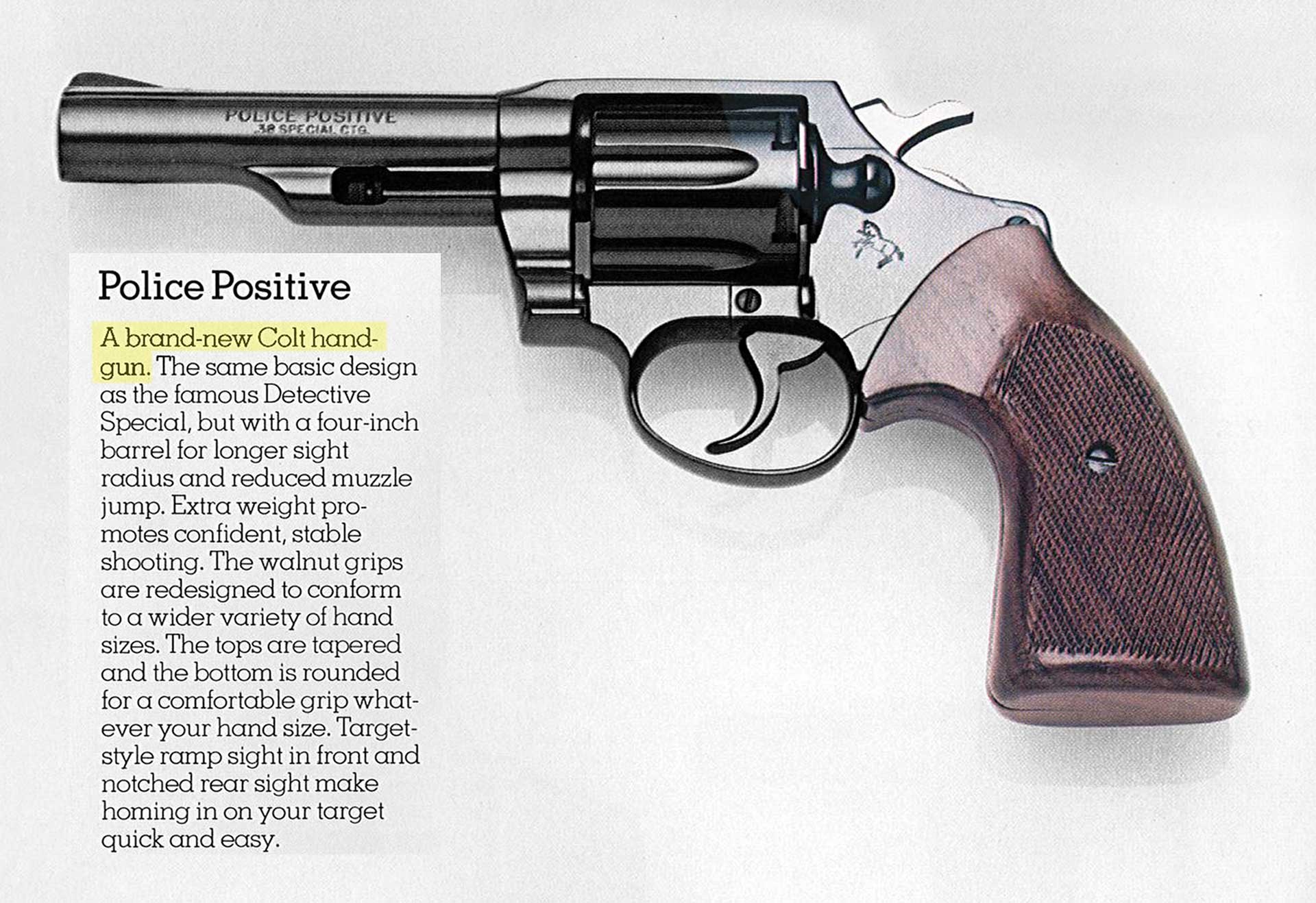
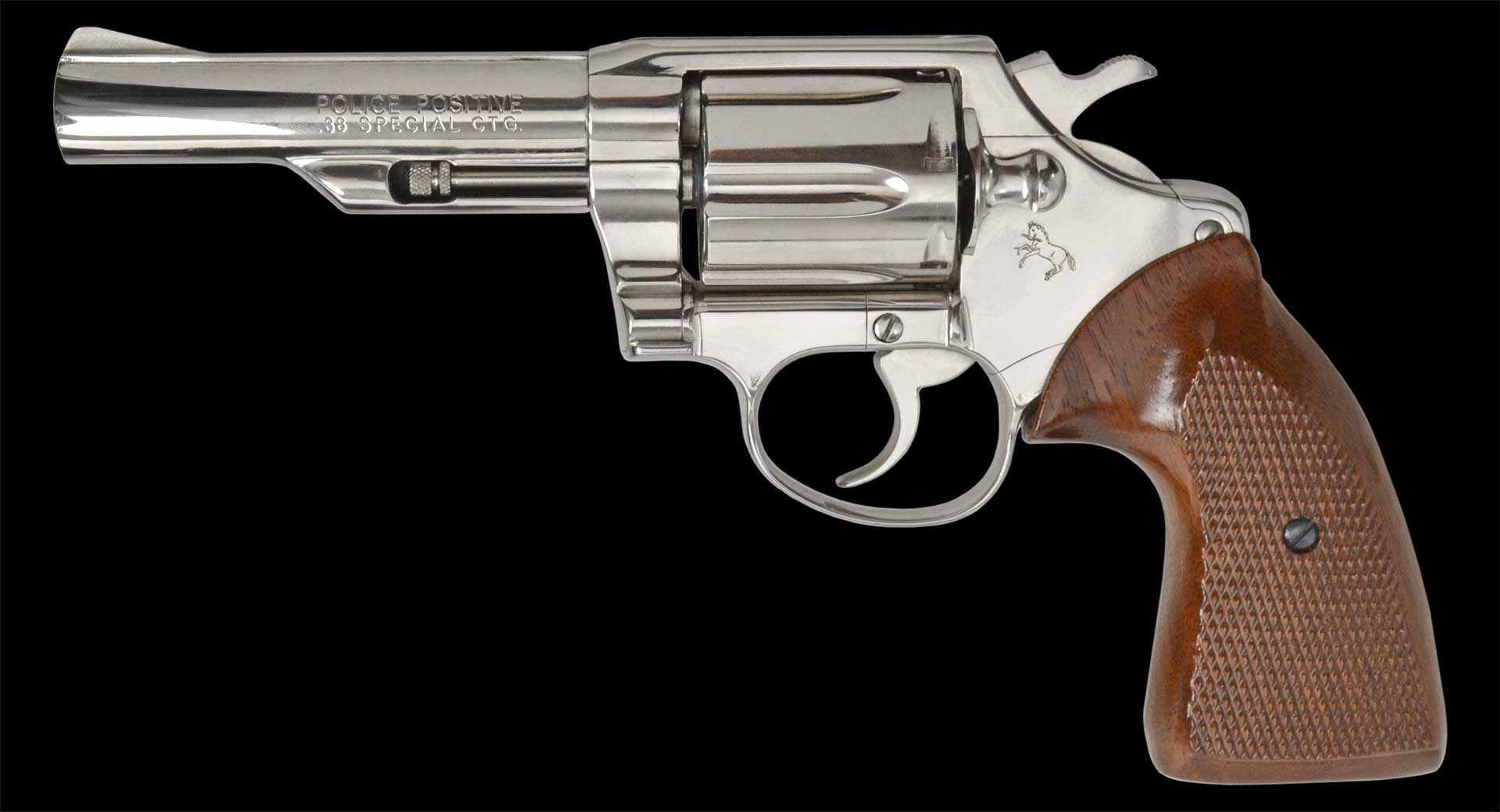
The Fourth Issue, produced from 1977-1978/1979(?), added a heavy, shrouded barrel to protect the ejector rod. For this issue, the barrel was marked “Police Positive.” However, I’ve seen some Colts on the internet that have an unshrouded barrel of the Third Issue but with a circa-1977 serial number. The Fifth Issue ran from 1994-1995 and had a full length underlugged barrel, with “Police Positive MK V” stamped on the barrel.
Colt’s 1977 catalog describes the (Fourth Issue) Police Positive (Special) as, “a brand-new Colt handgun.”
Really?
The barrel design is different than previous issues, so there is that. In that catalog, it was now only chambered in .38 Special and only available with a 4-inch barrel. It could be had with either a Colt blued or nickel finish.
So there it is. My 1977 Police Positive is actually a Police Positive Special. I knew it was special to me, I just didn’t know it was a bona-fide “Special.”
Shooting the Colt Police Positive Revolver
I have five Colt Police Positive/Specials, all with 4-inch barrels. They range from fair condition to excellent. In spite of their outward condition, all have bright bores with strong rifling. Some statistics on the guns are listed in the table below. They include two First Issue guns (.32 Colt New Police, .32-20 Winchester), two Second Issue guns (.32 Colt New Police, .38 Colt New Police) and one Fourth Issue .38 Special.
I was able to find some vintage .32 Colt New Police and .38 Colt New Police ammo. I fired it alongside some current-production .32 S&W Long and .38 S&W ammo. I did not find vintage .32-20 Winchester or .38 Colt Special ammo at the time I was looking, so I used current-production .32-20 Winchester and .38 Special. Velocities and accuracy results are listed in the table.
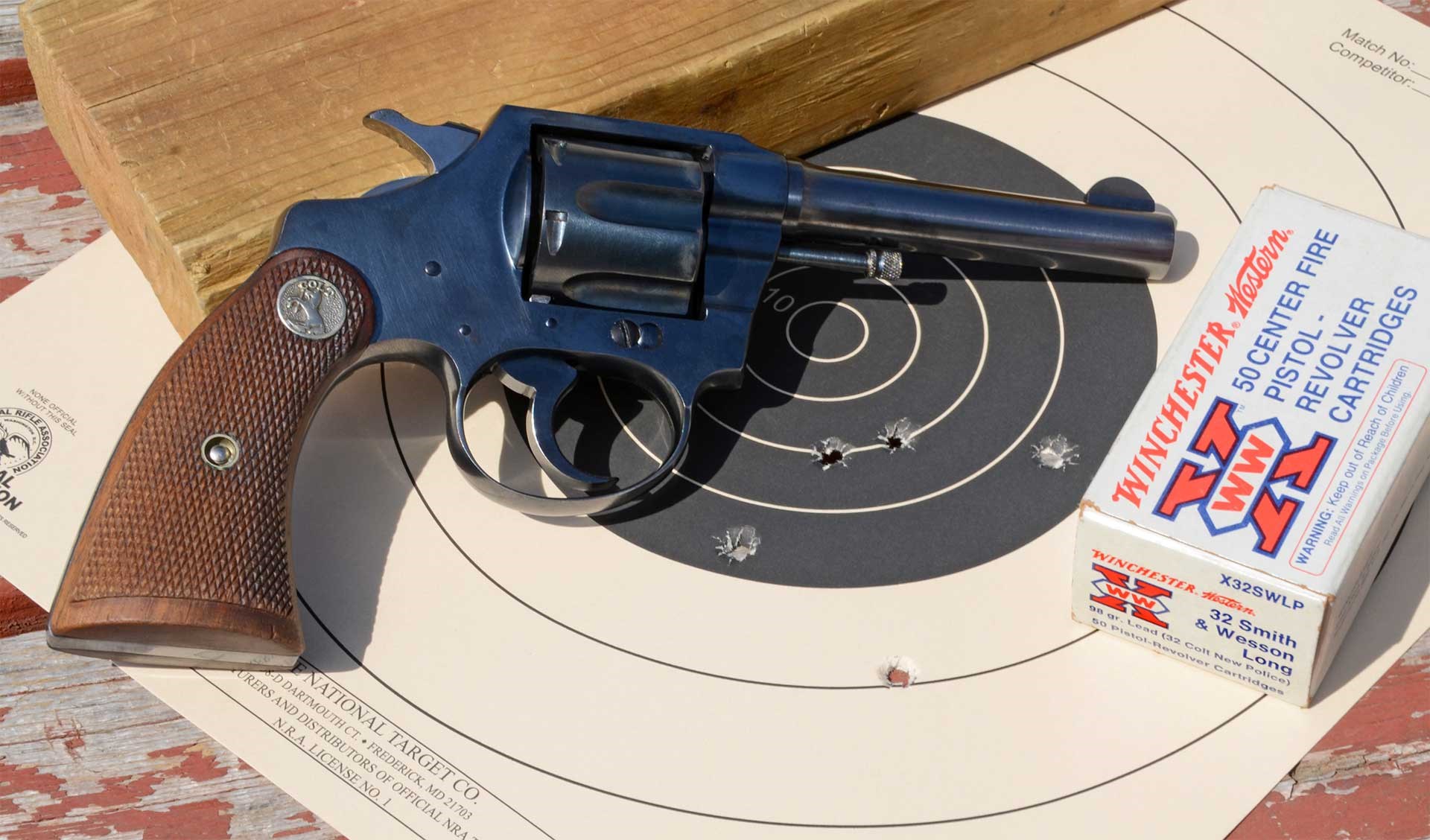
Vintage Remington .32 Colt New Police and vintage Winchester .32 S&W Long ammo was fired in two Police Positives, a First and Second Issue, both with 4-inch barrels. In both guns, the old Remington New Police was faster by around 50 fps, giving the Remington New Police round about 20 ft.-lbs. more muzzle energy. The speeds of the vintage .32 Colt New Police (748 and 786 fps from my guns) were in the range of the advertised speeds in the old days (720-800 fps). Current Remington .32 S&W Long ammo was in between the speed of the two vintage loads. For the full results, see the table.
Vintage Remington .38 Colt New Police rounds clocked an average of 666 fps from my 1941-made Second Issue Police Positive with a 4-inch barrel, a little on the slow end of speed. However, it was a little faster than the modern-production Magtech .38 S&W ammo I recorded at 620 fps. In general, the .38 Colt New Police and .38 S&W have a slight power edge over the .32 calibers, but it depends on the specific load (and gun) because the speeds recorded from my particular .38 were on the slow side.
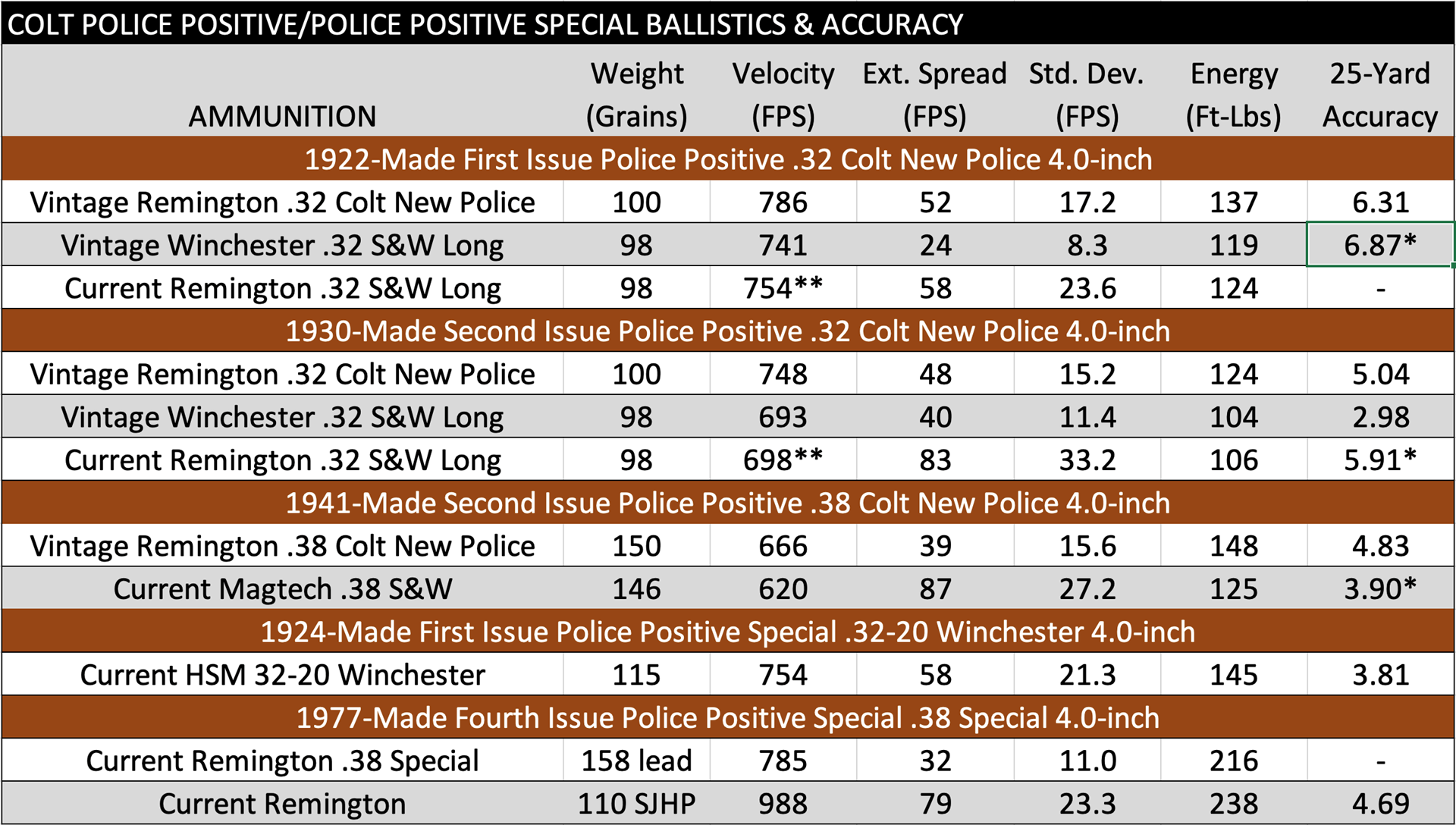
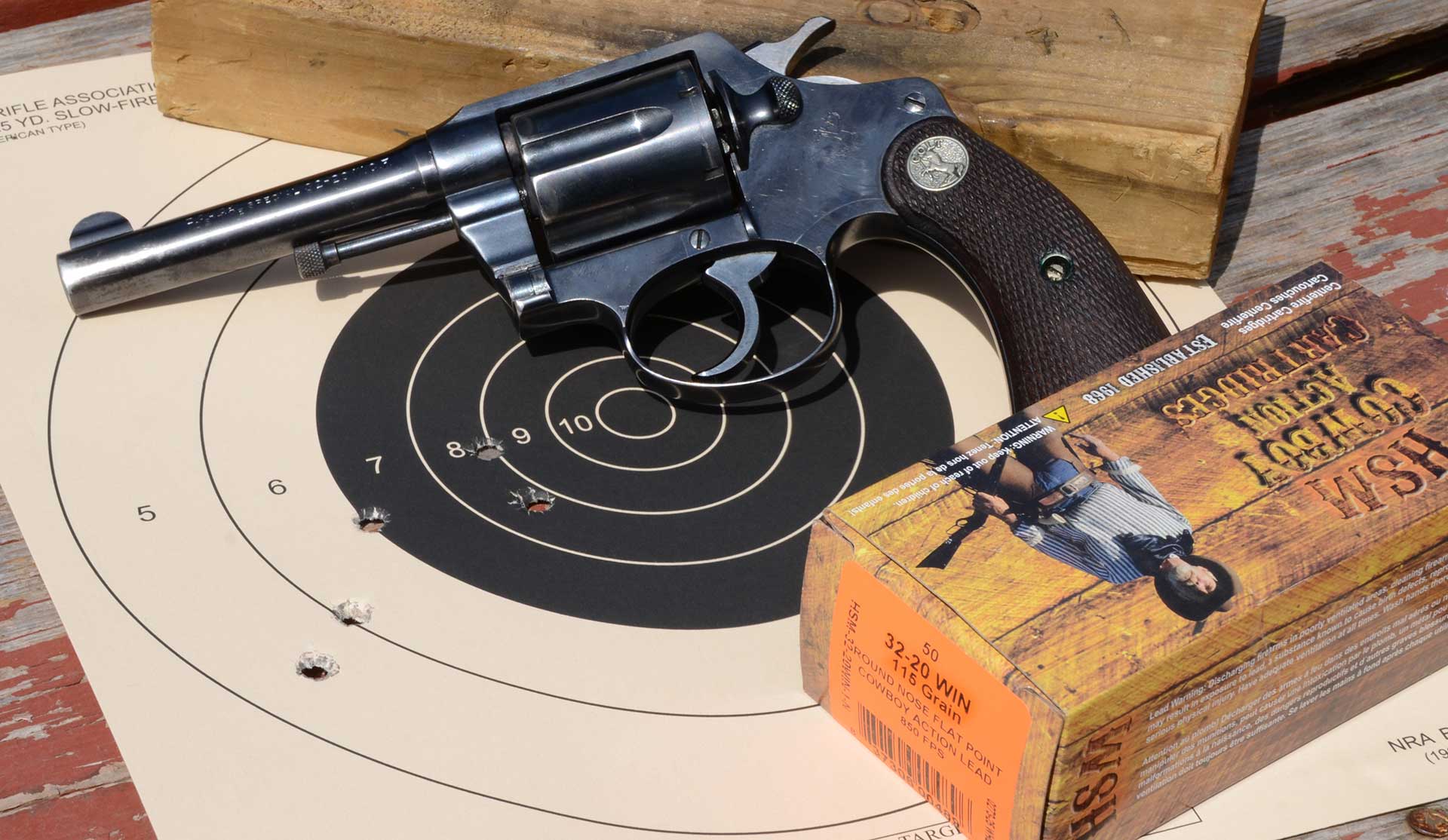
HSM .32-20 Winchester ammo clocked an average of 754 fps in my 4-inch Police Positive Special, which is lower than expected based on vintage velocities. This HSM ammo is marketed as Cowboy Action competition ammo, and they are often downloaded to reduce recoil for faster follow-up shots.
Velocities from the .38 Special ammo were in the range expected from a 4-inch barrel. The lead round nose 158-grain load ran at 785 fps, and the 110 grain SJHP load ran at 988 fps.
I fired the guns off sandbags at 25 yards for accuracy. The poor sights of the First Issue guns made getting a confident sight picture difficult for me. The improved sights of Second Issue guns were easier to work with. Sights on the nickel-plated gun were painted, orange for the front and flat black for the rear, because nickel-plated sights are nearly impossible to see in bright sunlight. Five-shot groups were variable, from 3 inches to 7 inches, but I suspect some of this was due to my less-than-stellar eyesight.
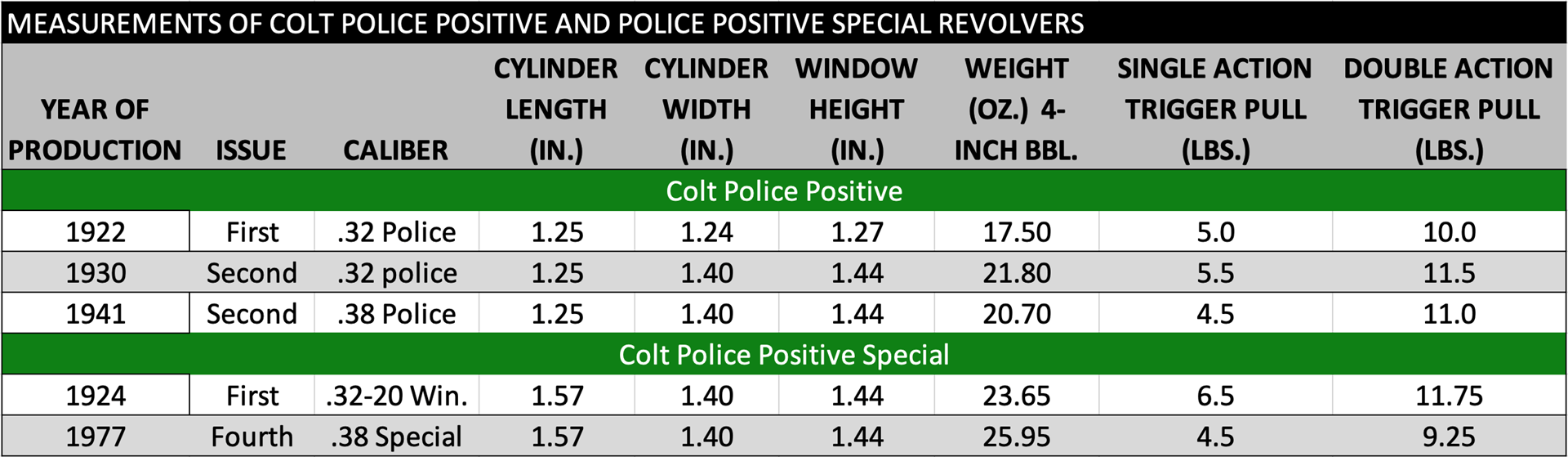
The single-action trigger pulls, measuring 4.5 pounds and up, were a little heavy for me for precise target-shooting. I kept thinking, “When is this thing going to go off?” The double-action trigger pulls were okay but nothing special, save for two exceptions. The double-action pull on the Second Issue .38 Colt New Police was quite smooth, even if a little heavy at 11 pounds. The double-action pull on the nickel-finished .38 Special was especially smooth and the lightest of the bunch at 9.25 pounds.
I did not like the feel of the checkered triggers on the Second Issue guns. The checkering is light and rounded, but the trigger is not very wide (.230-inches) and has a sharp edge. My trigger finger wasn’t happy after firing more than a box of .32 S&W Long handloads double-action.
A Note on Police Positive Frames
Several sources say there were changes to a larger frame between the First and Second Issue Police Positives. Frames for the First Issue .32 and .38 calibers were different sizes. The .38-caliber frames had to be bigger to accommodate the larger cylinder diameter needed for the larger diameter .38-caliber cartridge. The .32-caliber cylinder was 1.24 inches wide, and the .38 cylinder was 1.4 inches wide. This required a larger window in the frame. Since the cylinders were the same length (1.25 inches), the window needed to be taller but not longer. See the table for more details.
The .32-caliber Police Positives made during the Second Issue were built on small and large frames. My 1930-made Second Issue .32 Police Positive has a large frame the same size as my Second Issue .38 (and see oldcolt.com). As previously mentioned, the “B” model .32 caliber Pequano guns made in 1941 were made on the small frame.
One website (coltfever.com) said there was an increase in the distance between the trigger guard and grip from the First Issue to the Second Issue to allow more room for the fingers. I did not see evidence of this in my guns.
I also didn’t see any obvious change in the frame size of First and Second Issue .38-caliber guns. It looked like the .38-caliber Police Positives used the same frame over time, based on comparing frame-size proportions of guns at oldcolt.com. It is possible some changes were made that were not apparent in those pictures.
Summing Up
Police Positives had two different frame sizes during their run. Short frames housed the .32s, and the tall frames housed the .32s and .38s. Add the long-framed Police Positive Special guns that were sometimes labeled just “Police Positive,” and that makes three frame sizes, all of which were produced concurrently during at least a portion of the Colt Police Positive’s life.
Police Positives can be found for sale on several websites and run from around $400 and up depending on their age, rarity and condition. If you’re looking for these old Colt revolvers, pay close attention to what caliber is listed. Some sellers don’t know what they are selling. I’ve seen countless examples of this. My First Issue .32-caliber Police Positive was listed as being “.32 ACP” (.32 Automatic Colt Pistol) caliber of .32 semi-automatic pistols, even though “.32 Police” stamped on the barrel was visible in the photos. My Second Issue .38-caliber Police Positive was advertised as being a .38 Special, even though it is chambered in .38 Colt New Police. If there is any question, ask the seller for a close-up photo of what is stamped on the barrel.
Notes on the Colt Police Positive
Production Dates: Resources claim different dates for production, so keep an open mind on this. Other information is questionable for lack of confirmation from the sources I had available and might be accompanied by a question mark (?). Also, this is not meant to be a comprehensive, detailed historical account of the Police Positive. One complication of looking at their history is that resources have conflicting information. This article runs the same risk because the resources are limited or simply don’t agree. Please read with a forgiving eye. History is not an exact science!
Naming Conventions: Colt double-action revolvers in years past were popular with law enforcement and used names to appeal to cops. They used the name “Police” in several different models: New Police, Police Positive, Police Positive Special, Official Police and Metropolitan Police. You can see why it might be difficult to keep track of which was which. And Colt didn’t stop there. The company named several of its other revolvers with law-enforcement themes, like Lawman, Marshal, Detective Special, Agent, Trooper and Border Patrol. And, of course, the company is famous for its “Snake” series guns as well – Python, Anaconda, Cobra and so on.
Other Chamberings: The 1960 Colt catalog lists the Police Positive Special as chambered in .38 Special and .32 New Police. It says the ammunition is .38 Special (mid-range and regular), .38 New Police, .38 S&W, .32 New Police, .32 S&W Short & Long. The oddball stuff here is the .38 New Police and .38 S&W. These cartridges are physically wider than the .38 Special and generally won’t fit in a .38 Special chamber. I point this out because it does not specifically say it was chambered in these two cartridges, only .38 Special for the 38s. Is this an overlooked error, or did Colt chamber them to fit the wider cases? Certainly, more research is needed on the confusing history of one of the most popular revolvers ever made.
.jpg)

The Cape buffalo had been hit four to five times—not by me, but all solid hits—when I was asked to come in for a backup shot. His askari, the younger bull who decided to pay homage to the old fellow, didn’t want to leave him but when the Griffin & Howe .375 H&H went off simultaneously with the .404 Jeffery, the game was over.
Watching the video playback, G&H’s Dan Rossiter had certainly done his part with that Criterion in .404 Jeff, but those bulls don’t necessarily read the script. It was assuredly not my first experience with the .375 Holland & Holland Magnum, nor the offspring of the great cartridge; it most certainly would not be my last.
Mention a Holland & Holland Belted Magnum, and the ‘three-seven-five’ will be immediately thrown into the conversation, though technically speaking, the .375 H&H Magnum was neither Holland’s first belted cartridge, nor its first .375-caliber cartridge.
It is, however, the most famous of the family, though there are many children and branches of the family tree. When I was a young man, nearly all of the centerfire rifle cartridges considered to magnums wore a belt of brass just north of the extractor groove.
I assumed that the belt added strength, but I was wrong, as the design uses the belt to give the positive headspacing of a rimmed cartridge, without the complications involved in getting a rimmed case to feed in a box magazine repeater.
1905 saw Holland & Holland release the .400/375 Belted Nitro Express, also known as the Velopex, bringing the first belted cartridge to the market. To say it was anemic is an understatement—it pushed a 270-grain bullet to 2,150 fps—and was immediately challenged by Otto Bock’s 9.3×62 Mauser.
However, in 1912 H&H released a pair of belted magnums: the still ubiquitous .375 H&H Magnum and the shorter .275 H&H Magnum; the latter bears a striking resemblance to the 7mm Remington Magnum which would come half-a-century later. While the former went onto glory, the latter all but disappeared early-on. With a 2.500-inch case and a 3.42-inch cartridge length, I am surprised the .275 H&H Magnum didn’t catch on, as it did better the velocities of the 7×57 Mauser and .30-06 Springfield considerably.
 .300 Holland & Holland
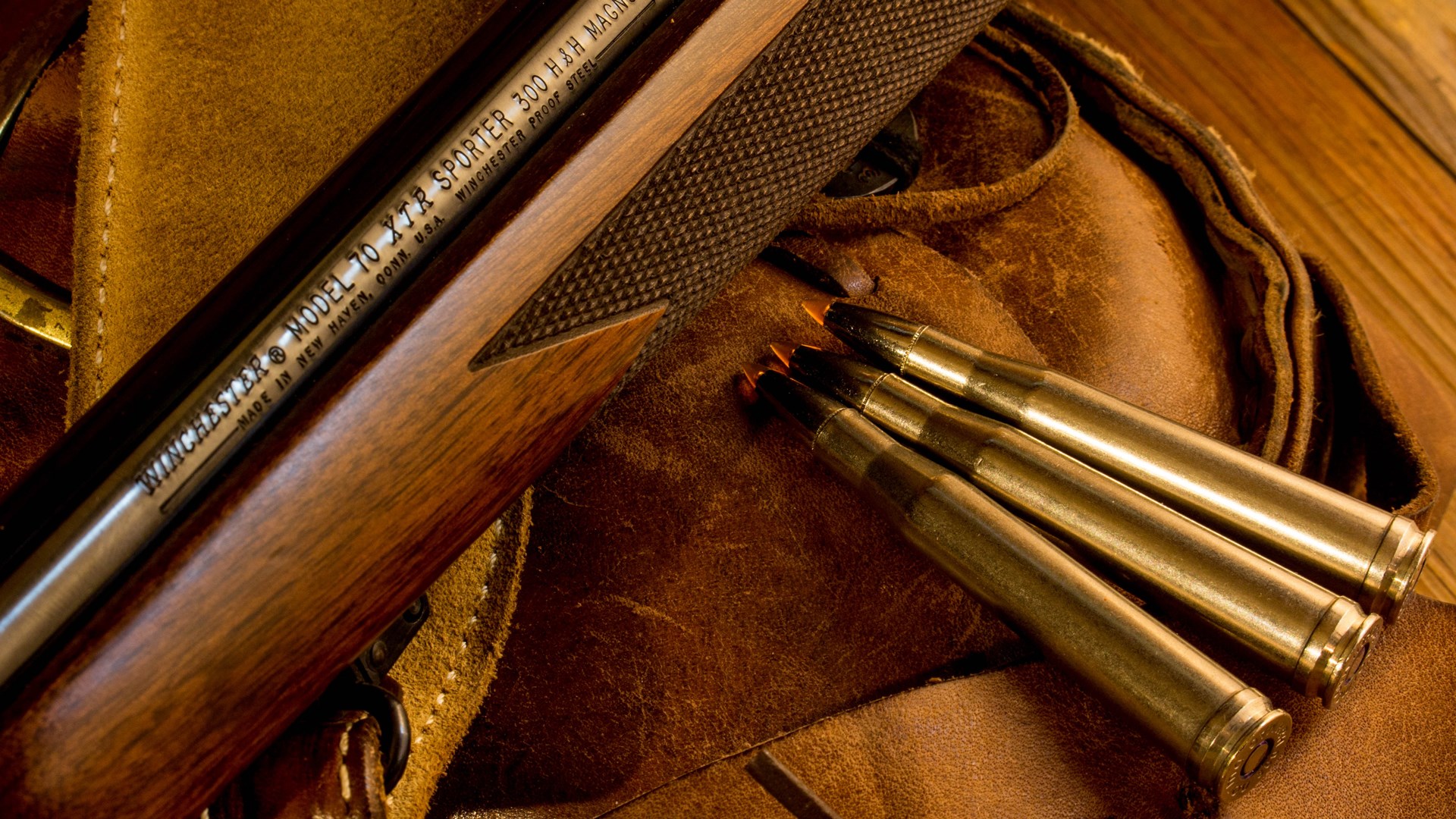
It was in 1925 that Holland & Holland brought us the .300 Holland & Holland Magnum, sharing the same length as the .375 H&H Magnum, and a gentle shoulder and long neck. It was the first real commercial gain over the .30-06 Springfield in a .30-caliber cartridge, and it caught on well here in the U.S., even being offered in the Winchester Model 70, with ammo for both the .300 and .375 H&H being produced by several American ammo companies.
While the .300 Holland might have faded with the introduction of other .300 Magnums, I still reach for the classic cartridge almost every hunting season. Its velocities run around 150 fps above the ’06, and about 100 fps below the .300 Winchester Magnum; it remains a great hunting cartridge.
 .300 Weatherby Magnum
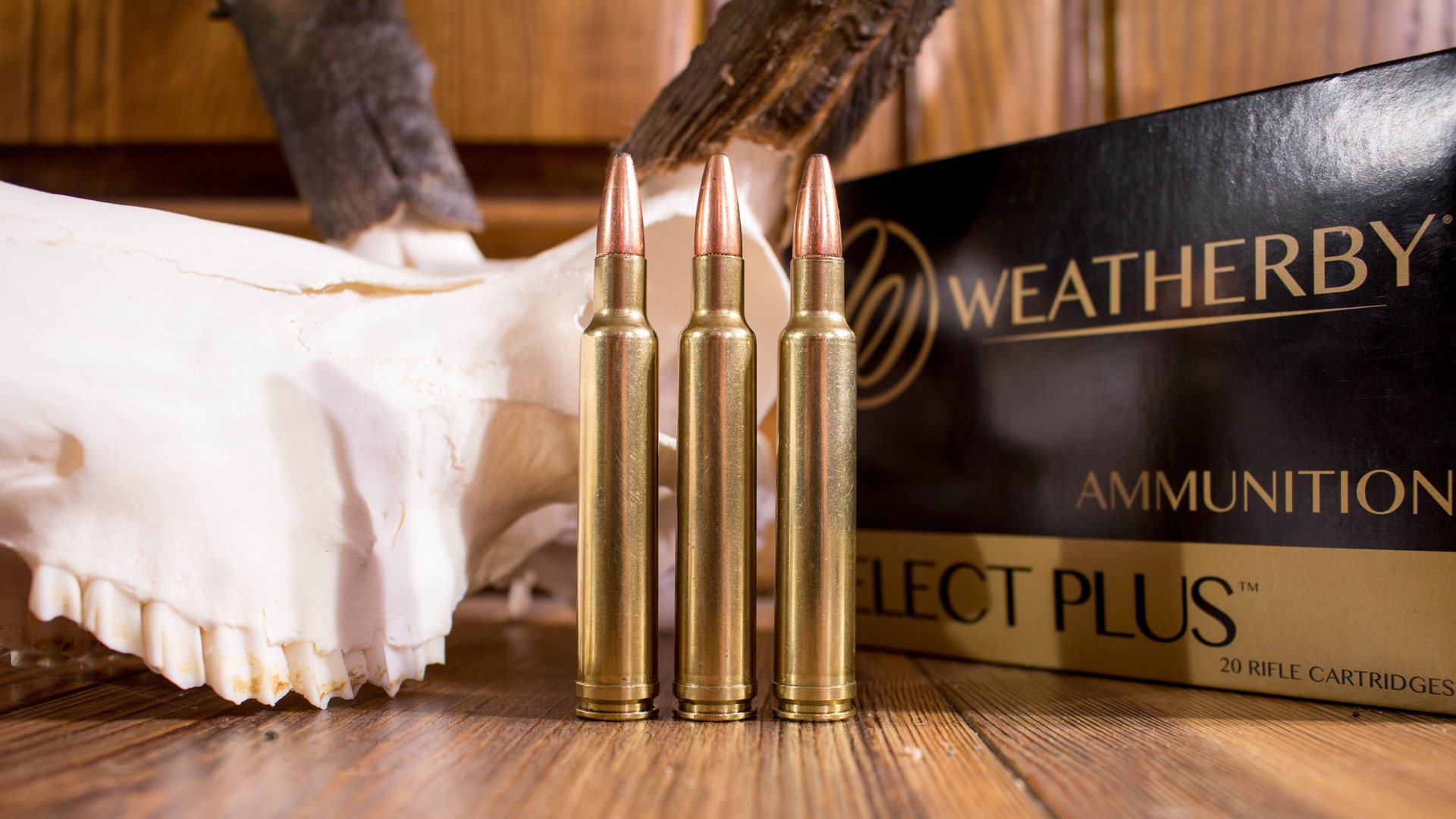
Roy Weatherby showed the world what velocity could be, with his series of proprietary belted magnums which feature a double-radius shoulder. His most popular cartridges were based on either the full-length H&H case, blown out to remove the majority of body taper or shortened to fit in a long-action receiver. Whether or not it was the .375 or .300 H&H case which served as the parent is a debatable point and probably moot; suffice it to say that the belted H&H case is either the father or grandfather.
The .300 Weatherby Magnum and .340 Weatherby Magnum use the 2.82-inch case length—just shorter than the 2.85-inch case of the H&H Magnums—while the .257 Weatherby Magnum, 7mm Weatherby Magnum and the 270 Weatherby Magnum are shortened to 2.55 inches, to fit in the long-action magazines. As time progressed, Weatherby would use a larger belted case for the .378 Weatherby Magnum and .460 Weatherby Magnum, and a scaled-down belted case for the .240 Weatherby Magnum and 224 Weatherby Magnum. But those first Weatherby cartridges were undoubtedly based on the Holland & Holland case.
In 1955, Holland introduced the .244 H&H Magnum, being the full-length .375 H&H case necked down to hold 6mm bullets. This little barrel-burner launched a 100-grain bullet at 3,500 fps, designed for deer stalking in the United Kingdom. While this cartridge never had a serious following here in the U.S., it had more than a few fans among British and Scottish deerstalkers.
 .264 Winchester Magnum
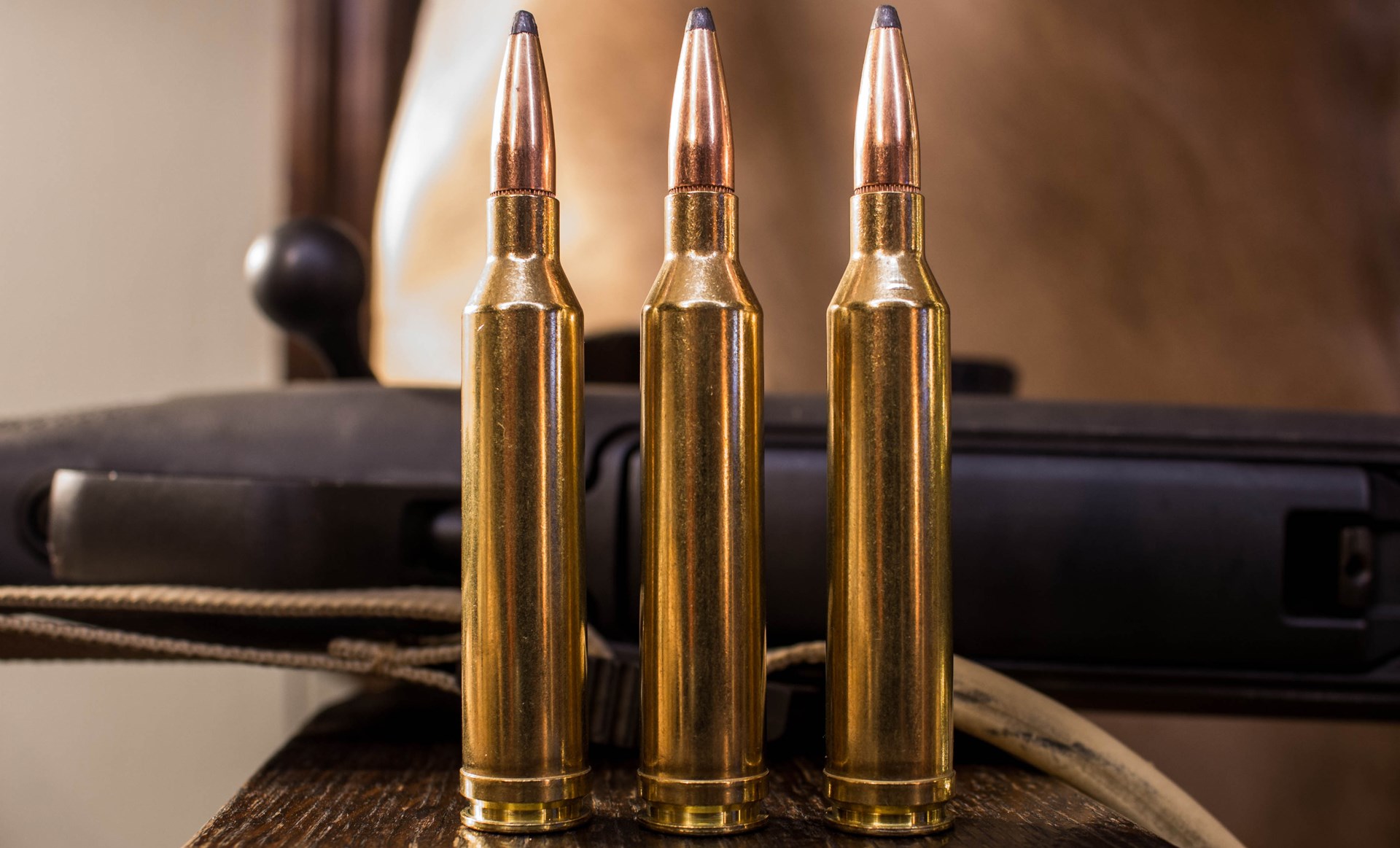
The latter half of the 1950s were dominated by Winchester’s lineup of magnum cartridges, all based on the belted H&H case shortened to 2.50 inches to fit in a long-action receiver. The .458 Winchester Magnum, .338 Winchester Magnum and .264 Winchester Magnum were released in 1956, 1958 and 1959, respectively.
With the supply of ammunition for the classic British double rifles drying up rapidly, the .458 Winchester gave hunters of the largest species a viable choice of readily available American-made ammunition. The .338 Winchester Magnum would go on to become the darling of many elk hunters and those hunting the 49th state, and though it would take some years for America to embrace the benefits of the 6.5mm bore, the .264 Winchester Magnum made a dandy of a deer and antelope cartridge. Winchester would add a fourth to the lineup in 1963, with its .300 Winchester Magnum.
This one would have the same 3.340-inch overall length of the others, but a slightly longer case with the shoulder moved forward for additional powder capacity. It remains an extremely popular choice, and one of my favorites.
 7mm Remington Magnum
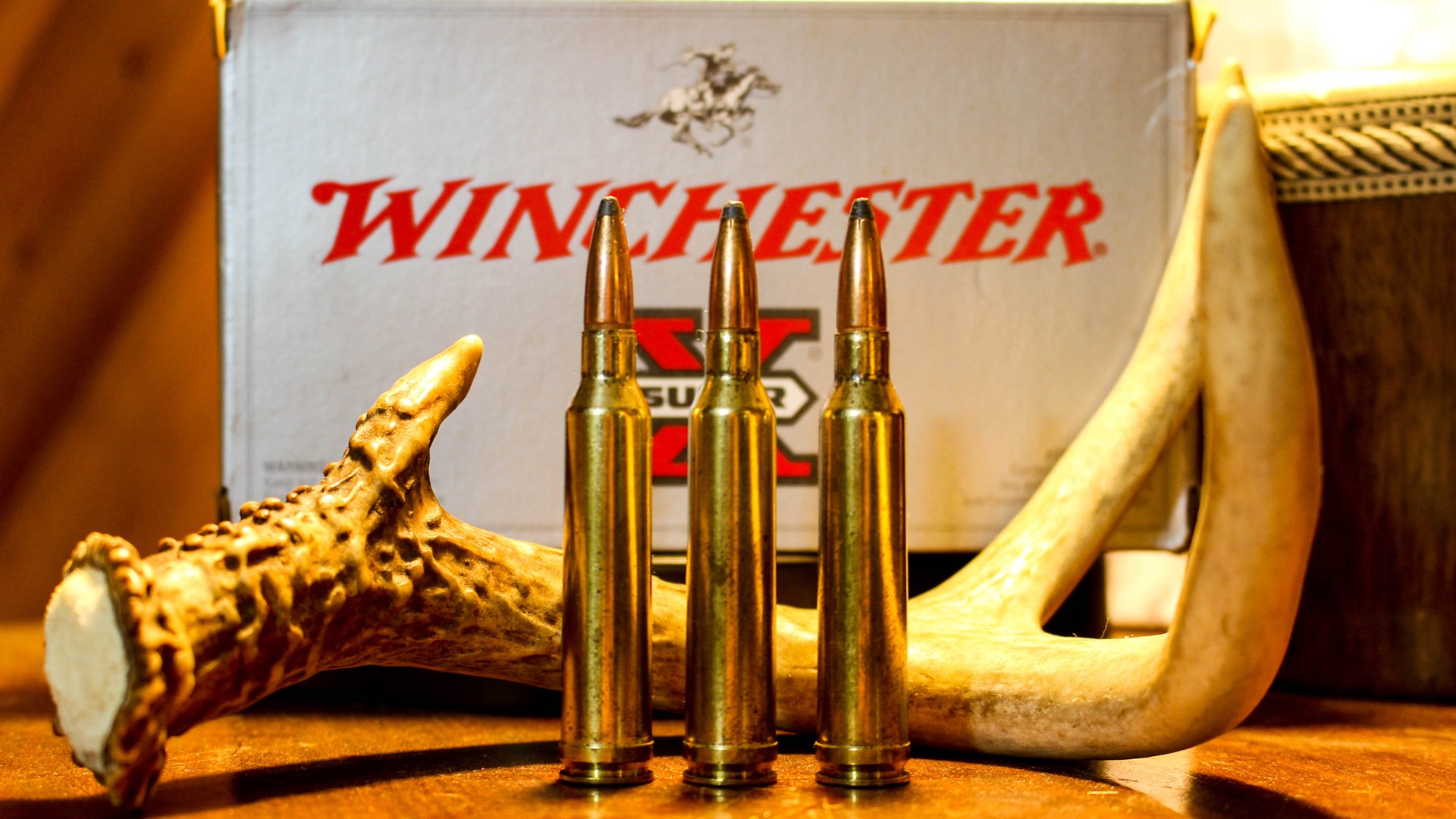
Remington would offer its first belted magnum in 1962, and it remains its most popular—the 7mm Remington Magnum shoved the .264 Winchester Magnum off the stage, and has rivaled the .300 Winchester Magnum since the latter was released. The cartridge really needs no introduction. The .350 Remington Magnum and 6.5 Remington Magnum were released in 1965 and 1966, respectively, and were the first two belted magnums to be shortened for use in a short-action rifle. Those dog-legged Remington rifles, with the ventilated rib and shark fin front sight—the 600 and 660—have a small but nearly fanatical following, though the cartridges were never nearly as popular as the 7mm Remington. In 1978, Remington brought us the magnum-length 8mm Remington Magnum, assumedly banking on the metric successes of the 7mm Remington Magnum. Despite an overall lack of popularity, the 8mm Remington Magnum is a good cartridge, even if it doesn’t offer much of an advantage over the .30-caliber magnums. In late 1988, Remington announced the .416 Remington Magnum, a necked-up variant of the H&H case, using the respected projectiles of the .416 Rigby and delivering identical factory ballistics. Breaching the gap between the .375 H&H and the .458 Winchester Magnum, the .416 Remington Magnum runs at a higher pressure than does the .416 Rigby, but affords an extra cartridge in the magazine, and is fully capable of taking all species of game. I have used the cartridge on a number of African safaris with great results.
 .358 Norma Magnum
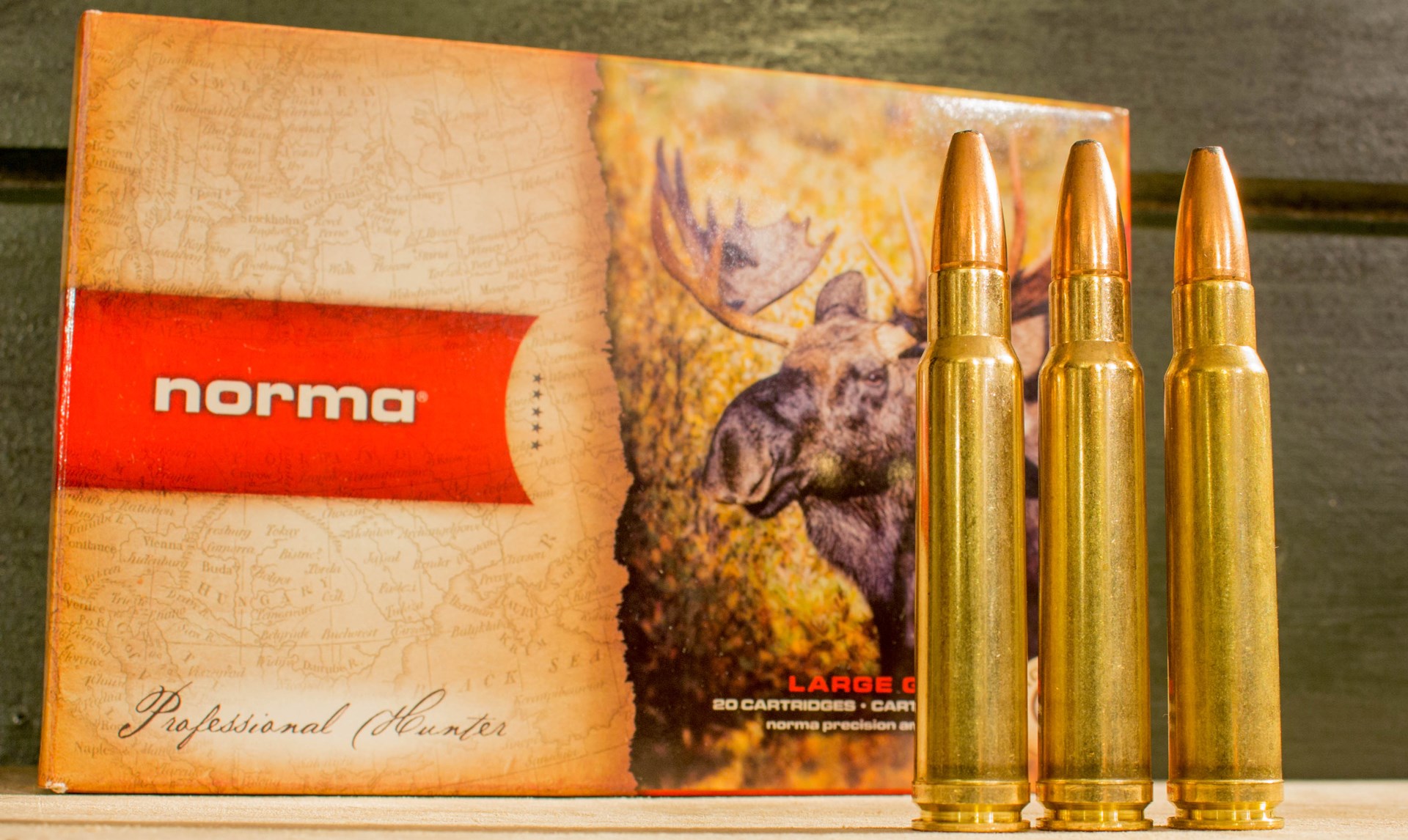
Sweden’s Norma threw its hat in the ring in the late 1950s and early 1960s with their own shortened belted magnums—the .358 Norma Magnum and .308 Norma Magnum. The former would drive a 250-grain bullet to 2,750 fps, rivaling the .375 H&H itself, while the latter is the ballistic twin to the .300 Winchester, albeit with a different shoulder location. Both are great cartridges, and with the pair a North American hunter would be well-suited to any big-game species on the continent. Both are designed to operate in a long-action rifle, and while ammunition is becoming rare, the capabilities of the pair are not to be denied.
 7mm STW
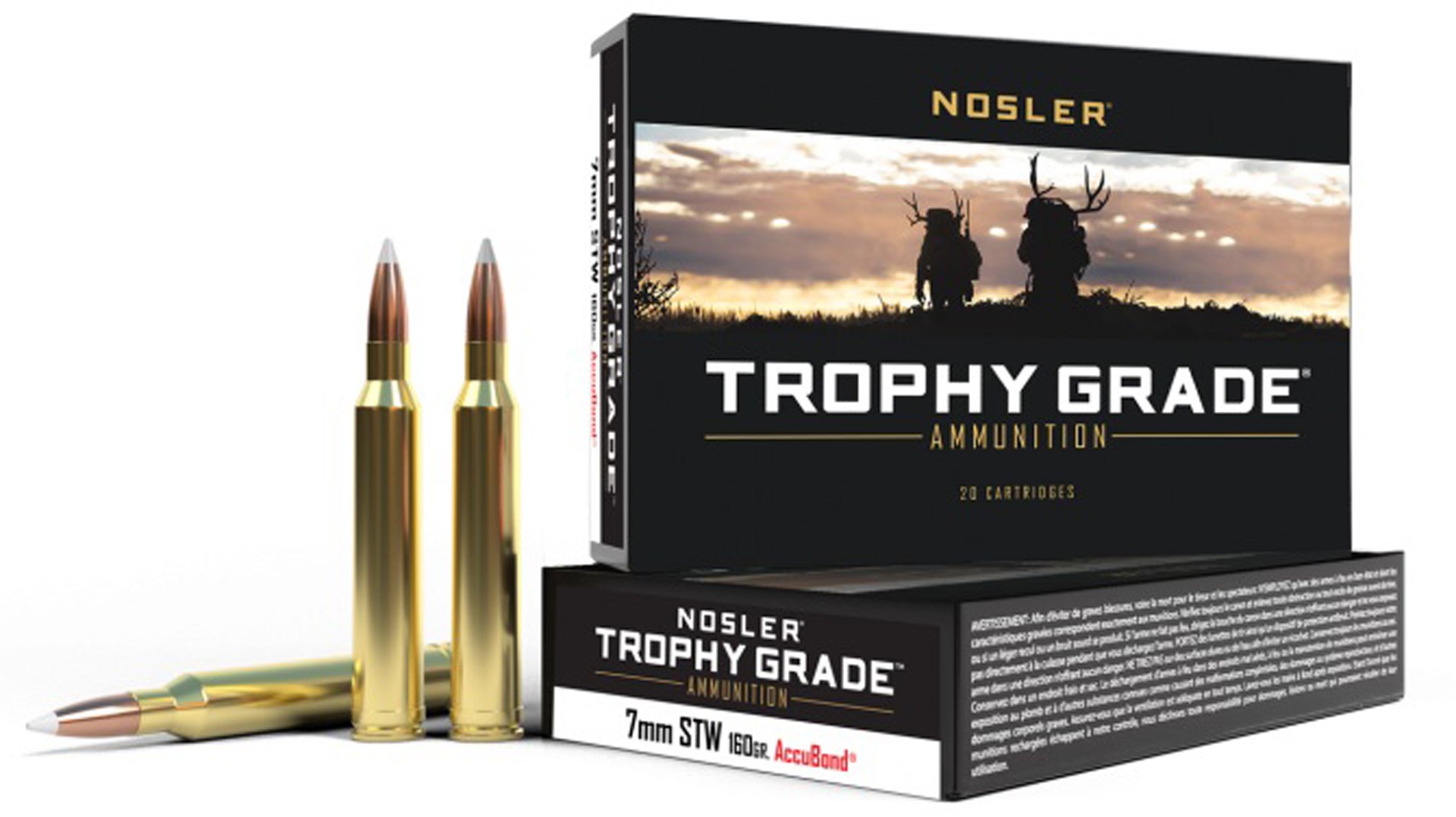
Layne Simpson’s experimentation with the full-length 8mm Remington Magnum belted cartridge (a child of the H&H case) led to the 1990s release of the 358 Shooting Times Alaskan (STA) and the 7mm Shooting Times Westerner (STW), with the latter having a brief period of popularity, especially among long-range deer hunters. Both share the 2.85-inch case length and 3.60-inch cartridge length of the .375 H&H.
 .458 Winchester Magnum
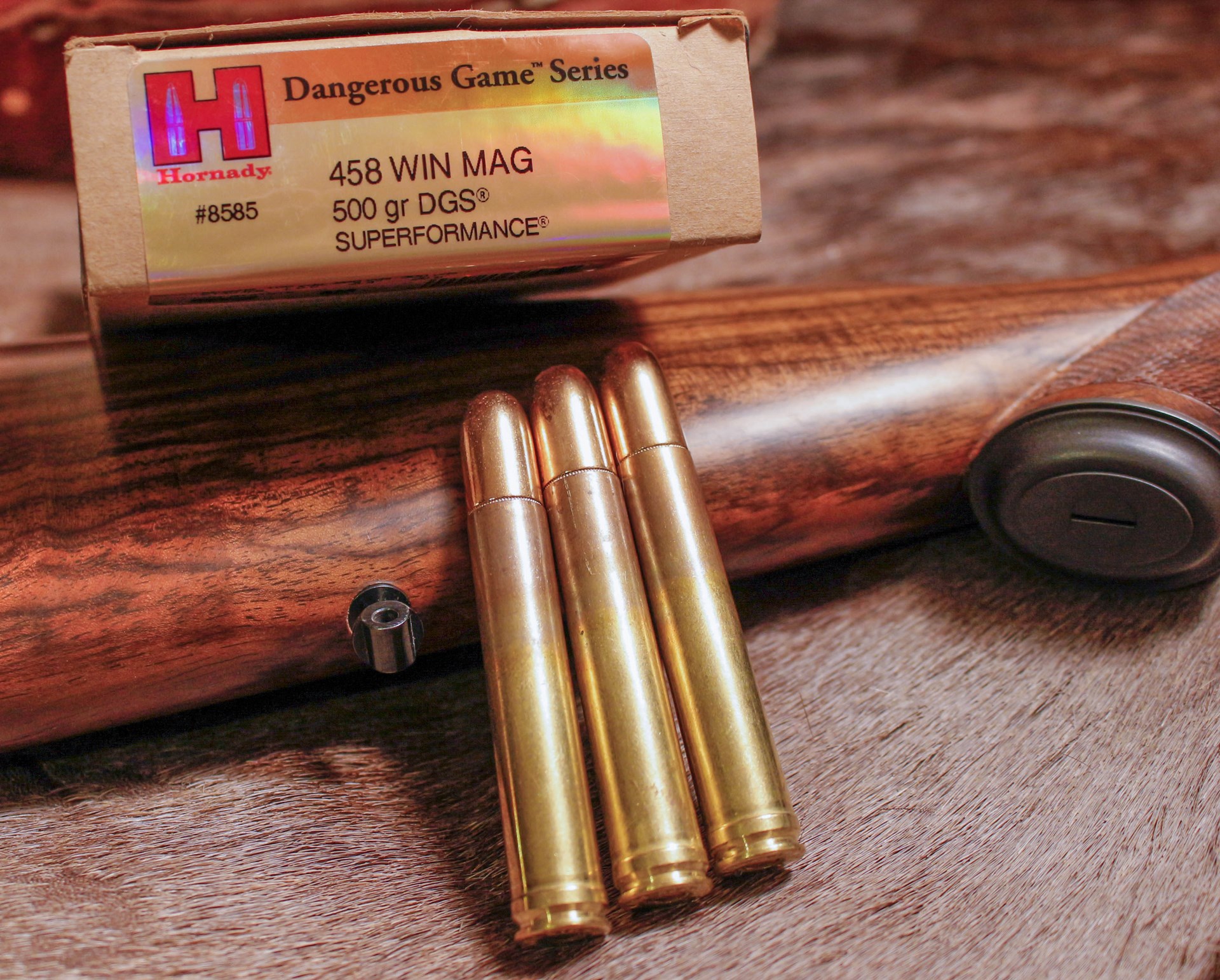
Jack Lott experienced some frustration with his .458 Winchester Magnum in the late 1950s on a safari in Mozambique, and sought to build a better mousetrap. Displaying problems with overly-compresses powder charges, the .458 Winchester Magnum wasn’t delivering the promised velocities, and Lott decided a longer case would allow for a larger and less-compressed powder column. The cartridge stayed in wildcat form for quite a while, but was legitimized in 1995 based on a standardized design provided by Art Alphin of A-Square. It does give a healthy velocity advantage over the .458 Win Mag, and the 2.800-inch case fits perfectly in a magnum-length receiver.
Hornady & Marlin paired to bring us the .450 Marlin in 2000, using a belted case to deliver the performance of the “hot” .45-70 Government loads, in a cartridge which can’t be chambered in an old Trapdoor Springfield (those hot .45-70 loads can destroy the older 19th century guns). It is available in the older Marlin 1895M lever gun, as well as the Browning BLR.
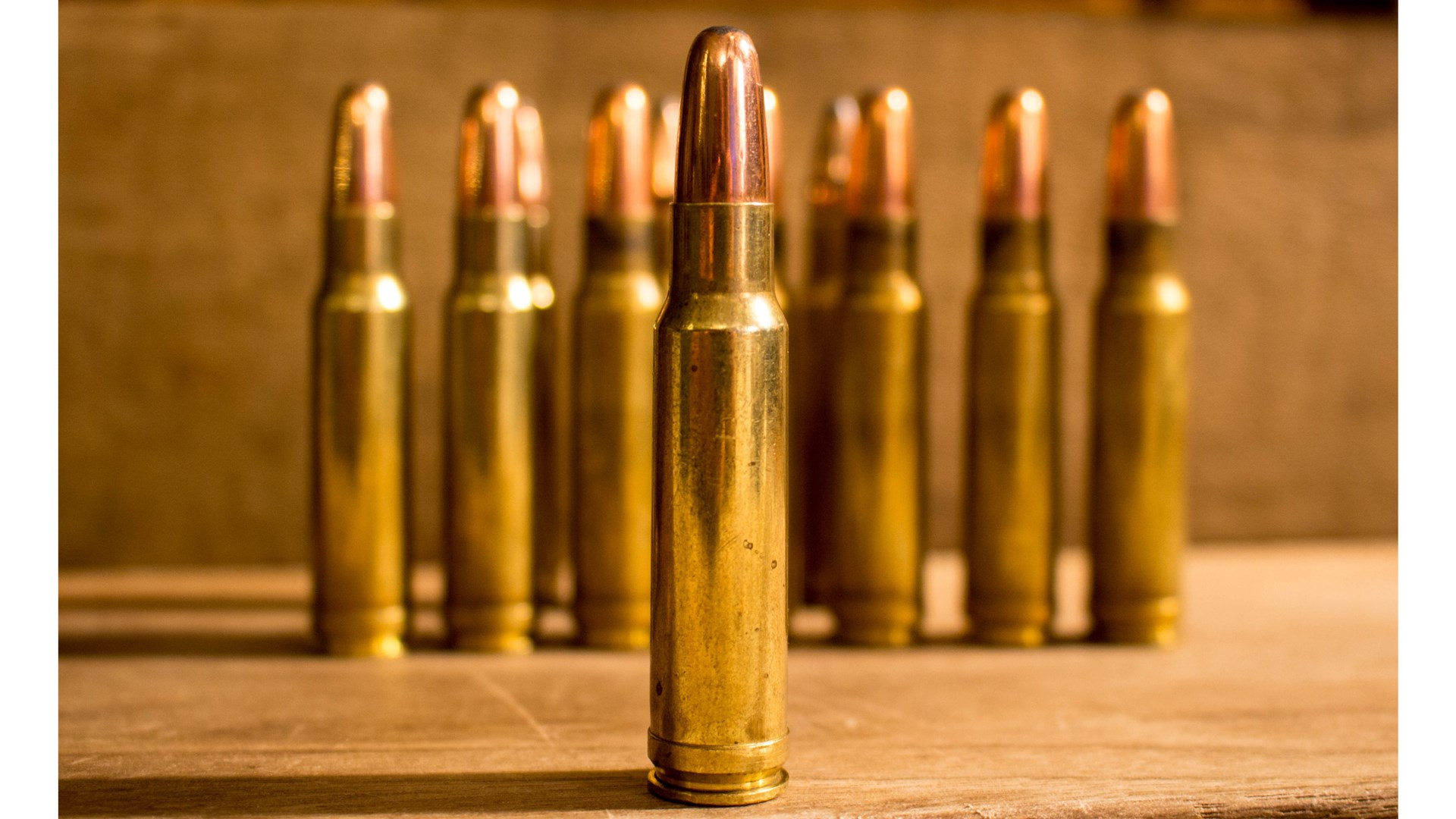 .350 Remington Magnum
Holland & Holland added a pair of new proprietary cartridges in 2003, introducing the .400 H&H Magnum and .465 H&H Magnum. The former is based on a necked up .375 H&H case, and gives the advantage of the 400-grain slugs of the .450/400 NE, at .411-caliber, cruising at 2,300 fps. The latter is based upon the larger .378 Weatherby Magnum case.
There are also a number of popular wildcats or obscure commercial designs to name, and though they may not have an invite to the family reunion, they are absolutely related. These include (but are not limited to) the 7×73 Vom Hofe, the 7×61 Sharpe & Hart, the .334 OKH, the .416 Hoffman, the .416 Taylor, the .450 Watts, the .470 Capstick and many others. If you like the idea of hunting with the obscure, the prolific amount of the H&H family of cases available will surely provide you with the fodder you need to get the cartridge you want.
For all of the successes the Holland Belted case design has had for the majority of the 20th century, it seems that all good things must come to an end. To the best of my knowledge, the 6.5-300 Weatherby Magnum—released in 2016—was the last belted cartridge brought to the market. The new rifle cartridge designs focus on rimless cases, with steep shoulders, capable of handling long, sleek bullets. While this trend shows no signs of slowing down, there are so many fans of the belted cartridges that I don’t feel they’ll fade into obscurity anytime soon. I love my .300 Winchester Magnum, .300 H&H Magnum and I have gone on record stating that the .375 H&H Magnum just might be the most useful all-around hunting cartridge ever developed. There is plenty of room for the differing designs, but long live the belt.
Categories
.357 Magnum vs. .44 Magnum.

The .458 Winchester Magnum was designed by Winchester in 1956 for the sole intent of hunting dangerous game. The idea was to provide comparable performance of the powerful double rifle cartridges in a bolt-action rifle.
It did not take long before the .458 Winchester Magnum became a success as dangerous game hunters adopted the cartridge. Additionally, game wardens, and professional hunters in Africa began use of the .458 Winchester Magnum as part of their every day job duties. In short order the .458 Win Mag became the standard African dangerous game cartridge.
A look at .458 Win Mag ballistics
The .458 Win Mag is a belted magnum cartridge. The belt, just above the rim on the case helps to assure proper head spacing or chamber positioning and aids in smooth feeding from the integral box magazines found on most bolt rifles. Below are just a couple of examples of .458 Winchester Magnum ammo available today.
Hornady .458 Win Mag Dangerous Game 500 Grain DGX Bonded
|
Distance
|
Velocity (fps)
|
Energy (ft/lb.)
|
Trajectory (inches)
|
|
Muzzle
|
2140
|
5084
|
—
|
|
100 yds
|
1880
|
3924
|
|
|
200 yds
|
1643
|
3924
|
-8.4
|
|
300 yds
|
1432
|
2276
|
-29.8
|
Federal .458 Win Mag 400 Grain Bonded Bear Claw
|
Distance
|
Velocity (fps)
|
Energy (ft/lb.)
|
Trajectory (inches)
|
|
Muzzle
|
2250
|
4496
|
—
|
|
100 yds
|
2025
|
3641
|
|
|
200 yds
|
1813
|
2919
|
-7
|
|
300 yds
|
1619
|
2327
|
-24.8
|
As you can see the .458 Win Mag is not designed for long range shooting, but rather closer distances in thick brush or timber. It is an excellent cartridge for moose, bear, elk, and of course all manner of dangerous game in Africa. Many Cape buffalo, hippo, elephant and the like have been taken with this cartridge on the Dark Continent.
Hunting Cape Buffalo with the .458 Win Mag

My experience with the cartridge came on my first trip to the Dark Continent over 40 years ago. Although I have not hunted with the cartridge since, I put it through its paces on the plains of Zambia in the best way possible, hunting Cape buffalo. The manner by which I came to utilize the .458 Win Mag and the buffalo taken with this cartridge is the real story.
Having a contact in the South-Central African country of Zambia made my first safari a bit easier. A good friend, Ray Mwenifumbo, a native of Zambia, happened to be chief warden at one Zambia’s conservation areas, Kafue National Park. I met Ray early in the 80’s while attending New Mexico State University in Las Cruces, New Mexico in the wildlife science program.
Ray and I often talked about his native country and its wildlife. When the time came for Ray to return home, I had an open invitation to be a guest at his headquarters inside Kafue National Park.
He said “just get to Lusaka (the capital of Zambia), and we will take care of the rest.” Ray also hinted at the possibility of hunting as he knew how much I wanted to hunt in Africa. I decided right then and there I had to make this happen. A year after Ray returned to Zambia, I found myself landing at the Lusaka airport in July 1985.
Firearms Available
While I spent a great deal of time game viewing and taking photos of Zambia’s diverse wildlife species, hunting was always in the back of my mind. However, I was unable to bring firearms on my trip as I was not on a “scheduled safari” for that purpose.
However, Ray did have in his keep three long guns for “official game warden business”. Two Winchester pre-64 Model 70’s, one in 30-06 and the other in .458 Winchester Magnum. The third gun, was a Winchester 12-gauge pump shotgun. Both rifles were iron sights only. Unfortunately, we had limited ammunition for both rifles. There was a fair supply of 12ga 00 buckshot however.
Checking zero on the rifles was limited to one round each but I found that at 50 yards I could keep each shot more or less centered on the base of a metal five-gallon bucket. Ammo available for the .458 Win Mag — Winchester 500 grain solids.
Now to the “official game warden business” and the heart of the story. Ray had conveniently managed to schedule the monthly meat ration hunt to coincide with my visit. These ration permits were used to provide food for workers who resided within the park headquarters. As it so happened, Ray arranged for me to conduct most of the hunting for the month’s meat rations during my stay. All hunting was to take place outside of Kafue NP in the surrounding hunt concessions. What a deal.
The Hunt Begins

Although we were allowed plains game our main target was Cape buffalo due to the amount of meat obtainable in short order. I was still able to hunt plains game and took species such as waterbuck, hartebeest, reedbuck, warthog, zebra, and oribi.
The latter two required a separate license fee on my part as they were not considered standard meat rations. As a point of interest, I took the oribi, warthog, and reedbuck with the shotgun. We used the 30-06 for the larger plains game. In case you’re wondering, the park staff utilized every speck of meat from all game taken.
Cape Buffalo Hunt
On the day we set out to hunt buffalo our goal was to kill three to four specifically for meat rations. We set out before sunup with the sole purpose of finding one of the large herds of buffalo residing in the area. The game scouts knew of a particular herd that left the park every night and would feed in the outlying savannah before heading back into the park around sunup.
Before long we found fresh tracks of a large number of Mbogo (Swahili for buffalo), as they are also known, crossing a two-track road headed towards the park. Within minutes we found the herd numbering 100-200 strong. I don’t mind saying I was a bit apprehensive about getting out on ground level with so many these bovines. Some call them Black Death.
The scouts knew their country well and hurriedly took an old road that would get us in front of the herd and in a good shooting position. By the time we stopped and exited the beat-up Toyota Landcruiser pickup and covered 100 yards of ground through the miombo woodlands on foot the first of the herd was already crossing in front of us in open savannah. I carried the .458 Winchester and Dixon one of the game scouts had the 30-06. Dixon’s instructions to me; you have five rounds of ammo, kill three to four adult buffalo. I can do that!
Loading Up & Taking My Shot
Already having three rounds of the big finger long cartridges in the magazine, I opened the bolt, held the top round down and dropped a fourth cartridge directly in the chamber and closed the bolt and placed the safety on.
The herd was crossing left to right at 50 to 75 yards. I put the iron sights on a youngish bull and pressed the trigger. He went down in a cloud of dust. Working the action on the old model 70 and picking up what I believed was an older cow, I pressed the trigger again; she collapsed. Two for two at this point.
I was determined to pick a bigger bull next. Of course, the herd was now in full run. A bull came passing by that I believed was as good as I could hope for and I put a 500-grain solid behind his shoulder. He kept going but was obviously hit hard. Working the bolt frantically I chambered the last round in the rifle and fired again as he quartered away aiming for that front shoulder. He ran another 15 or so yards and was down.
Success!

When the dust settled there were four buffalo down, as Dixon also took a yearling bull via the 30-06. We salvaged every scrap of meat including the stomachs and internal organs. Once back to the compound the folks living there showed up with tubs, pots, and buckets to get their share of protein. In a matter of minutes, the meat was all gone.
As to the bigger bull that I picked out at the end of the melee, he was just at 40 inches wide with good heavy bosses. I salvaged one of the 500 grain solids from that bull along with all four of the empty cases I fired to take down three buffalo. I still have those in my possession today, 41 years later. The .458 Win Mag cartridge certainly performed well and I would have no issue using it again.
I have taken buffalo since that first safari, but I must say it will be hard to top that day in the African bush with Mbogo so many years ago.