Categories
California Leadership of the highest kind Manly Stuff Our Great Kids Paint me surprised by this Real men Soldiering This great Nation & Its People War You have to be kidding, right!?!

Major William Gail White: The Frag Magnet by Will Dabbs

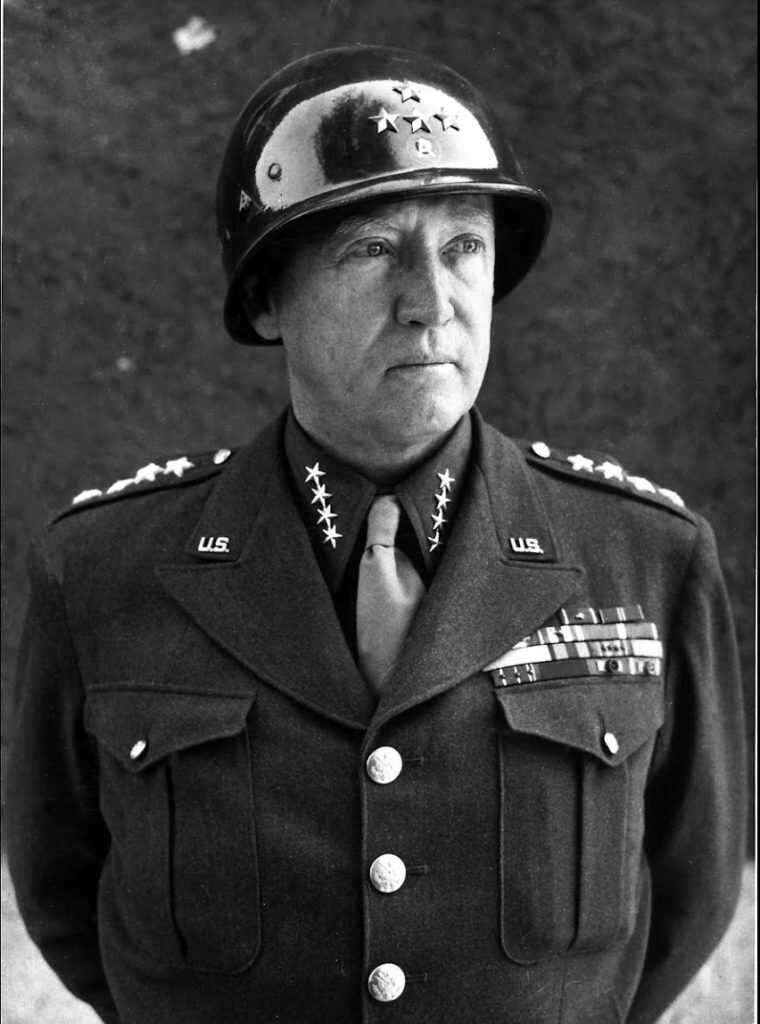
George Patton was arguably the most audacious general the United States has ever produced. However, that guy was a bit nuts. He was not of the same caliber as Major White.

Soldiers do curious things for some of the dumbest reasons. Referring to the Medal of Honor, General George Patton once opined, “I’d give my immortal soul for that little blue ribbon.” That is objectively insane.

Medals and Awards

I never met an inspiring soldier who chased awards. The true heroes I have encountered were, to a man, humble. Jack Lucas threw himself on two grenades at once in the opening salvoes of the invasion of Iwo Jima, rightfully earning the Medal of Honor in the process. When this indestructible Marine found out I was a veteran, he thanked me for my service. I wasn’t worthy to polish that man’s boots.

Like others of his rarefied caliber, Jack deferred the glory to those who did not come home. I am ever amazed that, as a people, we can create such men as these. Of all the silly baubles that drive soldiers to ridiculous heights, be they funny hats, uniform patches, or scraps of colored ribbon, none should be so dreaded as the Purple Heart. To earn that medal, you’ve got to bleed.
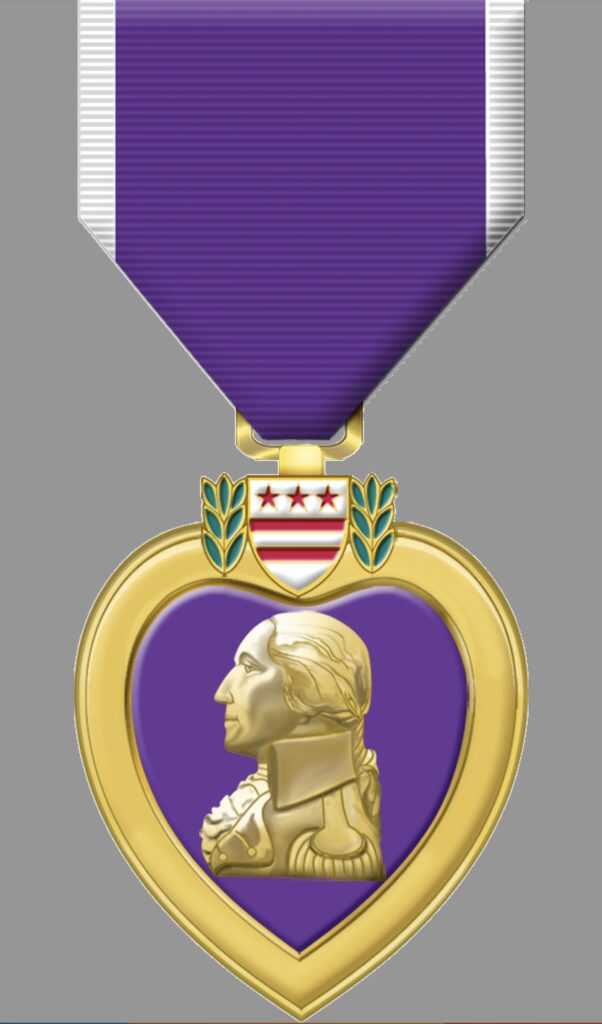
George Washington instituted the first Purple Heart back in the 18th century.

The Purple Heart

George Washington thought that one up. The award was first called the Badge of Military Merit, and it was established on 7 August 1782. The medal bears Washington’s likeness even today. Washington only presented three of the awards, though he empowered his subordinates to deliver more. The Badge of Military Merit then languished unused until 1927.

While several military men worked on the project, it finally came to fruition under the leadership of Douglas MacArthur. The specific details of the modern Purple Heart were designed by an Army heraldic specialist named Elizabeth Will. The finalized award was formally resurrected on 22 February 1932, the 200th anniversary of Washington’s birth.
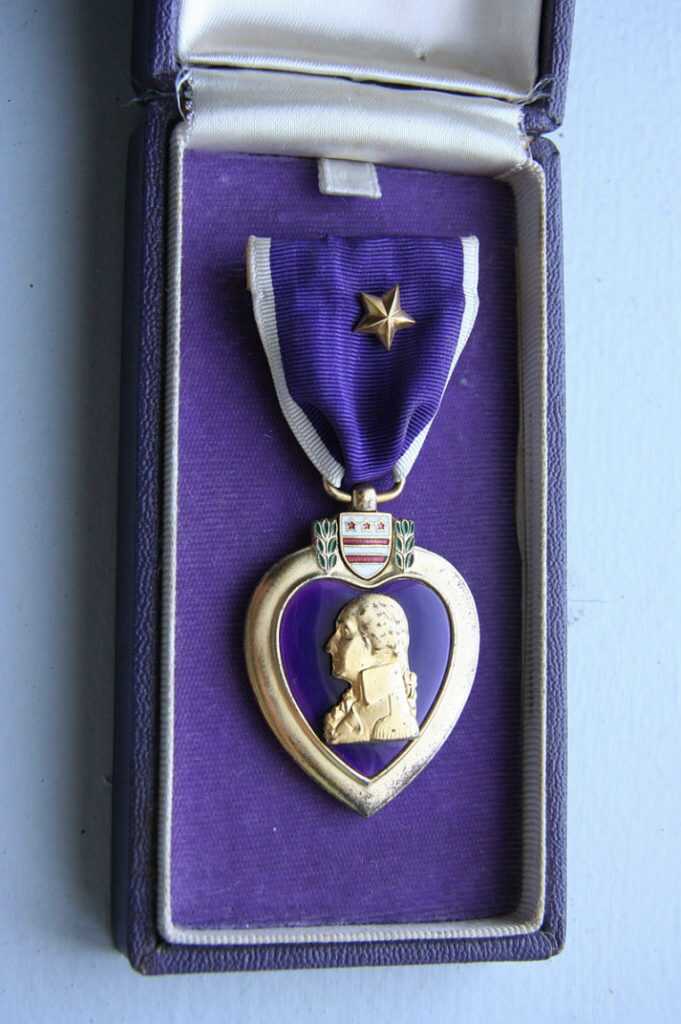
Douglas MacArthur was the US military’s first recipient of the Purple Heart medal.

The Purple Heart was awarded retroactively for wounds received during World War 1. MacArthur himself was the first recipient. It was standardized across all services in December of 1942. However, the Purple Heart is a military award no sensible person covets.

A Circuitous Path

Born on October 27, 1910, William Gail White was the youngest of three children born to a Presbyterian minister and his schoolteacher wife. White attended High School in Bakersfield, California. From the very beginning, he wanted to be a soldier. White volunteered for a summer training program called the Citizens Military Training Camp (CMTG) and was designated honor trainee. Upon graduating in 1929, White began competing as part of the Ninth Corps Area CMTG Rifle team.

A superb marksman, White was recommended for a commission as a Second Lieutenant, but he was too young. He enrolled in the San Jose Teachers College in 1930 but dropped out and enlisted in the US Marine Corps. In the summer of 1930, White was assigned to the USS West Virginia as part of its Marine detachment.
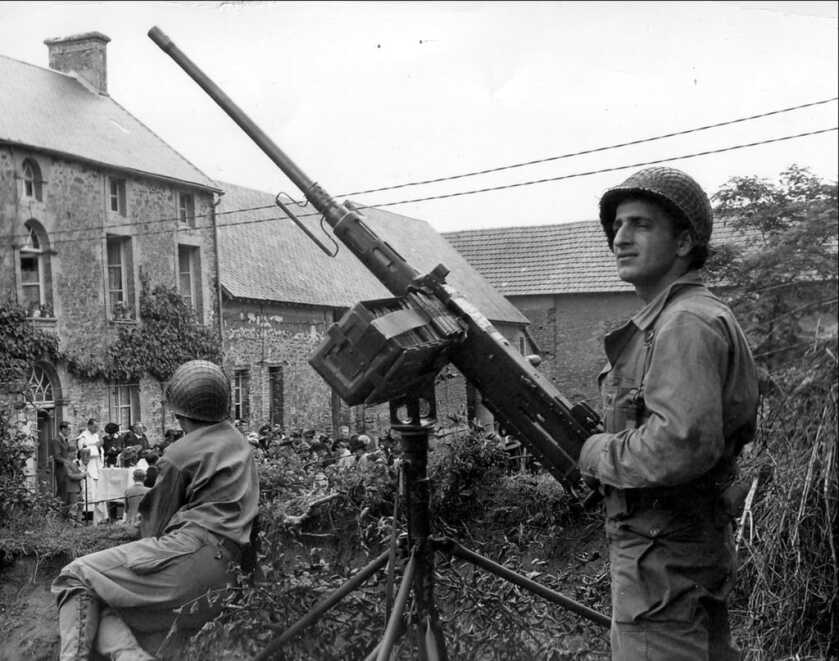
William White was a gifted marksman. He set a Marine Corps record with the M-2 .50-caliber machine gun.

Exactly The Right Type of Person

White excelled as a Marine. He set the Marine Corps record with the Browning M2 machinegun, scoring 396 out of 400 on the 1,000-inch range. After eleven years as a Jarhead, William White left the Marines for civilian life. He worked for Shell Oil until 1941. However, with war approaching, White enlisted again, this time as an Army Private at age 31. He was assigned to the 32nd Infantry Regiment of the 7th Division stationed at Fort Ord, California. During one training mission in California, White crossed the Salinas River alone on an inflatable air mattress to gather intelligence on enemy dispositions. This earned him the nickname, “The Salinas River Sea Serpent.”

By the summer of 1944, White had indeed become a commissioned officer. Now 34, he was assigned as the Executive Officer for the 3rd Battalion, 330th Infantry Regiment, 83d Infantry Division. He later commanded his own battalion. White made Major 25 months to the day after enlisting as a Private. Suffice to say, it takes considerably longer than that today. By late June, White was moving into Carentan, France, to relieve the 101st Airborne after they assaulted Normandy.

William Gail White Attracted Pain
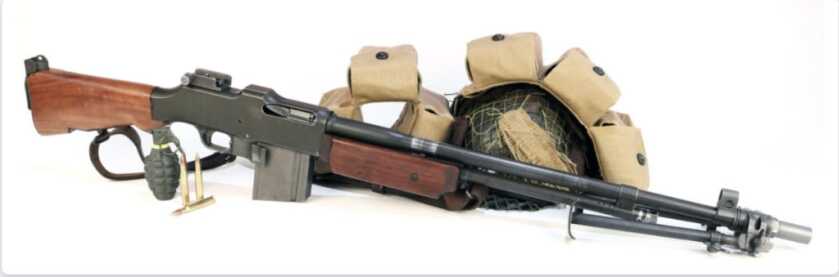
The Browning Automatic Rifle was a boat anchor to hump. When Major White snatched one up during the hedgerow fighting in Normandy, its owner was a bit irked.

Major William Gail White was utterly fearless in combat. While advancing through the accursed Norman hedgerows, White struck out at a run, rallying his men to follow. Throwing himself onto the far berm, he spotted a pair of German machinegun positions sited to produce a crossfire in the next open field. The next American to arrive was a BAR man. White did not feel that he had time to direct the man’s fire, so he snatched up the BAR himself.

He then neutralized both positions before swapping magazines and striking out with the heavy gun for the next berm. Meanwhile, the poor BAR gunner who had lugged the massive weapon throughout training and the landings in France scurried behind shouting, “But Major, when do I get to use it?” White responded, “Never mind when you get to use it. Throw me another damn magazine…”

Normandy in the summer of 1944 was a dangerous place. White and his unit were facing the 17th SS Panzergrenadiers along with elements of the 5th and 6th Fallschirmjager Regiments. These elite troops fought fanatically for every yard of French dirt. On 5 July, Major White was hit in the chest by a 9mm round fired from a German MP40 submachinegun. This bullet struck him a glancing blow, blooding him badly without penetrating anything vital. Later that same day he caught a grenade fragment to his forehead. Those two injuries bought him two Purple Hearts in a single day.
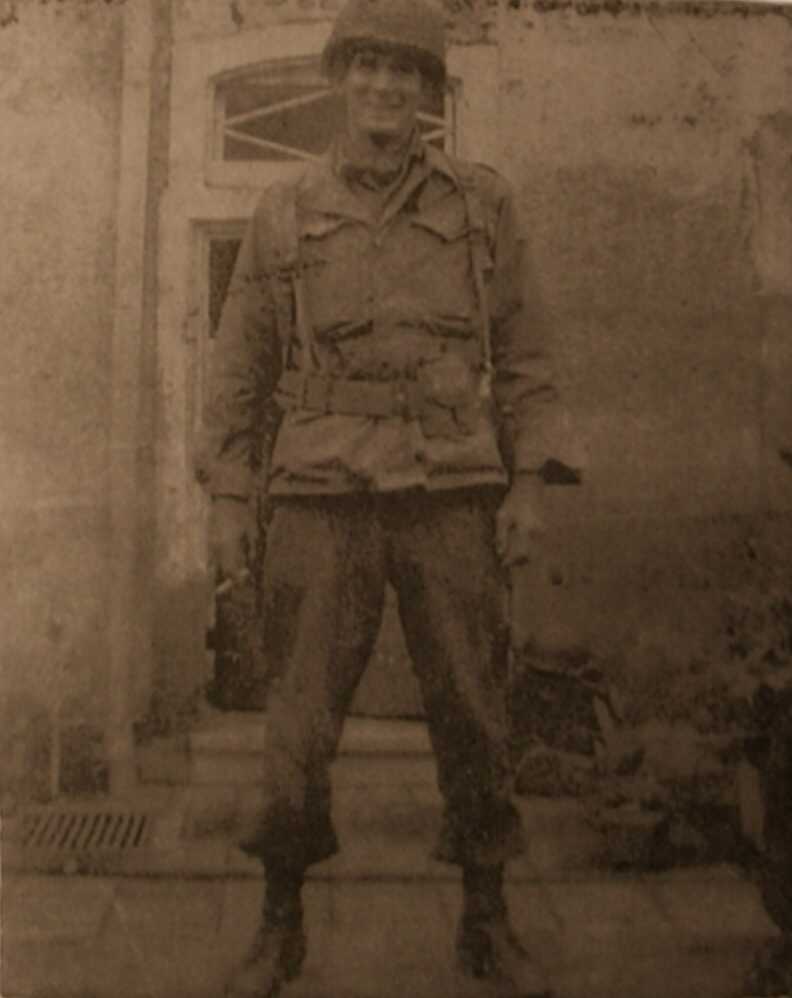
William White became known as the Mad Major for his tenacity in combat.

Major White Kept Collecting Bullets

In the next forty-eight hours, Major White was wounded three more times. He was first struck in the shoulder by a piece of shrapnel from an artillery round. What put him down, however, was a bullet along with grenade fragments that synergistically shredded his forearm.

These wounds, his fifth and sixth, physically removed a substantial portion of his forearm and rendered him unconscious. Three inches’ worth of bone was visible when they evacuated him. He awoke to, “The face of the most beautiful blonde angel he had ever seen.” The exhausted Army nurse did her best to clean his battered body and brought him something to eat. Despite his being declared a critical surgical case, White still had to wait three days for space in a crowded operating theater.

Army surgeons reconstructed his forearm as best they could and covered the wound with a skin graft from his thigh. White later joked,  “Every time my leg itches I have to scratch my arm.” However, the damage to his forearm muscles was severe, preventing him from using a weapon. This should have been his ticket back to the Z.I. (Zone of the Interior—Stateside).

The German Walther P38 was a radically advanced combat handgun for its day. Operating the long stiff double-action trigger on the gun gave Major William White a goal as he recovered from a fearsome arm injury.

Not Done Fighting

Major William Gail White still felt he had more war left to fight. When evacuated he had stashed a captured Walther P38 pistol in his gear. The hospital staff had stored the German weapon in their supply room. White retrieved it and spent hours trying to squeeze the double-action trigger. When finally he could reliably activate the weapon, White felt he could return to his unit. He subsequently went AWOL and caught a ride back to the continent from England.

White tried to find his old unit, but this was a chaotic time. While fighting as a replacement in Luxembourg he was showered in fragments from yet another German hand grenade. That was Purple Heart number seven.
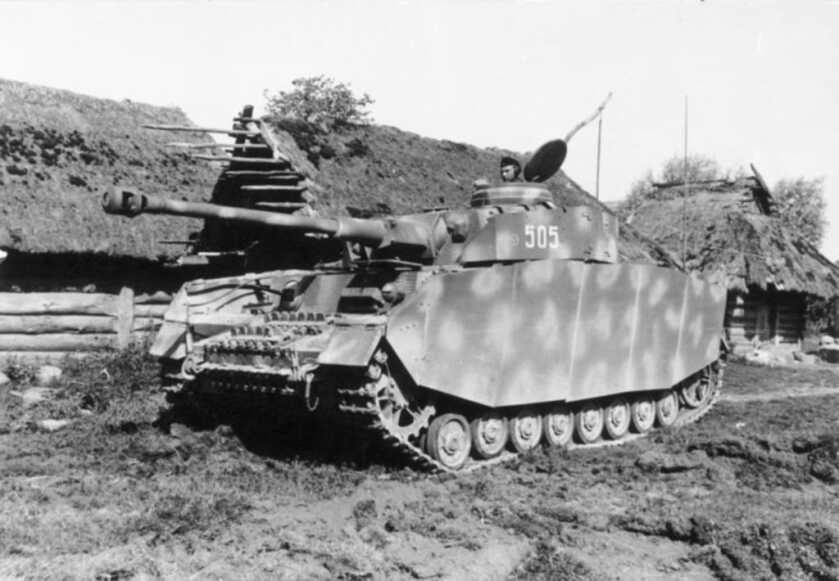
This is a German Panzerkampfwagen Mk IV. Major William White took out two of these tanks himself toward the end of World War 2.

As Tough As They Come

We lack the space to do this man justice. White was captured by the Germans but escaped, liberating another fourteen Americans in the process. This earned him the Silver Star. On 10 December 1944, White earned his second Silver Star during combat in Strauss, Germany. This action saw him eliminate three enemy machine gun positions, two Pzkfpw Mk IV tanks, and two self-propelled guns while capturing 31 German prisoners. Along the way, he caught a burst of machine gun fire to the belly. That was his eighth Purple Heart.

As a physician, this is tough to imagine. White was evacuated to England for a major belly surgery and colostomy. He subsequently crashed on the operating table. The surgeons had the chaplain administer the last rites, yet he miraculously recovered.
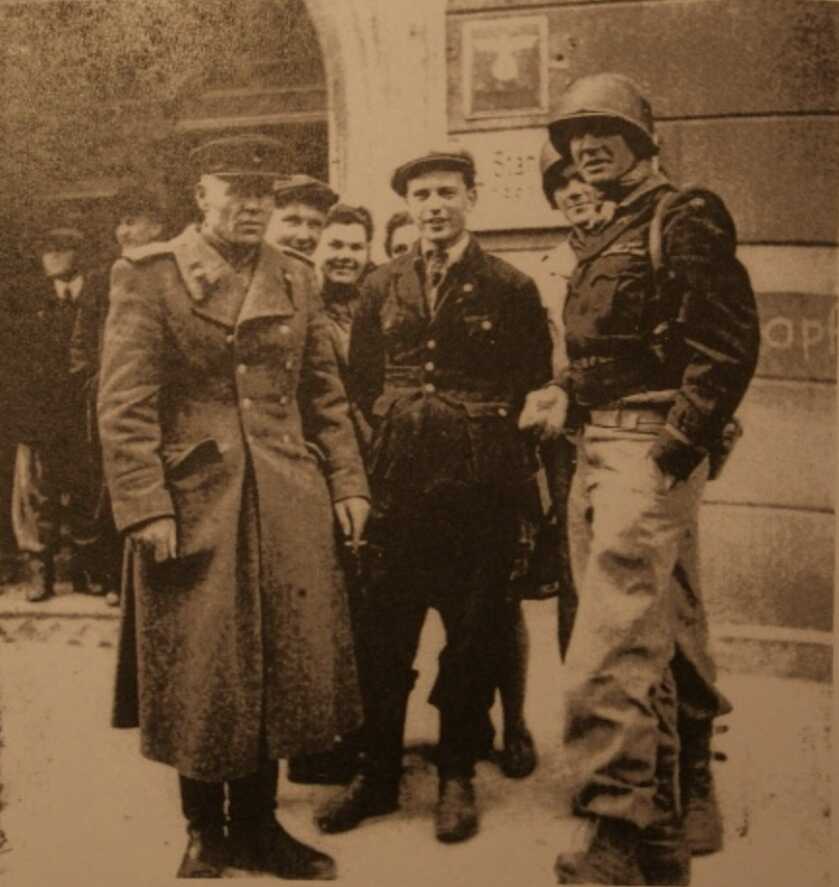
At the end of the war, Major William White, shown here on the right, struck out alone into enemy territory and made contact with Russian units advancing from the east.

Major William Gail White: Back At It

After less than a month, White had his colostomy reversed. Two days after that he slipped out of the hospital and caught a C47 back to the war zone yet again. 48 hours before he had been pooping in a bag. Good Lord, what a man.

While fighting around the Elbe River, Major White was wounded a ninth time, his last before the German capitulation. However, this shot-up old hero wasn’t quite done. He later deployed yet again for the war in Korea.

By now White was more than 40 years old. During one engagement in Korea, communist forces shot the antenna off of the radio he was carrying. Another bullet also took off his cap. He later counted six bullet holes in his parka. Soon after, while serving as an advisor to a South Korean special forces unit, White made a one-round confirmed kill on a running North Korean soldier at 900 yards over open sights using an M1 Garand rifle.
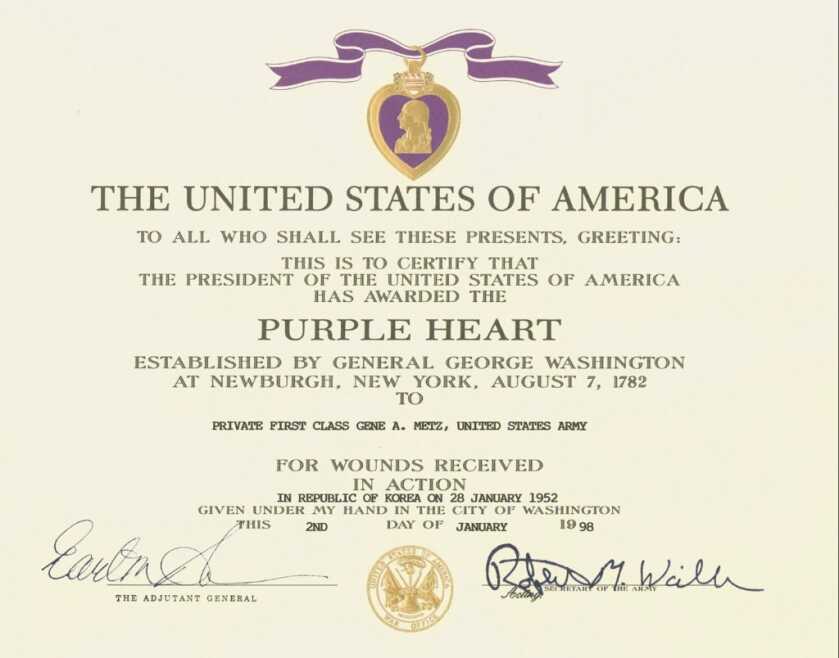
William White earned the Purple Heart medal ten times.

White was eventually shot through the right chest with a Chicom rifle round. This was his tenth and final wound. Despite lots of surgery and a laborious recovery, the man still would not die. He subsequently went on to complete Airborne school and serve as a Ranger instructor. William White eventually retired as a Lieutenant Colonel.

The Rest of the Story

The morality of employing two atomic bombs to end the war in the Pacific has been debated ever since the bomb bay doors opened on the Enola Gay back in August 1945. However, it is a historical fact that these two bombs ultimately saved countless lives on both sides by negating the need for an amphibious invasion of the Japanese home islands.
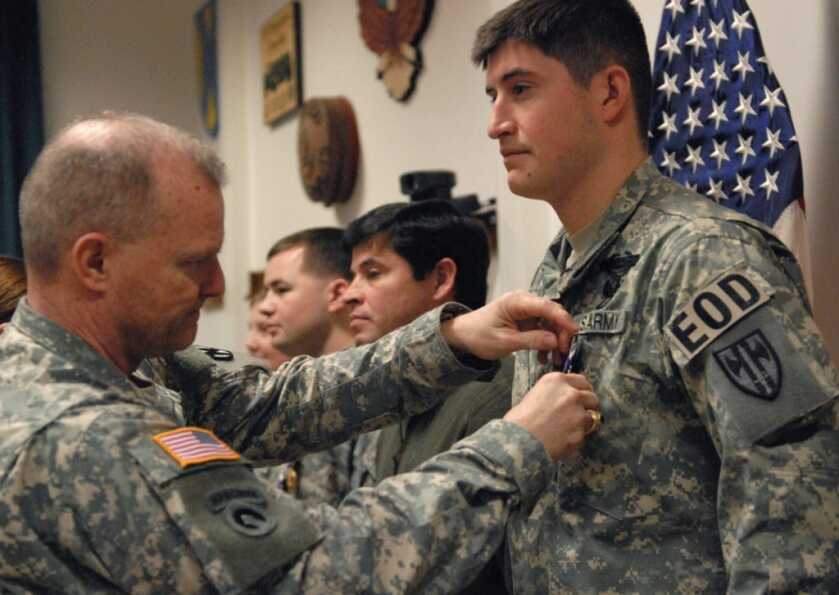
The Purple Hearts that are awarded today were all produced during World War 2.

During WW2, the US government manufactured 1,506,000 Purple Heart medals. Most of these were planned for use in the aftermath of Operation Downfall, the invasion of Japan. After the war, nearly 500,000 remained in storage. Even accounting for those that were lost, stolen, or wasted, as of 2000, the national stockpile still stood at around 120,000. The Purple Heart medals that are awarded to service personnel today are all more than 75 years old.

Lieutenant Colonel William Gail White, the frag magnet, finally died of natural causes on 6 April 1985. He was 74 years old. White was interred at Maplewood Cemetery in Kinston, North Carolina. Eventually, old age did what the Wehrmacht and the communist Chinese could not. Wow, what a stud.
Categories
A Victory! Dear Grumpy Advice on Teaching in Today's Classroom Hard Nosed Folks Both Good & Bad I am so grateful!! Leadership of the highest kind Manly Stuff Our Great Kids Real men Soldiering Some Red Hot Gospel there! Stand & Deliver The Green Machine This great Nation & Its People War

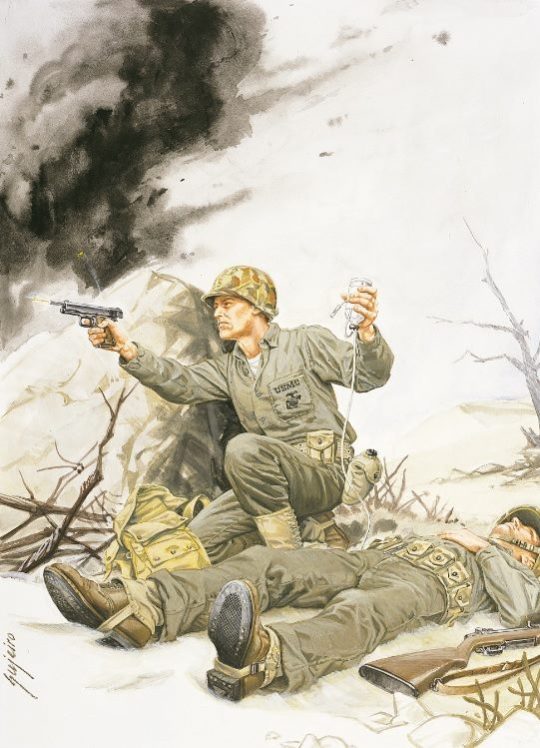
Hospital Apprentice 1st Class Robert Eugene Bush earning the MOH at Okinawa

On May 2, 1945, he was assigned to a rifle company of the 5th Marines during the invasion of Okinawa. That day, the 5th Marines were pushing uphill towards a ridge against determined Japanese resistance. The slope was strewn with Marine casualties, and Corpsman Bush moved unceasingly among them rendering aid despite the withering fire all around him.

When the attack passed over the crest of the ridge, he moved up to the top of the slope to aid a wounded Marine officer. A Japanese counterattack swept over the ridge just as he began administering blood plasma to his patient.

As the Japanese approached, Corpsman Bush gallantly held up the plasma bottle with one hand and fired a pistol at the Japanese with the other. Then he grabbed a carbine and killed six advancing Japanese. He suffered several serious wounds himself, including the loss of an eye.

He remained guarding his “officer patient” until the enemy were repulsed. Then, according to the official citation, he “valiantly refus[ed] medical treatment for himself until his officer patient had been evacuated…”

Categories
All About Guns You have to be kidding, right!?!

Darwin was an optimist

Categories
Allies You have to be kidding, right!?!

For the Marines out there

Categories
A Victory! All About Guns The Green Machine This great Nation & Its People War

Appalachias Unsung Hero: The Alvin York Story (WHAT A STUD OF A MAN!!!!!!!)

Categories
All About Guns You have to be kidding, right!?!

49 Months of Waiting: When My Gun Virginity was Taken with a Rossi Snubnose

Categories
You have to be kidding, right!?!

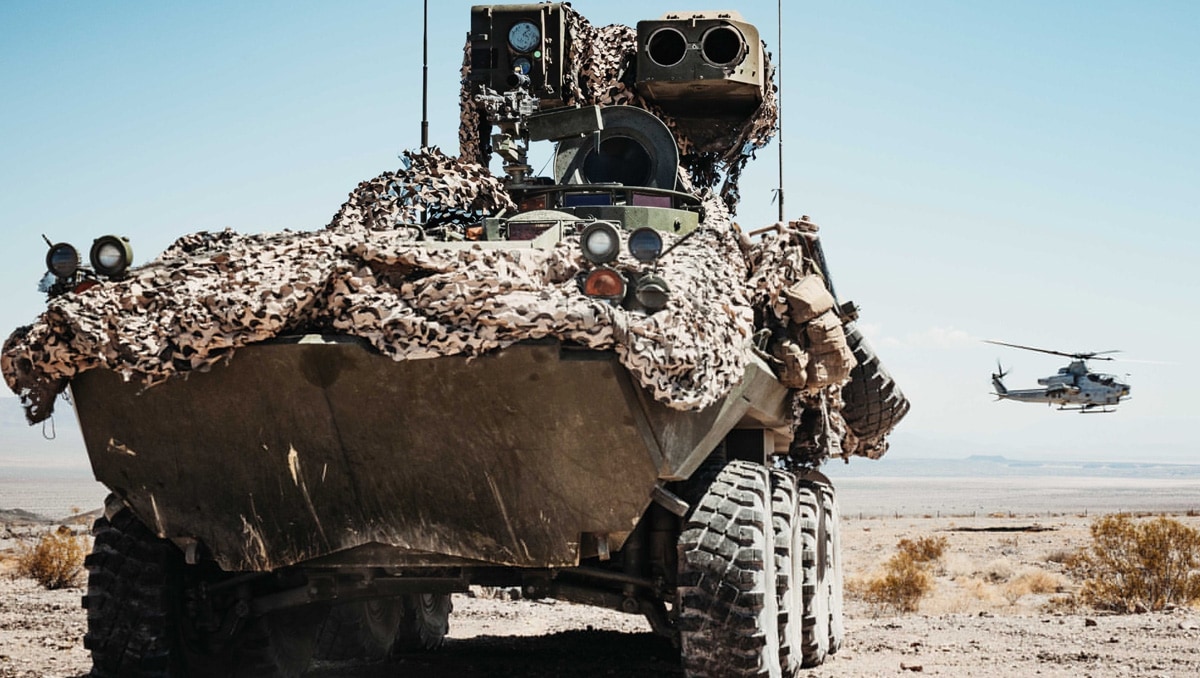
The Marine Corps Has Gone Off the Rails The U.S. Marine Corps’ Force Design 2030 has been a dismal failure. by Gary Anderson

When former Commandant of the Marine Corps Gen. David Berger unveiled his radical new vision for the Corps in 2019, many in the administration and Congress hailed it as a bold step toward confronting China. Berger’s Force Design vision was to place small groups of Marines armed with anti-ship missiles on islets and shoals in the South China Sea where Malaysia, Vietnam, and the Philippines have territory. The same territory is now claimed by China.

The commandant believed that the U.S. Marine Corps had wandered from its traditional mission and legal directive to conduct amphibious operations in support of naval campaigns. Berger was concerned that 20 years of land warfare in Iraq and Afghanistan had reintroduced the “second land army” stigma that followed the Corps after World War II and Vietnam. He wanted to get the Marines back to their naval roots and prepared for conflict on small islands in the Indo-Pacific region.

In order to pay for the anti-ship missiles and associated sensors needed to implement Force Design, Berger divested the Marine Corps of all its tanks, heavy engineering equipment, much of its cannon artillery, and numerous combat aviation capabilities. In addition, Berger dropped the number of amphibious ships the Navy was required to maintain from 38 to 31, reducing the fleet by nearly 20 percent.

In a perfect world, this might still be enough to keep a nimble, sea-based presence in the three most dangerous global hotspots — the Mediterranean, the Persian Gulf, and the Western Pacific — but this is not a perfect world.

The Navy’s current atrocious repair and maintenance capabilities have reduced amphibious readiness rates to just 40 percent.

We now have only about 12 amphibious ships operational worldwide at any given time. Berger shifted resources away from these capabilities in order for the Navy to build a new class of shallow draft vessels called Landing Ship Medium. These new vessels would, theoretically, resupply the Marines across small, widely scattered island garrisons.

Interestingly, independent war-games conducted by the Center for Strategic and International Studies have determined that Force Design would be of marginal use in a war with China over Taiwan. Despite these lackluster findings, Berger’s successor, Commandant of the Marine Corps Gen. Eric Smith has doubled down on Force Design. Smith’s steadfast devotion to Force Design ignores the advice from all eight of his and Berger’s living predecessors, as well as the former four-star Marine Corps theater commanders.

Worse yet, not one of the nations potentially in danger from China, which was the catalyst for this redesign of the Corps, has signed on to the concept. Even the Philippines, the U.S.’s closest ally in the region, has told us that it will not allow U.S. forces to use its territory as a staging base in a conflict with China over Taiwan — much less staging offensive missiles. (RELATED: China Attempts to Intimidate Philippines with ‘Monster’ Coast Guard Ship)

Apparently, Berger created a product that has no market.

Military leadership is not solely responsible for this mess. Ultimately, Congress and the president have oversight. Civilian control of the military assumes that the civilians should know something about the military, or at least hire people that do. As with Afghanistan and naval readiness, the Biden administration and Congress have failed in that basic function. If you are a member of Congress from East Cupcake, Indiana, with no knowledge of military affairs, and are told by a service chief that he will reduce his force structure, save money, and still confront the Chinese, what’s not to like?

But the recent Congressional Research Service report should jolt both into action because the nation has lost key capabilities that Americans, rightfully, assume the Navy and Marine Corps possess.

They can no longer perform large peacetime sea-based contingencies like the 1975 evacuation of Saigon. They cannot execute large humanitarian operations such as the 1991 Sea Angel effort in Bangladesh or the 2005 response to the devastating earthquake and subsequent tsunami in the Pacific and Indian Oceans.

They cannot conduct brigade-sized amphibious operations, much less division-sized assaults similar to Guadalcanal, Tarawa, and Inchon. Even worse, the Corps can no longer be a meaningful participant in major regional conflicts such as Desert Storm and Iraqi Freedom — it lacks the tanks, armored personnel carriers, and heavy engineering assets that broke through Iraqi lines in both conflicts.

In the half decade since the launch of Force Design, not one Marine Corps missile unit is operational and not a single Landing Ship Medium has been launched. Essentially, the nation has lost its emergency response force and traded it for no additional gains in capability elsewhere.

By the end of his tenure in 2023, for the first time in history, Berger had to tell the president and secretary of defense that the Marine Corps could NOT respond to missions in the NATO and African command regions.

The bottom line: the Navy can no longer perform the same functions that they have for the last 85 years.

There are two types of incompetents, active and passive. Active incompetents don’t know they are incompetent. They are dangerous because they don’t know they are incompetent. They are dangerous because they act on the zany ideas. Passive incompetents know that they don’t know what they are doing. They are dangerous because they tend to defer to the active incompetents.

Berger and Smith are active incompetents. Biden and Congress have been passive incompetents. Shame on them. If Congress acted today to repair the Navy and Marine Corps and return it back to 2018 capabilities, it would take at least a decade to recover. Our civilian leaders were sold snake oil, and the rubes bought it.

Gary Anderson is a retired Marine Corps Colonel. He retired as Chief of Staff of the Marine Corps Warfighting Lab and served as a Special Advisor to the Deputy Secretary of Defense

Categories
Cops You have to be kidding, right!?!

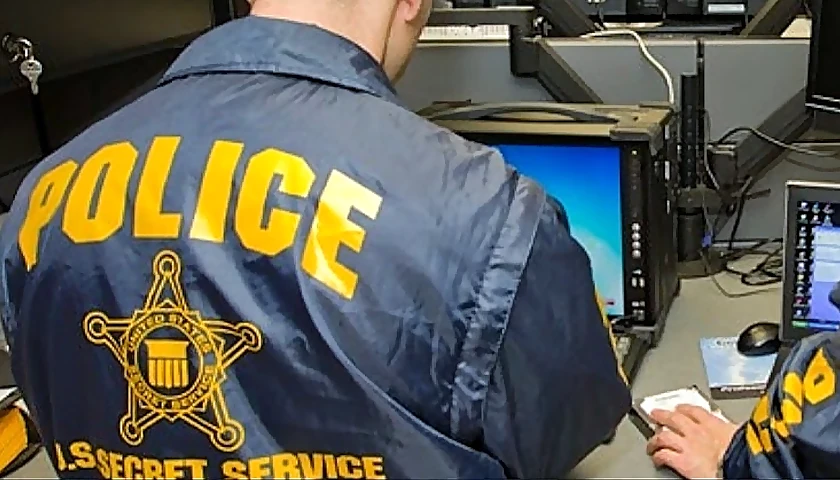
Secret Service Brass Interfered in Inspector General Assassination Probe by Susan Crabtree

Secret Service leaders meddled in an independent government investigation of the July 13 assassination attempt against former President Donald Trump and are still not following many basic agency security protocols for presidential candidates, presidents, and vice presidents in the final days before the election, according to emails reviewed by RealClearPolitics and several sources in the Secret Service community.

As U.S. Secret Service (USSS) failures came to light in the weeks after the July assassination attempt, USSS managers sent emails to employees asking them to alert them to any “direct requests for information or interview” from the Department of Homeland Security Office of Inspector General, or DHS OIG. The internal government watchdog is conducting its probe of the failures that led to the near assassination of Trump, the killing of fireman Corey Comperatore, and the wounding of two other rally-goers at the western Pennsylvania campaign event.

The emails, which RealClearPolitics reviewed, contained the subject line “DHS OIG Inquiries” and directed employees to tell their supervisors if an OIG official reaches out to them so Secret Service managers could coordinate “an organized response.” Supervisors sent the email five days after the same inspector general issued a negative report on the Secret Service’s actions before and on Jan. 6, criticizing the agency for failing to detect a pipe bomb near Vice President Kamala Harris and not flagging signs of potential violence to other agencies.

Normally, responding to DHS OIG investigators without talking to superiors would not warrant coordination with supervisors, the email stated. But after the first assassination attempt against Trump, USSS leadership needed to provide the proper context and a coordinated response.

“Generally, not an issue; however, this is NOT the normal course of action, and the Service needs awareness and to ensure an organized response with information in the correct context,” Secret Service supervisors wrote in the emails, noting that “only we know what we do.”

The email is now under Senate scrutiny. Sen. Chuck Grassley, a longtime champion of government whistleblowers, on Wednesday sent a letter to Acting Secret Service Director Ronald Rowe expressing concern that the email and any other communications like it could have “a chilling effect” on employee disclosures to the inspector general’s office, as well as on congressional investigations.

“If this email is an accurate representation of the actions taken by Secret Service management, it could have a chilling effect on its employees from fully cooperating and providing information to the DHS OIG as well as congressional investigations out of fear of retaliation since supervisors will apparently be keeping tabs on their communications,” Grassley wrote in the letter, a copy of which his office provided to RCP.

Instead of trying to control the flow and context of information, Secret Service leaders should be “encouraging” employees to “come forward to provide truthful information to the DHS OIG and Congress so that lessons can be learned to prevent future assassination attempts,” Grassley added.

The Iowa Republican set a deadline of Nov. 13 for Rowe to hand over all records “between and among Secret Service personnel” related to providing information to the DHS OIG and congressional investigations into the July 13 attempted assassination.

Tristan Leavitt, an attorney and president of Empower Oversight, which represents Secret Service, IRS, and other government whistleblowers, said the email demanding that potential whistleblowers coordinate communications with their bosses stifles the free flow of information, which could help improve the agency’s performance and which federal law protects.

“Secret Service employees have every right to anonymously contact the DHS OIG without informing their supervisor,” Leavitt said. “While this email is purportedly aimed at employees contacted directly by the OIG, it will undoubtedly discourage employees who may have information about wrongdoing from contacting the OIG or Congress.”

The Secret Service acknowledged receipt of Grassley’s letter but declined to respond to RCP’s questions about how many supervisors sent the email and whether there were other attempts to pressure employees from independently discussing problems they’ve experienced in the Secret Service with DHS OIG or congressional investigators.

“The U.S. Secret Service is in receipt of the letter sent by Senator Grassley,” an agency spokesman said in a statement. “The Secret Service has been and will continue to examine the events of the July 13 assassination attempt and will fully cooperate with Congress and other relevant investigations. We respect the Senator’s role of oversight within the Senate Judiciary Committee and will respond through official channels.”

In the hectic waning hours before Election Day, Secret Service agents are also complaining about security shortcuts that agency leaders are allowing, sometimes requiring, to handle last-minute venue changes and adjustments to Trump’s and Vice President Kamala Harris’s break-neck campaign schedule.

The Secret Service still has not provided Trump’s campaign with a military aircraft three weeks after it was requested, even though President Biden said earlier this month that he had authorized the Department of Homeland Security to “give him every single thing he needs.”

Sources in the Secret Service community tell RCP that Trump’s campaign staff have made significant changes to his schedule less than 12 hours before arrivals, hamstringing the advance team’s ability to plan, coordinate, and obtain manpower and resources properly. The last-minute changes, which are typical in the final weeks of a presidential campaign, have posed significant challenges to providing security for Trump, who is still facing known threats from foreign and domestic actors.

After a second attempt on Trump’s life, the Secret Service started using ballistic glass to provide extra security for the Republican presidential nominee at outdoor and other venues. But at times, late schedule changes have prevented the glass from being in place when it should have been and has led to a shortage of security manpower, these sources assert.

Secret Service agents also complain that the agency’s managers devoted to Harris’ security have instructed advance personnel to submit manpower and resource requests without knowing any of the sites in Harris’ schedule. They also complain that Harris’ staff are “disorganized” in determining sites and are dictating what resources the vice president should have against the Secret Service advance team’s strong recommendations without any pushback from agency leaders.

“This is not new, just a continuation of poor USSS leadership,” a source tells RCP. “It puts the entire Secret Service into a cross-your-fingers-and-hope-nothing-happens situation. Sound familiar?”

The Secret Service also has come up short in securing Harris’ communications with her advance team, so they don’t share vital movements and logistics with the public or unwanted parties, according to several sources. The White House Communications Agency provides secure communications services for only the president and vice president but does not extend those to Trump because of a lack of resources.

However, even Harris’ campaign staff and her Secret Service advance teams have been using unauthorized communications because of a dearth of WHCA manpower and resources coupled with last-minute changes to the vice president’s campaign schedule, the sources contend.

Secret Service sources argue that the security procedures have not only failed to improve since July 13 but have further deteriorated.

The USSS workforce is “aggressively communicating” to their supervisors that they are providing inadequate security that fails to meet agency standards, while the agency’s leaders, ensconced in their Washington offices, are assuring everyone that “they’ll be fine and to keep up the good work,” one source argues.

“It’s those on the front lines, who do the long hours and impossible tasks, who get thrown under the bus when everything does go wrong while leaders simply retire and move on,” the source told RCP. “No accountability.”

The agency did not respond to questions about these alleged deviations from agency security protocols.

Categories
All About Guns You have to be kidding, right!?!

WTF!?!

Categories
A Victory! War

How Egypt’s Army Smoked ISIS