Categories
Dear Grumpy Advice on Teaching in Today's Classroom

More Ideas about Classroom Discipline

Related image
Right, Now moving on smartly!
Here are somethings that worked for me & who knows? They might work for you also.
Faces / Masks
Now I am sure that you are thinking “What is the Old Duffer going on about this time?”
As a Teacher or Leader for that matter. Since I most firmly believe that all good teachers have to have Leadership Traits or habits.
One must learn to have a mask to hide behind.  By this I mean the following. That you have to develop a sort of Poker Face when you are in the presence of Students & others.
Where you seem calm and collected even though you are on the verge of blind panic & or rage.
Because of the really dumb things / outrages that one of your so called students have just committed.
“Why did you just crucify the Class Hamster? Uh huh! Okay go to the office and we shall talk about this later. All right class let’s get to work!”
This was one of the hardest things that I had to learn. But if you do not learn it. The kids will run roughshod all over you!
Now I mean the following in the nicest way possible.
But for a lot of our students. They are savages that have no clue on how to behave in civilisation. So it is up to the teachers to show them the way. By our actions, behaviors and examples.
And if you think that they are not watching you very closely. Then brothers & sisters are you in for a surprise!  As they note all your mannerisms, habits, dress, deportment, views, opinions and prejudices.
Plus if you lose your composure / cool, then you have lost face & the respect of your kids. And there a lot of kids & “adults” who just live for that by the way.
So do not kid yourself ! Especially since there is no such thing as privacy or secrets at school. By the by. The biggest bunch of gossips by the way are your fellow teachers.
This is why I avoided the Teachers lounge like the plague when I was still in the game.
That and teachers are some of the most depressing folks to be around at times. Plus some of them are the biggest booze hounds outside of the service.
Also now that we live in the age of the Cell Phone. One has to conduct themselves knowing that that they are under constant surveillance. Which will never go away either!
So try and remember that and conduct yourself accordly. Like from the minute you step out of your home and until you get back to it from work.
As Big Brother is alive & well out there.
God am I ever glad that I am retired!

Categories
Uncategorized

A good article about the AK-47 That I want to share with you.

100% American Made AKs: Century Arms RAS47 & C39V2

I am not generally a fan of the AK-47 family of weapons; I have spent too much time on the receiving end of them. But I am a fan of all things American made, so I was more than happy to review a couple of offerings from Century Arms.  Anything Commies can do, we can do better. And the boys from Vermont have set out to do just that. 

A Little Background

For testing, I received the RAS47, Century’s most popular rifle, as well as the flagship C39V2. Both weapons are completely American made, so at least we can be sure the parts aren’t heat treated in Vodka. I had to look twice at the receivers, they do say made in Georgia. But they mean Georgia, Vermont, a small town upstate. Despite my initial skepticism, both weapons are beautiful. The fit of the parts doesn’t resemble a smooshed turnip, which is also a novel concept in Kalishnokavs. These carbines are not AK-47s because they lack the selector switch and true AK-47 rifles differ from these replicas because their receivers are milled from solid blocks of steel and their furniture is substantially different; they also feature a different pistol grip and gas block.
The RAS in RAS47 stands for Red Army Standard. It is designed to be a copy of the ’50s era AKM at least on the surface; it’s a tip of the hat to Cold-War era Soviet Union. The furniture is a beautiful blonde wood, unlike any other, I have seen. Fingers crossed it is a Vermont native tree and that maple syrup was used to finish it. No one from the factory would confirm that for me though. It’s a gas-operated semiautomatic chambered in 7.62x39mm and the rifle’s receiver is stamped from a 16-gauge 4140 sheet steel treated with a black nitride finish.  The fit of the parts is extraordinary by AK standards. Most of the specimens I have seen were extremely used battlefield examples, but I would still bet money that they didn’t look like this the day they left the factory. The grip is black plastic, with nice diamond texturing and finger grooves. Improvements have been made to the magazine release, it is significantly wider than the original. In place of a bullet tube of questionable origin and rifling, the RAS47 sports a 16.5-inch, 1:10-inch twist Green Mountain Nitride barrel. Also outside of Commie spec, the safety lever features a cut out that acts as a bolt hold open. To help keep costs down, Century opted to make the RAS47 without the traditional bayonet lug, cleaning rod or storage compartment in the stock. History would show this to be inaccurate, however, it does make it a more affordable option for history enthusiasts who want to save a dollar.

Photo Courtesy: Century Arms RAS47


The RAS47 comes standard with a side rail, so optics mounts aren’t out of the question if that is your flavor. Personally, I have about as many spare AK parts laying around the house as I do hubcaps for a  ’72 Pinto. So I opted to test my rifles with iron sights. More on that later. Taking a look inside, we find something else curiously not Mil-Spec. The bolt has what appear to be large lightening cuts. I wasn’t aware this was a modification for AK-47s, but whatever floats your boat. The trigger is a vast improvement over normal AK’s, featuring the RAK 1 trigger. The take up is smooth, and the break crisp. It’s not a 1911, but a night and day difference from the Soviet standard.

SPECS — RAS47

  • Type: Gas-operated, semiautomatic AKMs
  • Cartridge: 7.62x39mm
  • Capacity: 30+1 rds.
  • Weight: 7.55 lbs.
  • Barrel Length: 16.5 in.; 1:10 in. twist;
  • Overall Length: 37.25 in.
  • Trigger: RAK-1 Enhanced Trigger Group
  • Sights:  Standard AKMs adj.
  • MSRP: $700

The C39V2 is the flagship model, and features all of the same goodies as the RAS47, and then some. The most obvious change is that it features a milled receiver, as opposed to the stamped and riveted receiver on the RAS47. It is noticeably heavier, but that actually helps tame recoil a bit. The furniture on my test gun was a darker wood, resembled of a traditional AK. One note to put in your pocket, MAGPUL furniture will fit on this milled receiver. The trigger is supposed to be the same RAK-1 as the RAS47, but I had to look that up to be sure. Granted, my test models are demo guns. It is entirely possible the C39V2 has been used a lot more, and therefore more broken in. The trigger in the RAS47 was great. The one in the C39V2 was unreal. The gauge said there was a 1 pound difference, but it felt like a lot more on the range.

SPECS—C39V2

  • Type: Gas-operated, semiautomatic AKMs
  • Cartridge: 7.62x39mm
  • Capacity: 30+1 rds.
  • Weight: 8.05  lbs.
  • Barrel Length: 16.5 in.; 1:10 in. twist;
  • Overall Length: 37.25 in.
  • Trigger: RAK-1 Enhanced Trigger Group
  • Sights: Standard AKM adj.
  • MSRP: $800

Range Time

For testing, I used Hornady Black 123-grain SST was used. I, for one, am glad to see some high-quality brass cased ammunition hit the market. There will always be a place for spam-can imported junk, but it’s no way to try and accuracy test a rifle. It should also be noted the projectile improvements with the Hornady. Instead of some bimetal or steel-core mil surplus, Hornady offers the proven Super Shock Tip. This polymer tip drives into the lead core like a wedge on impact, forcing rapid expansion. The boat tail profile decreases drag, and improves the aerodynamic profile. And it says Hornady, so you know it is going to be consistent.

Photo Courtesy: Century Arms C39V2


Article Continues Below

For accuracy testing, I didn’t have an optical option, which left us with iron sights. Irons are great, and it’s not my first rodeo. But I am loath to publish accuracy results from just irons. I haven’t won any High Power matches recently, so it may in fact be the shooter, not the gun. I shot my groups at 50 meters for this test, not 100.

The RAS47 turned in a 3.5 inch group as its best, not that far off most AK-47s I have shot. I have seen some better, but a whole lot worse. The C39V2 was significantly better. Its best of the day was 1.5 inches, with a flyer that was most likely shooter. Without the flyer, the group was a 1 inch four-round group, which is probably closer to the capability of the gun.
Both of these guns are fantastic buys, depending on your needs. If you love traditional AKs and are willing to accept the accuracy standard they are famous for, the RAS47 is for you. If you want to spend a little more coin and shrink that down some, the C39V2 is for you.
For more information about Hornady ammunition, click here.
For more information about Century Arms, click here.
To purchase a Century Arms carbine on GunsAmerica, click here.

Categories
All About Guns

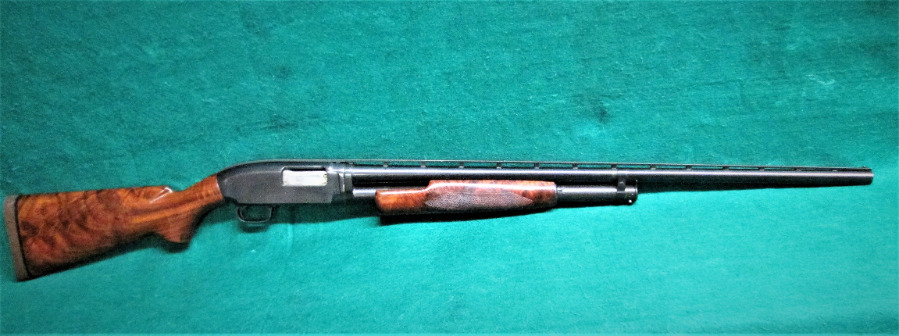
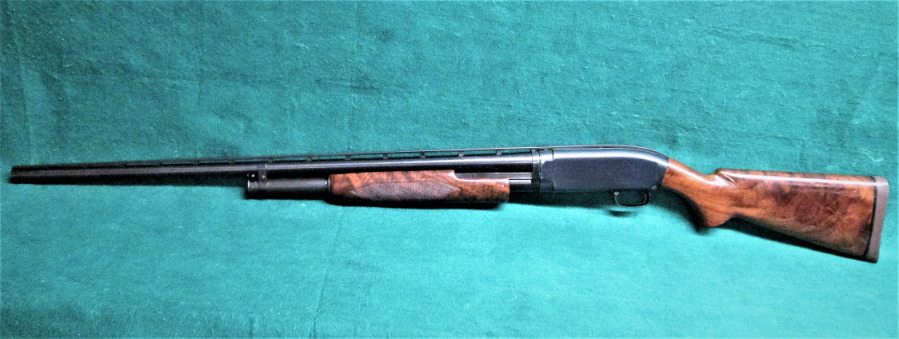
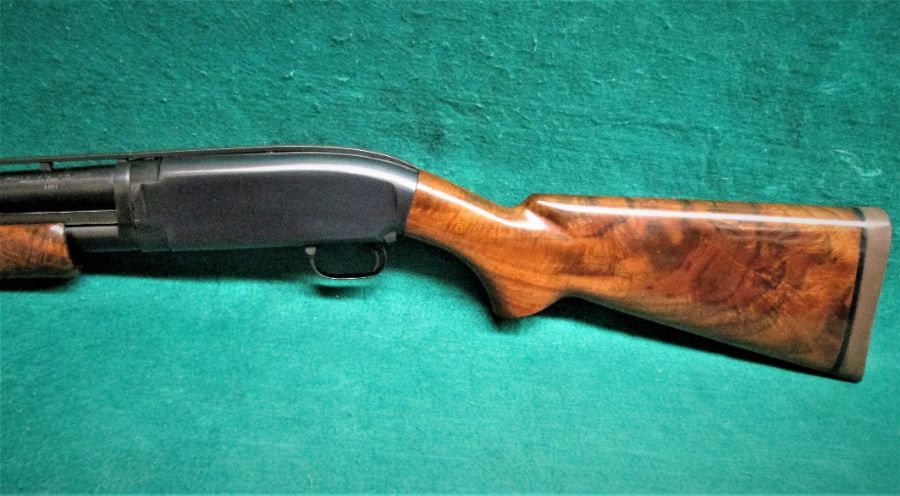
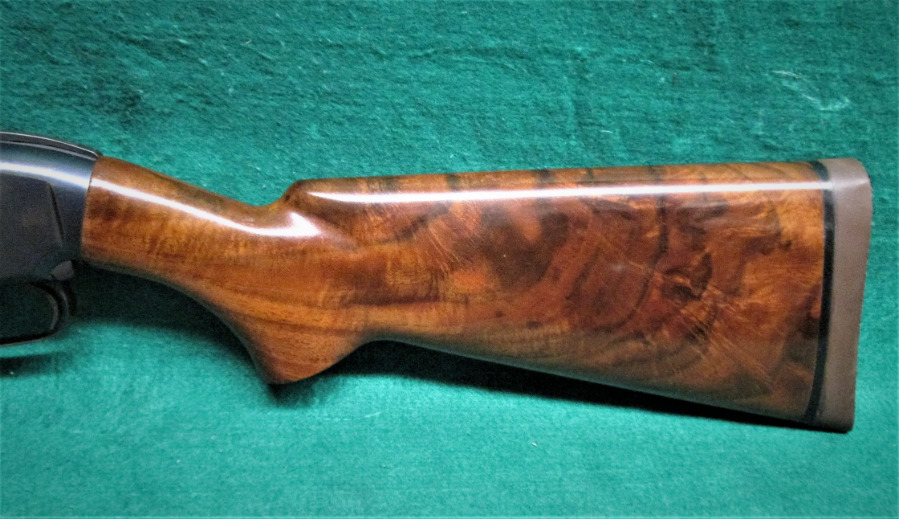
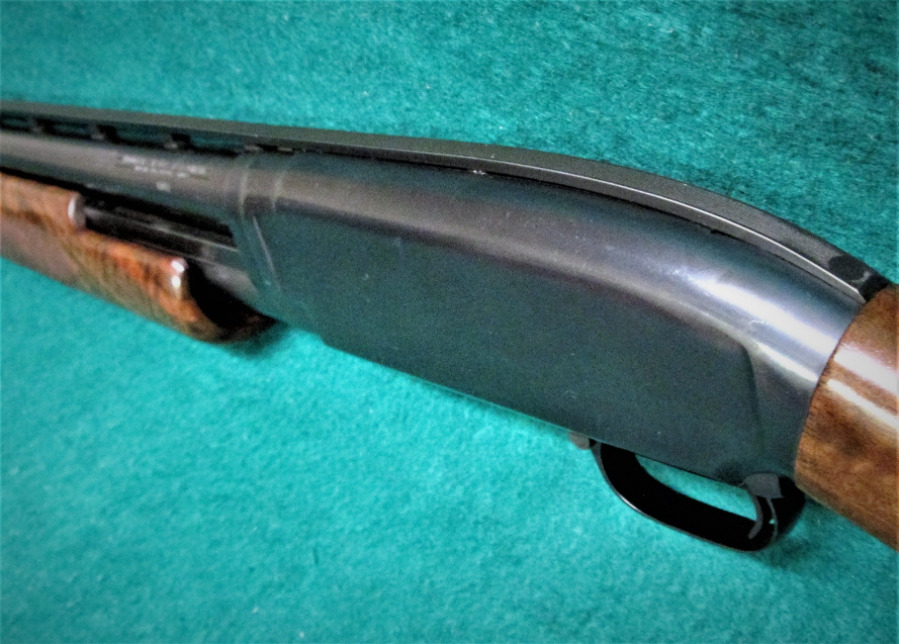
Winchester Repeating Arms Company MODEL 12 CUSTOM TRAP W/30 INCH RIBBED BARREL FULL 12 GA

Winchester Repeating Arms Company - MODEL 12 CUSTOM TRAP W/30 INCH RIBBED BARREL FULL
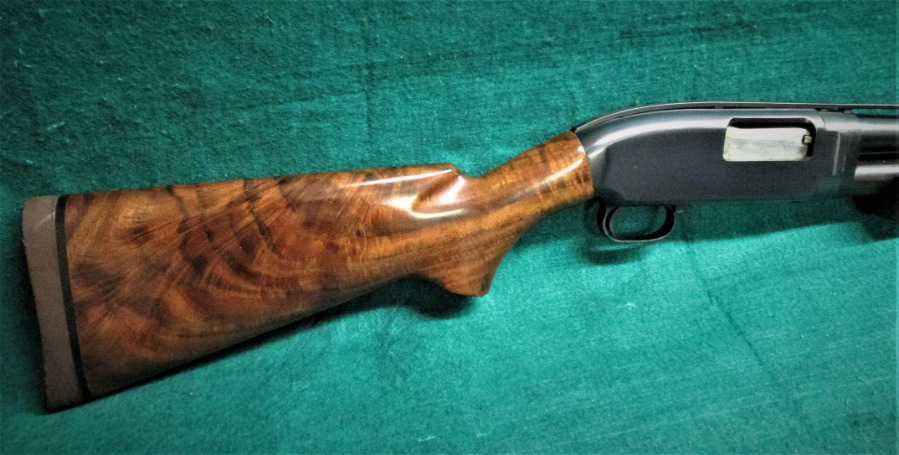
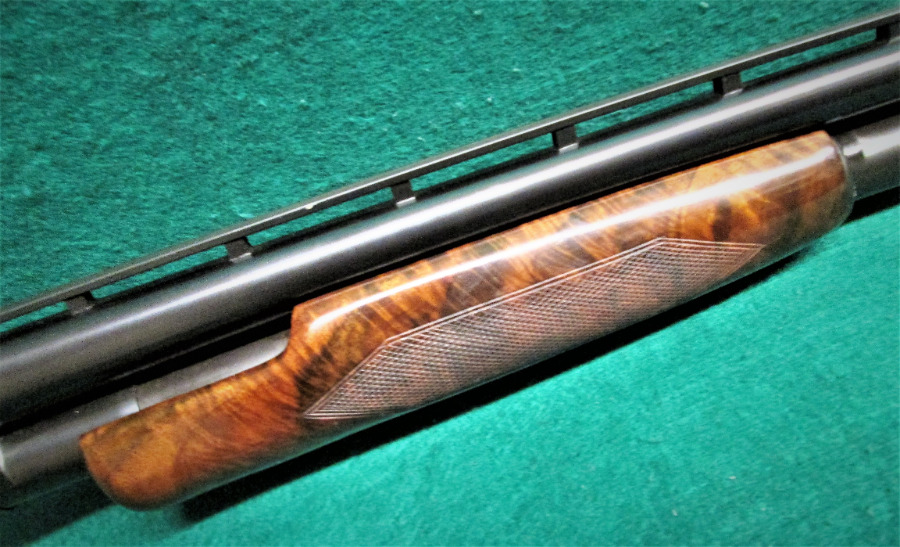
I just can not believe on how nice the wood is on this piece!
Winchester Repeating Arms Company - MODEL 12 CUSTOM TRAP W/30 INCH RIBBED BARREL FULL - Picture 2
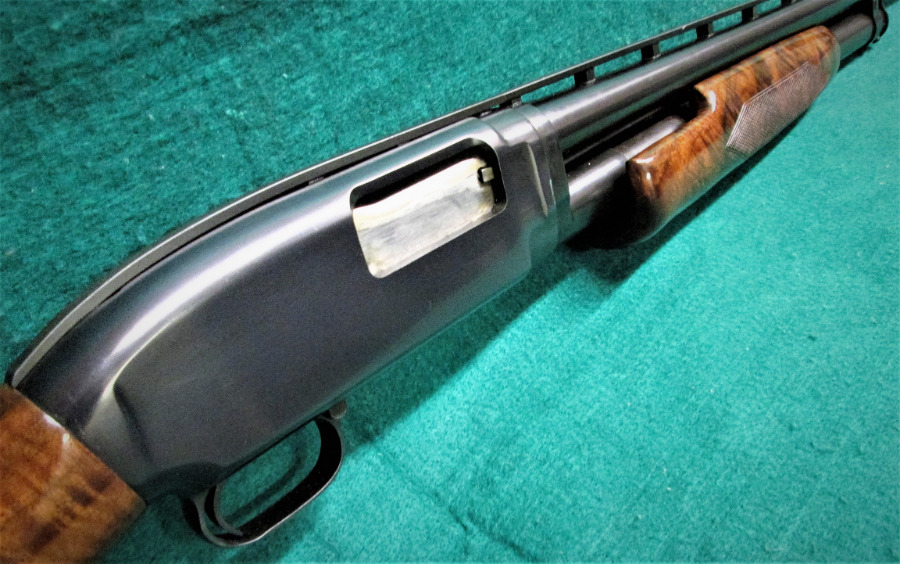
Winchester Repeating Arms Company - MODEL 12 CUSTOM TRAP W/30 INCH RIBBED BARREL FULL - Picture 3
Winchester Repeating Arms Company - MODEL 12 CUSTOM TRAP W/30 INCH RIBBED BARREL FULL - Picture 4
Winchester Repeating Arms Company - MODEL 12 CUSTOM TRAP W/30 INCH RIBBED BARREL FULL - Picture 5
Winchester Repeating Arms Company - MODEL 12 CUSTOM TRAP W/30 INCH RIBBED BARREL FULL - Picture 6
Winchester Repeating Arms Company - MODEL 12 CUSTOM TRAP W/30 INCH RIBBED BARREL FULL - Picture 7
Winchester Repeating Arms Company - MODEL 12 CUSTOM TRAP W/30 INCH RIBBED BARREL FULL - Picture 8
Frankly I think that the Model 12 is the finest pump shotgun out there by American Gunmakers. You could do a whole lot worse to say the least by not buying one of these. Especially since most of them are fairly reasonably priced.
 

Categories
California

Some very strange Brown Sauce we got here!

THE TRANS WOMEN TURNING TO FIREARMS FOR SURVIVAL

On November 7th, a progressive flood at the polls gave some on the political left hope for 2018: Communities across the nation elected trans women, refugees, immigrants, and others who have historically been shut out of the political process.
But not all marginalized communities are hopeful, and even among those who are, survival is still imperative. Some progressive communities have responded to worries about their safety with a tactic that some on the left might find surprising, perhaps even counterproductive: They’re taking up arms.
Trans women are one such community. For some trans guns rights activists, arming trans women is a moral imperative in a society that routinely fails to protect them from systemic violence.
Their work sits at the intersections of a sometimes awkward divide—some are left-leaning, some are on the right, and all of them cherish an individualistic interpretation of gun rights.
This flies in the face of assumptions people may make about the trans community’s political leanings and feelings about the Second Amendment.
Being transgender can be extremely dangerous, and trans people don’t view the social structures ostensibly intended to defend people from harm as safe for them—law enforcement, for example, has a record of abusing trans women and disbelieving trans women when they report crimes.
This is particularly true for trans women of color, who are made doubly vulnerable by society, especially those in the sex industry.
For trans women feeling alone against the world, armed self-defense can start to feel like a very appealing option, though sometimes a frightening one.

I was so traumatized by guns by my 30s that it took three very patient queer gun instructors in a private living room to coach me through my first firearms training,” says Scout Tran-Caffee, a non-binary trans woman and multidisciplinary artist from Northern California.
Whether women are pursuing training and licensure for the purpose of accessing conceal carry permits, or spending time with fellow LGBT people on the range to learn more about gun safety and fire a variety of weapons, gun ownership can also create a sense of solidarity and community.
Kayla Harris, an Oakland-based woman who started out with LGBT gun rights organization Pink Pistols before splitting away to form the Rouge Rifles with a colleague, has been a gun owner for a very long time.
But it wasn’t until the election that she started exploring the possibility of supporting fellow LGBT people who wanted to learn more about guns. “After the [Pulse] shooting and after the election, I knew tons of people who were suddenly interested in guns who never had been before,” Harris says.
Harris carried her interest in firearms through transition, and is a certified firearms instructor—one reason she pursued and maintained her certification was a desire to give back to her community. “Gun owners shouldn’t just default to the white guy who lives in Wisconsin or whatever,” she says. “That’s not the only person who should own guns. For disadvantaged and marginalized people, it equalizes force.”
Harris’ casual interest in guns and enjoyment in shooting shifted as she transitioned and adapted to the Trump era. In an age when the federal government appears to be making war on the trans community, emboldening people on a local level, her fears are rooted in practicality. “There are countless stories of people who failed to be neutralized by a less than lethal weapon,” she says.
That’s her driving desire in educating people about firearms, with a focus on home defense (conceal carry permits are extremely difficult to obtain in the Bay Area). She knows not all trans women agree with her work, but she wants to provide access to trans-inclusive, safe, supportive firearms training for those who are interested.
Often, she loans out her own weapons on the range for training purposes, giving people an opportunity to see if shooting is for them before plunging into buying a gun—and dealing with the demands of storing it safely and in a legally compliant fashion.
Though Harris supports gun education and ownership for trans women who feel it’s a good fit for their needs, she does have a word of caution.
“If I as a trans woman ever shoot a right-wing fascist, the law is almost definitely not going to be on our side,” she comments, noting that law enforcement agencies have a long history of prosecuting marginalized people who fight back. While stand-your-ground laws may be a defense for white cis men, a fatal encounter could go very differently for a trans woman, and Harris has no illusions about the implications.
“When I teach a defense class, the point of the class is to kill someone,” Harris says. “If you’re a trans woman, the person you’re killing is likely to be someone society values more than you.”
Whether the National Rifle Association would step up in defense of a trans woman—especially a trans woman of color—who shoots and kills in self defense is an open question.
When 32-year-old Philando Castile was shot and killed by law enforcement in Minnesota, the NRA failed to condemn the incident, despite the fact that Castile had a conceal carry permit, something critics said may have played a role in his death.
Harris, and Tran-Caffee, hope a test of the NRA’s limits will never come; firing a gun anywhere other than the range or an organized sport shoot isn’t something either woman relishes.
“I dream of how trans peoples’ daily lives could change if all our bullies came to assume that we were all jiu jitsu blackbelts or else had concealed carry licenses,” says Tran-Caffee, who also participates in martial arts training at Oakland’s Four Elements Fitness, where she’s worked to make the gym more LGBT-friendly.
In the face of people who are afraid to leave their homes and be themselves because they fear physical assault that might be difficult to stop with the use of non-lethal means, the fight over gun control gets much more complicated, and perhaps it should. The lack of nuance in conversations about what form gun control should take, and what the founders intended with the Second Amendment, may do a disservice to both sides.

Categories
Well I thought it was funny!

Fine by me as I hate the things myself!

Related image

Categories
All About Guns The Green Machine War

M27 Infantry Automatic Rifle

Here is some more information from Wiki on the Marine Corps newest Toy for Its P.B.I.

(Poor Bloody Infantry)

M27 Infantry Automatic Rifle
USMC-120427-M-SR181-035.jpg

A U.S. Marine armed with an M27 IAR affixed with ACOG Squad Day Optic.
Type Squad automatic weapon
Assault rifle
Designated marksman rifle
Place of origin Germany
Service history
In service 2010–present
Used by United States Marine Corps
Wars Operation Enduring Freedom
Production history
Designer Heckler & Koch
Designed 2008
Manufacturer Heckler & Koch
Unit cost US$3,000[1]
Produced 2010–present
No. built 4,153[2]
Specifications
Weight 7.9 lb (3.6 kg) empty
9.8 lb (4.4 kg) loaded weight with sling[3]
Length 36.9 to 33 in (940 to 840 mm) w/ adjustable stock
Barrel length 16.5 in (420 mm)
Width 3.1 in (79 mm)
Height 9.4 in (240 mm)

Cartridge 5.56×45mm NATO
Action Gas-operated short-stroke pistonrotating bolt
Rate of fire Sustained: 36 rpm
Cyclic: 700 to 900 rpm
Effective firing range 550 m (point target)
700 m (area target)[4]
Maximum firing range 3,938 yd (3,601 m)[4]
Feed system 30-round STANAG magazine
Sights 3.5x Squad Day Optic, flip-up rear rotary diopter sight and front post

The M27 Infantry Automatic Rifle(IAR) is a lightweight, magazine-fed 5.56mmselect-fire weapon based on the Heckler & Koch HK416. It is used by the United States Marine Corpsand is intended to enhance an automatic rifleman’s maneuverability. The U.S. Marine Corps initially planned to purchase 6,500 M27s to replace a portion of the M249 light machine guns employed by automatic riflemen within Infantry and Light Armored Reconnaissance Battalions. Approximately 8,000–10,000 M249s will remain in service with the Marine Corps to be used at the discretion of company commanders. The United States Army does not plan to purchase the IAR.[5][6][7] In December 2017, the Marine Corps revealed a decision to equip every Marine in an infantry squad with the M27.[8]

History[edit]

Background[edit]

In 1985, the U.S. Marine Corps adopted the M249 Squad Automatic Weapon, one year after the U.S. Army. Procurement was a service-level decision because the weapon was adopted by the Army with a contract method the Marines could use. While the belt-fed M249 was portable and had a high volume of fire, its relatively heavy weight meant gunners could have trouble keeping up with riflemen.[9]

IAR[edit]

In 1999, a Universal Need Statement was issued for an Infantry Automatic Rifle (IAR). Around 2000, the 1st Marine Division’s 2nd Battalion, 7th Marines Regiment conducted initial, limited IAR trials which confirmed the desirability of a light automatic rifle. Experiences in Iraq and Afghanistan resulted in formal requests for recommendations. The Universal Need Statement spent six years going through the procurement process before an official program was begun and a list of required capabilities was created in early 2005.[9]
The Infantry Automatic Rifle program began on 14 July 2005, when the Marine Corps sent Requests For Information to arms manufacturers. Characteristics desired in the weapon included: portability and maneuverability; similarity in appearance to other rifles in the squad, reducing the likelihood that the gunner will receive special attention from the enemy; facilitation of the gunner’s participation in counter-insurgency operations and capability of maintaining a high volume of fire. An initial requirement for a magazine with a minimum capacity of 100 rounds was dropped in favor of the 30-round STANAG magazine because, at the start of testing, available 100-round magazines were unreliable. Caliber was specified as 5.56×45mm with non-linked ammunition, so as to achieve commonality with existing service rifles.[9][10]
In 2006, contracts were issued to several manufacturers for sample weapons. Fabrique Nationale d’Herstal submitted an IAR variant of the FN SCAR, Heckler & Koch submitted an HK416 variant, and Colt Defense submitted two designs. Companies that attempted to compete but were not accepted as finalists for testing included the Land Warfare Resources Corporation M6A4 IAR,[11][12] Patriot Ordnance Factory,[6] and General Dynamics Armament and Technical Products with the CIS Ultimax 100 MK5 (marketed as the GDATP IAR).[13]
In December 2009, the Heckler & Koch weapon won the competition and entered into a five-month period of final testing.[14][15] In the summer of 2010, it was designated as the M27 Infantry Automatic Rifle,[16] coincidentally sharing a designation with the 2nd Battalion, 7th Marines, who had been testing fully automatic rifles since 2001.[17]

An M27 IAR displayed at the NDIAJoint Armaments Conference in May 2010.

While Marine Corps Systems Command was optimistic about operational testing, former Commandant of the Marine Corps General James T. Conway remained skeptical because of the reduction in firepower at the fireteam-level that would result if the M27 was adopted.[18] He felt that, while more accurate, it was unlikely that the M27 could provide fire-superiority over the M249, a belt-fed LMG. A magazine-fed rifle, requiring frequent reloading, would not be able to sustain the same rate of fire. In a firefight, squad members carrying extra magazines for the M27 might not always be in position to supply them to the gunner. Further, the SAW was already a battle-proven weapon. It was also significant that the Army had chosen not to pursue the IAR concept.[9]
After the Marine Corps Operational Test and Evaluation Activity conducted further testing at MCAGCC Twentynine PalmsFort McCoy, and Camp Shelby (for dust, cold-weather, and hot-weather conditions, respectively), limited fielding of 458 IARs began to four infantry battalions (one per each Marine Expeditionary Force, one reserve) and one light armored reconnaissance battalion, all of which deployed to Afghanistan in 2011.[19][20]
In May 2011, General James Amos of the U.S. Marine Corps approved the conclusion of the Limited User Evaluation (LUE), and ordered the replacement of the M249 LMG by the M27. Fielding of the approximately 6,500 M27 units was expected to be completed in the summer of 2013, at a cost of $13 million. Each M27 gunner was to be equipped with around twenty-two 30-round magazines of the type currently in use with the M16 and M4 carbineapproximating the combat load of an M249 SAW gunner; although the M27 gunner would not be expected to carry all 22 magazines. The individual combat load would be determined at the unit level and was expected to vary by unit, based on results of evaluations conducted by the four infantry battalions and one light armored reconnaissance battalion that participated in the Limited User Evaluation. Though program officials were aware that switching from the belt-fed M249 would result in a loss of suppressive fire capability, Charles Clark III, of the Marine Corps’ Combat Development and Integration Office, cited the substantially increased accuracy of the M27 as a significant factor in the decision to replace the M249.[21]

Suppressive fire[edit]

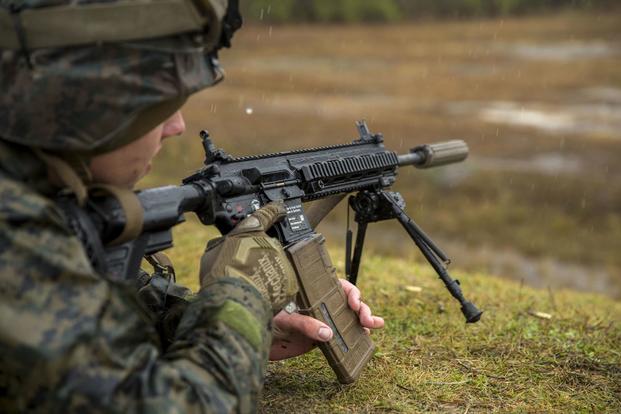
A U.S. Marine practices firing an M27 IAR on fully automatic fire in April 2012.

The notion that the M27 represents a reduction in suppressive fire has spawned considerable debate between proponents of the M249 SAW within the infantry and those who advocate that a lighter, more maneuverable, and accurate weapon is sufficient to support offensive operations at the squad level. It is debatable, in fact, that program officials actually concede a loss of suppressive fire capabilities, as the only statements of concern over this concept were made by General Conway.
With a SAW, the doctrine of fire suppression is the sound of continuous fire with rounds landing close to the enemy. While the M249’s volume of fire may be greater, it is less accurate. Experienced troops who have dealt with incoming fire are less likely to take cover from incoming rounds if they are not close enough. With an IAR, the doctrine is that lower volume of fire is needed with better accuracy. Fewer rounds need to be used and automatic riflemen can remain in combat longer and in more situations.[9]
Another benefit of the M27 over the M249 is that in many respects it resembles an M4 rifle as used by the rest of the squad. This makes it harder to identify by enemy troops.[9]

Combat reviews[edit]

The IAR was initially fielded in December 2010.[2] 1st Battalion 3rd Marines were deployed to Afghanistan in April 2011 with 84 IARs. Former SAW gunners initially did not like the M27, but appreciated it as time went on. It weighed 9 lb (4 kg) loaded, compared to 22 lb (10 kg) for an M249, which was a significant difference when on 5-hour long missions. Gunners said it was “two weapons in one,” being able to fire single shots accurately out to 800 meters and have fully automatic fire. It also blended in with standard M16-style service rifles, making it difficult for enemy forces to identify the machine gunner. The battalion leadership also saw the M27 as better at preventing collateral damage, as it is more controllable on fully automatic than the M249. Concern of volume of fire loss was made up for through training courses developed in December 2010. With the M249 SAW, the idea of suppression was volume of fire and the sound of the machine gun. With the M27 IAR, the idea of suppression shifts to engaging with precision fire, as it has rifle accuracy at long range and fully automatic fire at short range. Shooters transitioned from long-range precision fire at 700 meters to short-to-medium suppressive fire at 200 meters, both while in the prone position. Some gunners in combat have been used as designated marksmen. An M27 gunner with one aimed shot has the effect of three or four automatic shots from the SAW, and still has the option of a heavier volume with an accurate grouping.[22]
Marines issued with the M27 enjoy its familiarity with the M4-style weapons in service. It is friendlier to troops due to its cleaner, lightweight system having fewer moving parts and jams. IAR gunners consider the rifle-grade accuracy to be a huge improvement over the SAW, despite the loss of sustained firing. With a shrinking budget, the Marine Corps is looking at ways to implement the IAR as a multipurpose weapon. Suggestions included use as an automatic rifle and as a designated marksman rifle,[23] a role where it replaced the Squad Advanced Marksman Rifle.[24] Additionally, the free-floating barrel offers improved accuracy at approximately 2 MOA compared with 4.5 MOA for M16A4 rifles.[25]

Design[edit]

A U.S. Marine armed with an M27 fitted with a Harris bipod and a 3.5x Squad Day Optic covers his team in Afghanistan in March 2012.

The M27 is based on the Heckler & Koch HK416.[26] It features a gas-operated short-stroke piston action with a rotating bolt and a free-floating barrel. The handguard has four MIL-STD-1913 Picatinny rails for use with accessories and optics. The simpler gas-piston rifle system reduces the amount of time it takes to resolve malfunctions on the IAR compared with the M249.[17] Alternate calibers other than 5.56 mm are being considered for the M27.[9]

Use[edit]

The IAR is distributed one per four-man fireteam, three per squad, 28 per company, 84 per infantry battalion, and 72 per Light Armored Reconnaissance Battalion,[27] with 4,476 total for the Marine Corps. The M249 was not completely replaced by the M27, and six of the machine guns are still issued to rifle companies.[28]
In December 2017, the Marines revealed they would be equipping every Marine in an infantry squad with the M27, which would increase the number of rifles procured by at least 11,000. While not every Marine in a battalion will receive the weapon, others outside of squads are also being considered.[8]

Magazine[edit]

The M27 draws ammunition from a standard 30-round STANAG magazine. The improved STANAG magazine with the tan-colored anti-tilt follower is favored over the previous version with the green follower because it can be inserted more easily and the anti-tilt follower can handle high rates of fully automatic fire with less chance of malfunction. While a rifleman normally carries seven 30-round magazines, an IAR gunner has to carry up to 16, and may carry as many as 21, due to its role and fully automatic rate of fire. The magazine well has a flared opening that aids in magazine insertion, but a PMAG 30 GEN M2 magazine cannot be inserted due to the frontal plastic bevel on the PMAG.[4] Because the M27 cannot be fed from the widely used M2 PMAG magazines that M4s or M16 rifles in the squad could take, the Marines banned the polymer PMAG for issue on November 26, 2012 to prevent interchangeability issues.[29] In response, Magpul began the process of arranging verification and official testing for their improved PMAG 30 GEN M3 magazine, which is compatible with both the M27 and M16-series rifles.[30] After Marine Corps testing of the M855A1 Enhanced Performance Round with the M27 showed reliability problems from feeding issues from standard magazines,[31] the PMAG 30 GEN M3 Window, which had better reliability with the EPR, was approved for use by Marines in December 2016 so that M27 gunners who receive M855A1 rounds do not face such issues.[32] Due to its role, high capacity magazines of between 50 and 100 rounds are being explored.[17]

Accessories[edit]

The M27 is essentially an HK416 with accessories required by the Marine Corps.[33] The standard optic is the Trijicon ACOG Squad Day Optic (SDO), officially designated the Sight Unit, SU-258/PVQ Squad Day Optic. It is a 3.5×35 machine gun optic that has a Ruggedized Miniature Reflex (RMR) sight screwed on top for close-quarters engagements under 100 meters. Created for the SAW, the day optic offers slightly less magnification, but longer eye relief than the ACOG Rifle Combat Optic (RCO) on M16s and M4s. The longer relief helps reduce injury risk from recoil.[4][22] It is issued with the Vickers Combat Applications sling and rail sling mounts, AIM Manta Rail Covers, Harris bipod, KAC backup iron sights, a foregrip, and bayonet lug.[34] The M27 initially had a Grip Pod, which is a foregrip with bipod legs inside, but it was later replaced by a separate foregrip and bipod.[9]
In January 2017, a USMC unit deployed with suppressors mounted to their M27 rifles as part of a concept to suppress every weapon in an infantry battalion. Exercises showed that having all weapons suppressed improved squad communication and surprise during engagements; disadvantages included additional heat and weight, increased maintenance, and the greater cost of equipping so many troops with the attachment.[35]

M38 DMR[edit]

In late 2017, the Marine Corps began fielding the M38 designated marksman rifle. Although certain M27s were employed as marksman rifles since 2016, the M38 version outfits the M27 with a Leupold TS-30A2 Mark 4 MR/T 2.5-8x36mm variable power scope, the same optic fitted on the Mk 12 Special Purpose Rifle. The naming of the M38 followed a similar convention to the M27, being named after the 3rd Battalion, 8th Marines unit that tested the rifle out.[36]

Categories
All About Guns The Green Machine War

M27s and 'Head-to-Toe' Gear Overhaul on the Way for Marine Grunts

A member of 3rd Battalion, 8th Marines, fires the M27 Infantry Automatic Rifle during a live-fire weapons exercise on Camp Lejeune, N.C., on Dec. 8, 2017. (U.S. Marine Corps photo by Lance Cpl. Michaela R. Gregory)
After more than a year of speculation, the word comes straight from the commandant of the Marine Corps: Grunts, including those outside the squad, are getting the M27 Infantry Automatic Rifle — and a whole lot of other goodies to boot.
Military.com first reported in November 2016 that the Marine Corps was eyeing the idea of fielding the weapon more broadly within the infantry, and had issued M27s to members of 3rd Battalion, 5th Marines, the service’s experimental infantry battalion, to observe how it improved their effectiveness.

Currently, the M27 is carried by only one member of each infantry fire team: the automatic rifleman.
With the battalion’s deployment to the Pacific at an end, Marine leaders are considering a list of 41 different recommendations generated by the unit, and M27s are at the top of the list.
Related content:

In an interview with Military.com in late December, Commandant Gen. Robert Neller confirmed that a decision had been made to move forward with fielding the M27 more widely within the infantry.
Every Marine in an infantry squad, he said, will receive the high-end rifle. And while not every Marine in a grunt battalion will carry the IAR, others outside of the squad will also be issued one.
“I don’t think mortars and javelin guys need the M27,” Neller said. But, he added, artillery forward observers, fire support teams, and even engineers might be good candidates for the weapon.
“I’m going to wait and see,” he said. “It’s not that much [money].”
The exact number of weapons needed has yet to be determined. In February, the Marine Corps put out a request for information for 11,000 new infantry automatic rifles, enough to equip every squad. But in August, the service published a pre-solicitation for up to 50,800 M27s, to ensure that manufacturer Heckler & Koch was up to the task of meeting an order that large.
Neller has in the past expressed reservations about investing in new weapons and technology for Marine grunts. The IAR, based on the Heckler & Koch HK416, offers a longer effective range and better accuracy than the M4 carbine currently fielded to infantrymen, but it also has come with a steeper price tag: about $3,000 a piece compared to less than $1,000 for the M4.
That may no longer be the case.
Chief Warrant Officer 5 Christian Wade, the gunner for 2nd Marine Division out of Camp Lejeune, North Carolina, told Military.com that competition and economies of scale have pushed the cost of the M27 down significantly.
“The price for that rifle is comparable to what we paid for the M4s the riflemen currently have,” he said. “These companies are competing against each other. And we now have bought the finest infantry rifle for the same price the current infantry rifle is.”

KITTING OUT THE GRUNTS

But with major Marine Corps investments for new rotary-wing and fixed-wing aviation platforms well underway, cost may not be the obstacle it once was for the service. The commandant signaled his plan to invest heavily in the infantry when speaking with deployed Marines during his yearly Christmas tour.
The Marines’ new 5th-generation fighter, the F-35B Joint Strike Fighter, costs roughly $100 million per copy, Neller told troops at one of a dozen town hall-style addresses he gave in the span of seven days in late December.
“I could kit out every grunt in the Marine Corps with the coolest s*** head-to-toe for $100 million,” he said. “And I intend to do that.”
For what else may be coming for the infantry, look to the “Über Squad,” an experiment started this year by Wade.
This summer, the 13-Marine unit from 1st Battalion, 6th Marines, was kitted out with M27s, suppressors, and high-tech Ops-Core helmets borrowed from Marine Corps Special Operations Command that feature built-in hearing protection, but also magnify other sounds to improve situational awareness.
The Marines used light MARSOC body armor and advanced AN/PVS-31A night vision devices. They also got 60-round Magpul drums, allowing them to increase the amount of ammunition they carried.
Wade said that the high-end night vision equipment had proved its worth recently during a nighttime exercise at Marine Corps Air-Ground Combat Center 29 Palms, California.
“That rifle squad moved faster at night than the live fire-safety chaperones,” he said. “[The Über Squad moved too fast for them to keep up because they had better night vision goggles.”
The squad is expected to deploy to Europe sometime this spring to continue testing out gear, but Wade is already working on requirements documents as a starting point to get some of the equipment to every infantry squad.
He said he’s ready to begin writing requirements for a helmet with all the features of special operations gear, including hearing enhancement, communications infrastructure and ear protection.

SUPPRESSORS AND SCOPES

Early efforts to pursue suppressors are also underway.
In September, the Marine Corps published a request for information about a commercially available suppressor that could be used on the M4, the M4A1, and the M27– effectively covering all service weapons used by the infantry. While an early effort, the document instructed prospective suppliers to be ready to supply in large numbers.
“Future procurement quantities of suppressors could span between 18,000 and 194,000,” the RFI reads.
Wade said he’s not yet happy with the suppressor currently in use by the Marine Corps for specialized jobs. He plans to start tests on a flow-through design that reduces signature, he said.
Add to all that one more key piece of gear: a variable power optic that, combined with the M27 and a suppressor, would essentially kit out every Marine in the squad as a designated marksman. Wade said he wants to equip infantry squads from different platoons with various optics and compare their performance to make the case for more powerful equipment.
Currently, Marine grunts carry a 4X power rifle scope; Wade said the idea capability would be a 1-8X power scope.
An RFI published in September described such a scope, the “squad combat optic,” that would work on the M4, M4A1, and M27, and be able to identify and acquire targets at a range of 600 meters or more.
Some of this gear carries with it a sizable price tag. The AN/PVS-31A NVGs, for example, cost about $13,000, compared with about $4,000 for the AN/PVS-14 NVGs currently in use. And all of it isn’t guaranteed to end up with the squad.
But Neller said he’s likely to approve a lot of it, and soon.
“The money to buy all that other stuff, the suppressors, the ear protection enhancement, the different helmets, it’s not a lot of money in the aggregate,” he told Military.com. “So I’m just waiting for them to come back, and I’m ready to say yes.”
And it’s possible all these items are just the start of a full-court press to equip the infantry for future fights.
In an address to Marines with the Black Sea Rotational Force in Romania, Neller hinted at future developments.
“Helmets, [ear protection enhancement], lighter body armor, boots, utilities, everything on the infantry from head to toe is probably going to get changed,” Neller said. “Every Marine’s a rifleman, but not every Marine’s a grunt.”
The infantrymen in the room roared.
— Hope Hodge Seck can be reached at hope.seck@military.com. Follow her on Twitter at @HopeSeck.

Categories
Gear & Stuff

I want one! Bushnells new spotting Scope

Bushnell Legend T-Series Tactical Spotting Scope

Long range shooting is a discipline that requires quality gear. Typically the equipment needed for long range shooting is expensive. Now and then a company will offer a piece of kit that is well made and moderately priced. One such product that I have tested extensively over the course of this year is the Bushnell Legend T-Series Tactical Spotting Scope.
The Bushnell Legend T-Series Tactical Spotting is a First Focal Plane, tactical style spotting scope that has a mil-hash reticle. According to Bushnell, the spotting scope is waterproof and fog proof. The glass found on the spotting scope is Bushnell’s, ED Prime Extra-Low Dispersion fluorite glass, which eliminates chromatic aberration and allows for a clear and bright image. The ED Prime Glass is coated with Bushnell’s water-repellant Rainguard HD. The Rainguard HD coating mitigates moisture from beading up on the glass and destroying the user’s sight picture. The actual prisms in the Bushnell Legend T-Series Tactical Spotting scope are also coated to enhance resolution and contrast. Interesting to note is that that the ED Prime Glass and coatings found on the Bushnell Legend T-Series Tactical Spotting scope are also found on the high-end Bushnell Elite Tactical LMSS spotting scope. The Bushnell Elite Tactical LMSS is currently in use by the United States Military.
One neat feature of the Bushnell Legend T-Series Tactical Spotting Scope is that it has MIL-STD-1913/Picatinny rails at the 3, 6 and 9 o’clock positions. These rails are perfect for mounting lights, lasers, red dots and rangefinders. The first enhancement I made to the Bushnell Legend T-Series Tactical Spotting Scope was to add a red dot sight to the top rail. The addition of a red dot allows an end user to find and get on target very quickly, especially when the spotting scope is set to high magnification.

SPECS

  • Magnification: 15 – 45x
  • Objective: 60mm
  • Prism Glass: BaK-4
  • Lens Coating: Fully Multi-Coated
  • RainGuard HD:  Yes
  • Field Of View: ft@1000 yds / m@1000 m      180/60@15x / 60/20 @ 45x
  • Exit Pupil: mm 4.0@15x / 1.5@45x
  • Close Focus:  35 ft.
  • Weight: 37 oz.
  • Length: 11 in.
  • Waterproof/Fogproof: Yes
  • Eye Relief: 30 mm
  • Color: Desert Tan
  • MSRP:$450
  • Manufacturer: Bushnell

Mechanical Testing

Before heavy field use, I checked to make sure that the subtensions on the Mil-hash reticle were calibrated correctly. To do this, I set up an RE Factor Tactical Hitman Target, moved 100 meters back, and made sure that 1 Mil corresponded to 10 centimeters. Proper calibration is important when observing hits and calling out second shot corrections. Bushnell did an excellent job assembling my spotting scope, and I was pleased to see that the reticle was indeed calibrated correctly.

Field Testing

Field testing took place over the course of several months. The Bushnell Legend T-Series Tactical Spotting Scope was a constant companion during my numerous trips to the ranch. The spotting scope also accompanied me to Accuracy 1st in Clarendon Texas, where I took the Advanced class, as well as a recent vacation to Yellowstone National Park.
During the Accuracy 1st course, I set up the Bushnell Legend T-Series Tactical Spotting Scope on the line for my fellow students to use. They complimented the Bushnell on its clarity and found it on par with the Leupold Mark 4, and the Bushnell Elite Tactical LMSS, which were also available for students. I did a side by side comparison of the Bushnell Elite Tactical LMSS and the Bushnell Legend T-Series Tactical Spotting Scope. The clarity was the same, but the Bushnell Elite Tactical LMSS appeared to be better made. This was not a surprise being that the Bushnell Elite Tactical LMSS was built for military applications.
The Bushnell recently accompanied me to Yellowstone National Park and Grand Teton National Park. Even though the Bushnell Legend T-Series Tactical Spotting Scope has a reticle, it did not take away from the experience of viewing wildlife. What was neat, was that I could focus on a distant animal, then communicate to my party where the animal was in the scope based on its position in relation to the reticle. I let scores of tourists look through the scope, and there was not a single complaint about the reticle.

Since Yellowstone is teeming with wildlife, there were several scenarios where there were Bison, Antelope, Bighorn sheep and a rambunctious red fox, all in the same general area. The red dot atop the Bushnell spotting scope allowed me to transition from one set of animals to another quickly. The red dot was especially handy when fellow tourists walked up and asked what kind of wildlife we were looking at, and more importantly where they were located.
One excellent accessory that pairs well with the Bushnell Legend T-Series Tactical Spotting Scope is the PhoneSkope. The PhoneSkope allows one to attach their cellphone to a spotting scope to record video, take pictures or simply use their cell phone screen for comfort. The PhoneSkope is ideal for hunters that have vision problems, or for groups of people who are clamoring around a spotting scope.

Lasting Impressions

The Bushnell Legend T-Series Tactical Spotting Scope is a fantastic piece of kit. These scopes are available for around $450, which I think is a fair price. The glass was on par with more expensive models, and the MIL-STD-1913/Picatinny rails allow for the attachment of accessories. Attach a red dot optic, use a good solid tripod, take care of your lenses, and you should be good to go.
For more information about the Bushnell Legend T-Series Tactical spotting scope, click here.
For more information about PhoneSkope, click here.
To purchase a Bushnell Legend T Series Tactical spotting scope on GunsAmerica, click here.

Categories
All About Guns

When you really want to reach & touch someone ! The L118 "Light" Gun

Image result for L118 light gun
Related image
Image result for L118 light gun
Related image
Image result for l118 Cartridge
Image result for L118 light gun
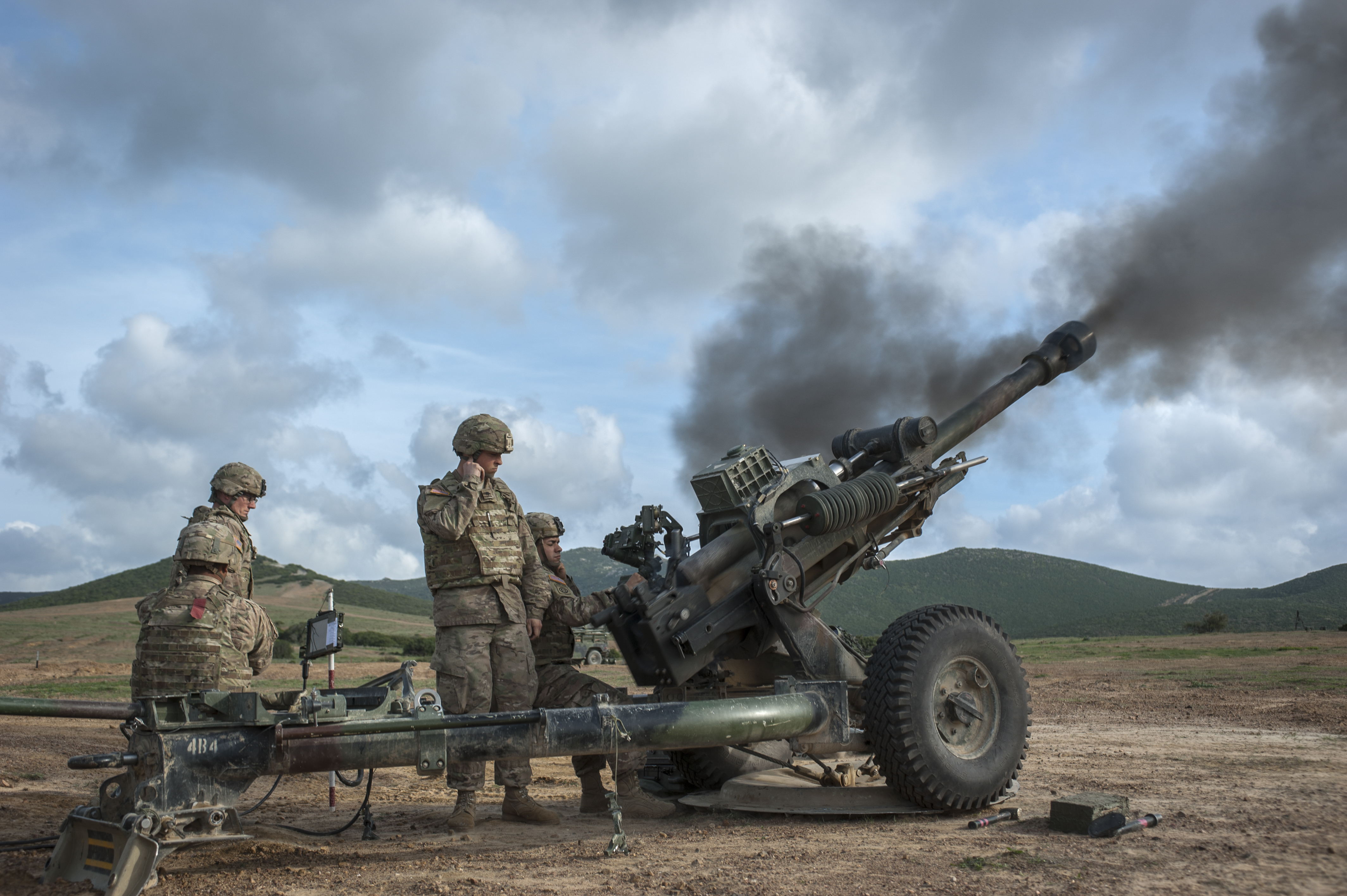
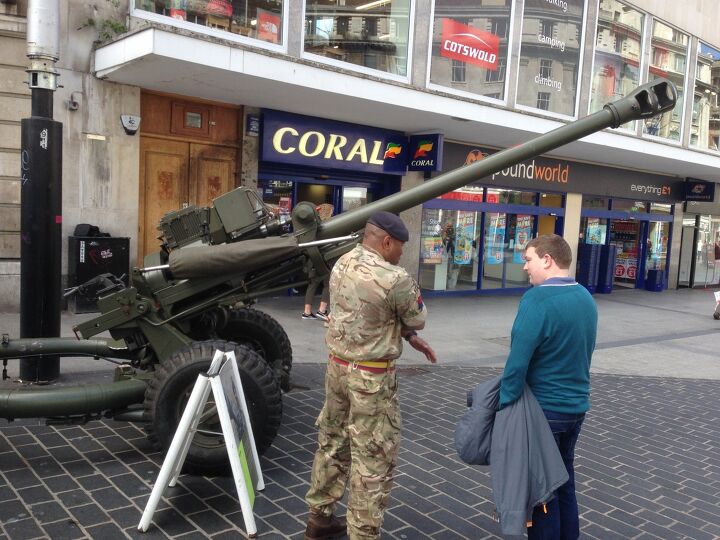
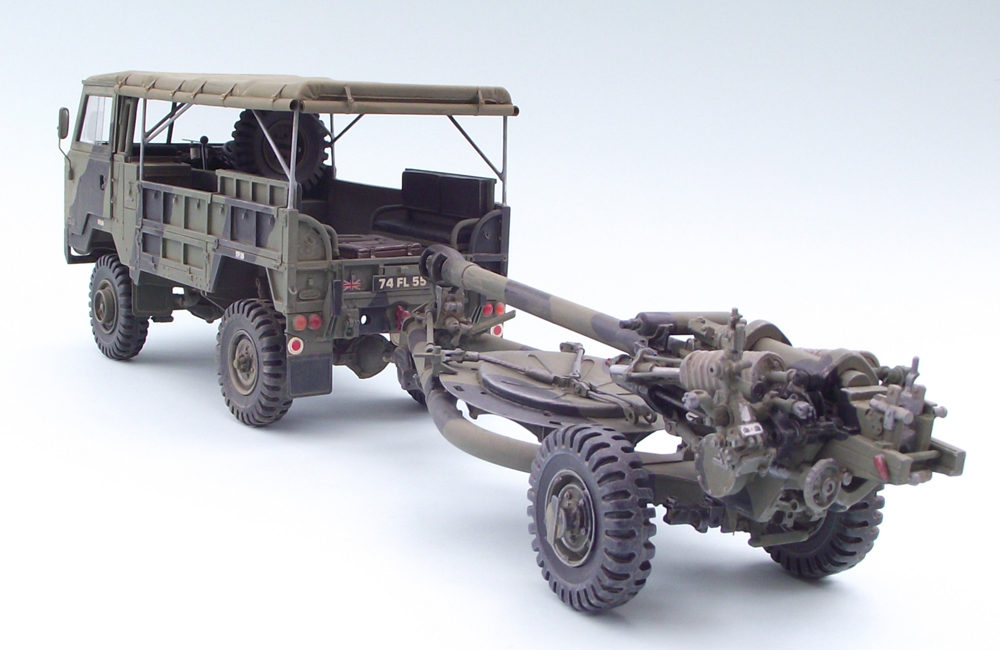
The L118 light gun is a 105 mm towed howitzer.
It was originally produced for the British Army in the 1970s and has been widely exported since, including to the United States, where a modified version is known as the “M119 howitzer“.
The proper name for it is “gun, 105mm, field, L118” but it is almost always called the “light gun”.

History[edit]

Development[edit]

From 1961 until the mid-1970s, the British Army used the 105 mm pack howitzer L5 with L10 ordnance (OTO Melara Mod 56) as its light artillery weapon, variously replacing the 75mm howitzer4.2 inch mortar and 25-pounder gun in some eight regular artillery regiments.
It fires the US M1 type ammunition (called “105 mm How” in the UK).
This widely used howitzer was originally designed in Italy for the Alpini, and is light enough to be lifted by Westland Wessex helicopters or towed by Land Rovers.
However, it lacked range (making it potentially vulnerable to counter-battery fire), was not notably robust, had poor sights and was not entirely popular.
In 1965, a general staff requirement was approved for a new 105 mm weapon system because the pack howitzer “lacked range and lethality”.[2]
Key characteristics included 6400 mil (360°) traverse by one soldier, maximum weight of 3,500 pounds (1,600 kg), dimension limits imposed by internal carriage in Chinook helicopters and Andover transport aircraft, and the ability to fire immediately after being under water for 30 minutes.
The ammunition to be used was the 105 mm Fd Mk 2 ammunition used in the L13 ordnance of the gun equipment 105 mm L109 (better known as the “Abbot self-propelled gun“).
This ammunition uses electrical instead of percussion primers and is an entirely different design from the US M1 type ammunition as used in the L5 pack howitzer.
The two types are not interchangeable. An early requirement was for the new weapon to use 105mm Fd Mk 1 ammunition, which uses the M1 shell, in training.
However, in 1968, this was changed to allow a different version of the weapon, which subsequently became the L119, to fire US 1935 pattern (i.e. M1) ammunition.
The new gun, soon designated ‘light gun’, was designed by the government Royal Armament Research and Development Establishment (RARDE), Fort Halstead, Kent. Prototypes were tested in 1968.
However, it soon emerged that some increase in weight was needed for a gun with the requisite robustness, and several assemblies were substantially redesigned.
Original production, which was authorised in late 1975, was by Royal Ordnance FactoryROF Nottingham, which has since been incorporated into BAE Systems Land and Armaments. Deliveries started in 1976.

In British service[edit]

The light gun entered service with the British Army in 1976.
The new weapon was heavier than its predecessor, but new, more capable helicopters such as the Puma and Westland Sea King, which could carry the new weapon, were entering service at the same time.
A new vehicle, the Land Rover 101 Forward Control (“Land Rover, one-ton”, was designed as the prime mover in the field for the light gun (and the Rapier air-defence missile launcher).
Since the end of the 1990s, the British Army has used Pinzgauer ATVs as their gun tractors. In Arctic service, and elsewhere, the gun is towed by the Hägglunds Bv 206 and is fitted with skis when over snow.
In 1982, the light gun saw use in the Falklands War. Five batteries (30 guns) were deployed to the Falkland Islands.
During the final phases of the battles around Port Stanley, these guns were firing up to 400 rounds per gun a day, mostly at “charge super”, the most powerful propellant charge for which they were designed.
They were a significant factor in the British victory. Since then, British forces have used the light gun in combat in the BalkansSierra LeoneIraq and Afghanistan.

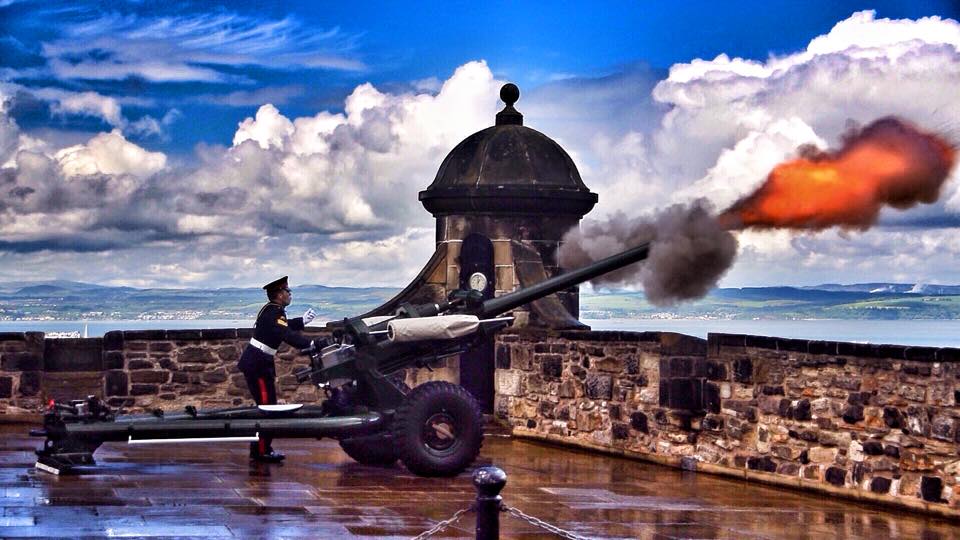
The One O’clock Gun firing at Edinburgh Castle

At present, the British Army has four light gun regiments: 3rd Regiment Royal Horse Artillery4th Regiment Royal Artillery7th (Parachute) Regiment Royal Horse Artillery, and 29 Commando Regiment Royal Artillery.[3]
Other regiments are temporarily equipped with it for service in Afghanistan. The 14 (Training) Regiment Royal Artillery uses it for training at the Royal School of Artillery.
Two regiments of the Army Reserve 103 (Lancastrian Artillery Volunteers) Regt. RA and 105 Regt. RA) are also equipped with the light gun.[4]
Those University Officer Training Corps with “gun troops” train with the L118.
On 30 November 2001, an L118 light gun replaced a 25-pounder as the One O’Clock Gun in Edinburgh Castle.
By tradition, this fires every day at one o’clock, except on Sundays, Good Friday and Christmas Day. The light gun is also fired by 14 (Training) Regiment Royal Artilleryon Remembrance Sunday and Armistice Day each year.[5]

Design[edit]

The L118 uses the L19 ordnance on the L17 carriage. The L19 ordnance is slightly shorter than the L13 used by the Abbot and hence has a slightly shorter maximum range. Also, unlike the Abbot, the barrel is autofrettaged and hence lighter.
The light gun appears to owe a number of its features to the QF 25 pounder, unsurprisingly since RARDE was the successor to the design department, Woolwich Arsenal.
Among these features are its vertically sliding block breech, and a box trail instead of a split trail; a traversing platform is normally used with it.
Its comparatively light weight is also attributed to the nature of the steel used in the carriage and ordnance, and other weight-reducing features, including its narrow wheelbase.
The narrow wheelbase prevents the ordnance rotating the 3200 mil (180°) required to ‘unfold’ the gun.
Because of this, the gun features a knock-off hub on one side allowing the ordnance to be rotated by removing one wheel.
With a well trained gun crew, this contributes approximately 30 seconds to the time required to deploy the gun. In British service, rotating the barrel for towing is optional.
When being towed in the unfolded position, the A-frame is fitted to the front transom in order to support the elevating mass.
A recent modification makes it possible to keep the gun in this position indefinitely at speeds up to 40 mph (64 km/h). For long distance transport or traversing rough terrain, the barrel is reversed and clamped to the end of the trail.
For storage, the gun is in the unfolded position with the barrel elevated to an angle that balances the elevated mass on the yoke and therefore relieves pressure on the elevating gears.
When first introduced in the British Royal Artillery, the L7 or L7A1 dial sight and its carrier, incorporating an integral elevation scale and internal lighting powered by Trilux nuclear light sources, was used to aim the gun for indirect fire.
The L7 sight is a modified version of a German Leitz instrument. Since the light gun entered service after the introduction of field artillery computer equipment (FACE), it never, unlike the Abbot, had gun rules (large slide rule like instruments used at each gun to convert range in metres to tangent elevation in mils, taking account of muzzle velocity).
Therefore, it has a single quadrant elevation scale. These optical indirect fire sights are now only used in recruit training.
The guns also have a direct fire telescope and were originally issued with a night telescope using image intensification.

Ammunition[edit]

Slung from a RAF Merlin at RAF Benson

The 105 mm Fd Mk 2 ammunition has two propelling cartridges and a blank cartridge (for saluting purposes). The normal cartridge has six propellant increments (charges one, two, three and four) plus 4½ and 5 increments. Charge 4½, which is charge five with the blue charge three bag removed, is only used for high angle fire. It is peculiar to the light gun. A separate “charge super” cartridge is used for firing to maximum range.
Both charge five and charge super project beyond the end of the metal cartridge case. Unlike the M1 ammunition, which is ‘semi fixed’ and loaded as a complete round, 105 mm Fd is ‘separate’; the shell is loaded and rammed by hand, then the cartridge is loaded.
By the time the L118 entered service, propellant sub-zones A and B originally used with the Abbot had been replaced by an aerodynamic spoiler (a ring slipped over the nose of shell to lodge on the ogive) to reduce the minimum range at high angle fire when this was required.
The 105 mm Fd Mk 2 projectiles were the same as used with Abbot when the L118 was first introduced. The ammunition types originally or subsequently in UK service include:

  • L31 high explosive (HE) filled with 2.5 kilograms (5.5 lb) of RDX/TNT. Conventional impact L32, L85 and L106, L27 CVT and L33 mechanical time fuzes were originally used and some are still available. The L116 multi-role (electronic) fuze is available for operations but is due to be replaced by a new multi-function fuze L166.
  • L45 smoke base ejection. This contains three canisters filled with hexachloroethane, which are ejected from the base of the shell in flight by a mechanical (L92) or electronic time fuze (L132 being replaced by L163). On falling to the ground, they generate dense white smoke for 60 seconds.
  • Target marker. These generate dense orange (L38) or red (L37) cloud (produced by a mixture of PETN HE and coloured dye) bursting in the air or on impact, and are used to designate targets e.g. for air strikes.
  • L43 illuminating. Provides a parachute flare base ejected by time fuze (L81) at about 400 metres above the ground and burns for 30 seconds.
  • L42 high explosive squash head. Used for direct fire against armoured targets or buildings, has a base fuze with tracer.
  • L41 PRAC. Inert practice shell used in training instead of HESH.
  • L50 HE. This new HE shell is slightly longer than the older shells, uses 2.9 kilograms (6.4 lb) of ROWANEX insensitive plastic bonded explosive and provides significantly greater lethality, which the supplier claims is equivalent to the 155 mm HE M107
  • L52 contains four canisters filled with red phosphorus smoke.
  • L54 ‘black light’ illumination, using the same configuration as L43, to assist observation through night viewing devices.
  • L83 drill. An inert shell for non-firing training purposes.

A white phosphorus smoke shell has never been adopted by the UK for L118. A base bleed insensitive HE shell, with a maximum range of 20.6 kilometres (12.8 mi) has been developed.

Subsequent enhancements[edit]

Australian and British gunners with L118 in Afghanistan, 2009

During the early 1990s all UK L118 were fitted with a muzzle velocity measuring device (MVMD), a radar, and its power supply.
In 2002 the British Army’s L118 guns completed replacement of their optical sights with the LINAPS artillery pointing system (APS) mounted above the barrel.
This is a self-contained system that uses three ring laser gyros to determine azimuth, elevation angle and trunnion tilt angle. It also includes facilities for navigation and self-survey using a global positioning system, inertial direction measurement and distance measurement.
All this can be used anywhere in the world to lay the gun without external references. The outputs and inputs for APS are through the touchscreen layer’s display and control unit (LCDU) that replaced the conventional dial sight and its mount.
The LCDU enables the layer to lay the gun by moving the barrel until the LCDU displays no difference between the ordered firing data and where the barrel is pointing as determined by the LINAPS sensors.
A capability enhancement program that started delivering improvements to UK guns in 2007 aimed at reducing weight and improving some components.
Weight reduction measures include the replacement of some steel components by titanium, however, only some elements entered UK service. The MVMD is also more tightly coupled with the LCDU, reducing electrical power requirements.
Around 2010, new direct fire sights for longer range use were introduced for service in Afghanistan.
These comprise a sniper’s telescopic sight and a new nightsight.
At the end of 2011, a new LCDU with a slightly larger touchscreen was ordered. It may enable data transfer from FC-BISA and include the NATO armament ballistic kernel (NABK) for direct fire shooting.

Variants[edit]

L119[edit]

The L119 variant has a different barrel (a slightly shorter L20 ordnance with a percussion firing mechanism) for firing the ubiquitous US M1 type ammunition (UK 105 mm How), giving the gun a max range of 11,400 metres (12,500 yd).[6] In British service, the L119 was used only for training at the Royal School of Artillery while stocks of 105 mm How lasted, and the last British L119s were retired in 2005. However, the L119 is popular with many export customers who still rely on M1 ammunition.

M119[edit]

Main article: M119 howitzer

The L119 was further modified and produced under licence for the United States Army. The most recent version is the M119A3 introduced in 2013 with a digital fire-control system and GPS-aided inertial navigation unit using software derived from the M777A2.

Other variants[edit]

During the 1970s a third variant, with the L21 ordnance, was developed and prototypes produced. This was for Switzerland and used Swiss pattern 105 mm ammunition. It did not enter service.
The Indian 105 mm light field gun appears to share many features with the UK equipment. In the late 1960s India introduced the Value Engineered Abbot variant with the 105 mm Fd ammunition; this led to the 105 mm field gun (India), which appears to have some light gun features in its elevating mass, although its platform is 25-pr like. The 105 mm light field gun is much more like L118, although somewhat heavier.
In the 1990s, the gun was manufactured under licence in Australia for the Australian and New Zealand armies using mostly Australian produced components.The Australian military call it the “Hamel gun”. Plans to produce 105 mm field ammunition were shelved.
105 mm saluting gun: The British Army has a number of dedicated saluting guns for ceremonial purposes. Based on the standard L118, these saluting guns are modified to exclusively fire blank cartridges, are not fitted with the APS system and are easily distinguished from the field gun variant by their distinctive bronze green paintwork, chromed muzzle brake and breech.

Operators[edit]

Map with L118 operators in blue

Current operators[edit]

105mm L119 light gun of the Spanish Legion‘s Artillery Group

Former operators[edit]

Categories
All About Guns

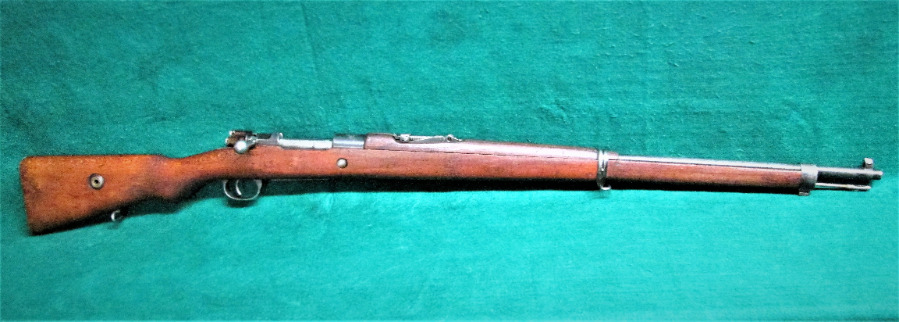
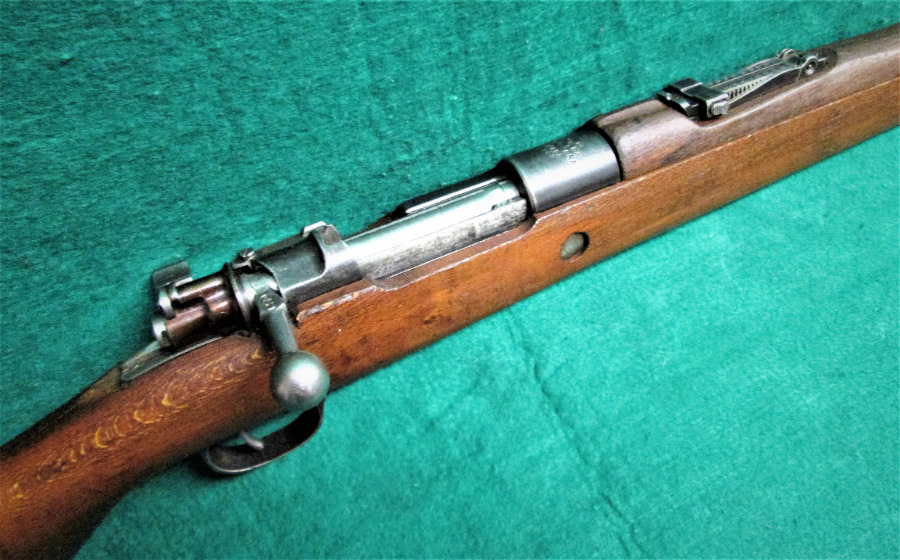
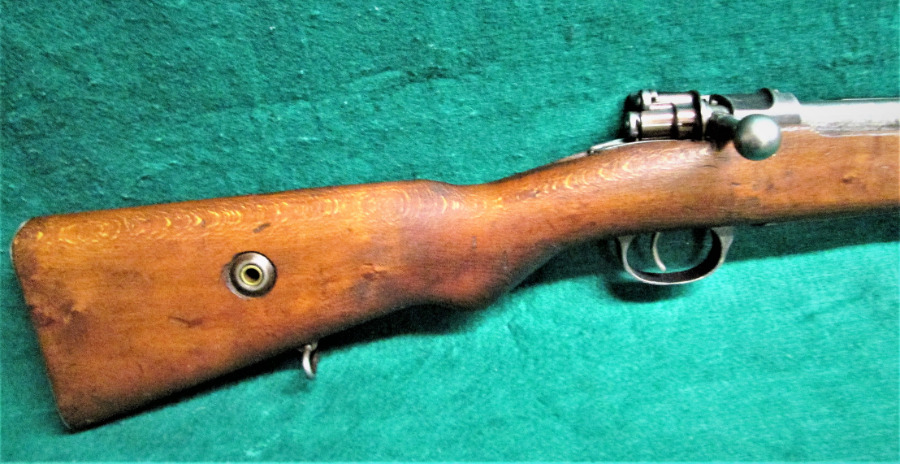
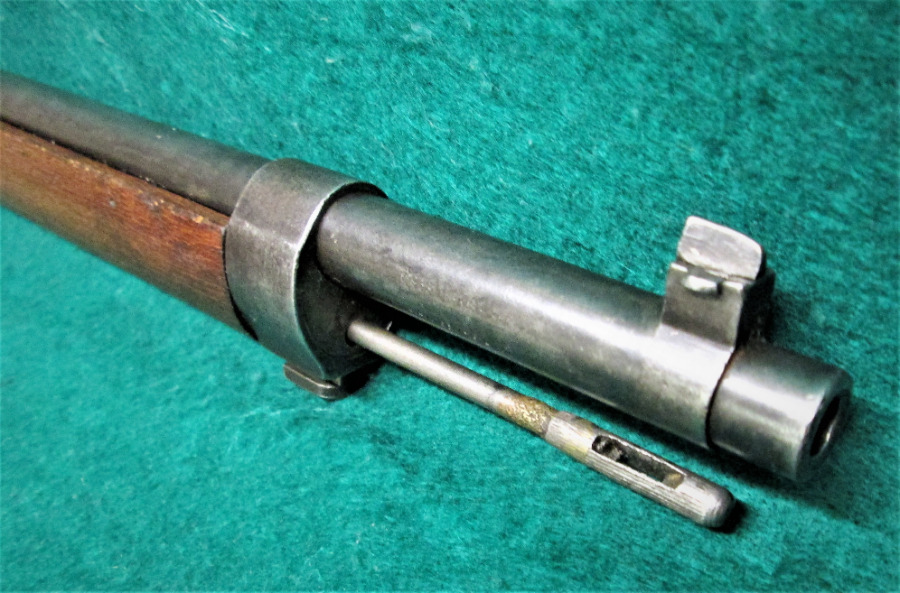
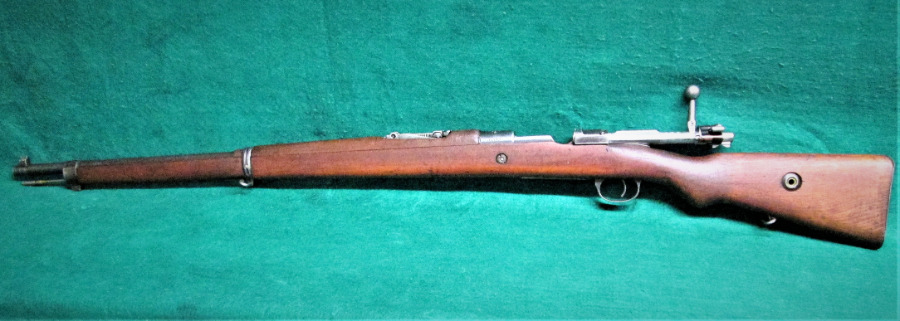
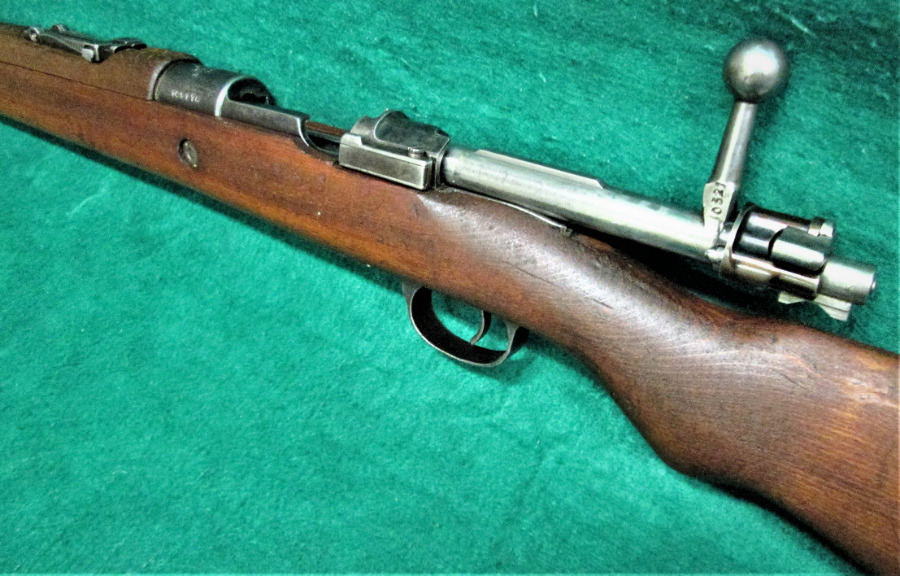
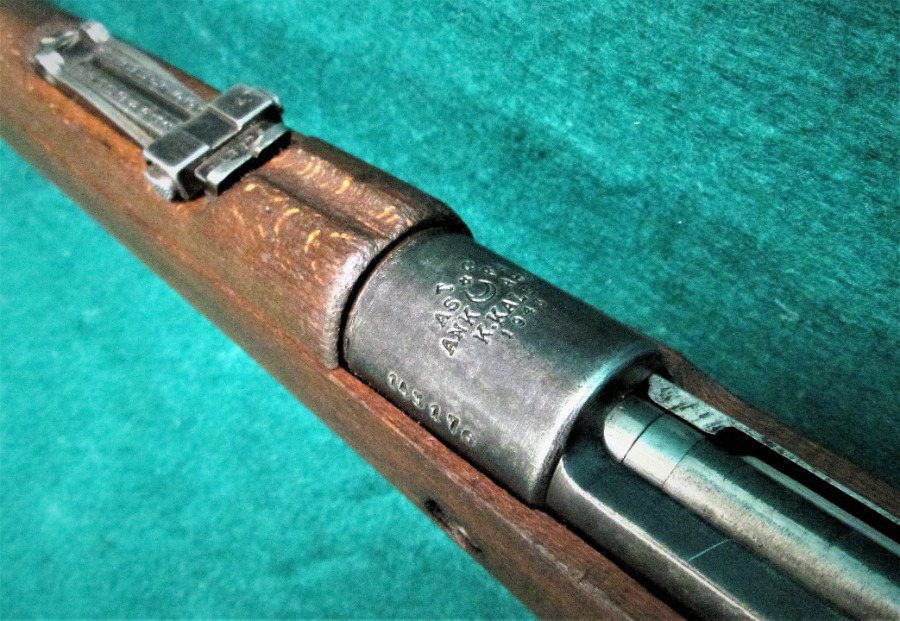
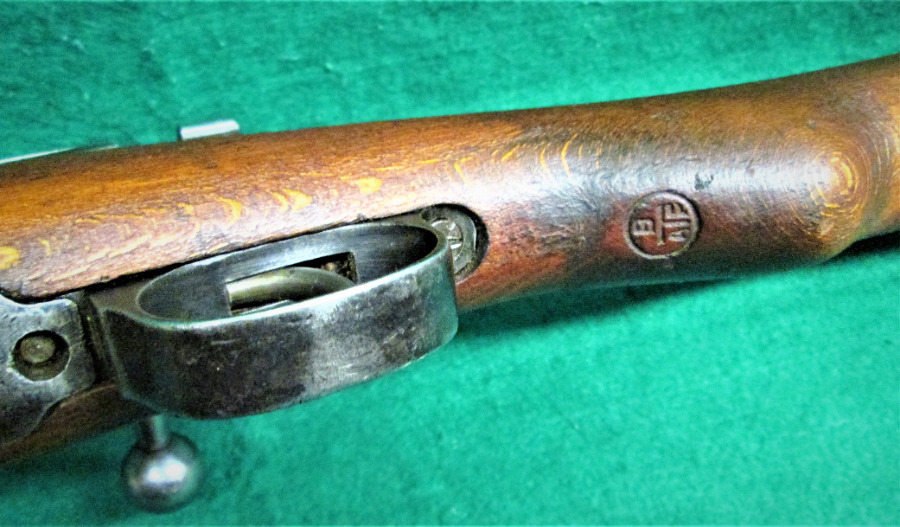
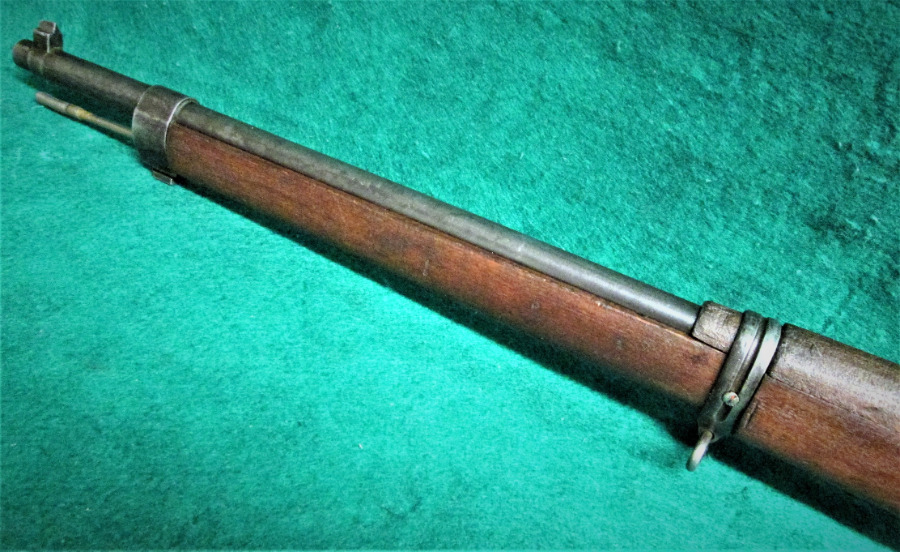
Turkish Mauser – C.A.I. IMPORT MOD 1938 MILITARY MADE WWII 1943 W/30-INCH BARREL 8mm Mauser

Turkish Mauser - C.A.I. IMPORT - MOD 1938 MILITARY MADE WWII 1943 W/30-INCH BARREL
Turkish Mauser - C.A.I. IMPORT - MOD 1938 MILITARY MADE WWII 1943 W/30-INCH BARREL - Picture 2
Turkish Mauser - C.A.I. IMPORT - MOD 1938 MILITARY MADE WWII 1943 W/30-INCH BARREL - Picture 3
Turkish Mauser - C.A.I. IMPORT - MOD 1938 MILITARY MADE WWII 1943 W/30-INCH BARREL - Picture 4

Turkish Mauser - C.A.I. IMPORT - MOD 1938 MILITARY MADE WWII 1943 W/30-INCH BARREL - Picture 6
Turkish Mauser - C.A.I. IMPORT - MOD 1938 MILITARY MADE WWII 1943 W/30-INCH BARREL - Picture 7
Turkish Mauser - C.A.I. IMPORT - MOD 1938 MILITARY MADE WWII 1943 W/30-INCH BARREL - Picture 8
Turkish Mauser - C.A.I. IMPORT - MOD 1938 MILITARY MADE WWII 1943 W/30-INCH BARREL - Picture 9
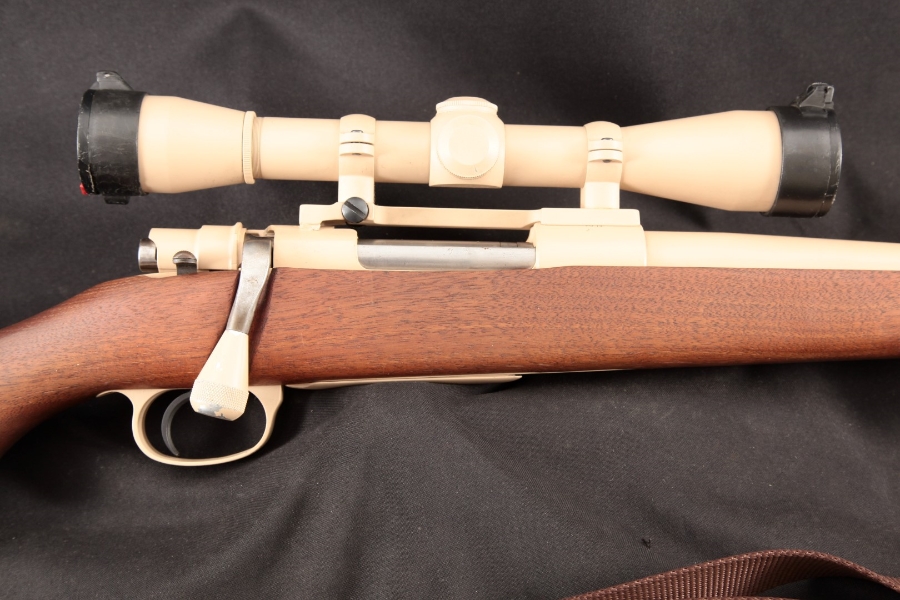
Image result for Turkish Mauser sporterized
I also found this great site on the net about the Turks. Here is the address.
http://www.turkmauser.com/models.aspx
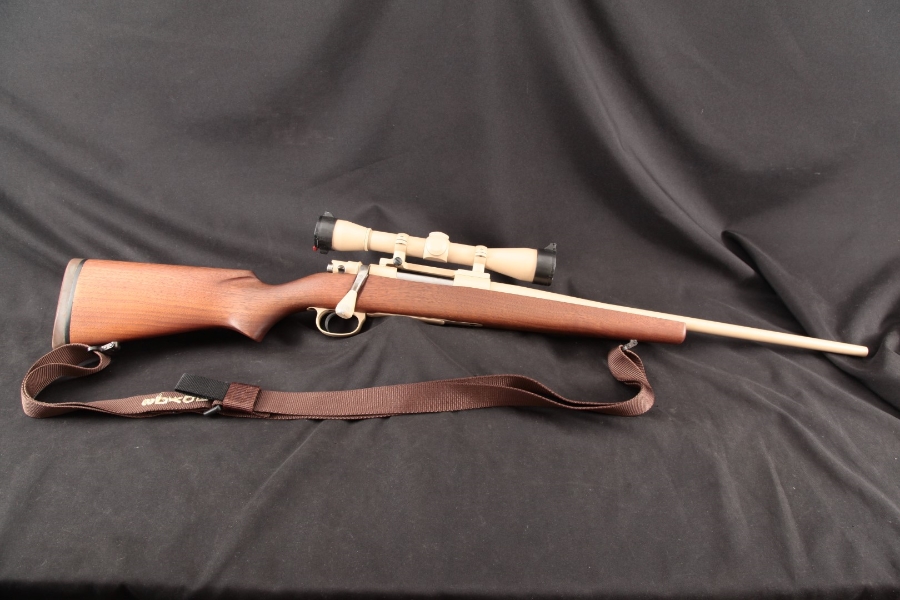
I have also seen some great sporterized Turks out here in the West. I have been told that they are pretty easy to do if you have a good gunsmith.Turkish Mauser Model 1938, Custom M38, Leupold Scope, Desert Tan 21” - Sporterized Bolt Action Rifle MFD 1933-40 - Picture 4
Turkish Mauser Model 1938, Custom M38, Leupold Scope, Desert Tan 21” - Sporterized Bolt Action Rifle MFD 1933-40 - Picture 7
Related image

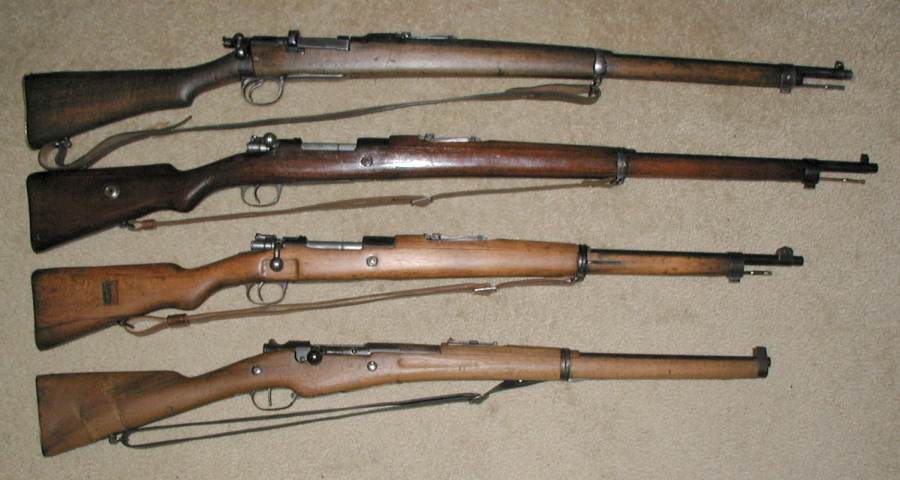
Flag Mausers of Turkey and The Ottoman Empire
Skip Navigation LinksHome > Models

Models

The Turkish contract models

1887

The Ottomans placed there first order with Waffenfabrik Mauser for 550,000 rifles patterned after the Gew. 71/84 bolt action rifle. This black powder rifle was to be chambered for the 9.5x60R military round. The Ottomans eventually terminated this contract and made the switch to smokeless powder after accepting 270,000 of these rifles.

1890

This rifle was somewhat similar to the German Imperial Army Gew. 88, in that it had a charger loaded, 5 round, single stack internal magazine. However, this was completely a Mauser design. It was chambered for Mauser’s new 7.65×53 smokeless powder cartridge. The Ottomans received 280,000 1890 rifles, the remainder of the 1887 contract.

1893

As soon as the Ottomans saw the Spanish Modelo of 1893, they placed an order for 201,00 rifles in the new configuration. Chambered for 7.65×53, it was virtually identical to the Spanish model, except for the magazine cutoff. Those that remained in Turkish hands were converted to 8mm in the 1930’s.

1903

Again, the Ottomans kept pace with the German army and ordered new rifles in the pattern of the Gew. 98. These were chambered for 7.65×53 and had a few other changes that kept the rifles similar to their previous purchases. These are intermediate length actions and a bit shorter than the standard 7.92, 98 action. This is a large ring small shank (LRSSM) rifle. The straight bolt handle has a distinctive tear-drop shape. The stock will have a pistol grip. The rear receiver bridge will have a “high hump” at the clip loading point. This hump was necessary to support the unique stripper clip used at the time. There was also two carbine versions of this rifle with 21.65 and 17.72 inch barrels. When converted to 8mm this is often called an 03/38.

Turkish Standardized models

The model names given to these classifications are likely to be factually incorrect. However, these are the current common names used in print and are usually what the importers are calling their rifles.

Model 1938

The Turkish Republic updated their old rifles to a common configuration commonly know as the Model of 1938 and all in 8×57 Mauser. While actually starting the conversions in 1933 any rifle converted to this standard is commonly called Model 38. It appears that every rifle they had was converted to 8mm including Gew.88,  Gew.98, 1893 and 1903.

1938/K.Kale

As they became isolated during WWII they began assembling their own rifles from accumulated parts. While little is publicly known about this, it appears that all Turkish assembled rifles are marked K. Kale, for the arsenal where they were assembled. It also seems to be the case that, for the first time, receivers and parts were made in Turkey and assembled starting in 1940. This is a large ring small shank (LRSSM) rifle.

38/46 Short Rifle K.Kale

Another standardization rifle that is the same as the 1938 standard, but in a short rifle length. See Sample

03/38 Short Rifle

Another standardization rifle that is the same as the 1903 conversion to the 1938 standard, but in a short rifle length. These will not always have a turned down bolt. See Sample

1954 ATF Marked Rifles

The Turks rebuilt a bunch of rifles in 1954 using some WWI Gew 98’s. These have had the receiver ring shortened to make a hand guard holder. These may not be the safest rifles to shoot due to the shortened receiver but I’ve not heard of any problems.

Other common models used

GEW 88

Germany provided her ally, the Ottoman Empire, with thousands of Gew. 88 rifles during WWI. While technically not a Mauser rifle, the Gew. 88 is often treated as if it were of Mauser design.

GEW 98

Germany and Austria also provided the Ottoman Empire, with thousands of Gew. 98 rifles during WWI. After WWI Turkey bought new 98 pattern rifles from CZ. And, after WWII Turkey acquired Kar 98K rifles on the open market.

Kar. 98AZ

A carbine length 98 style rifle that was commonly given to Turkey in WWI. These appear to have been reworked a bit and are often sold as Model 38/46 Short rifles.

Kar. 98K

After WWII, the Turks must have acquired quite a few K98K rifles and reworked them. These will also be sold as Model 38/46 Short rifles.

Enfield

The Ottomans must have captured quite a few Enfields from the “visiting” British Empire forces at Gallipoli. Some of these were converted to 8mm by the Ottomans and Turks and they called these “tufiki ingilizi” or “English rifle”.

“Pseudo” M1903

The Ottomans and Turks appeared to have acquired a fair number of these rifles. These are very similar to the Model of 1903, except they do not have a real high hump on the receiver bridge, but rather a nicely made piece of metal that is attached with screws to give it that high hump look. These are certainly made from some of the various South American contract rifles made before WWI.

Czech 98/22

The Turks bought quite a few of these rifles which were mostly compatible with the M1938 standard. These are going to be large ring large shank receivers, and marked with either the Czech Army crest or the BRNO 3 line stamp. The Crest information explains how to tell the difference between an original Czech Army 98/22 and a BRNO contract rifle which was produced a few years later and sold to Turkey, China and others. Rifles with the 3 line BRNO markings are the commercial model 98/22 built for resale. When the Czech Army had an adequate supply of newer short rifles (VZ 23’s and VZ 24’s) to outfit their troops, they sold their older 98/22 s to the Turks. See Samples