By Ray Starmann
Remember, the old expression, ‘the Army will make a man out of you.’ Or, the Marines great recruiting tagline, “Looking for a few good men.” How about the Navy’s action-packed 1980’s commercials with F-14’s blasting off into the wild blue yonder under the cover of smoke and exhaust fumes as a gravelly voice told a nation of young men that to join the Navy wasn’t just a job, but an adventure.
From the birth of this nation, the military was seen as a male rite of passage, something one joined, not only out of patriotism, but to prove something to oneself; perhaps, like Phil Caputo, to avoid the complete drudgery of civilian life, and to find oneself in that ultimate crucible of manhood – war.
Young males always admired the generations of men who went before them and who had served honorably and survived to ‘stand a tip-toe’ for the rest of their days.
But, since, Tailhook in Sept of 1991, in what I believe was the launching point for the PC destruction of the US military, our armed forces have been on a downward spiral into an abyss of diversity, feminism, political correctness and cowardly leadership.
And, now, literally every week there are one or two or three stories detailing just how deep in the PC abyss the military has sunk.
Today, the Army Times, aka the Diversity Times, shouted out with glee the joyous fact that Staff Sgt. Amanda Kelley, 29, is the first enlisted woman to earn a Ranger tab.
1st Armored Division spokeswoman Lt. Col. Crystal Boring, could barely keep herself from busting out of her maternity army combat uniform when she updated Old Ironside’s Twitter Page with this announcement – HISTORIC MOMENT!
Congratulations to @USArmy Staff Sgt. Amanda F. Kelley for being the first enlisted woman to graduate Ranger School, and earn the coveted Ranger tab today at Fort Benning, Ga. She is the true definition of an #IronSoldier!
Oh rejoice! Diversity!
Who cares if we get our asses handed to us against the ChiComs? The important thing is to keep the lie going, national security be damned!
Kelley is a military intelligence electronic warfare specialist, serving in a combat aviation brigade.
One might begin to ask oneself why in the name of God this soldier was sent to Ranger School, wasting tax payer money and taking a slot that some young stud in an Infantry Battalion could have filled.
Kelley’s attendance at Camp Diversity, aka Make-Believe Land, aka Fantasy Island, aka Ranger School and her ‘graduation’, served no other purpose than to shove another female through the course so Kirsten Gillibrand can get a tingle down her leg.
Ranger School used to be one of the toughest military schools in the world. For decades, men trained hard with the hope that they could earn a Ranger tab, maybe even serve in a Ranger battalion, maybe follow in the footsteps of the Boys of Pointe du Hoc and Merrill’s Marauders.
Why even go to Ranger School now? They’re graduating mommies, the cheerleader you wanted to date in high school and the butch dyke down the block.
Not exactly a male rite of passage, anymore is it? More like an episode of Big Brother – Blanks and Boots.
And, mark my words, you heard it here first, there will be some bimbo in the coming months sporting a Green Beret and the liberal world will shout loud and high about the joys of diversity and how men and women are physically equal, when every Swingin’ Richard on Smoke and Mirrors Hill at Bragg, knows damned well that the standards have been lowered so much at the SFQC that Granny Clampett could be your next A Team light weapons sergeant.
While the PC warriors celebrate diversity, our enemies are licking their chops like Wiley Coyote at an all you can eat ACME buffet. And, this time Wiley is going to kick some butt.
Our enemies are dying with laughter every day now. They don’t even have to squeeze off a round or drop a mortar in a tube. We’re doing all the work for them as we destroy ourselves in the name of feminism and political correctness.
What red blooded American male would want to serve in a US military of drag queens, cadets in red high heels, Mommy Rangers, lactating chicks in the field and waddling battalion commanders?
There’s a known fact that the feminist crowd would like to keep buried, like those Green Cards for those Ranger tabbed ladies that Benning hides so well – any industry women take over, men leave… in droves.
The future of the US military is a largely female force (there are currently 170,000 serving in the US Army) with a smattering of gay men, men who think they’re women, liberals in skinny fatigues and aggrieved soy boys.
The future of the US military is a broken force, a devastated force, if anything is left at all on some distant battlefield.
A perfect storm is brewing in the US military now.
It’s a combination of a worthless Secretary of Defense who is probably the biggest disappointment since Evil Knievel’s failed Snake River Canyon jump, a Congress with few veterans and those who are, are mostly female, cowardly generals and admirals, liberal generals and admirals, a vocal LGBT mafia in the Beltway, candy ass Millennial recruits and the feminist lobby which believes combat power equals the number of pregnant women a division has in its TO&E.
Nope, the US military just isn’t macho anymore.
And, that’s a big, big problem.
______________________________
I beg to differ a bit on this one. As the US Army will survive. But its survival will cost a lot of Lives, Treasury & National Pride.
Because I am willing to bet on this. That a lot of “questionable” Folks, are going to be shot. That and the entrance hole on the “Brave” veteran.
Will not be a 5.56 mm one or that certain fragments of steel will be American made.
Also why does the Army not set up a Special Training School for Women only. One that takes into consideration the following. Like the Female Troopers strengths & Dimensions of soldiery?
Grumpy
I got this from “Angry Staff Officer.
I know that other services handled defeat like the Germans did from WWI, it still gave them national pride, but the German defeat from WWII was total.
The national identity was totally decimated from the war and the Germans were a people with out morals or anything, it was like they had to atone for the sins of their past and nothing was off limits.
When Germany became its own nation in 1949 they started to form their own identity and move beyond the horrors and deprivation of the war.
I am not sure what we would do if we lost an entire field Army, if half of the population would rejoice in the loss because they hate what the United States is and want to see us lessened. It is interesting although distasteful exercise.
Training for Defeat
In the U.S. Army we have a long tradition of victory – or so we tell ourselves. We proudly carry the campaign streamers from past conflicts on our unit colors and enjoy hearing about the exploits of past heroes. Victory is our expectation.
But what if that isn’t what happens?
Now, I’m not talking about the nebulous idea of strategic victory in places like Vietnam, Iraq, or Afghanistan; I’m talking about the sharp and nasty feeling of operational and tactical defeat. Retreat. Withdrawal. Being overrun. Loss of soldiers. Loss of entire units. Disaster.
A sight we are not used to: U.S. soldiers surrendering to the Germans after their unit was overrun during the Battle of the Bulge in World War II.
We’re far more comfortable talking about potential victory than we are discussing the possibility and – let’s be honest – very strong likelihood of loss.
And even when we are discussing loss, we spend more time talking about mitigating risks than we do how to react should the adverse occur.
This means that we have a generation of young leaders who learn about loss only when it actually happens. This is decisively the opposite of how we treat everything else in the Army as regards training.
We don’t send soldiers into battle without ever having fired their weapon; why should we send commanders to war without at least having some training on how to deal with loss and defeat?
And yes, we do train for some loss: vehicle recovery, casualty evacuation, and breaking contact come to mind. But how well do those test a unit for a full and total breakdown?
Or is it perhaps better to not even put that idea into soldiers’ heads? These are the questions we should at least be asking, as leaders.
Fortunately – or rather unfortunately – we have no end of historical examples of loss and defeat in the U.S. Army to use as case studies – even if we are loathe to study them or admit that they exist.
The first thing to remember is that there are varying levels of loss. The first is the most desirable, if we can call loss desirable: loss with preservation.
The ideal example of this is George Washington’s campaigns through New York and New Jersey from 1776 through 1777. In the fall of 1776, Washington’s force of 19,000 militia and Continentals was slowly driven out of New York City.
It was not Washington’s finest hour; he lost 3,000 men who were captured because of lack of communications. He was driven from Manhattan, then Harlem, then White Plains, and then withdrew under heavy pressure into New Jersey – that’s how you know it was bad. No one goes to New Jersey voluntarily. By the end of the campaign he had barely 5,000 troops left.
The Battle of Long Island – incredibly stylized, since no one had uniforms this clean and, well, uniform. (National Guard Heritage Series Print)
To many, this would appear to be a complete defeat; Washington had lost more than two thirds of his force to battle and attrition, as well as losing the largest city on the eastern seaboard. And he was now in full retreat. To the British, it was a decisive victory for those very reasons.
But Washington did not see the war in those terms; for him, the survival of the Continental Army was the most important factor of the war. The loss of New York taught him that population centers mattered little as long as he could field a force.
And even with his small army, Washington was able to make life difficult for the British through constant raids and local attacks. In December, he made a large raid at Trenton which caused 1,000 Hessian casualties and drew British General Howe out of his fortifications into New Jersey.
This led to a local British defeat at Princeton which raised Continental morale and caused Howe to withdraw from New Jersey.
Washington spent the remainder of 1777 successfully not losing, for lack of a better term. He played a masterful ballet with the British, skillfully avoiding a decisive battle where he might have been wiped out.
While Washington eventually lost Philadelphia, the British would learn a lesson that Napoleon would learn in Moscow: it is relatively easy to secure a hostile city deep in enemy territory; it is far harder to hold it.
And they learned what all the rest of us already know: Philly is not a city worth staying in longer than a few days (Kidding, I love all you Philadelphians).
By not risking his army in general battle, Washington set the conditions for successful operations elsewhere – namely, Saratoga – which would bring in foreign aid.
This proved indispensable in winning the war for the Continental Army.
Loss with preservation means that you know what to do when you retreat; that there is a plan for a withdrawal; that the force is made to realize that although you may be retreating, you are not doing so out of defeat.
It means that the loss can be followed up by a counterattack. It is what the idea of defense in depth is based on: temporary loss of forward positions in order to overextend the enemy and make them vulnerable to a counterattack.
It is an incredibly difficult thing to do and must be trained on. A withdrawal can turn into a retreat which can turn into a panic very quickly, unless troops are disciplined and well-led.
Tactical withdrawals and disengagements may often be necessary in future conflict, which is why they need to be part of training now.
The next level of loss is a full on retreat. This is best typified by the U.S. Army loss at the First Battle of Bull Run in 1861. Both the U.S. Army and the Confederate armies were amateurs at war and fairly evenly matched.
The U.S. Army under Irvin McDowell gained an initial advantage in the attack but overextended and exhausted itself just as the Confederates received reinforcements.
Because of the poor or even non-existent training in the U.S. Army which largely consisted of volunteer units made up of 90-day troops, the retreat of some units caused an overall panic that infected nearly every unit on the battlefield.
Fortunately, a small rear guard was able to cover the route which staved off total destruction of the army.
The Confederates were so exhausted and disorganized from the battle that they were not able to pursue. Whole U.S. units abandoned their position and equipment without even firing a shot.
Rickett’s U.S. Battery being overrun on Henry House Hill. Note the caissons and limbers being withdrawn in confusion – these would have been needed to save the guns. Instead they only added to the packed and chaotic roads leading back to Washington D.C.
This defeat almost ruined U.S. chances for a victory in the east, but for the sad condition of the Confederate forces. Their victory left their army in such a disarray that the U.S. was able to reform and put a force in the field in a short time.
However, this defeat and the cultural sting of it would haunt the Army of the Potomac (the main U.S. Army in the east) for several years.
It would take until the summer of 1863 for that army to shake off the sting of Bull Run, despite performing very well in multiple campaigns. Victory, they say, can be contagious. Defeat can be as well.
The worst thing that can befall an army or a unit is full-on destruction. Units are sometimes destroyed for a greater cause: to delay oncoming enemy forces or to seize a vital piece of terrain.
Even the dismal performance of the US II Corps at Kasserine Pass in 1943 – a defeat if ever there was one – at least served to delay the Axis advance and buy time for an Allied counterattack.
Similarly, the U.S. forces in the Philippines in 1942 fought a sustained action under incredible duress to buy time for the U.S. Navy to recover from Pearl Harbor and return to the Pacific in force.
But the destruction of an entire army or large body of troops is far more difficult to justify or recover from. For example, the destruction of Task Force Smith in Korea contributed nothing to the overall situation on the peninsula beyond serving as a wake-up call to the low levels of readiness in the U.S. Army in 1950.
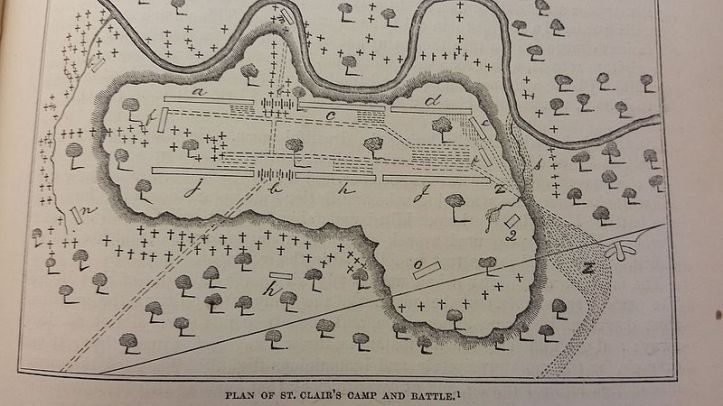
Similarly, the 1791 destruction of General Arthur St. Clair’s Army along the Wabash River in western Ohio was an unmitigated disaster.
A previous force of 400 militia and regulars had been soundly defeated near present-day Fort Wayne, Indiana, so St. Clair had been sent on a punitive expedition.
St. Clair went into the campaign with little intelligence of his enemy – a loose confederacy of western Native American nations – and an insufficient force to wage backcountry warfare.
President George Washington urged St. Clair, a veteran of the American Revolution, to move from his base of operations near present-day Cincinnati in the summer months but logistics difficulties and recruitment problems delayed him until the fall.
To Washington, alarm bells should have been ringing that this looked all to familiar to the disastrous Braddock expedition into Pennsylvania in 1755.
The Ohio back country, as it looked in the 1790s.
When St. Clair finally moved his force of about 2,000 regulars, militia, and three-month levies – accompanied by hundreds of camp followers – the going was slow.
Desertions began to take a toll as the force moved up through the Ohio backcountry until by November 3, St. Clair was down to just under 1,000 effective soldiers.
Encamping on a hill, St. Clair’s force neglected to dig any type of protective positions and set up camp as if they were in garrison.
They were therefore unprepared when the enemy under Little Turtle struck. The militia scattered and broke in the face of heavy fire as the regulars formed ranks and fired volleys.
Little Turtle pulled his force back and then began flanking the regulars, who fixed bayonets and charged. While this was considered the most effective tactic of the day, Little Turtle simply allowed the charge to pass through his ranks and then closed in again.
This happened three times before the exhausted regulars fells back. U.S. artillery had been placed away from the infantry and – unsupported – the gunners were shot down early in the fight, denying St. Clair this key advantage.
After three hours of fighting, St. Clair knew that he had to get his force out of there. They attempted one final charge to clear the area to allow for a retreat but as before Little Turtle allowed the troops to pass before returning to strike the flanks and rear.
The retreat turned into a rout as the U.S. soldiers fled back to the relative safety of Fort Jefferson several miles away. Losses had been catastrophic.
Over 800 Americans were dead; nearly all of the remainder wounded. Enlisted men suffered a 94% casualty rate, making it the worst defeat in U.S. Army history. Half the U.S. Army of the time lay dead or wounded.
Response from the government was swift: St. Clair was forced to resign, Congress began the first special investigation into the conduct of a military action, the regular and militia military forces were strengthened and reformed, and money committed for a full campaign in the west.
In other words, much like the defeat of Task Force Smith, it was a wake-up call concerning military readiness. But at a shocking cost of lives lost.
Both actions stand as reminders of the hubris of U.S. military leaders and the folly of attempting to project force on the cheap. Separated as they are by 159 years, they share the same causes and the same lessons learned.
Defeat should not be unexpected, nor unlooked for. Leaders who understand that withdrawal is sometimes necessary can preserve their force to fight another day.
Which is why it is important to think about and train for a day when we are overmatched on the battlefield. History shows us that the U.S. Army goes into every new conflict unprepared for the new challenges it will face; the lessons learned come with the unnecessary expenditure of lives and equipment.
But if we learn to adapt and be accustomed to thinking about loss, we can better preserve the force and situate ourselves for eventual counterattack.
If I had know back then about how much these rifles would increase in value. I would of bugged my Poor Old Dad more. (As I saw one today going for over $1500!!!)
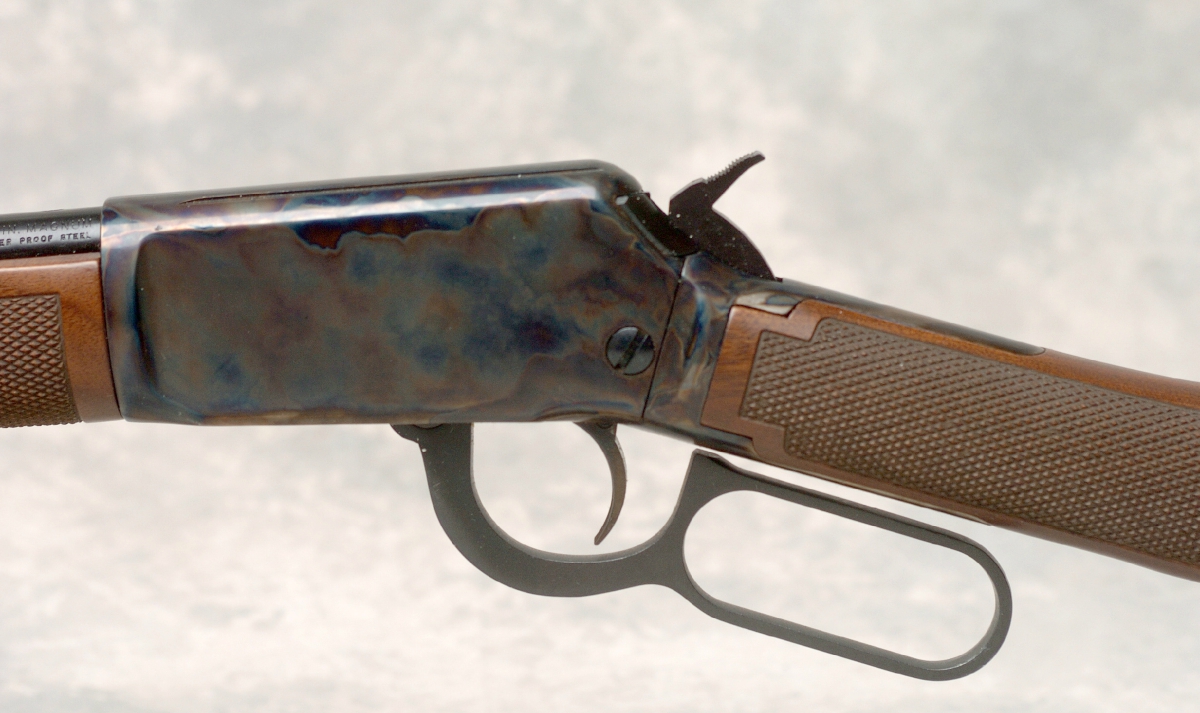
Now generally I am not a Fan of Case Coloring but I would make an exception here!
BIG TIP Folks – Do not be an idiot like me and throw of the cardboard box that guns come in. As it seems that a lot of FOOLS will pay huge money for them! Go figure is all that I can say.
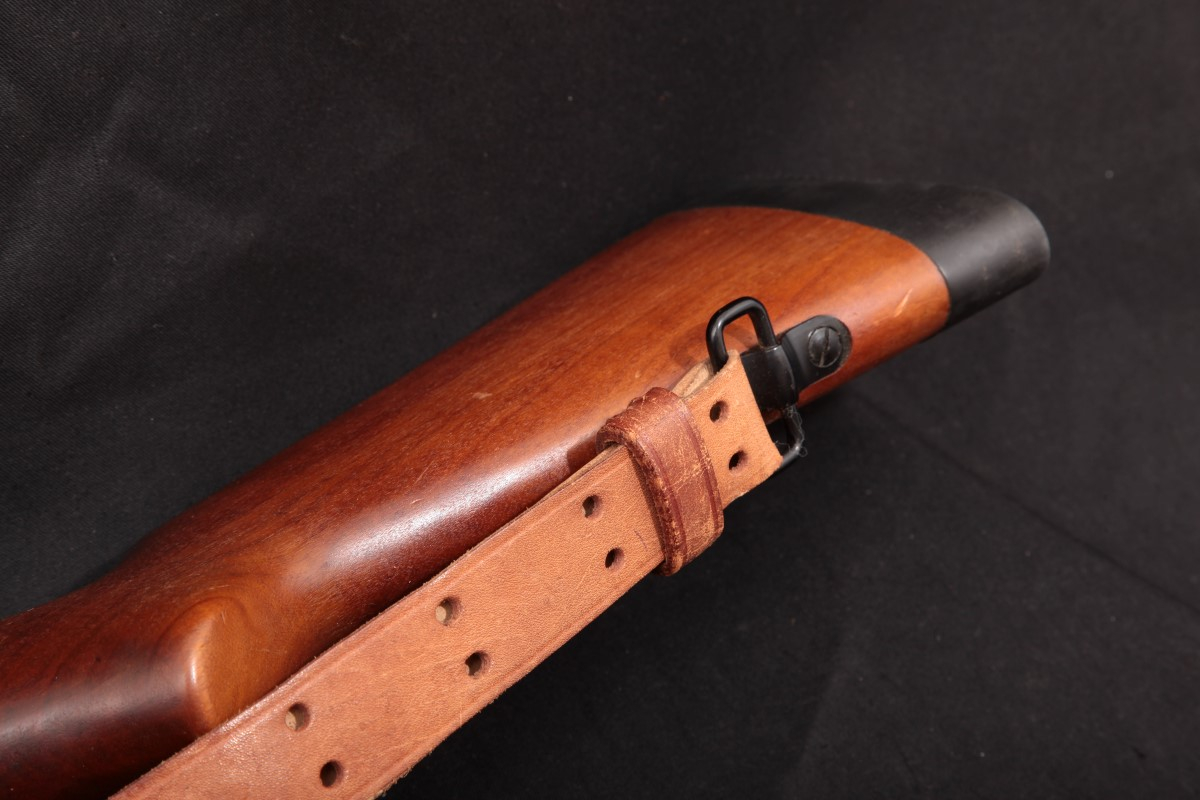
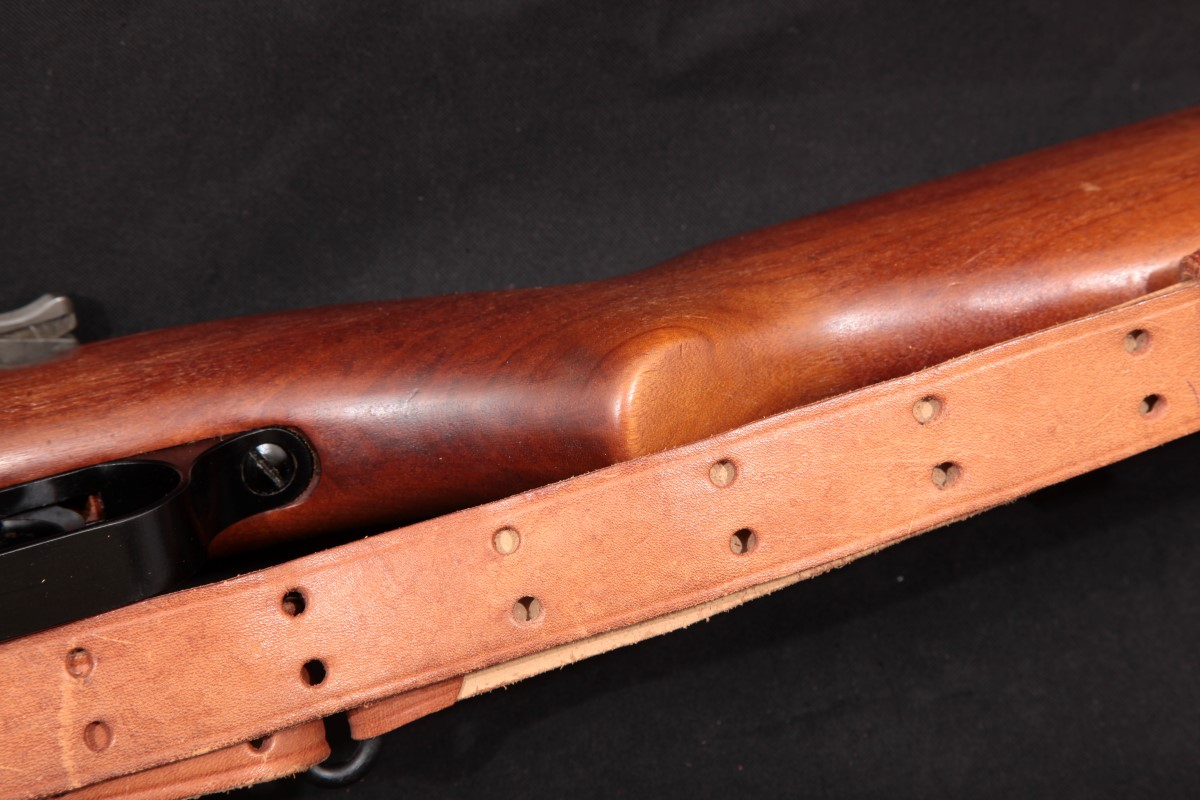
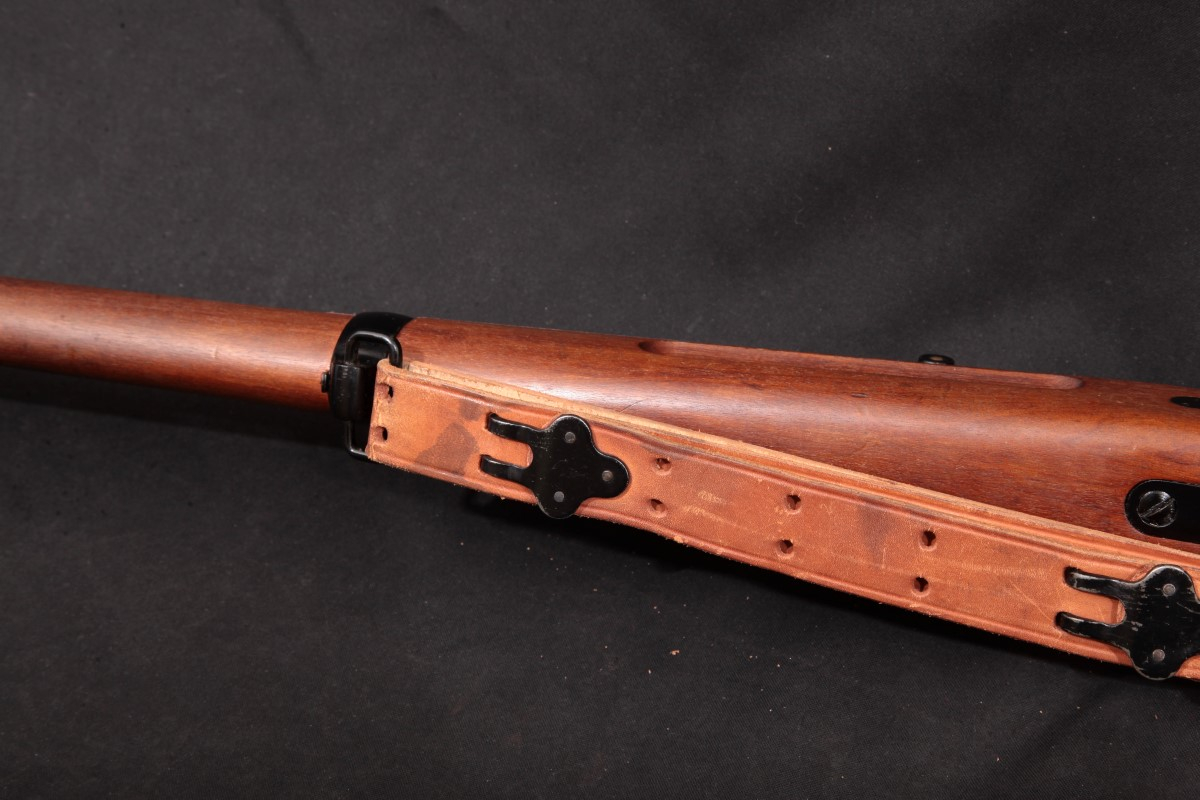
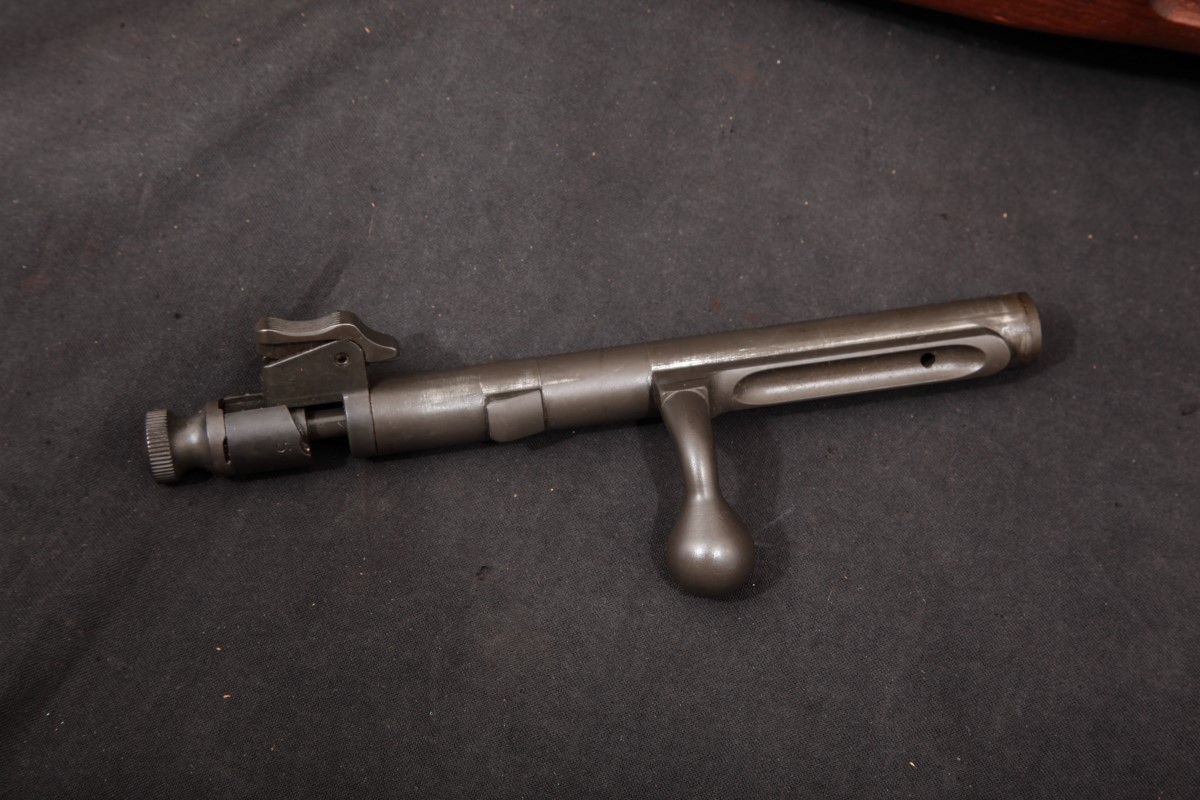
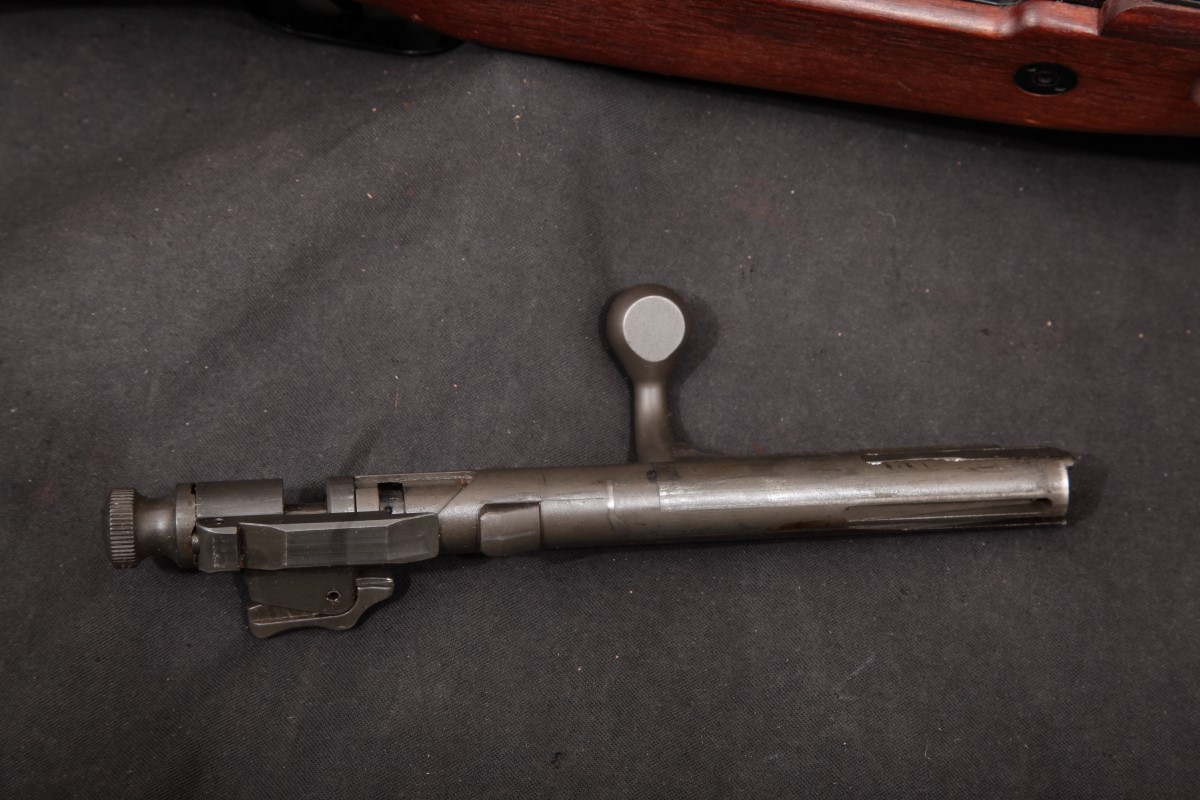
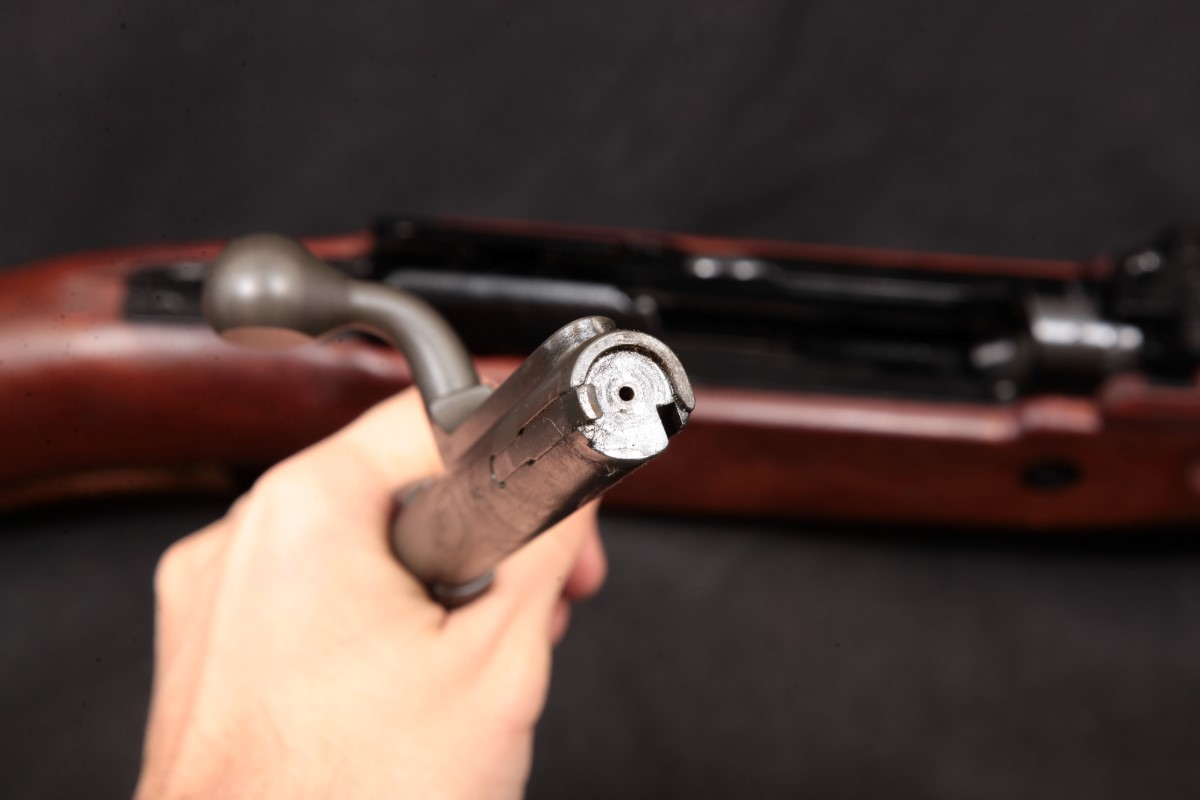
The Madsen Lightweight Military Rifle (or the Madsen Lightweight Military Rifle Model 1947;[2]commonly abbreviated as M47) is a Danishbolt-actionrifle designed to be chambered for a wide range of contemporary military cartridges.
The M47 was the last bolt-action rifle designed with the intention of being general issue to infantry troops.
The M47 was first available for purchase in 1951, primarily marketed to countries which could not afford semi-automatic rifles for their militaries.[3]
However, with the unprecedented availability of low-cost surplus small arms and the rapid proliferation of self-loading riflesafter World War II, global demand for such a rifle was very low and the M47 received very little commercial interest.
Designed by Madsen in 1947, the M47 rifle was billed as a lightweight, robust, easy-to-use individual infantry weapon.
Madsen is only known to have received one production contract from Colombia in 1958, which included up to 6,000 standard-length rifles chambered in .30-06 Springfield and featuring a 5-round internal magazine, along with knife bayonets.
These rifles are not known to have been issued outside of ceremonial use, and were instead stored as surplus until their purchase and export to the United States for consumer sale in the 1960s.
Features
When first marketed in 1951, Madsen offered several options with the rifle including a lightweight carbine version; telescopic sights; 5- and 10-round magazine capacities; and a variety of chamberings in contemporary military service cartridges, which would eventually include 7.62×51mm NATO.
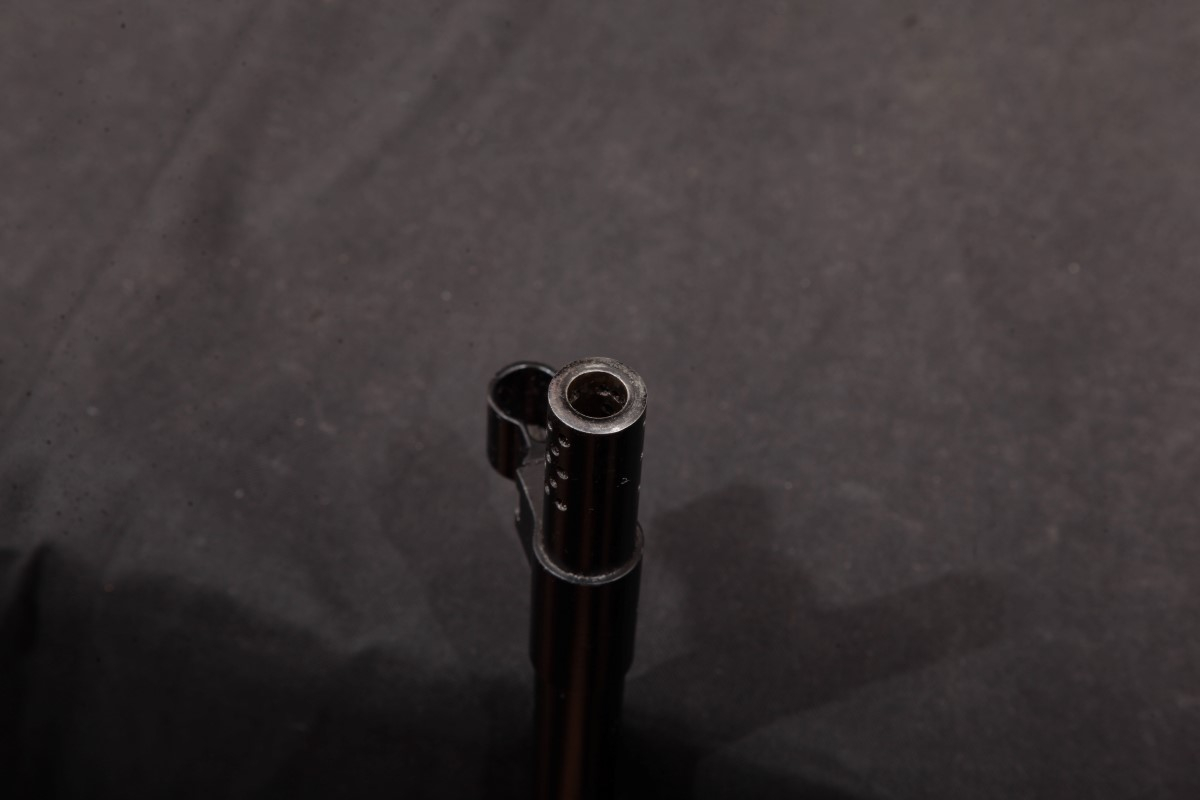
Standard features included a muzzle brake integrated into the barrel, a thick rubber butt pad, and a sliding rear sight leaf featuring a windage-adjustable aperture.
https://youtu.be/gqzqYQ7OPIo
Back in the late 1960’s and early 70’s. I would see one of these strange looking rifles up for sale. Since I was too young at the time & broke too. I was never able to get my hands on one. Oh well!
Anyways this is. Built by the Danes as part of a 1958 Military contract for the Colombian Navy.
This rifle is sometimes known as the Colombian Model 1958 (the rifle was designed by Madsen in 1947 but the Colombians purchased these rifles in 1958).
These rifles are considered to be the “last bolt action Military rifle”, as they were based on new engineering from scratch.
Strangely, the Danes did not adopt this rifle as their own. Instead, they sold it to developing nations with limited budgets. (They used the M-1 grand for their Army for a while)
The muzzle brake, upgraded sights and recoil pad are original. These rifles are rare, especially in this condition.
Here is something worthy of your time. So if you get a chance and think this should be done. Then Check this out here: https://petitions.whitehouse.gov/
WE THE PEOPLE ASK THE FEDERAL GOVERNMENT TO CHANGE AN EXISTING ADMINISTRATION POLICY:
Repeal the NFA
Created by A.Z. on January 20, 2017
We the People wish to see the National Firearms Act of 1934 repealed in order to remove regulations on our 2nd amendment rights, increase national economic strength, and provide protection against threats to our national security.
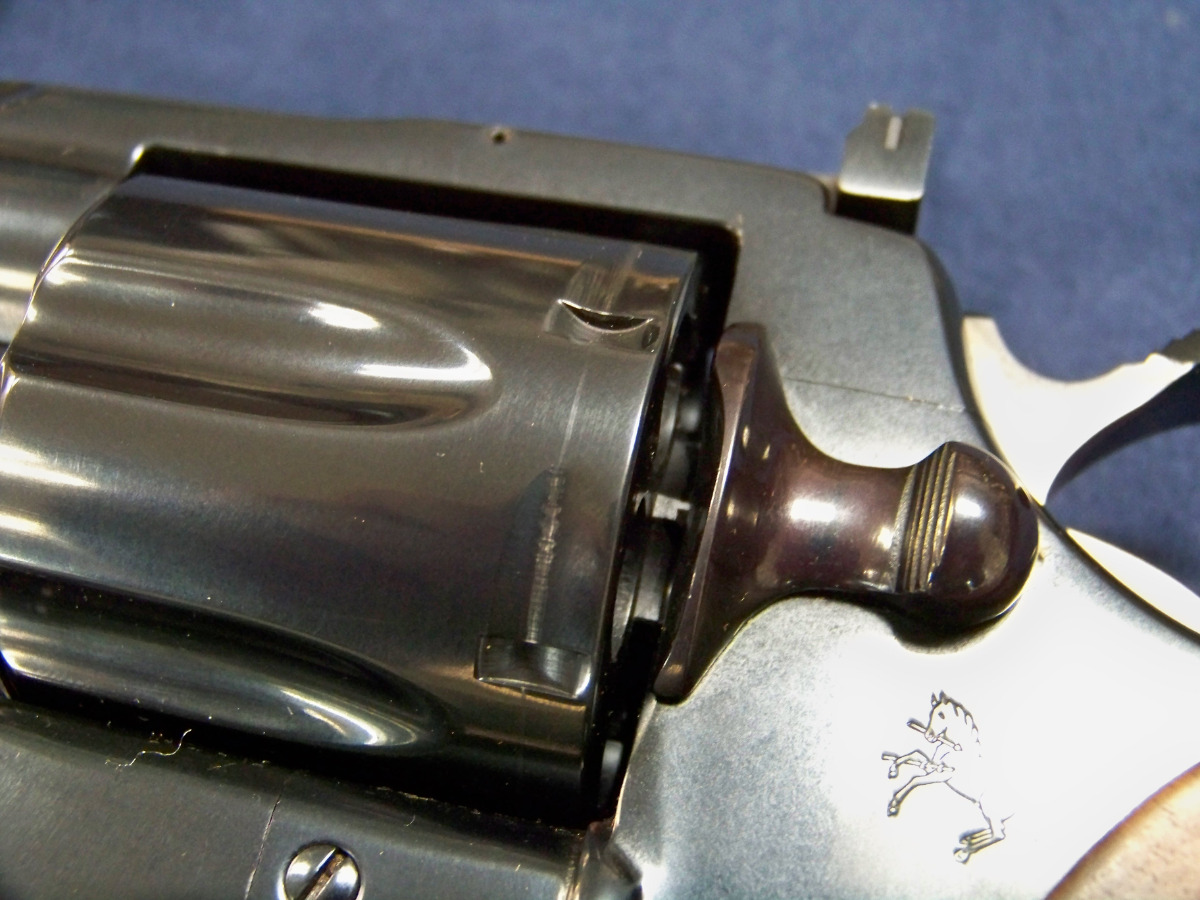
Sadly for me at lest. When it comes to Single Action Revolvers like this one. Because of me & their foxed sights. The safest place in a gunfight with me. Would be right front of me. Yeah it is that bad! Grumpy
Sorry about this but I could not find a video about the 357 Magnum version. But I think that this one comes close.





























 BIG TIP Folks – Do not be an idiot like me and throw of the cardboard box that guns come in. As it seems that a lot of FOOLS will pay huge money for them! Go figure is all that I can say.