Categories







Categories
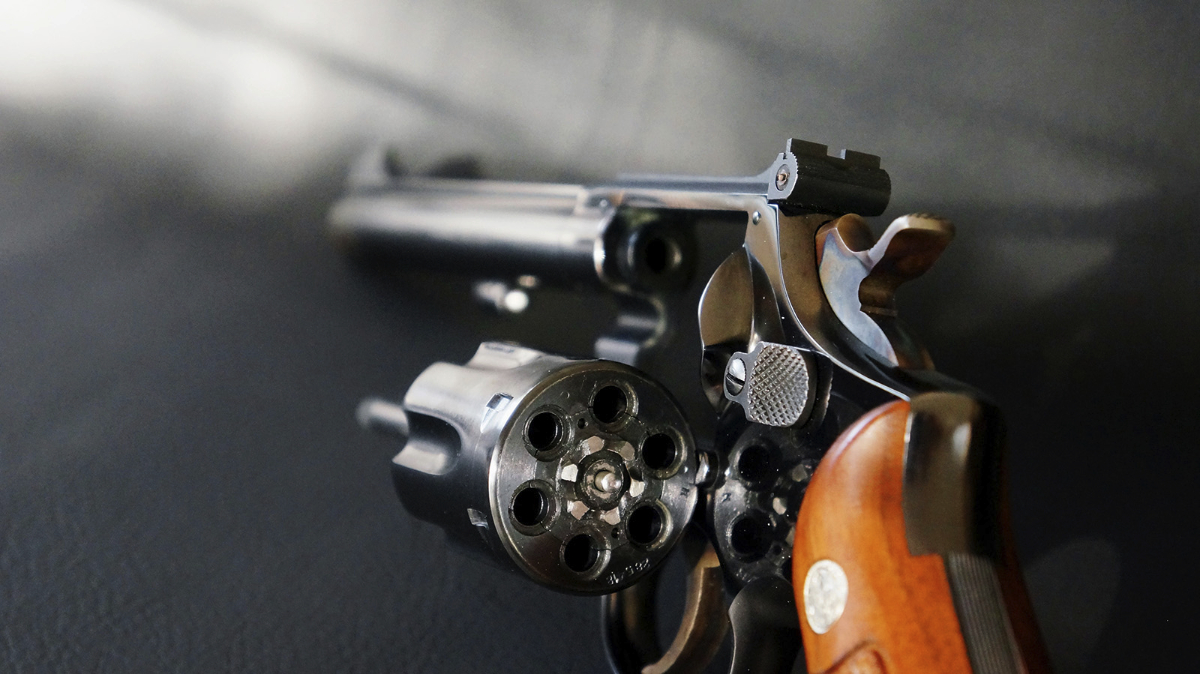
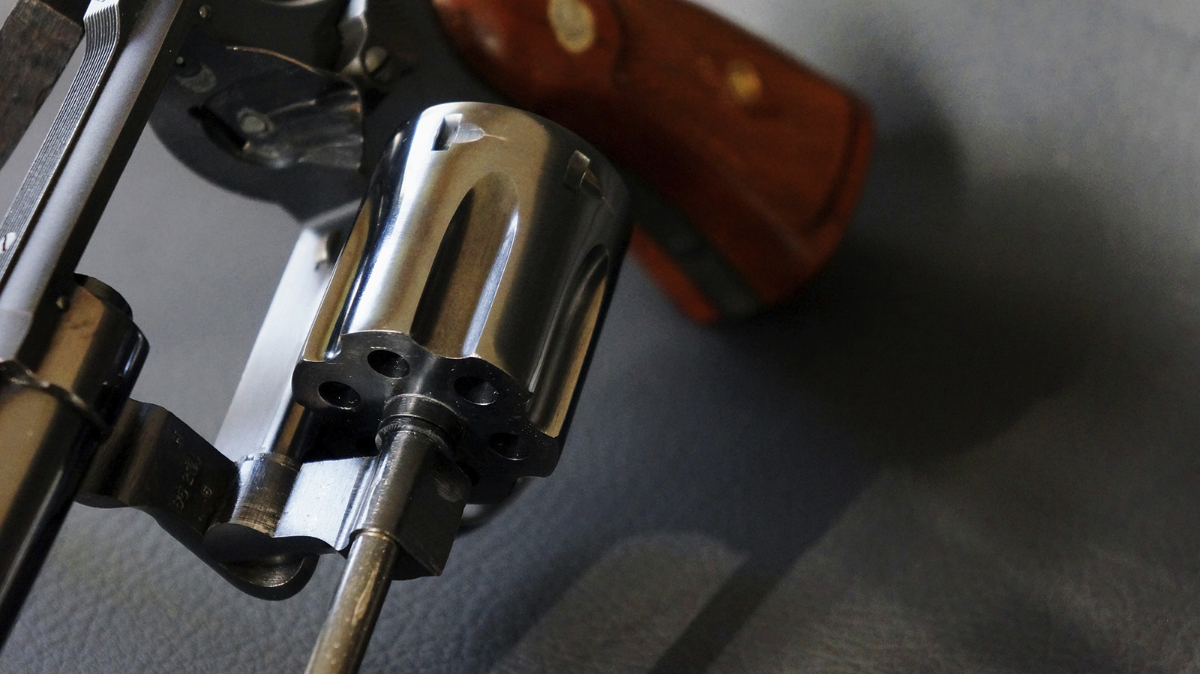
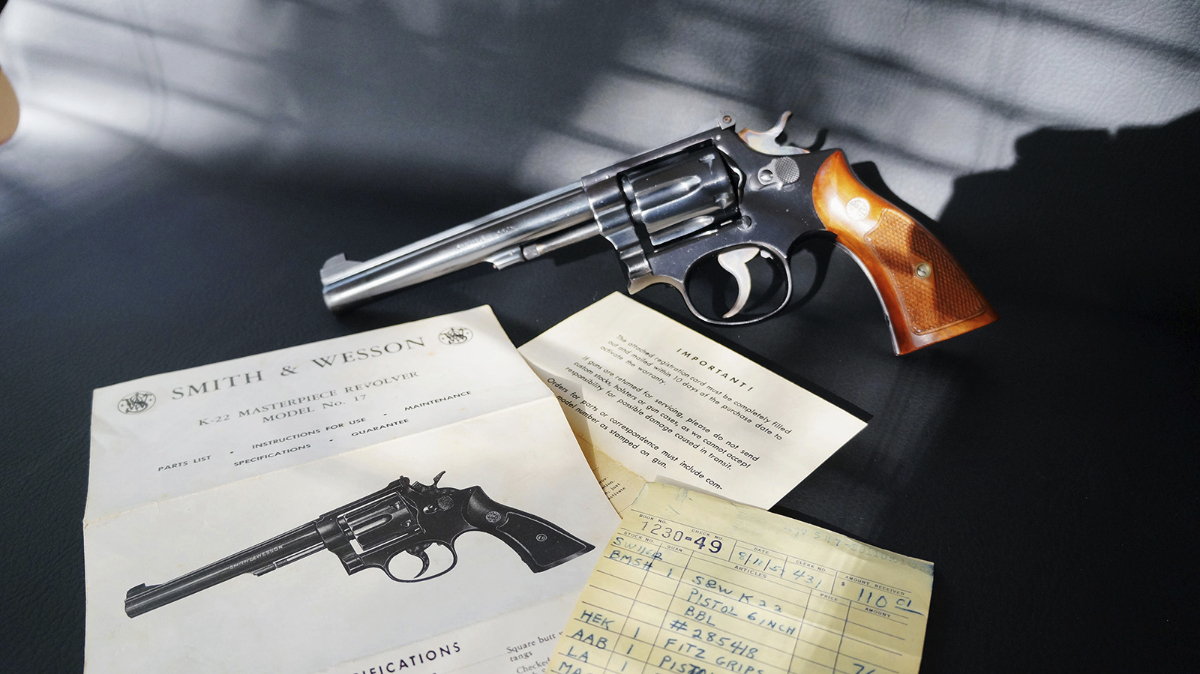
100 seconds of 100 WWI Firearms
If you shoot this gun. All I can say is that you are a braver man than I! Grumpy









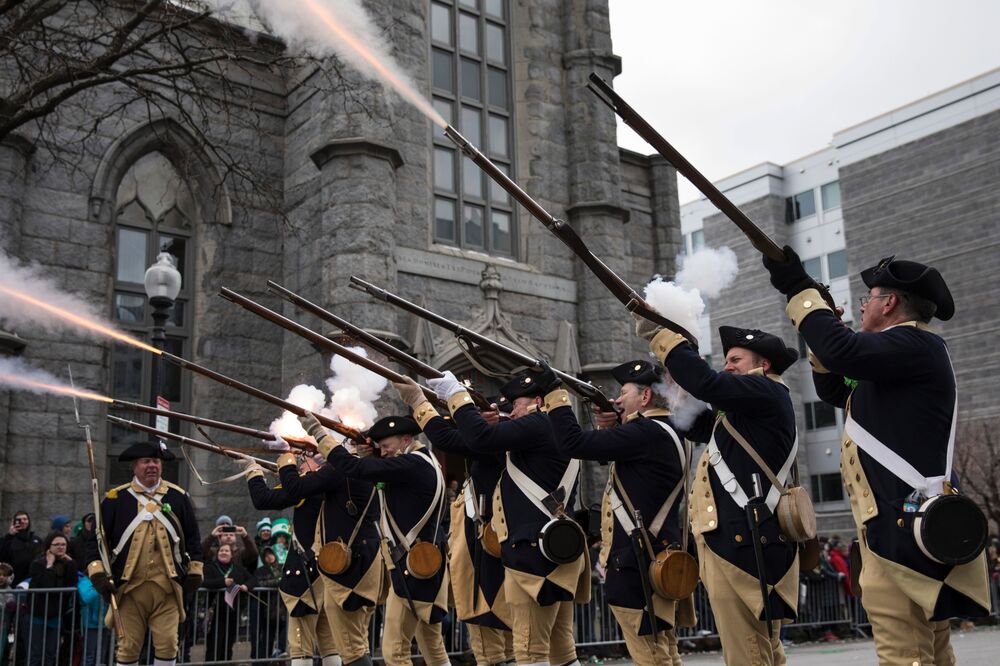
They’re history. Photographer: Dominick Reuter/AFP/Getty Images
The world applauds the scientists who have created vaccines to deliver humanity from Covid-19. One certainty about our future: There will be no funding shortfall for medical research into pandemics.
Now, notice a contradiction. War is also a curse, responsible for untold deaths. Humans should do everything possible to mitigate it. And even if scientists cannot promise a vaccine, the obvious place to start working against future conflicts is by researching the causes and courses of past ones.
Yet in centers of learning across North America, the study of the past in general, and of wars in particular, is in spectacular eclipse. History now accounts for a smaller share of undergraduate degrees than at any time since 1950. Whereas in 1970, 6% of American male and 5% of female students were history majors, the respective percentages are now less than 2% and less than 1%, respectively.
Fredrik Logevall, a distinguished Harvard historian and author of seminal works on Vietnam, along with a new biography of John F. Kennedy, remarked to me on the strangeness of this, given that the U.S. is overwhelmingly the most powerful, biggest-spending military nation on earth. “How this came to be and what it has meant for America and the world is surely of surpassing historical importance,” he said. “Yet it’s not at the forefront of research among academic historians in this country.”
The revulsion from war history may derive not so much from students’ unwillingness to explore the violent past, but from academics’ reluctance to teach, or even allow their universities to host, such courses. Some dub the subject “warnography,” and the aversion can extend to the study of international relations. Less than half of all history departments now employ a diplomatic historian, against 85% in 1975. As for war, as elderly scholars retire from posts in which they have studied it, many are not replaced: the roles are redefined.
An eminent historian recently told me of a young man majoring in science at Harvard who wanted to take humanities on history, including the U.S. Civil War. He was offered only one course — which addressed the history of humans and their pets.
Paul Kennedy of Yale, author of one of the best-selling history books of all time, “The Rise and Fall of The Great Powers,” is among many historians who deplore what is, or rather is not, going on. He observed to me that while some public universities, such as Ohio State and Kansas State, have strong program in the history of war, “It’s in the elite universities that the subject has gone.”
“Can you imagine Chicago, or Berkeley, or Princeton having War Studies departments?” he asked. “Military history is the most noxious of the ‘dead white male’ subjects, and there’s also a great falling away in the teaching of diplomatic, colonial and European political history.”
Kennedy notes that war studies are highly popular with students, alumni and donors, “but the sticking point is with the faculty — where perhaps only a small group are openly hostile, but a larger group don’t think the area is important enough.”
Harvard offers few history courses that principally address the great wars of modern times. Many faculties are prioritizing such subjects as culture, race and ethnicity. Margaret MacMillan, of the University of Toronto and Oxford, observes that war is one of the great cataclysmic events, alongside revolution, famine and financial collapse, that can change history.
As the author of the bestseller “Peacemakers,” an epochal study of the 1919 Versailles conference, she has written about the decline in university courses on conflict: “Our horror at the phenomenon itself has affected the willingness to treat it as a serious subject for scholarship. An interest in war is somehow conflated with approval for it.”
Mindless mudslingers have attacked her as a war-lover for making the observation — commonplace among scholars of the subject — that conflicts can bring scientific or social benefits to mankind.
Tami Davis Biddle, a professor at the U.S. Army War College, has written, “Unfortunately, many in the academic community assume that military history is simply about powerful men — mainly white men —fighting each other and/or oppressing vulnerable groups.”
Universities excuse themselves for shunning history by citing the need to address contemporary subjects such as as emotions, food and climate change. Some also urge that students believe they can better serve their own interests — and justify tuition costs — by choosing vocational majors that will enhance their employability. Yet Logevall’s Vietnam is one of the most popular history courses at Harvard.
History sells prodigiously in the world’s bookstores. I have produced a dozen works about conflict, and my harshest critic would struggle to claim that these reflect an enthusiasm for it. I often quote a Norwegian World War II Resistance hero, who wrote in 1948, “Although wars bring adventures that stir the heart, the true nature of war is composed of innumerable personal tragedies and sacrifices, wholly evil and not redeemed by glory.”
Those words do not represent an argument for pacifism. Our societies must be willing, when necessary, to defend themselves in arms. But our respective presidents and prime ministers might less readily adopt kinetic solutions — start shooting — if they possessed a better understanding of the implications.
Before resorting to force, governments, as well as military commanders, should always ask: “What are our objectives? And are they attainable?” Again and again — in recent memory, in Vietnam, Iraq, Afghanistan, Libya — those questions were neither properly asked nor answered, with consequences we know. Governments succumb to what I call gesture strategy.
Part of the trouble lies with the military, sometimes over-eager to demonstrate “the utility of force,” or rather, to justify their stupendous budgets. More often, however, blame lies with politicians ignorant of the difficulties of leveraging F-35s, cruise missiles, drone aircraft and combat infantry to produce a desired political outcome.
It is extraordinary that so many major U.S. universities renounce, for instance, study of the Indochina experience, which might assist a new generation not to do it again. Marine General Walt Boomer, a distinguished Vietnam vet, said to me five years ago, when I was researching that war: “It bothers me that we didn’t learn a lot. If we had, we wouldn’t have invaded Iraq.”
Biddle has written: “The U.S. military does not send itself to war. Choices about war and peace are made by civilians — civilians who, increasingly, have no historical or analytical frameworks to guide them. They know little or nothing about the requirements of the Just War tradition … the logistical, geographical and physical demands of modern military operations.”
Former British Prime Minister David Cameron is not a stupid man. But he might have made less of a mess of U.K. foreign policy had he accepted the advice of some people who understood both war and the Muslim world better than his ill-informed Downing Street clique.
In 2011, the chief of the British defense staff, General Sir David Richards, begged Cameron not to drag the North Atlantic Treaty Organization into Libya. But the prime minister, in the spirit of a boy scout, wished to do a good deed in a wicked world by promoting the overthrow of President Moammar Al Qaddafi. The rest — the Western intervention and the murderous chaos that has persisted ever since — are, alas, matters of record.
It would be absurd to pretend that study of the past is a guarantee against repeating its mistakes. But the world has cause to be grateful that in 1962, JFK read Barbara Tuchman’s “The Guns of August,” about the outbreak of World War I. Kennedy thus went into the Cuban Missile Crisis conscious of the peril that a local flare-up — as in the Balkans in 1914 — could precipitate a global catastrophe.
The Oxford professor Sir Michael Howard, who died in 2019, was my close friend and mentor over 50 years, the wisest human being I have ever known. In the 1950s, he created the Department of War Studies at King’s College, London, which prospers to this day.
Even more important, he was among the founders in 1958 of the International Institute of Strategic Studies. The IISS came about because some brilliant intellectuals, on both sides of the Atlantic, were fearful of the peril of war. They dismissed the feasibility or even desirability of unilateral abandonment of nuclear weapons.
Rather, they sought to promote understanding, among NATO and Warsaw Pact members alike, that nuclear conflict must be ruled out, because its consequences could not conceivably advantage even a supposed victor.
Howard describes in his memoirs his own first visit to the U.S. in the spring of 1960, “as a missionary on behalf of the Institute.” He found Washington “a military capital” with “almost more uniforms on the street than I remembered in wartime London”:
There was an electric excitement in the air that I found terrifying. This, I thought, was what Europe must have been like before 1914 … This seemed a people who, in spite of the Second World War and Korea, had not really experienced war, and who found the prospect an invigorating challenge. It was in just such an atmosphere, I thought, that wars began.”
Howard became even more alarmed after attending a lecture on nuclear warfighting given by Herman Kahn at the RAND Corporation in Santa Monica, California. Some RANDSmen whom he met were debating how long it might take Los Angeles to get back to “normal” after a nuclear attack.
It was in this climate that Howard and like-minded academics promoted debate, in Europe and America, about responsible strategy and defense. Today, almost everyone who knows Cold War history recognizes that all the talking — international conferences, seminars, formal dialogues — played a significant role in averting a nuclear showdown. Not for nothing is the IISS Journal, then as now, entitled Survival.
To those who knew Michael Howard or read his writing, it would be fantastic to suggest that because he devoted his life to the study of conflict and international relations, he thus spread the pollution of war, or advanced a doctrine of force. By implication, however, such is now the conviction of many great North American institutions of learning.
A few years ago, a history department in the Canadian Maritime provinces was offered a fully funded chair in naval history — and rejected it. Paul Kennedy told me recently that he is amazed by the lack of interest in naval affairs at U.S. universities, “since we are by far the greatest naval power in the world, and the global naval scene is heating up enormously.”
Many, indeed most, academic institutions across the continent are infected with an intellectual virus that causes them to reject study of subjects that seem to some faculty members distasteful. This represents a betrayal of the principles of curiosity, rigor and courage that must underpin all worthwhile scholarship.
MacMillan demands: “Do we really want citizens who have no knowledge of how our values, political and economic structures came into being? Do we ever want another president at the head of the most powerful country in the world, such as Donald Trump, who asserted that the Soviet Union invaded Afghanistan in response to terrorist attacks, and was right to be there?”
In Britain, by comparison, history continues to thrive. About the same number of students embark on first degrees in the subject as take law. Post-graduate studies are especially popular. Some 30 institutions offer War Studies programs. On the European continent, those at Stockholm and Leiden Universities are particularly respected. The problem — we might even call it the repugnance — appears an explicitly North American phenomenon.
North America’s great universities should be ashamed of their pusillanimity. War is no more likely to quit our planet than are pandemics. The academics who spurn its study are playing ostriches. Their heads look no more elegant, buried in the sand.