Last week, the Assembly Public Safety Committee voted to pass Assembly Bill 1223, to place an additional excise tax on firearms and ammunition, and Assembly Bill 311, to restrict firearm “precursor parts” from display or sale at gun shows. The committee sent AB 1223 to the Revenue and Tax Committee, and AB 311 to the Appropriations Committee for further consideration.
Assembly Bill 1223 taxes firearms at $25 each, and ammunition at a certain percentage yet to be determined, in order to fund social services programs for “gun violence.” The taxes are to be collected from California retailers on new firearms sold, and on their retail sales of ammunition. It is unjust to saddle law-abiding gun owners with special taxes to fund social service programs. Such a measure makes it more expensive for law-abiding citizens to exercise a constitutional right, and discourages them from practicing to be safe and proficient with their firearms for purposes such as self-defense, competition, and hunting.
Assembly Bill 311 prohibits the display or sale of any “precursor firearm parts” at gun shows in the state. So called “precursor” parts are not regulated as firearms under federal law, however, they are regulated and limited to being transferred by licensed vendors in California. Such restrictions continue to cut off access to law-abiding individuals who are looking to acquire firearm parts in accordance with existing law.
On Tuesday April 13th, the Assembly Public Safety Committee is hearing AB 1237. Please contact committee members and ask them to OPPOSE AB 1237.
Assembly Bill 1237 mandates the California Department of Justice (DOJ) to supply state information, including personal identifying information, to the UC Gun Violence Research Center at UC Davis, and allows the DOJ to provide this same information to certain non-profits and state agencies. This legislation creates grave privacy concerns, as well as concerns that this information could be provided to groups that create biased “research” to push gun control policies without actually researching root causes of violence.
Again, please contact committee members and ask them to OPPOSE AB 1237.
This is the one Machine Gun that I would really want to own. The reasons being that despite being over 100 years old. They are incredibly well built and for the most part well taken care of. Plus they are chambered for 9mm and I have been told that they are very accurate for a SMG.
The only down side being that they are heavy and EXTREMELY Expensive to buy. But hey I am still playing the Lottery and I still have the Paypal button too. HINT HINT!! Grumpy
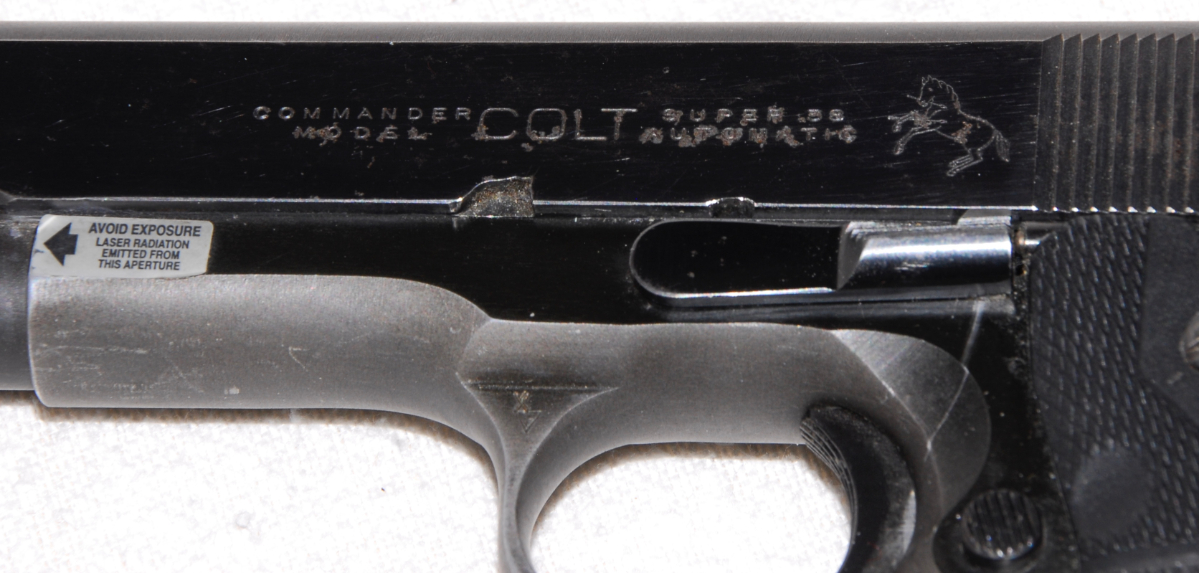
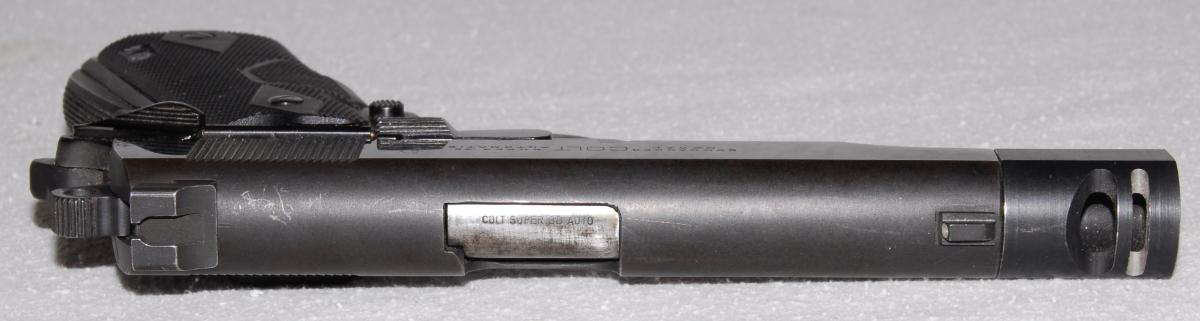
Look to me that somebody spent a lot of their gun allowance on adding a LOT of aftermarket items on this pistol.
Like for an example a Crimsom Chase sight system etc etc. I just wonder on how that worked out and if it was worth all the time, effort & money. Any comments about this out there?
Some of the more restrictive measures to further tighten Hawaii’s already stringent gun laws are among dozens of bills failing to pass as the Legislature gets ready to wrap business in three weeks.
Bills that would have banned rifle magazines greater than 10 rounds and any gun that could fire 50-caliber rounds or more have stalled for this legislative session.
Most police reform measures have also failed this session, as have efforts to legalize recreational use of marijuana.
Even more bills could die between now and April 29, the day lawmakers are scheduled to adjourn the 2021 session.
Lawmakers will further winnow bills as the legislative session approaches its end. Cory Lum/Civil Beat
The gun measures this year faced heavy opposition from local activists. Most vocal has been the Hawaii Firearms Coalition, which mobilized hundreds of its members to submit testimony to lawmakers opposing a variety of measures.
Senate Bill 301 would ban 10-round magazines while Senate Bill 307 would eliminate any firearm capable of shooting a 50-caliber round.
Both bills had a single referral to Rep. Mark Nakashima’s Judiciary and Hawaiian Affairs Committee but failed to get a hearing by a legislative deadline Friday afternoon.
Nakashima said in February that he wasn’t inclined to hear SB 301, noting gun reforms that the Legislature passed in previous sessions.
The House killed a similar measure in 2020, citing a pending California court case over magazine capacity bans. Todd Yukatake, an assistant director with the Hawaii Firearms Coalition, also pointed to the 9th U.S. Circuit Court of Appeals case Duncan v. Becerra as a reason to hold the bill.
SB 307, the ban on 50-caliber firearm, is also too broad, according to Yukatake. The bill could also capture some revolvers and big-game hunting rifles.
Sen. Karl Rhoads, who introduced the bill, has previously said the intent of banning weapons that can fire those large rounds was to prevent someone from sniping at people from more than a mile away.
“There’s few people in the world that can do that,” Yukatake said. “It’s not the rifle. It’s the skill of the person using it.”
The Senate on Tuesday is expected to take up measures regarding storage of firearms and a ban on so-called “ghost guns,” firearms assembled at home from various parts.
No New Police Data
Several other law enforcement measures are now dead.
Senate Bill 742 would require county police departments to collect more data on each police stop, arrest and use of force incident. The data would be used to inform police policies going forward, but the police chiefs of each of Hawaii’s four departments raised concerns that the addresses of crime victims might be revealed.
Under SB 742, the departments would be required to compile an annual report with all the data points requested in the bill, among them, the addresses of individuals who called police to report a crime.
The bill had the support of the American Civil Liberties Union Hawaii, which pushed for the measure in the wake of reports that Honolulu police disproportionately arrested and used force against Micronesians, Blacks, Samoans, Native Hawaiians and other Pacific Islanders.
SB 742 needed to clear Nakashima’s committee earlier this session by March 25, but he said Friday that he never scheduled the bill for a hearing because neither the advocacy organizations pushing for the bill nor the bill’s author asked him to move it forward.
Despite the national outcry for police reform in 2020, most measures in Hawaii failed to gain traction. Cory Lum/Civil Beat
“There are a lot of bills that come through, so if there are any kinds if requests to hear those, I try to hear those,” Nakashima said. “On this (SB 742), we got nothing.”
Though he didn’t schedule the bill, Nakashima said he is supportive of police collecting more data.
Meanwhile, Nakashima’s committee on Friday moved along Senate Bill 726, a ban on no-knock warrants in Hawaii. The bill and others like it in the U.S. were pushed forward after the police killing of Breonna Taylor, a Louisville, Kentucky, emergency worker who was shot to death in a botched police raid.
Though that bill moved forward, the Legislature largely dropped the ball on advancing police reform measures this session, despite nationwide calls for better accountability in policing. Bills to allow citizens to record police, ban chokeholds and eliminate the use of military-style equipment by police departments all dropped off earlier this session.
Pot Bills Die, Again
Hawaii also should not expect recreational pakalolo stores anytime soon.
Senate Bill 676 cleared the Senate in early March but never got a hearing in the House. The bill would have allowed anyone 21 years of age and older to possess a small amount of marijuana that could be purchased from dispensaries licensed under a state-run program.
And Hawaii lawmakers don’t appear ready yet to further decriminalize larger amounts of marijuana.
In 2019, lawmakers decriminalized the possession of up to 3 grams of weed. Senate Bill 758 sought to increase that amount more than eightfold. Like SB 676, the decriminalization measure also never got a House hearing.