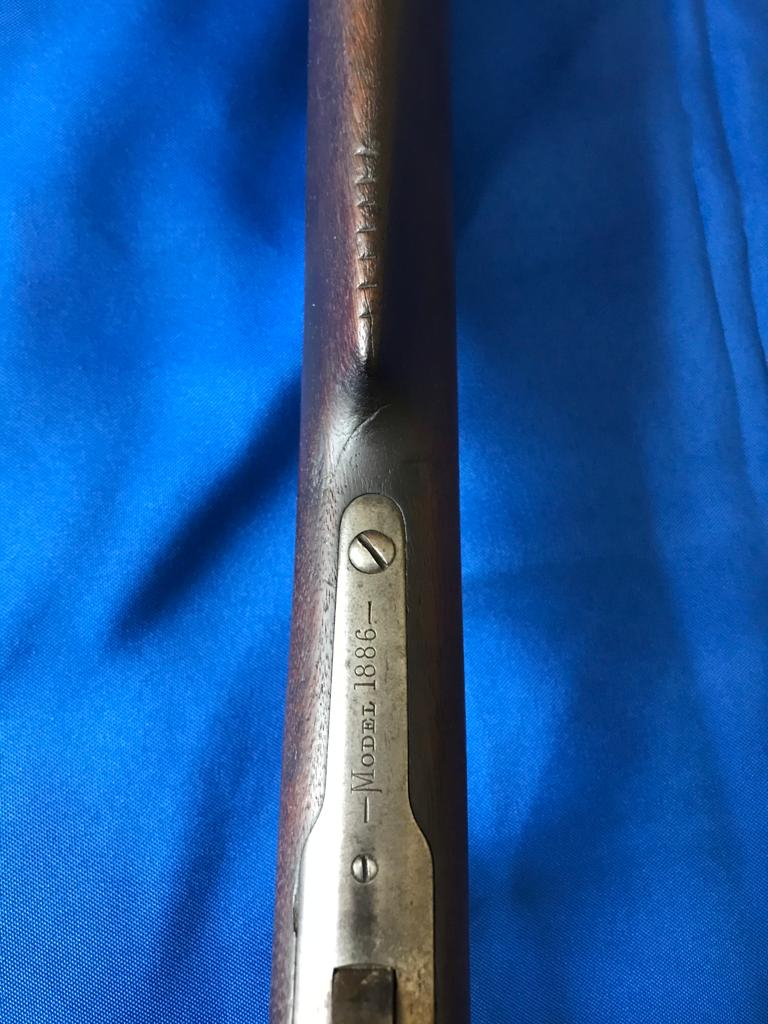
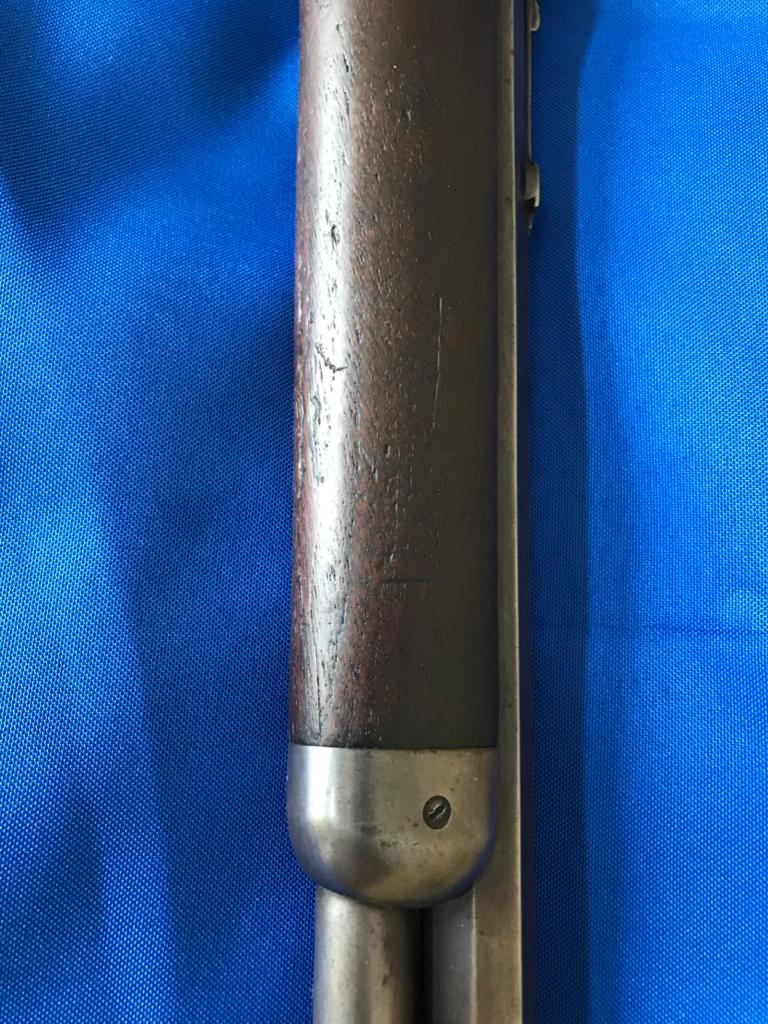
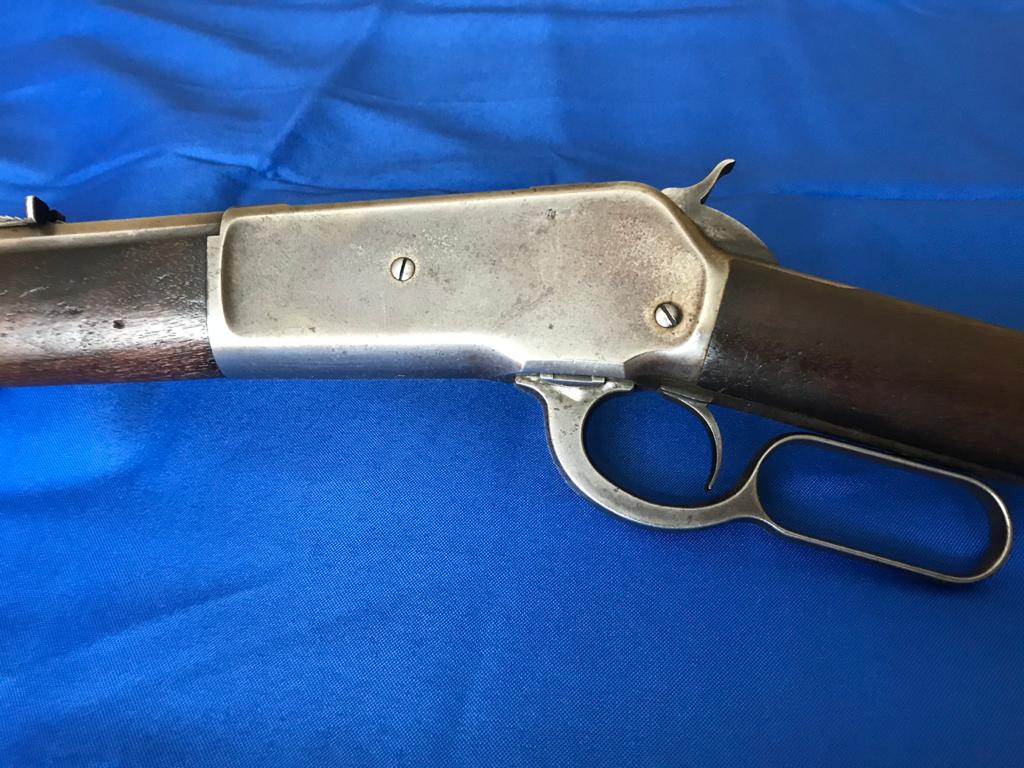
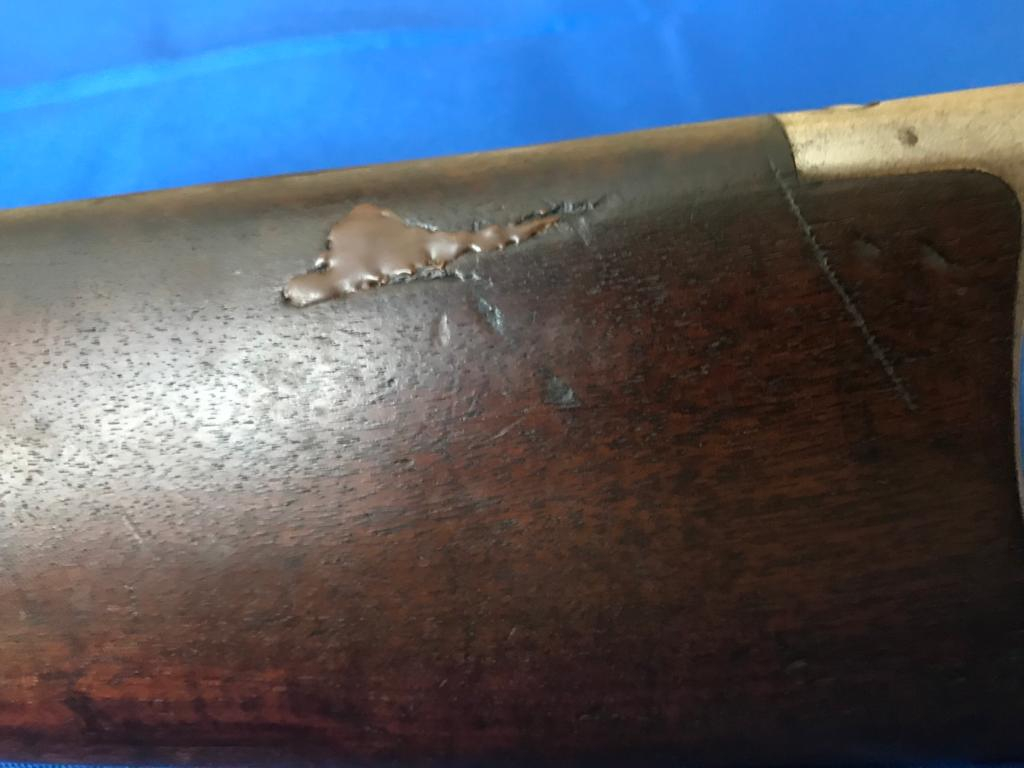
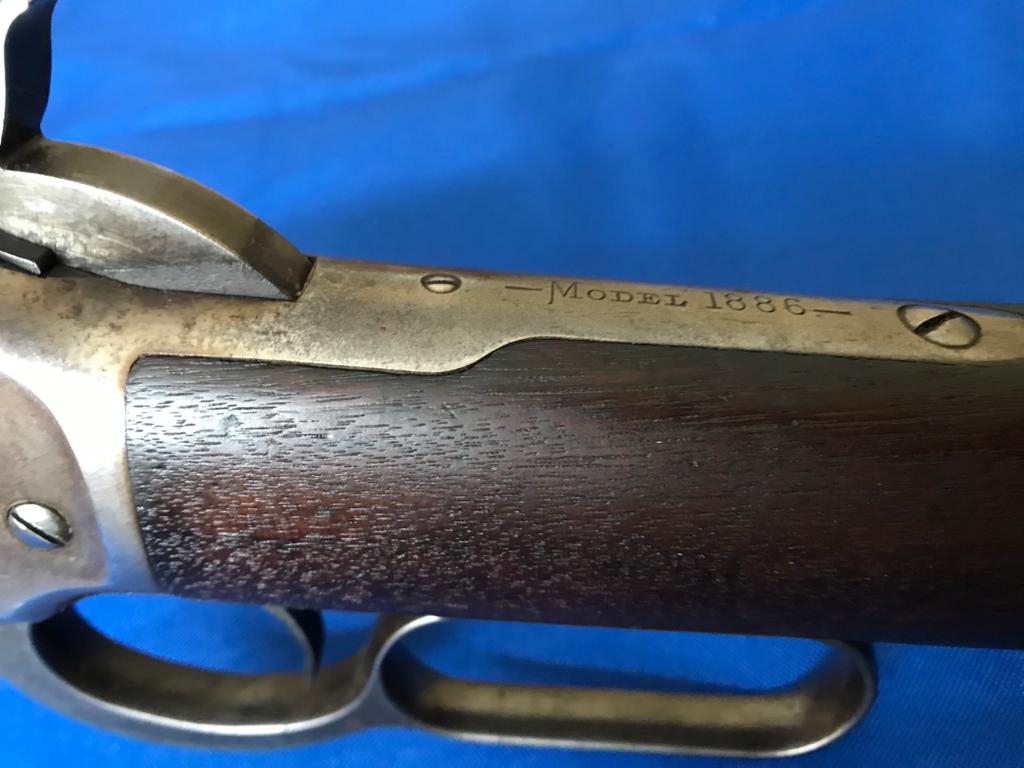
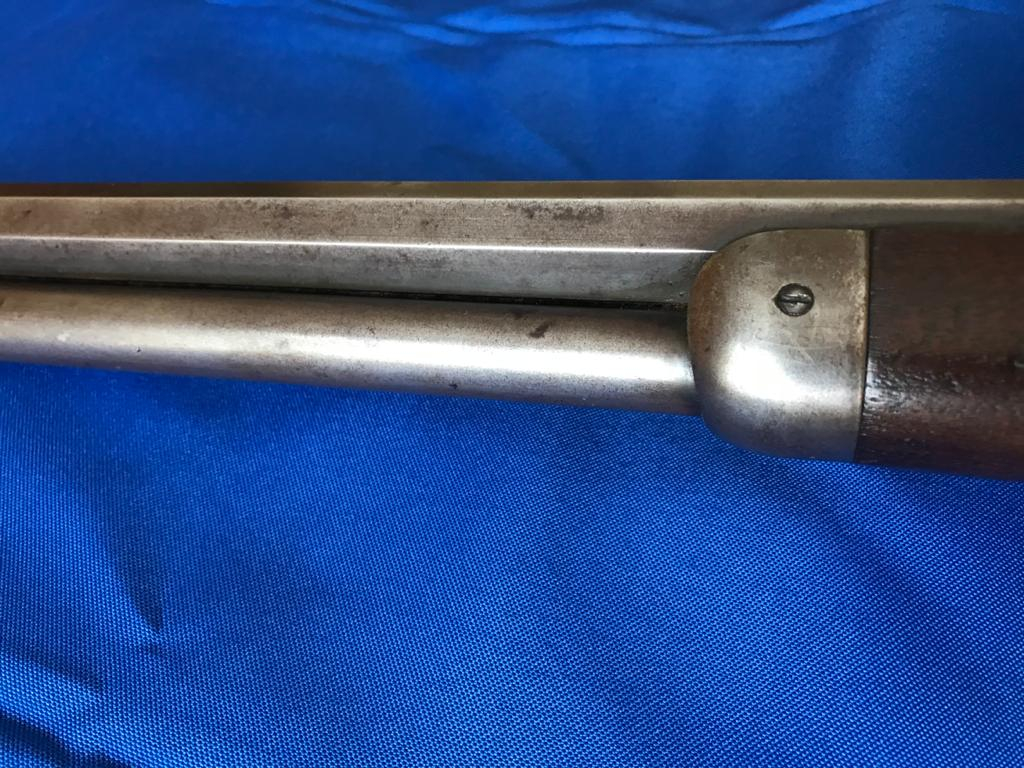
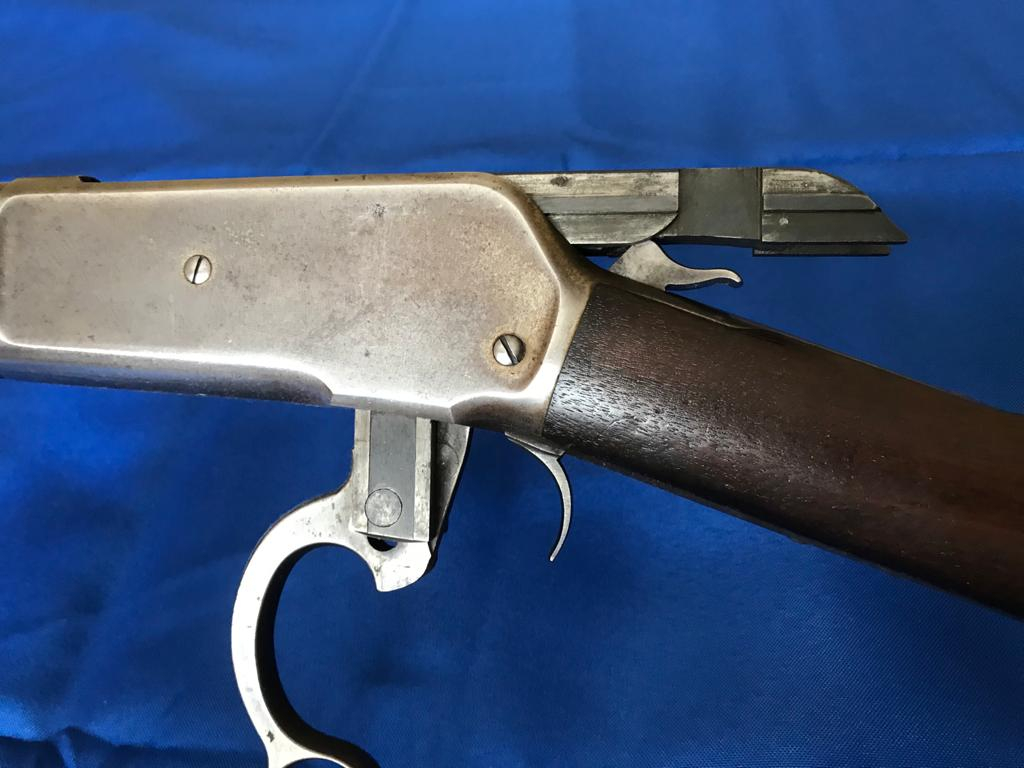
The anatomy of a gunstock on a Ruger 10/22 semi-automatic rifle with Fajen thumbhole silhouette stock. 1) butt, 2) forend, 3) comb, 4) heel, 5) toe, 6) grip, 7) thumbhole
The anatomy of a gunstock on a Ruger 10/22 semi-automatic rifle with Fajen thumbhole silhouette stock. 1) butt, 2) forend, 3) comb, 4) heel, 5) toe, 6) grip, 7) thumbhole


Nathaniel “Texas Jack” Reed (March 23, 1862 – January 7, 1950)[1] was a 19th-century American outlaw responsible for many stagecoach, bank, and train robberies throughout the American Southwest during the 1880s and ’90s. He acted on his own and also led a bandit gang, operating particularly in the Rocky Mountains and Indian Territory.
Reed is claimed to have been the last survivor of the “47 most notorious outlaws” of Indian Territory.[2] He became an evangelist in his later years, and could often be seen on the streets of Tulsa preaching against the dangers of following a “life of crime”.[2][1] His memoirs were published in the 1930s, and are considered valuable collectors’ items (one copy was reportedly sold on the internet for $1,500 in 2007).[3] He claimed to have ridden with the Dalton gang, Bill Doolin, Henry Starr and other outlaws and bandits of the old west. He may have also helped Cherokee Bill, a fellow outlaw from the Indian Territory, in his escape from Fort Smith during the 1880s.[3]
As with many others of the era, Reed’s colorful stories of his almost 10-year career as an outlaw were probably exaggerated by later writers.[3] He claimed to have ridden briefly with the Daltons, and participated in their dual bank robberies in Coffeyville in 1892, as well as in the infamous 1893 gunfight at Ingalls. However, there is no corroborating evidence that he was involved in either of those events.[3]
Reed was born in Madison County, Arkansas. His father, Mason Henry Reed, was killed in action fighting for the Union Army during the American Civil War, probably at the Battle of Campbell’s Station on November 16, 1863.[2] His mother was Sarah Elizabeth Prater. Reed lived with a number of relatives, including his maternal grandparents, until 1883 when, at the age of 21, he moved to the American frontier.[4] He worked at various jobs in Idaho, Wyoming, Colorado, Texas until he reached Oklahoma, where he became a ranch hand for the Tarry outfit.[4]
During the summer of 1885, his foreman recruited him to rob a train at La Junta, Colorado.[2] In the course of the robbery, Reed entered the passenger car firing his pistol to keep the passengers under control.[4] He later received $6,000 for his part in the hold up.[2][4] Encouraged by this success, Reed gave up working as a cowboy and became an outlaw. During the next nine years he and his gang robbed trains, stagecoaches, banks and, on one occasion, captured a large shipment of bullion in California.[5]
During the early 1890s, when he was living near Muskogee, Oklahoma,[4] Reed learned that a gold shipment was leaving Dallas, Texas on November 13, 1894. He recruited Buz Luckey, William “Will” Smith and Tom Root, and selected Blackstone Switch at Wybark as the site for the robbery. The plan was for Reed to throw the switch as the train approached then, as it entered onto a sidetrack, the gang would use dynamite to enter the express car. Root, a full-blooded Cherokee known for his size and strength, would enter the express car, break open the strong boxes, and bring out the gold. Smith would hold a gun on the engineer and fireman while Luckey stayed with the horses.[4]
Despite their practice staged-robbery the previous day,[4] as the Katy No. 2 approached, Reed threw the switch too early. Engineer Joseph Hotchkiss stopped the train when he saw the signal light change,[4] far short of the siding. Reed and the others were forced to run towards the train yelling and shooting. Hotchkiss and the fireman alerted the messengers using the bell cord connected to the car and jumped off the train to hide in a small ravine nearby.[4]
The railroad company had anticipated the possibility of a robbery, and had moved the gold to another train, putting in its place several armed messengers to guard the express car including Bud Ledbetter, Paden Tolbert, Sid Johnson, Frank Jones.[4] When Reed and the others approached the express car, he called for the messengers to leave the car. When they refused, Reed and Root took cover behind some trees and began shooting into the car. The messengers returned fire, resulting in a gunfight that lasted for nearly an hour. Eventually one of Reed’s men was killed; Reed jumped onto the train and went through the passenger cars forcing passengers to put their valuables into a sack before he and his gang fled.[4]
As they rode away, Reed was shot by Bud Ledbetter; the pain from his wound grew so severe that his partners were forced to leave him behind for the night. He gave them some of his loot, and kept the rest of it in a sack to use as a pillow.[4] He lay on a blanket hiding under a rock ledge until he was found by an Indian woman, who nursed him back to health.[4][5]
The American Express Company offered a reward of $250 for the arrest and conviction of each member of the gang.[4] An extensive manhunt was conducted by U.S. Marshals George Crump and S. Morton Rutherford, and large groups of deputies were sent into the Indian Territory and Creek Nation. While burning the canebrakes in the Verdigris bottoms, one deputy found the burnt remains of Reed’s saddle and threatened to destroy the crops of local residents if they did not turn over Reed and his men.[4] This was considered a legal act, authorized by “The Hanging Judge” Isaac Parker himself, but no one came forward with information.[4] Reed was warned of the search and decided to leave the territory as soon as he was able. He arrived in Seneca, Missouri on December 9, where Bill Lawrence took care of him.[4]
Once fully recovered from his wounds Reed returned to Arkansas in February 1895, where he stayed with his brother in Madison County.[4] Having decided to retire from a life of crime, he wrote to Judge Isaac Parker, agreeing to testify against the man who planned the robbery in exchange for probation, although he did not participate in the proceedings.[5] Smith managed to disappear, but U.S. Marshal Newton LaForce was successful in tracking down Luckey and Root to the latter’s home in Broken Arrow, 15 miles south of Tulsa, Oklahoma. The two fugitives were subsequently killed in a gunfight with LaForce and his men on December 4, 1894.[4]
Despite Parker’s promise of immunity, Reed was convicted and sentenced to serve five years in prison.[5] However, he served less than one, as shortly before his own death Parker granted Reed his parole, in November 1896.[5] Reed subsequently carried his signed parole from Judge Parker around with him, along with a letter signed by Ledbetter acknowledging that Ledbetter had shot him.[5]
After his release Reed became an evangelist, preaching the rewards of living a respectable, law-abiding life.[2] He also toured the country with a series of Wild West shows.[5] His memoirs, The Life of Texas Jack, were published in 1936, and 35,000 copies of several published pamphlets and dime novels describing his life as an outlaw were sold before his death at home in Tulsa, Oklahoma, at the age of 87.[citation needed] He was buried in St. Paul, Arkansas.[3]


That’s great news if you like to dabble in the used gun market. The guns are notoriously rugged, and many have a very low round count after spending most of their lives in gun lockers or as seldom-fired duty guns for LEO. Sometimes they even come with extra perks like working night sights.

We pulled this old law enforcement Glock 17 Gen 4 from the Guns.com Vault to see how it’s held up. In complete transparency, I’ll most likely purchase this one for my personal collection now that the testing is done. Here’s why…

First, let’s start with the obvious. Not all used guns have lived the same life, so don’t expect them to come out of the box looking factory fresh with that new gun smell. That’s really one of my least concerns when buying a gun anyway. However, Guns.com provides a Certified Used Gun Program to help take some of the guesswork out of buying used guns. These “Certified Used Guns” are only in excellent and very good condition – and they now include free shipping.

The used Glock that we pulled for this review is in “very good” condition and came from a stock of LEO trade-ins. Personally, I love these types of guns. They come with enough history to make them individually interesting and guilt-free range companions. I prefer that over relegating a fine piece of history or pristine custom gun to a sad, lonely life in my safe.

As a previous service pistol, it’s easy to assume the gun would have lived a rough life. But this pistol has less wear on it than my own Glock 19, which primarily only served as a concealed carry gun. To be honest, I probably put more rounds through the used Glock in testing than the previous owner did over the life of the gun. I can barely tell the difference between this “very good” used Glock and a brand-new gun after its first trip to the range.

It’s a Glock 17, so I’m not going to blow anyone’s mind when I say it chomped through 250 rounds of 9mm just fine. It almost felt criminal to try and push through any more boxes of ammo given the current shortage. Suffice it to say the gun is reliable, and it will do its part on the range if you do yours.
Because it is a used gun, I did decide to throw together some aftermarket Glock magazines for testing as well. Glock OEM mags are great, but it’s always fun to throw in a mix of “fun-sized” mags for kicks. The clear ETS Group mags were particularly enjoyable for range time.

The magazines fed – and the Glock ate – any of the mix of 9mm ammo we brought to the range: 124-grain Fiocchi, 115-grain Federal, 115-grain Blazer Brass, and even an old box of semi-tarnished 115-grain Remington. I got the old Remington ammo as a “white elephant” Christmas gift three years ago. (It came tarnished, so don’t hold that against me).
From a previous range trip, this Glock 17 also chewed through Hornady Critical Defense and Sig Sauer Elite Performance just fine. Though, these aren’t exactly the cheapest options, which leads me to my final point.

When you buy a gun, you’re really not just buying the gun, right? They have a way of becoming small money pits as you drop cash on all the extras that make them work: holsters, ammo, additional mags, upgraded sights, etc.
Luckily, this Glock came with pre-installed night sights from its past LEO service. The sights are metal and still bright. That spared me from having to pay to replace the typical polymer three-dot sights that come with most Glocks, as I did with my personal Glock 19.


The other advantage of going for a used gun can be price. If you’re going to put the gun to use anyway, it doesn’t need to be pristine and unfired. In fact, it’s somewhat freeing to know that the gun is already broken in a bit and ready for a life of actual use. Any cash you saved can now go toward the ammo, holsters, and mags you want.

From my experience – I’ve bought my last seven guns used – previously owned guns are generally worth giving serious consideration before you jump in on a brand-new firearm with both feet. This particular LEO trade-in Glock 17 was definitely well cared for before arriving at Guns.com.
Depending on how a certain department maintained their duty guns and armory stocks, that can sometimes prove to be to your advantage as well. I’ve picked up a few military surplus pistols that didn’t even have signs of holster wear. Add all that to the fact that I haven’t seen a new Glock at my local dealers for weeks with the current surge of gun sales, and I’m game for a pistol that’s lived a little already.
https://youtu.be/-pejp5TU9Eo
These Guys also were one of the big reasons why Truman desegregated the Armed Forces after WWII. They were also the reason why Hawaii became a Democratic State after they came home. Where they faced the Republican backed powers that be. The Big Plantations, the Missionaries control of the land etc., etc. Grumpy