The Los Angeles Police Commission has given the police department approval to use a special nonlethal device on Metro trains and buses.
If approved by Metro, officers would carry the BolaWrap, a handheld device that fires a lasso-like cord that wraps around a person’s legs or waist. The wraps are equipped with hooks that are supposed to sink into clothing and restrict a person’s ability to move until police can detain them.
The device was introduced in 2019 as a less than lethal way of dealing with people in mental distress, as a way to avoid hurting people, but being able to restrain them, officials said.
LAPD officers in Hollywood and the Central Division have not used the BolaWrap that much in the last few years, but Chief Michel Moore wants to change that and give the device to officers who patrol the Metro’s buses and trains as part of a year-long pilot program.
Officials with the police department met with Metro Wednesday afternoon in order to discuss the idea. Just a few hours later, Metro released a statement that read in part:
“The LAPD will be scheduling a demonstration of the device for Metro as an alternative to use of force in the system and will share its proposed plans to pilot its use on the Metro system, for Metro’s consideration.”
While it’s unclear when that demonstration might happen, officials say the BolaWrap is most effective when it’s used on targets that are less than 20 feet away. When it’s launched, the Kevlar tether stretches to about 8 feet wide just before impact, which could present problems inside a narrow bus or train that’s crowded with seats and poles.
It may be a tool better suited for use on station platforms and the escalators coming and going, KTLA 5’s Rick Chambers reports.
A look at how the BolaWap when properly deployed would wrap around a person’s waist and arms
The BolaWrap shoots a Kevlar tether meant to wrap around a person’s waist or legs and temporarily restrain them without serious injury
The BolaWrap is reportedly most effective when launched 20-feet from the target.
A look at how the BolaWap when properly deployed would wrap around a person’s waist and arms.
The BolaWrap shoots a Kevlar tether meant to wrap around a person’s waist or legs and temporarily restrain them without serious injury.
However, during a 2020 pilot program with the nonlethal device, LAPD data shows that officers only used the device nine times in eight months, and was deemed “effective” in six instances.
Don’t judge a book by its cover. This dried-up old guy was once a steely-eyed killer.
It was one of those countless little tragedies that play out in hospitals around the world. Beatrice Flaherty already had one healthy son and went to the hospital expecting another. Things did not turn out as she had hoped.
Post-war America was brimming with opportunity.
Beatrice was a clerk at Sarner’s, a local department store in Stamford, CT. Her husband Walter Sr worked at Sears. By all accounts, theirs was a healthy marriage, but they had a sinister physical incompatibility lurking just beneath the surface.
I have reliable information that it is pretty tough being a baby.
Richard Flaherty came screaming into the world at the Stamford, CT, Regional Hospital on 28 November 1945. His older brother Walter’s delivery had been unremarkable. Unbeknownst to his mom, she had an Rh-negative blood type. That’s not a big deal today. We screen for it and administer a medication called RhoGam to mitigate the effects of Rh incompatibility. In 1945, however, this was something else entirely.
Problems From The Start
Blood seems like pretty straightforward stuff. It’s not.
Like most things in medicine, Rh incompatibility is just crazy complicated. It was previously known as rhesus isoimmunization or Baby Blue Disease. The more appropriate modern term is Hemolytic Disease of the Fetus and Newborn (HDFN). There are more than fifty unique blood group antigens that have been identified, so it is actually not as straightforward as it seems. HDFN can occur when the mom is Rh negative and the dad is Rh positive.
That any of us survive gestation and the birth process is honestly fairly miraculous.
During a first pregnancy, the mom’s initial exposure to incompatible Rh+ Red Blood Cells (RBCs) is typically not recognized as an immunological threat. However, at delivery, there is some inevitable mixing of maternal and fetal blood. If mom is Rh incompatible she then develops IgG memory B cells that lurk about waiting for a second exposure. During a second incompatible pregnancy, the mom’s immune system responds to a perceived threat by producing IgG anti-Rh(D) antibodies that cross the placental barrier and enter fetal circulation. These antibodies attack fetal RBCs and cause all manner of mischief.
Richard Flaherty was always really, really small.
There typically results liver and splenic damage along with portal hypertension and something particularly troubling called hydrops fetalis. If left to its own devices, this condition can be fatal. In young Richard’s case, though he survived to leave the hospital, he was destined to remain ever small. He ultimately topped out at four foot nine inches tall and 97 pounds.
Richard Flaherty was a small man with a big heart. He didn’t do anything halfway.
Richard Flaherty Doesn’t Give Up
Richard was sensitive about his size, and he compensated through sports and martial arts. When he came of age he wanted to be a soldier in the worst way, but the minimum height for a male recruit was five feet. He was also badly underweight, so Richard ate six meals a day and enlisted the assistance of his local congressman. Together they got the small man a waiver. In late 1966 Richard Flaherty took his oath as an American soldier.
This is Richard Flaherty alongside his roommate from OCS.
Flaherty found that he had a knack for soldiering. He ultimately graduated from Officer Candidate School and deployed to Vietnam as a Platoon Leader with the 101st Airborne. In April of 1967, he had an opportunity to prove his mettle.
LT Flaherty is shown here on the right with some of his guys. He was by all accounts a popular and respected combat leader.
2LT Flaherty’s platoon was patrolling around Quang Dien when they came under fire from a strong NVA force. Braving heavy enemy fire, Flaherty rallied his troops and led an attack on an NVA bunker that turned the tide of the ambush. He earned the Silver Star for this action. Upon his return from Vietnam, Flaherty volunteered for the Special Forces. He subsequently deployed to Thailand in 1969 as a Green Beret.
Surely they could have come up with a better way to tell families back home about soldiers who had been killed or wounded than this. This telegram went to Richard Flaherty’s mom and dad while he was deployed to Vietnam.
By the time CPT Flaherty left the Army in 1971, he had also earned a Bronze Star, a Combat Infantry Badge, and a pair of Purple Hearts. His worst injury involved a grenade fragment to the head. However, like many combat soldiers who were legit in the suck, he came home with some baggage.
CPT Flaherty was a decorated warrior.
CPT Flaherty lost friends in combat. He also once encountered a female VC soldier with her head blown open lying dead in a foxhole. Alongside the young woman was her lipstick and perfume. Such images haunted the man. On a subsequent government disability application, Flaherty related that incident and said, “This humanized the enemy, cutting my effectiveness as a leader in half.”
Every reference I could find to Richard Flaherty’s military service was glowing. He was apparently well respected.
If the tale stopped there it would be utterly amazing. Here we have a young kid who by all rights likely should not have survived childhood and never grew past the size of a child. Despite his challenges, he drove himself to excel both physically and mentally, ultimately training as one of his nation’s most elite warriors. He earned serious accolades for gallantry in combat. However, it turned out that Richard Flaherty was really just getting started.
Richard Flaherty was dealt a pretty rough hand once he got back to the World.
Flaherty came home from Vietnam and met a girl. Jyll Cohen was also small, a full inch shorter than Richard. They were, by all accounts, mad about each other. However, Jyll died unexpectedly in a car crash in 1975. In the aftermath, Richard began drinking heavily. His life seemed to spiral from there.
Richard Flaherty had a sort of bipolar relationship with Law Enforcement.
Flaherty Goes Downhill
Flaherty lived by now in South Florida. His first arrest was for carrying a concealed weapon. After that, he was caught selling cocaine. Afterward, his behavior became more and more erratic. Eventually, he was busted for trying to sell a couple of unregistered sound suppressors to an undercover BATF agent. (Author’s note–sound suppressors ought to be sold in vending machines outside Walmart, but that’s a discussion for another day).
The ATF let him walk on the condition that he would work as a confidential informant against some bigger fish. The suspects were a pair of Special Forces soldiers who had been selling stolen explosives and military equipment on the side. Flaherty’s first exchange with the men involved 96 pounds of C-4 along with sundry other GI-issue goodies. When these two gentlemen were ultimately taken down they were caught in a rental truck containing 4,600 pounds of explosives and other military ordnance. These two crooked SF guys got 40 years apiece.
South Florida is warm. Richard Flaherty was a fixture living outside on Aventura Boulevard in the city of the same name.
By 1987 Flaherty was complaining to anybody who would listen that government agents were out to get him. He eventually found himself homeless and sleeping outside underneath one particular palm tree in Aventura, Florida. He maintained himself in public restrooms and supported his drinking habit with his government disability check. There he supposedly remained…for 28 years.
David Yazuk’s tireless digging eventually brought Richard Flaherty’s remarkable story to light.
David Yazuk was a local beat cop who believed in community policing. Originally raised in Brooklyn, Yazuk had seen the small bald man in the Vietnam-era boonie hat for years set up underneath his palm tree. Then one day he said hi and struck up a conversation. For the price of a cheap meal, Yazuk got Richard Flaherty’s story.
Out In The Open
Richard Flaherty made some pretty outlandish claims.
By 2015, Richard’s tale was pretty unbelievable. He claimed to have worked overseas as a security contractor, mercenary, and spy. I have spent some time around legit crazy people. I daresay most of those who did not claim to be the personification of the resurrected Christ said they were spies. It’s a pretty common refrain. However, something about Richard Flaherty’s presentation felt sincere.
Richard Flaherty’s story was undeniably compelling, but was it true?
David Yazuk was a cop and a natural investigator, so he did some snooping. He ultimately connected with Fred Gleffe, the retired federal agent who had orchestrated the sting against the two dirty Green Berets. Gleffe verified everything about that particular part of the tale, even going so far as to warn Officer Yazuk to leave the issue alone. He claimed that there were individuals still in circulation who would wish those involved in the sting ill even that many years later. Less than a day after that conversation, David found out that Richard Flaherty had died in a hit-and-run accident.
This is a still taken from a documentary movie about Richard Flaherty’s life. The weapons look like airsoft to me.
Around midnight on 9 May 2015, a 60-year-old stenographer with the Miami-Dade Police Department was coming home after a long day at work. As she passed Richard Flaherty’s palm tree she felt her car strike something in the darkness but continued home. The following day as she was headed back to work she recognized the location as a crime scene. She researched the details and surrendered herself to the authorities. Richard Flaherty’s death was ruled an accident.
Richard Flaherty’s life seemed simply tragic after his return from Vietnam.
And there it really should have ended—the tragic lonely death of a delusional Vietnam veteran on a dark street in Florida. Only it didn’t. With no close relatives, David Yazuk ultimately gained access to a storage unit Flaherty had maintained nearby. What he found simply further muddied the waters around this mysterious little man.
CPT Flaherty’s family wanted him buried at Arlington. Richard had other ideas.Richard Flaherty was somehow close to Lisa Davis. Nobody ever quite figured out the details.
Flaherty insisted on being buried alongside a West Virginia woman named Lisa Anness Davis. He claimed in a letter to have adored her for thirty-three years. However, Yazuk’s queries to both Lisa’s sister and a man she had known well for fifteen years turned up no references to Richard Flaherty. Regardless, Flaherty had already paid $3,000 for the burial spot, so that’s where he ended up.
Little about Richard’s story really made much sense. He actually had a surprising amount of money for a homeless guy. Some asserted that his homeless state was just his effort to stay off the grid and remain anonymous.
The storage unit also gave up Richard’s stock portfolio which was surprisingly robust. There was evidence that he had been wiring money to some unidentified person in Thailand for years. However, it was Flaherty’s passport that told the most compelling tale.
Apparently, Richard Flaherty traveled widely, all the while living as a homeless person in South Florida.
In 2008, Richard Flaherty spent time in Amman, Jordan, a recognized conduit of entry into Iraq by people who wanted to do so quietly. Two years later he traveled back to Jordan, then on to Thailand, Singapore, and Cambodia. In 2012 he had been in Caracas, Venezuela. Flaherty had once confided to a police officer buddy of Yazuk’s that he was heading off to Iraq on a mission for the CIA. Nobody took him seriously until they later pawed through his travel documents. Evidence now points to his having worked in Rhodesia, Angola, and Nicaragua as well.
This book goes into a great deal more detail about Richard Flaherty. It is available on Amazon.This documentary is free for streaming.
David Yazuk reached out to the US State Department and the CIA, but they were, predictably, not forthcoming. He did go on to produce a documentary about Richard Flaherty’s life titled The Giant Killer. It is available to stream for free on Tubi. There is also a book of the same name available on Amazon.
I’ve penned this weekly column for years now. I’ve lost track of how many of these things I’ve churned out. Amidst war heroes, criminals, monsters, and psychopaths, I’m not sure but that the story of CPT Richard Flaherty might be the weirdest of the lot. In this tiny little warrior, we find a story almost too incredible to believe. Soldier, operator, lunatic, or spy, Richard Flaherty took the truth with him to the grave.
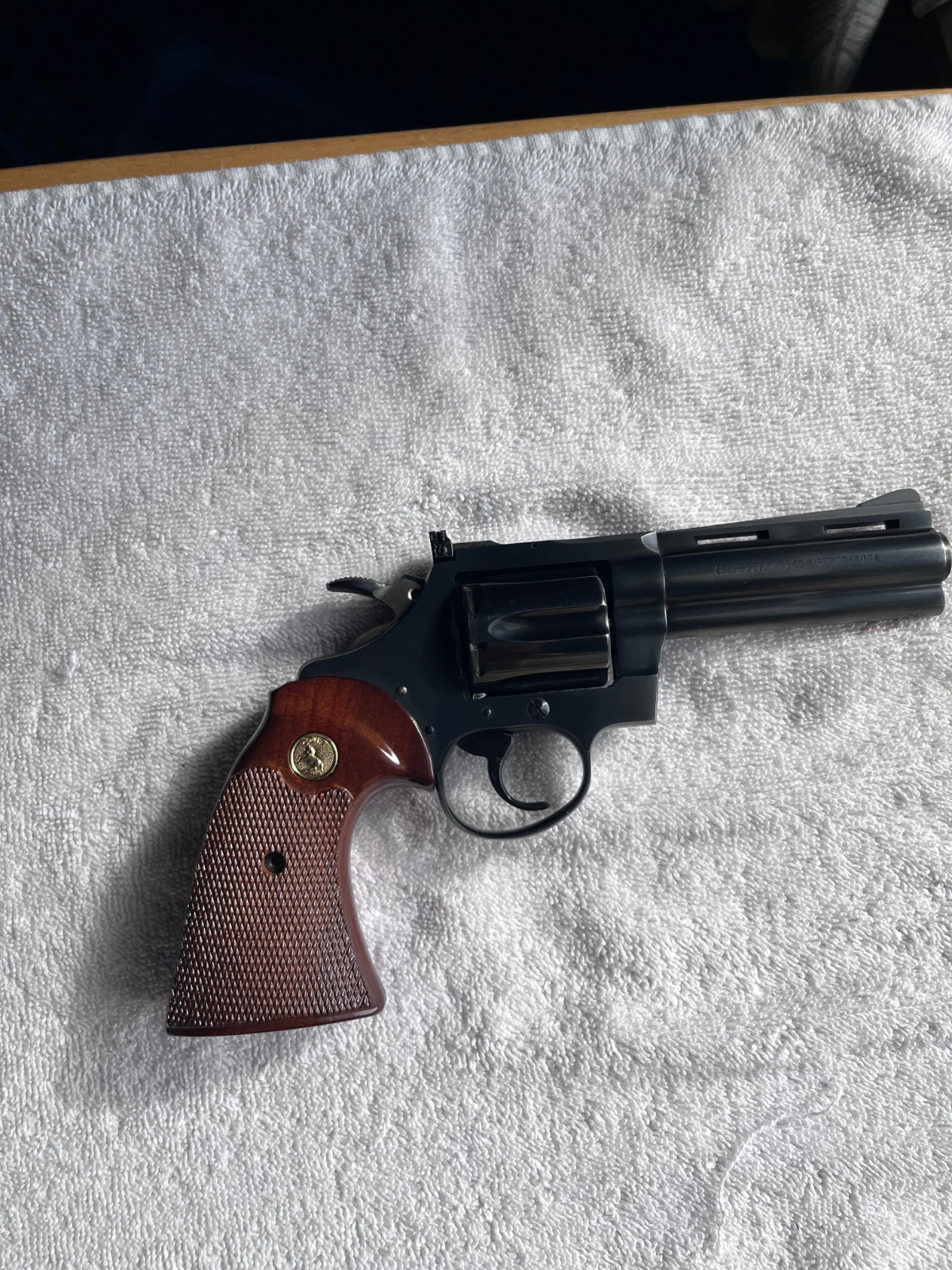
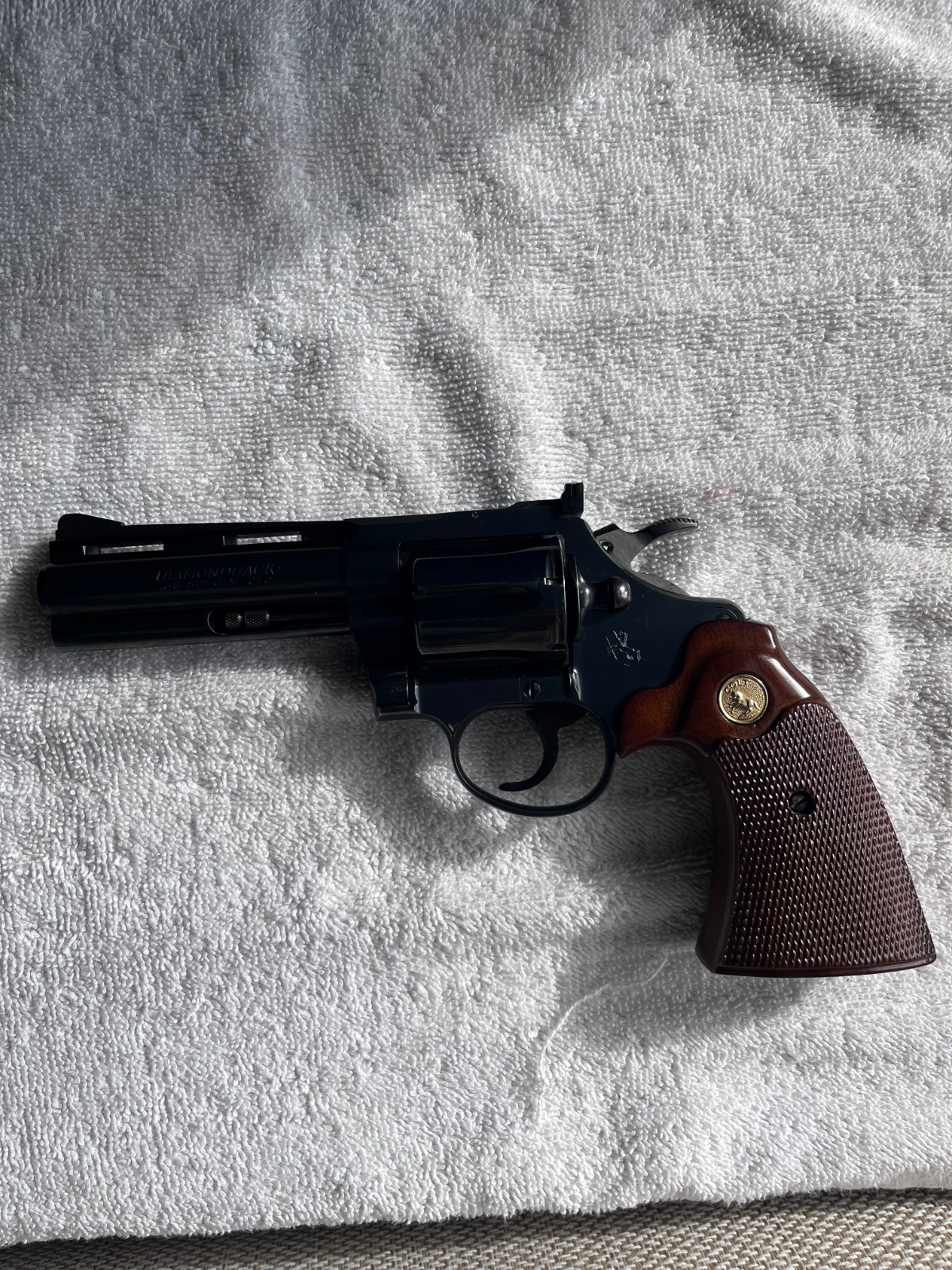
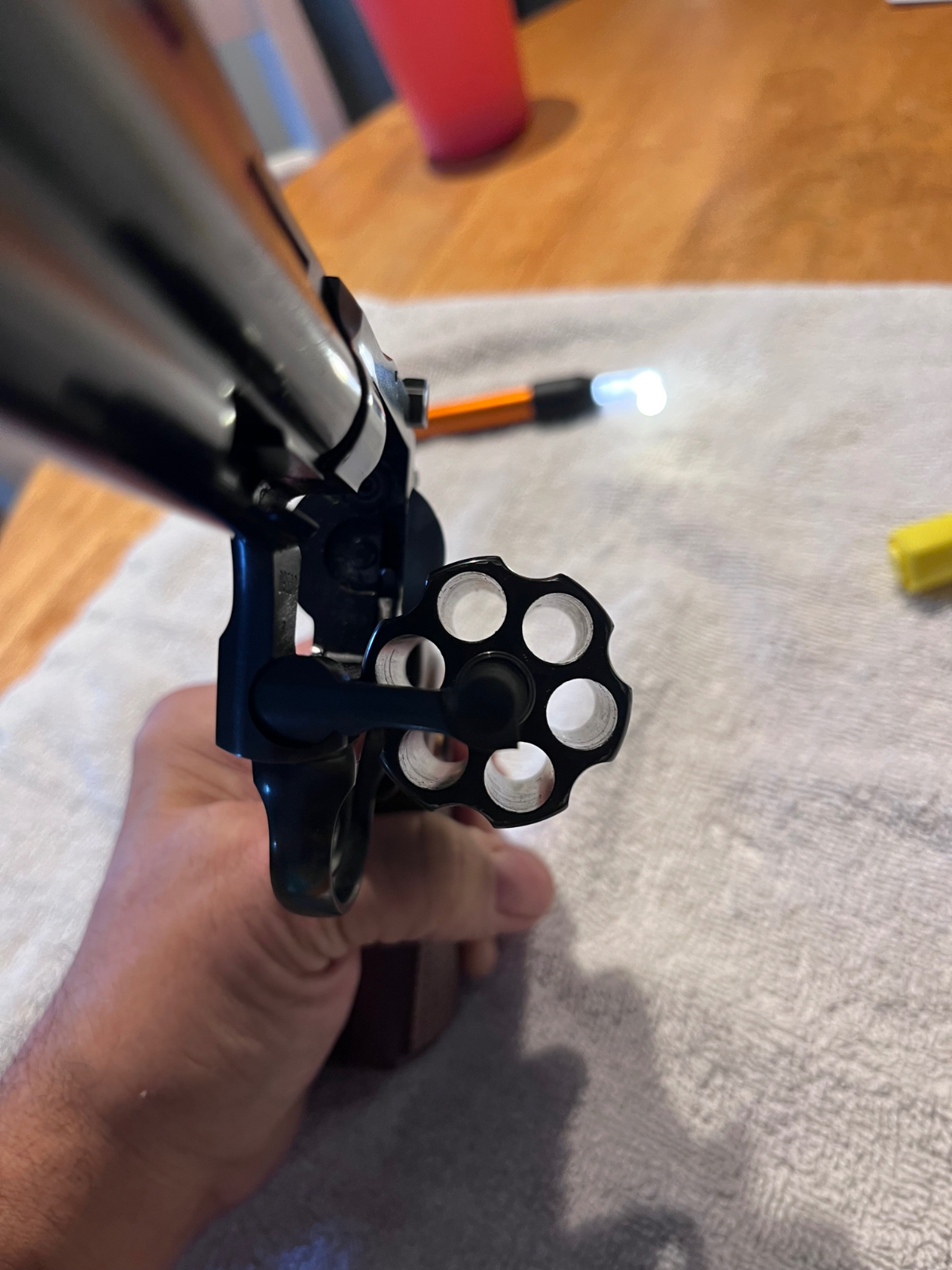
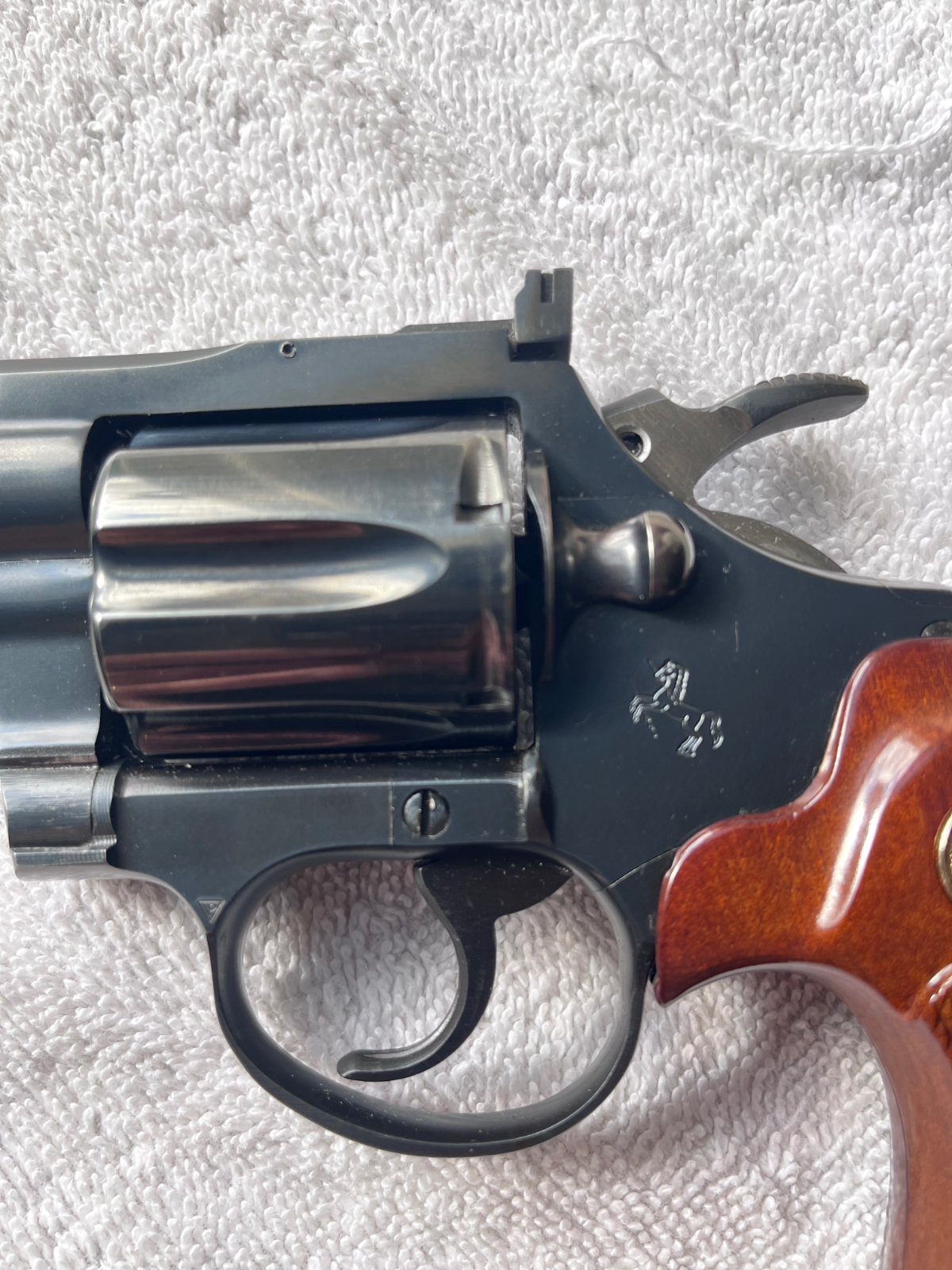
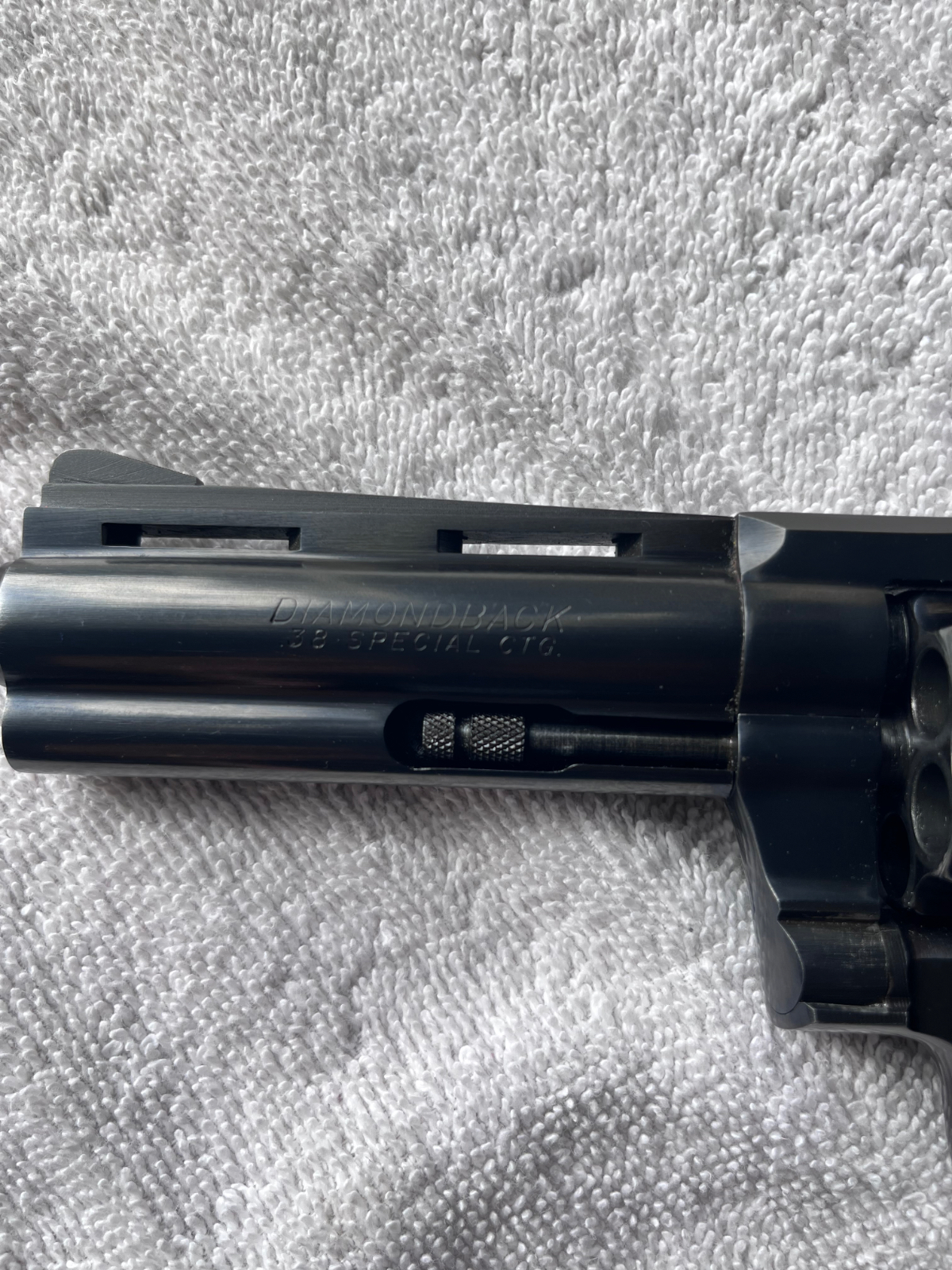
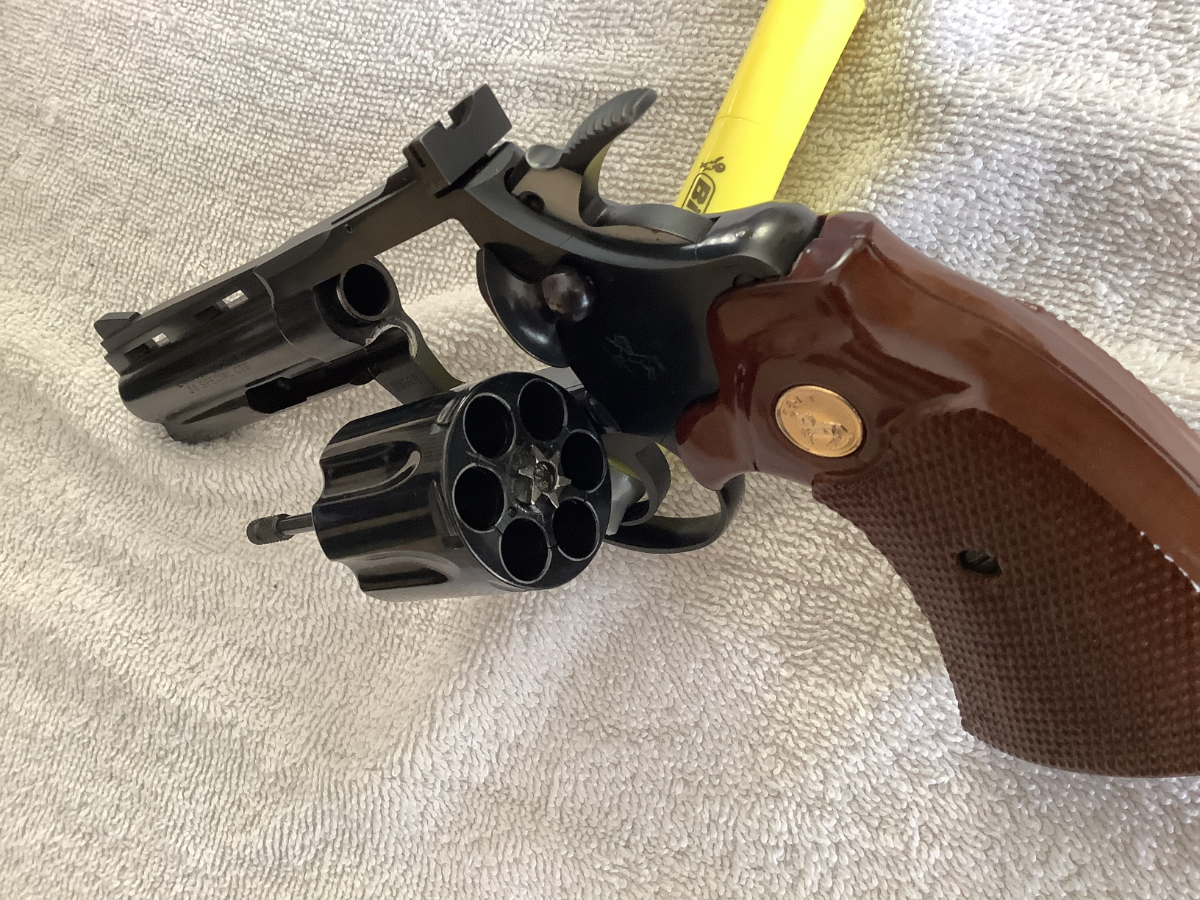
Revolvers are now offered in barrel lengths that include 2″, 2½”, 3″, 3½”, 4″, 4¾”, 4 5/8″, 5″, 5½”, 6″, 6½”, 7½”, 8 3/8″, and 12″. It hasn’t been long since the Colt New Service was offered with individualistic 4½” tubes, and Smith’s longest 357 used to be 8¾” instead of its present 8 3/8″. Until recently Ruger answered Buntline competition with a 10″ barrel on their 357 and 44 Blackhawks, and Colt made a Frontier Scout 22 with a 9″ barrel. Choosing the correct stretch of pipe for your own peculiar uses is a matter that deserves some careful consideration.
Barrel length affects numerous qualities inherent in your handgun: concealability, comfort in carrying, muzzle heaviness or balance, accuracy, and power. The barrel length that will serve you best in one department frequently scores low in another and the best compromise can be reached only by measuring the gun against the actual work to which it will be put.
The 2″ 38 Specials have become the standard for plainclothes detectives, federal agents, and off-duty harness bulls. While it is true that they will fit into a coat pocket better than a 4″ version of the same gun, how many of these officers carry their stingy gun in a pocket? Almost invariably you will find the little snubbie sacked out in some sort of belt or shoulder holster. Thus carried, this shortest of sixguns is no more easily hidden than the same model with a more positive-handling 4″ barrel.
With the longer barrel, the belly gin enjoys a greater sight radius for easier hits, along with a slight increase in knock-down potential. This latter can become pretty vital, depending on the loads you use.
The standard 38 Special police load shoots a 158 gr. bullet at a velocity of around 870 fps. At least this is the figure generally bandied around by the cartridge makers. In practice, this load will develop about 780 fps when fired from a 6″ revolver. The same cartridge fired from a Smith & Wesson or Colt with 2″ barrel, will clock close to 690 fps. As a practical matter, the factory specs of 870 fps are beyond the means of an 8 3/8″ barrel, which registers only a few feet over 800 fps with the standard 38 Special round.
A 4″ barrel will develop, with the standard 38 Special load, something like 750 fps. The total spread between a2″ barrel and an 8 3/8″ barrel is approximately 120 fps. When only the 38 Spl. police service cartridge is considered, this is a relatively unimportant velocity differential.
It should be noted, though, that the velocity loss is not constant as barrels are progressively shortened. A 6″ barrel throws the standard 158 gr. 38 bullet at about 770 fps, only30 fps less than the 8 3/8″, and hardly an argument for the extra 2 3/8″ of iron. But cut two inches off your 4″ 38 Special and you more than double the loss suffered between the longer barrels, the snubbie guns, forfeiting approximately 60-65 fps to their 4″ counterparts.
Velocity loss is perhaps a more important factor in the magnum calibers, which are more often chosen for hunting or law enforcement work. One lot of namebrand 357 stuff was tested in a Smith & Wesson revolver, the barrel being sawed off gradually and clocked at different lengths. Listed by its manufacturer as giving its 158 gr. bullet a muzzle velocity of 1450 fps in an 8 3/8″ barrel, it actually had a chronographed velocity of 1328 fps, 15 feet from the muzzle of the 8 3/8″ test revolver. As the barrel was shortened, the following 15 foot velocities were obtained:
6½” – 1290 fps
6″ – 1270 fps
5″ – 1232 fps
4″ – 1206 fps
3½” – 1185 fps
2″ – 1093 fps
In the same tests, another popular brand of 357 Magnum ammo registered a lowly 928 fps in the 2″ Smith & Wesson, and clocked only 1183 fps at the 8 3/8″ length, although advertised at 1450 fps.
This reflects a significant loss in velocity, which in turn affects both flatness of trajectory and wounding power. The difference of 100 fps or so can become crucial as velocity is lowered to the 1000 fps mark, which is generally accepted as the minimum at which hollowpoint bullets can be made to expand.
All things being equal, a short barrel is essentially as accurate as a long barrel. Put a good gun in a machine rest and start shortening the barrel. Little difference in group sizes can be expected. Unfortunately, none of the shooters I know can hold quite as closely as a machine rest. Within reason, you will find that you are able to hold a long barrel steadier than a short one. The extra weight out in front of the gun helps dampen sideward movement, and the increased sight radius does not allow minute changes in sight picture to be so distractingly apparent. Shooters with weak wrists sometimes find that barrels in excess of 7½” are too much for them, bringing on quick fatigue and shakiness.
Ease of concealment s almost always the factor that leads a handgunner to the choice of one of the 2″ snubbies. Yet when they are carried under a coat in either a belt holster or shoulder rig, these midgets can be as easily spotted as a longer revolver simply because they have the same thickness and cause just as much bulge as the more efficient gun.
I often carry my gun without any holster at all, simply jamming into my waistband under a snug belt. The 2″ 38 Special is the least secure when packed in this fashion. If it shifts even an inch upward from the belt, its barrel is too short to bear against the wearer’s body and hold the gun in place, leaving it in real danger of toppling over the edge of the belt.
A long barreled gun may be carried inside the pants with much more aplomb. I have frequently carried 7½” Colt single actions in the right front of my waist, the barrel passing diagonally across my lower abdomen. When I sit down, the front of my left thigh pushes the gun barrel up and the butt down, causing no discomfort at all. The butt of the sixgun rides flat against the belly and Can’t be seen under a buttoned jacket. During strenuous activity, the loading gate of the single action is flipped open to prevent the gun’s sliding down the inside of a pants leg.
Another good way of carrying a longer revolver under a coat is in a crossdraw holster. Considered slow and old fashioned by many jet-agers who haven’t bothered to try it, the crossdraw is the fastest carry yet devised for a seated person to draw and shoot from. For the right-handed officer driving a car, it keeps the sixgun on the far side of his body from prisoners, and carries a large gun with less tell-tale bulge than a conventional hip holster when it is slipped forward of the hipbone.
Long barreled revolvers, however more efficient they may be, are a nuisance when they must be carried continually in a car. The average cop who wears a Sam Browne belt finds that a revolver longer than 4″ – 5″ pokes the car seat with its muzzle, forcing the gunbelt upward in the direction of his armpits. Some officers, whose own choice or that of their superiors is to pack a 6″ gun, solve their problems with a swivel holster. This permits them to lay the gun muzzle forward on the seat, but is a dubious compromise since it also puts the gun butt in an almost inaccessible position.
The horseman and the hiker need not be concerned much with barrel length insofar as it affects their comfort. The mounted man’s holster hangs easily down against his saddle skirts, getting in the way of nothing he may want to do while on horseback. Afoot the long barrel can hamper movement only if the holster is slung so low that it slaps against the knee or lower leg.
If I had to choose one barrel length for all my sixgun work, it would probably be 5″, a length not often seen today. Ruger’s 4 5/8″ and Colt’s 4 3/4″ and 5½” single actions are close to this compromise, and Smith & Wesson still offers their M27 357 and M10 38 Special with 5″ barrels. Users of such revolvers as the Colt Python or Mark III Trooper, or the M19 S&W Combat Magnum must chose between 4″ and 6″ lengths to approach this intermediate barrel size – I could live with either if necessary.
Your politics are your own business, but when you’re selecting a sixgun stay away from extremist barrel lengths. You’ll be better armed and better satisfied. Me, I’m a conservative.