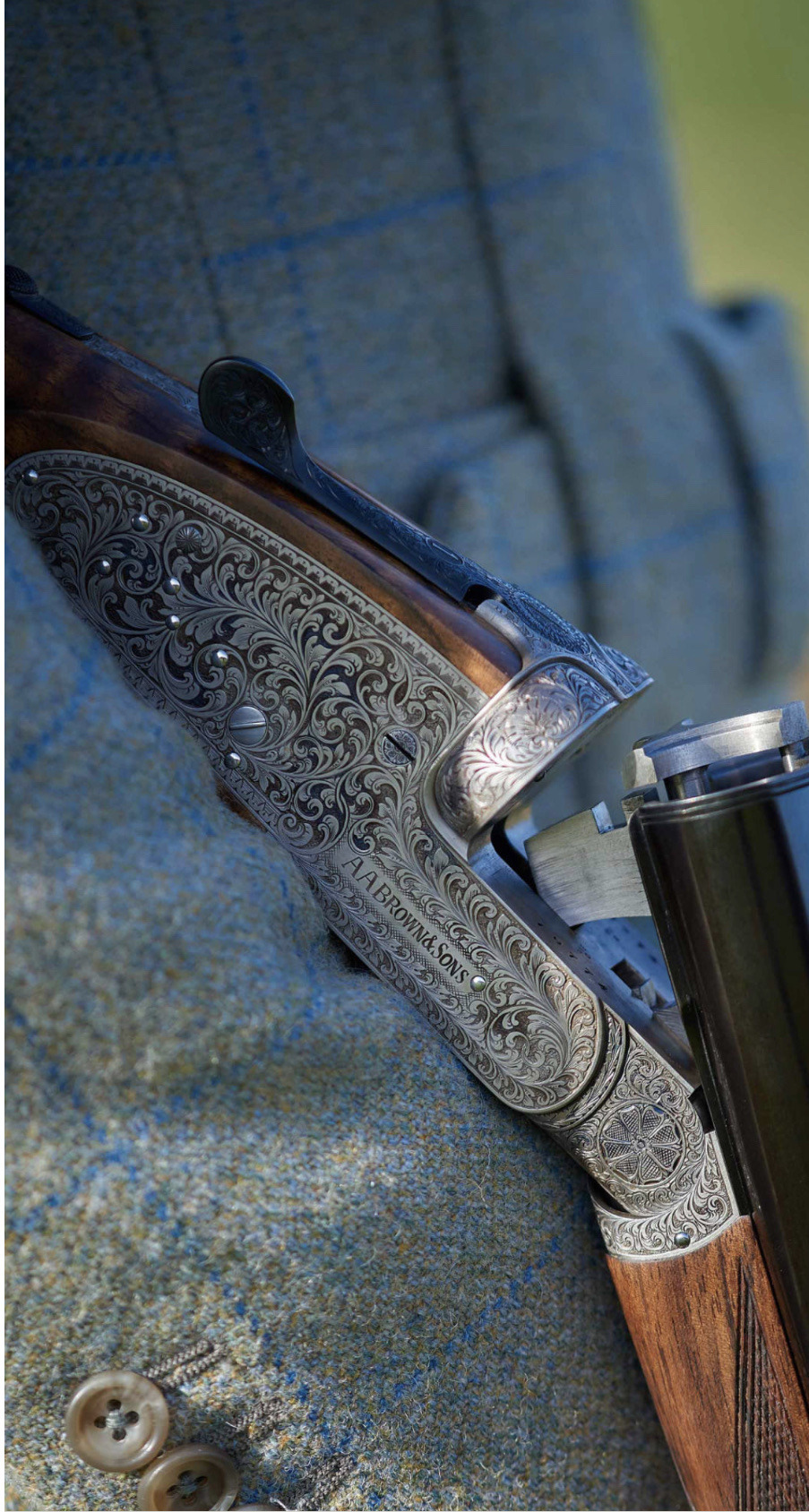


If you think the double action revolver is obsolete for self-defense purposes, you’ve spent too much time listening to the wrong sources. Trainers who do the courses to certify people for concealed carry permits tell me the short-barrel revolver is among the most popular guns with their students, and in some classes, the most popular. From NYPD to Chicago PD to LAPD, the “snub-nose .38” is still the most common backup gun among uniformed cops, and one of the most popular styles as a primary weapon for off-duty carry.
Over the years the Taurus Model 85 series of 2″, five-shot wheel guns has been consistently its best seller. Smith & Wesson is famous for its multiple styles of successful semiautomatics, and literally introduced the big Magnum type revolver, but still one of their best-selling lines is the J-frame: a small, five shot revolver generally produced with a barrel measuring 1 3/8″.
Variety
You can get small frame “snubbies” in a wide variety of calibers, though .38 Special is the traditional choice with .357 Magnum rising in popularity. You can also get them in a lot of brands. I knew a security professional in New York whose Charter Arms Undercover .38 saved his life when a psycho killer got his service weapon away from him. One friend of mine owes his life to a 2″ Colt Detective Special, with which he outdrew and instantly killed an armed robber who started the encounter by pointing a gun at his head. I debriefed two brothers in Virginia who killed a pair of vicious professional armed robbers who were holding up their jewelry store: the brothers returned a withering hail of fire with multiple Rossi fiveshot .38 snubs until one of them could unlimber a 12 gauge to finish off the last of these dangerous felons. A California Highway Patrolman of my acquaintance killed a man who had already wounded him and was reaching for the Patrolman’s dropped duty handgun when a Smith & Wesson 2″ Model 36 came into the CHP man’s hand, fatally ending the fight with five hits for five shots.
I guess what I’m saying is, the brand of snubby you carry may be less important than its configuration. There have been cases where the shape of the gun caused problems, such as snagging on a coat lining or a pocket lining when its legitimate user desperately needed to quickly clear it to save his life. You want to have a gun that is built and shaped for your particular needs.
The Four Formats
Unlike larger service, target, and hunting revolvers, double action small frame models can be had in four different configurations. Not every maker produces all four, but most have produced at least two and two do offer all four choices.
Those choices are: (1) Conventional, with spurred hammer, it can be thumbcocked for a light, short, single-action trigger pull. (2) Spurless hammer, in which the hammer is exposed but has no extension for the thumb to grasp for cocking. These may or may not be truly double action only in terms of internal mechanism, depending on the manufacturer and even the given production run. (3) Shrouded hammer, in which only the very tip of a hammer spur is exposed to the thumb for single action cocking, with the rest of that part shielded in a manner that renders it snag-free when the gun is drawn. (4) “Hammerless” designs, so called because even though there actually is a true hammer in the mechanism, it is completely enclosed inside the gun’s frame and not accessible to the hand
when shooting. The “hammerless” is a true “double action only” design.
Here, conventional hammer spur (on Ruger SP101 .327 Magnum) is easiest and
safest of all. Thumb on hammer spur allows trigger finger to be safely clear of guard.
Author has found no safe way to rotation check a “hammerless.” Note that
cylinder-turning hand is ALWAYS well behind the muzzle, muzzle ALWAYS in a safe direction.
Hammer Spur Style
This is your conventional double action revolver style as generally encountered with larger guns of the type. The hammer has an extruded strut called a “spur.” It is designed for the shooter’s thumb to “ear it back” for a careful, single-action precision shot. The cocked revolver will have a much shorter and lighter trigger pull than when fired double action, which requires a longer, heavier pull that rotates the cylinder and raises the hammer before dropping it to fire the next cartridge in line. In single action, the cylinder-turning and hammer-raising labor is done by the thumb, leaving much lighter work for the trigger finger.
With a light trigger pull, the good news is, “It’s easy to shoot,” and the bad news is … It’s easy to shoot.” Cocked revolvers led to so many accidental and/or negligent discharges over the years that a huge number of police departments had theirs altered to double action only. LAPD was the first of these, followed by New York City, Miami PD, and even Montreal. When this hit the radar screen of anti-cop lawyers, there arose a new and underhanded tactic: claiming that the shooter had cocked the gun and accidentally fired it even when they had in fact deliberately fired in double action. The reason was simple: in court, the most outrageous BS argument can be dignified as “plaintiff’s theory of the case” and given weight and credence, and it is established at law that while there can certainly be justifiable deliberate shootings in defense of self or others, there is no such defense as “justifiable accident.”
Some people who have not yet mastered double action shooting feel it’s imperative to have single-action cocking capability if they need a precisely accurate shot. As a rule, precisely accurate shots demand a different tool than a small-frame, short barrel revolver with short sight radius, but hey – I don’t make other folks’ decisions for them.
Retention Issues
The hammer spur has its uses apart from cocking the gun. Most thumb-snap holsters secure on the hammer spur, and if it is cut away,
the holster will no longer securely hold the gun. We old-time revolver shooters also like to perform “cylinder rotation checks” when we “load for serious purposes.” This means the hammer or trigger has to be drawn back just enough to lower the bolt stop, allowing the cylinder to turn freely and assure the user that there are no high primers that will lock up the gun he or she may need to fire tonight to save their life. Retracting the hammer slightly is the easiest and safest way to do it.
I own a number of revolvers that have been rendered double action only internally and which cannot be thumb-cocked, but still have the hammer spur so they’ll secure on holster safety straps and allow a perfectly safe cylinder rotation check.
Long before the cocked, lighttrigger revolver was recognized as having civil liability potential, street-wise cops and armed citizens had realized when drawn from concealment, the hammer spur could catch on fabric and stall their draw, perhaps fatally. One of the great police gunfighting authorities of the mid-Twentieth Century, Inspector Paul B. Weston of the NYPD, was perhaps the
first to point out a conventional revolver’s hammer spur was shaped remarkably like a fish-hook. Though it could snag on a coat lining, it was more likely to catch on a pocket lining. For about a century and a half, coat and pants pockets have been among the natural homes of compact defense revolvers.
Back in the Old West, the deadly gunfighter John Wesley Hardin was captured on a train by plainclothes cops. He tried to draw his Colt, but legend says the hammer spur caught on the watch chain on his vest and stalled his draw, allowing the officers to disarm him and capture him without losing any of their own. That time, it worked in favor of the good guys but, historically, good guys have realized the same mistakes could happen to them. This is why spur-hammer revolvers have fallen out of favor with those professionals on the side of law and order, at least for concealed carry needs and particularly for pocket carry.
Owning a conventional spurhammer revolver doesn’t mean you’re doomed to die from a stalled draw. When pulling one of these from a pocket, you simply put your thumb on the tip of the hammer spur. This doesn’t mean you’re going to cock the gun as soon as it clears, it means your thumb will act as a “human hammer shroud” to keep the spur from snagging. One of Inspector Weston’s contemporaries, the brilliant holster designer and fast draw champion Chic Gaylord, recognized and recommended this technique back in the 1950s.
Cylinder rotation check is trickier with exposed, spurless hammer, such as Cylinder & Slide
Custom Colt Detective Special shown here. Trigger finger must bring trigger back as shown,
dangerous on a loaded revolver, but at least thumb on flat of bobbed hammer can prevent
it from coming back enough to fire.
Spurless Hammer
With the snag-free draw in mind, some manufacturers began producing double action revolvers with spurless hammers a century or more ago. These days, several companies produce spurless wheelguns: Smith & Wesson (special production runs), Ruger (a regular option in their catalog for their compact SP101), and Taurus with their popular CH line. Charter Arms in its current Charco incarnation likewise offers this option. Even Colt offered such a variation in the last days of their late, great small frame revolver line. I may have missed one or more makers — it’s a popular feature. Countless professionals have “bobbed” conventional hammers by removing the spur.
As noted above, a holster designed with a safety strap that secures on the hammer of a conventional style revolver probably won’t hold it securely once the spur is no longer there. If you want a secure holster for such a snubby, one of the best is the SERPA from Blackhawk !’s CQC line, which secures on the trigger guard internally and is released by a discreet paddle button on the outside of the holster. This holster also works wonderfully with the shrouded hammer and internal hammer style revolvers we’ll discuss momentarily.
Too Fast?
In the old days, people who just practiced quick draw and shooting figured it would be a good idea to leave the single-action capability in place internally, and perhaps checker or groove the top edge of the “stump” of the hammer to allow cocking. This entailed pulling the trigger back “slightly” to raise the hammer enough for the thumb to get a good grasp.
Two real world elements were missing from this theory. One is that under stress, damn few people can pull a defense gun’s trigger “lightly.” This practice literally sets the stage for an unintended discharge. Second, the theory overlooked the fact that we often draw without having to fire, and uncocking the revolver without a hammer spur is literally a prescription for disaster. I strongly recommend spurless hammer revolvers be double action only (the way most manufacturers produce them today) to prevent these potential catastrophes.
One final advantage of this format is with neither hammer spur nor “frame hump,” one potential “bulge point” is somewhat reduced.
If you simply must have the “lowest profile possible” in your small-frame concealment revolver, the spurless hammer style may be what you want.
Cylinder rotation checks are tricky with spurless hammers. The thumb must press firmly down on the hammer as the trigger is brought back just enough to free up the cylinder. If doing this with a loaded revolver gives you the creeps, don’t feel bad; that makes two of us.
Shrouded Hammer Style
In the mid-20th Century, Colt came up with a bolt-on device to shroud the hammer of their small frame pocket revolvers, such as the Detective Special and the Cobra. They called it, appropriately enough, a “hammer shroud.” It could be installed at the factory, or retrofitted by a gunsmith or even a mechanically skilled end user, by drilling and tapping three holes in the frame, two on either side of the frame below the rear sight, and one at the upper rear of the grip-frame’s backstrap. Leaving only the very tip of the hammer exposed, it allowed single action thumb-cocking, but effectively prevented hammer snag.
S&W saw its popularity, and countered in 1955 with the introduction of their Bodyguard series of small-frame .38s, with a built-in hammer shroud that was much sleeker than the Colt design, and used a differently shaped hammer presented a “cocking button” to the thumb. The downside was hammer shrouds, bolt-on or integral, literally collected “dust bunnies.” The modular Colt was easier to clean, and Bodyguard users who were wise learned to run a Q-Tip™ or a pipe cleaner in there regularly. The shroud of either brand could even pick up coins from the pocket the gun was carried in, though the hammer’s movement would usually just throw the coin
clear when the trigger was pulled.
While this design allows single action cocking, it brings with it all the legal baggage conventional double/single action design carries in that regard. Since only a tiny bit of hammer or “cocking button” was available to the thumb, it didn’t give much assurance of holding the hammer down when the revolver was holstered, if something got in the way of the trigger en route. One advantage over conventional styles was the shroud would catch the web of the hand if the grip turned upward in rapid fire, minimizing the gun shifting in the shooter’s grasp during rapid fire, and of course, there was no hammer spur to catch on the web of the hand and prevent the next shot if the gun did twist upward too much in the hand upon recoil. The Colt and its hammer shroud (which also fit many models of the Charter Arms revolver) are no longer available, but the S&W Bodyguard has remained in continuous production for more than half a century.
Hammerless Style
Circa 1887, Smith & Wesson introduced the New Departure Safety Hammerless, a top-break revolver with a long, heavy double action trigger pull; a grip safety which became known as the “lemonsqueezer,” and, most enduringly, an internal hammer completely shielded within and inaccessible to the user’s hand. The intent was to create a handgun a child couldn’t fire, and the double action only/ completely enclosed hammer design was to prevent the little ones from cocking the hammer and creating a trigger pull light enough for them to actuate. However, what really sold the gun was its totally snagfree profile.
By WWII, this old top-break relic was history. Not for long though, OSS trainer Rex Applegate got into a shooting in Mexico after the War that changed things. He was carrying a Safety Hammerless chambered for the feeble .38 S&W cartridge because the little snag-free gun was easy to draw quickly in a tropical climate, and when he was attacked by a local with a machete he emptied the gun into him before the attacker went down. He suggested to his friend Carl Hellstrom, then CEO of S&W, the hammerless design should be
adapted to the little J-frame Smith & Wesson had come out with in 1950 for the conventional spurhammer Chiefs Special revolver. Thus, in 1952, the centennial year of a company founded in 1852, was the Smith & Wesson Centennial born.
It was before its time. Why buy a snag-free little revolver capable of shooting only one way when for the same price you could get a
snag-free little S&W in the same caliber that shot both ways? That was the conventional wisdom that killed the Centennial in 1974,
while the Bodyguard still sold well enough to stay in the S&W catalog without interruption. Almost immediately, however, a cult
following developed around the Centennial, and gunwriter Wiley Clapp led the public charge to get the “hammerless” Centennial reintroduced in 1990. In its various shapes, weights, and calibers, it has been the single best-selling S&W handgun ever since.
Lemon Squeezer
The “lemon squeezer” grip safety was gone (though it would reappear on the “retro” Classic series Model 40-1 of 2007). The Centennial sells in today’s environment because (A) it’s as snag free as you get (B) it can’t be cocked, exposing you to either “hair trigger accidental discharges” or false accusations of same, and (C) because the rear of the grip-frame rises higher than any other small frame revolver, the barrel sits on a lower axis to the wrist and forearm, giving the shooter palpably more recoil control in rapid fire.
The downside is you have to pull the trigger of a loaded gun to do a cylinder rotation check on a “hammerless.” I for one don’t do it. I load the gun, check by fingertip feel on the back of the cartridges for high primers, and close the cylinder. I trust the manufacturing skill of Smith & Wesson (and of Taurus, which makes a similar model called the CIA, which stands for “Carry It = Anywhere”) more than I trust any human hand including my own under pressure.
Choices Aplenty
Each of us makes our choice according to both our needs and our abilities. In my case, for example, I need a reliable pocket-size revolver. I’ve paid through training, practice, and competition for the ability to shoot it as well double action as I can single action. Therefore, for my personal needs, double action only is my choice. It’s generally one or another S&W Centennial for the
pocket gun, and when working for the police department, the .357 Magnum spurless hammer Ruger SP101 I was issued for backup purposes.
Your needs may differ. In a world where the small-frame, short barrel, double action revolver has proven itself valid for so very many decades, only the individual user can determine exactly which of the four primary formats will fit his or her specific mix of purpose and capability. And don’t forget you have to practice, practice and practice some more.
History’s Guns: The Steyr AUG

“A California appeals court [Fourth Appellate District, Division One Court of Appeal of California] ruled Friday that the state may continue sharing the personal information of gun owners with ‘gun violence’ researchers,” The Western Journal reports. “California’s Department of Justice had been permitted to share ‘identifying information of more than 4 million gun owners’ collected by the state during the background check process for firearms purchases with ‘qualified research institutions,’ ostensibly to aid in the study of gun-related accidents, suicides and violence.”
The “personal information” includes “names, addresses, phone numbers, and any criminal records, among other things.” What “other things”?
Per the bill that “authorized” this massive privacy intrusion against citizens for claiming their rights (Assembly Bill No. 173), those include “a database of gun violence restraining orders, and a database of firearm precursor parts purchases.” In other words, that will include people who have never been charged with or tried for a crime, let alone convicted, and will identify people who bought parts that may later be declared verboten.
And more, but you have to go to the court opinion to see how much:
“The DROS [Dealer Record of Sale] system and the associated AFS [Automated Firearms System] and APRF [Ammunition Purchase Records File] databases create a unique data set regarding gun and ammunition ownership not available anywhere else. Researchers in California have used this data to conduct empirical research regarding firearm-related violence for some time.”
“The court’s decision is a victory in our ongoing efforts to prevent gun violence,” Attorney General Rob Bonta Bonta crowed in a media release. “AB 173’s information-sharing serves the important goal of enabling research that supports informed policymaking aimed at reducing and preventing firearm violence. Research and data are vital in our efforts to prevent gun violence in California and provide a clear path to help us save lives.”
Left unsaid is how Bonta’s DOJ incompetently keeping databases on gun owners has already demonstrably exposed and endangered them.
“California’s Department of Justice mistakenly posted the names, addresses and birthdays of nearly 200,000 gun owners on the internet because officials didn’t follow policies or understand how to operate their website,” the Associated Press reported last December. California Rifle and Pistol Association President Chuck Michel “noted the leaked data likely included information from people in sensitive positions — including judges, law enforcement personnel and domestic violence victims — who had sought gun permits.”
As for who the “researcher” is privy to the data, per AB 173:
“This bill would name the center for research into firearm-related violence the California Firearm Violence Research Center at UC Davis. The bill would generally require that the information above be made available to the center and researchers affiliated with the center, and, at the department’s discretion, to any other nonprofit bona fide research institution accredited by the United States Department of Education or the Council for Higher Education Accreditation, as specified, for the study of the prevention of violence.”
That pretty much guarantees whose yard they’ll be playing in, and that suits someone who is no stranger to this correspondent just fine.
“The court’s decision is an important victory for science,” University of California’s Davis California Firearm Violence Research Center Chair Garen Wintemute declared. It’s more like an “important victory” for “agenda science”…
Back in 2007, I warned gun show attendees that Wintemute was surreptitiously eavesdropping on and recording gun show transactions to report them to authorities and justify banning private sales. I saw this as a violation of gun show rules and recommended notifying security if anyone saw it happen. He told Slate it was a “Wanted poster” and tied that in with threats against his life and that “federal law enforcement agents recommended that I wear a ballistic vest.” There was also the false accusation that I had “outed” him. The end result was the science journal Nature felt compelled to publish a (incomplete) retraction.
Call the guy a “researcher” and a scientist” if you like. I prefer “prohibitionist” and “apparatchik.” And drama queen.
Reason warned against AB 173 back when Gov. Gavin Newsom first signed it into “law.”
While acknowledging that “the law also insists that ‘Material identifying individuals shall only be provided for research or statistical activities and shall not be transferred, revealed, or used for purposes other than research or statistical activities, and reports or publications derived therefrom shall not identify specific individuals,’” they made another important observation:
“[A] gun owner might understandably not be thrilled that people in the business of coming up with reasons why no one should be allowed to own guns (largely true of people in the ‘gun violence research’ field) can easily know their name, address, and all the weapons, parts, and ammo they bought legally. What’s more, nothing in the law as written applies any stern level of oversight or punishment over misuse of the information.”
That “misuse” can be deliberate by activists gone wild or due to lax/incompetent security protocols. And it’s not like sensitive and supposedly secure government systems at the highest levels can’t be breached and hacked by anyone, from cyber criminals to foreign enemies. It’s not like names, addresses, and lists don’t have real-world street value, and it would be just like the prohibitionists to have their efforts actually increase violence and its incentives.
It also looks like it might be a good way for someone with list access and an agenda to call in an anonymous tip and give police “probable cause” for sending out militarized confiscation teams. It’s not like law enforcement won’t do so with information targeting owners of previously registered but now prohibited items.
A truism about “gun control” laws is that criminals don’t obey them, and they end up infringing on those who have. A case in point is 1968’s Haynes v. U.S., in which the Supreme Court (correctly, if you think about it) decided that forcing a convicted felon to register an NFA weapons he was prohibited by law from possessing violated his Fifth Amendment-recognized right against self-incrimination. So, oath-breaker Bonta’s vaunted database, relied on by the Davis gun show mole and his gaggle of anti-gun eggheads, by design, does not include the very reprobates initiating the lion’s share of the “gun violence” they’re purporting to “study”—California’s armed-to-the-teeth criminals who get their guns the old-fashioned way, by breaking the law.
It’s all Kabuki theater designed to divvy up the tax plunder and subject a population they hold in contempt (and, truth be known, fear) – gun owners – to more demoralizing in-your-face harassment.
There’s another break afforded exclusively to criminal suspects, the reading of their “Miranda rights.” Noting another well-documented prohibitionist tactic, declaring what was once legal to now be banned, gun owners buying what could be prohibited later should be advised that whatever they admit to on a required registration form can and will be used against them in a court of law if the Democrats get their way.
New Mexico Chili
“Recently, I was honored to be selected as a judge at a chili cook-off. The original person called in sick at the last moment and I happened to be standing there at the judge’s table, asking for directions to the Coors Light truck, when the call came in… I was assured by the other two judges (Native New Mexicans) that the chili wouldn’t be all that spicy; and, besides, they told me I could have free beer during the tasting, so I accepted and became Judge 3.”
Here are the scorecard notes from the event:
CHILI # 1 – MIKE’S MANIAC MONSTER CHILI
Judge # 1 — A little too heavy on the tomato. Amusing kick.
Judge # 2 — Nice, smooth tomato flavor. Very mild.
Judge # 3 (Frank) — Holy crap, what the hell is this stuff? You could remove dried paint from your driveway. Took me two beers to put the flames out. I hope that’s the worst one. These New Mexicans are crazy.
CHILI # 2 – EL RANCHO’S AFTERBURNER CHILI
Judge # 1 — Smoky, with a hint of pork. Slight jalapeno tang.
Judge # 2 — Exciting BBQ flavor, needs more peppers to be taken seriously.
Judge # 3 — Keep this out of the reach of children. I’m not sure what I’m supposed to taste besides pain. I had to wave off two people who wanted to give me the Heimlich maneuver. They had to rush in more beer when they saw the look on my face.
CHILI # 3 – ALFREDO’S FAMOUS BURN DOWN THE BARN CHILI
Judge # 1 — Excellent firehouse chili. Great kick.
Judge # 2 — A bit salty, good use of peppers.
Judge # 3 — Call the EPA. I’ve located a uranium spill. My nose feels like I have been snorting Drano. Everyone knows the routine by now. Get me more beer before I ignite. Barmaid pounded me on the back, now my backbone is in the front part of my chest. I’m getting red-faced from all of the beer.
CHILI # 4=2 0- BUBBA’S BLACK MAGIC
Judge # 1 — Black bean chili with almost no spice. Disappointing.
Judge # 2 — Hint of lime in the black beans. Good side dish for fish or other mild foods, not much of a chili.
Judge # 3 — I felt something scraping across my tongue, but was unable to taste it. Is it possible to burn out taste buds? Sally, the beer maid, was standing behind me with fresh refills. This 300 lb. Woman is starting to look HOT… just like this nuclear waste I’m eating! Is chili an aphrodisiac?
CHILI # 5 – LISA’S LEGAL LIP REMOVER
Judge # 1 — Meaty, strong chili. Jalapeno peppers freshly ground, adding considerable kick. Very impressive.
Judge # 2 — Chili using shredded beef, could use more tomato. Must admit the jalapeno peppers make a strong statement.
Judge # 3 — My ears are ringing, sweat is pouring off my forehead and I can no longer focus my eyes. I farted, and four people behind me needed paramedics. The contestant seemed offended when I told her that her chili had given me brain damage. Sally saved my tongue from bleeding by pouring beer directly on it from the pitcher. I wonder if I’m burning my lips off. It really ticks me off that the other judges asked me to stop screaming.
CHILI # 6 – VARGA’S VERY VEGETARIAN VARIETY
Judge # 1 — Thin yet bold vegetarian variety chili. Good balance of spices and peppers.
Judge # 2 — The best yet. Aggressive use of peppers, onions, garlic. Superb.
Judge # 3 — My intestines are now a straight pipe filled with gaseous, sulfuric flames. I crapped on myself when I farted, and I’m worried it will eat through the chair. No one seems inclined to stand behind me except that Sally. Can’t feel my lips anymore. I need to wipe my butt with a snow cone.
CHILI # 7 – SUSAN’S SCREAMING SENSATION CHILI
Judge # 1 — A mediocre chili with too much reliance on canned peppers.
Judge # 2 — Ho hum, tastes as if the chef literally threw in a can of chili peppers at the last moment (**I should take note that I am worried about Judge # 3. He appears to be in a bit of distress as he is cursing uncontrollably.)
Judge # 3 — You could put a grenade in my mouth, pull the pin, and I wouldn’t feel a thing. I’ve lost sight in one eye, and the world sounds like it is made of rushing water. My shirt is covered with chili, which slid unnoticed out of my mouth. My pants are full of lava to match my shirt. At least during the autopsy, they’ll know what killed me. I’ve decided to stop breathing. It’s too painful. I’m not getting any oxygen anyway. If I need air, I’ll just suck it in through the 4-inch hole in my stomach.
CHILI # 8 – BIG TOM’S TOENAIL CURLING CHILI
Judge # 1 — The perfect ending, this is a nice blend chili. Not too bold but spicy enough to declare its existence.
Judge # 2 — This final entry is a good, balanced chili. Neither mild nor hot. Sorry to see that most of it was lost when Judge # 3 farted, passed out, fell over and pulled the chili pot down on top of himself. Not sure if he’s going to make it. Poor fella, wonder how he’d have reacted to really hot chili?
Judge # 3 — No report.

For some reason, I’m really lusting after chili now. I think I’ll make me some.


