
The National Rifle Association has gone through a period of tremendous upheaval after the courts
found former NRA officials guilty of financial mismanagement. Now, the legal troubles continue as
the NRA is taking on it’s own fundraising arm in court.
For years, NRA members were told everything was hunky-dory, and most of us believed it.
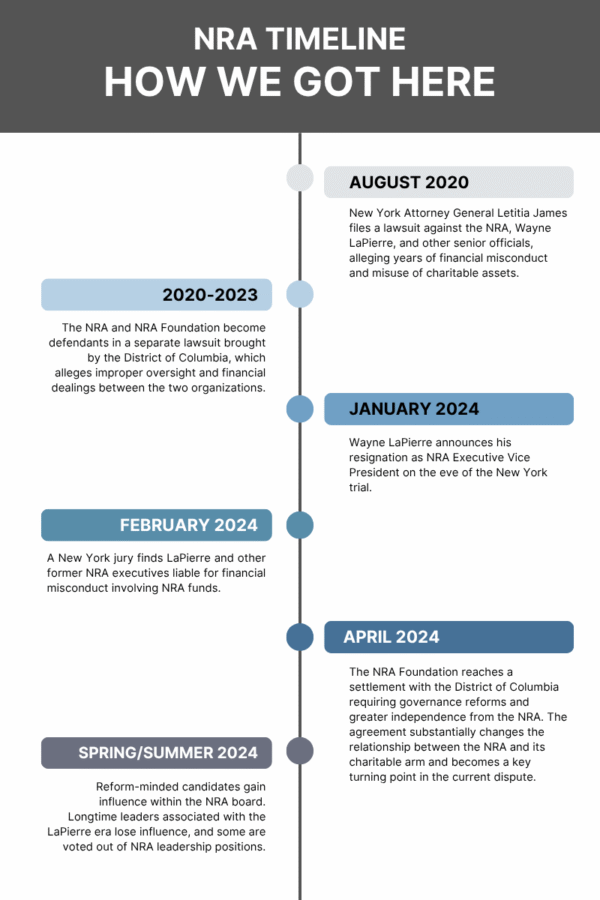
Then came the fight between Oliver North and Wayne LaPierre, the “AckMack” troubles and finally the lawsuit brought by New York Attorney General Letitia James. The allegations were explosive, but they are no longer just allegations after a jury weighed the evidence — Wayne LaPierre and other senior NRA officials were found liable for misconduct involving the organization’s finances.
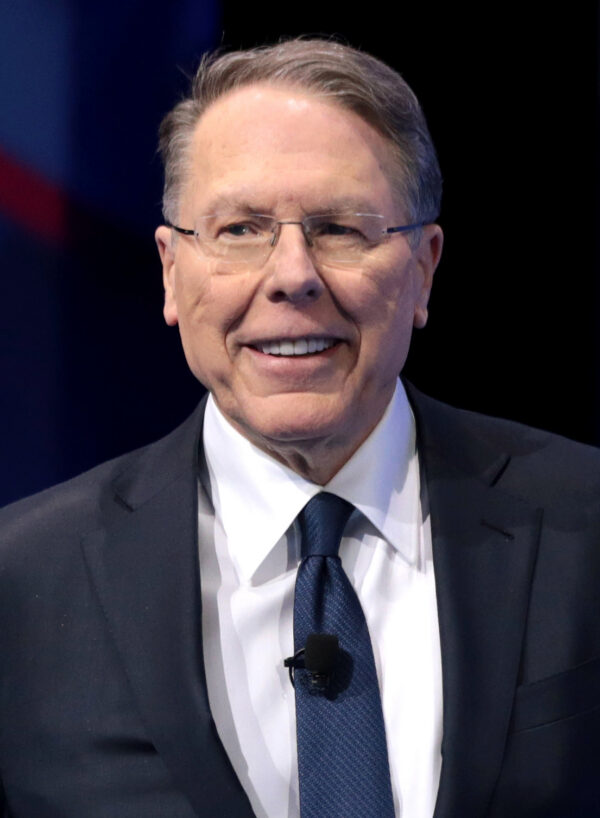
Wayne LaPierre, former NRA CEO was ordered to pay back four million dollars to the NRA
and cannot serve as an NRA officer or director for 10 Years.
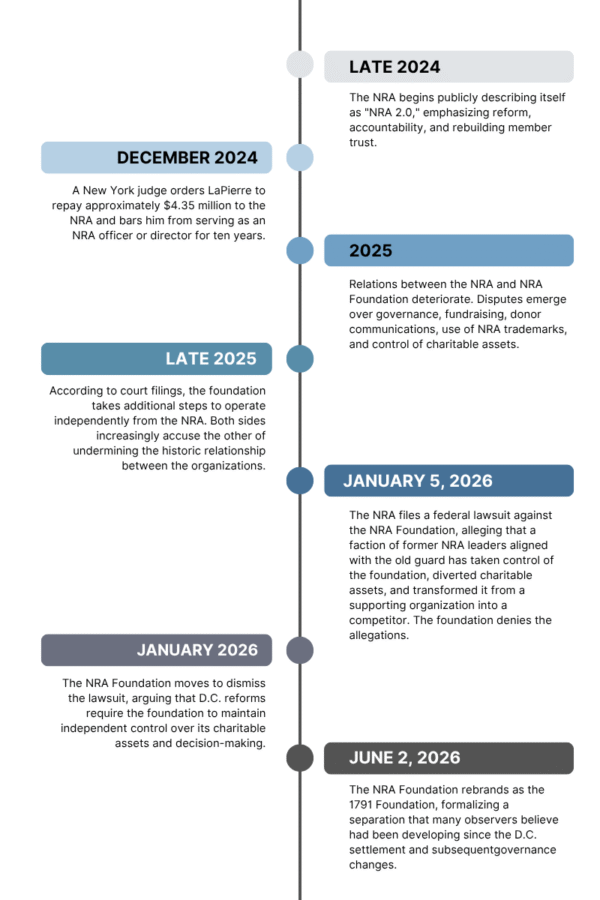
LaPierre was ordered to repay more than $4 million to the NRA and was later barred from serving as an NRA officer or director for 10 years. Recent appeals have upheld those penalties. Of course, the damage went far beyond the courtroom.
Troubles Ending?
The NRA spent years and tens of millions of dollars fighting legal battles while membership, revenue and most importantly, political influence, declined. Thankfully, reform-minded members eventually won key board elections and sought to move the organization beyond the LaPierre era. Many members assumed that was the end of the story.
It wasn’t.
Today, a new controversy is unfolding between the NRA and what was formerly known as the NRA Foundation.
The NRA filed suit against the foundation to prevent it from using the name or likeness of the NRA. On June 2, 2026, the NRA Foundation announced it would rebrand as the 1791 Foundation. Foundation President Tom King stated that the organization’s mission remains unchanged and the rebranding is intended to strengthen its ability to support firearms education, youth programs, law enforcement training, and other charitable initiatives. Critics, however, note that the ongoing dispute centers not only on the foundation’s charitable mission but also on its historic role as a supporting organization for the NRA. Whether the rebranding represents a change in identity, a change in mission, or simply a change in name is likely to remain a central point of disagreement.
Specifically, the NRA’s complaint asserts that foundation officials “sought to sever the relationship between the NRA and the Foundation by attempting to strip the NRA of its right to appoint the Foundation’s directors and seizing that power for themselves.” The foundation rejects those allegations and argues it is acting independently and in accordance with its charitable responsibilities. The dispute is now being fought in court. As many of the parties involved are famously litigious, I’ll refrain from asking more pointed questions until more facts are known.
Friends of NRA
Part of the confusion stems from the fact that many gun owners have long viewed the NRA and NRA Foundation as essentially the same organization. They are not. The NRA is the membership and advocacy organization (technically a 501(c)(4) organization) that conducts lobbying, political activity, training programs, competitions and member services. The NRA Foundation (a 501(c)(3) organization under tax code) was created as a separate charitable organization to raise tax-deductible donations for firearms education, youth programs, grants and related charitable purposes.
Most NRA members never paid much attention to the distinction because the two organizations worked closely together and shared a common mission. Historically, the NRA Foundation worked closely with the NRA and funded many NRA-related programs, while also making grants to youth shooting sports, clubs, law-enforcement training, conservation efforts, and other charitable initiatives.
According to recent reports, the 1791 Foundation controls roughly $160 million in net assets, while the NRA itself reported approximately $15.7 million in net assets. In other words, the charitable organization at the center of the current dispute controls the overwhelming majority of the financial resources involved. At its core, the legal battle centers on control of substantial charitable assets and how those resources will be used going forward.
The Question
Most members have neither the time nor the desire to read court filings, tax returns, and legal briefs. They simply want to know whether their money is advancing the Second Amendment or funding another round of gamesmanship, so we’ll attempt to answer the question at the center of this debate: If NRA members voted for reform, did reform follow the money?
The LaPierre era taught NRA members that problems can remain hidden for years behind familiar names and repeated assurances that everything is under control. The lesson wasn’t that some NRA leaders were corrupt; the lesson was that the members should pay attention and never stop asking questions.
In other words, the old advice to “Trust but verify” is still good advice, so those same important questions need to be asked today:
• Who controls the assets?
• Who controls the fundraising?
• Who controls the grants?
• Who decides where donor dollars ultimately go?
Most importantly, how much overlap exists between today’s 1791 Foundation leadership and the NRA leadership structure in the years leading up to the New York verdict?
Meet the New Boss
Several names associated with the current 1791 Foundation are familiar to longtime NRA observers. Among them are Tom King and former NRA President Charles Cotton, both prominent figures within NRA leadership during the LaPierre years.
Neither man’s involvement proves wrongdoing, and they have not been accused of misconduct in connection with the current dispute. However, these associations invite increased scrutiny from members who spent the last several years fighting for accountability and transparency.
Foundation leaders tell a very different story. In a recent editorial, 1791 Foundation Vice President Ronnie Barrett argued the dispute began after the foundation gained greater independence and increased scrutiny of NRA reimbursement requests.
According to Barrett, trustees concluded that too much donor money was being spent on overhead and administrative expenses and chose to direct more funds toward charitable programs instead. Barrett contends the lawsuit is not about abandoning the NRA’s mission but about a charitable foundation exercising independent judgment over donor funds.
Barrett’s editorial focuses extensively on donor stewardship, overhead costs and the foundation’s independence from the NRA. However, it did not touch on the number of prominent LaPierre-era NRA leaders who now hold key positions within the 1791 Foundation.
Readers will have to decide for themselves whether the dispute is primarily about stewardship, as Barrett argues, or whether it also reflects a struggle between competing factions within the broader firearms community. Either way, the continued prominence of several longtime NRA leaders ensures that questions about continuity and accountability are unlikely to disappear anytime soon.
Reasonable people can disagree about the merits of the NRA’s lawsuit, and the courts will ultimately sort out the competing claims. In the meantime, donors — especially those who previously donated to the NRA Foundation — should be asking legitimate questions about spending, governance, transparency and financial stewardship.
Takeaway
Trust is earned, and the NRA learned that lesson at great cost. The 1791 Foundation should expect to have to earn that same trust.
For donors, the issue is not whether the organization calls itself the NRA Foundation, the 1791 Foundation or the Committee to Keep and Arm Bears. The issue is whether contributions are advancing the mission donors intended to support.
The firearms community has already paid a steep price for years of misplaced trust. Before writing the next check or attending a “Friends” banquet, members should make sure they know not only where the money is going but also who is controlling it once it gets there.
The courts will eventually decide who wins the lawsuit. Donors should decide who earns their trust.