Categories
War

Kingdom Of Heaven – The Ambush in the Forest

Categories
Our Great Kids This great Nation & Its People War Well I thought it was neat!

One hell of a ship and a good story too! – How the world’s deepest shipwreck was found

Despite the depth, many of the USS Johnston’s guns appeared to be relatively intact after 75 years in the deep (Credit: Caladan Oceanic)
In 1944, the USS Johnston sank after a battle against the world’s largest battleship. More than 75 years later, her wreck was finally located, 6km (3.7 miles) below the waves.

On 23 October 1944, the first engagements of a gigantic naval battle began in Leyte Gulf, part of the Philippine Sea. It was the biggest in modern human history.

Over the following three days, more than 300 US warships faced off against some 70 Japanese vessels. The Americans had with them no fewer than 34 aircraft carriers – only slightly fewer than all the carriers in service around the world today – and some 1,500 aircraft. Their air fleet outnumbered the Japanese five to one.

The battle had two major effects – it prevented the Japanese interfering with the American invasion of the Philippines (which had been captured by the Japanese nearly four years earlier) and effectively knocked the Imperial Japanese Navy (IJN) out of action for the rest of World War Two. Nearly 30 Japanese ships were sunk, and many of the remainder – including the biggest battleship ever built, the Yamato – would be so badly damaged they would be largely confined to port for the rest of the war.

While the wider battle largely saw the US outnumber the Japanese fleet, one crucial action was different. A small force – Task Force 77, mainly destroyers and unarmoured aircraft carriers – found itself battling a much larger Japanese formation.

The battle took place off the island of Samar. Massively outnumbered, the small US flotilla fought against overwhelming odds, pressing home their attack against the much larger and better-armed Japanese ships.

The US resistance was so fierce that it prompted the Japanese commander, Vice Admiral Takeo Kurita, to turn his fleet around, believing he was now facing the bulk of the US forces. The small, relatively unarmoured American destroyers came as close as possible to the Japanese warships, preventing them using their powerful long-range guns. The small US force prevented a potential massacre, but their resistance came at a heavy cost. Five of the 13 US ships were sunk.


One of them was a destroyer called USS Johnston. Just after 07:00, Johnston was hit by shells from the Yamato, but fought for another two hours, peppering much larger enemy ships with shells and scaring off a flotilla of IJN destroyers trying to attack the lightly armed American aircraft carriers. It was only after two hours of fighting, with the ship hit by dozens of shells and its survivors clinging to the rear of the battered vessel, the ship finally sank, taking with her 186 of her 327 crew. Survivors reported one of the Japanese destroyer captains saluting her as she slid beneath the waves.

But her story was not over.

***

Most of the world’s shipwrecks are found in shallow coastal waters. Ships follow trade routes to ports, and coastal waters offer the chance of sanctuary if the weather turns nasty. So this is where most ships founder and sink. But the waters Johnston sank in are very different. Rather than a smooth decline, they instead drop steeply to great depths.

Samar Island sits on the edge of a vast marine canyon known as the Philippine Trench, which runs for some 820 miles (1,320km) along the Philippines and Indonesian coastline. It skirts around the eastern side of Samar Island, on the seaward side of Leyte Gulf. It is very, very deep. If you were to drop Mt Everest at the deepest point of the Philippine Trench, the Galathea Depth, its summit would still be more than a mile (1.6km) underwater.

The deep waters USS Johnston sank in lie off Samar, the third-largest island in the Philippines (Credit: Joemill Fordelis/Getty Images)

The deep waters USS Johnston sank in lie off Samar, the third-largest island in the Philippines (Credit: Joemill Fordelis/Getty Images)

No-one knows quite how long it took for USS Johnston to reach the ocean floor. She sank through layer after layer of the Philippine Sea, distinct stages which grow ever darker, colder and inhospitable. Past 100m (328ft) sunlight would have begun to fade. Past 200m (656ft) Johnston would have entered the twilight zone, a vast layer nearly a kilometre deep which marks the end of the effect of the Sun’s light on the ocean. The temperature would have plummeted the further she sank. At 1,000m (3,280ft) Johnston’s ruptured hull would have would have plunged through waters only a few degrees above freezing into what oceanographers call the Bathyal Zone, also known as the midnight zone.

No plants or phytoplankton grow here as the Sun’s light cannot penetrate this far down. The water is freezing cold and this gloomy zone is sparsely inhabited by life. The animals that do live here have evolved to do so in cold and relentless dark. Eyes are useless, and so are fast-twitch muscle fibres, which elsewhere prey might rely upon to escape predators. But down here they consume too much energy to be worth it. The fish that live here look little like the ones that swim near the surface. They are soft and slippery to the touch. Some are blind and others almost transparent. What use are camouflaging scales when your predators – nightmarish creatures that hang suspended in the dark – have no eyes?

Somewhere within this vast underwater trench, the Johnston had finally come to rest

The average depth of the world’s oceans is 3,688m (12,100ft), more than two miles deep. It is in waters as deep as this that the RMS Titanic sank on its ill-fated maiden voyage in 1912. But Johnston’s death dive went far, far beyond this.

Past 4,000m (13,123ft) is the Abyssal Zone, with water temperatures hovering just above freezing and dissolved oxygen only about three-quarters that at the ocean surface. The pressure is so intense that most creatures cannot live here. Those that do differ from their shallow-water cousins in almost every way – fish have antifreeze in their blood to keep it flowing in the intense cold, while their cells contain special proteins that help them resist the intense water pressure that would otherwise crush them. But the ocean goes deeper still.

Drop further and there is the Hadal Zone, another layer found below 6,000m (19,685ft) from the surface. The Hadal Zone is found in the deepest ocean trenches, mostly in the Pacific Ocean, where giant tectonic plates push together far beneath the waves. Danish oceanographer Anton Frederik Bruun coined the term in 1950s, when technology had advanced enough for the first cautious exploration of these submarine chasms. The term hadal came from Hades, the Ancient Greek god of the underworld. It is in complete darkness, temperatures hover just about freezing, and the pressure is around 1,000 times that at sea level.

Finally, this is where the bottom of the Philippine Trench emerges. Many of the points measured along its length are around 10,000m (32,808ft or 6.2 miles) deep and at its lowest point reaches 10,540m (34,580ft) below sea level.

The Titanic sank in water only two-thirds as deep as the Galathea Deep (Credit: Xavier Desmier/Gamma-Rapho via Getty Images)

The Titanic sank in water only two-thirds as deep as the Galathea Deep (Credit: Xavier Desmier/Gamma-Rapho via Getty Images)

Somewhere within this vast underwater trench, the USS Johnston finally came to rest. But the exact location was very difficult to predict. The ocean’s surface is by no means featureless, but its anonymity can make finding the exact locations of naval battles a challenging task. There are no monuments, and no topographical features which aid identification. Underneath the waves, currents and tidal patterns can pull wrecks far from the spot where they sank.

It would be 75 years before human beings saw Johnston again. The first was Victor Vescovo.

Vescovo, 54, is a former US Navy intelligence officer turned private equity manager with a passion for exploring and oceanography. He has climbed Mt Everest and visited both the North and South Poles.

I thought it would be an interesting attempt to try and find the wreck – Victor Vescovo

“I’ve been a hardcore mountain climber for 20-25 years, and when I’d pretty much done many of the things I wanted to do there, I was looking for a different challenge and I viewed it as a nice symmetrical thing to do, let’s go to the deep oceans,” he tells BBC Future from his home in Texas. “And it turned out that no-one had been to the bottom of all five of the world oceans. They’d never even been to the bottom of four of them.”

Self-described as “technically minded”, he believed the issue wasn’t one of technology but of funding. “It’d be really expensive – but it is doable,” he says. “So I cut the cheque, and got the team together, and for the next three years we designed and built the deepest-diving submersible in history that’s able to do it repeatedly, which has never existed before, and then we took it around the world.” Vescovo tested his new submarine, called Limiting Factor, by diving solo to the bottom of the Puerto Rico Trench – the deepest point in the Atlantic Ocean and two-thirds the depth of the deepest point in the world’s oceans.

Early in 2020, Vescovo was taking part in a scientific mission with a Filipino oceanographer. They became the first people to dive to the bottom of the Philippine Trench. “It just so happened that a day north of there is the battlefield off Samar,” he says. “I’ve been a ‘military historian’ since I was a small child and I was also in the US Navy for 20 years, so I knew a lot about the battle. I thought it would be an interesting attempt to try and find the wreck.”

Victor Vescovo is a former naval intelligence officer who now funds exploration missions to the deep ocean (Credit: Mike Marsland/Getty Images)

Victor Vescovo is a former naval intelligence officer who now funds exploration missions to the deep ocean (Credit: Mike Marsland/Getty Images)

Vescovo’s attempt wasn’t the first – the story of Johnston had captivated many explorers and oceanographers over the decades. “The Vulcan Organisation had been going around the world finding World War Two wrecks for many years. But they were limited in their ability to go deeper than 6,000m (19,685ft), because they only use remotely operated vehicles. So, they actually found the wreckage of the Johnston – they were trying to find the deepest wreck as well – but they only found a portion of it and it was not really recognisable.”

Finding the Johnston was made more challenging because a similar destroyer, USS Hoel, was also sunk in the same engagement. “They couldn’t positively identify that it was the Johnston,” Vescovo says. “And they couldn’t go deeper. Their rated limit for their remotely operated vehicle was 6,000m (19,685ft). They could see that there was more debris down lower, so they pushed it down another 200m (656ft), risking it imploding, but they weren’t able to see the majority of the wreckage.”

On our first dive we’re down there for four hours and we find nothing – Victor Vescovo

The Vulcan’s mission had almost proved where Johnston lay, but the crushing pressure of the deep Pacific Ocean had prevented them from settling any doubt. Vescovo believed his newly designed submarine might confirm it. While the Vulcan team did not share the location, Vescovo says “there were enough clues in the open source that I put my intelligence officer hat on and we were able to close in on where it probably was”.

Vescovo and naval historian Parks Stephenson ventured beneath the waves in the submarine in the hope of coming across the wreck.

“He’d never actually done any sub diving before,” says Vescovo. “I told him: ‘Strange things happen down there.’ The visibility is terrible, it’s very confusing once you go down below 500m (640ft) or 1,000m (3,280ft), let alone 6,000m (19,685ft). And everything is harder. He was like, ‘No, no, no I’m 99% convinced we are going to find it, it’s here.’ Sure enough, on our first dive we’re down there for four hours and we find nothing.”

A second dive also failed to reveal any sign of the wreckage, so they moved to a new location for their third dive. This time was more successful and they rediscovered the debris field that the Vulcan submersible had previously found.

“With my submarine I was able to follow the trail of where the ship had gouged a V into the hillside underwater, and we followed it down another 500m (1,650ft) and that’s when we found the front two-thirds of the ship in brilliant, intact form, with the [naval identification] number right there – 557. Positive identification.”

The Japanese forces at Leyte Gulf included the Yamato, the biggest battleship ever built (Credit: Getty Images)

The Japanese forces at Leyte Gulf included the Yamato, the biggest battleship ever built (Credit: Getty Images)

Johnston’s final resting place was more than 6km (3.7 miles)  deep. “It’s half again as deep as where the Titanic is – and that’s pretty damn deep, that’s 4,000m (13,123ft),” says Vescovo. “What was so interesting about this wreck, it was about as one-twentieth the size of the Titanic so it’s a lot smaller.”

The work required to find wrecks at such depths is deliberate and painstaking. “It’s all about finding the so-called ‘blood trail’, finding a piece of wreckage and finding another one and then localising it,” Vescovo says. “Because the ocean is really, really, really big and wrecks are very, very, very small.”

Only a small fraction of the world’s oceans plunge below 6,000m (19,685ft), so there has been little impetus to fund technology to explore them. Vescovo has other ideas. “Because I want to go deeper and look for things on the bottom, right now we’re developing a sonar suite, side-looking sonar that actually can operate to 10,000m (32,808ft), it’s never been developed before.”

It’s a long, long way down, and the environment there is just unbelievably harsh – Victor Vescovo

The new sonar suite, if it comes to pass, will allow Vescovo’s submarine to make a map of the ocean floor in swathes up to 1.5km (one mile) wide “so we can actually do deep ocean searches for wrecks or anything else that’s on the bottom of the ocean”, the explorer says.

The first tests using this new side-looking sonar will take place in spring 2022 – off Samar Island. “We’re going to use the Johnston,” Vescovo says, “we’re going to use the Johnston as a way to double-check the sonar to make sure it works properly, and then we’re going to take it even deeper, where we are pretty sure the Gambier Bay, the Hoel and some of the Japanese wrecks are, even deeper. They could be in 8,000m (26,246ft), but no-one has any idea where they are, and we hope we’re going to find them.”

***

If you were to drop a pebble over the side of a boat above Challenger Deep in the Mariana Trench – the deepest of the ocean’s deepest places – it would take more than an hour for it to finally reach the bottom. “It takes us four-and-a-half,” says Vescovo, “and the submarine is designed to go up and down fast! It’s a long, long way down, and the environment there is just unbelievably harsh. When you go from sea level to outer space, you go from one atmosphere pressure to zero, it’s a vacuum. When you go to the bottom of the Mariana Trench, you’re going from one atmosphere to 1,100, immersed in salt water, and it’s freezing cold. It is just torture for anything physical.” One of Vescovo’s biggest challenges was how to make sure everything from batteries to propulsion systems on the submarine would continue working at such crushing depths, dive after dive.

The aircraft carrier Gambier Bay was one of the other US ships sunk during the battle (Credit: Corbis/Getty Images)

The aircraft carrier Gambier Bay was one of the other US ships sunk during the battle (Credit: Corbis/Getty Images)

Limiting Factor’s missions to this inhospitable secret world have, little by little, helped grow the small club of humans who have seen the deepest point in the ocean. “Before we started our endeavour three years ago, only three people had been to the bottom of the Mariana Trench, and something like 12 people had walked on the surface of the Moon,” he says. “We’ve now changed that – I’ve been able to take 15 people to the bottom of Challenger. Now, more people have been in space than have been to the bottom of Challenger, but we’re trying to keep up,” he adds.

Once the vessel has plunged beneath the choppy surface waters, “it’s remarkably peaceful”, says Vescovo. “At the surface, you’re bobbing around but once you get under the water it gets really quiet, you just hear the whirr of the fans, and it gets dark pretty fast actually, at 500m (1,640ft) there’s no sunlight. There’s even no sense of motion, the sub can be gently spinning and you don’t even realise it. And creatures stay away from the submarine, or you just don’t see them because the portals are so small, so it’s like you’re in a little time machine, you’re just sitting there.

“I’m monitoring everything, making sure things are going OK, but the passengers they wait until we get to the bottom. The joke we have is that when you’re on the way down, a minute feels like five minutes because you want to get there and you’re excited. When you get to the bottom a minute feels like a second because there’s so much going on, you’re looking outside, you’re excited, and then a minute going up is like an hour, because you just want to get to the surface.”

MONSTERS OF THE DEEP?

What life at great depth really looks like

At depths such as the one at which Johnston found itself, storytellers once imagined the realm of strange creatures, an inky-black monster’s lair. But this frigid expanse is mostly – at least to the naked eye – devoid of life.

“People get a bit disappointed, they want the big scary monsters, they almost assume the deeper you go the bigger and scarier the monsters get, like Godzilla. It’s actually the reverse. The deeper you go, the harsher the environment is, and large animals can’t survive. Fish can’t survive at full ocean depth. But what can survive is bacteria and microbes, which are no less important evolutionarily and biologically, and very small creatures like little shrimp. Some of them can absorb aluminium into their bodies to act as armour against the pressure. Or very small seaworms – things that don’t make people go ooh or ahh, but they’re extremely specialised, and from a scientific standpoint that makes them extremely interesting.”

Vescovo’s missions to long-lost warships such as the Johnston follow a very simple rule: look but don’t touch. “Any military wrecks remain the property of the country that they’re from, regardless of where they are, so you cannot take anything from them unless you have their permission. Same with the Johnston. So we were very respectful, we did not touch the wreck, we did not take anything. But people also do not realise whether it’s the Titanic or the Johnston, these wrecks are so deep and the saltwater so corrosive that there are no bodies, clothing isn’t there, it disintegrates. It’s an empty mausoleum that’s more of a symbol of the people that died there.”

But not all the descendants of those who have died want the last resting place of their relatives disturbed. The wrecks may be invisible, far below the ocean’s surface, but the relatives of those who died sometimes have strong feelings.

Vescovo has encountered resistance before over plans to inspect another wreck, the infamous USS Indianapolis. Sent on a secret mission to deliver the first atomic bomb to a bomber base in the Northern Marianas, the Indianapolis was torpedoed by a Japanese submarine and the 900 surviving crew members were left to drift for four days, with nearly 600 dying from dehydration, exposure or shark attack.

“I thought about diving [it] last year, but there was such an outcry from the veterans’ families, they said they didn’t want me to dive it, I said ‘ok, fine I won’t dive it’,” says Vescovo. “They were very vocal about they didn’t want me disturbing the wreck.

“The groups associated with all the wrecks seems to be different. For example, people were very supportive of my dive to the Johnston, maybe because it hadn’t been identified, and the Indianapolis had been identified… but you just have to be respectful of their wishes, it was their family members who died. I’m not going to be an interloper and do what the heck I want and ignore everybody’s wishes.”

The number 557 visible on the side was proof Vescovo and his team had found the right ship (Credit: Caladan Oceanic)

The number 557 visible on the side was proof Vescovo and his team had found the right ship (Credit: Caladan Oceanic)

Vescovo’s missions rely on a very specialised set of skills. “I have the certification as a submarine test pilot, which is something I don’t think you really want to have, but when we were developing and building it, we did have a couple of situations where electronics failed or there was a puff of smoke in the capsule – which is decidedly not cool – but even in that case we had back-up systems and emergency action plans. I’ve never felt like my life was in danger.

“The most dangerous dive I’ve ever done was on the Titanic, and that’s because the Titanic is very, very big, there are wires and there are ropes and there are cables. The biggest danger to a submersible is actually entanglement, and that happens around wrecks. Unlike when James Cameron dove the Titanic – he dove with two submersibles – I dove solo in one. If I got entangled, I was left to my own resources to get out. That can be a little tricky. And no-one can come get us.”

With no natural light, hazards only appear when they come into range of the sub’s lights. “The Johnston actually gave me a little bit of a surprise,” Vescovo says. “We went around her and at the very back end of her, she actually had a pretty large piece of metal about 15ft long, jutting out at a right angle, and when you’re in a submersible you can’t see that well. We’re going around and I was like ‘Holy ****’ You don’t know how sharp it is or the angle, and it’s possible it could snare the submarine. That would be a bad day. I’m sure we could get out, we have a lot of power on the submarine and we can eject stuff off, but you don’t ever, ever want to be in a situation where you’re actually having to figure out a way to get off of something in a submersible when you’re 6,000m 19,685ft) down.”

The discovery showed that Johnston sank relatively intact, despite the enormous damage inflicted by the guns of the Japanese warships.

Steel doesn’t lie – Victor Vescovo

“Johnston was so deep, even deeper than the Titanic, there was less corrosion, less life on it, so it looked more pristine than Titanic did, it didn’t have all the hanging stalactites, the rusticles. You could see the battle scars on the ship where the shells had come in and hit it, the guns were still trained to the right, the ship still looked like it was fighting.”

Visiting deep wrecks such as the Johnston offers far more than just bragging rights though. It can also help piece together information that might be missing from the heat of battle.

“We are amateur historians, and while we read the histories and people think they know what happened in the battle, it’s very confusing in battle, and what we say is steel doesn’t lie,” says Vescovo. By really closely investigating the shell holes, even the angle of the shells, we can have the wreck tell us a story of what happened. It’s one more point of view of the battle. It’s pretty irrefutable compared to human memory, which can get pretty confused. Already from the wreck we’ve discovered things that people didn’t realise about the battle.”

Vescovo’s investigations, he believes, lend weight to the idea Johnston had been hit by Yamato, the largest battleship ever built. “It was the Yamato that actually delivered the first killing blows on her… why does anyone care? This was the largest battleship ever constructed by man, and it was taken on by a little American destroyer. It was David and Goliath. And the Yamato actually left – she chased her away.”

Vescovo says the wreck still had its guns pointing towards where the Japanese ships were when it sank (Credit: Caladan Oceanic)

Vescovo says the wreck still had its guns pointing towards where the Japanese ships were when it sank (Credit: Caladan Oceanic)

The giant naval battles waged across the world’s oceans in the 20th Century are a rich world for explorers such as Vescovo to discover. “I’d love to find the Japanese wrecks from Midway,” he says, referring to the four Japanese aircraft carriers sunk at a pivotal naval battle in 1942. “Those would be extraordinary to find because those are iconic ships of the Japanese navy, they hold a lot of pride for the Japanese people it would be nice to identify them.”

There is another vessel on Vescovo’s list too: the Yamato herself. In April 1945 the gigantic ship was ordered on a one-way mission to disrupt the American landings on the island of Okinawa. Her commander had been told to beach the ship and use it to bombard the America invasion. Surprised by a huge fleet of American aircraft, she was sunk with the loss of more than 3,000 lives. “She actually only lies in about 300 (984ft) or 350m (1,148ft) of water,” says Vescovo. “It has been visited, at least by a robot, but I don’t know if it’s been visited by human before. Now, I would be extremely sensitive about that, because it’s such an important wreck for the Japanese people. I would never even attempt to dive that wreck without their assent, their involvement.”

Vescovo wants to visit the wreck of the Yamato, which was sunk by US aircraft in April 1945 (Credit: Getty Images)

Vescovo wants to visit the wreck of the Yamato, which was sunk by US aircraft in April 1945 (Credit: Getty Images)

The ocean explorer Sylvia Earle has been a prominent advocate for further exploration of our hidden undersea world, saying to NPR in 2012 that “we haven’t made the investment in understanding what’s there. Only about 5% has even been seen, let alone explored”. Vescovo is a similar enthusiast, especially for those very deep places that have remained hidden from human eyes.

“Those have huge implications for marine biology, marine virology but also geology, looking at the rocks and plate tectonics and all that,” he says. “And then there’s just mapping – 80% of the ocean seafloor is unmapped, and we want to go and run around and map those just because that’s something that should be done.

“The beauty of the ocean is because it’s so unexplored, it’s like a tragedy of riches. Where do you want to go now? Anywhere you go is going to be new. Where do you start?”

Stephen Dowling is BBC Future’s deputy editor. He tweets at @kosmofoto

Categories
All About Guns War

The early days of Arty


The Great Turkish Bombard looks primitive by today’s standards, but back in the 1400s when it was used it was highly innovative and was used to bring down the proud city of Constantinople. Constantinople was protected with massive walls that made a frontal assault nearly impossible, and the Byzantine Empire (which controlled the city) was able to hold strong. But in 1453, the Byzantine Empire went to war with the Ottoman Empire. The Byzantines never expected the Ottomans to be able to bring down the city, but the Ottomans had a secret weapon on their side: a new artillery cannon called the the Great Turkish Binbard. The cannon fired at the walls and knocked them down after several blasts, allowing the Ottomans to storm the city. The Byzantine Empire fell and the Ottoman Empire would take its place, and remain strong for the next several hundred years until its defeat in World War I.

Categories
Leadership of the highest kind War

Have a Cav Day!

Word spread quickly that a battalion of Americans had been massacred in the Ia Drang Valley, but reporters were told there was no ambush.

Forty-five years ago this fall, in November of 1965, a lone, understrength battalion of the 1st Cavalry Division (Airmobile) ventured where no force—not the French, not the South Vietnamese army, not the newly arrived American combat troops—had ever gone: Deep into an enemy sanctuary in the forested jungles of a plateau in the Central Highlands where the Drang River flowed into Cambodia and, ultimately, into the Mekong River that returned to Vietnam far to the south.

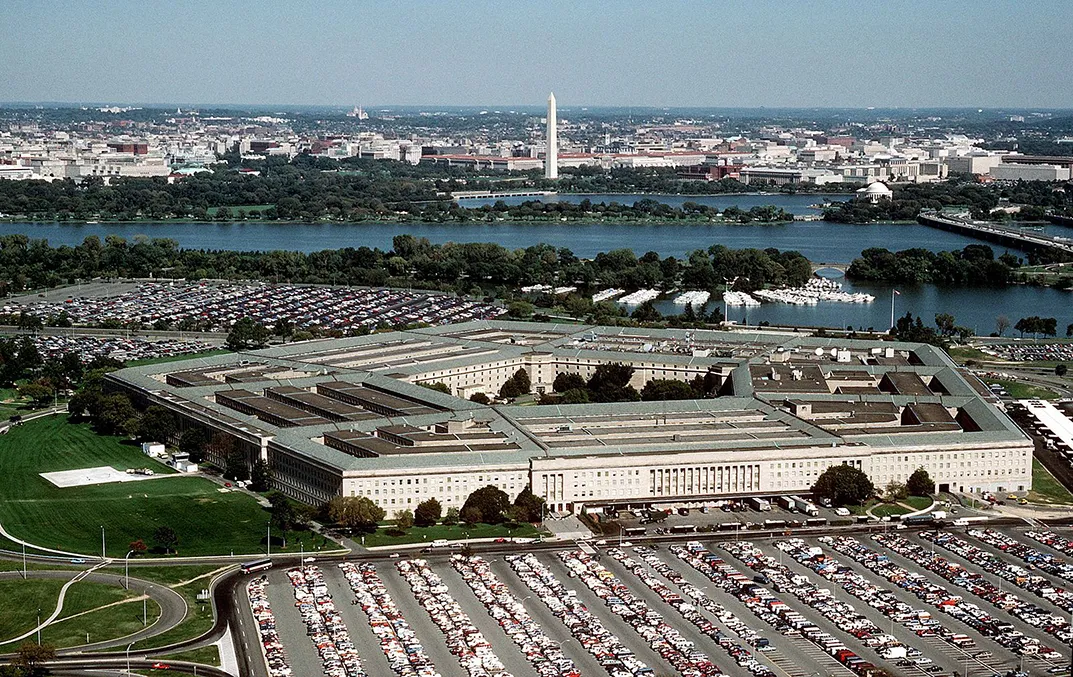
What happened there, in the Ia Drang Valley, 17 miles from the nearest red-dirt road at Plei Me and 37 miles from the provincial capital of Pleiku, sounded alarm bells in the Johnson White House and the Pentagon as they tallied the American losses—a stunning butcher’s bill of 234 men killed and more than 250 wounded in just four days and nights, November 14-17, in two adjacent clearings dubbed Landing Zones X-ray and Albany. Another 71 Americans had been killed in earlier, smaller skirmishes that led up to the Ia Drang battles.

To that point, some 1,100 Americans in total had died in the United States’ slow-growing but ever-deepening involvement in South Vietnam, most of them by twos and threes in a war where Americans were advisers to the South Vietnamese battalions fighting Viet Cong guerrillas. Now the North Vietnamese Army had arrived off the Ho Chi Minh Trail and had made itself felt. In just over one month, 305 American dead had been added to the toll from the Ia Drang fight alone. November 1965 was the deadliest month yet for the Americans, with 545 killed.

The North Vietnamese regulars, young men who had been drafted into the military much as the young American men had been, had paid a much higher price to test the newcomers to an old fight: an estimated 3,561 of them had been killed, and thousands more wounded, in the 34-day Ia Drang campaign.

What happened when the American cavalrymen and the People’s Army of Vietnam (PAVN) collided head-on in the Ia Drang had military and civilian leaders in Washington, Saigon and Hanoi scrambling to assess what it meant, and what had been learned.

Both sides understood that the war had changed suddenly and dramatically in those few days. At higher levels, both sides claimed victory in the Ia Drang, although those who fought and bled and watched good soldiers die all around them were loath to use so grand a word for something so tragic and terrible that would people their nightmares for a long time, or a lifetime.

The big battles began when then–Lt. Col. Hal Moore, a 43-year-old West Point graduate out of Bardstown, Ky., was given orders to airlift his 450-man 1st Battalion, 7th Cavalry Regiment, into the valley on a search-and-destroy mission. He did a cautious aerial reconnaissance by helicopter and selected a football field–sized clearing at the base of the Chu Pong Massif, a 2,401-foot-high piece of ground that stretched to the Cambodian border and beyond for several miles. The sketchy American intelligence Moore was provided said the area was home base for possibly a regiment of the enemy. In fact, there were three North Vietnamese Army regiments within an easy walk of that clearing, or the equivalent of a division of very good light infantry soldiers.

Two of those enemy regiments had already been busy since arriving in the Central Highlands. In mid-October, the 32nd Regiment had surrounded and laid siege to the American Special Forces camp at Plei Me. Although they could have easily crushed the defenders—a 12-man American A-Team and 100 Montagnard mercenary tribesmen—the enemy dangled them as bait, hoping to lure a relief force of the Army of the Republic of Vietnam (ARVN) out of Pleiku and into an ambush laid by their brothers of the 33rd Regiment.

It was an old guerrilla ploy that usually worked, but not here, not now. The ARVN II Corps commander knew if he lost the relief force, Pleiku would be left defenseless. He pressed the Americans to provide continuous artillery and air cover as the column moved toward Plei Me. The 1st Cavalry’s big Chinook helicopters lifted batteries of 105mm howitzers, leap-frogging along within range of the dirt road that led to Plei Me. When the ambush was sprung, the American artillery wreaked havoc on the North Vietnamese plan and the 33rd Regiment. Both enemy regiments withdrew toward the Ia Drang with a brigade of Air Cav troopers dogging their footsteps.

Both sides understood that the war had changed suddenly and dramatically in those few days….Both sides claimed victory.
Then–Lt. Col. Hoang Phuong, a historian who had spent two months walking south, charged with writing the “Lessons Learned” report on the coming battles, said that it was during this phase that the retreating PAVN troops began learning what airmobility was all about. The UH-1B Huey helicopters buzzed around the rugged area like so many bees, landing American troops among the North Vietnamese, forcing them to split up into ever-smaller groups like coveys of quail pressed hard by the hunters.

A new PAVN regiment, the 66th, was just arriving in the Ia Drang in early November when its troops walked into perhaps the most audacious ambush of the Vietnam War. On November 3, divisional headquarters ordered Lt. Col. John B. Stockton and his 1st Squadron, 9th Cavalry, battalion of scouts to focus attention on a particular trail alongside the Ia Drang River close to the Cambodian border. Stockton sent one of his companies of “Blues,” or infantry, under command of Captain Charles S. Knowlen, to a clearing near that site. He took along a platoon of mortars that belonged to Captain Ted Danielsen’s Alpha Company, 1st Battalion, 8th Cavalry, which had been sent with Stockton as possible reinforcements if needed.

Knowlen sent out three platoon-sized ambush patrols. One of those platoons set up near the trail and began hearing the noise of a large group moving toward it on the trail. The enemy column—men of the newly arriving 8th Battalion of the 66th Regiment—stopped 120 yards short of the ambush and took a break. Then they resumed the march. The platoon of Americans held their breath and their fire until they heard the louder clanking noise of the enemy’s heavy weapons company moving into the kill zone. The Americans blew their claymore mines and emptied a magazine each from their M-16 rifles into the confused North Vietnamese and then took off, running like hell straight back to the patrol base. A very angry PAVN battalion was right behind them.

Knowlen and his men beat back three waves of attacking North Vietnamese, but the company commander feared the next attack would overrun his position. Knowlen radioed Stockton at his temporary base at Duc Co Special Forces Camp and begged for reinforcements as fast as possible. Stockton radioed his higher-up, Brig. Gen. Richard Knowles at Camp Holloway/Pleiku, requesting permission to send in the rest of Danielsen’s company. Knowles denied Stockton permission, and the legendary 9th Cavalry commander squawked, squealed, whistled, dropped the radio handset and waved Danielsen’s men aboard the choppers and away to save the day.

They were about to make history, conducting the first nighttime heli-borne infantry assault into a very hot landing zone. They arrived in the nick of time as the next PAVN assault began. Danielsen’s men joined the line, and Stockton’s helicopter crews got out of their birds and joined the battle with their M-60 machine guns and the pilots’ pistols.

Knowles was furious at Stockton for disobeying his orders. Stockton just shrugged. If he had obeyed Knowles, more than 100 of his men would not have survived that night in the Ia Drang. Stockton, an Army brat who had grown up in horse cavalry posts all across the West, had resurrected black cavalry Stetson hats for his men and smuggled the 9th Cav’s mascot Maggie the mule aboard ship and 8,000 miles to Vietnam in defiance of another of Dick Knowles’ orders. But for his actions this night of November 3, John B. Stockton would be relieved of duty and sent to work a desk job in Saigon.

This image has an empty alt attribute; its file name is untitled_2.jpg

One out of four members of the 7th Cavalry were killed or wounded in the Ia Drang Valley. (Photo: Joseph L. Galloway)

All of this was merely prelude, setting the stage for the savage mid-November battles at LZs X-ray and Albany.

When Hal Moore took the first lift of 16 Hueys—all that he was given for this maneuver—into the landing zone he had chosen in the Ia Drang, he was painfully aware that he was on the ground with only 90 men, and that they would be there alone for half an hour or longer while the choppers returned to Plei Me Camp, picked up waiting troops and made the return flight. It was a 34-mile roundtrip. The luck was with Moore. The clearing was silent for now. Then his men took a prisoner, a North Vietnamese private who was quaking so hard he could barely speak. When he finally did say something, it sent chills through the Americans listening to the translator: “He say there two regiments on that mountain. They want very much to kill Americans but have not been able to find any.”

Within an hour of landing and the second airlift of troops just arriving, the battle at X-ray was joined. It would last for three days and two nights before the North Vietnamese would vanish into the tangle of brush and elephant grass, leaving a large circle of their dead scattered around the American position. The smell of rotting corpses hung heavy over X-ray, and with the arrival on foot of the 2nd Battalion, 7th Cavalry, under its new commander Lt. Col. Robert McDade, on the morning of November 16, there were now three Cavalry battalions crammed into that clearing. General Knowles wanted to bring in the first-ever B-52 strike in tactical support of ground troops, and X-ray was inside the 3×5 kilometer box that was “danger close” to the rain of bombs that would fall on the near slopes of Chu Pong.

The 3rd Brigade commander, Colonel Tim Brown, gave orders: Moore’s battalion, plus Bravo Company of 2-7 Cavalry, which had reinforced Moore and fought alongside the 1st Battalion troopers, would be pulled out by helicopters and lifted to Camp Holloway on November 16. On the morning of November 17, Lt. Col. Bob Tully’s 2nd Battalion, 5th Cavalry, would march out of X-ray, headed northeast directly toward LZ Columbus, where a battery of 105mm howitzers was positioned. Bob McDade’s 2-7 Battalion plus one company of 1st Battalion, 5th Cavalry, would follow Tully part of the way, then break off west and northwest toward another clearing closer to the river dubbed LZ Albany.

As McDade’s battalion neared the Albany clearing, it was halted, strung out along 550 yards of narrow trail hemmed in by much thicker triple canopy jungle. The Recon Platoon had captured two North Vietnamese soldiers. A third had escaped. McDade and his command group went forward so the battalion commander could personally put questions to the prisoners through the interpreter. He also ordered all four company commanders to come forward to receive instructions on how he wanted them deployed around the perimeter of Albany. They all arrived with their radio operators, and all but the commander of the attached Alpha Company of 1-5 Cav, Captain George Forest, brought their first sergeants with them.

The enemy commander, Lt. Col. Nguyen Hu An, had kept one of the battalions of the 66th Regiment in reserve, and unbeknownst to the Americans that battalion was taking a lunch break just off the trail. The North Vietnamese swiftly deployed along the left side of the column and prepared to attack. The weary Americans, who had had little or no sleep for the last three days and nights, had slumped to the ground where they had stopped. Some ate; some smoked; some fell asleep right there. Suddenly, enemy mortars exploded among the Americans signaling the PAVN attack, and they charged through the tall grass and cut through the thin line of Cavalry troops strung out along the trail.

PAVN machine gunners climbed atop the big termite mounds—some 6 feet tall and as big around as a small automobile—and opened up. Snipers were up in the trees. The fighting quickly disintegrated into hand-to-hand combat, and men were dying all around. In the next six hours, McDade’s battalion would lose 155 men killed and 120 wounded. An artillery liaison officer in a Huey overhead wanted desperately to call fire missions in support, but was helpless. All he could see was smoke rising through the jungle canopy. At the head of the column, McDade had no idea where most of his men were and was near-incoherent on the radio. The Americans trapped in the kill zone were on their own. Later artillery and napalm airstrikes were called in, but they often fell on enemies and friends alike. All through that endless night, the PAVN troops combed through the elephant grass searching for their own wounded, and finishing off any wounded Americans they came across. Both sides had lost interest in taking prisoners. There were no Americans captured and only four North Vietnamese prisoners taken—all at X-ray and none at Albany. When the ambush was sprung at Albany, an intelligence sergeant shot and killed the two North Vietnamese prisoners with a .45-caliber pistol.

An Associated Press photographer, Rick Merron, and a Vietnamese TV network cameraman, Vo Nguyen, had finagled a ride on a helicopter going into Albany on the morning of November 18. After a short stay, Merron grabbed another chopper going back to Camp Holloway, and the word spread quickly that a battalion of Americans had been massacred in the valley.

LBJ ordered McNamara to Saigon to find out what happened at Ia Drang, and what it meant.
General Knowles called a news conference late on the 18th in a tent at Holloway. He told the dozens of reporters who had assembled that there was no ambush of the Americans at Albany. It was, he said, “a meeting engagement.” Casualties were light to moderate, he added. I had just returned from Albany myself, and I stood and told the general, “That’s bullshit, sir, and you know it!” The news conference dissolved in a chorus of angry shouting.

In Washington, President Lyndon B. Johnson sent an urgent message to Defense Secretary Robert S. McNamara, who was in Europe, ordering him to come home via Saigon and find out what had happened at Ia Drang, and what it meant. McNamara met with Ambassador Henry Cabot Lodge in Saigon and then flew to the 1st Cavalry Division base camp at An Khe, where he was briefed by the Cav commander, Maj. Gen. Harry W.O. Kinnard, and by Colonel Moore.

On the flight across the Pacific, McNamara wrote a top-secret memo to President Johnson dated November 30. See the Memo. McNamara told LBJ that the enemy had not only met but exceeded our escalation. We have come to a decision point and it seems we have only two choices: Either we arrange whatever diplomatic cover we can find and get out of Vietnam, or we give General William C. Westmoreland the 200,000 additional U.S. troops he is asking for, in which case by early 1967 we will have 500,000 Americans on the ground and they will be dying at the rate of 1,000 a month (the top Pentagon bean counter was wrong about that; American combat deaths would top out at over 3,000 a month in 1968). McNamara added that all this would achieve was a military stalemate at a much higher level of violence.

On December 15, 1965, LBJ’s council of “wise old men,” which in addition to McNamara included the likes of Clark Clifford, Abe Fortas, Averell Harriman, George Ball and Dean Acheson, was assembled at the White House to decide the path ahead in Vietnam. As the president walked into the room, he was holding McNamara’s November 30 memo in his hand. Shaking it at the defense secretary, he said, “You mean to tell me no matter what I do I can’t win in Vietnam?” McNamara nodded yes. The wise men talked for two days without seriously considering McNamara’s “Option 1”—getting out of Vietnam—and ultimately voted unanimously in favor of further escalation of the war.

This image has an empty alt attribute; its file name is untitled_3.jpg

Resupply and medevac at LZ X-ray during the Battle of Ia Drang Valley on November 16, 1965. (Photo: Joseph L. Galloway)

Back in Saigon, General Westmoreland and MACV G-3, Deputy Chief of Staff for Operations General William DePuy, were studying the statistics of the Ia Drang battles. What they saw was a ratio of 12 North Vietnamese killed for each American. They decided that these results justified a strategy of attrition: They would bleed the enemy to death over the long haul. One of Westmoreland’s brighter young aides later would write, “a strategy of attrition is proof that you have no strategy at all.” In any event, the strategy was an utter failure. In no year of that long war did the North Vietnamese war death toll even come close to equaling the natural birth rate increase of the population. In other words, every year reaching out far into the future there were more babies born in the north than NVA we were killing in the south, so each year a new crop of draftees arrived as replacements for the dead.

Seven hundred miles north in Hanoi, President Ho Chi Minh and his lieutenants likewise carefully studied the results of the Ia Drang campaign. They were confident they would eventually win the war. Their peasant soldiers had withstood the high-tech firestorm thrown at them by a superpower and had at least fought the Americans to a draw, and to them a draw against so powerful an enemy was a victory. In time the same patience and perseverance that had ground down the French colonial military would likewise grind down the Americans.

Senior General Vo Nguyen Giap studied the battles and correctly identified the helicopter as the biggest innovation, biggest threat and biggest change in warfare that the Americans brought to the battlefield. Giap would later say: “We thought that the Americans must have a strategy. We did. We had a strategy of people’s war. You had tactics, and it takes very decisive tactics to win a strategic victory….If we could defeat your tactics—your helicopters—then we could defeat your strategy. Our goal was to win the war.”

The PAVN commander directing the fight at X-ray, Lt. Col. Nguyen Hu An, revealed to us in Hanoi in 1991 that they had figured out one other way to neutralize the American artillery and air power. It was called “Hug Them by the Belt Buckle”—or get in so close to the U.S. troops that the firepower could not be used, for fear of killing and wounding their own. Then, said An, the fight would be man-to-man and much better odds.

For the Americans, Ia Drang proved the concept of airmobile infantry warfare. Some had feared that the helicopters were too flimsy and fragile to fly into the hottest of landing zones. They were not. All 16 Hueys dedicated to lifting and supporting Colonel Moore’s besieged force in X-ray were shot full of holes, but only two were unable to fly out on their own. The rest brought in ammunition, grenades, water and medical supplies, and took out the American wounded in scores of sorties. Without them, the battles of the Ia Drang could never have taken place. The Huey was on its way to becoming the most familiar icon of the war.

General Giap also learned one very important lesson. When 1st Cav commander General Kinnard asked for permission to pursue the withdrawing North Vietnamese troops across the border into their sanctuaries inside Cambodia, cables flew between Saigon and Washington. The answer from LBJ’s White House was that absolutely no hot pursuit across the borders would be authorized. With that, the United States ceded the strategic initiative for much of the rest of the war to General Giap. From that point forward, Giap would decide where and when the battles would be fought, and when they would end. And they would always end with the withdrawal of his forces across a nearby border to sanctuaries where they could rest, reinforce and refit for the next battle.

Another political decision flowing out of the Johnson White House—limiting the tour of duty in Vietnam to 12 months (13 months for Marines)—would soon begin to bite hard. The first units arriving in Vietnam in 1965 had trained together for many months before they were ordered to war. They knew each other and their capabilities. They had built cohesion as a unit, a team, and that is a powerful force multiplier. But their tour was up in the summer of 1966, and all of them got up and went home, taking all they had learned in the hardest of schools with them. They were replaced by new draftees, who flowed in as individual replacements and who knew no one around them, and nothing of their outfit’s history and esprit. The North Vietnamese soldier’s term of service was radically different—he would serve until victory or death. One of those soldiers wrote of marching south in 1965 with a battalion of some 400 men. When the war ended in 1975, that man and five others were all that were left alive of the 400.

General Giap knew all along that his country and his army would prevail against the Americans just as they had outlasted and worn down their French enemy. The battles of Ia Drang in November 1965, although costly to him in raw numbers of men, reinforced his confidence. And, while by any standards the American performance there was heroic and tactical airmobility was proven, the cost of such “victories” was clearly unsustainable, even then. Even in the eyes of the war’s chief architect.

In the late 1940s, Giap wrote this uncannily accurate prediction of the course of the Viet Minh war against the French:

“The enemy will pass slowly from the offensive to the defensive. The blitzkrieg will transform itself into a war of long duration. Thus, the enemy will be caught in a dilemma: He has to drag out the war in order to win it and does not possess, on the other hand, the psychological and political means to fight a long-drawn-out war.”

Precisely.

Joseph Galloway had four tours in Vietnam during his 22 years as a foreign and war correspondent. The only civilian decorated for valor by the U.S. Army for actions in combat during the Vietnam War, Galloway received the Bronze Star medal with V Device for rescuing wounded soldiers while under fire in the Ia Drang Valley, in November 1965.
This article originally published in 2010 on Historynet.com

Categories
War

Estimating Deaths in a Nuclear War

Categories
Fieldcraft Soldiering War

Pineland Rules

The Patrol Base: Pineland Rules for RangingThe Patrol Base: Pineland Rules for Ranging
Categories
All About Guns War

Another reason why I am SO glad that I did NOT join the Navy!

Categories
This great Nation & Its People War

Just Amazing to me!

Categories
Allies Soldiering War

The British Army in Peninsular War (One of their better wars by the way)

Categories
A Victory! War

Some more about my dads War – Korea