Category: War

It’s a trope of pirate movies everywhere. Two massive galleons slug it out with their long nines before heaving alongside battered and broken. With masts shattered and rigging in disarray, the two mighty vessels collide like punch-drunk fighters, grapnels spanning the gap as soon as they come within range. Marines, stewards, and able seamen crouch behind the heavy oak with cutlasses and pistols in hand, ready to go. At the Captain’s command, the melee begins.

There’s always somebody who swings Tarzan-fashion from one ship to another amidst sleeting musket fire. As these are movies the injured do not scream for their mothers and those destined to die just fall over without a great deal of fuss. As a species, we have forgotten the details of what happens when two groups of desperate men go at each other with blades. The end result in the real world, particularly onboard an 18th-century Man-o-War with no medical facilities beyond a near-sighted cook with a dirty bone saw, would be gruesome beyond imagining.
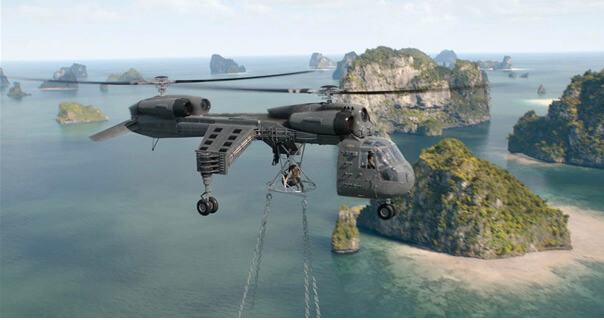
The recent Tom Holland epic Uncharted had a variation on that theme that made me want to hurl. In this case, two 16th-century derelict treasure ships once helmed by Ferdinand Magellan are rigged as sling loads beneath these weird twin-rotor Chinook/Skycrane cyborg helicopters. Forget for a moment that the smallest of Magellan’s carracks, the Victoria, weighed 85 tons or 170,000 pounds. Two matching helicopters nonetheless hoist the two supposedly-fragile antique ships out of the Filipino jungle and fly off with them.

There results that same basic ship-to-ship combat set piece only this time it is executed while both vessels are suspended underneath helicopters in flight. Eventually, the Good Guys even use the 500-year-old cannon on one of the ships to shoot down a helicopter. I thought I would be sick. However, it seems not everybody agreed with me. The movie returned $401 million on a $120 million investment and was the fifth-highest-grossing video game movie adaptation of all time. I’m sure we will see sequels until the sun burns out.

While the repel boarders scene in Uncharted indeed savaged credulity, there was an actual exchange on the high seas off the Cape Verde Islands on the evening of May 5, 1943, that was itself pretty darn weird. The epic fight between DE-51, the destroyer escort USS Buckley, and the German U-boat U-66 involved, believe it or not, the weaponization of coffee mugs, empty brass from the American destroyer escort’s deck guns, and a coffee pot. The end result was the last ship-to-ship close-quarters fight in American naval history.
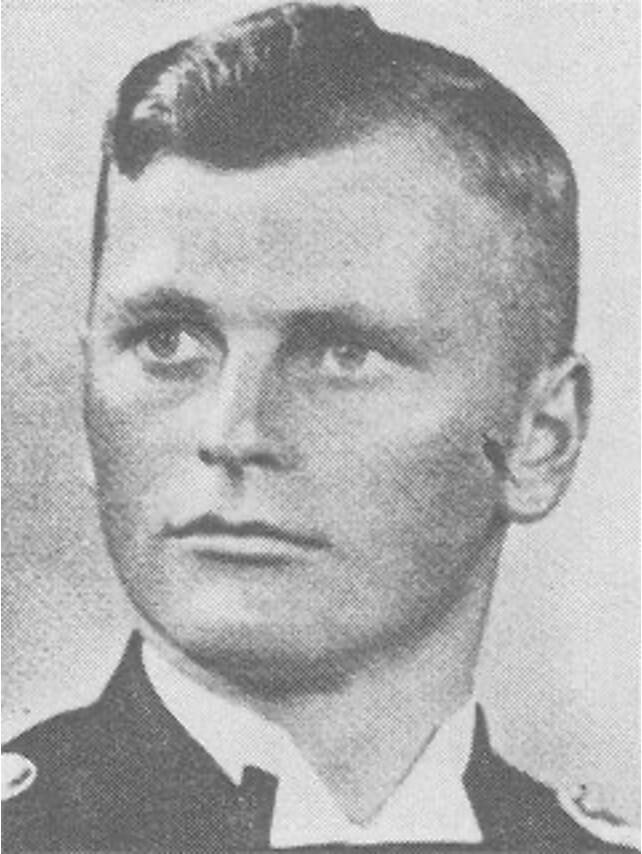
The evening was clear with a bright moon. U-66 was a Type IXC U-boat and the seventh most successful German submarine of the war, having sunk 33 Allied merchant vessels. U-66 was on her ninth war cruise. She had been at sea for four months and was perilously low on fuel. The skipper was Oberleutnant Gehard Seehausen.

Unknown to the Captain and crew of U-66, a US Navy TBM Avenger launched from the American escort carrier USS Block Island on antisubmarine patrol had picked up her radar return and pinpointed the boat’s location some 20 miles from the USS Buckley. The German Kriegsmarine used massive replenishment U-boats called Milk Cows as well as dedicated submarine tenders to resupply their tactical subs with fuel and ordnance while patrolling downrange. On this crisp clear night, U-66 was desperate for a nocturnal rendezvous.

The Buckley’s skipper, Lieutenant Commander Brent Able, headed toward the boat’s location at his best possible speed–around 23 knots. It was LCDR Able’s 28th birthday. Seven miles out he picked up the U-boat on his own radar. Presuming a stationary German submarine on the surface was waiting for resupply, LCDR Able took a gamble and approached the German boat boldly hoping the enemy Captain might mistake him for the expected sub tender.

Once within range, the U-boat skipper fired three red flares, the prearranged signal between his boat and their supply ship while under radio silence. Able closed the distance to 4,000 yards before Seehausen realized his mistake. In desperation, the German skipper ordered a torpedo snapshot in the darkness. The crew of the Buckley was not aware of this until they noticed the German fish passing harmlessly off their starboard side. In response, LCDR Able positioned his ship such that the U-boat was silhouetted in the moonlight and opened fire with everything he had.

For the next two minutes, the American destroyer pummeled the surfaced U-boat with withering fire from her 3-inch deck guns, 40mm Bofors, 20mm Oerlikons, and .50-caliber machine guns. High explosive rounds were observed tearing into the conning tower and superstructure of the boat. Seehausen fired another ineffectual torpedo before beginning to maneuver randomly. By now the Buckley had pulled to within twenty yards of the stricken boat. When the geometry was perfect, LCDR Able gave his vessel a hard right rudder and rode the nimble warship up onto the deck of the U-boat. At this point things got real.
The Close Fight

Now realizing their dire straits, the German skipper ordered his men up and on deck. Some attempted to surrender, while others continued the fight. In the bright moonlight, the next ten minutes were unfettered chaos.

The crew of the Buckley had time to prepare for this moment, and the small arms lockers had been emptied. Under the immediate command of the U-boat’s First Officer Klaus Herbig, German sailors began swarming up and onto the forecastle of the destroyer escort. Pintle-mounted .50-calibers and Thompson submachine guns exacted a horrible butcher’s bill, yet the desperate Germans pushed forward still. When the enemy sailors started clambering onto the deck the Americans took it personally.

Two of the attacking enemy were struck in the head with thrown coffee mugs. The crew of the second 3-inch gun was unable to depress the weapon sufficiently to bring effective fire onto the U-boat so they began throwing the heavy empty cases down on the swarming Kriegsmariners. Despite their valiant efforts, five German sailors still managed to make it onboard the American vessel.
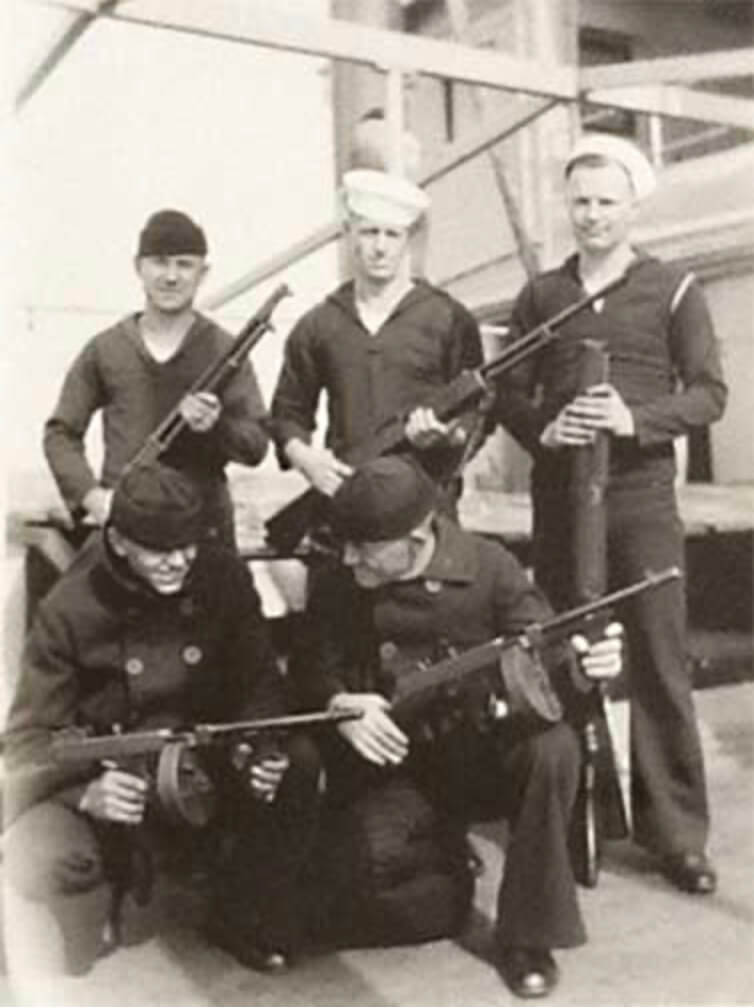
The boatswain’s mate responsible for the forward ammunition party came face to face with a German sailor heaving himself over the deck coaming. The American sailor pulled his 1911 pistol and shot the man dead, his body pitching backward and falling into the sea. The Chief Fire Controlman’s duty station was on the bridge, and he had a Thompson. With a clear view of the chaos below he swept the deck of the German boat with long bursts of automatic fire, obtaining what the skipper later described as, “Excellent results.”

One of the rampaging Germans did manage to make it into the wardroom. He was then confronted by a ship’s cook who doused him in hot coffee. The steward proceeded to give the guy a proper pummeling with the coffee pot. At this point, five Germans have accessed the American vessel and LCDR Able wanted some breathing room. He ordered reverse screws and pulled his destroyer escort off of the ventilated U-boat. The five Germans were captured in short order and then escorted below by a sailor armed with a hammer.

The damaged U-boat was still making turns for about 18 knots, so the fight immediately became dynamic yet again. One German attempted to unlimber the U-boat’s main deck gun. Once again per LCDR Able’s after-action report, his body, “disintegrated when struck by four 40mm shells.” As the U-boat scraped along the Buckley’s starboard side a dead-eyed American torpedo man lobbed an armed hand grenade through the open hatch to the U-boat’s conning tower. The Buckley’s gunners continued to rake the enemy ship with quarter-pound high explosive 20mm rounds. Then the GI grenade detonated with a sickening crump within the bowels of the German vessel.

Before the Americans could react, the U-boat veered into the side of the Buckley near the stern. The crushing impact tore a hole in the engine room and sheared off the starboard screw. With flames spouting from the conning tower and multiple cannon holes, the Germans abandoned ship.
The Aftermath

The entire engagement spanned some sixteen minutes. During the course of the fight, the crew of the Buckley expended 300 rounds of .45ACP, sixty rounds of .30-06, thirty rounds of 12-gauge 00 buckshot, and a pair of fragmentation grenades. This is obviously in addition to the dinnerware and coffeepot.

Over the next half hour, the Buckley recovered 36 German sailors, roughly half of the U-boat’s crew. Oberleutnant Seehausen went down with his ship. Despite some not inconsiderable damage, the Buckley returned to Boston under her own power. She was refit and returned to active service in June of 1944. After 23 years on the reserve list, the Buckley was scrapped in 1969.

Oberleutnant Seehausen was posthumously promoted to Kapitainleutnant and awarded the German Cross in Gold in 1944. He already held the Iron Cross 1st and 2nd classes. He was 26 at the time of his death. U-boat service was the most hazardous posting in the German military. Roughly 75% of U-boat crewmen perished before the end of hostilities.
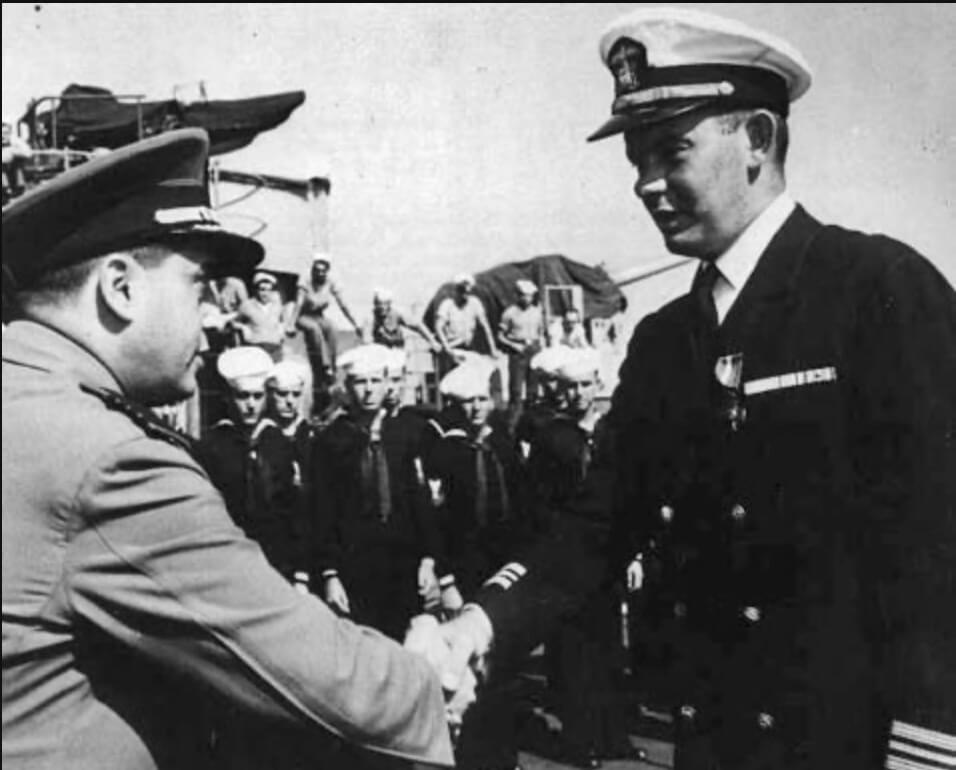
The USS Buckley earned a Navy Unit Citation for the action. LCDR Brent Able was awarded the Navy Cross, the Navy’s second-highest award for valor. Because of the intimate nature of the engagement, the crew of the Buckley was authorized to wear a combat star on their European-African Theater ribbons. The sinking of the German U-boat U-66 was likely the only naval engagement in history to be waged with ammunition drawn from the ship’s galley.

This piddly epistle is a followup to “The Greyhound Rules,” posted earlier. If you missed it or it has slipped from your Teflon-coated mind, it’s posted HERE.
Re-read that piece and you’ll note both sides screwed up before the first shot was fired. The Good Guys, lulled by a bright warm morning and pleasant company, were mentally in “training mode,” not possible-threat mode. I’m convinced the Bad Guys had reconned the site, and didn’t expect any interference until they approached the building complex where the small “organic security” detail hung out. As a result, neither side anticipated what they ran into where and when they stumbled into it. Upon confrontation there was a mental stutter-step or two. Fortunately, “Mutual Stupid” affected both sides for a couple of seconds.
Bullet #1: If you live with a gun, be ready to engage anytime, anywhere. If that training had occurred in the US, I know we would have been wandering out to the bushes for that potty-call with empty sidearms. The thought gives me chills.
Lots of poor choices were made about position and “cover.” Some Bad Guys fled into vehicles, where they were trapped. The BG’s really blew the whole concept of “cover,” with deadly results: glass and thin sheet metal won’t stop rounds. Good Guys who should have known better stood up to fire over chest-high flatbed trailers, leaving their lower bodies exposed. Both sides occasionally left feet, hands, knees and elbows stickin’ out from cover, and a few paid dearly for that.
Bullets #2, 3, and 4: Ordinarily, distance is your friend, but the urge to put distance between yourself and muzzle blast can override your good sense. “Know cover,” or it’s no cover. Most walls ain’t cover a’tall. If you have any doubt that what you’re hunkering behind will stop slugs, it prob’ly won’t. Be as aware as any human experiencing “Pucker Factor 9.7” can be of exposing stray parts of your body. One of my standing rules is, “If all you see is a piece of your target, shoot the piece! Shoot it to pieces. Then shoot the pieces to pieces.” Your opponent might have the same policy. Don’t show him your elbow — or even an earlobe. He might be good.
Crabs & Gazelles
The Bus Farm Fight occurred on crazy-quilted uneven ground — basically flat, but cut with abrupt minor changes in height from asphalt to earth to old, tilted sections of concrete. Stumbling while running, scanning for targets and shooting cost a few lives. Mixing movement and shooting can be disastrous unless that movement is very deliberate — or charmed.
Bullet #5: If you feel that shooting during movement is a viable option for you, first work hard on your “combat shuffle” and your “agile crab sideways scuttle,” or, just hold onto your piece with your finger outta the triggerguard and take off like a cheetah-chased gazelle. I’ve found I can shuffle straight ahead and deliver semi-accurate fire without trippin’ much, but that’s it. Simulations can tell you what you’re capable of, and I recommend you find out before you try any ballet moves or “sprint’-n’-spray” techniques under fire. Falling and shooting yourself or a comrade can ruin more than your day.
In the midst of a vicious gunfight, nobody expected a glass-rattling voice to command “stop shooting!” – so everybody did. When you’re low on ammo and a sweaty, a smiling teenager in a Chicago Cubs baseball cap suddenly appears, dashing from bus to bulldozer passing out loaded magazines, you first wonder if you’ve gone completely nuts — and then you grab some.
Bullet #6: Weird things happen in gunfights. Expect an Albanian satellite to fall on your head, or a gopher the size of a grizzly to erupt from the ground at your feet. It will happen during a gunfight. Believe your eyes, shrug off bizarre twists, and stay focused on the threat.
Combat Cool & The Samurai Class
The most striking thing about the Bus Farm Fight was the “combat cool” exhibited by the Hard Hombres. I had seen veteran fighters engaged all over the world, and few had the uniform cool of this thrown-together group. Wounds were expected; death was casually considered. Should they be maimed or crippled, they would be respectfully cared for — even lauded — by extended families and their villages or towns. They knew and embraced how they would live and quite possibly die.
An absolute of their lives was that they would fight well and never yield — never. More than anything else, it was this cool and this refusal to yield that won the Bus Farm Fight.
If not born to it, they had become a Samurai class. I learned something about it, and that’s a tale for another time. But let’s close with this: the Hard Hombres’ combat cool had less to do with how much actual fighting experience they had, and more with how much time they had been tumbling “fighting” around between their ears.
Connor OUT
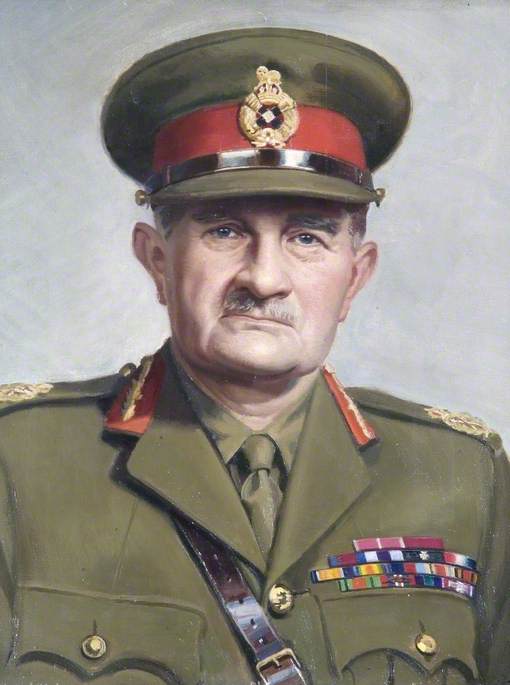
Slim should be remembered as the greatest British general of World War Two.
Even the most sketchily educated Briton today will nevertheless recognise in the murky depths of their consciousness the name of that great British general of World War Two, Montgomery of Alamein. To an older generation perhaps another name resonates equally and perhaps more strongly, the name of a man Montgomery airily dismissed as a mere ‘sepoy general’, and yet someone whose military legacy has arguably outlasted even that of the great ‘Monty’ himself.
That the name of Field Marshal William Slim is remembered by only a few old soldiers and interested military buffs today is a tragedy of enormous proportions, when one assesses in the great weighing scales of history his contribution to Britain’s success in the Second World War and his more longer lasting contribution to the art and science of war as a whole.
The war in the Far East is easy to forget, given that it took place far from home and in the shadow of the titanic struggle against Nazism in Europe. Yet the war against Japan in Burma, India and China was no less titanic, as two competing empires collided violently, with profound implications for the future of the post-war global order, not just in the Pacific but also for the whole of Britain’s creaking empire. Slim played a significant part in the whole story.
Slim was, first and foremost, a born leader of soldiers. It would be inconceivable to think of Monty as ‘Uncle Bernard’, but it was to ‘Uncle Bill’ that soldiers in Burma, from the dark days of 1942 and 1943, through to the great victories over the Japanese in 1944 and 1945, put their confidence and trust.
He inspired confidence because he instinctively knew that the strength of an army lies not in its equipment or its officers, but in the training and morale of its soldiers. Everything he did as a commander was designed to equip his men for the trials of battle, and their interests were always at the forefront of his plans.
He knew them because he was one of them, and had experienced their bitterest trials. Brigadier Bernard Fergusson (later Earl Ballantrae and Governor General of New Zealand), believed that Slim was unlike any other British higher commander to emerge in the Second World War, ‘the only one at the highest level in that war that… by his own example inspired and restored its self-respect and confidence to an army in whose defeat he had shared.’
Not for him the aristocratic or privileged middle class upbringing of some many of his peers, but an early life of industrial Birmingham, relieved only by the opportunities presented for advancement by the upheavals of the First World War. The 100 day 1000 mile retreat from Burma to India in 1942, the longest in the long history of the British Army was, whilst a bitter humiliation, nevertheless not a rout, in large part because Slim was put in command of the fighting troops.
He managed the withdrawal through dust bowl, jungle and mountain alike so deftly that the Japanese, though undoubtedly victorious, were utterly exhausted and unable to mount offensive operations into India for a further year. In time Slim was given the opportunity no British soldier has been given since the days of Wellington: the chance to train an army from scratch and single-handedly mould it into something of his own making, an army of extraordinary spirit and power against which nothing could stand.
By 1945 Slim’s 14th Army, at 500,000 men the largest ever assembled by Britain, had decisively and successively defeated two formidable Japanese armies, the first in Assam in India in 1944 and the second on the banks of the great Irrawaddy along the infamous ‘Road to Mandalay’ in Burma in 1945.
Slim’s victories in 1944 and 1945 were profound, and yet were quickly forgotten by a Britain focused principally on the defeat of Germany, and by a United States gradually pushing back the barriers of Japanese militaristic imperialism in the Pacific. In late 1943 the 14th Army had begun to call itself the ‘Forgotten Army’, because of the apparent lack of interest back home of their exertions. 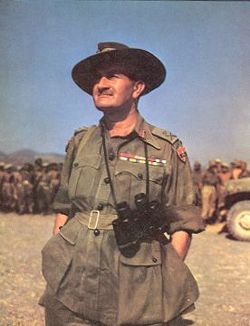
Sadly, from the time of the last climactic battles and the dash to seize Rangoon in May 1945 Slim’s achievements as the leader of this great army have equally been forgotten, although not of course by those who served under him who were all, as Mountbatten declared, ‘his devoted slaves’, nor indeed by their children and grandchildren who together make the Burma Star Association the only old soldiers’ association that actually continues to grow, rather than diminish.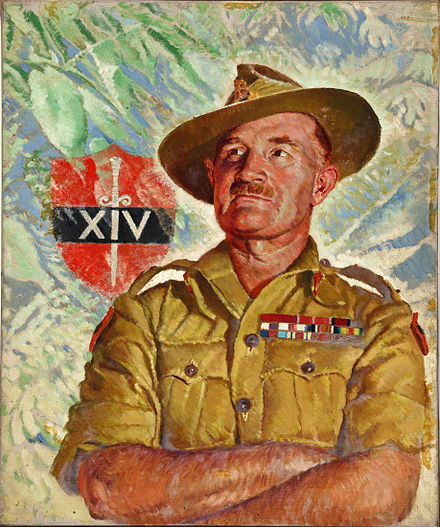
What were these achievements? In terms of his contribution to Allied strategy in Burma and India between 1942 and 1945 they were threefold. First, he prevented, by his dogged command of the withdrawal from Burma the invasion of India proper in 1942 by a Japanese Army exulting in its omnipotence after the collapse of the rest of East Asia and the Pacific rim.
Second, he removed forever any further Japanese ambitions to invade India proper by his destruction of Mutaguchi’s legions in the Naga Hills around Kohima and the Manipur Plain around Imphal in the spring and early summer of 1944, and in so doing he decisively shattered the myth of Japanese invincibility that had for so long crippled the Allied cause.
Third, despite the prognostications of many, and subtly influencing Mountbatten to conform to his own strategy, Slim drove his armoured, foot and mule-borne and air-transported troops deep into Burma in late 1944 and 1945, across two of the world’s mightiest rivers, to outwit and outfight the 250,000 strong Burma Area Army of General Kimura and in so doing engineer the complete collapse of Japanese hegemony in Burma.
Given the pattern of British misfortune in 1942 and in 1943 it is not fanciful to argue that without Slim neither the safety of India (in 1942 as well as in 1944), nor the recovery of Burma in 1945, would ever have been possible. Slim’s leadership and drive came to dominate the 14 Army to such a degree that it became, in Jack Master’s phrase, ‘an extension of his own personality.’
Slim’s achievements need also to be examined from a more personal, professional perspective. That he was able to defend India’s eastern borders from imminent doom, and crush both Mutaguchi and Kimura in the gigantic and decisive struggles of 1944 and 1945 was due to his qualities as a military thinker and as a leader of men.
Slim was a master of intelligent soldiering. That a man becomes one of the most senior officer of his generation is not always evidence per se that he has mastered this most fundamental of requirements: in Slim’s case it was.
His approach to the building up of the fighting power of an army – from a situation of profound defeat and in the face of crippling resource constraints – is a model that deserves far greater attention today than it has received in the past. It was an approach built on the twin platforms of rigorous training and development of each individual’s will to win, through a deeply thought-out programme of support designed to meet the physical, intellectual and spiritual needs of each fighting man.
Slim’s description of General Sir George Giffard, his superior for a time, can equally be applied to himself: Giffard’s great strength, Slim commented, lay in his grasp of ‘the fundamentals of war – that soldiers must be trained before they can fight, fed before they can march, and relieved before they are worn out.’
Second, Slim was a remarkable coalition commander. The Army that defeated the might of the Japanese in both India and Burma during 1944 and 1945 was a thoroughly imperial one, seventy-five percent Indian, Gurkha and African. Even in the British Empire of the time it was not self-evident that a British officer would secure the commitment of the various diverse nationalities he commanded: indeed, many did not. 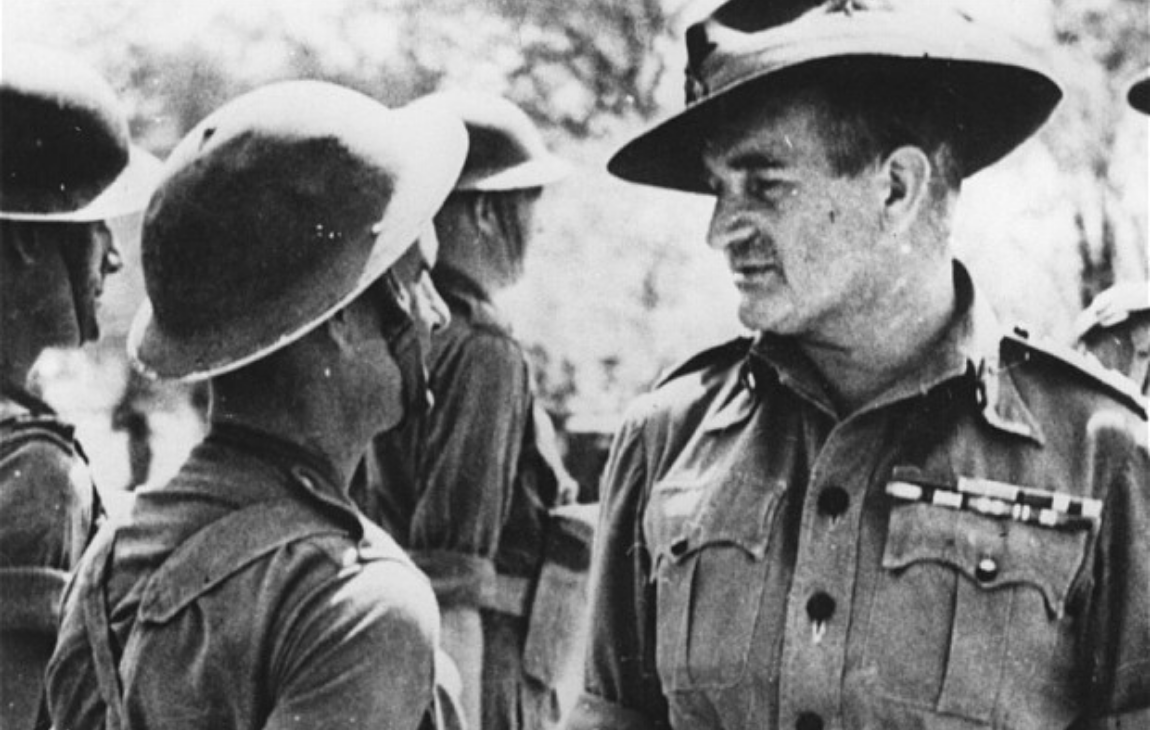
In his study of military command the psychiatrist Norman Dixon considered Slim’s quite obvious ability to join many of these diverse national groups to fight together in a single cause to be nothing less than remarkable, and the antithesis of the norm.
That he did so at a time of social and political unrest in India with the anti-colonial ‘Quit India’ campaign, and in the face of some early desertions to the Japanese-sponsored Indian National Army under Subhas Chandra Bose, makes his achievements even the more remarkable. The British soldier was also suspicious of officers of the Indian Army, but Slim succeeded effortlessly in winning them over, too. 
He ‘was the only Indian Army general of my acquaintance that ever got himself across to British troops’ recalled Fergusson. ‘Monosyllables do not usually carry a cadence; but to thousands of British troops, as well as to Indians and to his own beloved Gurkhas, there will always be a special magic in the words “Bill Slim.”
But in addition to his success in defeating the Japanese in 1944 and 1945, and in building up 14 Army to become a formidable fighting machine, Slim’s most abiding legacy was his approach to war, which at the time was singularly different to that adopted elsewhere during the war, either by Monty in Africa and North West Europe or Alexander in Italy.
Slim’s pre-eminent concern was to defeat the Japanese army facing him in Burma, not merely to recover territory, and he determined to do this through the complete dominance of the Japanese strategic plan. Training his troops relentlessly through monsoon, mountain and jungle, joining the command and operation of his land and air forces together, so that they served a single object, and delegating command to the lowest levels possible, Slim created an army of a power and fighting spirit rarely ever encountered in the history books.
In 1944 he allowed Mutaguchi’s 100,000 strong 15 Army to extend itself deep into India, there to be met by a ruthlessly determined 4 Corps, supplied by air and attacking at every opportunity the tenuous Japanese lines of communication back to the Chindwin. It was high risk, and more than one senior officer in Delhi and London despaired of success.
Slim, however, knew otherwise, and in the process of the climatic battles of Imphal and Kohima he succeeded in shattering the cohesion of a whole Japanese army and destroying its will to fight, a situation as yet unheard of for a fully formed Japanese army in the field. There were a number of close calls, and Slim was always the first to admit to his mistakes, but his steady nerve never failed. He moulded the Japanese offensive to suit his own plans, and step-by-step, he decisively broke it in the hills of eastern Assam and the Imphal plain.
Many commanders would then have sat on their laurels. Not so Slim. He was convinced that real victory against the Japanese required an aggressive pursuit, not just to the Chindwin but into the heart of Burma itself. Single-handedly he worked to put in place all the ingredients of a bold offensive to seize Mandalay at a time when every inclination in London and Washington was to seek an amphibious solution to the problem of Burma and thus avoid the entanglements of a land offensive.
Slim believed, however, that it could be done. Virtually alone he drove his plans forward, winning agreement and acceptance to his ideas as he went, particularly with Mountbatten, the Supreme Allied Commander in the Far East, and went on to execute in Burma in 1945 one of the most brilliant expositions of the strategic art that warfare has ever seen.
He did this in the face of difficulties of every sort and degree. Employing his abundant strategic initiative to the full, he succeeded in outwitting and destroying an even larger army under General Kimura along the Irrawaddy between Meiktila and Mandalay in the spring of 1945, Kimura himself describing Slim’s operation as the ‘masterstroke of allied strategy’. In both these operations Slim prefigured the doctrine of ‘manoeuvre warfare’.
Although Slim would not have recognised the term, his exercise of command in 14 Army indicates clearly that he espoused all of the fundamental characteristics. The modern British Army defines it as ‘the means of concentrating force to achieve surprise, psychological shock, physical momentum and moral dominance… At the operational level, manoeuvre involves more than just movement; it requires an attitude of mind which seeks to do nothing less than unhinge the entire basis of the enemy’s operational plan.’
It argues that the extreme military virtue does not lie, as Monty practised, in the direct confrontation of the enemy mass, in an attempt to erode his strength to the point where he no longer has the physical wherewithal to continue the contest, but rather in the subtlety of the “indirect approach”, where the enemy’s weaknesses rather than his strengths are exploited, and his mental strengths and, in particular his will to win are undermined without the necessity of a mass-on-mass confrontation of the type that characterised so much of Allied operations on both the Western and Eastern Fronts in Europe during the Second World War. Slim’s exercise of command in Burma makes him not merely a fine example of a ‘manoeuvrist’ commander but in actuality the template for modern manoeuvrist command.
‘Slim’s revitalisation of the Army had proved him to be a general of administrative genius’ argues the historian Duncan Anderson: ‘his conduct of the Burma retreat, the first and second Arakan, and Imphal-Kohima, had shown him to be a brilliant defensive general; and now, the Mandalay-Meiktila operation had placed him in the same class as Guderian, Manstein and Patton as an offensive commander.’
Mountbatten claimed that despite the reputation of others, such as the renowned self-publicist, Montgomery of Alamein, it was Slim who should rightly be regarded as the greatest British general of the Second World War. Slim’s failing was to deprecate any form of self-publicity believing, perhaps naively, that the sound of victory had a music all of its own. The ‘spin doctors’ of our own political generation have sadly taught us something Monty knew instinctively and exploited to his own advantage, namely that if you don’t blow your own trumpet no one else will.
The final word should be left to one who served under him. ‘“Bill” Slim was to us, averred Antony Brett-James, ‘a homely sort of general: on his jaw was carved the resolution of an army, in his stern eyes and tight mouth reside all the determination and unremitting courage of a great force.
His manner held much of the bulldog, gruff and to the point, believing in every one of us, and as proud of the “Forgotten Army” as we were. I believe that his name will descend into history as a badge of honour as great as that of the “Old Contemptibles.” Sadly, Slim’s name and achievements have not done what Brett-James hoped, and it is now the responsibility of a new generation to understand and appreciate his achievements.’
Robert Lyman’s A War of Empires will be published by Osprey in November 2021.
————————————————————————————– Lord William Slim in the House of Lords London UK
Categories
Individual Fieldcraft

Firepower reminds that, in the end, almost every state gets access to the newest killing technology. Further, the state that gets it first doesn’t always come out on top.
Paul Lockhart, Firepower: How Weapons Shaped Warfare (New York: Basic Books, 2021), pp. 624. $35.00
Death and destruction are part of war. That will not change anytime soon. Suffering and annihilation are curses humanity imparts to itself. Sadly, there will always be those willing to bathe their policies in blood.
Even the good guys, those who would seek peace and the protection of innocents, will find that justice sometimes demands the heaviest of hands. No issue merits more hard thinking than warfare, and thinking about war requires, first and foremost, thinking about killing.
A discussion of war without talking about lethality is about as helpful as a discourse on the Grand Old Opry without mentioning country music. Enter, Paul Douglas Lockhart’s Firepower: How Weapons Shaped Warfare—an erudite, accessible, and comprehensive overview of the development of lethal weapons technology in early modern and modern history.
Lockhart, a professor of history at Wright State, traces the development of killing technologies from the introduction of gunpowder in Western warfare though modern times. Firepower gives equal weight to war on land and seas, also introducing the advent of airpower in the twentieth century.
Firepower is not just about the changes in weapons, such as when marching armies moved from matchlock muskets to flintlocks. Lockhart also covers the dynamic relationship between the use of lethal technology and changes in the organization and tactics employed by military forces.
The book emphasizes the relationship between the development of military forces and governance, political economy, and industrial development. Lockhart restates how the rise of the nation-state, powerful militaries, and the dominance of states in conventional warfare go hand-in-hand. In many ways, his book is a useful update of William H. McNeill’s The Pursuit of Power: Technology, Armed Force, and Society since A.D. 1000 (1984).
There is much to appreciate in Firepower including the simple, explicit, and practical explanations of technical military innovations and how they were employed in battle as well as how they interplayed with political and economic change.
What is most refreshing about this new military history is that, in contrast what is trendy in academia, Firepower does not shy away from the main activity of warfare—humans killing other humans.
The distinguished war historian Max Hasting recently wrote a piece getting a lot of attention decrying the reluctance of academia to teach the blood and guts of military history. It is a great failing of colleges and universities that they don’t teach military history that’s particularly useful for understanding how militaries fight wars. Lockhart totally goes against the grain. Good for him.
If anything, Firepower, doesn’t go far enough (though at over 600 pages, the book is long enough). War is all about killing. There is, however, a lot more to killing in war than just lethal technologies. The history in Firepower is a necessary, but not sufficient, background to understand the dynamics of competition and conflict. A sound military history education requires delving into all the operational aspects of warfare from logistics to medical practices, as well as the breadth of how the tactical level of war interweaves with campaigns and strategy and the larger issues of geopolitics.
Perhaps the most important aspect of a sound military history education is learning how to learn from military history. There is not much value in winning trivial pursuit by knowing the names and dates of battles or the muzzle velocity of a smoothbore musket. Nor does knowledge come from tapping into experts like Lockhart. The great value of military history lies not in the greatness of the historians, but in the rigorous critique of the sources and methods behind their histories and the sharp assessment of their analyses. Military history is a laboratory for hard thinking about the hardness of war.
There has never been a more important time for hard thinking about war. The monopoly of conventional conflict by powerful states is likely to continue and accelerate in the age of great power competition. This trend is fueled by a global, private-sector industrial and services base that includes not just defense industries but also advanced manufacturing companies; software and services platforms; the space industry; and commercial sources of new products, services and innovations. We can also expect more of the ancillary forms of conflict, from insurgencies and terrorists to sabotage and disinformation. Buckle up. Some of the bloodiest military history has yet to be written.
The next age of warfare will introduce new capabilities as groundbreaking as gunpowder. They will, however, not make war any less messy, unmanageable, deadly, or destructive. Further, none of these technologies, not even artificial intelligence, will take the human out of the human aspects of warfare. Technology is a factor in war, not the deterministic force dictating the outcome.
Firepower reminds that, in the end, almost every state gets access to the newest killing technology. Further, the state that gets it first doesn’t always come out on top. Military history is not just an arms race. History is, however, shaped by what big powerful players do with killing technology. Not remembering that and figuring out how it applies to keeping nations free, safe, and prosperous in the modern world is a sure way to fail to prevent the next war…and maybe lose it.
A Heritage Foundation vice president, James Jay Carafano directs the think tank’s research on matters of national security and foreign relations.
Categories
The Secret Armies of Europe

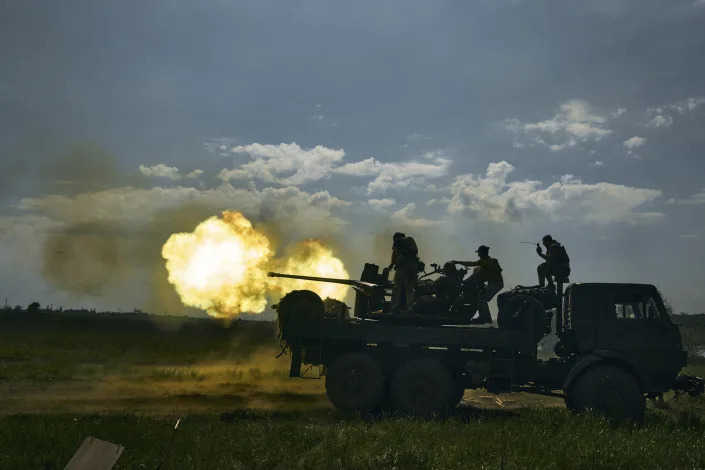
WASHINGTON (AP) — The Pentagon has overestimated the value of the weapons it has sent to Ukraine by at least $3 billion — an accounting error that could be a boon for the war effort because it will allow the Defense Department to send more weapons now without asking Congress for more money.
The acknowledgment Thursday comes at a time when Pentagon is under increased pressure by Congress to show accountability for the billions of dollars it has sent in weapons, ammunition and equipment to Ukraine and as some lawmakers question whether that level of support should continue.
It also could free up more money for critical weapons as Ukraine is on the verge of a much anticipated counteroffensive — which will require as much military aid as they can get. Ukrainian President Volodymyr Zelenskyy has previously said the offensive was delayed because they did not yet have everything they needed.
The error was caused when officials overvalued some of the systems sent to Ukraine, using the value of money it would cost to replace an item completely rather than the current value of the weapon. In many of the military aid packages, the Pentagon has opted to draw from its stockpiles of older, existing gear because it can get those items to Ukraine faster.
“During our regular oversight process of presidential drawdown packages, the Department discovered inconsistencies in equipment valuation for Ukraine. In some cases, ‘replacement cost’ rather than ‘net book value’ was used, therefore overestimating the value of the equipment drawn down from U.S. stocks,” said Pentagon spokeswoman Sabrina Singh.
She added that the mistake hasn’t constrained U.S. support to Ukraine or hampered the ability to send aid to the battlefield.
A defense official said the Pentagon is still trying to determine exactly how much the total surplus will be. The official, who spoke on condition of anonymity to discuss internal deliberations, said the comptroller has asked the military services to review all previous Ukraine aid packages using the proper cost figures. The result, said the official, will be that the department will have more available funding authority to use as the Ukraine offensive nears.
The aid surplus was first reported by The Wall Street Journal.
To date the U.S. has provided Ukraine nearly $37 billion in military aid since Russia invaded in February 2022. The bulk of that has been in weapons systems, millions of munitions and ammunition rounds, and an array of trucks, sensors, radars and other equipment pulled from Pentagon stockpiles and sent quickly to Ukraine.
Members of Congress have repeatedly pressed Defense Department leaders on how closely the U.S. is tracking its aid to Ukraine to ensure that it is not subject to fraud or ending up in the wrong hands. The Pentagon has said it has a “robust program” to track the aid as it crosses the border into Ukraine and to keep tabs on it once it is there, depending on the sensitivity of each weapons system.
There also is a small team of Americans in Ukraine working with Ukrainians to do physical inspections when possible, but also virtual inspections when needed, since those teams are not going to the front lines.
In late February, the Pentagon’s inspector general said his office has found no evidence yet that any of the billions of dollars in weapons and aid to Ukraine has been lost to corruption or diverted into the wrong hands. He cautioned that those investigations are only in their early stages