Category: War
Categories
WWII – German Badges Explained
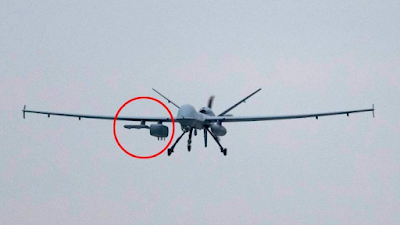
What gets me is its name. Apparently it’s called the ALQ-167 Angry Kitten. Details at the link.
I’ve met lots of kittens during my life. I don’t know that I’ve ever considered an irritated, or angry, or PO’ed kitten to represent any real danger. Was this the best choice of name they could come up with?
Regardless, it made me smile. “Hey, enemy! MEEEEOOOW to you too!”
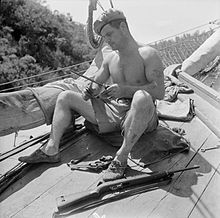
Saul David has written a new authorised history of the SBS and has uncovered some of the most extraordinary stories of World War Two.
Silent Warriors
Britain’s SBS – or Special Boat Service – was the world’s first maritime special operations unit. Founded in the dark days of 1940, the SBS started as a small and inexperienced outfit that leaned heavily on volunteers’ raw courage and boyish enthusiasm. It went on to change the course of the Second World War – and has served as a model for special forces ever since.
The fledgling unit’s first mission was a daring beach reconnaissance of Rhodes in the spring of 1941. Over the next four years, the SBS would carry out many more spectacular operations in the Mediterranean, the Atlantic, the Channel and the Far East. These missions – including Operation Frankton, the daredevil attempt by the “Cockleshell Heroes” to paddle up the Gironde River, deep behind enemy lines, and sink Axis ships in Bordeaux harbour – were some of the most audacious and legendary of the war.
Paddling flimsy canoes, and armed only with knives, pistols and a few submachine guns, this handful of brave and determined men operated deep behind enemy lines in the full knowledge that if caught, they might be executed. Many were.
Yet their many improbable achievements – destroying enemy ships and infrastructure, landing secret agents, tying up enemy forces, spreading fear and uncertainty, and most importantly, preparing the ground for D-Day – helped to make an Allied victory possible.
An Unlikely Partnership
The acknowledged “father” of the SBS is Roger “Jumbo” Courtney, a 38-year-old former big-game hunter with a “bashed-in kind of face” and a “blunt, no-nonsense manner”, who in October 1940 came up with a new way to take the fight to the enemy: using two-man folding canoes (known as folbots) to deliver teams of highly trained commandos deep behind enemy lines. Having provided his superiors with proof of concept – by paddling up to and then sneaking aboard a heavily guarded ship in Inveraray harbour in the Scottish Highlands – he was given permission to form the Folbot Troop, later renamed the Special Boat Section (or SBS). Thus was born “a new style of warfare: a Special Force who came from the sea”.
Deployed to the Middle East, Courtney quickly joined forces with Lieutenant Commander Nigel Willmott, a 30-year-old Royal Navy navigator who was convinced that secret beach reconnaissance was vital if the amphibious landings needed to defeat the Nazis were to succeed. Willmott’s conundrum was how to land on beaches silently; Courtney’s canoes provided the answer. It was an unlikely partnership. Courtney was a big picture person “with a flair for improvisation in a tight corner”, Willmott a details man. This combination of vision and precision would be the making of the SBS.
In March 1941, the two men were transported by submarine from Alexandria to a point off the coast of the Italian-held island of Rhodes. From there they paddled in by canoe and took it in turns to swim ashore and carry out a clandestine survey of the closely guarded shore as preparation for an amphibious assault.
The dangerous mission – undertaken with improvised equipment and at a time of year when the weather was wild and unpredictable – almost resulted in their capture or drowning. Yet, each time they returned safely to the submarine with vital information and proved, beyond doubt, that folbots could make a difference. Together they had pioneered a new technique – close beach reconnaissance – that would save thousands of Allied lives in the years to come.
The two men soon went their separate ways: Courtney to develop the SBS whose multiple roles included landing secret agents, assisting Commando operations, and destroying ships and coastal infrastructure; and Willmott to create, in December 1942, the brilliant maritime special operations unit known as COPP – or Combined Operations Pilotage Parties – that provided beach intelligence for the great amphibious landings in Sicily, Italy, Normandy and later the Far East. Both units are forerunners of the modern SBS.
The Men and Their Missions
Two of Courtney’s most effective operators were Lieutenant “Tug” Wilson and Marine Wally Hughes who would, over the course of eight months in 1941, execute a succession of extraordinarily daring and successful operations that made them the scourge of the Italian military. Yet, both were slight and unassuming types, “the complete opposite of the Commando of fiction, usually portrayed by post-war journalist-authors as rip-roaring, bloodthirsty thugs ever ready to slit a throat”. Hughes, a man of few words, was “short, lean, tough and ready to tackle anything”; Wilson his “suave, sophisticated opposite”.
Their nerve-wracking missions – carried out at night, deep behind enemy lines – involved their transport in submarines to the coasts of Sicily and mainland Italy where they paddled ashore and laid explosive charges that destroyed trains, railway lines and bridges.
On their last operation together, a failed attempt to use a limpet mine to sink an Italian destroyer in the Greek harbour of Navarino in December 1941, Wilson almost drowned in freezing water. “Wetsuits were in the future,” commented a submarine officer, “and Wilson was a skinny man; a plumper operator might have managed.”
Wilson’s long reign of terror was finally brought to an end in September 1942 when he and a new partner, Bombardier John Brittlebank, were captured after they tried to sink a ship in Crotone harbour in Southern Italy with mini hand-operated torpedoes. A hard man to replace, Wilson has been a model for SBS operators ever since: small-framed but deceptively strong, a team player but capable of independent action, an intelligent problem solver, eager to embrace new technology and as brave as a lion.
Another prominent SBS man was Lieutenant Ted Wesley who, in late 1944, took part in a daredevil mission to destroy a railway bridge in northern Sumatra in the Dutch East Indies (modern Indonesia). Dropped off by submarine, four pairs of canoeists – two officers and six men – lost their way because of a faulty compass, blundered around in the dark jungle, and had to abort the first attempt. Undeterred, they tried again the following night and, having avoided a Japanese bicycle patrol, got to the bridge where they attached 400lbs of explosives and set off their pencil fuses.
Observed by some locals, they took one prisoner and attempted to force him into a canoe to be quizzed later. He resisted and thus began a comical struggle as Ted Wesley tried to subdue the captive by punching him, hitting him with the butt of his luger, and, in a final act of desperation, forcing him under the water ‘to drown some of the life out of him’. The captive responded by biting Wesley’s hand. It was the final straw. Exhausted by the struggle and unwilling to inflict any more harm on the local, Wesley let him go and ‘patted him on the back – a poor atonement for all that bullying!’
Late for their rendezvous with the submarine, they were paddling furiously when a huge explosion heralded the destruction of the bridge.
Preparing for D-Day
Nigel Willmott’s Coppists did vital work throughout the war, losing several men in the process. But their finest hour was in preparing the ground for D-Day. First, during the night of New Year’s Eve 1943, two of Willmott’s best men – Major Logan Scott-Bowden and Sergeant Bruce Ogden-Smith – swam ashore in a highly risky mission to take samples from Gold Beach in Normandy to confirm the sand was firm enough for Allied vehicles to land. Narrowly avoiding detection by German sentries, they returned with the evidence that it was. “On these operations,” wrote Admiral Bertram Ramsay, commanding D-Day naval forces, “depends to a very great extent the final success of operation ‘Overlord’.”
A fortnight later, the same pair scouted Omaha Beach by swimming ashore from a midget submarine. Once again, they brought back vital intelligence, particularly on Omaha’s intimidating defences, and advised American commander Lieutenant General Omar Bradley that “this beach is a very formidable proposition indeed”.
Partly, as a result of the Coppists’ report, the number of invasion beaches was increased from three to five. But nervous about giving the game away, the Americans chose not to accept the Coppists’ offer to signpost their two beaches – Omaha and Utah – on D-Day. The decision had disastrous consequences. “They could have done with that offer of markers,” wrote one Coppist history. “With no inshore signal to guide them, the whole assault force set its predetermined course for the unseen shore from its start point twelve miles out to sea. Immediately the weather and the powerful tidal set took hold of the mass of boats and swept them steadily, innocent, and unknowing, to the east…The whole assault force on ‘Omaha’ had slipped sideways and was surging straight for catastrophe.”
Put ashore in the wrong place, weighed down by weapons and kit, the American troops were massacred. More than 2,000 died on Omaha on 6 June 1944.
Operation Gambit
The value of beach markers was demonstrated a short way to the east of Omaha where Coppist teams in two midget submarines – X20 and X23 – were tasked with guiding British and Canadian landing craft into their respective beaches. The mini-subs were needed for D-Day because the shallow depths and stormy seas off of Normandy were unsuitable for normal submarines and canoes.
The plan, Operation Gambit, was for the two mini-subs – just 50 feet long and each with a 5-man crew – to depart Portsmouth on the night of 2 June 1944, cross the Channel and wait submerged off their respective beaches until just before dawn on 5 June (the original date for D-Day) when they would surface and begin flashing signals.
It was the toughest and most important job on D-Day. To pull it off required perfect timing, nerves of steel and no small amount of luck. Failure was not an option: their premature discovery, they knew, would jeopardise the whole invasion.
Arriving off the Normandy coast in the morning of 4 June, they remained submerged for most of the next two days as bad weather forced a 24-hour postponement of the invasion. This meant another torturous 18-hour oxygen-starved stint beneath the waves on 5 June. From which, they finally emerged at 11.15 p.m. to the “worst hangover in the world” and the news that the invasion was a go for the morning of the 6th.
X23 surfaced off Sword Beach at 4:45 a.m. on Tuesday 6 June and its crew began rigging the signals that would guide the invasion fleet. These lights began flashing seawards at 5.07 a.m. With dawn fast approaching, it was only a matter of time before they were spotted by the shore defences.
Suddenly, recalled 22-year-old Sub Lieutenant Jim Booth, a Coppist on his first mission, the “light must have changed because we saw a huge host of ships coming towards us. Thousands of them. It was incredible. The landing craft came incredibly close to us.” Booth and the others cheered and yelled as the landing craft ploughed past them, a curious sight to the helmeted soldiers as, with most of the submarine underwater, it must have seemed as if they were walking on water.
Though it would not be acknowledged publicly for years, Willmott’s top-secret Coppists had played a key role in the success of D-Day. They were the first to set foot on the beaches, and their lonely and dangerous vigil in X-craft from 4–6 June 1944 would ensure that on the British and Canadian beaches, at least, the assault troops landed in the right place at the right time.
The success of the hazardous operation, wrote Admiral Ramsay, had “materially assisted the greatest landing of British forces on any enemy coast that has ever taken place in the history of the world”.

Saul David is an award-winning historian and the author of SBS: Silent Warriors, which is now out in paperback.

During World War II, the mere mention of the name Tiger was enough to set Allied troops on edge.
ullstein bild Dtl.//Getty Images
In the years since World War II, much mythmaking has mucked up history with various often incredible claims about the effectiveness of certain weapons. And no country’s wartime record is more muddled than Germany’s, whose arms and armies have attracted legions of devoted fans. From the battleship Bismarck to the V-2 rocket, Germany’s weapons have near a mythic hold on history like few others. But how effective were these weapons really?
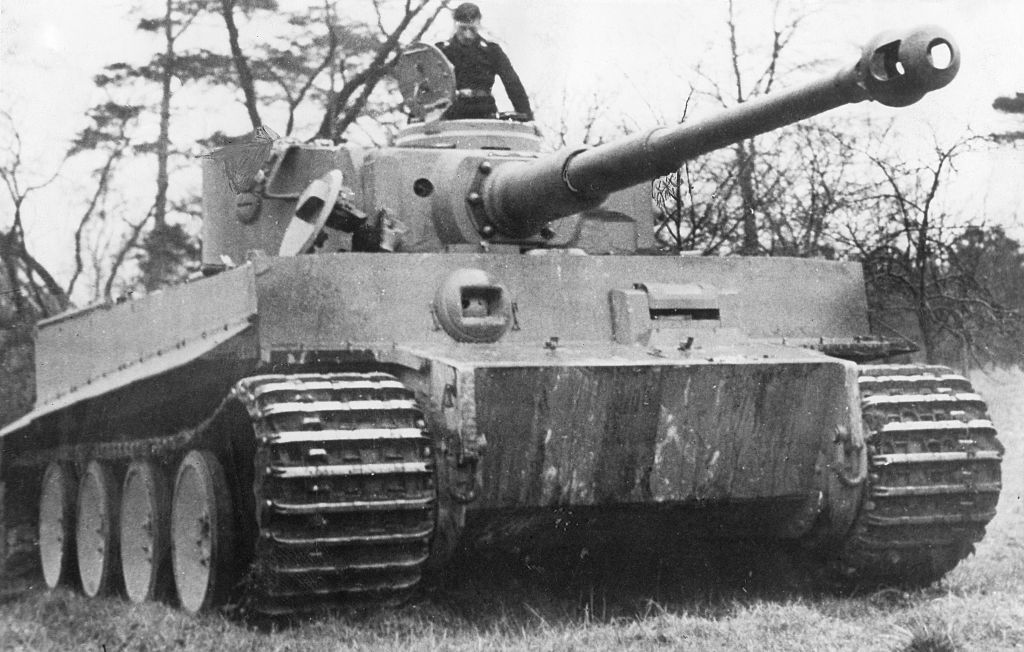
A new video at the YouTube channel Military History Visualized breaks down actual data on the German Tiger tanks. The Panzerkampfwagen VI Tiger tank was a German heavy tank that served on the Eastern Front, Western Front, and in North Africa during World War II. The final version of the tank weighed 54 tons, had a crew of five, and was equipped with a mobile version of the famous 88-millimeter anti-tank gun. First fielded in 1942, the Tiger was meant to forge breakthroughs on the battlefield, destroying enemy tanks at long range while shrugging off hits from lesser Allied anti-tank guns.
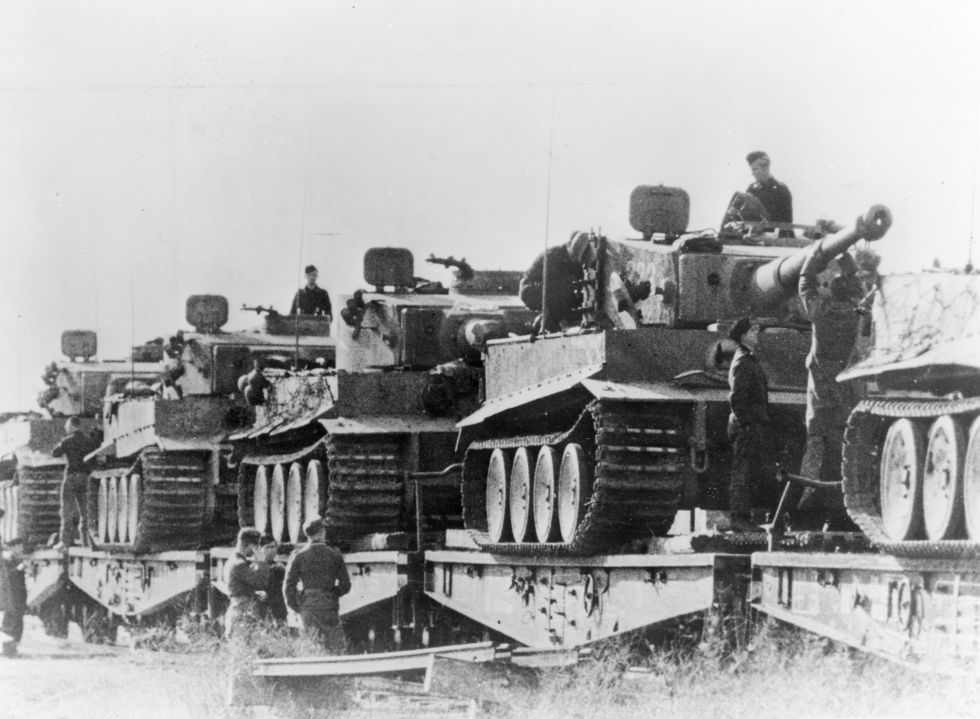
The Tiger is one of the most revered tanks of the war, if not in the entirety of tank history. And, as Military History Visualized reveals, an effective tank—though perhaps not as great as history tends to portray it. The channel charts the combat effectiveness of the various tank battalions equipped with Tiger, comparing wartime and total losses versus the number of enemy tanks destroyed. Unlike other tanks, Tigers were primarily assigned to independent heavy tank battalions of 45 tanks each that the high command parceled to help out in particularly tough battles.
ullstein bild Dtl.//Getty Images
The verdict? If one counts Tiger tanks versus the number of enemy tanks claimed destroyed by Tiger tanks, Tiger tanks killed 11.52 tanks for every one of their own destroyed in battle. Tigers suffered a large number of non-combat losses, however, as the chaos of wartime and the Tiger’s mechanical finickiness chipped away at the number of deployable tanks. If one counts non-combat losses, such as vehicles broken down and abandoned, that number drops sharply to 5.25 enemy tanks killed for every lost Tiger.
Another way to measure effectiveness, as the channel explains, is to examine how much of a threat the Allies considered the Tiger battalions. The Allies took the Tiger very seriously, devoting considerable time to tracking their movements. The Tiger could penetrate the armor of any Allied tank on the battlefield, and the U.S. and British forces would often try to team together air and artillery support along with ground forces to increase odds in their favor.
One major problem with the Tiger: it was very expensive, both in terms of money and resources. As the war dragged on and Germany had less of either, it was deemed important to make the most of war production. The Germans could build many more tanks and cheaper tank destroyers for the cost of one Tiger. A single Tiger used enough steel to build 21 105-millimeter howitzers.
So was the Tiger tank great? Yes, but at what cost?