












LASD said deputies “couldn’t intervene with the giant takeover groups for safety concerns” and because they were “outnumbered.”

COMPTON, Calif. (KABC) — Sheriff’s deputies in Compton have returned to their patrol duties Monday following a chaotic weekend that involved a series of street takeovers and a mob of looters that left a trail of destruction at local stores.
And, law enforcement officials say they are developing partnerships and a plan to stop the increasingly common occurrence of street takeovers in Compton.
Video captured a wild scene at an Arco gas station near Alondra Boulevard and Central Avenue early Sunday morning where a large group was caught on video bum-rushing an Arco gas station and stealing thousands of dollars’ worth of merchandise, all while the clerk on duty hid inside.
The video shows one man breaking the glass door while dozens of looters crowd behind him. Moments later, the group was seen grabbing everything from drinks, snacks, alcohol and even condoms.
The Los Angeles County Sheriff’s Department told Eyewitness News thousands of dollars’ worth of merchandise was stolen and serious damage was done to the store.
Investigators said shots were fired about a block away from the store raid though no injuries were reported. Meanwhile, staff at the gas station told ABC7 the clerk who hid in the bathroom is doing okay.
Residents of Compton say the street takeovers have become a frequent problem in the area in which the looting took place, and they say the scenes captured at the Arco were bound to happen at some point.
“This intersection, this goes down 2 to 3 nights a week. We hear the motors roaring, if you’re close by you probably can’t breathe after they got going,” said Ricky Finley, a resident of Compton.

Deputies with LASD’s Compton station had been responding to several illegal street takeovers earlier in the night Saturday, LASD said.
Investigators said the two largest takeovers took place at the intersections of Long Beach Boulevard and Rosecrans Avenue and near the gas station looting incident.
Both incidents involved illegal street racers with up to 500 people involved, investigators said. LASD said the two incidents both ended with break-ins and vandalism, including a break-in at a laundromat.
Though Compton station deputies had been responding to various incidents through the night, LASD said they are “currently limited with their staffed personnel” and “couldn’t intervene with the giant takeover groups for safety concerns” and because they were “outnumbered.”
“That’s our number one problem is not having the personnel, the units to respond to street takeovers. If we have those personnel respond to just street takeovers there’s no one else left,” said Deputy Miguel Meza of the LASD.
But LASD says amid the short staffing, they’re taking action to try and turn the tide, especially since the city has seen a big spike in robberies and burglaries since the end of 2021.
“We’re going to partner with CHP and LAPD to help us conduct several operations in Compton and other areas to avoid these street takeovers from occurring,” said Meza.
One person was detained, but no arrests have been made.
Meanwhile, Compton residents fear it’ll happen again.
“The people who did this, I don’t think they are Compton residents,” said Kevin Evans. “We don’t tear up our own city like this.”
Compton City Councilmember Jonathan Bowers also blamed outsiders for the looting and vandalism but said the city needs to do more to stop the illegal and dangerous street takeovers.
“I am totally disgusted,” he said. “I’m just upside down behind this. These kids coming in our city and just destroying it like this. In my opinion, the city has not done enough to quell this issue. There are other alternatives and ways to deal with this and I feel like we put it on the back burner and we’re dragging our feet as this thing is getting worse.”
On Sunday evening, officials were able to intervene early and prevent another night of looting and street takeovers from taking place.
Anyone with information on the incidents is urged to contact the sheriff’s department.
Enjoy The decline!!!
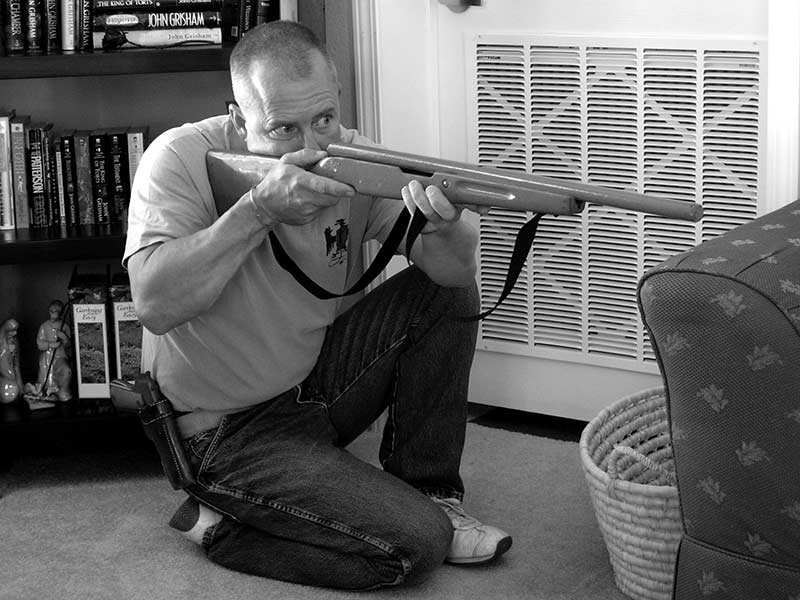
It is with a heavy heart I have to share some sad news. Tiger McKee, long-time author of American Handgunner’s “Tactics and Training” column, has passed away.
While Tiger has graced the pages of American Handgunner and the Tactical Wire with his insightful teachings on personal defense, concealed carry and firearm-related tactics, he’s perhaps best known for his lifelong commitment to being a student. This “always learning” mentality was behind the success and reputation of his ShootRite Firearms Training Academy in Langston, Ala.
Tiger racked up accolades from recognition, including expert ratings on pistol and rifle from none other than Col. Jeff Cooper of Gunsite Academy and teaching certifications from Thunder Ranch and the Federal Bureau of Investigation. But it was always his self-described “lifelong student” approach that made him so relatable.
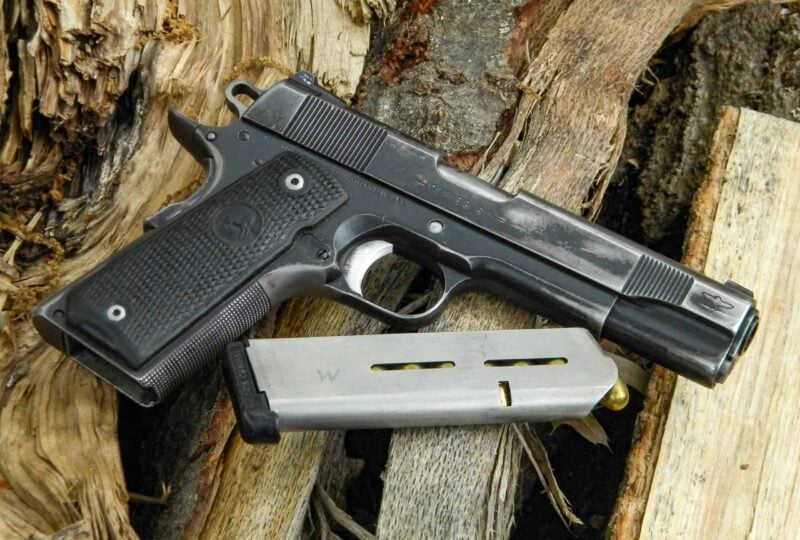
You could spot one of Tiger’s guns a mile away. While well cared for, they were tools, and he used them – a lot.
The cosmetic wear and tear offers plenty of proof.
Tiger has been a prolific writer, publishing hundreds of “how-to” articles on self-defense and shooting techniques. I addition to his magazine and newsletter work, he found time to publish two successful books — “The Book of Two Guns: The Martial Art of the 1911 Pistol and AR Carbine” and “AR-15 Skills and Drills: Learn How To Run Your AR Like A Pro.”
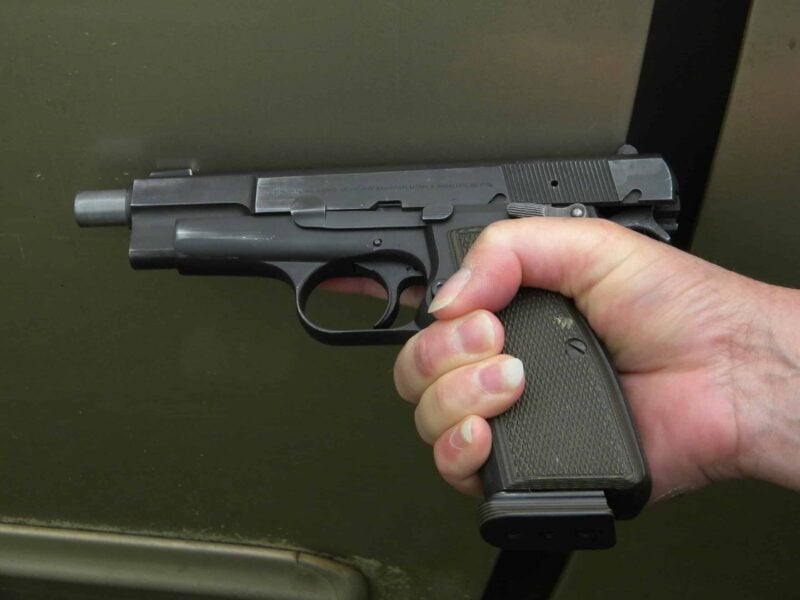
Tiger has been doing lots of work with the classic Hi-Power recently, performing his own customizations
to make it “just right” for his personal tastes. Again, no safe queens in his stable.

Tiger was never afraid to pick up the file and take it to a shiny, brand-new pistol.
Making it “just right” for hard use was always the number one priority.
In recent years, Tiger’s passion expanded to DIY gunsmithing and customization. You may have noticed more and more articles in American Handgunner and some of our special editions highlighting Tiger’s shop work on revolvers, Hi-Power pistols, and more.
We’ve got a couple of articles he’s completed recently that will be highlighted in upcoming editions of American Handgunner, so please keep an eye out. I know of no better way to honor the man than to share his work.
Tiger will be missed. He was a true gentleman who was truly a joy to work with.
This tragic news is just breaking, so we’ll share as we learn more about arrangements and honorarium opportunities.
Sniper or Snipers (Chinese: 狙击手) is a 2022 Chinese war film directed by Zhang Yimou and Zhang Mo and starring Chen Yongsheng, Zhang Yu, and Zhang Yi. The film picks up the story of Zhang Taofang, a Chinese sniper defeating American enemies in the Korean War.[2] The film premiered in China on 1 February 2022, to commemorate the PLA Day.[3]
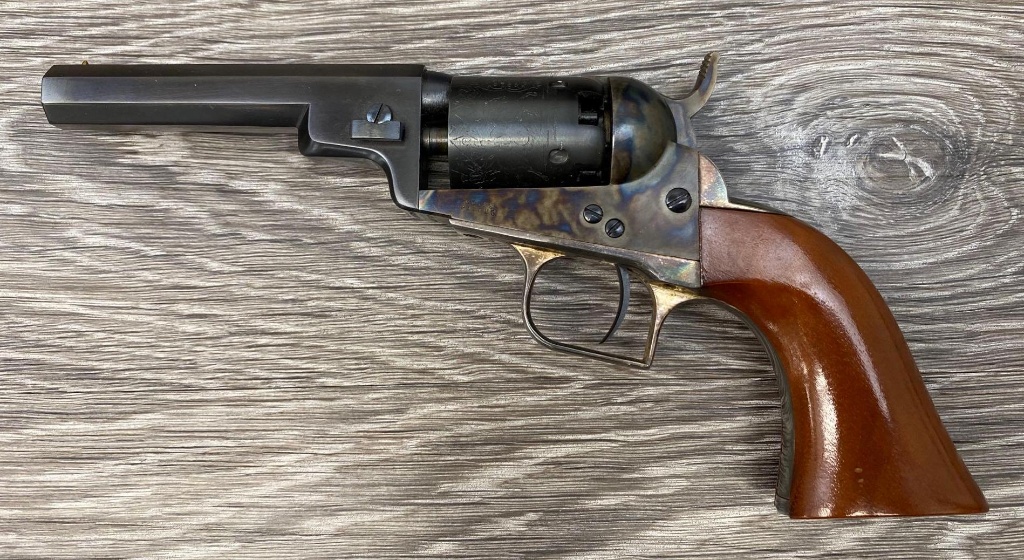
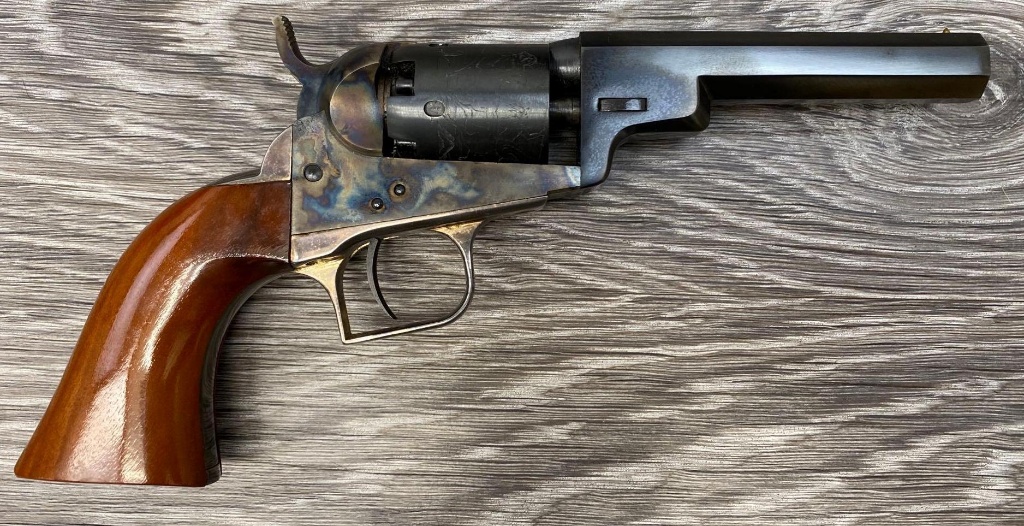
I recently received a call from my friend Jim Martin. Jim is an even older guy than I am, an expert in fast draw and gun spinning, a top-notch tunesmith when it comes to Colt Single Actions. He is also the man who rebuilt the Great Western .45s, which appeared on the cover of the first issue of GUNS in January 1955, so I could shoot them for the 50th Anniversary issue. Jim had recently tuned and tightened a 3rd Generation 7-1/2″ New Frontier .44 Special and informed me the owner said it wouldn’t shoot. “He will sell it for $600…” and that’s where I immediately interrupted him and said, “I will take it!”
I had a pretty good idea why it wouldn’t shoot and made arrangements for it to be shipped to my FFL dealer, Buckhorn Gun & Pawn. It arrived the next morning and within an hour, I had it shooting 1-hole groups. Martin had done a magnificent job tuning it to perfection and tightening up the cylinder by installing an oversized bolt. When I received it the first thing I noticed was the rear sight was cranked high enough it was obvious the previous owner had been shooting 200-grain bullets, which were probably intended for the .44-40 and also probably sized at .427″. The latter is precisely why it probably wouldn’t shoot.
Using plug gauges I found the cylinder throats of the New Frontier to be a uniform .433″. Shooting .427″ bullets through such a cylinder is a guarantee of mediocre accuracy. The largest bullets I had loaded in .44 Special cases measured .431″, and over 7.5 grains of Universal they shot superbly in the new New Frontier. The reason this sixgun couldn’t shoot was easily traced to the ammunition.
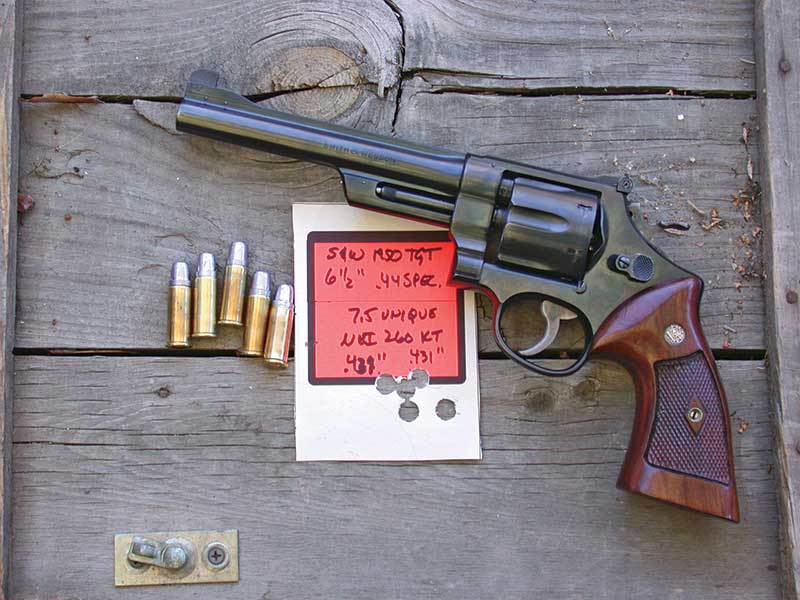
Match the bullet to the sixgun’s chambers. Here, .431″ bullets grouped
this well in a Smith & Wesson Model 1950 Target .44 Special.
In my early sixgunnin’ years, I religiously measured the groove diameter of sixgun barrels by tapping a pure lead slug down the barrel with a wooden dowel and then trying to measure the diameter of the bullet. Enlightenment came when I finally realized the barrel diameter was not the most critical measurement. The chamber throats of the cylinder matter the most, as cast bullets pass through these tunnels long before they arrive at the barrel rifling. The less distortion when they get there the better. When this became apparent to me, I stopped measuring barrels and with .44 and .45 sixguns, gathered sizing dies from .428″ to .432″ for the .44, and .451″ to .454″ for the .45 and simply used the largest bullet which could be pushed through the cylinder throats.
Several years ago, I received a phone call from a distressed local reader who related he had been on the phone practically every day the last week with Smith & Wesson complaining about his three Model 629s. He had all three barrel lengths, 4″, 6″ and 8-3/8″. None of them would shoot. Now right away I knew something had to definitely be wrong. You might get a new revolver that would not shoot, but three of them at the same time?
He asked if I would be chronographing anytime in the near future and if so, if he could chronograph his Smith & Wessons. Now I didn’t have the slightest idea what chronographing would prove, however, I did set up an appointment. I already had a pretty good idea of why his sixguns wouldn’t shoot. I surmised it had to be either poor ammunition or poor shooting on his part. So just to be sure, I took along some of my own .44 Magnum reloads.
We rendezvoused, he shot his three revolvers and he was right, they certainly did not shoot very well. “Well, let me try them.” I did and they still did not shoot very well. Since we were in such a dire situation, I broke an almost unbreakable rule of mine, which is: never shoot my reloads in someone else’s guns. However, I had noticed something about his ammunition. Without saying a thing to him about his loads, I tried some of my own, which were loaded with the same Keith bullets.
With the short-barreled .44 Magnum using my loads the groups were not spectacular, but certainly passable. They tightened up with the 6″ sixgun and then the group from the 8-3/8″ was as good as it gets with all holes touching. I turned around, looked at him and said: “I think you better call Smith & Wesson and apologize.” The problem was not the sixguns, nor even his shooting, rather his loads. I had noticed the lack of a good crimp on his loads. Every time one of those loads was fired, the remaining rounds in the cylinder would allow the bullets to move forward which played havoc with accuracy. He was, of course embarrassed, but at least the problem was solved. Once again, the problem was ammunition.
A gunsmith sent me a custom ported Smith & Wesson Model 29 complete with a scope in place. He wanted me to test the recoil reducing effect of his newly designed porting. I fired the first shot and it felt pretty good. After firing the second shot, my eyes started to cloud up a bit, as they will do when tired; at the third shot my first thought was I’m not feeling this tired! It was easy to discover the problem. The ports were perfectly designed to throw all the trash back on the front of the scope. By the third shot the light gathering qualities had been diminished significantly. I felt a little sorry for the gunsmith going to all the trouble and sending me a revolver with porting incompatible with a scope.
Porting also turned out to be a problem with a custom Contender barrel. The cast-bullets supplier sent a supply of his gas-checked 7mm bullets along with a scoped barrel. I called him and asked if he had thoroughly tested this barrel, as quite often, ported barrels will not work with cast bullets. He replied, “Oh yes, the maker of the barrel had completely tested it.” I fired several rounds and the bullets were everywhere! I called him back and related my results, he went back to the barrel maker, who went to his employee, who admitted he had not even fired a single load through the barrel.

Sometimes Colt New Frontier .45 Colts are encountered with oversized chamber throats.
Sizing bullets to .454″ improved the groups of this New Frontier tremendously.
Have I ever had factory guns which would not shoot? Smith & Wesson once sent me a .44 Magnum that would not shoot at all. This problem was an easy fix; they had sent a display gun from the SHOT Show and forgot to replace the firing pin. The same thing happened years ago with a Magnum Research Desert Eagle. When we tried to shoot it we discovered once again there was no firing pin. Someone had mistakenly shipped their photography sample to me. I once opened a Dan Wesson box to find no barrel included. It wasn’t hard to figure out it would not shoot!
Shortly after the 10mm arrived a company sent me a brand-new design, a radical departure from the standard semi-automatic. It came from Europe with a special barrel. I tried to shoot it on paper at 25 yards using an 18×24″ piece of poster board. I could not keep all the shots on paper. I used a black felt tip pen to make a small little target in one corner, stitched it with a magazine full from a Smith & Wesson 1006, folded the target to make a its own envelope, and sent it off to the president of the company. A few days later I received a phone call asking me to please send that gun back. The radical new design was never seen again.
Yes, there are guns out there that won’t shoot, but they are awfully difficult to find. If a gun won’t shoot the first thing to check is ammunition, which is most always the problem. The next step is to check the shooter and in fact, have several people of known ability shoot the same gun. If it still won’t shoot then it is time to look for a real problem. I love it when someone tells me “This gun won’t shoot!” as I know I may buy a really good sixgun for a small price. Did I ever tell you about the 7-1/2″ Ruger .44 Magnum Flat-Top I got at a ridiculously low price because it wouldn’t shoot?



US soldiers, sailors, airmen, and Marines have quickly received the the military’s newest pistols in massive numbers.
The US Army awarded Sig Sauer the contract for the new Modular Handgun System in January 2017. By 2018, other service branches had placed their own orders for the M17 and M18 variants.
By November 2019, Sig Sauer had delivered well over 100,000 of the new sidearms. Deliveries reached 200,000 in November 2020 — the first month the pistols were sent to all military branches simultaneously.
The M17 and the compact M18 variant are the latest in a long line of sidearms that US troops have carried into battle since 1776.
The American military’s early sidearms were often privately owned. Officers, able to afford more expensive weapons, usually had dueling pistols, while rank-and-file soldiers made due with whatever they could get from local gunsmiths. This led to an array of armaments with varying calibers and qualities.
The Continental Congress tried to get a standard sidearm to the Continental Army. The pistol it chose was a direct copy of the British Model 1760 flintlock pistol. The Congress bought 2,000 of the pistols, dubbed the Model 1775, which were made by the Rappahannock Forge in Virginia.
The .62-caliber smoothbore single-shot flintlock, which included an iron or ash ramrod under the barrel, is considered the first US Army-issued handgun.
The pistol was well received during the Revolution. After the war, a new version, known as the Model 1805, was made at Harper’s Ferry. This flintlock saw service in the War of 1812 and remained the US Army’s standard-issue pistol for over 50 years.
Two Model 1805s are featured on the US Army Military Police Corps insignia, and a similar pistol can be seen on the US Navy SEAL emblem.
In 1836, inventor Samuel Colt revolutionized warfare when his first revolver design was patented.
The new weapon allowed a soldier to fire six bullets in as many seconds without pausing to reload. It also used percussion caps, which allowed soldiers to shoot reliably in wet weather.
Colt revolvers were important weapons in the US arsenal for much of the 19th century, with at least four designs — the Colt 1847, the Colt M1848 Dragoon, the Colt Army Model 1860, and the Colt Single Action Army — seeing service.
The Colt 1847, known as the “Walker” for the Texas Ranger who helped design it, was based on previous Colt designs in service with the Republic of Texas and became the first mass-produced revolver in US service.
The Walker and the Dragoon, another .44-caliber revolver adopted by US Army cavalry and mounted-infantry units, saw service in the Mexican-American War and on both sides of the US Civil War.
The most popular Colt design of the 19th century was the Colt Army Model 1860, a .44-caliber revolver adopted just before the Civil War. It was used in large numbers by the Union and the Confederacy — 130,000 were built for the Union alone, and over 200,000 had been made by the time production ceased in 1873.
The invention of metallic cartridges again revolutionized firearms, eliminating the need for percussion caps, a separate powder container, and ramrods. Colt’s most well-known model featuring this innovation was the Colt Single Action Army.
The new revolver fired a .45-caliber center-fire cartridge and was a huge success, becoming a standard sidearm for the US for more than 20 years. It saw action in every US war and military campaign until 1905 and was used extensively on the US Western frontier by bandits and government personnel alike, earning it nicknames like “the Peacemaker.”
Some soldiers, such as Gen. George S. Patton, carried their personal Colt SAAs with them as late as World War II.
The last revolver in US service was the M1917, a six-shot pistol made by Colt and Smith & Wesson and introduced for interim use. After World War I, M1917s were used mostly by support units, though they again saw frontline service with the Vietnam War’s tunnel rats.
In 1911, the US military adopted what would become one of the most iconic firearms in history — the M1911.
Designed by firearms legend John Browning, the .45 ACP pistol was a semiautomatic, single-action, recoil-operated pistol capable of firing seven rounds from a magazine held in the grip of the gun.
The M1911 was one of the most popular weapons in American history. It was the standard-issue sidearm, with few changes, for all branches of the US military for more than 70 years and saw action in almost every American conflict during that period, including both World Wars, Korea, Vietnam, and the US invasion of Grenada in 1983.
The M1911 was officially replaced in 1985, but a number of special-operations units carried them into 21st century. It was so popular that the Marine Corps brought it back into limited service in 2012 in the form of the M45A1 CQBP.
In 1986, the military selected the Italian Beretta 92 as the new sidearm for all branches.
Lightweight and modern, the pistol used the smaller 9 x 19 mm round, enabling it to carry 15 rounds in the magazine, double that of the M1911, but at the cost of less penetration power.
In service as the M9, the pistol was used by US troops for 30 years and saw action in Yugoslavia, the Gulf Wars, Afghanistan, and other operations during the War on Terror.
The Pentagon bought more than 600,000 M9s, but they had reliability problems and had gained a bad reputation by the 2010s. In 2015, the US Army and Air Force began searching for a replacement.
In January 2017, Sig Sauer’s P320 was announced as the winner of the XM17 Modular Handgun System competition. The pistol has two variants: the full-length M17 and the compact M18.
The Army received its first M17s in June 2017. The Air Force began its procurement in June 2019, and the Marine Corps started officially fielding the M18 in September.
The pistols can be configured for different missions and have a rail on which accessories like lasers and optical sights can be mounted. Their standard capacity of 17 9-mm rounds can be increased to 21 with an extended magazine.
The Pentagon plans to buy 420,000 M17s and M18s for $580 million over a 10-year period.