Hi-Point Model C9 3.50 Inch Barrel, 8+1 Capacity Black Finish Serrated Slide, Polymer Grip, in 9mm Luger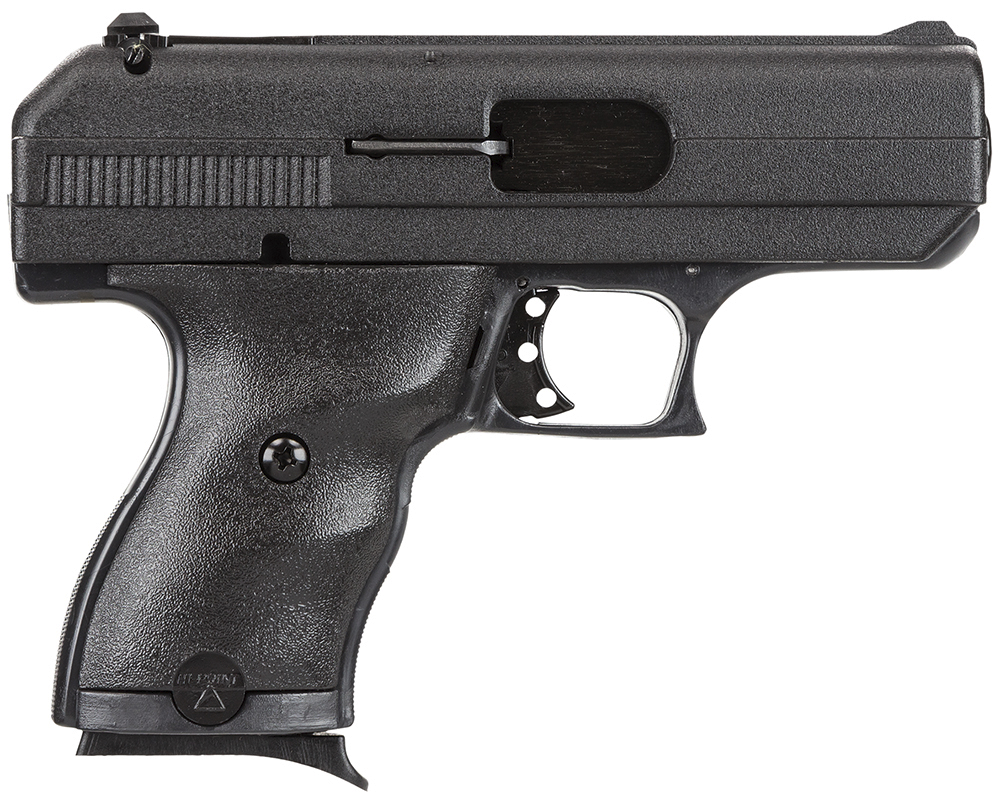

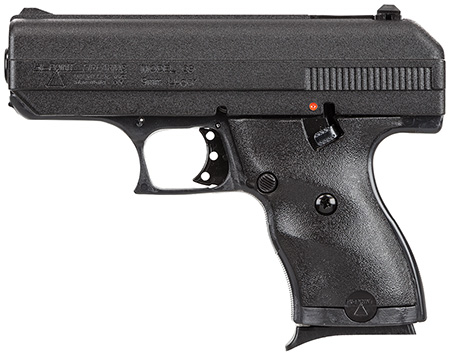

Hi-Point Model C9 3.50 Inch Barrel, 8+1 Capacity Black Finish Serrated Slide, Polymer Grip, in 9mm Luger
Friends and elected officials decried the death of Jordan Neely on Wednesday, insisting the homeless busker didn’t deserve to die. Neely, 30, was a familiar sight around town, performing in Times Square and on subways as Michael Jackson.
“NYC is not Gotham,” city Comptroller Brad Lander tweeted. “We must not become a city where a mentally ill human being can be choked to death by a vigilante without consequence. Or where the killer is justified & cheered.”
When asked on Wednesday if the Marine should be criminally charged, Gov. Hochul said she had just seen the video and needed to find “whether the state has a role” in the investigation.
“There’s consequences for behavior,” she said, although it wasn’t immediately clear if she was referring to Neely or the Marine. “That was deeply disturbing and it causes a lot of fear in people.”
Neely was on an F train heading toward the Broadway-Lafayette stop in NoHo when he began acting erratically around 2:30 p.m. Monday, passengers told police. He yelled and threw garbage at commuters, prompting an argument with the 24-year-old Marine, cops said.
The quarrel turned into a brawl as the train entered the station.
During the fight, the Marine put the victim in a chokehold and tried to restrain him.
A video of the confrontation shows the Marine, who lives in Long Island and is currently in between deployments, with his left arm around Neely’s neck as they struggle.
A second man helped restrain Neely, who turned on his side and continued kicking his legs until he finally stopped moving about two minutes into the disturbing video.
Neely fell unconscious on the train as the Marine held him in the chokehold. A conductor called for police, the video shows. First responders took Neely to Lenox Hill Hospital, where he died.
“(He) was a very good Michael Jackson impersonator,” said Mike Cole, who created a GoFundMe page for Neely’s family. As of Wednesday afternoon, nearly $1,000 had been raised for the impersonator’s funeral expenses.
“Over the years multiple videos have been seen across the internet of him emulating the King of Pop garnishing thousands of views,” Cole said. “He was a natural raw talent who touched a lot of people’s lives. Jordan was a very loving and caring individual who did not deserve to have his life taken like this.”
An autopsy into Neely’s death was inconclusive, a police source family with the case said Wednesday.
Further tests have to be done on the muscle tissue in the performer’s neck to see if he had been strangled or if the chokehold played a role in his death, the source said.
Police and Manhattan prosecutors are awaiting the results of the autopsy before determining if criminal charges should be filed. A spokeswoman for the city Medical Examiner said the autopsy results were pending Wednesday.
Critics charge that the Marine, based on his training in hand-to-hand combat, should have known how dangerous it could be to keep Neely in a chokehold for several minutes.
Years ago, the NYPD banned cops from using chokeholds like the one seen in the video.
Neely has a documented mental health history with the NYPD, had been arrested more than 40 times and was a suspect in a 2021 assault, authorities said.
Friends and fans of the Michael Jackson impersonator said Neely was homeless and hungry when he acted out on the Manhattan train.
Rafael Shimunov, co-host of the radio show Beyond the Pale on WBAI, said that all Neely did was throw his jacket to the ground and ask straphangers for food and water.
“(He was) a hungry New Yorker choked to death by a grinning Marine who is being celebrated as a hero by NYPD and press,” Shimunov tweeted. “His offense? ‘Aggressive speech.’”
The Marine was taken in for questioning but released without charges as the investigation continues. As he held the victim in the chokehold he asked witnesses to call 911, police sources said.
When reached by phone, the Marine declined to comment.
“I’m not answering any questions,” he said. “I appreciate it, but I’m not answering any questions.”
Coalition for the Homeless Executive Director Dave Giffen said Neely’s death was the result of “Gov. Hochuls’ and Mayor Adams’ complete failure to provide the critical mental health services desperately needed by so many people in our city.”
“The fact that someone who took the life of a distressed, mentally ill human being on a subway could be set free without facing any consequences is shocking,” Giffen said. “This is an absolute travesty that must be investigated immediately.”
____
(With Molly Crane-Newman and Michael Gartland)







North Korea is called the DPRK or Democratic People’s Republic of Korea. That’s not even remotely accurate. North Korea is actually a monarchy.

Kim Il-sung kicked off this party in 1945 pursuing unfiltered communism. In 1994 the old Marxist finally cashed in his hammer and sickle, and his son, Kim Jong-il took the reins of power.

Like a proper old school despot, Kim Jong-il kept his boot on the necks of his poor starving subjects until 2011 when he, like his dad before him, died of cardiac disease. At that point, his son Kim Jong-un the Exceptionally Rotund took over.

When supreme executive power passes on the strength of genetics alone that’s a monarchy. All they need is a castle with a proper moat to do it up right. We have explored this freakshow of a family in a previous effort. Here’s the link.

Just as North Korea is actually a monarchy, so their particular brand of communism is in truth a religion. Its acolytes believe in communism’s capacity to transform lives and lead to moral salvation. They preach their peculiar gospel and expect its power to propagate its own supernatural accord. In January of 1968, however, the cult of communism got dealt a serious dose of reality.

The planet in 1968 was fractionated into free and enslaved. The forces of democracy and communism vied for supremacy via a variety of sordid proxy wars. Ground zero for this titanic clash of ideologies was Southeast Asia.

Then as now North and South Korea existed in a weird twilight state of smoldering conflict. The fighting ended in 1953 with a cease fire rather than an armistice, so both factions were and are still technically in a state of war. South Korea then was not the glowing beacon of freedom it is today.

General Park Chung-hee seized power in South Korea in 1961 after his predecessor resigned in the face of a student-led uprising. Park guided the country through a period of unprecedented economic growth. However, he also ruled as a ruthless despot. We have delved into his story before as well. Here’s the link.

In 1966 Kim Il-sung directed the formation of an elite assassination squad titled Unit 124. Comprised solely of commissioned officers from the Korean People’s Army, Unit 124 trained relentlessly for two years for a single mission.

These 31 highly-trained operators were going to infiltrate South Korea, fight their way into the Blue House, the South Korean Presidential residence, and then murder President Park Chung-hee.

The North Koreans believed that if they could throw President Park’s disembodied head off of the balcony at the Blue House, the downtrodden South Koreans would inexplicably rally to their communist cause, reunite the peninsula, and all would become right with the world. The reality, as is so often the case, was not quite so tidy.

These 31 North Korean operatives trained extensively in land navigation, small arms, demolitions, and unarmed combat. Their cross country standard was a steady 8 mph pace over broken terrain with a 66-pound rucksack. In my prime, I did my share of forced marches. Those are some pretty impressive numbers. Several of the Unit 124 operators lost toes to frostbite during training. Part of their extraordinary training regimen involved sleeping atop a corpse to inculcate a resistance to hardship. Wow.

On the evening of January 17, 1968, these 31 operators cut through the wire securing the DMZ. Two days later they had covertly crossed the Imjin River and established a patrol base on Simbong Mountain. All was going according to plan.

Early afternoon on January 19 four South Korean brothers named Woo were out gathering firewood when they inadvertently stumbled onto the North Korean bivouac site. Presuming them to be South Koreans the brothers were friendly and engaging. The Unit 124 operators subdued the unarmed men in short order. Now things got complicated.

SOP dictated that the NoKo troops simply liquidate the four captives and dispose of their corpses before driving on with the mission. However, the ground was hard frozen, and the communist commander appreciated that they could never dig deep enough. As a result, they opted rather to proselytize the four men into submission.

The North Korean soldiers conducted an ad hoc political indoctrination and extolled the many manifest virtues of collective living to their four erstwhile guests. The Woo brothers wisely proclaimed their complete and enthusiastic conversion to the Marxist cause.

Now imbued with the holy spirit of Lenin the four were released with a stern warning not to tell anyone of their meeting. The four fresh converts maintained the charade long enough to get around the first corner and then scampered off to the Changyeon police station in Beopwonri to spill their guts. Now the fuse was lit.

South Korean and American forces mobilized in pursuit of the North Korean hit team. Unit 124 fractionated into three and four-man cells and successfully trekked all the way to Seoul, making some fairly superhuman time in the process. They rendezvoused at the Seunggasa Temple to prepare for their actions on the objective.
Thanks to the Woo brothers, Seoul was now dirty with South Korean troops. The Unit 124 operators then changed into Republic of Korea (ROKA) Army uniforms and adopted the persona of an elite South Korean Army unit just returning from a field exercise. Thusly configured these 31 men simply marched across town to the Blue House, passing several South Korean Police and ROKA units along the way.

Once within a few hundred meters of the Presidential residence, Jongro police chief Choi Gyushik confronted the NoKo troops. Police Chief Choi realized that something was amiss, and things went truly sideways.

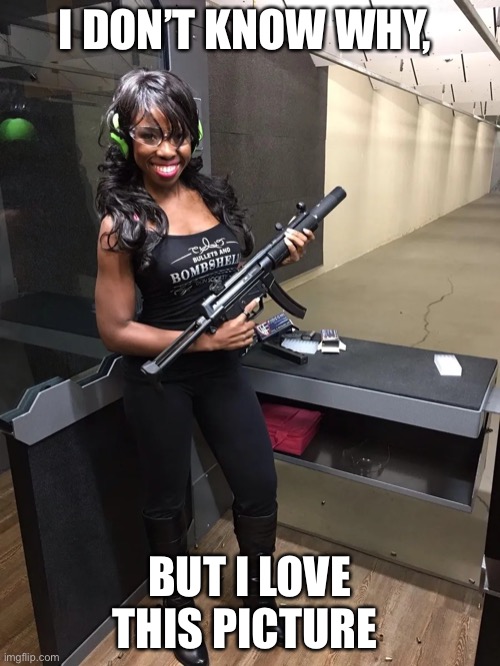
Unit 124 small arms were conventional enough. The most common weapons were PPS-43 submachine guns along with Tokarev TT33 pistols and hand grenades.

In 1942 the Nazis had the Soviet Union on the ropes. Faced with a legitimately existential threat, the Red Army fought desperately to hold the German legions at bay. One solution to this thorny crisis was the Pistolet-Pulemyot Sudayeva or “Sudayev’s Submachine Gun.” Designed as a low-cost personal defense weapon for armored crews, recon units, and support troops, the PPS-43 was all that and more.

Comprised almost entirely of pressed steel parts that could be cheaply formed in bulk by marginally-trained workers, the PPS-43 was a revolutionary weapon.

Compared to the Soviet standard PPSh-41, the PPS-43 used half as much raw steel and required a total of 2.7 hours’ worth of machine time compared to 7.3 hours for the more complicated gun. By the end of the war, the Soviets had produced around two million copies.

The PPS-43 is a simple blowback design feeding from a 35-round double-stack, double-feed box magazine that is not interchangeable with that of the PPSh-41. Where the PPSh-41 cycles at a brisk 900 rpm, the PPS-43 runs at a more sedate 600. Both guns fire the spunky 7.62x25mm bottlenecked round from the open bolt.

The PPS-43 features a top-folding steel stock and a distinctive sheet steel muzzle brake that is as crude as it is effective. The PPS-43 weighs about 6.5 pounds empty.

There followed a most vigorous firefight wherein the valiant police chief was killed along with his assistant. Realizing they would never make it into the residence the Unit 124 commandos separated and led the ROKA and US forces on a merry chase.

When the dust settled 26 friendlies were killed and another 66 wounded, 24 of whom were civilians. Most of the civilian casualties had been on a bus that happened into the crossfire. Four American soldiers also perished in the hunt for the remaining NoKo troops.

Of the 31 communist operators, 29 were eventually gunned down or committed suicide. Pak Jae-gyong escaped and evaded all the way back to North Korea where he was welcomed as a hero. He ended his military career as a General Officer and a member of the Central Committee of the Workers’ Party of Korea, which is apparently a pretty big deal.

The last surviving NoKo operator, Kim Shin-jo, was captured hiding in a civilian home near Inwang mountain. He was subsequently interrogated for a year before being released and earning South Korean citizenship in 1970.

When it became known that Kim was remaining voluntarily, North Korean authorities murdered his parents and his six siblings.

Kim eventually found forgiveness through Christ, married a South Korean woman, and had two children. He became a pastor for a church outside Seoul where he remains today. With 70,000 members, Kim’s church is the largest Presbyterian congregation in the world. It seems Christianity ultimately trumped communism.

In a 2010 CNN interview Kim said, “I was the enemy. But the South Korean people showed me sympathy and forgiveness.”

In the aftermath of the Blue House raid, President Park Chung-hee directed the formation of his own Dirty Dozen suicidal hit squad, this one drawn from South Korean prisons. These convicts were trained to infiltrate North Korea and kill Kim Il-sung. Seven members of this unit died during training. When their mission was scrubbed they revolted, murdered most of their guards, and were eventually gunned down. The survivors were convicted in military tribunals and executed. The government covered up the whole sordid affair but eventually paid the families around $274,000 in compensation.


