
Category: This great Nation & Its People
 Fried chicken, potato salad, green beans slathered in bacon grease, fresh homemade rolls, pecan pie and sweet tea. Gallon upon gallon of sweet tea. The intoxicating odor of this mystical combination smells like church, family and love to me.
Joey looked like a Weeble. He seemed about as wide as he was tall, with generous glasses and an intellectual demeanor. For those not of my generation, a Weeble was a children’s toy back in the 1970s. They were basically indestructible plastic eggs with some kind of figure painted on the side that were weighted slightly at the bottom. Their catchphrase was, “Weebles wobble, but they don’t fall down.” Joey looked a bit like that.
Joey was a natural peacemaker. I was the President of my med school class. Don’t be impressed with that. Somebody had to do it, and I apparently fled slower than everybody else. It fell to me to adjudicate problems.
A couple of my maturity-impaired classmates were overheard making fun of one of my female comrades based on her size. The old Army me bubbled up, and I confronted them both, ready to apply a little frontier justice. Joey physically stepped between us and assured me he would take care of it quietly. He did.
Genesis
Gross Anatomy is the starting point for every physician on the planet. No matter if you are the most esteemed world-renowned neurosurgeon or the local doc-in-a-box, everybody starts there. The experience is at once wondrous and horrifying.
They say your med school cadaver is your first real patient, and that is not an inaccurate statement. I know stuff about that lady that she didn’t. There is a near-spiritual intimacy there.
We called our cadaver Berniece. Within the first week, they all have names. Berniece was a skinny lass who smoked and clearly died of heart disease. I once was in the course director’s office and inadvertently saw Berniece’s real name. I immediately wished I hadn’t. Things worked better if she just stayed Berniece.
Gross Anatomy is at once dehumanizing and profoundly human. On the first day of Gross, everybody gets a bit green, whether they admit it or not. By the end of the first week, you could murder a pizza in the place. The human animal can acclimate to most anything.
One day, we were called upon to disarticulate the hips. That was about as much fun as it sounds and was also fairly messy. While I was struggling to get Berniece to part with her lower extremities, I looked up and saw Joey. He was marching across the gross lab, grinning madly with a human leg thrown jauntily over his shoulder. He looked like some ghoulish Oompa Loompa from Willie Wonka and the Chocolate Factory. I will carry that image to the grave.
The Event
Joey wanted to be an OB/GYN, and he would have been magnificent at it. His physical presence and general demeanor were utterly disarming. Women trusted him. He had a gift.
During the fourth year of med school, you interview for residency. I had my family established, so I didn’t interview anywhere except the hospital where I had already trained. Joey, by contrast, traveled to Hershey, Penn., to vie for a residency spot.
The weather was bad. There was a traffic accident. Joey was killed. I will never forget that phone call. It left me physically ill.
Joey was from a tiny little Mississippi crossroads in the middle of no place. All 100 of his classmates carpooled out for the service. We all fought back tears, some more successfully than others.
Joey got into med school on his third try. His sister had a chronic illness, and this drove his passion. They read the extraordinary essay from his application to med school at the funeral. It was agonizing to hear.
When the service wrapped up, we filed by to hug Joey’s mom and took a peek into his bedroom. They lived right next to the church, and she had left it just as it had been when he grew up. He was such a great kid.
The drive back to the med school was nearly two hours. We were all hungry and emotionally spent. The pastor of the little church insisted on our coming through the fellowship hall before we left.
There we found a simply breathtaking Southern feast. The ladies of that tiny church had pulled together enough food to feed all 100 of us a couple times over. Across those eight-foot folding tables were mashed potatoes, English peas, macaroni casserole, and hand-tossed salad, but it was so much more than that. There was love there, in simply breathtaking quantities, all of it wrapped around the remarkably brief life of an extraordinary young man.
I recently had a delightful visit with a cousin whom I lamentably do not see very often. This was a splendid opportunity to swap tales of family history and catch up on kids and grandkids. During the course of our discussion, I discovered a most extraordinary story. An afternoon spent with Google verifies it as true.
Incipiency
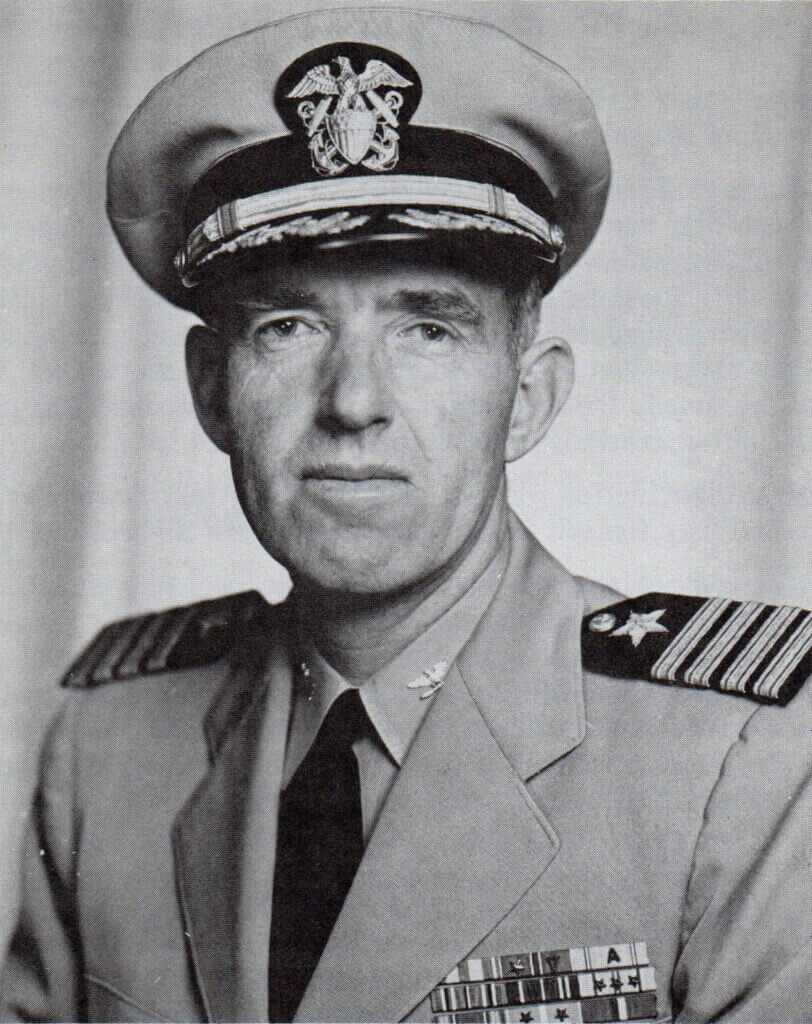
By way of background, my grandmother’s maiden name was Adair. Noah Adair, Jr. was born on the 8th of August 1908, in San Bernardino, California. He was the second son of Noah Adair and Josephine Crutchfield. Noah Jr. lived in California until 1927, when he entered the US Naval Academy at Annapolis.
His older brother, Crutchfield, went by “Crutch.” Crutch was born in 1901 and attended Annapolis in 1924. Crutch Adair trained as a Naval Aviator and eventually served as a test pilot.
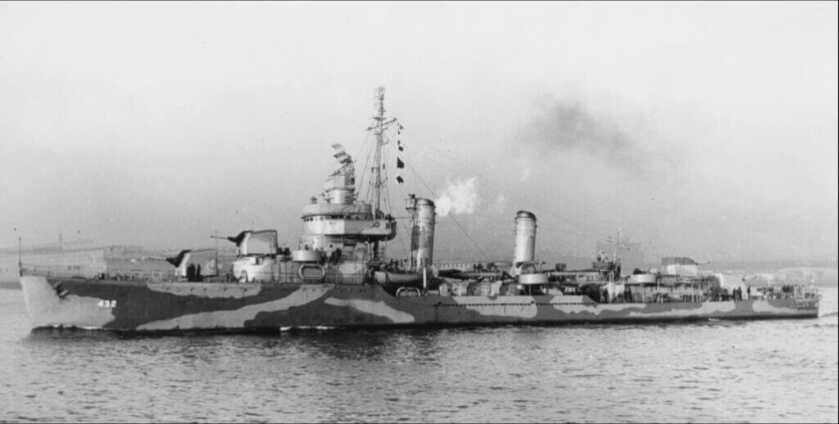
The Adair boys clearly had seafaring in their blood. Noah obviously had the ideal nautical name to boot. By October of 1941, Noah Adair was a 33-year-old Navy officer assigned to the USS Kearny, a Gleaves-class destroyer operating out of Reykjavik, Iceland.
The Come-as-You-Are War
In October of 1941, the United States was still officially neutral. The German U-boat wolfpacks were savaging British convoys shipping war materiel across the North Atlantic to support the beleaguered island nation.
However, at this point in history, the Battle of the Atlantic was not yet our fight. The Kearny and three other US destroyers were moored in the Reykjavik Harbor with orders to stay out of trouble.
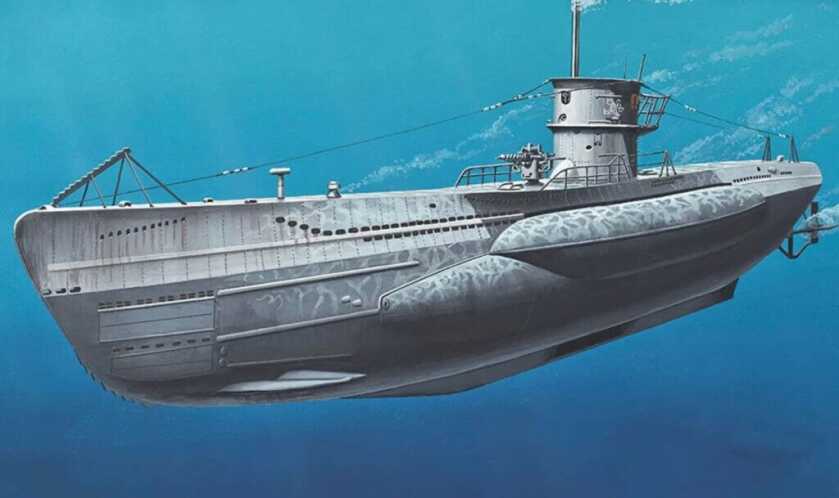
On the evening of 16 October 1941, a wolfpack of five German U-boats patrolling near Iceland launched a coordinated attack against British convoy SC-48. SC-48 consisted of some thirty-eight merchant ships arrayed in ten columns escorted by one Canadian destroyer and five corvettes. The convoy escorts were soon overwhelmed.
In desperation, the four American destroyers answered the call to support the doomed convoy. By the early morning of 17 October, whether Washington realized it or not, the US Navy was at war. The resulting combat was frenetic and pitiless.
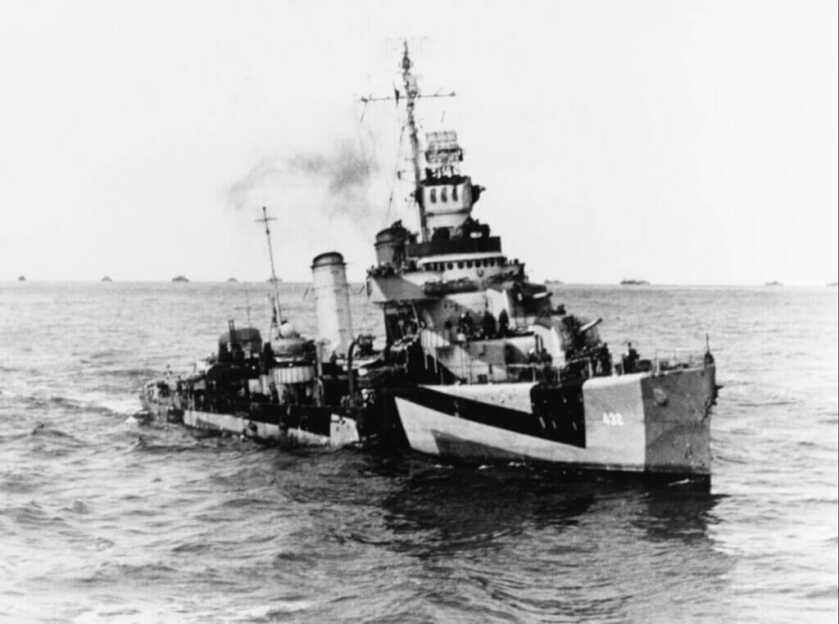
The USS Kearny was soon positioned on the port side of the convoy, screening against further U-boat attacks. With merchant vessels burning in the background, she began launching depth charges based upon ASDIC contacts in an effort to catch one of the five marauding U-boats submerged nearby.
The Cold War Gets Very Hot
By the light of the moon, U-568, an advanced Type VIIC U-boat, launched a spread of three torpedoes at the nimble US destroyer. This was the same particular type of German submarine as was depicted in the epic war movie Das Boot. One fish passed forward of the bow, while a second was spotted behind the stern. The third, however, struck amidships and detonated.
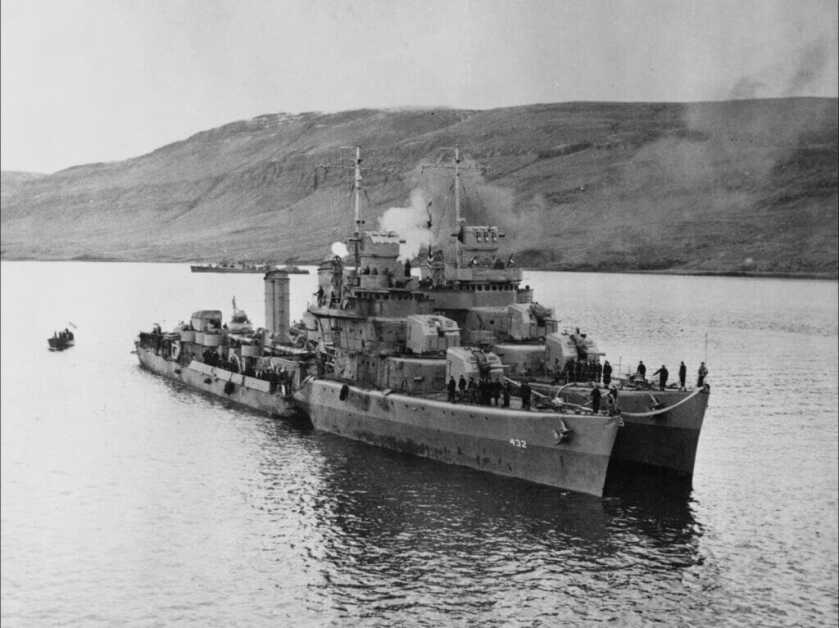
The Gleaves-class destroyer was designed to be fast and maneuverable. As a result, it was a relatively lightly-armored warship. The standard German torpedo of the era packed 649 pounds of Trinitrotoluene (TNT) and hexanitrodiphenylamine (HND) explosive.
This charge was typically adequate to cleave a merchant vessel in two. It should have been more than capable of sending an upstart American destroyer to the bottom. Only in this case it didn’t.
The resulting explosion was nonetheless still catastrophic. The Kearny had an impressive top speed of 37.4 knots (43 miles per hour) and a standard complement of 16 officers and 260 enlisted men when she was healthy. The German torpedo struck perfectly amidships on the starboard side of the vessel abreast the No. 1 fire room and detonated below the waterline.
The resulting explosion killed eleven American sailors outright and wounded a further twenty-two. And the United States was not yet even at war.
Noah Adair’s crew skillfully confined the flooding to the forward fire room. In so doing, they preserved the aft engine room intact. The Kearny disengaged and headed back to Reykjavik under her own power.
Eventually, the crew cleared the forward engine room and restored power there as well. As a result, the Kearny made ten knots en route to Iceland. Following temporary repairs, the Kearny struck out for Boston on Christmas Day 1941. She arrived six days later for an extensive rebuild. The U-boat attack on convoy SC-48 ultimately sank seven of the thirty-eight British merchant ships.
Desperate Times, Desperate Measures
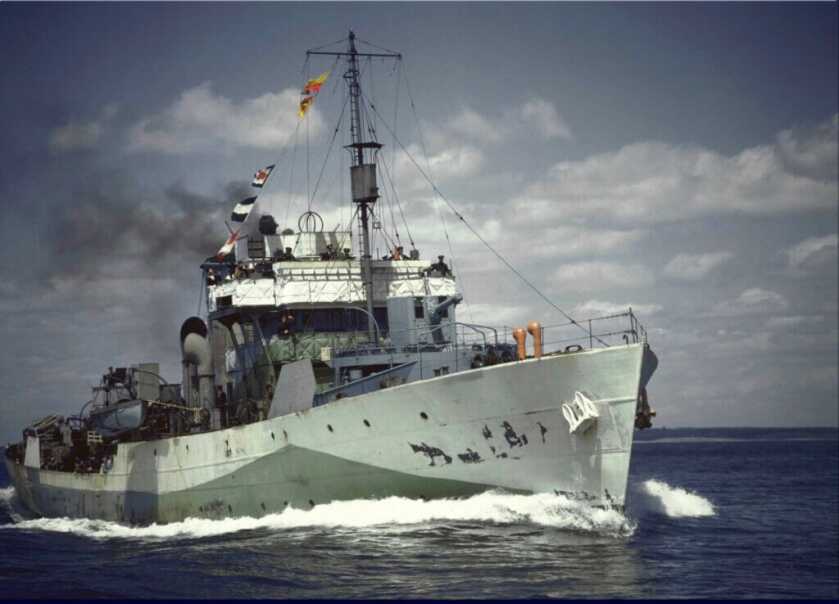
By now, the United States was fully engaged against Hitler’s Germany. Once the Kearny was safely put to bed in Boston, Noah Adair received orders for Liverpool, England. There, he assumed command of a British Corvette now crewed by a further four US Naval officers and fifty enlisted sailors.
This little escort was rechristened as an American ship and brought back across the Atlantic to help continue the fight against the wolfpacks. By 1944, Commander Adair had been awarded the Bronze Star for Valor for his command of a flotilla of these escort ships guarding trans-Atlantic convoys.
And Now for Something Completely Different…
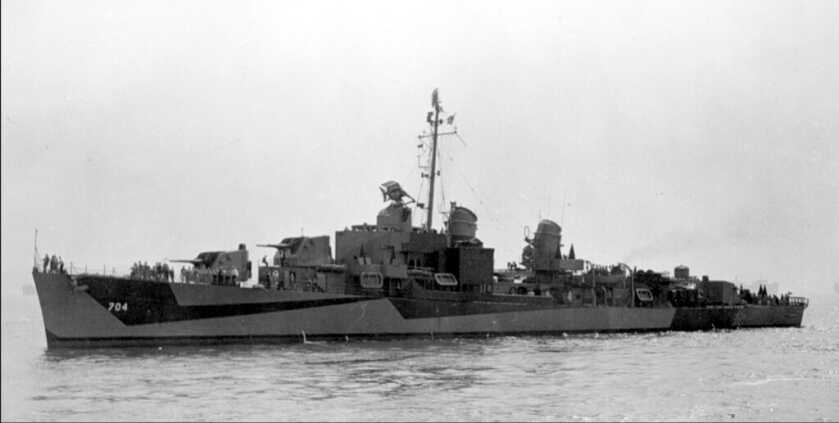
The USS Borie was the second destroyer of that name to serve in the US Navy during WW2. The first Borie was scuttled after having been badly damaged by ramming and sinking U-405 on 31 October 1943. The second USS Borie, DD-704, was launched on 4 July 1944 and commissioned two months later on 21 September 1944. Her first skipper was Noah Adair.
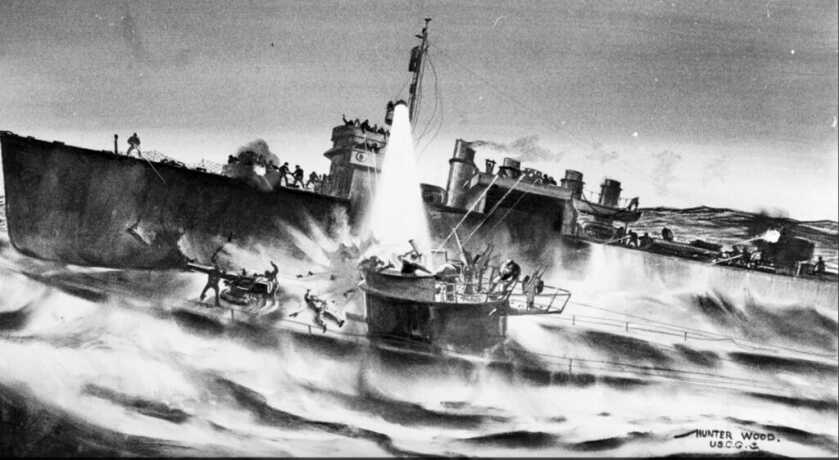
Commander Adair first took his sparkly new tin can into action in support of the Marine landings at Iwo Jima. Her guns supported the initial bombardment on 24 January 1945 as well as the actual invasion the following month.
Afterwards, she was ordered to join Task Force 58 for the Tokyo raids in mid-February. She then fought during the invasion of Okinawa. For a month starting 9 July, Commander Adair led the Borie as part of Task Force 38 as it raided the Japanese home islands. However, on 9 August, the Japanese hit back hard.
Details
By the summer of 1945, the once-mighty Japanese Empire was a desperate shell of its former self. However, the Japanese hive mind was institutionally incompatible with surrender. This made the Japanese armed forces incredibly dangerous. In no place was this more obvious than in the kamikaze forces deployed against attacking Allied warships.
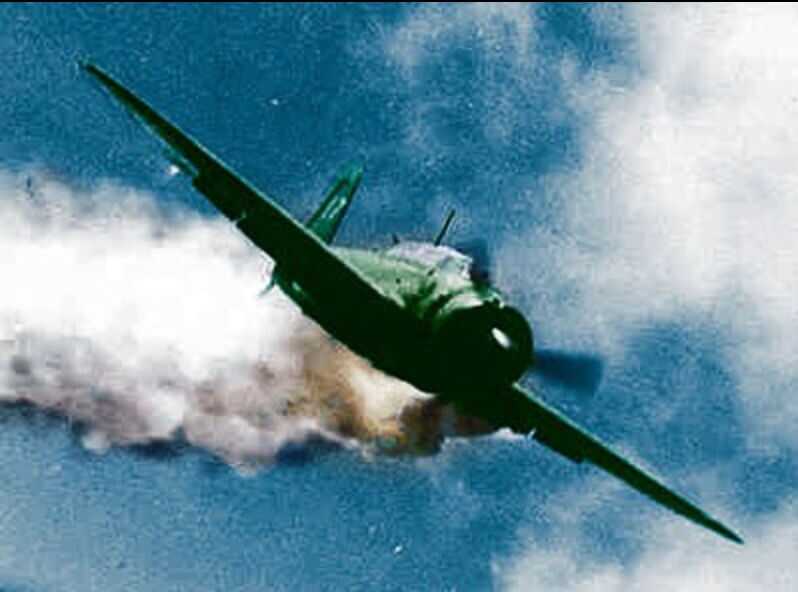
Kamikaze means “Divine Wind” in Japanese. The name is an allusion to Makurakotoba poetry, referring to a major typhoon that dispersed the Mongol-Koryo fleets attempting to invade the Japanese islands under Kublai Khan in 1274 and 1281. In its simplest form, Japanese kamikaze pilots would strap into existing surplus or obsolete warplanes equipped with bombs and then strike out with the intention of diving their planes onto Allied warships, committing suicide in the process.
Eventually, Japanese industry produced a dedicated rocket-powered suicide plane called the Yokosuka MXY-7 Ohka. While most kamikaze missions were directed at Allied ships, some of the suicide pilots were expended combating B-29 Superfortress bombers as well.
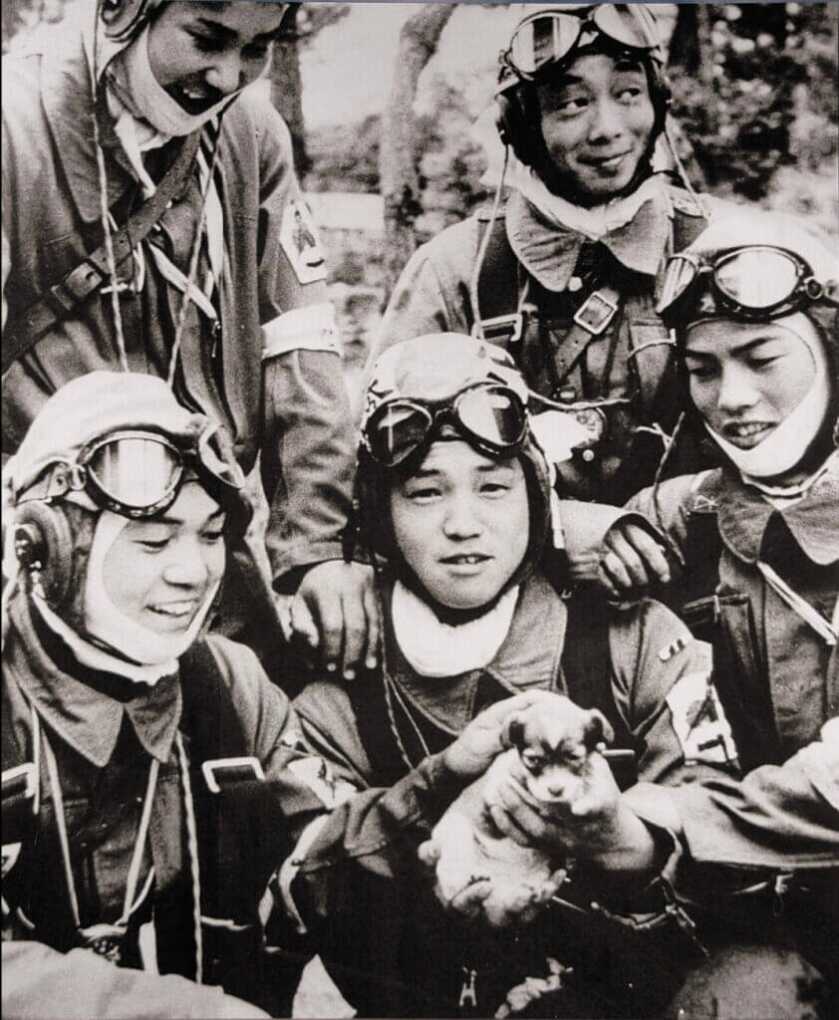
During the course of the kamikaze campaign, some 3,800 Japanese pilots took their own lives while attacking Allied troops. Around 7,000 Allied sailors were killed. The kamikaze became the scourge of the South Pacific.
On 9 August 1945, the war in Europe had been over for three months. Vast quantities of troops and equipment freed up by the German capitulation were inexorably making their way to the Pacific.
The atomic bombing of Hiroshima had taken place three days before. Nagasaki would be sacrificed to the nuclear fire this very day. The war in the Pacific would be over in less than a month. However, that did not stop the Japanese from throwing everything they had at the approaching American fleet.
The Anatomy of a Pounding
On this fateful day, the Borie was operating off the coast of the Japanese island of Honshu. The Japanese launched four kamikaze planes against Commander Adair’s destroyer.
Three of these suicide aircraft were downed by anti-aircraft fire or missed their target. The fourth, however, struck the small vessel’s superstructure between the mast and the 5-inch gun director. The subsequent explosion killed 48 American sailors and wounded a further 66. Of 336 sailors onboard, a third were immediately taken out of action. The attack also left the Borie’s rudder seized in place.
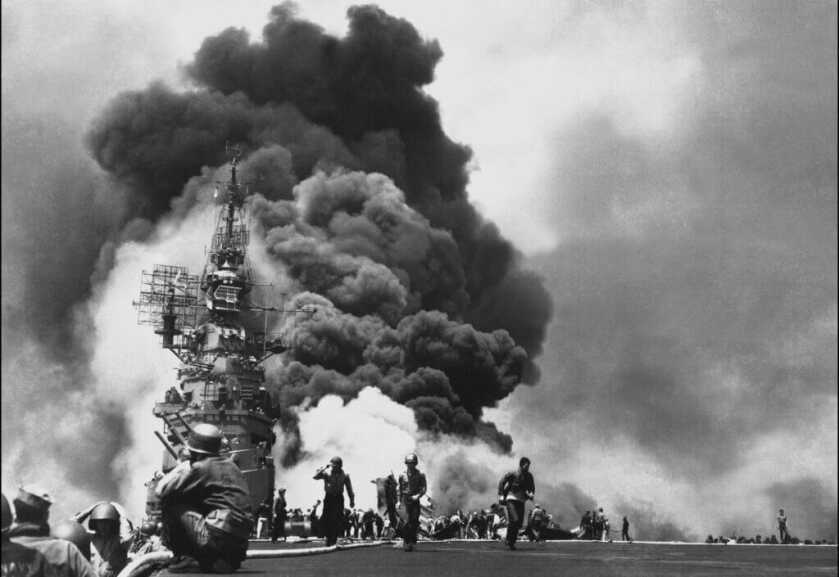
The Borie was critically damaged. Only via particularly skillful actions on the part of Commander Adair and his crew was the vessel kept afloat. Commander Adair was awarded the Silver Star for his actions in saving his ship during this bloody engagement. Here’s the citation-
“As Commanding Officer of the USS Borie in action against the enemy Japanese forces near the shores of the Japanese Empire on August 9, 1945, his vessel was struck by an enemy suicide plane, which caused serious fires and extensive damage. Commander Adair skillfully maneuvered the Borie while fighting and extinguishing the fires, and aggressively directed his gun batteries in fighting off subsequent enemy suicide attacks.”
The Rest of the Story
Commander Adair survived the war. He had the distinction of serving aboard the first US destroyer to be attacked in World War 2 and commanding the last US destroyer struck by a kamikaze. He later commanded the USS Fort Marion during the amphibious assault on Inchon during the Korean War. Curiously, his brother Crutch commanded a sister ship during the same operation.
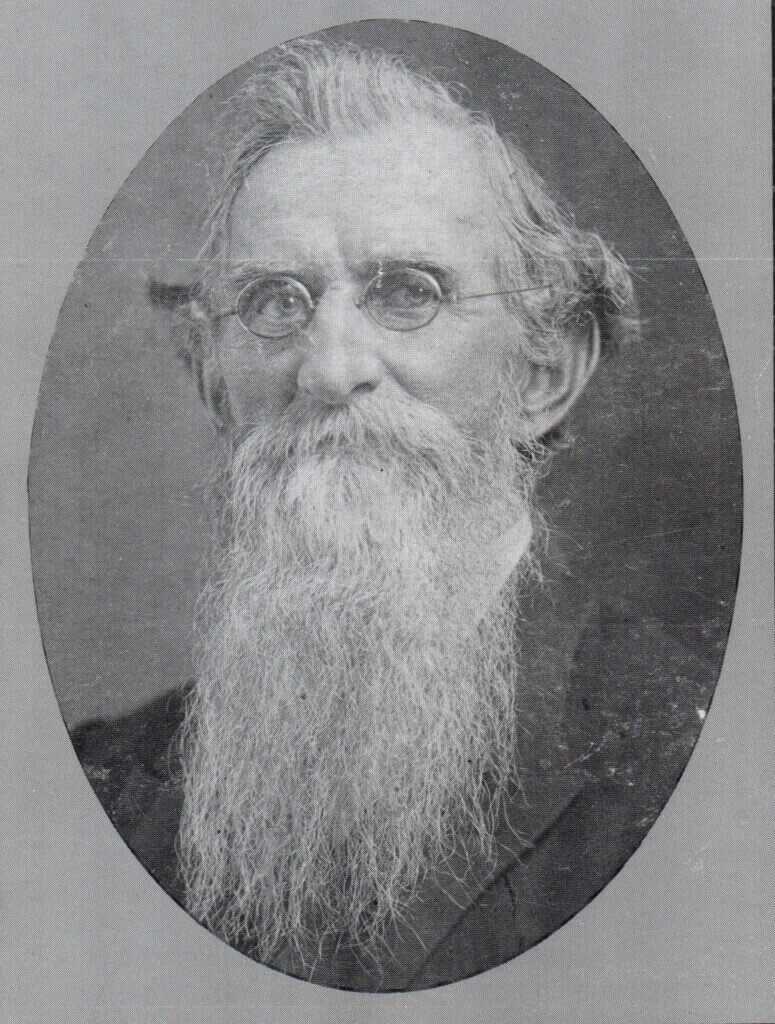
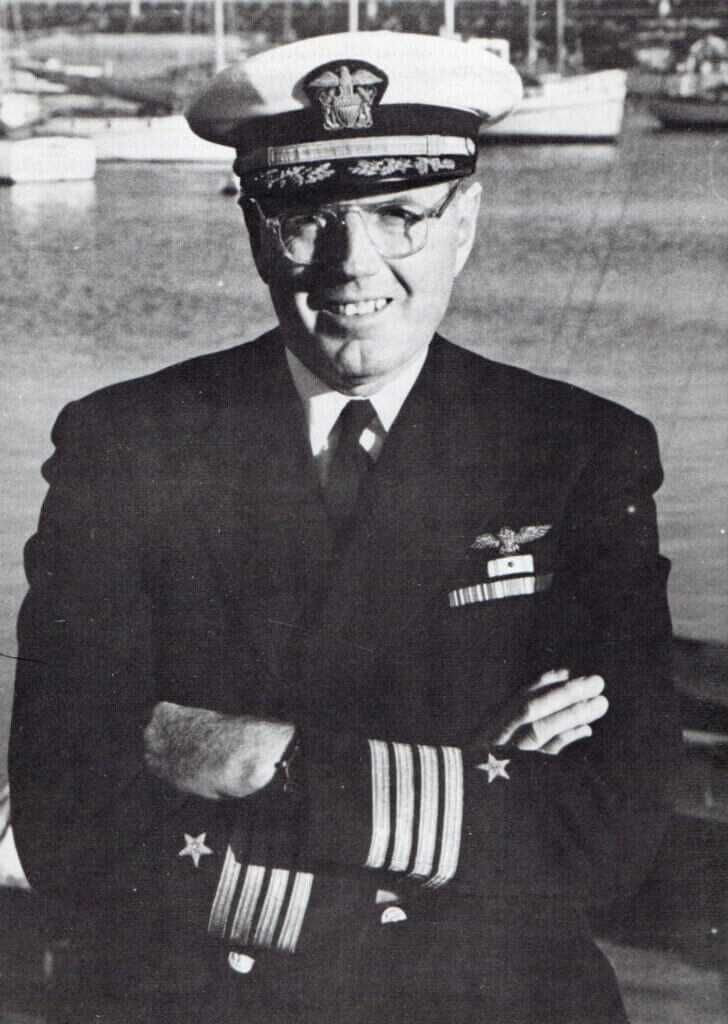
Noah retired in 1960 as a Captain. His brother Crutch left the Navy in 1954 as a Rear Admiral. Another of the Adair boys–Charles–ended up an Admiral after the war as well.
I only met these guys once, and I was too young to appreciate the opportunity at the time. Finding out that your relatives were actually war heroes is like discovering hidden treasure in your attic.
Thanks to the miracle of Google, the details of such stuff are only a few keystrokes distant. I can tell you from personal experience that fleshing out these old tales is a simply splendid way to kill a lazy Sunday afternoon.

It helped that he was in The Cav! Grumpy

Vietnam was really America’s last wild west war. There were a variety of reasons for this. The conflict dragged on for more than a decade, and American troops rotated through the combat zone by the hundreds of thousands.
The place was already awash in weapons before we got there, and there were new technologies aplenty that were evolving on the battlefield. Also, unlike modern war, not just everybody had a camera. All that conspired to grant US combat troops a bit more latitude in personal weapons than might otherwise be the case. In few places were these proclivities more overtly manifest than among Army aviators.
Vietnam was also the world’s first helicopter war. Vertical envelopment was the term du jour, and it did indeed change the way men did battle. Previously war was defined by set lines distinguishable on a map.
However, thanks to the widespread use of rotary-wing aviation in Vietnam, the front lines became wherever ground force commanders chose to make them. Any competent historian would agree that the UH1 Huey helicopter exemplified the conflict in Vietnam more than any other single war machine.
Variety is the Spice of Life

Helicopter tactics evolved substantially during the course of our involvement in Southeast Asia. At its apogee, Army Aviation consisted of four interrelated disciplines. While the crews all came from the same source material, how they did their respective jobs differed widely.
The primary assets in lift companies were indeed UH1H Hueys. These workhorse aircraft could theoretically carry up to 12 combat troops along with a 3-man crew though practical performance was also driven by environmental conditions and equipment loadout. Hueys were roomy, versatile, and cool. Everyone who has ever flown one loves the thing.
The heavy lift mission was undertaken by the CH47 Chinook and the CH54 Tarhe. The CH54 was more commonly known as the Skycrane. While there were four dedicated gunship versions of the Chinook in theater and the Skycrane could drop massive “Daisy Cutter” parachute bombs, these enormous cargo aircraft mostly kept forward units supplied in spaces that were otherwise inaccessible to more conventional transport.

Early attack helicopters were ad hoc machines improvised from Huey airframes. These pioneering Huey Hog gunships packed quad M60 machineguns, 2.75-inch folding-fin aerial rockets, and 40mm automatic grenade launchers.
Subsequent dedicated AH1 Cobra gunships utilized quite a few common Huey mechanical components but added tandem seating and M134 electrically-powered miniguns to the mix.
The aeroscout mission was serviced by OH6 and OH58 Light Observation Helicopters. Universally known as the Loach, the OH6 was the most common scout aircraft in theater.
Typically crewed by a single pilot and crew chief, Loaches typically packed an M134 minigun on the left side of the aircraft along with an M60 on a bungee cord on the right for the crew chief. The Loach mission was to get down in the dirt to root out hidden NVA and Viet Cong that could subsequently be addressed via associated gunships, fast mover attack jets, or artillery. Loach crews fought with machineguns, grenade launchers, hand grenades, small arms, and, occasionally, pistols.

Operating as they were in such intimate confines with the enemy, Army helicopters got shot down quite a lot. We lost more than 5,000 of the machines by war’s end. Many veteran Army aviators survived being shot down multiple times. This made the issue of personal defense weapons critically important.
Make Do with What You Have
Some Army helicopters are roomier than others. I have personally flown OH58’s, Hueys, Cobras, and Chinooks myself. Each machine has its own personality. The CH47 has plenty of room and power to burn.
You more wear the OH58 than fly it, but the old A-models seemed fairly underpowered. Hueys are like flying RVs with ample space and a forgiving personality. There wasn’t enough ancillary room in the Cobra cockpit to stow your flight jacket. The nature of the machine and the mission typically drove the weapons.
As the war progressed, there were seldom enough specialized aircrew guns to go around. In a war zone filled to bursting with firearms, this resulted in a lot of variation in defensive iron. I have known Vietnam veteran pilots who carried captured weapons, WW2-surplus ordnance, and even handguns shipped from home.
Recommended
Handguns

The M1911A1 .45 automatic pistol was the standard-issue US Army sidearm in Vietnam. However, the single-action design did not readily lend itself to one-handed operation. Downed aircrew might conceivably have an injury that precluded use of both hands or they might be otherwise indisposed with some aircraft system or other.
As a result, single action/double action .38-caliber revolvers were the most commonly-encountered sidearms for Vietnam-era helicopter pilots. These were often WW2-surplus Smith and Wesson Victory models.
M1911’s were ubiquitous and available. Many aircrew therefore still opted for John Browning’s big manly handgun.
I have also heard of Lugers, P38’s, Colt Peacemakers, and similar vintage weapons finding their way into aviators’ holsters. Hugh Mills, author of the seminal work on Vietnam aviation Low Level Hell and every scout pilot’s hero, actually carried a Colt Python brought from home. If you haven’t read Low Level Hell you have not yet lived. It’s available on Amazon.
The Perfect Tool

The Colt XM177 was referred to in theater as the CAR15. These stubby, carbine-length M16 variants could be found with either 10 or 11.5-inch barrels. Colt engineers designed these guns to equip Special Forces operators, dog handlers, aircrew, and similar troops who needed a handy rifle-caliber weapon in a compact package.
Many of the attributes incorporated into the CAR15 ultimately found themselves into the subsequent M4 carbine. There were never enough of these guns available to fill the need. It didn’t help that this was also arguably the sexiest firearm ever crafted.
The CAR15 with its collapsible stock was plenty small to fit into the tightest helicopter cockpit. However, the stubby barrel produced some fearsome noise and muzzle flash. These abbreviated carbines were therefore equipped with sound moderators to help tame the chaos. While hardly silencers by any reasonable metric, surviving examples do require BATF registration today.

Colt developed the 30-round magazine to feed these little guns, and each weapon was supposed to come with a basic load of them. However, the extended magazines were not ready in time, so CAR15’s were typically fed using standard 20-round M16 boxes.
Troops often bought the bigger magazines commercially. I have read that there were never more than a thousand 30-round mags in theater, but I have no way of verifying that.
The standard M16 is a fairly compact weapon, and they were used in stock configuration by many active aircrew. The 20-inch barrel offered enhanced terminal ballistics and range over the CAR15 carbine. Packing an M16 was no great chore in most Army aircraft of the day.
Unconventional Options

I have been told by guys who were there that Thompsons, Grease Guns, M2 carbines, and even captured Vietnamese weapons were not unusual in Army helicopters. Ammunition to feed these guns was sourced easily enough, and the weapons were readily available for barter.
A Navy SEAL buddy who was in Vietnam in 1969 packed a civilian slide-action 12-gauge with a cut-down stock and extended magazine that he won in a poker game throughout his time in-country.
The Thompson was compact enough and reliable. However, that thing was also just stupid heavy. The luster often waned if your job involved humping that boat anchor of a weapon any significant distance.
The M3A1 Grease Gun was better in most every way, and they were readily available. However, it was also ugly and looked cheap. I saw Grease Guns in use with armor crews well into the 1990’s. A friend scrounged one he carried during the First Gulf War but couldn’t find an arms room that would take it back after the shooting stopped. He took the weapon out in the desert and buried it before redeploying back home.

AK47s were desirable in that they hit hard and used captured ammo. The sound they made also did not tend to attract as much attention if used in a hostile area by a downed aviator. The folding stock versions were obviously the golden ring, but they were fairly rare.
Serious Iron

The M79 grenade launcher was available everywhere and offered serious punch at distances beyond the range of hand-thrown grenades. Affectionate names for these stubby little handheld howitzers included the Thumper, the Bloop Tube, or Big Ed.
They could also fire smoke and CS rounds if the tactical situation demanded. It was not unusual to find an M79 hanging from the bulkhead within easy reach of the crew chief on combat helicopters.

The M60 belt-fed machinegun was the standard support weapon used throughout most of the Vietnam War. These guns ran off of pintle mounts or hung from bungees. Enterprising crew dogs often cut the barrels short and wired C-ration cans to the left side to enhance feeding.
The M60D deleted the forearm but included a folding ring sight and spade grips. These guns were operated from dedicated mounts in Hueys and Chinooks that included limiting cams that kept enthusiastic crews from shooting up their own aircraft.
Ruminations
At the end of the day, these pioneering aviators did whatever it took to get the job done. For military pilots and aircrew, small arms are most commonly just talismans—something you lug around because it makes you feel safer.
As such, they are not fundamentally dissimilar to a lucky rabbit’s foot or favorite teddy bear. However, if life goes pear-shaped and you actually need that thing for real, it suddenly becomes the most important physical object in the universe. Army aviators serving in Vietnam knew this, and they armed themselves accordingly.