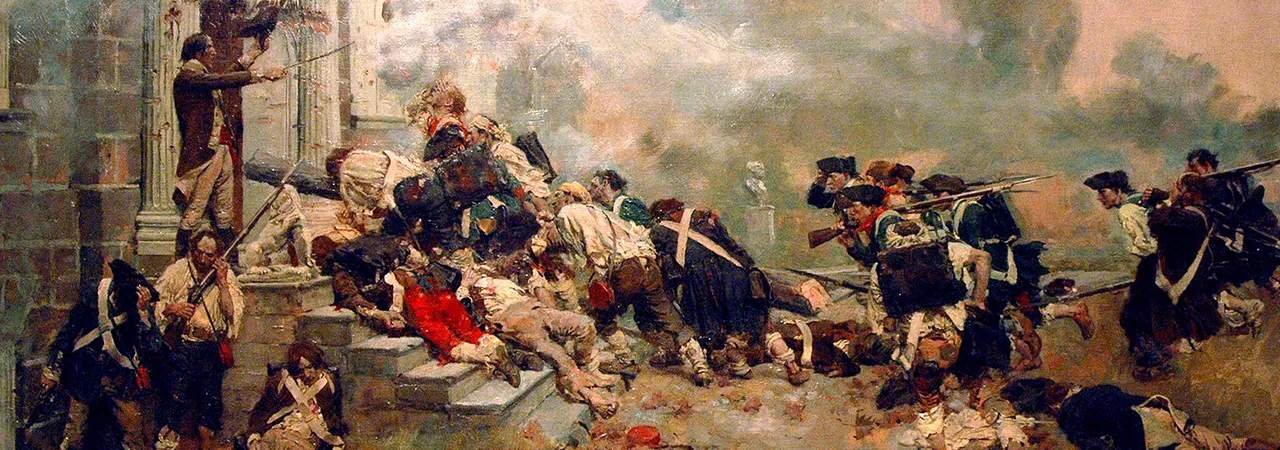
Following the American defeat at the Battle of Brandywine in September 1777, the British Army captured Philadelphia, the seat of the Continental Congress. After taking the American capital, British General Sir William Howe positioned two brigades under General James Grant and a contingent of Hessians troops commanded by General Wilhelm von Kynphausen in Germantown. The British force in the village totaled 9,000 men.
George Washington, commanding an army of 8,000 Continentals and 3,000 militiamen, sensed an opportunity. He decided to attack and destroy the enemy detachment at Germantown using a double envelopment.
Washington set his plan into motion on the night of October 3. Much like at Trenton, he divided his army so as to attack the British from multiple directions at dawn. General John Sullivan would attack with the main force while General Nathanael Greene attacked on the flank. The militia, under General William Smallwood, would target the British extreme right and rear. Unfortunately for Washington, darkness and a heavy fog delayed the advance and cost him the element of surprise.
Sullivan’s column was the first to make contact, driving back the British pickets on Mount Airy. The British were so shocked to find a large force of American soldiers that some were cut off from the main body; 120 men under British Colonel Musgrave took shelter in the large stone house of Chief Justice Benjamin Chew, known as Cliveden. This fortified position would prove a thorn in the Americans’ side for the remainder of the battle, with numerous assaults being repulsed with heavy casualties. While the fighting around Cliveden raged on, Sullivan pushed his men towards the British center.
On the left, one of Sullivan’s divisions, commanded by General Anthony Wayne, became separated in the fog. To make matters worse, Sullivan’s men were also beginning to run low on ammunition, causing their fire to slacken. The separation, combined with the lack of fire from their comrades and the commotion of the attack on Cliveden behind them, convinced Wayne’s men that they were cut off, causing them to withdraw.
Luckily, Greene’s column arrived in time to engage the British before they could rout Wayne. Unfortunately, one of Greene’s brigades, under General Adam Stephen, also became lost in the fog, mistook Wayne’s men for the British, and opened fire. Wayne’s men returned fire. The resulting firefight caused both units to break and flee the field.
Only the steadfastness of Greene’s and Wayne’s men and the American artillery prevented a disaster. The American retreat was also aided by the onset of darkness.
Washington’s Army lost roughly 700 men killed and wounded. Another 400 Americans were captured. The British suffered more than 500 casualties of their own. Despite the British victory, many Europeans, especially the French, were impressed by the continued determination of the Continental Army.
The F-35 Lightning is the most advanced operational stealth jet in the world. Public domain.
Maggie Stewart had wanted to fly jets for as long as she could remember. She took an Air Force ROTC scholarship and studied mechanical engineering simply because she thought it would improve her chances of securing a coveted flight slot.
She was smart, athletic, driven and pretty. The first three were prerequisites. The last one didn’t hurt. She got word at Christmas of her senior year that she was finally destined to become a pilot.
This is Miss America USAF 2LT Madison Marsh. As a nation, we need to get ready to see young patriots like Madison thrust into harm’s way. Public domain.
Maggie had never worked as hard as she had in Air Force flight school. While her mates hit the bars on weekends to unwind, she buried her head in meteorology, aerodynamics, and airspace. She graduated second in her class. On the big day, she got assigned F-35. Second Lieutenant Stewart was about to be a Lightning driver. It didn’t feel real.
Everything Maggie touched turned to gold. Six years after graduation, she was a Captain on the Major’s list with 500 hours in the most advanced multi-role fighter plane on Earth. Then, she got the call.
Maggie and her squadron self-deployed to an Allied airbase in Jordan and were ready for combat sorties 36 hours later. When the shooting started, it really wasn’t much different from the simulator.
Her jet seemed transparent to Iranian radar. As a Lightning pilot, Maggie found herself tasked with destroying ballistic missile launchers, air defense systems, and command and control nodes. Three weeks later, she was getting good at it.
This deep into the conflict, the only things flying over Iran sported either an American roundel or an Israeli star of David. Maggie Stewart’s mount granted her unprecedented situational awareness. She could see everything on the battlefield. She felt invincible. Then, on an otherwise routine egress, it felt like her jet hit a stone wall.
The warhead on the Iranian MANPADS shoulder-fired anti-aircraft missile wasn’t but a couple of pounds. However, it went off just inside her engine exhaust. The F-35 was stealthy, but it wasn’t actually invisible. The Iranian Republican Guards gunner had just gotten lucky.
The plane yawed madly, unnaturally. There was no way for Maggie to have known, but the Iranian Misagh-2 had actually torn most of the twin vertical stabilizers off of her airplane. As a result, the machine tried to spin. At more than 600 knots, the sleek attack jet began to disintegrate. Maggie’s last conscious memory was of yanking the twin yellow ejection handles.
Adrenaline and Terror
The young woman regained consciousness at the bottom of a rocky depression. The ejection sequence was automated, which was the only reason she still drew breath. It was pitch dark, and her parachute was inextricably tangled in some nearby scrub.
Quickly regaining her wits, she peeled herself out of her harness, retrieved her collapsible assault rifle by feel, and slipped her ejection seat survival kit across her shoulders. Nothing seemed broken, though she hurt most everywhere. Miraculously, she could still move.
Maggie ran on adrenaline and terror. She traced along the ravine until she reached a rocky defile some five kilometers distant. With the sun now peeking above the horizon, she found a deep crevice and shoved her slight frame as deeply into it as she was able. Now, finally able to think, she felt the fear well up like some kind of living thing.
Her survival radio cost more than her late-model sports car, but it inexplicably didn’t work. She could hear the dull crump of explosions in the distance as her comrades continued to work over Iranian targets. At a different time under different circumstances, this might have been reassuring. Now she knew it would just piss off the Iranians. Maggie Stewart had never felt so small or so alone. The sensation was suffocating.
The following day was hell. The sun beat down as her imagination tormented her soul. Images of burning pilots in cages or worse danced in her mind’s eye. At one point, she heard someone speaking Farsi dangerously close by. She held her breath until she thought her lungs might explode, but the voices moved on. She had never been so happy to see a sunset.
Once it was hard dark, Maggie gathered her meager gear and began to move. This time, she went up, seeking out high ground. She followed ridgelines without much of a destination. She just wanted to put as much distance as possible between her and that parachute.
Three hours later, she heard gunfire and went to ground. It seemed distant and sporadic at first, a crackle that ebbed and flowed like some kind of sentient creature. However, the sound was clearly moving closer. She briefly considered running. However, there was no place to go, and the terrain did not favor it. Finding a handy rock, she slipped behind it to think.
Preparing to Meet Jesus
The fear that she had marginally suppressed thus far now bubbled to the surface. There in the dark in the midst of a hostile land liberally populated by bloodthirsty psychopaths, her dam finally broke. She wrapped her face in her soft green cotton cravat and simply wept. It wasn’t the dying that so concerned her, though that was certainly a big part. It was what would inevitably come before.
With terrifying rapidity, the crackle of gunfire got louder and closer until it reached a crescendo. Determined to do this well, Maggie rolled onto her back, pulled her GAU-5A in close, and prepared to meet Jesus.
“Maggie!” the voice cut through the darkness like a laser through Styrofoam. The mild midwestern accent was like cool water in the desert. The terrified American pilot safed her rifle and sat up just as the point man came over the rise. By the dim moonlight, he and his mates, in their night-vision goggles, looked like alien monsters.
The man was immensely strong, yet his voice was soft. “Captain Stewart, we’re Americans, and we’re here to take you home. We’ve been watching you ever since you first touched down. You’ve done a great job.”
The rescue cost several American combat aircraft, but nobody cared. No other Americans had been lost, and Maggie Stewart was indeed coming home. She flew operationally for five more years and taught at the SERE school before medically retiring due to her injuries.
Maggie nonetheless still made time to marry a guy and raise two boys. The book deal brought her a cool $1.2 million, and Scarlett Johansson played her in the movie. Because America is the greatest nation in the history of the world.
The Office of Strategic Services (OSS) was the United States’ first centralized intelligence agency, established during World War II to coordinate espionage, sabotage and psychological warfare against Axis powers. It laid the foundation for modern intelligence operations and was the direct precursor to the Central Intelligence Agency (CIA).
The OSS created this false identification document for Joe Savoldi, who posed as Giuseppe De Leo while infiltrating the black market in Naples. Image: Baminvestor/CC BY-SA 4.0
The OSS was instrumental in shaping the future of American intelligence, employing a diverse range of operatives, including military personnel, academics, journalists, and even Hollywood celebrities.
Origins and Formation
Before the OSS, intelligence gathering in the U.S. was fragmented, with various departments. including the State Department, Treasury, Navy and War Department, conducting intelligence operations independently. Recognizing the need for a unified intelligence service, President Franklin D. Roosevelt established the Coordinator of Information (COI) in July 1941, appointing Colonel William J. Donovan, a decorated war hero, to lead the effort.
The Office of Strategic Services insignia. Image: Office of Strategic Services/Public domain
Following the Japanese attack on Pearl Harbor in December 1941, Roosevelt sought to strengthen U.S. intelligence capabilities. On June 13, 1942, he issued an executive order creating the OSS, replacing the COI and placing it under the Joint Chiefs of Staff (JCS). Donovan, known as “Wild Bill,” envisioned an intelligence agency that could conduct covert operations, gather intelligence, and support resistance movements in occupied territories. Donovan was elevated to Brigadier General in March 1943 and promoted to the rank of Major General in November 1944.
Structure and Operations
Under Donovan, the OSS developed into a highly organized and sophisticated intelligence organization with multiple branches, each responsible for different aspects of intelligence gathering, covert operations, and strategic analysis.
This silk blood chit was issued for use by the OSS. Written in several native languages, it reads, “This foreign person (American) has come to China to help the war effort. Soldiers and civilians, one and all, should save and protect him.” Image: CIA
Secret Intelligence (SI) Branch
The Secret Intelligence (SI) Branch was responsible for gathering intelligence behind enemy lines. OSS operatives infiltrated Axis-controlled territories, recruited local informants, and conducted surveillance on enemy movements. SI agents often worked undercover, posing as diplomats, businessmen, or journalists.
Special Operations (SO) Branch
The Special Operations (SO) Branch focused on sabotage and guerrilla warfare. This division trained and deployed operatives to work with resistance movements in occupied countries, disrupting enemy supply lines, destroying infrastructure, and carrying out assassinations of key Axis figures.
When operating behind enemy lines, OSS officers relied on hidden tools of survival, like these covert compasses tucked inside buttons and cufflinks. Image: CIA
Research and Analysis (R&A) Branch
The Research and Analysis (R&A) Branch was composed of scholars, economists, and scientists who provided strategic assessments for military planning. This division analyzed intercepted communications, economic data, and political developments to predict enemy actions and advise Allied commanders.
Morale Operations (MO) Branch
The Morale Operations (MO) Branch specialized in psychological warfare. This division spread propaganda to undermine enemy morale, using radio broadcasts, leaflets, and forged documents to create confusion and dissent among Axis forces.
X-2 Counterintelligence Branch
The X-2 Counterintelligence Branch focused on identifying and neutralizing enemy spies. This division worked closely with British intelligence agencies to detect and dismantle Axis espionage networks operating in Allied territories.
Maritime Unit
The Maritime Unit conducted amphibious operations, underwater sabotage, and reconnaissance missions. This division developed specialized diving equipment and trained operatives for naval intelligence missions.
This knife was used by British and American demolitionists during WWII. A member of an OSS Jedburgh team carried this on his first mission as he parachuted into Nazi-occupied France. Image: CIA
Operational Groups
The Operational Groups were small teams of highly trained commandos who carried out direct-action missions, including raids, demolitions, and assassinations. These teams worked closely with local resistance fighters to maximize their impact.
Training
OSS operatives underwent some of the most demanding and unconventional training of World War II, designed to prepare them for covert missions behind enemy lines. Their preparation included parachuting and amphibious infiltration techniques, enabling agents to enter hostile territory by air or sea. Recruits were rigorously trained in hand-to-hand combat, firearms, explosives, and close-quarters tactics, often under the guidance of British instructors like the legendary William E. Fairbairn who emphasized ruthless efficiency.
Cabin Camp 3 at Prince William Forest Park was transformed into a bustling training ground for the OSS. Image: National Park Service
Espionage training covered cryptography, disguise, surveillance, and evasion, equipping agents to operate undetected in enemy environments. Psychological warfare and propaganda were also key components, with specialists learning how to manipulate enemy morale and spread disinformation.
Training took place at several secret facilities. This included Camp X in Ontario, Canada. It was a joint British-Canadian installation officially known as “Special Training School No. 103”, and it was here where OSS agents learned sabotage, silent killing, and radio operations. In the United States, major sites included Catoctin Mountain Park, Maryland, and Prince William Forest Park, Virginia. These locations offered isolated terrain for live-fire exercises, demolitions, and simulated espionage scenarios. The OSS sought recruits with a rare blend of intellect, creativity, and grit once described as “a Ph.D. who can win a bar fight,” and their training reflected the high stakes and improvisational nature of wartime intelligence work.
The Glorious Amateurs
The OSS recruited a remarkably diverse group of operatives, including scholars, soldiers, artists, and celebrities. Each contributed unique skills to the organization’s missions in espionage, sabotage, and psychological warfare. General William Donovan referred to them as “glorious amateurs,” a nod to their unconventional backgrounds. Below are some of the most notable individuals who served in the OSS, several of whom may surprise you.
Moe Berg — The Scholar Spy
A professional baseball catcher turned spy, Morris “Moe” Berg was fluent in over a dozen languages. Initially sent to Yugoslavia to assess resistance groups, Berg later undertook one of the OSS’s most sensitive missions, evaluating Nazi Germany’s atomic bomb program.
Moe Berg (far left) and other catchers for the Boston Red Sox captured in this 1937 photograph. Image: New York Public Library/Public domain
In 1944, he attended a lecture by physicist Werner Heisenberg in Switzerland. Armed with a pistol and carrying a cyanide capsule as a last resort measure in case he was captured by the Nazis, he had orders to assassinate Heisenberg if he believed Germany was close to developing a nuclear weapon. Berg’s espionage efforts helped confirm that the Nazi atomic program was not an imminent threat.
John Steinbeck — The Literary Commando
Pulitzer Prize-winning author John Steinbeck contributed to the OSS as a war correspondent and intelligence asset. He embedded with Allied forces, participated in commando raids, and reportedly helped capture Axis prisoners.
Author John Steinbeck circa 1935. Image: McFadden Publications, Inc./Public domain
His novel The Moon Is Down, which depicted resistance against an occupying force, was translated and distributed by European underground movements to inspire rebellion.
Marlene Dietrich — The Voice of Resistance
German-born actress and singer Marlene Dietrich was a fierce critic of the Nazi regime. She collaborated with the OSS by recording anti-Nazi propaganda broadcasts and performing for Allied troops across Europe. Her charisma and defiance made her a powerful morale booster and symbol of resistance.
Marlene Dietrich, shown here lying down on a bench in a publicity photo, worked with the OSS to produce anti-Nazi materials during World War II. Image: Public domain
Julia Child — The Culinary Analyst
Before becoming a beloved chef, Julia Child, who was too tall to join the Women’s Army Corps, volunteered for the OSS. She began as a research assistant in the Secret Intelligence division, where she meticulously typed thousands of names onto small white note cards, a vital system for tracking officers in the pre-digital age. Later, she joined the Emergency Sea Rescue Equipment Section, contributing to the development of shark repellent.
From 1944 to 1945, she served overseas in Ceylon (now Sri Lanka) and China as Chief of the OSS Registry, handling top-secret communications and supporting classified operations across Asia.
Sterling Hayden — The Guerrilla Sailor
Hollywood actor Sterling Hayden, known for Dr. Strangelove and The Asphalt Jungle, served in the OSS under the alias “John Hamilton.” He conducted covert maritime operations in the Adriatic, ferrying supplies to Yugoslav Partisans and rescuing downed Allied airmen. His bravery earned him the Silver Star, and his wartime experience deeply influenced his postwar life.
John Ford — The Combat Cameraman
Legendary director John Ford was recruited by the OSS to head its Field Photographic Branch. Ford commanded a team of combat cameramen and technicians who captured extensive footage across multiple theaters of war. His unit produced millions of feet of film, ranging from public morale-boosting documentaries to classified training films.
Director John Ford standing before a portrait of himself and an Academy Award statue, circa 1946. Image: Los Angeles Daily News/Public domain
Among his most notable works included The Battle of Midway (1942), December 7th (1943), and How to Operate Behind Enemy Lines (1943). This final one was used to train OSS agents in covert operations.
Bob Broughton — The Disney Technician
A camera effects artist at Disney, Bob Broughton applied his technical skills to OSS training films and documentation. His work helped standardize the use of film in intelligence operations, laying the groundwork for visual analysis techniques later adopted by the CIA.
Richard Maibaum — The Bond Architect
Screenwriter Richard Maibaum, who’s best known for his work on many of the classic James Bond films, served in the OSS producing morale-building films and war documentaries. His storytelling skills were instrumental in crafting persuasive media that supported Allied psychological operations and fostered troop morale.
Peter Ortiz — The Legionnaire Spy
Colonel Peter J. Ortiz was one of the most decorated Marines of World War II and among the few to serve in combat in Europe. Fluent in 10 languages and a veteran of the French Foreign Legion, Ortiz joined the OSS and parachuted into occupied France to organize resistance cells and conduct sabotage missions. His daring exploits behind enemy lines earned him two Navy Crosses and a reputation as a real-life action hero. Ortiz’s blend of linguistic skill, battlefield experience, and fearless charisma made him one of the OSS’s most valuable operatives.
The Fairbairn-Sykes knife, aka OSS Stiletto, became standard issue in 1943. While an OSS instructor, Lt. Col. William Faibairn created a special version of the knife for the service. Image: CIA
R. Joe Savoldi — The Wrestling Operative
Known as “Jumping Joe” in the wrestling ring, R. Joe Savoldi was a former Notre Dame football star turned professional wrestler who brought his physical prowess and multilingual fluency to the OSS. During World War II, Savoldi conducted covert missions in Italy, leveraging his Italian heritage and athleticism to infiltrate enemy lines, extract intelligence, and assist in sabotage operations. His OSS work remained classified for decades, but his contributions were vital to Allied efforts in the Mediterranean theater.
Notable OSS Operations
The OSS conducted a wide array of covert missions that significantly contributed to the Allied victory. Here are a few of those that had a major impact on the war:
Operation Torch (1942)
OSS agents were deployed to North Africa ahead of the Allied invasion to build intelligence networks and coordinate with local resistance. Their groundwork helped ensure the success of the campaign against Axis forces in Algeria and Morocco.
Operation Jedburgh (1944)
In preparation for D-Day, the OSS partnered with British SOE and Free French forces to form Jedburgh teams. These three-man units parachuted into occupied France, Belgium, and the Netherlands to train resistance fighters, sabotage German infrastructure, and support the Allied advance.
An OSS Jedburgh team stands in front of a B-24 Liberator in England. The operation dropped three-man teams of Allied operatives into Nazi-occupied Europe ahead of Operation Overlord. Image: OSS
Operation Carbon (1944)
OSS operatives infiltrated Norway to disrupt German supply lines and sabotage infrastructure. These missions hindered Nazi operations in Scandinavia and supported broader Allied efforts in the region.
Operation Sunrise (1945)
OSS officers played a pivotal role in negotiating the surrender of German forces in Italy, working behind the scenes with Swiss intermediaries and German commanders. This diplomatic success helped shorten the war in southern Europe.
Dissolution and Legacy
Despite its achievements, the OSS faced resistance from rival agencies like J. Edgar Hoover’s FBI and the Military Intelligence Division. After World War II, President Harry S. Truman dissolved the OSS on September 20, 1945. Its core intelligence functions were absorbed by successor organizations, including the Strategic Services Unit (SSU) and the Central Intelligence Group (CIG), which evolved into the CIA in 1947.
An underwater combat swimmer of the OSS Detachment 404 Maritime Unit experiences hypoxia while using a rebreather in 1944. It was a temporary malfunction and resolved quickly. Image: U.S. Coast Guard
Final Thoughts
The OSS transformed intelligence operations and laid the foundation for modern espionage. Its legacy endures in the CIA, which continues to shape global intelligence and national security. More than a pioneering agency, the OSS was a hub of brilliant, unconventional minds who proved that diverse talents could play a vital role in wartime intelligence.
This is Joe Medicine Crow, the last genuine Indian war chief. He was a legendary American.
Joe Medicine Crow was born in October 1913 on the Crow Indian Reservation outside Lodge Grass, Montana, to Amy Yellowtail and Leo Medicine Crow. His name translated High Bird. Crow society was matrilinear. This meant that property and hereditary rank passed through your mom. Regardless, his father Leo Medicine Crow was a respected war chief himself.
This is White Man Runs Him, Joe Medicine Crow’s step-grandfather. He was an eyewitness to the massacre at Little Big Horn.
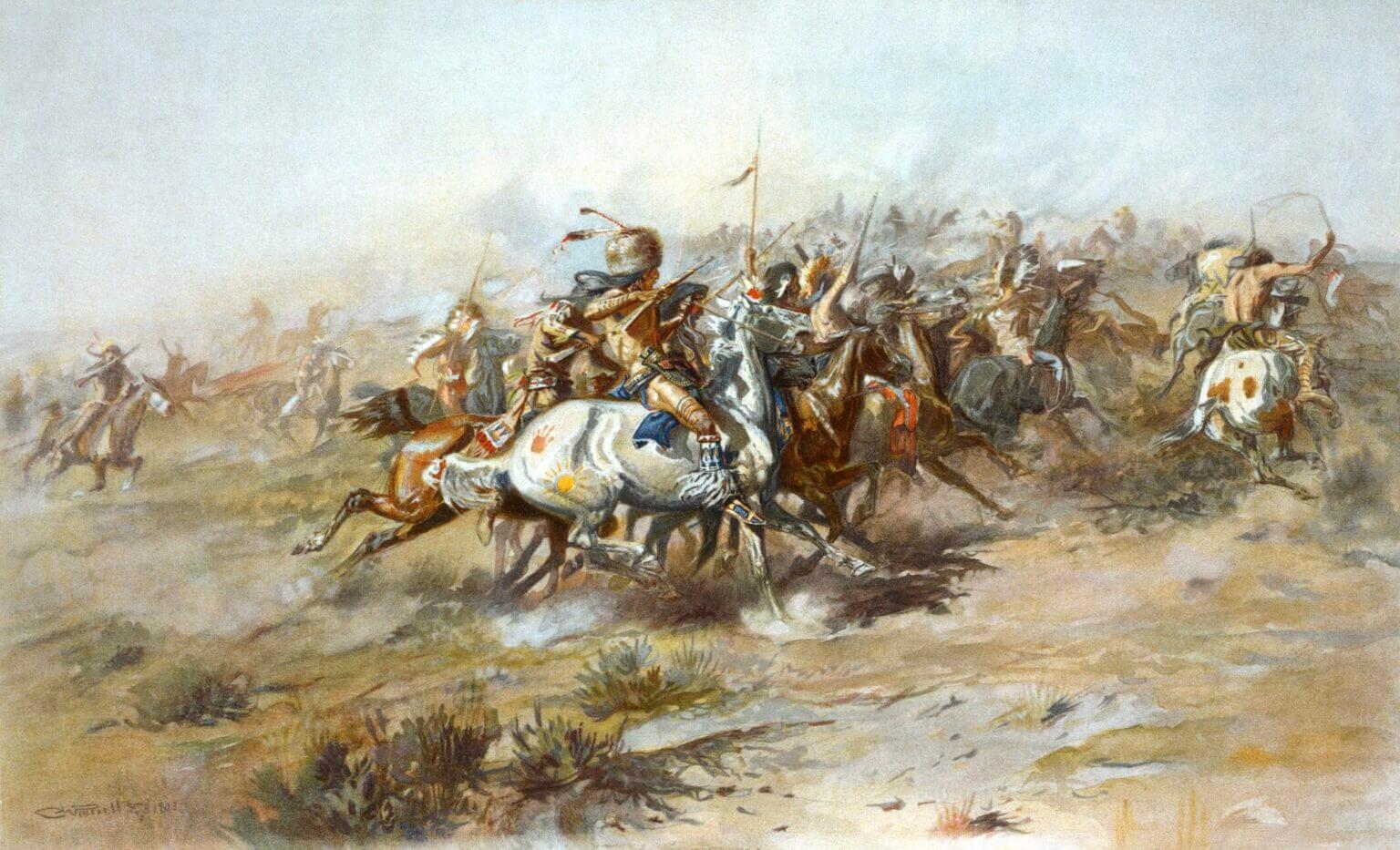
Joe was raised, for the most part, by his maternal step-grandfather, a respected Indian warrior named White Man Runs Him or simply Yellowtail. In the early 1900s, the American West was still littered with veterans of the Indian Wars. White Man Runs Him had served as a scout for General George Armstrong Custer and his 7th Cavalry. He had been an eyewitness to the bloody 1876 Battle of the Little Bighorn.
As Joe was coming of age, he was mesmerized by war stories from his step-grandfather. Joe’s son later said of his father, “His Grandfather Yellowtail trained him in the old warrior ways. In wintertime, they chopped a hole in the ice and took a refreshing morning plunge. Then Yellowtail told him to run a hundred yards in the snow barefoot. In summer and fall, Dad learned hunting and tracking skills. My father was raised as a farm boy, rancher, outdoorsman, hunter, cowboy, jockey, and exercise boy — he was an all-round man.”
Education Of Medicine Crow
Despite struggling early on, Joe Medicine Crow was a powerful advocate of education for his people.
Joe was a smart kid, but he had not been raised speaking English. On his first day in formal school, he developed a bad case of hiccups and was unable to pronounce “excuse me” to the teacher’s satisfaction. This bought him a timeout in the sandbox playing with blocks while wearing a dunce cap. However, once he mastered the language, Joe thrived academically.
Joe pitched for the school baseball team and excelled in throwing the javelin. By the time he finished high school, he had mastered six musical instruments—the clarinet, saxophone, flute, accordion, piano, and Indian hand drum. In short order, Joe had absorbed all his high school had to offer.
Next-Level Learning
In addition to some serious warrior skills, Joe Medicine Crow was also an exceptional scholar.
In 1929, while in the 8th grade, Joe began taking classes at the Bacone College of Muskogee, Oklahoma. He earned his Associate of Arts degree in 1936 and his bachelor’s two years later. The following year, Joe earned his master’s degree in anthropology from USC in Los Angeles. As I said, Joe was a pretty quick kid.
Joe was the second member of his extended tribe to go to college and the first to earn a post-graduate degree. His Master’s thesis, The Effects of European Culture Contact upon the Economic, Social, and Religious Life of the Crow Indians, was widely read. By 1941 he had completed the coursework for his PhD but had not had an opportunity to defend his thesis. It turned out Adolph Hitler had other plans. Now, hold that thought…
Joe Medicine Crow Foundations
The Plains Indians were fierce mounted warriors.
The Crow tribe of Plains Indians historically lived in the Yellowstone River valley. They allied with the United States against the Cheyenne and the Sioux. The Crow enjoyed a distinctively unique language.
Like all of humanity, the history of the American Indians is characterized and punctuated by war, domination, and wanton slaughter. The earliest origins of the Crow people can be traced back to an area around Lake Erie in modern-day Ohio. Organized attacks by their neighbors pushed the Crow into Manitoba and then North Dakota.
Allegiances came and went. The Crow allied with the Kiowa and Plains Apache as it suited them, driving the Shoshone westward to seize their territory by force. Once settled into the Yellowstone River valley, the Crow fractionated into four distinct entities.
Communities
The Crow adapted well to the hunter/gatherer lifestyle. Their four groups included the Mountain Crow, the River Crow, Kicked in the Bellies, and Beaver Dries Its Fur. I have no idea the significance of those terms, but I find them fascinating.
Beginning around 1730, the Crow, along with most all Plains Indians, organized their culture around the horse and buffalo hunting. Buffalo provided sustenance, clothing, and shelter. The Indians burned their dried excrement for heat. As did they all, the Crow stole horses and raided their neighbors to attain local advantage.
Crow Tribal Allegiances
The Battle of the Little Big Horn saw the deaths of General George Armstrong Custer along with 267 of his men.
In the 1850s, a young man named Plenty Coups had a vision wherein he predicted that the incoming white men would eventually become the dominant force in their world. Plenty Coups later grew up to become the greatest Crow chief in the tribe’s history. He espoused that, were the Crow to retain any of their lands, they would have to remain on good terms with the encroaching white men.
The Battle of the Little Big Horn and the defeat of General George Armstrong Custer in 1876 by the Cheyenne and Sioux took place on the Crow Indian Reservation. However, this sparked the subsequent Great Sioux War that saw the defeat of the Lakota Sioux and their Cheyenne allies. Crow warriors actively served with US Army forces during this war. Joe Medicine Crow came from a people of warriors.
Tradition
The Plains Indians had a highly refined hierarchy. According to the Crow tradition, there were four requirements for a warrior to be designated a war chief. One must lead a successful war party, touch an enemy soldier without actually killing him (called counting coup in the vernacular), disarm an enemy soldier, and capture an enemy’s horse.
Native Americans played a significant role in the planetary fight against tyranny during WW2.
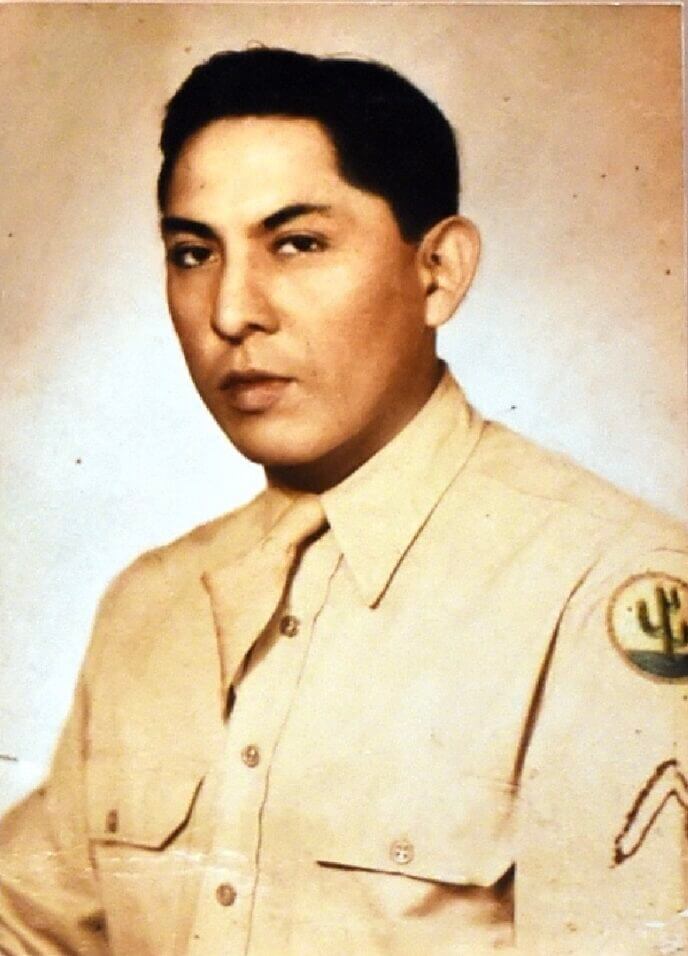
As did so many of his generation, when the United States went to war, Joe Medicine Crow answered the call. The small-statured Native American soon found himself serving as a scout with the 103d Infantry Division during the assault across France in 1944. In this capacity, Medicine Crow once led a seven-man team through withering artillery fire to breach German defensive positions on the Siegfried Line with explosives.
A Traditional Indian Fights Modern War
Joe Medicine Crow brought his people’s ancient warrior traditions to a modern battlefield.
Whenever he went into battle, Medicine Crow wore his war paint. This consisted of two red stripes down his arms that were not visible underneath his uniform. He also kept a sacred yellow-painted eagle feather tucked inside his helmet.
The feather had been a formal gift from a “Sun Dance” medical man prior to his deployment overseas. It was in this configuration while covertly creeping through a contested French village that Medicine Crow rounded a corner and came face-to-face with a strapping German Landser much larger than he.
Both men were surprised. However, for reasons lost to history, Medicine Crow did not shoot the man. Perhaps he was trying to remain stealthy in an enemy-held area. Instead, he reflexively kicked the big German in the balls, causing him to drop his rifle. Joe then dove on the enemy soldier, wrapping his fingers vise-like around the man’s throat.
As the German soldier’s eyes rolled back in his head he called out, “Mama, Mama!” This touched something primal in Medicine Crow’s heart. He later told his son Ronald, “I let go of him and got my rifle back and he became my prisoner. We sat down, away from all the shouting and fighting, and I shared a cigarette with him.”
Horse Thievery
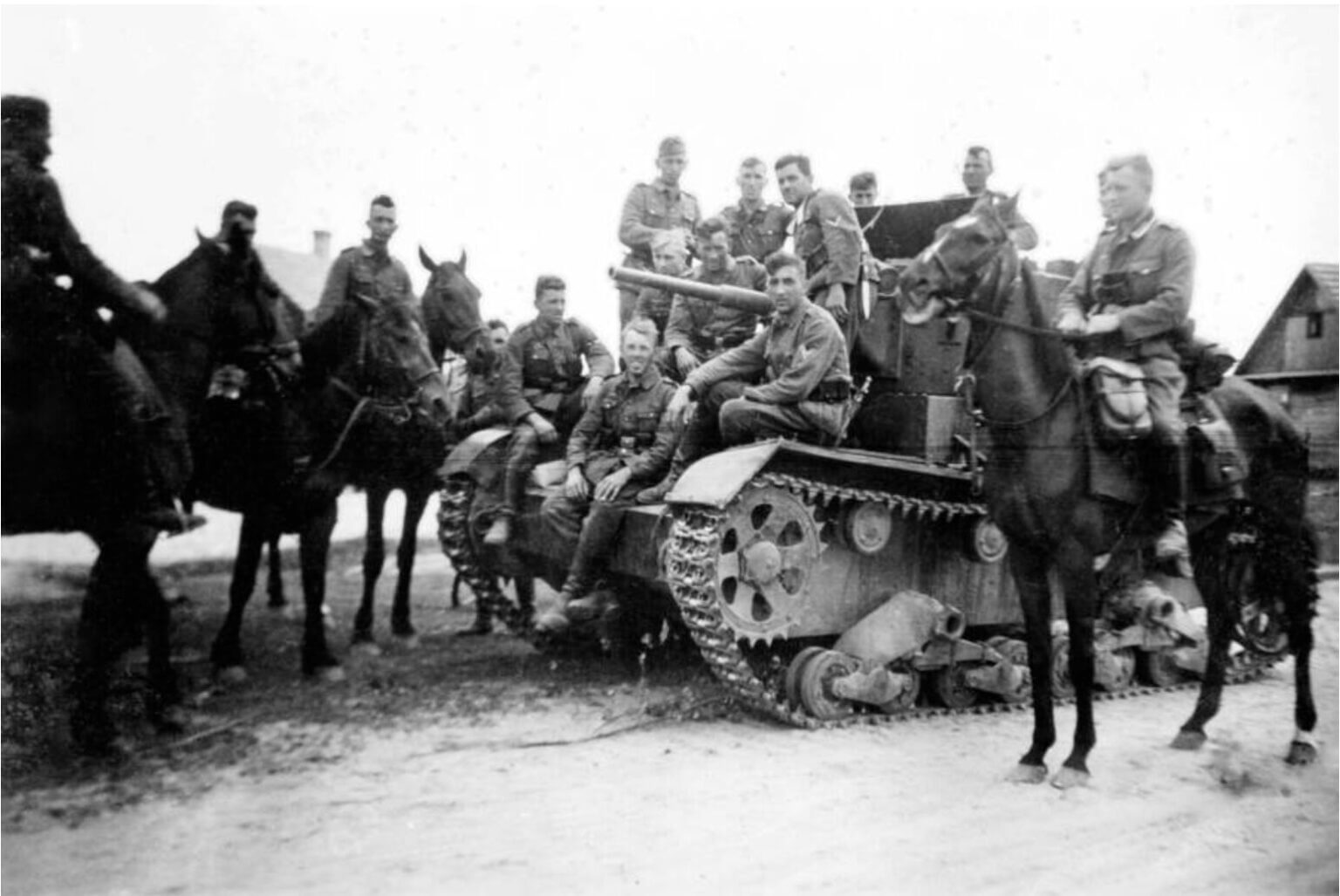
The Germans made extensive use of horse-drawn transport right up until the end of the war.
Another time, Medicine Crow infiltrated a Waffen SS encampment. Despite fighting a mechanized war, much of the German military machine remained dependent upon horses until the armistice.
Before his commander could launch an assault against the SS position, Joe volunteered to liberate their horses. Improvising a bridle just as his ancestors might, Joe mounted one of the animals bareback and then herded a further fifty to freedom. Once he was clear, his commander launched an artillery barrage that caused the German troops to surrender. As he rode into the distance, the short Indian warrior sang a traditional Crow honor song.
Joe Medicine Crow was a steely-eyed soldier who was stone-cold in a fight.
If you’re keeping track, that operation checked the last of the four boxes. Joe Medicine Crow led a war party, counted coup, disarmed an enemy soldier, and took an opponent’s horses. By the time Joe came home from Europe, he was a full-fledged Crow war chief, the last of his breed.
A Veteran’s Story
Upon his return from Europe, Medicine Crow took a job as tribal historian and anthropologist. Beginning in 1951, he began working for the Bureau of Indian Affairs. His historical scholarship and advocacy for Native Americans was widely respected. In 1999 he addressed the United Nations.
Medicine Crow became a regular speaker at the Little Big Horn College as well as the Little Big Horn Battlefield Museum. Having put his oral history to paper, his script of the Little Big Horn fight guided the reenactment on the battlefield every year beginning in 1965. He was also a widely published author.
Medicine Crow’s works included Crow Migration Story, Medicine Crow, the Handbook of the Crow Indians Law and Treaties, Crow Indian Buffalo Jump Techniques, and From the Heart of Crow Country. He also penned a children’s book called Brave Wolf and the Thunderbird.
The Rest of the Medicine Crow Story
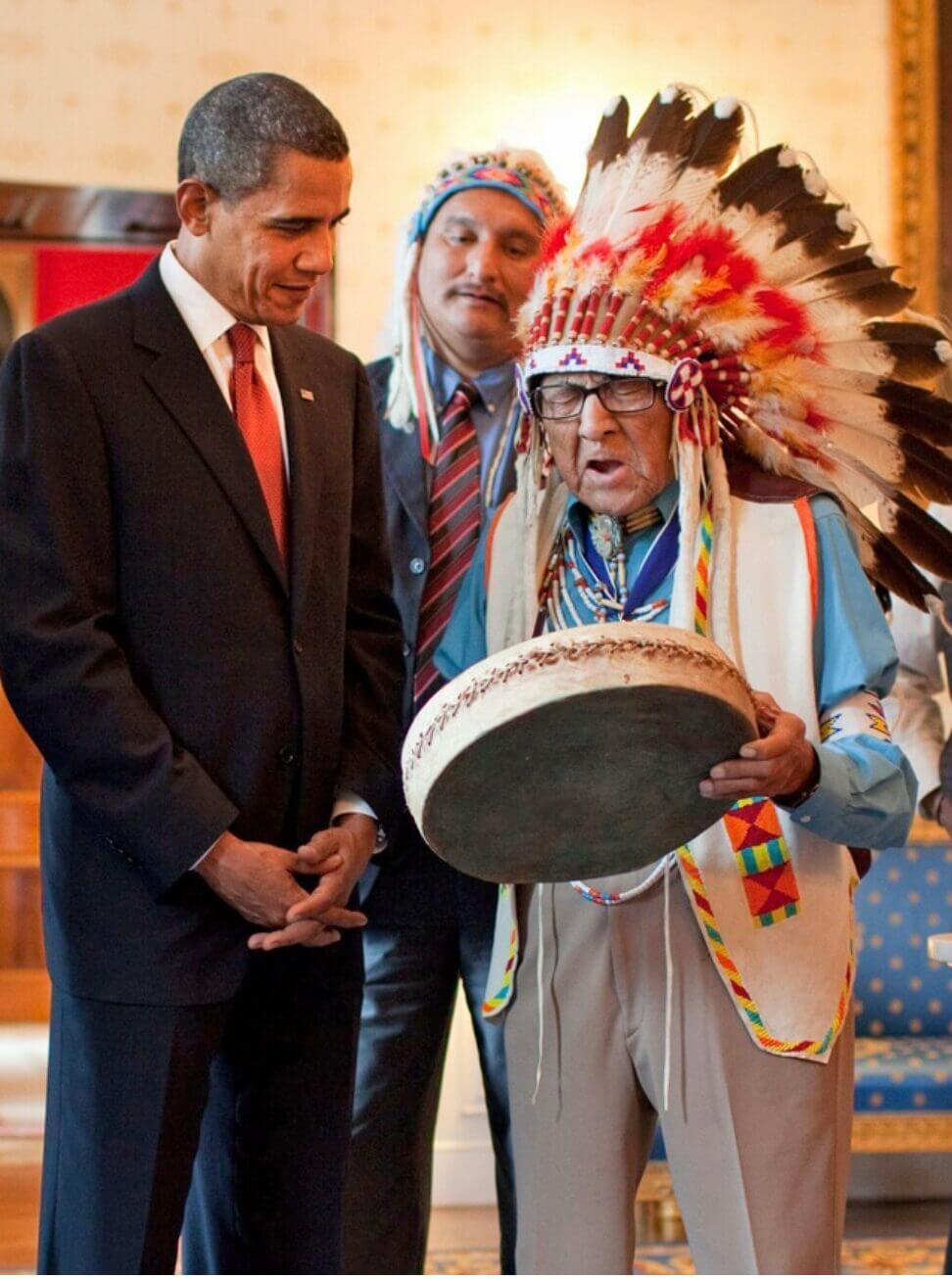
Joe Medicine Crow was eventually decorated by the President.
Joe Medicine Crow was eventually granted three different honorary doctorates. His military decorations included the Bronze Star, the French Legion of Honor Chevalier Medal, and the Combat Infantryman Badge.
In 2009, President Obama awarded Medicine Crow with the Presidential Medal of Freedom, the highest civilian award in the United States. At the awards ceremony, the President referred to Medicine Crow as bacheitche, or a “good man,” in his native Crow language. There’s a lot about which Obama and I disagreed, but that was pretty classy.
Over the course of a long life spanning more than a century, Joe Medicine Crow served as an ambassador and advocate for his people.
Joe Medicine Crow continued to write and deliver historical lectures, usually in native regalia, all the way up to his death in 2016 at the ripe age of 102. He left behind a son, two daughters, and a stepdaughter. Joe Medicine Crow, the last of the Crow war chiefs, indeed lived a warrior’s life.


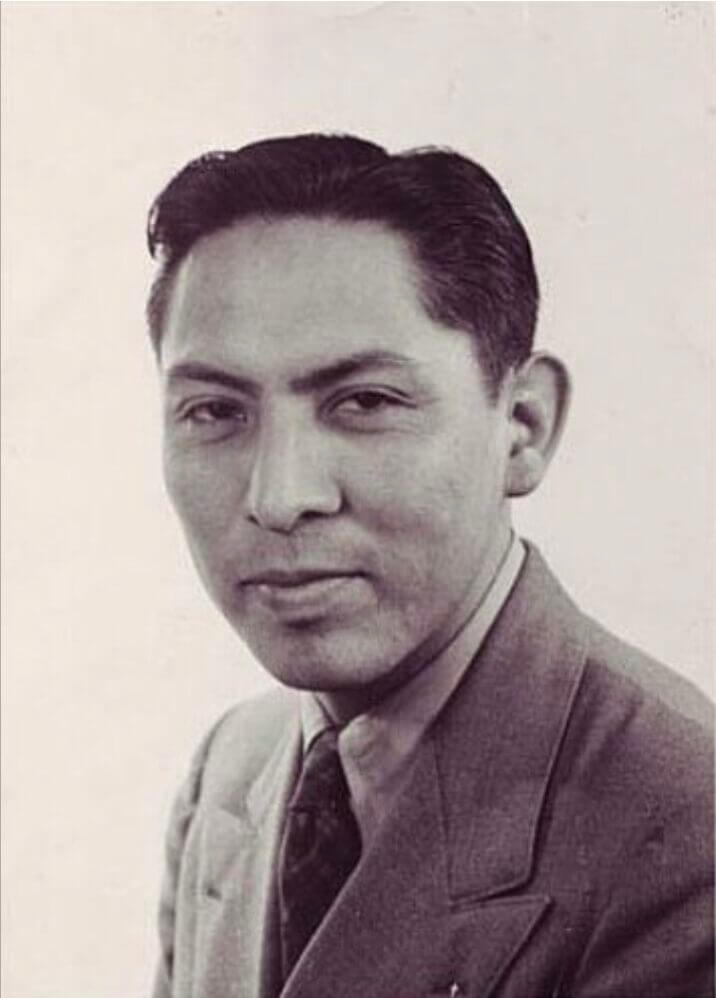 This is Joe Medicine Crow, the last genuine Indian war chief. He was a legendary American.
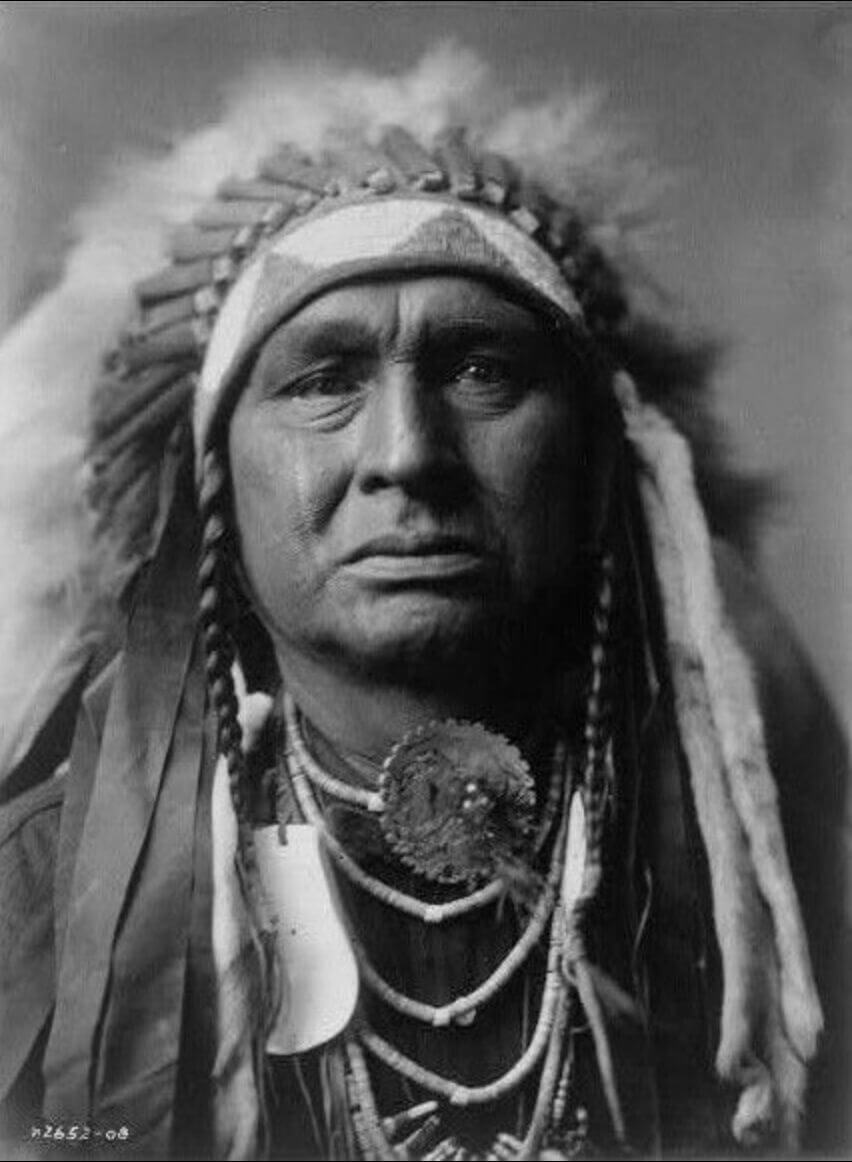 This is White Man Runs Him, Joe Medicine Crow’s step-grandfather. He was an eyewitness to the massacre at Little Big Horn.
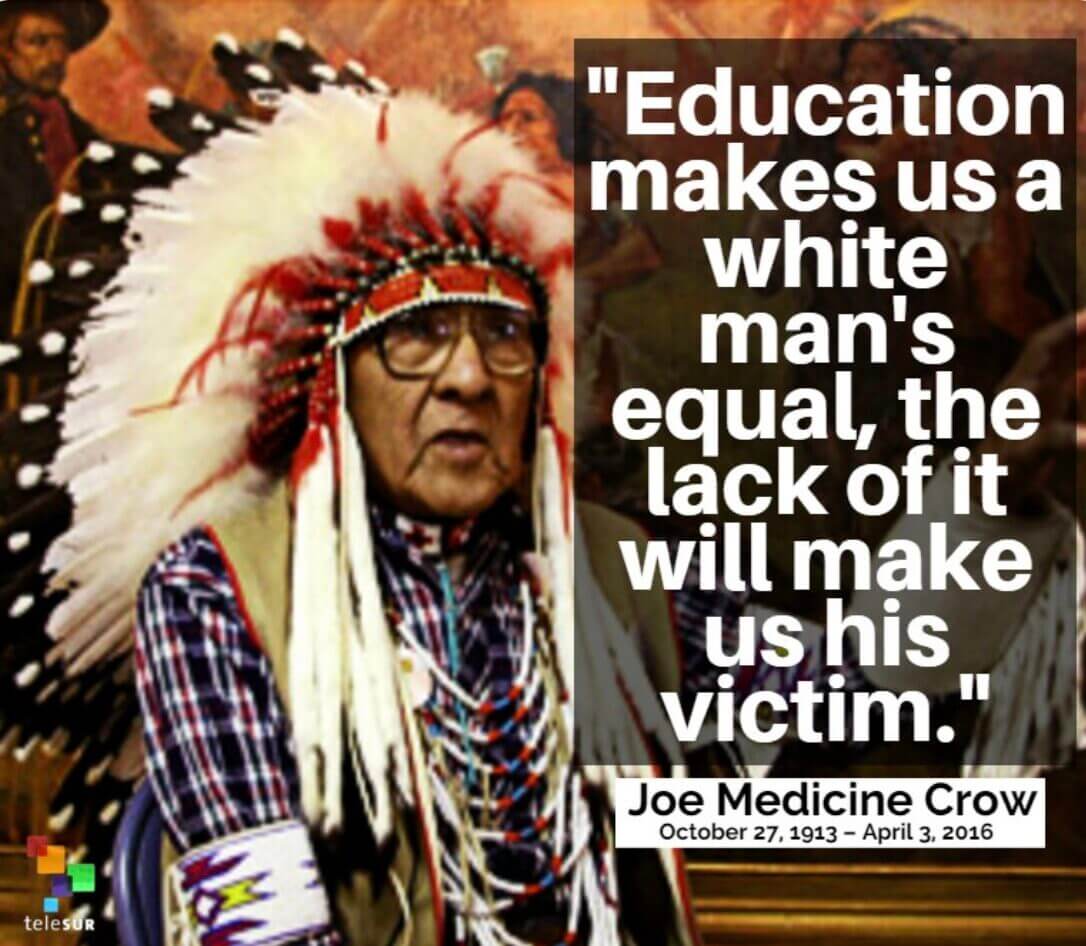 Despite struggling early on, Joe Medicine Crow was a powerful advocate of education for his people.
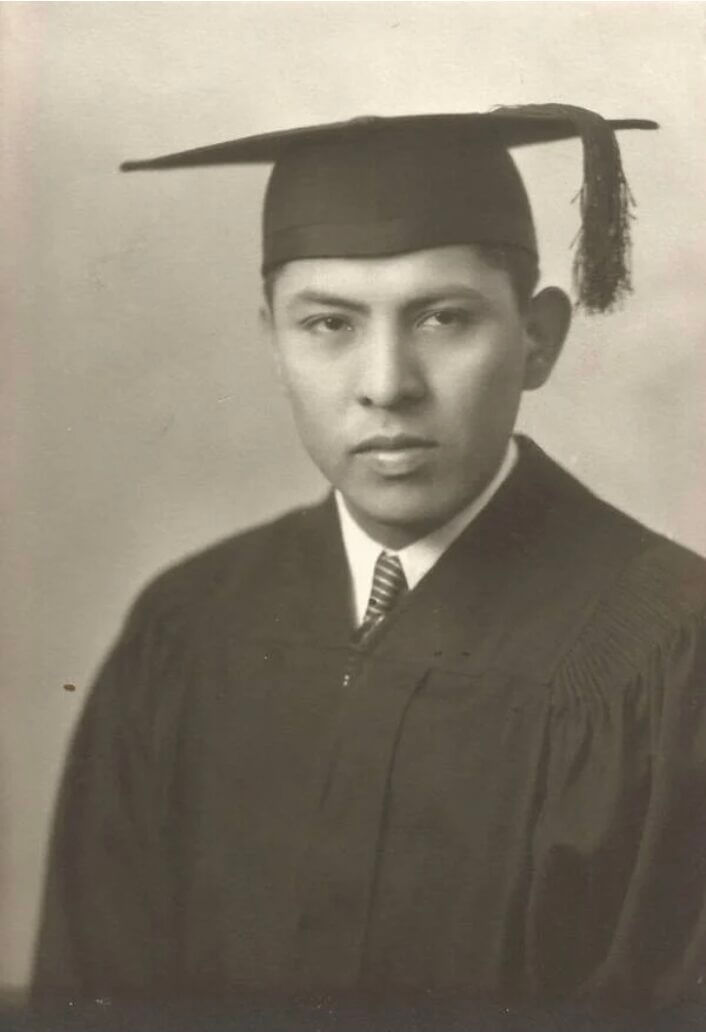 In addition to some serious warrior skills, Joe Medicine Crow was also an exceptional scholar.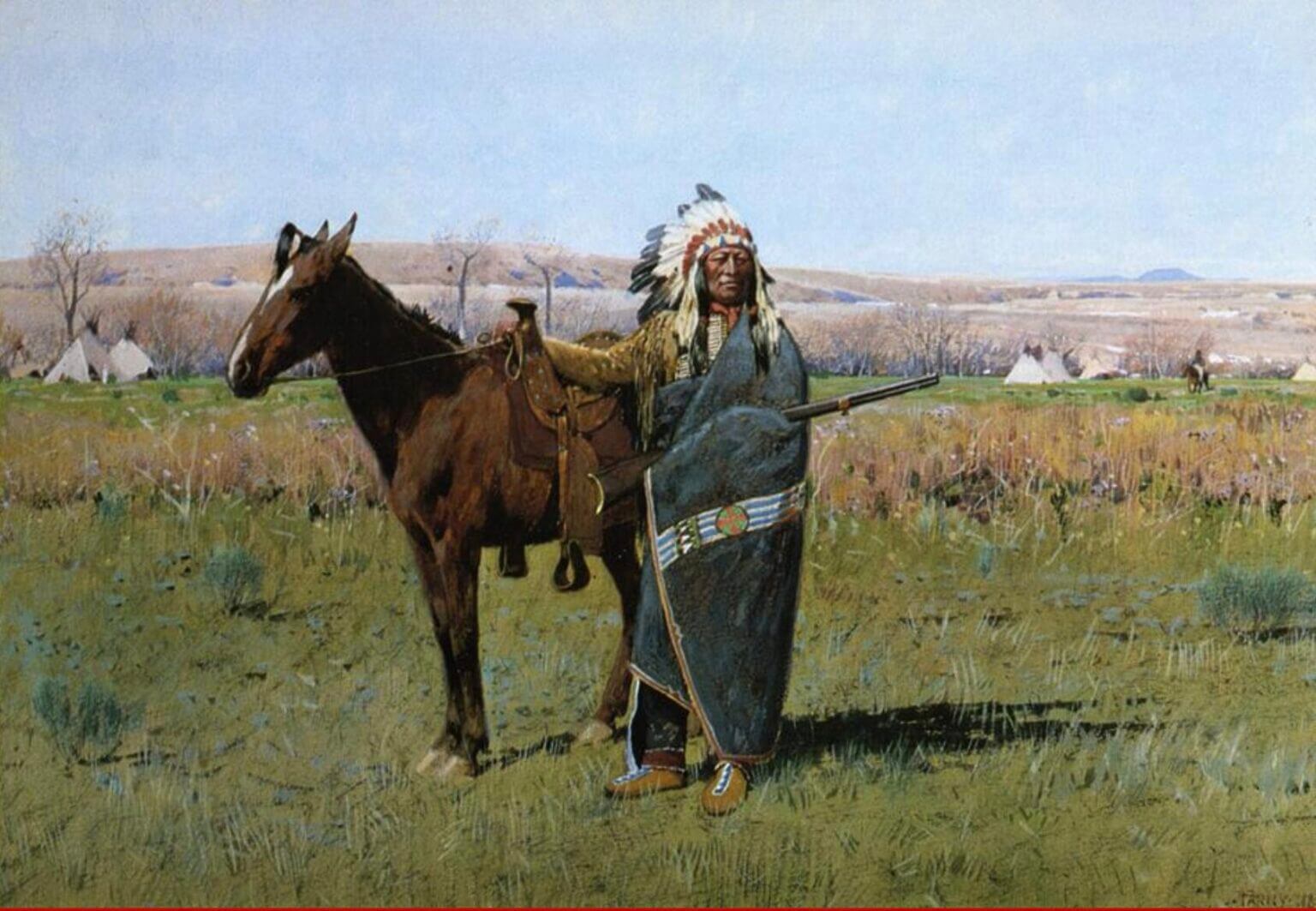
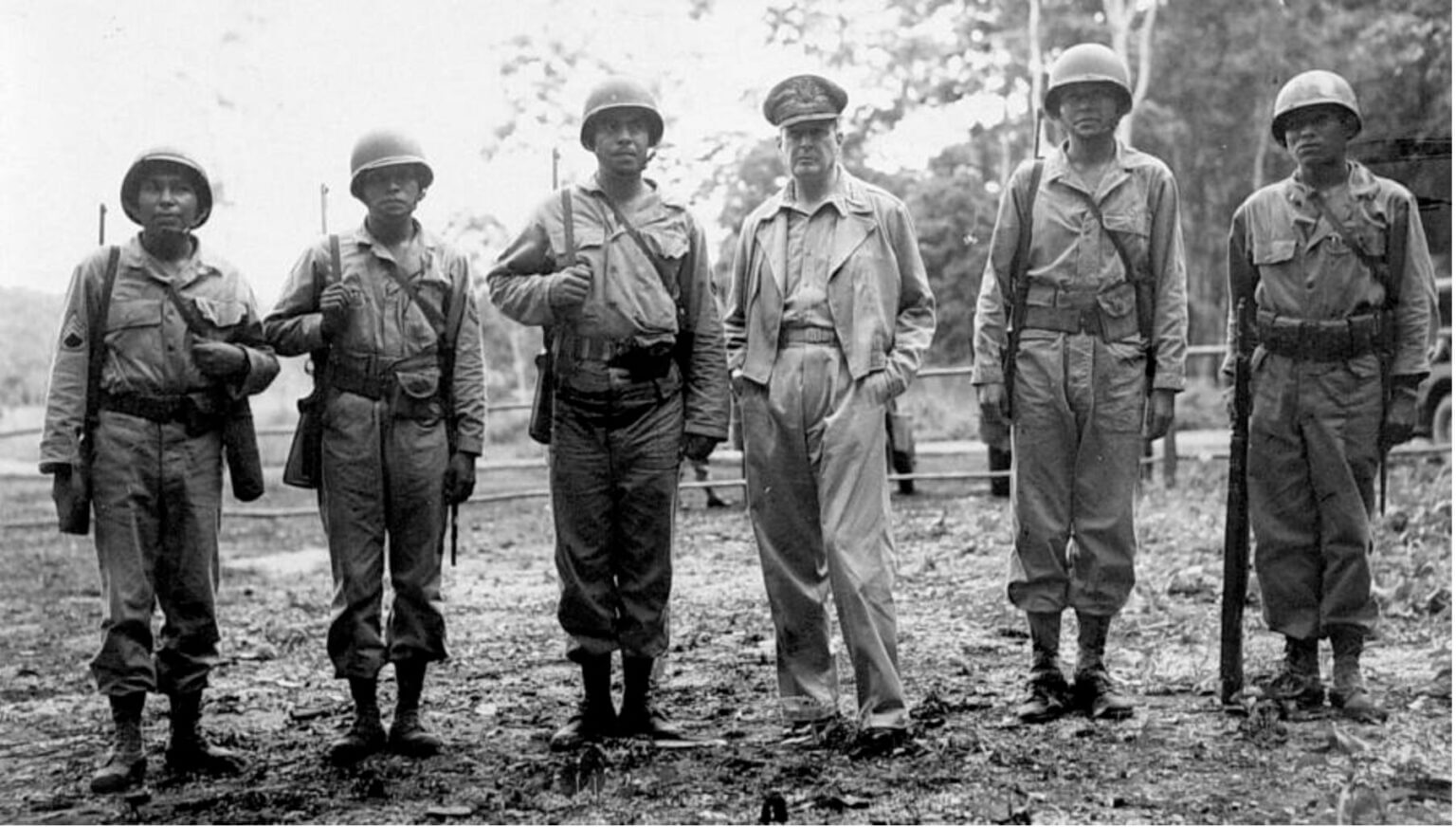
 Joe Medicine Crow brought his people’s ancient warrior traditions to a modern battlefield.
 The Germans made extensive use of horse-drawn transport right up until the end of the war.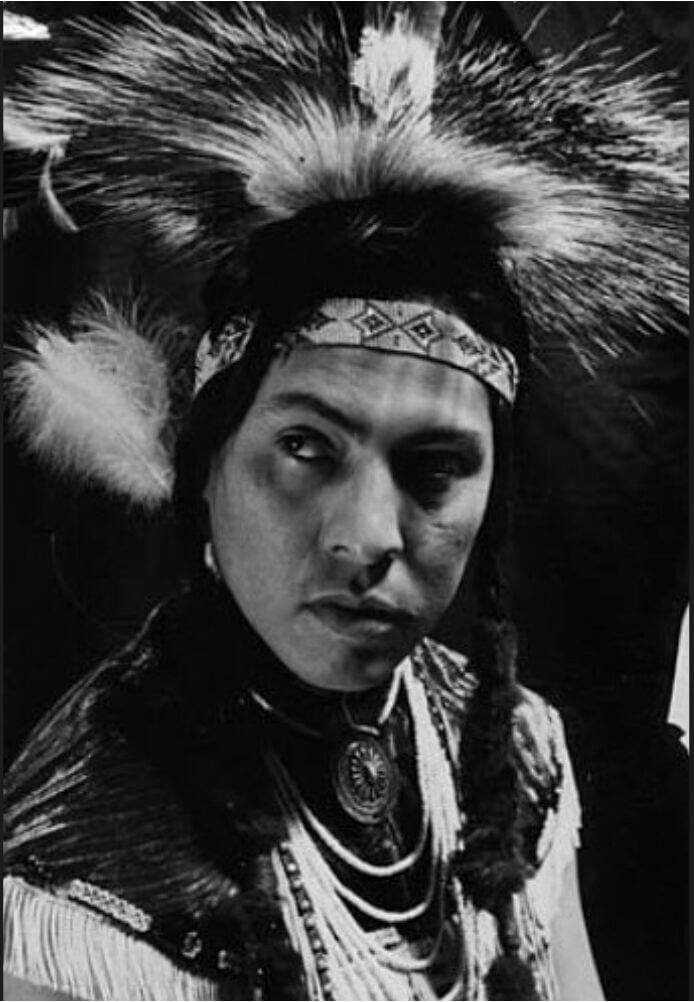
 Joe Medicine Crow was eventually decorated by the President.
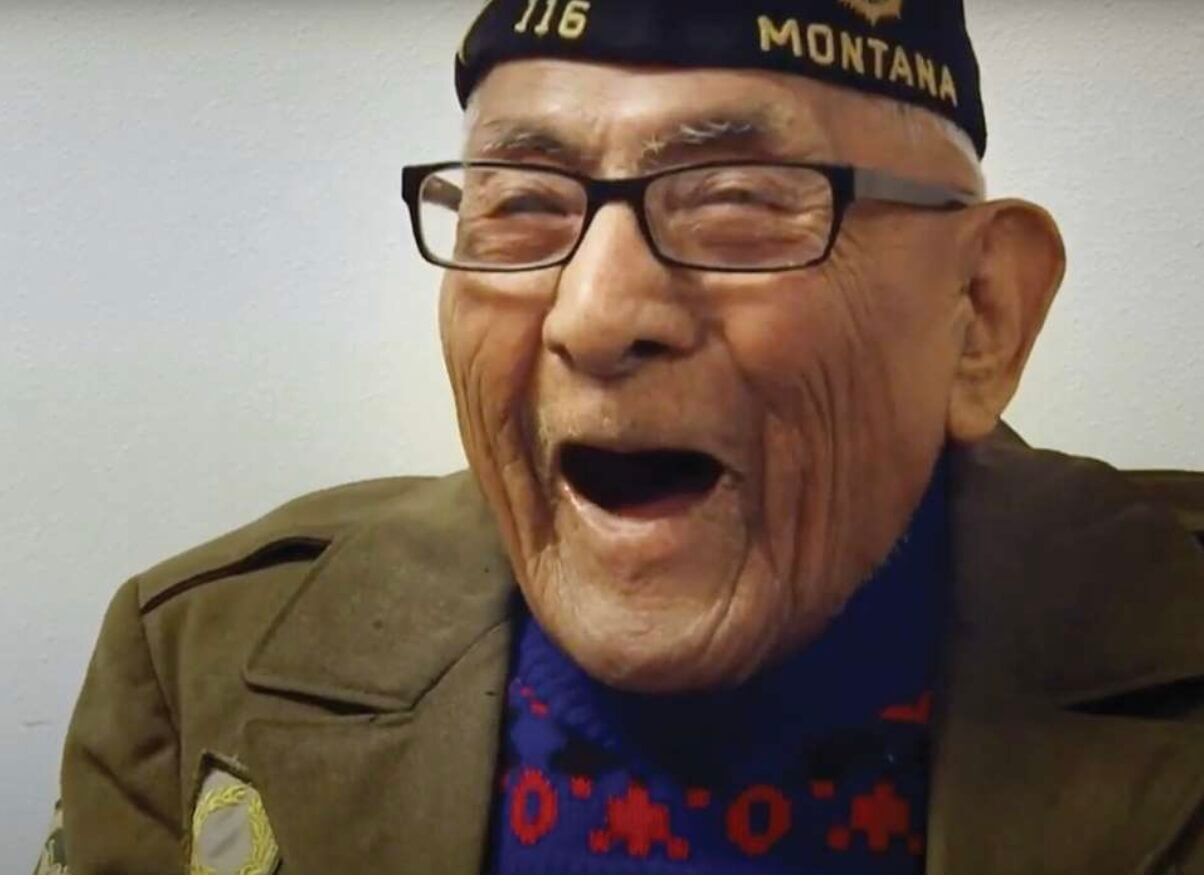 Over the course of a long life spanning more than a century, Joe Medicine Crow served as an ambassador and advocate for his people.