Categories
The Green Machine This great Nation & Its People War

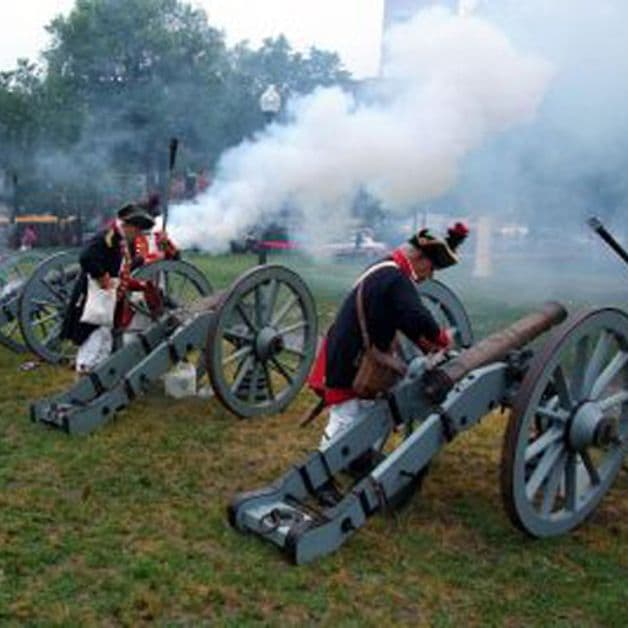
Men like this were the reason why we are not part of the British Empire

Categories
All About Guns Ammo The Green Machine

Krag-Jorgensen Model 1898 30-40 Krag

Categories
The Green Machine You have to be kidding, right!?!

You have to have some experience with the Green Machine to get this one!

May be an image of ‎text that says '‎ی Not all disabilities look like this. Some look like this. Not all disabilities are visible! Please don't be so quick to judge.‎'‎

Categories
All About Guns The Green Machine War

Equipment in the War of 1812

“Battle of North Point” by Don Troiani Don Troiani

The equipment used during the War of 1812 was relatively similar to equipment used during the Revolutionary War. However, some technological advancements were made, and the War of 1812 was one of the first wars in which almost all items that were issued to soldiers were manufactured and created in the new nation.

Firearms, Weapons, and Related Equipment

Most of the firearms used by soldiers in the War of 1812 were small arms weapons. Flintlock firearms were widespread, and the most common firearms used were the Springfield Model 1795 musket and Harper’s Ferry 1803 rifles. The Springfield Model 1795 musket was produced by inventor Eli Whitney, the creator of the cotton gin, based the design of the firearm heavily from the French Charleville Model 1763 musket that was used during the French and Indian War.

One of the newer technologies to be developed in firearms technology was the use of rifling as seen in the Harper’s Ferry 1803 rifles. Rifling was a feature within the barrel of the firearm that gave the projectile a spin, which led to greater accuracy at longer distances. However, these rifles could not have bayonets attached to them, which caused the 1795 Springfield musket to remain as the most prominent firearm of the War of 1812.

Image of 1795 Springfield Musket.
“Springfield Model 1795 Flintlock Musket” Smithsonian National Museum of American History

All firearms in the War of 1812 utilized a flint-lock system of firing. Flintlock firing mechanisms were firearms that used a shard of flint (a stone that can easily create fires) to light gunpowder in a pan, which then ignited the gunpowder poured inside of the firearm, which launched the projectile. Flintlock firing systems were first introduced in France in the late 1500s to early 1600s. They were later replaced in the United States by the percussion cap system in the Mexican War and were widespread in the Civil War.

Closeup image of a 1795 Springfield Musket which shows the flintlock mechanism.
“Springfield Model 1795 Flintlock Musket” Smithsonian National Museum of American History

Besides the firearms themselves, soldiers carried items that helped them efficiently reload and maintain their firearms. These items included a leather cartridge box which contained the cartridges that were loaded into the firearm.

These cartridges were wrapped in paper, and had 125 grains of gunpowder, as well as the projectile itself. Extra pieces of flint were also stored in the cartridge box in the case of the flint wearing down too much. A cloth, as well as a musket tool were also included in the cartridge box to clean, maintain, or repair the firearm.

Image of musket equipment used in the War of 1812.
Musket equipment used by soldiers in the War of 1812. 

Other weapons that some soldiers carried were bayonets, swords, and pistols. Pistols were used for extremely short ranges of thirty feet or less. They used similar cartridges and utilized flint in their firing mechanisms. Bayonets were most commonly attached to the end of muskets and were used for close quarters engagements. Swords were often utilized by officers and cavalry soldiers.

Clothing and Personal Effects

U.S. soldiers were issued a knapsack that included all their personal effects. For clothing and cloth items, soldiers were issued a blanket, linen shirts, linen trousers, extra socks, fatigue blouse, and fatigue cap. Fatigue blouses and caps were used when not engaged in combat and mostly used for daily drilling and everyday wear.

These cloth items were also used primarily in the summertime. Fatigue blouses were also used for when weather conditions were poor, such as rain. Soldiers would wear the fatigue blouses over their uniforms to prevent rain from getting on their uniforms. Soldiers were also issued their helmets; a tall leather hat called a brain cooker. These hats were uncomfortable, but they made soldiers appear taller when facing the enemy.

U.S. soldiers were also issued wool items. Primarily, their uniforms were made of wool. However, soldiers also received wool trousers and a wool waistcoat. Mostly worn during the winter months, these items would keep soldiers warm while off duty and in the barracks.

Image of items stored in soldier's knapsacks in the War of 1812.
Common items issued to soldiers in the War of 1812. Items include shaving tools, uniform button repair tools, quill pen and ink well, and playing cards.

The soldiers also received a knapsack of items that were used as a personal locker. These items included items for shaving, such as a razer, shave brush, shave soap, and shaving bowl. There was also a comb, a deck of playing cards (despite gambling being illegal in the barracks), a quill pen, and ink well. These items were crucial in ensuring that the soldiers were well equipped to successfully carry out their duties as a soldier.

Categories
Real men The Green Machine This great Nation & Its People

The “Detroit Light Guard:” 1225th Support Battalion

Michigan Army National Guard soldiers during the 1967 Detroit riots. Michigan National Guard

The 1225th Support Battalion has served the city of Detroit since before Michigan was a state. Formed in 1830-1 as the Detroit City Guard, the unit was called into Federal service for the first time in May 1832 for the Blackhawk War under Captain Isaac Rowland. On April 13th, 1836 the unit was reorganized into the Brady Guards in honor of General Hugh Brady. Major General Winfield Scott personally thanked the Guard for mobilizing twice during the Patriot War along the Canadian frontier in 1838-9.

Many members of the company, including future Civil War General Alpheus Williams, served in the 1st Michigan Volunteers during the Mexican War, but the company itself spent the war on patrol along the Canadian frontier. In 1851, the company merged with the Grayson Guards and in 1855 changed their name to the Detroit Light Guard. The Guard was an active organization, working with many elite Northern militia companies, such as Ellsworth’s Zouaves, in the years leading up to the Civil War.

With the coming of the war, the best members of the Guard stepped forward to form Company A of the 1st Michigan Volunteers (Three Months), who arrived in Washington on May 16th. The citizens cheered the men as the first western regiment to arrive in the capital, and drew the comment from President Lincoln, “Thank God for Michigan.”

At Bull Run, the 1st Michigan played a prominent role on the Union right flank on Henry House Hill and advanced farther than any other Federal regiment during the battle. Days later, the regiment returned to Detroit to reorganize into a three-year regiment, and the Detroit Light Guard officially demobilized.

However, Company A remained the active part of the unit, as many members reenlisted with the 1st Michigan. The regiment served in the 1st Division, 5th Corps through the end of the war. They were on the left of the Federal defenses at Gaines’ Mill and Malvern Hill during the Seven Days Battles outside Richmond.

The 1st Michigan was in the thick of the fighting on August 30th, 1862 at Second Manassas in Porter’s attack on Stonewall Jackson’s position. The fighting in front of the railroad cut was fierce and bloody, particularly due to Longstreet’s artillery that took the attack in the flank.

Half of the regiment fell, and Colonel Roberts, a member of the Detroit Light Guard, was shot through the chest and died shortly after. The unit sat in reserve during the Antietam Campaign but was at the center of the fighting at Fredericksburg in the assault on Marye’s Heights, losing 47 men in the relentless but futile attacks.

At Gettysburg, Lieutenant Colonel William Throop, also of the Guard, took command early in the fighting and led the regiment in their defense of the woods on the west end of the Wheatfield.

Lieutenant Colonel William Throop Civil War Data

The Guard was the first infantry unit to engage Lee’s men at the Wilderness in the Overland Campaign. On May 8th, the regiment left the fighting with only 23 men in the ranks. The 1st played a significant part in the counterattack at Jericho Mill on May 23rd, stemming Wilcox’s breakthrough of the Union lines.

It also fought at Bethesda Church, the opening assaults at Petersburg, and was in reserve at Weldon Railroad in August. In September, at Poplar Grove Church, it stormed two enemy fortifications and part of the lines alone. The 1st fought at Hatcher’s RunWhite Oak RoadFive ForksHigh Bridge, and Appomattox. They stood in ranks with the rest of their division to receive the surrender of Lee’s infantry on April 12th, 1865.

Light Guard Armory, Detroit, Michigan. Detroit Public Library

Following the muster out of the volunteer forces at the end of the war, the Detroit Light Guard reformed from the veterans returned home. This was a low point in the militia of Michigan, and by 1870, it was one of three companies left in the state.

The Guard represented the state at the Centennial celebrations in Philadelphia in 1876 and on May 1st, 1882 adopted the tiger as its mascot, a symbol that Detroit still honors as the mascot of their baseball team. During this period, the company maintained its reputation as both a superbly drilled unit and an elite social club.

With the outbreak of war in 1898, three of the Guard’s four companies became part of the 31st Michigan Infantry and shipped out for training camp at the Chickamauga battlefield on May 16th. The 31st Michigan performed garrison duty in Cuba following the Spanish surrender of the island until mustering out in May 1899. The remaining company served with the 32nd Michigan Infantry, which never deployed out of the United States during the conflict.

In 1916, the Guard was mobilized and with the United States’ entry into the First World War in 1917, it was consolidated with the 3rd Regiment of Michigan Militia to form the 125th United States Infantry in the 32nd Infantry Division.

The division reached France in February 1918 and went into training. Its first combat was in the counterattacks during the Second Battle of the Marne in July and August, earning the division the nickname “Les Terribles.” It fought in the Oise-Aisne and the Meuse-Argonne Campaigns and then served in the occupation force in Germany.

The Guard was called up with the rest of the division in 1941 but was pulled from the division in 1942 when it changed into a “Triangular” division.

Michigan Army National Guard soldiers during the 1967 Detroit riots. Michigan National Guard

The Guard spent the war on garrison duty in the United States and, following the war, was split off the 125th Infantry. It moved around and served as an infantry unit in various brigades. In 1967, the Guard helped put down the rioting in Detroit.

In 1992, it was converted from an infantry unit to a logistics unit. Under its current designation, the 1225th Support Battalion, the Detroit Light Guard served in Iraq from 2004-5. The Guard broke ground on its armory in 1897 and has used the building as their drill location since that time.

Categories
The Green Machine This great Nation & Its People

Feeding Washington’s Army: A Conversation with Ricardo A. Herrera

Categories
Manly Stuff Real men Soldiering The Green Machine

Buffalo Soldiers: Fighting on Two Fronts | Full Film

https://youtu.be/65xH_ce3O6w

Categories
Soldiering The Green Machine This great Nation & Its People

The Lost Battalion ( full movie ) The Doughboys best fight in WWI

Categories
The Green Machine

I miss things like this!

Categories
The Green Machine

JUST FOLLOWING ORDERS WRITTEN BY WILL DABBS, MD

Never underestimate the capacity of the typical Amy Private to think literally.
(Source: Department of Defense)

My buddy was a medevac helicopter pilot flying UH-1H Hueys in the days prior to night vision goggles. Ours was a large training base with a veritable ocean of basic trainees. The training area upon which these young studs learned their trade was both desolate and dark. In the depth of night, it was a massive black hole devoid of artificial light of any sort.

It had been a more torrid summer than most, and a trainee had died of heat stroke a couple weeks before. Basic military training is arduous by design and this young man had succumbed to the toxic combination of dry arid heat and profligate exercise. The military system rightfully does not tolerate such stuff well, so there was a lot of command pressure to treat heat casualties aggressively. In this case, another basic trainee had fallen out during a night tactical movement. The drill instructors determined that he needed medical evacuation by air.

My buddy called through range control and got the range shut down. He chugged into the darkness trying to navigate by the dim light of a weak moon. The terrain was relatively flat and featureless even in daylight. Finding this field site in the dark in the era before GPS was going to take some serious pilotage.

My friend had radio contact with the unit in question via the range control net. This frequency was monitored by all the myriad training units in the field at the time. He called up the unit in question and asked them to point their flashlights skyward. In such a desolate space he figured this would be an easily identifiable way to locate the landing zone.

Alas, Army basic trainees are a terribly literal mob. The entire training area lit up with hundreds of tiny spots of light. My buddy sighed and then got back on the radio. He asked everybody not in the unit with the heat casualty to extinguish their flashlights. The training area went black again save a single glowing spot in the distance.

Time can be of the essence under circumstances such as these, so my friend called the unit again and asked that they get the casualty stripped down to his underwear and prepped for pickup. He also requested they have their trainees stand in a giant circle with their flashlights pointed upward to designate the landing zone. A few moments passed and a glowing circle appeared in the distance as if by magic. My medevac buddy set up an approach to land in the center of the circle and activated his landing light.


An approach into an unimproved landing zone unaided in the dark is indeed a squirrely thing, but it was something we trained to do regularly. You shoot a vector from where you sit to where you want to be and fly the aircraft along that line until touchdown, keeping your head on a swivel throughout for unexpected obstacles or unplanned eventualities. My friend landed the aircraft without incident.

Once the Huey was safely down my buddy glanced between his feet through the chin bubble and his heart stopped. There, stretched out atop an Army-issue litter underneath his roaring helicopter, was one severely dehydrated Army private. The several million-candlepower landing light burned some six-inches from his face. The long sharp WSPS (Wire Strike Protection System) blade had come to rest within a foot of his chest. The young man just lay there still, blinking in bewilderment. I can only imagine the poor kid’s thoughts as this massive flying machine landed directly on top of him.

In the confusion leading up to the landing the unit on the ground had prepared the young man and inexplicably oriented him in the center of the landing area. As luck would have it, they had landed with the skids parallel to the litter. Had the kid been crosswise the 10,500-pound helicopter would have crushed him to death.

Just about the time my buddy started breathing again his crew chief came over the intercom and said flatly, “Sir, take a look outside.”

Arrayed around the idling aircraft in a gigantic circle was an entire company of confused Army basic trainees dressed solely in their t-shirts and boxer shorts. They each obediently held their GI-issue angle head flashlights pointed at the helicopter. Never let it be said that Army privates have any hesitation doing what they’re told, even when it’s a little bit crazy.