This is Matt Damon in character as super spy Jason Bourne. In real life Matt doesn’t go so much for guns.
Matt Damon is one of the most successful actors in Hollywood. He is 52 years old and has already starred in 85 movies. Google claims his net worth hovers around $170 million.
In general, I like Matt Damon’s movies. Elysium was great, as was, of course, Saving Private Ryan. Interstellar, The Martian, and the Ocean series never get old. And then there was Bourne.
Damon just nailed that one. He played a conflicted amnesiac assassin who, throughout four full-length films, traveled the globe gratuitously killing strangers while trying to discover who he really was. Matt Damon did a superb job of taking Robert Ludlum’s magnificent words and translating them into something we could experience on the big screen. I’ve seen them all several times.
Matt Damon got pretty jacked for his last Bourne outing. In real life, it seems he’s more a lover than a fighter.
Action Hero
As Jason Bourne, Matt Damon comes across as quite the bad man. His close combat skills both with weapons and without are pretty epic. Heck, he once killed a dude with a rolled-up magazine. Alas, however, that’s all just fake make-believe.
Out here in the real world, action movie star Matt Damon has little use for such stuff as private gun ownership. While interviewing in Australia, he was quoted as having said, “You guys did it here in one fell swoop and I wish that could happen in my country…It’s wonderful what Australia did…And nobody’s rights have been infringed, you guys are all fine.”
The Australian gun confiscation is held up by many on the Left as an example we should follow. I’m not so sure that would work over here.
Damon’s Idea Of Freedom Smells Fishy
In 1996, Australia enacted sweeping gun control legislation that allowed the government to confiscate 650,000 guns from private citizens, effectively disarming most of the Australian populace. I spent some time in Australia soon thereafter back when I was a soldier. The Aussie gun nerds in uniform with whom I worked were mightily lamenting the irrevocable demise of their liberty.
We sell more guns than that in America every two weeks. It’s apples and oranges, Matt. Gun control in the US might have worked 350 million guns ago, but that ship has sailed.
My point is simply that Matt Damon is pretty typical. Most of those tough Hollywood studs are Big Government anti-freedom Leftists. Damon, for his part, is a committed supporter of the Democratic Party, having personally hosted a fundraiser for Elizabeth Warren. Mark Ruffalo (the Hulk) and Chris Evans (Captain America) are even farther Left. However, it was not always thus.
Origin Story of Sterling Hayden
Sterling Hayden’s was a familiar face on screens both large and small during the Golden Age of Hollywood.
Sterling Hayden starred in 59 films and 18 television programs. By all accounts, his was a fabulously successful Hollywood career. However, throughout it all, he was quick to explain that acting was just a means to an end for him. Sterling Hayden climbed up onto the big screen just to support his limitless adrenaline addiction. He started young.
Hayden was born Sterling Relyea Walter in 1916 in Upper Montclair, New Jersey. His dad died when he was nine, and his mom remarried. His stepdad, James Hayden, formally adopted him and changed his name to Sterling Hayden.
He dropped out of school at age sixteen to take a job crewing an oceangoing schooner. He traveled all around the Americas from New London, Connecticut, to Newport Beach, California. Along the way he ran a charter yacht and crewed a steamer to Cuba and back eleven different times. His first Captaincy was the square rigger Florence C. Robinson. At age 22 he commanded the Robinson on a 7,700-mile voyage from Gloucester, Massachusetts, to Tahiti.
Newfound Success
Upon his return from Tahiti in 1938, Hayden had his photo fortuitously taken while participating in a Fisherman’s Race. This image ended up on the cover of a magazine and was seen by an executive for Paramount Pictures. That earned him an invitation to screen test for the movies.
Paramount marketed Sterling Hayden as a Norse god. That’s got to do something for a guy’s ego.
Hayden stood 6 feet 5 inches tall and reliably filled a room. He got the part without really trying. Paramount later marketed him as “The Beautiful Blond Viking God.”
Hayden had this to say about his newfound success, “I was completely lost, ignorant, nervous. But the next thing I knew, Paramount made me a seven-year contract beginning at $250 a week, which was astronomical. I got my lovely old mother and bought a car, and we drove to California…I was so lost then I didn’t think to analyze it. I said, ‘This is nuts, but, damned, it’s pleasant.’ I had only one plan in mind: to get $5,000. I knew where there was a schooner, and then I’d haul ass.”
Sterling Hayden Goes To War
And then the world came unglued. With World War 2 looming large, Sterling Hayden abandoned Hollywood and enlisted in the Army. He was deployed to Scotland for training but suffered a severe ankle fracture and was medically separated from the military. He then returned home and tried to buy a schooner. However, he was unable to raise the cash.
Many guys who had been legitimately injured in military service might have just called it a day. However, that’s not the way Sterling Hayden was rigged. Once his ankle healed, he enlisted in the Marine Corps under an alias, apparently to avoid being tied to his previous injury.
The famous actor Sterling Hayden blossomed at Paris Island during WW2. His performance there eventually earned him a commission and an invitation to join the OSS.
A Strange Promotion
Hayden actually thrived at Parris Island and went straight from boot camp to Officer Candidate School. Once he was commissioned a Second Lieutenant, Hayden got a curious call from Colonel William “Wild Bill” Donovan. At the time, Donovan carried the misleading title, “Coordinator of Information.” With FDR’s backing, Donovan eventually birthed the OSS (Office of Strategic Services). The OSS was the precursor to today’s CIA. Sterling Hayden had just become a spy.
Still operating under the nondescript alias “John Hamilton,” Sterling Hayden–ship’s captain, shadow warrior, and movie star–was deployed to the Mediterranean to take the fight to the Nazis. And this he did…for the next three years.
Hayden lived and worked in enemy-held territory. He captained a motor launch running weapons, supplies, and ammunition to Yugoslavian partisans serving under Tito. Hayden parachuted covertly into Croatia to help organize resistance cells. He fought the Germans and Italians during the Naples-Foggia campaign and organized partisans into rescue teams to repatriate downed Allied fliers. By the end of the war, Hayden was a Captain.
This guy doesn’t look much like a Greek fisherman to me. Regardless, he successfully pulled off that role for years avoiding the Nazis while working as a spy during WW2.
American Silver Star
Now appreciate what that meant. This towering 6 foot 5 inch giant of a man masqueraded as a fisherman, running guns under the noses of the Nazis for years. He didn’t wear a uniform. At any moment he could have been discovered, captured, tortured, and killed. He earned the Bronze Arrowhead Device for parachuting behind enemy lines in combat. Josip Broz Tito recognized him with the Order of Merit for exceptional valor in action. He earned the American Silver Star for gallantry. The citation for the award read in part, “Lt. Hamilton displayed great courage in making hazardous sea voyages in enemy-infested waters and reconnaissance through enemy-held areas.” Wow. What a stud.
After the war, like so many millions of American veterans, Sterling Hayden came home. His wartime service overseas left him with a deep love and appreciation for his country. During one press conference, he said, “I feel a real obligation to make this a better country – and I believe the movies are the place to do it.”
Short Stint As A Communist
After having served so long alongside communist partisans in combat, Hayden came home with a bit of a soft spot for the Reds. In the late 1940’s and early 1950’s, this was an unpopular place to be politically. He briefly joined the American Communist Party but soon became disillusioned and left. He eventually testified before the House Committee on Un-American Activities, this time as a reformed communist. He later said, “The FBI made it very clear to me that, if I became an ‘unfriendly witness’, I could damn well forget the custody of my children. I didn’t want to go to jail, that was the other thing.”
Hayden’s General Jack D. Ripper in Stanley Kubrick’s Dr. Strangelove became one of his best-known parts.
Hayden found plenty of work in Hollywood. Some of his movies were better than others. In 1956, he starred in The Killing directed by Stanley Kubrick. This low-budget outing became a respected classic and eventually landed him a big part in Dr. Strangelove as the warmongering Air Force General Jack D. Ripper who tries to end the world. Throughout it all, however, Hayden acted just to pay the bills.
All the big flashy stuff Sterling Hayden did in Hollywood was just a vehicle to get him a boat and the freedom to exercise it.
Sterling Hayden Traveled The World
He eventually landed that schooner, The Wanderer, and used it to travel the world on the proceeds from his movies. After a particularly acrimonious divorce wherein he was awarded custody of his children, Hayden scooped up his four kids and struck out for Tahiti, defying a court order in the process. Eventually, he remarried and fathered another two sons.
Like most folks who hit it big, Hayden grew introspective later in life. He eschewed Hollywood, for the most part. He came out of retirement to do Dr. Strangelove as a favor for Kubrick. Whenever he described himself in his later years he claimed to be a sailor or writer rather than an actor.
The End For Sterling Hayden
Eventually, Sterling Hayden developed prostate cancer. That’s an eminently treatable condition today, but back in the early 1980’s, we did not have nearly so many good tools. He ultimately succumbed to the disease in 1986 at age 70.
Sterling Hayden had everything the world might offer at his fingertips. However, he willingly traded it all for seclusion on the high seas.
Sterling Hayden was married to three different women. He traveled the world, faced death countless times, and then channeled a little bit of that extraordinarily manly life into his many movies. The Beautiful Blond Viking God was a Renaissance Man indeed.
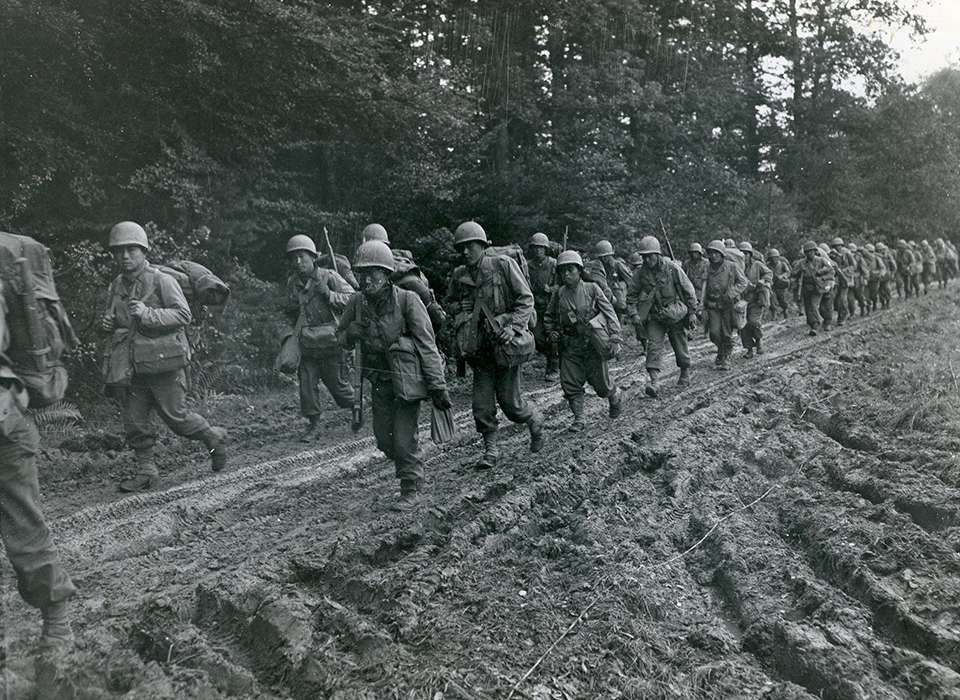
The 442nd Regimental Combat Team, a segregated Japanese American unit, is remembered today for its brave actions in World War II. Despite the odds, the 442nd’s actions distinguished them as the most decorated unit for its size and length of service in the history of the US military.
Soon after the December 7, 1941 attack on Pearl Harbor, President Franklin Roosevelt signed Executive Order 9066, effectively placing over 100,000 West Coast residents of Japanese descent, the majority of them American citizens, into incarceration camps. Racism against Japanese Americans was rampant as much of the country grew more fearful and suspicious of collaboration with the Japanese government. But Japanese Americans were equally outraged at the attack on their country. Despite the growing racism against them, many Japanese Americans answered the call to war.
President Roosevelt activated the 442nd Regimental Combat Team on February 1, 1943, nearly one year after the signing of EO9066. Hawaiian-born Nisei (second-generation Japanese Americans) made up roughly two-thirds of the regiment, with the remaining third composed of Nisei from the mainland United States. The motto of the unit was “Go For Broke,” a phrase that meant putting everything on the line in an effort to win big. Just as other minority groups, Japanese Americans faced two wars during World War II—war against the Axis powers and war against racism back home—making “Go For Broke” an appropriate motto.
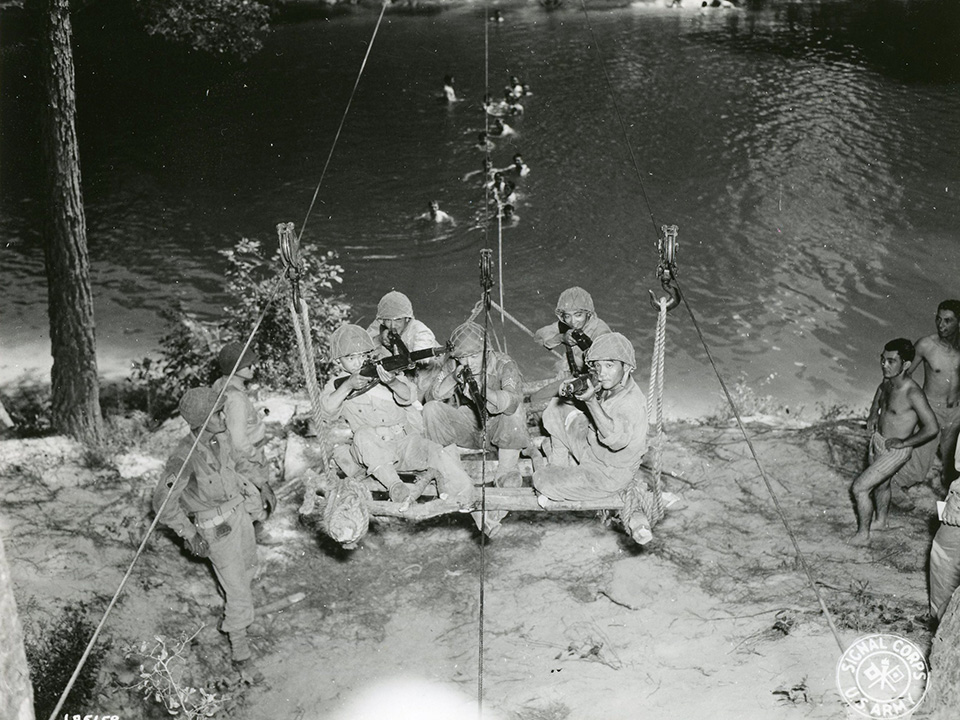
Men from the 442nd practicing training maneuvers in Camp Shelby, Mississippi. Courtesy of the US National Archives.
The 442nd RCT consisted of multiple units, including the 522nd Field Artillery Battalion, 232nd Combat Engineer Company, 206th Army Ground Forces Band, an Antitank Company, Cannon Company, Service Company, a medical detachment, and three infantry battalions. From May 1943 to April 1944, the men of the 442nd trained for combat, where they learned to fight as a team and excelled in practice maneuvers. Over the course of training, many men would be sent to Europe as replacements for the 100th Infantry Battalion, another Japanese American unit already fighting overseas and creating its own impressive track record.
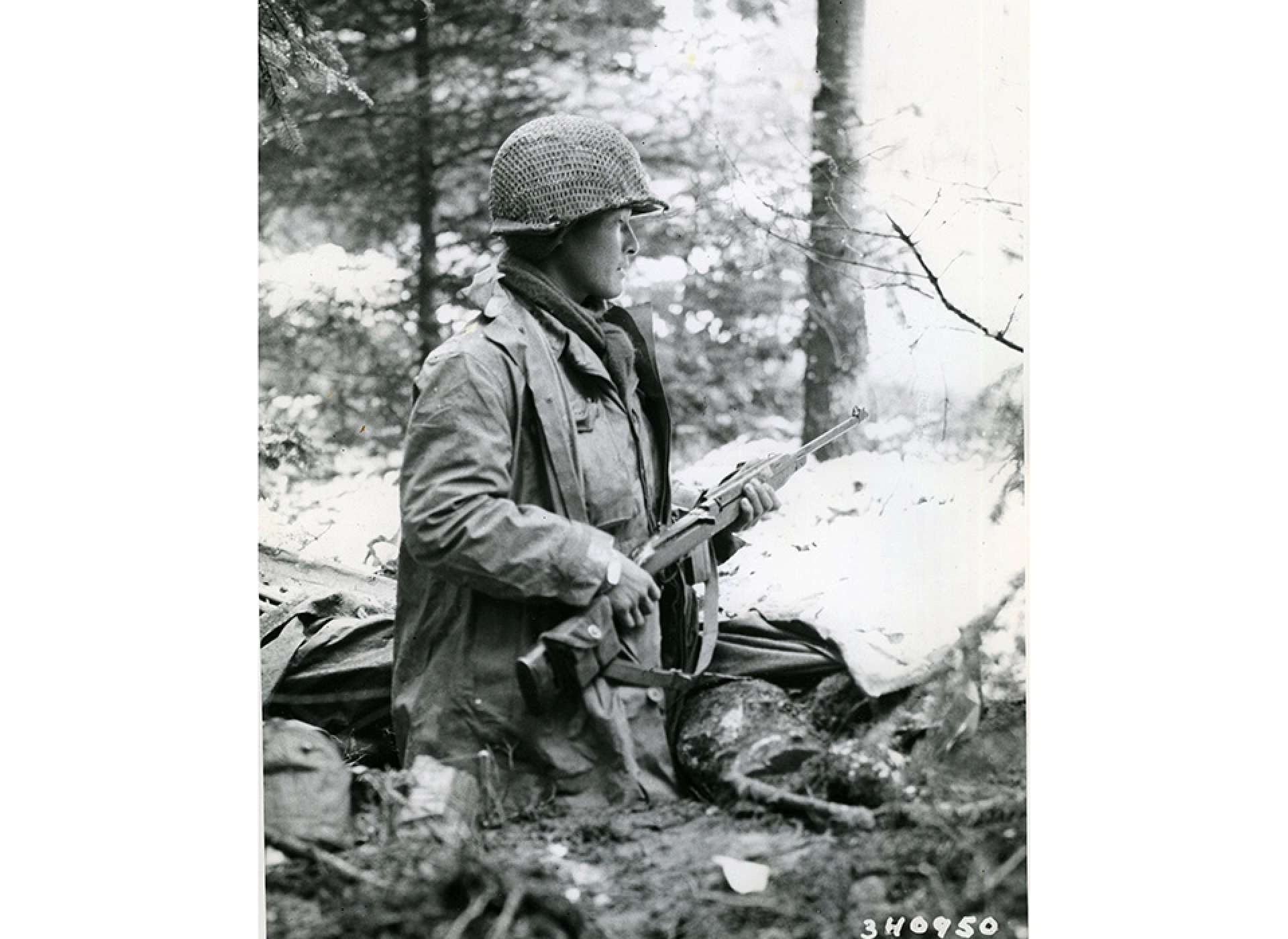
A squad leader of the 442nd watching for German movement on the front lines in France. Courtesy of the US National Archives.
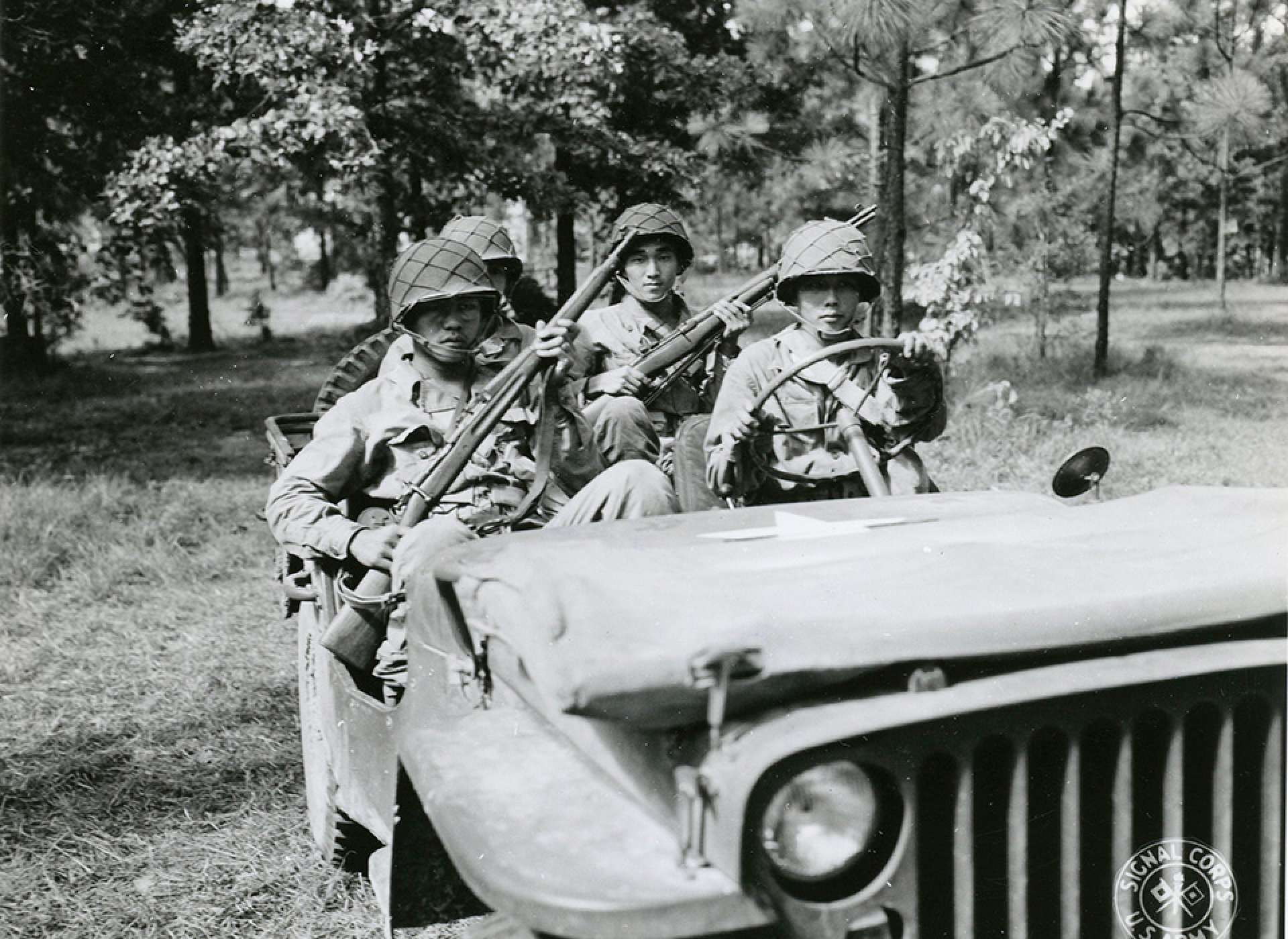
Members of the 442nd pose for a photo while riding a jeep in France. Courtesy US National Archives.
Training for the 442nd was completed in April, and on April 22, 1944, the unit left Camp Shelby in Mississippi on their journey to Europe for their first overseas assignment. They arrived in Italy in June 1944, where they began to fight alongside the 100th against Germans encamped across the country.
By August, the 100th was absorbed into the 442nd, with all units serving under the motto “Go For Broke.” In September 1944, the 442nd participated in the invasion of Southern France, successfully liberating French cities from Nazi occupation. The unit went on to fight with the 92nd Infantry Division, a segregated African American unit, in driving German forces out of northern Italy.
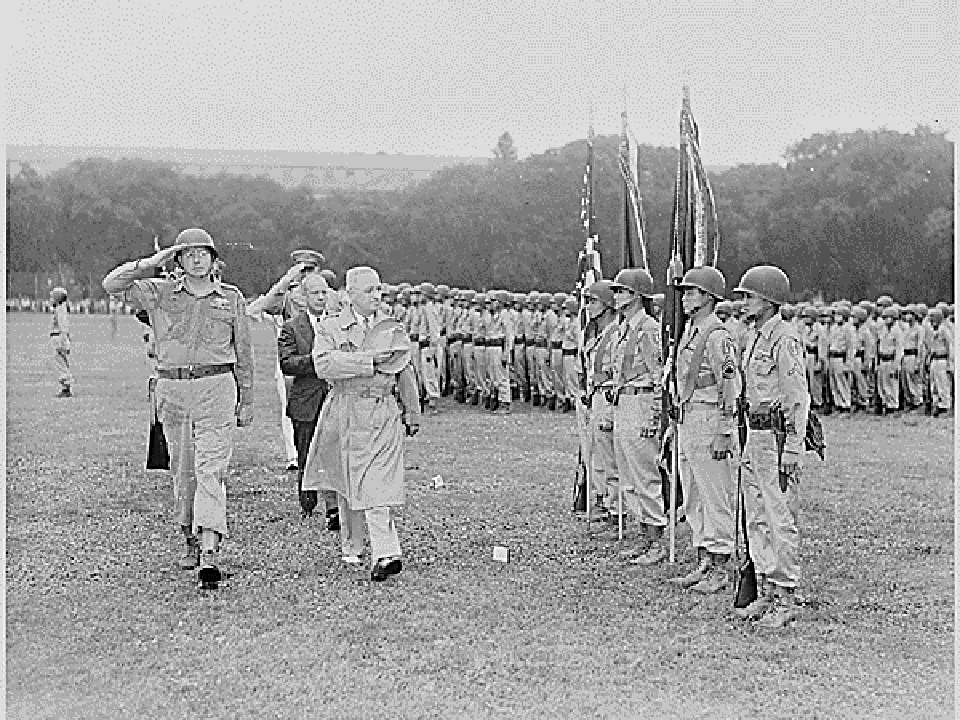
President Harry S. Truman removes his hat in front of the color guard of the 442nd.Courtesy Harry S. Truman Presidential Library
Today, the 442nd is remembered as the most decorated unit for its size and length of service in the history of the US military. The unit, totaling about 18,000 men, over 4,000 Purple Hearts, 4,000 Bronze Stars, 560 Silver Star Medals, 21 Medals of Honor, and seven Presidential Unit Citations. Additionally, the 100th garnished their own impressive record prior to their absorption into the 442nd. In 2010, various groups and advocates, including the National Veterans Network, were successful in obtaining congressional passage of the bill S. 1055, awarding all members of the 100th and 442nd, along with the Military Intelligence Service, the Congressional Gold Medal for their heroic service in World War II.
Against the odds, the men of the 100th Infantry Battalion and the 442nd Regimental Combat Team did “go for broke.” Despite the years of suspicion and racism that prevailed at home, these Nisei men fought for their country and their ideals of freedom and democracy. They fought heroically, leaving behind a record that is still untouched today.
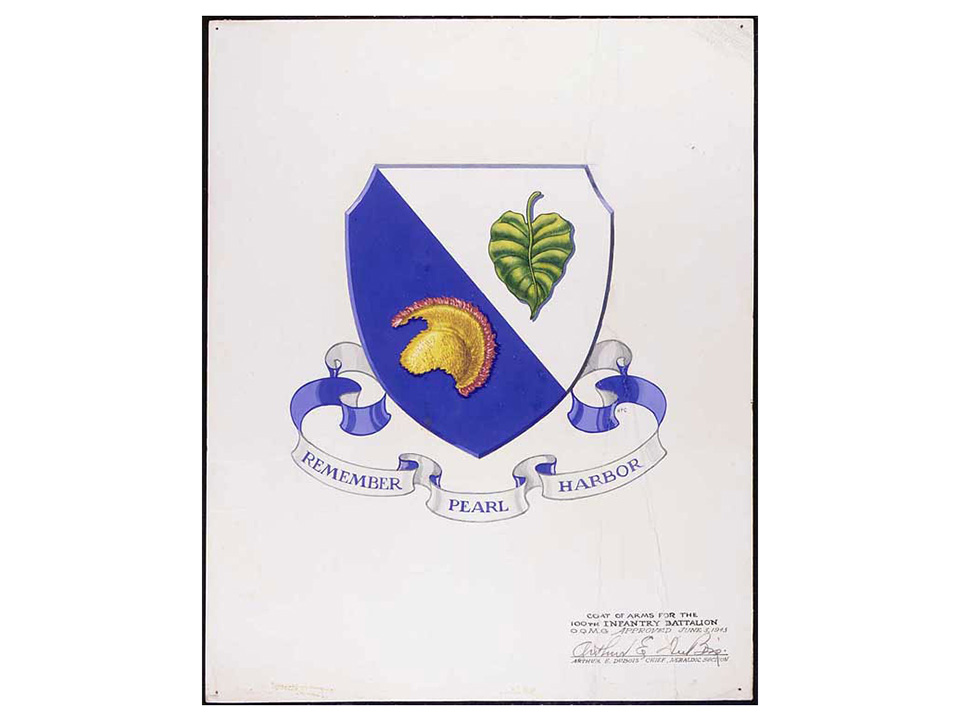
The logo and motto “Remember Pearl Harbor” of the 100th Infantry Battalion. Courtesy of the US National Archives.
In early 1918, as the American Expeditionary Force prepared to face battle-hardened German troops in France, the bayonet was a vital component of the Doughboys’ combat equipment.
It is difficult for many people today to understand the importance the U.S. military placed on “cold steel” during the Great War. Beyond the material components of a long blade fixed to the end of a battle rifle, the American concept of bayonet fighting was as much spiritual as it was physical.
The World War I-era “Flaming Bayonet” was designed to project a burst of flame from five to 15 feet. Image: NARA
This feeling is described in the U.S. Bayonet Fighting Manual, prepared at The School of Arms at Fort Sill, Oklahoma during February 1918 under the heading “The Spirit of the Bayonet”:
It is an easy matter to teach the few simple technical details of bayonet combat, but an instructor’s success will be measured by his ability to instill into his men the will and desire to use the bayonet.
This spirit is infinitely more than the physical efforts displayed on our athletic fields; more than the enthusiasm of the prize-ring; more, even, than the grim determination of the firing line — it is an intense eagerness to fight and kill hand to hand, and is the overwhelming impulse behind every successful bayonet assault.
A United States ordnance drawing of the 6-shot cartridge-type projector. Author’s collection
Bayonet fighting is possible only because every red-blooded man naturally possesses the fighting instinct. This inherent desire to fight and kill must be carefully watched for and encouraged by the instructor. It first appears in a recruit when he begins to handle his bayonet with facility and increases as his confidence grows. With the mastering of his weapon there comes to him a sense of personal fighting superiority and a desire for physical conflict. He knows that he can fight and win. His practice becomes snappy and full of strength. He longs to test his ability against an enemy’s body; to prove that his bayonet is irresistible. He pictures an enemy at every practice thrust and drives home his bayonet with strength, precision and satisfaction. Such a man will fight as he has trained consistently, spiritedly, and effectively. While waiting for zero hour he will not fidget nervously. He will go over the top and win.
With the fighting spirit of the bayonet in mind, U.S. Ordnance sought to give the Doughboys’ bayonet charges a unique advantage. Consequently, they produced a small flame projector to attach to the muzzle of the rifle — creating a flaming bayonet.
The M1917 rifle shown here is equipped with the “Flaming bayonet, cartridge type, Mark I.” The weight of the tiny flamethrower attachment was recorded as 5/8ths of a pound. Image: NARA
The unique device was described in a post-WWI U.S. Army Ordnance review of trench warfare materials:
“Flaming bayonet, liquid type, Mark I — the total weight charged was 7/8 pound. To be used as an accessory to the military rifle, by the projection of a spurt of flame 5 to 15 feet in length.”
At first, the flaming bayonet appears to give each infantryman his own single-use flamethrower. A little deeper examination shows that the device is not intended to replace the concept of a man-portable flame projector, but rather to enhance the individual Doughboy’s chances in bayonet fighting. The sudden burst of flame would act as a serious distraction to the enemy, causing him to turn his face away and leave his body open to the Doughboy’s bayonet attack.
This correlates with the stateside teaching, as described in the U.S. Bayonet Fighting Manual:
“The maximum killing range of the bayonet is about 5 feet (measured from the opponent’s eyes to your own), but more often the killing is at closer quarters, at 2 feet or less, when troops are struggling corps-a-corps in the trenches or darkness.
The cartridge type projector replaced the initial liquid type. It is shown here firing during a training demonstration. Image: NARA
To sum up, the bayonet is only an offensive weapon, and its users must move over short distances straight up to the enemy’s position and without halting to fire. All the other details of an assault are to give the bayonet man an opportunity to close with the enemy, and the success of an attack depends upon, first, whether sufficient men can reach the enemy, and second, having closed with him, whether they are imbued with the spirit of the bayonet.”
A sudden burst of flame within five feet would certainly cause enough “shock and awe” to give the attacking Doughboy a much better chance to strike a killing blow. In “Hand to Hand Fighting: The Use of the Bayonet” (1918), author Haskell C. Billings notes that the attacker has but one chance to make a significant first impression with the bayonet:
“Don’t get excited and lose your head when you meet your man. Every thrust must count. Remember that in shooting you have five chances, with five cartridges in the chamber, but only one chance with the bayonet.”
The flaming bayonet attachment was essentially inconspicuous, and any man with a rifle and a bayonet could use one. Ordnance documentation describes the effect as “The weapon is intended for use at close range to temporarily disconcert the enemy immediately before the bayonet attack.”
Flaming Bayonet Mechanics
The first pattern of the device was basically a tiny flamethrower using liquid fuel. While innovative, the flammable fuel cannister suffered from unreliable ignition and inconsistent burning and projection when it worked.
Photographed here is the initially developed vial-type liquid flame projector. Image: NARA
Even so, the basic concept was considered sound, and the design evolved to use a six-shot pyrotechnic cannister, which was considered far superior. No information exists to whether each chemical “flame shot” could be triggered separately, or if they all ignited at once. It is also unknown if the cannister projector could be reloaded — by the soldier, by Chemical Warfare troops, or if it was a single use weapon. Issues regarding temperature variation, moisture, mud, and rough handling would have been significant challenges for the troops in the field.
As far as is known, the flaming bayonet was never issued for combat trials. The final prototype was said to produce a solid sheet of flame up to 10 feet in length, with white hot particles projecting out up to 30 feet.
There is little photographic documentation of the device, and I’ve included all the images I’ve ever found for your review here. The flaming bayonet is a relatively simple device, but it was far from “soldier-proof”.
In Practice
Ultimately, it was an interesting concept, but with a very limited tactical application. When viewed in the context of the importance of bayonet fighting at that time, the flaming bayonet makes sense. But in the field, it quickly becomes cumbersome, and possibly more of a distraction to the user than it would have been to the enemy.
The improved, cartridge-type flame projector mounted on an M1917 rifle. Image: NARA
Any photos of the flaming bayonet show it attached to the .30-caliber M1917 rifle, the “American Enfield” — America’s most used combat rifle in World War I, with nearly 75% of all U.S. troops equipped with it.
The associated U.S. M1917 bayonet, with its 17” blade, was based on the British Pattern 1913 sword bayonet. Attached to the 46.3” M1917 rifle, the visual effect is that of a long and intimidating weapon. It seems that the flaming bayonet could have been adapted for use on the M1903 Springfield rifle, but this was never produced.
It is important to note that the flaming bayonet fell under the auspices of the Chemical Warfare Service, and flamethrower/flame projectors were never a priority for this branch of the U.S. military until 1942. After World War I, leaders of the Chemical Warfare Service generally considered flamethrowers to be a failed weapon system, and the flaming bayonet concept was abandoned by mid-1919.
Ultimately, while the flaming bayonet concept was abandoned, bayonet fighting remained an important part of U.S. military doctrine. Image: NARA
Time marched on, and the American fighting man carried his rifle in conflicts around the world, trained as a marksman while still imbued with the spirit of the bayonet. Though truly fascinating, the flaming bayonet is ultimately an interesting footnote in this long and storied history.


 The 442nd Regimental Combat Team, a segregated Japanese American unit, is remembered today for its brave actions in World War II. Despite the odds, the 442nd’s actions distinguished them as the most decorated unit for its size and length of service in the history of the US military.