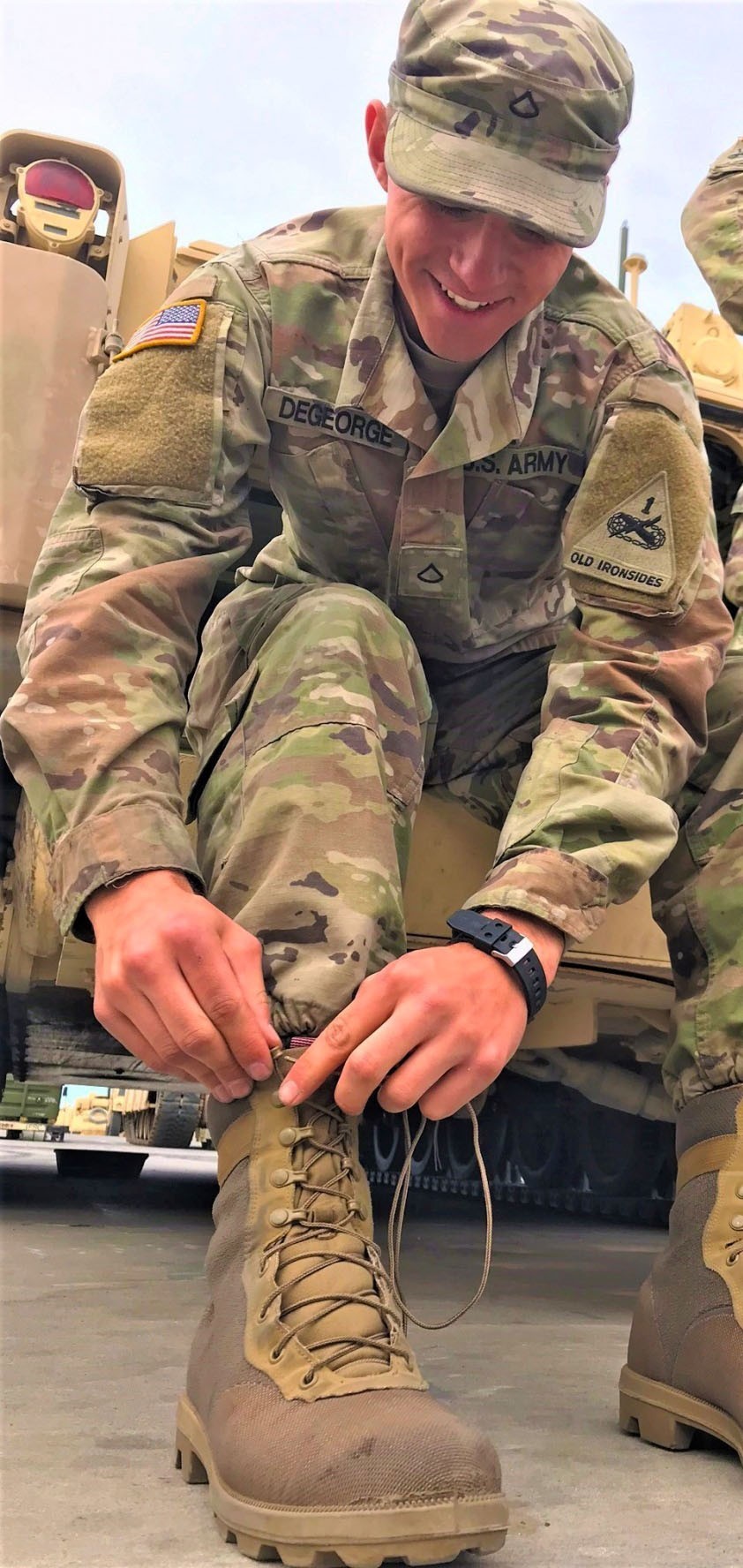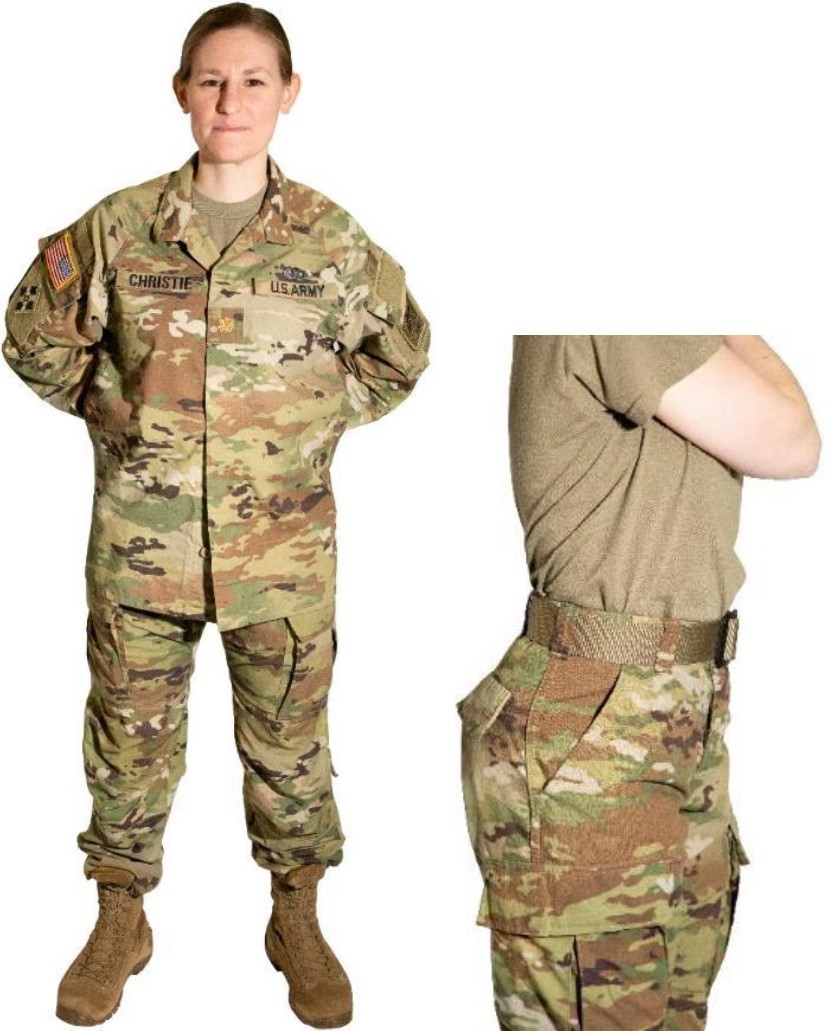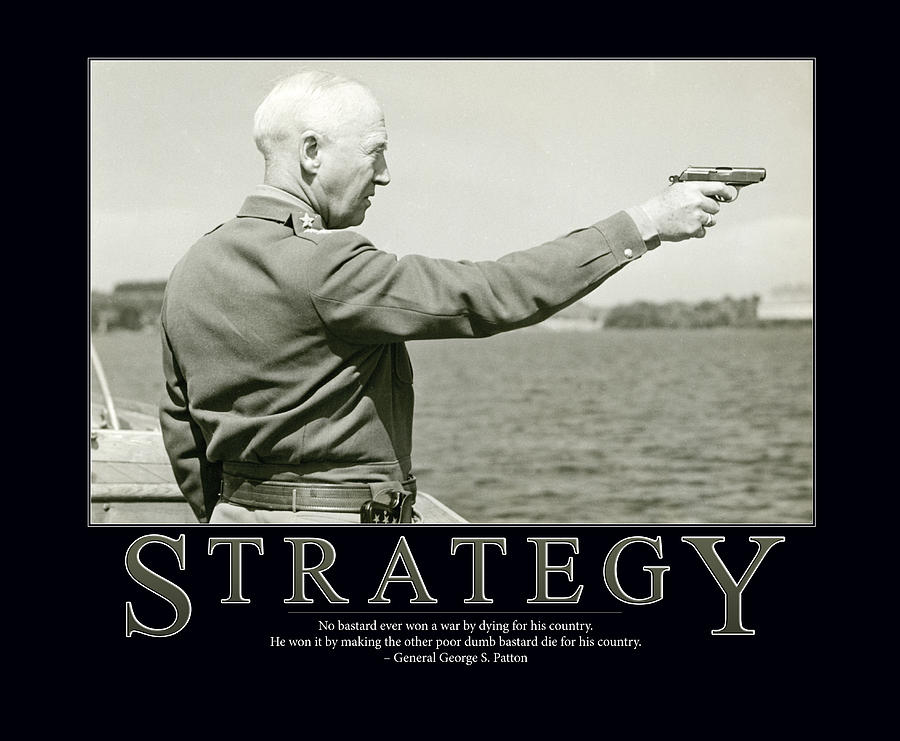


Well I thought they were good!
Category: The Green Machine


The Second Battle of Fort Wagner, a week later, is better known. This was the U.S. attack on July 18, 1863, led by the 54th Massachusetts Volunteer Infantry, one of the first major American military units made up of black soldiers.
Colonel Robert Gould Shaw led the 54th Massachusetts on foot while they charged, and was killed in the assault.[1]
Although a tactical defeat, the publicity of the battle of Fort Wagner led to further action for black U.S. troops in the Civil War, and it spurred additional recruitment that gave the U.S. Army a further numerical advantage in troops over the South.[1]
U.S. forces besieged the fort after the unsuccessful assault. By August 25, U.S. entrenchments were close enough to attempt an assault on the Advanced Rifle Pits, 240 yards in front of the Battery, but this attempt was defeated.
A second attempt, by the 24th Mass. Inf., on August 26 was successful. After enduring almost 60 days of heavy U.S. shelling, the Confederates abandoned it on the night of September 6–7, 1863. withdrawing all operable cannons and the garrison.[1][3]
The main reason the fort was abandoned was a concern about the loss of the garrison due to artillery fire and the threat of imminent assault.
On September 6, the garrison commander, Colonel Keitt, wrote to his superiors that “The garrison must be taken away immediately after dark, or it will be destroyed or captured. It is idle to deny that the heavy Parrott shells have breached the walls and are knocking away the bomb-proofs. Pray have boats immediately after dark at Cummings Point to take away the men. I say deliberately that this must be done or the garrison will be sacrificed. I am sending the wounded and sick now to Cummings Point, and will continue to do so, if possible, until all are gone. I have a number of them now there. I have not in the garrison 400 effective men, including artillery. The engineers agree in opinion with me, or, rather, shape my opinion. I shall say no more.” A council of war in Charleston on the 4th had already reached the same conclusion, and the evacuation was carried out as planned.[4]
After the war a revisionist story arose concerning access to fresh water. The claim was made that bodies of the U.S. troops (54th Massachusetts and many white troops) were buried close to the fort and the decomposition of the bodies poisoned the fresh water well within the fort.
Continuing bombardment and interception of food/water supplies by boat from Charleston made holding the fort difficult.[3] This version of the story is directly contradicted by official Confederate correspondence at the time of the evacuation.
Within twenty years of the Civil War, the remnants of the fort had been washed away by erosion on Morris Island. A group of three ex-servicemen traveled to the fort in May 1885 and reported that the entire fort and approaches to it had washed away into the ocean.[5]
The fall of Battery Wagner would have considerable strategic significance. With its loss and that of Fort Gregg, Morris Island too fell to the United States.
Although Charleston remained in the hands of the rebels its port was effectively closed. At the end of the year Secretary of the Navy Gideon Welles could report that “the commerce of Charleston has ceased.”[6]The impact also showed directly in rebel customs receipts, which fell drastically from 1863 to 1864.[7] The labors and sacrifices of the United States forces during the storms and siege had in the end shutdown a vital lifeline to the rebellion.
54th Massachusetts
The most famous regiment that fought for the U.S. side in the battle of Fort Wagner was the 54th regiment, which was one of the first African-American regiments in the war.
The 54th was controversial in the North, where many people supported the abolition of slavery, but still treated African-Americans as lesser or inferior to whites.
Though some claimed blacks could not fight as well as whites, the actions of the 54th Massachusetts demonstrated once again the fallacy in that argument, as this was not the first time blacks ever fought in war or even for the United States.
William Carney, an African-American and a sergeant with the 54th, is considered the first black recipient of the Medal of Honor for his actions at Fort Wagner in recovering and returning the unit’s American flag to U.S. lines.[1]
After the battle, the Confederates buried the regiment’s commanding officer, Robert Gould Shaw, in a mass grave with the African-American soldiers of his regiment, viewing this as an insult to him. Instead, his family were grateful to them for burying Shaw with his men.
Morris Island is smaller than 1,000 acres and is subject to extensive erosion by storm and sea. Much of the previous site of Fort Wagner has been eroded away, including the place where the Union soldiers had been buried.
However, by the time this had happened, the soldiers’ remains were no longer there because soon after the end of the Civil War, the Army disinterred and reburied all the remains—including, presumably, those of Col. Shaw—at the Beaufort National Cemetery in Beaufort, South Carolina, where their gravestones were marked as “unknown.”[8]
In popular culture
- This fort plays a major part in the film Glory. One of the final scenes portrays Colonel Shaw and the men of the 54th Massachusetts leading the attack and storming the fort unsuccessfully.[1]
References
- ^ Jump up to:a b c d e f g The 54th and Fort Wagner Archived 2007-09-30 at the Wayback Machine.
- Jump up^ Correspondence relating to fortification of Morris Island and operations of engineers. New York. 1878. Retrieved 26 September 2014.
- ^ Jump up to:a b Twiggs, T. D. D., Hon. Lieut. Col. (CSA, retired, deceased), The Defense of Battery Wagner North & South – The Official Magazine of the Civil War Society, Issue 4, Page 46.
- Jump up^ “The War of the Rebellion”, Series I, Volume 28, part I, pp. 100-105 http://ebooks.library.cornell.edu/cgi/t/text/pageviewer-idx?c=moawar;cc=moawar;q1=evacuated;rgn=full%20text;idno=waro0046;didno=waro0046;view=image;seq=120;page=root;size=100 See also http://civilwardailygazette.com/confederates-abandon-battery-wagner/
- Jump up^ “Battery Wagner Swept Away”. Charleston News & Courier. May 9, 1885. p. 8. Retrieved Nov 12, 2012.
- Jump up^ “New York Times” December 1o, 1863, “Report of Secretary Welles” https://www.nytimes.com/1863/12/10/news/navy-department-report-secretary-welles-north-atlantic-squadron-south-atlantic.html?pagewanted=all
- Jump up^ “Confederate Finance” Richard Cecil Todd, University of Georgia Press, 1954, p. 125
- Jump up^ Buescher, John (2010-08-08). “Robert Gould Shaw”. Teachinghistory.org. Retrieved 2017-10-08

AGAINST ALL ODDS – THE MAN BEHIND THE M14 RIFLE: LT. COL. ROY E. RAYLE
By George Kontis P.E.
It was hot and unusually humid in Springfield, Massachusetts during the summer of 1953. Yet, it was not nearly as sweltering as most of the summers he had endured back in his home state of Alabama.
Weather aside, LTC Roy E. Rayle took an early liking to his new assignment. His wife and two young sons were in love with the beautiful on-post housing supplied by the Army, and his new job was challenging, exciting, and important.
He was to direct 350 people in the Research and Development of small arms at the Springfield Arsenal. He had leadership training from the Army and a degree in Mechanical Engineering from Georgia Tech. He felt well prepared for any challenge.
In his first job briefing, the Colonel in charge updated him on the status of the programs now under his control. It was a glowing report, with no major challenges on the horizon. Two Springfield Armory-designed guns in trials at Ft Benning were reportedly doing very well.
The T161 machine gun and the T44 rifle were both undergoing user tests there. These two would later be designated the M60 machine gun, and the M14 rifle, respectively. Assuming successful trials, these would become the first small arms in U.S. history chambered for the new 7.62mm NATO round. Rayle’s predecessor had decided not to send a representative to the test site for technical support and feedback.
As a result, not much had been heard from Ft. Benning since the testing began. Everyone assumed that the tests were going well. Going so well, in fact, that his new boss spent most of their meeting time reviewing the other developmental weapons now under Rayle’s direction.
LTC Rayle enjoyed a blissful honeymoon that lasted a full two days. Suddenly, the Armory received an urgent and most disturbing phone call from U.S. Army Ordnance’s Chief of Small Arms Research and Development, Colonel René Studler.
The T44 was performing poorly in testing. A Pentagon representative was already on his way to the test site and Springfield Armory was to immediately dispatch a representative to Ft. Benning. Who would they send? The new guy, of course, LTC Roy Rayle.
Once at Ft. Benning, it didn’t take Rayle long to figure out the major problem. The T44 was having cartridge feeding issues that stemmed from too much friction in the magazine. Rayle asked them, “How much time do we have to fix the problem.”
He didn’t like the answer. Only eleven days of testing remained. Results had to be tallied and submitted to Army Field Forces headquarters at Ft. Monroe, VA. Ft. Benning had been directed to follow a rigid timeline.
It wasn’t only the gun that was having a problem. Since his arrival there, Rayle sensed a certain animosity from the test crew. It wasn’t toward him necessarily, but rather it was directed toward Springfield Arsenal.
After he examined the T44 test weapons more closely, he understood why. The rifle was far from production ready. T44 receivers had been made from an earlier prototype, the T20E2 that used the longer M1 round (.30-06). To reduce the bolt travel in the rifle for the shorter 7.62mm NATO round (.308 Winchester,) filler blocks had been placed inside the receiver.
The fix worked well enough. That is, right up to the point where the blocks loosened and caused malfunctions. This was only the beginning. Designers at the Armory had taken other shortcuts that made it blatantly obvious the T44 was little more than a cobbled-up prototype.
In stark contrast was the rifle submitted by the competitor. The entry from Fabrique Nationale (FN) of Belgium was a well-made and well-thought out design. FN’s rifle was designed for in line firing that directed the recoil load straight into the shoulder.
This greatly aided the shooter in controlling the weapon’s hefty recoil. The rifle we know today as the FAL was then designated by the Army as the T48. It featured smooth feeding, and a simple operating mechanism that was easy to field strip and service.
The general consensus at Ft. Benning was that the Belgian design was far more mature than the T44 and better prepared for user tests at Ft. Benning. The test crew welcomed the amiable on-site FN representative and viewed his presence as part of FN’s commitment to winning the competition.
The Belgians had spent their own money on the development of the T48, making numerous design changes in answer to every whim of the American military.
They converted their original design from the .280 British round and developed a simple top loading magazine charging clip that the Americans demanded.
FN spared no expense in producing test prototypes for the Army and arranged for their top designer, Mr. Ernst Vervier, to be on standby at the test site to oversee weapon repair and to answer questions.
American regulations made the testing unfair to FN. As the Belgian company was foreign owned, the company was not allowed to obtain any of the information from the classified test results.
FN was allowed to know how their own T48 was doing, but no information was provided as to how the T44 was faring. In spite of this, FN’s Managing Director, Mr. René Laloux, somehow knew a great deal about how the testing was going, stating at the end of this sequence of testing, “….between the two rifles, T44 and T48 FN, the final conclusions were in favour of the F.N. rifle.”
Before Rayle left Ft. Benning, the Colonel in charge pulled him aside to receive one more embarrassing admonishment.
This time it was for the shabby performance by Springfield Armory on the T161 machine gun prototypes. Like the T44’s, these were failing miserably, too.
There were failures to feed, broken firing pins, and ruptured cartridges that spewed debris all over the test cell. The weapon was not only performing poorly, but engineering support was lacking.
What about that tripod Springfield sent for the machine gun tests, the Colonel demanded? His test crew was expecting a new design but received a cobbled up tripod instead. What was the Armory doing with all of its time and money? Rayle had no answers and none of it was his fault, of course, but now he was in charge of R&D and he now owned all the blame.
Rayle was not even three weeks on the job and his two major programs were already in big trouble. It was an embarrassment; for him, and for the Springfield Armory.
LTC Rayle returned to Springfield on 20 July, anxious to get his team working on solutions to the T44’s problems. He began with a briefing on the history of the weapon. It was not a happy tale.
The original design intent was to develop a .30 caliber rifle weighing no more than 7 pounds that offered semi and full automatic fire. Design goals included: reduce coil, accommodation of a new short round, and firing from a detachable box magazine.
The purpose of the new rifle was to replace the M1 Rifle, the BAR, the M2 Carbine, and the M3A1 .45 caliber submachine gun. Four weapons and three different calibers replaced by a single weapon. This would greatly improve logistic support in the field. Since the end of World War II, numerous rifle designs had been developed and trialed until only the T44 remained.
“Who is the engineer in charge of the T44?” Rayle demanded. There was no single answer. The project started and stopped so often and priorities shifted so much that there really wasn’t one individual who followed the program from the beginning to now.
John Garand had been responsible for some of the early designs, and Earl Harvey for some of the others. Garand had retired only a couple of weeks before Rayle came to Springfield, and was no longer available to the team.
The rifle’s status was a confusing mess that was compounded by the military’s “big picture.” How was the war with Japan brought to an end? It was with the atomic bomb, of course.
There was a new thinking and general consensus by the military’s top brass. Wars would now be fought and won with nuclear weapons. Small arms would only be needed for a short cleanup with rifle wielding soldiers. What rifle did they need? For a totally demoralized enemy, almost any firearm would do.
As Rayle planned the direction forward, more bad news arrived. Classified Ft. Benning test results had been leaked to Newsweek magazine.
The 20 July 1953 issue featured an article claiming that the Belgian T48 was far ahead of the American T44, and predicted it would soon be announced that FN was the winner.
Those at the Armory doubted the veracity of the report. Long afterwards, they learned that the Newsweek article was totally accurate. Ft. Monroe had secretly decided the FN T48 was the winner.
They also decided to allow the T44 to continue with the next scheduled round of testing in Arctic conditions, only to serve as a yardstick to gage how much better the T48 would perform in cold weather conditions.
At the end of August, Rayle gathered his group together and offered them three options: The first one was to build up some repair parts to refurbish the guns after testing and submit the guns for trial in the same configuration.
The second was to address the gun’s major problems so the rifle would not be a total embarrassment to Springfield Armory. The third option was to use the remaining three months to fix everything that was broken. This included testing in both ambient and Arctic conditions with the objective to beat out the FN candidate.
Much was at stake. First and foremost was the avoidance of a huge loss of face for the United States, should a foreign weapon win the competition. Chief of Ordnance, General Ford, was already taking hits from the recent episodes of poor performance of Springfield designs.
The decision of Rayle’s team was unanimous. They would pull out all the stops in order to win the Arctic competition. From what he knew of the two designs, Rayle recognized this would not be an easy task.
The T44 had to overcome major design problems while the major issues with the FN gun were mostly metallurgical problems. From his engineering background he knew these could easily be solved by material or process changes.
Rayle was no stranger to solving difficult technical problems on a tight schedule. He once undertook a wartime assignment where his job was to discover the cause of mid air bomb collisions.
The subsequent detonations, which occurred soon after release, were responsible for downing the very aircraft that dropped them.
Rayle worked around the clock, conducting analysis, as well as filming and retrieving dropped bombs. He expeditiously determined the cause and verified the solution. Many bomb crews owe their lives to his timely solution.
To solve T44’s problems he decided on a direct approach, so he listed all of the technical problems in accordance with their severity. Once identified, they would be addressed one by one. Right away it became evident that he would need personnel and manufacturing capacity.
Even though he had 300 people working for him, redirecting some of them to the T44 improvement would be detrimental to the schedule for the project they were working on. It wasn’t just warm bodies he needed either.
He required top notch design talent – someone with expertise at the level of John Garand. Garand had earlier been approached, but refused after he learned that returning to work at the Armory would require him to give up his retirement pay. Getting Garand back this way was out of the question.
Rayle found a solution that solved both problems at once. A nearby machine shop, Mathewson Tool Company, was well known to the firearms industry for its excellent manufacturing capability.
Their reputation was due, to a large extent, to the manufacturing prowess of its owner, Dave Mathewson. Rayle’s solution was simple.
Mathewson would get a contract to produce any new T44 components that were needed and John Garand would work for him as a consultant. Garand could still collect his Army retirement along with a paycheck from Mathewson.
The T44’s number one problem was feeding cartridges from the magazine. They all knew that proper feeding is the primary key to the development of a reliable semi or full automatic weapon.
Examining the test records, the Springfield team realized that rounds fed poorly from new magazines and much better from ones that were worn in. Their magazine improvement program included some spring and configuration design changes, but the major improvement was the application of what was then a relatively new development; a dry film lubricant called molybdenum disulphide.
The new coating provided lubrication while the magazine was new and wore off at the same rate as the magazine wore in. Problem solved!
The buttstock was reinforced to improve it for grenade launching. For the Arctic testing, an enlarged trigger guard was developed to accept a gloved trigger finger.
New designs were verified by testing in ambient, dusty, and cold conditions, until acceptable function was achieved. More than once, they found that parts that worked in ambient conditions were totally unreliable at low temperature.
Rayle was impressed by the technical expertise of his team. Engineering technicians carefully conducted each test, taking careful notes and changing one thing at a time, so they knew if each individual fix was effective or not.
By mid December the much-improved T44’s were sent to Alaska, meeting up with the T48’s that had been sent from the FN plant in Liege, Belgium.
This time, Rayle decided, the Springfield team would send technical representatives to support the testing, replacing them every two weeks so that a new pair of eyes were available for a fresh look to address every problem that occurred. Rayle had recalled previous mistakes, and was determined not to repeat them.
As testing got underway, the T44’s were not problem free, but worked much better in the cold conditions than the T48’s, which suffered from a loss of power.
These problems were reported to FN who once again dispatched their design expert, Ernst Vervier to witness the problem and hopefully provide a solution. Unfortunately, Mr. Vervier could only come up with one on-site solution to cure the sluggish operation.
His only option was to enlarge the gas port to give the weapon more power. Determining the proper gas port diameter on any weapon is a very tricky undertaking, usually requiring extensive testing.
Mr. Vervier was well aware of the risk associated with changing it, and knew it was a sword that cut both ways. It solved the immediate power problem but the higher bolt velocity worked all of the components harder causing an increased number of broken parts.
Vervier tried to explain them away as normal parts life issues, but the malfunctions stood, counting against the T48 on the competition scorecard.
In spite of the redesigns, there were still plenty of problems with the T44. Those miserable filler blocks that shortened the T20 receiver were continually working loose and grenade launching was still problematic.
At the end of February, it was clear that the T44 had come out ahead and was announced the winner of the cold weather testing. Cautious military commanders at the Pentagon recoiled a bit from this latest development. Had they been too hasty in discounting their own American entry?
To the joy of Rayle’s team, Ft. Monroe announced that the next round of testing would again include the T44. Possibly this time it might be considered as a serious contender.
Rayle’s visit to command headquarters at Ft. Monroe was a disappointment. Rather than showing any enthusiasm for the success of the American weapon, most of the discussion centered on the Americanization of the T48.
It was if the recent T44 success had never happened. The entire U.S. defense industry was based on English inch-system dimensions.
With no easy way to introduce a metric-designed weapon into U.S. production, it would be necessary to convert the entire T48 drawing package to the inch-system.
At the same time, it was also important to convert the European format drawing into one more recognizable in the U.S. The good news was that the Canadians were interested in helping with these tasks, since they had already decided to adopt the FN design as their service rifle.
To his dismay, he learned that Springfield Armory was to assist in the metric conversion. Now his R&D department faced a huge challenge. It would be necessary for them to do a near perfect job with the conversion.
Should even one component be manufactured incorrectly as a result of the conversion, the failure would likely be viewed as an effort to sabotage the competitor. And how would anyone know?
Easy. Competing right alongside the U.S. made T48 would be the same metric guns made at the FN factory in Belgium to assure the American conversion was flawless.
Rayle could not let anything jeopardize the non-metric T48 design and subsequent testing. The Armory was already in trouble with Congress and some branches of the military, accused of being wasteful, inefficient, and some even said incompetent.
Springfield Armory had no friends in the U.S. firearms industry either. Concerned firearms manufacturers had insisted on a meeting with him, displeased that Springfield Armory was taking work they believed could be more efficiently performed by private industry. A mediocre conversion job could sound the Armory’s death knell.
Rayle went back to Springfield prepared for the direction forward. He would farm out the metric conversion to U.S. industry.
The industry would be totally unbiased and if anything, supportive. This would be an opportunity for them to tool up for U.S. production of what might become the next U.S. service rifle. Harrington and Richardson won the contract for the conversion and the production of 500 inch-system T48 rifles.
Undaunted by these new developments, the luxury of additional time and the recent miracle they pulled off with the Arctic testing gave Rayle the time he needed to beat the T48 in the next round of testing.
In June of 1954, Dave Mathewson delivered the first T44E4, a rifle with a proper length receiver that had been designed with the aid of John Garand. The T44E4 looked good and was a full pound lighter than the T48.
Excited about the work done by Mathewson and Garand, Rayle took the rifle home that same night to examine it more closely. Sitting in the kitchen with the rifle in his lap, Rayle thought back on the ease at which the FN rifle could be field stripped.
“The T44E4 was easy to strip too,” he thought. Or was it? He disassembled the T44E4 a couple more times to convince himself.
Then a better idea came to him. Relying on her unfamiliarity with firearms, he asked his wife to leave the dishes for a moment in order to try her hand at it. She succeeded for the most part, but floundered, when trying to remove the bolt.
The next day Rayle called Dave Mathewson and recounted the previous night’s field stripping exercise. Dave agreed to look into it, and sure enough the next models delivered had extra cuts to facilitate disassembly.
After thirteen each of the T48’s and T44E4’s were delivered, the guns were sent in opposite directions. Arctic testing would continue in Alaska while Ft. Benning would be supplied five of each type for user testing.
By the spring of 1955, it was concluded that the weapons had an equal number of deficiencies, but the Board had a clear preference for the T44. At the conclusion of testing in November 1955 the malfunction rates were: T44–1.4%, inch-system T48–2.4%, and FN made T48-2.4 %.
Design refinements of both weapons and testing continued through most of 1956 with the final report indicating that either rifle was suitable for Army use.
The lighter weight, ease of manufacture, non-adjustable gas system, fewer components, and slight edge on reliability gave the Board reasons to make their choice the T44E4.
Official notification was not made until June 1957, but by then Rayle had been reassigned as the Ordnance Adviser to the First Field Army of the Republic of China, in Taiwan.
The teams led by LTC Roy E. Rayle had overcome great odds, beating out one of the finest service rifles ever developed. Without his engineering and leadership skills, the history of U.S. small arms would look quite different than it does today.
| This article first appeared in Small |
Hero SAS dog saves the lives of six elite soldiers in Syria by ripping out jihadi’s throat while taking down three terrorists who ambushed British patrol
- The dog had been out on patrol in northern Syria with a team of six crack troops
- As the soldiers left their armoured convoy they were hit with a frenzied ambush
- A source said the unnamed Belgian Malinois took out three jihadis on its own
- The SAS commander in charge credited the dog with saving all his men’s lives
By GEORGE MARTIN FOR MAILONLINE
An SAS team was saved after a brave military dog fought off a jihadi who attacked a patrol in northern Syria.
The unnamed Belgian Malinois, a fierce breed of sheepdog known for its bravery, had been out on a routine patrol with a team of six crack soldiers from the SAS.
They had just entered a small village in a convoy of armoured vehicles when they got out to continue the recce on foot.
But soon after they left the safety of the convoy, they were attacked on all sides by waiting jihadis in what was described as a ‘360 degree ambush’.
Scroll down for video
The team had been on patrol with a Belgian Malinois (pictured), a breed known for their bravery [file photo]
The SAS men returned fire but the jihadis began closing in and tried to outflank them.
The animal was said to have leapt to the defence of the struggling British soldiers, tearing the throat of on gunman who was firing at the patrol.
It then turned on two other
A source told the Daily Star: ‘The SAS found themselves in a 360-degree ambush.
‘The initiative was with the terrorists and the only hope for the British was to try and make a run for it.
‘The handler removed the dog’s muzzle and directed him into a building from where they were coming under fire.
‘They could hear screaming and shouting before the firing from the house stopped.
The small SAS troupe had been out on a routine patrol in a small village in northern Syria
‘When the team entered the building they saw the dog standing over a dead gunman.
The incident was said to have taken place two months ago, but details of the dog’s bravery can only be made public now for security reasons.
‘His throat had been torn out and he had bled to death,’ the source continued, ‘There was also a lump of human flesh in one corner and a series of blood trails leading out of the back of the building.
‘The dog was virtually uninjured. The SAS were able to consolidate their defensive position and eventually break away from the battle without taking any casualties.’
The SAS commander in charge of the patrol credited the dog with directly saving the lives of all six of the men.


THE 240-YEAR EVOLUTION OF THE ARMY SIDEARM
The weapons that won a revolution and defended a republic.
In late January of this year, the U.S. Army selected a new pistol to replace the Beretta M9, a gun that’s served the Armed Forces for 30 years.
But like every weapon in the U.S.’s arsenal, the Army pistol has gone through a slow evolution, from slow-loading flintlocks that helped create a country to polymer-framed, semi-automatic pistols used in conflicts around the world today.
The U.S. Army has come along way in 242 years.
The Flintlocks That Made America
America’s very first sidearm was a copy of a British one. Based on the British Model 1760, the Model 1775 was a muzzle-loading, .62-caliber smoothbore flintlock.
The American pistols were made by the Rappahannock Forge in Virginia (pictured above), a key manufacturing base and arsenal for the Continental forces that produced 80,000 muskets during the American Revolution.
Copies of the Model 1775 pistol were later made at Harper’s Ferry. This gun was renamed the Model 1805 and was the weapon choice during the War of 1812.
After the Revolution, Connecticut gunmaker Simeon North won a contract to manufacture a new pistol. Based on French pistols of the period, North’s new weapon was smaller than the earlier 1775 model with a side-mounted ramrod and a fired a larger .72-caliber ball.
In 1813, North received another contract for 20,000 pistols from the U.S. Military. These were to have a full stock, fire a .69-caliber ball and most importantly use interchangeable parts, one of the first contracts to request such a feature.
Having these pistols could sometimes mean the difference between life and death. During the War of 1812 while fighting Tecumseh’s Shawnee warriors, Colonel Richard Johnson was wounded in the arm.
Although the veracity of this account is still debated, one story says that Johnson barely had time to cock his flintlock pistol and shoot Tecumseh, a native leader “of undoubted bravery.” Johnson would capitalize on the episode, launching his career as a politician and becoming the ninth U.S. vice president.
North continued to make pistols, manufacturing the Model 1826 for the Navy. The last U.S. flintlock pistol came in 1836, the same year Samuel Colt patented his revolutionary new revolving pistol. Gunsmith Asa Waters produced the Model 1836 until the early 1840s, a weapon used widely during the Mexican-American War.
For almost a century the flintlock had been the dominant ignition system for firearms, but being susceptible to the elements.
They were too unreliable and by the 1840s many of the major European powers, like Britain and France, began transitioning away from increasingly obsolete flintlock pistols to new percussion-lock pistols.
These new guns used fulminate of mercury percussion caps to ignite the gunpowder instead of a flint. The U.S. used the old flintlock system throughout the 1830s and 40s before slowly transitioning to the new percussion cap revolvers.
The Birth of the Revolver
Formally adopted in 1848, percussion revolvers represented a massive leap forward in firearms technology. It’s most basic improvement was simple math— a soldier now had six shots before reloading rather than only one.
But the firepower of these new pistols was also highly sought after, and revolvers became one of the most iconic weapons of America’s bloodiest conflict.
The U.S.’s first revolver was the Colt Dragoon, initially designed for the Army’s Regiment of Mounted Rifles. The Dragoon improved on the earlier Colt Walker, a gun used heavily during the Mexican-American War. The Dragoon would be the first of a series of Colt pistols used by the U.S. throughout the 19th century.
Then came the Civil War, and a plethora of percussion revolvers were soon found their way into the hands of Union and Confederate soldiers alike.
The Union predominantly issued Colt and Remington revolvers. Approximately 130,000 .44-caliber, Colt Army Model 1860s were purchased along with considerable numbers of Colt 1851 and 1861 Navy revolvers.
Following a fire at Colt’s Connecticut factory in 1864, the Army placed significant orders for Remington Model 1858 pistols to fill the gap.
The solid-frame Remington was arguably a better, more robust pistol than the open-frame Colt revolvers. Remington continually improved the Model 1858 based on suggestions from the U.S. Army Ordnance Department.
For both sides pistols were often a soldier’s last line of defense. One Confederate newspaper reported that a badly wounded captain commanding a battery of artillery at the Battle of Valverde “with revolver in hand, refusing to fly or desert his post… fought to the last and gloriously died the death of a hero.”
On the other side of the frontline, one Union calvaryman recalled:
“I discharged my revolver at arm’s length at a figure in gray and he toppled onto the neck of his mount before being lost in a whirl of dust and fleeing horses… I found that both my pistols were emptied… there were five rebels who would not trouble us anymore and many others who must have taken wounds.”
It was not uncommon for cavalry to carry multiple revolvers, as another Union cavalryman wrote “we were all festooned with revolvers. I carried four Colts, two in my belt and two on my saddle holsters but this was by no means an excess. Some of my compatriots carried six because we were determined in a fight not to be found wanting!”
The industrial might of the North ensured that the Union had an advantage throughout the war, and the Confederacy were forced to use imported pistols from Europe and locally produced copies.
These included Adams, LeMat and Kerr pistols and copies of Colts and other revolvers made by Spiller & Burr and Griswold & Gunnison.
By the end of the Civil War, self-contained metallic cartridges were becoming more and more popular. The late 1860s and early 1870s saw another small arms revolution with percussion pistols giving way to cartridge revolvers like the Smith & Wesson Model 3 and the legendary Colt Single Action Army.
The Gun of the West
In 1870, the military purchased its first metallic cartridge revolvers from Smith & Wesson. The Model 3 was a top-break revolver, meaning the barrel and cylinder could be swung downwards to open the action and allow the user to quickly reload the weapon.
The new metallic cartridges removed the need for loose powder and percussion caps and greatly increased the revolver’s rate of fire with a skilled shooter firing all six-rounds in under five seconds. However, Colt, Smith & Wesson’s principal rival, were not far behind.
In 1871, Colt introduced their first cartridge revolver, the year after a patent held by Smith & Wesson expired. Colt turned to William Mason, the experienced engineer who had worked on Colt’s earlier pistols.
Mason designed a pistol which outwardly resembled many of Colt’s earlier revolvers, but the new design included a rear loading gate and Mason’s patented extractor rod offset to the side of the barrel, a feature later used in the Single Action Army.
The Colt 1871 “Open Top” was chambered in the popular .44 Henry rimfire cartridge. When the Army tested Colt’s new pistol, they complained that the .44 rimfire round was too weak and that the open-top design wasn’t as robust as rival pistols from Remington and Smith & Wesson. The Army demanded a more powerful cartridge and a stronger solid frame.
Colt quickly obliged producing a run of three sample pistols for testing and examination. This new revolver was the prototype for the now legendary Colt Single Action Army.
The new pistol, developed by William Mason and Charles Brinckerhoff Richards, had a solid frame and fired Colt’s new .45 caliber center-fire cartridge. This gun is still manufactured today.
After successful testing, the Army adopted Colt’s revolver as the Model 1873. The new Colt Single Action Army had a 7.5 inch barrel and weighed 2.5lbs, and an initial order for 8,000 M1873s replaced the Army’s obsolete Colt 1860 Army Percussion revolvers.
The Army also ordered a several thousand Smith & Wesson Model 3s.
These revolvers had a more advanced top-break design and could be loaded much faster than the Colt. For a number of years, the two revolvers served side by side but used different ammunition.
Eventually, the army favored the more robust, accurate, and easier to maintain Colt, and over the next 20 years purchased more that 30,000 of them.
TheColt M1873 Single Action Army would go on to see action in every U.S. military campaign between 1873 and 1905. They were even clutched in the hands of General Custer and his men at the Battle of the Little Bighorn.
Despite its hallowed status, the Single Action Army still wasn’t the apex of handgun technology. While the Single Action Army had excellent stopping power, reliability, and a simple action, it was slow to reload and a slow rate of fire.
To address some of these issues, the Army requested a new double action revolver. The Colt Model 1892 became the first double-action revolver ever issued to the U.S. Army and Navy. Replacing the venerable .45-caliber Colt M1873, the M1892 had a six-chamber cylinder and fired a new .38 Long Colt round.
It had a double-action trigger which improved the pistol’s rate of fire, and unlike the earlier single action Colt, the new revolver chambered, cocked, and fired a round with each pull of the trigger.
Another improvement over the earlier Colt was the M1892’s swing out cylinder, this allowed troops to quickly extract spent cases and reload much faster than the M1873’s hinged loading gate.
While the pistol proved sturdy and reliable in the field, now with a faster rate of fire and easier reload, the Army found that the .38-caliber cartridge lacked the stopping power of the previous .45-caliber Colt.
In 1905, during the Philippine Insurrection a prisoner, Antonio Caspi, attempted to escape and was shot four times at close range with a .38 pistol—he later recovered from his wounds.
Although Colt tried to increase the power of the .38-caliber round, the Army began looking for a new pistol that would chamber the .45 Colt round, and in 1904, the Board of Ordnance began a series of tests to discover what sort of ammunition its next service pistol should use.
The Colt Pistol and a World at War
It would fall to Colonel John T. Thompson (who later designed the iconic Thompson submachine gun) and Major Louis Anatole LaGarde of the Army Medical Corps to investigate the effectiveness of various calibers.
Thompson and LaGarde decided that testing on live cattle and on donated human cadavers would be a suitably scientific method of finding which bullet would put a man down.
The experiments were pseudo-scientific at best and horribly cruel to the animals, especially since they would time how long it would take for them to die.
But finally, the report concluded:
“After mature deliberation, the Board finds that a bullet which will have the shock effect and stopping power at short ranges necessary for a military pistol or revolver should have a caliber not less than .45.”
The Thompson-LaGarde tests were followed by Army trials between 1906 and 1911. The trials tested nine designs, but the competition quickly identified three main contenders. The Savage 1907, designed by Elbert Searle, faced Colt’s John Browning-designed entry and the iconic Luger designed by Georg Luger.
All three pistols were chambered in the new .45 ACP cartridge. In 1908, the Luger withdrew from the trials, leaving only the designs from Colt and Savage.
While both pistols had their problems during the trials, the Savage 1907 pistols were substantially more expensive.
The testing reported a catalogue of issues including a poorly designed ejector, a grip safety which pinched the operator’s hand, broken grip panels, slide stop and magazine catch difficulties, deformed magazines, and a needlessly heavy trigger pull.
During this time, the Colt 1905 Military Model went through a series of changes and design improvements, eventually giving it the edge over its rival. Following final testing on March 3, 1911, the trials board reported: “Of the two pistols, the Board is of the opinion that the Colt is superior, because it is the more reliable, the more enduring, the more easily disassembled, when there are broken parts to be replaced, and the more accurate.”
Colt’s pistol was quickly adopted as the ‘Pistol, Semi-automatic, .45 caliber, Model 1911’.
John Browning’s iconic M1911 used a locked breech, short-recoil action, feeding from a seven round magazine.
It weighed 2.4lbs (1.1kg) unloaded and was just over eight inches long. Ergonomically, its controls were easy to manipulate and included magazine and slide releases and both a manual and grip safety.
The M1911 remained in service for over 70 years and saw action during both World Wars, the Banana Wars, the Korean War, the Vietnam War and the Invasion of Grenada.
Perhaps one of the most famous uses of the M1911 came when Alvin York was awarded the Congressional Medal of Honor.
In October 1918, during the battle of Meuse-Argonne, York was charged by a squad of Germans. As they came into pistol range, York drew his M1911 and killed six attackers. That day he single handedly killed a total of 25 German soldiers and captured 132 more.
In 1926, after some lessons learned during World War One, Colt overhauled the M1911 by including a shorter trigger and frame cut-outs behind the trigger, a longer spur on the pistol grip safety, an arched mainspring housing, a wider front sight, and a shortened hammer spur.
Following these changes, the pistol was designated the M1911A1, a weapon that would also fight a world war—just like its predecessor.
A More Modern Weapon
The Colt soldiered on into the 1980s until the U.S. launched the Joint Service Small Arms Program, which aimed to select a new pistol that could be used by all of the armed services.
After a tough competition between designs from Colt, Walther, Smith & Wesson, Steyr, FN, and SIG, a winning design was selected, the Italian Beretta 92. The Beretta formally replaced the M1911A1 in 1986 as the M9.
Even though the military had found its new gun, the 1911 still remains in use by some units such as the U.S. Marine Force Recon Units and Special Operation Command as the refurbished M45, surpassing a century of service.
But the M9 beat out the venerable Colt because it fired the smaller 9x19mm round, which made learning to shoot easier, and it had a much larger magazine holding 15 rounds while using a single-action/double-action trigger. While some complained it lacked the 1911’s .45 ACP stopping power, the M9 served the U.S. military well for over 30 years.
It has seen hard service during the Gulf War, the War in Afghanistan, and the Iraq War.
In March 2003, during Operation Iraqi Freedom Marine Corporal Armand E. McCormick was awarded the Silver Star when he drove his vehicle into an Iraqi position before dismounting and clearing enemy defenses with his M9.
But as technology advanced and new pistol designs emerged, the Army needed a new sidearm to match the times. In the early 2000s, a series of trials led eventually to the Modular Handgun System program.
The Army wanted a lighter, more adaptable pistol which could be fitted to individual soldiers. After several years of testing entries from Glock, Beretta, FN, and Smith & Wesson, the SIG P320 won out.
The new pistol, designated the M17, is lighter, more compact, has a standard 17-round magazine capacity, and is fully ambidextrous. It has a fiberglass-reinforced polymer frame with an integrated Picatinny rail to allow lights and lasers to be mounted, much like the M9’s slide-mounted manual safety.
But the most innovative aspect of the M17 is its modular design. The pistol’s frame holds an easily removable trigger pack, which along with the barrel and slide, can be removed and simply dropped into another frame.
This gives troops in different roles with different requirements some much needed flexibility.
The SIG P320 is completely unrecognizable from M1775, held in the hands of American founding fathers. Much like America itself, the soldiers’ handgun has evolved massively over the last 240 years, but the principle of the sidearm remains the same—the absolute last line of defense.
Wars may not be won with pistols, but a soldier’s sidearm can still be the difference between life and death.

I still say that this picture should be posted at all the Service Academies, ROTC, OCS Units!