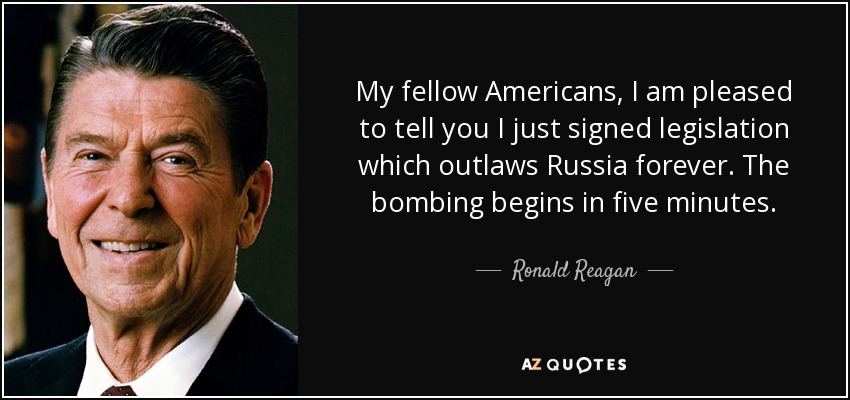
My Dad & I almost pissed our pants from this one. Because we were laughing out loud so hard!
I miss you Dad! Grumpy
Anyways Happy 107th Birthday Sir! I am sure that God is having a good time with you! Grumpy

My Dad & I almost pissed our pants from this one. Because we were laughing out loud so hard!
I miss you Dad! Grumpy
Anyways Happy 107th Birthday Sir! I am sure that God is having a good time with you! Grumpy

By Maj. John L. Plaster, USA (Ret)
RECON COMPANY AT COMMAND AND CONTROL CENTRAL
In 1968, Robert L. Howard was a 30-year-old sergeant first class and the most physically fit man on our compound. Broad-chested, solid as a lumberjack and mentally tough, he cut an imposing presence. I was among the lucky few Army Special Forces soldiers to have served with Bob Howard in our 60-man Recon Company at Command and Control Central, a top secret Green Beret unit that ran covert missions behind enemy lines. As an element of the secretive Studies and Observations Group (SOG), we did our best to recon, raid, attack and disrupt the enemy’s Ho Chi Minh Trail network in Laos and Cambodia.
UP THERE WITH AMERICA’S GREATEST HEROES

Take all of John Wayne’s films—throw in Clint Eastwood’s, too—and these fictions could not measure up to the real Bob Howard. Officially he was awarded eight Purple Hearts, but he actually was wounded 14 times. Six of the wounds, he decided, weren’t severe enough to be worthy of the award. Keep in mind that for each time he was wounded, there probably were ten times that he was nearly wounded, and you get some idea of his combat service. He was right up there with America’s greatest heroes—Davy Crockett, Alvin York, Audie Murphy, the inspiring example we other Green Berets tried to live up to. “What would Bob Howard do?” many of us asked ourselves when surrounded and outnumbered, just a handful of men to fight off hordes of North Vietnamese.
To call him a legend is no exaggeration. Take the time he was in a chow line at an American base and a Vietnamese terrorist on a motorbike tossed a hand grenade at them. While others leaped for cover, Howard snatched an M-16 from a petrified security guard, dropped to one knee and expertly shot the driver, and then chased the passenger a half-mile and killed him, too.
One night his recon team laid beside an enemy highway in Laos as a convoy rolled past. Running alongside an enemy truck in pitch blackness, he spun an armed claymore mine over his head like a lasso, then threw it among enemy soldiers crammed in the back, detonated it, and ran away to fight another day.
Another time, he was riding in a Huey with Larry White and Robert Clough into Laos, when their pilot unknowingly landed beside two heavily camouflaged enemy helicopters. Fire erupted instantly, riddling their Huey and hitting White three times, knocking him to the ground. Firing back, Howard and Clough jumped out and grabbed White, and their Huey somehow limped back to South Vietnam.
CONSIDER THE RESCUE OF JOE WALKER
“Just knowing Bob Howard was ready to come and get you meant a lot to us,” said recon team leader Lloyd O’Daniels. Consider the rescue of Joe Walker. His recon team and an SOG platoon had been overrun near a major Laotian highway and, seriously wounded, Walker was hiding with a Montagnard soldier, unable to move. Howard inserted a good distance away with a dozen men and, because there were so many enemy present, waited for darkness to sneak into the area. Howard felt among bodies for heartbeats, and checked one figure’s lanky legs, then felt for Joe’s signature horn-rimmed glasses. “You sweet Son of a Gun,” Walker whispered, and Howard took him to safety.
What’s all the more remarkable is that not one of these incidents resulted in any award. Howard was just doing what had to be done, he thought.
“HOPELESS” WAS NOT IN HIS VOCABULARY
Unique in American military history, this Opelika, Alabama native was recommended for the Medal of Honor three times in 13 months for separate combat actions, witnessed by fellow Green Berets. The first came in November 1967. While a larger SOG element destroyed an enemy cache, Howard screened forward and confronted a large enemy force. He killed four enemy soldiers and took out an NVA sniper. Then, “pinned down…with a blazing machine gun only six inches above his head,” he shot and killed an entire NVA gun crew at point-blank range, and then destroyed another machine gun position with a grenade. He so demoralized the enemy force that they withdrew. This Medal of Honor recommendation was downgraded to a Silver Star.
The next incident came a year later. Again accompanying a larger SOG force, he performed magnificently, single-handedly knocking out a PT-76 tank. A day later he wiped out an anti-aircraft gun crew, and afterward rescued the crew of a downed Huey. Repeatedly wounded, he was bleeding from his arms, legs, back and face, but he refused to be evacuated. Again submitted for the Medal of Honor, his recommendation was downgraded, this time to the Distinguished Service Cross.
Just six weeks later, Howard volunteered to accompany a platoon going into Laos in search of a missing recon man, Robert Scherdin. Ambushed by a large enemy force, Howard was badly wounded, his M-16 blown to bits—yet he crawled to the aid of a wounded lieutenant, fought off NVA soldiers with a grenade, then a .45 pistol, and managed to drag the officer away. Having been burned and slashed by shrapnel, we thought we’d never see him again. But he went AWOL from the hospital and came back in pajamas to learn he’d been again submitted for the Medal of Honor. This time it went forward to Washington, with assurances that it would be approved.
Howard did not know the word, “hopeless.” Many years later he explained his mindset during the Medal of Honor operation: “I had one choice: to lay and wait, or keep fighting for my men. If I waited, I gambled that things would get better while I did nothing. If I kept fighting, no matter how painful, I could stack the odds that recovery for my men and a safe exodus were achievable.”
Although eventually sent home, he came back yet again, to spend with us the final months before his Medal of Honor ceremony. By then he had served more than 5 years in Vietnam. Why so much time in Vietnam? “I guess it’s because I want to help in any way I can,” Howard explained. “I may as well be here where I can use my training; and besides, I have to do it – it’s the way I feel about my job.”
THE WARRIOR TRADITION
The warrior ethic came naturally to Bob Howard. His father and four uncles had all been paratroopers in World War Two. Of them, two died in combat and the other three succumbed to wounds after the war. To support his mother and maternal grandparents, he and his sister picked cotton. He also learned old-fashioned Southern civility, removing his hat for any lady and answering, “Yes, ma’am.”
He also possessed a deep sense of honor and justice, and lived by his unspoken warrior’s code, with the priorities mission, men, and his own interests coming last. He absolutely fit the bill as a leader you’d follow through hell’s gates – IF you could keep up with him. A hard-charging physical fitness advocate, he even had our Montagnard tribesmen running and doing calisthenics.
After draping the Medal of Honor around Howard’s neck, President Nixon asked him what he wanted to do the rest of that memorable day – lunch with the president, a tour of the White House, almost anything. Howard asked simply to be taken to the Tomb of the Unknown Soldier to share his thoughts with others who had gone before him. Tragically, the U.S. media, reflecting the anti-war sentiments of that period, said not one word about Howard or his valiant deeds, although by the time he received the Medal of Honor he was America’s most highly decorated serviceman.

Despite the lack of recognition, Howard went on serving to the best of his ability. He was the training officer at the Army’s Airborne School, then he was a company commander in the 2nd Ranger Battalion at Ft. Lewis, Washington. He continued to excel at everything he did, making Distinguished Honor Graduate in his Officer Advance Course class.
As the officer-in-charge of Special Forces training at Camp Mackall, near Ft. Bragg, N.C., and later, commanding the Mountain Ranger Training Camp at Dahlonega, Georgia, he did his utmost to inspire young students. Howard’s frame of reference was SOG—hard combat, the toughest kind against terrible odds with impossible missions. He knew good men would die or fail in combat without martial skills, tactical knowledge and physical conditioning. He was famous for leading runs and long-distance rucksack marches— stronger than men half his age, usually he outran entire classes of students. A whole generation of Army Special Forces and Rangers earned their qualifications under his shining example, with some graduates among the senior leaders of today’s Special Forces and Ranger units.
His highest assignment was commander of Special Forces Detachment, Korea. He might have gone higher but he dared to publicly suggest that American POWs had been left in enemy hands, and was willing to testify to that before Congress in 1986. After he retired as a full colonel, he went through multiple surgeries to try to correct the many injuries he’d suffered over the years.
But he could not stop helping GIs. He spent another 20 years with the Department of Veterans Affairs, helping disabled vets. He had a reputation for rankling his superiors as an unapologetic advocate of veterans.
THIS HUMBLE KNIGHT BELONGS TO HISTORY
His spirit never waned. In 2004 I sat with Green Berets of the 1st Special Forces Group at Ft. Lewis, Wash., who laughed and cheered when he joked about still being tough enough to take on any two men in the audience—not one raised his hand. After retiring from the VA, Col. Howard often visited with American servicemen to speak about his combat experiences, making five trips to Iraq and Afghanistan. In the fall of 2009, he visited troops in Germany, Bosnia and Kosovo.
Despite increasing pain and sickness, on Veterans Day 2009 he kept his word to attend a memorial ceremony, but finally he had to seek help. He was diagnosed with terminal pancreatic cancer and given a few weeks to live.
In those final days old Special Forces and Ranger friends slipped past “No Visitors” signs to see him. When SOG vets Ben Lyons and Martin Bennett and a civilian friend, Chuck Hendricks, visited him, Howard climbed from his bed to model the uniform jacket he would be buried in, festooned with the Medal of Honor and rows upon rows of ribbons. A proud Master Parachutist and military skydiver, he showed them the polished jump boots he’d been working on, and asked Bennett to touch up the spit shine. Though his feet might not be visible in his coffin, he wanted that shine just right.
As they left, Col. Howard thanked Bennett, and then saluted him and held his hand crisply to his eyebrow until Bennett returned it. Bob Howard passed away two days before Christmas.
This great hero, a humble knight who was a paragon for all, belongs to history now. He is survived by his daughters Denicia, Melissa and Rosslyn; an Airborne-Ranger son, Robert Jr., and four grandchildren.
@SOLDIER OF FORTUNE MAGAZINE COPYRIGHT Use only with permissions and credits
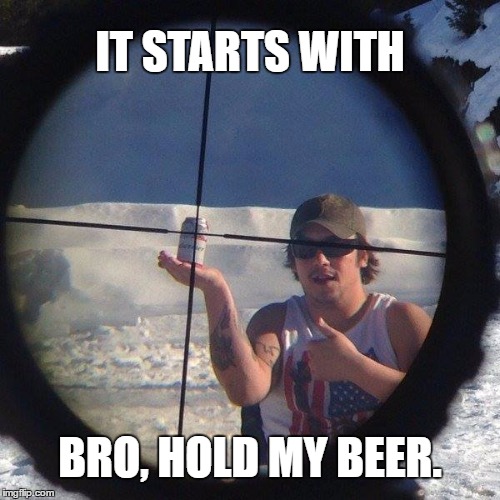

But then I guess that some Helicopter parents might have a stroke or something! Grumpy https://youtu.be/-vJTNGH4Ib0

From the Feral Irishman: “The Magic Carpet Ride”
Returning the troops home after WWII was a daunting task
The Magic Carpet that flew everyone home.
The U.S. military experienced an unimaginable increase during World War II.
In 1939, there were 334,000 servicemen, not counting the Coast Guard.
In 1945, there were over 12 million, including the Coast Guard.
At the end of the war, over 8 million of these men and women were scattered overseas in Europe, the Pacific and Asia. Shipping them out wasn’t a particular problem but getting them home was a massive logistical headache.
The problem didn’t come as a surprise, as Army Chief of Staff General George C. Marshall had already established committees to address the issue in 1943.
Soldiers returning home on the USS General Harry Taylor in August 1945
When Germany fell in May 1945, the U.S. Navy was still busy fighting in the
Pacific and couldn’t assist.
The job of transporting 3 million men home fell to the Army and the Merchant Marine.
300 Victory and Liberty cargo ships were converted to troop transports for the task.
During the war, 148,000 troops crossed the Atlantic west to east each month;
the rush home ramped this up to 435,000 a month over 14 months.
Hammocks crammed into available spaces aboard the USS Intrepid
In October 1945, with the war in Asia also over, the Navy started chipping in,
converting all available vessels to transport duty.
On smaller ships like destroyers, capable of carrying perhaps 300 men,
soldiers were told to hang their hammocks in whatever nook and cranny they could find.
Carriers were particularly useful, as their large open hangar decks could house 3,000
or more troops in relative comfort, with bunks, sometimes in stacks of five welded
or bolted in place.
Bunks aboard the Army transport SS Pennant
The Navy wasn’t picky, though: cruisers, battleships, hospital ships,
even LSTs (Landing Ship, Tank) were packed full of men yearning for home.
Two British ocean liners under American control, the RMS Queen Mary and Queen Elizabeth,
had already served as troop transports before and continued to do so during the operation,
each capable of carrying up to 15,000 people at a time, though their normal,
peacetime capacity was less than 2,200.
Twenty-nine ships were dedicated to transporting war brides:
women married to American soldiers during the war.
Troops performing a lifeboat drill onboard the Queen Mary in December 1944,
before Operation Magic Carpet
The Japanese surrender in August 1945 came none too soon,
but it put an extra burden on Operation Magic Carpet.
The war in Asia had been expected to go well into 1946 and the Navy and
the War Shipping Administration were hard-pressed to bring home all
the soldiers who now had to get home earlier than anticipated.
The transports carrying them also had to collect numerous POWs
from recently liberated Japanese camps, many of whom suffered
from malnutrition and illness
U.S. soldiers recently liberated from Japanese POW camps
The time to get home depended a lot on the circumstances. USS Lake Champlain,
a brand new Essex-class carrier that arrived too late for the war,
could cross the Atlantic and take 3,300 troops home a little under 4 days and 8 hours.
Meanwhile, troops going home from Australia or India would sometimes spend
months on slower vessels.
Hangar of the USS Wasp during the operation
There was enormous pressure on the operation to bring home as many men
as possible by Christmas 1945
Therefore, a sub-operation, Operation Santa Claus, was dedicated to the purpose.
Due to storms at sea and an overabundance of soldiers eligible for return home,
however, Santa Claus could only return a fraction in time and still not quite home
but at least to American soil.
The nation’s transportation network was overloaded:
trains heading west from the East Coast were on average 6 hours behind schedule
and trains heading east from the West Coast were twice that late.
The crowded flight deck of the USS Saratoga.
The USS Saratoga transported home a total of 29,204 servicemen during Operation Magic Carpet,
more than any other ship.
Many freshly discharged men found themselves stuck in separation centers
but faced an outpouring of love and friendliness from the locals.
Many townsfolk took in freshly arrived troops and invited them to Christmas dinner
in their homes.
Still others gave their train tickets to soldiers and still others organized quick parties
at local train stations for men on layover.
A Los Angeles taxi driver took six soldiers all the way to Chicago;
another took another carload of men to Manhattan, the Bronx, Pittsburgh,
Long Island, Buffalo and New Hampshire.
Neither of the drivers accepted a fare beyond the cost of gas.
Overjoyed troops returning home on the battleship USS Texas
All in all, though, the Christmas deadline proved untenable.
The last 29 troop transports, carrying some 200,000 men from the
China-India-Burma theater, arrived to America in April 1946,
bringing Operation Magic Carpet to an end,
though an additional 127,000 soldiers still took until September
to return home and finally lay down the burden of war.
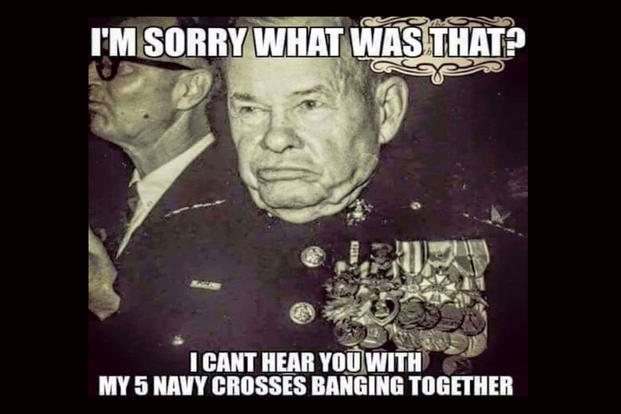
 Words fail me on how to express my admiration for this guys guts and courage! Grumpy
