Category: Soldiering
For some unfathomable reason I’ve always had a deep interest in the history of the United States horse soldier, especially from the Indian Wars era of 1866 to 1890. In 1968 there were a few weeks between the end of my summer job and the beginning of my second year in college.
While most of my contemporaries headed for places like Virginia Beach, Myrtle Beach, or points in Florida, I drove from West Virginia to Montana for the sole purpose of seeing what was then called the Custer Battlefield. Now politically correctly called Little Bighorn Battlefield.
While there I walked the ground above the Little Bighorn River to gain a sense of the fight, but when visiting the museum there happened a defining moment in my shooting life. On display were samples of the weapons used by both Indian warrior and cavalryman. Among the 7th cavalry’s items was what we call today a Colt Single Action Army .45 caliber revolver with 71⁄2″-barrel, onepiece walnut grips, and the (misnamed) black-powder frame.
That particular display revolver was by no means in new condition. Instead it was covered with a dark brown patina as would befit a handgun nearly a century old that had been carried much in the outdoors. And I wanted one.
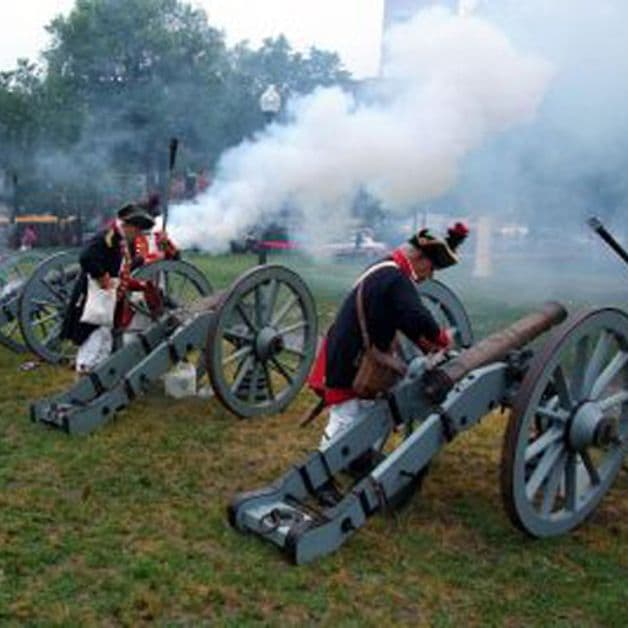
Top-left: Duke was lucky enough to get the serial number “1876” for his USFA Custer Battlefield .45.
The small “A” stands for Ainsworth, the government inspector at the Colt factory at the time the Custer Battle
single actions were manufactured. Middle: Ainsworth also stamped the walnut grips of each SAA
to leave the factory with his own personal cartouche.
Top-right: Note the U.S. stamp on the frame and the serial number also placed on the
cylinder. Both are authentic to Custer Battle era SAA revolvers.
Duke’s Itch
That wasn’t an easy itch to scratch. Colt introduced the Single Action Army and its .45 Colt cartridge in 1873 and the U.S. Army accepted it that same year for cavalry service. In fact, the 7th Cavalry’s 1874 summer expedition to explore the Black Hills area was delayed until the regiment’s new Colt revolvers arrived via railroad from the east.
From 1873 until 1892 the Colt SAA .45 was standard issue for U.S. Army horse soldiers, and it actually remained in their hands for some time after the official adoption of a Colt double-action .38 revolver in the early 1890s. Many were returned to service for duty during the Spanish-American War and the Philippine Insurrection.
The standard Cavalry Colt SAAs were all of a theme. They were issued with 71⁄2″-barrels, one-piece walnut stocks, and color case hardened frame and hammer with the rest of the metal parts blued. Some finish variations are known to exist but in numbers so small as to be curiosities.
It was a simple and rugged handgun as necessary for one intended for horseback carry. During that almost 20-year period when the U.S. Army was buying Colt .45 revolvers, the total numbers purchased were not large. According to A Study of the Colts Single Action Army Revolver by Graham, Kopec, & Moore the government bought only about 37,000 Colt .45s.
What makes original cavalry Colts even more scarce is the fact between 1895 and 1903 the Army rebuilt and altered MOST of the Colt .45s they had in storage. Their barrels were cut to 51⁄2″ and they were stripped down with the parts refinished or replaced as need be. Most were then reassembled from the refurbished parts with no attention to matching serial numbers.
Today collectors commonly call these shortened cavalry Colts “Artillery Models,” but it should be stressed they were not issued only to artillery units after alteration.
The Quest
According to the book mentioned above, most of the Colt .45s that actually saw service with the horse cavalry were among those altered. Many that escaped alteration had been lost or stolen during service. For instance, in the debacle along the Little Bighorn River in 1876, the 7th Cavalry lost well over 200 SAAs to the Sioux and Cheyenne victors.
Also quite often deserters took their revolvers with them. And too, it’s well documented that some troopers (making $13 a month) sold their new pattern sidearm to civilians at scalper prices of up to $50 and then gladly paid the Army the $13 or so they were docked for “losing” them.
Back to my quest for a U.S. Colt SAA. So impressed was I with Montana on that 1968 trip I returned every summer break to work there, and then became a permanent resident after graduation in 1972. During those youthful years a genuine Cavalry Colt was far out of my budget.
So I determined to build a facsimile. In the spring of 1975 when visiting family back east I wandered into a gun store in Prestonsburg, Kentucky. That store had a rather ratty looking Colt SAA .38-40, but what attracted me to it was the fact that it had the black-powder frame, and the triggerguard was marked with a tiny “.44 CF”. That latter point told me that the gun wasn’t original, so I would do it no great harm by building it into my long desired Cavalry Colt.
Back in Montana I ordered a 71⁄2″ .45 Colt barrel and cylinder from Christy Gun Works of California, and then had a gunsmith install them in the old SAA frame. An atrocious-looking set of onepiece walnut grips were cobbled together for it, and I joyfully set about shooting my cavalry Colt — with light .45 Colt loads in deference to its old frame. My initial impression was, “Boy, this long barrel must make those loads shoot harder. This gun kicks!”
Regardless, it was accurate and I fired several hundred rounds through it. Then one day I decided to slug the barrel. The resulting slug measured .429″! I slugged it again with the same results. Christy Gun Works had sent me a .45 Colt cylinder but a .44 caliber barrel. To say I felt stupid about not noticing it was an understatement, but I took solace from the fact that my gunsmith hadn’t seen it either. Duh!
There’s Still Hope
In 1976 Colt introduced the Single Action Army for the third time, and since I had been working lots of overtime on a road maintenance crew in Yellowstone National Park, I ordered a .45 with 7″ barrel. What a disappointment! It was poorly finished and assembled so badly none of the seams where grip frame and main frame came together mated evenly. It’s trigger guard even came with a crack when new-in-box. I soon sold that .45. And duh again!
By 1984 I was a full time gunwriter and beginning to focus much of my attention on Colt SAAs, so I was aware Colt had improved quality somewhat and was also again offering the black-powder frame. However, this was a time when they would accept no orders for the SAA unless they came with rather costly “embellishments.” That meant the buyer had to spring for additional things like presentation boxes, engraving, ivory grips, etc. so I sprang.
My order was for a 71⁄2″-barreled .45 with fancy box and ivory grips. As soon as it arrived the ivory grips were stashed away and I had a gunsmith fit it with plain walnut one-piece stocks. He was even able to put a facsimile of an inspector’s cartouche on the left grip panel just as the original U.S. Colts had. I was fairly happy with that gun, and even carried it in 1986 on a horseback ride that traced the 7th Cavalry’s path from where they spent the night of June 24th/25th 1876 right up to the battle monument near where Custer’s body was found after the fight.
Still Not Right
However, I still wasn’t completely satisfied in my quest for a “Cavalry Colt.” Mine didn’t have the “U.S.” stamp on the left side of the frame, its hammer wasn’t color case-hardened, and its sights weren’t the old-style fine ones of early Colts. Surely, that was nitpicking, but I was getting more affluent and could afford to be picky.
By that time I perhaps could have even bought an original Cavalry Colt but that would have wiped out my ever-stressed “gunmoney fund.” Besides, I was a shooter more than a collector and even then was smart enough to know doing much shooting with something as valuable as a genuine U.S. marked Colt SAA wasn’t real bright.
Back in 1975 Colt had brought out a limited run of what I felt would be the perfect “Cavalry Colt” for me. Those were the Peacemaker Centennials in .44-40 and .45 Colt calibers. The ones chambered for the latter round were precise duplicates of U.S. Cavalry issue Colt SAAs — right down to tiny details such as the sights, markings and grips. The only fly in the ointment was that as commemoratives they had the logo “1873-1973” on the right side of their barrels. I could live with that.
The problem was in finding one. Colt built only 2,002 of them so they weren’t just languishing on dealer’s shelves. Indeed once in the late 1970s I even saw one at a gun store, and drove the 80 miles home to gather money only to return to find someone else had already bought it.
Above: Using Duke’s favorite .45 S&W handload his USFA Custer Battlefield revolver grouped
center at 25 yards with a six o’clock hold. Shooting was done from a standing position with one hand as was
taught to cavalrymen of the era. Right: Although the Colt Single Action Army handguns
shipped to the U.S. Army between 1873 and 1892 were chambered for the .45 Colt cartridge,
during most of its service life troops were issued with
the shorter .45 S&W “Schofield” cartridge.
Patience Wanes
Not until 1993 did I see another Peacemaker Centennial .45 for sale, and that was when a fellow walked up to my gun show table and set a brand new one down and said, “You interested in that?” Brother was I ever! Without quibbling I paid him his asking price, and after 25 years my Cavalry Colt itch was finally getting scratched. That big Colt .45 became one of my favorites; so much so it was one of the Colt revolvers shown on the cover of my first book, Shooting Colt Single Actions. I made such a fuss about it in print that in the year 2000 another fellow offered me a second one, so now I have a matched pair.
There’s More?
In cowboy-action matches I shoot them exclusively with black-powder loads, while doing my plinking and practicing at home with smokeless loads. Almost always I put those loads in .45 S&W “Schofield” brass, which is actually more authentic to the Indian Wars era than you might think. The Colt SAA was introduced in .45 Colt caliber, but by August 1874 the U.S. Army informed the government’s Frankford Arsenal to only build the shorter .45 S&W cartridge, which they did for the next 18 years.
Most cavalry units carried the shorter .45 S&W round in their SAAs, but modern archaeology has shown that Custer’s 7th Cavalrymen used the longer cartridges at the Little Bighorn. Anyway the difference in power wasn’t great. The government loaded the full-length .45s with 250-grain bullets over 30 grains of black powder. The shorter .45 S&W used 230-grain bullets and 28 grains of black powder.
At this point a normal person would be satisfied. But, what sort of “normal” person would become a gunwriter anyway? At SHOT Show 2005, I was visiting in the United States Firearms Manufacturing Company’s booth with their president, Doug Donnelly. My eyes fell on a Cavalry Colt in the display, and I had to ask, “Doug, what’s with that old Cavalry Colt mixed in with all your new guns?” His answer amazed me. “That’s one of ours” he said, “We’re offering a Custer Battlefield model, with antique finish.”
That did it. I ordered one on the spot, and in doing so I learned the buyer could even specify his own serial number as long as the number was in the range inspected by U.S. Army Ordnance Sub-Inspector Orville W. Ainsworth. That man inspected and stamped Colt SAAs at the factory in the era when they could have actually been issued to the 7th Cavalry prior to their fight at the Little Bighorn. Eagerly, I asked, “Has anyone taken the number 1876?” No they had not, and I got it!
At Last
A few days before this writing, my U.S. Firearms Custer Battlefield single action arrived. It’s all I had ever hoped for: the antique finish is dingy just like that original Colt SAA still on display at the battlefield’s museum. Sights, firing pin, ejector rod head and grips are perfect renditions of those items found on original “Cavalry Colts.” The “A” inspector’s stampings are precisely where they are supposed to be, as is the cartouche on the left side of the walnut grip, and the U.S. stamp on the frame’s left side.
Furthermore, it has that fantastic quality in regards to fit and lock-up the U.S. Firearms Company has gained such a positive reputation for. My only complaint about it is the bevels on the cylinder’s flutes are not quite as pronounced as with original 1870s vintage Colt SAAs.
Now at this point I’m supposed to describe just how tightly their test guns group. I’m not going to because I have never fired my USFA Custer Battlefield .45 for accuracy from a rest. There’s no reason since I intend to shoot it primarily as U.S. Cavalrymen did. That was with one hand because the other was needed for the horse’s reins.
Also it will almost always be fired with .45 S&W “Schofield” loads as most U.S. Colt SAAs were fired. Black Hills Ammunition makes a 230-grain .45 S&W factory load and I also handload 230-grain bullets in the .45 S&W cases over 5.3 grains of Hodgdon HP38. Both loads give about 730 to 750 fps from my USFA Custer Battlefield .45, and that’s precisely the power level given by original military loads. However, I should say that from 25 yards the USFA .45 prints groups about 4″ above point of aim and centered with my handloads, and about 2″ high and still centered with the Black Hills factory load. Remember that shooting was done from a one 2 handed standing position.
Interest in the horse cavalry of old has been a strong influence on my life. It even helped determine where I live and the types of guns I shoot. My onagain/off-again quest for a “Cavalry Colt” is over now, but it was sure fun during the nigh-on 40 years it lasted.

Veterans are mostly proud of their service. And rightfully so, it’s no small thing to take the leap into the military and all that it entails. But there are some veterans who, well, they’re like that one 50-year-old dude for whom high school was the highlight of his entire life and who references every situation back to “the good old days.” Like that, but, you know, with guns.
Because of this, we all know those service members and veterans who so prominently display photos of themselves on social media in uniform that all we can muster is a heavy eye roll or an “unfollow.” We get it, you served, thanks for the daily reminder. Not sure how Arbor Day is all about veterans, but somehow you made it out to be. You know, that kind of veteran. To some extent, we’re all guilty of this in some capacity. Because out of the millions of photos out there, they can all be boiled down to fall into about seven distinct categories of obnoxiousness.
1. The Basic Trainee
Imgur/tinychampion

This photo gets whipped out whenever a vet feels nostalgic, and it’s often accompanied by some remark such as, “It was harder at back in than it is for these soft kids today who get coddled!” It’s also a popular photo for those individuals for whom basic training was the only point in their career, because they didn’t really make it any further. The poster bears some risk in doing this because if they’re discovered they are apt to be covered in a deluge of ridicule.
2. The Mirror Selfie
Imgur/kcool951

This one is firmly the property of the younger generation these days. And with all mirror selfies, we have to say: Please police up your backgrounds before you post these things. We can clearly see the pile of Bud cans behind you and — worse — your messy pile of moto t-shirts. We get it, you love your job, but we don’t need a daily reminder of what you in uniform and your shower curtain look like. Give it a few years until you are managing troops like yourself and you’ll be singing a different tune.
3. The ‘Look How Responsible I Am’ One
U.S. Navy/Capt. Ronald L. Ravelo

Clad in dress uniform or serviceable camo, maybe even cracking a clean-cut smile, we can see that you’re a responsible service member — probably an officer. Your feed is full of positive stories about the military and your family. Frankly, boring, but we’re glad you’re around to provide order and point out uniform violations online.
4. The DGAF

This one is a bit more nuanced, because it can be divided into two categories: the DGAF (don’t give a fuck) military and the DGAF ETS/EAS’d. The DGAF military is usually a bunch of grubby troops out in the field with all manner of uniform violations, exercising their ability to cram a vast quantity of tobacco products into one shot. These photos often include some kind of animal or mascot. Apparently there are bonus points if you incorporate one of many stages of inebriation and the vagaries of uniform adjustment that come with it. The DGAF ETS/EAS’d veteran demonstrates how quickly one can lose one’s military fitness after leaving the service while still letting everyone know that you served. It takes skill, really.
5. The Shooter
National Guard

This variant shows the service member or veteran in some sort of a shooting pose: staring grimly down the barrel of a rifle, putting lead downrange with a machine gun, or dramatically going toe-to-toe with a 25-meter target with a 9mm handgun. Added bonus points if there’s a blank firing adapter attached so that we know that you’re a real hardcore killer. And for those of you who tried to pose to make it look like you’re engaged in a brutal firefight with Tommy Talib, it begs the question: Who do you expect us to believe it was that took the picture? Now go think about what you’ve done.
6. The Band of Brothers/Sisters Shot
Imgur/MrMacy

One of the most common, this one shows the veteran posed with a group of their buddies in front of their vehicle/track/combat outpost/helo/vessel/aircraft. Usually there’s an American flag somewhere in the picture. It’s often a phone photo of a hardcopy photo to get that vintage feel. There’s bound to be a mix of those who really want to take this seriously and are at parade rest or at responsible low ready, and those who really don’t care and who are throwing up all manner of obscene gestures.
7. The Operator
U.S. Army

And the most common of all: The guy standing in front of a desolate backdrop, or one of Saddam’s many palaces, holding a weapon. By the obligatory law of veteran social media, the weapon has to be held at a 45-degree angle, either at the low ready or in the air Rambo-style. This one lets everyone know that you’re a hardcore combat killer since you also seem to be wearing half of Ranger Joe’s tacticool product line. The zip ties are a nice touch, what with all the detainees that your convoy protection team will be processing. Again, bonus points for a blank firing adapter. Same for a belt of linked ammo draped artfully across your shoulders, because as we all know, ammunition always feeds better if it’s covered in dirt.
On 22 January 1879, one of the world’s most remarkable military engagements took place. It was a short, but intense, battle in what is known as the Anglo- Zulu Wars. For two days, some 150 British soldiers defended Rorke’s Drift mission station from an estimated 4,000 Zulu warriors.
The British Empire wished to annex the Zulu Kingdom in South Africa. The entire war lasted only five months. The Zulus decisively won the first of the engagements at the Battle of Isandlwana, but the British knew the final victory. The Battle of Rorke’s Drift occurred some two weeks into the war. 150 British and colonial soldiers spent two days defending their garrison against 4,000 Zulu warriors.
Britain was intent on expanding its territory and influence in South Africa in the 1870s and had declared war on the Kingdom of Zululand. Rorke’s Drift was a mission station — named for James Rorke, an Irish merchant who once ran a trading post there, near the border between the British colony of Natal and the Zulu Kingdom. At the beginning of the war, the British had set up camp there, transforming two bungalows on the site into a supply depot and hospital. When the British troops departed to engage the Zulus in the Battle of Isandlwana, “B” Company was left behind to guard the garrison. Lieutenant Gonville Bromhead was the “B” Company leader. When the Battle of Rorke’s Drift began, though, only 139 soldiers were encamped there. They had no idea how their defense of the mission station would change their lives and history.
Having suffered a devastating defeat at Isanlwana, losing 1300 of the 1800 soldiers involved to an army carrying spears, not guns. Major Henry Spalding and some of those under his command when to look for the British forces when the troops did not return from the battle. He left Rorke’s Drift in the command of Lieutenant John Chard. Unfortunately, for Chard, two British soldiers delivered the news of the British defeat at Isanlwana and the warning that the Zulu Impi (army) was heading for the station. The small company remaining in the mission station had little choice but to set up their defenses. They could not “outrun” the Zulus in their own territory, and it was too dangerous to move the hospital patients. Chard, Bromhead, and other officers at the garrison ordered sacks of corn and biscuit boxes be used to create a crude defensive perimeter, knocked firing holes through the walls of the site’s buildings and barricading the doors with furniture.
As preparations were nearing completion, a group of cavalry on retreat from Isandlwana arrived and offered to take position on a hill near the station in the direction the Zulus would be coming from. They added their numbers to between 100 and 350 foot soldiers from Natal who had been ordered to remain at the garrison to support B Company. At this point there were several hundred men in the vicinity of Rorke’s Drift, including ‘walking wounded’ in the hospital, and Chard felt his force was sufficient to stave off the coming threat.
The site Sabaton provides us with this account of the battle: “But the Zulu force was much larger than feared, comprising 3,000 to 4,000 reserve troops who had not even seen combat in the previous day’s battle and were fresh and fit. The cavalry on the hill engaged the first of the Zulus but, tired and running low on ammunition, they fled. On seeing this, the soldiers from Natal and their commander also turned and ran, leaving B Company and the hospital patients alone. Some members of B Company were so angry that they fired after the deserters, killing one of them.
“With the defending force now down to just over 150 men inside the garrison, Chard ordered a hasty reorganisation of the defences to create a fall-back position for the defenders, and at 4.30pm the first group of 600 Zulus attacked. With few guns, the Zulus resorted to crouching under the defensive wall, trying to grab the British rifles or stab and slash with their spears. In places they climbed over each other’s bodies to try to drive the British off the wall, but were driven back.

“After some time, it was clear the wall could not hold under the sheer volume of attackers, so Chard began pulled his men back toward the inner perimeter and the hospital. A melee ensued, with Zulus grabbing for the British rifles whenever they were put through the firing holes, or trying to fire their own weapons through them into the hospital. At some point the hospital roof was set ablaze. As the entrance to each room in the hospital gave way, the defenders would hack their way through the wall to retreat into the neighbouring room, pulling the hospital patients through with them. Eventually they made it through to the other side and made a break across the yard to the fall-back barricades.
“The Zulus kept up their assault long into the night. The attacks began to subside after midnight but did not cease fully until 2am. By then, the garrison had lost 14 men, with 10 others suffering serious wounds. They had fought for 10 hours and had just 900 rounds of ammunition remaining from the 20,000 that had been stored at the mission.
“Fortunately, when dawn broke, the Zulus were gone; for them it had not been a planned raid but an opportunistic one. As the garrison began picking up the pieces from the night before, another Impi of Zulus suddenly appeared and they rushed to man their positions again. These Zulus, however, had been on the march for days and were carrying wounded comrades, and they left the way they had come. An hour later another group of soldiers appeared and the positions were manned again – but these turned out to be the relief force from the next garrison.

“Eleven of the defenders of Rorke’s Drift were awarded the Victoria Cross, Britain’s highest military honour for bravery. It was the most ever awarded for a single action by one regiment. Some commentators suggested it was a way of drawing the British public’s attention away from the embarrassing defeat at Isandlwana the preceding day, however many more have challenged that assumption, with the battle capturing popular imagination and inspiring generations of artists and authors. The most famous depiction of Rorke’s Drift in popular culture is the 1964 film Zulu, produced by Stanley Baker and starring a young Michael Caine.”

2
According to On This Day, “At 4.20 PM on January 22, 1879 a force of 4,000 Zulu warriors began to lay siege to the station. Their intermittent attacks were to last for almost twelve hours. Fortunately for the British, although some of the Zulus had old muskets and antiquated rifles, most were armed only with a short spear called an assegai and a shield made of cowhide. So in weaponry they were no match for the highly trained soldiers with their (then) sophisticated rifles and firepower. But the manpower advantage lay massively in favour of the Zulus.
“By 4 AM, after nearly 12 hours repulsing wave after wave of attacks involving hand-to-hand combat, a number of British soldiers lay dead. Most of the others were exhausted, rapidly running out of ammunition, and probably in no condition to repel another assault. But they didn’t have to. As dawn broke they saw that the Zulus were gone, leaving behind a battleground littered with the dead and dying. Zulu casualties were around 500, while the British sustained 17 dead and 10 wounded.”
The Victoria Cross is Britain’s highest medal for bravery. Eleven were awarded to the defenders of Rorke’s Drift – the most ever received in a single action by one regiment.
NOTE! The song Rorke’s Drift can be found on Sabaton’s 2016 album The Last Stand. You may listen to the song HERE.
| Thanks to Skip –
From his text – “Senior officers and NCOs, I am telling you right now if things if don’t change you will have the blood of your soldiers on your hands.” “There is an enemy out there who is determined, and he is not concerned about individual feelings, or time out. If you don’t train them hard now, and demand from them now what in the hell do you think the enemy is going to do to them. If they can’t take the heat in training how are they going to take it on the battlefield? Technology my ass, soldiers win wars.” Before you read this…Command Sergeant Major (CSM) Purdy is quite possible one of the most legendary warriors in recent Army history. This guy redefines hard-ass, and I am sure that some of you have heard of him. He survived 3 tours in Vietnam in LRP / Ranger Units (on the wrong side of a few near ambushes and Purple Hearts), served as a Son Tay Raider, was at Desert One, …… He retired after serving as the CSM of the 75th (after, most notably, serving as the CSM of the 187th (Rakkasans!) He is a fixture at Fort Benning, and as a recently retired CSM, was hazing students in my Ranger class when he decided to stop by the camp in Jan 1996 to make sure that standards hadn’t slipped. |
|
| TO: Whom it May Concern FROM: CSM Don Purdy, Retired, USA SUBJECT: WARRIORS I would like to give an (Army) NCO perspective on this issue. I am a retired CSM with 27 years of service. Most of it in Ranger companies, and the Ranger Regiment. I am a Vietnam Veteran, and a veteran of special operations. I retired in 1995 but have done mostly contract work out of Fort Benning involving experimentation on MOUT Operations. I got to work around a lot of soldiers, and had to keep up with current trends and tactics. I am currently working in Saudi Arabia training Saudi paratroopers and Rangers. 1. Some senior NCOs are nothing more than boot lickers who sing the Army of One song to their superior officers every day. Commanders need to hear the good, bad and the ugly, and then be given good solid recommendations. They need their senior NCOs to be TRAINERS. LEAD BY EXAMPLE. DO as the troops do. LEAD FROM THE FRONT. GET IN THE DIRT. This bullshit of “I have done that” is garbage. What you are doing now is what counts. Quit worrying about your next assignment. Focus on your mission now. Your mission is to train soldiers for war, and it’s damned hard work. If you do it right, you will leave the Army in worse shape physically than when you came in. BE HARD BUT BE FAIR. You must have MORAL COURAGE. 2. Training is a word they can’t spell. Chief trainer means chief boot licker. TICKET PUNCHERS. 3. “Moral courage” means telling your commander what he wants to hear these days. I was condemned by my peers and superiors for speaking up and telling it like it was. I was called a relic from the past that should be put in a glass case. I was focused on training for war, not peace. Discipline was my watchword, and the soldiers did not decide what punishment was right or wrong where I served as CSM. I was the Chief Trainer. The buck stopped with me. I participated in all training and lead by example. I was told by a Division CSM that I would never serve above BN level because I was too intrusive. That means I scared commanders with the truth. The next thing he asked was why do you train with your soldiers? The question was shocking, but the answer was simple. When I speak everyone listens. That went over his head like a tent. I carried a rifle, not a pistol, and I damned well knew how to use that weapon and my soldiers knew how to use their weapons as well. 4. Combatives are important. Boxing, wrestling and bayonet fighting are not antiquated. CQB is just what that means. Close Quarters Battle. MOUT, trench systems and bunkers must be cleared, and you had better be aggressive and prepared to do bayonet or hand to hand fighting. When others were laughing at my unit for doing this, my soldiers were prepared and understood what fix bayonets meant. They were aggressive and well disciplined. Sub standard performers were put out immediately. My First Sergeants were not mail men or chow deliverers, they were the Chief Trainers of their companies. 5. We trained for war, not peace. Live fires were a priority, and were not canned. Leaders, and soldiers had to react. Maneuver elements maneuvered, and had to rely on the SBF not to shoot them but only the enemy. Bayonets were fixed and there were dummy targets for the soldiers to engage with those bayonets. Resupply mission were planned and executed. The battlefield had to be policed of casualties, and equipment by any means available, even if it meant driving vehicle cross country or physically carrying the wounded. Reload drills, dead gunner drills, and crew drills were executed over and over and over again. These were executed night and day. NODS went on your face when the sun went down. They weren’t hanging around your neck. We executed live fires at night with NODS in the woods, and the live fires were not canned. Raids, ambushes, search and attack were all executed at night up to company size. This took us over one year to get to that level. Mortars could hit their targets. Units could move silently day or night and didn’t get lost. We did not rely on GPS. WE USED MAP AND COMPASSES. We lived out of our rucksacks, slept on the ground in all types of weather from the BN CDR on down. We did not look like bums. We shaved everyday, wore our equipment properly, camouflaged our face, and hands when necessary, soldiers knew how to maintain themselves and their equipment in the field and uniformity was important. Soldiers knew what a cat hole was, and that trash was carried in the rucks not thrown on the ground or buried for the hogs to dig up. Uniforms were worn properly. The companies received one hot meal a day and understood how to conduct tactical feeding. Our cooks knew how to function in the environment. The combat trains did not live in tents. Their perimeter was secure, weapons were clean, and noise and light discipline was maintained. Cooks, clerks and all other support personnel knew how to use their weapons and were trained in the basic infantry skills. Misfires were damned well rare, and punishment was swift when it did happen. We suffered no live fire deaths because we trained properly, and used good old-fashioned common sense. We never had the soldiers execute missions they were not properly trained for. The NCOs trained the soldiers, the officers commanded. Our motto was what ever you do, do it right. Rate of sick call in the field was almost zero. Moral was high because of good hard leadership from the front, and realistic tough training. We even executed a day of live fire training during support cycles. You need a strong CSM who understands discipline and training. He can talk it and walk it. 6. There is no such thing as a good field soldier. You are either a soldier or not a soldier. Everything from appearance to police call is important. This bull shit about my space and my rights is just that BULL SHIT. Barracks are not his or her home it’s a place for them to live. For saying this I was told I had a mess kit mentality. This individuality BS of “I need my own room” is garbage. We waste more money building these condos so soldiers can feel good, and not be part of a team is sickening. They should live in fire team bays. It builds cohesion. Key control alone is a nightmare. Of course don’t bother the poor soldier just let him live like a pig, and when he gets sick or you find out he or she is a drug dealer then blame it on the NCO Corps even though you the illustrious BN CDR, BDE CDR said leave the soldiers alone in their precious rooms. Soldiers are owed a place to sleep, their pay and the best leadership and training that can be provided. 7. DISCIPLINE is the key. DRILL AND CEREMONY is the foundation of discipline. When I say fall in I want to hear your heels coming together. When I speak you jump. All ceremonies should be executed with weapons so each unit can execute the 15-count manual of arms. Carrying a card around in your pocket does not develop good morals. Morals are developed through solid leadership not gimmicks and headgear. 8. You want to be politically correct stay on the block. You want to be different or an individual looking to be a victim stay on the block. If you’re a pervert and proud of it stay on the block. You want to be a soldier then become part of a disciplined team. This is not a job it’s a profession. You’re here to fight our countries war not be a gut eating self-serving individual. Senior officers and NCOs I am telling you right now if things don’t change you will have the blood of your soldiers on your hands. There is an enemy out there who is determined, and he is not concerned about individual feelings, or time out. If you don’t train them hard now, and demand from them now what in the hell do you think the enemy is going to do to them. If they can’t take the heat in training how are they going to take it on the battlefield? Technology my ass, soldiers win wars. Be hard on them now or watch them die, or worse break and run. BE HARD BUT BE FAIR! Being fair does not mean they dictate punishment or babying them. A Russian General said “Hard on the training field, easy on the battlefield.” General Patton said “Leading from the rear is like trying to push spaghetti uphill.” You want you soldiers to respect you not love you. When they look at you they should see a competent leader. The best compliment I ever received was from a soldier who was PCSing. I was a PLT Sergeant in the First Ranger BN. He said “Sergeant Purdy I hated to hear you come in, in the morning, and sometimes I just hated you, but I would follow you to hell with gasoline drawers on.” Signed, CSM Don Purdy, Retired, USA |

The Army’s recruiting of white soldiers in 2023 had dropped almost by half in the last five years, according to a report.
That dramatic decline has coincided with a push by the service to increase recruitment of a more diverse population, according to a report.
The decline of white recruits has also coincided with the Army missing its target of 65,000 recruits in 2023 by 10,000.Military.com reported Wednesday that Army internal data showed that a total of 44,042 new Army recruits were categorized by the service as white in 2018, but that number has fallen consistently each year to a “low” or 25,070 in 2023. The outlet reported a six percent dip from 2022 to 2023 was the most significant drop. No other demographic group has seen such a precipitous decline, it added.
There has been largely “flat” recruitment of black and Hispanic recruits, according to the report. However, due to the decline of white recruits during that time — 56.4 to 44 percent — the percentage of those demographic groups went up by four and seven percent, respectively.
At least some Army officials appeared to blame Republicans and conservative media for calling out wokeness in the military, as well as obesity and the public education system.
The article recalled the Army’s campaign to recruit Gen Z, which featured a soldier with two moms, as well as other minority populations, that attracted flak from Republicans.
“There’s a level of prestige in parts of conservative America with service that has degraded,” one Army official told Military.com. “Now, you can say you don’t want to join, for whatever reason, or bad-mouth the service without any cultural guilt associated for the first time in those areas.”
However, it said the drop in white recruitment has “baffled Army staff and isn’t easily explained by any one particular factor.”
Military.com cited statistics of white men declining in the labor force and at civilian universities as well, quoting an economist from the American Enterprise Institute.
“Men have been in trouble in the workforce for two generations. The greatest risk of being a labor dropout is being a native-born, low education, unmarried guy,” said economist Nicholas Eberstadt. “Like with any other big historic change, it’s kind of hard to attribute to a single magic bullet.”