Category: Leadership of the highest kind
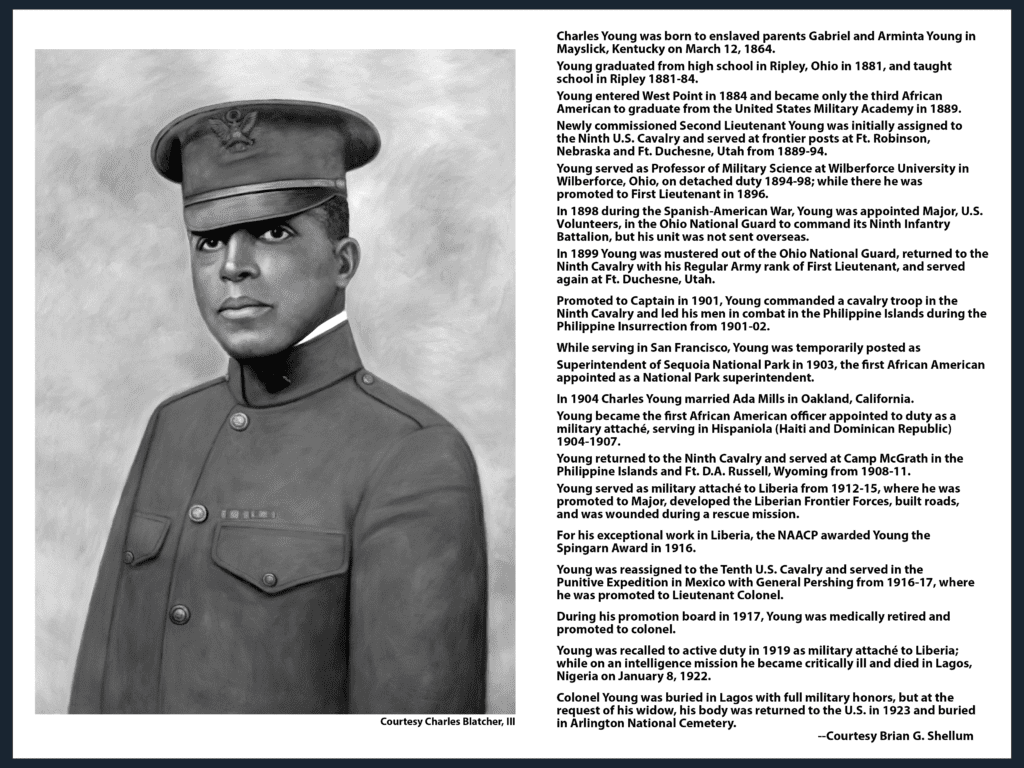
Colonel Charles Young – Soldier, Educator, Diplomat, & Civil Rights Advocate
“An unheralded military hero, Charles Young (1864–1922) was the third black graduate of West Point, the first African American national park superintendent, the first black U.S. military attaché, the first African American officer to command a Regular Army regiment, and the highest-ranking black officer in the Regular Army until his death.
Black Officer in a Buffalo Soldier Regiment tells the story of the man who—willingly or not—served as a standard-bearer for his race in the officer corps for nearly thirty years, and who, if not for racial prejudice, would have become the first African American general.” — Brian G. Shellum, Author of Black Officer in a Buffalo Soldier Regiment: The Military Career of Charles Young.

Yes that is Theodore Rex back from the woods! Grumpy
On this day, 80 years ago on April 2nd 1945, Folke Bernadotte, Count of Wisborg met Reichsführer-SS Heinrich Himmler at the Hohenlychen sanatorium in Lychen, Germany; Himmler was unsuccessful in convincing Bernadotte to help seek a peace between Germany and the Western Allies.
In 1943, Bernadotte was appointed head of Sweden’s Red Cross.
He wasted no time using his contacts and his humanitarian platform to try to help some of those most in need: prisoners of war (POWs) held by Germany.
By the beginning of 1945, Bernadotte had managed to secure the exchange and safe passage to Sweden of thousands of Allied POWs. But rather than withdrawing after a mission successfully accomplished, Bernadotte dramatically upped the ante. Contacting Heinrich Himmler, he proposed that the Swedish Red Cross be allowed to bring concentration camp inmates to Sweden, too.
It was a brazen suggestion, but it worked. Himmler gave Bernadotte permission to retrieve some 8,000 inmates, primarily Danes and Norwegians, from German concentration camps.
To ensure that Allied bombers didn’t target the evacuees, Bernadotte secured permission for the inmates to travel in 36 buses (donated by Volvo), which had been painted white with a red cross on their roofs. Because incarceration had left the inmates in perilous health, the buses also carried medical equipment. Some 250 Swedish Red Cross helpers accompanied Bernadotte and the concentration camp evacuees in what soon became known as Bernadotte Convoys.
With these evacuations underway, Bernadotte presented Himmler with another humanitarian rescue scheme: he wanted permission to free non-Scandinavians; Jews and others, from concentration camps and bring them to Sweden. On April 21st, Himmler agreed. Bernadotte Convoys managed to bring some 12,000 other concentration camp inmates to Sweden, including 7,000 women from Ravensbrück, around half of whom were Jewish.
When the war ended, Bernadotte had rescued at least 15,500 concentration camp inmates
The last perfect man was nailed to a cross 2000 years ago. This is just a way to get one to watch this attack on a GREAT fighting man! Grumpy
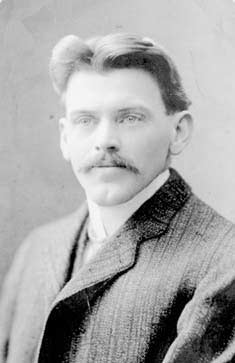
Vince Coleman was just a normal guy, right up until
he was called upon to do some very abnormal things.
On the morning of December 6, 1917, the French munitions ship SS Mont-Blanc sat fully laden with a cargo of TNT, picric acid and guncotton in the harbor at Halifax, Nova Scotia. The ship also had a load of highly volatile benzol stored in barrels lashed to the deck. The vessel was desperately trying to leave the harbor to transport its critical cargo to the World War I battlefields in Europe.
German submarines were a menace, and the Canadian government had erected sub nets across the mouth of the harbor. The nets were closed at night. Extricating from the busy harbor during the limited periods of daylight this time of year was a complex and difficult task. At the same time as the Mont-Blanc was making its exit, a Norwegian cargo vessel called the SS Imo was also transiting the channel.
This was a really crowded place. Ships ranging from ocean-going freighters to local tugs puttered back and forth, jockeying for position. Larger vessels were helmed by experienced local pilots who were well familiar with the harbor and its eccentricities. However, at 0845 that morning, the Imo struck the Mont-Blanc a scant glancing blow. The collision speed was estimated at one knot. That’s only 1.15 miles per hour.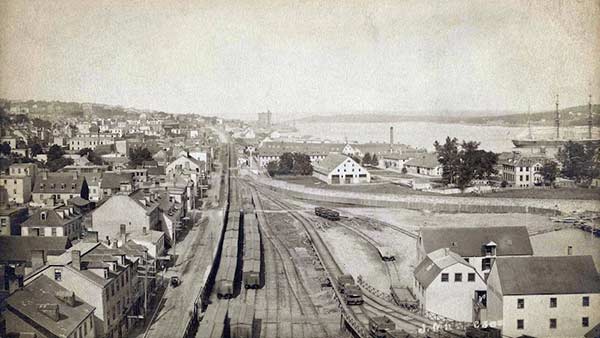
Halifax, Nova Scotia, was a thriving seaport before a horrible maritime accident in 1917 blew the place to pieces.
Damage to both ships was trivial. However, the shock was adequate to tip several drums of benzol. These broke open and spilled volatile liquid across the deck. The benzol ran down into the bowels of the ship until it encountered an errant spark. The subsequent fire soon raged out of control.
The captain of the Mont-Blanc ordered his crew off of the ship. The now-empty vessel drifted slowly until it beached itself at Pier 6 near Richmond Street in Halifax. Curious onlookers flocked outside to take in the spectacle. Several nearby vessels responded to the fire, spraying the stricken ship with water. However, there was no hope.
While the image of the burning ship was mesmerizing for countless hundreds of bystanders, a few among them appreciated the true gravity of the situation. Among them was Vince Coleman, a 45-year-old train dispatcher for Canadian Government Railways (CGR).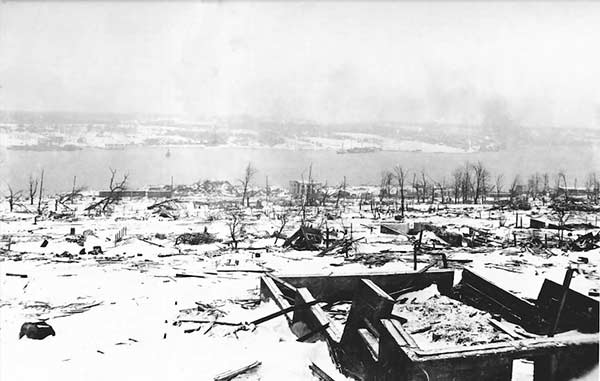
The area in the immediate vicinity of the blast was leveled.
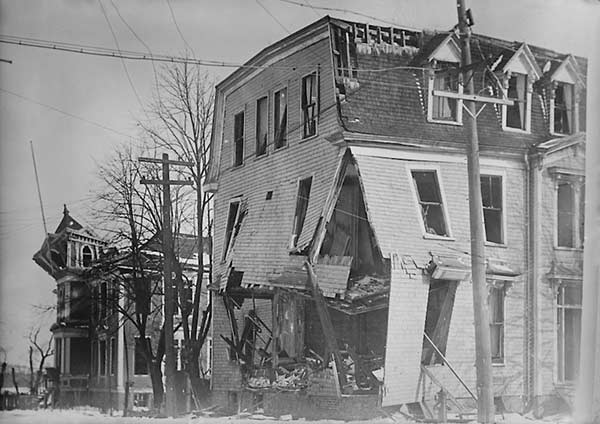 The effects of the detonation were felt for miles around.
Coleman and the Chief Clerk William Lovett were working in the Richmond Station, only a few hundred feet from Pier 6 where the Mont-Blanc now rested beached and aflame.
A sailor raced up from the pier and warned the two men that the Mont-Blanc was a munitions ship and that the risk of an imminent explosion was profound. Coleman had time to run. However, the No. 10 overnight express train from Saint John, New Brunswick, was due into the station in 10 minutes. There were 300 passengers onboard.
Lovett called the CGR terminal agent to report the danger, and both men fled. However, Coleman appreciated that this phone call was likely inadequate to stop the incoming passenger train.
As a result, he turned around and ran back into the station. He subsequently banged out the following message along the rail line to stop all trains heading into Halifax, “Hold up the train. Ammunition ship afire in harbour marking for Pier 6 and will explode. Guess this will be my last message. Good-bye, boys.”
At 0904, the fire reached the cargo hold on the Mont-Blanc. The subsequent blast wave propagated out from the ship at 3,300 feet per second. The core temperature of the ship reached 9,000 degrees F. The explosive force was the equivalent of a 2.9 kiloton nuclear detonation. At the time, the Mont-Blanc blast was the largest single man-made explosion in human history.
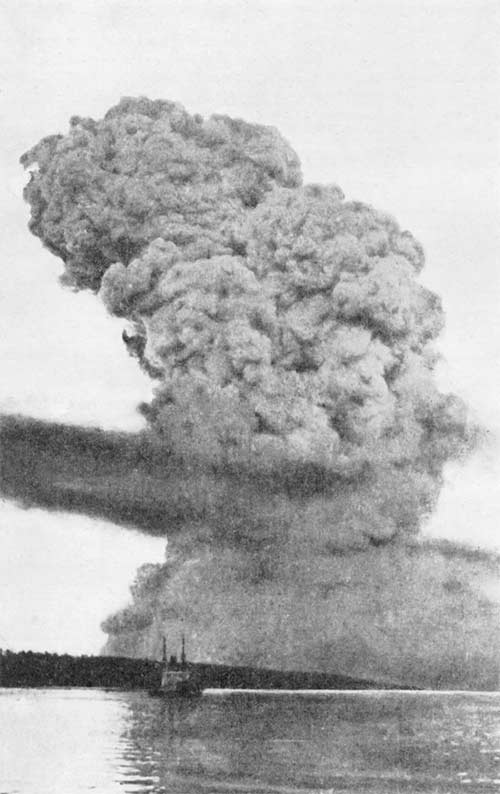
This picture was taken moments after the Mont-Blanc
exploded and leveled the Halifax harbor.
The explosion destroyed everything within an 800-meter radius. The blast wave leveled buildings, sheared trees off at the ground, twisted iron railroad rails, and pushed nearby ships up onto dry land. The resulting tsunami propagated across the harbor and wiped out the community of Mi’kmaq people who lived in nearby Tufts Cove.
As a result of the catastrophe, 1,782 people perished. Among them were both Vince Coleman and William Lovett. There were a further 9,000 injured. However, thanks to Coleman’s desperate telegraph message, the No. 10 passenger train was successfully stopped at Rockingham Station roughly four miles short of the terminal and Pier 6. The conductor of the No. 10 later attested that it was Coleman’s telegraph that stopped the train in the nick of time. As a result, 300 passengers and crew survived.
We all want to be remembered as heroes. The archetype dons blue spandex and flies off to do battle with digital monsters.
Out here in the real world, however, heroes are not nearly so flashy. Sometimes, they are train dispatchers just going about their day. Normal folk, when faced with abnormal circumstances, are often capable of stepping up to perform amazing feats of courage. Vince Coleman was one of those rare heroes.