https://youtu.be/28cfvJkPBpY
I hope that Gunny is not giving God too hard a time up there! Grumpy

https://youtu.be/28cfvJkPBpY
I hope that Gunny is not giving God too hard a time up there! Grumpy

October 30, 2013 – Photo by Staff Sgt.Tim Chacon
“…the expectations of a Major are very different than those of a captain, and not everyone knows what these expectations are or the impact they have on personal and professional success.”
-MG(R) Tony Cucolo, “In Case You Didn’t Know It, Things Are Very Different Now: Part 1”
While attending the Command and General Staff College (CGSC), instructors and mentors constantly drove two points home. First, transitioning to the rank of Major and the expectations of a Field Grade Officer is a difficult and steep learning curve. Second, what made an officer successful at the company grade level does not necessarily translate to success as a Major.
I have been a combined arms battalion S3 for ten months now and during this period I’ve planned, resourced, and executed field training exercises, live fire events, gunneries, an NTC rotation, and spent enough hours on my Blackberry that I never want to see one again.
However, I can definitively say two things about my instructors’ advice: They weren’t kidding about either point … and they vastly downplayed both.
The transition to Major is less of a learning curve and more of a sheer cliff. There is less tolerance for officers who need to “grow into it,” and the expectation is you are value added on day one.
Finally, the room for mistakes grows smaller and smaller. What follows are the hard lessons I’ve learned either through personal shortcomings or watching peers fall by the wayside.
Failure #1: Believe Help is Coming
When things became supremely difficult or complex as a captain or lieutenant, we would often look for a field grade to give refined guidance and direction. The Major knows the answer.
They are the responsible adult in the room. The Major may get cranky and hand out a butt chewing, but they would bring resources to bear on the problem. They were help when we needed it.
As a Major, YOU are now that responsible adult who has the answers and can bring resources to bear. You ARE the help that’s coming.
There is no help coming for YOU. Majors are the Army’s problem solvers and workhorses. If a room of Majors looks around and cannot tell who among them is lead on an issue, then the issue is probably not being addressed.
Majors don’t get to look around and wonder who will solve the problem. They must own the problems as they appear and work with peers to solve them.
Failure #2: Burn Bridges and Fail to Cultivate and Maintain Relationships
Early on in my time as a BN S3 something went wrong during our FTX. A situation changed that was outside of my control and I blamed the brigade.
Over the phone, I got into a heated discussion with the BDE S3 and XO and lost my temper and composure.
When I was done venting, the BDE S3 said something I will never forget: “Do you want to keep complaining or do you want to solve the problem?” Those words stuck with me. I apologized, we moved on, and we fixed the issue.
The argumentative Major, the one who picks fights, protects their own rice bowl, and never gives an inch will quickly find themselves isolated without a seat at the table.
In the end, their unit will suffer for it. Conversely, the Major is willing to give more than they take, willing to put the brigade’s success over what’s easier for their battalion and work well with peers to find solutions and compromises will succeed.
Leaders do not have time for personality conflicts, especially Majors.
The biggest power Majors have is that knowing where to look, who to call, and having a network of friends, peers, classmates, warrants, and NCOs that can be leveraged to solve problems.
Most problems in a brigade are solved by the S3s and XOs sitting around the table, developing a course of action, and moving out to attack the challenge at hand.
That requires well-cultivated and maintained relationships. More than anything, those relationships and connections are the most powerful resource at your disposal.
This is also the point in our careers where many of us will begin to regularly interact with DA Civilians. Do not forget about them.
The GS-14 serving as your Division Chief of Training could well be a retired LTC and former Battalion Commander. They have either been where you are now, or they have seen many in your position come and go, and they often serve as the long-term continuity in higher headquarters and support functions that are critical to your success.
Stop by and talk to your peers regularly. Take time to talk to DA Civilian, get away from email, and drop by offices.
Come to meetings early and stay a little after to talk to each other, even if it’s just letting each other vent for five mins. It will pay dividends when you need to move a mountain and get a short notice task done.
You cannot afford to have personality conflicts or fight with your peers. Ever. Period. Learn to swallow your pride and be the first one to apologize or mend a relationship after a heated exchange.
Failure #3: Confusing Leadership and Management
Leadership and management are not the same thing and are easily confused when assuming organizational level leadership for the first time.
Leadership is about people while management is about systems. While these concepts may appear obvious, it took me about three months to learn this and I am still working to improve my management skills.
As a Major, your primary concerns are building and managing systems. Majors are about touch points. Identify critical touch points for your organization, develop systems to manage that information, and use those systems to recognize where the train wrecks and pitfalls are.
The Major’s aperture is so wide that there is no way you can directly affect it all with personal involvement or presence. If you try, you will fail.
Time is now your most precious resource. Systems help manage the information flow so you can focus your limited time on things that are commander priorities, mission-critical, or something only YOU can do based on knowledge, skills, or relationships.
For everything else, develop your staff to handle routine business, empower them to make the routine decisions, and train them to know when things require your personal involvement. If you don’t develop systems to manage the massive amounts of information coming in, you will quickly become overwhelmed and remain in crisis management.
This is not to say that personal leadership is not important as a Major. It simply means the balance has shifted. Your personal leadership is still critical in two areas: training your staff and mentorship.
Do not expect to walk into a staff that can do MDMP perfectly with just an occasional guiding nudge from you. You will have to train your staff.
MDMP is just the beginning. How to write emails, brief the commander, write orders, develop courses of action, work as a team, interact with the higher headquarters staff, Army culture and expectations of officers, and a thousand other things you now take for granted after over a decade of service.
All of this requires your personal presence, time, and effort. If you do not teach them, no one else will.
The Major is also a mentor to younger officers, especially the staff officers they interact with daily. This mentorship requires personal leadership and is just as important to the Army’s success as the next round of MDMP is to your unit’s training event.
I am wearing an oak leaf because of the mentorship two Majors provided at critical junctures in my career. Officers in your organization will look to you as a model for future service: how to act, how to look, and the path they should chart through the Army, just as I looked to those Majors when I was a Lieutenant and a Captain.
Failure #4: Fail to Predict the Future
Majors must forecast out, identify implied tasks, determine conditions that need setting, and execute without guidance, FRAGOs, or WARNOs from BDE or higher.
If you fail to do this, the train wreck is waiting and, remember, no help is coming. Your higher HQ may give some guidance, but never enough, and never on the timeline you want it. If you wait, it will be too late.
Predicting the future allows planning to occur that can mitigate future problems. This is critical because at the battalion and brigade level dynamic re-tasking is never dynamic.
As a BN S3, I can pick up the phone and redirect the work, efforts, and lives of 700 Soldiers, officers, warrant officers, leaders, and their families.
However, a battalion has a certain organizational momentum and inertia that is hard to overcome and shift on a dime. Every dynamic shift exponentially increases the chance of details being missed, mistakes being made, and can push you into crisis management.
Look deep, develop a concept, and address potential gaps through FRAGOs, IPRs, and update briefs as necessary.
As Majors our words, actions, and decisions carry serious weight as BN and BDE S3s/XOs, planners, and action officers.
An errant email, simple misspeak, or a rash outburst will affect entire organizations exponentially more than when we were company commanders or staff captains.
As such, the tolerance for those who fail to grasp this and make the transition is low. Unfortunately, many Majors step into these pitfalls, sometimes irrevocably, without ever knowing they have made a fatal error.
Fortunately, the Army is a learning organization and just maybe sharing my own shortcomings can help another Major avoid failure as they climb the cliff and make the transition.
Terron Wharton is currently serving as the BN S3 for 4-6 IN, 3/1ABCT at Fort Bliss, TX. An Armor Officer, he has served in Armor and Stryker Brigade Combat Teams with operational experience in Iraq and Afghanistan.
He is also the author of “High Risk Soldier: Trauma and Triumph in the Global War on Terror,” a work dealing with overcoming the effects of PTSD. His other works include “Becoming Multilingual”, discussing being multifaceted within the Army profession, “The Overlooked Mentors” which speaks to NCOs as mentors for junior officers, and “Viral Conflict: Proposing the Information Warfighting Function” which proposes establishing an Information Warfighting Function.
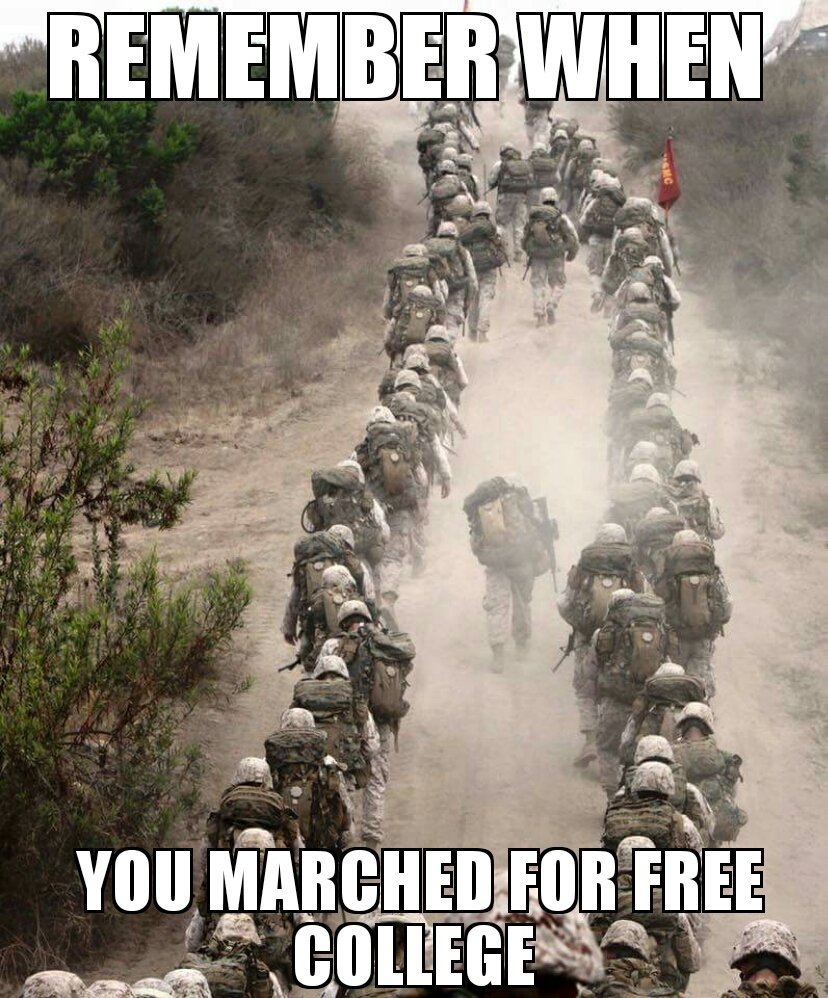
Thanks to everyone that I served with in the Green Machine! You made a huge impression on this guy! God Bless you all.

My Dad & I almost pissed our pants from this one. Because we were laughing out loud so hard!
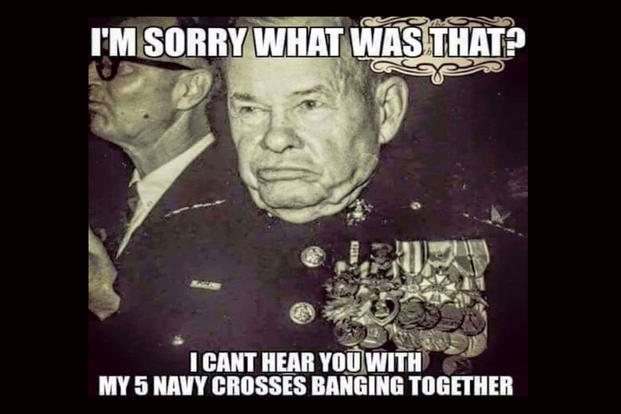
I miss you Dad! Grumpy
Anyways Happy 107th Birthday Sir! I am sure that God is having a good time with you! Grumpy

By Maj. John L. Plaster, USA (Ret)
RECON COMPANY AT COMMAND AND CONTROL CENTRAL
In 1968, Robert L. Howard was a 30-year-old sergeant first class and the most physically fit man on our compound. Broad-chested, solid as a lumberjack and mentally tough, he cut an imposing presence. I was among the lucky few Army Special Forces soldiers to have served with Bob Howard in our 60-man Recon Company at Command and Control Central, a top secret Green Beret unit that ran covert missions behind enemy lines. As an element of the secretive Studies and Observations Group (SOG), we did our best to recon, raid, attack and disrupt the enemy’s Ho Chi Minh Trail network in Laos and Cambodia.
UP THERE WITH AMERICA’S GREATEST HEROES

Take all of John Wayne’s films—throw in Clint Eastwood’s, too—and these fictions could not measure up to the real Bob Howard. Officially he was awarded eight Purple Hearts, but he actually was wounded 14 times. Six of the wounds, he decided, weren’t severe enough to be worthy of the award. Keep in mind that for each time he was wounded, there probably were ten times that he was nearly wounded, and you get some idea of his combat service. He was right up there with America’s greatest heroes—Davy Crockett, Alvin York, Audie Murphy, the inspiring example we other Green Berets tried to live up to. “What would Bob Howard do?” many of us asked ourselves when surrounded and outnumbered, just a handful of men to fight off hordes of North Vietnamese.
To call him a legend is no exaggeration. Take the time he was in a chow line at an American base and a Vietnamese terrorist on a motorbike tossed a hand grenade at them. While others leaped for cover, Howard snatched an M-16 from a petrified security guard, dropped to one knee and expertly shot the driver, and then chased the passenger a half-mile and killed him, too.
One night his recon team laid beside an enemy highway in Laos as a convoy rolled past. Running alongside an enemy truck in pitch blackness, he spun an armed claymore mine over his head like a lasso, then threw it among enemy soldiers crammed in the back, detonated it, and ran away to fight another day.
Another time, he was riding in a Huey with Larry White and Robert Clough into Laos, when their pilot unknowingly landed beside two heavily camouflaged enemy helicopters. Fire erupted instantly, riddling their Huey and hitting White three times, knocking him to the ground. Firing back, Howard and Clough jumped out and grabbed White, and their Huey somehow limped back to South Vietnam.
CONSIDER THE RESCUE OF JOE WALKER
“Just knowing Bob Howard was ready to come and get you meant a lot to us,” said recon team leader Lloyd O’Daniels. Consider the rescue of Joe Walker. His recon team and an SOG platoon had been overrun near a major Laotian highway and, seriously wounded, Walker was hiding with a Montagnard soldier, unable to move. Howard inserted a good distance away with a dozen men and, because there were so many enemy present, waited for darkness to sneak into the area. Howard felt among bodies for heartbeats, and checked one figure’s lanky legs, then felt for Joe’s signature horn-rimmed glasses. “You sweet Son of a Gun,” Walker whispered, and Howard took him to safety.
What’s all the more remarkable is that not one of these incidents resulted in any award. Howard was just doing what had to be done, he thought.
“HOPELESS” WAS NOT IN HIS VOCABULARY
Unique in American military history, this Opelika, Alabama native was recommended for the Medal of Honor three times in 13 months for separate combat actions, witnessed by fellow Green Berets. The first came in November 1967. While a larger SOG element destroyed an enemy cache, Howard screened forward and confronted a large enemy force. He killed four enemy soldiers and took out an NVA sniper. Then, “pinned down…with a blazing machine gun only six inches above his head,” he shot and killed an entire NVA gun crew at point-blank range, and then destroyed another machine gun position with a grenade. He so demoralized the enemy force that they withdrew. This Medal of Honor recommendation was downgraded to a Silver Star.
The next incident came a year later. Again accompanying a larger SOG force, he performed magnificently, single-handedly knocking out a PT-76 tank. A day later he wiped out an anti-aircraft gun crew, and afterward rescued the crew of a downed Huey. Repeatedly wounded, he was bleeding from his arms, legs, back and face, but he refused to be evacuated. Again submitted for the Medal of Honor, his recommendation was downgraded, this time to the Distinguished Service Cross.
Just six weeks later, Howard volunteered to accompany a platoon going into Laos in search of a missing recon man, Robert Scherdin. Ambushed by a large enemy force, Howard was badly wounded, his M-16 blown to bits—yet he crawled to the aid of a wounded lieutenant, fought off NVA soldiers with a grenade, then a .45 pistol, and managed to drag the officer away. Having been burned and slashed by shrapnel, we thought we’d never see him again. But he went AWOL from the hospital and came back in pajamas to learn he’d been again submitted for the Medal of Honor. This time it went forward to Washington, with assurances that it would be approved.
Howard did not know the word, “hopeless.” Many years later he explained his mindset during the Medal of Honor operation: “I had one choice: to lay and wait, or keep fighting for my men. If I waited, I gambled that things would get better while I did nothing. If I kept fighting, no matter how painful, I could stack the odds that recovery for my men and a safe exodus were achievable.”
Although eventually sent home, he came back yet again, to spend with us the final months before his Medal of Honor ceremony. By then he had served more than 5 years in Vietnam. Why so much time in Vietnam? “I guess it’s because I want to help in any way I can,” Howard explained. “I may as well be here where I can use my training; and besides, I have to do it – it’s the way I feel about my job.”
THE WARRIOR TRADITION
The warrior ethic came naturally to Bob Howard. His father and four uncles had all been paratroopers in World War Two. Of them, two died in combat and the other three succumbed to wounds after the war. To support his mother and maternal grandparents, he and his sister picked cotton. He also learned old-fashioned Southern civility, removing his hat for any lady and answering, “Yes, ma’am.”
He also possessed a deep sense of honor and justice, and lived by his unspoken warrior’s code, with the priorities mission, men, and his own interests coming last. He absolutely fit the bill as a leader you’d follow through hell’s gates – IF you could keep up with him. A hard-charging physical fitness advocate, he even had our Montagnard tribesmen running and doing calisthenics.
After draping the Medal of Honor around Howard’s neck, President Nixon asked him what he wanted to do the rest of that memorable day – lunch with the president, a tour of the White House, almost anything. Howard asked simply to be taken to the Tomb of the Unknown Soldier to share his thoughts with others who had gone before him. Tragically, the U.S. media, reflecting the anti-war sentiments of that period, said not one word about Howard or his valiant deeds, although by the time he received the Medal of Honor he was America’s most highly decorated serviceman.

Despite the lack of recognition, Howard went on serving to the best of his ability. He was the training officer at the Army’s Airborne School, then he was a company commander in the 2nd Ranger Battalion at Ft. Lewis, Washington. He continued to excel at everything he did, making Distinguished Honor Graduate in his Officer Advance Course class.
As the officer-in-charge of Special Forces training at Camp Mackall, near Ft. Bragg, N.C., and later, commanding the Mountain Ranger Training Camp at Dahlonega, Georgia, he did his utmost to inspire young students. Howard’s frame of reference was SOG—hard combat, the toughest kind against terrible odds with impossible missions. He knew good men would die or fail in combat without martial skills, tactical knowledge and physical conditioning. He was famous for leading runs and long-distance rucksack marches— stronger than men half his age, usually he outran entire classes of students. A whole generation of Army Special Forces and Rangers earned their qualifications under his shining example, with some graduates among the senior leaders of today’s Special Forces and Ranger units.
His highest assignment was commander of Special Forces Detachment, Korea. He might have gone higher but he dared to publicly suggest that American POWs had been left in enemy hands, and was willing to testify to that before Congress in 1986. After he retired as a full colonel, he went through multiple surgeries to try to correct the many injuries he’d suffered over the years.
But he could not stop helping GIs. He spent another 20 years with the Department of Veterans Affairs, helping disabled vets. He had a reputation for rankling his superiors as an unapologetic advocate of veterans.
THIS HUMBLE KNIGHT BELONGS TO HISTORY
His spirit never waned. In 2004 I sat with Green Berets of the 1st Special Forces Group at Ft. Lewis, Wash., who laughed and cheered when he joked about still being tough enough to take on any two men in the audience—not one raised his hand. After retiring from the VA, Col. Howard often visited with American servicemen to speak about his combat experiences, making five trips to Iraq and Afghanistan. In the fall of 2009, he visited troops in Germany, Bosnia and Kosovo.
Despite increasing pain and sickness, on Veterans Day 2009 he kept his word to attend a memorial ceremony, but finally he had to seek help. He was diagnosed with terminal pancreatic cancer and given a few weeks to live.
In those final days old Special Forces and Ranger friends slipped past “No Visitors” signs to see him. When SOG vets Ben Lyons and Martin Bennett and a civilian friend, Chuck Hendricks, visited him, Howard climbed from his bed to model the uniform jacket he would be buried in, festooned with the Medal of Honor and rows upon rows of ribbons. A proud Master Parachutist and military skydiver, he showed them the polished jump boots he’d been working on, and asked Bennett to touch up the spit shine. Though his feet might not be visible in his coffin, he wanted that shine just right.
As they left, Col. Howard thanked Bennett, and then saluted him and held his hand crisply to his eyebrow until Bennett returned it. Bob Howard passed away two days before Christmas.
This great hero, a humble knight who was a paragon for all, belongs to history now. He is survived by his daughters Denicia, Melissa and Rosslyn; an Airborne-Ranger son, Robert Jr., and four grandchildren.
@SOLDIER OF FORTUNE MAGAZINE COPYRIGHT Use only with permissions and credits

/arc-anglerfish-arc2-prod-mco.s3.amazonaws.com/public/AI24J353XVE4DPM7M4NNKEXKGE.png)
Some educators genuinely care about their pupils. There are those who go out of their way to tutor, mentor, offer advice, and even take an interest in the personal struggles impacting students.
Then there’s Charlotta Turner, a professor of analytical chemistry at Sweden’s Lund University, who, upon learning that one of her doctoral students was in hiding in an Islamic State war zone, dispatched a heavily-armed mercenary squad to rescue the student and his family.
Firas Jumaah was completing a doctorate thesis under Turner in 2014 when he received a terrifying text message from his wife, who was home in northern Iraq with the couple’s two young children: ISIS fighters had captured an adjacent Yazidi village and were killing the men and enslaving the women.
“My wife was totally panicking,” Jumaah told Lund’s University Magazine LUM. “I took the first plane there to be with them. What sort of life would I have if anything had happened to them there?”
After arriving in Iraq and reuniting with his panicked family, Jumaah packed up some of their belongings and moved them to a hideout in an abandoned bleach factory, Sweden’s The Local reported. All the while, the family could hear the sounds of ISIS gun fire getting closer with each passing day.
Amidst the chaos, Jumaah sent a text message to Turner to inform her that he likely wouldn’t be finishing his doctorate thesis.
“I had no hope then at all,” he said. “I was desperate. I just wanted to tell my supervisor what was happening. I had no idea that a professor would be able to do anything for us.”
But Turner is not just any professor. And as the saying goes, “Those who can, do. Those who cannot, hire mercenaries to get Jumaah the hell out of there.”
/arc-anglerfish-arc2-prod-mco.s3.amazonaws.com/public/AGSA7JR2NBHKDIIP5MMPO734X4.png)
Charlotta Turner (Lund University)
“What was happening was completely unacceptable,” Turner told LUM. “I got so angry that IS was pushing itself into our world, exposing my doctoral student and his family to this, and disrupting the research.”
Nobody puts Turner’s research in the corner — especially ISIS.
Desperate to help, Turner contacted Lund University’s security chief, Per Gustafson, to see if there was anything that could be done.
Per usual, Gustafson delivered, and the two university employees collaborated to hire a mercenary team from a security company that put the rescue mission together in less than a week.
“It was almost as if [Gustafson had] been waiting for this kind of mission,” Turner said.
In a matter of days, four mercenaries — armed to the teeth — rolled up to the bleach factory, loaded Jumaah and his family into the vehicles and hightailed it to Erbil Airport, approximately 55 miles east of Mosul.
“I have never felt so privileged, so VIP,” Jumaah told LUM.
With his wife and children safe, Jumaah returned to Sweden and completed his PhD. He currently lives in Malmo.
Turner remains a professor at Lund University, where her badassery knows no bounds.
CNN’s Gun Hating Snowflake Reporters Never Disappoint ~ VIDEO
I wish I were surprised, instead of merely revolted.
Snowflakes at CNN, who in their entire sheltered lives have never had to fight-off anything more dangerous than a mosquito, so self-righteously, so piously critical of this wonderful fighting general.
CNN is too accustomed to interviewing our aging gaggle of remaining grandiloquent “peacetime generals,” who (like CNN reporters) are frightened to death of guns, don’t trust their own troops (even fellow officers and s/NCOs), and are themselves “veterans” of nothing more threatening than polite arguments in university faculty lounges.
In September, a WY hunting guide was attacked and killed by a grizzly bear. The deceased guide was carrying a G20 (10mm) in a shoulder-holster when attacked.
Investigators subsequently found the (unfired) G20 in question and discovered that it was unloaded (no round chambered)
There can be no doubt about it:
“Administrative procedures,” that are designed to render soldiers and civilians alike absolutely defenseless, and any firearm to which they may have at least some access, essentially useless, will get that gun-owner, or soldier, stone-dead when nature or evil, uninvited and unexpected, suddenly shows up
… as we see.
These stupid “rules,” designed to do nothing but generate victims, have filtered-down from the edicts of grass-eating “administrators” and “managers” (who care far more about their next promotion than they ever will about your safety), to endanger even those who knowingly go to unsafe places, and should thus know better.
CNN, along with their self-important, liberal flunkies, need to stop presuming to dictate politically-correct “proper procedure” to us who actually do own guns, and do go armed, sometimes in dangerous places, and go back to eating grass in their ivory towers.
We neither need, nor want, their non-authoritative, indeed laughable “advice.”
/John
About John Farnam & Defense Training International, Inc
As a defensive weapons and tactics instructor John Farnam will urge you, based on your own beliefs, to make up your mind in advance as to what you would do when faced with an imminent lethal threat. You should, of course, also decide what preparations you should make in advance if any. Defense Training International wants to make sure that their students fully understand the physical, legal, psychological, and societal consequences of their actions or in-actions.
It is our duty to make you aware of certain unpleasant physical realities intrinsic to the Planet Earth. Mr. Farnam is happy to be your counselor and advisor. Visit: www.defense-training.com