One of my all time favorite Movies – Zulu, which tell the story of the Defense of Rourke’s Drift during the Anglo-Zulu War of 1879.
If you are in the military, this can be a great primer also. If one wants to learn how to hold a position against great odds.
Plus it shows how great leadership is a force multiplier. For example Lt. Chard & Bromhead with the stout aid of Colour Sgt.Frank Edward Bourne . (Who later on rose to the rank of Lt. Colonel!!)
That and it shows a lot of the Martini Rifle and what it can do with a good man behind it. Which frankly is a lot!
Anyways – If you have not see the film. I most highly recommend either seeing it or get the DVD. Its just a real pity that you will not be able to see it on the Movie Screen. Since it is probably considered very UN-PC & Racist to boot. Pity!
Category: Hard Nosed Folks Both Good & Bad

A quick way to keep a couple of guys occupied is to pose this question, “Batman versus the Terminator—Go.” The typical American male can entertain himself for hours with such banal stuff as this. I know I can.

Unlike Superman, Captain America, or the Flash, Batman is just a dude. Sure, he has ninja training and more cool-guy gadgets than Delta Force, but at his heart, he’s really no different from the rest of us. What always befuddled me, however, is how anybody could philosophically oppose his violent nocturnal forays into the Gotham underworld.

Batman is a vigilante, a private citizen who fights crime on his own nickel. This is illegal almost everyplace. However, kind of like removing mattress tags or driving 57 in a 55, this always struck me as the kind of rule that should remain a bit pliable. However, there yet remains a surprisingly large percentage of folks who really do think that in the face of violent crime one should just embrace the victim role and wait for the cops to sort it out. I struggle with that myself.

Certain events are watershed moments in cultural history. Compelling optics or a moving narrative can drive sweeping policy changes. One such episode was the sordid tale of Bernhard Goetz.

Bernie Goetz was born November 7, 1947, in Queens, New York, to Bernhard William Goetz and his wife Gertrude. The senior Goetz was a German immigrant who owned a large dairy farm in upstate New York as well as a bookbinding concern. When young Bernie was 12 his dad got into some trouble. The details don’t much matter, but Bernie was subsequently sent to boarding school in Switzerland.

Bernie returned to the US to attend New York University where he studied electrical and nuclear engineering. At the time of his infamous subway attack, he owned a small business that calibrated precision electronic equipment. In January of 1981, Goetz was traveling on the New York subway with a parcel of expensive electronic gear when he was attacked by three teenagers.

The teens threw him into a glass door, injuring his knee and tearing his jacket. A nearby off-duty NYPD officer arrested one, but the other two escaped. The apprehended teen spent less time in the police station than it took Goetz to complete his report.

The kid was charged with criminal mischief, an obviously benign offense. As he had to travel regularly with expensive electronic equipment Bernie Goetz applied for a concealed carry permit. The New York City bureaucracy denied his application citing insufficient need.

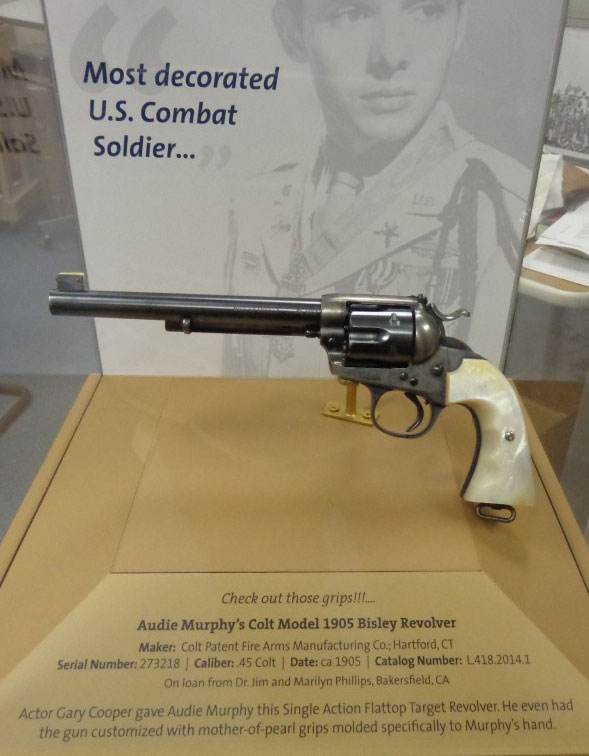
On a subsequent trip to Florida, Goetz purchased a Smith and Wesson .38-caliber revolver. While I could not find any specifics concerning the type of pistol he carried, the gun did pack five rounds. That narrows the field considerably.
The Watershed Event

In the early afternoon of December 22, 1984, four Bronx teenagers climbed aboard a downtown 2 train. Troy Canty, James Ranseur, Barry Allen, and Darrell Cabey were all four already convicted criminals. They later admitted that they set out that day to rob a Manhattan video arcade.

The R22 subway car number 7657 was the seventh of ten. When Bernie Goetz entered from the rear there were between fifteen and twenty other passengers onboard. Goetz took a seat opposite where Canty was stretched out on a long bench. The other three teens were arrayed nearby. Canty asked Goetz how he was doing. Bernie responded simply, “Fine” but otherwise kept to himself.

“You can’t let yourself be pushed around. You can’t live in fear. That’s no way to live your life.”
-Bernard Goetz

Goetz later claimed that the teens exchanged quiet signals and moved to surround him. Canty said, “Give me five dollars.” Bernie Goetz then produced his revolver and shot all four men in rapid succession.

From the horse’s mouth, “I decided to shoot as many as I could as quickly as I could. I did a fast draw, and shot with one hand (my right), pulling the trigger prior to the gun being aligned on the targets. All actual shots plus my draw time occurred easily within 1.6 seconds or less. This is not as difficult to do as some might think…The first shot hit Canty in the center of the chest. After the first shot my vision changed and I lost my sense of hearing. The second shot hit lightning fast Barry Allen in the upper rear shoulder as he was ducking (later the bullet was removed from his arm). The third shot hit the subway wall just in front of Cabey; the fourth shot hit Cabey in the left. The fifth shot hit Ramseur’s arm on the way into his left side. I immediately looked at the first two to make sure they were “taken care of,” and then attempted to shoot Cabey again in the stomach, but the gun was empty…I had lost count of the shots…I didn’t even hear the shots or feel the kick of the gun. ‘You don’t look too bad, here’s another’, is a phrase I came up with later when trying to explain the shooting while I was under the impression that Cabey was shot twice…Shortly after the shooting my vision and hearing returned to normal.”
“…in a combat situation…you’re not thinking in a normal way. Your memory isn’t even working normally. You are so hyped up. Your vision actually changes. Your field of view changes. Your capabilities change. What you are capable of changes…you respond very quickly, and you think very quickly…You think, you analyze, and you act…you just have to think more quickly than your opposition…Speed is very important.”

Goetz checked on a pair of women who had been knocked down in the chaos, spoke briefly with the train conductor, and jumped out of the car. He then went home, gathered some belongings, rented an automobile, and drove to Bennington, Vermont. There he burned his distinctive blue jacket and dismantled his pistol, discarding the components in the woods nearby. He spent the next several days in New England registering at various hotels under assumed names and paying cash.
The Gun

The snub-nosed .38 revolver was the most popular deep cover concealed carry weapon back in the early days. Colt made a similar pistol called the Detective Special, but Smith owned most of the market. Their Model 36 Chief’s Special was ubiquitous. Goetz’s gun might have differed slightly in its details, but this will be close.

Designed in the immediate aftermath of World War 2, the Model 36 was introduced in 1950 at the International Association of Chiefs of Police convention. The name “Chief’s Special” was the result of a poll taken at that gathering. The gun was produced with either a 2 or 3-inch barrel and fed from a five-shot cylinder. Serial number 337 was engraved with J Edgar Hoover’s name and shipped directly to him. The Model 37 Airweight was the same gun with an aluminum frame and cylinder. However, the lightweight cylinder proved troublesome. The Model 36 was also marketed as the LadySmith in 1989 with “grips designed especially for women,” whatever that really means. In 1976 a blued Model 36 cost $110. That would be about $516 today.
The Rest of the Story

On December 30, 1984, Bernie Goetz walked into the police station in Concord, New Hampshire, and turned himself in. His case was heard before a grand jury twice, and he was ultimately tried on charges ranging from attempted murder to possession of a weapon in the 3rd degree. Of his twelve jurors, half of them had themselves been victims of street crime in New York. Goetz was ultimately convicted solely on the weapons possession charge and spent eight months in prison.
“Jail is much easier on people who have nothing.”
-Bernard Goetz

Darrel Cabey was rendered paraplegic, but the other three teens recovered. During the trial, they claimed they were simply panhandling but did eventually admit their intent had been to rob Goetz. Paramedics recovered three screwdrivers from the men. Cabey was later awarded a $47 million judgment in a civil suit. As of 2004, Goetz had declared bankruptcy and not paid a penny of it.

“I would, without any hesitation, shoot a violent criminal again.”
-Bernard Goetz


Goetz was arrested in 2013 for selling marijuana, but the charges were dismissed. Bernie Goetz is now 74 years old and resides today in the same NYC apartment where he lived back in 1980. He has run for public office twice, advocates for the legalization of marijuana, and, no kidding, apparently enjoys raising squirrels.


Whether Bernie Goetz was a hero or a criminal turns on your perspective. However, that brief frenetic gunfight did help catalyze the modern concealed carry movement in America. Biased media coverage notwithstanding, crime rates have generally fallen steadily since that time. The Subway Vigilante shooting was a seminal moment in American history.

“With my time in the limelight, I regret that I didn’t use it more to push vegetarianism. I support vegetarian options in the school lunch program.”
-Bernard Goetz
Life in 1542 Semi-Quick Facts
By Robert W. Munson
Cabrillo National Monument Historian
Sections:
- Regarding the Model of a 16th Century Ship
- A Sailor’s Life
- Cabrillo’s Crew
- The Food
- Hidalgo
- Horses
- Status Symbols
- Facts of Life for Women
- Clothing of an Average Woman
- Llovedo
- Santiago
- Religious Santiago
- Syncretism
- Regarding the Model of A Sixteenth Century Ship On Display In the Visitor Center:
Once upon a time there was a man named Juan Rodriguez Cabrillo who had three ships named San Salvador, La Victoria, and San Miguel (note: this is the only time I’m going to screw around with the required italics).
Spanish ships were always given religious names (it’s a rough life out there on the water; you definitely want God on your side). They were also known by the names of their owners and/or captains. (P.S. they almost always had nicknames. That’s how Santa Clara became known as the Nina of Columbus fame).
Think of them as Papa Bear, Momma Bear, and Baby Bear: San Salvador is the macho muscle of the fleet (and the boss’s “Capitana”, i.e. flagship); La Victoria has a nice, full, well-rounded figure and carries lots of goodies (she is the supply ship for the expedition); and little San Miguel is always running off poking its nose into bays, estuaries and rocky places (but that’s expected: San Miguel is, in effect, the reconnaissance/scout).
What makes them what they are, and which one is our model?
Are you all sitting comfortably? Good, we’ll begin: First off, we won’t be dealing with San Miguel, as she is a whole different kettle of fish that we’ll deal with later. Suffice it to say, our model is not of the San Miguel.
Big ships all started back in the Mediterranean with a style of vessel called a carrack. This was a huge, stout, deep-bellied ship with a forecastle (foc’sle) and aftcastle built up by as many as four decks. They were called castles because that’s exactly what they were. There were no design-built warships at this time (even the graceful and beloved Viking long ship was a merchant ship first and pirate second). The carrack was designed to carry lots of cargo, which would attract the attention of the light-fingered brethren (i.e. pirates). The castles provided positions from which the carrack’s defenders could rain down all sorts of grief on anyone coming alongside drooling with greedy lust (or lusty greed if you prefer). And if you really had to go to war with somebody, the castles automatically made them a warship.
Along about the middle of the 15th century two things happened which sealed the carrack’s doom. First, cannons started being used on ships, and ships got out of the Mediterranean into the much rougher waters of the Atlantic. It very quickly became obvious that the high castles made these ships unstable. Second, smaller, lower and faster ships mounting a few cannons could shoot your carrack’s lovely castles to pieces, allowing boarding parties to come aboard unmolested. A true warship was developing, longer, lower and leaner than a merchant ship. However, merchants still wanted to carry lots of cargo so they were unwilling to lose the carrack’s nice big hull. But to keep that hull upright in the open ocean meant cutting down top weight. So you didn’t mount heavy cannon on them and you cut those magnificent castles down to just stumps. Parenthetically (it is interesting to note that, until the 1900s, the foc’sle on a Spanish ship was still called “castillo” and the main superstructure was still called “alcazar”, the Spanish word for “fortified palace”. Has a nice ring to it, huh?)
By early in the 16th century two very distinct styles were developing and being refined: the galleon and the nao. Both words refer to a purpose rather than a specific type. Galleon appears to be derived from the word galley, a long lean ship, fast and maneuverable under either oars or sail. Nao is a Portuguese word that means “ship”.
The men who built the San Salvador and La Victoria had been trained in the carrack tradition, but were savvy enough to adapt to the realities that real blue water sailing made necessary.
So what was built at the miserable mud hole of a mosquito-ridden estuary of the Michatoya River, known as Iztapa in Guatemala? Neither a galleon nor a nao.
San Salvador, although they called her a galleon, was in truth a “proto-galleon”. She had a 3 to 1 hull ratio (length to width ratio), just like a carrack, but her castles had been cut down to only one upper deck in the castillo and only two upper decks in the alcazar, like a galleon. The second deck is usually quite small, often containing just the captain’s cabin and a little super-dry storage space. She is halfway through the metamorphosis of carrack to galleon. Forty-six years from now, when the English confront the Great Armada, they will be using the fully developed “race built” true galleon of Errol Flynn and Johnny Depp fame. These sea-going dragsters will be very low, with an amazing 4 or 5 to 1 hull ratio. Her Datum Water Line (DWL), in other words (fully operational but not loaded), gives a draft of 10 feet. With cargo, supplies and people on board her draft is 12 feet. At DWL she is 74 feet long. By the way, Cabrillo’s cabin was 9 feet wide forward, 3 feet 3 inches wide aft, and 9 feet long. The overhead is 5 feet (not much room for parties).
La Victoria, our display model, is a little shorter than San Salvador (roughly 64 feet at the DWL water line, instead of San Salvador’s 74 feet), but she is 25 feet wide, the same as San Salvador. What this means is her hull ratio is a very matronly 2 ½ to 1. This makes her even more rotund than her carrack ancestors. She also has a much deeper belly. To be ungracious, she is a sea going “tub”. To buy all this cargo space she has a miniscule castillo. In fact many Pacific naos had no foc’sle at all, just a high prow like a caravel type fishing boat to keep blue water waves from coming aboard. Her alcazar is down to just one deck. She is also what is known as “cubierto” which means she has a main deck, but below that there are no lower decks or bulkheads. This enables her to cram more stuff into the hold, all the way down to the keel. What it also means is that there is no below deck space for crew’s quarters. Everyone sleeps on the main deck. Since the whole crew has to sleep in the alcazar, it is extended all the way to, and incorporating, the main mast. Many authors consider this alcazar, so long it includes the main mast, one of the great defining elements of the Pacific nao. Apparently the Spanish thought so too, because in a ship like La Victoria the aft castle is no longer referred to as “alcazar” but is called “La Puente” (i.e. referring to the bridges ashore under which poor people could find shelter to sleep). The overhang at the stern does create a space 14 by 5 feet, which could be partitioned off with sliding panels for the private use of the captain and his personal storage. The overhead is only 5 feet, in order to accommodate the tiller, but this still would be private and similar to what was known as a wall bed. This “cabin” would need some kind of aperture for ventilation and natural light.
The castillo forward has two sheltered decks, each containing 63 square feet of deck space for the crew and other low class types. The puente contains 132 square feet of deck space to accommodate soldiers, ship’s officers, and super numeraries such as priests and gentlemen. This figure does not include the captain’s private space. One of the biggest problems of this ship is that she is very wet as all spaces under cover are still open to weather and the seas. This is probably the reason her gunwhals are so high.
La Victoria is slow, strictly utilitarian, and uncomfortable to live in. She’s never going to win any beauty contests, but she’s still a nao and she does her job very well. She’s the supply tub, er ship. In fact she may have been what was known as a “Nao Grueso” (a “fat ship”).
So, with all the clues noted above, our model in the VC and the one in the Cabrillo exhibit is the La Victoria not the San Salvador.
Now we move on to the San Miguel:
What the heck was she? Well, for starters she was a lot smaller than the other two ships. She could be rowed so she could investigate narrow places like rivers and still be able to back out. She could also run from hostiles even if there was no wind. She had one mast. She has been described as “cubierto” i.e. she is not an open boat like a chalupa; she has a deck. In the Mediterranean it was common for ships to tow their long boat astern. In the Atlantic or Pacific this was a great way to lose your long boat, through swamping and/or a parted line. Some authors have stated that she was a chalupa, which could be stored on the main deck amidships when towing wasn’t feasible. However, there is no indication she was ever taken aboard one of the other ships, and she was big enough to warrant a name and a master. So she wasn’t a glorified long boat. The reason a lot of amateurs assumed she was a chalupa is the mistranslation of the word “cubierto”. Many translate the word as meaning “no deck”. What it really meant to the Spanish of the 16th century was “the lowest actual deck” i.e. there was no deck below the main deck; you could see all the way down to the keel.
She has been called a caravel, fragata or a bergantina. Since Cabrillo helped build 13 bergantinas for Cortez for the assault on Tenochtitlan, he was familiar with the type. The caravel was a coastal trader or fishing boat in Europe, usually with two masts and a high weatherly bow. Nina and Pinta did great work for Columbus in the Atlantic. The thing that rules out San Miguel as a caravel is that they were not set up for rowing. The main difference between the two other types is that a fragata had two masts, a bergantina only one. Bergantinas were of shallower draft and possibly higher in the bow. The draft would make her a good scout where San Salvador could not go, or where they did not want to risk the big ship. Fragatas appear to have been built more for speed than sturdiness like a bergantina, a fact crucial in a long open ocean voyage. The English would probably have called her a pinnace.
Now, let’s get one thing straight right now folks, so you won’t appear uninformed to the public. A bergantina is not a brigantine. A lot of lubberly armchair historians have called them brigantines. A brigantine is a two-masted ship, not rowable, much bigger than a bergantina, and brigantines won’t be invented until the 1700s. So watch your spelling and your pronunciation and you’ll appear brilliant to our visitors.
A bergantina was 35-45 feet long, about half the size of San Salvador or La Victoria. They usually had about six oars on each side in addition to their one mast and one sail on a yard (the spinnaker hadn’t been invented yet). As an open deck, small vessel, with little or no shelter in the hold, she would have been miserable in foul weather, and would have taken a pounding in any kind of sea, which again favors San Miguel as a bergantina. A bergantina was the most robust of the three types. While a chalupa would have been taken aboard the big ships with stormy weather approaching, we know San Miguel had to weather the storms on her own.
Results of a discussion with Doug Sharp, Maritime Architect, San Salvador Project:
Dimensions:
Cabrillo’s cabin: 10 by 9.5 feet (96 square feet), the 4 by 3 foot whipstaff helmsman’s bubble partly intrudes into this space.
The main deck is divided into three sections:
Amidships is the open waist between the castles: 525 square feet
The castillo (forecastle): 205 square feet. Overhead clearance 6′ 3 ¼”
The alcazar (aftcastle, the “main cabin”): 317 square feet. Overhead clearance 6′ 2” forward, and 6’ 7” aft
The tiller flat: 82 square feet. Overhead clearance 2′ 6”, 205 cubic feet
The lower deck: 1030 square feet. Overhead clearance: amidships 6′ 1”. At sides 5′ 8”
Storage space: 6150 cubic feet (200 toneladas, matches San Salvador’s rating). Tonelada (pronounced tun-eh-lada) equals 30 cubic feet
The bilges: Effective length 45′. Overhead clearance: 3′ to keelson. Effective storage space: 1286 cubic feet (31 toneladas)
Water occupies 7 ½ gallons per cubic foot, so the horses are drinking 2 cubic feet of water per day, (240 cu.ft. per horse for 120 days). The Spanish were very horse oriented and no Spanish horseman would allow his horse to be kept in a stall less than 8 by 8 feet as the horses need to be able to lie down to avoid colic, twisted gut, ileus. The stall will take up 384 cubic feet. Grain for 120 days occupies 120 cubic feet. Total: 404 cubic feet. The lowerdeck is the only feasible place to put the horses. It contains 6150 cubic feet. Two horse stalls at 384 cu.ft.each = 768 cubic feet minus 240 days of grain for 2 horses = 1008 cubic feet which is 16% of the lowerdeck storage space.
Dry food ration: 31.75 oz./human/day x 100 humans = 198 pounds/day. Here we are combining beans, salt meat, and hardtack, but the average appears to be about 15 pounds/cubic foot. About 13 cubic feet/day x 120 days =1550 cubic feet. 1008 cubic feet for horses plus 1550 cubic feet for dry food = 2558 cubic feet of storage, 42% of the 6150 cubic feet available lowerdeck space.
The bilge contains 1286 cubic feet. The 100 humans and two horses will drink 10.7 cubic feet of water per day. 1286 divided by 10.7 = enough liquid for 120 days. Put all the ship’s water and wine in the bilges. Humans are rationed one liter of wine & one liter of water/day. One gallon equals roughly 4 liters; 7.5 gallons of liquid (water & wine) = 15 humans divided into 100 souls embarked = 6.7 cubic feet to provide for 100 souls/day.
One hundred embarked humans need 6.7 cubic feet of liquid per day. Each horse needs 2 cubic feet of water each day. The humans and two horses will drink 10.7 cubic feet of water per day; 1286 divided by 10.7 = enough liquid for 120 days (402 cu.ft.of wine, 882 cu.ft. of water), assuming there is no leakage, and no space for access so its like getting olives out of a bottle; as you finish off the contents of one barrel you have to remove the barrel from the bilge, at least until you have enough space to maneuver the barrels.
- A Sailor’s Life:
When do you wake up? When the paje (page or ship’s boy) at the sandglass chants the “Buenas Dias” prayer, basically just before sunrise.
What meals do you eat during the day? Breakfast, lunch, dinner
When do you eat these meals? Sunrise, noon, sunset
Where do you obtain water? From barrels in the hold.
Where is food prepared? On the fogon; the brick cookstove located aft, under the sterncastle (alcazar). It was available on a first come first served basis, during daylight hours. The stove would not be lit during rough weather.
Where is food served? On wood trenchers while seated on a cloth spread on the deck.
Who prepares your food? One of the ship’s pajes. Sometimes there is an actual cook.
Cooks were generally old sailors no longer able to carry out the duties of a sailor. It was considered a demeaning job and a deadly insult was, “Your beard smells of fogon smoke.”
On what is your food served? Wood trenchers
On what do you eat your meals? A tablecloth on the deck
What did you eat for breakfast? 7 ounces of galeta (ships’ biscuit/hardtack), 2 ½ oz. (70 grams) of menestra (horsebeans and garbanzos), 2 ½ oz. (70 grams) of cazon (salt fish, usually dogshark) or 3 ½ oz. (100 grams) of salt pork
What did you eat for lunch? The same as breakfast, with maybe some rice added
What did you eat for dinner? The same as lunch but not as much
What is your favorite alcoholic drink? Wine (Rum won’t be invented for another hundred years)
What is your favorite non-alcoholic drink? Water (preferably fresh)
Where do you usually eat your meals? On deck
What are your usual foods? galeta, menestra, and salt fish
What are your favorite foods? Fresh water, onions, soft bread
What foods are your special treats? Fresh food of any kind, at-sea fresh fish caught by the crew, two ounces of cheese on Sundays and Tuesdays
- Cabrillo’s Crews:
The following are estimates of the crew make-up of Juan Rodriguez Cabrillo’s three ships in 1542. These are based on the Reglamento of 1522 regarding complement requirements stipulated by the Crown for ships in Nueva España and the Carrera de las Indias. These are also based on data and parameters established by Harry Kelsey in his book Juan Rodriguez Cabrillo.
San Salvador (also known as the Juan Rodriguez or the Capitana)
A proto-galleon, estimate approximately 100 souls embarked.
| Crew | Supernumeraries |
| Capitan | Procurador (Royal agent/ a lawyer) |
| Maestre (Sailing Master) | Escribero del Procurador |
| Piloto (Pilot or Navigator) | Chronista (Chronicler) |
| Contramaestre (Boatswain) | Sacerdote (Priest) |
| Guardian (Boatswain’s Mate) | Fray (Fraile, a Lay Brother) |
| Cirujano/barbero (Surgeon/Barber) | About 25 Soldados (Soldiers) |
| Despensero (Supply Officer) | About 24 Esclavos (Slaves) (Black & Indian) |
| Tonelero (Cooper) | Escafandrista (diver, usually Indian slave) |
| Calafate (Caulker) | Possibly some gentlemen & merchants |
| Carpintero (Carpenter) | The presence of Llovidos (female stowaways) cannot be verified. |
| Escribero (Scribe, a secretary) | |
| Escribiente (Scrivener, record keeper) | |
| 15 Marineros (Seamen) (one would be a qualified Lombardero or gunner) | |
| 8 Grumetes (Apprentice Seamen) | |
| 3 Pajes (Pages, ship’s boys) | |
| 38 crew | 55 supernumeraries (not including gentlemen, merchants, servants and Llovidos) |
| Total of 93 |
Authorized 4 bombardetas (large iron cannons) with 36 balls each (144 balls)
Ordnance: 16 bercos (swivels) with 72 balls each (1142 balls)
8 arquebuz (muskets) with lead and mold
2 hundredweight of gunpowder
10 ballestas (crossbows) with a total of 96 quarrels
48 jabalinas (javelins)
8 quarter pikes
20 rodelos (bucklers)
La Victoria (named after Santa Maria de la Victoria, the seaman’s shrine in the Triana district of Seville). She was also occasionally known as Figuero, Alvar Nunez, Anton Hernandez, and Santa Maria de Buena Esperanza, the patron saint of sailors). She was a nao gruesa, although she’s sometimes referred to as a carrack. Estimate 50 to 60 souls embarked.
| Crew | Supernumeraries |
| Capitan | About 12 Soldados (soldiers) |
| Maestre (Sailing Master) | About 12 Esclavos (slaves) (Black & Indian) |
| Piloto (Pilot or Navigator) | Escafandrista (diver, usually an Indian slave) |
| Contramaestre (Boatswain) | Sacerdote (Priest) ? |
| Despensero (Supply Officer) | |
| Tonelero (Cooper) | |
| Calafate (Caulker) | |
| Carpintero (Carpenter) | |
| 12 Marineros (Seamen) (one would be a qualified Lombardero or gunner) | |
| 6 Grumetes (Apprentice Seamen) | |
| 3 Pajes (Pages, ship’s boys) | |
| Total 55 |
Authorized Ordnance:
12 bercos (72 balls each)
5 arquebuz (muskets)
8 ballestas (crossbows)
40 jabalinas (javelins)
5 quarter pikes
16 rodelos (bucklers)
San Miguel
She was probably a bergantina, fragata, or chalupa
| Crew | Superumeraries |
| Maestre (Sailing Master) | About 10 oarsmen. These would be Esclavos (Slaves, Black or Indian) and/or sailors undergoing punishment |
| Piloto (Pilot or Navigator) | |
| 5 Marineros (Seamen) | |
| 3 Grumetes (Apprentice Seamen) | |
| 1 Paje (Page, ship’s boy) | |
| 11 crew | 10 superumeraries |
| Total 21 |
Authorized Ordnance:
In European waters Bergantinas traditionally carried a Lombard (cannon) in the bow. In the interest of seaworthiness in an expedition going into a rough and unknown sea, San Miguel probably did not carry a Lombard in the bow and also did not cut a gunport for it in the bow.
6 bercos (swivels) 72 balls each. 432 balls.
2 arquebuz (muskets)
4 ballestas (crossbows)
18 jabalinas (javelins)
2 quarter pikes
7 rodelos (bucklers)
- The Food Issued To Each Man Each Day Of The Voyage:
Breakfast served at sunrise and consists of:
7 ounces of galeta (ships’ biscuit/hardtack),
2 ½ oz. (70 grams) of menestra (horsebeans and garbanzos),
2 ½ oz. (70 grams) of cazon (salt fish, usually dogshark) or 3 ½ oz.(100 grams) of salt pork.
Lunch is the meal at noon:
7 ounces of galeta (ships’ biscuit/hardtack),
2 ½ oz. (70 grams) of menestra (horsebeans and garbanzos),
2 ½ oz.(70 grams) of cazon (salt fish, usually dogshark) or 3 ½ oz.(100 grams) of salt pork.
Rice may be substituted for menestra.
Dinner is served at sunset:
3.5 ounces of galeta (ships ‘biscuit/hardtack) from brown flour,
1 ¼ oz. (35 grams) of menestra,
1 ¼ oz. (35 grams) of cazon (salt fish) or 1 ¾ oz. (50 grams) of salt meat.
One liter of wine and one liter of water is issued each day.
As a special treat, the captain could authorize two ounces of cheese issued every Sunday and Tuesday.
Water for cooking and washing is available self-serve by the bucket load alongside the ship.
As the Pacific Ocean was thought to be less than a thousand leagues wide (2200 miles), they expected a short, easy trip to China. They did not think scurvy would be a problem as they would be following the coast all the way allowing the crew to forage periodically for lemon grass, wild onions and other fresh vegetables and fruit during shore excursions for fresh water. For those with no stomach for lemon grass and wild onions, bottled sauerkraut was available but had to be purchased by the individual.
Galleta or ships’ biscuit (known in modern times as hardtack) was the staple. The word biscuit comes from the Latin bis (twice), and coctus (cooked). The name refers to the fact that it was unleavened bread subjected to a double process in cooking to render it virtually indestructible. In essence it was made of wallpaper glue: flour, salt and water. The most common way of eating it was to soak it in water or wine to soften it. Frequently it would be cooked as a stew with the salt fish/meat and beans. If you had salt pork to fry, the biscuit could be softened by pouring the liquid fat over it.
The salt meat was usually dogshark, although saltpork was sometimes substituted for it two or three days per week. In the Atlantic cod or sardines added some variety to the salt fish, but these were not available in the Pacific. It all depended on how good at negotiating the ship’s supply purchases the despensero (ship’s supply officer) was (and how much of the ship’s budget he quietly pocketed for himself).
Fresh food, especially chickens, pigs, goats and sometimes even cattle, would be embarked for slaughter during the voyage, but these took up valuable cargo space and needed food themselves. Onions were the most prized vegetables.
Officers and passengers could supplement the onboard fare with purchases of preserved food of their own. This frequently took the form of sauerkraut and dried fruit. Quince, figs and raisins were the most popular fruits. These items not only added variety but also to some degree staved off scurvy. The anti-scorbutic effects of citrus juice had not been discovered, but the Spanish did know that lemon grass, onions, and sauerkraut did slow the advance of scurvy.
The crew frequently supplemented their preserved diet by catching fresh fish.
All in all, the daily ration provided adequate nutrition, bulk and between 3500-4200 calories per person per day. As long as the ration was fully issued it was adequate for the work being done. Proteins made up about 13 percent of the ration, which is within the levels recommended by the World Health Organization for a balanced diet. The main food deficiency was the vitamins provided by fresh fruit and vegetables. In the Atlantic scurvy was not a serious problem. Scurvy takes approximately six weeks to develop and landfalls, even crossing the Atlantic, rarely exceeded 30 days. In the vast distances of the Pacific scurvy became a real killer, which could decimate crews and on occasion wipe out an entire crew. The problem was not solved until the 1700s.
Surprisingly, the real deficiency in the menu above was water. One liter of water was totally inadequate for an adult male, and the wine supplement did not help. An average man eating 3500 calories needs two to three liters of water, especially working hard in tropic climes where a man can sweat a liter in an hour. This was not helped by eating food with a high salt content. The problem with water is that it takes up valuable storage space in a small ship. By cutting back on the water storage, ship masters could increase cargo capacity. Thus, the sailor was not so much continuously hungry as he was continuously thirsty.
Any delays in a voyage, such as calms, storms or contrary winds, could quickly put the crew on half rations of both food and water. Then there was always the problem of barrels leaking and food being rotten when purchased, going rotten or being eaten by vermin. Although a nice tasty vermin could replace salt meat with fresh, it was limited in quantity and full of bones.
So, welcome aboard, enjoy the voyage, and buen provecho!
- Hidalgo:
An Hidalgo was a member of the Spanish, non-titled, nobility. They were exempt from paying taxes, but did not necessarily own real property. They were the lower ranking gentry. They were “gentlemen” soldiers.
The hidalguia had its origins in the professional fighting men of the Reconquista, the wars driving the Moslem Moors out of the Iberian Peninsula. These men became known as Hidalgos in the 12th century, and the term referred to any man of sufficient means to provide himself with armor and horse. One of the key points of being an Hidalgo was to consider manual labor as contrary to his honor. Peasants need not apply.
There were three types of Hidalgo: Hidalgo de Sangre, Solariego, or Bragueta.
The Hidalgo de Sangre (by virtue of blood lineage) were men whose family had been Hidalgos for so long they could not say how or when they obtained that status.
The Hidalgo de Solariego (ancestral) merely had to verify that all four of their grandparents were Hidalgos.
The Hidalgo de Bragueta (“fly”) were a sub class of Hidalgo, being men who were entered on the Padrone List because they had produced seven adult sons in legal matrimony all of whom were trained fighting men. Or, in rare cases, the crown could order a man’s name entered on the Padrone of Hidalgos as a recognition of exceptionally meritorious service. The sons of an Hidalgo de Bragueta did not inherit the title.
As surnames evolved in the first centuries of the second millennium, hidalgos adopted the use of the particle de in their surnames in order to distinguish what was still a true patronymic through the addition of their place or city of origin. It is the same as the German von, both of which mean “of”. Thus the legendary El Cid combined his patronymic Diaz “son of Diego” with his family’s hometown: Vivar, to become Rodrigo Diaz de Vivar. Bernal Diaz del Castillo is another example.
By the early 19th century the Hidalgo as a social class had entirely disappeared.
An Hidalgo was not necessarily a landowner. He was considered to be a man who owed loyalty and service to the Crown. As such he had to maintain weapons and armor and to be on call for service as needed. A horseman was expected to also maintain his horse.
An Hidalgo was also expected, by law, to maintain a “Casa Poblada”. This physical structure was supposed to contain his “mucha familia”, the bigger the more prestige a man commanded. The Casa Poblada was to provide food, clothing and shelter for not only the Hidalgo’s extended family, but for servants, distantly related individuals, friends who had fallen on hard times, children born by Indian wives as well as Spanish wives, poor relatives, impoverished gentlemen, military aides, maiden ladies (either orphans, or children of other comrades), protégés, friends, Indian servants, and slaves. When the oldest son married, his wife and children were expected to live at home and he would some day inherit the Casa Poblada with all its prestige and responsibilities.
- Were There Horses On Juan Rodriguez Cabrillo’s Expedition In 1542?
In an exhibit at the Park we show a horse embarked in the San Salvador. This element was incorporated based on one document written 18 years after the fact.
We cannot prove their presence on the expedition, even though there is no mention of horses in any of the records of the voyage. This can be excused by the fact we have none of the original logs, journals or other records from the voyage itself. The best we have is a second-hand transcription of notes compiled by Urdanetta from JRC’s Relacion, two reports by unknown authors (possibly Fray Julian de Lescanso, and Lazarro de Cardenas), and the reports prepared by the two pilots of the expedition (Ferrer and Barredo). The “journal” prepared by Juan Leon exists also in only a second-hand transcription. All surviving materials show traces of errors, and multiple and often contradictory sources. But none of them mention horses. The transcription of Juan Leon’s report is in Patronato 20 in the Archive of the Indies. Depositions are in Justicia 290. Bits and pieces show up in various documents as late as 1559 as part of the petition of Juan Rodriquez Cabrillo (JRC’s son) to the crown for recognition and restitution of the services of his father. It is this petition, in 1560, that provides the only reference to horses, it is in Justicia 290 Fol.45. Kelsey quotes it on page 112. It should be remembered that JRC’s son was only six when his father sailed. He probably would not have been put at risk in the brutally unhealthy climate in Iztapa and probably never saw the ship or its lading. He might have seen family records, but in all likelihood he was “padding the bill” in his petition to the Crown. Such padding was a common tactic of petitioners for crown favors, since the Crown would invariably cut the amount requested drastically, if they honored the petition at all.
Kelsey notes that the San Salvador could accommodate 10 horses. This is true if they are the only cargo, such as on the voyage to Peru when San Salvador and La Victoria disappeared. However, on a years long voyage of exploration, seeking trade, they could not lose that much cargo and supply space. The rule of thumb here is: every horse with it’s stall and feed uses up 8% of the lower-deck storage space plus 4% of the water stored in the bilge. The math to arrive at these figures is listed below and is based on figures derived from Doug Scott, the marine architect of the San Salvador Project, and the known needs of a horse in such transport. The normal load for a ship transporting horses across the Atlantic, a voyage of five weeks landfall to landfall and two months total, was two or three horses. The mortality rate on horses in this relatively short, easy voyage was 50%. Columbus’ second expedition in 1493, to establish the settlement of La Isabella with 1200 settlers, had only 20 horses. There were a total of 17 ships, which works out to 1.178 horses per ship.
There could be no guarantee that they could get the horses ashore often enough for proper exercise and fresh air. The Spanish were very horse-oriented and no Spanish horseman would allow his horse to be kept in a stall less than 8 by 8 feet. The bigger problem of the stall was that the overhead on the lower deck was 6′ 1” over the keel and only 5′ 7” at side of the hull. This gave a horse no room to toss its head, as they do reflexively. In such a move the first thing to hit the overhead was the horse’s poll, the soft spot between the ears where the spine meets the skull. A short hard hit to the poll can be fatal. This is why horsemen for centuries have gone to great lengths to protect this spot.
They would have had to carry an incredible amount of grain, preferably oats, to which they would have to be accustomed after grazing in the highlands, and they would have to bulk up before sailing. A horse needs 12-20 pounds of grain, roughly a cubic foot, a day and an all grain diet leads to diarrhea. A horse in a static situation needs to be fed every two hours to keep the bowels moving. They would not take hay as it molds too easily. When the grain ran out, could they acclimate back to whatever graze might have been available? They would need 12-15 gallons of water per day. That equals the daily water ration of 28 men in a 16th century Spanish ship, and fully one quarter of all the humans in San Salvador. How would the crew feel about that?
A sling would have to be loose, to stabilize the horse in rough weather, but the sling must not be weight supporting as the hooves need to be weight bearing to keep blood circulating. A stall-bound horse after two months will need three to four weeks to get back in running condition.
September 6, 2011 telephone call with Harry Kelsey, author of Juan Rodriguez Cabrillo:
He stated he did not believe JRC had any horses on the China expedition. He has read the original Justicia of Salazar’s 1547 deposition in the Archive of the Indies in Seville. It refers to the transport of horses for Alvarado’s 1541 expedition to the Mixton Rebellion in Jalisco, not the expedition to China. This was a much shorter voyage with a definite tactical objective. He noted that the petition of JRC’s son was for recognition and restitution of all of JRC’s service, not just the China expedition. He had, after all, lost a couple of ships in the bargain when Alvarado took the first San Salvador to Peru. Mr. Kelsey expressed his regret that he did not make that clear in his definitive work. He is sending me a copy of the Justicia.
Therefore, it is my firm conviction, and I use this in my interpretative activities, despite what I feel is an inaccurate depiction in the Park display, that there were no horses on the Cabrillo expedition.
The difficulty and risks to horses on such an expedition would not be worth it.
- Status Symbols In 1542:
It has been said that history is the study of the psychology of society. This is why Cabrillo National Monument concentrates on concepts and understanding. We have found the best way to approach these is the human touch – people.
One important element of society is status and its expression. One of the most common status symbols is clothing and adornment. The individual with a big SUV isn’t driving it as much as he is wearing it. It is more than just a tool to get from point A to point B, the driver is deeply involved in the vehicle, and he is involved in it on a variety of social levels. Status symbols change. The analogy of comparing a 2007 SUV with a 1540s horse is not accurate; the 1540 status symbol par excellence was social position, of which the ultimate public expressions were pearls and spices. In a frontier environment such as Guatemala in 1542, many of the trappings of status (fancy home, furniture, art, china, glassware, silver etc.) were impossible to come by, but everybody still needed clothes. Clothes became the status symbol.
During our 1542 Living History presentations, we carry involvement right into the audience by asking volunteers to actually try on the clothing worn 450 years ago. While both men and women try the armor, the ultimate expression of status belonged in the realm of the women who held the society together while the men were still out trying to learn about it and control it. So in addition to armor, we have complete female outfits for lady volunteers from the audience so they can experience it for themselves and involve the audience as well. This is something virtual reality can’t achieve.
Just as jeans and t-shirts are the status clothes of today’s youth, the clothes our audience members demonstrate were the status symbols for a woman of New Spain in the 16th century. When a girl reached her eighth birthday in the Spanish culture, she was given a new outfit of clothes similar to her mother’s dresses, and would be expected to dress as a woman for the rest of her life. Since she would probably be married by age 14 or 15, eight was a reasonable age for her to start learning to be a proper Spanish lady.
Both men and women wore identical underclothes in this period. It was a single garment – the camisa. Basically an oversized white nightgown, the woman’s was ankle-length, whereas the man’s was about knee length. The camisa indeed served as a nightgown for both men and women, and provided a sweat and body oil barrier under clothing to protect the more expensive elements of a wardrobe. The large billowing sleeves closed with drawstrings, as well as the neckline, making it adjustable for seasons or occasions. In the home, a woman would seldom wear anything but her camisa, perhaps adding another garment only for warmth or messy work.
In the tightly controlled confines of Inquisition-era Spain, a woman would never think of leaving her house without being fully dressed. The only exception was the washing of clothes in a river, when all males were banished from the area. The first item of formal clothing to be put on was a great source of pride to the Spanish, as it was their invention; an invention that we still see today in bridal dresses – the hoop skirt. Properly called a verdugado, it gave skirts a smooth cone shape, and was wildly adopted all over Europe within years of its appearance in Spain. Reed or cane provided the rings of support. In England it became the farthingale, and in America the crinoline hoop skirt – worn here until 1870. But it survives yet as an elegant addition in bridal dresses.
Usually the next garment was a petticoat or fustan of quilted cotton, again dependent on weather and the exact style of the dress. One of the most favored and cheapest forms of armor for the Spanish was the escuapiel, a vest or jacket of light canvas quilted with raw cotton, which was surprisingly effective as protection. The women in this society routinely made escuapiels, as they were experienced quilters. The quilted petticoat was thus a cheap garment for a woman’s wardrobe.
Historians have yet to agree on how much the next item of dress was used in the 16th century. In Spain it was the caderas postizas, or false hips; in England, it earned the rather common name of bumroll. Any way you look at it, it is rather like a long cloth sausage tied just below the waist. To understand this aspect of 16th century fashion, we really need look no further than today’s extreme emphasis on the bust – even to the point of women altering their body with surgery to match the fashion. In 1542, one of the most desirable and sexy aspects of a woman’s appearance was her hips, the more the better. To the man of Spain, a woman’s ability to produce many children and survive repeated childbirth was arguably the most precious and attractive aspect of her sex, and therefore visibly touted in styles of clothing. So sprang the various methods of emphasizing the size of the pelvis with clothing. The caderas postizas had several other benefits in its wearing: it provided a perfect shelf to carry a baby on the hip, as well as distributing the weight of petticoats and skirts more evenly. After well-developed hips the most crucial element of feminine beauty was healthy white teeth. Healthy teeth proved the probability of the woman’s success as a mother, as it meant she had been well-fed and had strong bones – again a plus for childbearing.
The next layer added to the ensemble would be the underskirt or zagalejo. This might be simply a panel on the front of the petticoat area, a full skirt with better material on the front area, or a full skirt of identical fabric. This was intended to only show in the front between the intentional gap of the overskirt (falda), which was put on next. Rather like a theatre curtain drawn slightly back, the overskirt was often of contrasting material that purposely exposed the underskirt as a front panel.
The body is finished with the addition of the cuerpo, or bodice, above the waist. The 16th century equivalent of the t-shirt or blouse, the cuerpo also incorporated support for the bust, as no such separate undergarment yet existed. To accomplish this, bodices were made with boning or stays – a vertical stiffening of the garment with reed, cane or possibly whale baleen to produce a smooth straight bodice front as well as uplift for the bust. The cuerpo signaled one of the most fundamental status signs for a woman – how it was laced. By wearing a back-lacing bodice, a lady was signaling to one and all that she did not dress herself; in fact it was impossible to do so. It told everyone that she was able to afford a servant to help her dress and undress. A front-lacing bodice told society that a woman was so poor that out of necessity, she must dress herself.
The cuerpo sleeves could be styled and fashioned in a number of ways. They might be fully sewn into the body of the bodice with an open underseam to allow them to be tied back in hot weather. Sleeves were also popularly tied onto the bodice around the armhole, with colorful ties called points. This would allow switching to a different pair of sleeves at will, and complete removal allowed relief in the heat.
In this most Catholic country, no proper Spanish woman would ever be seen in public without her head covered. A wide variety of styles were used, and it appears that many of the headwear fashions were used in many European countries, regardless of their origin. In the early 1500s, the French Hood, worn by Catherine of Aragon when she went to England to marry Prince Arthur and later his brother, Henry VIII, was exceedingly popular, as was the English Gabled Hood. Both hats had many variants and survived for many years in various forms.
Our audience volunteer models help us demonstrate the ensemble described above. Through the process of putting each item on in turn she not only shows how Spanish colonial women dressed but also gives each member of the audience a human touch with the past. She makes the past come alive. Grace and dignity seem to become natural in a style far more elegant than halter and muffin top Levis. The volunteer also helps demonstrate the sumptuary laws that dictated what each class of person in Spanish society was allowed to wear. Metal fibers in cloth, decorations, trim, jewels, and pearls were all carefully restricted to higher classes to protect their status and standing in society. Our girl’s dress is that of a lesser noble child as shown by its gold metallic trim on the bodice, underskirt and gabled hood. It’s rich fabrics of heavy velvet and brocade also signal her standing to the audience. By comparison, the presenters and another volunteer are clothed in middle class attire.
We have had a number of young people participate in these demonstrations of status, and the experience has sparked inspiration in many of them to learn more about Spanish history, clothing, or their own heritage. The feelings, inspiration, and connection experienced may propel them on to a career in clothing history, theatre costuming, teaching, history, sociology, archaeology, drama or an endless list of possibilities. Involvement has demonstrated that doing is often more interesting than watching. It is the spice of life and a pearl beyond value.
- Facts Of Life For Women:
Fact #1 There are lots of things here that can kill you, and childbirth is #1 on the list for women. A man plans to sire between 10 and 14 children, but it may take three wives to do it. However, if he lives to age 35 he will probably have seen 75% of his children die. Likewise, if you live to be 40 you too will most likely have seen three fourths of your children die, probably outlived two husbands, and be working on a third.
Fact #2 This is not a society that can tolerate bachelors, male or female. Fifty years from now the makeup of the society will be such that single women will be commonplace, especially among the lower classes. But for right now you will be married. Young men who are still establishing themselves should not marry, but as a female over 13 you will be married. You need grown children to support you in your old age. Your husband will be at least seven years older than you.
Fact #3 Santiago, even though it is the provincial capitol of Guatemala, is only 15 years old. It is still the Spanish colonial version of an Old West Boom Town (think Tombstone, Deadwood or Bodie). Although it is arranged around a central plaza, has a stone church, a stone Cabildo (City Hall), and a stone Palacio del Adelantado, the church is the only multi-story building in town. Most buildings are adobe with thatch roofs. Conversion to stone and tile buildings is moving ahead but is not the norm. What this means to you as a woman is there is no social safety net except the Poblado. There is no convent, no beaterios, no orphanage, no casa de recogidor; in other words, there is no place you can turn to for safety and support. There is exactly one convent in all of Central America and it was established only two years ago for 24 women in Mexico City. If you are not part of a Poblado you are a streetwalking prostitute riddled with VD and/or begging on the street corners.
Fact #4 Like virtually everywhere else on earth in 1542, this is a slave owning society. In a pre-industrial age, the labor of slaves is an operational necessity. The few black slaves are prisoners of war from North Africa; the bulk of slaves here are Mayan prisoners of war. Remember that although the conquest of Guatemala was officially completed five years ago there are still active Mayan cities holding out in the mountains to the east, and raids and counter-raids are never ending. Do not impose 21st century values. You truly believe the Mayans deserve to be slaves because their refusal to accept Jesus Christ as Lord and Saviour means they are obviously minions of the Devil. This does not mean you can’t care about them and treat them kindly (if firmly) as shown by your bringing them salvation through Our Lord. For most Poblados the ratio is one female house slave for every three male field slaves.
Fact #5 This is a Roman Catholic society. There is no other true religion. Any other religion’s adherents are at best decent but woefully misguided people, and at worst full-blown followers of Satan. Heresy is a real threat to humankind. We are doing God’s manifest will. This is demonstrated by the fact that in the very year Their Catholic Majesties King Ferdinand and Queen Isabella completed the Reconquista, 1492, God revealed his next duty for his Catholic people by having Columbus discover the New World. A world languishing in the total darkness of the Devil: paganism, idolatry, human sacrifice, and cannibalism.
- Clothing Of An Average Woman In Spanish Colonial New World 1530-40:
Basics:
| Camisa | Chemise |
| Fustan | Petticoat – normally two unless worn with bumroll and farthingale. |
| Falda | Skirt |
| Cuerpo | Bodice |
| Velo | Headcloth |
| Abarca | Sandal of leather |
| Sandalia | Sandal of rope |
| Alpargata | Sandal of yucca or hemp |
If a lady could afford it she would add:
| Vertugado | Hoops/farthingale |
| Caderas Postizas | Bumroll |
| Zagalejo or Faldrilla | Underskirt with decorative front panel. |
| Mangas | Sleeves |
| Calcetas | Stockings |
| Cintura | Belt |
| Faltriquera | Pouch |
| Zapatas | Slippers, high-heel shoes, platform shoes, |
| leather boots, wood shoes | |
| Mantua | Cloak |
| Monjil | Cloak with sleeves |
| Joyas | Jewelry |
| Ropa | work dress |
| Delantal | apron |
Lace was not really available. Trims were not really very common, but embroidery was. Popular (and available) colors were: Spanish gold, Spanish red, Forest green, Pea green, Dark blue, Mulberry, Brown. Black would not become a popular color until later, in the reign of Felipe II.
Spanish women, even natives and colonials, always dressed properly. They did not “go native”. It was considered better to wear worn clothing of your class than to dress below your class. A woman would go into debt in order to dress her class. Worn clothing would be given as gifts to women of lower classes.
Camisa: gathered at the neck or squared, with embroidery around edge at the neck.
The arm set of the sleeve must be pleated; the wrist cuff would have a ruff trim like a man’s with ties, plus embroidery matching collar. The bottom ten inches of a woman’s chemise would likewise be embroidered in linen white or Spanish period colors. The embroidery could be anything from sturdy to fine, depending on the woman’s status.
Fustan: normally plain, with solid color hem band matching the bodice. Waist with pleated skirt, drawstring or hook and eye is appropriate. Linen, wool or linsey-wool. Quilted version is worn in winter for warmth. If trim is added it should be in wide stripes horizontal to the hem or follow the lines of the bodice. Wide five-inch ribbon on bottom folded over the hem edge to protect the skirt edge from wear and tear and dirt, of value for resale or letting down skirt.
Falda: skirt, gathered at waist with drawstring or tie. Usually open in front to show Petticoat or Underskirt.
Cuerpo: Spanish style i.e.: squared neck with point in front at waist. Fits over the petticoat waistbands. Back lacing only acceptable style for a woman with any pretension to style and class. Back lacing showed you could afford to have help getting dressed. Lower class women (really lower) would have to use front lacing. NO “spring” or gaps. Boning is a MUST. At this time tabs were not widely used. If used they would go under the petticoats to keep the skirts in place. Linen, wool, linsey-wool. Trim could be embroidery, grosgrain ribbon or Gimp. NO gold trims.
Verdugado: hoop skirt. Usually worn only when out and about (church, market, fiesta, visiting) or entertaining.
Caderas Postizas: bum roll. Worn even when working (note the grape pickers in the 16th century Flemish “Book of Hours”)
Zagalejo or Faldrilla: underskirt. Sometimes called an over petticoat. Same as Fustan only with a panel or decorative stripes following the line of the bodice down the front to be seen through the front gap of the skirt.
Mangas: tie on to the “eyes” hidden under the armhole area. Sleeves did not have to match the bodice or outfit, as a common gift among women were pairs of sleeves. Sleeves would be worn even in hot weather as a symbol of status. Linen, wool, or linsey-wool.
Velo: head cloth, white or period Spanish colors. Square 54” in sheer scrim or cotton, tied, use different color braid to trim or accent. Embroidered on corners and edges was popular.
Mantua or Manto: circle cloak of wool or linsey-wool with hood (with pointed tassel).
Monjil: a cloak with sleeves.
Ropa: loose smock skirt, about knee length with large arm and neck openings, belted at the waist. Worn over regular clothes when doing messy work.
Delantal: full length over head, no sides. White or natural color. Heavy-duty knubby linen or canvas. Protects clothes from work soiling and fire damage.
Zapatas: footgear: Slippers, clogs, high heel shoes, platform shoes, leather boots like a Wellington. Wood for rainy, muddy conditions.
Abarca: Sandal of leather
Sandalia: Sandal of rope
Alpargata: Sandal of yucca or hemp
Calcetas: stockings. Knee high, plain although they could be embroidered.
Cintura: belt. Of leather with period buckle. May have various things hung from it such as a pouch, sheath work/eating knife, sewing kit/needle case, scissors, etc.
Faltriquera: pouch
Joyas: most women had earrings, frequently hoops, but a wide variety of period styles. Crucifixes on a ribbon or chain were popular. Rings were very expensive and thus only the well to do or wealthy would have them, and stones would not be faceted. A woman could wear up to eight rings at a time if she could afford them. There were no diamonds, although crystal was popular. The most sought after, and prized, gem was the pearl.
- “Llovedo”:
The word is an ancient one, possibly derived from the old word iluveda “raindrop”. Whatever the derivation, among Marinaros, the word meant a female member of the crew of a ship, usually a stowaway. Women such as paying passengers and their female servants were not llovedos.
The woman was either the wife or widow of one of the crew who served to be with her husband or because he was dead and she had to earn her keep by doing his job. This was particularly the case where llovedos (female stowaways) were encountered. Younger men, facing a long voyage, and lacking the wherewithal to provide support for her to stay behind, would sometimes sneak their wives aboard. To be a stowaway, especially as a woman, was most emphatically against the law. When the ship was about a week’s sail into the voyage the man would present his wife to the captain. The captain would hit the overhead, rant and rave and make stern comments about what would happen to them when they returned. Then, having protected himself (CYA) against crown law, the captain, not wishing to lose a week’s sail to leave her behind, would allow her to stay. But her husband was responsible for her behavior and any trouble she might cause. The combination of one or two women, a very crowded ship, a hundred or so men, and a long voyage was a potential disaster waiting to happen. In addition, she would be eating ship’s supplies so she had to work to earn her bread. She might do the traditional chores of cooking and sewing, but in a pinch llovedos hauled sail and helped man the guns. Whether the woman provided other particular services to the crew at large, or just her husband, would have to be worked out by the husband and his shipmates. Any way you slice it, being a llovedo was demanding work and probably not overly glamorous.
The outfit for such a Living History character would consist of:
A cotton, ankle length, long sleeve camisa c. $75
A Skirt shortened to about four inches off the ground so she wouldn’t be tripping all over it. c. $75
A makeshift caderas postizas (bumroll) c. $45
A sleeveless front lacing cuerpo (bodice) with half inch metal boning to strengthen the grommets. These start at $80 and up to easily over $100 depending on sizing and details.
By Regulation, crew personnel were forbidden to wear footgear aboard ship. Rope sandals (Sandalas) or Hemp/yucca sandals (Alpargita), were too slippery to use aboard ship. The frequent splashing by saltwater would destroy leather shoes. However, health and safety issues of modern feet, make footgear an operational necessity. c. $35/pair
Straw, low-crown, broad, flat brim hat or a fitted cap. Possibly a simple veil worn as a scarf.
Crucifix and patron saint medal.
She probably would also have a utility knife, and know how to use it.
The whole “Basic” outfit, for a middle class woman would be: c. $250-$300 and could be used in other interpretive venues such as our LH encampment and outreach programs.
- Santiago De Los Caballeros De Guatemala En Almolongo:
Santiago de los Caballeros de Guatemala: Santiago is the second town to be named Santiago de los Caballeros. The first was an army base established by Pedro de Alvarado on the Cakchiquel Indian site of Iximche in 1524. It was described as being a collection of “shacks made of brush and straw”. In 1527 it was moved to a new site in the Almolongo Valley. The Almolongo Santiago is the one in which our interpretive people lived. In our time it has been in existence only 14 years. It is the Spanish colonial version of an Old West boomtown (think Tombstone, Deadwood or Bodie). It is the era of “personalismo”, which makes machismo look like a wimp. It is this cavalier attitude about who is boss that will worry the Crown into establishing the most restrictive bureaucracy in history, starting with the New Laws in 1542 and ending with the Laws of Colonization of 1609.
Guatemala, like other parts of colonial Spanish America, was essentially a kingdom under the personal rule of the monarch of Castile.
For the most part, the first two decades (1524-42) of Spain’s presence in Guatemala was governed in a haphazard, personalist, and tumultuous manner. The government prior to the first arrival of crown officers in 1542 was unstable and dominated by the Adelantado, Pedro de Alvarado, or in his absence, his four brothers. Personal rivalries, the absence of royal institutions, widespread violence and difficulties with the Maya continued until the destruction of our Santiago (today’s Ciudad Vieja) in September 1541. In the 18 years Pedro de Alvarado was officially governor he actually was in Guatemala approximately eight years. He was physically in Santiago 1530-34, 11 months in 1536, and finally for nine months in 1539-40. Although Alvarado tried to be a good governor, by temperament he was not constituted to be an administrator. He went to Peru, made two trips to Spain, and attacked Ecuador and Honduras. At the time of his death in August 1541 in the Mixton War, his brother-in-law Francisco de la Cueva had been the interim governor for nearly a year. With all of Alvarado’s comings and goings, between 1524 and 1541 there were 19 changes of government. His wife Beatriz de la Cueva was appointed governor by the Cabildo on September 9, 1541. She was killed two days later when Santiago was destroyed. Yet despite all the decentralized authority and instability Alvarado did establish one enduring institution, the Cabildo, the formalized town government. Any way you look at it, Santiago was a rapidly growing and dynamic society, a crossroads with streams of people, soldiers, and pack trains passing through.
Although Santiago is arranged around the traditional central plaza, has a stone church, a stone city hall (where the Cabildo meets), and a stone Palacio del Adelantado, the church is the only multi-story building in town. Most buildings are adobe or wattle and daub, whitewashed, with wood or thatch roofs. Conversion to stone and tile buildings is moving forward, but they are not the norm. A standard city lot 150 by 300 feet was called a solar.
This is still a frontier and there are still free Mayan cities (tinamit) to the east in the Peten Mountains resisting Spanish intrusion. The Maya also frequently raid the Spanish hinterland. Encomiendas and Labradores exist in areas as far away as the Panchoy Valley in an effort to block Mayan raiders and prevent them from attacking the immediate areas around Santiago.
The overall objective of Spanish policy was to convert the Indians to Catholicism and incorporate them into the society. In 1512 the Crown issued the Laws of Burgos, which in 32 articles laid the foundation of what was, for the 16th century, a very enlightened colonial policy. In 1542 the New Laws were promulgated which signaled the beginning of the end of the wild frontier form of government. Four days of torrential rains, combined with an earthquake and the collapse of the caldera of the Volcan de Agua on September 11, 1541 destroyed our town. In February 1542 the Cabildo will vote to move the city to a place with no volcanoes nearby. The place they select is in the Panchoy Valley and just happens to border the Encomienda of Don Pedro de Alvarado. It is this third city, established in Feb.1542, destroyed by earthquake in 1773, which is known today as Antigua. The name Santiago died with Antigua, the new capital being named prosaically Guatemala City. No trace of our Santiago survives, even as an archaeological site. Cabrillo’s expedition sailed from Iztapa in June 1542.
The population of Santiago in 1529 was between 100 and 200 vecinos (adult male Spanish citizens) for a total Spanish/Meztiso population of around 600. There were approximately 600 Indian allies (predominately Tlaxcalans, some Mixtec and Zapotec). How many slaves were in the district is open to question, but the most commonly accepted figure is around a thousand. All the slaves were Indians except for about 15 black moors (North African prisoners of war) brought from Spain. All 15 were owned by Don Pedro de Alvarado. In 1533 a slave cost 2 Pesos (900 Maravedis). By1543 inflation had increased the cost to 56-60 Pesos (about 26,000 Maravedis). Much of this was the rampant inflation that was beginning to set in. Also, this was when black slaves started to be imported. Black slaves were a status symbol that would affect the price.
Average life expectancy at birth is around 35 to 40 years. However, this reflects a child mortality rate of 50%. For some reason age 10 seems to be a magic point at which your life expectancy increases by 50%. The fact still remains that only one in four births will live to age 19. For females the most dangerous decade is their thirties. If a woman lives to about 40 her life expectancy jumps to around 60 years. A lot of this is subject to nutrition; the wealthier eat better and survive better. However, sanitation is non-existent in Santiago and disease of epidemic proportions is a very real threat.
1532-34 there was an epidemic of Sarampion (measles) in Santiago.
1536 there was a famine in the Santiago area.
1545 gucumatz (Spanish name) cocoliztli (Nahuat name): an epidemic that wiped out half the population of all races in Central America. This appears to have been pulmonary or bubonic plague.
Literacy is restricted to the Spanish and there will be no formal education in Santiago until 1552. Virtually all mixed bloods and slaves cannot read or write
Baptismal records don’t appear in Guatemala until 1577.
There is no formal representation of the Crown in Guatemala. There is no Audiencia (crown officers appointed to govern). The first crown officer will arrive in 1542. The only semblance of a governing body is the Cabildo.
Describe your climate: Santiago is in the Highlands. In the winter it is cool at night, but frost is rare and snow does not occur here. Even in the summer the temperatures rarely go above 78 degrees. There is almost always a breeze of from 3 to 8 mph. The dry season is December through March. The wet season is from June to October when it rains virtually every day, usually in the afternoons. Mornings and nights are usually clear. We get about 200 inches of rain per year.
Commerce: Small purchases are taken care of by barter or the local medium of exchange–the cacao bean. There is virtually no coinage in Santiago, but when a copper Maravedi does show up it is worth about 2 ½ cacao beans. The shortage of cash means most business is done on credit. The Notarios do a brisk business recording transactions and witnessing transfers of debt. IOUs (Censos in Spanish) are almost a form of local paper money; you can pay off one debt with the IOUs owed you by someone else, or use IOUs as collateral. Virtually everyone in Santiago is in debt to someone. There are no roads in Guatemala, just mule trails. All cargo is carried by mules or tememes (“two legged beast of burden”). Although the only official Atlantic port-of-entry for Mexico and Guatemala is Vera Cruz, a lot of trade is being landed at Puerto Caballo (now Puerto Cortez, Honduras).
The port of Iztapa, where the Pacific ships are built, is due south of our Santiago. It is 51 miles by the Michatoya River, which can be navigated once it drops off the plateau in the vicinity of Esquintla. From there it is 26 miles to Iztapa.
What sort of crops do farmers from your area raise? The soil here is very rich and farmers raise three crops per year. Every vegetable you can think of is grown here (except potatoes), along with the staples of corn, beans, and squash.
Describe the topography around you: Santiago lies in a valley with volcanoes on three sides. To the west are Acatenago and Volcan de Fuego. Volcan de Fuego has always had fire and smoke at the top, but never erupts. Hanupu to the south “erupted” with a violent earthquake September 11, 1541 during a heavy rainstorm. The earthquake and a massive mud slide destroyed Santiago. Hundreds of Spaniards and 600 Indios (mostly slaves) were lost. The Tlaxcalans suffered surprisingly little loss. It is possible that the Tlaxcalans, being originally from an area with active volcanoes, had a better understanding of what they could do and took effective precautions.
By 1537 the area north of Santiago and the Panchoy Valley, which the Maya called the Tezulutan (The Place of Never Ending War), was named by the Spanish the Tierra de Guerra (the Land of War). The name recognized that the area included the Quiche, Kakchiquel, Tsutujil, and Mam federations and the smaller city-state tribes of the Jacaltec, Chuj, Popoluca, Xinca, Kanjobal, Ixil, Aguatec, Uspantec, Kekchi, Chol, Chorti, Pocomam and Poconchi all constantly fighting each other for dominance and tribute, with a tangled web of shifting alliances. The Tierra de Guerra extended to the Usumacinta River and the Mayan heartland in the El Peten Mountains and lowlands. The El Peten is northern Guatemala today and extending into Belize. Although nominally conquered and at peace, the Tierra in 1541 still hosts unconquered Mayan raiders in tiny hamlets (Amag) of less than a half dozen huts, supported by the fortified Mayan towns in the El Peten. El Peten “mountain” is actually a large, extensively eroded limestone plateau about 700 feet high. Its erosion patterns make access difficult and defense easy. The lowland Peten is characterized by rivers and lakes. All of El Peten abounds in tropical rainforests, as does the Tierra de Guerra.
The fortified Mayan towns in El Peten are actually fortified “civic centers” known as Tinamit. Each Tinamit contains at least one pyramid, nowhere near as grand as the classic Mayan sites but still impressive. They also contained housing for the ruling elite warrior priests, a ball court and the artisans. The peasant farmers are scattered all over the place outside the town defenses. The Tinimit rely extensively on natural defensive positions on mountaintops, steep narrow promontories, lakes or fast moving rivers. There are often significant walls and fortifications especially protecting the entryways and vulnerable areas. Entries are usually not capable of being attacked by horsemen. Utitlan and Iximche in the Tierra de Guerra are good examples which Alvarado himself noted were “very strong and not to be taken by force of arms.” The last of these Tinamit was the island city of Nohoch in the El Peten, which was not captured until 1685. Today it is the community of Flores in Lake Peten.
There were over a dozen different languages spoken in Santiago in the 1530s: Spanish, Latin, Nahuat (Tlaxcalan, Mixtec & Zapotec dialects), Popoluca, Popoti, Zulumeno, Ixil, Quiche, Kekchi, Poconchi, Chorti, Pocomam, Cakchiquel, Zutujil, and the ancient pre-Toltec language Mam.
The conquest of the Cuchumatan Highlands to the north and west of the Tierra de Guerra took place from 1525 to 1530. It involved seven major battles with Mayan armies averaging about 5000 warriors each. In addition there were too many skirmishes and ambushes to count. In every battle but one, horses (cavalry) proved to be the decisive element. The one expedition without any cavalry support was a brutal defeat of the Spanish force, which was virtually annihilated. Even as late as 1540 there were still a couple of independent holdout fortified cities, “tinamit”, to be taken.
The Spanish weren’t impressed by the Cuchumatan as it was too high (up to 12,000 feet), too rugged, and too cold to be of much use. For example, farmers in the Cuchumatan Highlands could only raise one crop per year as opposed to the farmers in the Almolongo Valley who could raise three crops per year. Military operations were primarily interested in stopping the raids by the Maya and capturing slaves. The Holy Order of the Mercedarians were the only ones interested in actually establishing a Christian foothold in the area. They met with only limited success in our time.
Things the Mayans were raiding the Spanish for: to kill male Spaniards; to steal boy children and women, iron goods such as machetes, knives, hatchets, needles, scissors, cloth, blankets, mirrors, bells, and beads (especially glass rosaries). Pack trains were prime targets as you could run off with the pack animals, eat them, and pilfer their goods at your leisure, realizing it would take time for word to get to anyone who could chase you. Presumably the Tememes would be more than willing to end their slavery and join the raiders.
The above is a very brief summation of a very complex time. I have found no one source that adequately answers all the questions. Thus this is an ongoing piece of research. If pressured to provide a single volume history I would probably recommend Guatemala in the Spanish Colonial Period by Oakah L. Jones, Jr., University of Oklahoma Press, 1994.
- Religious Santiago De Los Caballeros, Guatemala 1542:
“If we had to choose a single, irreducible idea underlying Spanish colonialism in the New World, it would undoubtedly be the propagation of the Catholic Faith.” Adrian C. Van Oss, Catholic Colonialism: parish history of Guatemala, 1524-182. 1986.
Despite the obvious material desires which drove the Conquistadors, the fact remains that these men believed in their God and his Divine Mandate to a degree difficult for 21st century people to conceive. When the holy men they relied on proved, on occasion, to suffer human frailties, the rank and file of the population were both shocked and angered at what they regarded as betrayal of a holy trust. On the whole, most of the religious men in 16th century New Spain sincerely believed in their ideal and did their best to implement it, often facing incredible danger and odds.
Before her death in 1504 Queen Isabella of Castile, a devout Catholic who took her responsibilities as queen and Catholic very seriously, formally declared that any Indians who accepted the Catholic faith and her dominion over them were free vassals with the same rights as Europeans. Only those Indians that renounced God could be enslaved, as they were obviously minions of Satan. As the Pope had established the Spanish crowns as possessing the right and duty of Royal Patronage, she delegated vicepatronato (the civil authority over the church’s temporal affairs) to royal agencies and officials in the Americas. The secular clergy, from archbishops down to novices of the holy orders were to deal only with spiritual affairs of the church. This organization was carried into Guatemala with the invasion force in 1524.
As a point of definition, in the 16th century the church revolved around two hierarchies: the priesthood and the holy orders, both of which answered to the pope. The priesthood was intended to minister to the religious needs of established Christian communities. Priests served their parish, bishops their diocese and on up the ladder. The holy orders were congregated by men (and women in analogous orders) under a set of rules established by various great spiritual leaders, usually saints. The rules outlined a way of life dedicated to serving God and bringing his light to the benighted. Virtually all orders took vows of poverty, obedience, and chastity so they would not be distracted from their intention to serve God. The holy orders were the evangelical arm of the church. Its friars (fray) were fully ordained as priests, able to consecrate the host and say mass.
In 1535 the only clergy in Santiago were Bishop Francisco Maroquin and Father Juan Godinez.
Although the various religious orders had been working in Guatemala since 1529 they did not really appear in Santiago until the mid-1530s.
The Mercedarian Order (white cassocks) established themselves in Santiago in 1536 with four friars.
The Dominican Order (white cassocks) established themselves in Santiago in 1539 with 11 friars under Fray Luis Cancer.
The Franciscan Order established itself in Santiago in 1540 with six friars. The above constituted the entire religious establishment in Santiago in 1540.
The Augustinians (black cassocks) arrived in Mexico in 1533 and in Peru in 1551, but did not establish themselves in Guatemala until 1610.
In the 1530s there were 40 recorded Encomiendas plus the 19 Encomiendas belonging to Pedro de Alvarado in the Santiago area, with an average non-pureblood Spanish population of 185 each. Twenty nine percent of the Encomienda tribute went to the clergy (the bishop and priests), and none to the religious orders. The true clergy in Santiago during the decade did not exceed Bishop Maroquin and four priests. Don Pedro de Alvarado (the Adelantado of Guatemala) was usually off pursuing his own interests, thus Bishop Maroquin became Alvarado’s right-hand man. As such, the bishop had so much power he was secretly referred to as “el Facineros” (the evil one). Only 27% of the tribute produced by an Encomienda went to the Encomendero himself. Thus it appears the Crown was not getting its 20%, but actually closer to 44%, although it’s possible the officers of the Audiencia (the provincial court) only gave the Crown its 20%. (In fairness to Bishop Maroquin, it should be noted that after Alvarado, who had made him Bishop, was killed in 1541, he reformed himself and became a very devoted and respected religious leader who worked tirelessly for the good of the Indians).
Officially the Crown received taxes and tribute (taxes were paid in money, tribute was paid in goods or services). For some reason taxes and tribute were computed in Tostones; one Toston equaling 4 Reales, a coin never available in Guatemala. The church normally received tithes (10% of all produce or products) but somehow the pureblood Indians of Guatemala were exempt from tithing. So the church took the value of the tithes out in donations of work service. Often times the Encomendero was convinced to build a church for his encomienda by making its floor the family burial plot for the local Encomendero. Building a church was officially the legal responsibility of the Encomendero, usually using the “work service” (free labor) of his Encomienda. He was expected to provide the materials for the church and to provide a “donation” for the support of a priest. The donation was two chickens or a dozen eggs per day per priest, one Fanega (1 ½ bushels) of corn per week and “the service of a woman to grind and bake for him daily and a daily ration of feed for the priest’s burro and a man to care for the burro if he has one.” The priest was supposed to raise his own vegetables. It was not unknown for a son of an Encomendero to enter the priesthood in order for him to be assigned to his father’s encomienda as Cappelan and thus keep his salary in the family.
The religious were not to charge for baptisms, confirmations, marriages or funerals/funeral masses, but a donation was expected. Indians had to pay to be baptized.
Later if they could not remember the name of the priest who performed the rite, they had to pay for another baptism. They made a point of remembering the second priest’s name.
Individuals convicted of a secular misdemeanor were taken to the priest who would lock them in the community picota (pillory and/or stocks). How long the victim would remain immobilized in the wooden frame was entirely at the priest’s discretion, considering the nature of the infraction. The idea was this provided the blessing of sanctity to any punishment. The concept was to punish the body so the soul could be cleansed. The priest could elect to lecture the miscreant, berate him, point out the seriousness of his crime, or just leave him alone to spend the time in contemplation of the evil he had done.
The Maya converts referred to Confradias and Hermanidads as Chac patan (literally “work service”, i.e. free labor). A Cofradia was a lay sisterhood that cleaned the church, sponsored at least one mass/month, and prepared the Guachival or festival of the patron saint of the church. The Crown was committed to providing to each church a “crucifix, paten & chalice, bell, sacramental wine and 50,000 Maravedis for the priest”. The Papal Bull of 1508, the Universalis Ecclesiae, gave the crown of Castile, and thus Imperial Spain, the exclusive right to grant or withhold permission to build a church in the New World, and claim all church income to be Royal Property as Perpetual Patron in the New World.
By 1537 the area north of Santiago and the Panchoy Valley, which the Mayan called the Tezulutan (The Place of Never Ending War), was named by the Spanish the Tierra de Guerra (the Land of War). The name recognized that the area included the Quiche, Kakchiquel, Tsutujil, and Mam federations and the smaller city-state tribes of the Jacaltec, Chuj, Popoluca, Xinca, Kanjobal, Ixil, Aguatec, Uspantec, Kekchi, Chol, Chorti, Pocomam and Poconchi, all constantly fighting each other for dominance and tribute with a tangled web of shifting alliances. The Tierra de Guerra extended to the Usumacinta River and the Mayan heartland in the El Peten Mountains and lowlands. The El Peten is northern Guatemala today. Although nominally conquered and at peace, the Tierra de Guerra still hosted unconquered Mayan raiders in tiny hamlets (Amag) of less than a half dozen huts, supported by the fortified Mayan towns in the El Peten.
The fortified Mayan towns in El Peten are actually fortified “civic centers” known as Tinamit. Each Tinamit contains a small pyramid, housing for the ruling elite priest warriors, and the artisans. The peasant farmers are scattered all over the place outside the town defenses. The Tinamit rely extensively on natural defensive positions on mountaintops, steep narrow promontories, lakes or fast moving rivers. Although there are often significant walls and fortifications, these usually cover entryways and vulnerable areas. Entries are usually not capable of being attacked by horsemen. Utitlan and Iximche in the Tierra de Guerra are good examples which Alvarado himself noted were “very strong, and not to be taken by force of arms”. The last of these Tinamit was the island city of Nohoch in the El Peten, which was not captured until 1685. (Today it is the community of Flores in Lake Peten).
The Franciscans quickly realized that friars going alone or in pairs into the Tierra de Guerra, while putting your life in God’s hands, allowed you to approach the people who would be put on their guard by an invading army. How many anonymous martyrs to the Holy Faith there were is unrecorded. They learned that if they could speak the Indian language and make a sincere convert of the Cacique, his people would readily fall into line peacefully. The operative word here was sincere, as deserters were frequent. The Franciscans made contact in an extensive reconnaissance of the area but it was left to the Dominicans to establish 10 settlements (in religious terms a “doctrina of 30 families”) in this manner. The Mercedarians were not so much an evangelizing order as they were dedicated to alleviating suffering and so occupied only six settlements, these being ones neither the Franciscans nor the Dominicans wanted, because they were in such miserable locations (too cold in the Cuchumatan Highlands which range up to 12,000 feet, or too hot and mosquito ridden in the tropics.). The average life span of a friar in Guatemala was 39. A friar sent to a tropic doctrina invariably measured his remaining life span in months, not years.
The Franciscans quickly realized the way to make the Mass more amenable to the Indian converts was by allowing them to play the music and do the dances originally performed before the pyramid (often times the one on which the church or first chapel was built). Many of the sincere converts did so on the basis that the Christ on the Cross was merely a newly revealed god of the traditional pantheon that was now represented by the appropriate saints. After all, copal incense had been burned to both the old gods and Jesus. The religious expression was often sincere, merely using the Spanish saint names for the old gods whose names would gradually be lost over the decades. Altars in churches frequently took the form of miniature pyramids rather than the traditional table shape, the crucifix usually being alongside rather than behind it. At harvest time a blood sacrifice still has to be made in the Cuchumatan highlands, although now it is an animal. Clay flutes are still played in the fields to keep the corn happy as it grows.
Exactly how much understanding of Christian belief the settlements really had is open to question. For example, the Trinity was perceived, especially in art, as three distinct individuals rather than the manifestation of a single entity. Holy Mary or Santa Maria was spoken more as a magical incantation than with any understanding of her significance. The personage of Mary as the mother of Christ was a totally separate issue. The image of Santiago (Saint James, patron saint of Spain) as a horseman brandishing a bloody sword over dark skinned moors was evidence of a cruel deity, especially for men who had faced such horsemen in battle.
However, Christianity did offer a religion lacking the requirement for blood sacrifices (that had already been done by Jesus in a manner understandable to the Maya), and it was a religion that offered an infinitely more appealing afterlife. And capturing enemy warriors to sell into slavery in Peru was more profitable than cutting their hearts out.
A dozen different languages were spoken in Santiago in the 1530s: Spanish, Nahuat (Tlaxcalan, Mixtec, & Zapotec dialects), at least seven dialects of Mayan (including Quiche, Kakchiquel, Kekchi, Poconchi), and the ancient original language known as Mam.
- Syncretism: The Amalgamation Of The Traditional Mayan Religion And Roman Catholicism Santiago De Los Caballeros, Guatemala 1542:
“If we had to choose a single, irreducible idea underlying Spanish colonialism in the New World, it would undoubtedly be the propagation of the Catholic Faith.” Adrian C. Van Oss, Catholic Colonialism: parish history of Guatemala, 1524-1821.
The Guatemala Maya were referred to by their base language stock: Quiche, also called K’iche’.
The Maya are and were an exceedingly religious people. Everything was imbued with a spirit force. The prime essence of their religion was the concept of an all pervasive duality. Nothing positive can exist without an equal negative: man/woman, life/death, dark/light, yin/yang. Even the gods had a duality. Gucumatz, the most beloved and benevolent god, had a corresponding dark side; the epidemic plague brought by the Spanish was called Gucumatz as it was the fulfillment of the prophecy of judgment that would be brought by the servants of Gucumatz upon his return over the oceans to the east. There was even a god of duality. The essential in all this was balance, equilibrium. Without equilibrium even a good can become a negative.
For the Quiche Maya (Guatemala) the supreme god was more of an all-pervasive “Great Spirit” who did not directly involve itself in the affairs of humans. It appears to have been a given force and had no distinct name. If this spirit had to be named it was called Hunab-Ku “Great but remote and impersonal Spirit”. It was the equilibrium of this force that gods and people worked together to maintain.
To the Guatemala Mayans, Gucumatz was the sky god and a primal creator (i.e. the Quiche version of the Aztec Quetzalcoatl). He was the bringer of wind, clouds, thunder and storms. His temples were also observatories for monitoring the stars and celestial events such as solstices, equinoxes, eclipses, phases of the moon, and astrology. He was equated with the Morning Star. He had a brother, Huracan, who was the other primal creator god. The two brothers were also called “The Hero Twins”. They had two younger brothers, the monkey gods, who were the patrons of domestic arts and sedentary professions. This is because they refused to move down out of the Great World Tree when human kind was created. Apparently, once creation was completed, the brothers turned the whole thing over to Tohil, the fire god, to manage. Tohil was both male and female, having breasts, vagina, penis and testicles, otherwise quite human. The primary messengers of Tohil were the moon god Itzama and his consort the moon goddess Ixchel. Itzama was patron of creative art. Ixchel was patron of mothers and children from conception to birth. Tz’ibajal-imul (Writing Rabbit) was either a manifestation of Ixchel or her child who was a lesser god, and patron of scribes. Writing Rabbit is usually shown as a rabbit, sitting on its hind legs and tail, holding a codex in his front paws. He wears a headband to hold his pens as human scribes do, and his ears are erect. The dark patches on the moon are Writing Rabbit’s shadow. The vulture god was the protector of kings, and decided when a king should lose in battle and become a sacrifice.
Chac was the rain god. While Gucumatz was the most revered god, Chac was by far the most important. Gucumatz provided wind, clouds and thunder, but if Chac did not fill them with rain, they were nothing but storms, which sometimes were a bad thing. Rain is the blood of the gods given to enrich the earth.
The earth as we know it is the connecting point between the 13 levels of Heaven and the nine levels of Hell. The Great Cave at Mictlan is the passage way to Xibalba, the Nine Levels of the Underworld. This is no longer considered a mythic place, the cave has been found, with Mayan inscriptions, and matching the Mayan description. Likewise the Great World Tree is the passage way to the Thirteen Levels of the Heavens. The Great World Tree is a species Ceiba Bomax. There are five sacred directions and colors: North (white), South (red), East (yellow), West (black), and Center.
The gods do not cause catastrophes or disasters, or even hold them off. It is the failure of humans to work with the gods to maintain balance in the universe.
The great creation story of the Maya is incredibly long, complex and frequently contradictory.
Shamans came in all sorts of variety, some good, some evil, some with greater powers than others, both male and female. The highest class was the jaguar shaman. Some shamans were attached to a specific temple while others free-lanced. Most shamans tended to specialize in specific brands of spirit forces. A temple shaman carried an honored title, Chilam, and were highly respected.
Hallucinogenic substances were widely used by shamans. They were derived from the toxins found in the head bumps of certain types of toads, morning glory seeds, peyote and various forms of mushrooms. They could be eaten, drunk, burned and the smoke inhaled, or introduced quickly and powerfully into the bloodstream through the use of enemas or deeply seated suppositories. Being directly put in contact with the colon, the drug lost none of its potency through the digestive track. The one drawback was, if the dose was too large it could be fatal.
Examples of Syncretic transition:
Throughout the Mayan world there are stories that parallel similar stories in the Christian Bible. For example they include a great flood like Noah’s, and the story of Xochiquetzal, the flower goddess, is an exact version of Eve being expelled from The Great Tree/Garden of Eden for eating the forbidden fruit. The stories do not appear to be grafted on after Spanish exposure, but appear to pre-date the Conquest. Today’s Day of the Dead celebration is a tradition definitely dating to pre-conquest times.
Other examples:
Medicine (magic) bundles = Catholic Holy Relics (like pieces of the true cross, a bone of a saint, etc.)
“Great Spirit” Hunab Ku if you have to name it = The Holy Spirit
Gucumatz = Quetzalcoatl (Aztec) = Kukulkan (Maya) = Jesus (Spanish) the feathered serpent and the Morning Star were his manifestations.
Hurucan primal creator with his brother Qucumatz = Saint Barbara (the female manifestation of the god)
Chac – the rain god = John the Baptist
Tohil – the fire god = Saint Lorenzo
Ixchebelyax (god of the visual arts) = Saint Luke
Ek Cuah (the god of merchants) = Saint Nicholas
Ek Ahau (god of travelers) = Saint Antonio
Yam Caax – The Maize god = Saint Isidor
Ah-puch (god of archers) = Saint Sebastian
Hobnil (the god of beekeepers) = Saint Ambrose
And, if you can’t find the appropriate saint for your god, or god for your saint, there’s always the Yumbalamob (Yumbalam singular) who are generic spirits of everything that doesn’t have a god or a saint. They’re more than guardian angels as they are job specific.
Then there’s also the bargain basement patrons: The Three Brothers: Yantho, Usukun, & Uyitzin which translates as “The Good, The Bad and The Indifferent”. There’s also Mahucatah (translates as “Not Right Now”) the god of procrastination? (I’m not making this up).
Roys, Ralph L. The Book of Chilam Balam of Chumayel, Carnegie Institution, Washington DC, 1933.
Van Oss, Adrian C. Catholic Colonialism: parish history of Guatemala, 1524-1821. 1986.
Last revised 19-May-19

8,000 miles South of the UK and 400 miles east of Argentina lie the Falklands Islands. The UK has held possession of the Falklands since 1833, and the islands are liberally populated with British subjects, some three thousand or so by 2006.

Starting with British Captain John Strong in 1690, various despots, regents, and tin pot administrators alternately claimed, occupied, or stole this desolate piece of dirt. At 4,700 square miles, the Falklands enjoyed a fair amount of space. However, its brutal Southern latitude made it an inhospitable sort of place. One of the first commercial endeavors back in the early 19th century actually involved the exploitation of feral cattle.

Now fast forward to 1982, and the nearby Argentines had their sights set on the windswept rocks of the Falkland Islands. The British had long since passed the apogee of their remarkable empire. Perhaps they wouldn’t notice if Argentina’s military junta government dispatched a few thousand troops to snatch up the Falklands. Sadly, Argentina’s Leopoldo Galtieri woefully underestimated the Iron Lady’s resolve. British Prime Minister Margaret Thatcher was having none of that.
Buildup for War

With 8,000 miles of open ocean across which to stage a proper response, the Brits knew that air superiority during the upcoming amphibious counter-invasion was going to be critical. British Sea Harriers would bear the brunt of the air-to-air responsibilities. However, every Argentine airplane that could be neutralized was one less that the Harrier drivers would have to burn out of the sky.


On the Northern aspect of the western Falklands chain lies Pebble Island. This forsaken spit of dirt was home to some twenty-five English subjects and another 2,500 very English sheep. Since the Argentine invasion, the Pebble Island Aerodromo Auxiliar Calderon airfield also housed six FMA IA 58 Pucara twin-engine turboprop ground attack aircraft, four T-34 Turbo Mentor counterinsurgency attack planes, and a single Coast Guard Skyvan transport. Servicing, supporting, and defending these eleven aircraft were about 150 Argentine Marines and aviation personnel.
The Plan

22 Special Air Service Regiment was the foundation of the world’s modern Special Operations units. 22 SAS hearkens back to the Second World War and its first flamboyant commander, LTC Archibald David Stirling. Stirling’s mob of misfits tormented the Nazis from North Africa across Italy and occupied France. Subsequent generations of SAS men were shooting and scooting back when special operating wasn’t cool. In 1982 D Squadron 22 SAS Regiment stood ready to visit their own unique brand of chaos upon the Argentines.

The plan was audacious. After an eyes-on recce conducted by Boat Troop of D Squadron 22 SAS via Klepper canoe, it was determined that there were severe headwinds near the target area. This would ultimately limit the amount of time the commandos could spend on the objective. The operational objectives were therefore reduced from the destruction of the garrison to simply neutralization of the aviation assets.
The Mission

On the night of 14 May 1982, forty-five SAS D Squadron operators inserted via two Westland Sea King HC4 helicopters under cover of darkness. A single HC4 has the capacity to lift up to 28 combat-equipped troops. Members of the aforementioned Boat Troop provided approach navigation.

The SAS strike force landed six clicks from the airfield and unloaded some one hundred L16 81mm mortar bombs, demo charges, and a buttload of L1A1 66mm LAWs (Light Anti-tank Weapons). The SAS operators carried American-made M16 rifles along with a disproportionate number of M203 grenade launchers.

SAS operators are notorious for their simply breathtaking capacity to tab. Tab is short for Tactical Advance to Battle. This is British slang for a forced march across hostile terrain. The SAS assault force successfully infiltrated the airfield, avoiding the Argentine sentries on duty. They eventually set charges on seven of the Argentine aircraft without being detected.

On cue, the SAS operators blew the charges and opened up on the parked aircraft with small arms and LAW rockets. At the same time, naval gunfire from the British destroyer HMS Glamorgan joined in targeting the nearby fuel stores and ammo dump. The preponderance of their ordnance expended, the SAS raiders exfilled to the PZ (Pickup Zone) where they were extracted by the waiting Sea Kings to the HMS Hermes.
The Weapons

The standard British Army rifle at the time of the Falklands War was the L1A1 SLR (Self-Loading Rifle). This Anglicized FN FAL was used across Her Majesty’s armed forces. However, the SAS opted for the US M16 for its lightweight and high-capacity magazines. Today’s SAS operators wield Canadian-made versions of the M4 Carbine made by Diemaco.

The M16 has served in sundry guises for more than half a century in the US military and should be established dogma to anybody frequenting GunsAmerica. The M203 was the only component of the US Army’s long-running 1960’s-era Special Purpose Individual Weapon (SPIW) program to see adoption. Pronounced “Spew,” the SPIW had to have the coolest acronym in modern military history.

First adopted in 1969, the M203 fired the same 40x46mm grenade as did the standalone M79 break-open grenade launcher. The M203 mounted underneath a standard M16 and allowed the grenadier ready access to an automatic rifle in addition to the single-shot grenade launcher.

The 40mm grenades fired by these weapons operate on the High-Low Propulsion System first developed by the Germans during World War 2. The Germans referred to this concept as the “Hoch-und-Niederdruck System,” and it allows a relatively-heavy, low-velocity round to be safely fired via a handheld weapon.

The L1A1 LAW is a single-shot disposable 66mm unguided antitank weapon. Originally an American contrivance, the US designation was the M72. The solid rocket motor was developed in 1959 at Redstone Arsenal, and the M72 first saw service in 1963. The M72 replaced both the M31 HEAT (High Explosive Antitank) rifle grenade and the cumbersome M20A1 Super Bazooka.

The L1A1 LAW consists of a telescoping aluminum tube within an external fiberglass cylinder with pop-up front and rear sights. When collapsed and sealed the LAW is waterproof. A percussion cap firing mechanism ignites the rocket, and a mechanical setback safety built into the warhead does not arm the piezoelectric detonator until the rocket has accelerated out of the tube.


To fire the L1A1 LAW you pull the safety pin and remove the spring-loaded back cover. This allows the front cover to drop away as well, while the rear cover pivots down to serve as a shoulder brace. Grip the front and back of the weapon and extend it briskly. This movement releases the spring-loaded front and rear sights to deploy. Put the weapon on your shoulder, pull the striker handle forward to arm the mechanism, point the thing at something you dislike, and squeeze the trigger bar.


Firing the LAW is nothing like the movies. The entirety of the solid rocket motor is consumed prior to the rocket’s leaving the launch tube, and the open back of the tube makes the LAW essentially recoilless. The backblast, however, is subsequently ferocious.

Once the weapon is fired, six folding fins deploy to stabilize the rocket in flight. Muzzle velocity is 475 feet per second, and the thing makes a simply incredible racket.

Max effective range is 200 meters, and later versions of the standard HEAT warhead will burn through about 12 inches of rolled homogenous steel armor. The LAW rockets used in the Pebble Island raid weighed about 8 pounds and cost about $750 apiece. Though augmented in US service in 1987 by the Swedish AT-4, the LAW remains in use around the world today.
The Rest of the Story

As a result of intense shelling by the HMS Glamorgan the defending Argentines remained under cover for the most part throughout the raid. Presuming the attack to be the opening salvoes in a general invasion, the Argentine commander ordered the runway destroyed. The Argentines detonated prepositioned area denial charges underneath the runway and cratered it. Shrapnel from these charges injured one of the SAS operators. The Argentinian commander was subsequently killed by British small arms fire during the attack.

The original plan had the assault force redirecting their fire on the Argentinian garrison after ensuring the destruction of the attack aircraft. However, after exfilling the wounded man the ground force commander made the decision to return to the Hermes. This on-the-spot decision no doubt ultimately saved a great many lives.

The Pebble Island raid accounted for all eleven aircraft as well as the ammo and fuel dump and was considered a rousing success. Considering that destroying airfields full of Axis aircraft during WW2 was considered a bit of an SAS specialty, the Pebble Island raid seemed fitting.

Sadly, CPT Gavin John Hamilton, the ground force commander, was killed three weeks later while on a covert reconnaissance mission some forty miles behind Argentine lines. Colonel Juan Ramon Mabragana, the commander of the Argentine Commando unit that killed CPT Hamilton, later described him as “the most courageous man I have ever seen.”

Who Dares Wins.


The son of a Czarist-era Imperial Russian cavalry officer, Mitch WerBell III suffered from a deplorable excess of personality. WerBell’s life reflected the synergistic combination of an audacious will, an insatiable thirst for chaos, a truly gifted mechanical insight, and some fortuitous timing. The cumulative result was adventure beyond the capacity of normal folk to comprehend.

In 1942 WerBell joined the Office of Strategic Services, the precursor to the CIA, and was dispatched to the Pacific to coordinate underground operations against the Japanese. While operating covertly in China alongside the likes of John Singlaub, WerBell was once paid with a five-pound bag of pure opium. After the war WerBell returned to Athens, Georgia, to dabble in advertising.

Wearing a tie and advertising sundries for a department store ill-suited the former special operator, so WerBell closed his PR firm to start building sound suppressors. Hiram Percy Maxim had patented and marketed the first commercially successful sound suppressors for firearms soon after the turn of the century. Such trinkets saw sporadic use during WW2, but the state of the art was rudimentary by modern standards. WerBell’s suppressor designs laid the foundation for the remarkable devices available to US shooters today.
SIONICS

Werbell’s suppressor company was called SIONICS. This stood for “Studies In the Operational Negation of Insurgents and Counter-Subversion.” His first efforts orbited around suppressing the M16 rifle.

The state of the art as regards materials science and engineering has advanced substantially since the 1960s. Nowadays if you want to eat at the cool kids’ table at your local firing range you need to have something stubby, round, and sinister hanging off the snout of your favorite black rifle. Back then, however, sound suppressors for high-velocity rifles were radical things indeed.


In addition to their M16 offerings, WerBell also built cans for bolt-action rifles as well as the M14SS-1, a suppressor for the M14 battle rifle. WerBell was ultimately credited with 25 separate suppressor designs as well as the “WerBell Relief Valve,” a nifty little trinket designed to vent high-pressure gases. WerBell also pioneered the use of exotic materials like titanium in sound suppressors, something that is quite commonplace today.

In 1967 WerBell formed a partnership with Gordon Ingram, the father of the M10 submachine gun. They melded WerBell’s sound suppressor technology and Ingram’s tiny little inexpensive submachine guns into something even greater. The M1911A1 pistols then in US service were getting long in the tooth. WerBell and Ingram envisioned tens of thousands of Ingram submachine guns stacked in US Army arms rooms around the world. With visions of fat government contracts aplenty, they went to work marketing these things.

Mitch WerBell was a player blessed with some seriously magnetic charisma. Most spies are like that. WerBell secured 29 investors at $7 million apiece to capitalize his enterprise under the umbrella of Quantum Ordnance Bankers. He eventually merged Quantum with SIONICS to create the Military Armament Corporation. Thus the MAC10 was born.
The Gun

The term MAC10 eventually made it into the English lexicon. The American rapper Dedrick D’Mon Rolison adopted the stage name “Mack 10” and parlayed himself into a brand that eventually sold 11 million records. The term “MAC10,” however, was never an official moniker used by the Military Armament Corporation in their promotional efforts.

Gordon Ingram was a World War 2 veteran with a knack for engineering. His first modestly successful submachinegun design was the Ingram M6. Launched in 1949, the Model 6 looked like a Thompson SMG in dim light but was built around an inexpensive drawn steel receiver. The M6 included a novel two-stage selector in the trigger. Like the Steyr AUG assault rifle, an abbreviated pull on the trigger produced semiauto fire, while a full pull was rock and roll. Alas, the planet was covered in a thin patina of WW2-surplus SMGs at the time, and commercial sales were disappointing.

Ingram developed the M10 in the late 1960s. His mission was to create an efficient and compact SMG using advanced mass production techniques. The upper and lower receivers of the M10 were pressed out of sheet steel stock. The bolt, trunnion, and fire control parts required machining, but the gun was exceptionally cheap to produce in quantity.

Original M10’s were available in both 9mm and .45ACP using a common lower receiver. The magazine wells were unique to each gun. Ingram subsequently scaled down the M10 to fire .380ACP and titled it the M11. The .45ACP M10 cycled at 1090 rpm, the 9mm version ran at around 1250, and the M11 fired at a blistering 1500 rpm.

The folding stock on the MAC guns has been rightfully maligned, but it yet remains better than nothing. Deployment involves squeezing the butt assembly and rotating it down before extending the twin struts. On the tiny M11, in particular, the stock is too short for anyone beyond about the 7th grade. However, the thing still serves much the same purpose as might a Pistol Stabilizing Brace today and is moderately effective as a result.

The real magic back in the 1970s was the sound suppressor. .45ACP and .380ACP are both naturally subsonic, so sound-suppressed MACs in these calibers were relatively quiet. The 9mm version was still pretty loud in the absence of expensive subsonic ammunition. The sound suppressor also gave the operator something handy upon which to cling while unleashing chaos.

Ingram designed a nylon strap that served as a forward handhold. Mine has a .380-caliber hole shot through it from one fateful day when I was running my M11 one-handed. For reasons I have never understood, Ingram used extremely coarse threads to interface his guns with WerBell’s cans. Care must therefore be exercised lest the suppressor loosens in use. I have partially gutted a MAC10 can myself by inadvertently allowing the suppressor to unscrew a bit on the range.

The M10 weighed 6.26 pounds empty. This is almost as heavy as an unadorned M16A1 rifle. However, all the MAC SMGs were indeed preternaturally small.
The Hard Sell

WerBell toured Vietnam with his suppressors and Ingram’s SMG’s in tow trying to sell American combat commanders on his exotic weapons. While the novelty of the things created ample buzz, the innate impracticality of the guns prevented truly widespread sales. Special Forces units got their hands on a few, but the vision of tens of thousands of M10’s stamped with “US Government Property” on the side never materialized.

The real nail in the coffin was a US government ban on the export of sound suppressor technology. The suppressor was a major selling point for these guns, and an inability to supply suppressors just castrated the potential international market. With Uncle Sam tepid and rich oil sheiks off the menu, the Military Armament Corporation imploded.
The Rest of the Story

While the Military Armament Corporation was not the cash cow WerBell had hoped, that doesn’t mean the former-spy sat idle. WerBell developed a training center that offered an 11-week course on counterterrorism techniques. He also developed Defense Systems International, a company that brokered weapons.

Throughout it all, Mitch WerBell got into all manner of mischief. In the 1950’s he provided military guidance to the Batista regime in Cuba as well as Rafael Trujillo, the dictator-in-residence in the Dominican Republic. In 1966 WerBell planned and organized Operation Nassau. This op involved an armed invasion of Haiti by disaffected Haitian exiles against Francois “Papa Doc” Duvalier. As invasions go this one was unique in that it was rumored to have been financially supported by CBS News. CBS naturally got exclusive rights to film the whole thing. The FBI broke up the whole sordid mob before D-Day. WerBell avoided being charged with whatever it is somebody gets charged with when he aspires to overthrow an impoverished Caribbean nation state.

The hits just keep coming. WerBell dabbled in a tidy little insurrection in the Bahamas as well as another in Panama. His attempted coup in Panama against their dictator Omar Torrijos fizzled in 1973, but Torres died in a plane crash under suspicious circumstances five years later. In 1979 WerBell publicly asserted that Coca-Cola had paid him $1 million to provide security for their executives in Argentina, a claim Coke denied.

There were allegations that WerBell had been present at the site of the JFK assassination on November 22, 1963. He was tied to marijuana smuggling alongside Gerry Hemming, another larger-than-life character and CIA asset tied to Cuban insurrection and Lee Harvey Oswald. WerBell plotted a coup in Guatemala in 1982 that also failed.

The weirdest of the lot was a rumored hit sponsored by Larry Flynt, the lunatic publisher of Hustler Magazine. Flynt purportedly paid WerBell $1 million to kill Hugh Hefner, Frank Sinatra, Bob Guccione, and Walter Annenberg. All four men were apparently considered threats to Flynt’s porn empire. A copy of the check from Flynt was eventually made public, but WerBell died a month after receiving it.

There were subsequent allegations that Flynt had poisoned WerBell with digoxin at a cocktail party at Flynt’s LA estate. WerBell, then 65 and working as a security consultant for Flynt, died several days later at the UCLA Medical Center. The details will likely never be known for sure, but Mitch WerBell was undeniably one serious piece of work.


In the late 1880s, the lives of settlers on the Cumberland Plateau of Tennessee had changed little since before the Revolution. Lofty mountains, bridgeless streams, and unpaved roads had isolated the mountain folk from the affairs of the outside world for over a century. Their education and smarts came not from books and “larning,” but from their intimate knowledge of the rugged outdoors. Fiercely independent and self-reliant, they made do with whatever nature and the good Lord provided.
Alvin Cullum York was brought up in these backwoods, where hard work on the homestead made for robust constitutions and where stealth and expert marksmanship in the wilderness were vital for fetching wild game for food sport.
Born on December 13, 1887, Alvin and his ten siblings were raised in a two-room log cabin in Pall Mall, Tennessee, within spitting distance of the Kentucky state line.1 There, in the sun-drenched valley of Three Forks of the Wolf River, the Yorks tended to their seventy-five-acre farm, “part level and part hilly,” where they grew corn and raised chickens, hogs and a few cows for their subsistence.2 To make ends meet, his father, William, worked as a blacksmith, setting up shop in a mountain cave near their home. His mother, Mary, would do chores at neighbor’s homes, sometimes accepting old clothes as payment, which she would mend and alter for the children.3
York family log cabin. From Cowan, Sergeant York and his People, 33.
Valley of the Three Forks O’ the Wolf. From Cowan, Sergeant York and his People, 89.
Schools in the remote mountain regions were scarce and poorly funded, not that it mattered much for the older children had to help harvest the crops as a matter of priority. In the winter, keeping school open was impractical as many of the children had to travel long distances and lacked warm clothes and proper shoes. The one-room schoolhouse in Pall Mall was open for only 2 ½ summer months a year; Alvin attended three weeks a year for five years, receiving the equivalent of a second-grade education.4
Alvin picked up hunting skills from his father and his grit from stories of “fightin’ men” like Daniel Boone, Davy Crockett, and Andrew Jackson. For Alvin, hunting was not just a skill but an art. A man had to become intimately acquainted with his rifle’s parts, meticulous with its care, and familiar with its “temperament,” whether its fire would lean left or right or if the sun or the wind, dry or damp days would affect its performance. As an experienced hunter, Alvin could read and interpret signs left by wild animals, blend into the woodlands, and remain motionless while stalking his prey. At local shooting matches, with his old muzzle-loading “hog rifle,” he “could bust a turkey’s head at most any distance” and “knock off a lizard’s or a squirrel’s head from that far off that you could scarcely see it.”5
When his father died in 1911, York went “hog wild,” cussing and gambling and drinking moonshine, the latter often in challenges where the winner was the last man standing. He found himself in trouble with the law on more than one occasion.6 Although he never shunned his responsibilities at home, his sinful ways caused his ma many a sleepless night in prayer. In her quiet manner, she begged her son to change. As a Christian woman, she knew that his sins were wasting his life and destroying his chances for salvation. As a mother, she feared for his personal safety each time he went past the front gate.
Alvin, now twenty-seven years old, began to assess his life and often went into the mountains to pray and ask God to help him fight his demons. He started attending the Wolf River Church where a saddlebag preacher’s sermons further enlightened Alvin to a life of righteousness. His growing fondness for Gracie, a local beauty thirteen years his junior and devout Christian, boosted his motivation to change. 7 On January 1, 1915, York swore off his vices and joined the Church of Christ in Christian Union. A fundamentalist sect, it opposed all forms of violence and advocated a strong pacifist philosophy which York adopted. 8 Now a devout Christian, his new-found beliefs were about to be tested.
Hints of War
On April 6, 1917, the United States of America formally declared war on the German Empire when German U-boats attacked U.S. ships in the Atlantic. Word got around Pall Mall about the escalating war, but little was understood about its causes, our involvement, or its objectives. “I knowed big nations were fighting, but I didn’t know for sure how many and which ones…I had no time nohow to bother much about a lot of foreigners quarreling and killing each other over there in Europe.”9
On May 18, the U.S. government enacted a law requiring that all able-bodied men between the ages of twenty-one to thirty-one register for the draft. York reluctantly registered on June 5 but attempted to gain status as a conscientious objector. Three separate requests for exemption from selective service, including one from his pastor and mentor, Rosier Pile, were summarily denied by the local and district boards. Their reasoning was that the church had “no especial [sic] creed except the Bible, which its members interpret for themselves…”10
Fentress County recruits, November 15, 1917. Alvin York is fourth from left.
From Hogue, History of Fentress County, xiii.
Throughout his time at Camp Gordon, York was deeply torn between the pacifist teachings of his church and a moral obligation to serve his country. He received counseling from his superiors, Captain Edward Danforth and Major Gonzalo Edward Buxton.11 They managed to convince York to reconsider his role in the Army by referencing chapters from the Bible regarding war and sacrifice. After spending a few days home while on leave, the young private returned to camp, convinced that serving his country was God’s will.12
York was assigned to Company G, 2nd Battalion, 328th Infantry, 82nd “All American” Division on February 1, 1918, and trained at Camp Gordon in Chamblee, Georgia, just northeast of Atlanta. Not surprisingly, he qualified as a sharpshooter when he was able to hit eight out of ten moving targets at 600 yards.13
Over There
The 328th Infantry shipped out from New York and arrived in Liverpool, England, on May 16, 1918, then moved on to Southampton, England, and Le Havre, France, where they landed on May 21, 1918. At Le Havre, their U.S. model of 1917 .30 cal. rifles were exchanged for British Mark III Lee-Enfield rifles, but they were able to keep their 1911 Colt .45 pistols.14 One month later, an assumption that the 82nd Division would be attached to British troops in the region of Picardy was overturned, and the 82nd was instead ordered to Toul. With that, the Lee-Enfield rifles, along with other armaments, were returned to the British and the U.S. model of 1917 Enfield bolt-action rifles were reissued.15
U.S. rifle cal .30, model of 1917 Enfield most likely used by Alvin York. Manufacturer: Eddystone.
Courtesy Missouri Historical Society.
British Mark III Lee-Enfield Rifle. Courtesy National Army Museum, London.
By then, the war along the Western Front had become a bloody stalemate with heavy fighting along a series of trenches stretching from the English Channel to the Swiss Alps. Reinforced by the American Expeditionary Forces (AEF), the Allies went on the offensive trying to break through German defenses in northern France.
From Le Havre, the 82nd Division traveled east by train and on foot, past idyllic small towns and serene countrysides, a cruel paradox of what was to come. On June 26 near Rambucourt, York heard the first sounds of gunfire “jes like the thunder in the hills at home.” At Mont Sec, bullets whizzed past “like a lot of mad hornets or bumblebees when you rob their nests.” Here he was placed in charge of an automatic weapons squad and shot French Chauchat machine guns, which he described as being heavy, clumsy, inaccurate, and noisy. “They weren’t near as good as the sawed-off shotguns,” he’d say.16 In September, York was promoted to corporal just before his regiment seized the town of Norroy.17
In the Valley of Death
1st Division Meuse-Argonne Offensive map compiled by American Battle
Monuments Commission, 1937. Click map to enlarge.
On October 7, 1918, the 1st Battalion, 328th Infantry was ordered to take Hill 223, a strategic position just three kilometers southeast of their main objective: the Decauville rail line. This mission came during a critical phase of the Meuse-Argonne Offensive as American and French troops attempted to achieve the breakthrough that could end the war.18
On the night of October 7, York and the men of the 2nd Battalion watched and waited from the main road between Varennes and Fléville for their turn to continue the assault beyond Hill 223. At 0300 hours, bogged down by heavy rains and mud, fatigued from a sleepless night, hampered by a trek devoid of light except for the glow of gunfire hailing down around them, the troops slogged towards the hill amid utter chaos.
“Lots of men were killed by the artillery fire. And lots were wounded. The woods were all mussed up and looked as if a terrible cyclone done swept through them. But God would never be cruel enough to create a cyclone as terrible as that Argonne battle. Only man would ever think of doing an awful thing like that.”
At 0610 hours, York’s battalion along with three other companies of the 328th Infantry, pushed off Hill 223 with fixed bayonets. The advance was to be preceded by a rolling barrage of artillery fire that never came.19
As the troops raced downhill and charged across the 500-yard valley, now exposed with the light of dawn, an explosion of gunfire erupted from the heights above. “We had to lie down flat on our faces and dig in. And there we were out there in the valley all mussed up and unable to get any further with no barrage to help us, and that-there machine-gun fire and all sorts of big shells and gas cutting us to pieces.”
Valley just west of hill 223 across which York and the 2nd Battalion attacked on the morning of October 8, 1918.
From Candler, History of Three Hundred Twenty-Eighth Infantry, 60.
The first wave of men had been decimated by the Germans, and now York’s battalion lay pinned down, able to move but a few feet at a time. Something had to be done, but a frontal attack was out of the question.
When platoon sergeant Harry Parsons realized that the thrust of the machine gun fire came from a ridge to the left, he ordered Sergeant Bernard Early to lead Corporals York, Savage, and Cutting and three squads totaling thirteen men, to silence the machine gun nest on the ridge. Seventeen soldiers stealthily climbed up the left flank, concealed by the thick undergrowth, slipped deep into German lines and encircled the enemy gunners from the rear. While chasing the first two enemy soldiers they encountered, the squads stumbled upon a German headquarters with fifteen to twenty unsuspecting soldiers and officers from the 120th Württemberg Landwehr Regiment in conference.20 Caught completely off guard, the Germans surrendered. While the prisoners were being searched, enemy gunners situated on the ridge above the camp turned their machine guns around and swept the open space, instantly killing six American soldiers, including Corporal Savage, and wounding three. Among the wounded were Sergeant Early and Corporal Cutting. Corporal York was now in charge with just seven men under his command.
The onslaught of machine gun fire from above was relentless and destructive. The German prisoners had hit the ground and the Americans had shielded themselves between them, some of the privates managing to get off a shot or two.21 York was caught out in the open about twenty-five yards below the machine gun line near the ridge, his men and the German POWs huddled behind him. Each time a German soldier raised his head, York would “tech him off,” just like he did at the turkey shoots back home.
Colt .45 government model of 1911. Garry James, American Rifleman.
At some point, York stood up and began to shoot his rifle offhand. His weapon was getting hot and he was running out of ammunition. So when a German officer led a counter-attack with six of his men charging towards York with fixed bayonets, York drew his Colt .45 automatic and, from back to front, shot each one, a practice he picked up at wild turkey shoots in Pall Mall. The idea was to hit the rear soldiers first so that the remainder would not see their comrade fall and fire at him. “It was either them or me and I’m a-telling you I didn’t and don’t want to die nohow if I can live,” he said.
Falling back on his hunting experience in Tennessee, York continued to methodically pick off German soldiers one by one, each time hollering for them to give up. Alarmed by the number of troops being shot dead and their shattered morale, the German commander, Lieutenant Paul Jürgen Vollmer, shouted out in English offering to surrender his troops.22 As the Germans began to emerge from the upper trenches, one fellow hid a grenade in his raised hand, which he threw at York but missed, hitting another prisoner. York reflexively shot him, and there was no further trouble.
York ordered the eighty to ninety prisoners to form two lines and had them carry Sergeant Early on a stretcher. Using them as cover, York placed Vollmer in front of him with his pistol trained on his back and the other two German officers on either side of him. Seeing that York was considering which way to go, Vollmer suggested to turn down a gully, but York quickly figured it was a trap and decided to go in the opposite direction. Since York and his men had captured the rear German line, they inevitably ran into the first line of enemy trenches. He succinctly told Vollmer to order them to surrender or he would blow the commander’s head off, and they did, joining the lines of POWs headed to the command post.23
York and his men marched the prisoners from one command headquarters to another against his men’s better judgement, until the captives were finally accepted at division headquarters in Varennes, a distance of 10 ½ kilometers. Altogether, York killed 20-25 enemy soldiers, neutralized thirty-five machine guns, and captured 132 German soldiers, though he was quick to reject full credit for the extraordinary success of his mission. “There were others in that fight besides me… I’m a-telling you, they’re entitled to a whole heap of credit. It isn’t for me, of course, to decide how much credit…But jes the same, I’m a-telling you, a heap of those boys were heroes, and America ought to be proud of them.”
His actions enabled the 328th Infantry Regiment to advance across the valley and capture the strategic Decauville Railroad. With their Army on the verge of total collapse and the Central Powers facing defeat on all fronts, Germany agreed to an armistice with the Allies on November 11, 1918, bringing the war to an end.
“I jes want to go home.”
Alvin C. York was promoted to the rank of sergeant on November 1, 1918. He received numerous American and foreign awards, including the highest recognition that could be bestowed upon a U.S. soldier, the Congressional Medal of Honor. French General and Supreme Allied Commander, Ferdinand Foch, commented to York, “What you did was the greatest thing accomplished by any private soldier of all the armies of Europe.”
When York returned to the United States, he found that he had become a national celebrity. It was all so overwhelming for the humble hero, but all he really wanted was to go home. He received offers from Hollywood and Broadway to adapt his life story into a movie and numerous endorsement deals and public appearances worth tens of thousands of dollars. York chose not to capitalize on his newfound fame. He once famously stated “This uniform ain’t for sale.” Instead he dedicated himself to his family and a number of charitable causes. He became a proponent for veterans’ rights, education, and economic development for his impoverished community. Seeking to raise money to help build a bible school, York finally gave his blessing for Hollywood to produce a film based on his life story. In 1941, Sergeant York was released in theaters, starring Gary Cooper in the title role that would earn him an Academy Award. It was the highest grossing film of the year, inspiring young Americans across the country to enlist in the U.S. armed forces during World War II.24
On September 2, 1964, Alvin C. York passed away at a veterans’ hospital in Nashville, Tennessee, at the age of 76. He is currently buried at the Wolf River Cemetery in his hometown of Pall Mall, Tennessee, next to his wife, Gracie, who passed away twenty years later.
Alvin C. York has maintained the status of an American folk hero whose story still resonates with Americans to this day. His heroism in battle, his legendary sharpshooting skills, his underprivileged upbringing, his faith in a higher power, his sense of patriotic duty, and his humble nature all contributed to the legend that is Sergeant York. His story is regarded as one of the most inspirational American success stories, and he has been memorialized as one of the greatest heroes in the long history of the United States Army.
Enfield vs Springfield Rifle Debate
Much discussion has centered around whether York used a 1903 Springfield or a 1917 Enfield rifle during the war. WW I munitions data presented by Assistant Secretary of War, Benedict Crowell, concluded that 12-15% of rifles issued were Springfield guns but the vast majority were 1917 Enfields.25
U.S. rifle cal .30, model of 1903 Springfield. Twelve to fifteen percent of rifles issued to WW I soldiers were Springfields. Wikimedia
In his diary, York did not specify the type of rifle he used. Per Colonel Buxton, the 82nd Division was issued 1917 Enfields.26 In 2005, writer Garry James documented a conversation he had with York’s son, Andrew, who stated that his father had somehow switched his 1917 Enfield for a 1903 Springfield because the Enfield “had a peep sight with which York had difficulty leading a target.” Another individual commented on a forum that Andrew York told him that when his father’s unit reached the front, they were given a choice of one of the surplus ’03 Springfields, and that York switched, in part, because “the notched rear sight and post or blade front sight” were virtually the same as on his old muzzleloader. On both occasions, Andrew incorrectly stated that his father trained stateside on the ’03 Springfield and that these were replaced with Eddystones at Le Havre (Woodsrunner 38 second entry). A third forum commentator who also met Andrew York questioned Andrew’s knowledge base on the subject. (See Scott in Indiana). Regardless of which rifle he used, Alvin York’s extraordinary feat is well documented and undeniable.
Video
Words spoken by York voiceover actor are directly from his diary. Great short film with some actual war footage.
Sources
[1] Sam K. Cowan, Sergeant York and his People (New York: Grosset & Dunlap, 1922), 147. Alvin York, His Own Life Story and War Diary, Tom Skeyhill, ed. (Garden City, NY: Doubleday, Doran & Co., 1930), 18, 122. Albert Ross Hogue, History of Fentress County, Tennessee: The Old Home of Mark Twain’s Ancestors (Nashville: Williams Printing Co., 1916), ix-xiv. Eventually, William York built an addition to the cabin separated from the main living area by a breezeway described as a “dogtrot;” see “York’s Early Life,” Tennessee Virtual Archive, and John Perry, Sergeant York (Nashville: Thomas Nelson, 2010), 9.
[2] Cowan, Sergeant York, 105-106.
[3] David D. Lee, Sergeant York: An American Hero (Lexington: University Press of Kentucky, 1985), 4. York, His Own Life Story, 125.
[4] Cowan, Sergeant York, 169-170. York, His Own Life Story, 123-124. The one-room schoolhouse held pupils ages six to twenty.
[5] York, His Own Life Story, 133-134.
[6] Ibid., 132.
[7] Ibid., 141-145. Lee, Sergeant York: An American Hero, 8-10. It has been reported that the untimely death of York’s friend, Everett Delk, was one of his prime reasons for changing his life in 1917. However, author Tom Skeyhill, who interviewed York in 1927 for his book, His Own Life Story and War Diary, stated, “…and that was when he [York] learned that I had interviewed Everett Delk, his pal of “hog-wild days” to which Alvin responded, “Everett must’ve told you God plenty.” (York, 33) After he changed his ways and joined the church, York mentions that Everett or Marion would tempt him to join them for parties but he would refuse (York, 146.) On Find a Grave, there is a record of an Elijah Everett Delk from Fentress County, 1894-1928.
[8] Mark Sidwell, “The Churches of Christ in Christian Union: A Fundamentalism File Research Report,” Bob Jones University Mack Library, (Feb. 16, 2004): 1-3.
[9] York, His Own Life Story, 149-150.
[10] Ibid., 156-163.
[11] York erroneously referred to Major Buxton’s first name as George, an understandable assumption since Buxton always used the initial G. See Ned Buxton, “Sergeant York’s Major,” No Greater Calling, July 13, 2006.
[12] “Conscience Plus Red Hair Are Bad for Germans.” Literary Digest 61, no. 11 (June 14, 1919): 46. George Pattullo, “The Second Elder Gives Battle,” Saturday Evening Post 191, no. 43 (April 26, 1919): 3. York, His Own Life Story, 172-176.
[13] Cowan, Sergeant York, 242.
[14] York, His Own Life Story, 194, 230. Official History of 82nd Division of American Expeditionary Forces 1917-1919, G. Edward Buxton, Jr., ed. (Indianapolis: Bobbs-Merrill Co., 1919), 3, 11. Center of Military History, United States Army in the World War 1917-1919: Training and Use of American Units With the British and French Volume 3 (Washington D.C.: Gov’t Printing Office, 1989 Reprint), pg. 51, para 1a,b,e. Leo P. Hirrel, Supporting the Doughboys: U.S. Army Logistics and Personnel During WW I (Fort Leavenworth: Combat Studies Institute Press, 2017), 21. “Weapons of the Western Front: Rifles,” National Army Museum (UK), accessed April 1, 2019. Bruce Canfield, “The U.S. Model of 1917 Rifle, American Rifleman, July 19, 2018. The U.S. was so unprepared for war that drill training at Camp Gordon began with wooden guns (Buxton 3, 226. Hirrel 21).
[15] Buxton, Official History of 82nd Division, 12.
[16] York, His Own Life Story, 201.
[17] Ibid., 209.
[18] Scott Candler, History Three Hundred Twenty-Eighth Infantry, Eighty-Second Division, American Expeditionary Forces, United States Army, (Atlanta: Foote & Davies Co., 1920), 43-65.
[19] Ibid., 217-220. Buxton, Official History of 82nd Division, 51-59.
[20] York, His Own Life Story, 224. Lee, Sergeant York: An American Hero, 31-33.
[21] York, His Own Life Story: 246, 256, 264.
[22] Lee, Sergeant York: An American Hero, 36.
[23] York, His Own Life Story, 229-231.
[24] Michael E. Birdwell, Celluloid Soldiers: The Warner Bros. Campaign Against Nazism 1934-1941 (NY: NYU Press, 1999), 107-110.
[25] Benedict Crowell, America’s Munitions 1917-1918: Report of Benedict Crowell, the Assistant Secretary of War, Director of Munitions (Washington D.C.: Govt. Printing Office, 1919) 183.
[26] Buxton, Official History of 82nd Division, 3.

There are an estimated 120 African hippos loose in Colombia’s labyrinthine waterways today. The name hippopotamus has Greek origins. Literally translated the word means, “river horse.” The animal’s genus is Hippopotamidae.

Hippos are omnivores, meaning they eat most anything they can catch. A fully grown male hippopotamus can weigh upwards of 3,300 pounds. Hippos look sweet and cuddly. They’re not. An adult hippo can run at 30 mph and is legendarily mean-tempered. Hippos are one of the most dangerous animals in Africa, accounting for some 500 dead Africans per annum.

Around the world hippos are considered threatened. However, the hippos in Colombia have no natural predators and are breeding like enormous toothy bunnies. If active culling is not introduced the population should reach 1,400 animals by 2034.

A handful of big males have been castrated and released thus far, but, as one might imagine, this is a fairly onerous chore. It apparently costs around $50,000 to castrate a single hippo. Considering the technical challenges it still seems to me that professional hippo castrators are grossly underpaid.

These 120 animals all descended from a single male and three female specimens purchased in New Orleans in the late 1980s by Pablo Escobar. When he wasn’t collecting exotic animals, Escobar ran the Medellin cartel, the most ruthless and successful of the sundry Colombian drug organizations. How the world rid itself of Pablo is a story most sordid.
The Man

Pablo Escobar was born in December of 1949 in Rionegro, Antioquia, Colombia, the third of seven children. His dad was a farmer and his mom an elementary school teacher. Some people are born with a sweet tooth or a proclivity for sports. Pablo Escobar was born without a conscience.

As a teenager, Escobar would steal gravestones and sand them down flat for resale. He made money in high school by selling counterfeit high school diplomas. Escobar and his buddies stole cars, smuggled cigarettes, and peddled fake lottery tickets. In the early 1970s, Pablo kidnapped a local Medellin executive and returned him in exchange for a $100,000 ransom. This was clearly where the real money was. By his 26th birthday, Pablo Escobar had three million dollars in a local bank.


Seeing the meteoric rise in demand for cocaine in the US, Escobar organized to meet it. By the early 80’s Pablo was seriously rich. He bought 7,000 acres of prime land in Antioquia for $63 million and built Hacienda Napoles, his luxury estate. The facility included a bull ring, an ample lake, a sculpture garden, and a functioning zoo. That’s where the hippos came from.

When he felt threatened Pablo took human life with wanton abandon. In 1985 the Colombian Supreme Court was reconsidering the extradition treaties between Colombia and the United States. Escobar was displeased, so he bankrolled an attack on the court that ultimately killed fully half of the Supreme Court justices.

On the surface Escobar maintained a Robin Hood-style life, giving generously to local charities and infrastructure projects. Such generosity bought him the loyalty of locals that was to be invaluable later while he was on the run. However, along the way, he also murdered some 4,000 people.

Some of his targets were police officials he had terminated via professional sicarios (hitmen). He undertook a sprawling bombing campaign as well. Eventually, Escobar successfully lobbied the Colombian Constituent Assembly to amend the Constitution to prevent extradition to the United States. With this legislative adjustment in the bag, Pablo Escobar surrendered to authorities along with a pledge to desist all criminal activity.

Escobar was remanded to a luxury prison of his own construction called La Catedral. This facility included a football pitch, a bar, a Jacuzzi, a giant dollhouse, and a waterfall. However, it became obvious that Escobar was still running his cartel’s activities while technically incarcerated, so he was ordered moved to a more conventional facility. On July 22, 1992, Escobar escaped during the transfer.
The Hunt

A dedicated unit of Colombian special operators called the Search Bloc was formed for the sole purpose of hunting down Pablo Escobar. The Search Bloc enjoyed the support of the US Joint Special Operations Command. Delta and DevGru instructors trained the Search Bloc in advanced close combat techniques.

In addition to the Search Bloc, Escobar was hounded by a vigilante mob known as Los Pepes. This was short for Los Peseguidos por Pablo Escobar or “People Persecuted by Pablo Escobar.” These guys were flat-out terrifying. Before the dust settled they had murdered some 300 of Pablo’s associates to include his lawyer and a variety of family members. They also destroyed a great deal of the Medellin cartel’s physical property.

By early December 1993, Pablo Escobar had been on the run for sixteen months. Guided by dedicated direction finding assets tracking his radio phone, the Search Bloc closed in on the flat where he was hiding out. Eight Search Bloc operators stormed the apartment with ample backup troops pulling up in support. Escobar and his bodyguard, nicknamed “The Lemon,” piled out a back window and fled across the rooftops. Both men were cut down like dogs. When the Search Bloc shooters got to his body they found Pablo Escobar, the richest most powerful criminal in the world, dead from a gunshot wound to the right ear.
The Guns

This resulted in quite the famous photograph that showed the Search Bloc operators posing around Escobar’s cooling corpse like some recently-bagged whitetail. Studying this photo demonstrates an eclectic array of small arms. As their operations were brief, frenetic, and typically executed in heavily built-up areas, weapon and ammo commonality would not be as important as might be the case in an austere field environment away from resupply.

The rank and file shooters carried license-produced Israeli Galil assault rifles made in Colombia by INDUMIL. First fielded in 1972, the Galil was a hybrid design that incorporated the action of the AKM, the 5.56mm chambering of the M16, and the side-folding buttstock of the FN FAL. The first prototypes were actually built on milled Valmet receivers illicitly smuggled into Israel during the developmental process.

One shooter carries what looks like a Mini-Uzi. Introduced to Israeli Special Forces troops in 1954, the full-sized stamped steel 9mm Uzi submachine gun helped carry the fledgling Jewish state through some of its darkest days immediately after independence. The Mini-Uzi utilizes the same fire controls and magazine but is markedly more compact. It also sports a spunkier 950+ rpm rate of fire as a result.

One Colombian operator carries a Model 653 Colt Commando assault rifle. A precursor to the modern M4, the Model 653 features a thin-profile 14.5-inch barrel and standard round handguards. His 653 sports a pair of magazines taped side by side.

The shooter in the foreground confounded me. At first brush, I thought his rifle was perhaps a chopped FN FAL. The dual magazines appear to be .30-caliber, and the side-folding stock looks about right. However, there appears to be a charging handle of some sort on the right, and the front sight/gas block arrangement doesn’t seem quite right for an FAL. If nothing else the FAL has its charging handle on the left. What do you think? Post your thoughts in the comments section below, and let’s figure this out together.
The Rest of the Story

At the apex of his power, Pablo Escobar’s Medellin drug cartel was bringing in $420 million per week, or around $6 million each day. With a net worth of about $25 billion, Escobar was one of the richest men on the planet. In the late 1980’s he offered to pay off Colombia’s $10 billion national debt in exchange for exemption from any extradition treaties with the US. In 1992 while on the run with his family Pablo actually physically burned $2 million in cash keeping his daughter warm.

Escobar had more cash money than he could ever spend. He stashed it in warehouses and buried it in fields. Around 10% or $2.1 billion was written off annually as misplaced, destroyed by the weather, or eaten by rats.

Escobar built local hospitals, housing projects, and soccer stadiums for the poor of Medellin. He was elected to the Colombian Congress in 1982 but forced out by a justice minister who exposed his illegal dealings. Escobar had the minister killed.

Escobar’s solution to his life’s many challenges was summed up in his motto “Plata o Plumo.” This literally translates to “Silver or Lead.” If he could not bribe his way to a solution then he had those responsible killed. In 1989 his cartel planted a bomb on board an aircraft carrying a suspected informant. 100 people perished in the crash.

Pablo Escobar died the day after his 44th birthday. To this day nobody is really sure who fired the fatal shot. However, his son Juan Pablo reported later that his dad had told him many times that he would never allow himself to be captured alive. Should his arrest be imminent his plan was to shoot himself through his right ear. Escobar’s recently-fired SIG SAUER handgun was indeed found on the roof alongside his body when the Search Bloc reached his corpse.