Category: Hard Nosed Folks Both Good & Bad

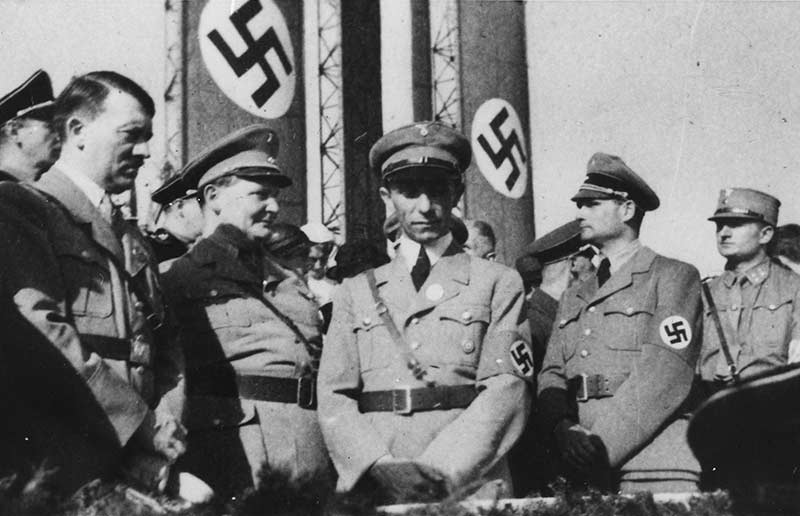
The Nazis are history’s archetypal villains.
The Nazis are undeniably fascinating. Those guys were just such scum. Human history is dirty with tin-pot dictators who coveted something and were willing to commit genocide to obtain it. The Nazis, however, truly industrialized the process.
The death camps were models of efficiency. Over the course of some 12 years, the Nazis systematically murdered 17 million people. That works out to around 1,400 souls per day.
It’s honestly tough to comprehend the scale. That’s like murdering every man, woman and child in New York City twice. Or killing my small Mississippi town 630 times over. What I have always found most intriguing, however, is how Hitler convinced so many people to be complicit with his outrage. One psychopath is a statistical inevitability. A whole culture full of them is a terrifying anomaly. While all Germans obviously didn’t support the Final Solution, you’ve got to admit that plenty of them did.
I would assert that the Germans in 1943 were not really fundamentally different from us today. To believe otherwise would be intrinsically racist, and racism is today’s unforgivable sin.
If we presume that this particular population was no different from that of any other comparably industrialized society, how then did they come to build these massive institutional death factories? They kept shoving human beings into them right up until we forced them to stop. Such a sordid outcome has to be due to some diabolical combination of nature versus nurture.
The Germans were indeed suffering in the lead-up to WWII. A historically proud people, they found themselves economically crushed international pariahs in a world trying desperately to claw its way out of the Great Depression. That this was a self-inflicted wound would be an easy thing to argue. However, theirs was an undeniably sordid lot.
Into this dark state of institutional hopelessness stepped Adolf Hitler — a former Austrian Corporal-turned-failed artist with an undeniable gift for oratory. His MO was timeless. Hitler convinced the German people that their problems were not of their own making. It was the Jews and similar so-called untermenschen who were responsible for their misery. Once things got ramped up, it was a short hop to the death camps. But there had to be something more.
It is one thing to sit in a board room and conjure up these satanic schemes. It is quite another to actually pull the trigger or throw the lever. Heinrich Himmler purportedly visited a death camp but once and was rendered physically ill by the experience. How, therefore, did the Germans find enough people willing to do those ghastly jobs?
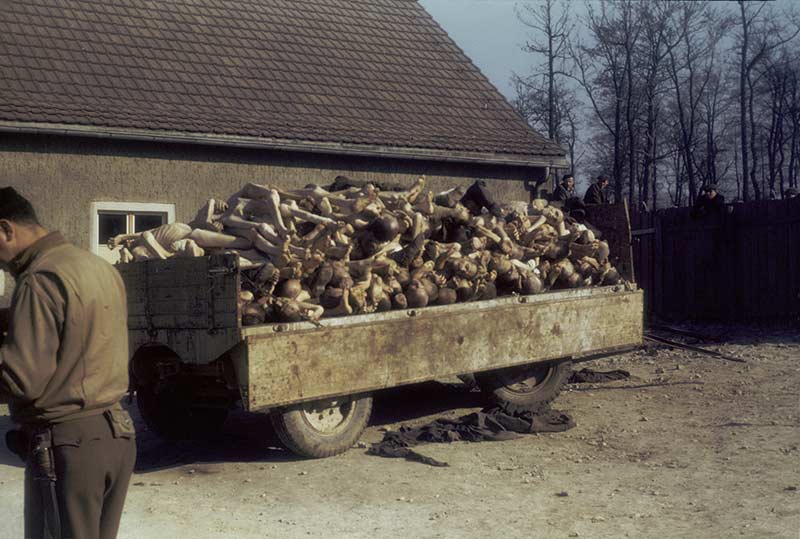
We are not ourselves somehow innately immune to such darkness as this.
It behooves us to be ever vigilant as a result.
I would assert that this was perhaps easier than you might think. I assume that every advanced society has its own ready pool of potential death camp guards. Under the right circumstances, these people are normal citizens, living out their lives in peace as productive members of society. Under the wrong circumstances, they slip into their snazzy black uniforms and torture people to death en masse. You have likely met a few of these people. You might even be married to one.
Think back to the college professor who enjoys toying with your future. Your grade will determine whether your life succeeds or fails. When discussing the problem, you don’t get sympathy, support or understanding. The person across the desk is intoxicated by power and clearly enjoys it. Then there’s the traffic cop who pulls you over and obviously revels in the position of unquestioned authority.
Some institutions stratify people into two categories. You are either one of them or you are everybody else. The military was like that to a degree. Once people are properly stratified, it is not an impossible chore to take it to the next level.
The world is dirty with these people. Positions of authority attract them. Government bureaucrats, politicians, and folks in similar positions of extreme authority are susceptible. You just have to know where to look.
Now make no mistake, the overwhelming majority of law enforcement officers, college professors, and even politicians are not potential homicidal maniacs. They are altruistic good folks just making their way in the world. However, you can indeed see the outliers if you look for them. I personally find it easier to tolerate some of the world’s more abrasive personalities within this context. When I grow inevitably frustrated, I sometimes mutter, “Death camp guard” to myself. I find this cathartic.
Ruminations
The overarching point is this. We are intrinsically no better than the Nazis, the Soviets, or Pol Pot’s Khmer Rouge. Additionally, just because somebody wears a uniform, possesses a laminated ID card, or attended some kind of special school doesn’t make them any more morally laudable than the rest of us. The Founding Fathers knew this. That’s why those brilliant old guys crafted the Bill of Rights as they did, to keep the potential death camp guards peacefully in their place.


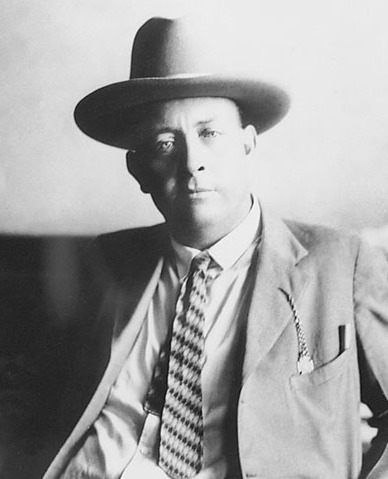
It was one of the most epic manhunts in American history, and it required arguably the greatest lawman of the 20th Century to finally bring it to a successful conclusion—Frank Hamer.
For several years during the Great Depression of the 1930s, Clyde Barrow and his girlfriend Bonnie Parker and their gang terrorized small towns across the Midwest and Southwest. Robbing numerous banks, grocery stores and rural gas stations, they ranged from New Mexico to Indiana and from Minnesota to Louisiana, murdering nine men in the process, six of whom were law enforcement officers.
The bold Barrow Gang seemed to have little trouble evading capture. Following a robbery, they thought nothing of driving 1,000 miles or more at high speeds across multiple state lines, preferring large cars such as the Ford four-door sedan with a powerful V-8 engine under the hood as getaway vehicles. Not surprisingly, they obtained those cars by stealing them.
When confronted by police, who were usually armed only with six-shot .38-caliber service revolvers, Bonnie and Clyde responded with overwhelming firepower: automatic and semi-automatic rifles, shotguns filled with buckshot and .45-caliber semiautomatic handguns. Clyde’s weapon of choice was the BAR (Browning Automatic Rifle), which fired devastating rounds of .30-06 ammunition. Barrow obtained the BARs and high-powered handguns by breaking into National Guard armories.
Ironically, Frank Hamer was no longer a Texas Ranger when he was asked to track down Bonnie and Clyde. Retired after a long and illustrious career with the Rangers in which he had risen to the rank of captain, Hamer was credited with bringing many outlaws to justice in the Lone Star State. He was also known for having killed numerous men in the line of duty—some sources say as many as 53. For his pursuit of Bonnie and Clyde, Hamer would be paid $180 per month and hold the title of Special Investigator.
He began his investigation in early February 1934 by learning as much as he could about the Barrow Gang. “It was necessary for me to make a close study of Barrow’s habits,” Hamer said. “An officer must know the mental habits of the outlaw, how he thinks, and how he will act in different situations.”
Hamer soon learned that Bonnie and Clyde’s life on the run was anything but glamorous, despite all their stolen money. The couple had become so notorious that they often had to lay low by sleeping in their car and bathing in creeks, eating whatever they could find. In addition, the pair argued incessantly, with Clyde occasionally beating Bonnie.
Captain Hamer eventually discovered that the gang ran a somewhat circular route from Dallas, Texas, to Joplin, Missouri, to Shreveport, Louisiana, then back to Dallas. He also learned that a career criminal by the name of Henry Methvin was now occasionally a member of the gang. Hamer reasoned that if he could somehow locate Methvin, Methvin might lead him to Bonnie and Clyde.
The break in the case came when Henry Methvin’s father, Ivy Methvin, came to the realization that it was only a matter of time until his son was captured or killed as a result of running with the Barrow Gang. Ready to make a deal, he let it be known to local law enforcement that he would finger Bonnie and Clyde if his son Henry was given immunity from prosecution. It didn’t take long for Hamer get the word and agree to the arrangement.
The Barrow Gang visited the Ivy Methvin home every few weeks to rest and recuperate for a few days, so officers told Ivy to let them know when Bonnie and Clyde were next due. Hamer finally got that long-awaited phone call on the evening of May 22, 1934; he and five other veteran lawmen immediately sprang into action.
The officers set up an ambush in some pines and brush along a rural road near Gibsland, Louisiana, along the route Bonnie and Clyde were expected to take. Ivy Methvin had been instructed to park his truck along the berm on the far side of the road in front of the hidden officers and remove one of the truck’s wheels. It was hoped that when Bonnie and Clyde approached the truck they would recognize it and stop to see if Ivy needed assistance. It was then that Captain Frank Hamer and his posse would effect the arrest. The plan was to take Bonnie and Clyde alive, if possible.
The ruse worked to perfection…almost. At about 9:15 a.m. on that fateful May morning, as Bonnie and Clyde’s car approached Ivy Methvin’s parked truck, a large, slow-moving logging truck was suddenly seen approaching from the opposite direction. Would the log truck inadvertently pull between the gangsters’ car and the hidden officers, blocking their view and field of fire?
The officers did not allow that to happen. As soon as Bonnie and Clyde’s vehicle was within range the officers opened up with fully-automatic and semi-automatic weapons, pumping a total of 167 bullets and buckshot into Bonnie and Clyde’s car. Bonnie was hit at least 41 times, Clyde 17 or more, the driver’s-side door protecting Clyde somewhat. Both outlaws died instantly. Thus ended the lives of the infamous outlaws Clyde Barrow and Bonnie Parker.
Found in their car was the suspected arsenal of weapons: two BARs, nine Colt semi-automatic pistol, and one revolver—all loaded. Three bags and a box held more than 2,000 rounds of ammunition. On the floor was a valise containing 40 BAR magazines, fully loaded with 20 rounds each. In addition there were 15 car license plates, stolen from various states.
As a result of his relentless, expert detective work, Captain Frank Hamer was hailed as a national hero, and rightly so. However, that national image of the lawman was not to last. In 1967, 12 years after Hamer’s death as a result of a heart attack, Warner Brothers studios in Hollywood released the film Bonnie and Clyde. Starring Warren Beatty as Clyde and Faye Dunaway as Bonnie, the film won two Academy Awards.
Unfortunately, the movie was a highly-fictionalized account of the actual true story, portraying Captain Frank Hamer as the villain. Hamer’s wife, Gladys, was so incensed that she sued Warner Brothers for defamation, invasion of privacy and unauthorized use of Frank Hamer’s name. She received $20,000 from the studios as a settlement, a large sum of money at the time.

David Niven was an esteemed English actor and novelist. During the course of his long and storied acting career, Niven played a leading man, a world explorer, the villain in a Pink Panther movie, a soldier, a sailor, an action hero, and even James Bond in the first Casino Royale. He won the Oscar for Best Actor in 1958 for his role as Major Pollock in Separate Tables.

Today’s crop of actors is, with few exceptions, a bunch of vapid amoral losers. Their standard of accomplishment is running about naked and flying on private jets to A-lister conferences while telling the rest of us what we should be sacrificing to battle climate change. By contrast, David Niven was a real-live warrior.

Born March 1, 1910, at Belgrave mansions, Grosvenor Gardens, London, Niven came from a long line of British soldiers. His father LT William Niven was killed in Turkey during the Gallipoli Campaign serving with the Berkshire Yeomanry in 1915. His maternal grandfather, CPT William Degacher, was killed in 1879 at the Battle of Isandlwana during the Zulu Wars. His great grandfather was LTG James Webber Smith CB.

Two years after the death of his father, Niven’s mother remarried, this time to a prominent British Conservative politician. At age six, young David was remanded to boarding school. His experience there was rocky, predominantly the result of his proclivity toward pranks.

At age 18, Niven impregnated a fifteen-year-old socialite named Margaret Whigham while she was on holiday. Given the puritanical mores of the day this held the potential for great scandal. The young woman’s family arranged for an abortion, but she revered Niven until his death. Whigham was among the VIP guests at his memorial service in London after he died.
Finding Himself

David Niven was educated at the Royal Military College at Sandhurst, graduating in 1930 as a Second Lieutenant in the British Army. This experience was said to be foundational to his developing the refined unflappable bearing that held him in good stead on the stage and screen. However, the peacetime Army did little to hold Niven’s attention.

LT Niven once ditched a lecture on machinegun tactics delivered by a British Major General in favor of a social engagement with a young woman. Niven was subsequently arrested for insubordination but killed a bottle of whisky with Rhoddy Rose, the officer tasked with guarding him. Rose later went on to become a decorated Colonel in the British Army. With Rose’s assistance, Niven escaped out a window and caught a ship for America, resigning his commission via telegram once underway. Upon his arrival in the United States he tried and failed to make a living first selling whisky and then as a rodeo promoter.

After stints in both Mexico and the Caribbean, Niven eventually made his way to Hollywood, securing a role as an extra in such films as Barbary Coast and Mutiny on the Bounty. His designation as an extra was, “Anglo-Saxon Type No. 2,008.” More serious roles followed until, by the late 1930’s, he had become an A-lister leading man. Niven and Errol Flynn shared a house for a time. By 1939 David Niven was on top of his game, having earned top billing for big budget Hollywood productions. Then Hitler invaded Western Europe, and Niven gave it all up to return to England and rejoin the British Army. At the time, David Niven was the only British movie star working in America to do so.
The Humble Warrior

I watched a couple of interviews with David Niven on YouTube in preparation for this project. Despite his refined, almost haughty British demeanor, you cannot help but be struck by the man’s humility when he was elaborating on his military experience. Once during an interview with Dick Cavett he was asked to relate the most perilous experience he had while serving in World War 2. He prefaced his answer that many other men had done much greater things than had he and that he was likely the most terrified man in Europe during the war. However, cutting through the fluff, David Niven was the real freaking deal.

After being recommissioned as a Lieutenant, Niven was assigned to the motor training battalion of the Prince Consort’s Own Rifle Brigade. The British have some of the most adorable unit designations. Dissatisfied with the pace of that assignment, he volunteered for the Commandos. Niven trained at Inverailort House in the Western Highlands, eventually coming to command “A” Squadron of the General Headquarters Liaison Regiment.

The British Commandos during World War 2 were an elite light infantry unit specializing in small unit operations. A modern counterpart might be the US Army Rangers. Their training was notoriously grueling, and they were relied upon to execute the toughest missions, often with minimal support. Commando training and operational experience laid the foundation for much of the world’s modern Special Operations capabilities.

Niven was an acting Lieutenant Colonel by the time he landed on the continent several days after D-Day. He served with a unit called “Phantom” that was tasked with covertly locating and reporting enemy positions in the chaos following Operation Overlord. One of the few war stories that he was willing to relate publicly concerned his being shelled while attempting to cross a bridge between the American 1st and British 2d Armies.
LTC Niven Earns the Iron Cross

LTC Niven was crossing a bridge just as the Germans began dropping artillery on it. He dove out of his jeep and into a nearby foxhole with heavy German artillery fire impacting all around. Amidst the unfettered chaos of the moment he looked up to see John McClain, an old friend and drama critic, hunkered down the next foxhole over.

The Germans obliterated the bridge, but Niven and McClain emerged unscathed. McClain was uniformed as a Lieutenant in the US Navy. After a happy reunion McClain produced a sack filled with German Iron Crosses. The German forces at Cherbourg were cut off and surrounded. Their commander, Generalleutnant von Schlieben, had requested a sackful of Iron Crosses be air dropped into the salient to be distributed to his men in an effort at shoring up their morale. The Luftwaffe attempted to drop the sack from a fighter plane but inadvertently deposited it in McClain’s hole.

These men were in show business, after all, and were ever on the lookout for an opportunity at levity. Niven’s friend formally presented him with a German Iron Cross for bravery right there in their foxhole. Niven said that he affixed the decoration to his shirt underneath his combat jacket and wore it for the rest of the war.

Though Niven was tight-lipped concerning the details of his wartime service, it was undeniably extensive. He was evacuated as part of the British Expeditionary Force at Dunkirk. When once he was preparing his men for an assault he attempted to allay their jitters with,”Look, you chaps only have to do this once. But I’ll have to do it all over again in Hollywood with Errol Flynn!”

During the Battle of the Bulge, Niven was challenged by a nervous American sentry jumpy over stories of Otto Skorzeny’s commandos infiltrating Allied lines in American uniforms. The trigger-happy American asked him who had won the World Series in 1943. Niven responded with, “Haven’t the foggiest idea, but I did co-star with Ginger Rogers in Bachelor Mother.” The sentry let him pass.

Many Hollywood actors had actively avoided combat. When pressed about his wartime service, Niven said this, “Anyone who says a bullet sings past, hums past, flies, pings, or whines past, has never heard one – they go crack!”

Niven ended the war a Lieutenant Colonel and returned to Hollywood. Among his several decorations was the American Legion of Merit. Like most combat veterans of that era, Niven seemed ready to put the war behind him and move on with his life.
The Rest of the Story

Soon after his return to Hollywood, the Niven family was enjoying an evening as guests of Tyrone Power. While playing Sardines, a lights-out version of hide and seek with the accumulated kids, Niven’s wife Primmie took a tumble down some stairs, fractured her skull, and was tragically killed. The distraught man immersed himself in his work to compensate. Prominent roles alongside the likes of Cary Grant, Ginger Rogers, and Shirley Temple followed.

David Niven’s career waxed and waned as is often the custom for movie stars. He played on Broadway opposite Gloria Swanson in Nina as a respite from movies. His fortunes lagged for a time until he was cast as Phileas Fogg in the smash 1956 hit Around the World in 80 Days. Around the World took home Best Picture that year.

David Niven holds the distinction of being the only person ever to win a Best Actor award at a ceremony he was hosting. Appearing on-screen for only 23 minutes in Separate Tables, his performance was also the briefest ever to be afforded this honor. Niven’s Oscar proved to be the key that opened all the doors in Hollywood.

Niven shined in movies like The Guns of Navarone, Death on the Nile, Rough Cut, and Seawolves. While hosting the 46th Academy Awards ceremony in 1974, Niven was interrupted when a naked man went streaking past in the background. Streaking was considered quite the popular pastime in the early 1970’s. His classic off-the-cuff response was, “Isn’t it fascinating to think that probably the only laugh that man will ever get in his life is by stripping off and showing his shortcomings?” David Niven was ever the refined English gentleman.

This quote lends insight to this remarkable man’s worldview, “I will, however, tell you just one thing about the war, my first story and my last. I was asked by some American friends to search out the grave of their son near Bastogne. I found it where they told me I would, but it was among 27,000 others, and I told myself that here, Niven, were 27,000 reasons why you should keep your mouth shut after the war.” What a stud.

David Niven died in 1983 at the age of 73 from complications of Lou Gehrig’s disease. The archetypal English gentleman on the silver screen, Niven was also quite the British patriot when it counted.

This is Lyudmila Pavlichenko. Soviet Sniper During
World War II. Credited With 309 Kills, She Is Regarded
As The Most Successful Female Sniper In History, 1940
She became one of 2,000 female snipers in the Red Army, of whom about 500 survived the war.
.jpg)
Pavlichenko (center) with Justice Robert Jackson (left) and US First Lady Eleanor Roosevelt in Washington DC in September 1942. Thanks Wiki! Grumpy
I glanced at my buzzing phone between crises at work. There was a kid with an ear infection screaming in Room 2, and the elderly man with chest pain in 3 was very likely having a heart attack. The lady in 4 was sobbing hysterically. Her husband of three decades had moved out the night before, and she had no place else to turn. It was, in short, a fairly typical day at the office.
The message read, “Can I borrow a .22 rifle to chase squirrels? My old hunting buddy and I got access to a nice piece of woods, and we’d like to go walk around a bit. Dad.”

Everybody has a father. I am blessed with a dad.
Role Model, Inspiration, Hero
My father is an indispensable part of my success today. He and mom sacrificed when I was a kid and loved me even when I was unlovely. He lived the example of the Southern Christian gentleman and showed me what it meant to be a man. I never once heard him curse. If everybody had a dad like mine the planet would be a much more peaceful, respectful and productive place.
Dad was a football star in college and even earned a spread in Sports Illustrated. I take after my mom and apparently didn’t inherit any of that. He could have handily beat up everybody else’s dad. However, short of protecting his family I could not imagine anything provoking him to violence.
He and I split the cost of my first Daisy BB gun when I was 7. He gave me my first .22 rifle and 12-gauge shotgun. He taught me the basics of rifle marksmanship and wing shooting as well as how to talk to turkeys.
By the time I left for college, 13 wild turkeys had fallen to my Browning Auto-5 while hunting at his side. Christmas and Thanksgiving dinners were seldom without one. The musty sweet smell of the Army-issue field jacket he wore on hunting trips when I was a kid is burned indelibly into my memory. He would undoubtedly push back at the characterization, but if I took a clean piece of paper and designed the perfect dad he would look like mine.
Dad already has a splendid .22 rifle—a gorgeous Winchester 63 with a tubular magazine in the stock he got for Christmas when he was a kid. The gun shot straight enough for my mom to use it to clip sprigs of mistletoe out of towering Mississippi Delta oak trees for use as Christmas decorations back in the day. A closely held family secret was my mom was always the best shot in the family.
I borrowed his rifle for an article a couple of years ago, and, oddly, it never found its way back home. Dad could have just admonished me to give him his gun back. Instead, he just asked to scrounge one of mine. That’s the kind of guy he is.
After a literal lifetime spent squeezing triggers for fun and money I have tasted both the good stuff and the bad. However, this time was special. Here was my excuse to build my dad the ultimate Information Age counter-squirrel rifle.

A sound suppressed Ruger 10/22 rifle is the ideal Information Age counter-squirrel weapon. The stainless steel
construction combined with the indestructible carbon fiber stock from Archangel make the gun essentially weatherproof.
Foundation
Naturally the chassis is a Ruger 10/22. This classic, simple, ubiquitous self-loading .22 rifle is reliable and customizable unlike anything else on the market. It is also surprisingly inexpensive. Ruger makes so many of them mass production keeps the costs down. Spare parts and aftermarket cool-guy stuff are everywhere. In my dad’s competent hands, the Ruger 10/22 would be pure death to tree-dwelling rodents.
Standard Ruger 10/22 stocks are not bad, but this is for my dad. I want it to be perfect, so I looked to Archangel. Archangel produces a bewildering array of indestructible carbon fiber aftermarket stocks for an equally bewildering array of disparate weapons. For the old standby 10/22, their options run the gamut. They can transform your humble 10/22 into the spitting image of a German HK G36 combat rifle or set you up with a heavy target stock sporting multiple adjustments.
As this rifle was to be toted operationally in the field I opted for the midrange version. This stock incorporates a handy thumbwheel adjustment for length of pull yet remains sufficiently lightweight for easy carry. The stock free floats the barrel for accuracy, is festooned with sling sockets, and also includes a handy carrying compartment for a few spare .22 rounds or some emergency M&M’s.
I mounted glass on the top without a fuss. Neither Dad nor I have quite the visual acuity we once did, and a proper optical sight sure makes it easier to drop rounds on target. All Ruger 10/22 rifles come equipped with a sturdy sight rail, and the receivers are drilled and tapped from the factory.
Magazines range from standard helical feed 10-rounders up to 50-round drums with banana mags of various capacities liberally interspersed. New 10/22 rifles come standard with extended magazine release levers. Modern 10/22 fire control groups and barrel bands are polymer, but you will not wear out these components.
In a timeless tribute to the innate toxicity of testosterone, my dad and his best friend, both well into their 70’s, were recently hanging out at their hunting camp when an armadillo had the poor grace to make an unscheduled appearance. Dad produced his Ruger .22 Magnum revolver and, 6 rounds later, both my dad and his buddy were well and truly deafened. The armadillo, naturally, escaped unscathed. After some vigorous admonishment by his physician son, Dad now keeps a pair of muffs in his pickup truck.
A lifetime’s exposure to gunfire and chainsaws has already taken a toll on Dad’s hearing. You only get so much, and every time you are exposed to excessive noise you lose a little. It is imperative you safeguard every bit of it.
Hearing protection can be tough to manage when in the field hunting, particularly when there are multiple hunters involved. Sound suppressors are the obvious answer. Regrettably, however, civilian ownership requires the same onerous paperwork and $200 transfer tax fully automatic machineguns and grenade launchers might.
Sound suppressors should really be sold over the counter in blister packs at your local Shop-n-Grab. In America you are statistically at greater risk of succumbing to a shark attack or toothpick injury than a criminal assault with a suppressed weapon. (No kidding. I looked it up.) The only place Bad Guys use sound suppressors is on the screen at your local movie theater. However, there is a way to optimize this labyrinthine process.
If you transfer a sound suppressor to yourself as an individual then no one else may legally possess the item. However, if you form a trust it is possible to include more than one person as trustees. Details are available online, and the process is not particularly difficult or expensive. As such, I created a trust for both Dad and me allowing us to share legal possession of a .22 caliber can. The processing time takes about forever, but the resulting convenience makes the wait worthwhile.

The AATS1022 stock from Archangel sports an easily adjustable length of pull to accommodate different shooters.
The stock is functional and lightweight for optimal use in the field.
Practical Tactical
The resulting optimized squirrel rifle will easily keep its rounds within a tennis ball out to 50 meters or more in Dad’s capable hands. He used his Winchester 63 to drop swamp rabbits on the run when I was a kid. Dad’s the one who taught me to shoot, after all.
When stoked with subsonic ammo Dad’s squirrel gun is easy on the ears and even allows multiple shots at the same rat. With the can in place the bullet may agitate the squirrel, but the source of the shot is all but impossible to ascertain. The rifle is lightweight enough to tote long distances, and the Archangel stock allows the gun to be adjusted to fit your particular anatomy. While not just dirt cheap, this rig still remains within the means of most American shooters.
Solutions
There is indeed a great deal wrong with our nation today. Among our many resplendent social ills, one of our greatest shortcomings is how few American men these days are signing up to be good old-fashioned dads. The job is grueling and the pay sucks, but the unfiltered adoration from a job well done makes up for the suffering.
Dad invested his life in me. As a result, I understood the value of hard work, discipline, good citizenship, and character in a world rapidly becoming bereft of same. Everybody has a father. Lamentably, fewer modern Americans have a real dad. Dad, enjoy your new rifle. The tree rats won’t stand a chance.
Archangel
43 North 48th Avenue
Phoenix, AZ 85043
(800) 438-2547
https://promagindustries.com/archangel/
Sturm, Ruger & Co.
411 Sunapee Street
Newport, NH 03773
(336) 949-5200
https://www.ruger.com/