Category: Hard Nosed Folks Both Good & Bad
Mike Thornton

Michael Thornton is a hardcore 30 year-veteran of the United States Navy, a founding member of SEAL Team Six, and one of only three SEALs to receive the Medal of Honor in ‘Nam – an honor he earned in blood on Halloween 1972, when he almost single-handedly battled through enemy territory against a swarming horde of enemy soldiers, charged through a naval artillery bombardment to save his commanding officer from certain death, and then swam three hours through North Vietnamese waters with two wounded guys hanging off his back and a half-dozen chunks of grenade shrapnel lodged in various parts of his abdomen.
If that’s not badass enough for you, then clearly you’ve come to the wrong website.

Mike Thornton was born March 23, 1949 in Greenville, South Carolina. He joined the U.S. Navy and served as a Gunner’s Mate on a couple destroyers, but in 1968 he decided to try his hand at making the Navy’s elite Underwater Demolitions Team – the original precursor to the SEALs. Training was brutal, exhausting, and unbelievably intense – of the 129 men who signed up for UDT Class 49, only 16 graduated and were accepted into the program.
One of those 16 was Mike Thornton. Not long after completing one of the most brutal military training courses on the face of the planet, he was assigned to SEAL Team One and deployed to the Republic of Vietnam at the height of the Vietnam War.
Thornton arrived in-country in 1969 and spent the next three years doing a wide variety of super-badass over-the-top Navy SEALs stuff. He gathered intel on enemy positions, scouted deep behind enemy lines on daring covert missions, captured prisoners when he could, battled enemy forces on the reg, and basically did all that cool Black Ops classified SEAL stuff that was presumably so hardcore and top-secret classified that we’ll likely never really know the full details of all of it.
Team One was at the heart of many of America’s Special Operations in ‘Nam, and in the fall of 1972 this was still very much the case. In October, 23 year-old Petty Officer Mike Thornton was sent on a mission to the Qua Viet Naval Base in Quan Tri Province on a dangerous mission to gather intel on some NVA positions, capture a few prisoners, and then somehow extract back to friendly lines. Thornton’s team would consist of himself, three South Vietnamese Special Forces operators, and the unit commander, Lieutenant Thomas Norris, a hardcore Medal of Honor recipient Navy SEAL who was already a legend among the SEALs thanks to a wild mission he’d undertaken a few months earlier when he went undercover deep into enemy territory to rescue a downed American pilot. Facing extreme danger, and surrounded constantly by a massive force of NVA soldiers, Norris succeeded in extracting not only the pilot, but also the crew of a team that had already gone in to get the pilot and ended up getting pinned down. The mission was so hardcore that they made a movie out of it – it’s called Bat*21, and Norris was so tough that they got Gene Hackman to play him in the movie.
Needless to say, this was not a crew of guys you wanted to face in a dark alley late at night.

The SEALs deployed first by sailing an ordinary-looking Vietnamese junk boat up a river late at night, then by boarding a small rubber boat and infiltrating enemy lines under the cover of darkness. Well, unfortunately, the mission started to go sideways right away – the map wasn’t really lining up with what was supposed to be there, and it didn’t take long for Norris and Thornton to realize that they’d landed a little too far into enemy terrirotyr. So now, instead of scouting temporary enemy fortifications that had been thrown up days before, these guys were now straight in the middle of a hardened network of NVA bunkers that had been designed years ago to repel full-scale assaults by massive formations of enemy troops and armor.
It wasn’t really the kind of place you wanted to be walking around with an American flag patch on your shoulder.
So, ok, the SEALs were off-course, and were now wayyyy deeper in enemy territory then they would have hoped, but a mission is a mission, and these guys were pros. They immediately went to work – noting bunker positions, troop concentrations, fortifications, vehicles, and radio towers. They Splinter Celled their way silently and stealthily through the heart of an enemy naval base first by boat, then on foot, collecting tons of valuable intel, all somehow without being detected by the hundreds of hardened veteran NVA troops that now surrounded them from every direction.
Then, over one particular ridgeline, the SEALs saw a couple of NVA guards standing nearby. They were far enough away from the main base that they could potentially have been grabbed and taken prisoner without alerting the base, so the SEAL team moved in to try and take them into custody. The two South Vietnamese SEALs grabbed one of the guys, but they weren’t quick enough to grab the second guy – that dude bolted for it and started screaming his damn head off for the NVA to sound the alarm.
Thornton ran him down and capped him with a well-placed pistol round, but it was already too late – the SEAL stopped dead in his tracks as he heard the sound of alarm sirens blaring from a nearby camp.

Thornton ran for it. By the time he’d reached the spot where his buddies were waiting for him, he was already being run down by a group of roughly fifty NVA soldiers, who immediately started spraying AK-47 gunfire into the jungle all around him.
One of the South Vietnamese SEALs launched a LAW rocket into the middle of the attacking forces, hoping that the resulting explosion would buy the SEAL team a little time to take off and run to the extraction point.
The SEALs were now in a fight for their lives. They had to get back to their extraction point before they were completely surrounded and overrun by a force that massively outnumbered them.
Fighting through the pitch darkness, facing down presumably hundreds of enemy soldiers, the five Navy SEALs fought the way you’d expect the most badass military force in the world to fight. They fired, repositioned, fired again, and launched grenades and LAW rockets, constantly changing position in an attempt to confuse the enemy about how many guys they were facing. The SEALs had the advantage of surprise, and concealment, and the NVA couldn’t just charge in there after them because they couldn’t quite figure out how many guys they were actually facing. So, through the darkness of the Vietnamese jungle, the Navy SEALs spent the next four hours (!!) battling their way back towards the water.

Bullets were zipping through the jungle from every direction as the SEALs made their escape. Five men against hundreds. As his ammunition began to run out, Norris (who took up the rear of the SEAL position) ditched his M-16 and took an AK-47 off a dead enemy soldier, using captured ammo to keep up a steady hail of fire back towards the ever-closing NVA troops. At the head of the column, Mike Thornton raced through pitch-black jungle navigating his team to the extract point. As dawn began to break and the SEALs approached the beach, Norris got on his radio and called in for two Destroyers to come in and lay down some covering fire. Shortly after, though, he received a report that heavy fire from fortified NVA shore guns had damaged both Destroyers and drove them back from the coast. A cruiser was inbound to help, but for now the SEALs were on their own.
Thornton continued to the extraction, firing his M-16 in all directions, until suddenly an enemy grenade landed dangerously close to him. It exploded, ripping shrapnel through the SEAL. White-hot shards of splintered steel embedded in his back in six different places, as the concussive force of the blast sent him flying hard into the ground. With his ears ringing, and his back screaming in pain, Thornton still held on to his weapon, and rolled over onto his back just in time to see four NVA troops running up onto the ridgeline to finish the job – despite every muscle in his body screaming in pain, Thornton still somehow had the calmness and unimaginable skill to take out all four of those guys before they could spray him full of 7.62.
One of the South Vietnamese SEALs rushed over to pick Thornton up, and the SEAL asked what had happened to Tom Norris. The SEAL responded, “He’s gone. Let’s go”. The guy said that Norris’s position had been overrun, he was shot in the head and killed, and the rest of the team had to fall back. He urged Thornton to get to the beach to extract, because the window to get out of this alive was very rapidly closing, and a US Cruiser was already maneuvering into position to lay down some cover fire.
But Navy SEALs don’t leave a man behind. And Thornton wasn’t about to start now.

With AK-47 fire zipping around him from every direction, Michael Thornton ran 400 yards through a hail of bullets to reach the body of his good friend. Four NVA troops were standing over the fallen SEAL, but Thornton killed them with his rifle, screaming with rage, and finally fell to his knees at his friend’s side. Norris was bleeding badly from a gunshot to the head, but Thornton wasn’t about to leave that guy behind. With enemy troops ripping shots past his head, and blood pouring from grenade wounds in his back, Mike Thornton threw Tom Norris on his shoulders and started to make a run back for the beach.
It was at this point that the U.S. Navy cruiser reached firing position. And the coordinates the firing teams had were the ones that Tom Norris had given them – at a time when Norris thought he wasn’t going to get out of this fight alive.
The shell landed pretty much right where Norris’s body had been. The explosion blew Thornton 20 feet through the air, slamming him hard to the beach, ringing his ears, and blurring his vision. As he lie on the ground, he heard something amazing. A familiar voice, quiet and fading, but clearly audible even among the gunfire and artillery.
“Mike, buddy.”
Tom Norris was alive.

Surging with adrenaline, Mike Thornton jumped back to his feet, threw Norris on his back, and started running to the shore. With bullets, mortars, and naval artillery chewing up the beach and the trees around him, Thornton ran though the fire, finally reaching the shore, where one of the Vietnamese SEALs also lay wounded from a gunshot to the back.
Thornton grabbed that guy too. Then he jumped in the water, inflated his life vest, and proceeded to swim through salt water with six grenade wounds in his back for four hours while dragging two seriously wounded men.
The American ship that had been sent to extract the SEALs was preparing to go home, convinced that nobody could have survived that mission, when suddenly they saw a dude in the water shooting his rifle in the air trying to get their attention. It was Mike Thornton.
Every member of the mission survived.
When Thornton received his Medal of Honor in 1973, Tom Norris was still recovering in the hospital, and they weren’t about to let him leave just to attend a medal ceremony. So, the day of the ceremony, Thornton went to the hospital, put Norris in a wheelchair, and snuck him out the back door so he could attend.
After Vietnam, Mike Thornton would go on to be a BUD/S instructor in Coronado, where he would train future Navy SEALs, as well as members of the British Royal Marines’ badass Special Boat Service. He was a founding member of SEAL Team Six in 1980, and retired as a Lieutenant in 1992. Nowadays there’s a really badass statue of his rescue mission standing outside the SEAL museum in Ft. Pierce, Florida.

Links:
Mike-Thornton.com
NavySEALs.com
Achievement.org
Defense Media Network
Wikipedia
Suggested Reading:
Collier, Peter and Nick Del Calzo. Medal of Honor. New York: Artisan, 2006.
Dockery, Kevin. SEALs in Action. New York: Avon Books, 1991.
Norris, Tom and Mike Thornton. By Honor Bound. New York: St. Martin’s Press, 2016.
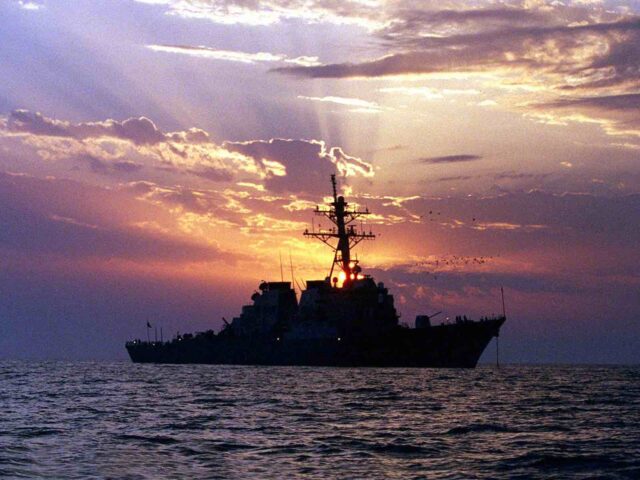
Iranian-backed Houthi rebels fired missiles Wednesday at the U.S.S. Carney off the coast of Yemen, according to news reports.
ABC News reported:
A U.S. Navy destroyer has been involved in a security incident in the Red Sea, a U.S. official said Thursday.
The USS Carney encountered multiple missiles launched by Houthis in Yemen and fired missiles in response, the official said.
…
The Houthi missiles were not thought to have been fired at the ship.
CNN added:
A US Navy warship operating in the Middle East intercepted multiple projectiles near the coast of Yemen on Thursday, two US officials told CNN.
One of the officials said the missiles were fired by Iranian-backed Houthi militants, who are engaged in an ongoing conflict in Yemen. Approximately 2-3 missiles were intercepted, according to the second official.
The officials said it was unclear what the missiles were targeting. It’s possible the missiles were fired at the USS Carney or launched towards another target.
A Pentagon briefing is expected Thursday afternoon.
This story is developing.
—————————————————————————————–I am getting the feeling that A. Not a lot of Folks are scared of us. & B. That somebody is just spoiling for a serious fight. God help us all!! Grumpy
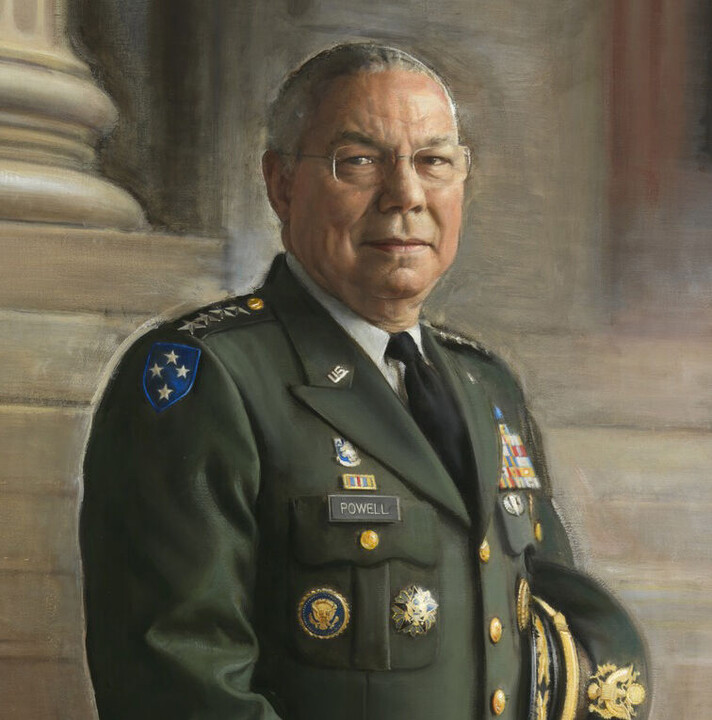
“Leadership is the art of accomplishing more than the science of management says is possible.”
This is one of many quotes attributed to legendary public statesman and former Secretary of State Colin Powell.
Since his retirement from public office in 2004, Powell has spent much of his time sharing his leadership knowledge with the business community. In his 2012 book, It Worked For Me, Powell attributes his success to hard work, straight talk, respect for others, and thoughtful analysis.
At the heart of the book are Powell’s “13 Rules” — ideas that he gathered over the years that formed the basis of his leadership principals.
Powell’s 13 Rules are listed below. They are full of emotional intelligence and wisdom for any leader.
1. It Ain’t as Bad as You Think! It Will Look Better in the Morning. Leaving the office at night with a winning attitude affects more than you alone; it conveys that attitude to your followers.
2. Get Mad Then Get Over It. Instead of letting anger destroy you, use it to make constructive change.
3. Avoid Having Your Ego so Close to your Position that When Your Position Falls, Your Ego Goes With It. Keep your ego in check, and know that you can lead from wherever you are.
4. It Can be Done. Leaders make things happen. If one approach doesn’t work, find another.
5. Be Careful What You Choose. You May Get It. Your team will have to live with your choices, so don’t rush.
6. Don’t Let Adverse Facts Stand in the Way of a Good Decision. Superb leadership is often a matter of superb instinct. When faced with a tough decision, use the time available to gather information that will inform your instinct.
7. You Can’t Make Someone Else’s Choices. You Shouldn’t Let Someone Else Make Yours. While good leaders listen and consider all perspectives, they ultimately make their own decisions. Accept your good decisions. Learn from your mistakes.
8. Check Small Things. Followers live in the world of small things. Find ways to get visibility into that world.
9. Share Credit. People need recognition and a sense of worth as much as they need food and water.
10. Remain calm. Be kind. Few people make sound or sustainable decisions in an atmosphere of chaos. Establish a calm zone while maintaining a sense of urgency.
11. Have a Vision. Be Demanding. Followers need to know where their leaders are taking them and for what purpose. To achieve the purpose, set demanding standards and make sure they are met.
12. Don’t take counsel of your fears or naysayers. Successful organizations are not built by cowards or cynics.
13. Perpetual optimism is a force multiplier. If you believe and have prepared your followers, your followers will believe.

Colin Powell’s rules are short but powerful. Use them as a reminder to manage your emotions, model the behavior you want from others, and lead your team through adversity.
Rest in Eternal Peace, General!
Thank you for your service to the United States, the world, and Mankind.

The world is a better place for you having been in it for 84 years.
Godspeed!
 Charles Carpenter was a stone cold warrior in a silly little plane.
Audie Murphy stood all of five foot five and was rejected by both the US Marines and the Airborne. Once he went to war, however, that guy was a force of nature. Murphy ultimately became the most highly decorated US soldier in American history.
In many ways, Charles Carpenter was also a natural warrior. Carpenter enlisted in the Army in 1942 for flight training. The Army Air Corps then encompassed all land-based aviation assets. Where many of Carpenter’s counterparts flew such hot rods as the P38 Lightning, P47 Thunderbolt, or B17 Flying Fortress, Charles Carpenter got the L-4H.
The Plane
The L-4H was a very slightly militarized version of the civilian Piper J-3 Cub. The L-4H featured a 65-hp Continental A-65-8 air-cooled, horizontally-opposed four-cylinder engine and a top speed of 87 mph. The cruise was a mere 75 mph. With a maximum takeoff weight of 1,220 pounds that left the unarmed L-4H with a useful load of some 455 pounds. Even with a skinny pilot, there wasn’t a lot left over. The Army called the plane the Grasshopper.
The L-4H was a pretty sad excuse for a combat airplane. The fuselage was light welded steel covered in fabric. There was just enough space for two crewmen seated in tandem. The fixed-pitch prop was made from wood.
The L-4H was a reconnaissance aircraft pure and simple. Its mission was to zip ahead of American armored columns at low levels and report enemy troop dispositions. Grasshopper pilots also trained as artillery spotters. Early on German forces assiduously avoided engaging the Grasshoppers for fear of drawing undue attention from Allied artillery or close air support. Charles Carpenter was having none of that.
The Mad Major
By 1944, Carpenter had been promoted to Major and was assigned to the 1st Bombardment Division in France. He supported Patton’s Third Army in its frenetic dash across France. By the time the Allies got a foothold on the continent, Carpenter was ready to fight.
By stripping out the radios and as much ancillary equipment as possible, Carpenter could carry about 230 pounds’ worth of ordnance. An M1A1 Bazooka weighs 13.26 pounds unloaded. Carpenter found that he could strap three of these simple rocket launchers underneath each wing of his Grasshopper and still get airborne. The Nazis were soon to discover that Charles Carpenter’s little insect of a plane packed a fearsome sting.
The Weapon

The Bazooka was a recoilless antitank rocket launcher that revolutionized Infantry anti-armor capabilities. The name Bazooka was drawn from a musical instrument popularized by the comedian Bob Burns in the 1930s. The weapon was the original brainchild of the world’s first true rocket scientist, Robert Goddard.
Working under government contract during the First World War, Goddard and his coworker Dr. Clarence Hickman were tasked with weaponizing early rocket technology. They successfully demonstrated their rocket to the US Army Signal Corps at Aberdeen Proving Ground on November 6, 1918, five days before the armistice. Goddard developed tuberculosis and was forced to withdraw from the project that ultimately led to the Bazooka. His comrade Dr. Hickman subsequently completed the undertaking in the early 1940s.
Shaped charge technology dates back to the 18th century. An Austrian mining engineer named Franz Xaver von Baader first discovered the phenomenon wherein blasting powder might be packed into a cone and used to focus the energy of the blast onto a single point. An American chemist named Charles Munroe further explored the practical applications of this effect in the 1880s. 
A shaped charge is a form of explosive lens wherein the kinetic energy from a high explosive charge is focused onto a single point. This allows a relatively lightweight warhead to punch through a substantial thickness of armor plate. The armor-piercing capability of a shaped charge is generally about seven times its diameter. 
By the late 1930s, American ordnance engineers had developed the M10 antitank grenade. This 3.5-pound monster would punch through 60mm of steel armor but was really too heavy to be thrown. Rifle grenade versions were developed for the Infantry rifles of the day, but they were still relatively inaccurate.
In 1942 Colonel Leslie Skinner tasked LT Edward Uhl with developing an effective delivery system that could get the M10 shaped charge grenade onto the side of a Nazi tank without killing the firer. Uhl created a modest rocket to drive the round easily enough but was struggling to find a way to safely launch the thing. He later said, “I was walking by this scrap pile, and there was a tube that happened to be the same size as the grenade that we were turning into a rocket. I said, ‘That’s the answer!’ Put the tube on a soldier’s shoulder with the rocket inside, and away it goes.” The end result was the M1 Bazooka.
M1 and improved M1A1 Bazookas were powered by batteries held inside their wooden shoulder rests. The M6 rockets they fired were notoriously unreliable. The later M6A1 versions were markedly more effective. Subsequent M9 and M9A1 Bazookas were powered by a magneto system contained within the firing module and did not require separate batteries. 
The Germans captured several bazookas intact during the fighting in North Africa and reverse engineered the weapon to form the Panzerschreck (literally “Tank’s Bane” or “Tank Fright”). This rocket launcher featured a larger, more capable 8.8cm warhead and a built-in blast shield. The Japanese developed a similar weapon called the Type 4 AT Rocket Launcher that fired a 70mm projectile.
Rosie the Rocketer

Major Carpenter christened his spindly mount “Rosie the Rocketer” after “Rosie the Riveter” and adorned the side of the fuselage accordingly. In the first months after the Normandy invasion, Carpenter disabled four tanks and a German armored car. Such audacity gained Major Carpenter a fair amount of notoriety. During one interview he stated that his idea of fighting a war was to, “Attack, attack, and attack again.” The media came to refer to Carpenter as “The Mad Major” or “Bazooka Charlie.”
Carpenter was once on the ground at the front scouting landing areas for his Grasshopper when he was attacked by German Infantry. Carpenter leapt atop a nearby Sherman and engaged the Germans with the M2 .50-caliber machinegun. During the course of the chaotic battle that followed Carpenter’s tank inadvertently engaged a friendly Sherman. Though apparently no one was hurt, the Sherman, a bulldozer variant, was disabled.
Major Carpenter somehow bore responsibility for this sordid event and was threatened with court-martial. General Patton got wind of it and dismissed the charges out of hand, awarding Major Carpenter the Silver Star instead. Patton was quoted as having said that Carpenter was the type of fighter he wanted in his Army.
Major Carpenter was ultimately credited with immobilizing a total of fourteen German tanks along with a variety of lesser armored vehicles. Of these, six tanks were completely destroyed, having been penetrated from above through their relatively thin roof armor. Two of the tanks he destroyed were PzKpfw Mk VI Tiger I’s. Two of those immobilized were Mark V Panthers.

In an August 1944 letter home Carpenter wrote, “Lately I have been taking quite a few chances but my luck has been marvelous. Yesterday I got a bullet hole through the wing and hit a church steeple with one wheel.”
The Rest of the Story

In 1945 Major Carpenter was diagnosed with Hodgkin’s Disease and told that he had less than two years to live. He was promoted, medically discharged, and returned to Urbana, Illinois, where he worked as a high school history teacher. Once again defying the odds he lived on until 1966, dying at the age of 53.
Carpenter’s L-4H was abandoned in Europe after the war. The plane changed hands a couple of times and was ultimately the second post-war civil aircraft registered in Austria. Refitted with a more powerful engine and German instruments this old military airplane was painted yellow and used as a tow plane for sport gliders. The machine eventually ended up as a static display at the Osterreichisches Luftfahrtmuseum at Graz Airport in Austria.
In 2017 an aviation enthusiast named Joe Schiel was searching military aircraft serial numbers on the Internet. He serendipitously discovered that the little yellow cub at the Graz Airport was actually the very airplane “Bazooka Charlie” Carpenter had used to destroy all that German armor back during WW2. He contacted Rob Collings, one of the foremost warbird collectors in the US. Collings worked a deal, and the plane was shipped to Oregon for restoration.
Colin Powers, the restoration manager for the Evergreen Aviation and Space Museum did the work. He was surprised by what he found once he got the little plane’s skin off.

“One bullet had passed from the bottom through the leading edge of the aileron into the wing, went through the steel-plate hinge for the aileron, tore a big chunk of metal out of one of the ribs, and exited out through the top of the wing…I’ll just put a patch where it exited.”
Powers found a double patch on the front strut from combat damage as well. Once the restoration was complete Charles Carpenter’s granddaughter, herself a graphic designer, painstakingly reproduced the “Rosie the Rocketer” nose art. Now in flyable condition, “Rosie the Rocketer” can be seen at the Collings Foundation Museum in Massachusetts today.
Collings Foundation
Address: 568 Main St, Hudson, MA 01749