Categories
Gun Info for Rookies

HOW TO PROPERLY FIRE A GUN

Now that we know a little about gun sights and how to use them, we should discuss the rest of the steps of firing a shot and what your resulting group on paper will tell you. Combined with the first article on sight picture, and a planned article on sight adjustment, this will explain the fundamentals of shooting accurately at close distances. This, in turn, will lead to discussion of shooting positions, and, ultimately, ballistics.

Respiration and its effects on accuracy

One of the more important things to understand about accurate shooting, whether it be pistols or rifles, is that you cannot hold sights on target continuously. Two things prevent you from doing that, and those are that your muscles get tired, and your breathing will mess you up.
I teach rifle shooting as one of my hobbies, and, paradoxically, it is often the young guys, in shape, who also think they know how to shoot, that end up getting out shot by their less physically strong and less experienced wives, girlfriends, or kids. The dudes try to muscle the rifle onto the target, instead of using something commonly called natural point of aim, which abbreviates to NPOA.
Although the discussion is incomplete without explaining shooting positions in depth, the idea behind NPOA is, when you are in a shooting position (prone, seated, or standing), the rifle will point somewhere naturally. This is most easily seen if you shoulder a rifle, and close your eyes. Breathe a couple times, then open them, and notice that the rifle is NOT where you left it on the target.

Establishing NPOA

The novice will quickly move the rifle with his arms where it needs to go, and wonder why his groups are inconsistent. This is because muscle control is not precise, especially over time as you get tired. The trick is to not move your arms, but to move your body. It is best explained by a question posed to a WWII fighter pilot of “how do you aim the guns?” by a young boy. The answer: “You don’t aim the guns; you aim the plane.” The rifle and your body is a unit, move them together to stay reliably on target.
The second concept is breathing. Every marksmanship coach has their thing; the programs I teach come from the old Army shooting courses, which is now only done by the Marine Corps. The key concept here is repeatability. You can’t hold your breath, low oxygen will ruin your shooting, and the act of breathing will move your sights as your diaphragm moves. You want to fire at the end of a breath. Breath normally, exhale normally and completely, and squeeze the trigger at the end of the exhalation, during that 3 to 5 second window before you need to breathe again.

This is called “Rifleman’s Cadence” and is what “rapid fire” actually is. Once you have your position and NPOA dialed in, you should be able to fire one accurate shot (later, more) per breath, on a target, at any range, and continue until you run out of ammo, or need to switch targets.

Focus

Riflery is a Zen sport. You lie on the ground, control your breathing, and get into the zone where it’s just you, your weapon, and your target.  You must have two kinds of focus here, with the first being mental. Don’t worry about other things, concentrate on good shooting.

Even if Massad Ayoob himself uncorks a compact .44 in the lane next to you, focus on YOUR shooting.

The second focus is visual. If you are shooting an iron sighted rifle, you need to focus your eye on the front sight. Not the back sight, and not the target. The back sight exists to frame the front sight, and the target is there, and you can’t move it. The only thing you can move is the front sight, and that is what you should focus your eyes upon.

The target is blurry, the rear sight is blurry, but the front sight is in focus. This works for pistols and rifles.

Scopes are both harder and easier. Sometimes, you can focus on both the crosshair and the target, but you need to prioritize the crosshair. Often, you can see your bullet holes, and you can over exaggerate your sight movement at high power, so your target shooting should be done at lowest power on a scope so you don’t chase your bullet holes of previous shots, or get overly concerned with the sights movement and “fuss the shot.”

Trigger control

Most people, misinformed by Hollywood, think that you yank the trigger and it will result in an accurate shot. There are only two times I can think of to punch a trigger, with the first being wing shooting (clay pigeons and skeet and dove hunting, etc) which is a totally different style of shooting, and the second being close range shooting where you are under a time crunch to send lead down range, and a little bit of disruption to your aim by punching the trigger can be afforded. However, many excellent shooters can shoot very fast with good trigger control.
Triggers are a mixed bag, and most stock triggers on budget rifles are bad, but that shouldn’t stop anyone from shooting poorly when they know what they are doing. There are a few terms we should know about triggers. Take-up is the slack in the trigger from its at-rest position until you feel decent resistance.

If it’s a one stage trigger, that resistance after the take-up will “break” at a certain force (usually measured in pounds over here, kilograms elsewhere), and the sear will be released and the hammer or striker will actuate. If it’s a two stage trigger, there will be a lighter force first section, and a stronger second section before the trigger breaks. I tend to think single stage triggers are more for match shooting, and two stage triggers are more for duty/combat work.
Overtravel is when a trigger breaks, but keeps going past that spot, and it can be adjusted out with stop screws and internal work. Sear reset is when you release the trigger after the shot, and the sear resets itself to shoot again. (Full auto guns work differently in that area.) Creep is when you put the amount of force needed to break the trigger on it, but it moves further before breaking, instead of breaking “like a glass rod.” Lastly, roughness in the mechanism is often compared to being gritty.
When firing, you want to press the trigger through its take-up before you fire, and apply some force (either enough to get to the second stage or not enough to break the first stage if it’s a single stage) and keep it there. As you cycle your breath, and the sights come back on the target, apply the last amount of force and break the shot.

Once the shot goes off, you must do two things. Firstly, you must follow through. A golfer does not stop his swing after he hits the ball, he goes all the way. You should not reflexively let go of the trigger, either, for two reasons. The first is that it can actually disrupt your aim, even though the bullet is mostly gone down the barrel, and the second is that you do not need to fully release the trigger to shoot again. If you hold the trigger down after a shot, and release it slowly, the gun will make a click when you reset the sear, and that’s all you need to do. This saves you time on the next shots.
The second thing you must do is call your shot. You must know where the sights are when the shot goes off, and you must be able to call fliers, which are off target shots due to bad aim. If you know you threw a flier out of a group of five, and know it went high left, when you go down to the target, you know to discount the one high and left, knowing that it’s not the gun that did that.

Shot group analysis

In the first article, we covered sight alignment and sight picture. We just discussed breathing, focus, firing the shot, and follow through. Doing this properly, with a good position and sling use (look for these in future articles), will result in good groups.
A group is your collection of holes from the amount of rounds you fired into the target. These should be shot in a string in cadence, and are usually five shots. What we are going to concentrate on now is the shape of group, and not where it is on the target. The size and shape of the group is on you, the shooter. Where the group is on the target is on the rifle, and you fix that by sight adjustment, which will be the next article in this three part series, but the takeaway point here is that you must fix your shooting before you fix the sights, otherwise you won’t know how to fix them.

I will cover the most common group errors I see on firing lines.
Wide open group: This group has rounds all over the place, and it means that the shooter does not have a solid shooting position, or does not have NPOA established.
Vertical stringing: These rounds are in a line up and down, and show that the shooter is not shooting at a consistent point in his breathing cycle.
Horizontal stringing: These rounds are in a line left and right, and indicate bad trigger control.
Diagonal stringing: Bad breathing, and either also bad trigger control, or poor position with the support elbow not under the rifle.
Two groups: This shows that the shooter changed something mid string of fire, and, since you can’t tell which is which, you need to eliminate the change before further addressing the problem.
Note that these groups can be wherever on the target, and, if they are off target, as well as having a shape problem, it means there is a human problem AND a sights problem.

Conclusion

Although I will attempt to break up the monotony of the shooting tutorials here soon, since these are admittedly getting a little dry, with something like “Idiots Seen In The Gun Store,” like the efforts of my colleague Br. Moner, I am trying to get someplace and stick an 8 hour class into a series of articles.
I do agree with one of the comments in the previous article in particular that Ed said. “Don’t learn to shoot from a webpage.” Although I’d happily take anyone here shooting if I could, and I would feel completely competent keeping you safe and teaching good habits and skill on a range in person, the internet, even with videos, leaves a lot to be desired. My intention is to awaken your awareness of the shooting discipline so that you will seek out competent instruction of your own and that my words might help you to discern good instruction from bad and know which areas of the sport, if any, you might be interested in pursuing. Be safe.
Read More: How To Properly Aim A Firearm

Categories
All About Guns Fieldcraft Gun Info for Rookies

The Weaver stance

Image result for The Weaver stance
The Weaver stance is a shooting technique for handguns. It was developed by Los Angeles County Deputy Sheriff Jack Weaver during freestyle pistol competition in Southern California during the late 1950s.

Description[edit]

The Weaver stance has two main components.[1]

  1. The first component is a two-handed technique in which the shooting hand holds the pistol or revolver while the support hand wraps around the shooting hand. The shooting arm’s elbow is slightly bent (almost locked out) while the support elbow is noticeably bent straight down. The shooter pushes forward with his/her shooting hand while the support hand exerts rearward pressure on the firearm. The resultant isometric tension from the support hand is intended to lessen and control muzzle flipwhen the firearm is fired; allowing for faster follow-up shots.
  2. The second component is the positioning of the feet in a boxing stance, with the non-shooting side foot ahead of the shooting side foot. A person shooting right-handed will have the right foot angled out to approximately forty-five degrees to the side and to the rear at shoulder length. Most of the shooter’s weight will be on the forward foot, with the forward knee slightly bent and the rear leg nearly straight. The shooter’s upper torso should be leaning forward at the hips, aiming the shoulders towards the forward foot. The rear foot will help catch the force of recoil, as well as allow for rapid changes in position. The majority of the shooter’s weight should be on the forward foot. Both of the shooter’s knees should be slightly bent and the shooter should be bending forward at the waist as if preparing to be pushed backward.

A left-handed shooter would reverse the hands and the footing, respectively.

Modern technique[edit]

The Weaver stance is one of four components of the modern technique of shooting developed by Jeff Cooper. The others are a large-caliber handgun, the flash sight picture, and the compressed surprise break.

History[edit]

The Weaver stance was developed in 1959 by pistol shooter and deputy sheriff Jack Weaver, a range officer at the L.A. County Sheriff’s Mira Loma pistol range. At the time, Weaver was competing in Jeff Cooper’s “Leatherslap” matches: quick draw, man-on-man competition in which two shooters vied to pop twelve 18″ wide balloons set up 21 feet away, whichever shooter burst all the balloons first winning the bout. Weaver developed his technique as a way to draw a handgun quickly to eye level and use the weapon’s sights to aim more accurately, and immediately began winning against opponents predominantly using unsighted “hip shooting” techniques.
The Weaver technique was dubbed the “Weaver Stance” by gun writer and firearms instructor Jeff Cooper. Cooper widely publicized the Weaver stance in several of his books, as well as in articles published in the then-fledgling Guns & Ammo magazine. When Cooper started the American Pistol Institute firearms training school, now the Gunsite Training Center, in 1977, his modern technique of the pistol was built around a somewhat formalized “Classic Weaver Stance”. Due to Cooper’s influence, the Weaver stance became very popular among firearm professionals and enthusiasts. Though in many firearm related professions the Isosceles Shooting Stance has been favored over the Weaver, it still remains a popular technique among many shooters.[citation needed]

Notes[edit]

  • Although the Weaver Stance was originally designed for pistols, it can be applied to virtually any type of firearm. However, the main principles of the stance must still be applied (support foot rear at shoulder length with support foot at forty-five degrees while support hand supports the weight of the firearm). This technique has many variations including stances with the support hand carrying a flashlight, knife, baton or other item.
  • Although this firearm technique is still popular among shooting enthusiasts and firearm professionals, many current firearm instructors favor the Universal Shooting Stanceand/or the Isosceles Stance.[citation needed]

See also[edit]

References[edit]

  1. Jump up^ Rackley, Paul (2011-05-18). “Choosing a Handgun Shooting Stance”American RiflemanNational Rifle Association. Retrieved 2016-01-29.

External links[edit]

Categories
Dear Grumpy Advice on Teaching in Today's Classroom Gun Info for Rookies

Something ALL Teachers need to know for after School stress relief!

Attachments area
Preview YouTube video How to Drink Whisky with Richard Paterson

Categories
Gun Info for Rookies Related Topics

DEER HUNTING IS ONE OF THE MOST FULFILLING HOBBIES A MAN CAN HAVE

Deer hunting is a culture-based hobby. It is ideally introduced at a young age to the lucky few whose family either grew up in or currently reside in the rural parts of the United States. It teaches you hard work, following through with a plan, respecting life and death, understanding masculine activities, competing against yourself to achieve your highest capabilities, and the hunter-gatherer mentality.
Around the ages of seven to thirteen, one is usually introduced to deer camp, shooting, and the world of hunting large deer. Prospective hunters are brought into a culture dominated by the yearly event of men leaving their wives for a week or two in order to drive into the middle of nowhere, sit around a camp fire, drink beer and whiskey, discuss weapon choices for killing deer, play poker, and generally just shoot the shit with like-minded family and friends.
The difference between this and a social club is that this phenomenon is centered upon the hope that you will have a successful hunt and return home to a wife that cooks your game and delights in the fact that her husband is one of the select few who can show her that he is capable and willing to provide for her and his family in the simplest form.

Why You Should Learn To Hunt Deer


In a hunter’s mind, there is nothing sexier than a woman who can cook his game efficiently and finds happiness in feeding her family with the healthiest form of meat currently available in the United States. It is a truly amazing thing that represents a family’s ability to respect traditional roles and a feeling of security that they can survive in a non-contemporary society if need be. Deer hunting is the closest a modern man can get to experiencing the hunter-gatherer lifestyle.
I remember my first time at deer camp at the age of fifteen. My grandfather asked me if I wanted to go with my uncles, cousins, and him. I enthusiastically accepted and looked forward to it all summer long. I remember laying out all of my hunting gear and preparing the 30-30 Marlin hunting rifle handed down to me by my father. During these countless hours, I learned my first lessons in deer hunting; taking the initiative, setting a goal, and seeing it all the way through.
When I arrived at camp, I was delighted to see my family. I imagine I had a gleam in my eye that they could relate to when they were my age. I was immediately put to work chopping firewood my first afternoon. This was an important moment and symbolized that I was not only expected to carry my own weight, but also stated that they considered me one of them and not just some young boy who needed to be cradled.
We sat around the fire, cooked baked potatoes, and ate steak. In the evenings, we played poker with a sack of quarters while all of us competed for the coveted fifty-cent piece. When we arose in the morning in the cold and dark, I drank my first cup of coffee with a smile, looked out into the woods, and imagined the record bucks that we would all have hanging from the camp pole.
Although that didn’t happen for me that year, the actual result of being successful my first year at camp really didn’t make a difference. I came home from that trip forever hooked on deer hunting and a solid appreciation for my fellow man. It was a right of passage that had to be earned, and it was one of the greatest moments in my life.

Masculinity And Deer Hunting


As time has gone on, I have been extremely lucky to have successfully hunted and killed multiple deer—as well as many trophy bucks—over the course of my life. It has become an obsession of mine and I wouldn’t trade it for the world. As I became a more experienced hunter, I have leased many different properties and hunted family land. I have prepared properties for deer by running farm machinery, planting crops, and reaped what I have sown with my hard work.
Every year, I look forward to hunting season and proving my skills to myself and other hunters within my hunting world.
In conclusion, deer hunting is a hobby that every man should explore. Almost every state within the U.S. has available hunting land, and with a little research, you should easily be able to go out and hunt. If this article draws any interest, I will follow up with specifics on how to kill deer successfully without the help of anyone.
Read More: 5 Reasons Why Every Man Should Go Hunting Once In Their Lifetime

Categories
Gear & Stuff Gun Info for Rookies

Proper Ammo Storage Video


Categories
Gun Info for Rookies

The Rookie Salesman at the Gunstore

Related image
I am sure that we all have run into them before. You the guy. He is in his early 20’s and has done it all. Been in some top military unit but does not know what a MOS is. Also has shoot every type of gun known to man. Yada yada, yada, right?
Image result for military jodie memes
My favorite one was the kid at the local shop. Who told my son that he didn’t need a timney trigger on his rifle. Just put some more oil on the trigger assembly. (A major No, No by the way)

Categories
Cops Gun Info for Rookies

They should of thrown the Book at him! (He got off way too easy)

California Man Who Poached Massive Blacktail Buck Gets Sentenced

A California man has learned his fate for poaching a massive blacktail deer in Sacramento County.

Blacktail Buck

The head of the blacktail buck that was shot and killed by Kautz. (Photo: CDFW)

John Frederick Kautz, of Lodi, will spend two days in jail, be placed on three years probation with a search and seizure clause, be banned from hunting during that three-year probationary stint and pay a $5,000 fine. The 51-year-old was also forced to surrender the poached deer head he had mounted.
The sentence was the result of a “no contest” plea deal. Kautz was facing misdemeanor charges for possession of an illegally poached deer and falsification of deer tag reporting information.
Kautz killed the buck in Dec. of 2016, two months after deer season ended. To avoid getting caught, he drove his trophy to a taxidermist in Nevada. He even had plans to enter it into the Safari Club International hunting record book.

SEE ALSO: African Trophy Hunter Dies, Crushed by Dead Elephant

Thankfully, though, Kautz plan for fame and glory was foiled. A responsible hunter submitted a tip to the California Department of Fish and Wildlife in Sept. of 2017. Officers looked at the information provided and then the hunt to catch the poacher was on.
From the Dept. of Fish and Wildlife News:

Wildlife Officers Sean Pirtle and Anthony Marrone spent an exhaustive three months on the investigation, collecting evidence that would prove the year-old incident was an act of poaching. Through extensive interviews, multiple search warrants and forensic analysis of computer records, and with the help of the California Highway Patrol (CHP) Computer Crimes Unit, they slowly pieced together the puzzle. Then, collaborating with Nevada game wardens who conducted multiple follow-up interviews outside of California, they worked together in an attempt to track down the actual deer that had been mounted by the Nevada taxidermist.

Glad they got their guy. In a statement, David Bess, CDFW Deputy Director and Law Enforcement Division Chief, thanked the responsible hunter who outed Kautz. He also cited new legislation enacted in July of 2017 that allows authorities to slap poachers who target “trophy class” animals with heavy fines.
“We are also pleased how the newly effective legislation and regulations package helped increase the penalties in this case to hopefully deter others from the same poaching behavior,” said Bess. “A case like this is exactly why this package was enacted.”

Categories
All About Guns Gun Info for Rookies

Marksmanship – The ABC’s by Col Townsend Whelen

Recently, when thinking about putting down on paper some ideas about basic marksmanship skills the expression ‘only accurate rifles are interesting‘ passed through my mind and I immediately thought the person who coined that expression – Col. Townsend Whelen – probably had something to say on the matter.
Five minutes later I had found an article written by this legendary shooter, hunter and marksman and quickly figured out two things – firstly, what the good Colonel wrote was better than anything I could have written and, secondly, his words were as relevant today as when penned nearly one hundred years ago.
So, without editing at all, here – in the words of Col Whelen himself – are the ABC’s of Marksmanship from his 1918 book The American Rifle.
Rifle shooting is almost entirely a matter of intelligent practice. Practice alone, without head work, will not get one very far.
To illustrate, take the case of the man who made the highest score in the course in rifle shooting of the 10,000 men attending the Plattsburg training camp of 1916.
He was a man of about thirty years of age, and had never fired a rifle before in his life. He had only about four days of preliminary instruction, perhaps two hours a day, before going on the range, but he stated that he paid particular attention to the instructions of his officers, and tried to follow them as closely as possible.
On the other hand, in my work in the Army I often come across men of a rather low order of intelligence whom no amount of practice will teach to shoot, chiefly because they have never learned how to use their brains.
Any man of ordinary intelligence, who is not physically handicapped, can become a good shot. To become an expert shot requires both a good body and a good brain.
Most persons have the idea that eyesight is the important factor. Fair eyesight is of course essential, and may be obtained either naturally or by the aid of well-fitted glasses.
There are five essentials which must be attained in order that one may be able to shoot accurately. All instruction in rifle shooting is aimed at perfecting one’s knowledge and execution of these five essentials. These are as follows:
1. Aiming. One must be able to aim consistently, aiming each shot exactly the same. This requires the training of the eye in the correct alignment of the sights and target until the view or picture that they form becomes so indelibly impressed upon the retina of the eye that whenever the aim is the least bit incorrect it will be noticed at once.
2. Holding. One must be able to hold the rifle steadily in the various firing positions. First, a good, well-balanced position must be learned, and then this must be practiced until it becomes perfectly natural, and one acquires steadiness in it. Usually this takes longer to learn than the other essentials.
3. Trigger squeeze. It matters little how accurately one aims, and how steadily one holds, if, just as the rifle is discharged, one gives a convulsive jerk to the trigger which deranges both aim and hold. The trigger must be squeezed so that the rifle is not disturbed, does not move a particle, before the recoil comes.
4. Calling the shot. Literally calling to the coach the exact spot where one’s sights were aligned on the target at the instant that the rifle went off. Of course one tries to hold steadily, but absolute steadiness is beyond the ability of most riflemen.
The sights bob around a little with the best of us. We must catch with our eye the exact place on the target where the sights were aligned at the instant that the recoil blots out clear vision. This spot is where we expect the shot to strike.
If the shot does not strike close to the point of call it shows that there is something the matter with either rifle, ammunition, or sight adjustment. If one has a good rifle and ammunition it indicates that a change in the sight adjustment is necessary.
5. Sight adjustment. The sights of the rifle must be adjusted so that the bullet will strike close to where one aims. Owing to factors which will be discussed later, almost all men require slightly different sight adjustment.
Thus a rifle sighted in by one man is by no means correctly sighted for others, and rifles sighted in at the factory are never more than approximately correct. One must be able to adjust his sights so that the bullet will strike where his rifle is aimed; that is, where the shot was called.
Finally, one must learn to co-ordinate all these five essentials. He must learn to aim accurately, and at the same time hold the rifle steadily.
While he is doing this he must be gradually increasing the pressure on the trigger, so that when the aim seems best, and the hold the steadiest, he can squeeze on the trigger the last ounce or so of pressure which will discharge the rifle.
And while doing this he must not forget to catch the point where the sights were aligned at the instant that the rifle goes off. He must learn to concentrate his mind, and every bit of his will power on doing these four things, and doing them perfectly.
The secrets of good shooting are:
1. Know your rifle. Get a good rifle and stick to it. Do not be changing your rifle all the time. Never change to a new arm until you know the old one as perfectly as it is possible to know it. There is a very true saying, ” Beware of the man with one rifle.”
2. Pay the closest attention to every little detail.
3. Be careful. Lots of good scores are spoiled, and lots of game escapes, through carelessness alone.
4. Be accurate. You are handling an instrument of precision, but it will not avail you if you be not accurate yourself.
5. Don’t get excited. An excited man cannot hold a rifle steadily, nor will his aim be accurate. Excitement usually comes from a lack of confidence; that is, from a lack of practice.
6. Go slow. Especially at first, go slow. Many men who have been shooting for years will never make really good shots because they do things so fast, or so impulsively, that they do not get the required steadiness or accuracy.
Do not attempt rapid fire until you have mastered the slow fire. Skill in slow fire never makes a man a poor rapid-fire shot; it is lack of practice in rapid fire.
Some men soon acquire a remarkable ability to shoot the rifle, but it must be remembered that to be really expert one must have his lessons so drilled into him that even when excited he will still continue to shoot well.
This means that one must practice until shooting becomes second nature before he can really call himself expert. In every case where anything important is at stake in rifle shooting there will be a certain amount of excitement, physical exertion, and necessity for speed.
Let the novice not think that because he has made a score which equals the record he is an expert. Let him try to duplicate his work after a hard climb up a steep mountain when a mountain sheep suddenly leaps up and is about to disappear over a ledge.
Or again, on the battlefield, when he must beat the other fellow to it with a perfectly placed bullet or go under. Most beginners can become good shots after several weeks of daily intelligent practice. To become a real expert requires years of practice, study, and experience. If it were not so the game would not be worth the candle.
Col Townsend Whelen who was born in Philadelphia on March 6, 1877 and died on December 23, 1961 was a career soldier, outdoorsman, hunter, marksman cartridge inventor and prolific writer whose ideas about all things to do with shooting are as valid today as they were when written.
whelen3
whelen2

Categories
All About Guns Anti Civil Rights ideas & "Friends" Gun Info for Rookies

Just for a change of Pace NBC got something right for once!

NBC Infographic Ends Debate on Banning ARs

NBC ran an article this week, titled, “America’s rifle: Why so many people love the AR-15.”
Within the article was an infographic that should pretty much shut down the debate for banning AR-pattern rifles.  See below:

(Infographic: NBC News)

Turns out ARs aren’t the death machines the media makes them out to be. They “account for relatively few murders,” as NBC notes.  Gun grabbers should put this info in their disarm-America-peace pipe and smoke it.
Of course, they’ll argue that ARs are used in mass shootings (as NBC did in the video below).  That’s why we need to ban them.  But the truth is almost any firearm can be used to kill a bunch of people in a short amount of time, especially in gun-free zones, in places where there is little, if any, armed resistance.  The Virginia Tech shooter killed 32 people — with handguns.

Shall we ban handguns? Well, gun banners tried that.  The Coalition to Stop Gun Violence used to be known as the Coalition to Ban Handguns. Why did it change its name?  Maybe because public support for banning handguns has consistently wanned over the past three decades.

SEE ALSO: Salon: ‘U.S. was actually founded on gun control’

Why does the public by and large oppose banning handguns?  Because as many times as bad people use handguns to do bad things in this country, more good people use handguns to defend themselves, their loved ones and their property.  Handguns are fundamentally tied to one’s right to self-defense. Take handguns away and you’ve effectively taken the Second Amendment away.
What this all boils down to is that it’s not the gun that matters. It’s the person behind the trigger.  We can ban either category of firearms and we’d still have gun murders and mass shootings.  Heck, we can even ban all firearms and we’d still have gun murders and mass shootings.  Just like they do in Europe.
As always, fighting crime is a function of taking bad guys off the streets.  The weapons — guns, cars, pipe bombs, knives, bats, etc. — they use are immaterial.

Categories
All About Guns Gun Info for Rookies Related Topics

Malta

Related imageIn case you had forgotten where it was!
Okay now I am guessing that you are going what has Malta have to do with shooting. Right? So please bear with me on this one. All right?
Image result for what me worry?

  Now Malta is one of the those small little countries of Western Europe. That is down in the middle of the Mediterranean Sea. Just south of Sicily. You know that ball that Italy is kicking.
  Anyways it is a very nice place with some really friendly folks. Image result for hot looking maltese women
Unlike some other parts of  Europe. Which I will not name. (Like that place where they eat snails for example.)
  Also since they were a Part of the British Empire for over a 150 years. You will find that most folks speak English. It is also a very popular vacation spot for the Brits during Winter & Summer.
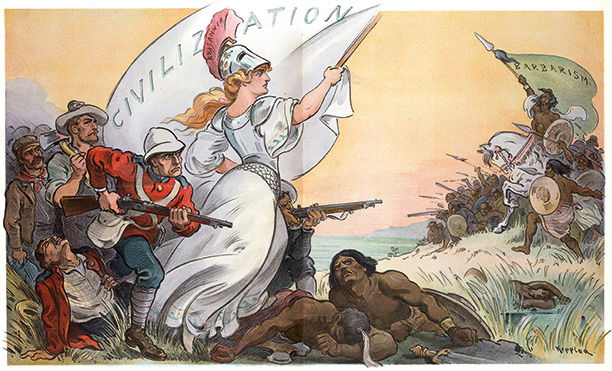
Related imageYeah I know this picture is not very PC nowadays!
  But the good news is that it is one of the few places in Western Europe where Gun Ownership is allowed & flourishes.
Image result for praise be to to god!
As they have several gun shops there that I found out about on the web alone!
Map of gun shops in malta
That & the sport of Bird shooting is a very popular local sport. Since a lot of migratory birds flee the cold European Winters for the warmer African climate. By way of here.
Image result for malta bird shooting
Related image
  Anyways, If You get a chance & are in the neighborhood you might want to check it out. I know that I had some really good experiences there.
Grumpy