Attachments area
Category: Gun Info for Rookies


Read more: https://www.ammoland.com/2018/05/pistol-shooting-drill-how-to-get-rid-of-your-flinch-video/#ixzz5FxQ5kVIB
Under Creative Commons License: Attribution
Follow us: @Ammoland on Twitter | Ammoland on Facebook
Pistol Shooting Drill – How To Get Rid Of Your Flinch [VIDEO]
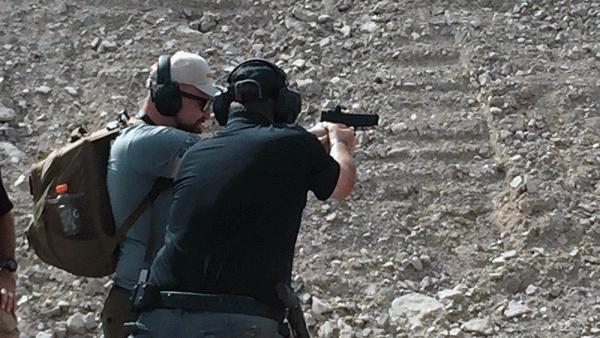
U.S.A. –-(Ammoland.com)- Do you want to get rid of your flinch? You know, that one that makes you shoot low and left (if you are right-handed) consistently? Who wouldn’t?
I reached out to two of my good friends who are excellent pistol shooters and top-rated trainers, Steve “Yeti” Fisher of Sentinal Concepts and Chuck Pressburg of Presscheck Consulting. They both told me that I sucked and then gave me some great advice, shoot ball and dummy. A lot.
Disclaimer: There are a TON of types of flinches, not just one. This drill focuses on you noticing the flinch, not diagnosing what kind of flinch you are displaying.
As much as shooters poke fun at other shooters for having a flinch, many time it isn’t because the gun scared us, but instead has a lot to do with bad habits formed after thousands and thousands of rounds shot over several years without formal instruction. Maybe you are trying to mitigate the recoil of the pistol beforethe shot breaks like I was.
Before we go any further, you will need a couple of things to make this drill a ton easier on you:
Dummy rounds – I prefer the Glock brand ones since they are really cheap and I tend to lose one or two each time I do this drill. You can find them on Brownells for about $37 per 50 with an included box but they can go for about $15 cheaper if you happen to catch them on sale.
3″ Bullseyes or Target Pasters – I normally get mine from Amazon where a 25 sheet package with 9 targets per sheet will set you back $14.99 for the 3″ bulls or you can opt for the 1″ paper dots that run $10.00 for 1,000 little brown dots.
Cardboard Targets – You can also use scrap cardboard if you like but I prefer using IPSC/USPSA targets since I have several hundred of the Action Target brand ones tucked in the garage.
Something that I have struggled with for years as a handgun shooter is flinching just prior to the shot breaking. It wasn’t until Rob Letham showed me exactly what I was doing in a pretty unconventional way. He told me to take aim at the target and then proceeded to pull the trigger for me. The result? A nice tight group that I couldn’t have replicated if my life depended on it at that time in shooting career.
Now there are a ton of really old targets out there that will “diagnose” your flinch, but they are really centered around old style bullseye shooting.
When I asked Steve Fisher about the “diagnosis target” he simply replied with “Junk.” When I pressed him for more info he explained it in more detail saying “It’s a carryover from one-handed pistol shooting taught by the military around the same time that bullseye shooting was popular and has little bearing on the modern defensive and ‘gaming’ techniques taught today”
The Drill:
So I already told you that ball and dummy is the name of the drill. As you might guess it involves some ball ammunition and some dummy rounds. The idea is to have someone load your magazines with dummy rounds loaded randomly so that you have no idea where in the magazine they are.
The goal is to have no idea if the round you are pulling the trigger on is live or a dummy. Now if you are by yourself at the range like I often am, just take a ton of magazines and load them all at once randomly and mix them up so you have no idea what is in each mag.
Once you get all loaded up, head to the 3-yard line and start shooting at the 3″ bull or paster. As you come across a dummy round and you flinch, clear the gun and perform 10 dry fires, then reload the gun and continue. Make sure that every time you flinch on a dummy that you take that 10 dry fire penalty.
That is about all there is to the drill. It isn’t super hard but the benefits that I saw with my shooting was incredible after two full range days and 1,000 rounds of 9mm.
A few hundred bucks is well worth taking your shooting skill to a new level.
I want to thank Chuck and Steve for letting me bug them for advice. I strongly encourage you to look into both trainers and see if there is a class in your area, you won’t regret it.
About Patrick R.
Patrick is a firearms enthusiast that values the quest for not only the best possible gear setup, but also pragmatic ways to improve his shooting skills across a wide range of disciplines. He values truthful, honest information above all else and had committed to cutting through marketing fluff to deliver the truth. You can find the rest of his work on FirearmRack.com as well as on the YouTube channel Firearm Rack or Instagram at @thepatrickroberts.
Yeah I know that there is a lot of them. So maybe you want to pick & choose. I just feel that on something this important that one can NOT have too much information!
I wish all the best on your choice though and enjoy!
Grumpy
Attachments area




Sorry but a couple of these rounds are some that I never heard of before! (6.5-284 Norma or the .280 Ackley Improved?)
But he does have a few good ideas there.
Grumpy
America’s Top 10 Big Game Cartridges
by | September 19th, 20160
I hate to begin an article by apologizing. So I won’t. If you’re of sensitive nature and protective of your favorite cartridge, now may be the time to skip to the next article.
The following is a list of cartridges that have earned the right to inclusion by being very, very good at what they do. It’s not a list of my favorite cartridges: I admittedly have dubious practical taste. Rather, this is a list of big-game cartridges that have proven worthy on no uncertain terms.
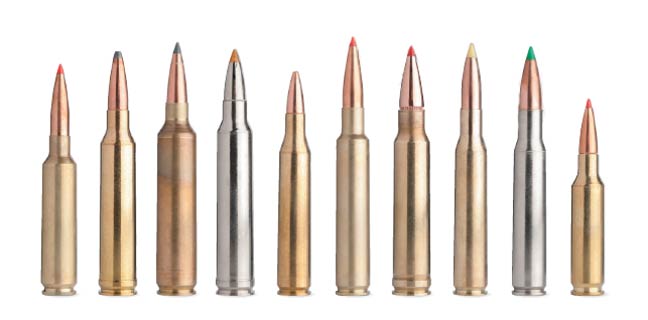
I anticipate the most consternation will come from lovers of the .243 Winchester, the classic .30-30 Winchester, and the Wee-08…I mean .308 Winchester. Because, you see, when it comes to really, truly capable big-game cartridges, those don’t make the cut.
Let’s just get that out in the open. But, please, before you fire up the tar and gather the feathers, keep in mind that while I stand behind what I write, my tongue is planted firmly in cheek as I peck away at my keyboard.
Without further ado, here is a look at 10 cartridges I consider the most legitimately capable big-game rounds available today, spanning the spectrum from light deer and antelope cartridges up to an honest big bear stopper.
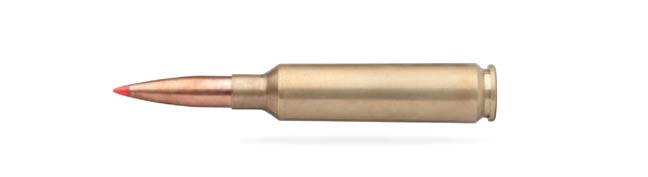
6.5-284 Norma
At the price of more recoil and a lot less barrel life, the 6.5-284 does everything the 6.5 Creedmoor does in the field and does it better. Handloaders wanting a high-performance 6.5mm rifle gain a solid 250 fps by stepping up to the 6.5-284, which is about the same jump gained by going from a .30-06 to a .300 Win. Mag.
This cartridge is included here for one reason: It has proven to be one of the most capable options for long-range hunting, which is the biggest trend on western America’s hunting scene. Whether you detest the practice of sniping big game at extended distances or you idolize the TV practitioners that promote such hunting methods matters not for the sake of this discussion.
The cartridge can get it done without breaking a sweat. Don’t believe cartridges sweat? Try and get your .308 to keep up with the fellow shooting one-MOA steel targets all the way to 1,200 yards with his 6.5-284.
I don’t have space here to crunch comparison numbers, but a few minutes spent on a good ballistic calculator will show that the 6.5-284 smokes most popular hunting cartridges in terms of retained weight and minimal wind drift at extreme distances.
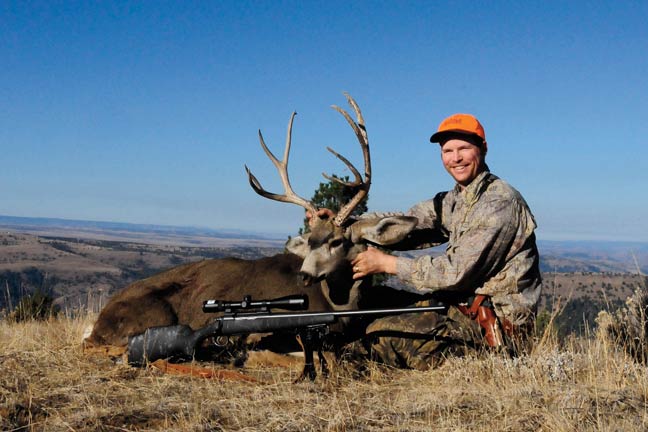
Lots of hunters exercising their right to shoot game at distances that would bulge the eyes of our forefathers choose to do so with Berger VLD Hunting bullets—and with great success in most cases. Respectfully, I submit that projectiles engineered to provide predictable expansion and controlled weight loss are superior, particularly those long-range super-bullets such as Hornady’s new ELD-X and Nosler’s AccuBond Long Range.
As with the 6.5 Creedmoor, bullets in the 120- to 140-grain weight range work superbly on deer-size game. When stepping up to heavier game, a 140-grain projectile designed for controlled expansion and deep penetration is much better.
How far is too far? Assuming you’re rifleman enough to put your first shot into the vital zone every time, the cartridge has what it takes to kill cleanly at 1,000 yards and beyond. No offense, but most of y’all just aren’t. So even if you own and hunt with a super-accurate 6.5-284, exercise your ethics and keep it practical.
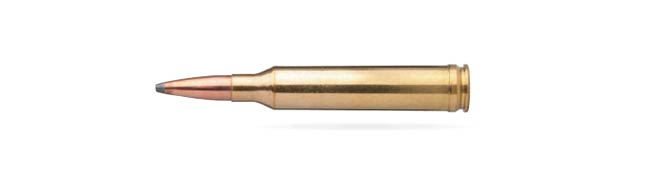
7mm Remington Magnum
I am a reluctant admirer of this cartridge. It couldn’t be excluded from this roundup even if I weren’t, since it’s one of the most popular big-game cartridges. I’ve come to respect it tremendously.
Oddly, with light-for-caliber bullets in the 140- and even 150-grain range,
it doesn’t offer eyebrow-raising performance increases over mundane cartridges, such as the .30-06 or .270, with similar-weight projectiles. However, when the bullets get heavy, the “Seven Mag” gets going. Judicious handloads can push 168-grain Bergers, 175-grain Nosler Partitions and Hornady ELD-Xs, and Berger 180-grain bullets at capable velocities, making it one of the finest everyman’s long-distance cartridges.
Until a few years ago, I was an all-American .30-caliber man, my gaggingly long Austrian name notwithstanding. While I still revere .308-diameter projectiles for their many outstanding characteristics, diligent application eventually revealed to me (I’m slow, but I get there) that 7mm (.284) diameter bullets are inherently more aerodynamic, at least in common weights, than their slightly fatter cousins.
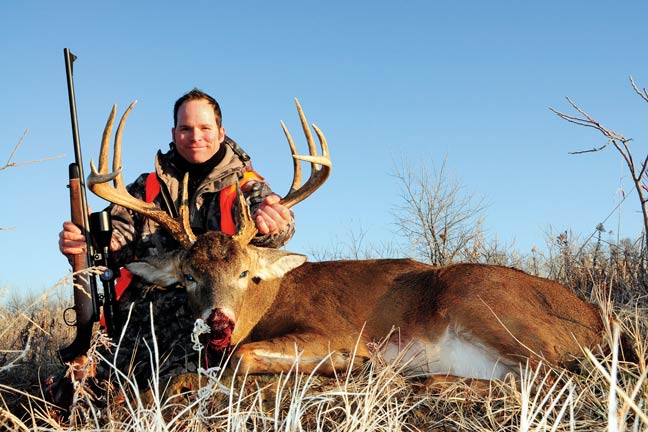
I do think the magnum versions of those fatter cousins still hit harder, courtesy of a larger frontal diameter and increased bullet weight, but for the average guy—and even the accomplished rifleman—the 7mm Rem. Mag. is easier to shoot by virtue of less recoil.
Some old-timers have a sour taste over the 7mm Rem. Mag. In the early years it quickly developed a reputation for poor killing ability, which wasn’t a fault of the cartridge at all. Rather, it stemmed from ammo manufacturers loading soft, thin-jacketed hunting bullets designed for the much-slower 7×57 Mauser
cartridge into the 7mm Rem. Mag. On impact, they tended to blow to bits, resulting in huge craters and little penetration. Long blood trails and extensive meat loss did little to endear the cartridge to traditional American hunters.
Today, it’s much better understood, and when stoked with a long, sleek, high-BC bullet designed for high velocities, it’s probably the most practical long-range hunting cartridge available.
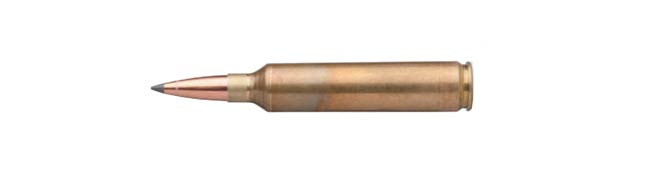
28 Nosler
While its much older, more established, smaller 7mm brother is arguably the most practical long-range hunting cartridge available, the 28 Nosler is arguably the best of the best—if you walk practicality off the metaphorical plank.
It pushes a 175-grain Nosler ABLR or Hornady ELD-X at 3,125 fps, and does so from a standard-length action. Yes, there are faster cartridges, such as the 7mm Remington Ultra Mag, but none offer quite the ideal balance of usability and performance that the 28 Nosler does.
The 28 Nosler isn’t a new concept. Gunwerks’s 7mm LRM is very similar, and like-performing wildcats abound. All Nosler did was perfect (arguably, of course) the non-belted, standard-length magnum 7mm.
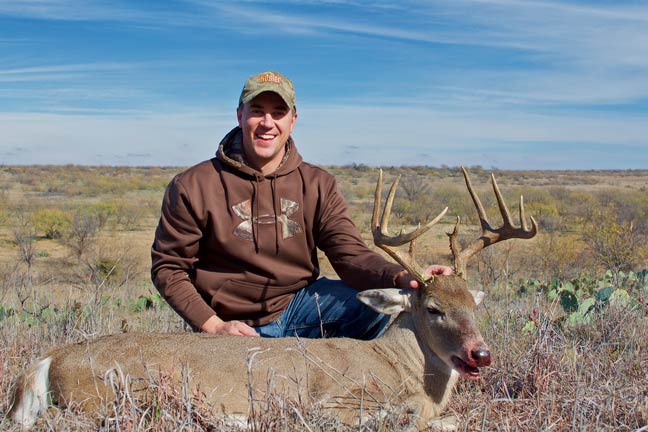
Of all the cartridges on this list, the 28 Nosler is the only one not proven by at least a half-decade of use and is the only one too young to have earned the stamp of popular approval. So I’m going out on a limb a bit by including it. What I like about it is the refined design (I really do think it’s the best of the standard-length modern magnums), plus the fact that Nosler brass is typically very consistent, favoring accuracy. And, of course, it’s in my favorite far-shooting bullet diameter: 7mm.
With light 7mm bullets the 28 Nosler puts lasers to shame. With heavy Partitions and X-type bullets, it penetrates like a depth charge. But in light of what it’s really good at, one may as well just go with a heavy, aerodynamic hunting bullet and use it for everything. There’s not a hooved animal on the North American continent that it’s not prime for.
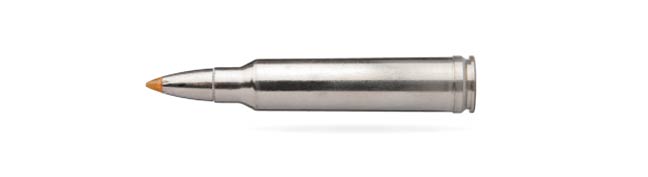
.300 Winchester Magnum
.300 Winchester Magnum
For the fella that can handle the recoil and doesn’t mind spending the extra money on ammo, the .300 Win. Mag. is arguably the best worldwide big-game cartridge there is. For such a hunter, it’s a better choice than the glorious .30-06, just because it carries more energy downrange and shoots a bit flatter. Plus, the .300 Win. Mag. excels with long, heavy, aerodynamic bullets that hold on to velocity and buck the wind beautifully, making it capable as far out as a good rifleman can keep his shots in the vitals.
For many decades, the 7mm Rem. Mag. held the spot as the most popular magnum cartridge available. A decade or so ago the gap closed, and according to many polls, the .300 Win. Mag. has now edged to the front. Were I pressed to guess why, I’d say that the bigger cartridge just kills a little faster, probably a product of the greater frontal diameter. I’ve shot a lot of game with my favorite .300, ranging from 40-pound steenbok to 1,200-pound moose and rarely do properly hit animals go farther than a step or two.
Another advantage the .300 Win. Mag. shares with the .30-06 and 7mm Rem. Mag. is the availability of ammunition worldwide. The last time I went to Africa, my baggage was lost for a couple of days. No problem: I borrowed a pocketful of the outfitter’s outstanding 200-grain Norma Oryx handloads and went hunting. A big blue wildebeest fell to that bullet before my baggage arrived.
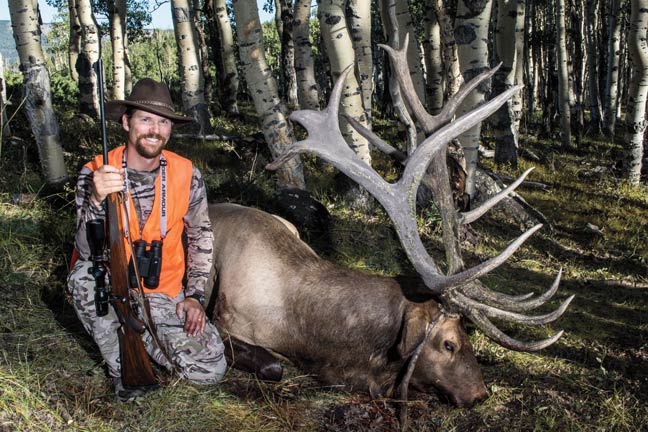
Speaking of bullets, there’s little one can’t accomplish with a good 180-grain pill from a .30-caliber magnum, but don’t neglect the heavier projectiles. One of my favorites is the 200-grain Nosler AccuBond.
Another is the new 200-grain Hornady ELD-X. With it I dropped an old aoudad ram with one shot at 641 yards; it’s become my go-to long-distance bullet. (Note that for me a very long shot on game is 600 yards. I don’t promote extreme-range shooting at game.) As for factory loads, I’ve had incredibly good results using Federal’s 180-grain Trophy Bonded Tip; it gave me 13 one-shot kills in Africa after my luggage arrived.
Much as I respect the .30-06 and the 7mm Rem. Mag., if I had to choose one big-game cartridge to hunt the world with for the rest of my life, I’d opt for the .300 Win. Mag.
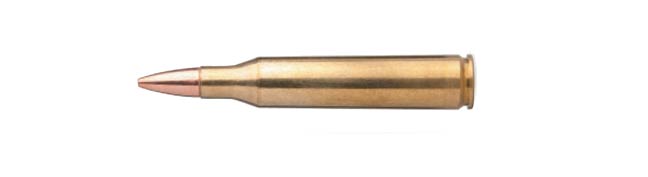
.25-06 Remington
This is the cartridge the .243 Winchester always wished it could be. Offering outstanding velocities and just enough bullet weight to be really effective, at a very polite price in recoil, the .25-06 is one of the finest deer and pronghorn antelope cartridges ever devised.
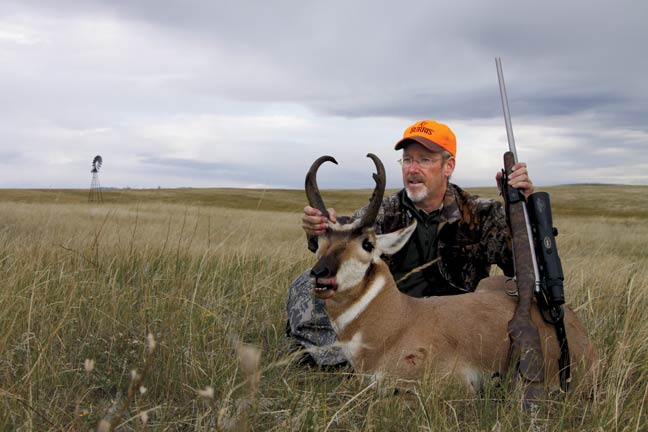
With bullets in the 75- to 87- grain range, it’s also superb for predators. But I digress. Choose a sleek bullet in the 110- to 117-grain range, which will exit the muzzle of your favorite deer slayer somewhere between 3,000 and 3,100 fps, and never look back. You’ll be able to reach out to 400-plus yards—if you’re rifleman enough to do so ethically—with outstanding effect.
As for the bigger game, well, the .25-06 is not as good as the larger-diameter bullets flung by other cartridges on this list. But with a 115-grain Nosler Partition, it will do for caribou and elk as long as good shot presentations are taken.
 .280 Ackley Improved
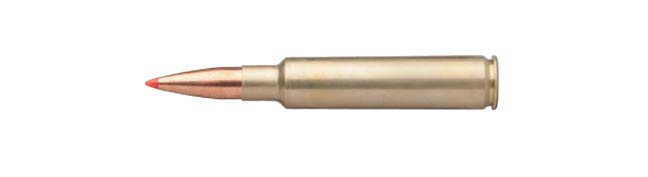
For the chap who pines for magnum performance but clings to the advantages of a standard-size cartridge (greater magazine capacity, less recoil, more efficient powder usage, less costly brass, longer barrel life), the .280 Ackley Improved is a wonder drug.
By blowing out the case walls to a straighter taper and the case shoulder to a much steeper angle, P.O. Ackley (who was the master of the improved cartridge case) turned the languishing .280 Remington into a fire-breathing dragon capable of 7mm Rem. Mag.-like performance.
Stoked with healthy charges of Reloder 19 or 22 under a 150-grain Barnes TTSX or 160-grain Nosler AccuBond, the .280 AI smokes big bull elk like a Sicilian crime lord smokes a Cuban cigar—there just shouldn’t be that much pure goodness in such a compact package. I dropped what was at the time my biggest bull with one well-placed shot at 519 yards with the 150-grain TTSX, which exits the muzzle of my custom rifle at 3,060 fps. For electrocuting whitetails in their tracks inside 400 yards, load a 140-grain Nosler Ballistic Tip, Hornady SST, or Sierra GameKing at 3,150 fps.
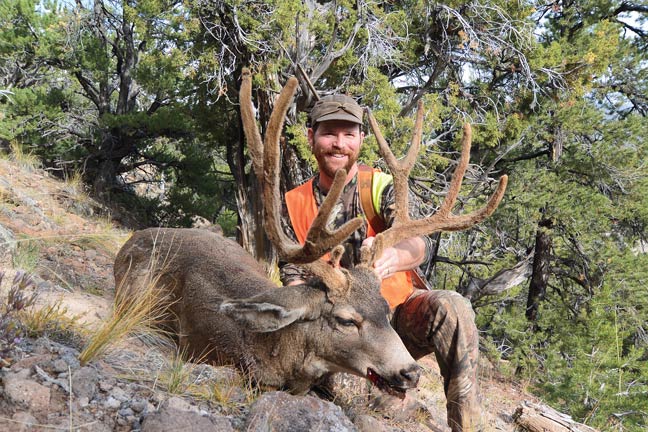
Better yet, the .280 AI is a legitimate long-range performer. Hornady’s Joe Theilen shoots one in 1,000-yard benchrest competition with outstanding success. Loaded with a premium .284-diameter match projectile, such as Barnes Bullets’s 171-grain Match Burner or Hornady’s 162-grain A-Max, it comfortably gets the job done to 1,200 yards.
Want to take your match-shooting skills across No Man’s Land into the murky realm of long-range hunting? Load your .280 AI with Hornady’s new 162- or 175-grain ELD-X match-accurate hunting bullets and never look back.
Not versatile, you say? Au contraire! Courtesy of the genius of Ackley’s design, you can safely and effectively fire garden-variety .280 Remington ammo in your .280 AI rifle. In fact, that’s the least expensive way to produce appropriate brass for your improved chamber. That little characteristic has pulled more than one wandering adventurer molested by the unreliability of the airline out of a slump and put him back in the hunting game. Plus, Nosler loads factory .280 AI ammo for those who don’t handload.

.338 Winchester Magnum
Really, all you need to know about this great cartridge is that the late, great Elmer Keith loved it and living legend Dave Petzal loves it. I recently asked Craig Boddington, who is arguably the most experienced dangerous-game hunter/writer alive, if he considers the .338 Win. Mag. to be a legitimate big bear stopper. (Most cartridges will kill a bear; few will stop one bent on killing you before he bites your scalp off.)
Boddington replied with an emphatic yes and pointed out that although bore diameter (.338) is a significant 0.037-inch smaller than the .375 H&H Magnum, the .338 Win. Mag. drives a 250-grain projectile at 2,700 fps or better, which matches the velocity of 260-grain bullets out of the bigger magnum.
And with such bullets, it offers better sec-tional density (0.313 vs. 0.264). In fact, the 250-grain .338 projectile betters even 300-grain .375 bullets, which boast an already-impressive sectional density of 0.305. In English, that means that heavy .338 Win. Mag. bullets will penetrate like the proverbial runaway freight train.
Loaded with a heavy Nosler Partition, Barnes TSX, Hornady GMX, Swift A-Frame, or the like, the .338 Win. Mag. does indeed offer tremendous killing power, whether your target is a bull elk or a 1,400-pound brown bear. Plus, it’s more versatile than the .375 H&H for several reasons. It shoots flatter, courtesy of higher muzzle velocity, and is more suitable for shots stretching past 250 yards. Additionally, it can be loaded with lighter bullets in the 185- to 200-grain range at 3,000 to 3,200 fps, making it a flat-shooting deer rifle. Handloaders wishing to stretch their lethal distance have long-range bullets designed for the .338 Lapua at their disposal.
I’ve said that a good .300 Win. Mag. teamed with a reliable .375 H&H sets a hunter up to hunt any game around the world. But if you’re not a world traveler, there’s a better way. Pair a reliable .338 Win. Mag. with a fine, accurate deer rifle in 6.5 Creedmoor, 6.5×284 Norma, or .280 Ackley Improved, and you’ll be well equipped to hunt anything that walks the North American continent.

.270 Winchester
Although there are younger, more modern cartridges that outpace the classic .270 Winchester at extreme ranges, I’ve long said that Jack O’Connor’s favorite is still one of the very best deer cartridges.
Some folks like to talk about shot placement and how with the right shot presentation even a .223 will kill a moose stone dead. Me, I like to be able to kill big, heavy-boned, densely muscled deer from any angle, should the need arise. That means shooting a cartridge that throws enough lead and throws it hard.
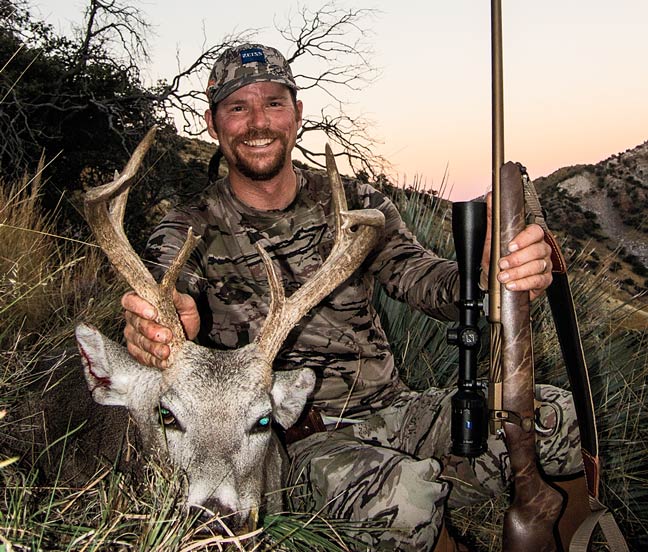
The .270 is one such cartridge. Loaded with a premium hunting bullet, such as a Nosler Partition, Barnes TTSX, Hornady GMX, or Swift Scirocco II, a savvy hunter can rake his bullet through the hip and into the vitals of a buck—even a big muley in the Rockies or a bulky whitetail in Alberta—and be confident that it’s got what it takes to kill cleanly.
You may argue that ethical hunters take only clean shot presentations. You’re right, of course. Thing is, shooting the right cartridge and bullet broadens the definition of clean, ethical presentations considerably, which can be heartening when the biggest buck you’ve ever seen is about to disappear into a thicket on the last evening of a hunt you’ve saved a decade for.
.30-06 Springfield
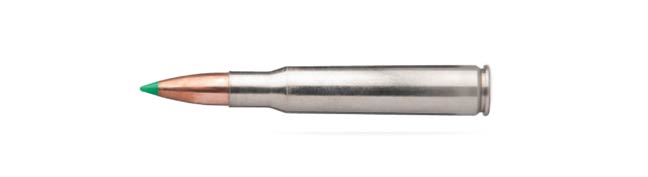
By and large, most game in America is shot inside of 200 yards, and no cartridge is more capable than the .30-06 for that use. This old warhorse is America’s most popular hunting cartridge—hard to believe considering that it’s well over 100 years old. It earned that title the hard way, and maintains it the same way, by proving year in and year out that for all-around use, it can’t be beat.
Past 200 yards the faster .30s begin to edge it out because they carry more energy, but in the hands of a skillful rifleman the old ’06 is ideal for deer, antelope, caribou, elk, and moose out to 300 yards or so. And, yes, many deer and elk are taken well in excess of that each year. I’m not saying that it can’t do it; it’s just that past 300 yards there are cartridges that do it better.
Many hunters opt to shoot the lighter 150- and 165-grain bullets in their .30-06s, and they work great on deer-size game. However, where the ’06 really shines is with 180-grain projectiles (and here’s where it really pulls away from the .308). Heavier bullets have far better aerodynamics and offer considerably higher sectional densities—which is a measure that, all other factors being equal, predicts the penetrating ability of a projectile. While heavy bullets start out a bit slower than their lighter siblings, they hold on to velocity better and soon overtake them, thus offering considerable more on-impact authority downrange courtesy of their heavier mass.
Handloading the .30-06 can boost performance. Most 180-grain factory loads produce about 2,700 fps; a good handload can add 50 to 100 fps to that. My favorite bullets for the .30-06 are Nosler’s 180-grain AccuBond, Swift’s 180-grain Scirocco II, Sierra’s 180-grain GameKing, Barnes’s 180-grain TTSX, and, last but not least, Federal’s 180-grain Trophy Bonded Tip. That last one may be the best of them all, but it’s unfortunately available only in factory-loaded form.
6.5 Creedmoor
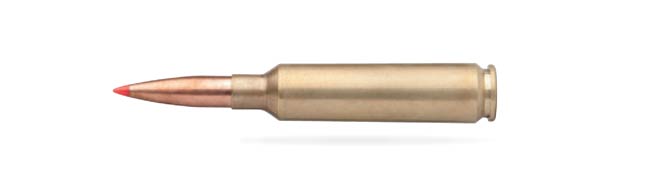
Originally designed as a 1,000-yard match cartridge, this super-efficient little round quickly caught on among savvy, precision-minded hunters that want good performance at low recoil. Designed by a national champion long-distance shooter (Dennis DeMille) and the Einstein of modern cartridge development (Dave Emary), the 6.5 Creedmoor nips at the heels of the superb 6.5-284 but is less finicky in the accuracy department and offers substantially greater barrel life.
Of all the cartridges discussed here, the 6.5 Creedmoor, in my opinion, is the most inherently accurate. I’ve never met one that wouldn’t shoot one-MOA groups, and many of them will halve that, even with factory ammunition.
While the 6.5 Creedmoor pushes the long, aerodynamic 140-grain projectiles so popular among its followers at around 2,720 fps—a full 220 fps slower than a .270 Winchester shoots the same weight—the sleek 6.5 bullets hang on to velocity much more efficiently.
As distances increase, the 6.5 gains on the .270 and eventually passes it. In other words, at long range the 140-grain 6.5 Creedmoor bullet is both going faster and has better sectional density than the 140-grain .270 bullet and will impact with more authority. Now, that’s a tunnel-vision comparison of two superb cartridges, but it serves to illustrate the effectiveness of this little short-action 6.5mm.
While many deer and more than a few elk fall each year to Hornady’s ultra-accurate 140-grain A-Max 6.5mm match bullet, hunters are better off with a bullet actually designed for terminal performance on big game. Choose a 120- to 143-grain version that your gun likes for use on deer and pronghorn-size game. Should you wish to push the 6.5’s boundaries and hunt elk-size game with it, opt for a tough 140-grain bullet designed for controlled expansion, such as a Nosler Partition or AccuBond or a Swift A-Frame, or a homogeneous Barnes 120-grain TTSX or Hornady 120-grain GMX.
Read more: http://www.petersenshunting.com/ammo/americas-top-10-big-game-cartridges/#ixzz4yLgpWgrT
Selecting a tripod for precision rifle shooting

Military and Law Enforcement snipers have relied on tripods for years to provide support in positions other than the prone to make critical shots. The techniques born from those early tripod setups have evolved into the purpose-built products that we have today.
Years ago, I was at a sniper sustainment course and the topic of tripods for the rifles came up during one of the classes. At that time there weren’t a lot of good options for tripods or rests so most of us did what good soldiers do and worked with what we had. For military and law enforcement the tripod is an essential piece of kit for situations where the shooter has to be up off the ground to gain a vantage point and yet still be stable enough to make an accurate shot. For precision rifle competition there exists a similar need for a good, sturdy tripod but selecting the right tripod and attachment system can be overwhelming with so many options on the market now.

Not all shots can be taken from the prone position, in situations where the rifle has to be up off the ground yet be stable enough to take a shot a sturdy tripod is the only solution.
What Don’t You Want?
Back in the day most of the tripods you saw used for shooting supports were the cheap ones from the local big box store getting pressed into service. There are a number reasons why these tripods are not sufficient for hard use such as their limited adjustment range and extensive use of plastic parts. If you’re searching for a tripod that will be used to support a rifle you’re probably going to have to start looking at professional-grade photography tripods. These tripods can start to get expensive but you should look at them as investments, just like a scope or rifle, that will provide years of use without fail rather than a disposable item.

When selecting a tripod that will be used to support the weight of a rifle avoid any that have tripod heads made mostly of plastic. The plastic knobs and latches are notorious for breaking at the wrong moment from hard use and the recoil from heavy precision rifles.
A quality, professional-grade photography tripod that can support the weight of a precision rifle is going to be made mostly from aluminum or carbon fiber. This is where you have to make a budget decision though because while carbon fiber tripods are great for weight savings and strength, they start at about $300 for a good one. The aluminum tripods tend to be cheaper, usually running about half the cost of a carbon fiber tripod but they’re also about twice as heavy.

A suitable tripod for precision rifle use will be made from strong materials like aluminum or carbon fiber with independently adjustable legs. This allows the tripod to get stable and level, even if it was on a hillside.
Each tripod leg needs to be independently adjustable so that it can be set up to accommodate the shooter’s needs and terrain. Cheaper camera tripods have nowhere near the amount of adjustability since their tripod legs can only swing out so far and are limited to a certain sized footprint. The method used to adjust the length of the legs isn’t a huge deal so I will just say that you’re typically going to see either latches or twist locks. Twist locks are a fast way to adjust the length of the tripod leg however as far as overall durability goes lever locks will probably win out. Keep in mind that not all lever locks are the same. The less expensive lever locks will usually have a rubber pad that engages the leg at a single point and in some situations, say under the weight of a precision rifle, the leg will slip. Quality lever locks, like the ones on my Manfrotto, actually grip the tripod leg around most of its circumference and can be adjusted for more tension if necessary using a socket.

Lever locks like the ones on this Manfrotto 190XPROB tripod are common with many tripods. These offer a very strong, secure lock on the tripod leg that can support a lot of weight.
For some shooters, the tripod center column is best cut down to prevent it getting in the way but I personally like to leave mine untouched. It’s nice to be able to extend the height of the tripod up some more if I need to after I’ve run the legs all the way out. The best center columns on a tripod are simple with no frills or hand cranks just a center tube held in place by a thumb screw.

Some tripods have optional spikes either built into the rubber pads or that you install later after you remove the rubber feet. Spikes such as these can help dig in the surface for some added stability.
Tripod Heads
The tripod head is a very important component because it’s the link from the tripod to the rifle that allows for fine-tuned adjustments and locks the rifle into position. Generally, you’re probably going to find three different types of tripod heads amongst the more experienced shooters: Grip Action, Ball Action, and Leveling Bases. You might see the occasional pan-tilt head but those are few and far between amongst serious users. My first piece of advice when looking for a tripod head is to avoid any that use plastic extensively at contact points and joints such as locking latches and plates since these will most likely fail under hard use.
Leveling bases are probably going to be almost unheard of except to those that are also really into photography but they are becoming a popular option with some precision rifle shooters. In photography, these bases are used to level the camera, pan around in a fluid motion, and also lock the camera firmly in place for panoramic shots. These types of bases can also support a lot of weight without slipping so it’s no surprise that they are getting used more and more to support rifles that weight upwards of 17 lbs. A disadvantage to leveling bases is that even though they can spin 360° their maximum tilt angle is only about ±15°, so they’re probably not the best option for mountainous or urban terrain.

This Sunwayfoto leveling base can support a lot of weight, easily carrying my heavy 6.5 Creedmoor precision rifle yet still glide smoothly to get in position. The only downside is that leveling bases don’t have much tilt so in very mountainous terrain where you may have to take 30 degree shots this may not be the best option.
Grip action heads like the Manfrotto 322RC2 and 3265 are pretty commonplace with many setups because they’re built to last a lifetime and have been used for years by professional rifleman. They have a large range of motion, more than enough for steep angles, and they can support a healthy amount of weight without any issues. Their only downside is that they are pretty heavy so if you are an-ounces-equals-pounds kind of person you may want to look at this next option. Ball action heads have been around for a long, long time and are probably the most popular type of tripod head on the market and rightly so. Ball action heads are versatile, lightweight, strong, and easy to manipulate with one hand.

The Manfrotto grip action heads were very popular for a number of years and are still in use by a lot of precision rifle shooters. The Manfrotto 322RC2 may be more popular but the 3265 is still going strong. Easily supporting heavy precision rifles, both grip action heads offer a wide range of motion for even the steepest shots.
There are a lot of different kinds of ball action heads so it’s important to select one that can fully support the weight of a precision rifle so be sure to check the specs and avoid the cheaper, light duty ones. Sirui’s GX and KX series as well as the Benro IN2 heads offer good performance for an economical price but if you want to go all in check out the heads from Really Right Stuff.
It doesn’t really matter what type of tripod head you get, just make sure that it meets your needs and more importantly that it can support the weight of the rifle.
Quick Release Plates
Quick release plates are an integral part of any good tripod head and my advice here is to find a tripod head that is either RC-2 or Arca Swiss compatible. Skip the heads that use some kind of proprietary plate because chances are it’s going to be hard to find extras and no one around is going to have a similar one. The 200PL plates from Manfrotto have been around forever and at one time seemed like the only option for a robust all-metal quick release plate that was strong enough to take the weight and recoil of a rifle. The Manfrotto plates are common enough that some companies make tripod adapters compatible with the RC-2 system that bolts directly to a rifle so they can be attached to the tripod head. RC-2-style plates are still used a good bit however the Arca Swiss system has become the go-to attachment method for many precision rifle shooters.

Arca Swiss-style plates are becoming immensely popular and I dare say a de facto standard amongst some precision rifle competitors. The dual dovetails lock tightly into the clamping base and optional safety screws on the bottom can prevent the plate from sliding out if the knob loosens up.
Again, unless you’re also really into photography you may not have heard of this system before but it’s actually an elegant and strong setup. The mounting plate has two parallel dovetails that are engaged by a clamp section that’s tightened by a latch or thumb knob. Although it’s a seemingly simple connection it’s also very strong and resistant to slippage but with a half turn of the knob the plate slides out easily. Unlike the RC-2 plates, the Arca-style plates also come in various lengths that can be attached to a rifle so that it can be slid along the clamp to position it perfectly for balance. As the Arca-style plates become more popular for precision rifle shooters more companies are also making compatible accessories. Currently, there are commercial options to attach Arca-style plates to rails that are Keymod, MLOK, and Picatinny rail compatible.

The Manfrotto 200PL quick release plate was all most precision rifle shooters used for a long time to quickly switch out spotting scopes or shooting saddles. These all metal plates are still used by a number of shooters and there are compatible accessories that will drop right down into the RC-2 clamp.
Tripod Accessories
There are a ton of accessories that you can get for a tripod, from Kestrel holders to purpose made slings to carry them but chief among them I think should be a shooting saddle. Back in the day tripod saddles were handmade from materials bought at the local hardware store but commercial options have now superseded that for the most part. The HOG Saddle and PIG Saddle are extremely popular options that are adjustable to fit a wide range of guns and are threaded so that they can be attached directly to a tripod center column or the tripod head.

Some way to support the rifle is essential when using a tripod. A direct mount like my homemade unit that attaches to any Picatinny rail or a more universal shooting saddle is common on many firing lines.
For the more budget-conscious, Precision Rifle Solutions has a line of shooting saddles that are very well made but don’t cost a bundle. I’ve actually been using a PRS tripod saddle for years and have found it to be a fantastic option across multiple types of rifles. If you are starting out in precision rifle competition and getting your tripod set up I recommend starting out with a shooting saddle since they are versatile and time proven.

My homemade tripod mount using a Desmond Arca-compatible plate screwed to the bottom of an inexpensive quick-release tripod adapter. The screws are loctited and torqued down to 30 in/lbs so there is little chance that it will come loose anytime soon.
Another type of accessory that is gaining momentum are specialized mounts that allow the rifle to attach directly to the tripod head without the need for a shooting saddle. This has a number of advantages in that the mount can be kept on the rifle and dropped into the tripod quickly for ultra-stable, accurate shots. There are commercial options available but I opted to make my own tripod direct mount that would be Arca-compatible. Mine cost about $15 to make using a quick release bipod mount and an Arca-compatible quick release plate from Amazon.com. I removed the bipod stud, drilled and tapped two ¼-20 holes on either side of the existing hole, and attached the Arca plate with two mounting screws. It’s nice to be able to take my rifles and attach them right to the tripod and not worry about it tipping over or sliding out from the saddle.

Directly connecting the rifle to the tripod is incredibly stable for long range shots and I think my new go to method for tripod shooting. Just recently I used this exact set up at a match to shoot two 10″ plates from the sitting position at 430 yards, alternating shots between plates.
Tripod Accessory Matrix
| Tripod Options | ||||
| Tripod Package | Tripods | Heads | QR Plates | Accessories |
| PRS Tripod w/ SSP (Entry Level) | ||||
| ShadowTech Tripod Kits(Intermediate Level) | ||||
| Really Right Stuff Tripod Kit (Tier 1) | ||||
| HOG Saddle Field Tripod | Sirui KX Ball Head | Arca Swiss-type |
PIG SaddleRRS SOAR Plates | |
| Manfrotto Tripods | 322RC2 | 200PL Plate | LaRue Tripod MountVortex Tripod Mount | |
| Desmond Tripods | Desmond DB-44 | Arca Swiss-type | ADM Tripod Mount | |
| Benro Tripod | Benro IN2 | Arca Swiss-type | SOAR Chassis MountHOG Saddle | |
Fundamental Tripod Use
When you have your set up finalized and start using the tripod for precision rifle applications there are some fundamental things that you want to do to help make sure you’re taking the most accurate shot possible. First, when you are setting the tripod up point one of the legs towards the target since this is going to help with stability under recoil. Extend and spread the legs as far out as possible to create a wide footprint while still keeping the rifle at a good height for a stable firing position. If the rifle is attached directly to the tripod, under recoil the tripod should essentially go straight up and come back down to the same spot if you got it set correctly. It will also help to set up the controls for the tripod and head so that you can make adjustments with your free hand without having to break position. If you lock your support arm out against one of the tripod legs when you are in position and ready to fire this can help gain some stability also. It was using these guidelines at a recent match that helped me hit 10″ plates at 430 yards using the tripod as my only means of support.

When setting up the tripod you want to make sure the legs are spread out enough to provide a good footprint yet still give you sufficient height for the chosen position. Also, notice that I have the front leg pointed towards the target so that if the tripod does move under recoil it’s just going to go straight up and back down again.
In Conclusion
A good tripod, like a good scope, is a worthy investment for a long-range shooter. Tripods are useful whether you plan to start shooting competitions or just shoot long range in general. I’ve had a few outings almost ruined due to waist high grass that prevented me from getting a prone position, but thanks to the tripod, I was able to salvage the day and get some shooting in. As it goes with scopes, if you spend wisely you can easily have a set up that will go the long haul while also not costing you an arm and a leg. However, if you wish to go under the knife to get the very best, then have at it, that is your prerogative, but keep in mind that simply having the best doesn’t make you the best. Shooting well off of a tripod takes practice so when you have your setup worked out train with it often, and explore different ways to utilize it other than just spreading the legs and setting a gun on top.

When setting up the tripod it’s always beneficial to set up the controls so that if you’re a right handed shooter you can make adjustments or release the rifle from the tripod with your support hand. Vice versa if you’re a southpaw.

A good tripod for precision rifle shooting should have enough adjustment in the legs to allow the rifle to be shot from a standing position with fully raising the center column.

Pro Tip: When shooting off of a less than stable barricade or obstacle, you can use one of the legs of the tripod to help support the butt of the rifle and gain stability. To do this deploy the tripod to the correct height and bring it in close to the body. When you’re in position, pinch the buttstock between your thumb and one of the tripod legs.

Some Arca Swiss-style clamping bases are also compatible with the Manfrotto 200PL QR plates. This could be beneficial for those that have a stash of Manfrotto plates but would also like to reap the benefits of the Arca Swiss-style system.

The Precision Rifle Solutions Large QD Tripod with SSP sniper saddle is an excellent entry-level choice for those that want to get a tripod for precision rifle shooting but are also on a budget. This tripod can go from prone to standing height easily and support heavy rifles like this custom Remington 700.
Ohio Self Defense Reform Bill Passes House Committee

Arizona -(Ammoland.com)- Ohio bill HB 228 has passed out of the House Federalism and Interstate Relations Committe on a seven to three vote. The vote was along party lines, with seven Republicans voting for the bill and the three Democrats voting against the bill.
The Ohio legislature is looking to reform Ohio law on self-defense. Currently, Ohio appears to be the only state where the burden of proof in a self-defense case rests with the defender. When a person claims self-defense in Ohio, the defender has to prove that they acted in self-defense. In nearly every other state, the burden of proof is on the prosecution. They have to prove that the defender did *not* act in self defense. From the nraila.org:
HB 228 would place the burden of disproving a self-defense claim onto the prosecution, similar to how it is in almost every other state. Further, House Bill 228 would expand the locations that a person has no duty to retreat from before using force to defend themselves under both civil and criminal law.
Arizona flirted with this reversal of the traditional burden of proof for a decade. Prosecutors lobbied the legislature and reversed the ordinary burden of proof in 1996. It is much easier for prosecutors to obtain a conviction when the burden of proof is shifted to the defendant.
Harold Fish paid the price for the prosecutor’s power grab.
Harold Fish killed a man who was charging at him and yelling that he was going to kill him. The first investigator on the scene reported it was such an open and shut case, he classified it as self defense and did not arrest Harold. The county prosecutor did not like that assessment, so they replaced the first investigator and arrested Harold Fish.
After much public outcry, involving three separate bills passed by the Arizona legislature to change the law, a long appeals process, two vetoes by Democrat Governor Janet Napolitano (a former prosecutor), $700,000 dollars spent on legal defenses, and three years in prison for Harold Fish, the trial court was found to be in error, and Fish was freed. He died three years later.
It is this type of abuse within the legal system that HB 228 is meant to prevent.
Prosecutors in our society have enormous power. They can lie. They can recruit false witnesses. They can have obvious conflicts of interest. They can repeatedly bring prosecutions against people who have committed not crime, for personal reasons. The Supreme Court has ruled that they can not be sued for any of this. They have absolute immunity.
Prosecutors have incredible levels of power. Shifting the burden of proof in self defense cases away from the defendant is a small step in placing limits on that power.
Jim Irvine of Buckeye Firearms says that Ohio is the only state in the United States that has this burden of proof placed on the defender. From buckeyefirearms.com:
“Ohio is the ONLY state in the U.S. with this absurd requirement for burden of proof,” said Jim Irvine, Chairman of Buckeye Firearms Association. “It has been talked about in legal seminars around the country for years. It is an embarrassment to Ohio.
“People under attack should be able to defend their life. They should not have legal hurdles to jump before acting to defend themselves. They should not be second-guessed for years over a decision they were forced to make in a second. Ohio law should protect the victim, not the aggressor. This bill corrects this problem with Ohio law.”
HB 228 has 34 sponsors in the House, and one in the Senate. The Ohio House (the legislative assembly) has 99 members, of which 66 are Republicans. The Ohio Senate has 33 members, of which 24 are Republicans.
The Ohio governor is Republican John Richard Kasich, Jr.
Governor Kasich has been making noises about supporting various restrictions on gun ownership. Those restrictions include outlawing private sales, allowing police to confiscate guns on the basis of basis of “gun violence protection orders” without any due process, and others. It is unknown if Governor Kasich would sign this self defense reform bill.
©2018 by Dean Weingarten: Permission to share is granted when this notice is included.
Link to Gun Watch
About Dean Weingarten:
Dean Weingarten has been a peace officer, a military officer, was on the University of Wisconsin Pistol Team for four years, and was first certified to teach firearms safety in 1973. He taught the Arizona concealed carry course for fifteen years until the goal of constitutional carry was attained. He has degrees in meteorology and mining engineering, and recently retired from the Department of Defense after a 30 year career in Army Research, Development, Testing, and Evaluation.