
Unless you have one of these & know how to use it during the unforgiving moment! Grumpy


A Winchester Model 70 in Caliber 375 H&H with I suggest using Solids at this time!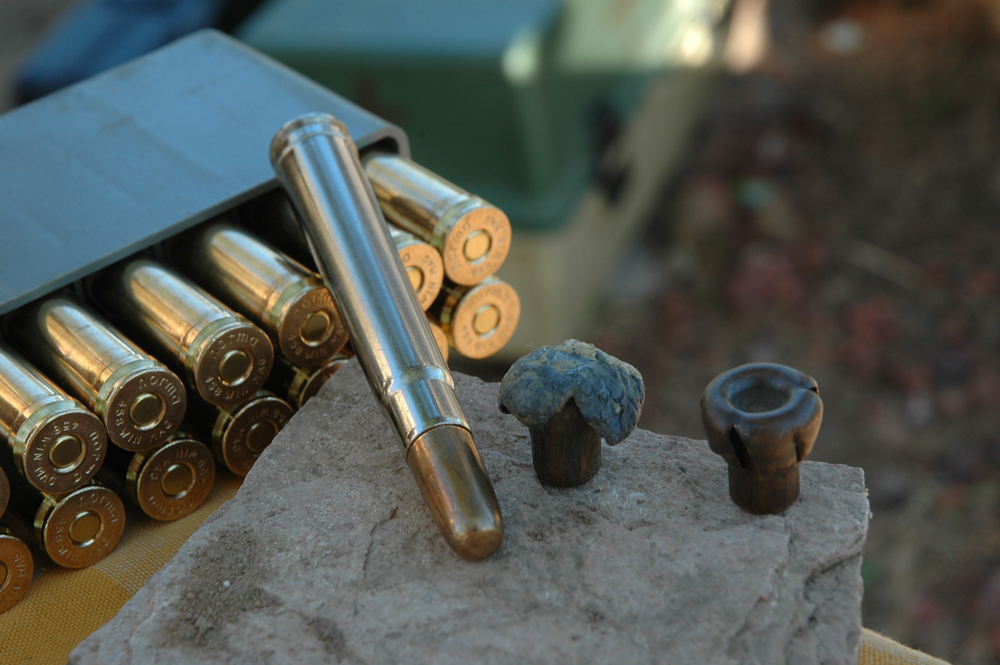

Unless you have one of these & know how to use it during the unforgiving moment! Grumpy
A Winchester Model 70 in Caliber 375 H&H with I suggest using Solids at this time!

By Maj. John L. Plaster, USA (Ret)
RECON COMPANY AT COMMAND AND CONTROL CENTRAL
In 1968, Robert L. Howard was a 30-year-old sergeant first class and the most physically fit man on our compound. Broad-chested, solid as a lumberjack and mentally tough, he cut an imposing presence. I was among the lucky few Army Special Forces soldiers to have served with Bob Howard in our 60-man Recon Company at Command and Control Central, a top secret Green Beret unit that ran covert missions behind enemy lines. As an element of the secretive Studies and Observations Group (SOG), we did our best to recon, raid, attack and disrupt the enemy’s Ho Chi Minh Trail network in Laos and Cambodia.
UP THERE WITH AMERICA’S GREATEST HEROES

Take all of John Wayne’s films—throw in Clint Eastwood’s, too—and these fictions could not measure up to the real Bob Howard. Officially he was awarded eight Purple Hearts, but he actually was wounded 14 times. Six of the wounds, he decided, weren’t severe enough to be worthy of the award. Keep in mind that for each time he was wounded, there probably were ten times that he was nearly wounded, and you get some idea of his combat service. He was right up there with America’s greatest heroes—Davy Crockett, Alvin York, Audie Murphy, the inspiring example we other Green Berets tried to live up to. “What would Bob Howard do?” many of us asked ourselves when surrounded and outnumbered, just a handful of men to fight off hordes of North Vietnamese.
To call him a legend is no exaggeration. Take the time he was in a chow line at an American base and a Vietnamese terrorist on a motorbike tossed a hand grenade at them. While others leaped for cover, Howard snatched an M-16 from a petrified security guard, dropped to one knee and expertly shot the driver, and then chased the passenger a half-mile and killed him, too.
One night his recon team laid beside an enemy highway in Laos as a convoy rolled past. Running alongside an enemy truck in pitch blackness, he spun an armed claymore mine over his head like a lasso, then threw it among enemy soldiers crammed in the back, detonated it, and ran away to fight another day.
Another time, he was riding in a Huey with Larry White and Robert Clough into Laos, when their pilot unknowingly landed beside two heavily camouflaged enemy helicopters. Fire erupted instantly, riddling their Huey and hitting White three times, knocking him to the ground. Firing back, Howard and Clough jumped out and grabbed White, and their Huey somehow limped back to South Vietnam.
CONSIDER THE RESCUE OF JOE WALKER
“Just knowing Bob Howard was ready to come and get you meant a lot to us,” said recon team leader Lloyd O’Daniels. Consider the rescue of Joe Walker. His recon team and an SOG platoon had been overrun near a major Laotian highway and, seriously wounded, Walker was hiding with a Montagnard soldier, unable to move. Howard inserted a good distance away with a dozen men and, because there were so many enemy present, waited for darkness to sneak into the area. Howard felt among bodies for heartbeats, and checked one figure’s lanky legs, then felt for Joe’s signature horn-rimmed glasses. “You sweet Son of a Gun,” Walker whispered, and Howard took him to safety.
What’s all the more remarkable is that not one of these incidents resulted in any award. Howard was just doing what had to be done, he thought.
“HOPELESS” WAS NOT IN HIS VOCABULARY
Unique in American military history, this Opelika, Alabama native was recommended for the Medal of Honor three times in 13 months for separate combat actions, witnessed by fellow Green Berets. The first came in November 1967. While a larger SOG element destroyed an enemy cache, Howard screened forward and confronted a large enemy force. He killed four enemy soldiers and took out an NVA sniper. Then, “pinned down…with a blazing machine gun only six inches above his head,” he shot and killed an entire NVA gun crew at point-blank range, and then destroyed another machine gun position with a grenade. He so demoralized the enemy force that they withdrew. This Medal of Honor recommendation was downgraded to a Silver Star.
The next incident came a year later. Again accompanying a larger SOG force, he performed magnificently, single-handedly knocking out a PT-76 tank. A day later he wiped out an anti-aircraft gun crew, and afterward rescued the crew of a downed Huey. Repeatedly wounded, he was bleeding from his arms, legs, back and face, but he refused to be evacuated. Again submitted for the Medal of Honor, his recommendation was downgraded, this time to the Distinguished Service Cross.
Just six weeks later, Howard volunteered to accompany a platoon going into Laos in search of a missing recon man, Robert Scherdin. Ambushed by a large enemy force, Howard was badly wounded, his M-16 blown to bits—yet he crawled to the aid of a wounded lieutenant, fought off NVA soldiers with a grenade, then a .45 pistol, and managed to drag the officer away. Having been burned and slashed by shrapnel, we thought we’d never see him again. But he went AWOL from the hospital and came back in pajamas to learn he’d been again submitted for the Medal of Honor. This time it went forward to Washington, with assurances that it would be approved.
Howard did not know the word, “hopeless.” Many years later he explained his mindset during the Medal of Honor operation: “I had one choice: to lay and wait, or keep fighting for my men. If I waited, I gambled that things would get better while I did nothing. If I kept fighting, no matter how painful, I could stack the odds that recovery for my men and a safe exodus were achievable.”
Although eventually sent home, he came back yet again, to spend with us the final months before his Medal of Honor ceremony. By then he had served more than 5 years in Vietnam. Why so much time in Vietnam? “I guess it’s because I want to help in any way I can,” Howard explained. “I may as well be here where I can use my training; and besides, I have to do it – it’s the way I feel about my job.”
THE WARRIOR TRADITION
The warrior ethic came naturally to Bob Howard. His father and four uncles had all been paratroopers in World War Two. Of them, two died in combat and the other three succumbed to wounds after the war. To support his mother and maternal grandparents, he and his sister picked cotton. He also learned old-fashioned Southern civility, removing his hat for any lady and answering, “Yes, ma’am.”
He also possessed a deep sense of honor and justice, and lived by his unspoken warrior’s code, with the priorities mission, men, and his own interests coming last. He absolutely fit the bill as a leader you’d follow through hell’s gates – IF you could keep up with him. A hard-charging physical fitness advocate, he even had our Montagnard tribesmen running and doing calisthenics.
After draping the Medal of Honor around Howard’s neck, President Nixon asked him what he wanted to do the rest of that memorable day – lunch with the president, a tour of the White House, almost anything. Howard asked simply to be taken to the Tomb of the Unknown Soldier to share his thoughts with others who had gone before him. Tragically, the U.S. media, reflecting the anti-war sentiments of that period, said not one word about Howard or his valiant deeds, although by the time he received the Medal of Honor he was America’s most highly decorated serviceman.

Despite the lack of recognition, Howard went on serving to the best of his ability. He was the training officer at the Army’s Airborne School, then he was a company commander in the 2nd Ranger Battalion at Ft. Lewis, Washington. He continued to excel at everything he did, making Distinguished Honor Graduate in his Officer Advance Course class.
As the officer-in-charge of Special Forces training at Camp Mackall, near Ft. Bragg, N.C., and later, commanding the Mountain Ranger Training Camp at Dahlonega, Georgia, he did his utmost to inspire young students. Howard’s frame of reference was SOG—hard combat, the toughest kind against terrible odds with impossible missions. He knew good men would die or fail in combat without martial skills, tactical knowledge and physical conditioning. He was famous for leading runs and long-distance rucksack marches— stronger than men half his age, usually he outran entire classes of students. A whole generation of Army Special Forces and Rangers earned their qualifications under his shining example, with some graduates among the senior leaders of today’s Special Forces and Ranger units.
His highest assignment was commander of Special Forces Detachment, Korea. He might have gone higher but he dared to publicly suggest that American POWs had been left in enemy hands, and was willing to testify to that before Congress in 1986. After he retired as a full colonel, he went through multiple surgeries to try to correct the many injuries he’d suffered over the years.
But he could not stop helping GIs. He spent another 20 years with the Department of Veterans Affairs, helping disabled vets. He had a reputation for rankling his superiors as an unapologetic advocate of veterans.
THIS HUMBLE KNIGHT BELONGS TO HISTORY
His spirit never waned. In 2004 I sat with Green Berets of the 1st Special Forces Group at Ft. Lewis, Wash., who laughed and cheered when he joked about still being tough enough to take on any two men in the audience—not one raised his hand. After retiring from the VA, Col. Howard often visited with American servicemen to speak about his combat experiences, making five trips to Iraq and Afghanistan. In the fall of 2009, he visited troops in Germany, Bosnia and Kosovo.
Despite increasing pain and sickness, on Veterans Day 2009 he kept his word to attend a memorial ceremony, but finally he had to seek help. He was diagnosed with terminal pancreatic cancer and given a few weeks to live.
In those final days old Special Forces and Ranger friends slipped past “No Visitors” signs to see him. When SOG vets Ben Lyons and Martin Bennett and a civilian friend, Chuck Hendricks, visited him, Howard climbed from his bed to model the uniform jacket he would be buried in, festooned with the Medal of Honor and rows upon rows of ribbons. A proud Master Parachutist and military skydiver, he showed them the polished jump boots he’d been working on, and asked Bennett to touch up the spit shine. Though his feet might not be visible in his coffin, he wanted that shine just right.
As they left, Col. Howard thanked Bennett, and then saluted him and held his hand crisply to his eyebrow until Bennett returned it. Bob Howard passed away two days before Christmas.
This great hero, a humble knight who was a paragon for all, belongs to history now. He is survived by his daughters Denicia, Melissa and Rosslyn; an Airborne-Ranger son, Robert Jr., and four grandchildren.
@SOLDIER OF FORTUNE MAGAZINE COPYRIGHT Use only with permissions and credits


For example I give you exhibit A
or Exhibit B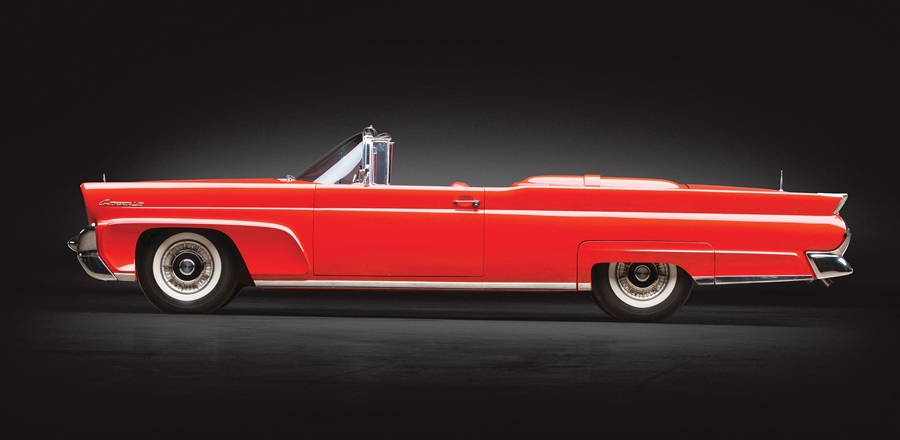
Anyways if the wind could move one of these Land Yachts. Then there would be no way in Hell that I would still be in the area! Grumpy

An intact marriage is a powerful preventative for public violence. You already knew that, and from several sources. It confirms your suspicions that the mass murderers in 26 of our 27 deadliest attacks came from fatherless homes. You already knew that most violent criminals are men. You noticed that most violent criminals grew up without a father.
You knew that boys are more sensitive than girls to family breakup. Boys need a nurturing mother AND a disciplinarian father so that the boys grow to become socially attached and psychologically whole.
Boys learn patience and emotional resilience from their father. You knew that boys become frustrated-and-angry outcasts when they fail to learn those lessons.
Fatherless boys and girls are delayed or depressed in dozens of social markers. However, the expression of that failure in the form of public violence is usually seen in boys rather than in girls.
I did not say that unwed moms produce mass murderers. I said that adults who lack self-control predominantly come from homes without a father.
If you want a society where people control their violent impulses, then you should support marriage.
Our immersion in the media culture has grown enormously over time and at an accelerating rate. Today we carry video media in our pocket. Our media exposure is so pervasive that most children spend more time watching screens than interacting with real people.
Unfortunately, the news and entertainment media work hard to keep our attention. If it bleeds it leads..and the coverage of mass murder lasts for days. Add the fact that some angry and narcissistic young men will do anything for fame.
After the next mass murder, the news media will flood us with the murderer’s face and name as they turn the murderer into a celebrity. That billion dollar media blitz is an advertising campaign, a casting call, searching for the next mass murderer.
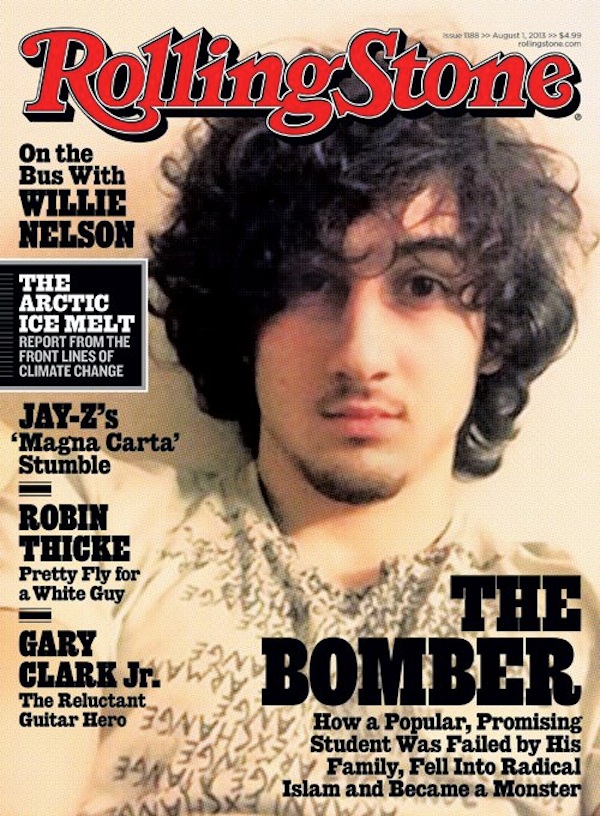
Media analysts and psychologists say we could cut the rate of mass murder by a third to as much as half. All we have to do is stop turning these murderers into celebrities.
There are media guidelines in place that stop news organizations from showing the face and saying the name of the mass murderer. Only a few US media organizations have signed on.
Yes, you can watch the news without becoming a mass murder. The same isn’t true for narcissistic psychopaths and sociopaths. We have to stop rewarding these narcissists if we want to stop mass murders.
Synthetic Violence
Killing our fellow man is unthinkable for most of us. Immersing ourselves in simulated violence makes killing easier. By the time we reach our early 20s, most of us have seen a quarter million violent acts on TV.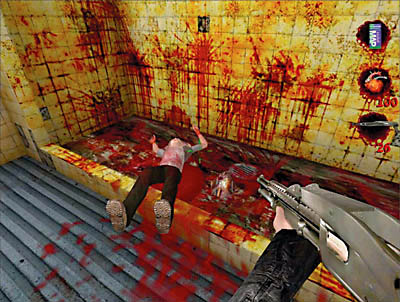
The murderer at Sandy Hook Elementary School who killed 20 children and seven adults immersed himself in video games as he failed in his real relationships. He played 4,901 simulated combat matches over more than 500 hours. He killed 83,496 characters. During that simulated violence, he shot 22,725 characters in the head in order to kill them. He later repeated that exercise in real life at a public school.
I’m glad that you can play video games without becoming a murderer. Some people can’t. If you want to save lives then stop teaching our kids to kill.
We emptied most of our mental hospitals in the 1960s. Some of the mentally ill were successfully treated in local treatment facilities. Many were not. Our response to dealing with the mentally ill was to make all of society into a low-quality mental institution. That isn’t a sophisticated or targeted solution.
Many mass murderers have a history of violence and mental illness. Politicians tell us to say something if we see something..and we have.
The Federal Bureau of Investigation and the Bureau of Alcohol Tobacco Firearms and Explosives were called many times about the murderer at the Pulse Nightclub in Orlando, Florida. They were called before the murders at Parkland High School in Florida.
The police were called to the Parkland murderer’s home 45 times and no one asked for a mental evaluation to make the murderer prohibited from owning firearms.
Government agencies would rather look the other way than to do their job. If you want to stop mass murderers then we have to hold politicians and bureaucrats accountable for their mistakes.
 Killing Zones
Prevention only takes us so far. Unfortunately, we cannot identify all of the people who will become violent just as we can not tell which people with heart conditions will suffer a heart attack tomorrow. That means we should prepare to deal with heart attacks and with school attacks in order to save lives. We have to plan our response in addition to implementing preventative measures.
In too many cases, we’ve deliberately prohibited a defensive response to public violence. Mass murderers look for crowds of defenseless victims. We are 30 times more likely to be attacked in a “gun-free” zone. Stop creating hunting grounds for sociopaths by disarming the victims.Summary
Our divorce rate here in the US doubled since the 1930. Reversing that trend and saving your marriage may save your children. Our news and entertainment media is violent and voracious. Stopping “celebrity violence” will clearly save lives.
Stop teaching our kids to kill. Eliminating “gun-free” zones reduces the times and places where mass murderers will strike. All of those solutions are simple and easily achievable compared to making bureaucrats do their job. All are worth it because each one saves lives.
References-
http://thefederalist.com/2015/07/14/guess-which-mass-murderers-came-from-a-fatherless-home/
https://www.patheos.com/blogs/markmeckler/2018/02/27-deadliest-mass-shooters-26-one-thing-common/
https://www.foxnews.com/opinion/the-desperate-cry-of-americas-boys
https://townhall.com/columnists/rachelalexander/2018/03/06/dr-warren-farrell-explains-the-boy-crisis-n2457856
https://www.apa.org/news/press/releases/2016/08/media-contagion.aspx
http://jpfo.org/d.i.e/die-partners.htm
http://pediatrics.aappublications.org/content/124/5/1495
https://onlinelibrary.wiley.com/doi/abs/10.1002/bin.84
https://www.chicagotribune.com/news/opinion/commentary/ct-perspec-mass-shooters-russia-public-shootings-thousand-oaks-mercy-hospital-chicago-1121-story.html?fbclid=IwAR1aeWbewgcl8ihvia8RLmDO6onfFVTm-adSxwW4-2LC02GeJWHnu1JcGcU
https://crimeresearch.org/2018/06/more-misleading-information-from-bloombergs-everytown-for-gun-safety-on-guns-analysis-of-recent-mass-shootings/
~_~_

Editor’s Note: The following is a syndicated article by author Beth Alcazar that first appeared in USCCA’s Concealed Carry Magazine Volume 12, Issue 3, April 2015 under the title, “Like Mother Like Daughter: Teaching My Little Girl to Shoot.”
My palms were sweating, and I felt a little queasy as the metallic door to the indoor firing range at Hoover Tactical Firearms closed behind me. I walked up to the assigned lane — Lane No. 3 — and I set down my equipment. I heard several shots on both sides of me, and my heart started racing. I took a deep breath and willed myself to keep going, not walk out, not call it quits … not when I was this close.
As I prepared my firearms for shooting and stood at the firing line, my mind was reeling, wondering if I’d forgotten something or if I’d done anything wrong. I went over the safety rules in my head, trying to reassure myself that all would be well. I took another deep breath. I quickly glanced around at the other shooters and tried to capture the moment in my brain. After all, it’s not every day that someone takes her very first shot.
From all the anxiety and excitement that was pulsing through my body, you would’ve thought that this was MY first time shooting. But it wasn’t. It was my 12-year-old daughter’s. And I was clearly a pleased, nervous, proud and blessed mom relishing in the opportunity to teach my child about responsible gun ownership and to be right by her side when she took her first shot.
When I was growing up, it would have been a bit odd to friends and family if I’d been out at the shooting range with my parents. That just wasn’t the norm, especially for me, growing up in a home without firearms. My mom and dad didn’t own guns or know anything about them, for that matter. I never even held a gun until my senior year in high school, when my boyfriend at the time thought it would be fun for me to learn how to shoot. I didn’t touch a gun again until about seven years later and didn’t get my permit to carry a firearm for almost another 20.
Fortunately, girls and guns aren’t such a rarity these days. Especially here in the South, I see moms and dads taking their daughters outdoors all the time, teaching them how to hunt and fish and how to enjoy and appreciate the outdoors. And in addition to participating in things like martial arts or team sports, more females are adding the still-male-dominated shooting sports to their list of hobbies, interests and accomplishments.
Of course, whether or not a girl participates in shooting competitions or grows up and decides to own a firearm and/or to carry concealed, I firmly believe that every female needs to learn how to shoot, just as much as any guy, if not more so.
Since females are more often the targets of domestic abuse and violent crimes, girls should be taught from a young age how to defend themselves. And they should be taught to be proud of their Second Amendment rights.
Of course, teaching young people about firearms can be a touchy subject. The most important aspect is safety for everyone involved. And I believe that all children should learn about guns, starting as soon as possible. This doesn’t mean that children should be handling guns or shooting when they’re little, but they should be exposed to the safety rules, repeatedly, just as if you were teaching them not to touch the hot stove, not to run across the street without looking carefully or not to talk to strangers.
Gun safety needs to be an everyday, normal conversation — for boys and girls — so when young children are old enough, they will be ready to learn and develop their shooting skills and join the growing number of responsibly armed Americans.
The period when a child is actually ready to learn how to shoot is another in-depth conversation. Different children will be ready at very different times based on a variety of factors. What’s right for one might not be right for another. Each family needs to carefully consider their children’s ages, attitudes, physical abilities, aptitudes, interests, maturity levels and cognitive decision-making skills. There’s much more to it than simply saying, “OK, my daughter is 8 years old. She is ready to shoot now.” Don’t be afraid to really ask yourself if she is responsible enough. And don’t be afraid to ask your children their thoughts as well.
Personally, I felt like my daughter was ready when she had matured socially and emotionally, could appreciate and handle instruction with grace, actually showed a genuine interest in firearms and had gotten over some of that tween awkwardness that comes with growth spurts, hormones, body changes and insecurity. All of these happened to come into alignment right around the time of her 12th birthday, so for us, we knew it was a good time to move beyond the basic rules and actually teach her how to shoot.
Anyone who has taught others how to safely use firearms knows that this is a big responsibility. Our three children go over the gun safety rules repeatedly in our household. And my husband and I are careful to model responsible gun ownership as well. It’s one thing to say it; it’s another thing to live it, day in and day out, no matter what. Those little ears are listening, and those eyes are watching, even when you think they aren’t.
When we felt our daughter was ready to learn how to shoot, I actually made her sit through one of the USCCA courses I taught. Granted, some of the information was probably beyond her level of comprehension, but I wanted to give her the opportunity to learn about situational awareness and personal safety, along with the basics of how a gun works and how she should properly hold it, aim it and shoot it. We also worked on stance and grip and practiced with unloaded firearms, so she could get the feel down and be comfortable before even setting foot on the range.
When we arrived at our local indoor range for the big day, my husband asked, “So, are you nervous?” I replied, “Yes,” before realizing that he was not addressing me. My daughter chimed in, announcing that she was not nervous, just excited. But I made her say the safety rules again out loud before we headed inside. More than once, I asked her if she had any questions. Too many times, I reminded her what to expect when we got into the range. And repeatedly, I checked her eye and ear protection. Finally, we paused for one quick picture, and then we went inside.
It was an honor to watch my daughter carefully take the .22 revolver in her hands, line up the sights and pull the trigger. I only loaded one round that first time, but you could tell by the look of joy on her face that she wasn’t ready to stop there. Since we’d gone over how to load the gun many times, I watched her do it this second time. She had the odd wobbles and fidgets of a beginner, but she was careful to follow the safety rules with the muzzle pointed toward the target in a safe direction and her finger off the trigger. Again, she gripped the revolver, lined up the sights and shot at that hot-pink target in front of her, smiling as the bullets punched through dotting the paper.
Undoubtedly, being at the range with my eldest daughter was an incredible feeling. But I know that I won’t always be able to be there by her side. I won’t always be around to guide her, help her or protect her. She’ll be on her own one day all too soon. And that’s exactly why I teach my daughter how to be a responsible gun owner and why this won’t be our last trip to the shooting range together.

(CNSNews.com) – California ranks No. 1 among the 50 states for the percentage of its residents 25 and older who have never completed ninth grade and 50th for the percentage who have graduated from high school, according to new data from the Census Bureau.
Texas ranks No. 2 for the percentage of its residents 25 and older who have never completed ninth grade and 49th for the percentage who have graduated from high school.
9.7 percent of California residents 25 and older, the Census Bureau says, never completed ninth grade. Only 82.5 percent graduated from high school.
8.7 percent of Texas residents 25 and older never completed ninth grade, and only 82.8 percent graduated from high school.

California and Texas—while having the highest percentages of residents 25 and older who never finished ninth grade and the lowest percentages who graduated from high school—are the nation’s two most populous states.
In fact, the 2,510,370 California residents 25 and older who, according to the Census Bureau, never finished ninth grade outnumber the entire populations of 15 other states.
In California, children are required to attend school from six years of age until they are 18. “California’s compulsory education laws require children between six and eighteen years of age to attend school, with a limited number of exceptions,” says the California Legislative Analyst’s Office, an agency of the California state government.
(The National Center for Education Statistics also indicates that children in California are compelled by law to attend school from 6 to 18 years of age.)
Massachusetts ranks No. 1 for the percentage of its residents 25 and older—42.1 percent–who have earned at least a bachelor’s degree.
These rankings are based on data from the Census Bureau’s American Community Survey 5-year estimates, which were released this month.
In the survey, the Census Bureau asks respondents to specify the level of educational attainment for each individual in their household. The question is: “What is the highest degree or level of school this person has COMPLETED. Mark (X) ONE box. If currently enrolled, mark the previous grade or highest degree received.”
The survey form then offers the respondent multiple options ranging from “no schooling completed” to “professional degree” or “doctorate degree.” If an individual has not earned a high school degree, the respondent is asked to specify the highest grade the individual actually completed—ranging from “nursery school” through “12th grade—NO DIPLOMA.”
The Census Bureau’s American Community Survey queries a random sample of more than 3.5 million U.S. households each year and publishes a one-year estimate for each year. The five-year estimate, the bureau says, “is a weighted average of the five one-year estimates.” The newly released five-year estimates are for the period from 2013 through 2017.
Nationwide, 5.4 percent of residents 25 and older have never finished ninth grade, according to the latest five-year estimates.
Ten states exceeded the nationwide level of residents 25 and older who have never finished ninth grade. These include: California (9.7 percent), Texas (8.7 percent), New York (6.5 percent), New Mexico (6.5 percent), Kentucky (6.1 percent), Nevada (5.9 percent), Arizona (5.9 percent), Mississippi (5.6 percent), Rhode Island (5.5 percent), and Louisiana (5.4 percent).
Wyoming—with 1.8 percent—had nation’s smallest percentage of residents 25 and older who never finished ninth grade.
In seventeen states, the percentage of residents 25 and older who at least graduated from high school was less than the nationwide percentage of 87.3 percent.
These seventeen states included: California (82.5 percent), Texas (82.8 percent), Mississippi (83.4 percent), Louisiana (84.3 percent), New Mexico (85 percent), Kentucky (85.2 percent), Alabama (85.3 percent), Arkansas (85.6 percent), Nevada (85.8 percent), West Virginia (85.9 percent), New York (86.1 percent), Georgia (86.3 percent), Tennessee (86.5 percent), South Carolina (86.5 percent), Arizona (86.5 percent), North Carolina (86.9 percent), and Rhode Island (87.3 percent).

Nationwide, 30.9 percent of residents 25 and older have a bachelor’s degree or higher.
In nineteen states, the percentage with a bachelor’s degree or higher exceeds the national percentage. These nineteen states include both No. 14 California (32.6) and No. 9 New York (35.3), which respectively ranked No.1 and No. 3 for the percentage of residents 25 and older who never finished ninth grade.
The ten states with the highest percentage of residents 25 and older who earned a bachelor’s degree or higher are: Massachusetts (42.1 percent), Colorado (39.4 percent), Maryland (39 percent), Connecticut (38.4 percent), New Jersey (38.1 percent), Virginia (37.6 percent), Vermont (36.8 percent), New Hampshire (36 percent), New York (35.3 percent), and Minnesota (34.8 percent).
West Virginia—at 19.9 percent—has the lowest percentage of residents with a bachelor’s degree or higher.
In another seven states, the percentage of residents who have a bachelor’s degree or higher is less than 25 percent. They are: Mississippi (21.3 percent), Arkansas (22 percent), Kentucky (23.2 percent), Louisiana (23.4 percent), Nevada (23.7 percent), Alabama (24.5 percent) and Oklahoma (24.8 percent).

In California, according to the Census Bureau’s five-year estimates, the resident population 25 and older was 25,950,818. Of those individuals, 2,510,370—or 9.7 percent–never completed ninth grade.
Another 2,033,160 California residents 25 and older completed the ninth, tenth, eleventh or twelfth grade—but did not earn a high school diploma. Thus, a total of 4,543,530 California residents 25 and older—or a nation-leading 17.5 percent–have never graduated from high school.
Those 2,510,370 individuals 25 and older in California who never finished 9th grade outnumber the entire populations of 15 other states, according to the Census Bureau’s latest population estimates. These include: Alaska (737,438), Delaware (967,171), Hawaii (1,420,491), Idaho (1,754,208), Maine (1,338,404), Montana (1,062,305), Nebraska (1,929,268), New Hampshire (1,356,458), New Mexico (2,095,428), North Dakota (760,077), Rhode Island (1,057,315), South Dakota (882,235), Vermont (626,299), West Virginia (1,805,832), and Wyoming (577,737).

In Texas, the resident population 25 and older was 17,454,431. Of those individuals, 1,513,995—or 8.7 percent—never completed ninth grade. That outnumbers the populations of 11 states.

