Categories
Dear Grumpy Advice on Teaching in Today's Classroom

When stuff about WW II that is usually not taught in Schools!

Allied made mistakes during WWII also……

I have posted in the past about various mistakes the Axis made during WWII, but the AAllies were not totally competant either, they also screwed up.  Such is the vagaries of War, you can’t always expect the enemy to screw up, they are in it to win also.
When discussing the outcome of World War II, much is made of Axis mistakes. From Hitler’s launch of Operation Barbarossa to Japan’s failure to destroy the American carrier fleet, there were plenty to be had. But the Allies made plenty of military mistakes of their own.
The Winter War
Before it joined in fighting the Germans, the USSR used the chaos of war to achieve other aims. In November 1939, while the rest of the world was reeling from the invasion of Poland, the Soviets invaded Finland.
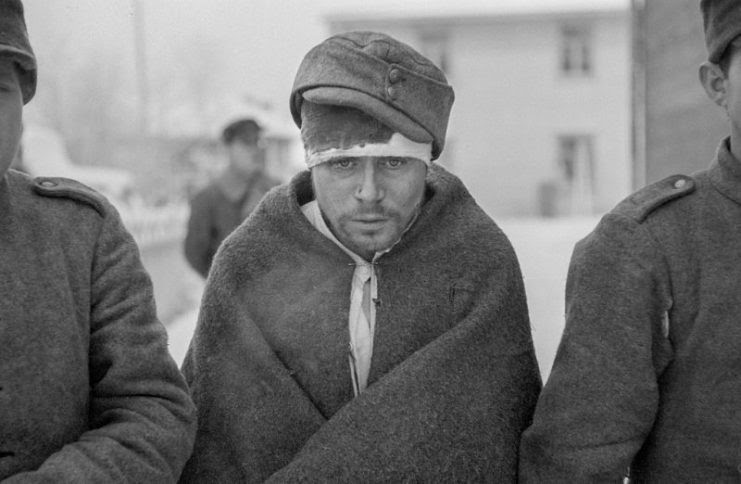
Ironically for a nation that had once been saved from an invasion by winter, the Soviets were woefully unprepared for the cold of Finland. Guns malfunctioned. Vehicles seized up. Men froze to death amid the ice and snow.
Their dark green uniforms, which would have disguised them in the forests further south, made them stand out against the snow. Meanwhile, the Finns used skis to swiftly cross the snow and saunas to create warm, safe medical stations.
A group of Finnish soldiers in snowsuits manning a heavy machine gun in a foxhole.Though vastly superior in numbers, the Soviets suffered huge casualties and international humiliation. When peace was made in March, they took control of 11% of Finland, but it had come at a terrible cost.
Soviet prisoners of war dressed with new clothes near the Arctic Circle at Rovaniemi in January 1940

Falling for the same trick twice is always embarrassing. In war, it can be fatal. That’s why the Allied attitude to the Ardennes Forest stands out.
Ardennes
The Ardennes lay in the border region where Belgium, France, and Germany met. In May 1940, the French left this area weakly defended, believing it to be impassable to armored formations. Instead, they relied on the fortified Maginot Line to hold the Germans back.
The Maginot Line.Photo: GoranThe Germans proved the French wrong. Their tanks swept through the Ardennes, across previously neutral Belgium, and into France, completely ignoring the Maginot Line. France fell.
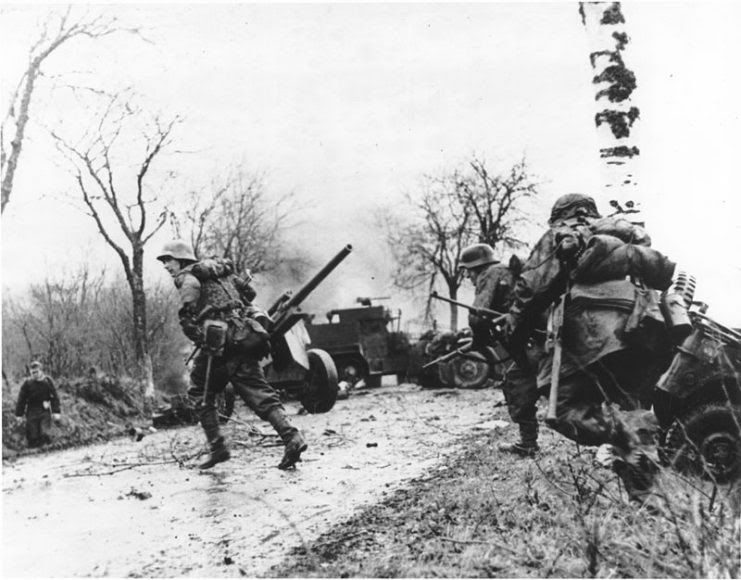
Four and a half years later, the same thing happened all over again. In his last great throw of the dice, Hitler launched an offensive through the Ardennes in December 1944. Once again, his men burst through weak Allied lines, though they were eventually thwarted by their limited resources.
German troops advancing past abandoned American equipment.18 December 1944. In General Eisenhower’s defense, it has been argued that this second time it was a trap, and that the American lines were deliberately weak to draw the Germans in. But if that was the case, Eisenhower never admitted to his own clever plan.
The Raid on Dieppe
On 19 August 1942, the Allies launched a raid in force on the French port of Dieppe. It was a British Army operation, but the troops involved were mostly Canadian.
Dieppe’s chert beach and cliff immediately following the raid on 19 August 1942. A Dingo Scout Car has been abandoned.Photo: Bundesarchiv, BildThe raid was meant to be a trial run for capturing a port by conducting an amphibious landing. It was a complete disaster.
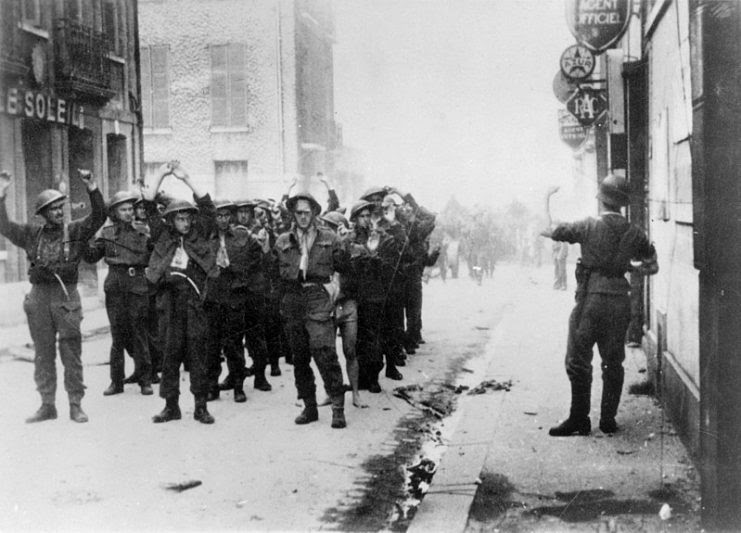
Most of the troops became trapped on the beaches, where they were mercilessly battered by German machine guns and artillery. Even the tanks were mostly unable to get into town. Within a few hours, the withdrawal was called, and more men were lost getting out.
Over 4,000 Allied personnel were killed, wounded, or captured at Dieppe. It was a day that would forever color Canadian memories of the war.
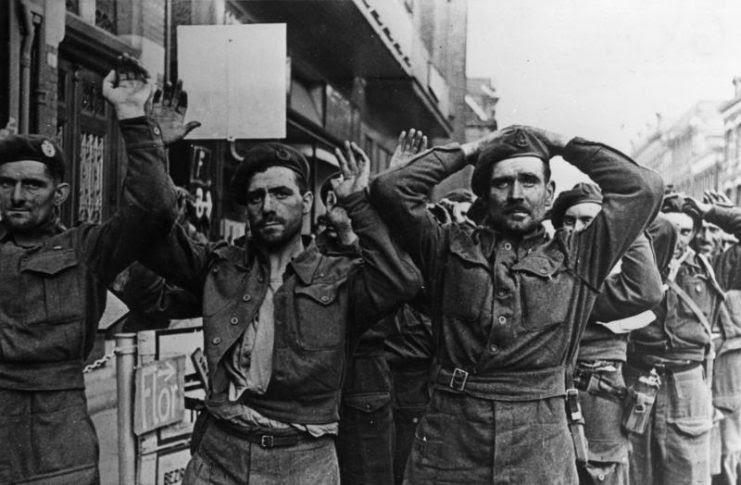
Canadian prisoners being led away through Dieppe after the raid.

Kasserine Pass

On 19 February 1943, German and Italian troops under General Rommel launched an attack against the Americans at the Kasserine Pass in Tunisia. It was an attack that proved just how unprepared the Americans were.
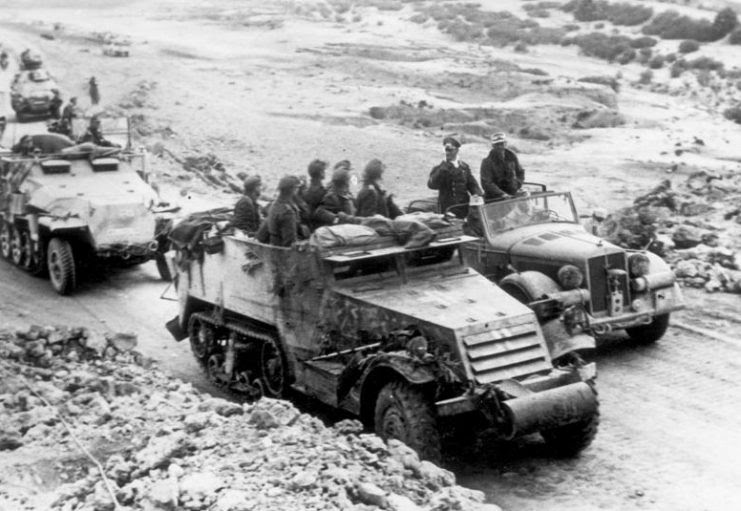
Rommel in Tunisia speaking with troops riding a captured American built M3 Half-track.Photo: Bundesarchiv, Bild 146-1990-071-31As the Axis forces stormed forward, they caught the Americans by surprise. The Americans had faced little combat, while many of their opponents were veterans of the North African theater.
The Americans made basic mistakes such as not digging in properly, bunching together, and failing to properly position their troops. They courageously held out for the first day of fighting, but on the second day they fell into a disorderly retreat.
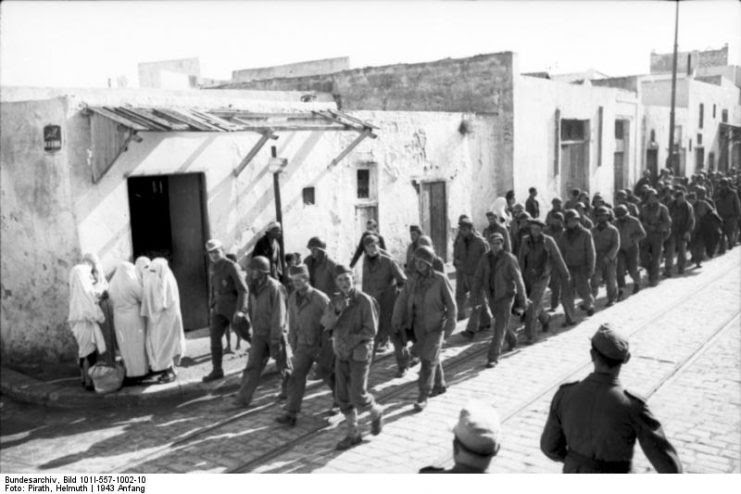
U.S. troops taken prisoner during the battle march through a Tunisian village.Photo: Bundesarchiv, Bild 101I-557-1002-10 /
Rommel achieved his tactical goal of breaking through the pass, but he was unable to make the strategic gains he had hoped for. British and American forces regrouped beyond the pass and held up his advance.
His aim of punching through the Allied lines and seizing their supplies never came to fruition. Not every failure turned into a disaster for the Allies.

Hurtgen Forest

At the time of the second Ardennes offensive, the Allies were already bogged down in one of their biggest mistakes – the Battle of Hurtgen Forest.
From September 1944 to February 1945, the Americans attacked German positions in the Hurtgen Forest, a wooded area around the border between Germany and Belgium. The Germans were well dug in amid the dense forest, making their lines almost impossible to break.
The Americans tried again and again in a series of bloody assaults. They lost nearly 30,000 men killed or injured and thousands more to combat exhaustion.
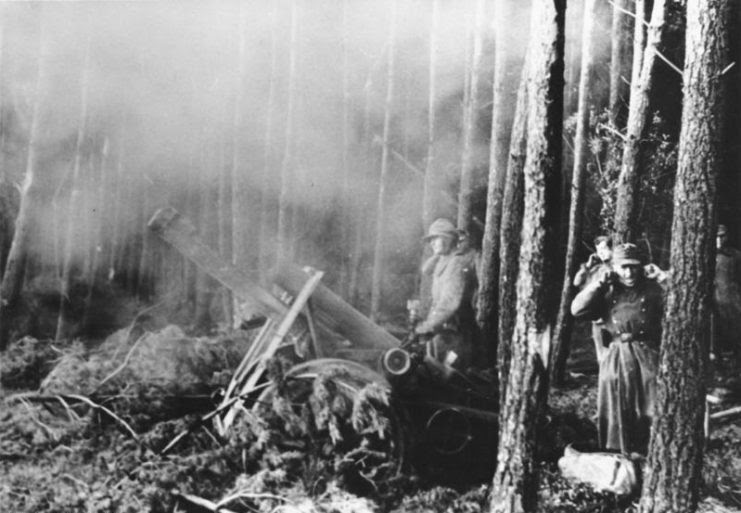
A German heavy mortar firing in defense against a U.S. attack on 22 November 1944 in the Hürtgen forest.Photo: Bundesarchiv, BildBy the time they broke through, the Germans had opened the floodgates on industrial dams, something the battle had supposedly been launched to avoid. The war moved on thanks to real victories elsewhere, and the bloody waste in the Hurtgen was quietly ignored.

Operation Market Garden

One of the boldest ventures of the war, Operation Market Garden was launched by General Montgomery in September 1944. By landing paratroopers at a series of key bridges, he aimed to open a route across the Low Countries and into Germany. Conventional troops would follow before the Germans could counter-attack, ensuring victory.
British POWs at Arnhem.Photo: Bundesarchiv, Bild 183-S73820 /Unfortunately for the British and Polish paratroopers, Montgomery’s scheme proved too bold. The ground campaign didn’t advance as quickly as he had hoped. Allied paratroopers were trapped in the town of Arnhem for a week, taking heavy casualties at the hands of the Germans.
By the time they were withdrawn, 1,200 men had died. 6,600 more were left behind, injured, captured, or missing.

I used the ending from the movie “A Bridge Too Far”.  It is one of my favorite war movies and it was to me well done.

Categories
Dear Grumpy Advice on Teaching in Today's Classroom

From My Daily Kona

Something to think about, people take things for granted and the people in question were educated and “comfortable”.  They pledged their sacred honor for this and some lost everything on a matter or principle.

What happened to the signers of the Declaration of Independence?

This is the Price They Paid: 


Have you ever wondered what happened to the 56 men who signed the Declaration of Independence?
Five signers were captured by the British as traitors, and tortured before they died. Twelve had their homes ransacked and burned. Two lost their sons in the revolutionary army, another had two sons captured. Nine of the 56 fought and died from wounds or hardships of the revolutionary war.
They signed and they pledged their lives, their fortunes, and their sacred honor.
What kind of men were they? Twenty-four were lawyers and jurists. Eleven were merchants, nine were farmers and large plantation owners, men of means, well educated. But they signed the Declaration of Independence knowing full well that the penalty would be death if they were captured.
Carter Braxton of Virginia, a wealthy planter and trader, saw his ships swept from the seas by the British Navy. He sold his home and properties to pay his debts, and died in rags.
Thomas McKeam was so hounded by the British that he was forced to move his family almost constantly. He served in the Congress without pay, and his family was kept in hiding. His possessions were taken from him, and poverty was his reward.
Vandals or soldiers or both, looted the properties of Ellery, Clymer, Hall, Walton, Gwinnett, Heyward, Ruttledge, and Middleton.
At the battle of Yorktown, Thomas Nelson Jr., noted that the British General Cornwallis had taken over the Nelson home for his headquarters. The owner quietly urged General George Washington to open fire. The home was destroyed, and Nelson died bankrupt.
Francis Lewis had his home and properties destroyed. The enemy jailed his wife, and she died within a few months.
John Hart was driven from his wife’s bedside as she was dying. Their 13 children fled for their lives. His fields and his gristmill were laid to waste. For more than a year he lived in forests and caves, returning home to find his wife dead and his children vanished. A few weeks later he died from exhaustion and a broken heart. Norris and Livingston suffered similar fates.
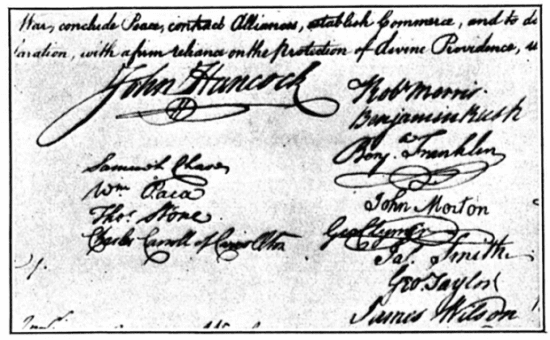
Such were the stories and sacrifices of the American Revolution. These were not wild eyed, rabble-rousing ruffians. They were soft-spoken men of means and education. They had security, but they valued liberty more. Standing tall, straight, and unwavering, they pledged: “For the support of this declaration, with firm reliance on the protection of the divine providence, we mutually pledge to each other, our lives, our fortunes, and our sacred honor.”

Categories
Darwin would of approved of this! Dear Grumpy Advice on Teaching in Today's Classroom Hard Nosed Folks Both Good & Bad Interesting stuff Leadership of the highest kind Soldiering Stand & Deliver The Green Machine
Field Manual 22-102  Headquarters

Department of the Army 1 April

WALL-TO-WALL COUNSELINGFM 22-102


Related image


Wall-to-Wall counseling has been around longer than the American military.
Many famed units used it as their primary motivational tool, and some used nothing else. It’s still prevalent in many hardened military units.
The Spartans
The citizens of the city-state of Sparta, Greece, didn’t mess around. Wall-to-wall counseling was the order of the day among the Spartan. The Spartans believed in hard training and hard discipline, and wall-to-wall counseling is about the hardest kind of discipline that there is. The Spartans were feared both in war and at peace, and they worked hard to maintain their image. Babies were quality controlled at the time of their birth, and any not meeting the standards were put on the sides of mountains to die Needless to say, until the day when wall-to-wall counseling completely erased the desire of the citizens of Sparta to perpetuate the race, nobody screwed with these people.
Patton
General George S. Patton, the famed World War II tank corps commander was a great fan of wall-to-wall counseling. It showed in the, way he led his troops. He never used a kind word when a foul one would do just as well. One of his most famous wall-to-wall counseling sessions occurred in a field hospital Patton believed that combat fatigue was cowardice, and promised to shoot anyone exhibiting it. On a trip through a field hospital, he ran across a shell-shocked private. When the private claimed that he could hear the shells flying overhead but not exploding, Patton became furious He slapped the soldiers in the head, waved a loaded pistol in his face and called him a pussy. Then he ordered him back to the front to fight “so the brave soldiers in this hospital won’t be contaminated by this coward.” That Patton was not punished as severely as he should have been for this deed shows that wall-to-wall counseling has a place in the US Army.

US Soldiers In action around the world in action!

The South Korean Army
The Army of the Republic of Korea uses wall-to-wall counseling in its daily operation. It is sanctioned and approved by the Ministry of Defense. South Koreans feel that the harsher peacetime is, the less the soldier will notice the hardships of combat with North Korea Wall-to-Wall counseling rises to its zenith with the ROK discipline board This group wall-to-wall counseling session is convened for offenses that would result in punishment by court-martial in the US Army. The soldier walks into the discipline board. Is wall-to-wall counseled, and is carried out of the board, either on a stretcher or on ice. While US Army waIl-to-wall counseling is not likely to result in serious death to the soldier, the Korean discipline board is a model to be emulated by all US Army units.
When should you wall-to-wall counsel?
You should wall-to-wall counsel a soldier when he needs it And all soldiers occasionally need wall-to-wall counseling.
Determining when this most severe of leadership techniques is warranted requires the leader to intimately know his soldiers and be aware of when a soldier is far enough gone that a swat in the head is the only thing that will adjust his behavior.
Minor offenses
Simple infractions can be dealt with quickly by a simple ass-beating. Soldiers appreciate this, as it saves them the hassle of having to visit the commander for UCMJ action.
Lateness
Soldiers arriving late for military functions should be screened carefully before being wall-to-wall counseled. A soldier who has never before been late would not benefit from having the shit beat out of him; indeed, it will only destroy his motivation. A soldier who has been late for the past four months, on the other hand, is possibly incorrigible and a well-deserved ass-beating would not only be profitable, but enjoyable. Especially if the soldier has caused you to visit the company commander on less-than-friendly terms.
Incompetence
Soldiers who have proven themselves incapable of performing the demands of their chosen profession may indeed be candidates for wall-to-wall counseling. The source of their incompetence must be determined before harsh measures are implemented, though. If a soldier has just graduated from Initial Entry Training and has never performed his job, corporal punishment would not be a good idea. If, on the other hand, he has performed his MOS for the last two years and still does not know shit from Shinola, the soldier deserves his ass beat and it should be performed at the earliest possible opportunity.
Challenging or defying Authority
Soldiers who harass their leaders are prime candidates for ass-beating. In this case, the soldier should not be given an opportunity to try to pull anything on you the second time. If the soldier harasses or ignores you, kick the shit out of him. Enough said.
Sponsored By: NCOER.COM
Farting
Off Soldiers who fart off should be treated the same as those who fuck with their leaders. Any soldier found sleeping in the back seat of their vehicle in the motor pool instead of working on it should be immediately taken in front of his whole platoon and have the shit kicked out of him. No slack can be placed on soldiers of this nature. The rest of the platoon will appreciate you.
Major offenses
Soldiers found guilty of major transgressions will be punished by the military authorities.
A soldier who kills another soldier will probably be shot. However, long wall-to-wall counseling sessions prior to the arrival of the military police are appropriate in cases where the transgression was against another soldier, and are best conducted in the presence of the wronged soldier. If the wronged soldier is still alive, he or she should be invited to join in to the session, as he or she will feel that revenge is called for and participating in the session will help to heal mental wounds caused by the perpetrator.
Rape
No offense is as damaging to the victim as rape. Murder does not come close, since the victim is dead and knows nothing. A raped soldier will have psychological scars for the rest of his or her life. A male soldier who is the victim of a homosexual rape is especially damaged, and many commit suicide rather than live with this burden immediate wall-to-wall counseling is required, and it must be so severe that bones are broken. Dimension lumber must be used during this session, and the minimum length of the session is three hours. If any part of the rapist’s body has not been hit with the board, the session is not complete. At least one arm and one leg will be broken during the session and the testicles will be hit at least ten times.
Murder
Coming close to rape in its severity is murder. The victim will not be able to participate in the counseling, of course. A long counseling session with a baseball bat and jackboots will be initiated and will continue only until the perpetrator is unconscious. Then the murderer must be revived and beat on some more.
Arson
Arson, of course, affects us all. Besides the possibility of losing your life, seeing all your shit go up in smoke and having to sleep in the street for the next three years, arsonists steal unit morale, cohesion and esprit de corps. After all, if you can’t trust someone to not burn your place down, how can you trust him in a combat situation? Arsonists are very simple to counsel. They are to be placed in the burning building and the doors are to be locked.
Robbery, burglary and barracks thievery
These crimes also affect unit morale. When a soldier rips off your stuff, all you want to do is kill him. Well, if it’s your shit, go ahead and do him in. In fact, do more than that. If however, it wasn’t your shit he took, you should let the wronged do the little shit head. Popular punishments for barracks thieves include the soldier falling down the stairs twenty or thirty times. Soldiers have also been penned into their rooms and tear gas powder blown under the door with a hair dryer. Anything cruel is good barracks thieves. In fact, it is best if you hold a formation to make the entire battalion observe the barracks thief being killed. People who do shit like this do not deserve to live, as they are far below contempt. I would rather have Russians distroing message traffic than a barracks thief in the company. And I definitely do not want Russians pulling WSC.
Other serious offenses
There are many serious offenses that require only moderate amounts of wall-to-wall counseling.
These are normally simple offenses, but are compounded by their circumstances. WaIl-to-wall counseling is demanded before these things get out of hand.
Failure to make coffee for the dayhos
A coffeeless dayho is a grouchy dayho, and grouchy dayhos tend to think of stupid shit for us to do. Any trick worker aware that the dayho coffeepot is empty who does not take steps to remedy this condition will immediately be hit in the head with dimension lumber. If they do it twice, they will be sent to ORMA for the next six months to make coffee and type memorandums which forbid trick workers to breathe.
Excessive errors on reports
Reporters who make excessive errors on their reports cause extra work for their QCs. All reporters who are found to have made more than three errors on a report will be hit on the side of the head with a base ball bat.
Snobbishness
Some soldiers believe that they are God’s gift to the Army. They believe that they do not need to do Army things, like going to formation and doing PT. Some are so bad, they think they are better than their superiors. This is especially bad when the soldier in question is a college graduate and the super-visor is a high school graduate. These soldiers believe their leaders are bone headed morons and will not listen to them. Others believe that the only measure of a soldier is whether that soldier has been to the Defense Language Institute in Monterey, California. The linguist-nonlinguist battle occasionally gets so bad that there are verbal abuses thrown around in several languages, none of them clean. What is the leader to do? The leader has no one to blame but himself if he does not use wall-to-wall counseling to correct this problem. A quick Jap slap will straighten out this bullshit before it gets any worse.
Determining when wall-to-wall counseling is inappropriate
Although an effective technique when properly used, there are some places where wall-to-wall counseling is the wrong thing to do.
Conducting a wall-to-wall counseling session in front of the 7th Army commander, for instance, would probably not be the wisest decision, as it would probably lead to the initiation of a relief for cause NCOER. However, the presence of high level VIPs should not be the only determinant in the decision to delay or withhold a wall-to-wall counseling session.
Soldier’s physical size
Always consider the size of the soldier before initiating a wall-to-wall counseling session. If the soldier is twice your size and his forearms are bigger than your thighs, and the soldier still requires wall-to-wall counseling, a partner will be required. Details on selecting a partner will be covered in the chapter titled “Preparing for a wall-to-wall counseling session.”
Soldier’s hobbies and interests
While leadership actions rarely require you to take into account the soldier’s hobbies, this is one place where knowledge of what the soldier does for fun may prove immensely helpful. If the soldier is heavily involved in kick boxing, martial arts or just happens to be the world heavyweight wrestling champion, a simple wall-to-wall counseling session may turn into a trip to the hospital for both the leader and his assistants. In such cases, restraint and discipline will prove profitable for all concerned.
Wall-to-wall counseling after drinking binges
Leadership actions should never be conducted while you are impaired by alcohol. Ass-beatings given after a six-pack have three drawbacks:
The soldier will not realize the purpose of the session. He will, instead, believe that you got wasted and beat the shit out of him for no reason whatsoever. You will lose respect m the soldier’s eyes as well as in the eyes of the rest of your unit. The soldier may decide to reciprocate and wall-to-wall counsel you at a later time on your transgression. Since wall-to-wall counseling is a tool only the wise leader who knows his troops intimately can properly use, its use by subordinates who may decide to rashly apply it is inadvisable.
The soldier may decide he has been assaulted and call the military police. Since the MPs take a dim view of leaders who get drunk off their asses and beat up on subordinates, you may find yourself facing a court-martial you never intended to face.
Perhaps most importantly, the leader may have gotten so drunk that the subordinate is able to turn the counseling session into a first-rate ass beating directed against the leader.
Since the hospital will treat your injuries as an “alcohol related incident,” they will call your commander (who may have never read this field manual) who will enroll you in the detox program. The detox program, especially if they put you on Track III (residential treatment facility) rates in the entertainment department right up there with getting checked for the clap.
When counselee is counselor’s sexual partner
In the section about conducting wall-to-wall counseling while under the influence of alcohol, we pointed out that the leader must know his troops intimately in order to effectively counsel them. When the leader knows the counselee too intimately, though, there are bound to be inherent problems with the session. First, you can safely figure that you will never again get into this lady’s pants after the session is done. Second, she will probably tell the commander what the two of you have been doing for the last six months, and then you will have some very heavy explaining to do. Third, but not least, she will tell every other female on post what you did, and then you will get no more pussy for the rest of the time you are stationed at that post…even in the red light district with a fifty dollar bill pinned to your jacket. Therefore, the best advice at this stage of the game is: don’t sleep with your subordinates.
Preparing for a wall-to-wall counseling session
More counseling sessions have been ruined by poor preparation than by anything else.
Wall-to-wall counseling is no different from any other counseling in this respect. However, wall-to-wall counseling imposes its own special considerations due to its violent nature.
Sponsored By: NCOER.COM
Dress for success–mean and lean
A leader must be properly dressed to gain the respect and confidence of his subordinates. A wall-to-wall counselor’s dress must also inspire confidence. The soldier must be very confident not only that he is going to get his ass beat, but that this man who is standing in front of him preparing to beat his ass is in fact the one who will do it. A military uniform is very much the wrong garment to wear to a waIl-to-wall counseling session, though. More radical dress is called for. A stop by a clothing store catering to members of the Hell’s Angels Motorcycle Club is in order. Basically, you want to look like Attila the Hun. Full leathers are good for extra protection should the soldier attempt to fight back. Proper jewelry is important. Spiked wristlets not only enhance the terror you want to instill in the soldier, but if properly weighted can increase the pain and damage which a sidearm blow to the solar plexus can cause. Wearing a large Eric the Red biker’s ring will not only make you look tough, but the half pound of metal it contains will increase the effectiveness of punches. Wearing a Hell’s Angels’ deaths-head earring, though, isn’t such a good idea. Although it’s an intimidating item, the counselee may grab it and pull, and then you are in a world of hurt. If you plan to conduct many wall-to-wall counseling sessions, interesting in some large tattoos of Vikings beheading people with blood-covered swords would be a good idea. Additionally, the pain endured while they are being done will toughen you up and make you a more effective counselor. Watching films like The Road Warrior; The Last Boys and Conan the Barbarian will give you more apparel ideas.
Location
The room in which waIl-to-waIl counseling sessions are conducted has a great deal to do with the success of the session. Not only do you not want to be interrupted during the session, but you do not any large objects behind which the soldier can hide or which the soldier can push you into and hurt you.
Modern construction standards, in which large amounts of sheet rock are used, have changed the face of waIl-to-wall counseling. When was were built of plaster and lath, you could bounce the soldier off the walls a few times, kick him in the nuts once or twice, swat him in the head and that would be the end of it There were no worries that the room would survive the counseling session, because you knew that it would. However, you can easily throw a soldier through a sheet rock wall. The Army will make you pay for any walls you damage during counseling. Therefore, you want a large, strong room to conduct your wall-to-wall counseling sessions in.
Before calling the soldier in for his wall-to-wall counseling session, inspect the room thoroughly. Make sure the door is of good quality and is equipped with a working door lock. The lock is important not only to keep the session from being interrupted prior to its conclusion, but also to hinder the soldier’s leaving prior to having received the full impact of the lessons you are teaching him. Try to find a room without any windows.
If this cannot be attained, windows placed high on the wail are acceptable. Not only will the lack of windows prevent others from looking in and observing the wall-to-wall counseling session, but if the session gets really intense, the soldier could accidentally push you into the window, breaking it and injuring you. The purpose of a wall-to-waIl counseling session is to impart the maximum learning and pain upon the counselee with the least amount of damage to the counselor’s body, and a glass shard in your ass is a poor reason to prematurely terminate a session.
However, in a windowless room lighting takes on prime importance. You need to see the soldier so that you know where to hit him next, and the soldier needs to see you hitting him. Make sure the lights work and that the light switch is covered with a piece of green tape to prevent the soldier from easily turning the lights off.
Inform the soldier
After the area is selected and prepared, but before you dress for the session, find the soldier inform him of the time and place of the session. Also give a reason for the session. Don’t approach the soldier and tell him “You’re a fuck up and I’m going to beat your ass at 1530 in the first sergeant’s office.” This puts the soldier on the defensive. Instead, tell the soldier “Meet me in the first sergeant’s office at 1530. I want to talk to you about your performance at NTC last month.” (You can tell him that he’s a fuck up and is going to get his ass beat when he gets to the first sergeant’s office.)
Find counseling assistants
You usually want to conduct wall-to-wall counseling sessions on a one-to-one basis. This is fine you’re counseling a 120 pound basic trainee who doesn’t know shit anyway. If, however, you’re counseling the captain of the Fort Hood Boxing Team and you are a 135-pound woman, you may want to get two or three assistants.
It is simple to find them. Visit the gymnasium and go to the weight room. If you see someone is there putting many fifty-pound plates on a bar and then doing curls and 20 bench presses then you’ve found your man. It’s even better if he is in your unit and hasn’t yet been instigated in an assault case.
If you can’t find anyone like that, though, look for boxers, wrestler or anyone else who fights for fun. The ideal waIl-to-waII counselor has a six-foot reach, fists the size of volleyballs, can bench 35-pounds, runs ten miles a day and has over 20 knockouts.
If you can’t get Mike Tyson to assist you in your counseling session, though, anyone who maxs his PT test would be good too.
The wall-to-wall counselor’s toolkit
Although many successful wall-to-wall counselors have conducted sessions using nothing but their bare hands, a small toolkit will ease your job, especially in those critical first few sessions.
A wall-to-wall counseling toolkit does not have to be elaborate or expensive. In fact, you probably have all materials in your unit right now, and all that it takes to use them is a little imagination.
Baseball bats
No leader can consider himself a wall-to-wall counselor without possessing a good baseball bat technique. A regulation baseball or softball bat is good. Wood or aluminum, short or long, any bat will do as long as it is not splintered. A splintered bat may break during those long swings. Viewing the film The Untouchables will give you ideas on baseball bat technique. You can invent new techniques as you go along.
Dimension lumber
Although dimension lumber is usually used in the same manner as baseball bats, other techniques for its use are easily devised. A two-by-four is a handy thing to have. Cut two of them. One needs to be three feet long, while the other should be four to five feet long. Drive six nails into the longer one so that the sharp ends of them stick out of the board. This is nailed high on the wall of the counseling morn and is primarily there for shock effect.
If a baseball bat is also available, have your assistant grab the counselee’s arms and pull them be-hind his back. Place the board even with the elbows, pull the arms dawn to the body and secure with green tape. This prevents the soldier from attempting to assault his leader.
If two-by-twelves can be obtained, get one about six feet long. While it is not suitable for swinging, the counselee can be secured to it with green tape, lifted high in the air with the aid of your assistant and dropped.
Pool cues
Pool cues are quickly falling out of favor among the modern wall-to-waIl counselor. It is still effective for barroom brawls when the proprietor will not allow you to bring in your toolkit. It is also good for when immediate wall-to-wall counseling is called for and you can’t go out to your car to get a tire iron or a jack handle.
The pool cue sits in a strange and unenviable position among weapons: If held so that it can do some good, it is easily broken; if it is held so that it will not break during blows, it is not long enough to do much good. It is also more expensive than either a two-by-four or a baseball bat. In all, the baseball bat is a much more satisfying tool than the pool cue.
Restraints
Although wall-to-wall counseling is much more challenging and rewarding when a soldier is free to move and fight back, many counselors prefer the expediency of beating someone’s ass while he is tied up.
By taping the arms to the sides as detailed in the Dimension Lumber section, counseling may be accomplished quicker and with less hassle. Many items may be used for restraints; here we list but a few.
Handcuffs
Available at all police supply stores, handcuffs are an easy, effective way to restrain the counselee. Two pairs should be used if no assistant is available. One end of the cuffs is attached to the soldier, the other to a pipe or other support. The soldier may also be hand cuffed to an object by putting his hands behind the object and the cuffs snapped on from there. The new “cable-tie” style handcuff is a cost-effective and useful restraint. It is usually long enough to secure the feet and is available for mere pennies. Its only drawback is that it is only usable once; it must be cut off cut off after the session and thrown away.
Green tape
The Army standby, green tape, better known as hundred-mile-an-hour tape, is effective as a short-term restraint, providing the soldier is not strong enough to break it. It is available in several widths; the standard 2″ width is sufficient for most soldiers. The almost-unobtainable 6″ width is not good for wall-to-wall counseling due to its extreme width and liability to twist at the slightest provocation. It is also more expensive.
Ropes
Ropes are only marginally acceptable as restraints, but are good for tying the soldier to trees in the field and for dangling him from fire escapes by the ankles or wrists. If the counselor intends to hang the soldier from a fire escape, though, special care must be taken in the selection of the rope to insure that the weight of the soldier will not break the rope and cause him to land on his head and die. Army issue rappelling rope is the best obtainable wall-to-wall counseling rope due to its high strength and easy availability.
Conducting the wall-to-wall counseling session
Wall-to-wall counseling can be conducted in many ways.
For on-the-spot counseling, a quick swat across the back of the head with a closed fist or a slap in the face will probably be sufficient. For prolonged periods of misconduct by the soldier, prolonged periods of wall-to-wall counseling are in order. All wall-to-wall counseling sessions, though, are notable for their intensity and aggressiveness. The counselor should have a broad range of counseling methods available to him. He would be wise to study boxing manuals for additional suggestions. Enrolling in a martial arts class would also be a good idea, if he has the time to spare. In addition to improving counseling skills, the martial arts teach patience, discipline and self-control…all desirable traits for any leader.
Basic blows
The basic blows used in wall-to-wall counseling are the jab, hook, uppercut and knee to the nuts. These are also basic street fighting techniques
Jab
The jab is performed by pulling the closed fist back and striking the counselee with a generally straight motion. It is a quick and handy technique. Which will find much use in your daily counseling.
Hook
A hook is a sideways-curving stroke. It may be performed with either hand. It is best to know which hand the counselee prefers, so that you can use the same band to hit him with. In this manner, the danger of the counselee blocking your shot is greatly reduced. It is another blow which will prove itself worthy of inclusion in your counseling repertoire.
Sponsored By: NCOER.COM
Uppercut
Similar to the book, the uppercut is an upward-curving stroke. It is best used on the solar plexus and the jaw. If the counselee sticks his tongue out at you, the best cure is a swift upper-cut. If you are sufficiently forceful, you can succeed in clipping off the counselee’s tongue, and therefore prevent him from talking back, at least until they sew it back on. Although a good blow, the jab and hook are generally more useful and therefore should receive more of your training hours. However, the uppercut will find use in your sessions, and so you must be prepared to use it.
Knee in the nuts
Needless to say, this doesn’t work very well with female soldiers! However, most wall-to-wall counselees are male, and on them it is probably your most effective blow. Just flex the knee upward until it hits the balls. Alternately, if you can get your foot up that high, you can kick them in the balls with it. If you have performed this hard enough, the counselee will immediately drop to his knees. It will be the only blow you will need. If the soldier does not drop to his knees, you are counseling either an extremely flat and ugly woman or a eunuch. In neither case will this blow work, and in both cases you have just entered a world of shit.
Advanced blows
Advanced blows include the Jap slap, boot to the head and tool techniques. These are effective, but more-limited, counseling techniques.
Jap slap
Everyone has seen karate movies, How can the jap slap, which is performed by slapping the soldier on one side of the face and immediately following it with a backhand to the other side of the face, be considered an advanced move? Simple. Both blows must be of equal intensity to have the greatest effect. If one blow knocks the head out of the socket, the other must put it back in. The backhand is usually the most intense blow, and is performed last. It takes much practice to make them equal.
The ideal object to practice with is the heavy punching bag found in all Army gymnasiums. On any given day, you will find many wall-to-wall counselors practicing their Jap slaps against this bag, so you may need to wait in line. Rest assured that the wait is well worth it.
If your unit’s leaders embrace wall-to-wall counseling as a common leadership technique, you may be able to convince the Unit Fund Council to install its own heavy bag. If you are in an in an infantry unit or are in charge of many O5Ks, though, the sheer number of counselees will provide sufficient opportunity to practice and hone your technique. Still, there is no substitute for the heavy bag. Not even an 05K can rep lace it, though some of the new ones come dose.
Boot to the head
This is just what it sounds like…you kick the standing soldier in the side of the head with your foot. Whether you have a boot on will depend on the circumstances. If you are counseling a soldier during a field problem, you most definitely will have on a boot, and the extra mud caked in the sole will enhance the effectiveness of the blow. If, however, you find a soldier smoking grass in the barracks, you may not have a boot on, though you might want to go put one on. In fact, you might not have anything at all on. It’s obvious why this is an advanced blow: can you raise your foot six feet in the air without falling on your ass? Martial arts training is a definite asset to counselors employing this technique.
Tool techniques
These include baseball bat blows, dimension lumber work, and chains. They also include the use of restraints. They are easy to use but also require great discipline to ensure that the soldier survives the counseling. No directions will be given here. We leave that for the counselor to figure out for himself. Creativity is one of the hallmarks of a good leader.
Using these techniques
Wall-to-wall counseling is much like any other counseling.
You choose the place, inform the counselee, meet him there, counsel him until his problem is solved and conduct follow-up actions. In wall-to-wall counseling, though, how you determine when his problem is solved is when he screams for mercy. Then you hit him once or twice more to reinforce the counseling session and make sure the problem stays solved, and only then end the counseling session.
Determining how much wall-to-wall counseling is enough
The successful wall-to-wall counselor needs to be able to determine how much wall-to-wall counseling to give. A soldier who misses one formation can be sufficiently counseled by hitting them once in the back of the head. A soldier who missed every formation since he arrived at the unit two years ago, however, will require counseling with dimension lumber and a baseball bat. The counselor will quickly learn the proper amount of counseling to give.
Of course, if the soldier is a rapist, robber or murderer, just start your wall-to-wall counseling session and continue until the military police arrive.
Follow-up actions
No counseling is complete without follow-up actions. This is especially true in wall-to-wall counseling. Following up a wall-to-wall counseling session is covered in the chapters entitled “Triage” and “Legal problems.”
The counselor should be prepared to wash his hands of the whole matter, especially if the session drew blood. The counselor should, therefore, place a bar of Lava soap in the latrine prior to the session. Its gritty consistency will remove all traces of blood from your fingers, and it will help to dean off your baseball bat, too.
Triage
The soldier may need immediate medical attention following a wall-to-wall counseling session, especially if you used a baseball bat during it.
If the soldier is a true fuck up, broken bones, internal injuries and hemorrhaging may have occurred. Inspect the soldier to make sure he is still conscious, still breathing and does not appear to have any external damage or signs of internal damage (blood or cranial fluid leaking from the ears is generally a sign that the counseling session was a little too thorough). One of the three is generally sufficient. If the soldier can still move following the session, immediately restrict him to his room. If he is not breathing and will not obey a direct order to resume breathing, perform rescue breathing and then beat his ass some more after you revive him. If his heart stops, apply CPR and then recounsel him for inability to remain alive during a counseling session. Not hitting the soldier right over the heart or the top of the head may cut down on the frequency and severity of death among your counselees.
If the soldier beats your ass during counseling, though, there is little you can do. If you aren’t fucked up too badly, you can just lick you wounds and hope the bruises heal before your wife sees you. If you need to be ambulanced off to the hospital, though, you can tell the judge that the soldier hit you first. If the judge believes your integrity (and he should…after all you outrank the soldier who kicked your ass. If you don’t, you may be in deep kimchi…) you should be all right, especially if the soldier actually did hit you first If you hit the counselee first and he still beat you up, then you need to spend more time in the gym.
Legal problems
Some unenlightened legal personnel, including the MPs and JAG, may not have read this manual.
Therefore, they might not recognize the corrective nature of your actions and instead term them “brutal, heartless assault,” which is also true. The solution to this problem is preparedness: Requisition sufficient copies of this manual so that everyone on post that can legally fuck you over can have one. Once these people have read this manual, they will respect you for having made the wise and just decision to wall-to-wall counsel.
If, on the other hand, you are dumb or overanxious and hold a wall-to-wall counseling session without having made the proper preparations, you need to be prepared for the worst. Simply bring this manual to your court-martial. After the judge reads it, you are certain to be acquitted.
There is one very large proviso, though: if you have to bring the soldier back from the dead as a result of your wall-to-wall counseling session, however, you are up shit creek and have no paddle. If you succeed in killing the soldier and he stay dead no matter how strict your order to resume living is, then you way be certain that you are going to jail. In this case, you will not get fucked with too badly. Just inform all the inmates that you are in jail because you beat another man to death with your bare hands and no one will even think about touching or going near you. No one likes the idea of being the next in line.
Special circumstances
Wall-to-wall counseling is an effective leadership technique when it is properly applied.
Unfortunately, not every situation is the same. What works well in one instance way get you killed under other circumstances. We present some sample situations for your perusal and study.
Armed soldiers
Soldiers who are armed (for example, military police) with loaded weapons present special challenges and problems to the wall-to-wall counselor. The problem is the gun. “Guns don’t kill people, people kill people” is a favorite slogan of the National Rifle Association. No shit. However, the gun is going to be used to kill you if you start beating on the soldier who has it. Therefore, the first step in this counseling session is to get the gun away from the soldier. If the soldier will voluntarily surrender his gun, he is a disciplined individual. He is also a stupid motherfucker. If the soldier is dumb enough to give you his gun, he deserves to have his ass beat. If the soldier is not dumb enough to give you his gun you will be forced to take it from him. The best things to use for this are larger guns and partners. Your partner can hold the soldier from behind in a full-nelson while you relieve the soldier of his lethal burden. If you have no partner, larger guns are handy. If the soldier carries a .38-caliber revolver, pull out a .45 auto. If the soldier has a .45, you need an M-16. If he has an M-16, you need an M-60 machine gun (If the soldier is the gunner on a Vulcan, Chaparral missile system or field artillery piece, you’re really fucked…) Once the soldier is free from things that can kill you, feel free to beat the living fuck out of him.
Lieutenants
Most lieutenants require daily wall-to-wall counseling for the first three years of their Army career. Unfortunately, the Army frowns on beating up lieutenants in your chain of command. In fact, it disapproves of beating up any lieutenants. Something about them outranking you. Therefore, the easiest solution is to find someone in another unit to come over in civilian clothes and counsel your lieutenant.
Dayhos
Dayhos a-re especially fun to wall-to-wall counsel because they act like they are God. In fact, God has decreed that we beat up dayhos whenever they fuck up. For some, this is two or three times a day. For others, it’s hourly. And then you have the dayhos who are really stupid mother fuckers. The only distinction you need to make is whether the dayho out ranks you. If he does not, feel free to beat the holy shit out of them. If they do on rank you, only counsel them once a day, whether they need it or not They usually do.
Civilians
The problem with wall-to-wall counseling civilians is that there are actually such a thing as civilian policemen, and they will actually throw you in a civilian jail where you will be immediately considered fresh meat and fucked right up the ass by some AIDS-infested Hell’s Angel, and then you will die. Therefore, it may be a good idea to bring the civilian on post, where civilian cops have no jurisdiction. Then you are more than welcome to work them over in any manner you like. A big secondary problem is that some civilians carry guns and/or do drugs. People carrying guns fall into two categories: those who are members of the police and those who are not. Those who are police are generally more disciplined but are better trained in the use of their guns. This means that they might not shoot at you but will definitely hit you if they do. Drug pushers, bank robbers, murderers and other common rabble will probably shoot at you but may not hit you. Unfortunately, some well-heeled cruds are buying black market submachine guns and carrying them under their jackets. These guns, whose ranks include the Uzi and the Ingram MAC-10, are equipped with large-capacity magazines and can pump out more lead per minute than an M-60 machine gun. When the criminal pulls one of these, he will use it to hose down targets of opportunity, which in this case means you.
If you feel the urge to wall-to-wall counsel a drug dealer, use a shotgun. It’s easier and faster. It does make a mess, but you can console yourself with the fact that you are helping to make America a safer place.
Wall-to-wall Career Counseling
Every leader has been through it. We all know the soldier who can’t seem to make up his mind as to what he wants to do with his life. One day he wants to be an Airborne Ranger. Two days later he wants to go to DLI to study Urdu. And the next week he wants to get out of the Army and grow marijuana in 0regon. What do you do? What can you say? This is what you do and what you say.
When the soldier makes the eighteenth decision on the same day, you take him behind the racks, grab his collar, slam him into a rack door, and yell in his face, “What the fuck are you doing? Make up your God-damned mind what you want to do! Now!” In those words, and at the top of your voice. Swat him twice across the head for GP and put him back to work. I can more than guarantee he will decide to stay in the Army within ten minutes and figure out what he wants to do within twenty minutes, especially if you inform him you are going to kick his ass some more in an hour if he does not.
Wall-to-wall child care and upbringing
There is no parent alive or dead who has not been faced with a child who wants to do nothing but cause his parents and everyone around him grief. From their incessant “Momma, can I have a puppy?” whine to the temper tantrums they throw when they’re not allowed to stay up to watch Behind the Green Door on the Playboy Channel at three in the morning, their entire life seems to be designed to piss off everyone around them. And the worst part is that they don’t learn when you spank them. In fact, some of the more incorrigible youths of today seem to become more rebellious when you spank them or ground them. And with the overcrowding in our prisons as bad as it is, having the police pick them up usually won’t help, as they’ll be released on their-own recognizance in an hour.
However, there is an easy, quick way to deal with your frustrations and anxieties caused by the upbringing of undisciplined little brats. Needless to say, it involves wall-to-wall counseling. First, leave this manual on the coffee table so that they can read it and learn what you will do to them the next time they fuck up. Then, next time they make even the slightest slip, let them have it with both barrels. Baseball bats, dimension lumber, hundred-mile-an-hour tape, bare fists, anything you can think of is good. The only thing you need to be aware of is that wall-to-wall counseling a child to death is quite a bit easier than with that private you hit in the privates this morning. So go a little easy on them But just a little.
“It shouldn’t hurt to be a child,” the AFN commercial admonishes. Well, it shouldn’t hurt to be a parent, either! After you wall-to-wall counsel your children two or three times, your life will become much easier. And if you counsel your little girl on top of the head enough times, her head will become flat, and she will be able to get a lot more boyfriends. So it works out better for everyone.
A sample wall-to-wall counseling session
The following is a true story. Only the names have been changed to protect the guilty.
SGT Joe Snuffy was out with his friends across from a small Army base in a foreign country. After having a few beers, but not enough to cloud his judgment, he observed a soldier in the small restaurant he was in acting like a fool. The soldier was being obnoxious, yelling at the top of his lungs, embarrassing the women in the restaurant, and generally degrading the image of the Army. SGT Snuff decided to take action.
SGT Snuffy had SPC John Holmes summon the obnoxious soldier to come outside the restaurant for a simple talk. The soldier, SPC Jack Meoff, came outside in a very belligerent manner. SPC Meoff took off his jacket in a threatening manner and unprofessionally swore at SGT Snuffy. SPC Meoff was rip roaring drunk. He hit and pushed SGT Snuffy, SPC Holmes, and several of their friends. He even hit two of them with a plastic chair. SGT Snuffy took action. He wall-to-wall counseled SPC Meoff striking him with two punches. SPC Meoff fell to the ground. The MPs came and took the unrestrained SGT Snuff to the MP station in a squad car. SPC Meoff had to be cast into irons for his trip to the MP station.
Lessons learned by this wall-to-wall counseling session:
1) Never conduct a wall-to-wall counseling session when you are drunk, unless you have to.
2) Never conduct one in plain sight of the front gate of a military installation.
3) And, most importantly, when wall-to-wall counseling is called for, DO IT. 
Categories
Dear Grumpy Advice on Teaching in Today's Classroom

Me too!

Image result for INTJ

Categories
Art Dear Grumpy Advice on Teaching in Today's Classroom This great Nation & Its People

Happy 4th!

image.png

Categories
A Victory! Dear Grumpy Advice on Teaching in Today's Classroom Hard Nosed Folks Both Good & Bad I am so grateful!! Leadership of the highest kind This great Nation & Its People Well I thought it was neat!

Something for the Classroom! – The American Trinity: The Three Values that Make America Great

Categories
A Victory! Dear Grumpy Advice on Teaching in Today's Classroom Good News for a change! This great Nation & Its People

Congrats to a Newly Printed American!

I think that this newest addition to our Nation will fit in just right!
image.png
Categories
Born again Cynic! Dear Grumpy Advice on Teaching in Today's Classroom This great Nation & Its People

Why it is also called the War of Northern Invasion

Everything You Know About the Civil War is Wrong

The Civil War is perhaps the most misunderstood event in the history of the United States while ironically, appears to be the single historical event most Americans believe they fully comprehend.

It’s likely difficult for many of us — and nearly impossible for younger generations — to imagine a world without air conditioning, refrigeration, and amply-filled grocery stores. Which is nothing to say of a life without the Internet, smartphones, and Amazon.

Consider for a moment that just over a hundred years ago, many Americans didn’t live to see their fiftieth birthday — and the most common cause of death was dysentery.

Life in 1860 America, the year Abraham Lincoln was elected president, was nothing like it is today.

The Southern states were mostly rural, and agriculture was the primary industry while in the North, the industrial revolution was in its infancy. Few Americans had more than a primary school education, and medicine was one level above medieval.

And yet, too many of us mistakenly believe we can make value judgments about a time of which we know little.

To truly understand any historical event, one must study it within the proper context — what is commonly referred to as “contextualization.” But as generation after generation pass, we internalize notions about why people behaved the way they did in the past.

And often, we interpret stories of events through the lens of popular culture — many of which are not entirely accurate.

The American Civil War is chief among these.

For most of us (including me), we attended public schools where we were provided roughly the same instruction regarding the Civil War: Our country was composed of the North, where people opposed slavery, and the South where slavery was embraced. Abraham Lincoln rose to the presidency and fought against the South to end slavery and saved the Union.

Like most of my high school peers, this story seemed plausible enough to me and after all, it ended happily: Slaves were freed and the Union remained intact.

Plausible enough until I read a couple of books by Charles Adams, a tax historian and author from New England — hardly a Southern extremist with an ax to grind.

In these fascinating books, Adams explores how taxation affected historical events and how the popular interpretation of the Civil War survives in the face of some obvious facts.

I had to revise my thinking.

Consider that throughout the presidential campaign of 1860, then-candidate Abraham Lincoln had all but promised not to interfere with Southern slavery, which he reiterated in his first presidential inaugural address.

“I have no purpose, directly or indirectly, to interfere with the institution of slavery where it exists. I believe I have no lawful right to do so, and I have no inclination to do so.”

This seems to run contrary to conventional thinking. Wasn’t he an abolitionist?

Furthermore, Lincoln promised to enforce the fugitive slave laws as president — laws passed by Congress in 1793 and 1850 to provide for the return of slaves who escaped from one state into another state or territory.

Indeed, Southern secession would have made slavery more precarious without the protection of the Constitution and the Supreme Court. From a slave property standpoint, staying in the Union made more sense than leaving.

Adding further confusion are the numerous accounts from contemporary newspapers from the North, South, and Europe — all of which tell the tale of a “tariff war,” not the popularly-held notion that the Civil War was a “war against slavery.”

But if the war wasn’t over slavery, what then?

Like most historical events, this too was complicated.

It’s too easy to assign blame for the Civil War on the South and slavery — and intellectually lazy.

Like many other conflicts, the Civil War was decades in the making and the culmination of unresolved issues between the Northern and Southern states. And it finally came to a head during the 1860 presidential campaign and election.

To fully understand the Civil War, it’s vital to recognize that we are dealing with two separate issues: The cause for secession and the cause of the war.

Let’s begin with secession.

In 1860, nearly all federal tax revenue was generated by tariffs — there were no personal or corporate income taxes. And the Southern states were paying the majority (approximately eighty percent) of the tariffs with an impending new tariff that would nearly triple the rate of taxation.

Adding insult to injury, much of the tax revenues collected from imports in the South went to Northern industrial interests and had been for decades. The 1860 Republican platform promised more of the same, which was further eroding the trust of Southerners.

Remember that slave labor practices of the South contrasted greatly with the industries of the North. Without slave labor, most Southern plantations wouldn’t have survived; there simply weren’t enough workers. Slavery was inextricably linked to the South.

While the issue of slavery was, in fact, a primary concern for the South, the secessionist movement began decades before the Civil War.

In 1828, Congress passed a tariff of sixty-two percent which applied to nearly all imported goods. The purpose of the tariff was to protect Northern industries from low-priced imported goods. But it effectively increased the cost of goods for the South, which sans manufacturing capacity, relied heavily on imported goods.

At the same time, the tariff reduced the amount of British goods sold to the South, effectively making it more difficult for the British to pay for Southern cotton. It’s no wonder the South would refer to the Tariff of 1828 as the “Tariff of Abominations.”

The government of South Carolina declared the tariffs of 1828 and 1832 unconstitutional and therefore unenforceable, creating a precarious situation between the state and the federal government. Of little surprise, President Andrew Jackson refused to accept South Carolina’s defiance. Without the Compromise Tariff of 1833, it’s likely that South Carolina would have moved to secede from the Union.

While the crisis was averted, tensions between the North and the South were just beginning to grow.

More tariffs in 1842 and 1857 along with the Fugitive Slave Act of 1850 and the Dred Scott Supreme Court decision worked to further divide the country. In May of 1860, the House of Representatives passed the Morrill Tariff Bill, the twelfth of seventeen planks in the platform of the incoming Republican Party — and a priority for the soon-to-be-elected new president.

Charles Dickens, from his journal, All the Year Round, observed, “The last grievance of the South was the Morrill tariff, passed as an election bribe to the State of Pennsylvania, imposing, among other things, a duty of no less than fifty per cent on the importation of pig iron, in which that State is especially interested.” (1)

Soon after, America elected its first “sectionalist” president: Abraham Lincoln. And the rupture of the Union was finally at hand.

On December 20th, 1860, South Carolina voted unanimously to secede. Mississippi, Alabama, Florida, and Louisiana soon followed and before Lincoln’s inauguration, Texas and Georgia would be added to the list.

At the outset of the war, Lincoln called on volunteers from all states to “put down the rebellion.” Refusing to bear arms against their Southern brethren, Virginia, North Carolina, Arkansas, and Tennessee seceded.

Of the eleven seceding states, only six cited slavery as the primary cause for leaving the Union. (2)

The war to save the Union.

To understand how the war began, we should begin with the words of Abraham Lincoln.

“I have no purpose, directly or in-directly, to interfere with the institution of slavery in the States where it exists. I believe I have no lawful right to do so, and I have no inclination to do so. Those who nominated and elected me did so with full knowledge that I had made this and many similar declarations and had never recanted them,” Lincoln said in his first inaugural on March 4, 1860. (3)

While promising not “to interfere with the institution of slavery,” Lincoln also argued, “no State upon its own mere motion can lawfully get out of the Union.”

Then he threw down the gauntlet against rebellion.

“In doing this there needs to be no bloodshed or violence, and there shall be noneunless it be forced upon the national authority. The power confided to me will be used to hold, occupy, and possess the property and places belonging to the Government and to collect the duties and imposts; but beyond what may be necessary for these objects, there will be no invasion, no using of force against or among the people anywhere.” (Emphasis mine)

Lincoln argued that secession was legally and constitutionally impossible, a view that stood in stark contrast to his stated beliefs while a member of Congress just twelve years prior.

In a speech in the House of Representatives regarding the war with Mexico, Lincoln argued in favor of secession.

“Any people anywhere, being inclined and having the power, have the right to rise up and shake off the existing government, and form a new one that suits them better. This is a most valuable, a most sacred right — a right which, we hope and believe, is to liberate the world. Nor is this right confined to cases in which the whole people of an existing government may choose to exercise it. Any portion of such people that can may revolutionize, and make their own of so much of the territory as they inhabit.” (4)

Perhaps his views changed between his time in Congress and becoming president. But it’s doubtful given his involvement in the creation of the state of West Virginia during the Civil War, which provided his party additional electoral votes and congressional representation — an act Lincoln’s own attorney general believed was unconstitutional.

In a December 1862 written statement, Attorney General Edward Bates declared, “I observe, in the first place, that the Congress can admit new States into this Union, but cannot form States: Congress has no creative power, in that respect; and cannot admit into this Union, any territory, district or other political entity, less than a State. And such State must exist, as a separate independent body politic, before it can be admitted, under that clause of the Constitution — and there is no other clause.” (5)

It seems that Lincoln wasn’t opposed to secession if it served his political purposes. But now as president of a divided country, he was facing a challenge of potentially dire economic consequences: Should the Southern states have been allowed to leave the Union unmolested, they would have taken with them millions in tax revenues.

After the first states seceded, many in the Northern press expressed opposition to war with the South. Writing in the New York Tribune, Horace Greeley declared, “We hope never to live in a republic where one section is pinned to the residue by bayonets.” (6)

The Tribune was among the great newspapers of its time, an influential journal of the Republican party, and Greeley was among the day’s opinion leaders.

Moreover, many of Lincoln’s advisors also recommended against any action that might lead to a war with the South. Even Lincoln’s top Army commander wanted nothing to do with war. “Let the wayward sisters depart in peace,” urged General Winfield Scott.

Secretary of State, William Seward, also advised the new president to let the rebellious states go and avoid actions that could upset the states of the upper-South. He thought that eventually, the aggrieved states would see the error of their ways and campaign for reunification. “I do not think it wise to provoke a Civil War beginning in Charleston and in rescue of an untenable position,’’ Seward insisted.

But it didn’t take long before Northern newspaper editors did the math and realized what secession really meant for Northern enterprises. In addition to the loss of tax revenue, the South’s free trade position would’ve had dire consequences for Northern ports.

In his inaugural speech as Governor of South Carolina, Francis W. Picks pledged the state would “open her ports free to the tonnage and trade of all nations” should secession occur.

The Chicago Times foretold the impending economic disaster.

“In one single blow our foreign commerce must be reduced to less than one-half what it now is. Our coastwise trade would pass into other hands. One-half of our shipping would lie idle at our wharves. We should lose our trade with the South, with all of its immense profits. Our manufactories would be in utter ruins. Let the South adopt the free-trade system, or that of a tariff for revenue, and these results would likely follow.”

Consider this dire warning from the New York Evening Post in March of 1862:

“That either the revenue from duties must be collected in the ports of the rebel states, or the port must be closed to importations from abroad, is generally admitted. If neither of these things be done, our revenue laws are substantially repealed; the sources which supply our treasury will be dried up; we shall have no money to carry on the government; the nation will become bankrupt before the next crop of corn is ripe.” (7)

In the British journal, All the Year Round,“ Charles Dickens observed, “Union means so many millions a year lost to the South; secession means the loss of the same millions to the North. The love of money is the root of this as of many other evils.”

Meanwhile, hundreds of commercial importers in New York and Boston refused to pay duties on imported goods unless the same were collected at Southern ports. This was after the state of New York considered leaving the Union and joining “our aggrieved brethren of the Slave States.” (8)

Now, it’s important to understand that Lincoln entered the presidency on shaky political ground.

Even though he was elected president, he had done so with almost no support from the South and less than forty percent of the popular vote. And in a move that many refer to as “political genius,” Lincoln appointed his political rivals to cabinet positions, ostensibly to destroy enemies by making them friends — a move that would lead to disloyalty and backroom drama.

Moreover, those cabinet appointments caused disappointment with allies who had supported Lincoln’s candidacy. Joseph Medill of the Chicago Tribune was especially miffed he didn’t receive anything from the new president saying, “We made Abe and by God — we can unmake him.” (9)

Meanwhile, the South was moving forward to organize as a new nation. On February 8, 1861, the Confederate States of America (CSA) was formed and inaugurated Jefferson Davis as its president. There was, it seemed, no way to remedy the secession issue and its associated financial stress on the North — except by forcing the South to rejoin the Union.

But the last thing the Confederacy wanted was a war with Lincoln.

In fact, soon after Jefferson Davis became the first president of the CSA, he dispatched a commission to Washington, DC to negotiate a treaty and an offer to pay for all Federal property in the South. (10) But Lincoln refused to meet with the emissaries, believing acknowledgment would discredit his position that secession was illegal.

And that thinking also thwarted the final attempt to resolve the dilemma through peaceful means.

Lincoln coaxes the South into war.

At the time Southern states began seceding, many of the Union forts within their borders were abandoned, save a few. Consider that the US Military (and government) at the start of the Civil War resembled little like what we have today. The United States had a standing army of about sixteen thousand men in 1861, most of whom served in poorly equipped outposts.

Fort Sumter, a sparsely populated duty collection point in Charleston harbor, was one of the few forts where Union personnel remained. As was evident from Lincoln’s contemporaries, an attempt to send Union troops into any of the Confederate states would provoke a war.

Lincoln knew that if South Carolina and the Confederacy allowed the fort to be provisioned, it would make a mockery of their sovereignty. And if the Confederacy fired on the Union ships, it would have been the Confederacy, not Lincoln who fired the first shots of the war.

“He was a master of the situation,” wrote Lincoln’s private secretaries John G. Nicolay and John Hay. “Master if the rebels hesitated or repented, because they would thereby forfeit their prestige with the South; master if they persisted, for he would then command a united North.” (11)

Lincoln knew what he was doing when he ordered Fort Sumter to be resupplied. He was a cunning politician and Fort Sumter was his opportunity. He seized it believing it would be a short war. He couldn’t have been more wrong.

Viewing the Civil War as a crusade to end slavery is simply not correct; abolitionists never accounted for more than a sizeable minority in the North. The cause of war in 1861 wasn’t slavery. It was about the loss of millions in tax revenues.

Nor was it a Civil War. The Confederate states had no aspirations to rule the Union any more than George Washington sought control over Great Britain in 1776. In both the American Revolutionary War and the “Civil War,” independence was the goal.

The original quagmire.

The idea that the Civil War was some sort of a morality play about freeing Southern slaves is an ideological distortion that obfuscates many of the atrocities that occurred during and after the war.

But if we accept the idea that Lincoln was waging war to free the slaves, it helps justify the loss of over 600,000 American lives. Not to mention the financial cost of the war, which many historians believe could have been avoided.

Indeed, this wasn’t the first time a United States president had faced the issue of secession.

From 1800 to 1815, three serious attempts at secession were orchestrated by New England Federalists, who were infuriated by what they believed was unconstitutional acts by President Thomas Jefferson.

Among the voices for secession was Connecticut Senator James Hillhouse who declared, “The Eastern States must and will dissolve the Union and form a separate government. I will rather anticipate a new confederacy, exempt from the corrupt and corrupting influence and oppression of the aristocratic Democrats of the South.”

“There will be — and our children at farthest will see it — a separation. The white and black population will mark the boundary,” wrote Timothy Pickering, the prominent Senator from Massachusetts. (12)

It was the belief of Hillhouse, Pickering, John Quincy Adams, and others that the South was gaining too much power and influence at a cost to the New England states.

What was Jefferson’s response to the threat of secession? It certainly wasn’t war.

“Whether we remain in one confederacy, or form into Atlantic and Mississippi confederacies, I believe not very important to the happiness of either part.” (13)

“Events may prove it otherwise; and if they see their interest in separation, why should we take side with our Atlantic rather than our Missipi descendants? It is the elder and the younger son differing. God bless them both, & keep them in union, if it be for their good, but separate them, if it be better.” (14)

From all outward accounts, Lincoln wanted a war with the South — some might say he needed it — and that’s what he got. The loss of tax revenues from the Southern ports would not go unpunished as he promised in his inaugural address.

But after more than a year at war, the Union’s prospects for victory were in doubt.

Losses to the Army in significant battles had the Union mired in a bloody quagmire. Moreover, Britain and France were considering support for the Confederacy by recognizing it as a sovereign country, which could have concretized secession and put Lincoln’s forces at risk of having to fight against Confederate allies from Europe.

It’s important to recognize that up until September 1862, the stated purpose of the war had been to preserve the Union. With the issuance of the Emancipation Proclamation, Lincoln sought to change the focus of the war.

But the Emancipation Proclamation freed no one. Not a single slave.

“. . . all persons held as slaves within any State or designated part of a State, the people whereof shall then be in rebellion against the United States, shall be then, thenceforward, and forever free.” (15)

Only the Southern states were “in rebellion” and Lincoln had no control over the Confederacy. Nor did he have the power to free the slaves in the South or the Union. That would require a Constitutional Amendment, which wouldn’t occur until after the Civil War. In 1865, the 13th Amendment abolished slavery.

Indeed, this was a last-ditch effort to cripple the Confederate Army. Lincoln hoped that it would entice Southern slaves to leave and join the ranks of the Union Army, depleting the Confederacy’s labor force, which was sorely needed to wage war against the Union.

Woodrow Wilson, writing in History of the American People, proposed that, “It was necessary to put the South at a moral disadvantage by transforming the contest from a war waged against states fighting for their independence into a war waged against states fighting for the maintenance and extension of slavery.”(16)

Prior to the proclamation, Lincoln confessed to New York Tribune editor Horace Greeley, “My paramount object in this struggle is to save the Union, and is not either to save or destroy slavery. If I could save the Union without freeing any slave I would do it, and if I could save it by freeing all the slaves I would do it; and if I could save it by freeing some and leaving others alone I would also do that.” (17)

Charles Dickens observed of the proclamation, “The Northern onslaught upon slavery is no more than a piece of specious humbug designed to conceal its desire for economic control of the Southern states.” (18)

Myths which are widely believed tend to become truth.

It really is remarkable how many of our popularly-held beliefs about the Civil War fail critical scrutiny. Not just the causes of secession and the war, but many other elements of the period.

The most incredible of these myths is that of our sixteenth president, Abraham Lincoln. For all that has been written about Lincoln, so few texts accurately portray his presidency.

One has only to spend a little time on the Internet reading his own words to witness the legend of Lincoln fall apart.

“I am not, nor ever have been, in favor of bringing about in any way the social and political equality of the white and black races, that I am not nor ever have been in favor of making voters or jurors of negroes, nor of qualifying them to hold office, nor to intermarry with white people; and I will say in addition to this that there is a physical difference between the white and black races which I believe will forever forbid the two races living together on terms of social and political equality.” (19)

While denying the charge that he was an abolitionist at a presidential debate, Abraham Lincoln expressed his views about the “black race,” all of whom he thought should be sent back to Africa or to an island in the Caribbean. In his speech on the Dred Scott decision:

“I have said that the separation of the races is the only perfect preventive of amalgamation. I have no right to say all the members of the Republican party are in favor of this, nor to say that as a party they are in favor of it. There is nothing in their platform directly on the subject. But I can say a very large proportion of its members are for it, and that the chief plank in their platform-opposition to the spread of slavery-is most favorable to that separation. Such separation, if ever effected at all, must be effected by colonization.” (20)

While any reasonable person today would find these remarks abhorrent and bigoted, it was not outside the popular thinking of the period. In fact, the idea of the colonization of blacks was so popular that Lincoln proposed it as an amendment to the Constitution in his second annual message to Congress in 1862. (21)

Colonization was a staple of Lincoln’s speeches and public comments from 1854 until about 1863. Lincoln’s views on race contrast sharply with his modern era image of the “Great Emancipator.”

Indeed, his public remarks, which are well-documented, indicate he had little regard for blacks.

“I have no purpose to introduce political and social equality between the white and black races.” (22)

And this is where the myth of the sympathetic North begins to unravel as well. While there was a strong abolitionist movement in the North, it was so small that Lincoln and other politicians didn’t associate themselves with it.

Contrary to popular modern-day belief, most white Northerners treated blacks with disdain, discrimination, and violence during the period leading up to the Civil War. Blacks were not allowed to vote, marry, or use the judicial system. In many ways, blacks were treated worse before the Civil War than during the Jim Crow era in the South.

As Alexis de Tocqueville observed in Democracy in America, “the prejudice of the race appears to be stronger in the States which have abolished slavery, than in those where it still exists; and nowhere is it so intolerant as in those States where servitude has never been known.” (23)

While the Emancipation Proclamation gave Lincoln some breathing room, he still had a tough road before him. The Union was having difficulty getting volunteers to fight in the war, so Congress enacted the nation’s first military draft act.

In New York City, a town deeply divided over the war, the new conscription law did not sit well with the general population. Not only were the wealthy allowed to buy their way out of the draft, but it excluded blacks.

The day after the draft lottery got underway, demonstrations broke out across New York City and soon morphed into a violent uprising against the city’s wealthy and black residents. The New York City draft riots lasted four days. Black men were lynched, private property destroyed, and over one hundred people lost their lives. (24)

How did we get here?

Prior to his assassination, Lincoln was often depicted in the contemporary media as cowardly, devious, grotesque, and animal-like. During his presidency and for many years after his death, he was the object of much scorn and derision. (25)

It’s not difficult to understand why.

He started a war without the consent of Congress, had men conscripted into fighting the war, suspended Habeas Corpus, (26) had cities burned, imprisoned political enemies, and had dissenting newspapers shut down and the owners imprisoned. (27)

With so much overwhelming evidence available today, how does the fable of Lincoln and his War continue? I propose it’s partly because the average American is relatively ignorant of history and geography, which survey after survey reveal.

A 2015 survey released by the American Council of Trustees and Alumni revealed only half the American public could correctly identify when the Civil War took place. (28)

Moreover, popular culture has played a significant role in shaping perceptions which seems to have begun in 1906, when Mary Raymond Shipman Andrews published The Perfect Tribute.

The story depicted Lincoln writing and delivering the Gettysburg Address but thinking it was an utter failure. Later, he comforts a Confederate Captain as he dies in a prison hospital, and the Captain, who does not recognize him, praises the Address as “one of the great speeches in history”.

The wildly popular story, which was largely responsible for the myth that Lincoln wrote the Address on the train in route to Gettysburg, was assigned reading for many generations of school children in the United States.

Additionally, John Wilkes Booth made a martyr out of Lincoln. From which, his legacy was reconstructed through written accounts (more than 16,000 books have been published), memorialized on Mount Rushmore and in the lavish memorial in Washington, DC, and lionized in movies.

Finally, the Republican Party controlled national politics and set the national tone for almost three-quarters of a century following the Civil War, winning sixteen of eighteen presidential elections.

Most texts about the Civil War and biographies of Abraham Lincoln gloss over his shortcomings with the excuse that the ends somehow justified the means. But as historians continue to excavate Lincoln’s life and times, with each unturned stone, another fable is tarnished, and truth revealed.

Further reading.

I recommend Those Dirty Rotten Taxes: The Tax Revolts that Built America and When in the Course of Human Events by Charles Adams. Also, The Real Lincolnby Thomas J. Dilorenzo.

All three books are well-written and well-cited.

Notes:

(1) All the Year Round: A Weekly Journal, Volume 6: http://bit.ly/2h2K3fh

(2) Ordinance of Secession, Wikipedia: http://bit.ly/2z3TWQH

(3) First Inaugural Address of Abraham Lincoln: http://bit.ly/2z3LrF7

(4) The War With Mexico: Speech in the United States House of Representatives:http://bit.ly/2znmLYJ

(5) West Virginia Archives & History: http://bit.ly/2A6OMB2

(6) Liberty and Union: A Constitutional History of the United States, Volume 1: http://bit.ly/2gRJVvg

(7) New York Evening Post, March 12, 1861: http://bit.ly/2A4O7Ad

(8) HistoryNet: http://bit.ly/2z9HdM2

(9) Lincoln’s Herndon: http://bit.ly/2io3IT8

(10) Causes of the Civil War: The Differences Between the North and South:http://bit.ly/2z4ofnM

(11) Abraham Lincoln, a Man of Faith and Courage: Stories of Our Most Admired: http://bit.ly/2ylDeN9

(12) Bye Bye, Miss American Empire: Neighborhood Patriots, Backcountry Rebels: http://bit.ly/2iSnjiy

(13) The Letters of Thomas Jefferson 1743–1826: http://bit.ly/2ilhTbS

(14) The Letters of Thomas Jefferson 1743–1826: http://bit.ly/2A0fAls

(15) HistoryNet, Emancipation Proclamation Full Text: http://bit.ly/2A7ud7t

(16) A History of the American People: Critical Changes and Civil War:http://bit.ly/2z4NMNK

(17) Collected Works of Abraham Lincoln: http://bit.ly/2gT3L9d

(18) History Today Volume 61 Issue 9 September 2011: http://bit.ly/2gTOQvO

(19) Lincoln–Douglas debates, Wikipedia: http://bit.ly/2hwqEjw

(20) Speech on the Dred Scott Decision, Abraham Lincoln: http://bit.ly/2z4r4Fo

(21) President Lincoln’s Second Annual Message December 1, 1862:http://bit.ly/2z8LTBH

(22) The Lincoln-Douglas Debates 6th Debate Part I: http://bit.ly/2zpcBHa

(23) Democracy in America — Volume 1: http://bit.ly/2zYhhzZ

(24) New York Draft Riots, History.com: http://bit.ly/2zXxl50

(25) The Lehrman Institute, Abraham Lincoln’s Classroom:http://bit.ly/2A6MZvE

(26) President Lincoln suspends the writ of habeas corpus during the Civil War, History.com: http://bit.ly/2z3A8wV

(27) President Abraham Lincoln Executive Order — Arrest and Imprisonment of Irresponsible Newspaper Reporters and Editors: http://bit.ly/2zY2YeP

(28) ACTA Survey, April 14, 2015: http://bit.ly/2A6NKF0
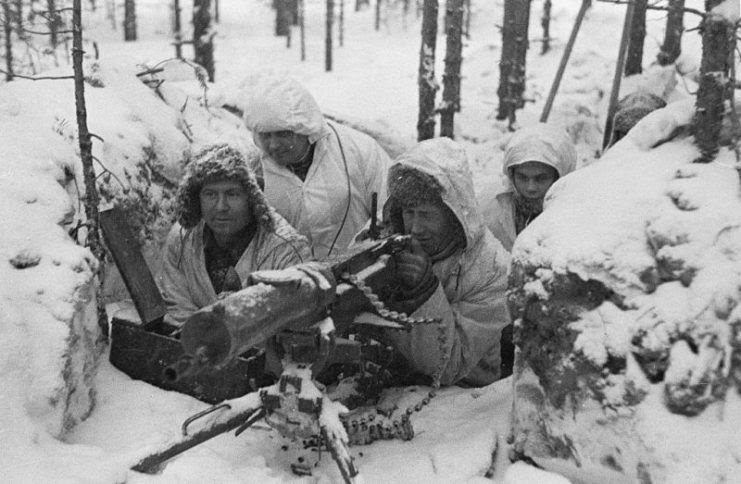
Categories
Born again Cynic! Dear Grumpy Advice on Teaching in Today's Classroom Hard Nosed Folks Both Good & Bad

How indeed?

image.png

Categories
Allies Dear Grumpy Advice on Teaching in Today's Classroom Leadership of the highest kind This great Nation & Its People

TR is still steel on target!