I’m a big fan of U.S. Rep. Ilhan Omar, the Somali congresswoman who always speaks her mind. Of course, I’m not a fan because I like her politics. But I do like the fact that nearly every time she speaks out in public, it serves as a warning for freedom-loving Americans that a true threat exists within our own federal lawmaking body.
Such was the case recently when Rep. Omar was caught on camera weighing in on a critical issue that many of us haven’t thought about for a while. In a video reposted on the Texas Gun Rights X page, Rep. Omar enthusiastically shared her views on registration and what always follows registration—confiscation.
“We have more guns in this country than we have humans,” she said in the video. “So, one of the things that is going to be important is to create a registry so we know where the guns are. We know when they go into the wrong hands when they’re stolen. And we can actually start a buyback program. I know that some of the Minnesota legislators have had that legislation, and that’s something that we should be thinking about on a federal level.”
It’s interesting that Rep. Omar would mention a “gun buyback” in the same breath as gun registration. Pro-gun advocates have warned for years that registration always leads to confiscation wherever it has been tried. Thus, anti-gun Democrats have avoided lumping the topics together.
As we’ve chronicled a number of times on TTAG, there are numerous other problems with gun “buybacks” besides the elephant in the room—eventual confiscation. First, they can’t be “buybacks” because the government never owned the firearms they are confiscating through compensation.
I kept an eye on the story over the weekend, and in particular, I watched with interest the propaganda campaign kick into gear to describe the event as “gun violence.”
Another mass shooting in America. This one close to home. My heart breaks for the victims in Stockton. Some of them are children, who died at a birthday party. If we can’t protect them from gun violence, who are we?
Four people are dead and at least 10 wounded after shooting at a family gathering in Stockton, California, officials say https://cnn.it/48bVQ1v
I hate that term, not because the violent acts don’t involve firearms. But it is as useful a description as the Brits’ “knife violence,” or describing both as “hand violence.” It’s stupid and intentionally deceptive.
Imagine describing an attack on American service members as “gun violence.”
310
Reply
Copy link
Read 23 replies
I don’t want to get into yet another stupid fight about gun control. When any liberal starts mouthing off about how we need to control guns, I don’t even bother to argue most of the time anymore. I simply ask them, “How?” There are more guns than people in the United States, and trillions of rounds of ammunition. Even if you wanted to do it, explain how. Until you can, keep quiet and let rational people discuss how to deal with violence of any kind, the best we can.
Greg Price
The former deputy director of Joe Biden’s “Office of Gun Violence Prevention” gets very confused when Josh Hawley reads from his own report which says we should defund the police and invest in “safe-space initiatives led by two-spirit, trans people.”
And as soon as you think about it, the reason why we have “mass shootings” of the most common kind (not the random crazy people, although often in their cases as well) is clear: liberals won’t let us incarcerate known criminals. Because almost every “mass shooting” in those statistics liberals keep pointing to in their statistics is gang violence.
Gunfire erupted at a banquet hall in Stockton during a family gathering on Saturday evening, resulting in the death of four people and ten others wounded, authorities said.
As soon as news started breaking about the violence in Stockton at a kid’s birthday party, the left went into high gear blaming the availability of guns. My first thought was different: what do you want to bet that the perpetrators were known to the police, and the intended victims as well?
This is the Filipino gangster rapper Nano of the Muddy Boyz gang, one of at least two mostly Filipino Crips gangs in Stockton. It was his daughter who was having a birthday party where multiple gangster rappers were present. 14 shot, 4 killed.
I was right, of course. It was a gang shooting, and the whole reason why these poor children are dead or wounded is that everybody around them is a degenerate, violent criminal who is known to the police.
Whether convicted or not, they are all criminals, have likely been through the criminal justice system (or should have been if anybody cared to enforce the law and incarcerate them), and all of this courld have been prevented if the lawmakers, activists, police, and especially the prosecutors and judges did their job instead of cultivating a culture of violence and impunity.
Seattle Mayor Bruce Harrell: “When a man does 6 or 7 crimes, we do not know his life story… Maybe he was hungry. Therefore, I have zero desire jailing him.”
Almost every perpetrator of horrific crimes is a “known wolf.” Most of the violent crime in our society is committed by a very small group of easily identified criminals, and most of them have had many interactions with law enforcement over the years. A lot of these people have active social media accounts where they brag about their exploits, and most of them know that they can commit crimes with impunity because they know the system will let them off.
Most of the time, that isn’t true if they get caught committing murder, unless they are juveniles, which is why gangs recruit juveniles to commit those crimes.
THE MOST UNCOMFORTABLE FACT IN CRIME DATA: VIOLENT CRIME IS NOT RANDOM Violent crime in U.S. cities is not evenly spread. Not culturally. Not geographically. Not mathematically. It’s concentrated – absurdly concentrated – in fractions of fractions of the population. This Show more
OPINION: IN CHICAGO, CRIME ISN’T “RACIST,” BUT LETTING CRIMINALS WALK FREE IS Chicago is bleeding, and Mayor Brandon Johnson says the solution is not to incarcerate violent offenders… because doing so is “racist.” This comes after a career felon, with over 40 prior
14.8K
Reply
Copy link
Read 852 replies
Violent crime in U.S. cities is not evenly spread. Not culturally. Not geographically. Not mathematically.
It’s concentrated – absurdly concentrated – in fractions of fractions of the population.
This isn’t ideology.
It’s decades of DOJ, PD, and academic data all pointing at the same tiny cluster:
• ~0.5% of residents linked to 50–70% of shootings
• Most homicide suspects have 8–12+ prior arrests
• Victims usually know their attackers
• Violence clusters block-to-block, not citywide
You are not going to solve the “violence” problem solely by focusing on the known wolves. But you will solve most of it, including the violence that threatens society. There will still be domestic violence, people who snap, and all the usual ills that have plagued mankind since we emerged from the primordial ooze, but we can pretty easily prevent shootings like this if we choose to.
America: Gang members drop mixtapes El Salvador: Gang members drop into CECOT megaprison 2024 gang homicides: Stockton, CA → 54 El Salvador → 0 One country coddles criminals. The other ended them. Choose your policy.
43
Reply
Copy link
Read 6 replies
We don’t have to go to El Salvador’s levels of repression of gang members to get things back under control, because we don’t have El Salvador’s levels of violence yet. We already have the tools, consistent with our Constitution, to dramatically change the dynamic. For the most part, we know who is doing these crimes, have had them in custody many times, and have let them back out into the streets. They often provide the evidence against themselves by advertising their impunity.
NEW: Stockton, CA, vice mayor reminds residents that it’s “never been gangster” to kill kids after three children were killed at a birthday party. Officials now say the incident at a family gathering was due to “group gang violence.” Three children and one adult were killed. Show more
Watch on X
790
Reply
Copy link
Read 211 replies
NEW: Stockton, CA, vice mayor reminds residents that it’s “never been gangster” to kill kids after three children were killed at a birthday party.
Officials now say the incident at a family gathering was due to “group gang violence.”
Three children and one adult were killed. Eleven others were injured.
The victims were ages 8, 9, 14, and 21.
“It’s never been gangster to kill kids, never,” said Stockton Vice Mayor Jason Lee to residents.
Actually, yes, it is “gangster” to kill kids. Quit gaslighting us.
We have to quit making excuses for the criminals. We have to quit being squeamish about race. We have to crush the culture of impunity.
Crime will still exist, but Chicago-style crime will not. The biggest barrier to curbing gang violence is the very liberals who complain about “gun violence.”
Imagine the poor bastards if they had to listen to me whine to my Doctors about my boobos or other bullshit. I don’t know but maybe I have flipped a few of them over to the “Dark Side” ? Ya think?Grumpy
President Trump this week formally nominated a career ATF agent and supervisor to lead the country’s firearm regulatory agency.
Smashing hopes that a gun industry insider would get the nod for the job, current ATF Deputy Director Robert Cekada was among the nominations sent to the Senate on Nov. 18 by the White House.
Cekada, who is now before the Senate Judiciary Committee, has been the agency’s Deputy Director since April, after much of the bureau’s top leadership was replaced following the beginning of the Trump administration.
Before stepping into that role, as noted in his official bio, Cekada began his law enforcement career in 1992 as an NYPD officer and later became a detective.
He then worked for a municipal police department in South Florida until 2005, when he joined the ATF. After serving as a special agent in Baltimore and Tampa, he rose to supervisory positions, including Special Agent in Charge of the Miami and later the Baltimore Field Divisions, and, as of 2022, as a Deputy Assistant Director with oversight of offices in 19 states.
Importantly, this means he was not with ATF during the 1992 Ruby Ridge standoff or 1993 Branch Davidians siege in Waco – unlike some past nominees – or working in the part of the country where the Project Gunrunner/Fast and Furious “gunwalking” scandal occurred.
Firearms industry groups that have interacted with Cekada over the years are not opposing his nomination.
The National Shooting Sports Foundation, which welcomed his appointment as deputy director in April, this week said it was “encouraged” by his nomination as director, and, “We look forward to hearing and considering his testimony before the Senate Judiciary Committee.”
The American Suppressor Association told Guns.com via email that the advocacy group has been in discussion with White House officials regarding Cekada’s candidacy, which it fully endorses.
“In his role as deputy director, we have worked closely with Robert Cekada to ensure law-abiding gun owners have a seat at the table in shaping policy,” said Knox Williams, ASA President.
“If confirmed, he would be the first ever truly pro-Second Amendment nominee to head the agency. By nominating an ATF director who understands our community and respects our constitutional rights, President Trump and his administration are further underscoring their commitment to standing up for the Second Amendment and gun owners.”
It won’t be passing constitutional carry anytime soon, but New York — particularly New York City — is seeing a surge in gun purchasesandjam-packed permit courses required by the state just for Gothamites to exercise their Second Amendment rights.
Retailers are working overtime to quell anxious and worried residents of the nation’s largest city, even as those customers are shocked to realize they aren’t able to walk in, purchase a firearm, and leave with their new gun that same day. Or week. Or even month.
And who can blame them?
Gun control politicians, long in control in the Empire State, have passed so many restrictions on law-abiding New Yorkers to exercise their constitutional rights that far too many simply give up out of frustration.
Those roadblocks, in essence, deny New Yorkers their ability to keep and bear arms and, at a time when many rush to licensed gun retailers, the backlogs and bottlenecks can be jarring — especially for first-time buyers. Erecting barriers to the exercise of Second Amendment rights to frustrate citizens into just giving up is the intent of this regulatory scheme.
City Residents Fearful
New York City has seen an explosion of applicants seeking to obtain the state’s required permission slip to exercise their Second Amendment rights since 2022. That’s when the U.S. Supreme Court, in its Bruen decision, struck down New York state’s restrictive and subjective “may issue” permit scheme that left most New Yorkers out of options for protecting themselves, their property and their loved ones.
Even before that SCOTUS ruling, there had been a surge in riots, looting and crime during the coronavirus pandemic, police departments were defunded, and policies like cashless bail and soft-on-crime prosecutors like Manhattan District Attorney Alvin Bragg let criminals back out on the streets with little or no punishment for their crimes. That does not even account for rising law enforcement retirements leaving the city increasingly vulnerable to criminal violence.
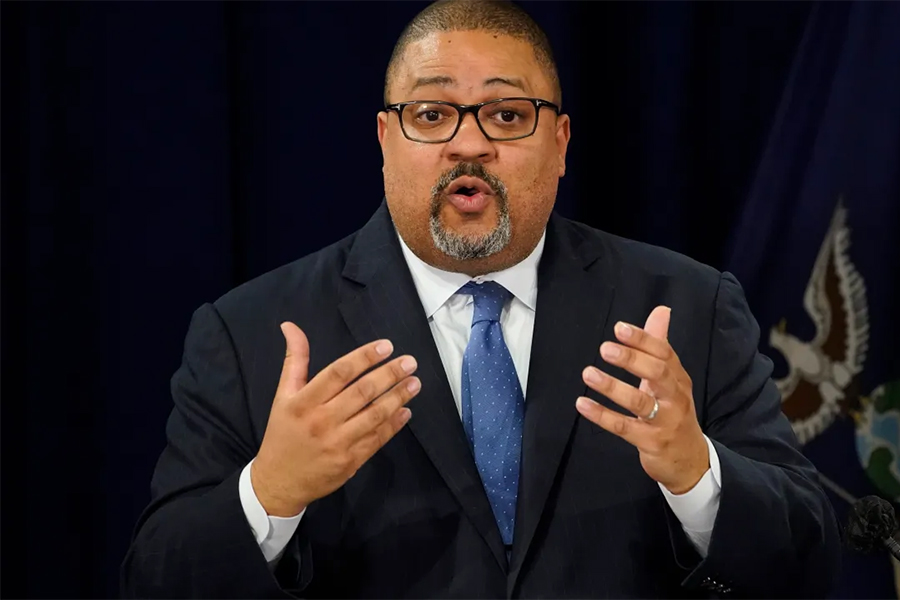
Manhattan DA Alvin Bragg (AP Photo/John Minchillo)
Gun permit applications are skyrocketing. Prior to the Bruen decision, on average, fewer than 100 law-abiding New York City residents each month applied for a permission slip to carry a firearm in the city for self-protection.
There was a surge during the coronavirus pandemic and a post-Bruen surge, with the monthly average reaching 600 before stabilizing at between 400 to 500 for a consistent stretch, according to data from the New York State Police Department. Following the October 7 terrorist attacks in Israel, the next month permit applications reached an all-time high at more than 1,270 — led by Jewish New Yorkers who decided to exercise their Second Amendment rights. Since then, an average of 700–800 permit applicants attempt the process each month, all just to exercise a God-given right enshrined in the Constitution.
Those millions of first-time gun owners have increasingly looked more like America, not just “old, pale and male” as previously caricatured. In New York’s case, that includes Jewish New Yorkers, African Americans, Hispanic and Asian Americans, lesbian and gay New Yorkers and more. And so long as they aren’t prohibited by law, owning a gun is their Constitutional right.
But New York still has in place restrictions that make it overly burdensome, time-consuming and difficult for law-abiding New Yorkers to purchase a firearm — a process that can take up to a year or longer.
That includes a rigorous firearm training and safety course despite the fact that “New York hasn’t standardized the classes beyond outlining a handful of topics to touch on.”
That makes it extremely difficult for would-be firearm purchasers to go to their neighborhood firearm retailer and go home with a safe and reliable self-defense tool.
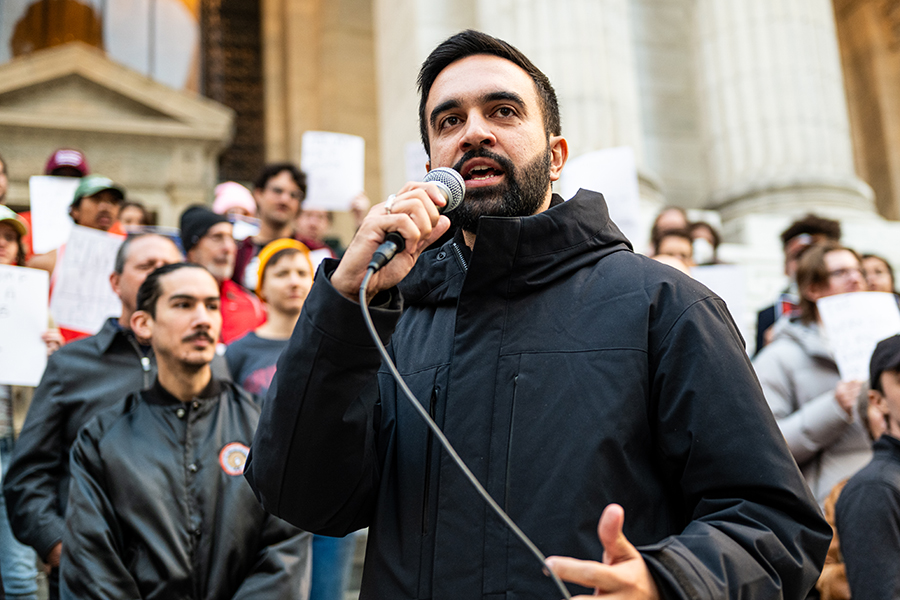
In the case of Jewish New Yorkers who saw the city elect Mamdani as their next mayor, police officers choosing to retire because of it and who see a rise in antisemitic violence in the city with the world’s largest Jewish population outside of Israel, Second Amendment rights have a new appeal.
“It’s getting busy because of him,” longtime New York City gun safety instructor Lance Dashefsky recently told the New York Post, referring to Mayor-elect Mamdani. “We ain’t fleeing — we’re here to stay. We’re not victims anymore.”
“The NYPD is all retiring – we have to fight for ourselves,” added Michael Bergida, who opened a gun shop in Marine Park, Brooklyn, called Samson Armory.
Another New York City firearm instructor, Ross Den of Brooklyn, said anyone who was ever on the fence about getting a concealed carry weapon is no longer. “There are plenty of rabbis who carry – shul is where the greatest threat is,” Den told the Post, adding, “People are beginning to wake up and are now realizing they have to defend themselves and not rely on the cavalry to come save them.”
Industry Remains Top Ally
Despite the roadblocks erected to slow New Yorkers from exercising their constitutional rights, the firearm industry remains committed to ensuring those rights cannot be unconstitutionally infringed.
If New Yorkers — especially those in the city — are “gun curious,” they should visit their neighborhood firearm retailer and simply ask questions. They will find a welcoming and friendly environment with industry advocates who are there to help them learn, train and protect what matters most — their lives, their families and their homes and property.
“We are Jewish and we will protect ourselves – even if the mayor despises us,” a woman visiting a gun retailer told the Post. “We will have a say in our protection and not have to rely on others.”
The firearm industry steadfastly remains committed to being there by her side as well. The Second Amendment is there for all law-abiding Americans to protect themselves.
You and the cop-killer are running at each other, guns in hand. One of you is going to die.
Lesson:
Preparation is the mother of survival. Expect the unexpected. Know when to run, and when to shoot.
January 20, 2011, Miami, Florida. Sergeant Laurick Ingram meets Detectives Amanda Haworth, Roger Castillo, Diedre Beecher and Oscar Plasencia for a briefing at the Miami-Dade Police Department’s Northside Station. They’re members of a squad assigned to apprehend violent career criminals and they have a warrant for the arrest of one Johnny Simms.
The two female officers are the lead on the case; the two males have been chosen because they’ve arrested Simms in the past for parole violation and know him by sight. Simms, 22, is wanted for murder. He’s believed to have cold-bloodedly shot a man dead for disrespecting Simms’ sister. The plan is to visit the homes of the suspect’s mother and last known girlfriend. They hope to gain information as to his whereabouts, and to urge them to contact Simms and convince him things will go easier if he turns himself in.
Arriving at the mother’s duplex, the cops alight from their vehicles. They’ve planned a “soft” contact: No helmets or shields, no long guns, no kicking down doors. They’re wearing conspicuous tactical Kevlar vests identifying themselves, marked POLICE and MARSHAL because they’re also special deputies of the U.S. Marshal’s Service due to their frequent fugitive task force duties. Each wears an exposed sidearm. Castillo and Haworth carry department-issued GLOCK 17 pistols while Beecher has a privately owned/department-approved Smith & Wesson Model 3913. All three 9mm pistols are loaded with ammo which has worked particularly well on their mean streets, Winchester’s Ranger-T 127gr. +P+. Plasencia, always more comfortable with a .45, is authorized to carry his personal GLOCK 21 loaded with Federal HST 230-gr. +P.
They know the girlfriend’s house is only a couple of blocks away, and if he’s there and the mother calls to warn him after the police leave, he’ll “rabbit.” It’s decided the sergeant will drive to the girlfriend’s place to discreetly surveil it while the others talk to the mom. Because they’re the ones most likely to recognize Simms if he tries to exit through a back door, the two male officers — who usually work as partners anyway — flank to the side of the duplex while Haworth and Beecher go to the front door.
They identify themselves, and the suspect’s mother welcomes them inside. Castillo begins moving forward, toward the front of the building. Out on the side Castillo hears Haworth say over the hand-held radio, “He’s inside, everybody come around.”
He has heard Amanda Haworth’s last words.
Suddenly, there’s gunfire from inside the duplex.
Rapid Response
Plasencia, 53, reaches reflexively for his GLOCK as he races toward the front of the house. The shots are still breaking, coming fast.
As he rounds the corner, he’s inside a corridor formed between the target house and a 10-ft. high wrought iron security fence. Shots are still going off. Plasencia sees Detective Beecher tumbling out the front door and falling to the ground and a man coming out the same door behind her, shooting at her in her disadvantaged down position. The light-complexioned African-American man is tall, muscular, clean shaven with close cropped hair, wearing jeans and stripped to the waist exposing his gang tattoos. Plasencia recognizes him as Johnny Simms and recognizes also there’s a GLOCK pistol in his hand.
Endgame
Simms turns to see Detective Plasencia running at him, gun drawn, and charges at the lawman full speed, raising his own stolen pistol.
For Plasencia, the world suddenly goes into slow motion. There’s time to assess the background behind the gunman, an auto repair shop with many people visible. He knows he has to get closer to guarantee hitting the only safe backstop, the body of the assailant. The gunman is racing toward him, firing now.
Plasencia jumps to his left, coming to a stop in a deep, coiled crouch — the fastest way to cease a headlong rush and maintain balance. Strong-hand only he levels his GLOCK and, using the top of the slide to aim, opens fire.
He has heard the gunfire coming from inside the duplex, but now the world has gone silent. He cannot hear Simms’ gunfire, nor his own. But he can feel the recoil, and — focused on the opponent’s body and gun — he can see his .45 slugs strike home. Simms’ body flinches and jerks as each of the big bullets hit him, and spins away from the cop as the last shot strikes home. Seeing him turn away and fall heavily to the pavement, Plasencia ceases fire.
They are now some five yards apart. Simms is on his back, motionless, the medium-sized GLOCK still in his hand. Plasencia covers him with the G21 and, after a couple of seconds, kicks the weapon out of the vanquished opponent’s hand. It skitters under the wrought iron fence and into the adjacent parking lot.
Simms’ face bears an expression of surprise. Looking down at him, Plasencia sees his foe’s consciousness fade, seeing him take one last breath. He realizes Johnny Simms is dead.
The Scope Of The Horror
Oscar Plasencia had rounded the corner in time to see DeeDee Beecher fall, and to see Simms shooting at her before Plasencia diverted the gunman’s attention to himself. He will soon learn of the horror which has taken place inside the duplex in the first flurry of gunfire.
Hearing Mandy Haworth calmly say, “He’s inside, everybody come around,” Plasencia presumed the situation was contained. His partner Roger Castillo may have presumed the same. If so, it was a fatal mistake.
When the suspect’s mother indicated to Haworth who was in the living room that Simms was present and Haworth said so on the radio, the suspect was in an adjacent back bedroom and obviously overheard. With no warning he burst from the room, shooting at the officers from close range as he charged.
Haworth was the first to fall, shot in the head. As he ran past her body Simms fired a viciously gratuitous execution shot barely missing her vest and tearing through her thorax. The only other officer in the house, Beecher, reflexively moved to the front door to find a more tactical position, just as Roger Castillo gained the same doorway and began to enter. Simms shot him through the brain, killing him instantly, and the detective’s body fell backward and sideways out the door.
Beecher tripped and fell out the door, in an impossibly compromised position as the onrushing Simms fired at her. This was Oscar Plasencia’s first glimpse of the action as he came around the corner. Though it appeared to him — and probably to Simms — the killer had shot her down, her dropping out of his line of sight caused the thug’s .40-cal. bullets to pass above her, and she narrowly escaped being shot. With her knee badly injured in the fall, she ended up in an awkward position which compromised her ability to draw her own pistol and react.
It was at this moment Simms caught sight of Plasencia and turned his attention to him, probably thinking he had killed Beecher. When Simms turned and ran at Plasencia shooting, he would have been between Beecher and Plasencia, putting Plasencia now in Beecher’s line of fire.
Detective Roger Castillo died at the scene. He left behind his wife, also a Miami-Dade police officer, and three young sons. He was 41, with 21 years on the job. Detective Amanda Haworth was rushed to the hospital but did not survive. Detective Haworth, 44, had served for 23 years, and left behind her partner and her young son.
Time Factor
Oscar Plasencia told American Handgunner that according to the investigation, only 17 seconds elapsed between when Detective Haworth broadcast her last words and when Detective Plasencia said over the radio officers were down and the suspect was, too. He estimates his own shootout with the cop killer lasted perhaps four seconds.
Oscar told me, “I was asked how many rounds were fired. I thought I fired three rounds and Simms, one. In fact, I fired five rounds and Simms, two (at me). All my rounds connected. His went high right over my head and in the door and wall of a nearby unit. I was told one of my rounds struck him in the elbow, three center of mass, and the last as he spun, center of mass but landing in the back between the shoulder blades.”
Simms, armed with a stolen 14-shot GLOCK 23, had fired 10 shots at the initial shooting scene, and two at Plasencia as they closed in on each other in the final confrontation.
Aftermath
When responders arrived, Plasencia was placed in a police car isolated from the scene. By the time he was transported to the Homicide unit’s office, the Police Benevolent Association’s attorneys were already there. Today, the Florida Department of Law Enforcement investigates Miami-Dade’s officer-involved shootings but at the time, the county investigated their own. He wasn’t required to make a statement. “The attorneys gave a proffer on my behalf,” he recalls. A department psychologist was brought in for him, a doctor Plasencia knew. “He was helpful,” Oscar remembers. “He gave me all his contact numbers and told me to contact him anytime. Then he paused and said, ‘You probably aren’t going to call me, are you?’ I just smiled at him. I was pretty sure I could cope with it.”
Once fully investigated, the death of Johnny Simms at the hands of Detective Oscar Plasencia was ruled a justified homicide. The family of the deceased cop killer never filed suit.
The long-term aftermath was different.
“Roger was my friend, my regular partner,” Oscar told us. “I saw him lying there outside the door, the pool of blood under his head, the color drained out of his face, knowing he was dead. There was a long time where I just couldn’t talk about it. Now, eight years on, I still feel some survivor guilt. ‘Why them and not me?’ Roger and Amanda both had young children. My kids were grown. ‘Why them and not me?’ Could I have done something different?”
Plasencia completed his career, retiring at the rank of sergeant, and staying on part time as a reserve deputy. “The department was good to me,” he says. “They were very supportive of all of us, and our families.”
After you’ve killed a violent criminal, there’s always the possibility of vengeful retaliation. Simms had been a big-time gang-banger. Gang Unit intelligence soon revealed the Bloods had “green-lighted” Oscar, that is, had put out the order he should be murdered on sight by any gang member who spotted him. Plasencia and his family remained vigilant, but the threat fortunately never materialized.
The psychological aftermath of having had to kill a human being has two all but inescapable symptoms. One is sleep disturbance, and Oscar seems to be one of the few to escape it. The other, however, is what the great police psychologist Dr. Walter Gorski called Mark of Cain Syndrome: the awareness people are treating you differently after the shooting. If you’re treated badly and accused of police brutality as a killer cop, you don’t feel good about it. If you are treated as the hero you rightfully are, it still changes your identity in the eyes of others.
In the wake of this incident, Oscar Plasencia received many well-deserved awards. Locally, he was awarded the Gold Medal of Valor and named officer of the year by his department, and by the Dade Chiefs Association, the Dade County PBA, the state Fraternal Order of Police, and the Florida Sheriff’s Association. He made Level One of the National Association of Police Officers Top Cops awards, presented at the White House. From the U.S. Marshals came a Law Enforcement Officer of the Year award, and the Marshal’s Task Force gave him a heroism award. There was also a Federal Law
Enforcement Association award presented in Denver, and Officer of the Year from the National Latino Peace Officer Association.
And today, Oscar Plasencia says with a catch in his voice, “I’d give it all back in a heartbeat to have Amanda and Roger back with us.” He still wears a wristband bearing the names of his fallen sister and brother.
Lessons
After the tragedy the question was raised of why they didn’t send a SWAT team. The answer is, tactical teams are sent in when they know there’s a dangerous person inside the given four walls. Fugitive warrant service involves a lot of desk time researching, and a lot of shoe leather visiting people who might provide leads on the suspect. This case was part of the latter routine. “You can’t call SWAT out on a ‘maybe,’” Plasencia would later tell a local reporter.
No one has thought about this more in the eight intervening years than Plasencia himself. He told me in retrospect, “I wish there had been more preparedness. I understood the soft approach (no helmets, no shields, no heavy armament). Maybe we could have had a shield and set it by the door just in case. I normally carried a short-barrel shotgun for entry but left it in the vehicle because I was covering the back. I don’t think a long gun would have made any difference.”
“How many rounds were fired?” is a question which should probably never be asked by investigators, nor answered by the involved party. In an adult lifetime spent studying these things, I can still count on my fingers the number of gunfight survivors who could keep an accurate count once it went beyond a very few shots. This case is a classic example.
Why close the distance? Greater distance usually favors the defender skilled in shooting, but in this case the danger a missed shot would present to bystanders and downed police personnel behind the murderer drove Plasencia to do what he did, and it had exactly the same benevolent result he intended. His movement toward the threat obviously distracted the killer from his attempt to execute the downed Detective Beecher, and very likely saved her life.
“When they see the armor, they shoot for the head.” That was the mantra of Richard Davis, the armed citizen and gunfight survivor who invented the soft, concealable body armor which has saved literally thousands of lives since. It was clear to investigators then and now Simms saw the officers were wearing ballistic vests, and deliberately targeted them for head shots. It was equally clear to Oscar Plasencia that in his final shootout with Simms, the cop killer was aiming high, for his head.
The always easy 20/20 vision of hindsight tells us if the body armor had been concealed under a POLICE-emblazoned light raid jacket, it might have turned out differently, and the killer’s mish-mosh of ball and jacketed hollow point ammo, which is typical of criminals, might have lodged in Kevlar instead of fatally piercing unprotected brains.
Expect the unexpected. The officers went to Simms’ mother’s house hoping to get leads to his whereabouts or to convince her to tell her son to give himself up. While they obviously recognized the possibility he might be present, they didn’t really expect it. Action beats reaction. A hand on a pistol, ready to draw against a sudden ambush, might have at least somewhat evened the odds.
Don’t let altered perceptions throw you. Well-trained by his department and studying these things on his own time, Oscar knew beforehand tachypsychia and auditory exclusion afflict well over half of people involved in such encounters. When things went into slow-motion silence, he didn’t let it distract him. He knew about tunnel vision too, and fought through it successfully, constantly vigilant to keep his shots from endangering innocent people behind the murderer.
Maintain your skills. Oscar Plasencia was a “gun guy” fond of 1911’s who would have carried one on duty if the regs allowed, and he practiced regularly with the GLOCK .45 he wore at work. The skill he maintained was evident in his 100 percent hit ratio under extraordinarily difficult circumstances.
Know when to run, and when to shoot. Oscar waited to shoot until he was certain he could hit his target and not send a bullet past the cop killer into the inhabited background the situation had given him. His fast jump-into-a-crouch gave him a stable firing platform from which to fire five fight-stopping bullets into a fast-attacking multiple cop-killer. He had “gotten off the X” because he was watching the opponent and the opponent’s gun, and successfully evaded the murderous gunfire directed at him.
Analyze in macrocosm as well as microcosm. Here, we’ve focused on the involved officers and the circumstances into which they were forced. Looking at the big picture, we need to remember Johnny Simms wasn’t just a member of the Bloods gang but a shot-caller there. The reason Plasencia and Castillo knew him was they had arrested him before on a warrant for violating probation arising from an armed robbery charge. Yet a judge had turned him loose, freeing him to commit one murder and then to murder two police officers and attempt to murder two more.
All of us at American Handgunner wish to thank Oscar Plasencia for sharing the lessons he learned so painfully. This article is respectfully dedicated to the memory of Detectives Amanda Haworth and Roger Castillo of the Miami-Dade Police Department.
 I’m a big fan of U.S. Rep. Ilhan Omar, the Somali congresswoman who always speaks her mind. Of course, I’m not a fan because I like her politics. But I do like the fact that nearly every time she speaks out in public, it serves as a warning for freedom-loving Americans that a true threat exists within our own federal lawmaking body.


 El Salvador: Gang members drop into CECOT megaprison 2024 gang homicides: Stockton, CA → 54 El Salvador → 0 One country coddles criminals. The other ended them. Choose your policy.