Category: COOL!!!!!!!!!!!!!!!!!
.jpg)
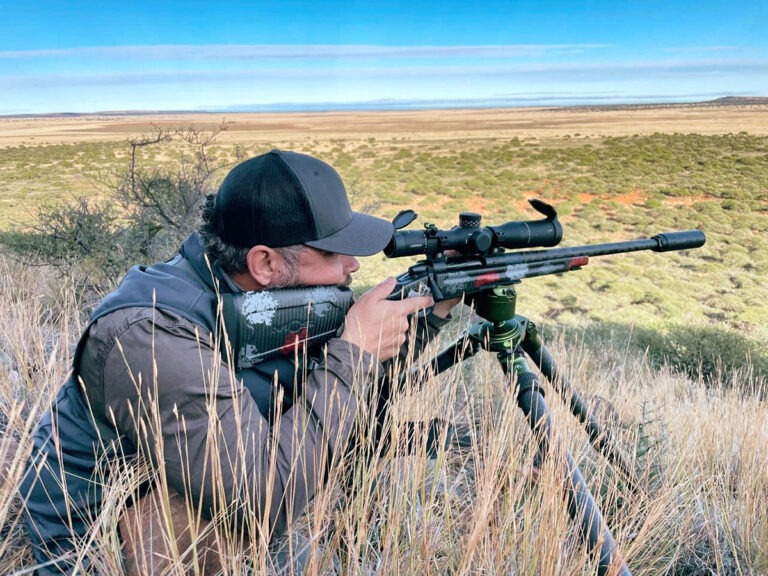
Chasing free-range kudu across the veldt of southern Africa has a way of recalibrating one’s ego.
The giant stood 8-feet tall, rail thin yet strong as a century-old oak, haggard and worn to the point that it almost became part of the landscape in places—almost. As we drove past, I tried not to look directly at it, keeping my eyes on the horizon, but it was damned hard to miss.
I had plenty of warning it would be there and I knew I’d have to deal with it, which gave me significant time to prepare. And that helped. A little.
Sitting in the back of the truck, we pulled right up to the giant, the bumper so close we almost ran into it. And then, without hesitation, the PH hopped out, unlocked its gate, and we simply drove through it like it didn’t exist.
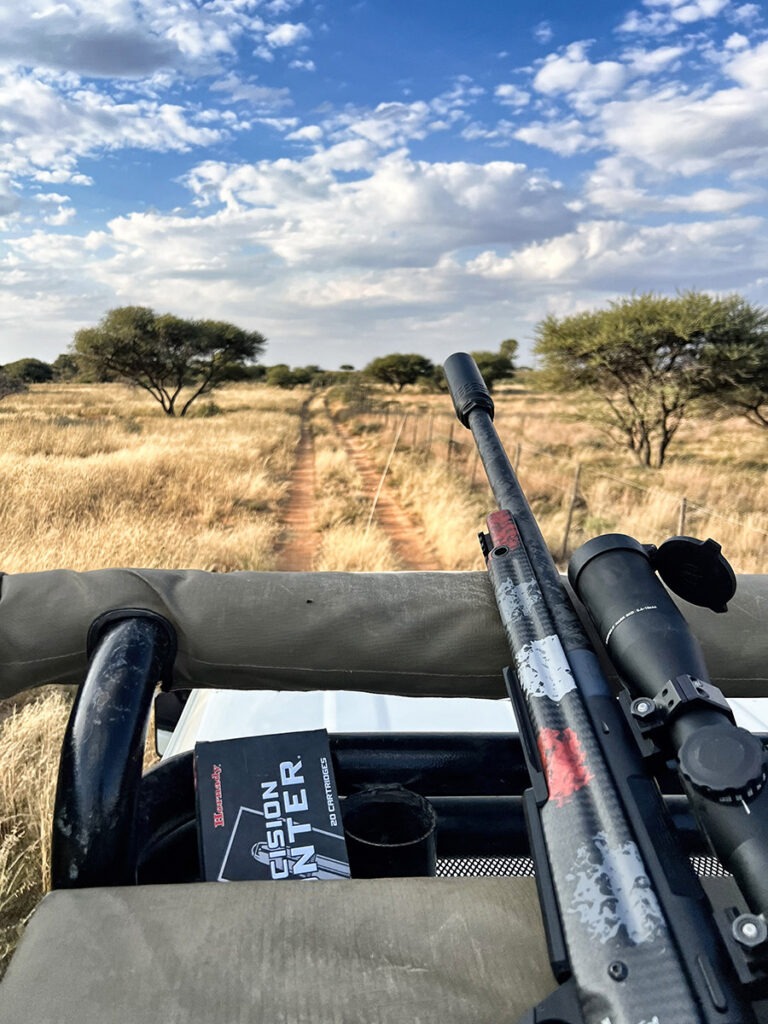
Game preserves are commonplace in many locales throughout Africa, especially South Africa—so much so that hunting within is as much of a normality as not hunting behind a fence is here in the States. “Poaching problems” seems like too convenient of an excuse to put up a big-ass fence to protect the investments that are the animals within, but it’s a real problem. A substantial problem, in fact.
And, of course, it does help outfitters manage their herds and provide high-opportunity hunts for adventurers potentially spending tens of thousands of dollars and multiple weeks of their hard-earned vacation.
Plus, when you step outside the fences in South Africa, federal game laws and seasons dictate the rules. Inside the fence? Well, that’s up to the person holding the keys to the padlocks.
Now, to be fair, many of these game preserves are bigger than the ranches of West Texas, spanning tens and tens of thousands of acres. It’s entirely possible to pass through a high fence and hunt aggressively without again seeing the fence until the sun sags low in the sky and it’s time to leave. These plots are so big it’s difficult to fathom that someone owns contiguous plots of land that are so expansive.
And, honestly, I’ve had some incredible hunts in South African game preserves. Most are, in fact. But during the course of five trips to Africa, I’ve had a couple hunts that just didn’t quite feel right. I enjoyed the experience but elected not to shoot, and I can live with that outcome.
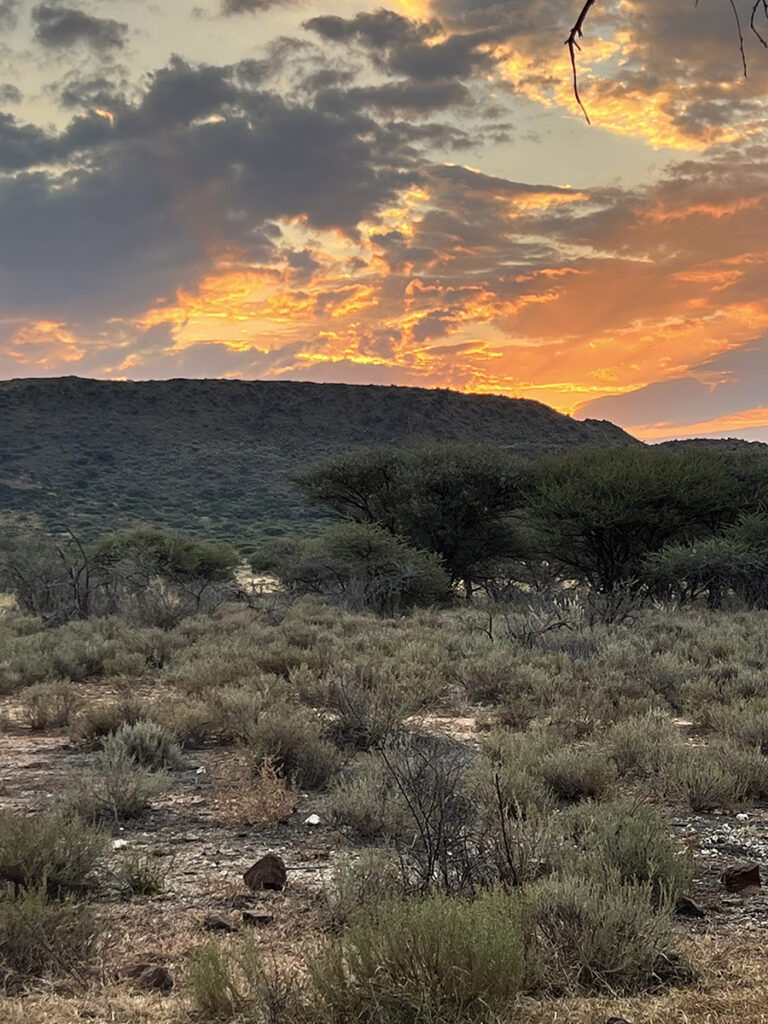
Do the animals know they’re in a fence? I have no idea, but I doubt it because animals are not capable of reasoning. However, I know the animals are in a fence—and I’ve come to accept it. When in Rome, do as the Romans do, right? As much as I hate this clichéd saying, sometimes ya just have to resign to the fact that “it is what it is.”
But it doesn’t have to be this way, either.
Even with so much of South Africa fenced, there’s an incredible amount of acreage—or hectares, as they’re referred to there—available for those with a sense of insatiable adventure and a willingness to burn serious boot leather across the country’s unparalleled landscape.
The entire southern tier of the African continent—Namibia, Botswana, Zimbabwe, Zambia and Mozambique—offers free-range pursuits, but South Africa has become somewhat of a second home … and I have become quite partial to the people in it.
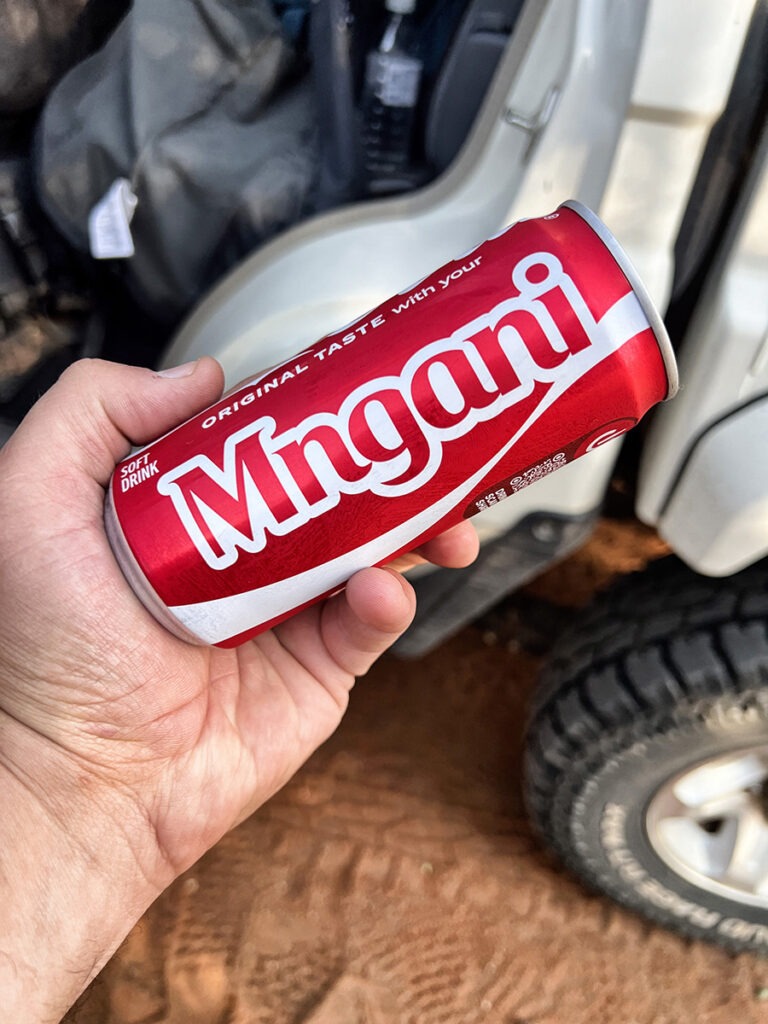
And just when you think you’re getting pretty good at this hunting thing, chasing free-range kudu across the veldt of southern Africa has a way or recalibrating one’s ego.
Be Patient and Shoot Far
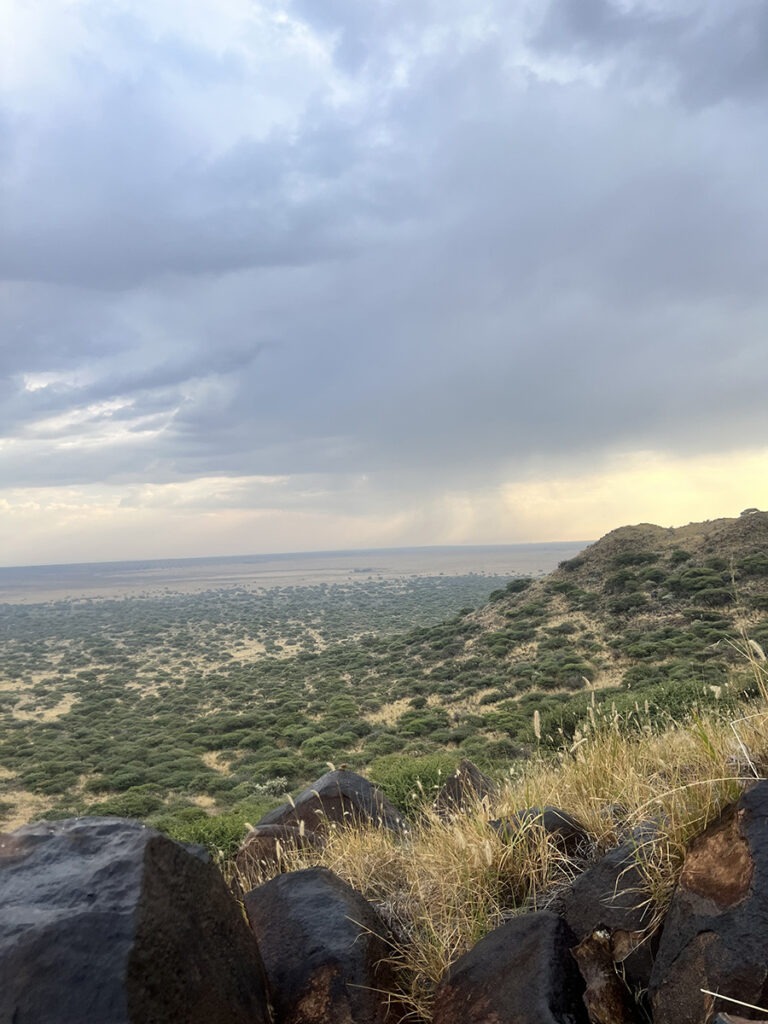
We first spotted the bull from atop Kudu Mountain, a collection of rust-colored moon rocks piled 600-feet high by the Earth some unknown-millions of years ago. It was a bitch to climb that ankle-rolling natural formation every morning, not just because of the rocks—but because every night the orb spiders would re-spin their webs with silk thick enough to entangle even the stoutest of hunters.
But, the vistas were spectacular, and, tactically, there was no better place to glass for kudu.
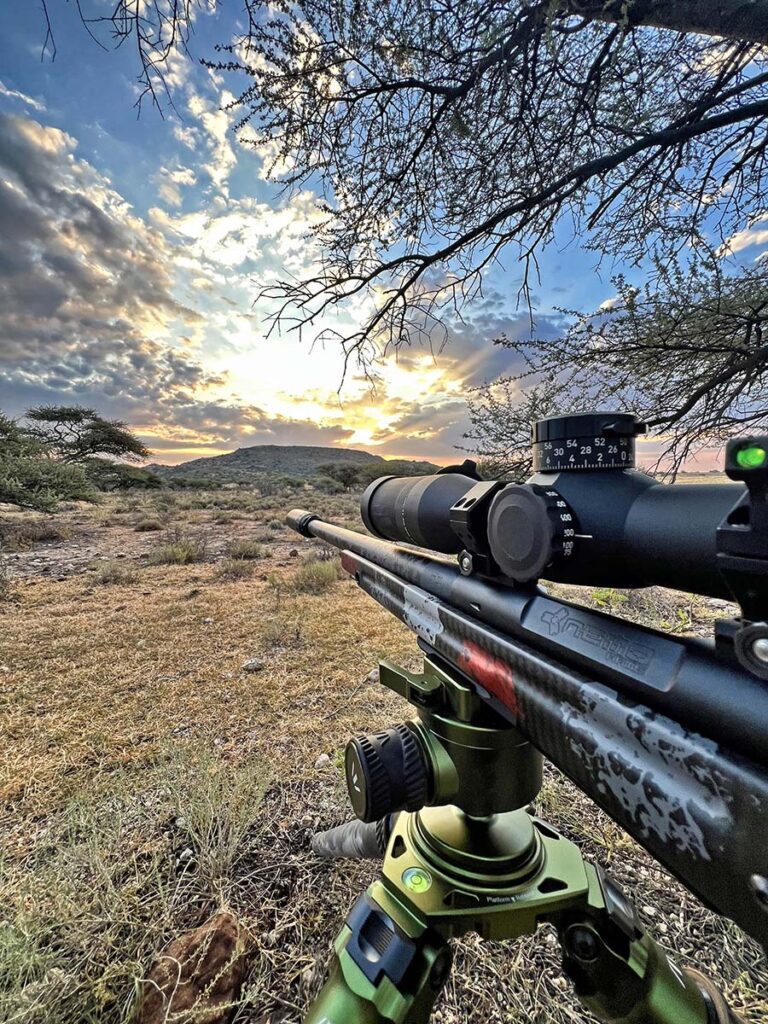
More than 1,100 yards distant, the spiraling horns of the bull peeked in and out of the acacia trees as he desperately tried to keep his harem tight. From above, it seemed impossible to lose sight of the bull for nearly a half-hour at a time, but that quickly became the norm: a glance here or a peek there, followed by long stretches at a time with nothing.
In this situation, one can hope to get lucky, but I’ve spooked more than my fair share of animals trying to put good effort toward a bad situation. It’s tough to stalk an animal when you don’t know where he’s going: The bull was running randomly without a clue where he was going, which meant I had even less to go on. The younger me would’ve kicked my own ass for even thinking this, but the older me has learned that, sometimes, the best thing to do is sit back and watch the sun set.
The reality was, those kudu cows were not going anywhere, and neither was he. Reluctantly but optimistically, we retreated for the day … all the while knowing I’d have to climb that damned mountain again.
It took me longer to catch my breath than it did that bull the following morning: Sure enough, that bull was within a few hundred yards of where we’d left him the evening prior. He was calmer, but that ol’ boy was interested in little more than keeping an eye on every single one of his ladies … exactly like a bull elk does during mid-September.
And this time he was closer. Well, a little closer.
At 767 yards, the come-up was more than 17 MOA for the 7mm PRC in my hands. In other words, with my 100-yard zero, that 175-grain bullet drop is more than 138 inches. That’s nearly 12 feet, and that’s not even considering windage factors.
Why does all that matter? Because after that bullet left the muzzle, I have no idea where it went. Despite the rifle being locked into a tripod (I took a lot of sh*t for carrying that thing up and down that mountain, but its steadiness was incredible) and my confidence high, that bullet didn’t touch the bull. But it sure did scare him, although none of the kudu had a clue where the shot came from.
So, they started getting closer. And they eventually calmed down and once again took to browsing.
Range. 725 yards. Check dope. Dial. Find the bull in the crosshairs.
Range again. 681 yards. Check dope. Dial. Find the bull in the crosshairs.
It soon became apparent that the cows were not going to get any closer. Range. 652 yards. Check dope. Dial to 13.5 MOA. Find the bull in the crosshairs.
Send it.
With a slight quartering-away angle, the bullet entered in the paunch and dove forward, causing the bull to buckle hard, hunch up and take off with the herd. From our vantage point, it was possible to watch the cows and calves sprint away, though it wasn’t long before we could no longer see the bull running with the herd.
He was suddenly gone, and that was a very good news.
I quickly learned that the only thing more unappealing than fighting orb-spiderwebs while climbing Kudu Mountain is fighting those same webs while trying to get down the mountain … in a hurry. To be honest, I bet to this day there is spiderweb particles permanently woven into the shirt I was wearing that day.
Despite how open the terrain appeared from on high, it sure looked different once we got down into the thick of it. I didn’t know whether this bull would be piled up or still standing, but it became immediately apparent that finding even a 500-pound animal was going to be a challenge.
Until it wasn’t.
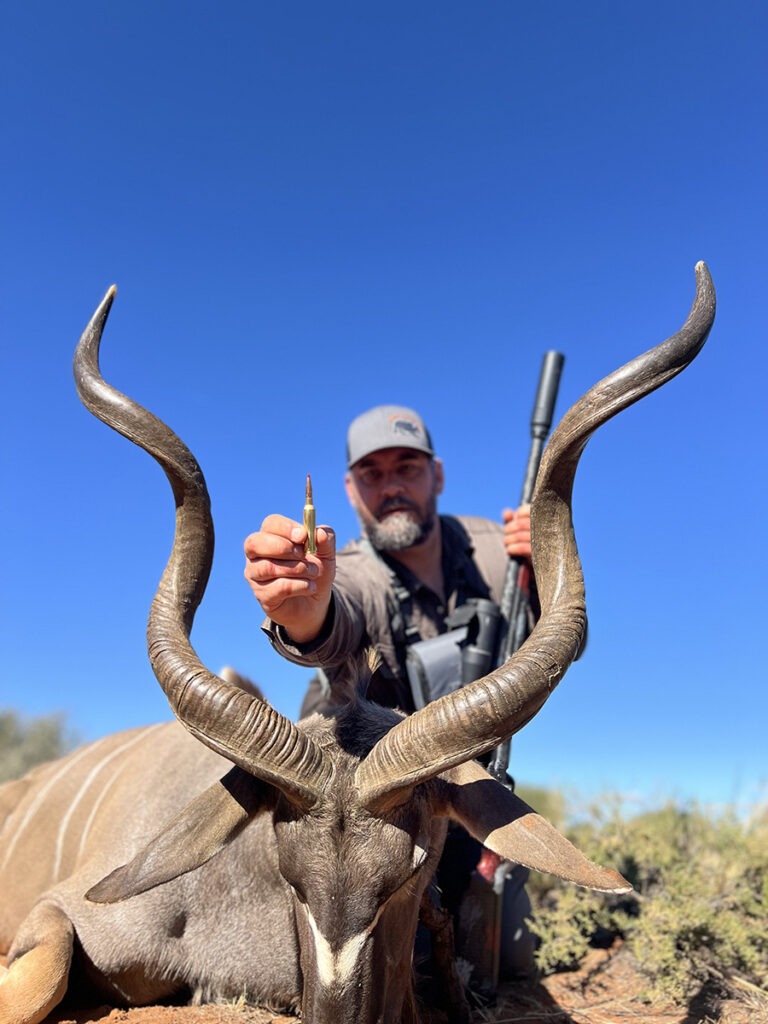
I’d like to tell you that I walked up to that bull kudu, and he was stone dead, but that wouldn’t be the truth because the first shot was just a little too far back. The truth is that, after a bit of a goat rope, my adrenaline dump was so significant that I puked. Yup. Breakfast came up right there next to the bull … with five people watching.
And to my surprise, not a one of them said a thing. It took a campfire conversation that evening to figure out why I didn’t take more sh*t in that moment, but the reason was simple: They’d all been there before, too.
When it comes to hunting, I’m learning that things rarely go exactly as planned … although most hunters seem to leave the less-than-sexy details out of their stories.
If I had to do it all again, I’d do a couple things differently. I wouldn’t have taken the shot at 767 yards. There are too many environmental factors that come into play at that distance when hunting, such as wind and a target that can move. There are a lot of things that can go wrong when a bullet is in the air for that long.
Would I take the 652-yard shot again? I think I would, but I’d find a way to get prone when shooting that far. Regardless of how good a tripod is, I’m saving those shots for less than 500 yards from here forward.
Ego recalibration?
Check.
Gear Notes: Nemo Arms Rifle
Next to making a living via hunting amazing locations with some truly incredible people, the best part of working in the hunting and shooting industry is testing new gear.
The rifle you see in each of the photos is this article is the new bolt-action rifle from Nemo Arms. And when I say “new,” I mean that it’s the first one that’s ever existed … like, it was built with haste for this hunt.
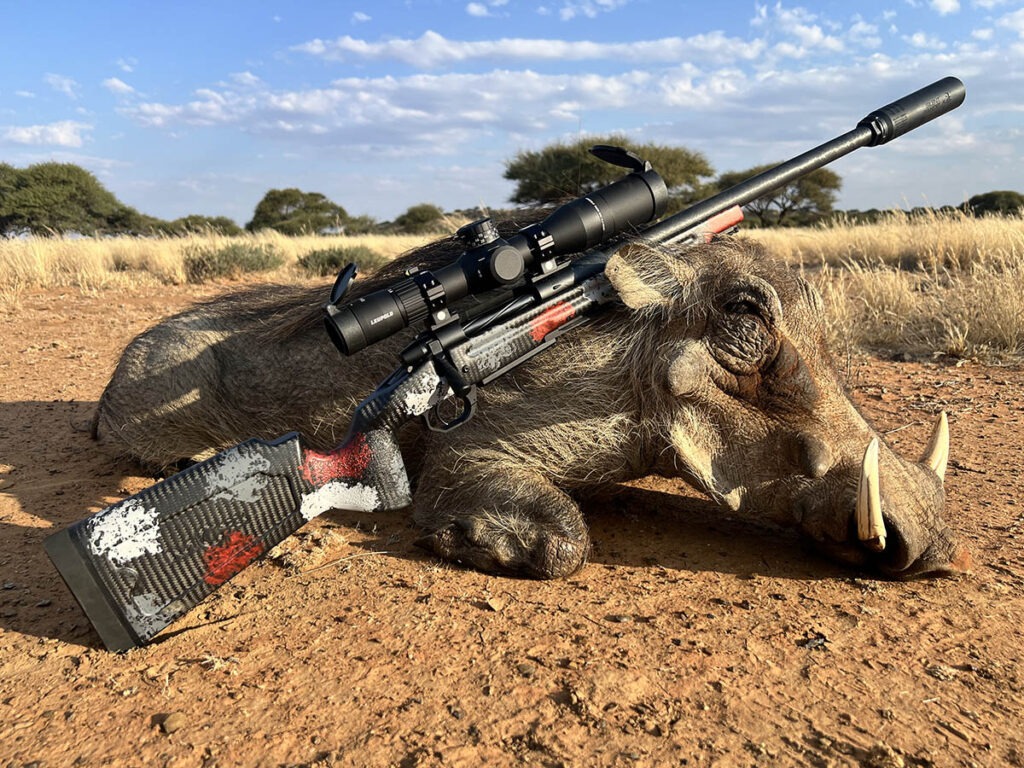
Long-known for ARs and more tactical-rifles, Nemo has tapped into the bald head of gun-building genius Jeff Sipe, who has been around the industry and has built quite the resume … along with some incredible guns. Nemo has tasked Sipe with building the company’s first bolt-action rifle, and as best I can tell, he’s been given a long leash and a big purse to complete the job.
Though this rifle is essentially a prototype, all the pieces are there, producing a ½-MOA rifle that’s capable of out-shooting my skillset. This gun is such a pleasure to shoot that it’s almost intimidating. And the rifle can shoot groups so tight that it’ll take away any excuse you can think of (you can always blame everything on the wind).
Want more details on the gun? Good. Because as soon as the design has been finalized and all the pieces are in place, I’ll have a full review for you at CarnivoreWeb.com.
Guide Notes: Geoffrey Wayland
When it comes to hunting in Africa, everyone seems to have a go-to guy. And if they’re happy, that’s great. But after five safaris, I’ve met a few of these go-to guys and have often been thoroughly unimpressed. I’ve dated more than a few girls who seemed like “the one” until I met someone else and realized the first one was crazy.
Know what I mean?
So, at the risk of him getting booked up and no longer having time for me, I hesitantly tell you that my go-to guy is Geoffrey Wayland of Fort Richmond Safaris (FortRichmond.co.za). It’s actually gotten to the point that my wife and I don’t want to hunt Africa without him, and when my kids have their first Africa hunts in the coming years, I don’t want anyone else beside them.
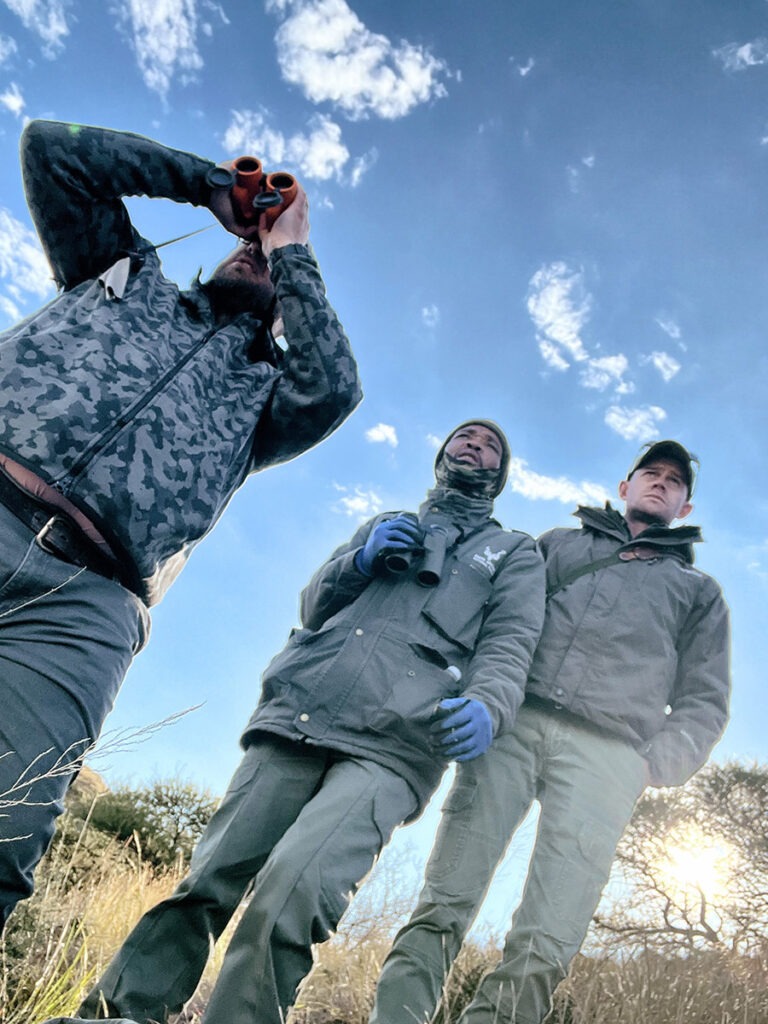
Would I lie to you? I did just admit to screwing up a kudu hunt, didn’t I?

Gene Roddenberry (brown suit in center) served as a B17 pilot during World War 2 and survived several deadly plane crashes before producing Star Trek.
Public domain photo.
Born in 1921, he was the oldest son of a police officer and a homemaker. Raised in Los Angeles, the kid had a fascination with aviation from a young age. He earned his pilot’s license in the early 1940’s via the Civilian Pilot Training Program sponsored by the US Army Air Corps.
In 1941, being a young fit pilot was a marketable skill in wartime America. The kid enlisted eleven days after the Japanese bombed Pearl Harbor. By August of the following year, he was married and commissioned as a Second Lieutenant. He was posted to the 394th Bomb Squadron, 5th Bombardment Group, 13th Air Force flying the B17 Flying Fortress. He ultimately flew 89 combat missions.
In August of 1943 the B17E he was flying overshot the runway and slammed into trees on the island of Espiritu Santo. The nose of the plane was crushed. The bombardier and navigator were both killed in the crash, but the pilot was absolved of responsibility.
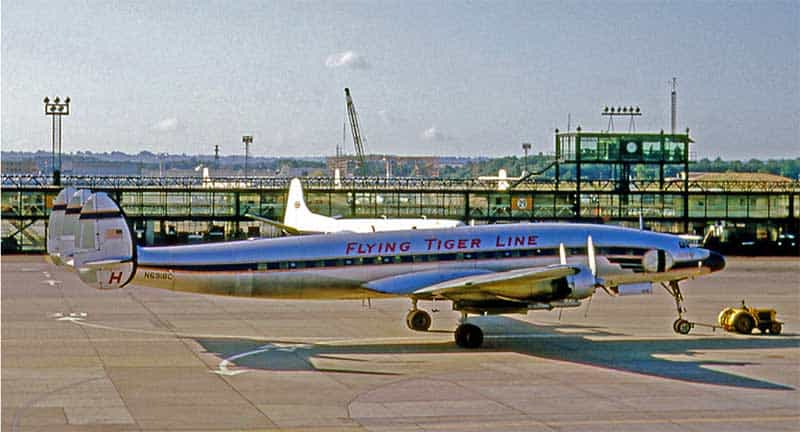
Gene Roddenberry was aboard a Lockheed Super Constellation like this one when it went down hard in the Syrian desert. Photo by RuthAS
All Wars End Eventually
With the terminus of World War II, the young man was an experienced pilot with plenty of flight time in four-engined heavy bombers. Such experience translated well to the airlines. At 25 years of age he was flying Lockheed Constellations for Pan American World Airways.
On the evening of June 18, 1947, the man was deadheading on board Pan Am Flight 121 flying from Karachi to Istanbul. The plane was christened the Clipper Eclipse. As he had no flying duties, he was considered third officer and was fairly superfluous.
The Eclipse had been flown hard over the previous week and had suffered engine problems along the way. An engine cylinder as well as an oil pump had been replaced to keep the big plane in service, but the machine needed some proper maintenance.
Now five hours into its ten and a half-hour flight and with a total of 36 souls onboard, the young B17 pilot moved up front to take the controls and give the Captain a breather. Soon thereafter the number one engine had an exhaust rocker arm failure so the young man shut it down.
The Constellation would fly fine on three engines, but they were in the middle of no place. The handy airfields lacked the facilities to make an engine change, so the Captain opted to drive on to Istanbul. However, pushing the heavy plane on three engines caused the remaining powerplants to overheat. Three hours later the number two engine caught fire.
The fire suppression system failed to extinguish the blaze, and the fire got so hot the magnesium engine mount caught fire as well. The young veteran then made his way to the cabin to help calm the passengers.
He buckled himself in three rows from the back of the plane. Shortly thereafter the number two engine separated from the aircraft. Now plummeting to the ground, one woman began screaming. The young pilot unbuckled and made his way to her side to offer comfort. He didn’t have time to secure his seatbelt. He later admitted he knew he was going to die.
The Crash
The plane hit hard and the cockpit crew was killed. The young pilot was thrown around violently and broke two ribs but was still able to get 20 survivors clear of the wreckage before it became fully involved. He organized those living and sent out two parties in search of help.
Two groups of Syrian tribesmen approached the crash site with the intent of robbing the crash and killing the survivors. The military veteran kept a cool head throughout and convinced the belligerent nomads to take the stuff but leave the passengers alone. Eventually Syrian Army planes and ground forces reached the crash site and medevac’d the injured. The young pilot was commended by Pan Am for his heroism and cool head in a crisis.
The Rest Of The Story
The young B17 pilot who organized the crash survivors and got them to safety was Gene Roddenberry. Roddenberry resigned from Pan American soon after the crash and became a motorcycle cop in Los Angeles. While working as a police officer he began dabbling in screenwriting. From there he eventually became a TV producer.
Roddenberry envisioned his most successful undertaking as a classic western set in space. He described it in pitch meetings as “Wagon Train to the Stars.” Perhaps you’ve seen it. The title upon which he finally settled was Star Trek.


 Gun owners have plenty of reasons to be skeptical of politicians who suddenly discover the Second Amendment during election season. We’ve been through this before.
Campaign promises are easy. Following through is where things tend to get complicated.
That makes the second Trump administration worth looking at as a whole rather than judging it by whichever gun story happens to be dominating the news this week. There have been missteps, unresolved issues, and a few decisions that deserve criticism. But taken together, what the administration has done on the Second Amendment since returning to office represents a substantial shift in how the federal government approaches gun rights.
And arguably the biggest change isn’t coming from the White House itself.
It’s coming from the Department of Justice.
DOJ Is Actually Litigating for the Second Amendment
For decades, gun owners became accustomed to seeing the Justice Department on the opposite side of Second Amendment cases.
That’s what makes the creation of a dedicated Second Amendment Section within DOJ’s Civil Rights Division so significant.
The section isn’t merely advisory. DOJ says its mission includes investigating alleged patterns of Second Amendment violations by law enforcement, pursuing litigation, filing statements of interest, intervening in cases, and using amicus briefs to advance a broad interpretation of the right to keep and bear arms.
The federal government isn’t simply declining to defend a particular gun-control law. In several cases, it is actively suing state and local governments over restrictions DOJ believes violate the Second Amendment.
That includes challenges involving Los Angeles County’s handling of concealed carry permits, gun permitting practices in the U.S. Virgin Islands, Washington, D.C.’s ban on commonly owned semi-automatic rifles, Denver’s so-called “assault weapons” ban, Colorado’s magazine restrictions, California’s handgun roster and GLOCK restrictions, Virginia’s recently enacted semi-automatic rifle ban, and Montgomery County, Maryland’s expansive “sensitive place” restrictions.
The Denver rifle-ban lawsuit and Colorado magazine-ban lawsuit are particularly notable because DOJ isn’t dancing around the central issue. The government is arguing that commonly owned semi-automatic rifles and standard-capacity magazines are constitutionally protected arms.
That’s the kind of position gun-rights organizations have been arguing in court for years.
It Started With Trump’s Second Amendment Executive Order
On February 7, 2025, President Trump signed an executive order titled Protecting Second Amendment Rights, directing the Attorney General to review federal regulations, guidance, policies, international agreements, and other government actions that potentially infringed on the right to keep and bear arms.
That review included Biden-era firearms regulations and enforcement policies.
What could easily have become another symbolic executive order instead produced tangible changes throughout DOJ and ATF.
Among them was the end of the Biden administration’s so-called “zero tolerance” policy toward Federal Firearms Licensees.
The Department of Veterans Affairs also stopped reporting veterans to NICS as prohibited persons solely because they required fiduciary assistance managing their benefits.
Then there was the creation of DOJ’s Second Amendment Section itself.
Those aren’t campaign promises. They’re changes in federal policy.
ATF Has Been Moving in a Very Different Direction
ATF hasn’t exactly enjoyed a warm relationship with America’s gun owners.
That makes the agency’s current regulatory direction particularly interesting.
In April, DOJ and ATF announced a package containing 34 final and proposed rulemaking actions following the administration’s review of federal firearms regulations.
Some of the proposals are fairly technical. Others could have meaningful consequences for gun owners and FFLs.
ATF has moved to clarify the definition of an “unlawful user of or addicted to” a controlled substance, revise rules governing certain non-over-the-counter firearm transactions, and reconsider other regulations affecting dealers and gun owners.
Instead of searching for increasingly creative ways to expand existing statutory language, the agency is now publicly describing its regulatory work in terms of reducing unnecessary burdens and aligning regulations with current law and court precedent.
That’s quite a change from where ATF was only a few years ago.
The National Firearms Act remains one of the more complicated pieces of the administration’s Second Amendment record.
Congress eliminated the $200 tax on suppressors and short-barreled rifles, removing one of the NFA’s most recognizable burdens. Registration, however, remained.
That created an obvious legal problem.
If the tax that historically justified the NFA’s registration scheme disappears, what exactly is the constitutional basis for continuing to require registration?
That question is now being fought in court.
The administration has also taken positions suggesting suppressors receive at least some Second Amendment protection, an important development for challenges to state laws that ban them outright.
More recently, the government’s handling of the consolidated Silencer Shop v. ATF and Jensen v. ATF litigation has raised even bigger questions about whether DOJ intends to continue defending portions of the NFA registration regime.
TTAG covered the latest development when DOJ allowed the stay to expire, putting Silencer Shop’s NFA injunction into effect.
As of August 2026, that story is still developing.
What happens next could be one of the most consequential Second Amendment developments of Trump’s second term.
The Government Is Showing Up in Other Gun Cases, Too
DOJ’s direct lawsuits aren’t the entire story.
The federal government has also increasingly appeared as an amicus in major Second Amendment litigation.
That includes challenges involving so-called “assault weapon” and magazine bans, ammunition background checks, handgun rosters, and restrictions on where lawful gun owners may carry firearms.
The administration filed briefs in Wolford v. Lopez, for example, challenging Hawaii’s restrictions on carrying firearms on private property open to the public.
It has also participated in litigation involving California’s ammunition background-check system and Massachusetts’ handgun roster.
That matters because the Solicitor General and Justice Department carry institutional weight that another amicus brief from a gun-rights organization simply doesn’t.
It also creates something that has historically been missing from Second Amendment litigation: an executive branch willing to tell courts that state and local governments have gone too far.
There Are Still Reasons to Be Critical
None of this means gun owners should stop paying attention.
The administration’s record isn’t spotless.
DOJ has continued defending some federal gun laws, including portions of the NFA and the Gun-Free School Zones Act. Some of that is expected; the Justice Department ordinarily defends federal statutes. But gun owners aren’t obligated to pretend those positions suddenly become good policy because they’re being defended by a Republican administration.
There have also been questionable litigation decisions.
The government’s position on the scope of relief available to members of organizations involved in Second Amendment lawsuits created legitimate concerns about associational standing.
DOJ’s handling of Benson was another unforced error, with U.S. Attorney Jeanine Pirro’s office urging the D.C. Court of Appeals to rehear a favorable Second Amendment decision en banc.
Then there are the pardons that haven’t happened.
Gun-rights advocates have repeatedly raised the cases of individuals such as Patrick Adamiak and Matthew Hoover. Trump has demonstrated no reluctance to use his pardon and commutation authority elsewhere, making the lack of action in some firearms cases increasingly difficult for supporters to ignore.
There have also been comments from Trump and administration officials following high-profile shootings that haven’t exactly inspired confidence among gun owners.
Look at the Whole Scorecard
The mistake is judging the administration’s Second Amendment record based on one lawsuit, one comment, one ATF rule, or one disappointing decision.
Look at the entire scorecard.
The administration ordered a government-wide review of federal firearms policy. DOJ created a section of its Civil Rights Division specifically dedicated to enforcing the Second Amendment. The Justice Department is suing governments over rifle bans, magazine restrictions, handgun rosters, carry permit practices, and sensitive-place laws. The federal government is filing briefs supporting gun-rights challenges nationwide. ATF has reversed enforcement policies and begun unwinding or reconsidering regulations. Congress eliminated the NFA tax on suppressors and SBRs.
There are still significant fights ahead, particularly over the remaining NFA registration requirements and the administration’s willingness to challenge other federal gun laws.
There are also legitimate criticisms that shouldn’t be dismissed simply because the overall trajectory is favorable.
Gun owners have spent decades fighting against the institutional power of the federal government. For perhaps the first time in the modern Second Amendment era, at least part of that institutional machinery is being pointed in the opposite direction.
I found this and thought that you might like it! Grumpy
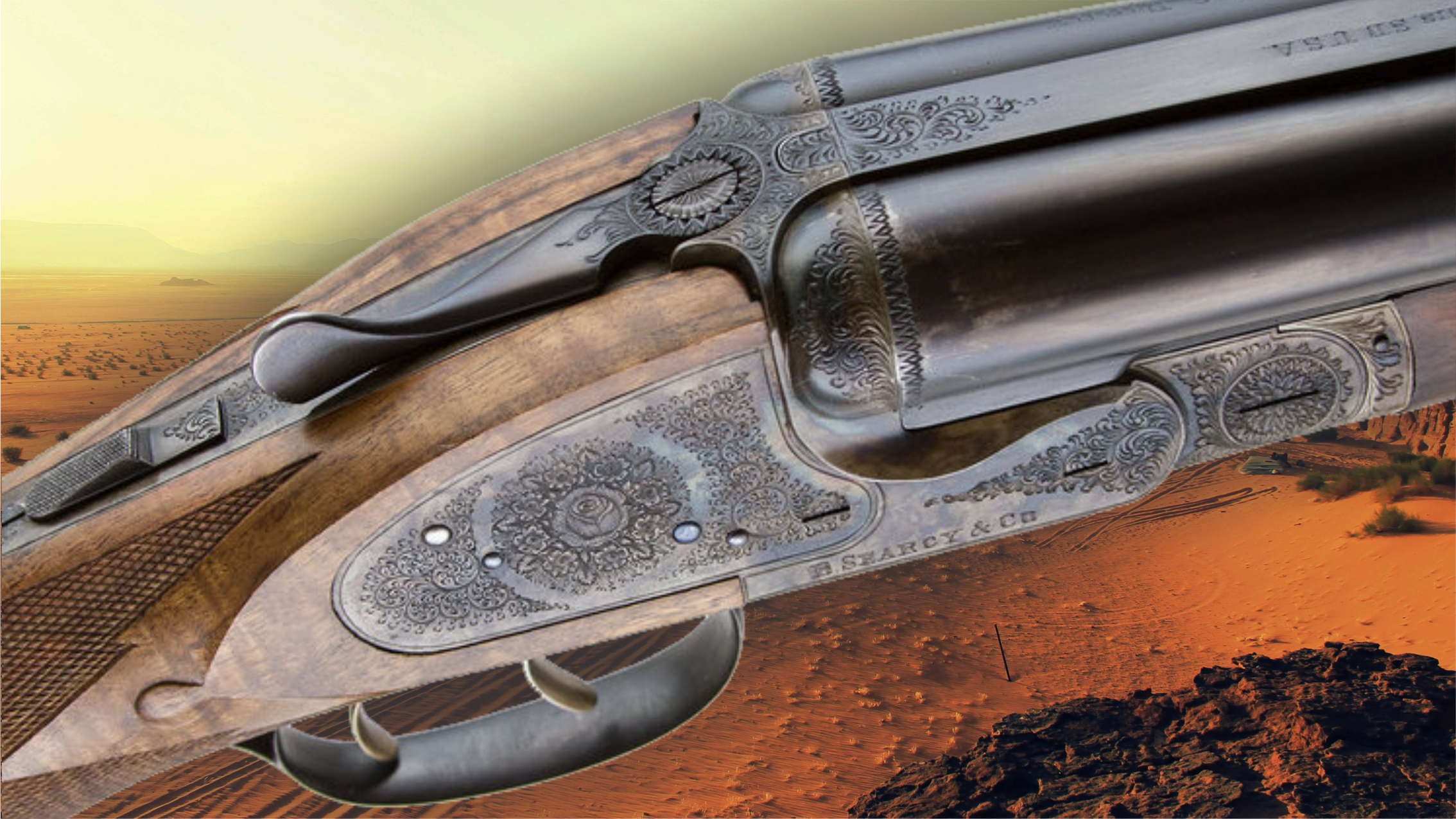
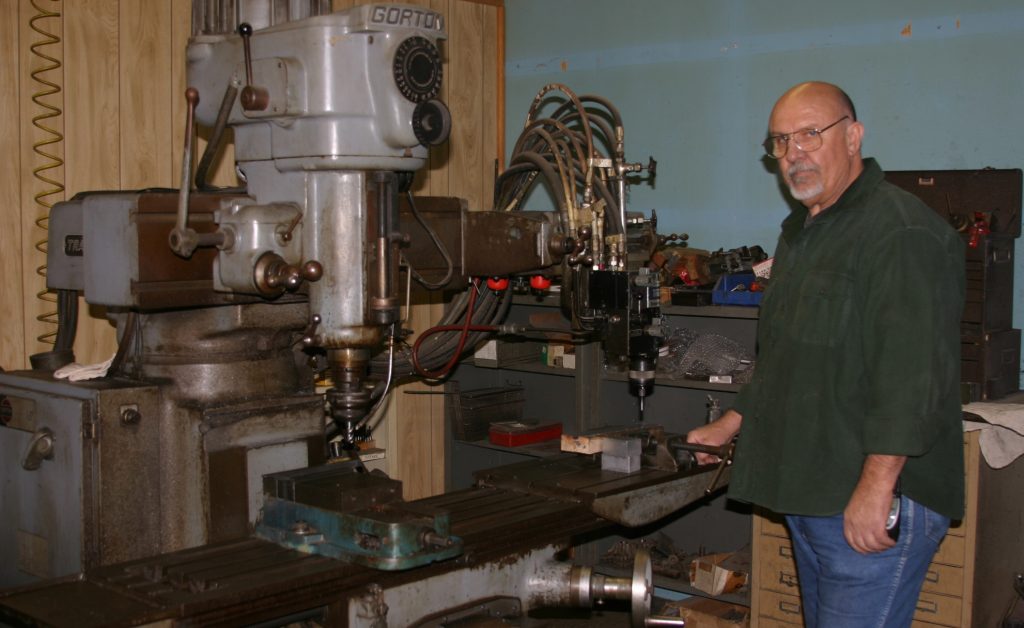
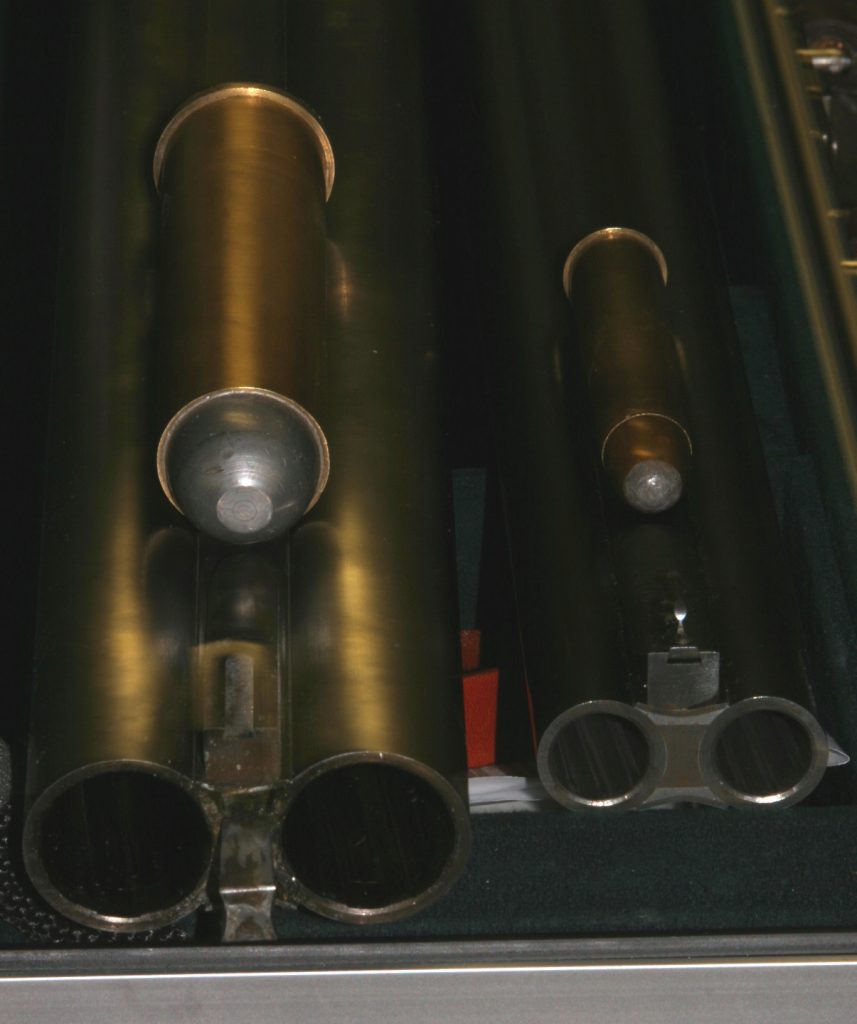 B. Searcy Company is headquartered in the small desert community of Boron, California, about 100 miles northeast of Los Angeles. Located in an old WWII Quonset building, just across the road from Edward’s Air Force Base, Searcy is ready to kit-up and custom fit a double enthusiast with a custom double barreled rifle in any caliber they are willing to pay for.
Butch offers six grades of double rifles: four boxlock designs and two sidelock designs. The Field Grade is the entry-level boxlock, which as of January 1, 2010, will have a base price of $11,500.
The next step up is the Classic boxlock at $18,000, then the Deluxe boxlock at $21,500, and the Sidelock at $22,000. Finally, there are the ultimate stoppers; a .577 Nitro Express double that you can have as a Boxlock or a Sidelock for $22,000 and $35,000 respectively (larger calibers available).
All these rifles have multiple options and feature choices, the details of which can be best viewed at Searcy’s website.
Standard calibers offered are the .375 H&H Flanged Magnum, the .450-400-3” (.411”), the .450 3¼” Nitro Express, the .450 Nitro Express, the .470 Nitro Express, the .500 Nitro Express (3” and 3 ¼”), the .577 Nitro Express, the .600 Nitro Express, the .700 Nitro Express, and the incredible 4-Bore. The 4-Bore double rifle starts at $85,000. Other calibers are available on request for an additional charge.
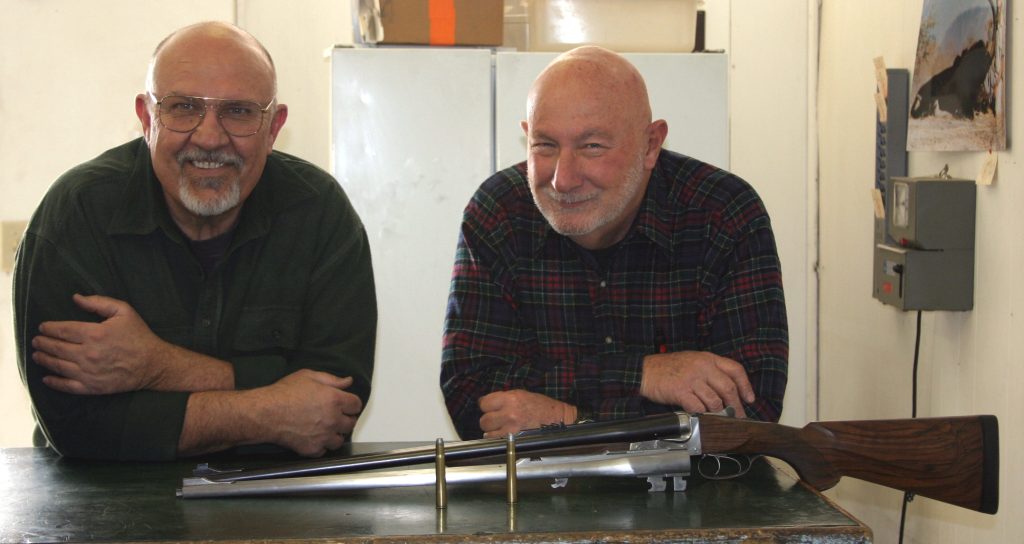
Only the Searcy double rifle can be described as an ‘All American’. Although other available doubles may be assembled in the United States, they are built on German or Italian actions. The Searcy rifles are machined right here in the States and have Anson and Deeley style receivers, with double Purdey bolting and top extension, and are CNC machined out of 4130 chromoly and 416 stainless steel bar stock into boxlock or sidelock configurations.
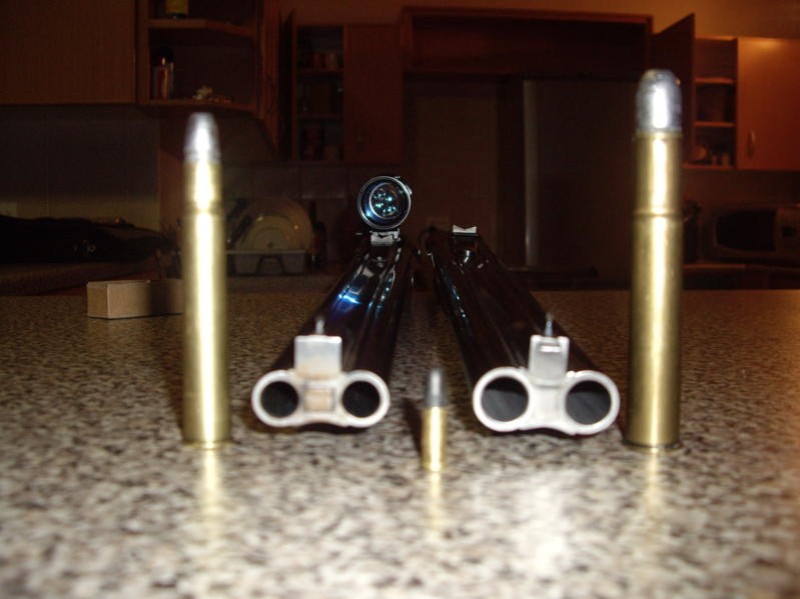
Searcy’s doubles come fitted with monobloc constructed PAC-NOR barrels, and are topped with iron sights from New England Custom Guns. A second set of double rifle barrels in a different caliber will set you back a cool $10,000, while a set of 12 gauge shotgun barrels can be fitted for a mere $4500.
Final barrel options include the choice of installing ejectors ($1000) or extractors (including rimless).
All Searcy rifles come standard with a quarter-rib, which includes one fixed rear sight and a caterpillar front sight. However, rear sights with folding leafs are available options at the rate of: one fixed + one folding leaf $400, one fixed sight + two folding leafs $500, and one fixed sight + three folding leafs $600. The final iron sight option is a front ‘night sight’ for $225.
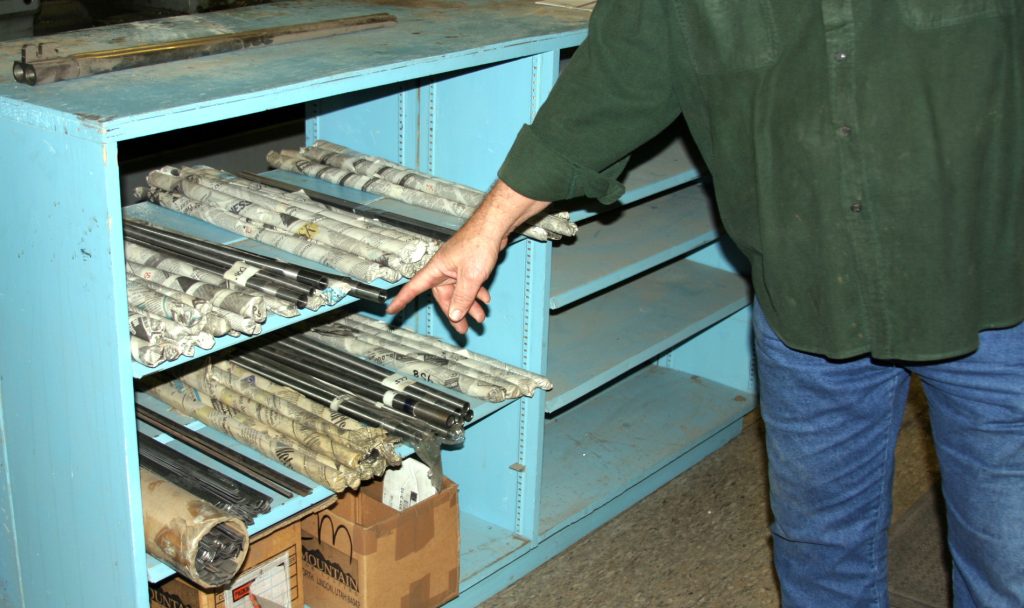
Although not usually recommended for the larger ‘stopping’ caliber rifles, scope mounts are a popular option for the large medium bore caliber rifles, where a good quality riflescope can be very useful for long distance shots at plains game. Two styles of mounts are available; the renowned Talley rings and bases for $595 or the European style claw mounts for $2900.
To most traditionalists, red dot sights on double rifles are inconceivable. However, to a growing number of riflemen, they are a welcome addition to their sighting options. If you have vision issues that make the use of regular iron sights difficult, a lightweight red dot style sight is just the ticket for close shots where quick handling and accurate bullet placement is more important than traditional good looks.
Any level of engraving and fancy metal work can be had on request. The depth of a shooter’s pocketbook is the only limit to the amount of decoration and embellishment available. To give the engravers additional working area, $1000 false side plates are offered for the boxlock rifles.
All of these doubles come with custom-fitted stocks in various grades of English walnut from Jim Preslick.
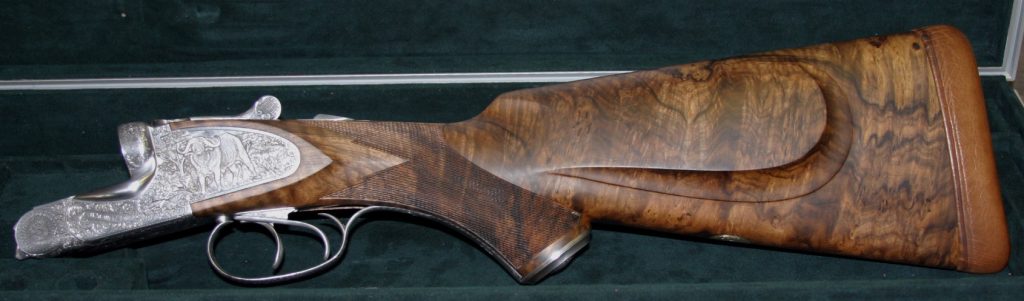
Besides fitting (length, bend or drop, and cast-on or cast-off), other options on stocks include; long tangs ($1500), long trigger guard ($800), trap grip cap ($550), stock medallion ($400), teardrop medallion ($500), and leather covered recoil pad ($400. And finally, for $1500, all rifles can be had in an oak & leather display case.
When you consider the entry-level Holland & Holland .470 double rifle at almost $80,000 and a Westley Richards sidelock at just over $96,000, a Searcy sidelock at $22,000 certainly does look like one of the best deals on this planet for a custom double.
However, there will soon be a new higher dollar rifle rolling out from Searcy’s shop. Built on the expensive to manufacture, but robust action that John Rigby and Thomas Bissell patented in 1879; the Sidelock Bissell Rising Third Bite action’s initial price will be $40,000.
A couple of years ago, I had the good fortune to make my own pilgrimage to Butch’s legendary Quonset hut on 20 Mule Team Road in the company of .470 reloading guru, Leo Grizzaffi. As an old friend and customer of the B. Searcy Company, Leo had been asked by Butch to help him wring out a (then) new project, which consisted of fitting an extra set of 375 Flanged barrels to his well worn and well broken-in .470 Nitro Express.
This barrel combination has proven popular for many safari hunters who already own a double rifle in one of the heavy ‘stopping calibers’, i.e., a .45 caliber or larger. However, there are always other factors to consider when deciding on the caliber of your add-on barrel set. At that time, .375 Flanged brass was easier to find than .450/400 brass, but with Hornady’s recently introduced 3-inch and 3½-inch .450/400 brass now in production, getting .450/400 brass may no longer be a problem.
When I questioned Butch and Leo on the desirability of a .375 Flanged barrels vs. a set of barrels in .450/400, we got into the other issues which had led them into choosing the .375 Flanged. The deciding factors were; there is a large variety (and ample supply) of .375 caliber bullets available for handloading, and with its longer range and somewhat flatter trajectory, the .375 Flanged is more versatile in the field than the .450/400.
However, the final reason for going with the .375 Flanged was that the .450/400 simply was not a big enough step DOWN in power. With its significant reduction in recoil, the average person will find the .375 Flanged not only more pleasant to shoot, but more manageable than the .450/400. Even for someone like Leo, who has put over 5000 rounds through his .470, and over 2000 rounds through the .375 Flanged barrels, tailoring the amount of recoil down to more manageable levels was a major point. On a practical level, if the rifle is pleasant to shoot, more practice is done on a regular basis. That way, the shooter develops familiarity with the weapon, muscle memory is enhanced, and when it comes time for serious use, fear of recoil becomes a non-issue, with handling and reloading the rifle become second nature.
On the other end of the spectrum are the extreme big bore double rifles that Searcy makes, which start with the .577 Nitro Express and include the .600 Nitro Express, the .700 Nitro Express, and the massive 4-Bore. If you are not completely insensitive to recoil, the best thing you can do is stay on the porch, because recoil is where these big dogs run.
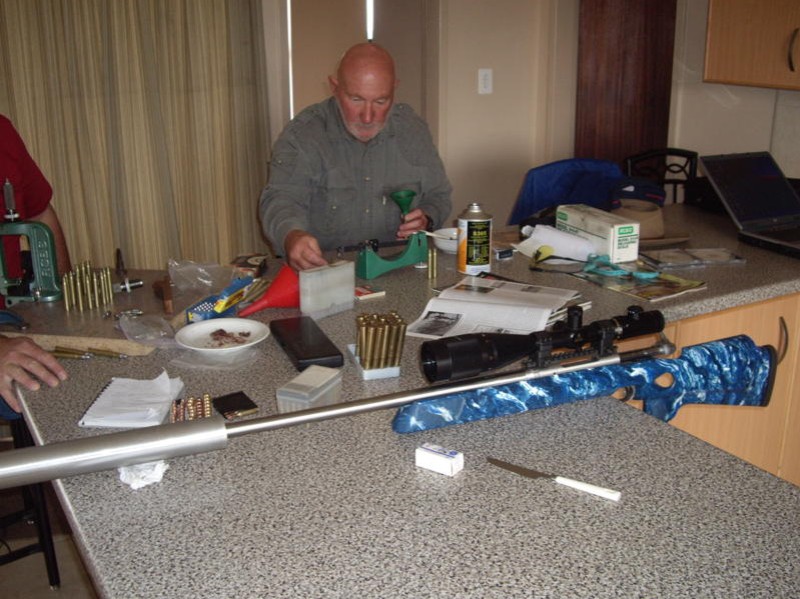
As a bonus for traditionalists, Butch also offers the dynamic duo of stopping calibers: the .450 Nitro Express and the .450 3¼” Nitro Express. These cartridges give the handloader the ability to use relatively cheap, and easily available .458 bullets to make premium ‘full-house’ hunting rounds, as well as use cast lead .458 bullets for ‘reduced load’ practice rounds.
It is not a problem if you own a modern rifle like a Searcy, but if you are going to handload full-house loads for any of the old original .450 Nitro Expresses, you should have a good gunsmith check the rifles out thoroughly, and remember to keep the pressures low. Inexpensive bullets and low recoil practice are an attractive combination of features in favor of choosing these calibers.
The 450 Nitro Express calibers were the first of their kind, and when it came out, it was viewed by many experts as the best in its class for hunting the most dangerous game. Guess what? It still is.
Having a custom double rifle maker like Searcy working right here in our back yard is a boon to the American customers who are in the market for a brand new double, and want something better than an ‘out of the box’ factory rifle.
Not only are his prices competitive with the factory doubles from Germany and France, but you are dealing with an honest US gun maker who is not only easily available, but willing to back up his product, and in most cases offer quicker delivery times.
If price is no option, and sending your rifle back to England for repairs is not inconvenient, then it is hard to argue with anyone who wants to buy a Holland and Holland or Westley Richard. However, in my opinion there is a lot of value for the first time double rifle owner to get into the game at roughly 25% of the big name English rifle makers entry level prices for doubles.
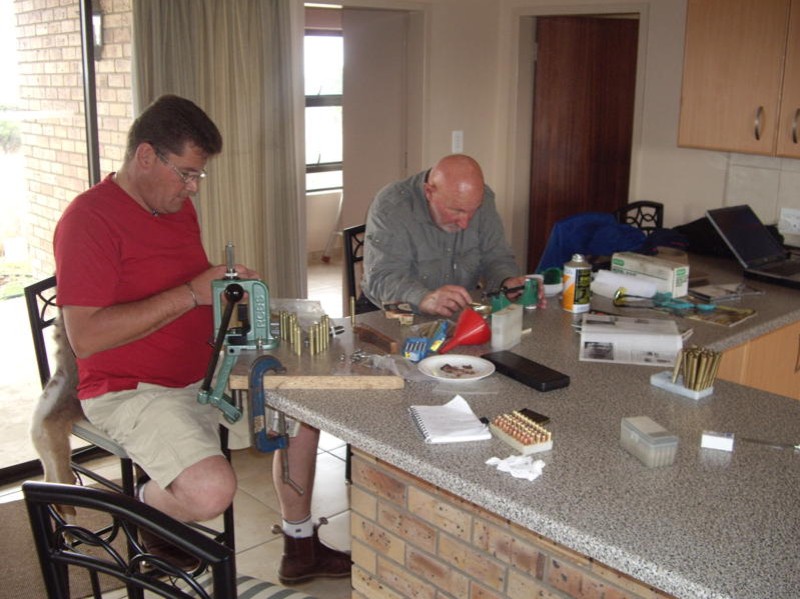 But at the end of the day, it is up to the individual buyer to weigh their own needs and opinions against what is available on the market today, and to decide for themselves what rifle brand best fits their budget, investment strategy, and expectations.
We are lucky to have the choice of a wide range of styles in double rifle design and cosmetics available in the in the 21st Century marketplace.
It wasn’t that long age when all the firearms pundits were convinced the double rifle had seen its last safari, but in a relatively short period of time, and despite the recent downturn in the US economy, double rifle sales have rebounded from their ‘death’ in the 1960’s, and looking at their sales in the long term, we are in the strongest market for double rifles since World War II.
Leo Grizzaffi is a lifelong hunter and veteran of many African safaris. Author and reloading expert, his specialty is the care and feeding of big bore double rifles, however he also dabbles with the little calibers. Leo resides in California, where being a lawyer and judge in the City of Los Angeles sometimes interferes with his busy hunting and reloading schedule.